
Buzkashi
Buzkashi, which literally means"goat pulling" in Persian, probably originated in the wilds of Central Asia in the days of the Central Asian Horse empires. Its is still played in that nursery of the feared Mongols, the fore bearers of all the Turkic tribes, in the Altai Mountains of Mongolia. It is said that the Great Khan himself, Genghis Khan made this game up as an exercise to strengthen the legs of his soldiers for war.

The Game of the Steppes Horsemen : Buzkashi
I still remember the scene vividly, my favorite actor, Amitabh Bachan playing an Afghan in the film Khuda Gawah, engaging in a tribal game, Buzkashi as it was called. Of course then Bollywood came in and “Badshah Khan”, as his character is called falls in love with “Benazir” played by Sridevi when they are like almost at par in that Buzkashi contest. I dont really know how many of you remember that scene.
That image of of men on horses trying to take possession of what looked like a dead sheep and trying to throw it into a marked circle looked kinda primeval when played out on the big screen. The sport of Bushkazi, in simple terms entailed a number of horsemen trying to wrest the control of a sheep skin and trying to put it inside a marked circle in the center of the arena where it was held. It was usually a no holds barred contest where except using weapons everything else was pretty much allowed.
Buzkashi, which literally means"goat pulling" in Persian, probably originated in the wilds of Central Asia in the days of the Central Asian Horse empires. Its is still played in that nursery of the feared Mongols, the fore bearers of all the Turkic tribes, in the Altai Mountains of Mongolia. It is said that the Great Khan himself, Genghis Khan made this game up as an exercise to strengthen the legs of his soldiers for war.
As mentioned Buzkashi begun among the nomadic Turkic peoples who came from farther north and east spreading westward from China and Mongolia between the 10th and 15th centuries in a centuries-long series of migrations that ended only in the 1930s. From Scythian times until recent decades, Buzkashi has remained a legacy of that bygone era.
Buzkashi is the name that this sport gets in Afghanistan and is considered the national sport of Afghanistan. Similar games are known as Kokpar, Kupkari and Ulak Tzartysh,in Kyrgyzstan and Kazakhstan and as Kökbörü and Gökbörü in Turkey, where it is played mainly by communities originally from Central Asia.
We can still imagine images of the Mongols playing a round of Buzkashi in between rounds of raiding and plundering the areas far beyond their ancestral steps. It also spread to their Turkic cousins and each of the Turkic tribes developed their own format and version of the game. It is still regarded a very masculine sport as it was in its earlier form played by the Soldiers in between battles and wars.
Sharing some pics of this sport. Think of it as a wild form of Polo :)
Pic from the Internet for educational purposes. In case you own a copyright to this pic and want it removed please let ,e know and I will immediately remove it.
Pic is from Kabul, Afghanistan. In the winters.
Markhor / Ibex Hunting
The Markhor and the Ibex are both magnificent animals found in the Himalayas, the Karakorams and the Hindu Kush. These animals were on the brink of extinction but now with creation of safe havens and conservation efforts they are making a comeback. Controversially the money raised by auctioning animals for legal hunting has contributed to the conservation effort.

Legal Markhor / Ibex Hunting
There was an Ibex shooting Video posted here which inevitably turned into a stupid India Pakistan blame game. The reality is that hunting of certain number of animals like Markhors and Ibex is legal in Pakistan. And the Video posted was from somewhere in Gilgit. Here is something I had posted on another Group. Posting it here to bring to light some facts :
The Markhor is a beautiful animal of the wild Goat family found from Kashmir to Afghanistan in the Himalayas/ Hindu Kush/ Karakoram and in the Pamirs in Tajikistan and Uzabekistan.
The Markhor is also the National Animal of Pakistan. The species was classed by the IUCN as Endangered until 2015 when it was downgraded to Near Threatened, as their numbers have increased in recent years by an estimated 20% for the last decade.
That being said the Pakistani Government issues annual licences for Hunters to take down a limited number of these magnificent animals who are apparently unable to breed. Hunters from abroad usually pay a high amount to get a hunting license for the same. Last year the license for the most expensive Markhor was a 100,000 USD. Plus all the other costs that go with the hunt. The money in turn is used by the Pakistani Government for the conservation of the species. And it seems to be showing results.
I have never been able to subscribe to the fact where you allow the hunting of a species for the preservation of the same species. Sounds kinda contradictory but it seems to work.
I just imagine what would the same people pay for hunting say, a Snow Leopard.
What are your views on the same ?
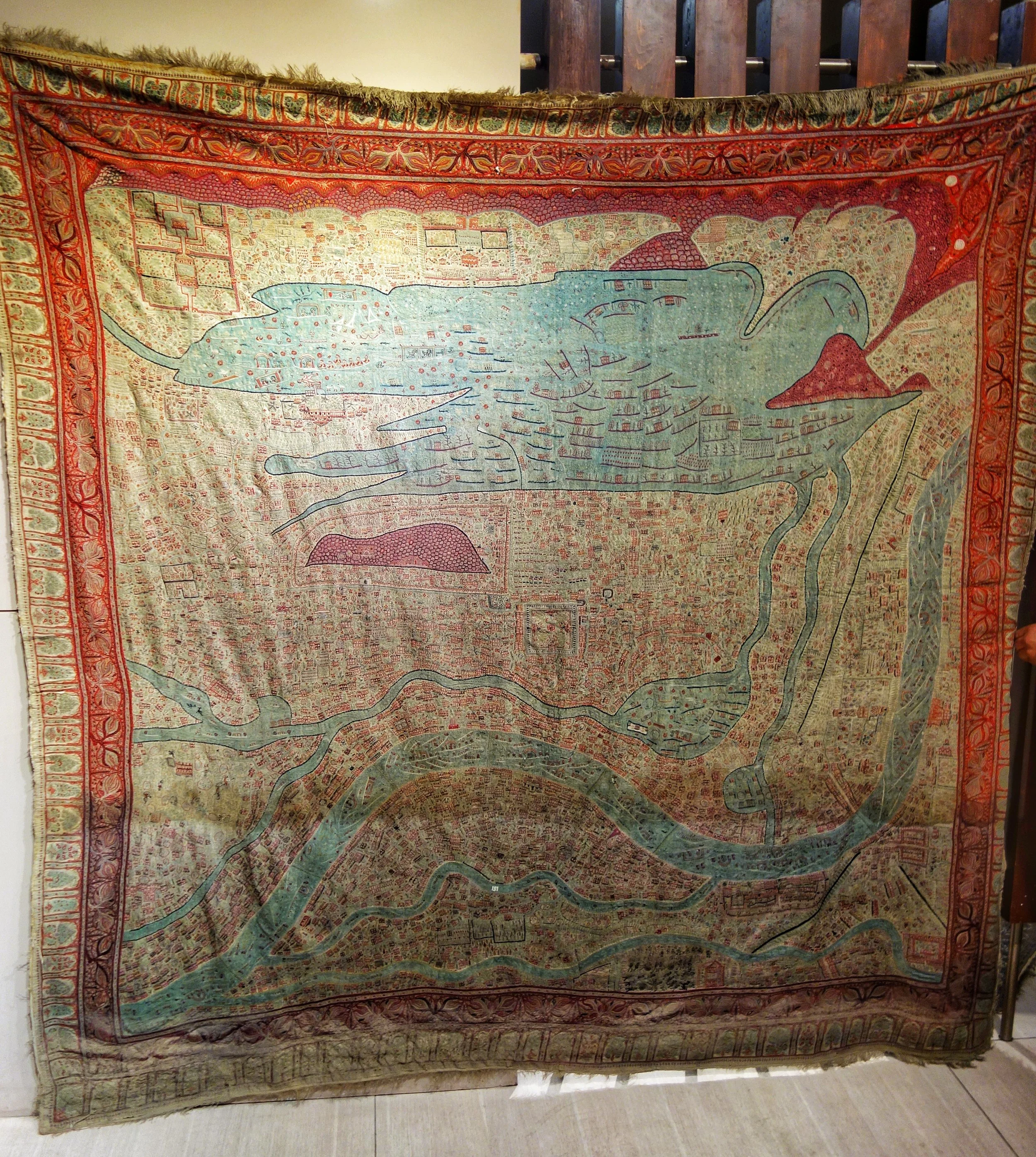
The Map Shawl II
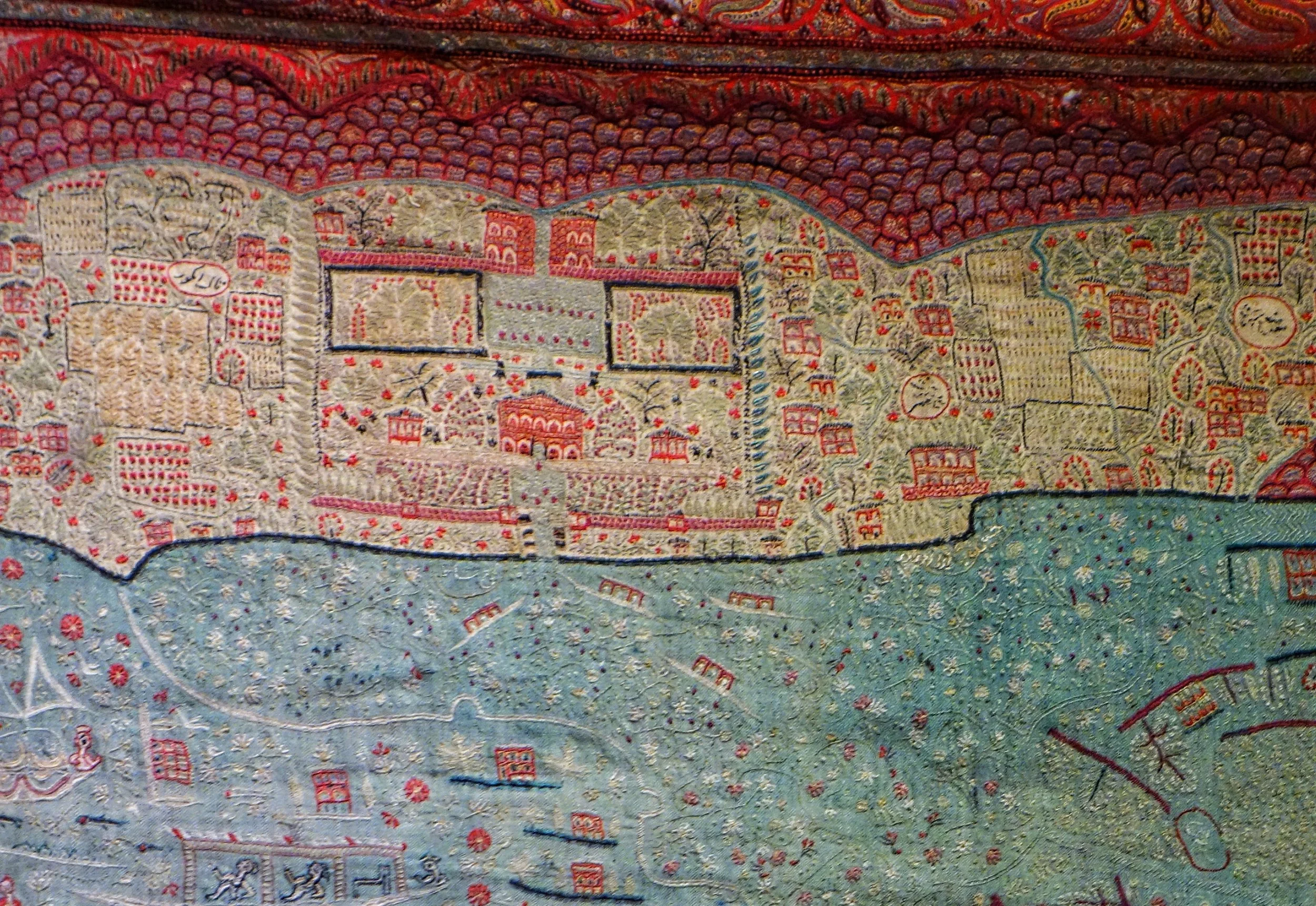
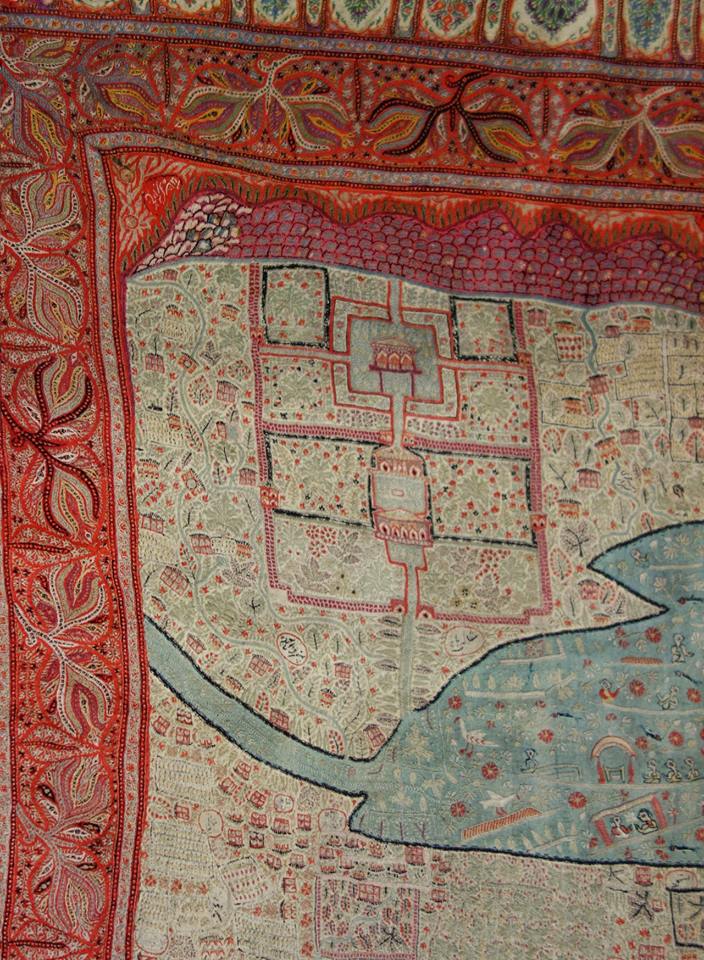
A Close up of the Shalimar Bagh as woven on the Map Shawl with along with the Dal Lake. Note the intricate work on the border. And see the detailing of the surroundings. No wonder it took 30 years to complete. One of the finest examples of Kashmiri Shawl craftsmanship. No wonder they were such a prized possession for Ladies in Aristocratic Europe.

The Srinagar Map Shawl II
A Close up of the Shalimar Bagh as woven on the Map Shawl with along with the Dal Lake. Note the intricate work on the border. And see the detailing of the surroundings. No wonder it took 30 years to complete. One of the finest examples of Kashmiri Shawl craftsmanship. No wonder they were such a prized possession for Ladies in Aristocratic Europe.
From my previous Post the details :
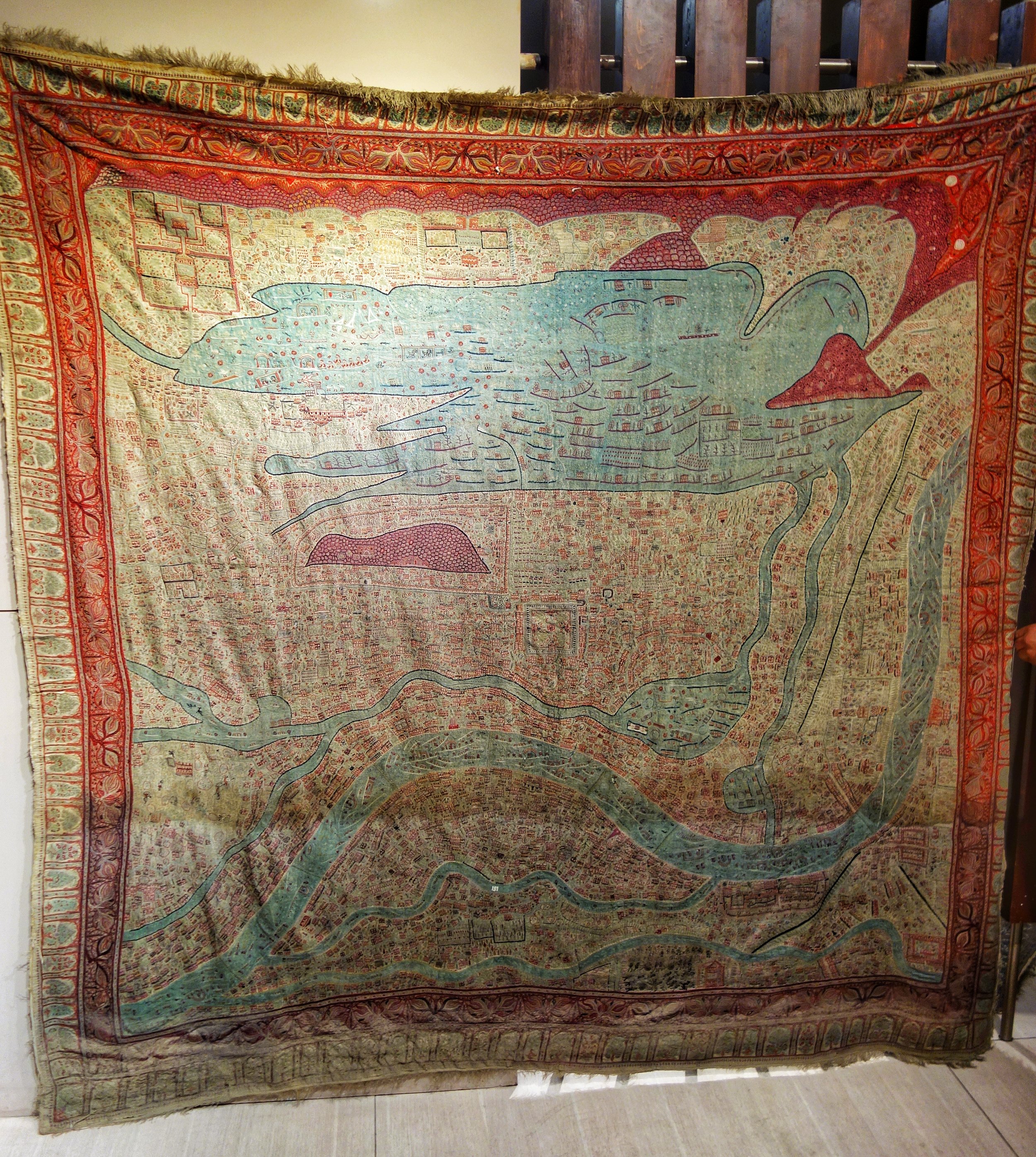
The amazing and exquisite Map Shawl of Srinagar. This Shawl took 30 years in the making. There are 3 or 4 such specimens in the world. And these were made in the late 1800's.
One was presented to Queen Victoria by Maharaja Ranbir Singh and is presently at the Victoria and Albert Museum in London. One more is with a Museum in Australia. One is with a private collector and this piece is at the Shri Pratap Singh Museum in Srinagar though it's not on display as it needs some refurbishing after the Floods.
It would be one of the most expensive pieces of textile ever made if it would be put on an auction. I got a special session to view this absolute Masterpiece as I pestered the right people long enough to let me see this after the Gilgit Manuscripts and along with the Mammoth complete skeleton which was found in Kashmir. A part of the Gilgit Manuscripts is however now on display.
Just that you know the old building of the Museum (out of bounds) was actually a Sumner er Palace of the Maharaja and is as mind blowing as anything you would ever see. The Maharajas sure had money and the craftsmen to deliver stuff which can't even be imagined .
Coming back to the Shawl. You can see the Dal Lake and the Jehlum. On the right the hill is the Shankaracharya Hill. On the top left you can see the Shalimar and Nishat Gardens. You can also see the Hari Parbat Fort and all the old bridges of the City. The detailing is so minute that there are Shikaras shown in the Jehlum and you can even see the individual eye balls of the people in the Shikara. Words cannot describe this absolute masterpiece of Kashmiri craftsmanship.
Please do visit this Museum on your next visit and I'm sure you will be mighty impressed. I plan to cover stuff from this Museum in the next few days / weeks.
Pic from November 2017. Shri Pratap Singh Museum, Lal Mandi, Srinagar
Burzahom : Ancient Kashmir and its Dogs
The Burzahom is one of the oldest Neolithic sites excavated in Kashmir and probably the first place which saw settled life in the Valley. One remarkable characteristic of the site is the ritual Dog burial sites discovered. In some cases the Dogs were buried along with their owners. A reminder of how old our relationship is with this family of canines.
Burzahom : Ancient Kashmir and its Dogs
Burzahom : Ancient Kashmir and its Dogs
The most Ancient remains of human settlement discovered in Kashmir are at a place called Burzahom near Srinagar. It is a settlement from the Neolithic Period and transits to the ancient period ranging from 8000 BC to around 1000 BC. It was discovered in 1935 and the excavations were done over a period of time and the excavations have been in three stages, NP III corresponding to the later period, NP II to the middle period and NP I to the earliest period. The Site is currently on Unesco World Heritage Watch List and it might get the status of a World Heritage Site in the future maybe.

The Burzahom Site
As per the UNESCO "The Neolithic Site of Burzahom in the district of Srinagar, India brings to light transitions in human habitation patterns from Neolithic Period to Megalithic period to the early Historic. From transition in architecture to development in tool-making techniques to introduction and diffusion of lentil in North-Western India, the site of Burzahom is a unique comprehensive storyteller of life between 3000 BC to 1000 BC.
Archaeologist have excavated subterranean dwellings as well as burial pits at Burzahom. One of the most famous Work of art discovered at the site is a scene painted on a stone which shows the Burzahomese on a hunt. There are two hunters and a Deer and along with them is their best friend, yes you guessed it right, a Dog. And also interestingly the scene depicts two suns. As per the scientists the this is the first instance of a supernova being recorded in ancient times. Which of course makes this indeed a very interesting find.

The Hunting Scene drawing with 2 Suns
Dogs it seems held a special status in the Burzahom culture. Dogs, Wolves and Ibex seemed to hold a special significance as burial pits containing their skeletons have been found. More interestingly a couple of burial pits have been discovered where the Dog is buried right next to the master within the compounds of the dwelling units. There is even an instance of Dogs buried in two layers one above another. Unlike in NP I where no burial remains have been found, in NP II culture many such burial pits have been found. This points out to the growth of a belief system and a transition to the ancient age from the Neolithic period.
Interestingly this Dog burial culture is similar to the Shilka culture, for whom the Dog was almost a cult animal, around the Shilka River which is a tributary to the Amur River in Siberia bordering Mongolia as well as other such cultures of the Gilyaks, Ulchis and Goldis where till recent history Dogs were sacrificed and buried with their owners. Probably to serve them in the their afterlife as well. It surely sounds cruel in today's time and age and actually it is but in that time and age it made sense to those people to send a dead man's best friend along with him to the next world. where animals were sacrificed as well and buried along with the person.

A Dog burial pit
The pottery found at the site seemingly has a great similarity to similar remains found in the Swat Valley in Pakistan. And as mentioned earlier the burials practices and the type of tools found have been inferred as having close resemblance to those found in North Chinese Neolithic cultures which borders Siberia as well as Mongolia.
This practice is not seen anywhere in India. This again points out to the fact that Kashmir was the place where Central Asia met the Indian subcontinent. UNESCO also states that ' The results of excavations have provided dynamics of interchange of ideas between Central Asian and Southwest Asia through the Valley of Kashmir which acted as a bridge between higher Himalayas and beyond on one hand, and the Gangetic Plains and Peninsular India on the other hand during the third millenium BC. The interaction of local and foreign influences are demonstrated by the art, architecture, customs and rituals as also possibly by the language as demonstrated by some graffiti marks on pottery and others"
Historian M K Kaw in his book "Kashmir and its People : Studies in the Evolution of Kashmiri Society" writes " It is also clear that the Dog had a special place for the Burzahomese right from the day he settled in the Valley. This is further substantiated with the finding of a burial in period NP II where the Dog is buried with the owner in the house floor, preferably the compound. He has depicted him in the engraving on the stone slab already stated earlier. The Dog guarded his herd and helped him in pursuing the hunt on which his sustenance depended "
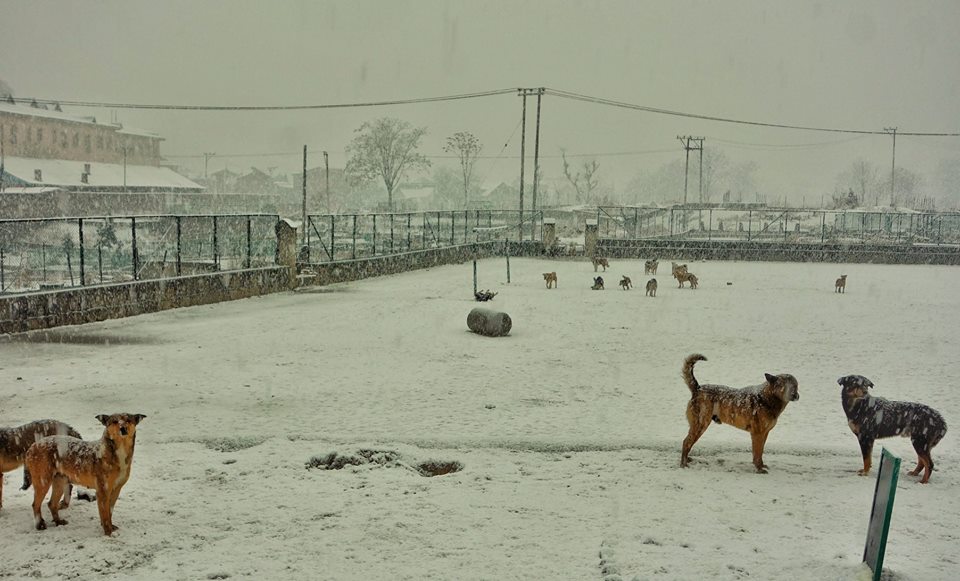
As of today the Dog is thriving. Thriving too much according to some people. And Srinagar is full of feral Dogs. Of all the cities I have been to I have never seen such a great number of Dogs in any other city. Another fact that I think is responsible is that people in Kashmir consume a great deal of meat. And of course a lot of this gets wasted and consumed by these Dogs and hence due to the availability of meat they thrive. Some people also put the blame on the political situation but I would rather not go there.
But of course that doesn't change facts about the importance of the Dog in the Burzahom Culture. And the fact that we have been friends for a very long time.
I am using 4 pics to highlight the Story as it is an important one which needs to be told and people made aware ( If you think you have a story which needs to be told with multiple pics please contact the Admins.)
Main pic from February 2018. Srinagar, Kashmir
Some of the pics are from the Internet and are being used only for Educational purposes. In case you hold a copyright to a pic and want it removed please let me know and I will take the pic down.
The Indus Irony
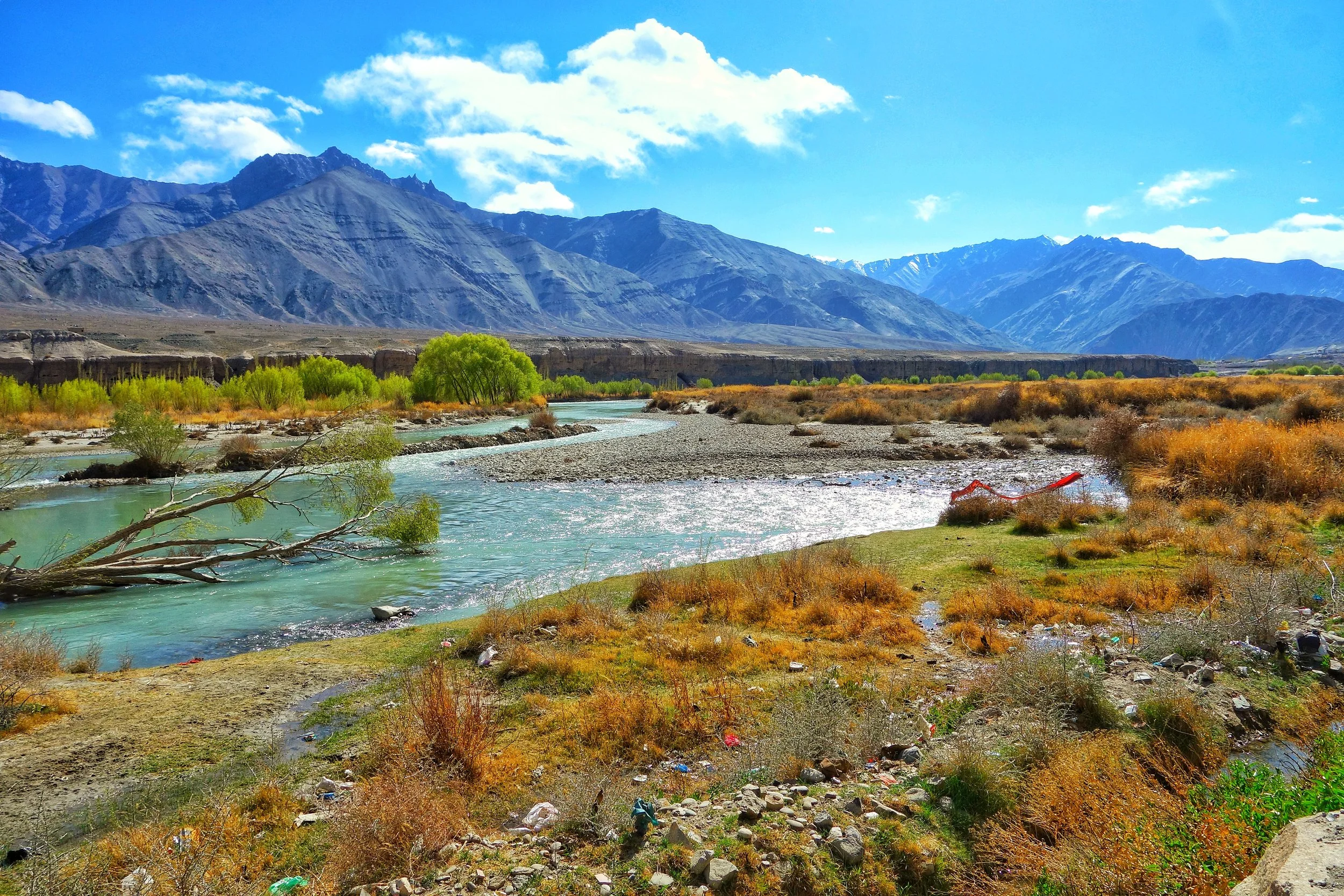
The Indus is the River which has given the name to civilization, to a people and to a Country as well. And the country it has given its name to has been the fountainhead of spiritualism where the Mountains and the Rivers are worshiped. But ironically the Indus, the mighty Indus itself figures nowhere in the list of sacred Rivers and a River to its East, the Ganges being the most revered one. We ask why ?
The Indus Irony
The Indus. The Sindhu. The River which gave a country its name. The River which gave a religion its name. The River where the earliest recorded organised human settlements were created. The River around which the most ancient of all the Religious scriptures (in a sense) were written. A river that drains the Western Himalayas, the Karakorams and the Hindu Kush. A River than dumps twice the amount of water that the Nile does in into the Ocean.
In the most mystical of lands that it gives its name to, where Rivers and Mountains are worshipped, the Indus should have been the Deity number 1. But its not. It’s not even a Deity. It isn’t even sacred. So what happened ? Why did the Indus lose all its “religious” (deemed) significance ? I will try and give my view on that. Now if you are a particularly religious person I would suggest you stop reading and go on to the next Post.
Let’s go back to the Indus Valley civilization. The Indus Valley Civilization arose in the Indus and the Ghaggar Hakra (Saraswati) basin. The Sutlej at one time flowed into Ghaggar Hakra system and not into the Indus as it does today but scientists don’t agree on when actual change took place. It should be remembered that the Satluj is today the easternmost tributary of the of the Indus. This is where the most developed civilization of the ancient world developed. Permanent settlements, planned sanitation and the works. And this advanced civilization was called the Indus Valley Civilization. Of course like all civilizations it came to an end due to reasons we will not dwell into.
And then it was in North Western Pakistan, in the Indus basin, just as the Indus enters the plains down from the might Himalayas, that the most sacred of the Vedic scriptures (I’m deliberately not using the term Hindu as in my view these aren’t the same things in the religious sense though Hindu itself is a geographic term), the Rig Veda was composed. The main “Devas” were Indra, Soma and Agni. The main River mentioned was the Sapta Sindhu (The Indus and its seven tributaries). The main Gods of the “Hindu” pantheon as it is today were hardly even mentioned. The holiest of the holy, the Ganges just gets two passing references and that too in the later Hymns.
The Rig Veda, as those of you who ever tried giving it a go is quite an enigma. Many a times I have tried but failed unless we have an accompanying translation (transliteration works to a limited extent). Now translations unlike transliterations are not mathematical. It is more or less what it is the translators perceives a Hymn to be. So you have to rely on the Translator’s interpretation of it. But until and unless you master the language of the Rig Veda and read it for yourself the only tools available are translation and transliteration.
That being said the Rig Veda has a very wide latitude, it included Monotheism, Pantheism, Animism, Agnosticism even Atheism (as put by my friend of mine). Yes Athieism. In today’s world order of rigid Religious beliefs, it is remarkable that the Rig Veda even questioned the existence of God itself. Yes you heard me right. I quote Rig Veda Hymn 10:129 also called the Hymn of Creation (Just the last two stanzas). Make whatever you want of this
But, after all, who knows, and who can say
Whence it all came, and how creation happened?
the Devas (gods) themselves are later than creation,
so who knows truly whence it has arisen?
Whence all creation had its origin,
he, whether he fashioned it or whether he did not,
he, who surveys it all from highest heaven,
he knows – or maybe even he does not know.
The point I’m trying to make is that it was very different from the Hindu religion of today. Over a period of time the Vedic religion began to be codified into the Upanishads called the Vedanta. Religious rituals and hierarchies were created. The breathing space in which the Rig Veda was created started to get muzzled. And in a reaction to this there arose different schools of thoughts like Buddhism and Jainism (these were Godless religions) and these began to challenge the dogmas of what the Vedic religion had become. Of course the different Kings/ Kingdoms of that time also played favorites with the Rulers using Religion as a powerful political tool. a

The Ganges at Haridwar
And in turn the institutionalisation of the Vedic religion got even stronger and this was particularly true in the Gangetic basin. A shift happened. The epicenter shifted to the Gangetic plains with the evolution of Brahmanism. A new trinity of Gods, Brahma, Vishnu and Mahesh came up. The Ganga, Yamuna and Saraswati became the Holy Rivers. The Gods of the Rig Veda were all but forgotten and the same happened with the River of the Vedas, the mighty Indus. As it happened the Indus basin became a stronghold of Buddhism and that is from where Buddhism spread all around Asia. It made sense for the “Institutionalisers” of the religion to associate what was formerly the Vedic religion with Geographics to the East of the place where it originated. And slowly “the sense” of importance of the Indus was diluted over a period of time. All the focus was on the heartland River than the borderland River. We were told a certain River was more sacred than the other River though both of them performed exactly the same function like all Rivers.
And this I call the Indus Irony. It isn’t sacred. It’s not revered. It’s not worshipped. Not that it will make a difference.
It’s the mighty Indus. As mighty as the Mountains that it comes down from. It will keep flowing.
PS I just read this on Wiki : In November 2011, satellite images showed that the Indus river had re-entered India, feeding Great Rann of Kutch, Little Rann of Kutch and a lake near Ahmedabad known as Nal Sarovar.
Disclaimer : This is entirely my own personal theory. No disrespect is meant towards any religious belief or any river or any scripture. It is a linear mathematical study trying to establish the facts keeping out the “God’s will” factor. In the spirit of the Rig Veda Hymn 10:129
Kashmir and Tibet : The Forgotten Past
Kashmir has over the ages has had a great influence on Tibet in the area of Religion and allied Religious Iconry. Infact Mahayana Buddhism traveled to Tibet from Kashmir via Central Asia after the Fourth Buddhist Council in Kashmir. A large number of artisans and craftsmen were taken from Kashmir to Tibet to decorate the Monasteries as well.

Kashmiri Cultural Influence on Tibet
Last year the Himalayan Club sent a request to His Holiness The Dalai Lama asking him for a private audience for the members of the Himalayan Club. And His Holiness decided to give a private audience last year in April. A Group of members of the Himalayan Club along with family members went for the same to McLeodganj. I alongwith my wife and little baby daughter also went along the delegation.
We had the audience, and though I am not a religious person, I really like listening to His Holiness as what he speaks makes sense to me. And hearing him in person at his residence was quite an experience. After His Holiness finished his talk we all went to get blessings from him and a photo op. I wanted him to bless my daughter and I had a brief exchange with him wherein I told him that I am from Kashmir. He smiled and told me that many Tibetan monks used to go to Kashmir to gain knowledge and there is an old relationship between Kashmir and Tibet.

A Crowned Buddha from Kashmir
Of course I have been trying to dig up some of the relics of Kashmir’s Buddhist past which included the Monastery at Harwan, where the 4th Buddhist Council was held in the first Century as well as the Gilgit Manuscripts, which is the oldest manuscript found in the Indian sub-continent and one of the most sacred Buddhist scripture ever discovered (I have covered both of these in previous Posts).
But as my search continued that it wasn’t just Buddhism that went to Tibet from Kashmir. It went much further than that. A whole bunch of scholars and craftsmen from Kashmir went to Tibet as a part of this cultural exchange. This included the best craftsmen and sculptors. There is a great similarity between all the Buddhist iconography in Stone and Bronze made in Tibet with all such iconography found in Kashmir from the Buddhist era in Kashmir which started around the time of the Great Kushan Emperor, Kanishka in the first century till the time of Lalitaditya in the 8th century wherein slowly Buddhism started disappearing from Kashmir till it disappeared in the 12th century. The sculptors and craftsmen in Kashmir shifted to Hindu iconography and making statutes of Vishnu and his Avatars. But their Buddhist tradition continued to thrive and evolve in distant Tibet. As an example I present to you two Bronze statues of the Tara. The one on the left is a 9th century Tara from Kashmir and the one on the right is a White Tara from the 17th century from Tibet. In Spite of the geographical distance and a difference of almost 800 years the similarities are still quite uncanny.

A Reliquary Showing scenes from Buddha's life from Kashmir
There are records of Kashmiri craftsmen going to the ancient Kingdom of Guge in Central Tibet to decorate the Buddhist monasteries being built there. Tibetan Chronicles also mention that the great Tibetan scholar Rinchan Sangpo visited Kashmir thrice in order to take Kashmiri craftsmen to Tibet to re-organise Buddhist arts in Tibet. It is said that Rinchen built a Hundred and Fifty Temples in Tibet with the help of 75 Kashmiri craftsmen. The 16th century monk, Lama Taranath also records the great contribution of Kashmiri craftsmen to Tibetan painting and metal casting.
Kashmir being historically at the crossroads of great civilizations constituted a great melting pot with cultural influences from all over. Before its emergence as a strong Kingdom in the 8th century Kashmir was a part of the belt ranging from Southern Iran to Gandhara to Bacteria to Kashmir were a part of the great belt of Buddhism and such similar sculptures have been found all over Central Asia, Afghanistan, Pakistan, Kashmir and onwards to Tibet.But of course over a period of time Buddhism disappeared from all these areas and all the cultural traditions and Buddhist arts and crafts shifted to Tibet and a part of it to Mongolia as well.

Tara from Kashmir
Of course Buddhism in Tibet has evolved into its present form of Tibetan Buddhism over the age. But scratch and look under the surface and its a reflection of the tradition and culture that was followed by populations all over the Himalayas, the Karakoram and the Hindu Kush and further into Afghanistan and Southern Iran. Buddhist art in Tibet is a legacy from the past of all these regions and especially Kashmir. Looking at Tibetan Buddhist art now I see it as a mirror into the past showing the arts and crafts of our ancestors long forgotten in the land of their origin but still thriving in Tibet. Much like Buddhism itself.
As of today “Himalayan Art” as its called is considered Religious iconry art representing Hindu, Buddhist and Bon and the three main categories it is divided in are Tibet, Kashmir and Nepal. This is the wide classification of Himalayan Art and it wouldn’t surprise me if a link is found as to how Nepalese Art was also influenced by Kashmiri art coming in from Tibet.

Vajrasattva from Kashmir
Pic of Tara, also known as Arya Tara and Jetsun Dolma in Tibetan Buddhism, is a female Bodhisattva in Mahayana Buddhism who appears as a female Buddha in Vajrayana Buddhism. She is known as the Mother of Liberation and represents the virtues of success in works and achievements. She is originally supposed to have originated as a form of Goddess Durga and entered the Buddhist deity fold over a period of time.
Kashmir Tara pic from Shri Pratap Singh Museum, Srinagar and the Tibet Tara from the Shanghai Museum, Shanghai. Both pics from October 2017.
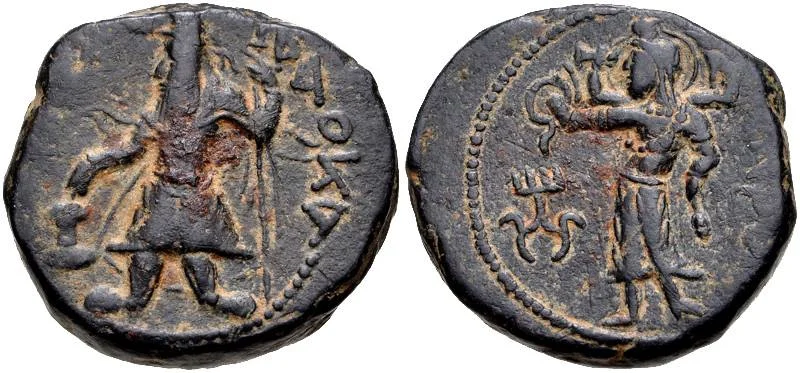
First Lord Shiva on an Indic Coin
The Kushanas issued several other different versions of the Coins featuring Lord Shiva as well including him holding a damru and a Trident. And with Nandi Bull in the background. The whole irony of the whole situation is the fact that the first coin featuring the most revered Hindu God was coined in Bagram in Afghanistan (more Central Asian than Indic) on the foothills of the Hindu Kush and by an Emperor whose origin was Central Asian and not Indic.

First Lord Shiva on an Indic Coin
Lord Shiva is probably the most revered and well known Gods of the Hindu trinity and in my view the maximum numbers of Temples in India are dedicated to Lord Shiva and his various Avatars and incarnations.
In the Himalayan context, its Shiva again considered the Lord of the Mountains. The Abode of Snow as the term Himalaya means in Sanskrit were also considered to be the Abode of Lord Shiva himself. The much revered Mount Kailash, the mythical abode of the Lord himself was located in the Trans Himalaya.
Besides Mount Kailash there are a number of different Mountains / Peaks in the whole Range that were connected with Lord Shiva. These include the Adi Kailash in the Kumaon Himalayas, the Kinnaur Kailash in the Kinnaur region of Himachal, the Shrikhand Mahadev in Himachal and the Chamba Kailash in Bharmour. Besides these there is the Mt.Haramukh in Kashmir considered the abode of Shiva as per the local beliefs.
But where is actually the oldest Hindu Temple and where is the oldest Shiva Temple ? I tried to find the answers but it was rather inconclusive with no firm answers. But one of the possible locations pointed out was a place called Surkh Kotal, a historical site related to the Kushans and the Great Emperor Kanishka himself, located near Pul E Khomri in the Baghlan Province in Northern Afghanistan in the foothills of the Hindu Kush Mountains. This region in the older times was called as Bactria, which was a great center of amalgamation of Greek, Iranian and Indian cultures and religious practices.
Of course for those of you in the know, the Kushanas were from Central Asia and had a large Empire and Kanishka was the Greatest King of the Kushanas who ruled a large Empire stretched from Central Asia to the Tarim Basin to Northern India and even Eastern India uptil Patliputra. Kanishka and the Kushana Empire was one of the most syncretic Empire ever seen and the most outstanding feature was their coinage which featured a large Pantheon of Gods from the Greeks, the Mesopotamian, the Avestan and Indic figures like Shiva and Buddha.
And the best part is that unlike most of the structures built by the Kushanas and Kanishka in particular are now in ruins but their spectacular achievements and history still survives in their Coinage. And a lot of them exist to even this date found all over the vast Region that the Kushanas had spread their Empire over. The thing about Coins is that they are virtually indestructible until someone decides to melt them.
And it was Kanishka himself who issued the first coins which featured Shiva or Osheo as he was also referred to. As per the auction site I got this image from this is probably the first time that Shiva was featured on Indic coins :
Kushan Empire. Kanishka I. Circa AD 127/8-152. Æ Tetradrachm (25mm, 16.72 g, 12h). Main mint in Kapisha (Begram?). Middle phase. Kanishka standing left, holding goad and standard, sacrificing over altar; flame at shoulder / Siva standing left, holding thunderbolt, diadem, trident, and flask; tamgha to left. MK 781; ANS Kushan 553-60; Donum Burns 164; W. Pieper, “The earliest Saivite images on ancient Indian coins,”.
The Kushanas issued several other different versions of the Coins featuring Lord Shiva as well including him holding a damru and a Trident. And with Nandi Bull in the background. The one I found most intriguing is the one in which Lord Shiva is shown with an erection, probably pointing out to the Phallic symbol that is worshipped in many Temples as the Shiv Linga. More on that later once I know enough.
The whole irony of the whole situation is the fact that the first coin featuring the most revered Hindu God was coined in Bagram in Afghanistan (more Central Asian than Indic) on the foothills of the Hindu Kush and by an Emperor whose origin was Central Asian and not Indic. And the biggest irony that this all happened under the shadows of the Great Mountains of the Hindu Kush instead of the Himalayas.
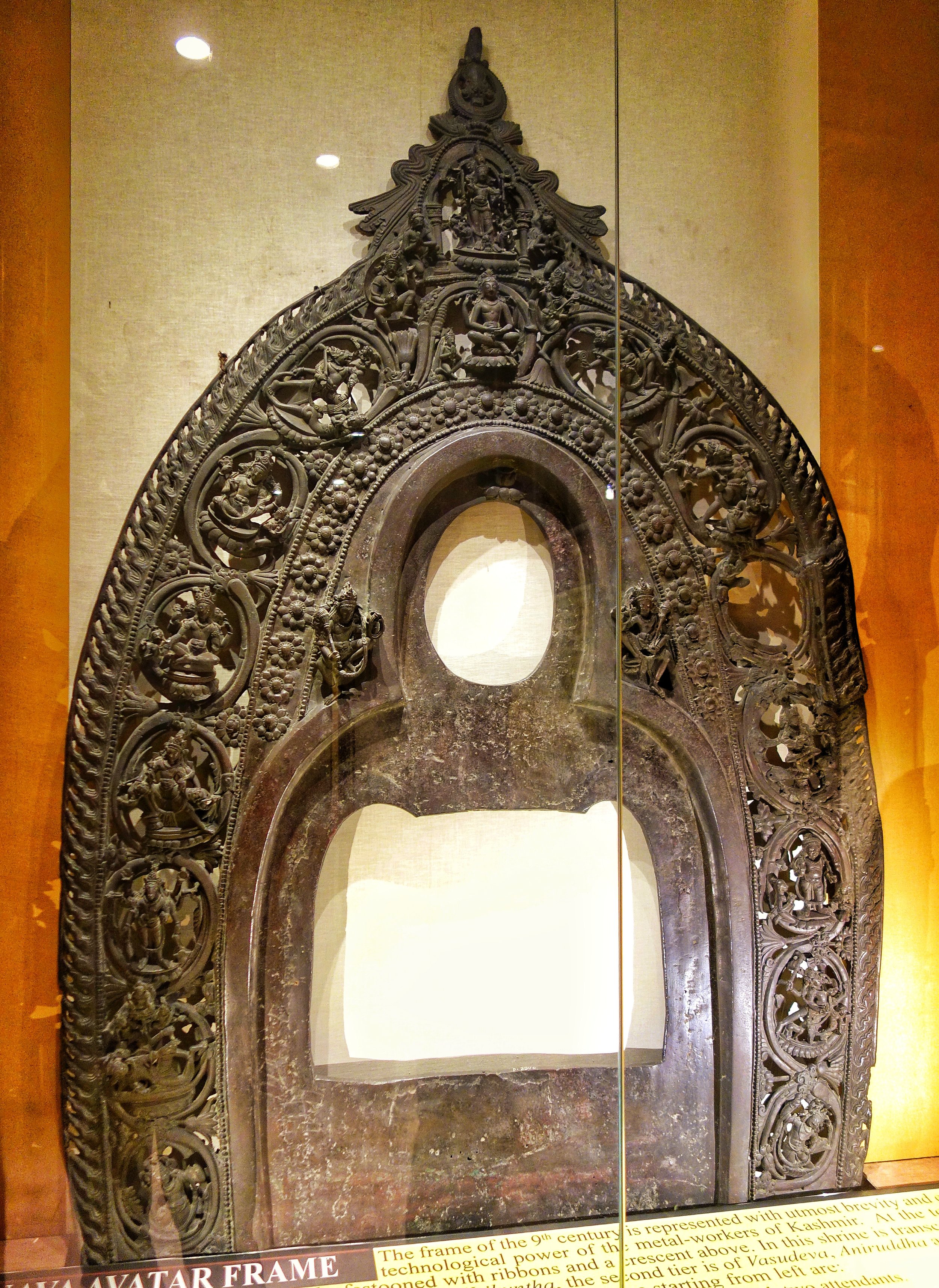
9th Century Vaishnava Avatar
One of the most priceless treasures on display is a 9th Century metal “Vaishnava Avatar” frame which is a Prabhavali of bronze metal alloy measuring 6’4″ in height and 4′ wide and 1’2″ thick weighing almost 100 kgs excavated from Devsara. As the name suggests it shows various Avatars of Vishnu. Devsara, which is in Kulgam district had been in the past a great center for the casting of Bronze images and other metal works.
The 9th Century Vaishnava Avatar
One of the most priceless treasures on display is a 9th Century metal “Vaishnava Avatar” frame which is a Prabhavali of bronze metal alloy measuring 6’4″ in height and 4′ wide and 1’2″ thick weighing almost 100 kgs excavated from Devsara. As the name suggests it shows various Avatars of Vishnu. Devsara, which is in Kulgam district had been in the past a great center for the casting of Bronze images and other metal works. Many of the bronze/ metal sculptures found here have unfortunately gone missing as they were simply taken away in the olden times as metal was always in high demand.
This masterpiece was discovered in 1931 and it is dated to the period of Shankar Varman. Each of the deity cast on it has great detailing and as such is a brilliant example of Kashmiri metal craftsmanship of that period. Fortunately this great piece of art along
with another bronze sculpture of Lord Buddha along with a few coins made it to the Museum from the Devsara site. This sculpture is one of its kind in Kashmir and maybe India as well and is rated one of the most significant archaeological find in the Indian sub-continent.
The board at the Museum describes it as such : The frame of the 9th century is represented with utmost brevity and exhibits the technological power of the metal workers of Kashmir. At the top of the frame has a pillared shrine surmounted with amalaka festooned with ribbons and a crescent above. I this shrine is transcendental form of seven headed and ten armed Vishnu – the lower tier is of Vaikuntha, the second tier is of Vasudeva, Aniruddha and Samkarsana. And at the apex is Hayagriva, the horse head.The other 15 figurines in the frame starting from the left are (with pics of that area) :
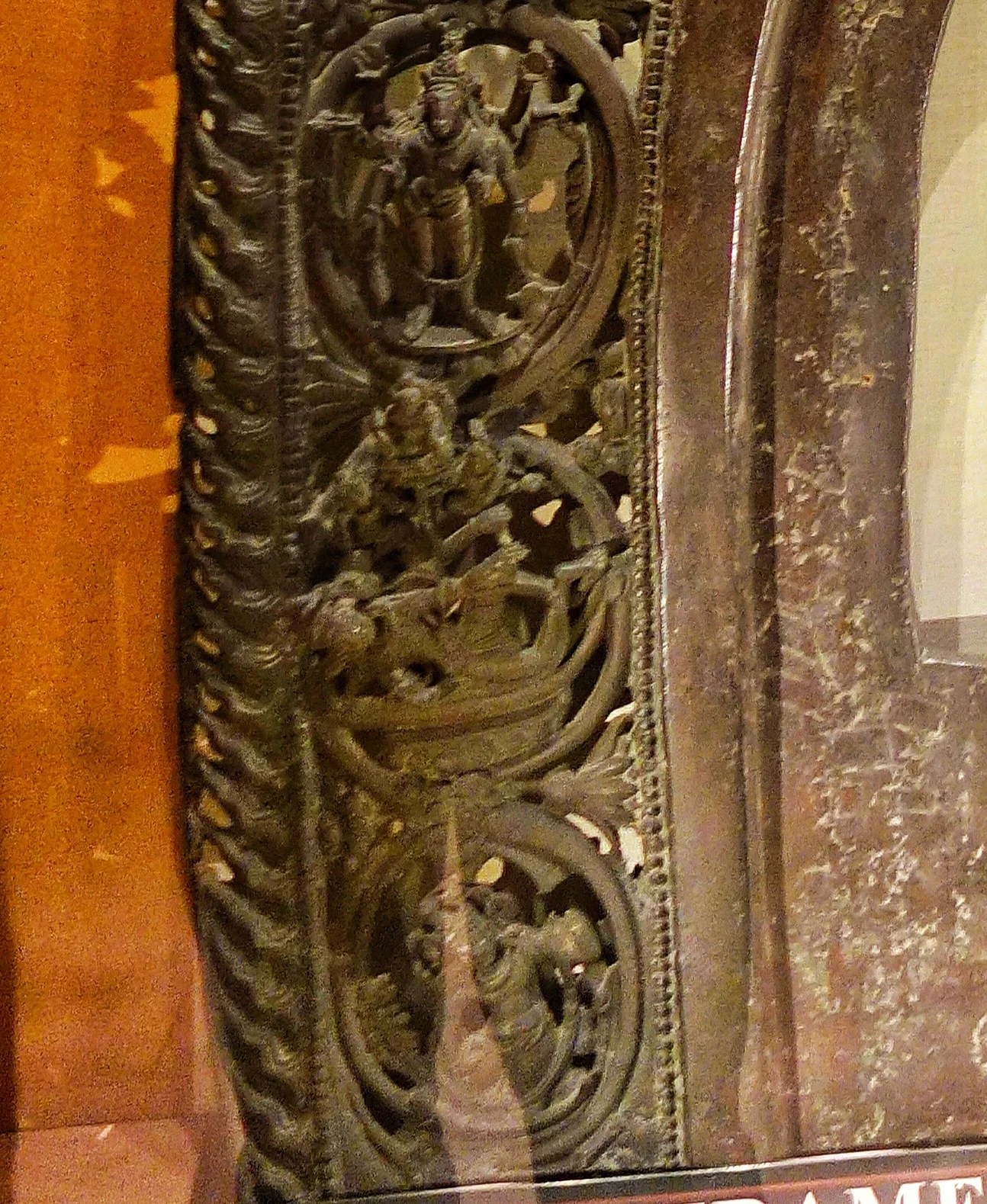
1. Nagaraja donor with seven headed serpent canopy.
2. Sesasayi Vishnu on serpent Sesa with Brahma seated on lotus the stem of which arises out of his navel, with accompanying pair figures of Madhu and Kaithaba.
3. Hayagriva, six armed of which upper two hold sun and moon symbols.
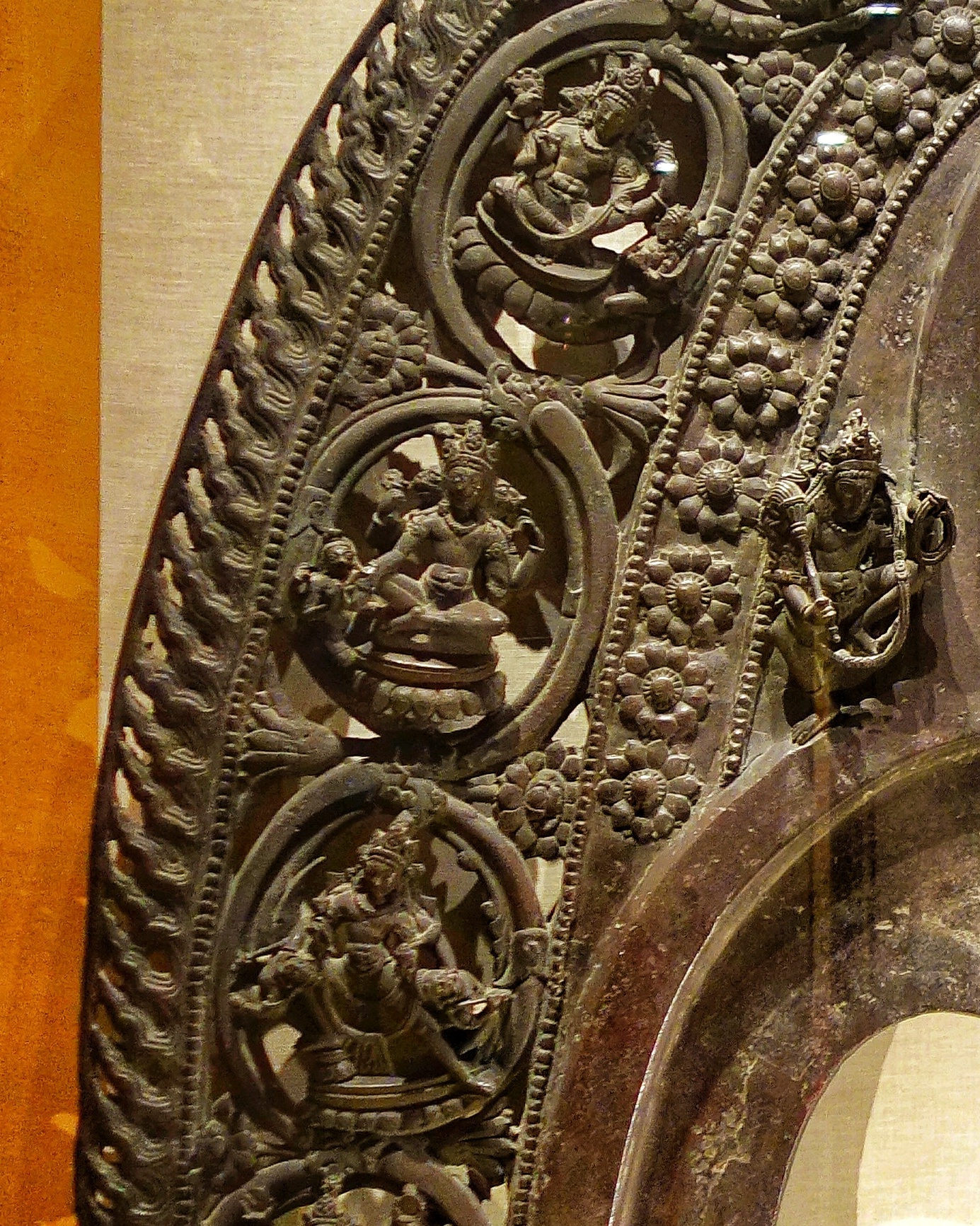
4. Vishnu killing Madhu and Kaithaba.
5. Three headed Vishnu with kneeling four armed Brahma on left.
6. Three headed seated Vishnu with kneeling Lakshmi on right.
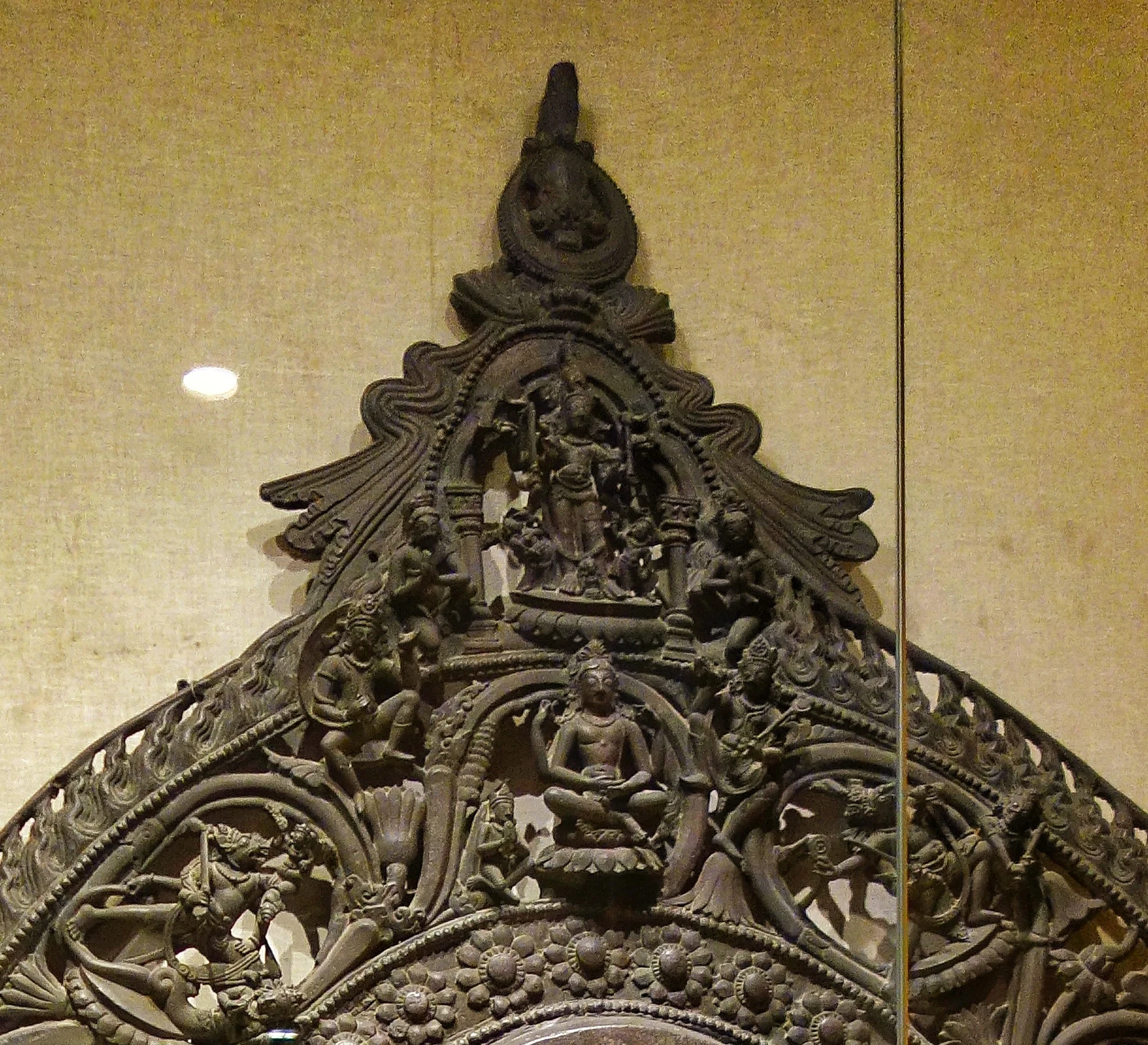
7. Bhuvaraha standing on the coils of serpent Adisesa and raising Goddess balanced on his left arm.
8. Vishnu in yogasana with two attendants.
9. Varaha killing Hiranyaksa.
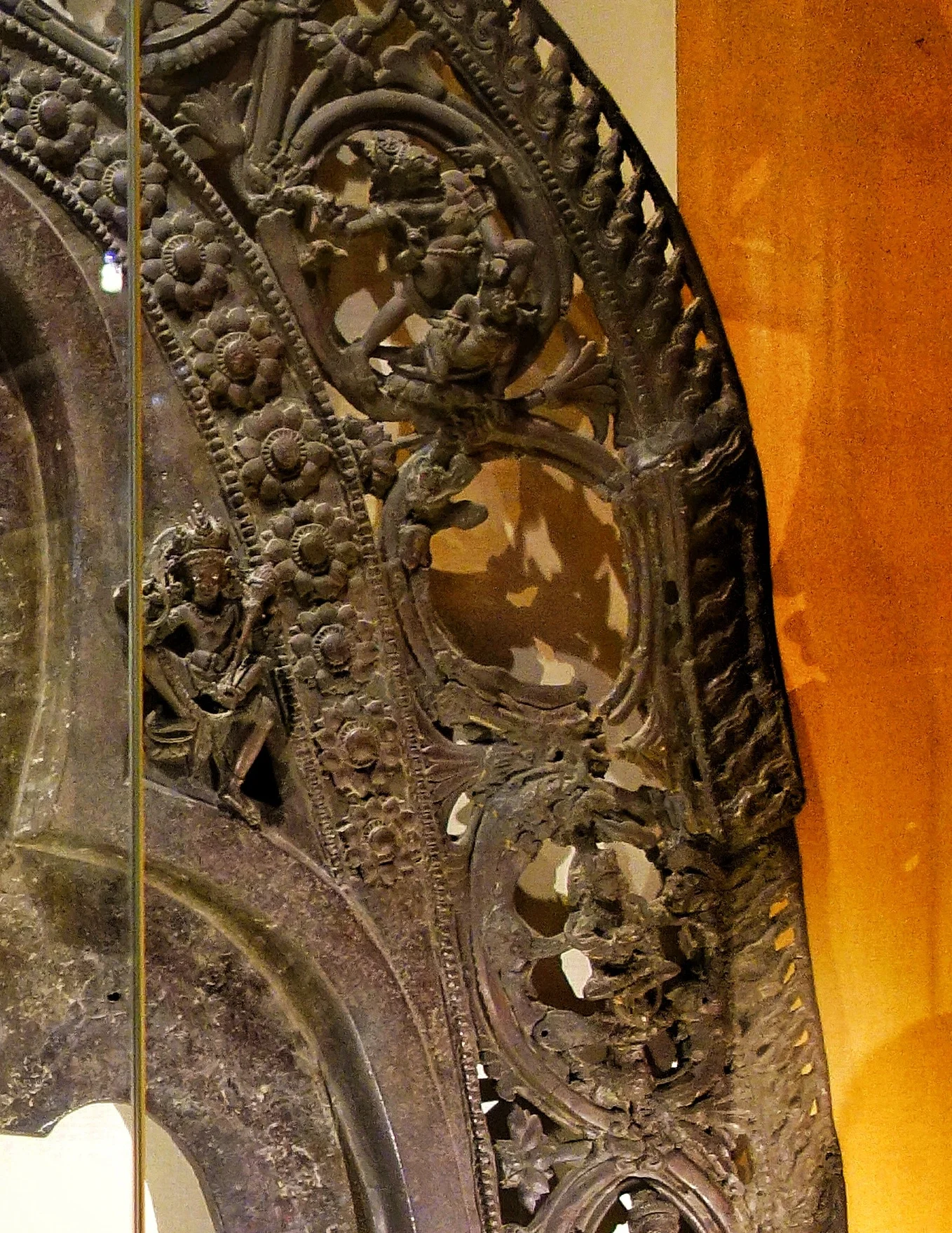
10. Narsimha killing Hiranyakasipu.
11. Missing figure.
12. Missing figure; later replacement of indeterminate form.
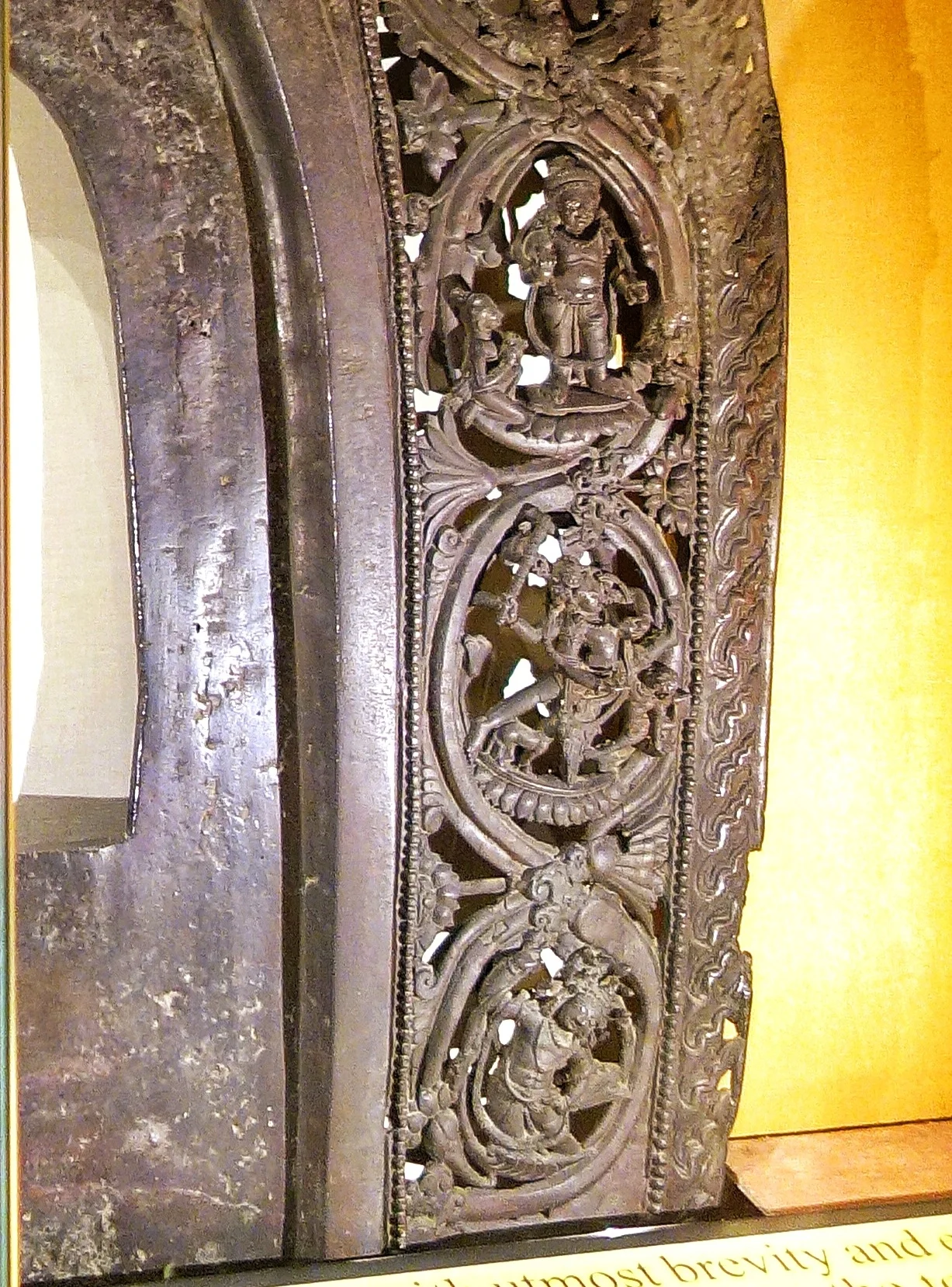
13. Vamna with kneeling figure of Bali holding libation pot and his Queen has veiled hair.
14. Trivikrama striding over Bali with diminutive Horse.
15. Nagaraja donor with seven headed serpent canopy.
The Legendary Map Shawl of Kashmir
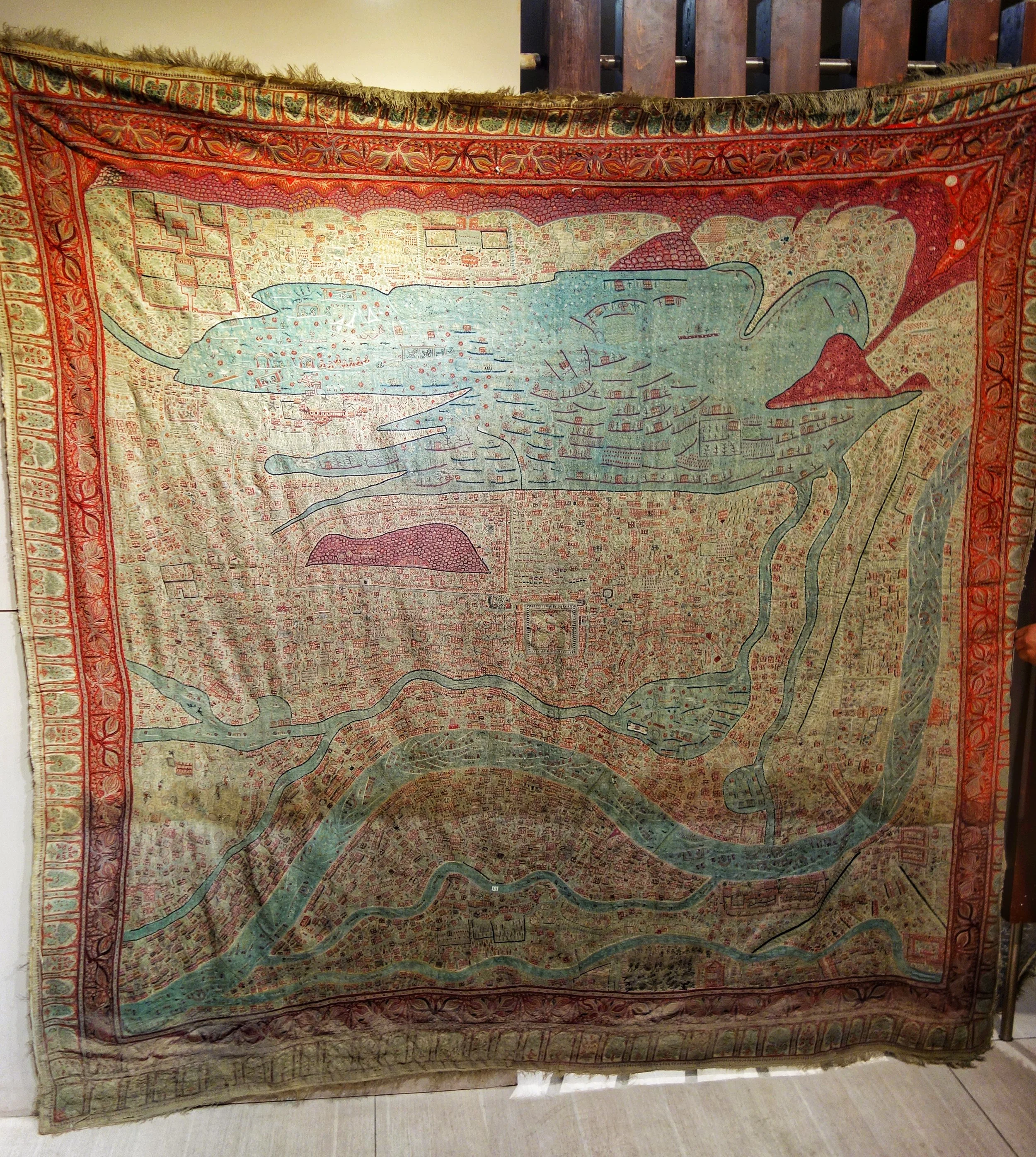
The legendary Map Shawl of Kashmir which has a map of Srinagar city weaved on fine Pashmina. The Shawl was commissioned by Maharaja Ranbir Singh and 3 of these were made. One is on display at the Victoria and Albert Museum in London, one is with a private collector in Australia and one is on display at the SPS Museum in Srinagar.

The Legendary Map Shawl of Kashmir
The amazing and exquisite Map Shawl of Srinagar. This Shawl took 30 years in the making. There are 3 or 4 such specimens in the world. And these were made in the late 1800’s.
One was presented to Queen Victoria by Maharaja Ranbir Singh and is presently at the Victoria and Albert Museum in London. One more is with a Museum in Australia. One is with a private collector and this piece is at the Shri Pratap Singh Museum in Srinagar though it’s not on display as it needs some refurbishing after the Floods.
It would be one of the most expensive pieces of textile ever made if it would be put on an auction. I got a special session to view this absolute Masterpiece as I pestered the right people long enough to let me see this after the Gilgit Manuscripts and along with the Mammoth complete skeleton which was found in Kashmir. A part of the Gilgit Manuscripts is however now on display.
Just that you know the old building of the Museum (out of bounds) was actually a Sumner er Palace of the Maharaja and is as mind blowing as anything you would ever see. The Maharajas sure had money and the craftsmen to deliver stuff which can’t even be imagined .
Coming back to the Shawl. You can see the Dal Lake and the Jehlum. On the right the hill is the Shankaracharya Hill. On the top left you can see the Shalimar and Nishat Gardens. You can also see the Hari Parbat Fort and all the old bridges of the City. The detailing is so minute that there are Shikaras shown in the Jehlum and you can even see the individual eye balls of the people in the Shikara. Words cannot describe this absolute masterpiece of Kashmiri craftsmanship.
Please do visit this Museum on your next visit and I’m sure you will be mighty impressed. I plan to cover stuff from this Museum in the next few days / weeks.
Link for Hi Res of the Map Shawl kept at the Victoria and Albert Musuem
https://g.co/arts/qwf3bmtz54qjtjrc7
Pahadi Languages of the Punjab Himalayas
A summary on the Pahadi languages spoken in the Western Himalayas. Compiled from Bailey’s classic Languages of the Western Himalayas.

Pahadi Languages of the Punjab Himalayas
There are various languages spoken in the Western Himalayas that are loosely put together called “Pahari” which itself is a wide term which seems to include n number of different dialect unintelligible to the speaker of one language to the other.
Here we try and understand the inter-relationship between these Pahari dialects as well as the relationships that they hold with major languages which are spoken in and around them chiefly being Punjabi as the areas we are considering here were a part of Greater Punjab at one point of time. Also we try and see the relationship of these wrt to Dogri, which is a close relative of Punjabi as well as with Kashmiri.
Most of the languages in modern day Himachal Pradesh and Jammu Region are a part of the Dogri-Kangri group of the Western Pahari sub Group of the Indo Aryan language Group. However there are exceptions with languages which belong tothe Kashmiri sub-group of the Dradic languages and the Chamba Lahauli / Kanawari / Bhoti which belongs to the Tibeto-Burman family

The Language Map of Jammu and Kashmir
These dialects mostly cover all the Hill country in the North Western Himalayas besides the more etablished languages such as Kashmiri, Dogri and Punjabi.
The Western Pahari or the Dogri Kangra Group includes the following :
1. Dialects of the Shimla/ Sirmour Hills
Mahasu Pahari
Baghati
Kiunthuali
Kot Gurui (Kotgarhi ?)
Kotkhai
Bushahri ? (Kanawari / Bhotia which are from the
Tibetan Group)
Sirmauri
2. Dialects of Kullu
Ouer Siraji ?
Inner Siraji ?
Sainji
Kului / Kulvi
Kanashi (In Malana again related to Kanawari)
3. Dialects of Mandi
Mandeali
Northern Mandeali
Chota Bhangali
4. Dialects of Kangra
Kangri
Gaddi / Bharmouri
5. Dialects of Chamba and Jammu States
Cameali
Bhateali
Curahi
Lahuli
Pangwali
Bhadarwahi / Bhalesi
Padari
Sasi
Interelations between the Dongri Kangri Group
Bhadarwahi, Bhalesi and Curahi from an interesting Group and have much in common with each other. They are the intermediate forms of speech bridging the gap betwen the Punjabi or Dogri and the Kashmiri System.
Curahi gives place on the east to Pangwali which in turn is closely related to Padari.
On the South Crahi gives way to Cameali and Bhateali, the latter being a dialect of Dogri. Dogri itself the main language of the Jammu region was considered a dialect of Punjabi though now it is recognised as a sperate language closely related to Punjabi. Cameali is replaced by Bharmauri or Gadi on the East, while to the south of Chamba we have the Kangri and Madeali dialects, to the East of them the Kulu Group and to the south and south-west of them the dialects of Simla States.
Its in Cameali and the Kulu and Shimla dialects and also in Gujuri and Sasi dialect that an iteresting similarity is noticed to Rajasthani which points to some close connections in the Past.
6. Other Northern Himalayan Dialects
Gujuri
Tinauli
Dhundi/ Kairali
Punchi
Padari
Siraji / Doda Siraji
Languages now considered a part of the Kashmir subdivision of then Dardic languages sub-Group of Indo-Aryan Languages
Rambani
Poguli
Kishtawari
The most interesting of this Grouping is the “Other Northern Himalayan” Dialects which shows a gradual transition from Gujuri, which is very similar to Punjabi to Kishtwari at the end of the line which is very similar to Kashmiri. This starts right from the Murree Hills in the Punjab to the Kishtwar region which borders Kashmir. We will try and review some of the samples from these from Western Hazara to East Jammu states.
Infact there are a number of similarities and resemblence between Nepali and Rambani, Pguli, Kishtwari and even Siraji
Gujuri
Gurjuri is closely allied to the Marwari dialect of Rajasthani and also has a fair mix of Punjabi in it. In fact the Gujars living in Punjab speak Punjabi and the languages are intermixed. Here we take the example of Gujuri spoken around Murree Hills.
Tinauli
Tinauli is a language from inaul in Western Hazara and resembles closely to Dhundi or Kairali dialect.
Dhundi/ Kariali
Dhundi/ Kairali language greatly resembles Lahnda, the Punjabi dialect of Western Punjab. Its also referred to as Dhundi Pahari and is spoken around the Murree Hills.
Punchi/ Pahar Potohari
The Punch dialect is again connected with the Lahnda dialect of Punjabi and is spoken around the Poonch region. In fact many Punchis actually refer to their language as Punjabi in olden times. Punchi is where the influence of Kashmiri starts and it includes a few words of Kashmiri as well. Of course it has great influence of Dogri as well.
Padari
Padari is an extremely interesting dialect, spoken in Padar region of Kistwar on the banks of the Chinab. It has a striking similarity to Pangwali, spoken in the Pangi Valley in Chamba.
Siraji
Siraji is the language spoken in country north of Chinab between Ramban and Bhart on the way to Kishtwar. It is central to Doda and is also called Doda Siraji at times. Due to its location, to the North it gives was to Kashmiri, on West to Rambani, on the North East to Kishtwari, and on the South and South West to Bhadarwahi and Chamba dialect. Its generally frameworked like Punjabi but has many points in agreement with Kashmiri.
Rambani
Rambani as the name suggests is the language spoken around Ramban and like the Poguli which it closely resembles it is connected with Kashmiri though further away than it than Poguli. Rambani has a very largely Punjabi pronunciation whereas Poguli pronounciation is more like Kashmiri.
Poguli
Poguli is a language spoken in a small area to the East of Ramsu. It resembles Kashmiri though it is unintelligible to speakers of the Kashmiri language. However it seems that all speakers of Poguli have some basic understanding of Kashmiri. Nearly all pecularities of Kashmiri are found in Poguli which however contains a number of points in common with dialects which look to Punjabi as a fountainhead.
Kishtwari
Kishtwari is spoken aound the Kishtwar area of the Kishtwar region. It is considered a sub-dialect of Kashmir which it resembles very much. Kashmiri is well understood in Kishtwar.
As an example we will take the same sentence and see how it is said in these different Northern Himlayan dialects which will help us in getting a sense from the dialects as they move from Punjabiness to Kashmiriness.
The sentence is : How far is Kashmir from here ?
Gujuri : Is ja te Kashmir taru kitno dur ni ?
Dhundi/ Kariali : Ittho Kashmir tokni kina dur a ?
Punchi : Is jai hoi Kashmir kitne kot di ?
Siraji : Ellah atha Kashmira ta kitto dur chu ?
Rambani : Itt ata Kashmira ta kito dur chu ?
Poguli : Ita pata Kashir ta kituk chu dur ?
Kishtwar : Yeti hata Kashiri tai kyuta thu ?
This gives us a broad view and some understanding how people have interacted over the centuries from across the Valleys and the Mountains. The more similar the dialects the more would be the interactions amongst the people. This is a fascinating subject on how a language or a dialect gives way to the other and the interlude that takes place.
Main Source : Language of Northern Himalayas by Bailey 1908. All the meaty knowledge gained from there and some passages are verbatim from this source. For a more detailed study get a copy.
Added references from various Source on the Internet.
Addendum : TAKRI Script (From Wiki)
The Takri script (sometimes called Tankri) is an abugida writing system of the Brahmic family of scripts. It is closely related to, and derived from, the Sharada script employed by Kashmiri. It is also related to the Gurmukhī script used to write Punjabi.
Until the late 1940s, And adopted version script of Takri (called Dogri, Dogra or Dogra Akhtar)was the official script for writing the Dogri in the state of Jammu and Kashmir and Kangri, Cahmbeali, Mandeali in Himachal Pradesh. There are some record of using Takri script in the history of Nepali (Khas Kura).
Takri has historically been used by a number of Western Pahari, Garhwali and Dardic languages in the Western Himalayas, such as Gaddi or Gaddki (the language of the Gaddi ethnic group), Kashtwari (the dialect centered on the Kashtwar or Kishtwar region of Jammu and Kashmir) and Chamiyali (the language of the Chamba region of Himachal Pradesh). Takri used to be most prevalent script for business records and communication in various parts of Himachal Pradesh including Chintpurni, Una, Kangra, Bilaspur and Hamirpur regions. The aged businessmen can still be found using Takri in these areas, but newer generation has now shifted to Devanagari and even English (Roman). This shift can be traced to have happened during the period ranging from 1950s to 1980s.
Pic below: A Dogra Period Currency Note from the Jammu and Kashmir Kingdom with inscriptions in Takri (The Central One), Devanagari and Urdu.
Pic from October 2017. Sri Pratap Singh Museum, Srinagar, Kashmir
Lijiang Instant Noodles Hotel
when you land up at an Indian owned Hotel on the edge of the Tibetan Plateau.
Lijiang Instant Noodles Hotel
Finally I was in Lijiang, an ancient town at an altitude of around 2400 m, the last Tibetan / Naxi city on the edge of the Tibetan Plateau as finally Tibet gives way to South Asia and China.
Lijiang is a beautiful town on the UNESCO World Heritage List. It was one of the main towns on the Tea Horse Trading Route through which Tea was sent into Tibet and in return hardy Tibetan Horses were traded in return. The town of Lijiang served as the gateway to Tibet and even to India.
And after a bit of a search I finally got to my Hotel, which was partly named after the famed Khampa Tibetan horsemen and warriors.It was the Khampas of this part of Tibet called Kham who were the most feared of all the Tibetan people and they resisted the Chinese occupation of Tibet well into the 1970’s.
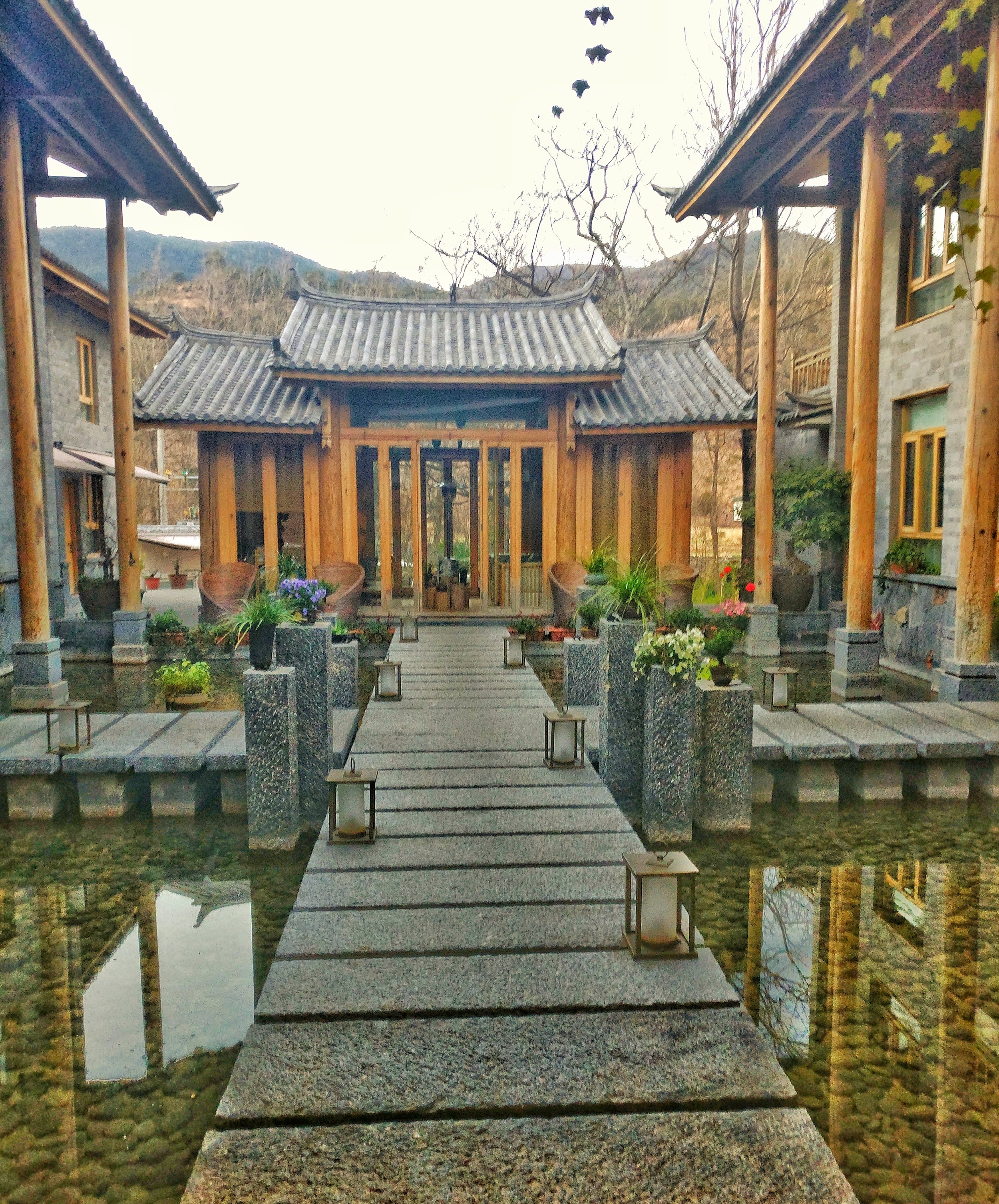
The Hotel was built in a traditional mixed Naxi / Tibetan Architecture with a lot of use of wood and stone as often seen in the mountains. It was a nice Boutique type Hotel in an old part of town.
I had had a great day having visited the Tiger Leaping Gorge and the first bend of the Yangtze at Shudu, reached the Hotel and am greeted by a good English speaking Han Chinese girls. And she asks me for my Passport. And she smiles when she realizes that I am Indian.
She asks me to take a seat in the Lounge of this Boutique Hotel. I sit and the Coffee Table book on the Center Table is on, of all places, Rajasthan.
I asked her why do they have a book on Rajasthan there ? A book on Tibet or Yunnan I would understand but not this. We have it here because the owner of the hotel is an Indian.
I was like “Wait a minute”. An Indian owning a Hotel in Yunnan on the region bordering TAR ? Surely that isnt possible. Or is it ? Got me thinking.
Then suddenly a foreigner looking guy walks in. Says “Hi I am the Manager”. I said “Hi” and asked him where he was from as he sure didnt look from the part of the world that I was in. He said “Chile”
Wait. From Chile ? A Chilean manager of an Indian hotel in Yunnan in China. Was it for real or was it the effect of nice fancy liquids that I had been having last night ?
The Manager gets me a Beer. Says here Sir have a welcome drink. I was beginning to like this place already.
I told him why dont you grab a Beer as well as i need to ask you many questions which have popped into my head since I walked in.
He says Ok cool as there weren’t many Guests in the Hotel. So we sat down and the first thing I asked him “Is the owner of this Hotel an Indian ?”
Yes he says but he has a Tibetan partner. But how can an Indian own a hotel here ? Well he goes on, the guy is an Indian origin guy who lives in Nepal and is as such a Nepalese citizen.
Now it started to make sense. It seems the Indian gentlemen’s family made a fortune in the Instant Noodles business and this was one of their 80+ hotels.
Woah. Thats when the thought came to my mind.
I should get into the Instant Noodle business.
Passes into Kashmir
We try and summarize a list of Passes that provide entry /. exit into the Kashmir Valley besides the Gorge of the Jehlum River.

Kashmir Valley : Passes
The Great European Explorer Godfrey Vigne was one of the first outsiders who managed to travel into Kashmir in the period of 1835 to 1838 and write at great lengths about. That was indeed a very interesting time in the History of the region as the power of the Indomitable Sher – e – Punjab was reaching its Zenith and within just a little more than a decade the mighty Empire built by the Great Ranjit Singh would lie in shambles and it would see the emergence of Maharaja Gulab Singh as the first Dogra Raja of Jammu and Kashmir. To understand the history of present day Kashmir one has to go right back to the time of Ranjit Singh to really get a grasp on facts.
But as we focus on Geography rather than history let me get back to Vigne. During his contant travels in and out of the Valley, Vigne listed atleast 20 Passes from all directions from which one could enter or exit the Valley. As I have not read his epic Travels in Kashmir, Ladak, Iskardo, the countries adjoining the mountain-course of the Indus, and the Himalaya, north of the Panjab. Volume I/ II but have just managed to land a PDF copy of the same I was trying to hazard a guess as to what all Passes does Vigne refer to. So here I got to the best of my knowledge. Please add your comments and names that you think that have been missed out.
Note that in/around Kashmir names like Gali/ Top/ La are also used for a Pass.
The Motorable Ones go first
1. The Banihal Pass : On the main Highway from Srinagar to Jammu. Of course now the Tunnel makes it very accessible.
2. The Pir Ki Gali : On the newly opened for traffic Mughal Road from Jammu to Srinagar
3. The Sinthan/ Simthan Pass : On the road linking Kashmir to Kishtwar
4. The Margan Top : Recently opened connects Kashmir to Warwan Valley in Kishtwar
5. The Zoji La : Pretty well known connecting the Kashmir Valley to the Ladakh region
6. The Razdhan Pass : Also called Tragbal Pass. Connects the Kashmir Valley to Guraiz which is actually a part of Baltistan of the old.
7. The Pir Panjal Pass : Connects Kashmir to POK. Not under Indian control
8. The HajiPir Pass : Connects Uri in Kashmir to Poonch. Not under Indian control
Other historical Passes in the Pir Panjals (South and West of the Valley). Just came across the names as classical passes which
traverse the Pir Panjal into the Kashmir Valley.
9. The RatanPir Pass
10. The Bairam Gala Pass
11. The Gulabgarh Pass
Some Passes mentioned on the Poonch/ Reasi side into the Konsarnag area in the Pir Panjals
12. Nalla Shergadi
13. Ropri Pass
14. Konsargali Pass
15. Zamian Pass
Some Passes on the Poonch to Gulmarg/ Yusmarg , Kashmir axis
16. Jamia Gali
17. Nurpur Gali
18. Choti Gali
19. Chor Gali
20. Nandan Gali
21. Jamianwali Gali
Passes from the East (Warwan Valley in Kishtwar towards Kashmir). Almost all these Passes lead into the adjoining Lidder Valley
22. Gulol Gali Pass
23. Kralsar Pass
24. Rangmarg Pass
25. Odir Gali
North towards Ladakh
26. Burzil Pass : Traditional Pass on the road from Gurez to Skardu (If we consider Razdhan Pass then this one no longer should be
in the list.
Additions by Farooq Sofi Sir
27. Nastichun Pass : Also referred to as Sadhna Pass. Connecting Kashmir with Karnah Valley
28. Tootmar Gali : Connecting Kashmir to Leepa Valley.
Thats my list.
The Kashmir Ladakh Yarkand TransHimalayan Silk Route
Notes from the Kashmir Ladakh Yarkand Trade Route / Silk Route

The Kashmir Ladakh Yarkand TransHimalayan Silk Route
The quite famous Double Humped or Bactrian Camels of the Nubra Valley which came into this region from Central Asia on the various trade routes that connected the two regions.
A large quantum of the trade was carried on through the classical trade route from Ladakh to Yarkand in the Tarim Basin in Turkestan of the old ( Xinjiang Province of China at present ). The traders from Ladakh took to Yarkand (which served as the gateway to Central Asia) items like Shawls, Indigo, Tea, Corals, Corals, Muslin etc. On the other from Yarkand into Ladakh (and further into Kashmir and North India) came in Silk, Precious Metals, Costumes, Jewellery and oddly Russian currency towards the end of the Nineteenth century.
The distance between Leh to Yarkand is just 475 kms as the crow flies but in those days this was a long and arduous trek which involved the crossing of atleast 5 major passes and crossing the Depsang Plains.
The great passes that had to be crossed in this great trasnverse starting from the Leh side included the now “world famous” Khardung La. From the head of the Nubra Valley started the descent into the second Pass, Sasser La,at 5411 m. From this pass the route descended into the Depsang Plains.
From the Depsang Plains, which are as desolate as any place on the planet with an average elevation of 5300 m the route headed over the Karakoram Pass which stood at 5540 m. The Karakoram Pass was/is totally bereft of any kind of vegetation and lot of the livestock just gave up. It is said that the path up the Pass is still strewn with hundreds of bones and skeletons of pack animals that just gave up and died. After crossing the the Karakoram Pass the route went towards the relatively easy Suget La.

After crossing the easiest pass on the route, Suget La, ~ 5500, which was in the Kun Lun mountains the route descended into the staging post of Shahidullah which offered some rough pastures for the load animals to refuel. It is interesting to know the British considered Shahidullah as the frontier of the state of Jammu and Kashmir and not the Karakoram Pass as some others assumed it to be.
After Shahidullah came the last pass before descending into the plains of Central Asia, the Sanju La at 5364 m. From this Pass the mountains gave way and the trade route made its way into the fabled city of Yarkand.
But this trade came to a gradual halt due to the complicated political situation in this area. Hopefully one day some people may fulfill their ultimate dream of following in the foot steps of the great caravans which connected North India with Central Asia.
PS : This pic was taken by me in July, 2004
Some inputs from John Keays : When Men and Mountains Meet
The Nanga Parbat
The Nanga Parbat as seen from Gulmarg in Kashmir.

The Nanga Parbat
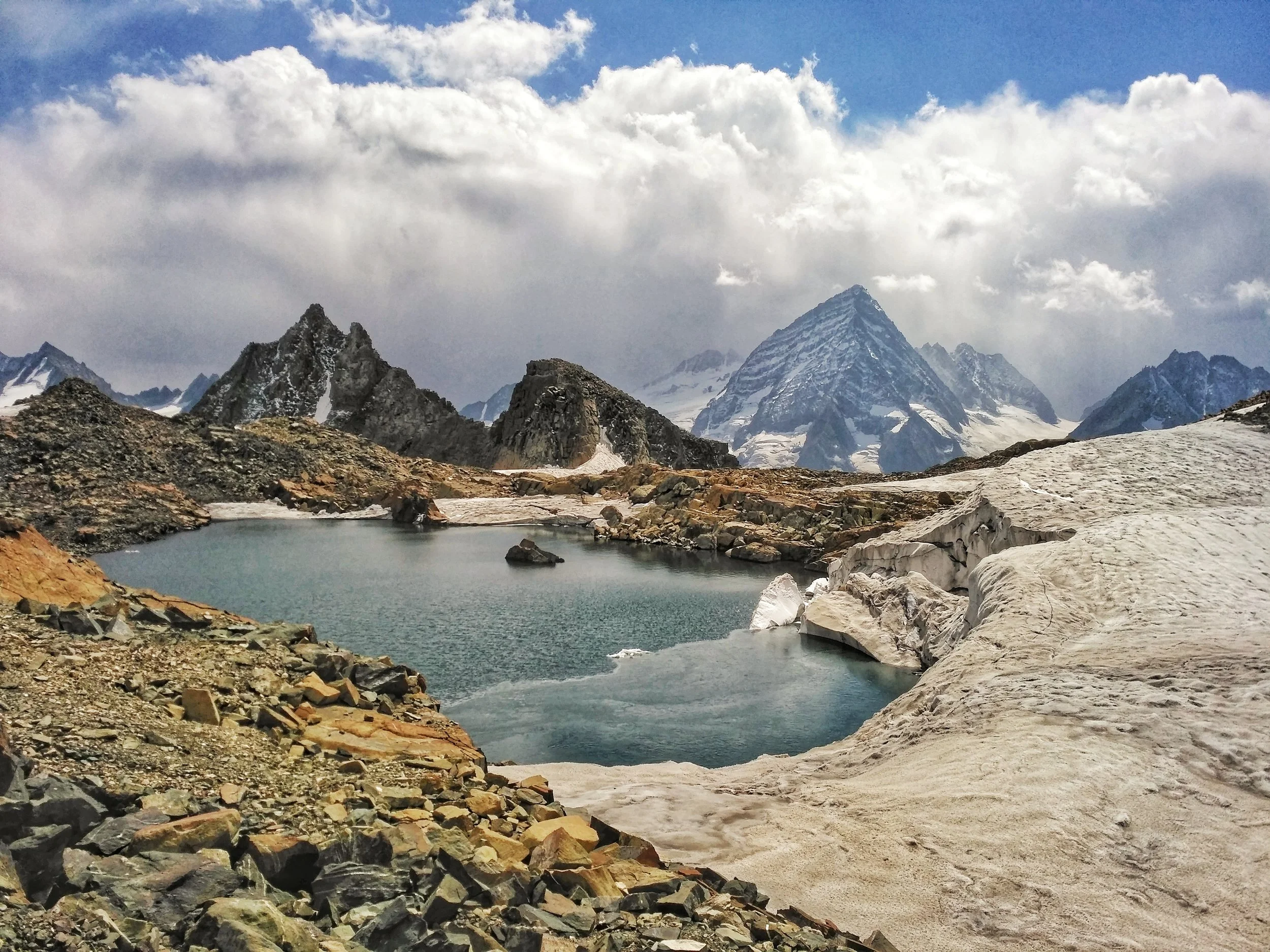
The Kashmir Valley with a gallery of Peaks in the background. These Peaks belong both to the main Himalaya as well as the Zanskar Range. Visible in the pic from the left are the Kotwal Peak, the Harwar Peak, the Mahadev and the highest Peak of the Valley, the Kolahoi Peak and the Buttress Peak to its right.
Below in the Valley floor you can see the road which comes from Srinagar to Gulmarg as it snakes it’s way up the Valley. This view of the KashmirHimalaya is from the Pir Panjals where Gulmarg is located.
Not in the pic to the left are the Haramukh and further left is the Nanga Parbat Massif. To the right of the pic are the Nun Kun and the Peaks of the Kishtwar Himalaya like the Brahma. Of course you have to be a lucky person to get clear weather and get to see all Peaks. While I was there I could never really see much to the right of the Kolahoi.
In your next trip to Gulmarg (whenever that is) please try and capture these Himalayan giants.
Pic from April 2016. Gulmarg, Kashmir.
The Great Himalayan Mountain Complex
The Great Mountain Complex of the Himalayas is a vast expanse which includes the highest Peaks on the Planet and stretches all the way from Central Asia to South East Asia. We explain about some of the main Mountain Ranges of this Great Complex.

Dummy’s Guide to the Himalaya
THE GREAT MOUNTAIN COMPLEX OF THE HIMALAYA : The Western/ North Western Flank.
The Himalaya are a part of an extremely complex mountain system which includes the highest peaks on the planet. Created by great Tectonic plate movements millions of years ago, when the Indian plate collided with the Eurasian plate, the Himalaya are still rising. Most of the Ranges I mention below are regarded as separate ranges and are as such but in the broadest sense we have taken all the Mountain Systems between the Indian subcontinent and Central Asia and refer to them as the Himalaya, the name stemming from the Sanskrit words “Him” snow and “Alay” home.

The epicenter of this system lies somewhere in between the wild mountains north of Kashmir and the nodal orogenic uplift known as the Pamir Knot in Tajikistan. From the Pamir Knot rise the great ranges of Central Asia and they meet the Great Himalaya at the epicenter. The Great mountain wilderness north of Kashmir right upto the Pamirs are till today one of the least explored region on the planet. The last great Explorers of this region were mostly Europeans in the pre – Independence era. The physical factors aside, sadly, there are political reasons today which keep a large part of this great mountain wilderness off limits to explorers.
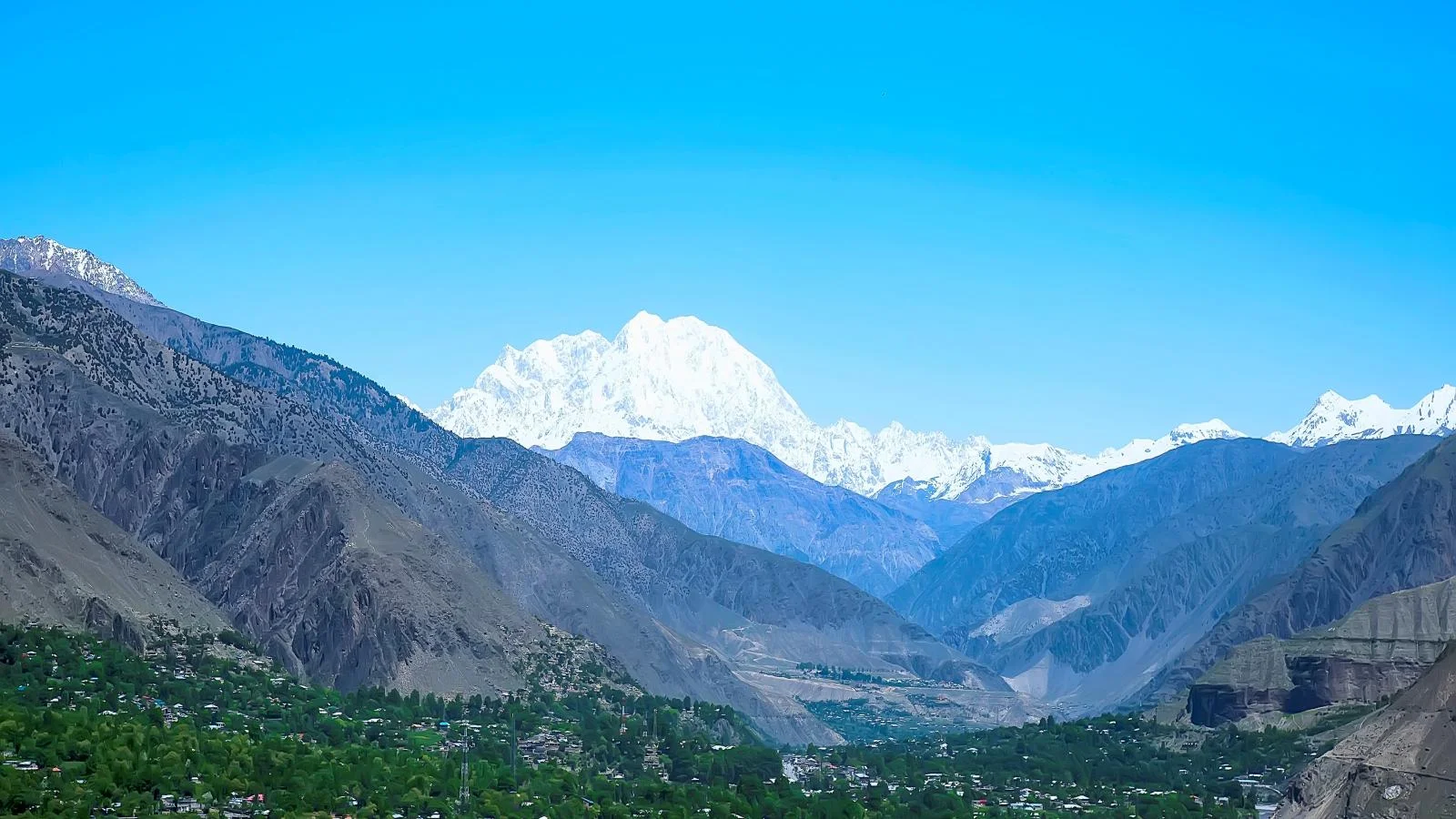
The Tirich Mir (Pic from 99wallpapers.com)
Starting from the West, from the arid hills of Afghanistan comes the Hindu Kush. Its brown treeless slopes rise up and get higher and steeper as the approach the meeting point of the giants. The Hindu Kush still has a hint of Middle Eastern deserts even below the Glaciers of the 7708 m high Tirich Mir. The term Hindu Kush derives from Persian stands for “Hindu Killer” probably in reference to the unknown number of Indian slaves who perished in the cold and snows of these mountains while sold into slavery in the Central Asia.
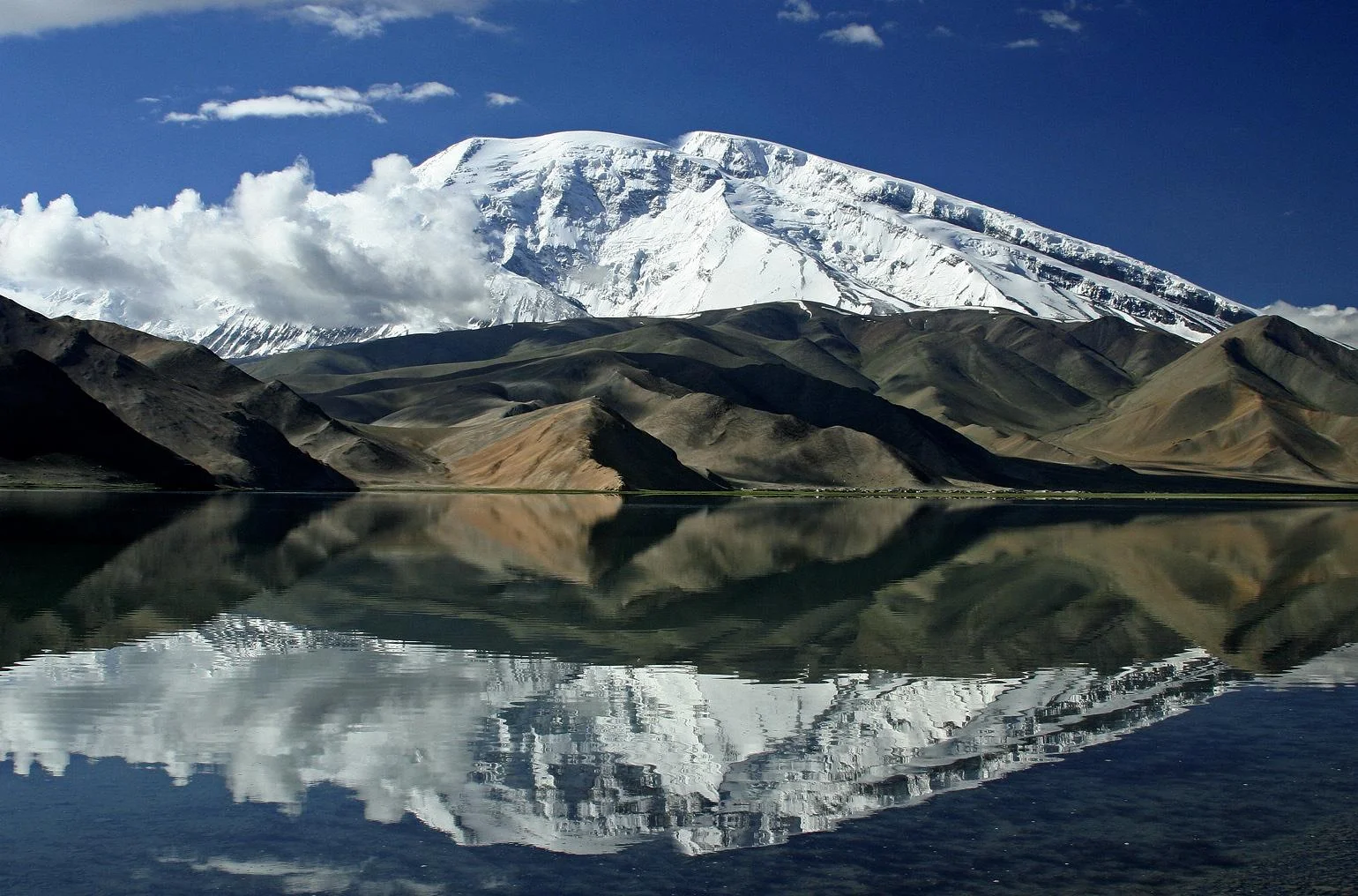
The Mustagh Ata (https://www.summitpost.org/muztagh-ata/151886
To the North of the Hindu Kush lie the rounded domes of the Pamirs. This is still a mysterious and almost polar region of several mountain ranges linked together, and to other ranges, by a north-south range which includes the peak of Muztagh Ata whose name means “The Father of Snowy Mountains” standing at 7509 m. The Arabs used to refer to the Pamirs as the “Bam i Duniya” or the Roof of the World. The name Pamirs comes from the Persian reference to these mountains.
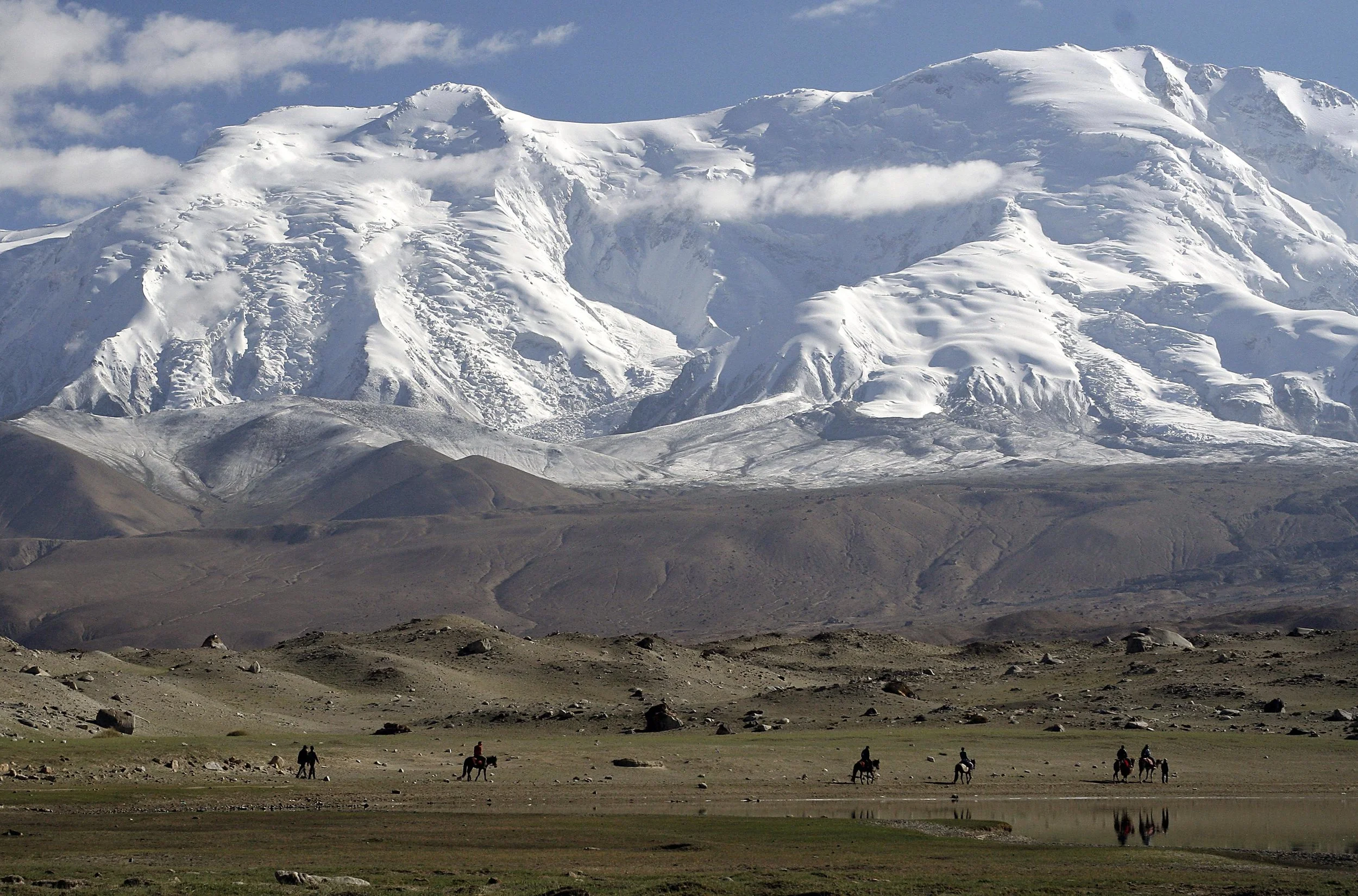
The Kunlun Shan (https://www.summitpost.org/kunlun-shan/171011
Moving eastwards of the Pamirs we have the Kun Lun. It rises over the Tarim Basin in the Takla Makan desert and rise up as it moves towards the epi center. The highest peak of the Kun Lun is the Luishi Shan standing at 7167m. Overlooking the great Silk Route of Cathay they have always been historically regarded as the southern frontier of the Chinese empire. The Kun Lun were named after a semi-mythical reference in classical Chinese texts to the source of the Yellow River.

Where all these ranges meet lies the Karakoram. Mightiest of all these ranges, they radiate from an amphitheater of peaks called Concordia which holds three of the worlds highest peaks in the world. The Karakoram is a perpendicular wilderness where only mountaineers can venture. Glaciers thirty miles long and a quarter mile deep lie in the valleys. These Glaciers here are the largest that can be found outside of the Polar regions. The highest peak of the Karakoram if of course the K2 standing at 8611 m. The name Karakoram comes from the Turkic term “Black Gravel”, Kara being the Turkic term for “Black” very similar to the Hindi “Kala”.
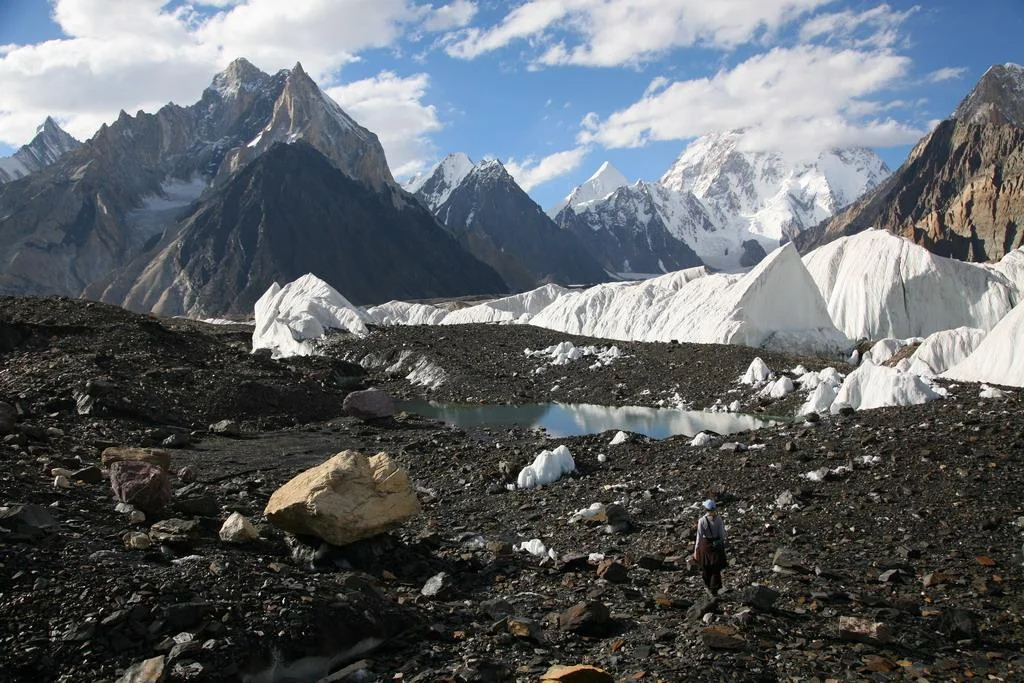
Concordia in the Karakorams (https://www.summitpost.org/concordia-the-amphitheatre-of-ten-of-the-world-s-thirty-greatest-mountains/534309
South of the Karakoram is the Ladakh Range which is considered a sub-range of the Karakoram itself as per Encyclopedia Brittanica though some consider it a part of the Great Himalaya. South of this Range is the Zanskar Range, which is a sub-range of the Great Himalaya, which seperates the Ladakh region from Kashmir and Jammu regions.

Joining from south west in the Mother Range the Great Himalaya, culminating in its giant sweep from across Nepal at the formidable Nanga Parbat standing at an imposing 8126 m. What makes this mountain so formidable is that it rises vertically from around the base of the Indus to its imposing height. This is same sweep of the most formidable mountains on the planet which includes the highest peak on the planet Mt. Everest. The Great Himalaya range stretches from the Nanga Parbat in the North West to the Namche Barwa in the East.The range varies in width from 400 kilometres (250 mi) in the west to 150 kilometres (93 mi) in the east.
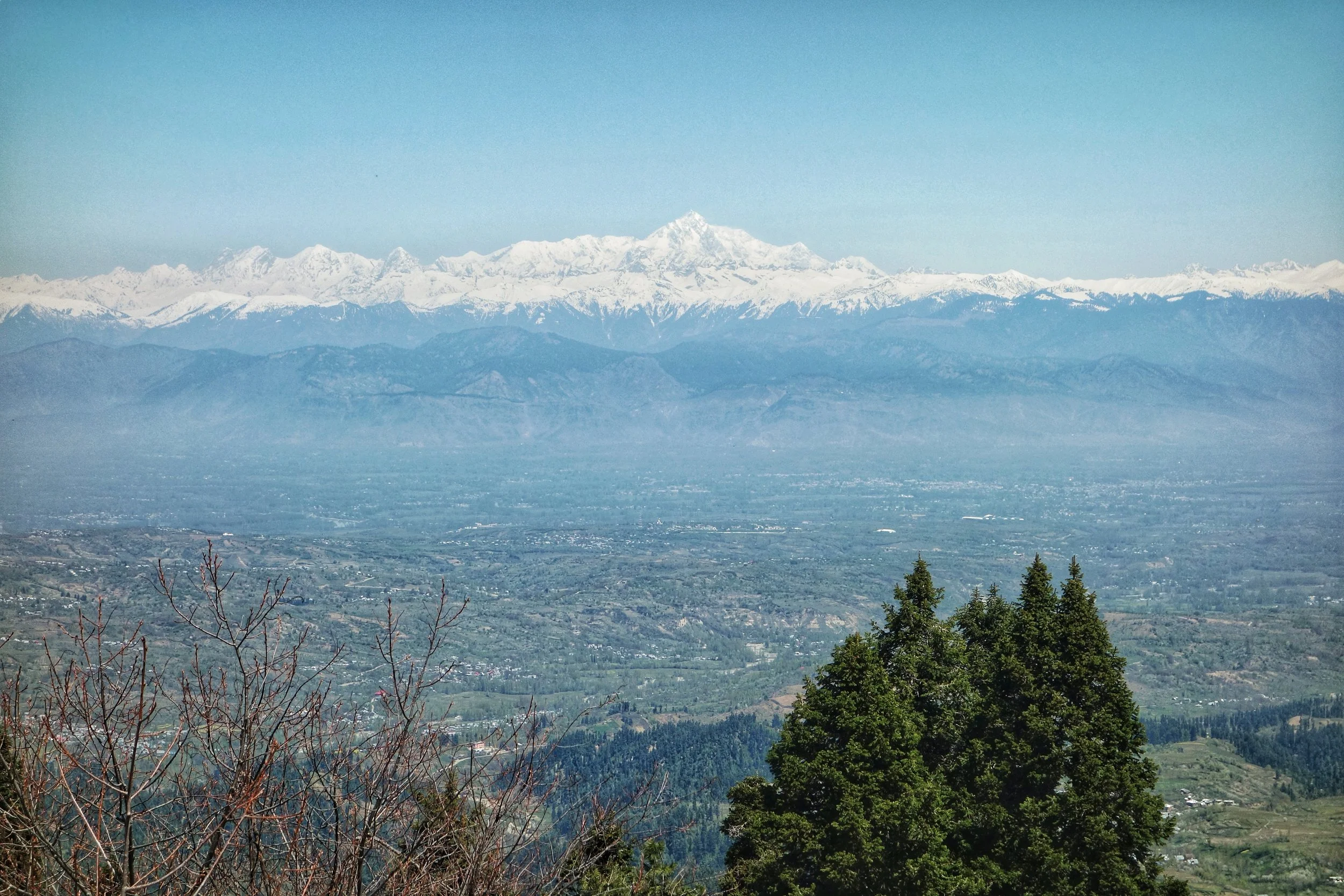
Nanga Parbat
Moving southwards we have the Pir Panjals which though considered a part of the Greater Himalaya, are as noble as a range can be and in another part of the world would have been a seperate Range itself. Though not high as per Himalayan standards it is the first snowcovered peaks tha you encounter moving up from Northern India. Compared to the barren mountains that lie north of it the Pir Panjals are all green and bountiful. The Pir Panjal gets more snow than anywhere in the Western Himalaya. The Pir Panjal gets its name from the Pir Panjal Pass, which was named according to one theory after “Five” “Panj” and “Saints” “Pir” or five pious brothers who lived around there. Another theory alludes the name to the Kashmiri word for a Pass “Pansal” and “Saint” “Pir”, a saint whose grave was supposed to be on this Pass.
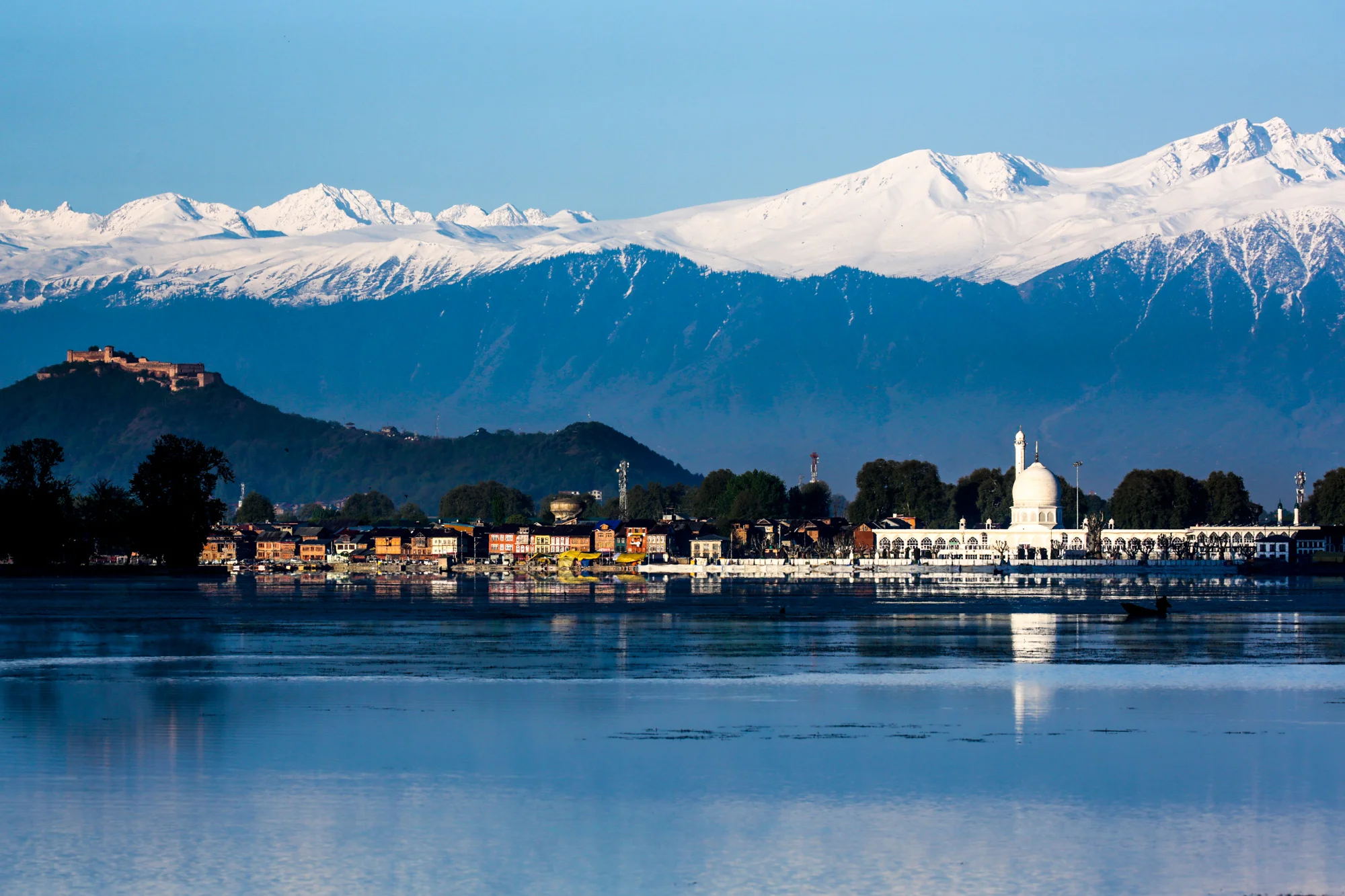
The Pir Panjals over the Kashmir Valley
South of the Pir Panjal we have the Dhauladhar Range though some consider the Dhauladhar to be a part of the Pir Panjal itself. The Dhaula Dhar is also reffered to as the Lesser Himalaya.
Finally the these Ranges give way to the gentle Sivalik Hills which finally merge into the Great Indian plains.
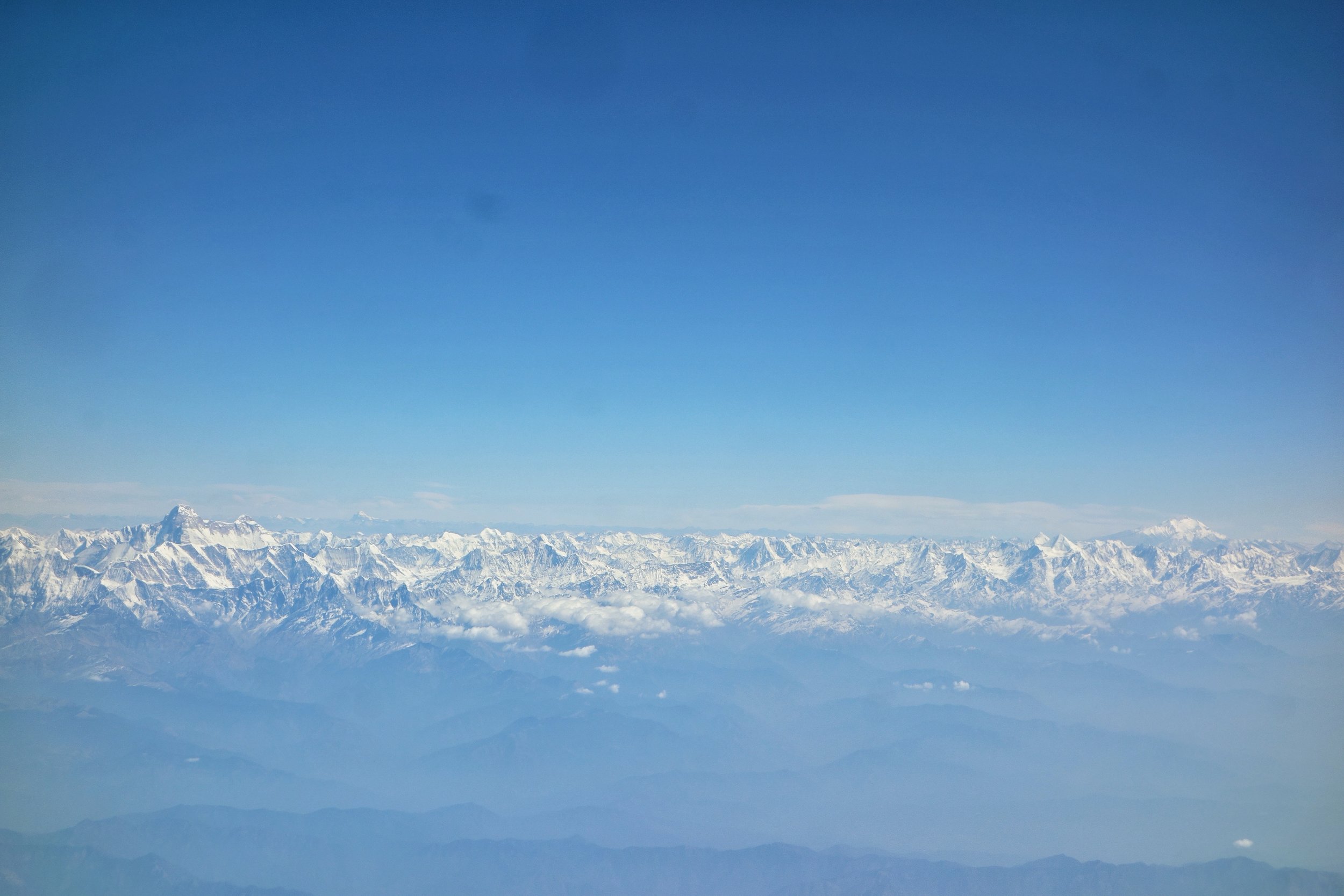
The Holy Mountains of the Himalayas : The Nanda Devi and the Kaliash Parbat
Major Inputs and extracts from the John Keay Classic : Where Mountains and Men Meet
PHOTO (Map) : A classical map of the Western Himalaya without national boundaries. Sourced from John Keays : Where Mountains and Men Meet :
NOTE : As mentioned before all scholars do not agree on the classification of these Ranges/ sub-Ranges. However a majority of them would agree on what I state above. The above article has been compiled from various sources.
The Inglorious Bastards of the Pir Panjals
The Inglorious Bastards of the Pir Panjals

The Inglorious Bastards of the Pir Panjals
It was early morning when the phone rang. It was a cold winter’s morning and it was snowing outside. As I struggled out of bed to pick up the phone the last thing I imagined was that I would get vital information about the most wanted canine outlaw of the Western Himalayas. Jagawar aka Jaggu aka Jaggu Satrangi aka Jags Caninleone.
On the other side was an informer who told me about Jaggu and his dog friday, Carlos the Jackal, being seen in the snows of Gulmarg. As the Sub Inspector in charge of the Canine Crimes Group this was the chance I was looking for. If I could get hold of Jaggu I could finally become an Inspector and maybe Basanti would then agree to marry me.
I put on my clothes, a t shirt, a half sleeves sweater, sweatshirt, a jacket and another jacket. Gulmarg snow season is cold and it’s there where all these Gangsters hideout. But I was a man in a mission and Jaggu was firmly in my cross hairs.
Last seen near one of the Ski lifts, Jaggu was armed and dangerous. And more so Carlos the Jackal, always ready to fight till the end for Jaggu. I needed to proceed with caution. But someone needed to do the job and I was the man for the job. And I could already hear Basanti saying yes to my marriage proposal.
And then came the time of reckoning. Out in the distance near the Ski lift I spotted Jaggu and Carlos. Planning their next heist, their next kill, their next hit. But they seemed to be frolicking in the snow like little kids. Who could have imagined that these were the Inglorious Bastards of the Pir Panjals having taken over the canine underworld after eliminating the heads of seven criminal canine families.
And then I decided to take the bull by the horn and called out to Jaggu and Carlos. We had met before but at that time Jaggu was an innocent six months old Puppy far removed from the murky crime world. He responded. I think he still remembered the butter chicken leg that I gave him.
The dangerous duo trotted towards me. I knew there was danger but I had to take the risk. And then they were upon me. And I asked him his name. He didn’t respond. I asked again in English knowing how conscious these Gangstas was. No reply again. I asked in Kashmiri. And then in Punjabi and assured him no harm will come upon him.
But Jaggu the crime lord, the name a mother would take to scare a crying child to stop crying, would say nothing. Like a Costa Nostra of the Pir Panjals. There was something Sicilian in the air. He just looked at me with his big beautiful eyes. And Carlos was all the time giving me the look, ready to pounce.
It was then that I realized that I should let these Inglorious Bastards be. Let them roam the snows of the Pir Panjals. There time wasn’t up yet and maybe the Almighty had deemed these devils to roam and spread terror in the Western Himalayas.
My marriage to Basanti would probably have to wait.
The Inglorious Bastards of the Pir Panjals won this round. But only this time.
The Jawalaji Temple in Europe
The Astegah in Baku in Azerbaiajan is supposedly linked to the Jwalamukhi Temple in Himachal Pradesh. The intriguing story of the Hindu merchants who used this Temple along with the Zoroastrians and the Sikhs.

The Curious Case of the Jawalaji Temple in Europe
Most of us who frequent the Himalayas are aware of the famous Jawalaji Temple in the town of Jawalamukhi in Himachal Pradesh where an eternal flame burns which attracts worshippers from far and wide. The Jwalaji Temple is considered one of the Shakti Peeths, which are Shrines dedicated to the Devi, the Mother Goddess. It is also supposed to be one of the most important Shrines of Goddess Durga.
The Temple was established by Raja Bhumi Chand Katoch, who was a great devotee of Durga Ma and is situated on the Dharamshala Shimla Road. Interestingly no idol is worshipped in the Temple but instead a Flame which appears out of a crack in the Rocks and this is object of worship in the Temple. The source of the Flame is probably some natural gas deposits deep underground but as Religion and Science dont mix I leave it to your personal opinion as to what is the source of this eternal Fire.

Moving on, in my usual rumblings and digging around I came across some references to this Temple being the “Small” Jawalajee and the “Big” Jawalajee being in, of all places, Baku, Azerbaijan. For those of you not aware Azerbaijan lies on the other side of the Caspian Sea at the point where Asia meets Europe. Its mostly a Mountainous country and the Caucasus Mountains which traditionally separate Asia from Europe is the main Mountain Range. Of course its not in the Himalayas but this Temple at the foot of the Caucasus Mountains has a religious connection with the Jawalaji Temple in the Himalayan foothills. Enough to invoke my interest in the same.

And then I came across the Ateshgah of Baku, located in the Surakhani town of Baku city. It’s also called the Fire Temple of Baku and is a Castle like Temple. Atesh as some of you might be aware, is the Persian word for Fire and Gah means house and put together it literally means “House of Fire”. Ok it seems I am on the right track. The Central element “Fire” is point of commonality with the “Small” Jawalaji.
The Temple complex itself is a Pentagonal structure with a tetra-pillar altar in the middle which housed an eternal flame which went out in 1959 though the Temple complex itself was abandoned in 1883 with the setting up of Petroleum plants in the town. The eternal flame was probably a sign of the huge hydrocarbon deposits that lay underneath. Azerbaijan today is a big exporter of oil and gas and it comes from the Caspian Sea. People aware of the Geopolitics well understand the ramifications if the term “Caspian Sea Oil” and i leave it that as that is not the subject of study here.

Coming back to to Atashgah, it has inscriptions in Sanskrit, Persian and Gurumukhi. And there is a Trishul installed on the top of the Altar.In an inscription from the Baku Atashgah. the first line begins: I salute Lord Ganesha (श्री गणेसाय नम) venerating Hindu god Ganesha, the second venerates the holy fire (जवालाजी, Jwala Ji) and dates the inscription to Samvat 1802 (संवत १८०२, or 1745-46 CE). The Persian quatrain below is the sole Persian inscription on the temple[8] and, though ungrammatical, also refers to the fire (آتش) and dates it to 1158 (١١٥٨) Hijri, which is also 1745 CE.

Besides this there is a seperate inscription in Sanskrit dedicated to Lord Shiva as well as an inscription in Gurmukhi dedicated to the Adi Granth. The present Temple has been dated to have been built in the mid 1700s as confirmed by the inscriptions as well.
Now we have to remember that much earlier in history this was a stronghold of Zoroastrianism, and the followers of that Religion itself worship the fire. So there are strong linkages to that as well. Scholars now agree upon the fact that this Temple served as a Temple to the Zoroastrians, the Hindus and the Sikhs. Interestingly, an Azeri presentation on the history of Baku, which calls the shrine a “Hindu temple”, identifies the trident as a Zoroastrian symbol of “good thoughts, good words and good deeds”
One early European commentator, Jonas Hanway, bucketed Zoroastrians, Sikhs, and Hindus together with respect to their religious beliefs: “These opinions, with a few alterations, are still maintained by some of the posterity of the ancient Indians and Persians, who are called Gebers or Gaurs, and are very zealous in preserving the religion of their ancestors; particularly in regard to their veneration for the element of fire.” Geber is a Persian term for Zoroastrians, while Gaurs are a priestly Hindu and Sikh caste. A later scholar, A. V. Williams Jackson, drew a distinction between the two groups. While stating that “the typical features which Hanway mentions are distinctly Indian, not Zoroastrian” based on the worshipers’ attires and tilakas, their strictly vegetarian diets and open veneration for cows, he left open the possibility that a few “actual Gabrs (i.e. Zoroastrians, or Parsis)” may also have been present at the shrine alongside larger Hindu and Sikh groups.
The Hindus and Sikhs of Baku were probably traders who came along the Routes which connected Asia with Europe and many of them settled here. There are many accounts of Europeans explorers who visited Baku in the older times talking about meeting Hindu and Sikh people in Baku. It is also said that the carpenters for making the Ships that went onto the Caspian Sea in Baku were Indians. Some of their accounts are given below
Chardin in the 17th century reported about Persian Guebres, which worshiped forever burning fire that was in two days’ journey from Shemakha (on the Apsheron).
Engelbert Kaempfer, who visited Surakhany in 1683, wrote that among people who worshiped fire, two men are descendants of Persians who migrated to India.
French Jesuit Villotte, who lived in Azerbaijan since 1689, reports that Ateshgah revered by Hindus, Sikhs, and Zoroastrians, the descendants of the ancient Persians.
German traveler Lerch who visited the temple in 1733, wrote that here there are 12 Guebres or ancient Persian fire worshipers».
J. Hanway visited Baku in 1747 and left few records of Ateshgah. People, who worshiped fire in Ateshgah he calls “Indians”, “Persians” and “Guebres”.
S. Gmelin, who visited Ateshgah in 1770, wrote that in the present Ateshgah lived Indians and descendants of the ancient Guebres.
In 1820 the French consul Gamba visits the temple. According to Gamba here lived Hindus, Sikhs, and Zoroastrians, the followers of Zoroaster.
And to the Jawalaji connection. The inscriptions in the temple in Sanskrit (in Nagari Devanagari script) and Punjabi (in Gurmukhi script) identify the site as a place of Hindu and Sikh worship, and state it was built and consecrated for Jwala Ji, the modern Hindu fire deity. Jwala (जवाला/ज्वाला) means flame in Sanskrit and Ji is an honorific used in the Indian subcontinent. There is a famed shrine to Jwala Ji in the Himalayas, in the settlement of Jawalamukhi, in the Kangra district of Himachal Pradesh, India to which the Atashgah bears strong resemblance and on which some scholars (such as A. V. Williams Jackson) suggested the current structure may have been modeled. However, other scholars have stated that some Jwala Ji devotees used to refer to the Kangra shrine as the ‘smaller Jwala Ji’ and the Baku shrine as the ‘greater Jwala Ji’.Other deities mentioned in the inscriptions include Ganesha and Shiva. The Punjabi language inscriptions are quotations from the Adi Granth, while some of the Sanskrit ones are drawn from the Sat Sri Ganesaya namah text.
Now coming back to the Himalayas I would like to ask those who have been to Jawalaji or are learned on the subject can throw light on whether this “Bigger” Jawalaji reference is still remembered or has it been consigned to history. Maybe an old Priest at the Jawalaji Temple would have a clue. Also does the Ateshgah have any resemblance to the Jawalaji Temple as it stands today ?
And lastly but not leastly has the Government of India done any research on the possible reserves of Hydrocarbons lying under the ground. “Big” Jawalaji rewarded the Azeris pretty well and with all the oil money their standards of living are almost at par with Europe. Maybe “Small” Jawalaji would hold similar rewards for us ?
And thats that.
Pics of the Ateshgah at Baku. Also pics of the inscriptions
Also using Admin discretion for posting more than one pic as this story needs more than one pic to be told. If you have a story which you think needs more than one photo to do justice to it please get in touch with the Admins.
This has been composed by most inputs taken from Wikipedia and the pics are from Wikipedia as well.
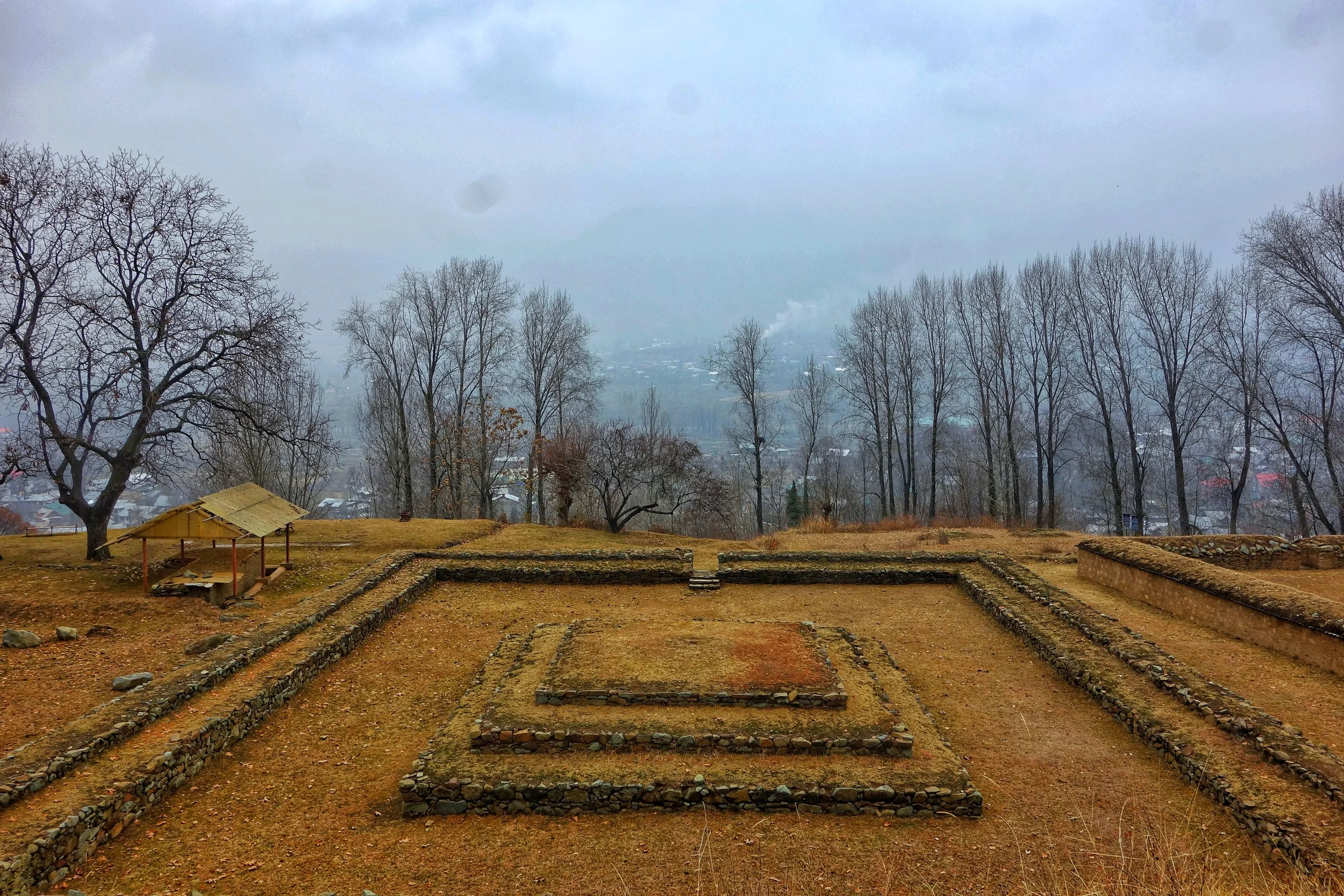
Harwan Buddhist Monastery Ruins
Exploring the remains of the Harwan Buddhist Monastery in Kashmir where the 4 th Buddhist Council was supposed to have been held in the First Century. It was Emperor Kanishka of the Kushan under whose aegis the Council took place and it was after this Council that hundreds of Buddhist Monks went to Central Asia, China, Korea, Japan and Tibet to propagate Mahayana Buddhism.
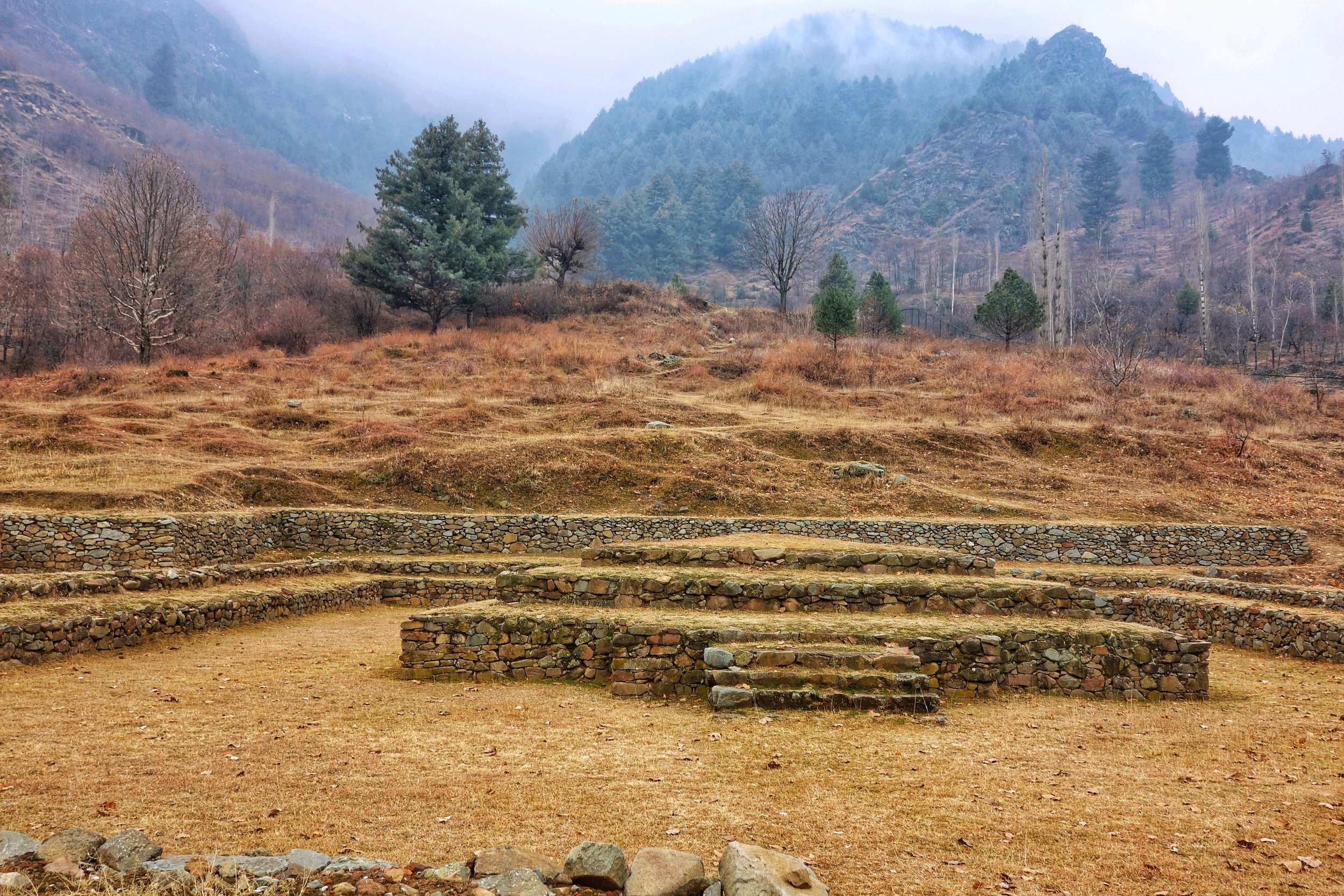
The Two Thousand Year Old Buddhist Monastery Ruins
Today was the first day of the Chillai Kalan and it was a nice and pleasent 4 degree C I decide to look again for something i had looked for before but was unable to locate the exact place. It was the excavated site of an almost 2000 year old Buddhist Monastery on the outskirts of Srinagar and I had seen terracota Tiles from the same site at the SPS Museum and they showed a very high level of craftsmanship.
I drove to the point where the car would go and walked up the hill through a village as pointed out by a Government board which showed an arrow towards the location.I had followed this twice before but had just reached a place which looked ancient but couldn’t really make out anything. Same thing happened today, the board says Harwan Ancient Buddhist ruins but all i could see were rocks and a water treatment plant. I Googled and got some images which looked totally different from where I was but I could make out that it was the same hills in the background. So i looked around again and again.
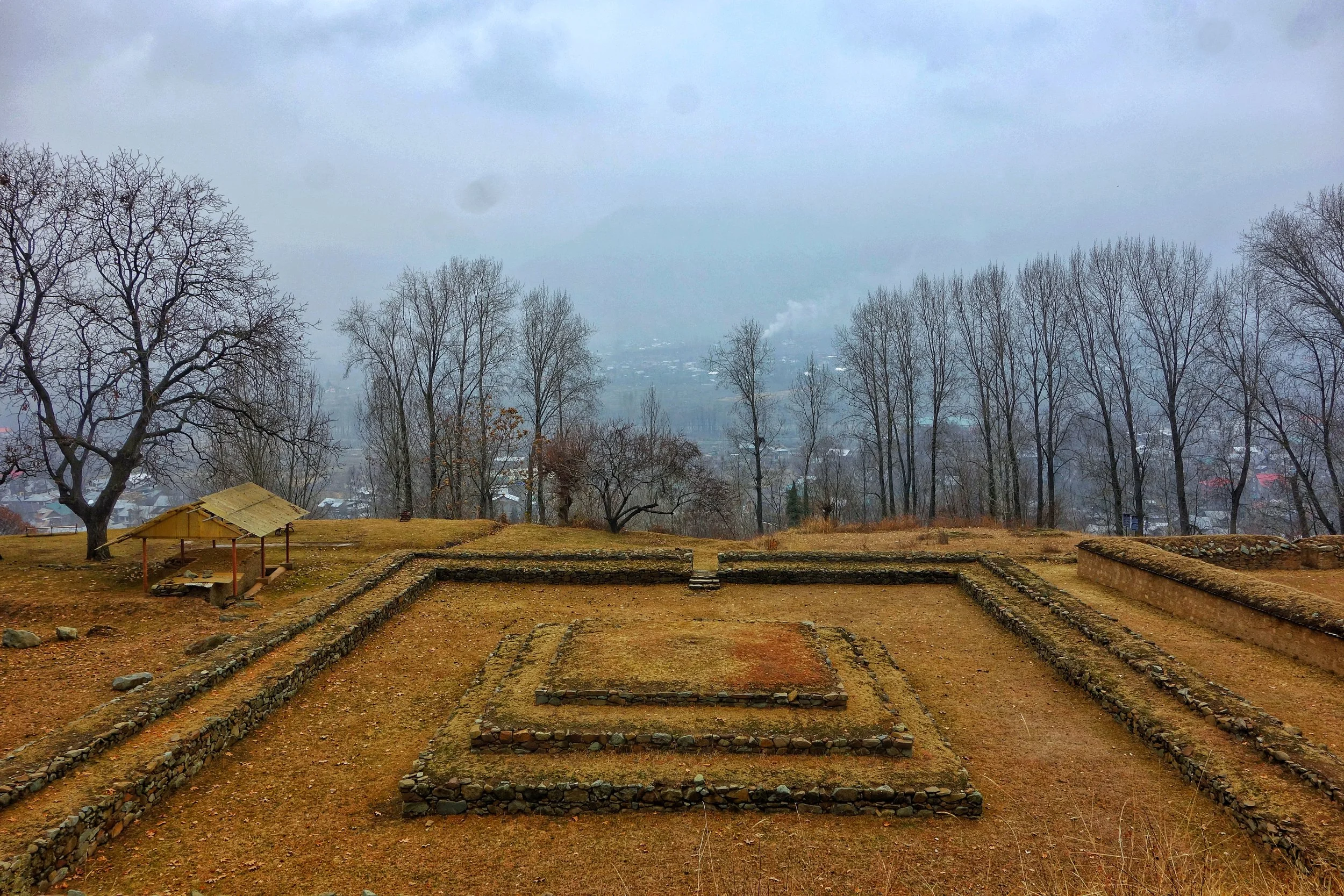
An old man sitting watching his sheep noticed and after 10 minutes asked me what I was looking for. I told him and he pointed upwards to a spur where I could see a couple of Chinars. He said go there as that is where its at. He also told me that the board is at a wrong place and the very few people who come cant find it. He asked me which Government Department I was from. I smiled and said I dont belong to the Government. He asked why I wanted to go there then ? I said I wanted to click some pics. He stared at me for a couple of seconds and then just nodded his head and pointed his stick towards the track that would lead me up.
I started walking up. It was kinda cold and dreary. Just grey and brown. And then first I stumble on the ASI Boards saying its a Protected Monument and another one describing the significance of the site (which I will come to later). There wasnt a sole in sight and in the background the hills of the Zabarwan were covered in scanty snow. And then i came upon the site.
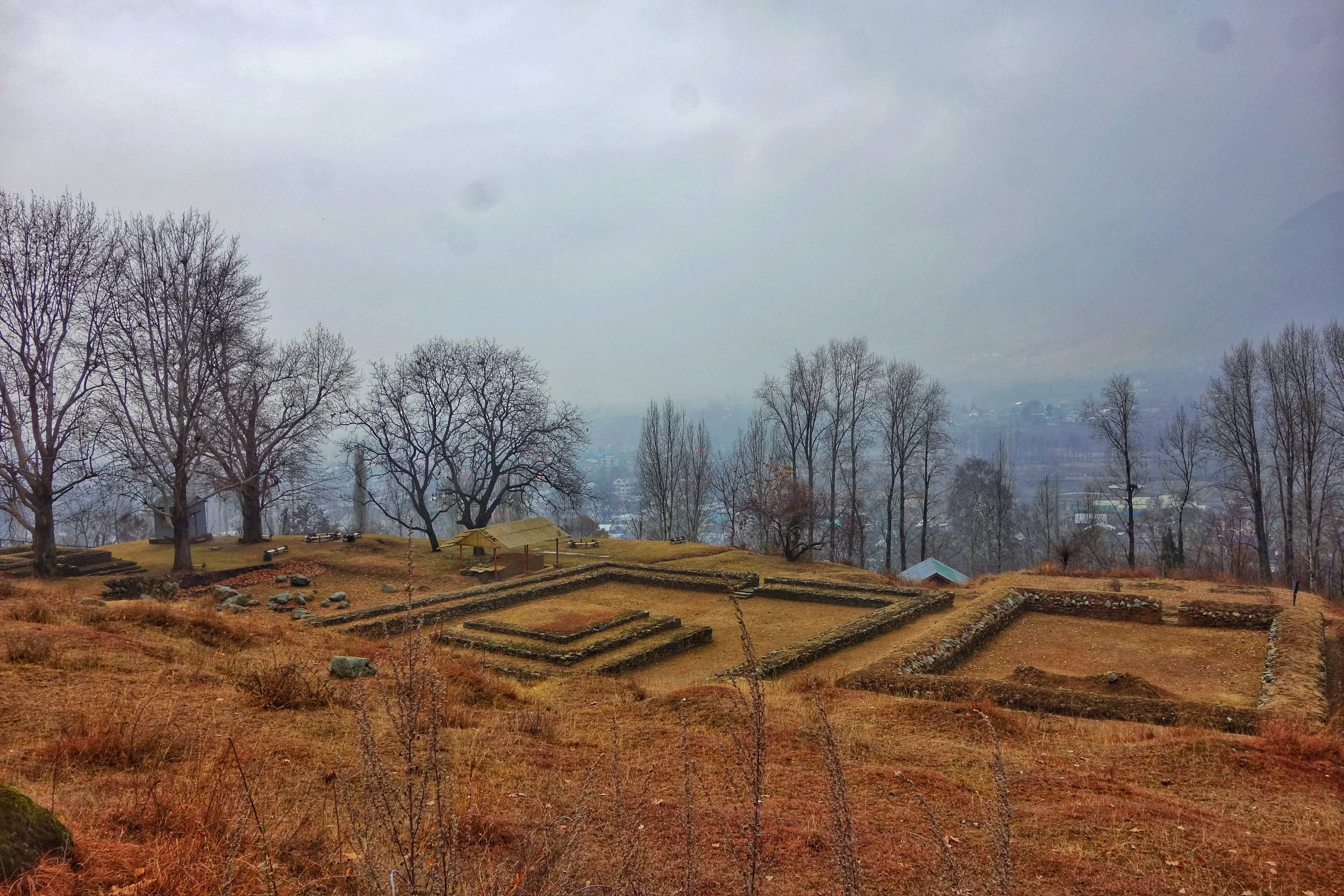
It was surreal. A well laid out platform of a Monastery and a Stupa base at the center. This was the first tier. There were I assume multiple tiers as was the norm that time for Buddhist Monasteries in Kashmir. The much visited Pari Mahal was also built on the ruins of one such Buddhist monastery. Kashmir used to be a stronghold of Buddhism till it declined and all the Buddhist monasteries and structures just wasted away.
After this I climbed up to the what was the Upper tier. As soon as I got there I realized that I had company. Not humans but three Jackals doing their Jackal things on the Upper Tier. They were as surprised to see me as I was to see them. I think hardly anyone ever visits so the Jackals felt at home and this is actually almost in Dachigam so I was relieved it was Jackals and not Bears. Anyway they ran away once they saw me.
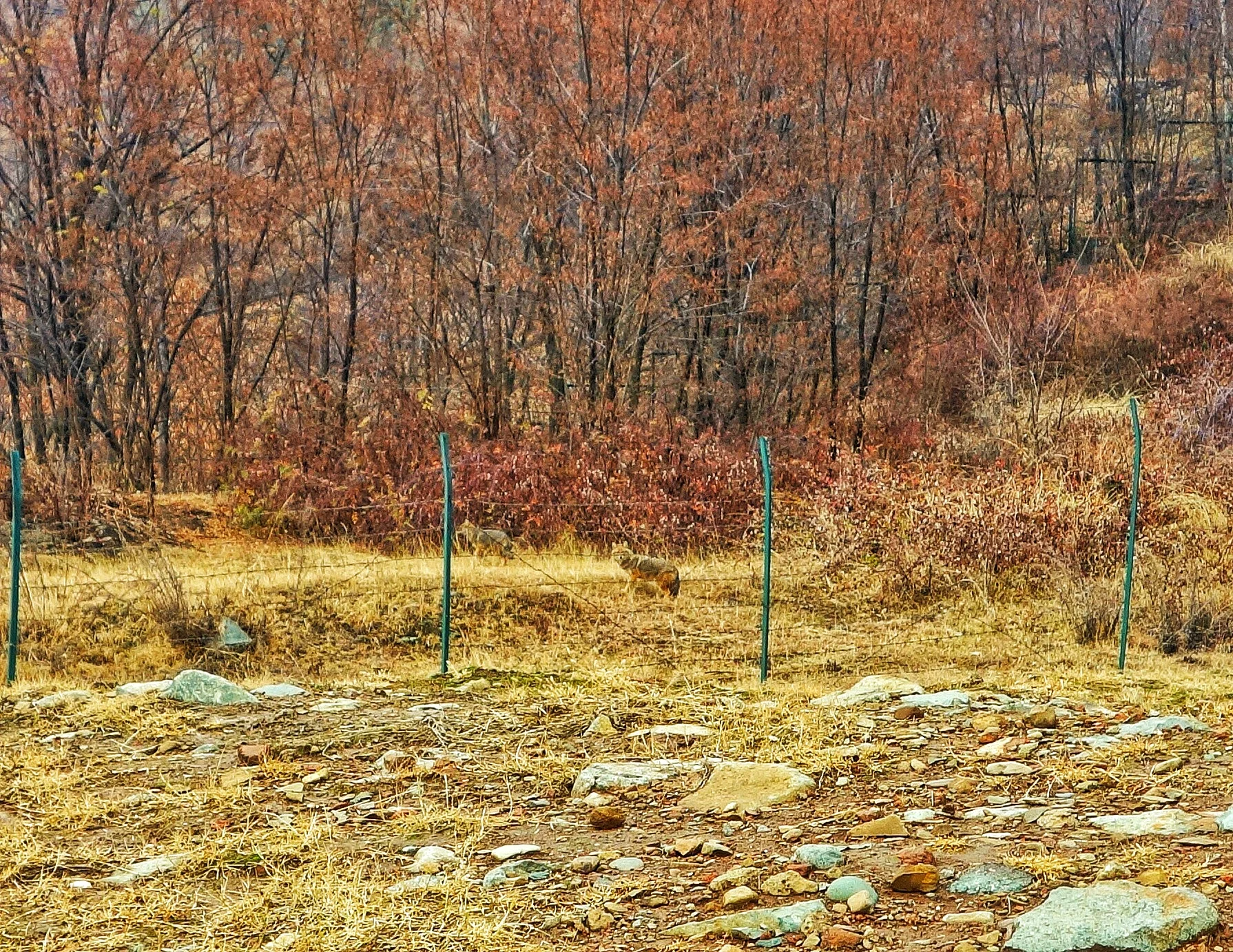
The Upper Tier also had a Temple type round structure and a courtyard which was covered with the same Terrocota Tiles I had seen at the the Museum. To cut it short this also looked quite exquisite for something supposedly 2 thousand years old. On the back towards the Mountain were other remains of tiers and one can only imagine how big this whole place used to be once upon a time.
Now the significance. It is said the Fourth Buddhist Council was held in Harwan around somewhere here and this weel could be the site. It was convened by the Great Kushan King Kanishka and it is said that it was in this council Buddhism was divided into the two sects, Mahayana and Hinyana. There was also a Fourth Buddhist Council held earlier in Sri Lanka and consequently the completed Cannon was taken as manuscripts to Laos, Cambodia, Burma and Thailand and hence Hinyana or Thervada as it later developed into was/is prevelant there.
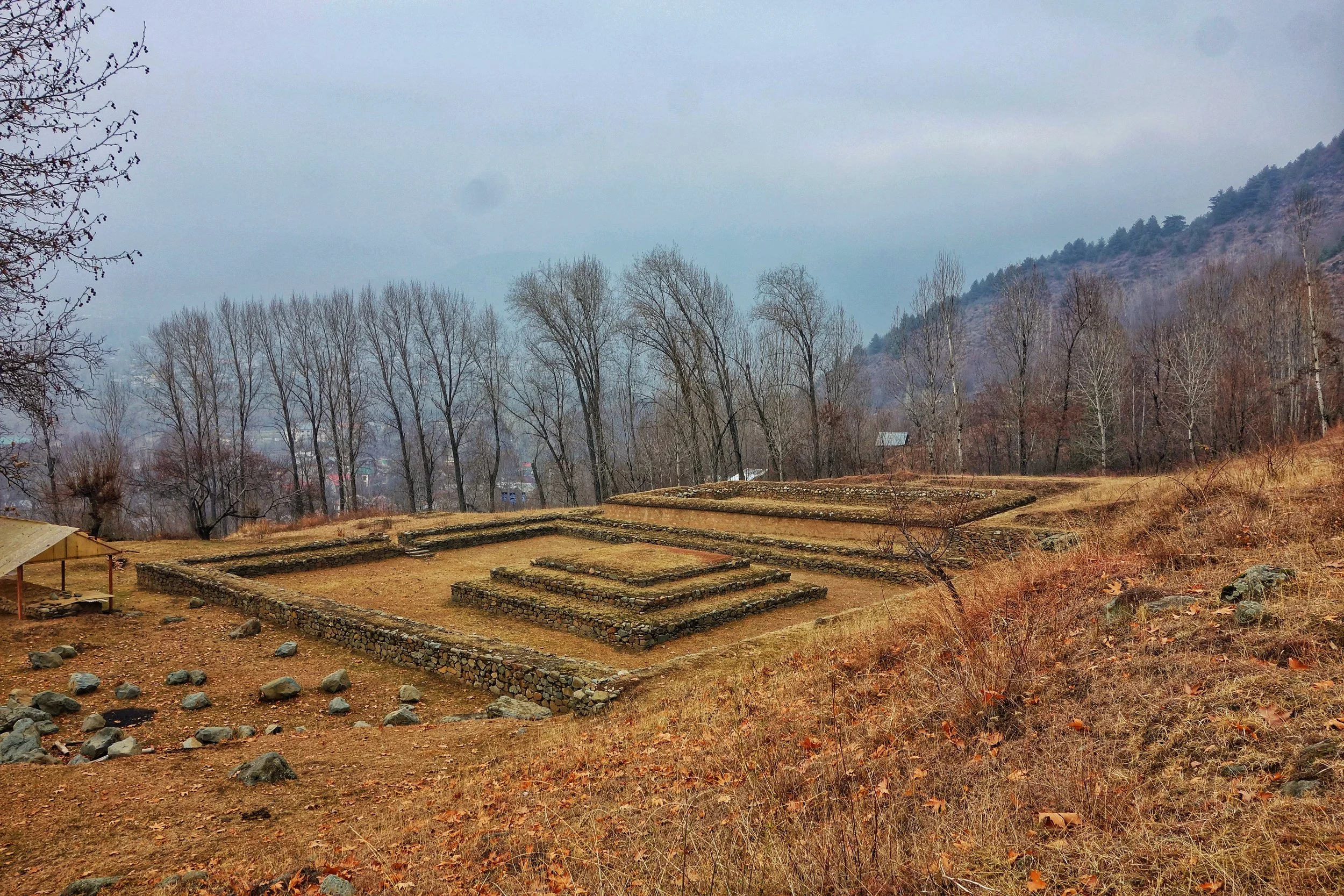
At the Kashmir Council convened by Kanishka apparently 500 monks assembled and these includedthe Master Nagarjuna who apparently resided at this very place. After the Council her the Monks went North to Tibet, China, Central Asia and Mongolia. And subsequently it spread the Mahayana school of thought to these countries. This shows what an important place Kashmir was in the spread of Buddhism and more so this exact location which I stood at with some reluctant Jackals for company. The next Buddhist Council was held 1900 years later but this was the last Council of the ancient times.
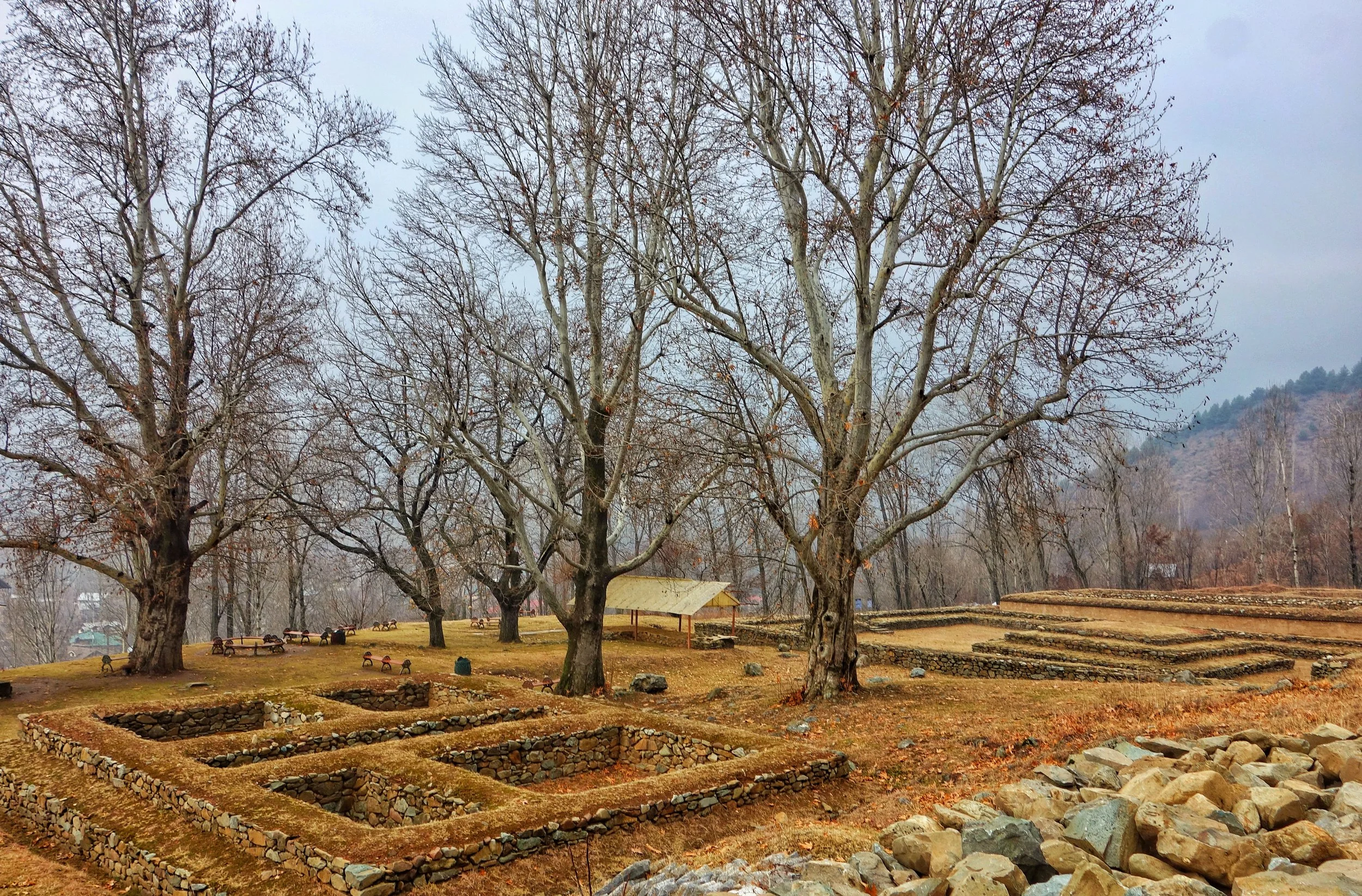
If all that I have conjunctured is true this should be one of the most important Buddhist sites in the whole world. It just cant be anything less. That sadly very few know about this place and even fewer visit is even more bizarre. I got the same feeling when I saw the Gilgit manuscripts (I made a post about the Gilgit Manuscripts. Link given below)but it was stronger. This is an absolute gem of Kashmir and its ancient civilization but sadly today (or maybe not that sadly) its the playground of Jackals.
I hung around, got a few fleeting shots of the Jackals, got pics of the place, shot a video and after an hour I noticed that the Jackals were watching me anxiously. I just blew a kiss towards them and left.
Pic from today. Srinagar, Kashmir
Advertisements
Occasionally, some of your visitors ma
The Thanedaar of Balsan
A Tale of Man and his family who lived in a small Princely state or Thakurai called Balsan. He was the Thanedaar of Balsan and this is an ode to him.

The Thanedaar of Balsan
There was a princely state in the Shimla Hills called Balsan State. A small state comprising of 26 Villages and around 60 sq km and used to be a subsidary to the Raja of Sirmaur. The main town (Capital if you may) is a place called Ghodna. It was located on the left bank of the Giri River in an area which borders Sirmour on one side and Kotkhai Jubbal on the other and Theog on another side. After the expulsion of the Gurkhas, the Thakurai of Balsan was given to Thakur Jogjraj Singh by a Sanad bestowed by the British. For sheltering and protecting many Englishmen during the First War of Independence, the title of Rana was bestowed upon the Thakur of Balsan.
Balsan is situated in a belt that some people refer to as the Mahasu Kotkhai Jubbal belt and this region has always been steeped in mysticism with the Gods, the Devtas and the Demons being a central part of life. And to this day, as this is a region bereft of any tourists, outsiders though received warmly are usually kept away from things held sacred. I dont really have the words to explain the attitude to outsiders here ie outsiders as in non Pahadi. This is today. But back in the Rana days outsiders were not really welcomed as the Pahadis had enough trouble coming up down from the Plains.

The Rana Sahib of Balsan had a Thanedaar. As in the Law Enforcer. As in the local tough guy who ensured that the edicts issued by the Rana were followed to the T. As well as the name suggests, policing the Kingdom. The Sanad granted by the British meant that the Rana was pretty much in control of everything except giving a death sentence which could only be given by the approval of the British resident for the Shimla Hill states. The Thanedaar had quite a reputation and there was a local saying that if the Thanedaar bit a man he would draw blood. What it really implies I could never get my head around. There were other details on what the Thanedaar did which I have conveniently left out because I simply feel that our modern views on morality and wrong / right cant be used to judge a man who lived in another time, another era. He was a good man. To his Ranaji.
For the all the orthodoxy of the region and the strong belief in the Hindu devtas the Thanedaar happened to be a Muslim. And he was probably more loyal to the Ranaji than Ranaji himself. The state treasury of Balsan State which had unknown quantities of wealth in the form of Gold/ Precious metals/ Precious stones was kept in cave and it was said to be guarded by Serpents. Serpents of a very venoumous variety and no man could go in without getting bitten and eventually dying. They were the Guardians of the Royal treasure. Many had gone in and only met a painful death which the toxins of the Serpents caused. No one could get anywhere near the Royal treasure as long as the Serpents were there.

No one except one guy. The Thanedaar. Due to some unexplained phenomenon the Thanedaar was the only one that the Serpents would let in and do whatever that he wanted to do. He could take in anything and he could take out anything without coming to any harm. It was as if the Serpents could see something and trusted this man. Or maybe even they had heard of the Thanedaar and were in awe of his reputation. Whatever the reason, the Thanedaar was the only one who could go in and transact the business of the Treasury, like getting the Gold out and putting Gold in. And the Ranaji had complete utmost faith in him as he could see it decreed by the Gods themselves as interpreted from the fact that the Serpents did not harm him.
Ofcourse there were other people around the Ranaji who could not fathom how the Thanedaar, despite being a Muslim, was unharmed by the Serpents. They themselves being devout to their religion and Devi Devtas were not accepted by the Serpents, the same Serpents which adorn the neck of the Shiva the Destroyer, but they let the Thanedaar through. Maybe they didnt realise that the Serpents didnt judge a man by his religion but by his deeds, due to some higher divine power vested in them. Maybe this was a lesson which holds true for us even in today’s day and age.

Anyways moving on the times changed and the Rajas / Ranas lost power and a State Police System came into being and there was no place in such a system for the old relic, the Thanedaar of Balsan. Age had caught up with him and though well respected the Thanedaar didnt have a job and whiled his time away and gradually fell into ill health. And one day the winds of time swept the Thanedaar into the nether world. He was survived by his wife and a son.
The son was quite the opposite to his father. Maybe when you have such a dominating man as a father you tend to be a very timid, quiet and kept to his own devices. The Thanedaar had earned great respect both because of his loyalty and ferocity amongst the people. But seemingly one thing he didnt acquire was wealth. No land, no property, just a house. With time after his passing his wife also fell ill and one day on her death bed she called her son. And the son as usual asked him that what did my father leave me ? She said that the father has left you all that you need and more. Never sell this house. This is your treasure and having said this she breathed her last and passed away.
Meanwhile the son had taken up a job as a caretaker of an Apple Orchard in Chakrot Village. He worked hard, he worked well. And it was clear to all that one trait that he had inherited from his father and that was loyalty. He still kept that house but it was falling into disrepair as he moved with his family to the Orchards where he worked as a care take. So one day he decided to get rid of the house and sell it. And thence the house was sold.

It is told that the person who bought the house decided to demolish it and make a new one. While breaking down the old house the new owners discovered a treasure of Gold and precious stones. And to think that the son had been told by his mother that the house is more than enough. So it seems that the Thanedaar did leave behind something for his progeny but fate had it other wise. How exactly was this treasure accumulated ? Was it the Ranaji who gave him ? Or did the serpents let him take this for his own account ? Nobody knows the answer. Neither do I. It just happens that the new ownners of the house are today one of the richest families in what used to be the Balsan State. They never really revealed the extent of the treasure of the Thanedaar of Balsan that they had uncovered.
The Ranaji had passed away but the old Rani Sahiba got this news and called the son of the Thanedaar to see her. The loyalty of the Thanedaar was not lost of the Old Rani Ma. The Royals knew that the Land Ceiling Act was coming and rather than turn in all the land to the Government they would rather give some of the land. A few acres of what was very good land for growing Apples. She asked him to visit the location of the said land and pick the piece of land that he wanted.
The son went back home and thought he would plan and go some day to that land and pick up his piece of land. The days turned into weeks and weeks into months and something or the other kept delaying his plans. Maybe it was his procastination. And then one day the news came. The Rani Ma had passed away. And with her were gone the award of land that the son of the Thanedaar of Balsan had been given.
This is the way we have been told this story. The veracity remains doubtful at places. I dont know. I take it as I am told. Would have surely loved to have met the almost legendary Thanedaar of Balsan.
Our Family Orchard’s were also situated on one edge of the Balsan Stae right where its border met that of Kotkhai state. Its is said that the Rana of Balsan had moved his most warlike people and settled them on the border with Kotkhai, where the two were
seperated by a mountain stream called the Koku Nala. This was because the British had taken control of the Kotkhai state through their vissicitudes and the Rana of Balsan didnt want any of that in Balsan.
Oh yes I forgot to tell you. The son took care of our Family Orchards and I knew him well. He was quite a gentleman. And we were very fond of him as kids as he would always take care of us and carry us around whenever we were tired of our endless games in the mountains. He also passed away a few years back.They served the family faithfully for over 30 years and took care of the Orchards as their own.
After he passed away a part of the Orchard was given to the family in perpetuaty by my Mamaji. And they have built a house and continue to grow Apples in their part of the Orchards. Though they now they no longer take care of our family Orchard.
That legacy of loyalty ended with the son.
The son of the Thanedaar of Balsan.
Pic from August 2017. A village in the erstwhile Balsan State, District Shimla, Himachal Pradesh
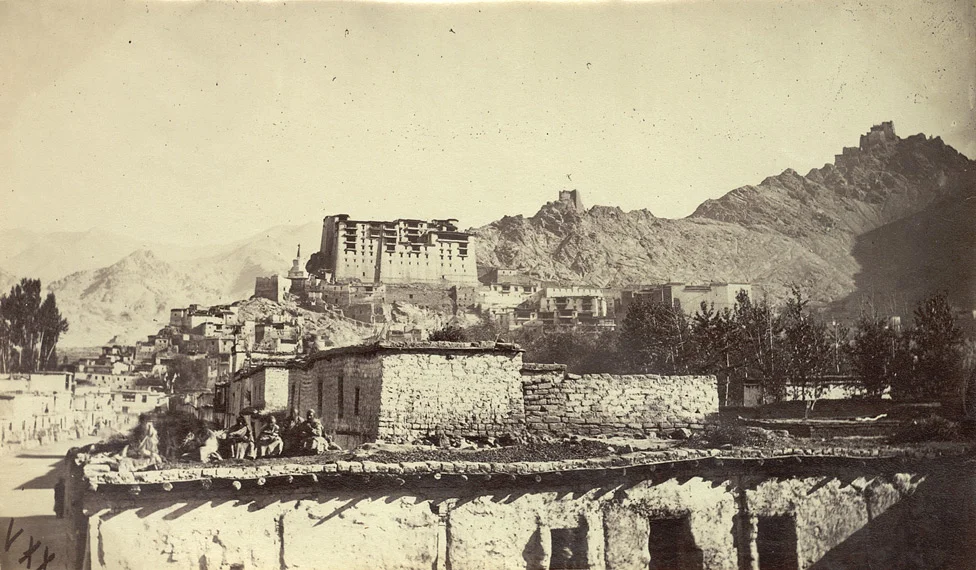
Mission Yarkand
Mission Yarkand was a British Mission to to Ladakh to smoothen the trade between Ladakh and Yarkand. It was from Leh that British goods were sent into Central Asia. So it was in their great interest to facilitate the Trade. And students of Colonialism well know that where the Traders go the Soldiers soon follow !

Mission Yarkand
Continuing on the quest to understanding the Routes taken by traders when the crossed the Great Himalayan Divide which separates the Indian sub-continent from Central Asia / Tibet / Eurasia during the times of the old. For a better understanding of the complexity of this divide read this post which I had made some time back :
The Silk Route connected Cathay (the romanticised name for China) with the civilizations of the Indians, Persians, Arabs, the Europeans and everything in between. But we will focus on the Trade routes over the Himalayas and its adjoining ranges that formed thebasis of this trade.

The main cities in Central Asia which served as the great transit points on the Silk Road were the great cities of Bukhara and Samarkand in West Turkestan (It used to be called Turkestan in those times) and the cities of Kashgar, Yarkand and Hotan on the Eastern side of Turkestan. From both Bukhara and Samarkand there were well established routes over the low passes of the Hindu Kush that led into Afghanistan and from there hence to India over the Khyber Pass. But the political divides and differences between the different Khanates and the political turmoil in Afghanistan and on the whole unsettled situation casued some of the Trade to shift further East.
In the present Indian territorial context both Kargil and Leh were important trading towns on the Journey upnorth over what was probably the “Worst Trade Route in the World”. Kargil was equidistant from Srinagar and Leh and also served as a gateway to Gilgit Baltistan and the town of Skardu and further North West. There was a trade route from there as well which followed what is now the Karakoram Highway over the Khunjerab Pass into Turkestan and the town of Tashkurgan.

Coming to Leh, it served as the great bazaar as traders of all hues and colors could be found there. Leh was the point of convergence of various trade routes coming from different directions and as such was the epicenter of all the trading that went on, on this route. Unlike the touristy place it has become now it was a great center of trade where traders from Kashmir, Punjab, Yarkand, Central Asia, Tibet, Persia converged and goods, services and ideas were exchanged.
As rightly pointed out by Kaushik Shil Sir in reply to my previous post the bulk of the trade from the plains of India came up through the Srinagar Zoji La Leh trade route. However there were other caravan routes also which bought in goods. From Skardu side there was a route through Khaplu and over the Chorbat La into the Nubra Valley and onto Leh over the Khardung La. Also there was another route along the Indus Valley. From Kishtwar there was a route over the Umasi La into Zanskar and then onto Leh from there on.
From Kullu it was over the Rohtang La into Lahaul and then over the Baralacha La onto Leh. The fact that this Route went over the Baralacha La I have confirmed with many references including the documented travel of the Himalayan exploration pioneer, Moorcroft who went over the same route from Kullu and became probably the first Englishman to visit Leh. However the Route they took once they descended the Bara Lacha La and then onto Leh is something I am still working on though Im pretty sure that they followed somewhere close to where the present day road runs.
This Route was encouraged by the British as it somehow allowed them more leverage in the trading rather than paying the heavy duties which were imposed on the traditional Srinagar Zoji La by the Sikhs and later on the Dogras. Infact the British also tried the trading directly with Yarkand over the Chang La Pass, thus avoiding Leh which was under Sikh/ Dogra control. But the Route took them over the Depsang and the Changchenmo which was just devoid of any greenery or pastures and there was hardly any inhabitation for most of the Route.
From Spiti one route took you over the Parang La into Rupshu in Ladakh and then onto Leh.Further afield from Nurpur and Bushahr there was apparently a route throung the Long Lacha Pass and Thung Lung La (both these Passes have gone into obscurity from what I know). If anyone knows about them please update me. In my view all trade from these areas has now stopped so these Passes lay forgotten and are unused as such. Also maybe access to these areas are noe restricted because of present day boundary disputes.
To the east of Ladakh there was the town of Gartok from which a Route led to Lhasa as well. Ladakh for all practical purposes is a part of Tibet so there was a constant flow of traders and pilgrims on this Route. I also imagine that some Chinese goods also came into Leh by the way of this route from Tibet central.
And of course to the north of Leh stood the route to Yarkand which has been discussed in detail in a previous post. Interestingly besides that Route there were two other Routes to get to Yarkand. One Route only available in the winters was crossing the Digar La into Nubra (an alternative to the world famous Khardung La) and then walking the narrow gorges of the frozen Shyok River to the Karakoram Pass and then moving on along the Classical Leh Yarkand route. Sort of like a Chadar trade route only that now its virtually impossible. Another route as described before was through the Changchenmo and Linzithang plains over the Chang La to meet the existing classical route at Shahidulla.
Coming to a stop for now it is indeed a misfortune that in today’s day and age most of these areas are again off limits and will remain so for a long time it seems. Till then we can just read the accounts of the travels and try and get a feeling of what it felt like.
When I again get over my laziness I will write a long one on The Treaty Road between Srinagar and Yarkand.
References : Again John Keays When Mountains and Men Meet : Explorers of the Western Himalayas. And a bigger reference for this is Himalayan Frontiers of India by K Warikoo. This was one of the basic source of the information used.
PS : “The accompanying photograph was taken by the Yarkand Mission. The official purpose of the Yarkand mission was to conclude a commercial treaty with the Amir of Yarkand and Kashghar. The mission had a deeper purpose, it was also to gather sufficient intelligence about this largely unknown area so as to be a step ahead of the Russians in what came to be called the Great Game, the struggle between Great Britain and Russia for mastery over Central Asia. The Mission would obtain geographical and historical information on the area, as well as survey its natural resources, while pressing diplomatic relations on the principalities that they traversed via Kashmir through Tibet into Chinese Turkestan. The mission was under the command of Sir T. D. Forsyth of the Bengal Civil Service, who wrote an accompanying report, Forsyth, T.D., ‘Report of a Mission to Yarkund in 1873’ (Calcutta 1875). Situated at the crossroads of Asia in the high Himalayas, Leh is the capital of the cold desert region of Ladakh, in the eastern part of the state of Jammu and Kashmir.”
Source: British Library
Pic from Summers 1873. Leh. Photographer: Edward Francis Chapman
Kiki’s Blog
Stories from the Himalayas
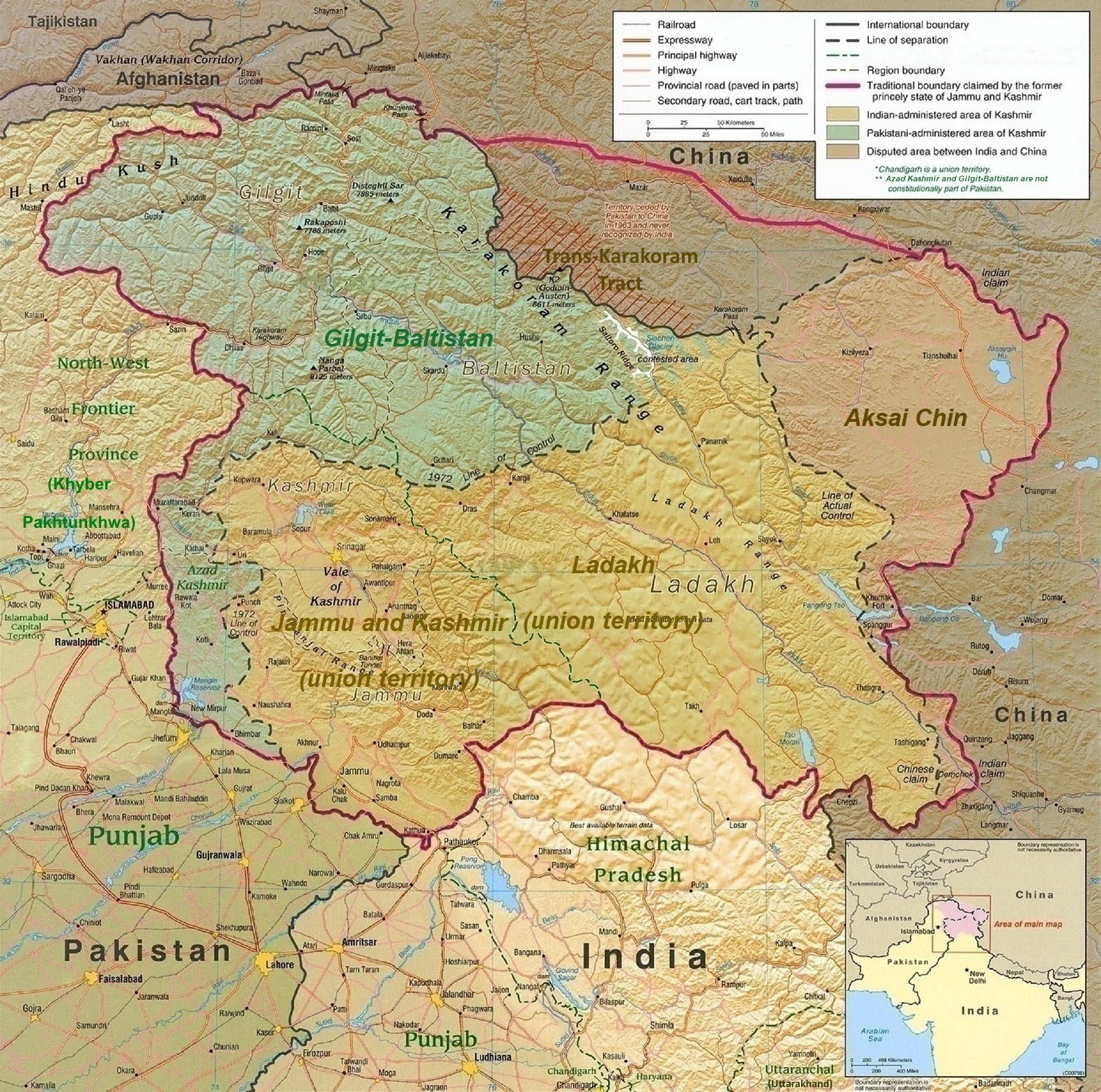
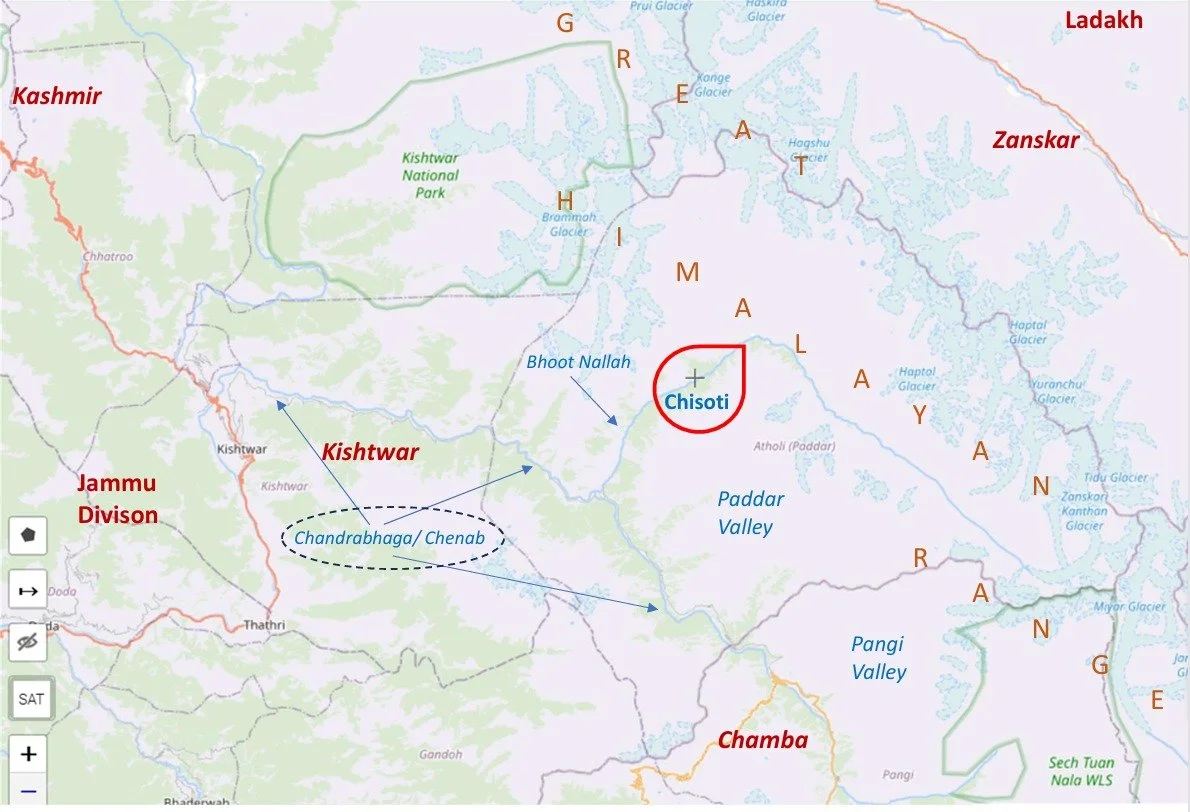
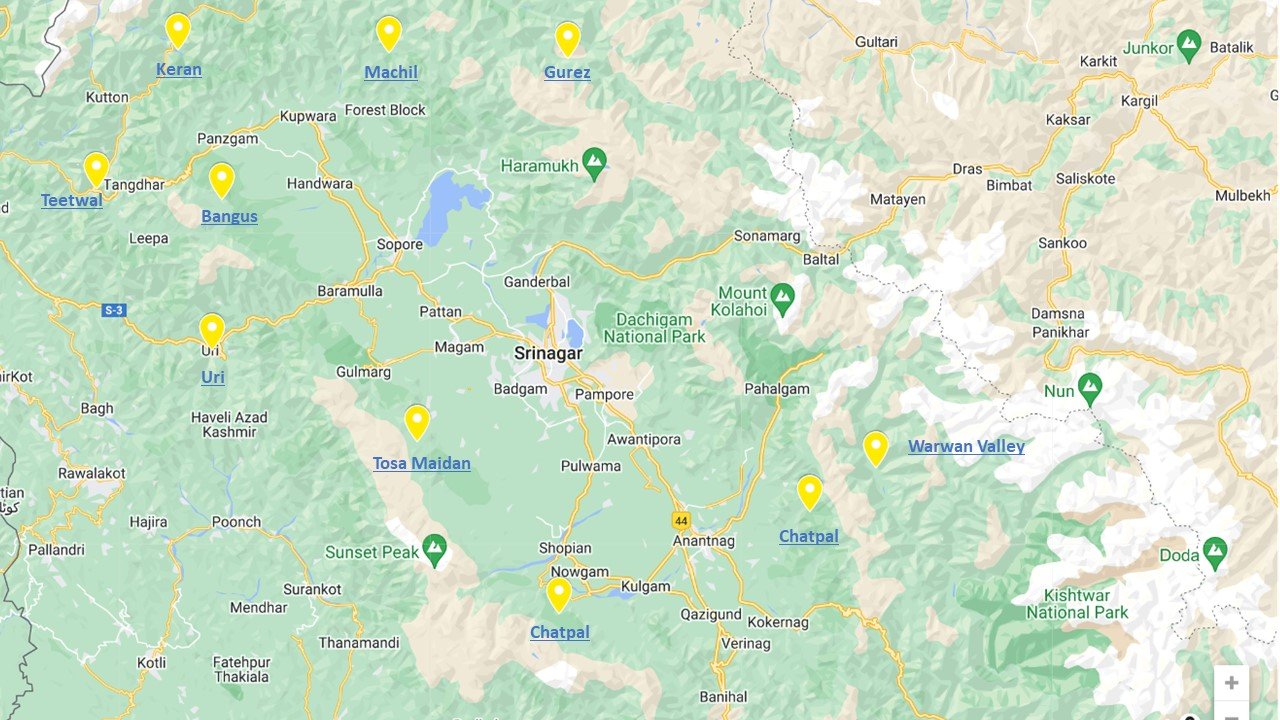


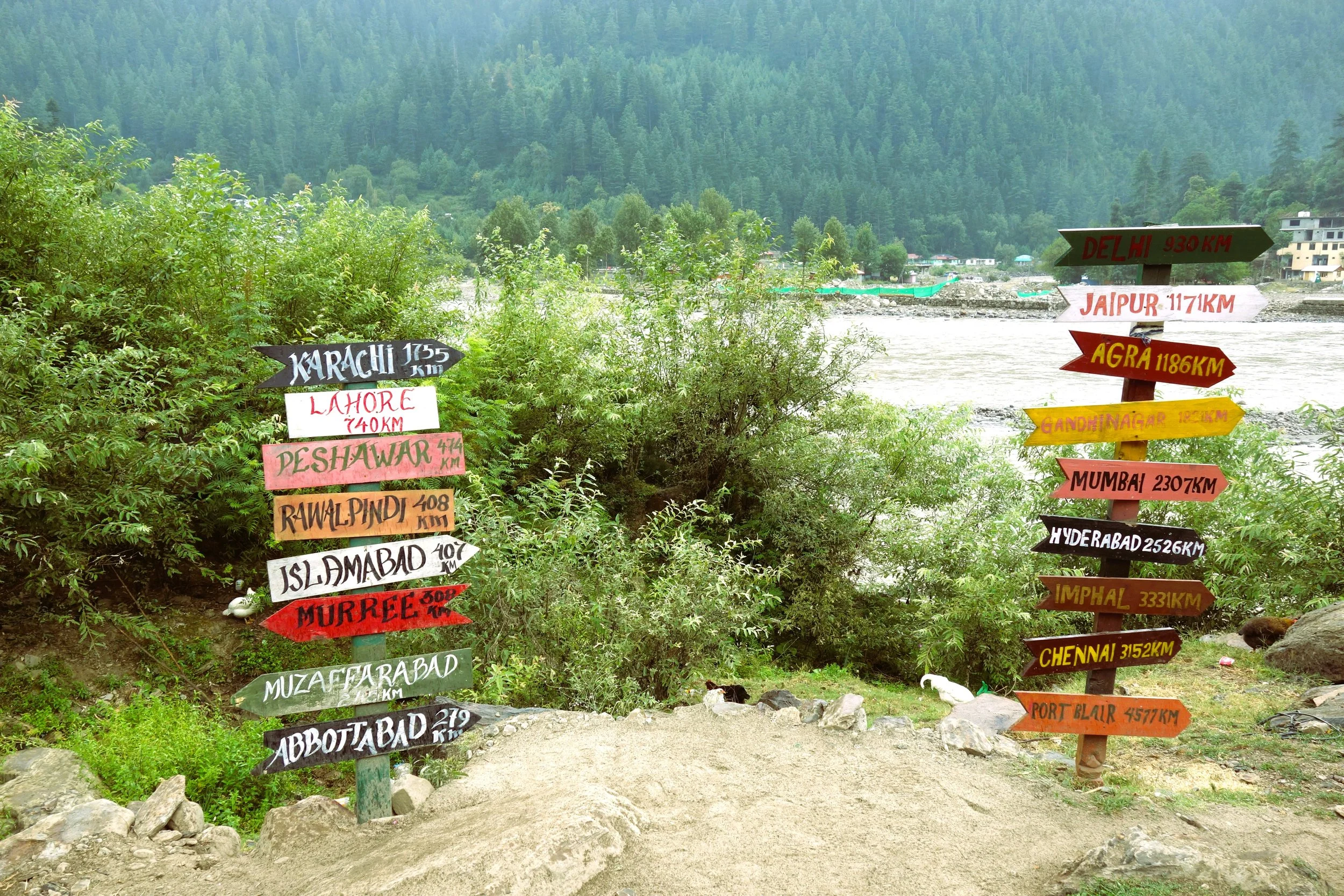

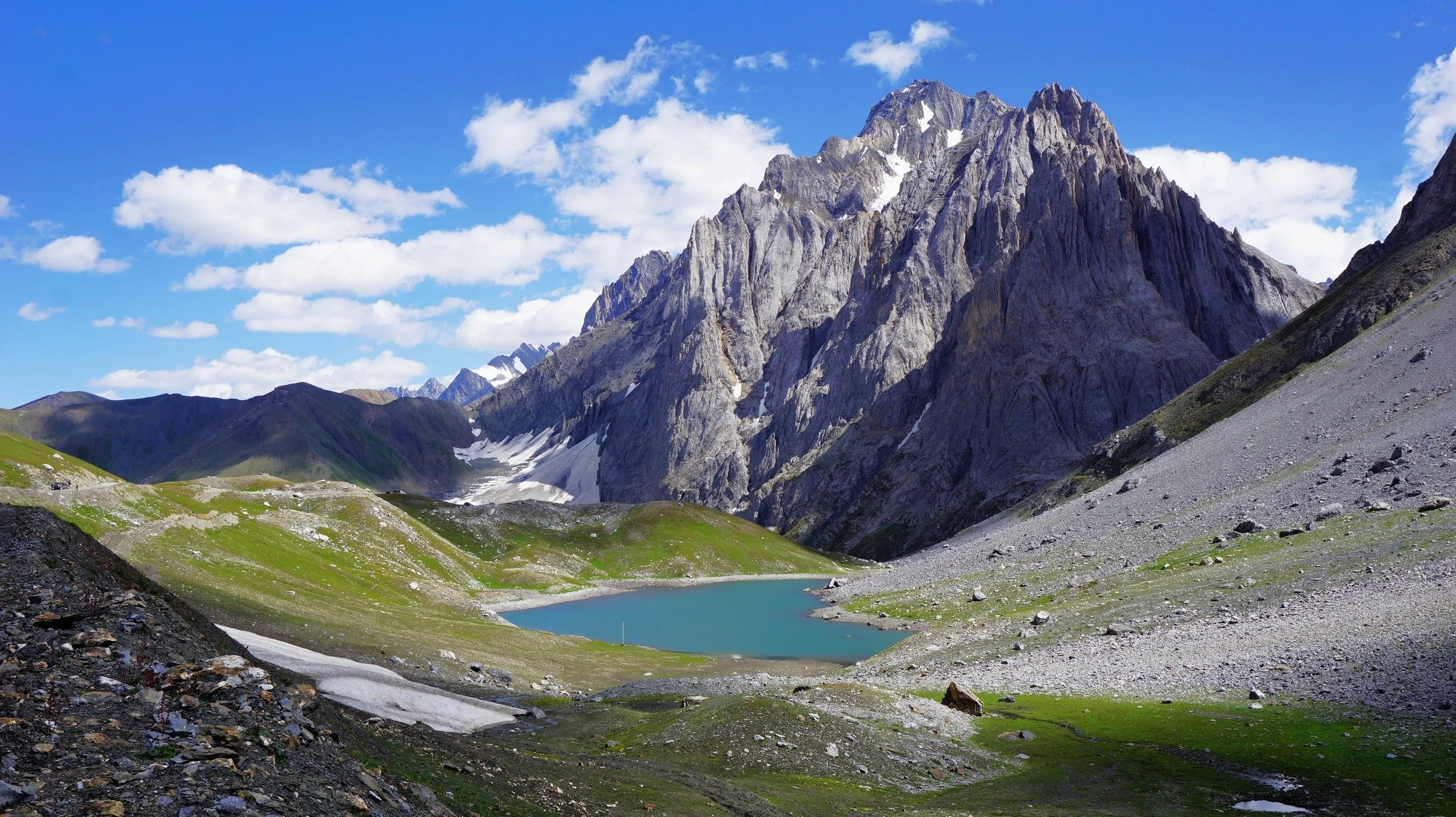
Five years ago the Galwan Valley was in the News for the wrong reasons after a deadly clash between the Indian and Chinese Armies in the Valley located in Ladakh lead to many deaths on the contentious Border between the two countries in wake of continued Chinese intrusions into Indian territory.
This area along the Shyok River, of which the Galwan Nallah or the Galwan River which forms the Galwan Valley has been off limits to Civilians since long but now the Indian Government has decided to open up the area for Civilians and we were amongst the First Civilians to venture into this beautifully desolate part of the Eastern Karakorams in Ladakh. Earlier Civilians could only venture upto the Village of Shyok from where the Shyok River takes a U turn and flows in a Northerly direction.