
Burzahom : Ancient Kashmir and its Dogs
The Burzahom is one of the oldest Neolithic sites excavated in Kashmir and probably the first place which saw settled life in the Valley. One remarkable characteristic of the site is the ritual Dog burial sites discovered. In some cases the Dogs were buried along with their owners. A reminder of how old our relationship is with this family of canines.
Burzahom : Ancient Kashmir and its Dogs
Burzahom : Ancient Kashmir and its Dogs
The most Ancient remains of human settlement discovered in Kashmir are at a place called Burzahom near Srinagar. It is a settlement from the Neolithic Period and transits to the ancient period ranging from 8000 BC to around 1000 BC. It was discovered in 1935 and the excavations were done over a period of time and the excavations have been in three stages, NP III corresponding to the later period, NP II to the middle period and NP I to the earliest period. The Site is currently on Unesco World Heritage Watch List and it might get the status of a World Heritage Site in the future maybe.

The Burzahom Site
As per the UNESCO "The Neolithic Site of Burzahom in the district of Srinagar, India brings to light transitions in human habitation patterns from Neolithic Period to Megalithic period to the early Historic. From transition in architecture to development in tool-making techniques to introduction and diffusion of lentil in North-Western India, the site of Burzahom is a unique comprehensive storyteller of life between 3000 BC to 1000 BC.
Archaeologist have excavated subterranean dwellings as well as burial pits at Burzahom. One of the most famous Work of art discovered at the site is a scene painted on a stone which shows the Burzahomese on a hunt. There are two hunters and a Deer and along with them is their best friend, yes you guessed it right, a Dog. And also interestingly the scene depicts two suns. As per the scientists the this is the first instance of a supernova being recorded in ancient times. Which of course makes this indeed a very interesting find.

The Hunting Scene drawing with 2 Suns
Dogs it seems held a special status in the Burzahom culture. Dogs, Wolves and Ibex seemed to hold a special significance as burial pits containing their skeletons have been found. More interestingly a couple of burial pits have been discovered where the Dog is buried right next to the master within the compounds of the dwelling units. There is even an instance of Dogs buried in two layers one above another. Unlike in NP I where no burial remains have been found, in NP II culture many such burial pits have been found. This points out to the growth of a belief system and a transition to the ancient age from the Neolithic period.
Interestingly this Dog burial culture is similar to the Shilka culture, for whom the Dog was almost a cult animal, around the Shilka River which is a tributary to the Amur River in Siberia bordering Mongolia as well as other such cultures of the Gilyaks, Ulchis and Goldis where till recent history Dogs were sacrificed and buried with their owners. Probably to serve them in the their afterlife as well. It surely sounds cruel in today's time and age and actually it is but in that time and age it made sense to those people to send a dead man's best friend along with him to the next world. where animals were sacrificed as well and buried along with the person.

A Dog burial pit
The pottery found at the site seemingly has a great similarity to similar remains found in the Swat Valley in Pakistan. And as mentioned earlier the burials practices and the type of tools found have been inferred as having close resemblance to those found in North Chinese Neolithic cultures which borders Siberia as well as Mongolia.
This practice is not seen anywhere in India. This again points out to the fact that Kashmir was the place where Central Asia met the Indian subcontinent. UNESCO also states that ' The results of excavations have provided dynamics of interchange of ideas between Central Asian and Southwest Asia through the Valley of Kashmir which acted as a bridge between higher Himalayas and beyond on one hand, and the Gangetic Plains and Peninsular India on the other hand during the third millenium BC. The interaction of local and foreign influences are demonstrated by the art, architecture, customs and rituals as also possibly by the language as demonstrated by some graffiti marks on pottery and others"
Historian M K Kaw in his book "Kashmir and its People : Studies in the Evolution of Kashmiri Society" writes " It is also clear that the Dog had a special place for the Burzahomese right from the day he settled in the Valley. This is further substantiated with the finding of a burial in period NP II where the Dog is buried with the owner in the house floor, preferably the compound. He has depicted him in the engraving on the stone slab already stated earlier. The Dog guarded his herd and helped him in pursuing the hunt on which his sustenance depended "
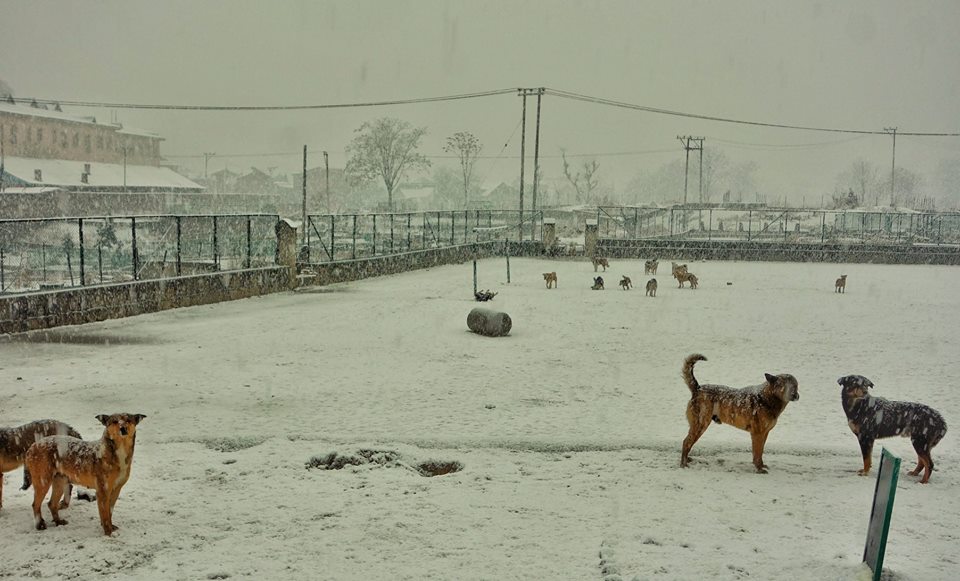
As of today the Dog is thriving. Thriving too much according to some people. And Srinagar is full of feral Dogs. Of all the cities I have been to I have never seen such a great number of Dogs in any other city. Another fact that I think is responsible is that people in Kashmir consume a great deal of meat. And of course a lot of this gets wasted and consumed by these Dogs and hence due to the availability of meat they thrive. Some people also put the blame on the political situation but I would rather not go there.
But of course that doesn't change facts about the importance of the Dog in the Burzahom Culture. And the fact that we have been friends for a very long time.
I am using 4 pics to highlight the Story as it is an important one which needs to be told and people made aware ( If you think you have a story which needs to be told with multiple pics please contact the Admins.)
Main pic from February 2018. Srinagar, Kashmir
Some of the pics are from the Internet and are being used only for Educational purposes. In case you hold a copyright to a pic and want it removed please let me know and I will take the pic down.
Himachal Day : A Brief History of the Modern Times
A brief history of the Himalayan state of Himachal Pradesh. A look into how different Hill states were combined to create one of the most beautiful and now amongst the most progressive states of the country.

Himachal Day : A Brief History of the Modern Times
The state of Himachal Pradesh officially came into existence on 25th January 1971 and till then it used to be a part of Punjab Hill States. Today we celebrate the completion of 47 years of its existence as a state.
The Punjab Hill States were themselves an amalgamation of the Punjab Hill States and the Shimla Hill States as they were also referred to. During the reign of the Mughals most of the Hill Kingdoms here were nominally aligned to them but were pretty free to act as they wished as long as the tribute was sent to the Mughals. However with the decline of the Mughal power the situation developed more fluidly and there were many actors who played a part in the formation of Himachal Pradesh. And whenever there is a power vacuum in history other forces are attracted to fill in the same.
In the beginning of the 19th century one of the most powerful Hill Raja was Raja Sansar Chand Katoch of Kangra who organised his Army and went on a conquering spree not only in the Hill Kingdoms but also invaded the plains of Punjab in order to gain territory. With an ambition to carve out a Katoch Kingdom he conquered various Hill Kingdoms in his neighbourhood including Chamba, Mandi, Kullu, Guler, Nurpur and Kutlehar. He even tried to capture territory around Hoshiarpur in Punjab but was repulsed by Maharaja Ranjit Singh in 1803 – 1804.
Having received a setback in Punjab he set his eyes on other Hill Kingdoms including Bilaspur (Kahlur) and Bara Thakurais (12 Thakurais) across the Satluj River. These Bara Thakurais till some years back had been a part of another powerful Hill Kingdom, Sirmour. And they had been the bone of contention between the Kingdoms of Kangra, Bilaspur and Sirmour. The Kingdom of Sirmour had also opposed the aggressive actions by Raja Sansar Chand in Mandi and Bilaspur.Raja Sansar Chand formed an alliance with the Raja of Nalagarh and together they captured large parts of Bilaspur territory and established control over the Bara Thakurais in the CIS Satluj area.
In the meanwhile the Gurkhas under General Amar Singh Thapa who had already captured Garhwal and Kumaon were now in occupation of the Sirmour Kingdom where they had been invited by one of the warring factions in the war of succession and once that was settled they decided not to leave and were in control of the Kingdom from their main base in Dehradun. After losing much of his territory to Raja Snasar Chand, the Raja of Bilaspur called on the Gurkha General again for help and to help thwart the plans of Raja Sansar Chand and his allies.
The Gurkhas due to ambitions of their own readily agreed to the same and stepped into the conflict on the part of the Bilaspur Raja. Raja Sansar Chand had already a lot on his hands and taking on the Gurkhas was just too much. The Gurkhas defeated Raja Sansar Chand and occupied the most strategic fort of the Himalayan foothills, the Kangra Fort. In addition to that they held all the Hill Kingdoms in the CIS Satluj areas and were also in control of another powerful Hill Kingdom, the Kingdom of Bushahr.
Raja Sansar Chand had no option but to approach his former bete-noire Maharaja Ranjit Singh and asked for his help and promised in return the Fort of Kangra and various other consolations. As a result after some machinations finally Ranjit Singh stepped in and the Gurkhas were evicted from the Fort of Kangra but they crossed over the Satluj and stood strong in their Forts around Solan and hence they carried on to occupy all the smaller Kingdoms and Thakurais.
On the other side of the Satluj after occupying the Kangra Fort, Maharaja Ranjit Singh spread his influence on all the Hill Kingdoms on which Raja Sansar Chand earlier held sway. All of Himachal on the Trans Satluj side was now held by Maharaja Ranjit and most of the territory on the other side of the Satluj was held by the Gurkhas. Due to the Treaty of Amritsar that Maharaja Ranjit Singh had with the British he was not entitled to make make any conquests in the CIS Satluj area and as the Gurkhas were in the CIS Satluj area, Ranjit Singh could not make any advance on them.
By this time the Gurkhas were on a collision course with the British. All the Hill Rajas and Thakurais asked the British for help in getting the Gurkhas out of their territories. They promised the British all the help in their war against the Gurkhas provided that their Kingdoms and Thakurais are returned to them after the Gurkhas leave.
In 1814 the Anglo Gurkha war took place at multiple fronts and the British defeated the Gurkhas and the Treaty of Sagauli was signed between the two. As a result of the Treaty the Gurkhas had to give up all their territory West of the Kali River to the British. This included Garhwal, Kumaon and parts of the present day Himachal Pradesh upto the Satluj River. The British now held sovereignty over these Hill States in Himachal and controlled the whole territory. It was at this time that at a certain location which was in their control they established the town of Shimla. And the Hill Rajas and Thakurs were given back their Kingdoms and Thakurais though they were under British suzerainty from then on. As they had to report to the British Resident at Shimla these were collectively known as the Shimla Hill States. These were as under
Bilaspur (Kahlur);
Bushahr with feudatories Delath and Khaneti; Nalagarh (Hindur);
Keonthal with five zaildaris Koti, Theog, Madhan, Ghund and Ratesh;
Baghal, Bhagat, Jubbal, Kumarsain, Bhajhi, Mahlog, Balsan, Dhami, Kuthar, Kunihar, Mangal, Beja, Darkoti, Tharoch, Sangri, Rawin and Dhadi.
The Kingdom of Sirmour was also returned to the Raja again under British suzerainty.
On the other side of the Satluj the areas were still under the control of Maharaja Ranjit Singh. In 1836 the Sikhs went further and occupied the Kullu Valley as well and bought Lahaul and Spiti also under their control. At this point of time the Sikhs controlled pretty much all the territory between the Satluj and the Indus. And so it remained for many years even after the death of Maharaja Ranjit Singh in 1839.
However in the aftermath of the Anglo Sikh Wars in 1846, which the Sikhs lost the British acquired control of this whole territory. The newly acquired Trans Satluj states that the British acquired and which were designated as the Punjab Hill States (as they previously belonged to the Punjab Kingdom) were as under
Punjab Hill States
Kangra, Guler, Jaswan, Datarpur, Nurpur, Chaitiba, Suket, Mandi and Kullu and Lahaul-Spiti
In addition the British also got suzerainty over the powerful Chamba Kingdom.
This was the makeup of the region till 1947 when India got independence the Simla Hill States and the Punjab Hill States as well as Chamba and Sirmour state were put together to form Himachal Pradesh. In 1956 after further re-organisation is was made a Union Territory. Finally it was made a formal state on the Indian Union in 1971 on January 25th. Shri Yashwant Singh Parmar is credited as being the Father of Himachal Pradesh and he was the Chief Minister of the state on a number of occasions. He hailed from a Rajput family in the erstwhile Kingdom of Sirmour. The longest serving Chief Minister of Himachal Pradesh who recently lost the elections, Shri Virbhadra Singh is the head of the Royal Family of Bushahr. The present Chief Minister Shri Jairam Thakur also belongs to a Rajput family from Mandi. A reminder that much of the present stems from the past.
Jai Himachal.
Kiki’s Blog
Stories from the Himalayas
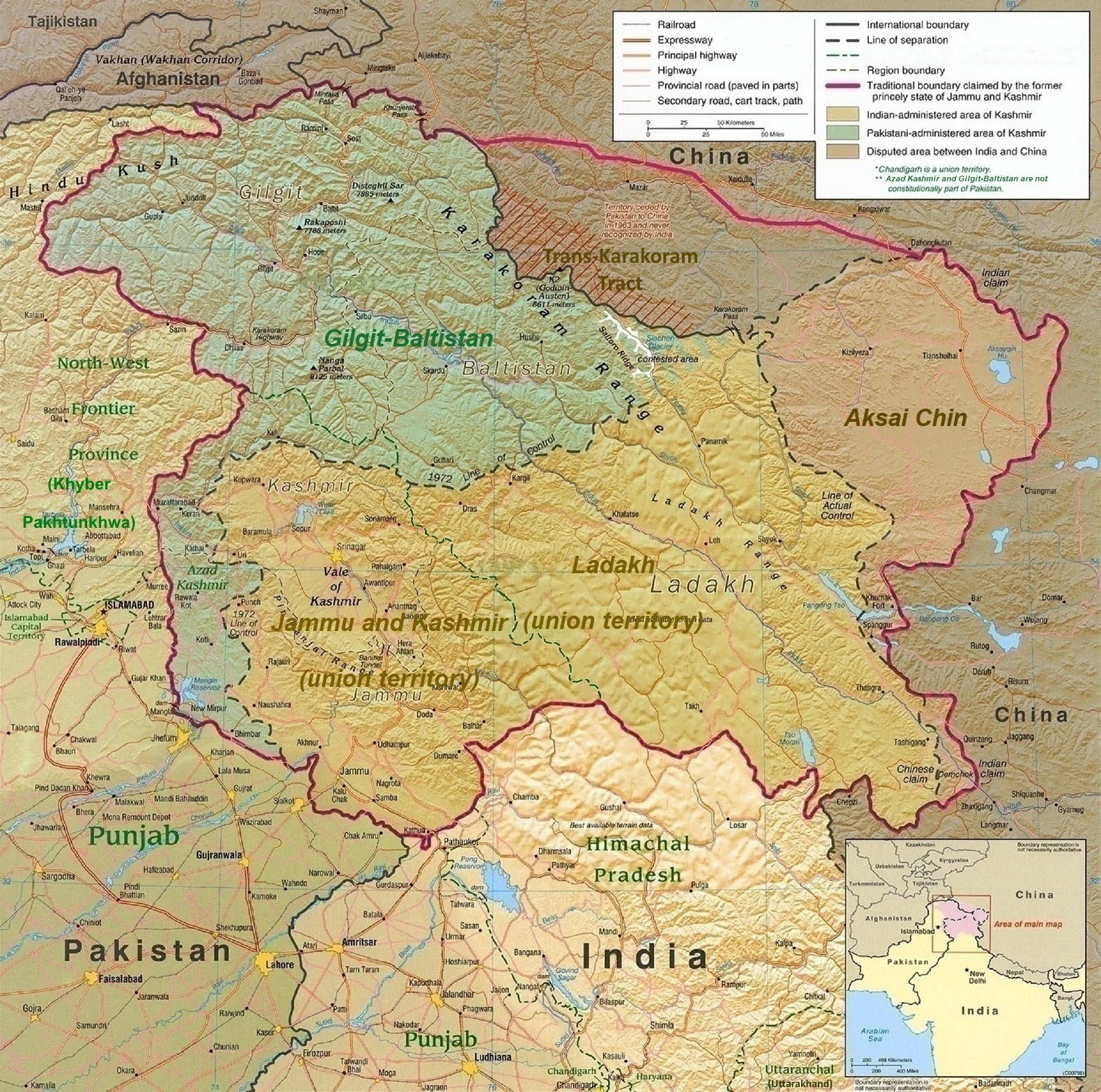



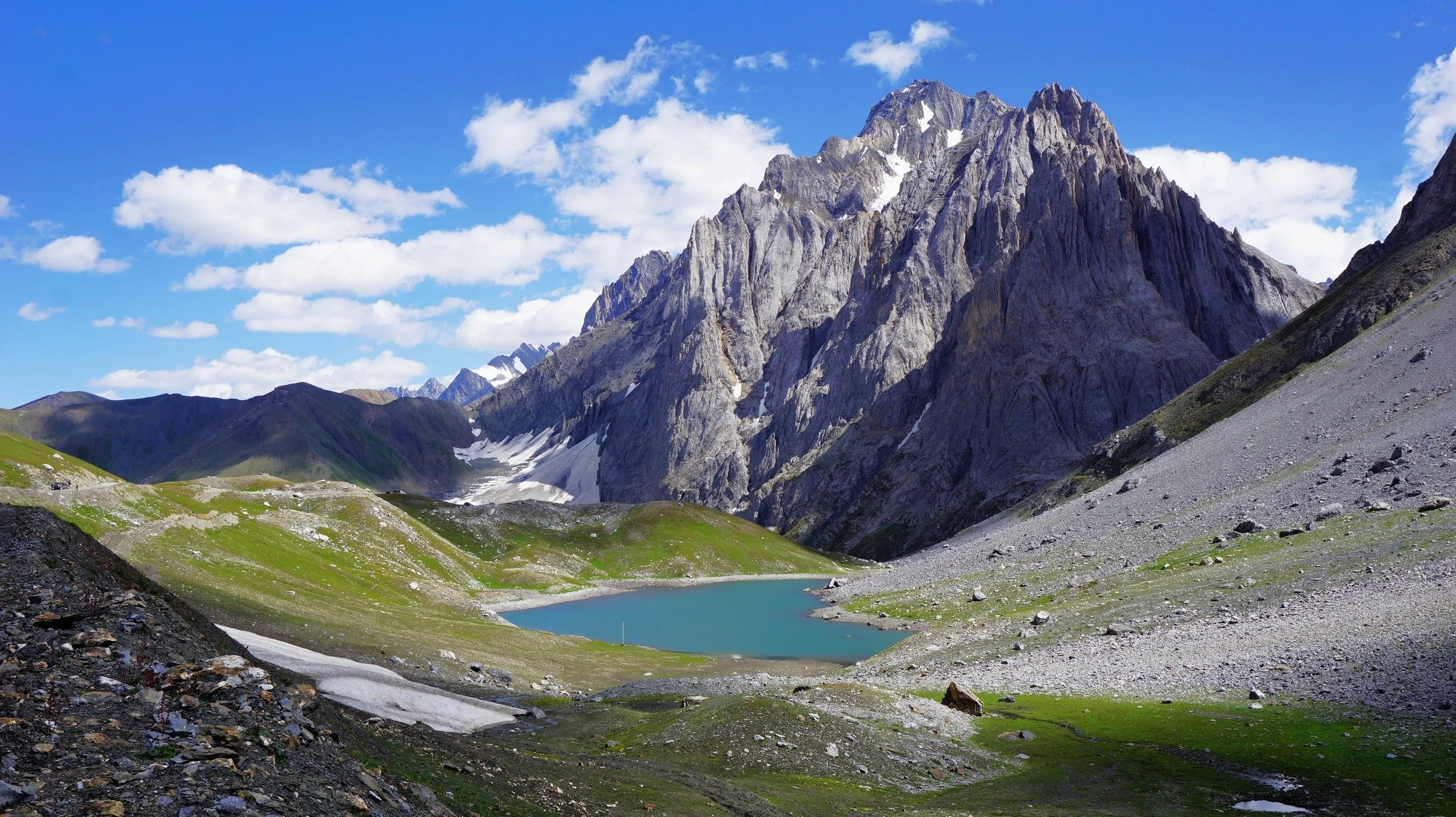
Five years ago the Galwan Valley was in the News for the wrong reasons after a deadly clash between the Indian and Chinese Armies in the Valley located in Ladakh lead to many deaths on the contentious Border between the two countries in wake of continued Chinese intrusions into Indian territory.
This area along the Shyok River, of which the Galwan Nallah or the Galwan River which forms the Galwan Valley has been off limits to Civilians since long but now the Indian Government has decided to open up the area for Civilians and we were amongst the First Civilians to venture into this beautifully desolate part of the Eastern Karakorams in Ladakh. Earlier Civilians could only venture upto the Village of Shyok from where the Shyok River takes a U turn and flows in a Northerly direction.