

Understanding the LoC in Kashmir
Most people are eternally confused about the location of the LoC in Kashmir. And Tourists are shown the LoC from almost everywhere. Even the Pahalgam side.
Anyways this is a simple Map which explains the LoC in Kashmir.
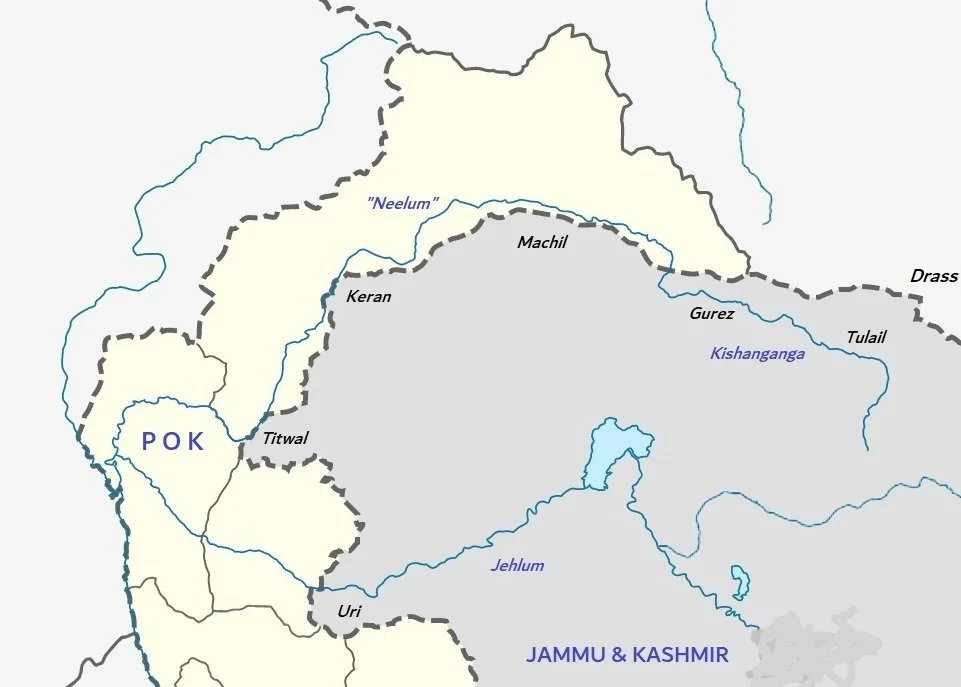
The Line of Control in Kashmir
Most people are eternally confused about the location of the LoC in Kashmir. And Tourists are shown the LoC from almost everywhere. Even the Pahalgam side.
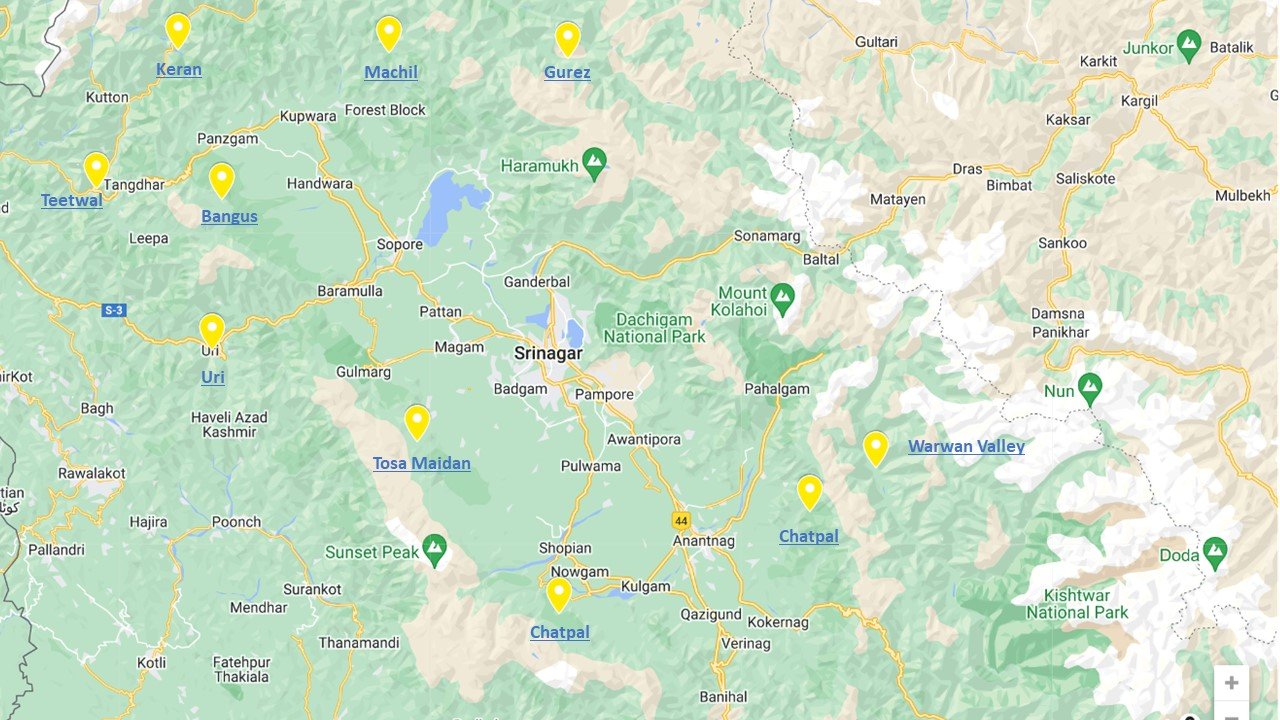
Anyways this is a simple Map which explains the LoC in Kashmir. The LoC kind of plays around the Kishanganga aka Neelam. The Kishanganga originates in the "Great Lakes" Region of Kashmir specifically from the Kishansar Lake and comes down into the Tulail Valley and then onwards to Gurez and at Bagtore in Gurez is where it enters PoK or the LoC and becomes the Neelam. From there on both banks of the River run through PoK and has places like Taobat and Kel and of course the very beautiful Village of Arang Kel (Google Arang Kel). The Indian side pushes very close to the Neelam in Machil sector.
And then again India manages to take one side of the bank in Keran. And again the Kishanganga emerges. Further on again both sides are in PoK and it becomes the Neelam.
But again at Teethwal in the Karnah Valley the Indians managed to take one bank of the River. The Battle of Tithwal was an epic Battle and it was in this Battle that Piru Singh and Karam Singh won Param Vir Chakras.
But again after Teethwal the Kishanganga forever becomes th Neelam till it meets the Jehlum at Domail.
The Loc below this area lies around the Uri sector on what used to be the Jehlum Cart Road. Uri itself used to be connected to Poonch via the Haij Pir Pass but that was taken by the other side.
So this August we are doing an LoC drive where we will start from Uri and the road to Haji Pir and then onto Tithwal. Then Keran. The Machil. Then we would enter Gurez and go till Bagtore and then in the other direction all the way to Tulail and hopefully across the Kaobal Gali into Drass and then return to Srinagar.
Around the Hari Parbat Hill
The Fort of Hari Parbat or the Koh-E-Miraan dominates the skyline of old Srinagar. The Fort was built by the Afghan Durranis who ruled the region at one point of time and has stood witness to the vagaries of time in Kashmir. Many places of historical / religious lay dotted around the Hill.

The Hari Parbat Fort as seen from the Badamwari below
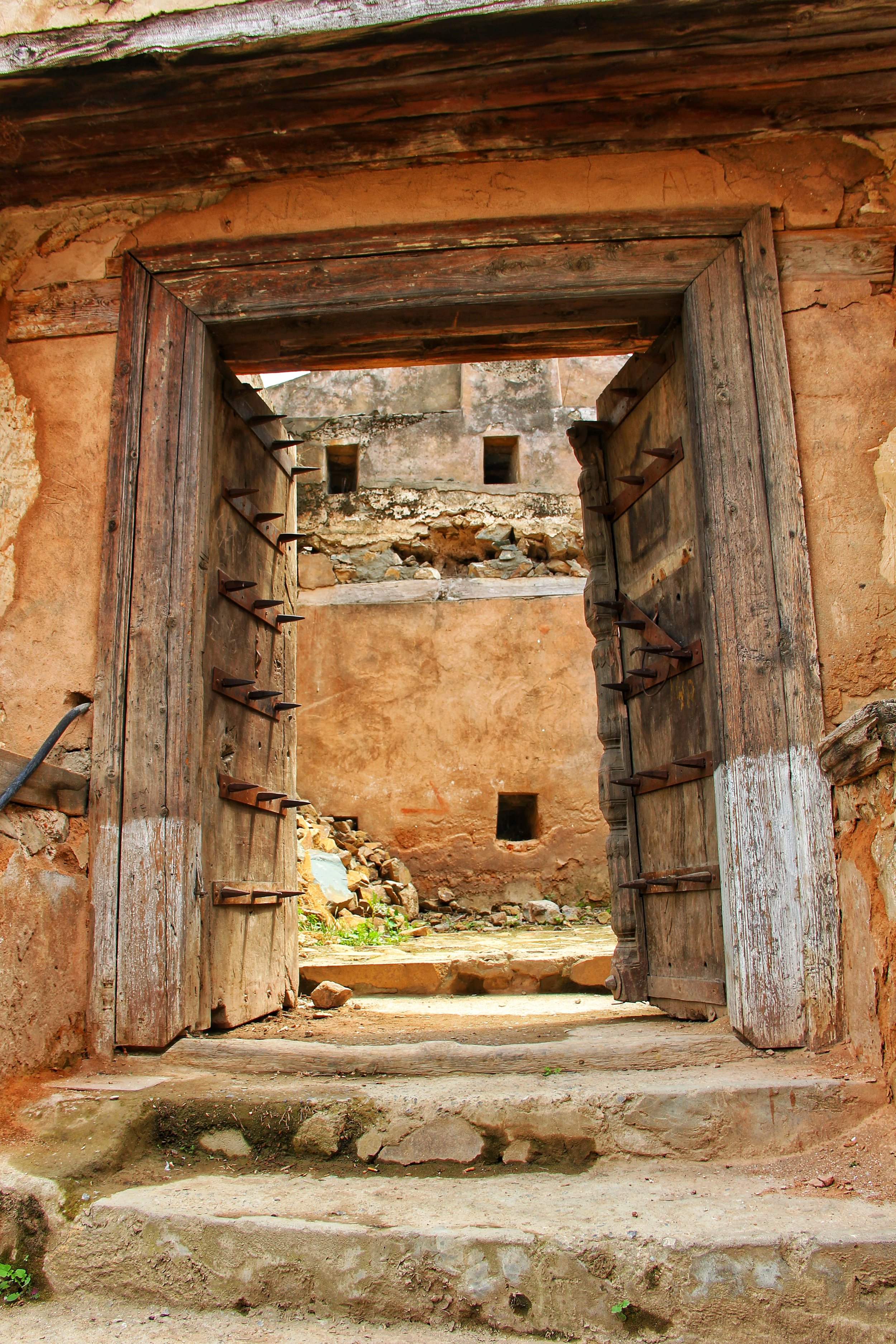
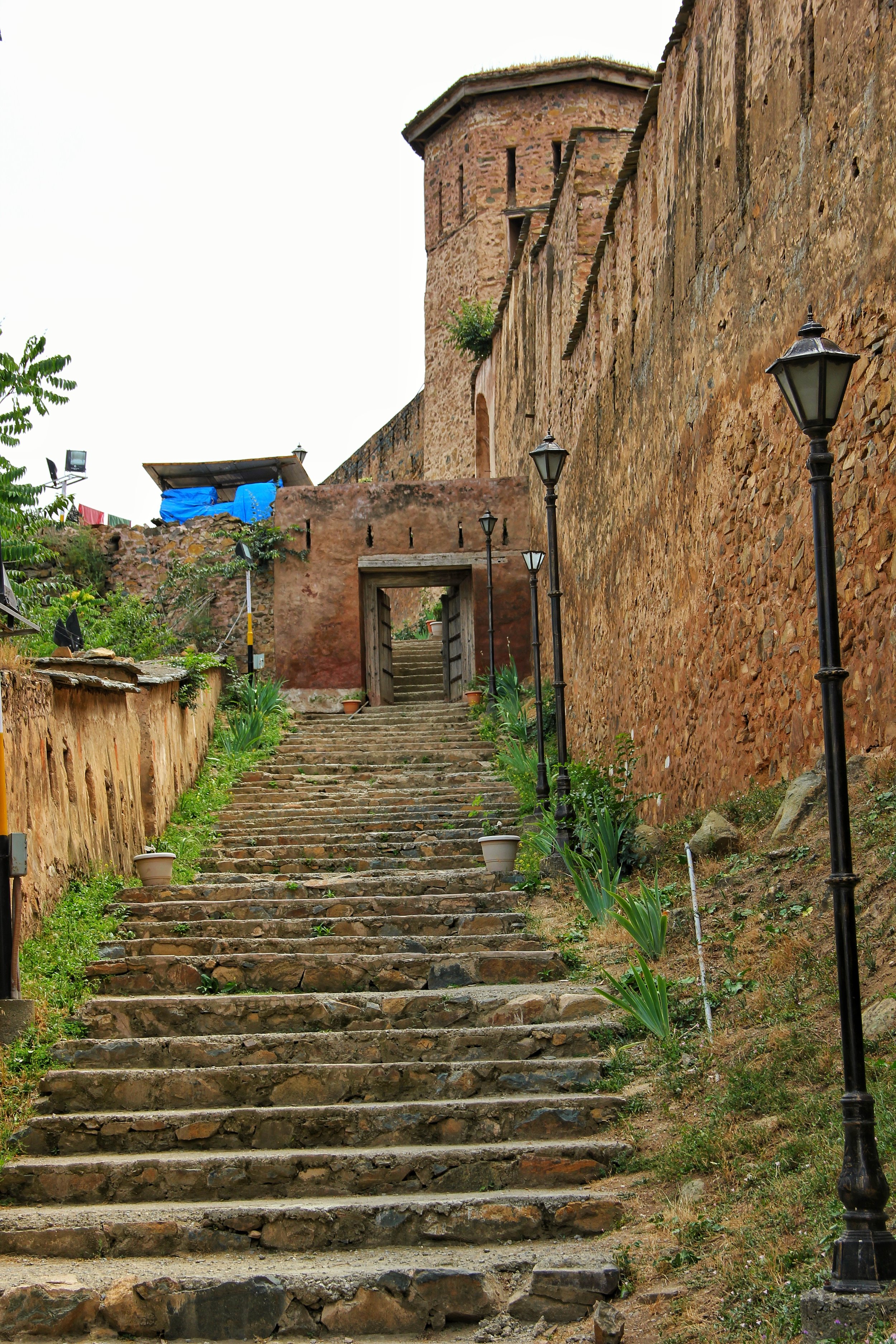
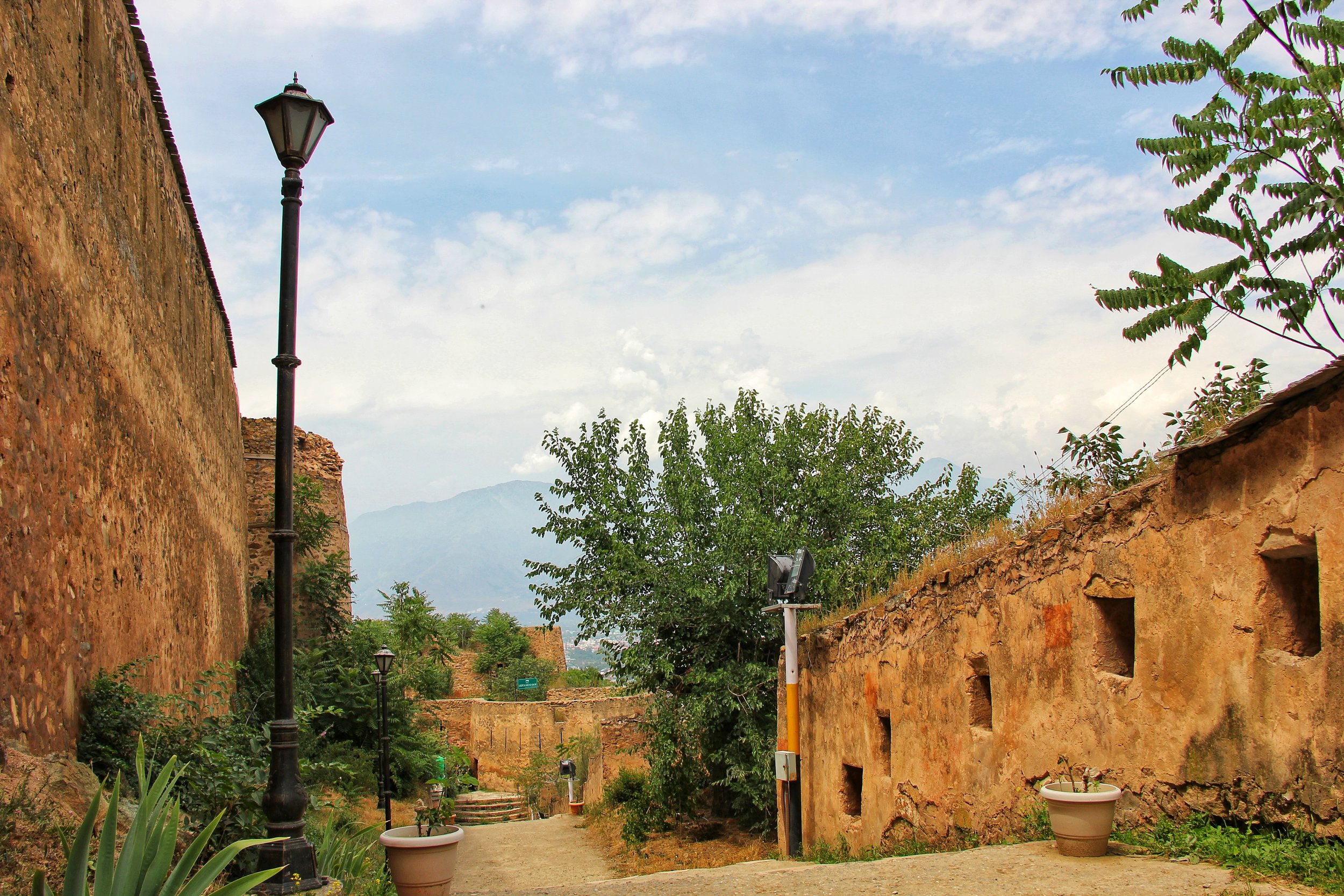
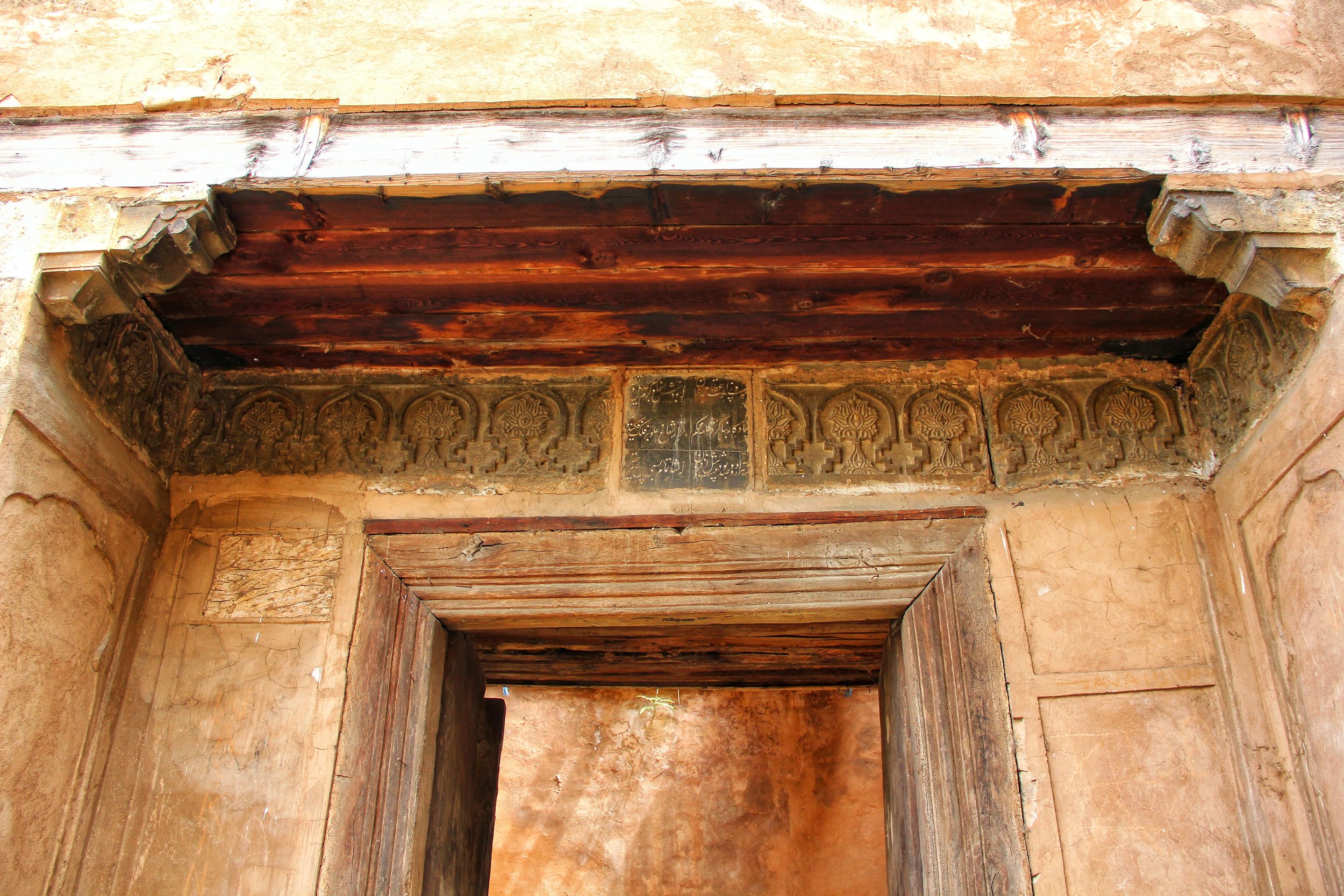
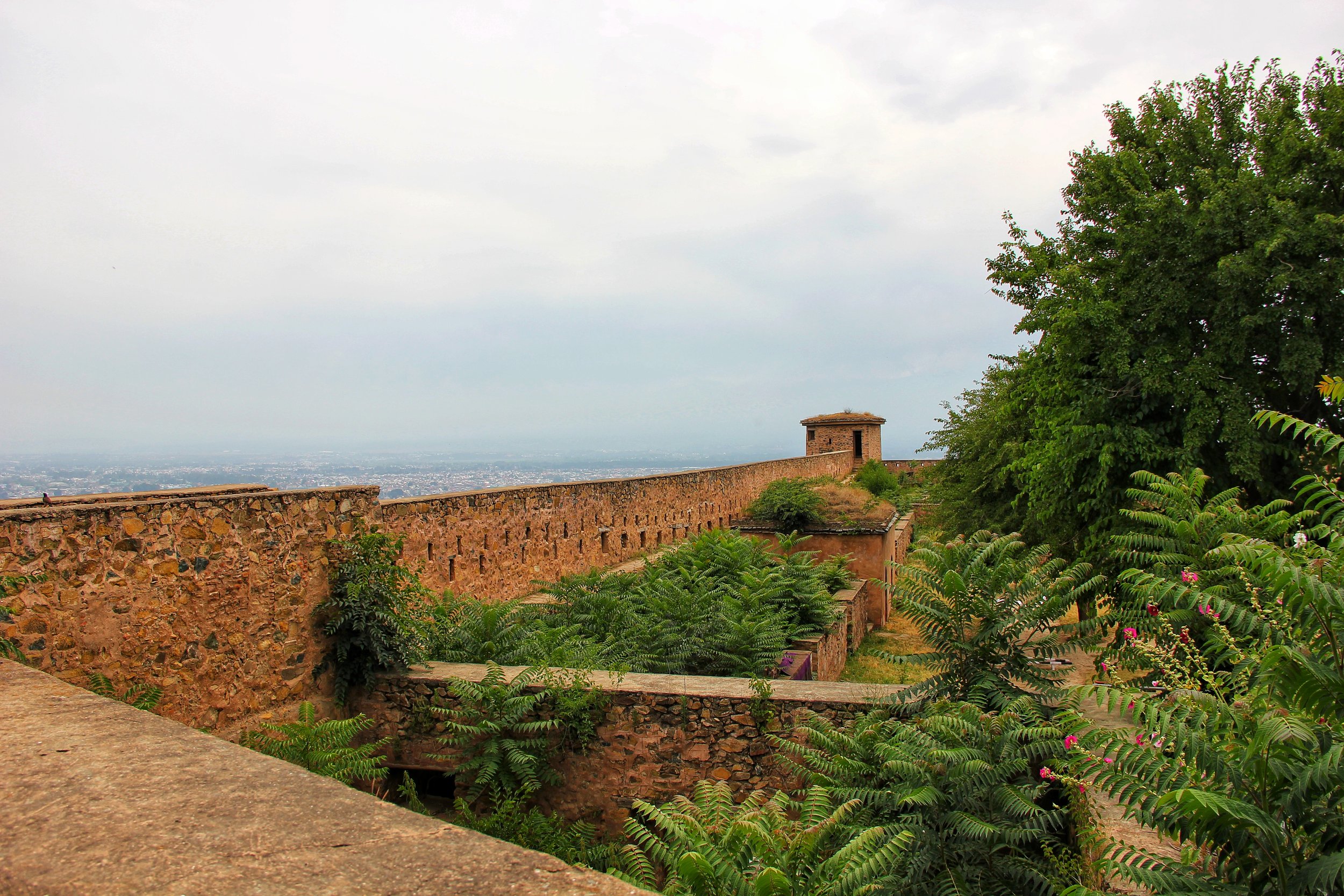
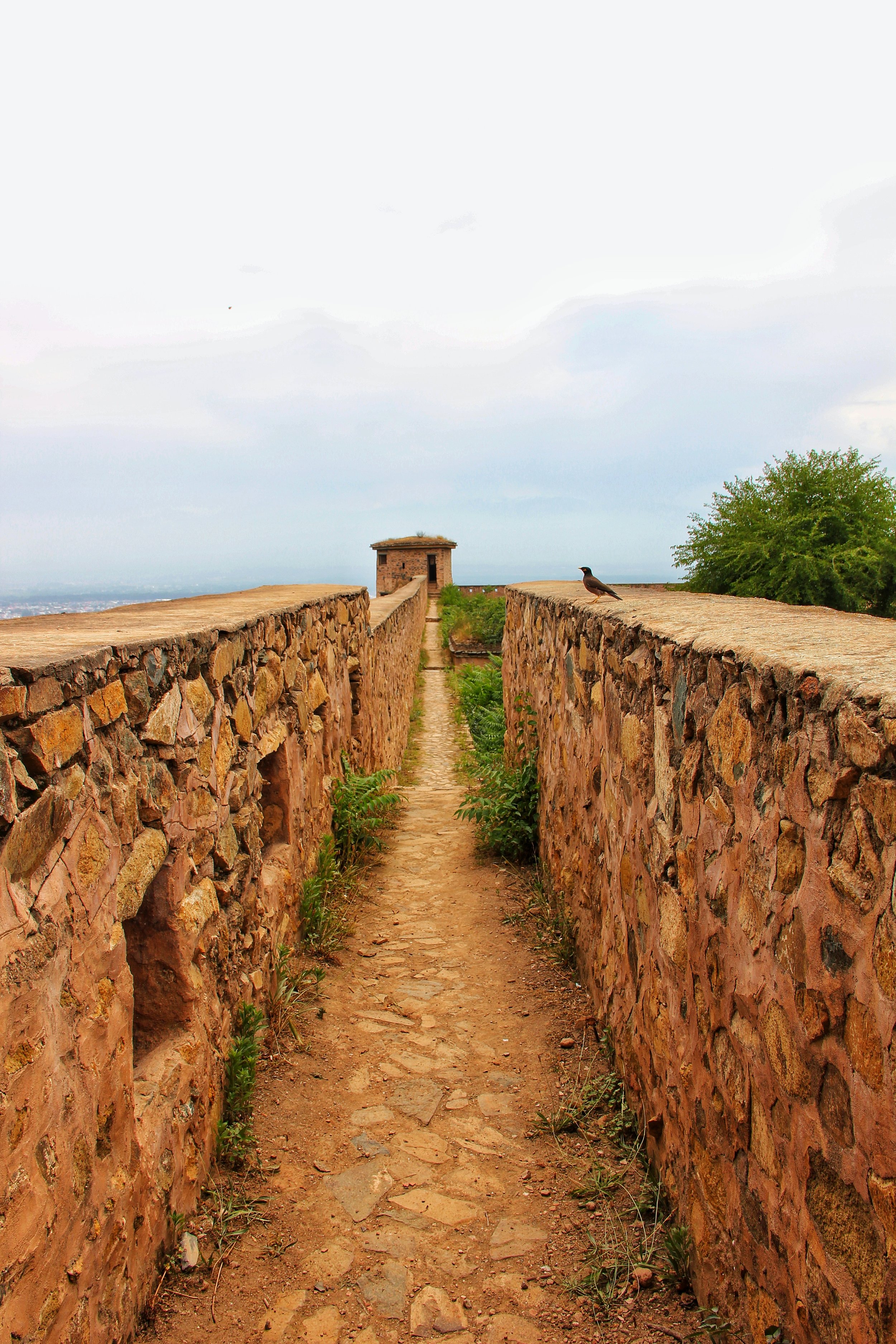
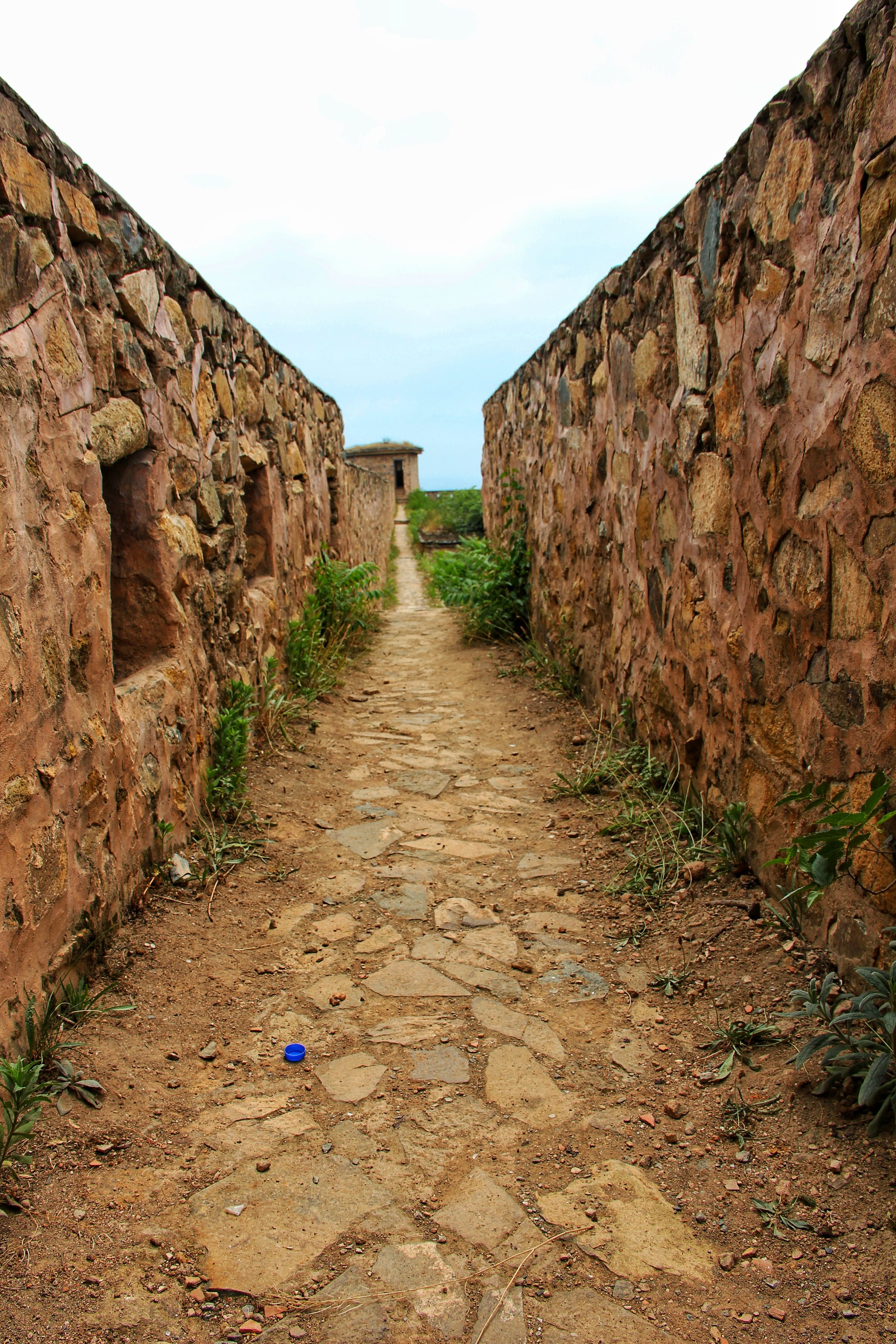
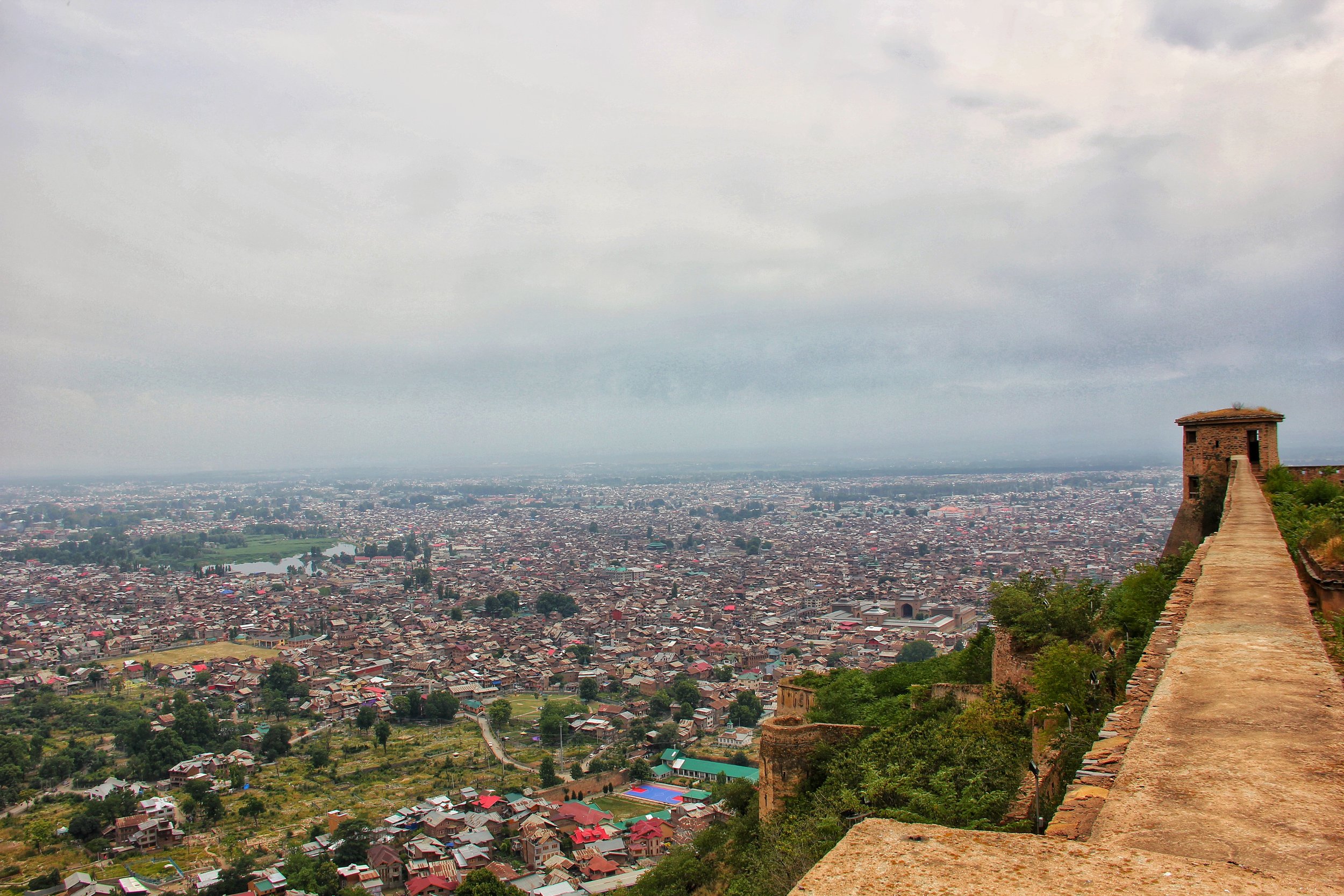
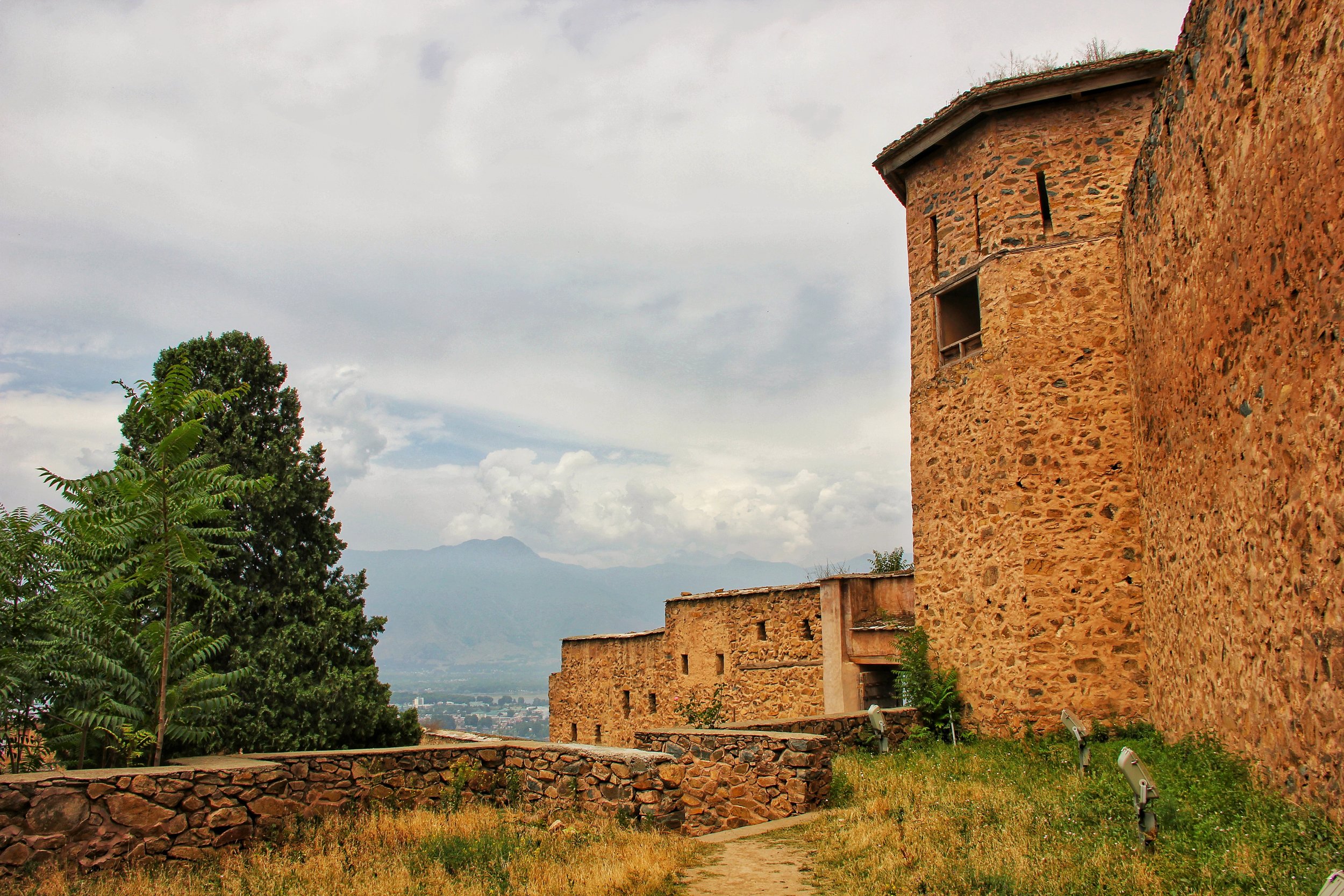
The imposing Hari Parbat Fort. The present Fort was built by the Durrani Afghans in 1808 though originally the fortifications around the hill were built during the reign of Akbar who wanted to make a new capital here. I did some explorations around the Fort two weeks back and found some interesting things around. The original Fortification wall built by the Mughals still exist in parts around the lower parts of the Hill.
The most fascinating fact was that there was a tunnel from the Fort which led one to the shores of the Pokhribal Lake, an extension of the Nigeen Lake, right from the top of the Fort. The Tunnel entrance is still there at the Pokhribal Lake. Also a ventilation hole around 10 ft is still preserved in the Badamwari Garden. The Tunnel is now blocked so the secret passage way cannot be explored further. The Hill also holds the Shrine of Makhdoom Sahib such encompasses various historical structures of the Mughal Era, as well as the Sharika Devi Temple and the Chatti Padshahi Gurudwara.
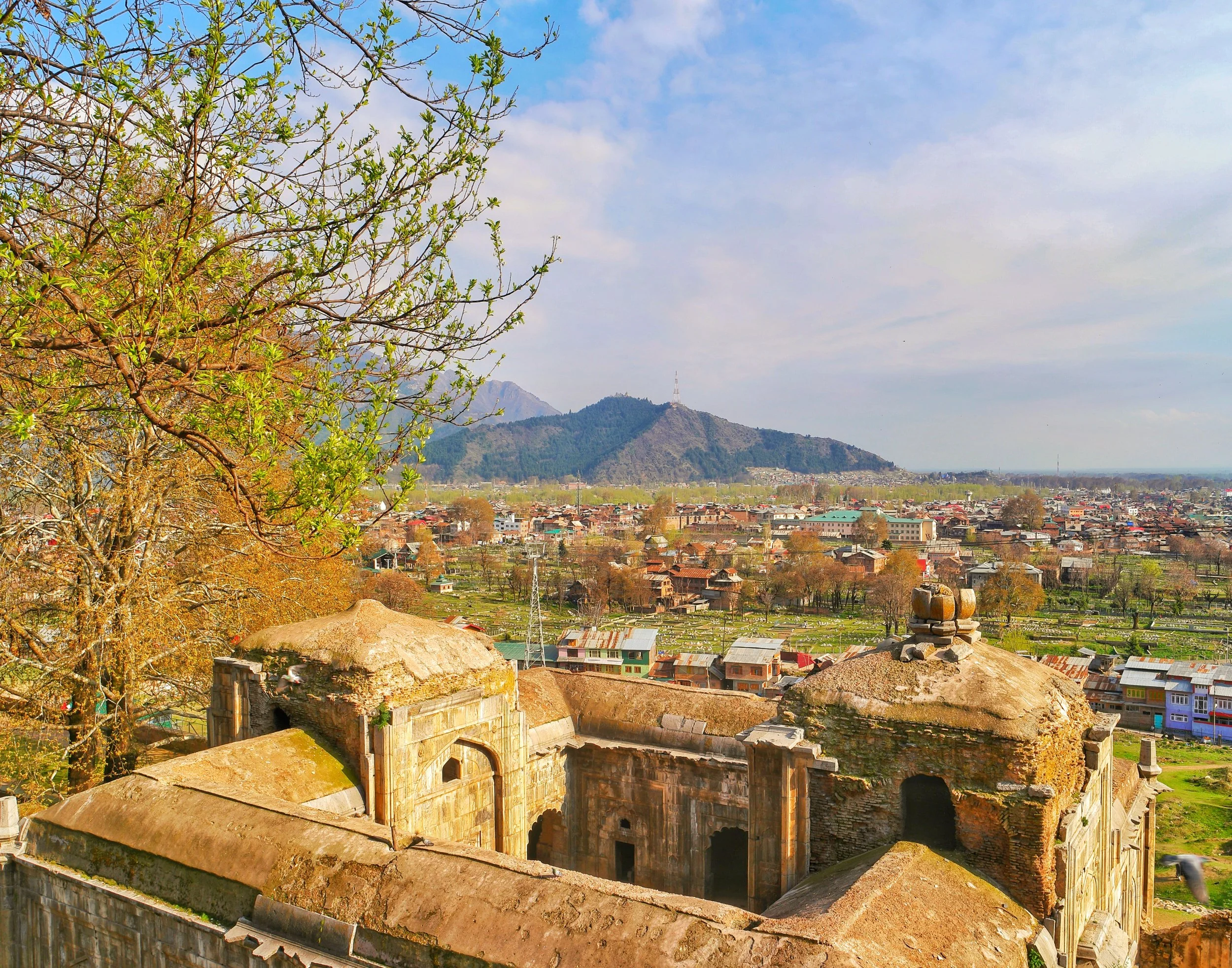
The Akhun Mullah Mosque on the Hari Parbat
An alternate view of Srinagar old Town. As seen from above the Mosque of Akhun Mullah Shah near Makhdoom Sahib a little way up from the Kathi Darawaza. This little Mosque was erected by Dara Shikoh in attractive grey limestone to honor his tutor Akhun Mullah Shah. The Mosque was built in 1649 AD and it has a stone lotus over it's pulpit, the only one of its kind in Kashmir. Another little architectural gem of Kashmir. In the background is visible the Shankaracharya Hill with the Shankaracharya Temple, another gem that was made in the 7th century AD.

Massive Chinars overlooking the Srinagar city in the compound of the Akhun Mulla Mosque

The Chatti Padshahi Gurudwara as seen from the Hari Parbat
The Chatti Padshahi Gurudwara, one of the most revered Gurudwaras in the state of Jammu and Kashmir, in Srinagar as seen from the Akhun Mullah Shah Mosque. This Gurudwara is situated in the Rainawari locality near the Kathi Darawaza on the foot of the Hari Parbat. It is associated with the Sixth Guru who is supposed to have roamed around in the Valley spreading the message of Guru Nanak Dev ji.

Pokhribal Lake a part of the Nigeen Lake and the Lepers Colony behind it

The Boat Club at Pokhribal Lake at Srinagar
This pic was taken from the top of the now in ruins outerwall of the Hari Parbat Fort. The water body that you see here is called Pokhribal and it's an extension of the Nigeen Lake. Underneath the massive Chinars is a Shamshan Ghat run by the Ahle Singham, a local Sikh Group. The shed is where they cremate the bodies.
The White building is the Boat Club though there surely wasn't much boating happening and the place looked derelict. Just a few guys using the pier for trying to catch a fish on their improvised fishing rods. The White structure across the Lake is a water treatment plant or something on those lines.
Behind the plant there are old buildings and a big old Hospital. This is Kashmir's Leper Colony. This isolated spot was where all the Lepers in the state were kept. Due to ignorance Lepers were shunned and were forced to live in isolation over here. In time they married amongst themselves and had families. Now three generations of the Lepers families live here. The Lepers are still provided daily / monthly rations. Generally people tend to stay away from this place.
Next time will surely visit the Leper Colony. It's a place time and people forgot. And of course the pic has the Zabarwan, the Lakes, the Chinars and all other things usually associated with Kashmir.

A Family home and its field by the banks of the Pokhribal Lake. On the right you can see the Tunnel which linked the Lake to the Fort on the top of the Hill

An massive old Chinar by the Pokhribal Lake with an ancient structure. Next to the Chinar is a crematorium used by the Sikh families living in this area.

A view of the Nigeen Lake in the foreground and the Dal Lake in the background with the Zabarwan Mountains in the background.

The Jamia Masjid in downtown Srinagar as seen from the Hari Parbat
The Jamia Masjid in the Nowhatta area of Srinagar surrounded by the old part of Srinagar. This beautiful Mosque is one of the largest Mosques in Kashmir and has a capacity of well over 30,000. It was built in 1394 AD by a Sultan of the Shah Miri Dynasty. It is a beautiful piece of Architecture indeed though few outsiders visit this place. This was clicked from the Mosque of Akhun Mullah Shah above the Kathi Darwaza both of which are ASI designated monuments and again are beautiful examples of Islamic Architecture.

The Pir Panjals in the background of Srinagar city as seen from the Akhun Mullah Mosque
A Visual Journey Through Dachigam National Park
A visual journey through the Dachigam National Park on the outskirts of Srinagar in Kashmir. The Park is the last stronghold of the highly endangered Kashmiri Hangul.

The Dagwan which originates at the Marsar Lake is the life line and the main River which flows through the Dachigam National Park
A Visual Journey through Dachigam National Park
The Dagwan Nallah as it flows through the Dachigam National Park. The Dagwan Nallah is the main source of water for the Harwan Reservoir, which in turn supplied the water to Srinagar supply. The Dagwan flows down from the Marsar Lake through the pristine environs of Upper Dachigam.
The altitude in the Park varies from 5000 ft to almost 14000 ft and as such offers a variety of habitat. A true haven for wildlife and is preserved as such as the entry is strictly restricted. Hope it stays that way.
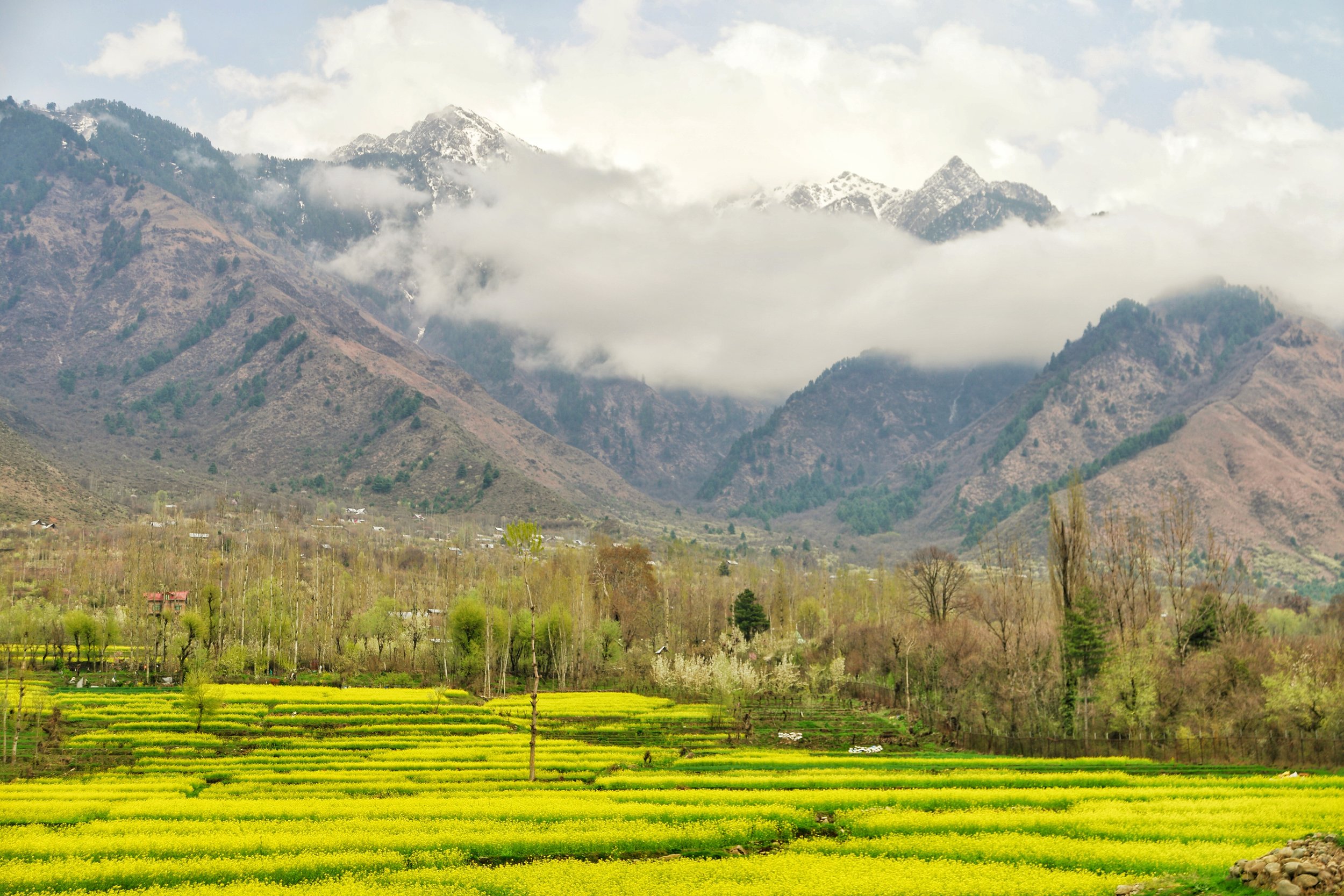
Mt Mahadev the highest Peak of the Zabarwan Mountains overlooks the Dachigam National Park
Mt. Mahadev as seen from outside the Dachigam National Park in Kashmir. Standing at almost 4000 m the Mahadev is the tallest peak of the Zabarwan Mountains. The Mountain provides a stunning backdrop to the lower areas of the Park.
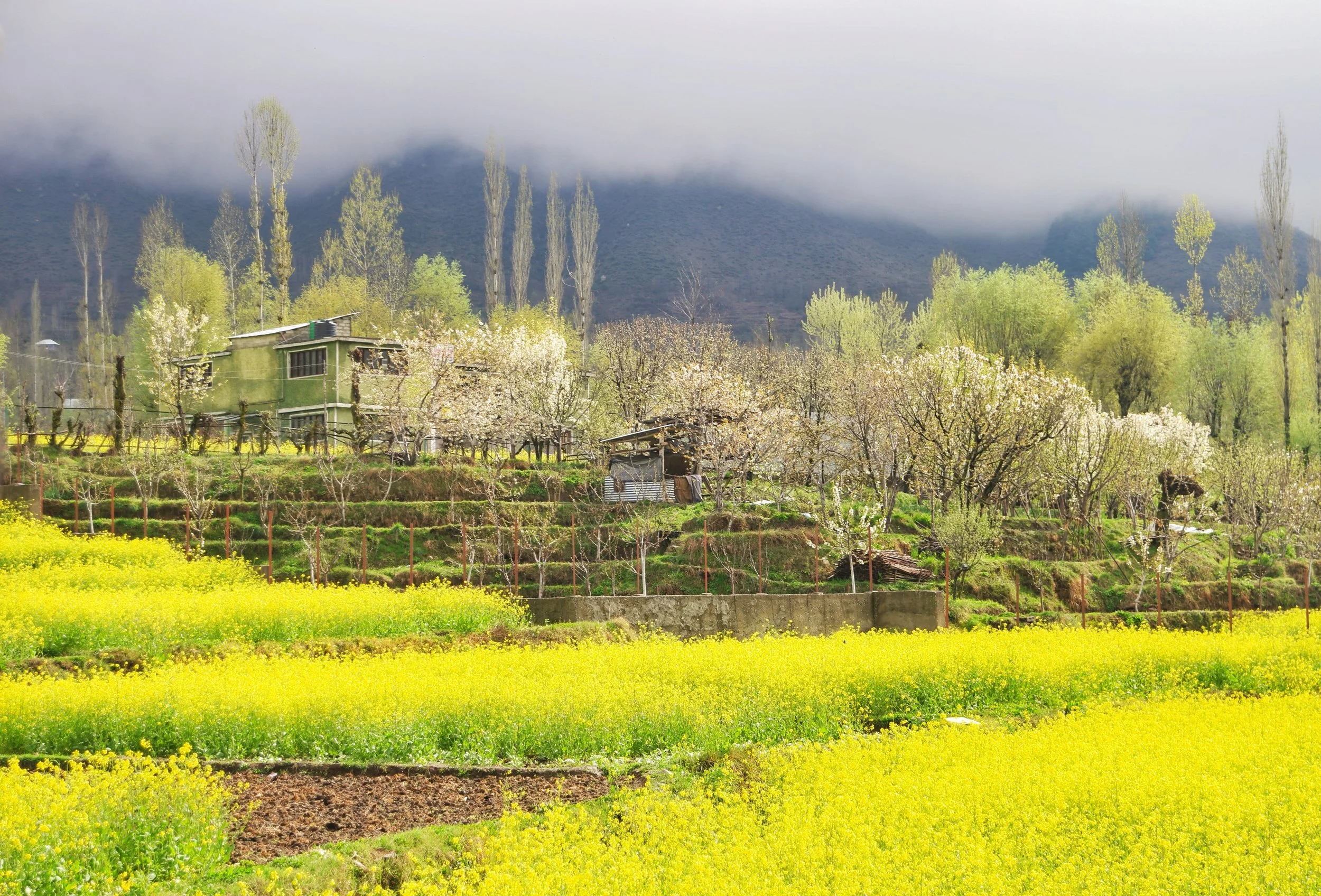
Mustard Fields outside the Dachigam National Park
The Mustard fields and the blossoming trees and of course the cloud play on the mountains in the background. On the outskirts of Srinagar on the way to the Dachigam National Park.

The water from the Dagwan River being diverted to the Srband Lake which supplies drinking water to Srinagar City.jpeg
This little piece of engineering diverts some of the water from the Dagwan Nallah / River into the Sarband Lake, that traditionally was used to supply drinking water to Srinagar city. This system was set up way back in 1906. And for many years the water was just supplied raw so pristine was the water.
The Dagwan Nallah originates from the high altitude Marsar Lake which relies on the snow melt of the Peaks of the Kolahoi group at the base of which it lies. The Kolahoi itself the highest peak of the Valley. The Marsar Lake itself lies in the Upper part of the Dachigam National Park and the Dagwan flows down through it, in an area devoid of all human inhabitation, through the magical forests of Dachigam until it reaches this point from where a part of its water gets diverted to the Sarband.
The Dagwan itself finally gets amalgamated into the Jehlum into the journey south. Coming back to the pic and this piece of engineering thanks to which at one time the whole of Srinagar used to enjoy the purest natural water coming down right from the laps of the Himalayas from snow melts since of them above 5000 m and then further enriched by the primeval forest around it.
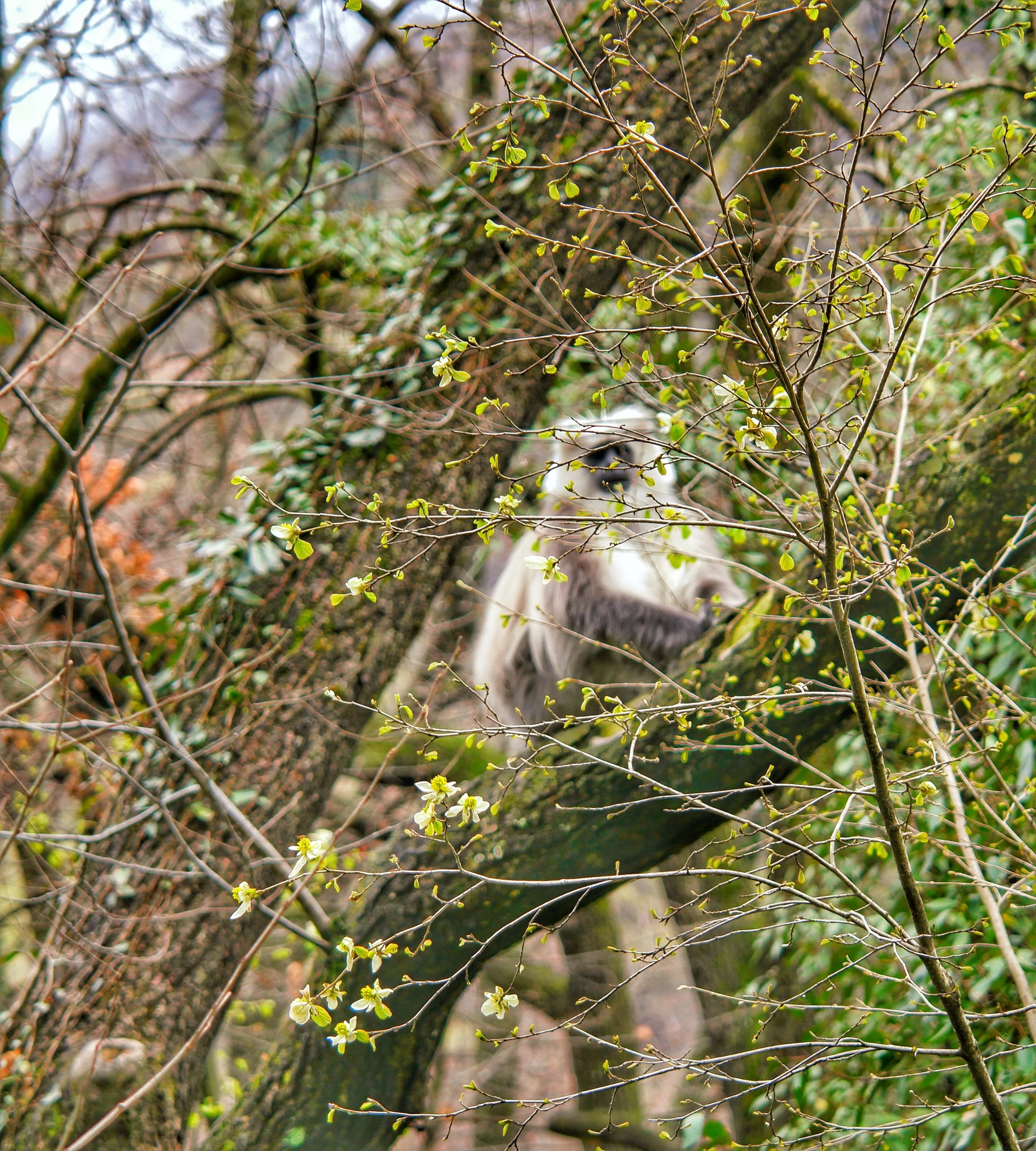
Himalayan Langur at the Dachigam National Park
A Semnopithecus Ajax (Kashmir Gray Langur/ Himalayan Langur) looking at the idiotic Homo Sapien who disturbed his Siesta.
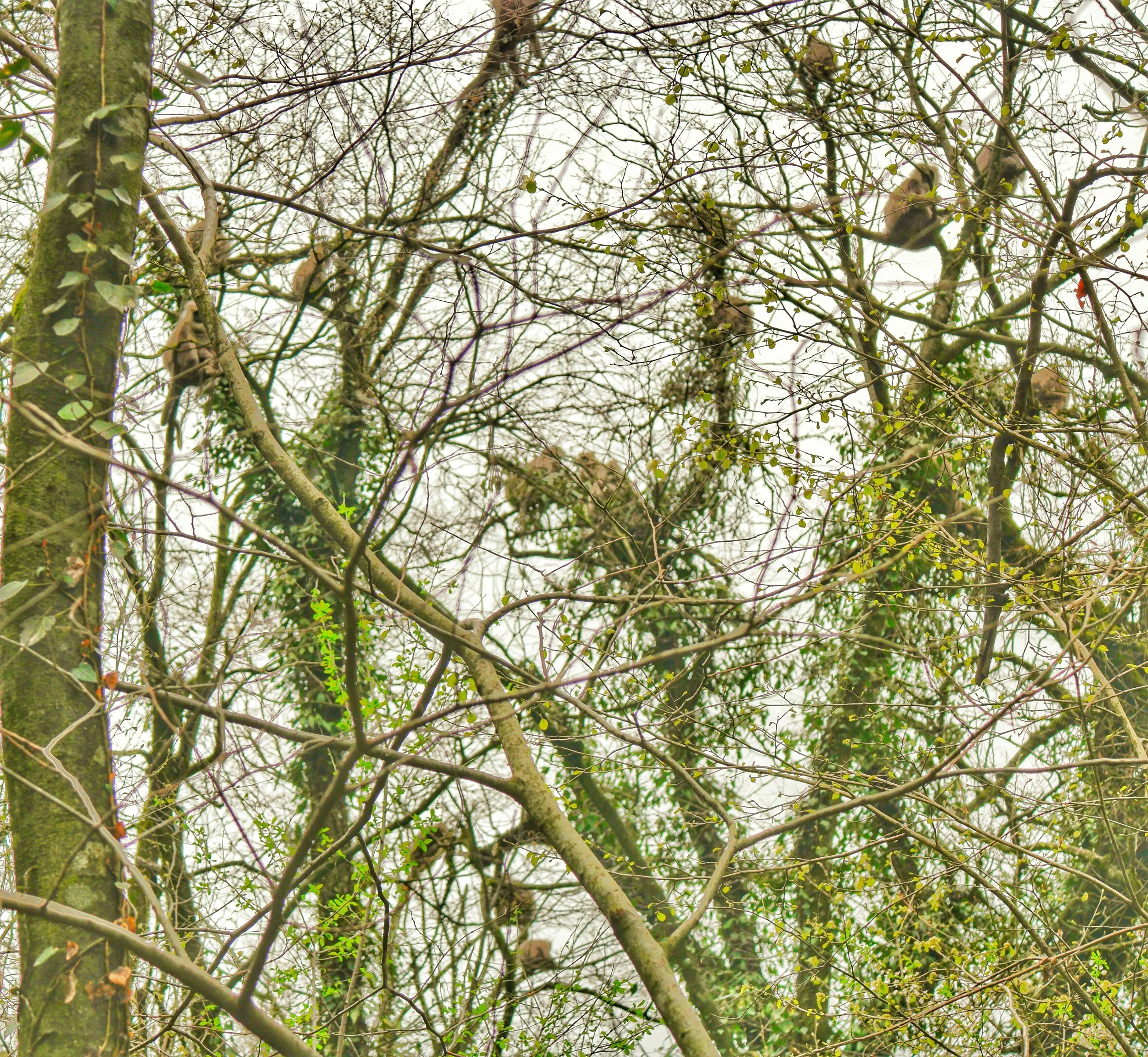
A Group of Himalayan Langurs at the Dachigam National Park
A Group of Kashmiri Gray Langur / Himalayan Langurs at the Dachigam National Park.
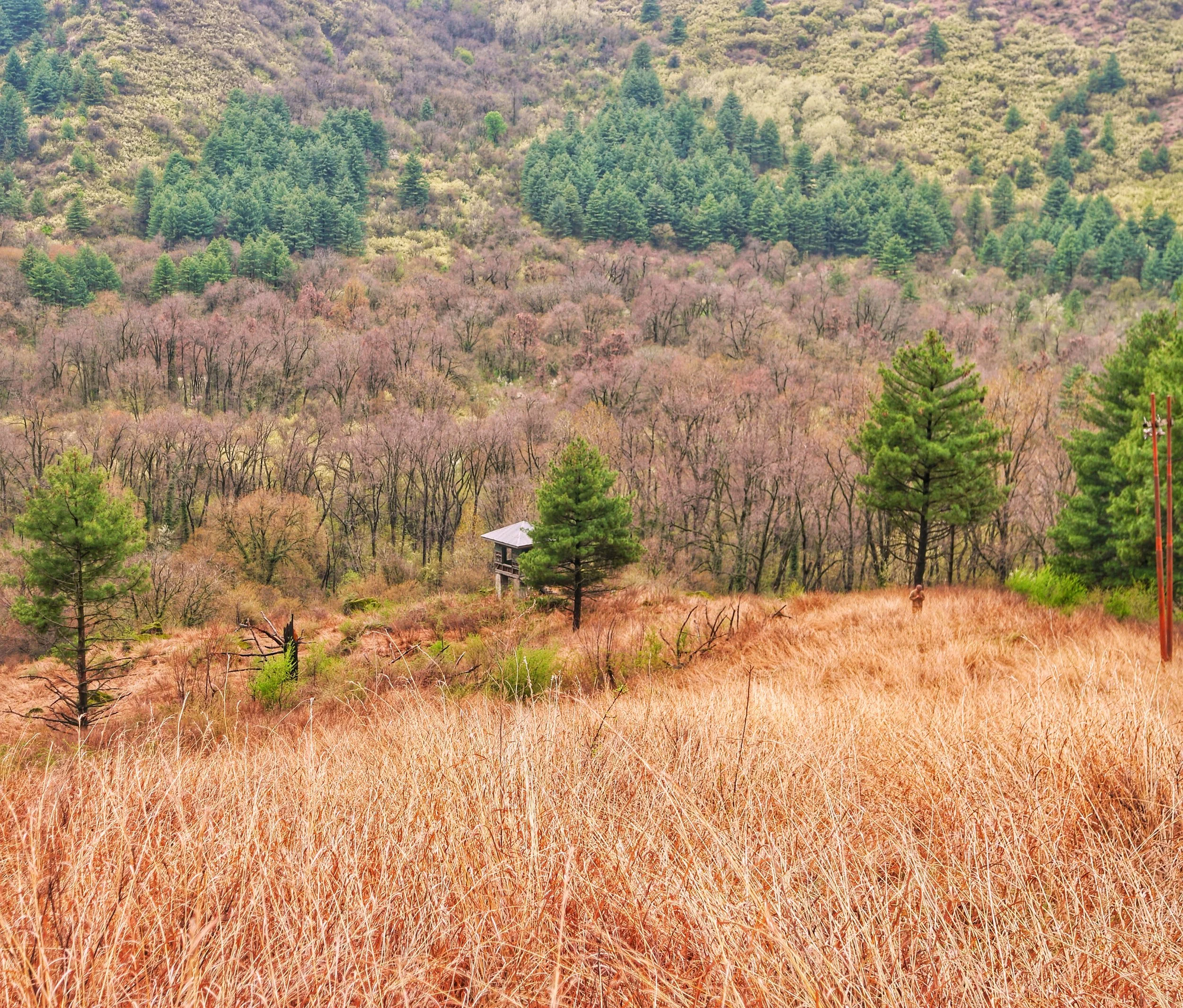
The Rangers lookout hut at the Dachigam National Park
A Ranger's observation hut deep inside the Dachigam National Park. You can see a mix of mountain grasslands, Pine Fir forests and a primeval Oak forest along the Dagwan River.
This point is favourite one for spotting the rare Kashmiri Hanguls and usually sightings are quite common, except when I go there :). The Oak forests below are a favourite hang out for the Himalayan Black Bears and in September October you can see hordes of them trying to get some kind of fruit off the Oak trees. But again I couldn't find any.
The primary reason for not spotting the animals I wanted to see were two fold. First was that I was supposed to reach the Park at 7 but I got there well after 9. Secondly it was a cloudy rainy day so most animals were sheltering themselves from the rain. Thirdly when it rains the Hangul don't need to come down to the Dagwan for having a drink. They find little pools of rain water right in the pastures which they can drink.
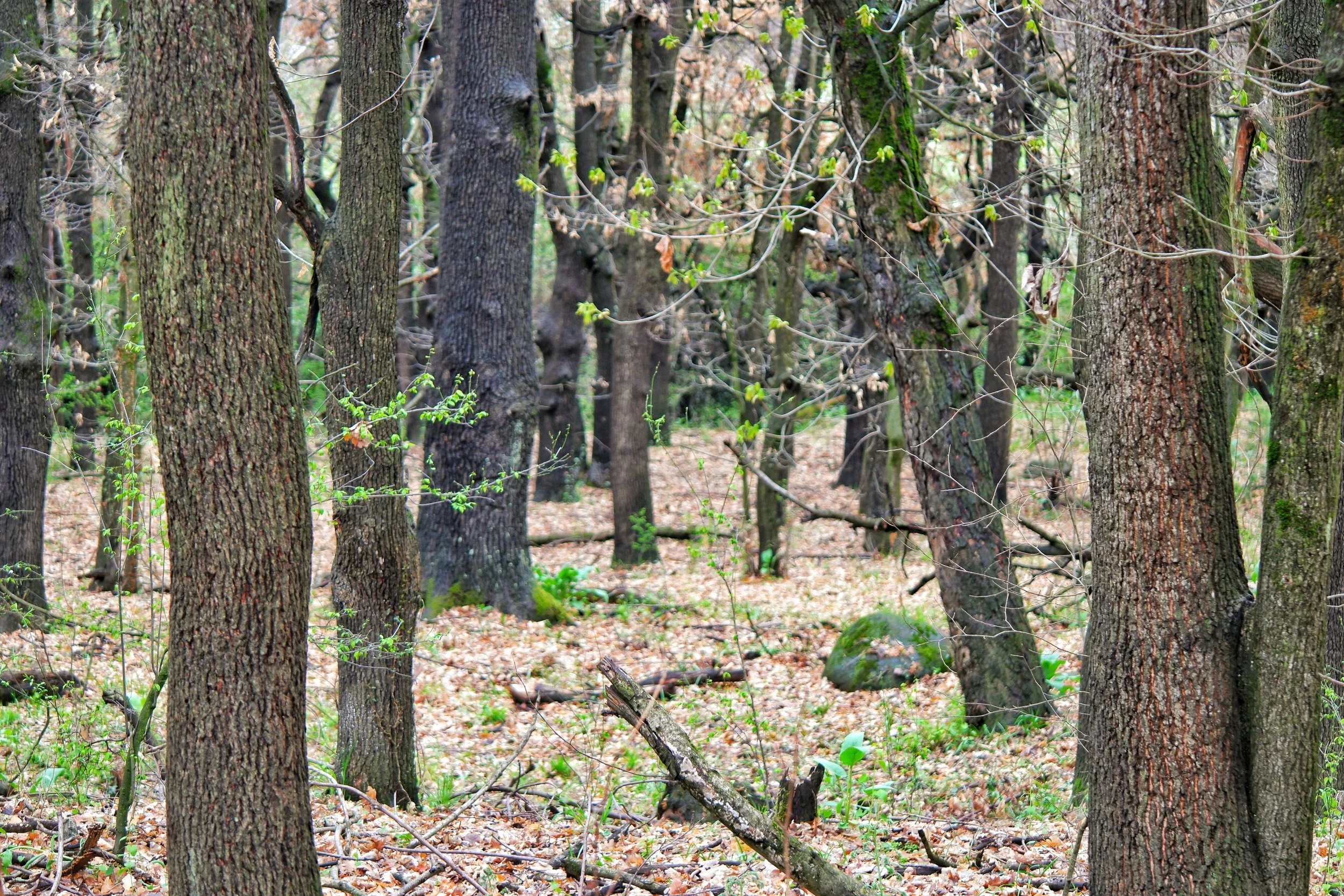
Oak Forests at the Dachigam National Park
The dense Oak Forests are a favorite haunt of the Himalayan Black Bear in the Autumn as they come around looking for all kinds Nuts and Berries to fatten up before Winter arrives and they retire into hibernation.
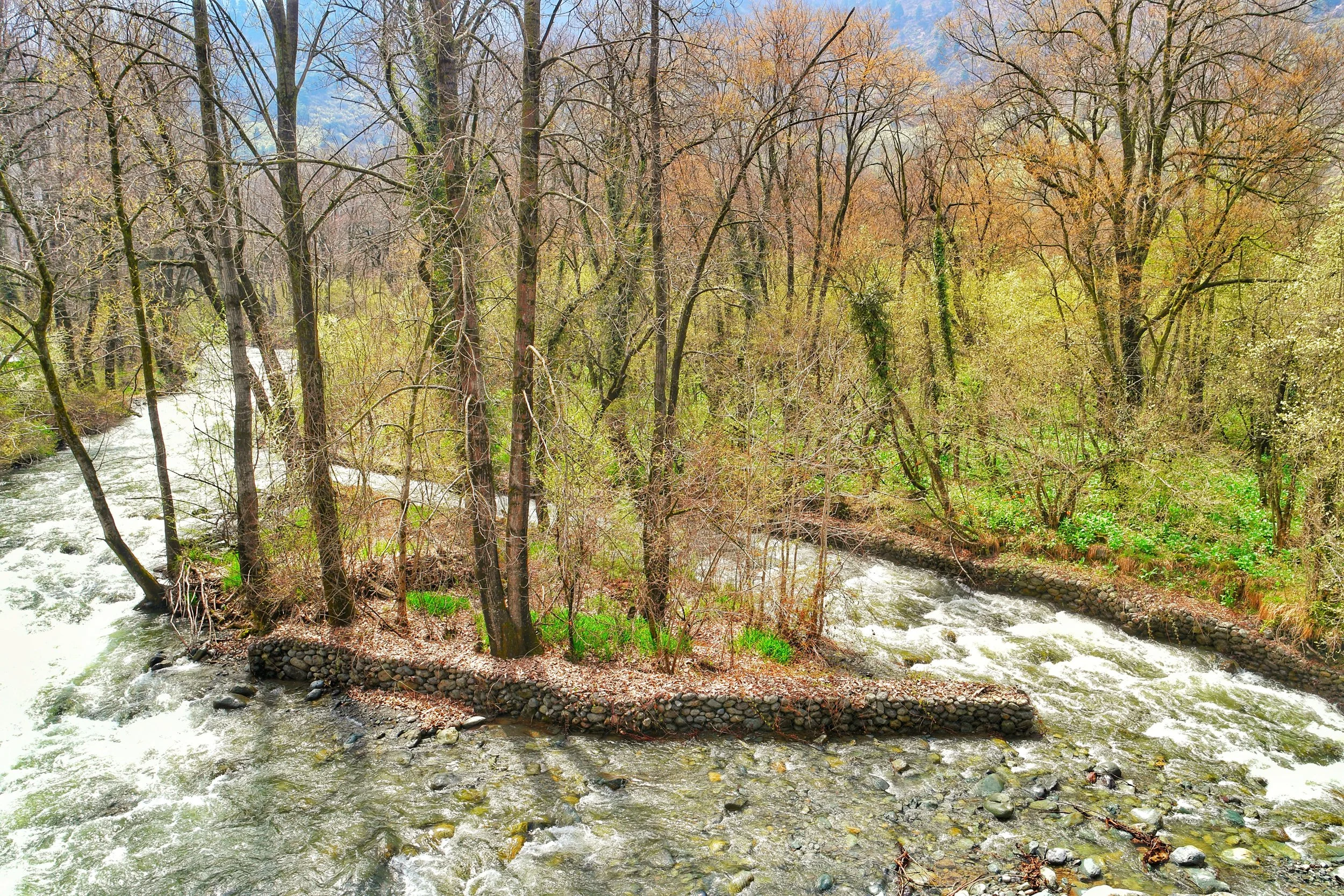
A small Island in the Dagwan River
A beautiful island in the middle of the Dagwan Nallah that runs through the pristine Dachigam National Park on the outskirts of Srinagar.
The altitude varies from 5500 ft to 14000 ft and the Park is spread over 140 sq kms. It is the last stronghold of the Kashmiri Hangul and in spite of hiking around the Park for almost 15 kms we were unable to spot any. The Park is also home to Leopards, Himalayan Black and Brown Bear and even possibly Snow Leopards in the higher reaches.
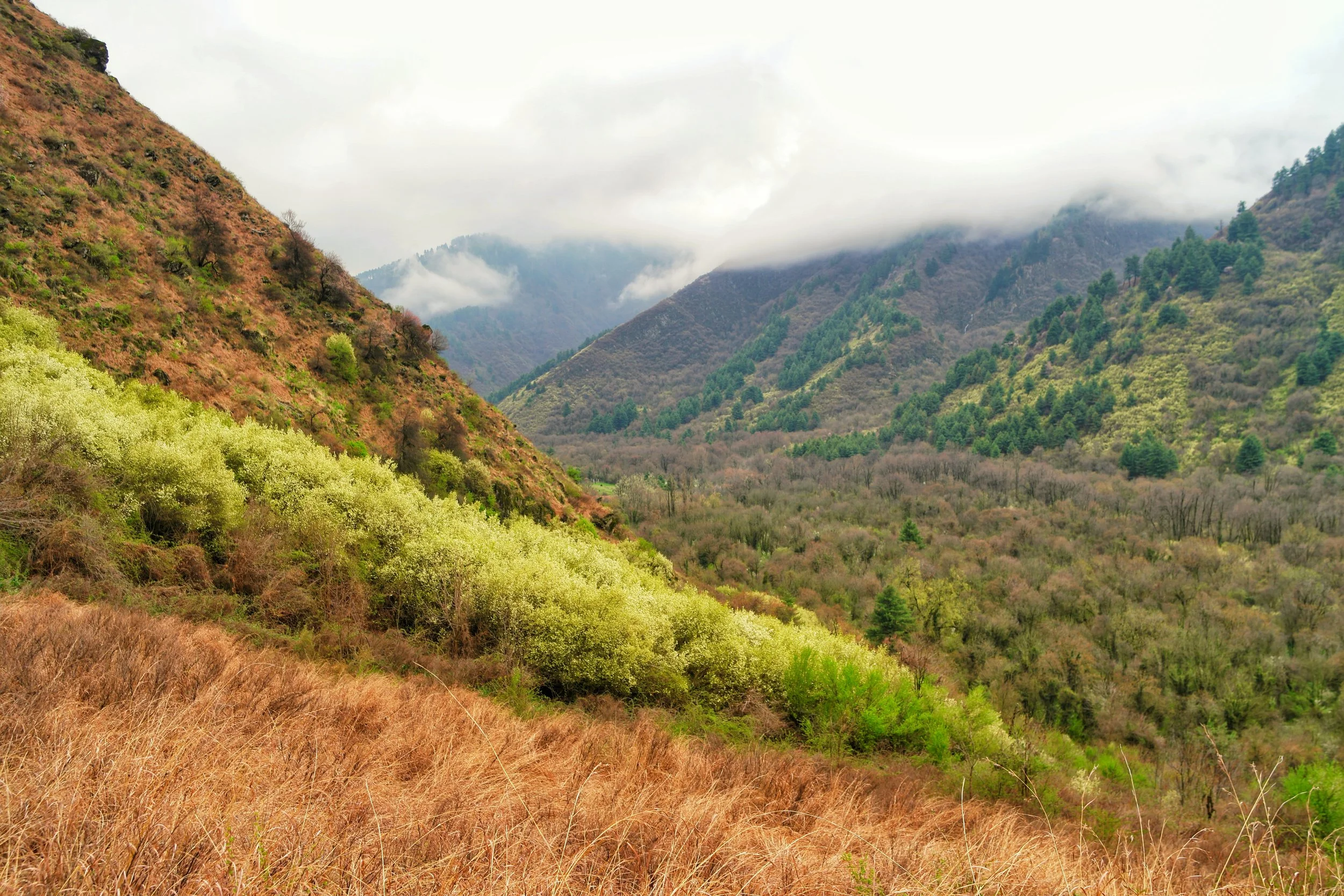
Mixed Forests of the Dachigam National Park
The pristine and mesmerizing forests of the Dachigam National Park. Thankfully they're are still places in the mountains which still maintain primeval forests like they used to exist.
The Park is named so as 10 villages were moved from inside the present boundaries of the Park to establish this as a Nature Reserve by the Maharaja. Hence the Dach or 10 and Gam or Village.

Another view of the mixed Forests of the Dachigam National Park
The Park also served as the rain catchment area for the City. The Dagwan river flowing through the Park originates from the Marsar Lake and supplies water to the Sarband Lake which used to supply all the drinking water to Srinagar.
Entry to the Park is restricted and permission is required from the Regional Wild Life Warden to get entry to the Park. We got into the Park on a rainy cold April Day. We were unlucky not to have any sighting of the Himalayan Black Bear or the Kashmiri Hangul but the 20 odd kms that we hiked in the Park were totally worth. It was like being back in time.
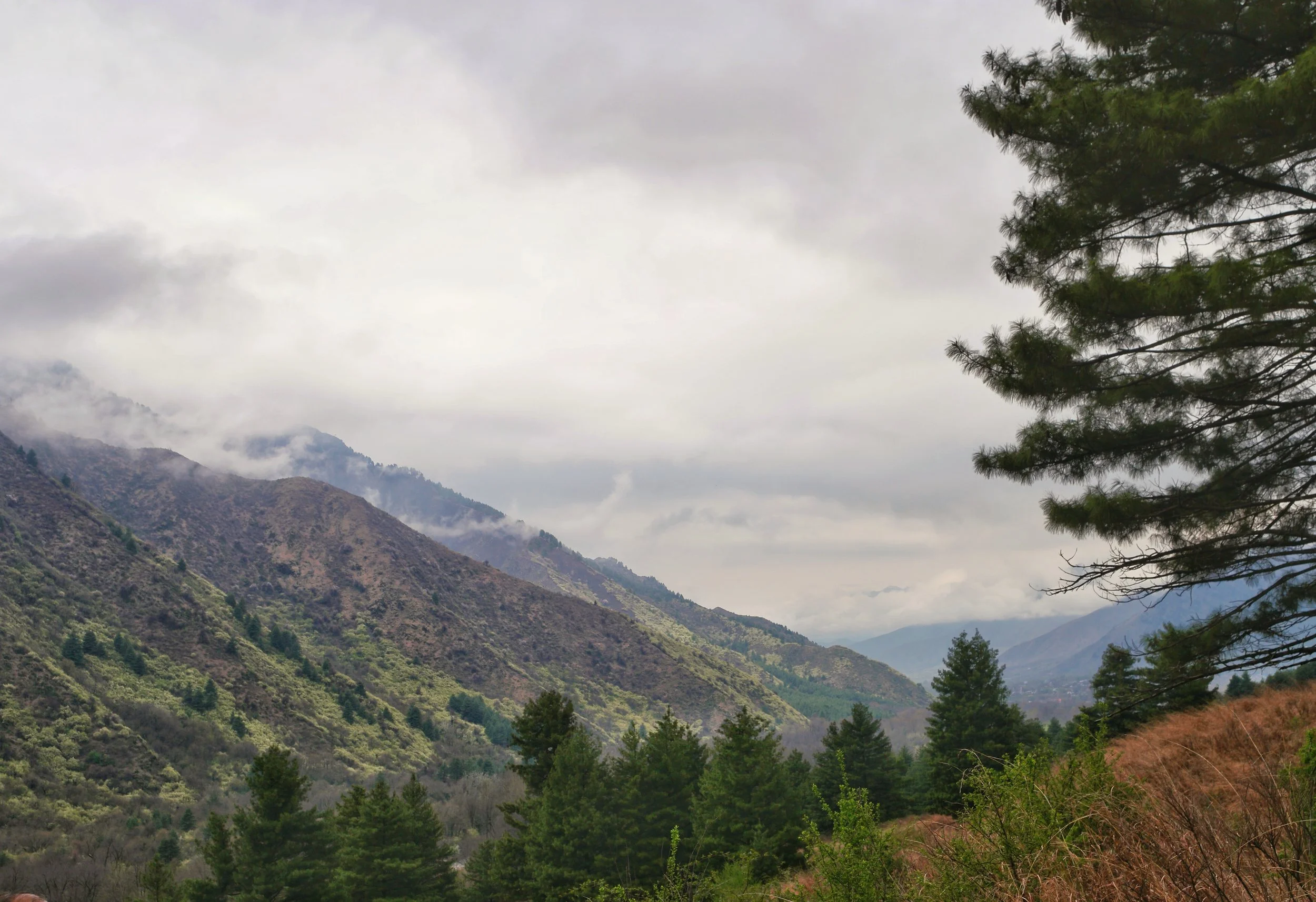
Clouds building up at the Dachigam National Park. It snowed the next day
Looking towards the City of Srinagar on whose edge Dachigam actually lies.

The Sarband Reservoir which lies next to the Dachigam National Park and the Harwan Gardens supplies drinking water to the city of Srinagar
This Reservoir was built in 1906 as the main water supply for the city of Srinagar by diverting the Dachigam Nallah. The Hill behind is a part of the Dachigam National Park. The Reservoir is currently going repairs and hence an ugly mound of mud and cement. In olden days it used to be like a beautiful Lake with the imposing Mahadev in the background. Locally the reservoir used to be called the Sarband Lake as well. Truly a gem when in its glory.
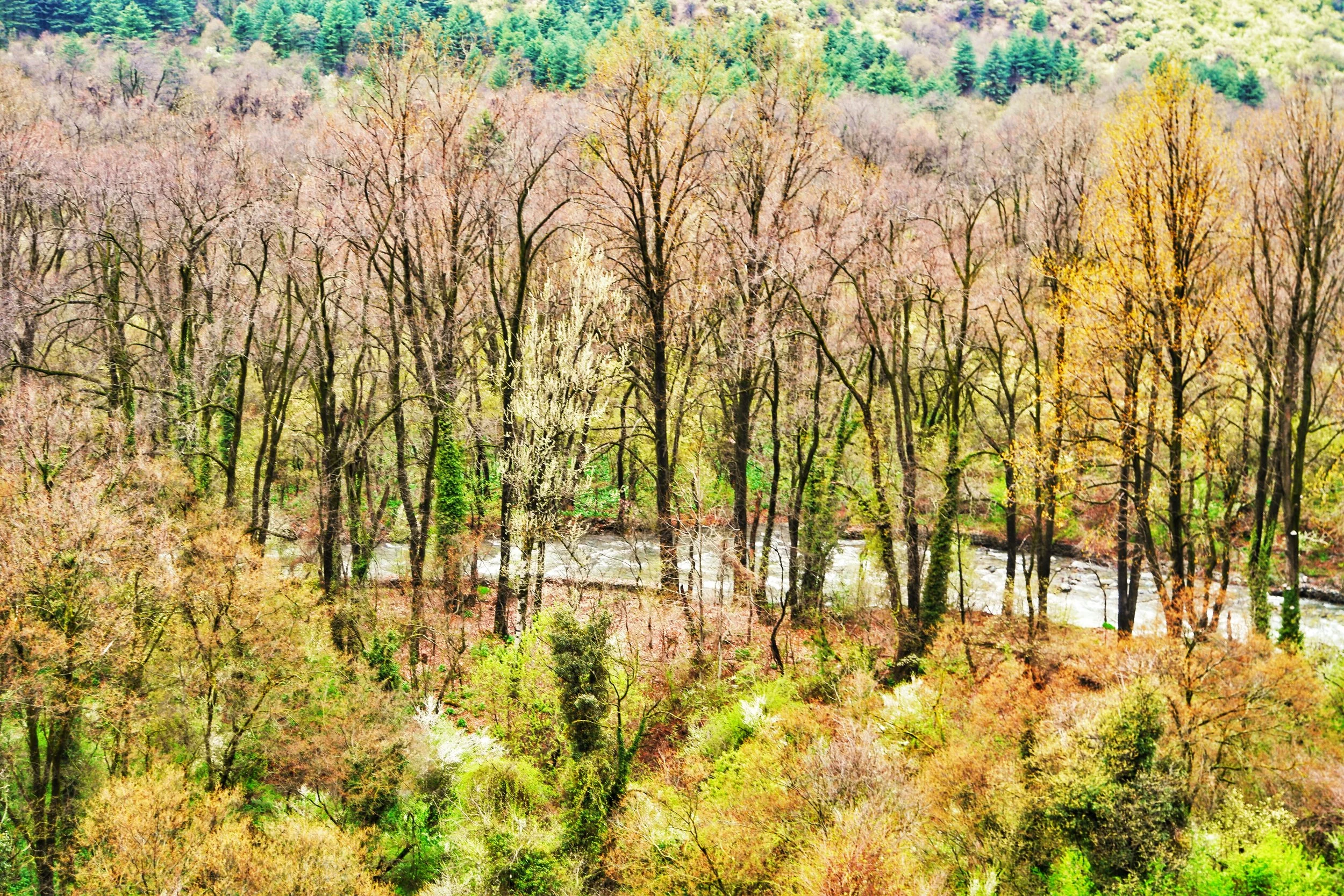
The Dagwan River flowing through the Dachigam National Park

Mt Mahadev the highest Peak of the Zabarwan Mountains as seen from the Dachigam National Park
The Best of Kashmir in Pics
A Collection of great pics from Kashmir showcasing why exactly this most exalted of all Himalayan Valleys is referred to as “The Paradise” on Earth.

The Hazratbal Shrine besides the Dal Lake
A Collection of some of the best pics showcasing the beauty of Kashmir. Truly "Paradise on Earth"

The Pir Panjals as seen from Rajbagh in Srinagar

The Jamia Masjid in Down Town Srinagar

Sun comes out after a day of Snowfall in Gulmarg. The Apharwat Mountain glistens
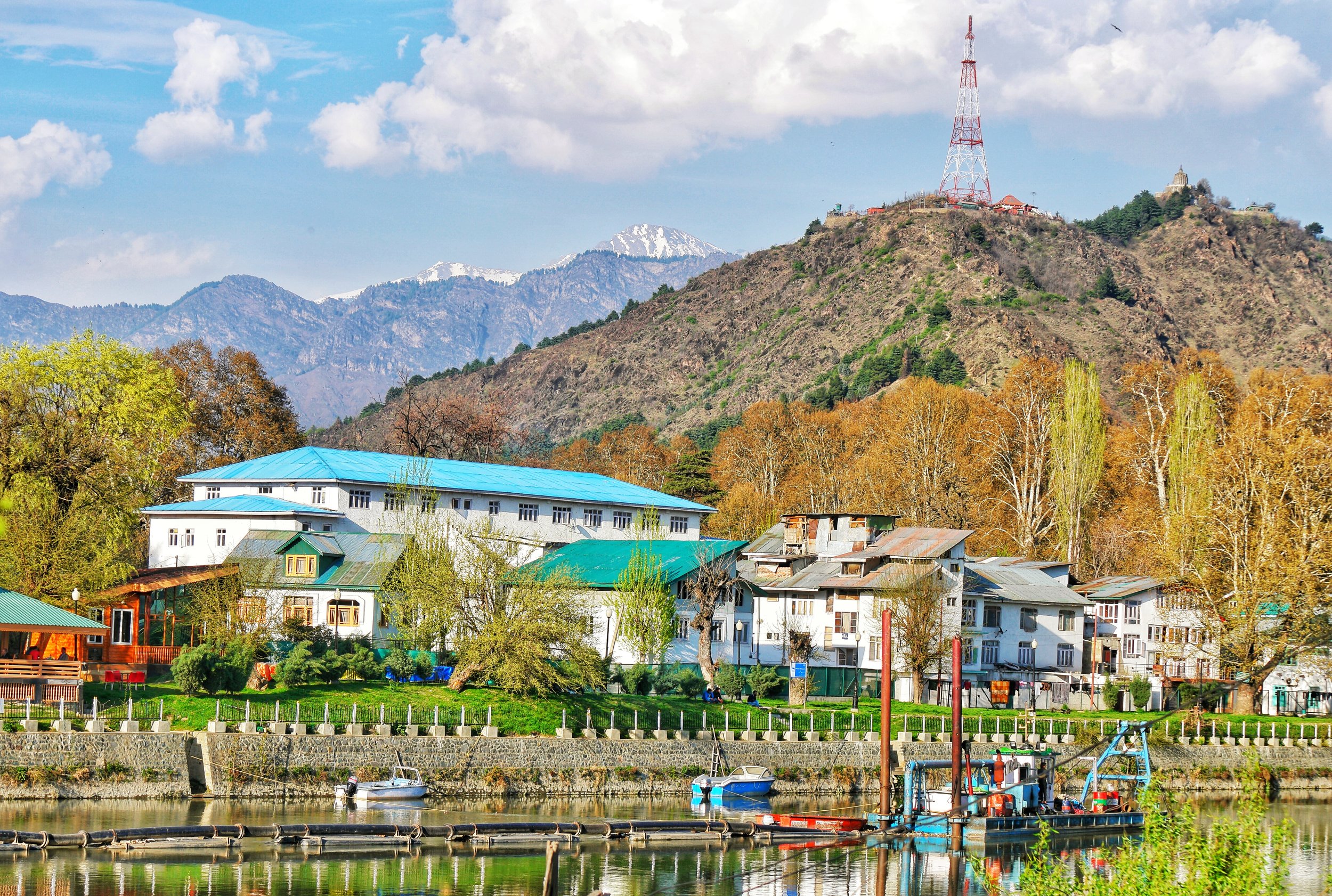
The Jehlum as it flows down Srinagar. The Shankaracharya Hill with the Temple in the background.
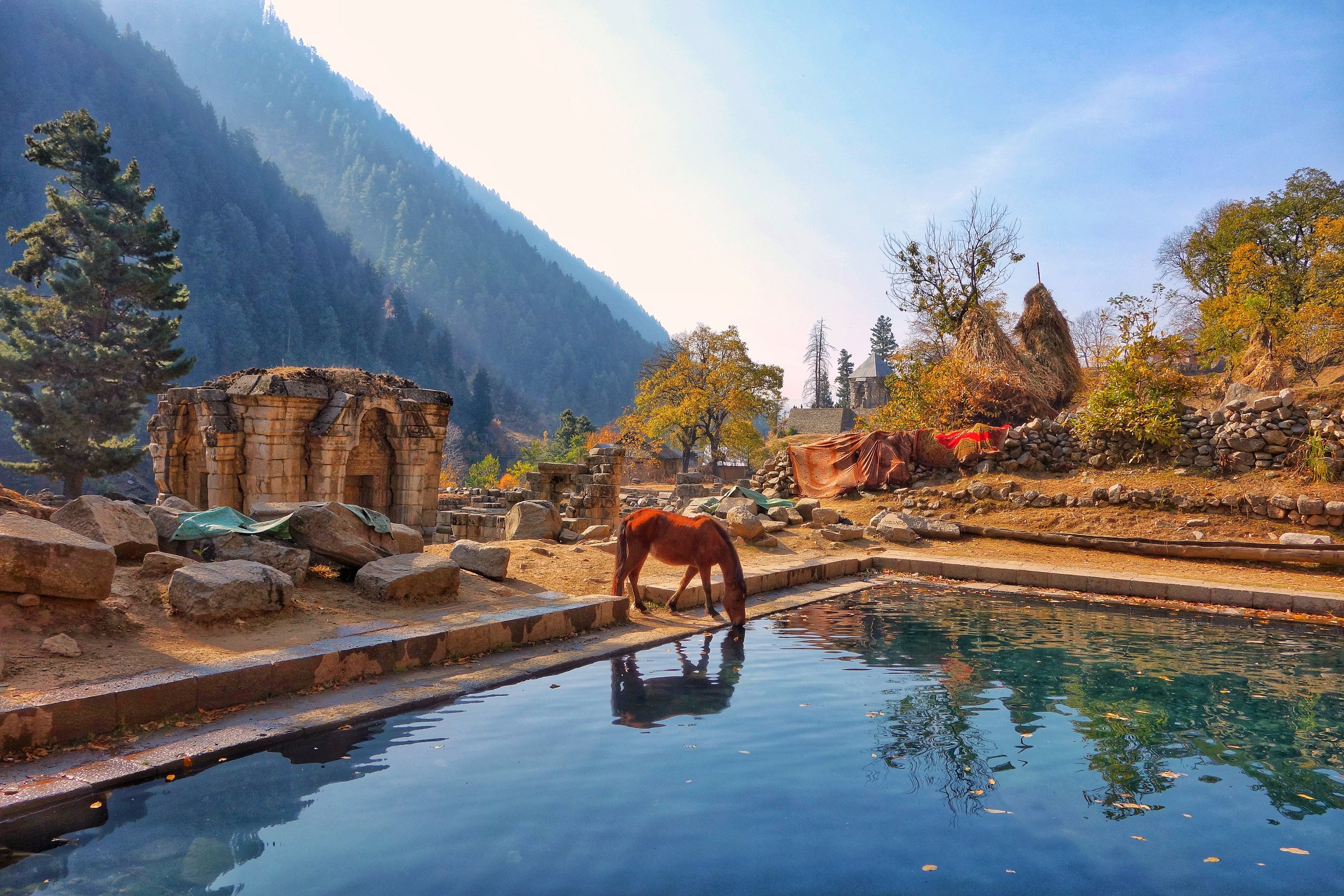
A Horse drinks at the Pond at the ruins of the Temples at Naranag

Somewhere in the Jungles above Bandipora

Near the Dachigam National Park

Shikaras on the Dal Lake during a Snowfall

The Dal Lake
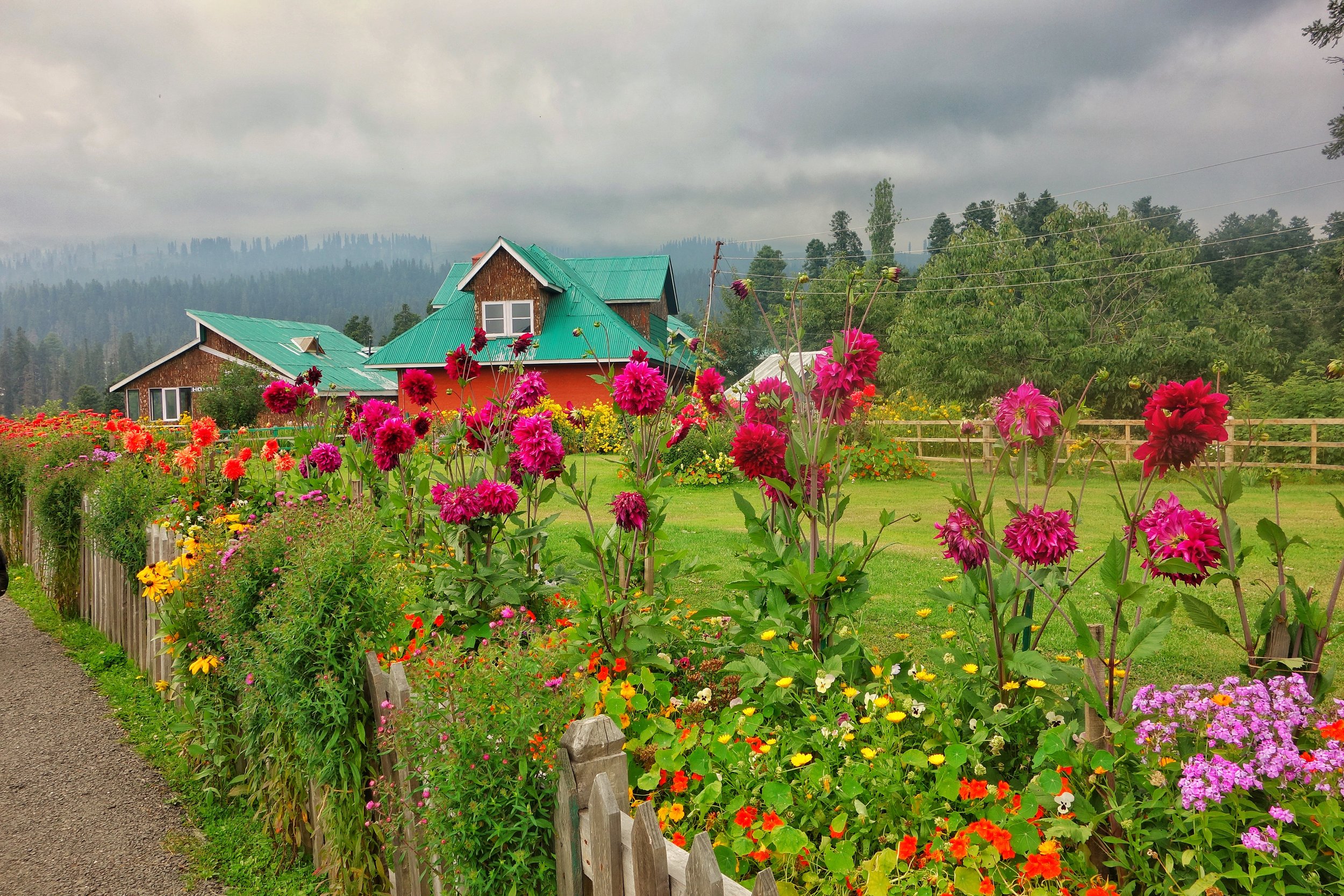
In full bloom in Gulmarg

The Rani Temple in Gulmarg with Mt.Haramukh in the background

The Lidder River near Pahalgam
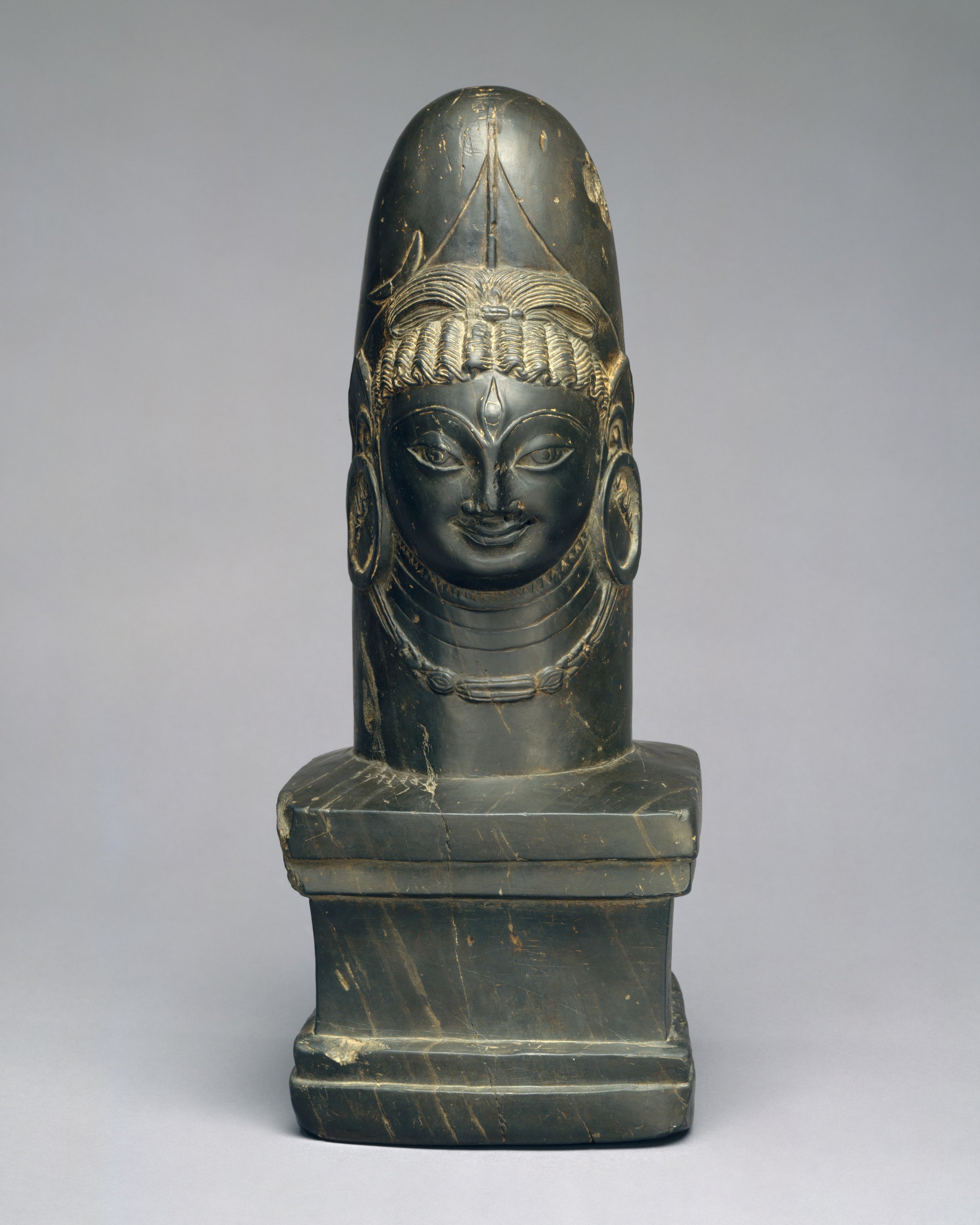
Kashmir Collection at Metropolitan Museum of Art, New York
The Metropolitan Musuem in New York is one of the largest Art Museums in the World. The Museum has a great collection of Kashmir Art.

The Kashmir Collection at the Metropolitan Museum of Art
The Metropolitan Museum of Art of New York, colloquially "the Met", is the largest art museum in the United States. With 7.06 million visitors in 2016, it was the third most visited art museum in the world, and the fifth most visited museum of any kind. Its permanent collection contains over two million works,divided among seventeen curatorial departments.
The Met's Asian department holds a collection of Asian art, of more than 35,000 pieces,[26] that is arguably the most comprehensive in the US. The collection dates back almost to the founding of the museum: many of the philanthropists who made the earliest gifts to the museum included Asian art in their collections. Today, an entire wing of the museum is dedicated to the Asian collection, and spans 4,000 years of Asian art. Every Asian civilization is represented in the Met's Asian department, and the pieces on display include every type of decorative art, from painting and printmaking to sculpture and metalworking. The department is well known for its comprehensive collection of Chinese calligraphy and painting, as well as for its Indian sculptures, Nepalese and Tibetan works, and the arts of Burma (Myanmar), Cambodia and Thailand. All three ancient religions of India – Hinduism, Buddhism and Jainism – are well represented in these sculptures.
From the Indian Art one of the most elegant Collection is the one of Kashmiri Stone / Bronze and other sculptures which underline the development of this Art by the Kashmiri Carftsman who were without any doubt one of the best when it came to sculpting Stone and Metal. Some of the pieces are Cataloged as under.

Buddha
Date: ca. 9th century / Culture: India (Jammu and Kashmir, ancient kingdom of Kashmir) / Medium: Copper with silver inlay / Dimensions: H. 7 1/16 in. (17.9 cm); W. 3 7/8 in. (9.8 cm) / Classification: Metalwork
Buddha sits in a yogic posture, wearing a high tripartite crown and fully articulated robes. His lowered hand grants boons to the male donor kneeling before him presenting an offering, likely a garland. The crown with flying ribbons demonstrates the powerful influence of Sasanian royal imagery on later Kashmiri art.

Buddha Bust
Date: 8th century / Culture: India (Jammu & Kashmir, ancient kingdom of Kashmir) / Medium: Stone / Dimensions: Gr. H. 2 5/16 x Gr. W. 1 3/4 in. (5.9 x 4.5 cm) / Classification: Sculpture

Gaja Lakshmi, Goddess of Fortune
Date: 8th century / Culture: India (Jammu and Kashmir, ancient kingdom of Kashmir) / Medium: Stone / Dimensions: H. 6 3/8 in. (16.2 cm); W. 5 3/4 (14.6 cm); D. 2 1/16 in. (5.2 cm) / Classification: Sculpture

Panel from a Portable Shrine: The Descent of the Buddha from Trayastrimsha Heaven
Date: 7th–8th century / Culture: India (Jammu and Kashmir, ancient kingdom of Kashmir), / Medium: Ivory with traces of color / Dimensions: H. 2 1/2 (6.4 cm); W. 1 3/4 in. (4.5 cm) / Classification: Ivories
This diminutive panel depicts the Buddha’s descent from Trayastrimsha heaven, where he visited to preach the Buddhist gospel (dharma) to his mother, who had died soon after his birth. The three steps below his feet indicate the ladder upon which he descended. This miracle was widely depicted in the early Buddhist world. Here, umbrella and flywhisk bearers attend the Buddha, while airborne celebrants present garlands.

Torso of Vishnu
Date: ca. 6th century / Culture: India (Jammu & Kashmir, ancient kingdom of Kashmir) / Medium: Stone / Dimensions: H. 7 13/16 x W. 3 3/16 x D. 1 1/8 in. (19.9 x 8.1 x 2.9 cm) / Classification: Sculpture

Kamadeva, the God of Love
Date: second half of the 8th century / Culture: India (Jammu and Kashmir, ancient kingdom of Kashmir) / Medium: Stone / Dimensions: H. 14 5/8 in. (37.2 cm); W. 2 3/8 in. (6 cm); D. 11 5/8 in. (29.5 cm) / Classification: Sculpture
Though rarely represented in Kashmiri art, Kama, the god of love, is here identified by a wondrous mythical creature (makara), who spews arrows from its jaws. The bow and arrow and a pair of lovebirds are Kamadeva’s principal identifiers. This subject is a rare survivor from early medieval Kashmir.

Linga with Face of Shiva (Ekamukhalinga)
Date: 7th century / Culture: India (Jammu and Kashmir, ancient kingdom of Kashmir) / Medium: Stone / Dimensions: H. 14 in. (35.5 cm) / Classification: Sculpture

Head of a Male Figure
Date: 6th–7th century / Culture: India (Jammu and Kashmir, possibly Akhnur) / Medium: Terracotta / Dimensions: H. ca. 5 1/4 in. (13.3 cm) / Classification: Sculpture
A major Buddhist monastery and stupa site was excavated at Akhnur (Akhnoor), near Jammu, revealing a series of both large- and small-scale terracotta reliefs decorating the monuments. These heads once formed part of those sculptural programs and likely depict Buddhist laity.

Reliquary in the Shape of a Stupa
Date: 7th–9th century / Culture: Northwest India (Jammu and Kashmir, ancient kingdom of Kashmir) / Medium: Copper alloy / Dimensions: H. 4 in. (10.2 cm) / Classification: Metalwork

Vajrapani
Date: late 6th–7th century / Culture: India (Kashmir) / Medium: Gray chorite / Dimensions: H. 9 in. (22.9 cm); H. inc. base 10 1/4 in. (26 cm); W. 5 3/8 in. (13.7 cm) / Classification: Sculpture
This powerful figurine is best understood as the Mahayana bodhisattva Vajrapani, who appropriated the lighting-bolt scepter (Skt: vajra) of Indra, the Vedic storm god, and repurposed it. Its meaning shifted from that being associated with the life-affirming power of storms (e.g. the monsoons), to the Buddhist savior Vajrapani, who facilitates journeying the path of enlightenment and aiding crystal clear thought as penetrating as a lighting strike.
In this, among the earliest representations known from the greater Kashmir world, the double-ended thunderbolt symbol is imposingly large, the shaft of which extends the length of Vajrapani’s figure. In addition to the massive device with its distinctive prongs, the bodhisattva holds a rosary (aksamala). His face is somewhat abraded but traces of a moustache remain, and he wears a distinctive headdress of an elaborate cockade with hanging strings of pearls disgorging from the center, in the Gupta-manner. Large annular earplugs, also of known Gupta type, are shown frontally. He wears a sacred cord (yanopavita) and short waist cloth with a sheathed dagger secured in the belt. In his raised proper left hand he holds the oversized vajra, and his head is framed by a large unadorned circular halo.

Section of a Diptych in Linga Form, Interior Depicting Shiva, Parvati, and the Calf Bull
Date: 7th century / Culture: India (Jammu and Kashmir, ancient kingdom of Kashmir) / Medium: Chlorite schist / Dimensions: H. 3 1/4 in. (8.3 cm) / Classification: Sculpture

Pedestal with Yaksha and Two Lions
Date: 9th century / Culture: India (Jammu & Kashmir, ancient kingdom of Kashmir) / Medium: Stone / Dimensions: H. 2 3/4 in. (7 cm); W. 6 1/4 in. (15.9 cm) / Classification: Sculpture

Linga, Shiva’s Aniconic Symbol
Date: 8th century or earlier / Culture: India (Jammu and Kashmir, ancient kingdom of Kashmir) / Medium: Stone / Dimensions: H. 2 1/2 in. (6.4 cm); W. (incl. base) 3 7/8 in. (9.7 cm) / Classification: Sculpture

Surya (The God of the Sun) with Attendants
Date: 7th century(?) / Culture: India (Jammu & Kashmir, ancient kingdom of Kashmir) / Medium: Bronze / Dimensions: H. 5 in. (12.7 cm) / Classification: Sculpture

Crowned Buddha
Date: 9th century / Culture: India, Ancient kingdom of Kashmir / Medium: Brass / Dimensions: H. 20 3/8 in. x W. 9 in. (51.8cm x 22.9 cm); D. (from hands) 3 in. (7.6 cm) / Classification: Sculpture
The Buddha is usually depicted in a monk’s simple garments; however, when he wears rich jewelry and a crown, he evokes the special form of Buddha as a cakravartin, or universal monarch. In Kashmir this form also recalls the splendor of the Buddha in heaven, where he reveals himself to the bodhisattvas. Both the high tripartite diadem and tasseled cape reflect Central Asian influence on Kashmiri Buddhist art of this period.

Chakrapurusha (The Personification of Vishnu's War Discus)
Date: 8th century / Culture: India (Jammu & Kashmir, ancient kingdom of Kashmir) / Medium: Stone / Dimensions: H. 5 in. (12.7 cm); W. 2 3/16 in. (5.5 cm) / Classification: Sculpture

Vishnu Rescuing Gajendra, the Lord of the Elephants
Date: 8th–9th century / Culture: India (Jammu and Kashmir, ancient kingdom of Kashmir) / Medium: Stone / Dimensions: H. 3 1/4 in. (8.3 cm); W. 2 3/4 in. (7 cm); D. 1/2 in. (1.3 cm) / Classification: Sculpture

Mask of Bhairava
Date: Late 6th–7th century / Culture: India (Jammu and Kashmir, ancient kingdom of Kashmir) / Medium: Copper alloy, possibly brass / Dimensions: H. 7 5/8 in. (19.4 cm); W. 5 1/4 in. (13.3 cm); D. 2 3/8 in. (6 cm) / Classification: Sculpture
This object is from a rare group of early Brahmanical masks. The small fangs seen rising from the corners of the open mouth and the exposed upper teeth identify this deity as Bhairava, a wrathful form of Shiva. Such masks were employed as temporary fixtures during worship and used to enliven processional icons in the Brahmanical cultures of northwestern India and the territories of Gandhara in Pakistan.

Mirror Handle with a Woman Playing the Lute
Date: 6th–7th century / Culture: India (Jammu and Kashmir, ancient kingdom of Kashmir) / Medium: Chlorite schist / Dimensions: H. 3 3/4 in. (9.5 cm) / Classification: Sculpture
This figurine belongs to a group of objects depicting ladies at leisure; here, the woman plays a stringed instrument. They likely served as mirror handles: each has a hole drilled from the top to receive the mirror fixture. Similar objects have been recorded at Khotan, in Central Asia, and are presumably the legacy of a luxury trade in such
goods.

Standing Four-Armed Vishnu
Date: 8th century / Culture: India (Jammu & Kashmir, ancient kingdom of Kashmir) / Medium: Stone / Dimensions: H. 8 1/4 in. (21 cm) / Classification: Sculpture

Bodhisattva with Radiate Halo and Mandorla
Date: 6th century / Culture: Pakistan (ancient region of Gandhara) or India (Jammu & Kashmir) / Medium: Phyllitic grey schist / Dimensions: H. 5 1/4 in. (13.3 cm) / Classification: Sculpture
This bodhisattva, holding a lotus (padma), likely represents Avalokitesvara Padmapani. Portable images stylistically related to this one circulated in Gandhara, Kashmir, and as far north as the Central Asian Buddhist kingdom of Khotan, an important trading center on the Silk Road.

Section of a Diptych in Linga Form, Interior Depicting Parvati, the Consort of Shiva
Date: 6th–7th century / Culture: India (Jammu and Kashmir, ancient kingdom of Kashmir) / Medium: Chlorite schist / Dimensions: H. 3 in. (7.6 cm) / Classification: Sculpture
Note: All pics and texts from the Met Museum.
The Map Shawl II
A Close up of the Shalimar Bagh as woven on the Map Shawl with along with the Dal Lake. Note the intricate work on the border. And see the detailing of the surroundings. No wonder it took 30 years to complete. One of the finest examples of Kashmiri Shawl craftsmanship. No wonder they were such a prized possession for Ladies in Aristocratic Europe.

The Srinagar Map Shawl II
A Close up of the Shalimar Bagh as woven on the Map Shawl with along with the Dal Lake. Note the intricate work on the border. And see the detailing of the surroundings. No wonder it took 30 years to complete. One of the finest examples of Kashmiri Shawl craftsmanship. No wonder they were such a prized possession for Ladies in Aristocratic Europe.
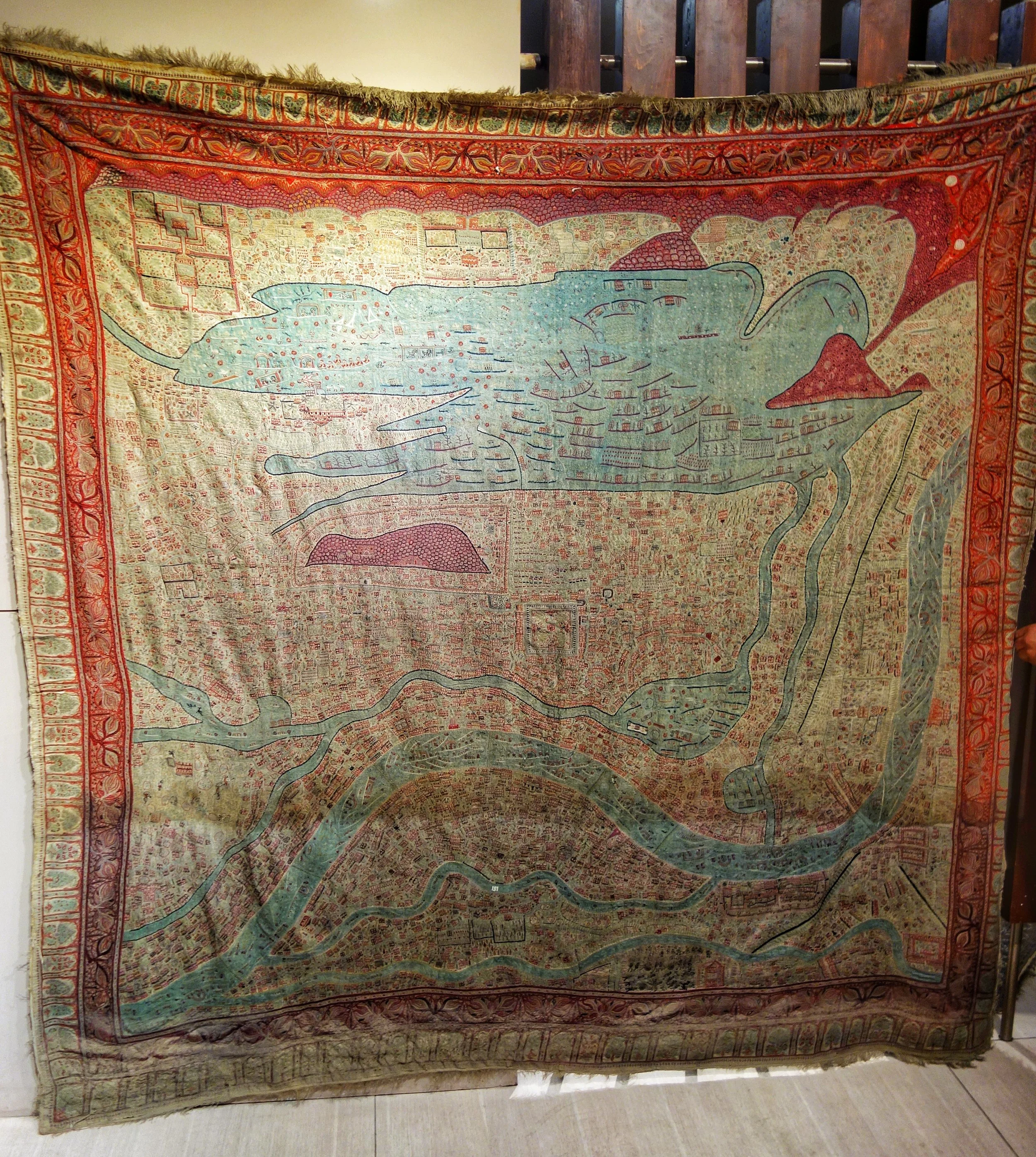
From my previous Post the details :
The amazing and exquisite Map Shawl of Srinagar. This Shawl took 30 years in the making. There are 3 or 4 such specimens in the world. And these were made in the late 1800's.
One was presented to Queen Victoria by Maharaja Ranbir Singh and is presently at the Victoria and Albert Museum in London. One more is with a Museum in Australia. One is with a private collector and this piece is at the Shri Pratap Singh Museum in Srinagar though it's not on display as it needs some refurbishing after the Floods.
It would be one of the most expensive pieces of textile ever made if it would be put on an auction. I got a special session to view this absolute Masterpiece as I pestered the right people long enough to let me see this after the Gilgit Manuscripts and along with the Mammoth complete skeleton which was found in Kashmir. A part of the Gilgit Manuscripts is however now on display.
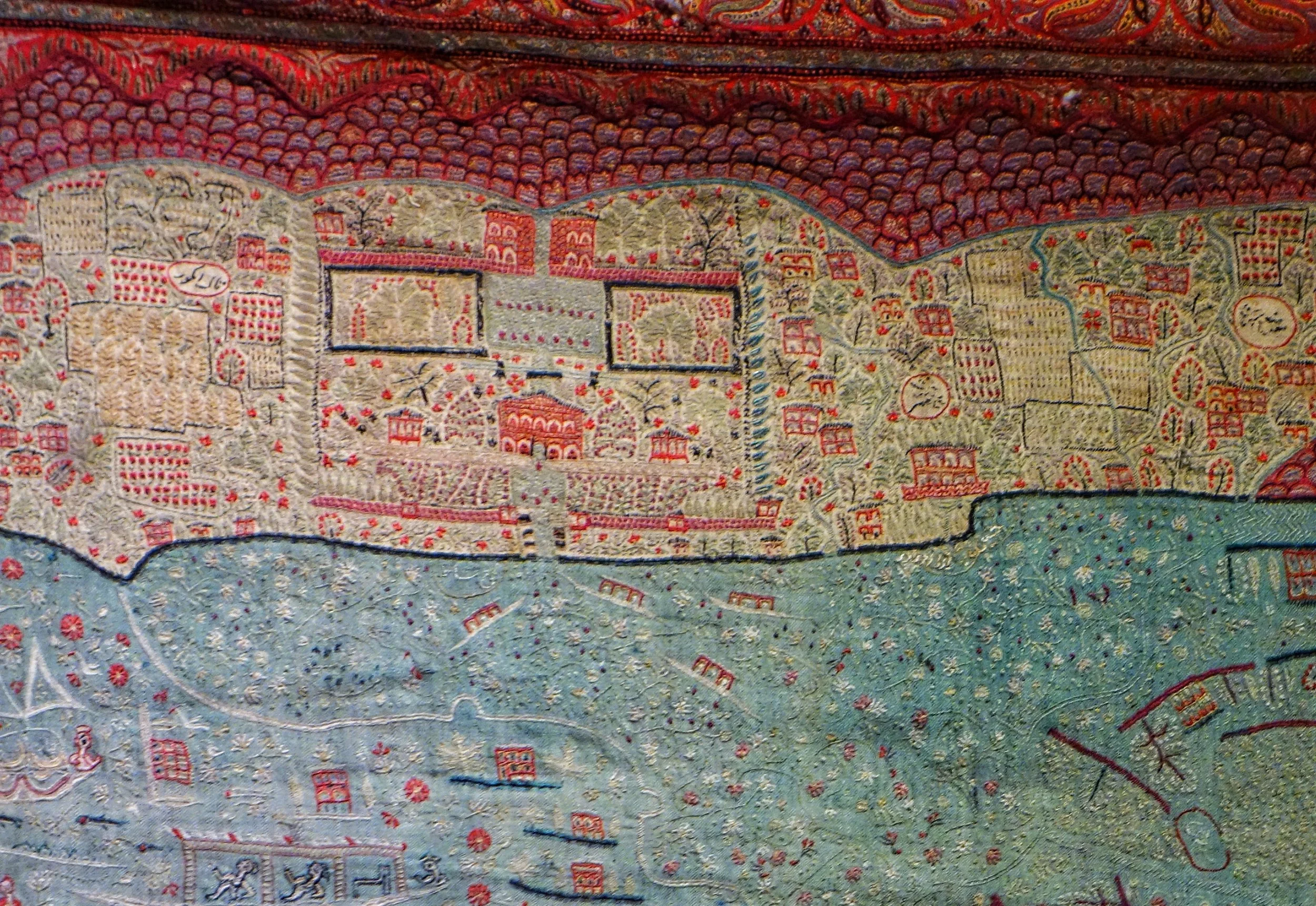
Just that you know the old building of the Museum (out of bounds) was actually a Sumner er Palace of the Maharaja and is as mind blowing as anything you would ever see. The Maharajas sure had money and the craftsmen to deliver stuff which can't even be imagined .
Coming back to the Shawl. You can see the Dal Lake and the Jehlum. On the right the hill is the Shankaracharya Hill. On the top left you can see the Shalimar and Nishat Gardens. You can also see the Hari Parbat Fort and all the old bridges of the City. The detailing is so minute that there are Shikaras shown in the Jehlum and you can even see the individual eye balls of the people in the Shikara. Words cannot describe this absolute masterpiece of Kashmiri craftsmanship.
Please do visit this Museum on your next visit and I'm sure you will be mighty impressed. I plan to cover stuff from this Museum in the next few days / weeks.
Pic from November 2017. Shri Pratap Singh Museum, Lal Mandi, Srinagar
Burzahom : Ancient Kashmir and its Dogs
The Burzahom is one of the oldest Neolithic sites excavated in Kashmir and probably the first place which saw settled life in the Valley. One remarkable characteristic of the site is the ritual Dog burial sites discovered. In some cases the Dogs were buried along with their owners. A reminder of how old our relationship is with this family of canines.
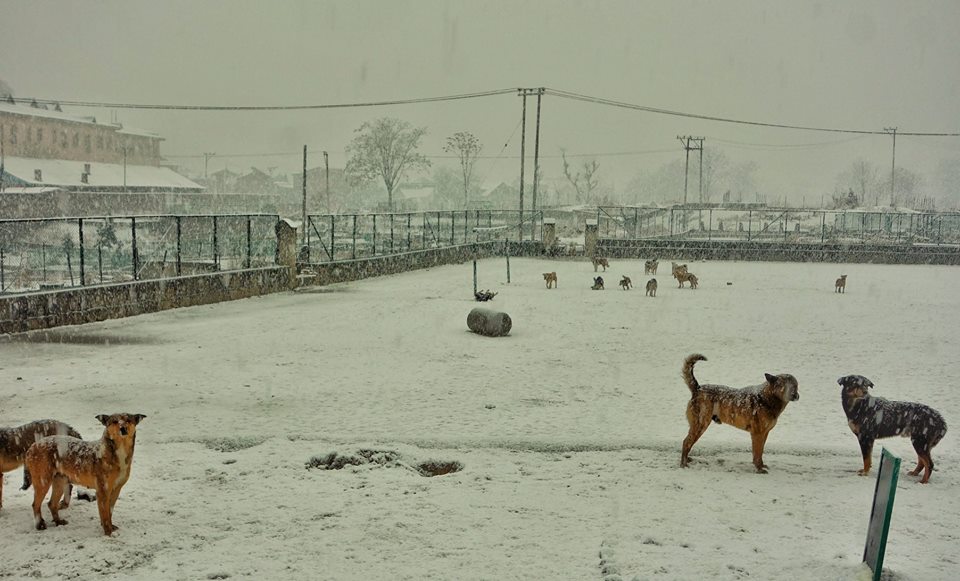
Burzahom : Ancient Kashmir and its Dogs
Burzahom : Ancient Kashmir and its Dogs
The most Ancient remains of human settlement discovered in Kashmir are at a place called Burzahom near Srinagar. It is a settlement from the Neolithic Period and transits to the ancient period ranging from 8000 BC to around 1000 BC. It was discovered in 1935 and the excavations were done over a period of time and the excavations have been in three stages, NP III corresponding to the later period, NP II to the middle period and NP I to the earliest period. The Site is currently on Unesco World Heritage Watch List and it might get the status of a World Heritage Site in the future maybe.

The Burzahom Site
As per the UNESCO "The Neolithic Site of Burzahom in the district of Srinagar, India brings to light transitions in human habitation patterns from Neolithic Period to Megalithic period to the early Historic. From transition in architecture to development in tool-making techniques to introduction and diffusion of lentil in North-Western India, the site of Burzahom is a unique comprehensive storyteller of life between 3000 BC to 1000 BC.
Archaeologist have excavated subterranean dwellings as well as burial pits at Burzahom. One of the most famous Work of art discovered at the site is a scene painted on a stone which shows the Burzahomese on a hunt. There are two hunters and a Deer and along with them is their best friend, yes you guessed it right, a Dog. And also interestingly the scene depicts two suns. As per the scientists the this is the first instance of a supernova being recorded in ancient times. Which of course makes this indeed a very interesting find.

The Hunting Scene drawing with 2 Suns
Dogs it seems held a special status in the Burzahom culture. Dogs, Wolves and Ibex seemed to hold a special significance as burial pits containing their skeletons have been found. More interestingly a couple of burial pits have been discovered where the Dog is buried right next to the master within the compounds of the dwelling units. There is even an instance of Dogs buried in two layers one above another. Unlike in NP I where no burial remains have been found, in NP II culture many such burial pits have been found. This points out to the growth of a belief system and a transition to the ancient age from the Neolithic period.
Interestingly this Dog burial culture is similar to the Shilka culture, for whom the Dog was almost a cult animal, around the Shilka River which is a tributary to the Amur River in Siberia bordering Mongolia as well as other such cultures of the Gilyaks, Ulchis and Goldis where till recent history Dogs were sacrificed and buried with their owners. Probably to serve them in the their afterlife as well. It surely sounds cruel in today's time and age and actually it is but in that time and age it made sense to those people to send a dead man's best friend along with him to the next world. where animals were sacrificed as well and buried along with the person.

A Dog burial pit
The pottery found at the site seemingly has a great similarity to similar remains found in the Swat Valley in Pakistan. And as mentioned earlier the burials practices and the type of tools found have been inferred as having close resemblance to those found in North Chinese Neolithic cultures which borders Siberia as well as Mongolia.
This practice is not seen anywhere in India. This again points out to the fact that Kashmir was the place where Central Asia met the Indian subcontinent. UNESCO also states that ' The results of excavations have provided dynamics of interchange of ideas between Central Asian and Southwest Asia through the Valley of Kashmir which acted as a bridge between higher Himalayas and beyond on one hand, and the Gangetic Plains and Peninsular India on the other hand during the third millenium BC. The interaction of local and foreign influences are demonstrated by the art, architecture, customs and rituals as also possibly by the language as demonstrated by some graffiti marks on pottery and others"
Historian M K Kaw in his book "Kashmir and its People : Studies in the Evolution of Kashmiri Society" writes " It is also clear that the Dog had a special place for the Burzahomese right from the day he settled in the Valley. This is further substantiated with the finding of a burial in period NP II where the Dog is buried with the owner in the house floor, preferably the compound. He has depicted him in the engraving on the stone slab already stated earlier. The Dog guarded his herd and helped him in pursuing the hunt on which his sustenance depended "
As of today the Dog is thriving. Thriving too much according to some people. And Srinagar is full of feral Dogs. Of all the cities I have been to I have never seen such a great number of Dogs in any other city. Another fact that I think is responsible is that people in Kashmir consume a great deal of meat. And of course a lot of this gets wasted and consumed by these Dogs and hence due to the availability of meat they thrive. Some people also put the blame on the political situation but I would rather not go there.
But of course that doesn't change facts about the importance of the Dog in the Burzahom Culture. And the fact that we have been friends for a very long time.
I am using 4 pics to highlight the Story as it is an important one which needs to be told and people made aware ( If you think you have a story which needs to be told with multiple pics please contact the Admins.)
Main pic from February 2018. Srinagar, Kashmir
Some of the pics are from the Internet and are being used only for Educational purposes. In case you hold a copyright to a pic and want it removed please let me know and I will take the pic down.
Kiki’s Blog
Stories from the Himalayas
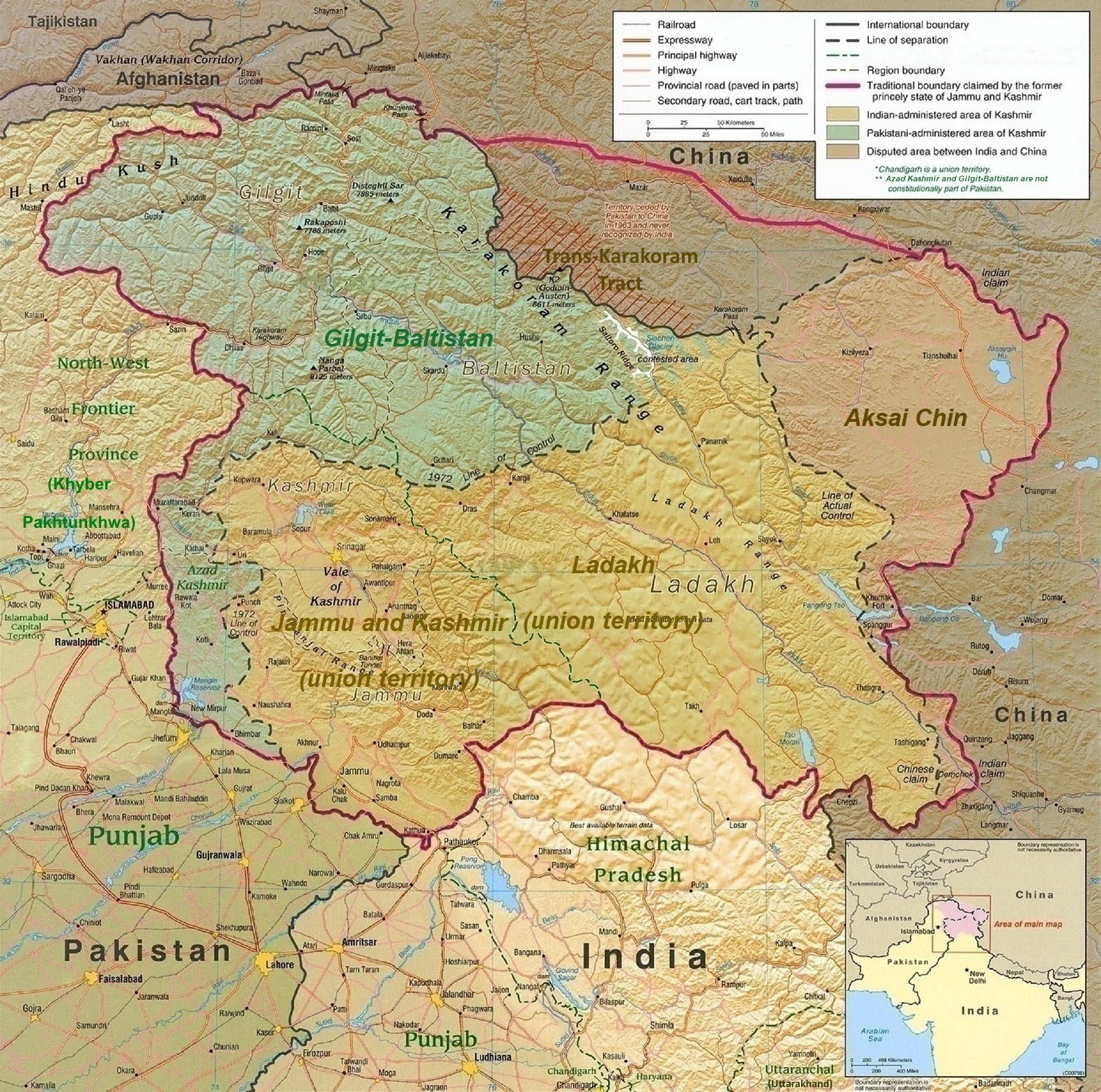



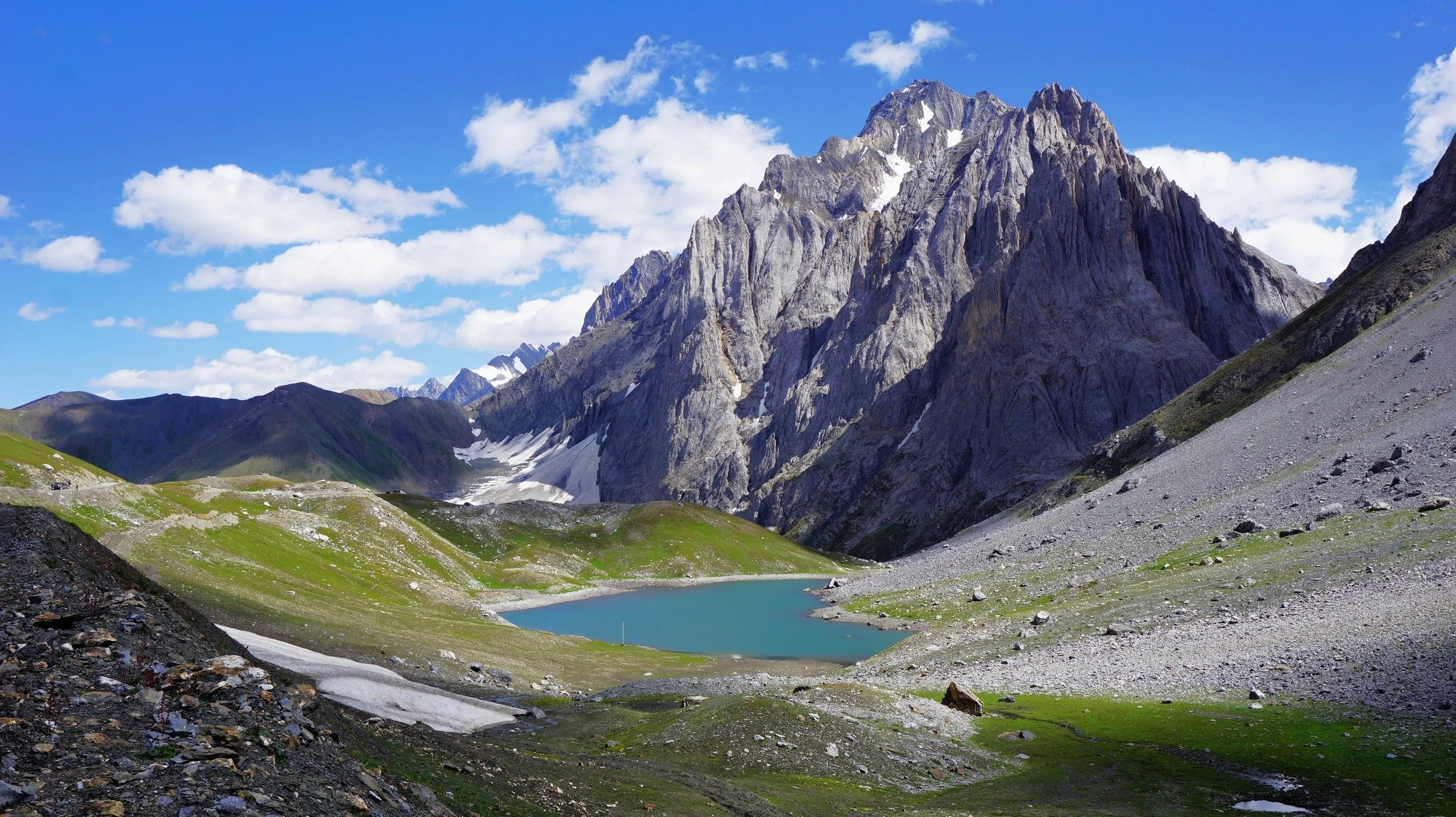
Five years ago the Galwan Valley was in the News for the wrong reasons after a deadly clash between the Indian and Chinese Armies in the Valley located in Ladakh lead to many deaths on the contentious Border between the two countries in wake of continued Chinese intrusions into Indian territory.
This area along the Shyok River, of which the Galwan Nallah or the Galwan River which forms the Galwan Valley has been off limits to Civilians since long but now the Indian Government has decided to open up the area for Civilians and we were amongst the First Civilians to venture into this beautifully desolate part of the Eastern Karakorams in Ladakh. Earlier Civilians could only venture upto the Village of Shyok from where the Shyok River takes a U turn and flows in a Northerly direction.