
The Map Shawl of Kashmir
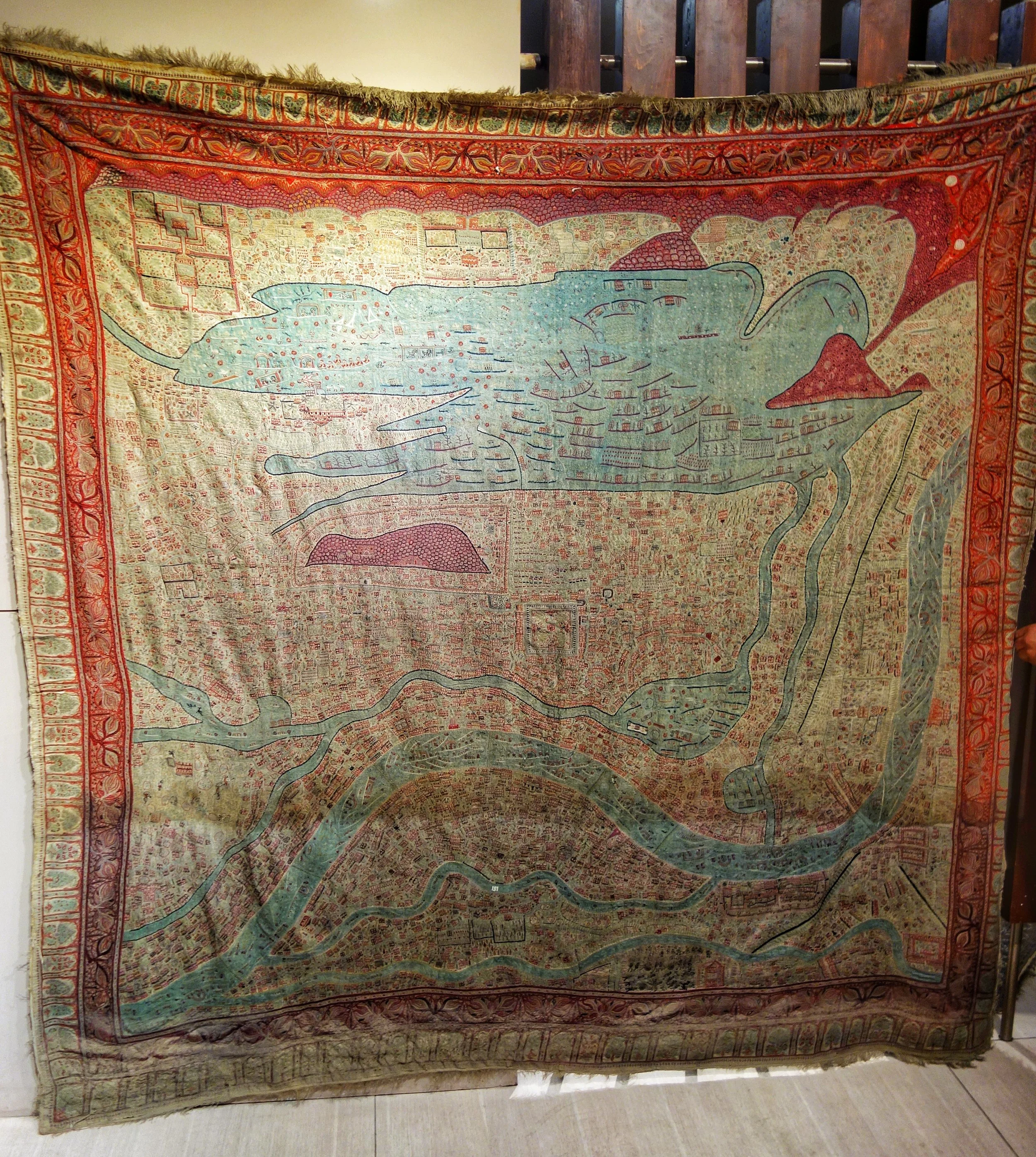
One of the most exquisite creation of man on Fabric, arguably the finest. The Legendary Map Shawl of Kashmir commissioned by Maharaja Ranbir Singh of Jammu and Kashmir for Queen Victoria of the British Empire and it took 30 years to create this masterpiece. We present for the first time, the Map deciphered as shown on the Shawl which is now on display at the Victoria and Albert Museum.

The Legendary Map Shawl of Kashmir
This has to be one of the most the amazing piece of Art on Fabric ever created. The master piece of Kashmiri kani work on a Pashmina Shawl.
The amazing and exquisite Map Shawl of Srinagar. This Shawl took 30 years in the making. There are 3 or 4 such specimens in the world. And these were made in the late 1800’s.
One was reportedly presented to Queen Victoria by Maharaja Ranbir Singh and is presently at the Victoria and Albert Museum in London. One more is with a Museum in Australia. One is with a private collector and this piece is at the Shri Pratap Singh Museum in Srinagar though it’s not on display as it needs some refurbishing after the Floods.
These are the photos of the specimen at the Victoria and Albert Museum and all the pics are from their. This was presented to them by Mrs.Estelle Fuller in 1970 and this specimen as per the Museum was made in 1870.
Have spilt up the Shawl in Grids for better and in depth views of intricate Work done on these Shawls. The attention to details are just mind blowing.
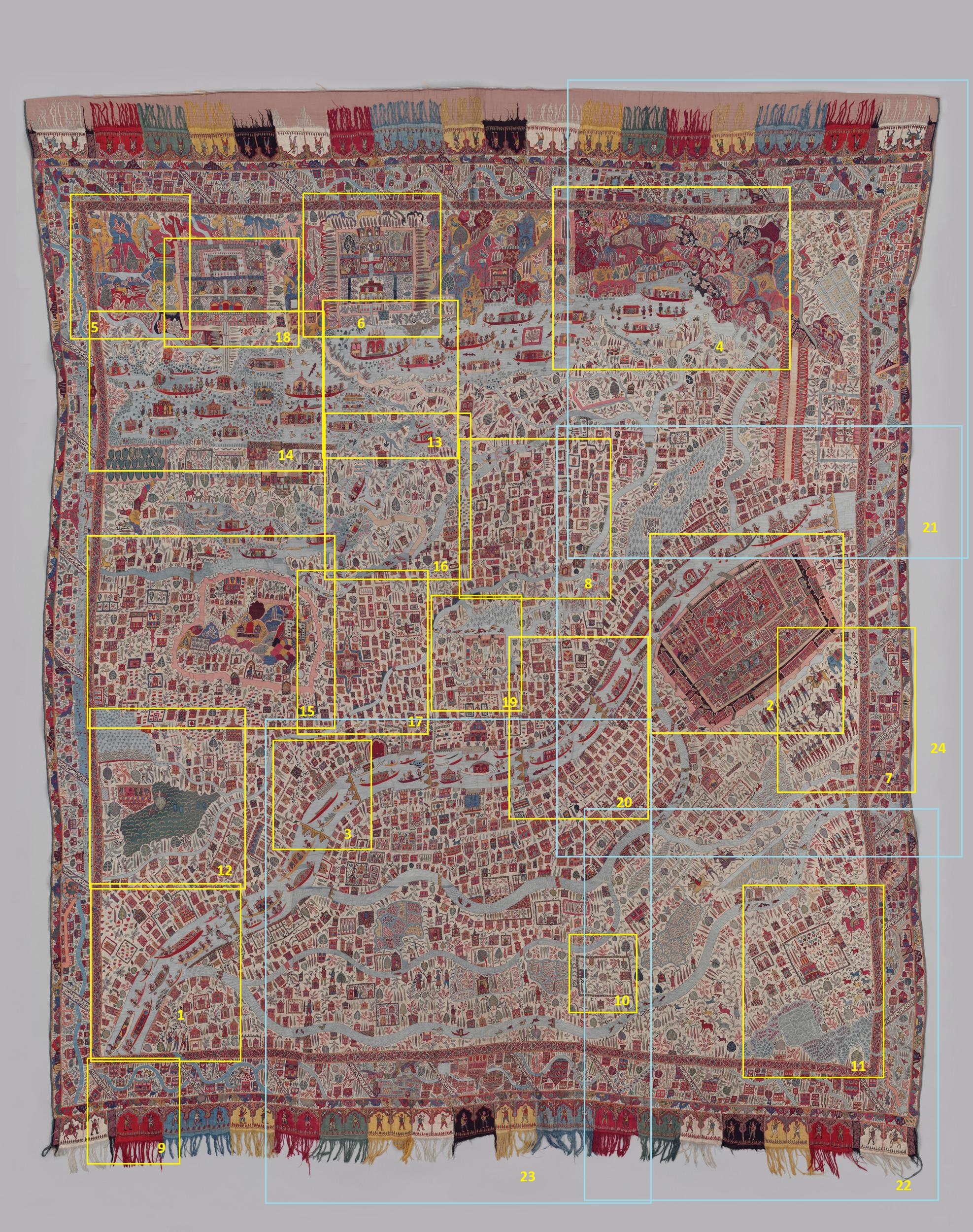

1. Safa Kadal Bridge on the Right Top corner.

2. The Shergarhi Palace,built by the Afghans, which was the residence of the Rulers of Jammu and Kashmir until 1920.

3. The Bulbul Shah Mosque between Ali Kadal and Naw Kadal

4. Shankaracharya Temple on the extreme top right.

5. The Harwan Area.
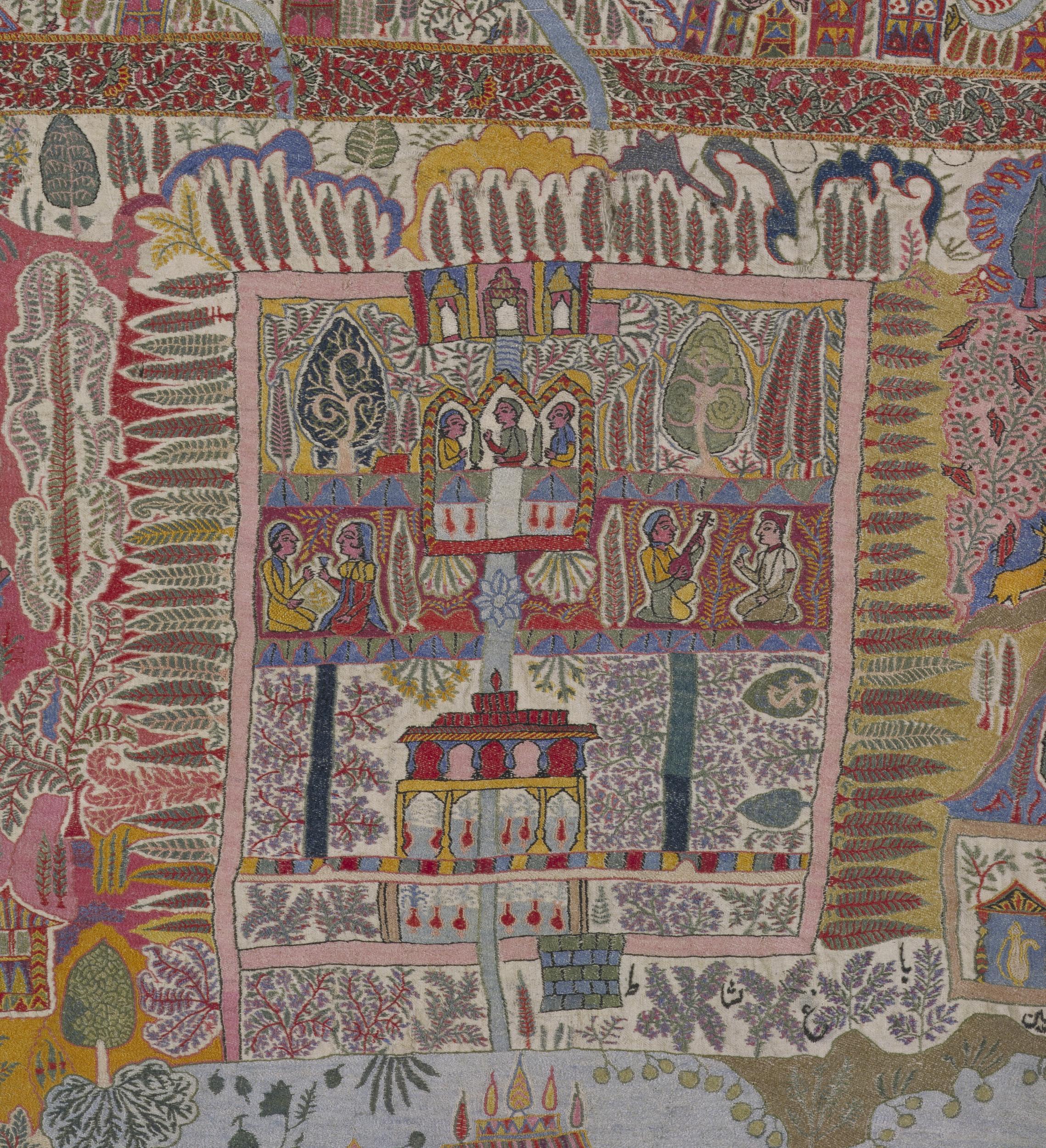
6. The Nishat Garden

7. The Parade Ground next to the Shergarhi Palace

8. The Main City Neighbourhoods

9.

10.

11.
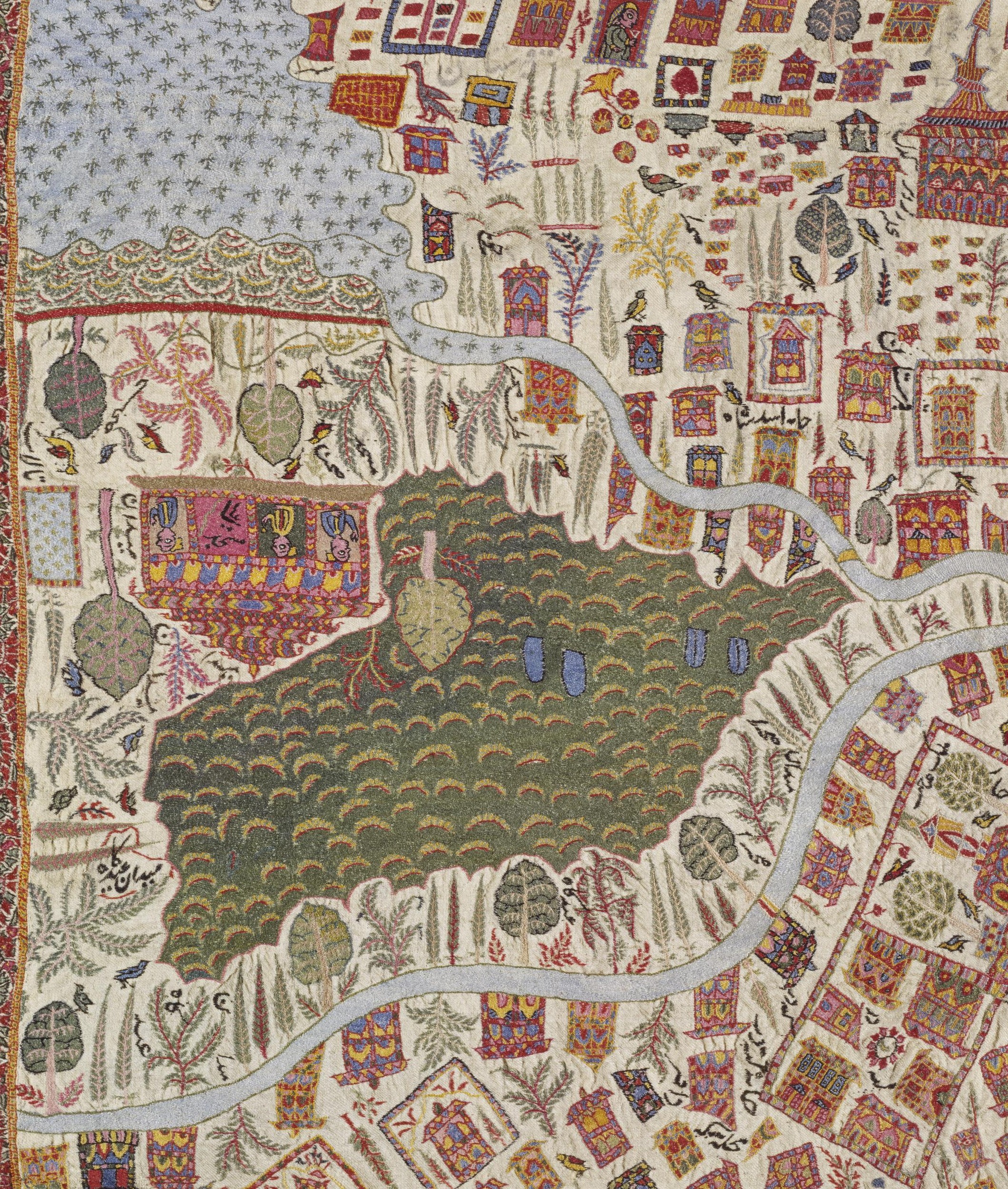
12.

13. The Dal Lake in front of the Nishat Bagh

14. Shikaras on the Dal Lake in front of the Shalimar Bagh. The figure riding in the Boat with a halo around his head is supposedly Maharajah Ranbir Singh.
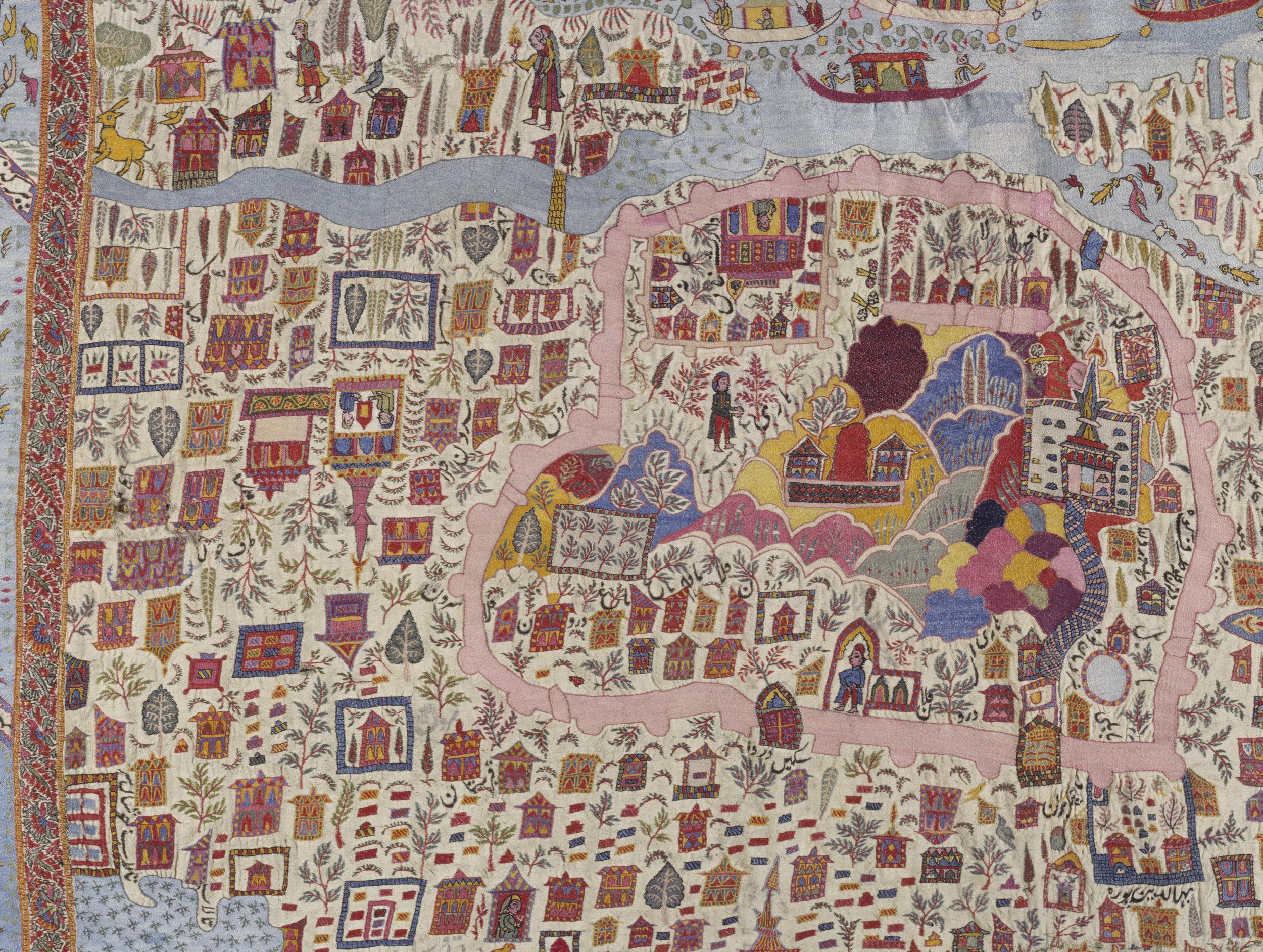
15. The Hari Parbat Fort area.

16. The backwaters of the Nigeen Lake and the Dal Lake

17. The Jama Masjid.

18. The Shalimar Garden

19. Bagh e Dilawar Khan

20.

21. The Shanakaracharya Temple at the top right

22.

23. The Shah Hamadan Mosque, the Patthar Masjid and the Budshah Tomb.

24. The Shergarhi Palace and the Parade Grounds.
The Map Shawl II
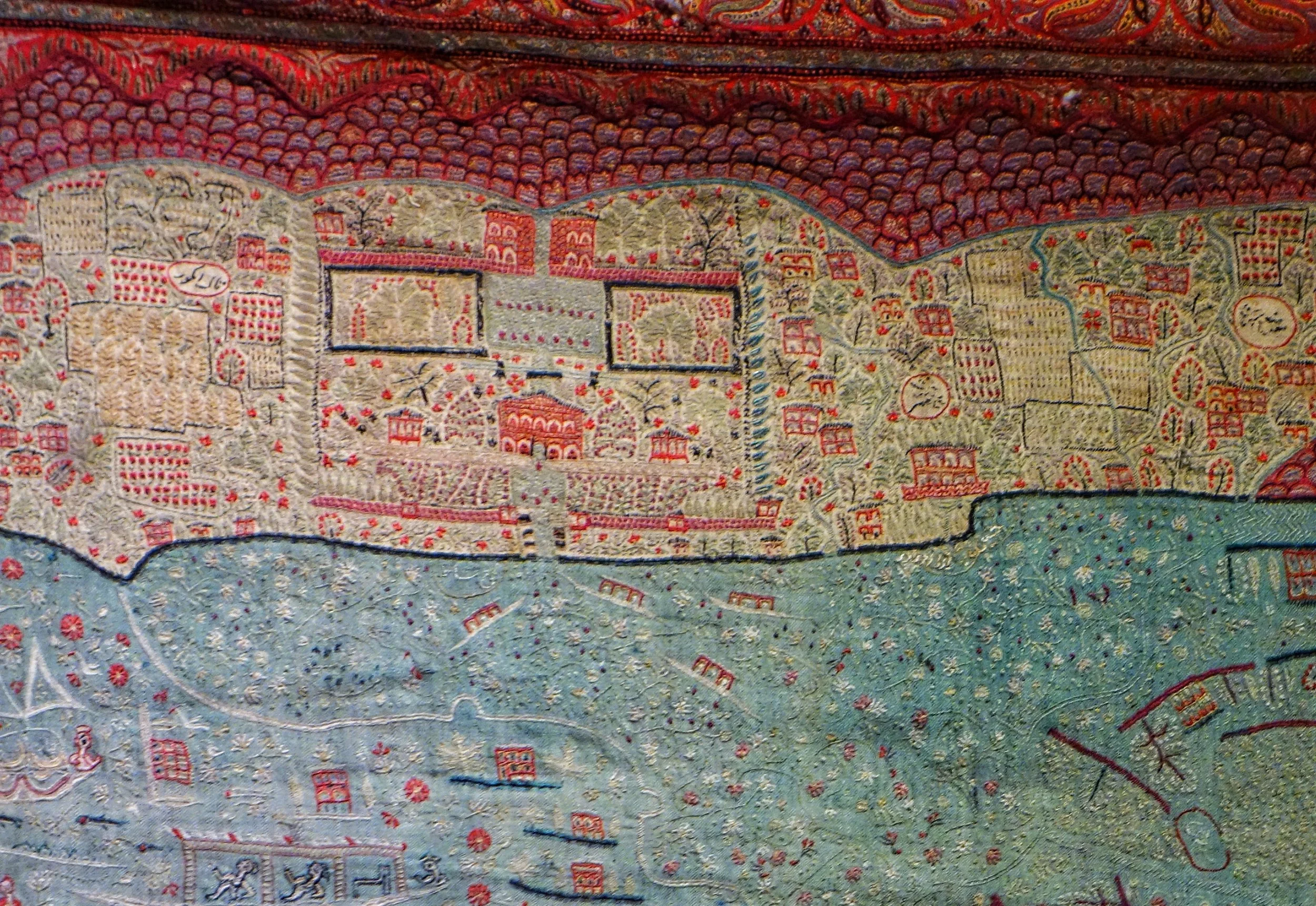
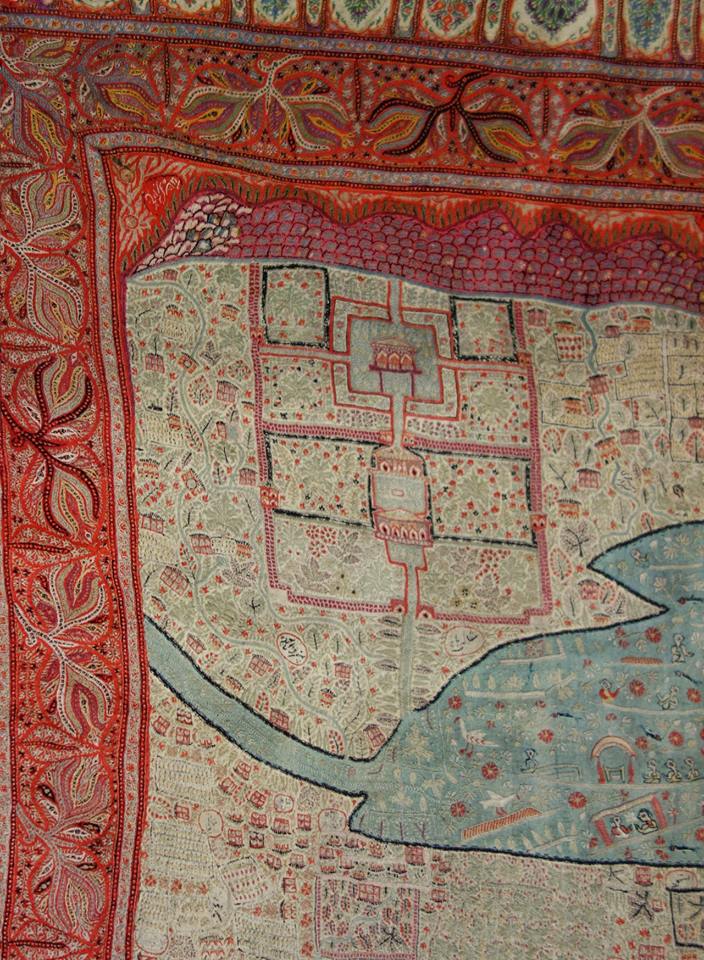
A Close up of the Shalimar Bagh as woven on the Map Shawl with along with the Dal Lake. Note the intricate work on the border. And see the detailing of the surroundings. No wonder it took 30 years to complete. One of the finest examples of Kashmiri Shawl craftsmanship. No wonder they were such a prized possession for Ladies in Aristocratic Europe.

The Srinagar Map Shawl II
A Close up of the Shalimar Bagh as woven on the Map Shawl with along with the Dal Lake. Note the intricate work on the border. And see the detailing of the surroundings. No wonder it took 30 years to complete. One of the finest examples of Kashmiri Shawl craftsmanship. No wonder they were such a prized possession for Ladies in Aristocratic Europe.
From my previous Post the details :
The amazing and exquisite Map Shawl of Srinagar. This Shawl took 30 years in the making. There are 3 or 4 such specimens in the world. And these were made in the late 1800's.
One was presented to Queen Victoria by Maharaja Ranbir Singh and is presently at the Victoria and Albert Museum in London. One more is with a Museum in Australia. One is with a private collector and this piece is at the Shri Pratap Singh Museum in Srinagar though it's not on display as it needs some refurbishing after the Floods.
It would be one of the most expensive pieces of textile ever made if it would be put on an auction. I got a special session to view this absolute Masterpiece as I pestered the right people long enough to let me see this after the Gilgit Manuscripts and along with the Mammoth complete skeleton which was found in Kashmir. A part of the Gilgit Manuscripts is however now on display.
Just that you know the old building of the Museum (out of bounds) was actually a Sumner er Palace of the Maharaja and is as mind blowing as anything you would ever see. The Maharajas sure had money and the craftsmen to deliver stuff which can't even be imagined .
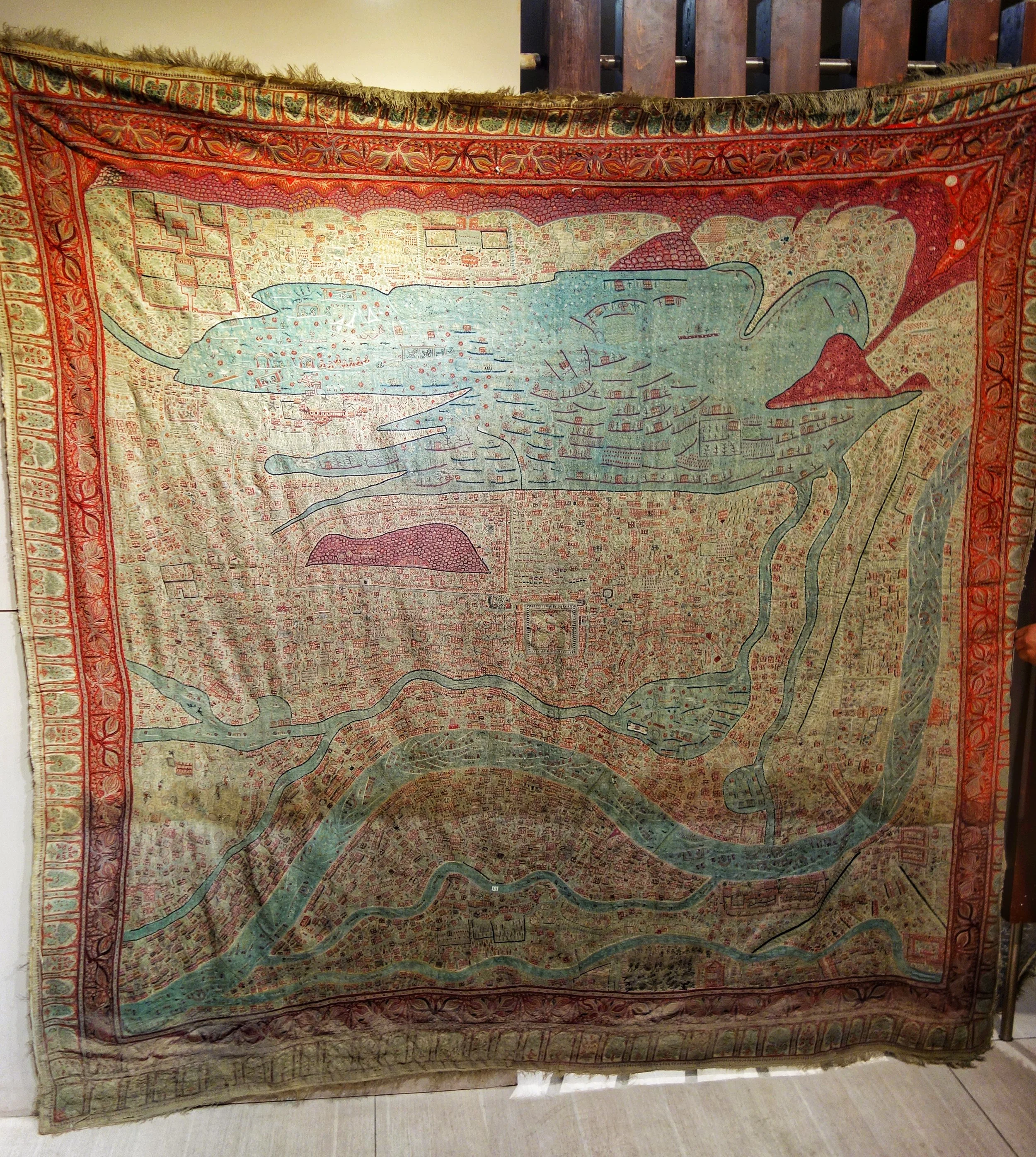
Coming back to the Shawl. You can see the Dal Lake and the Jehlum. On the right the hill is the Shankaracharya Hill. On the top left you can see the Shalimar and Nishat Gardens. You can also see the Hari Parbat Fort and all the old bridges of the City. The detailing is so minute that there are Shikaras shown in the Jehlum and you can even see the individual eye balls of the people in the Shikara. Words cannot describe this absolute masterpiece of Kashmiri craftsmanship.
Please do visit this Museum on your next visit and I'm sure you will be mighty impressed. I plan to cover stuff from this Museum in the next few days / weeks.
Pic from November 2017. Shri Pratap Singh Museum, Lal Mandi, Srinagar
The Legendary Map Shawl of Kashmir
The legendary Map Shawl of Kashmir which has a map of Srinagar city weaved on fine Pashmina. The Shawl was commissioned by Maharaja Ranbir Singh and 3 of these were made. One is on display at the Victoria and Albert Museum in London, one is with a private collector in Australia and one is on display at the SPS Museum in Srinagar.

The Legendary Map Shawl of Kashmir
The amazing and exquisite Map Shawl of Srinagar. This Shawl took 30 years in the making. There are 3 or 4 such specimens in the world. And these were made in the late 1800’s.
One was presented to Queen Victoria by Maharaja Ranbir Singh and is presently at the Victoria and Albert Museum in London. One more is with a Museum in Australia. One is with a private collector and this piece is at the Shri Pratap Singh Museum in Srinagar though it’s not on display as it needs some refurbishing after the Floods.
It would be one of the most expensive pieces of textile ever made if it would be put on an auction. I got a special session to view this absolute Masterpiece as I pestered the right people long enough to let me see this after the Gilgit Manuscripts and along with the Mammoth complete skeleton which was found in Kashmir. A part of the Gilgit Manuscripts is however now on display.
Just that you know the old building of the Museum (out of bounds) was actually a Sumner er Palace of the Maharaja and is as mind blowing as anything you would ever see. The Maharajas sure had money and the craftsmen to deliver stuff which can’t even be imagined .
Coming back to the Shawl. You can see the Dal Lake and the Jehlum. On the right the hill is the Shankaracharya Hill. On the top left you can see the Shalimar and Nishat Gardens. You can also see the Hari Parbat Fort and all the old bridges of the City. The detailing is so minute that there are Shikaras shown in the Jehlum and you can even see the individual eye balls of the people in the Shikara. Words cannot describe this absolute masterpiece of Kashmiri craftsmanship.
Please do visit this Museum on your next visit and I’m sure you will be mighty impressed. I plan to cover stuff from this Museum in the next few days / weeks.
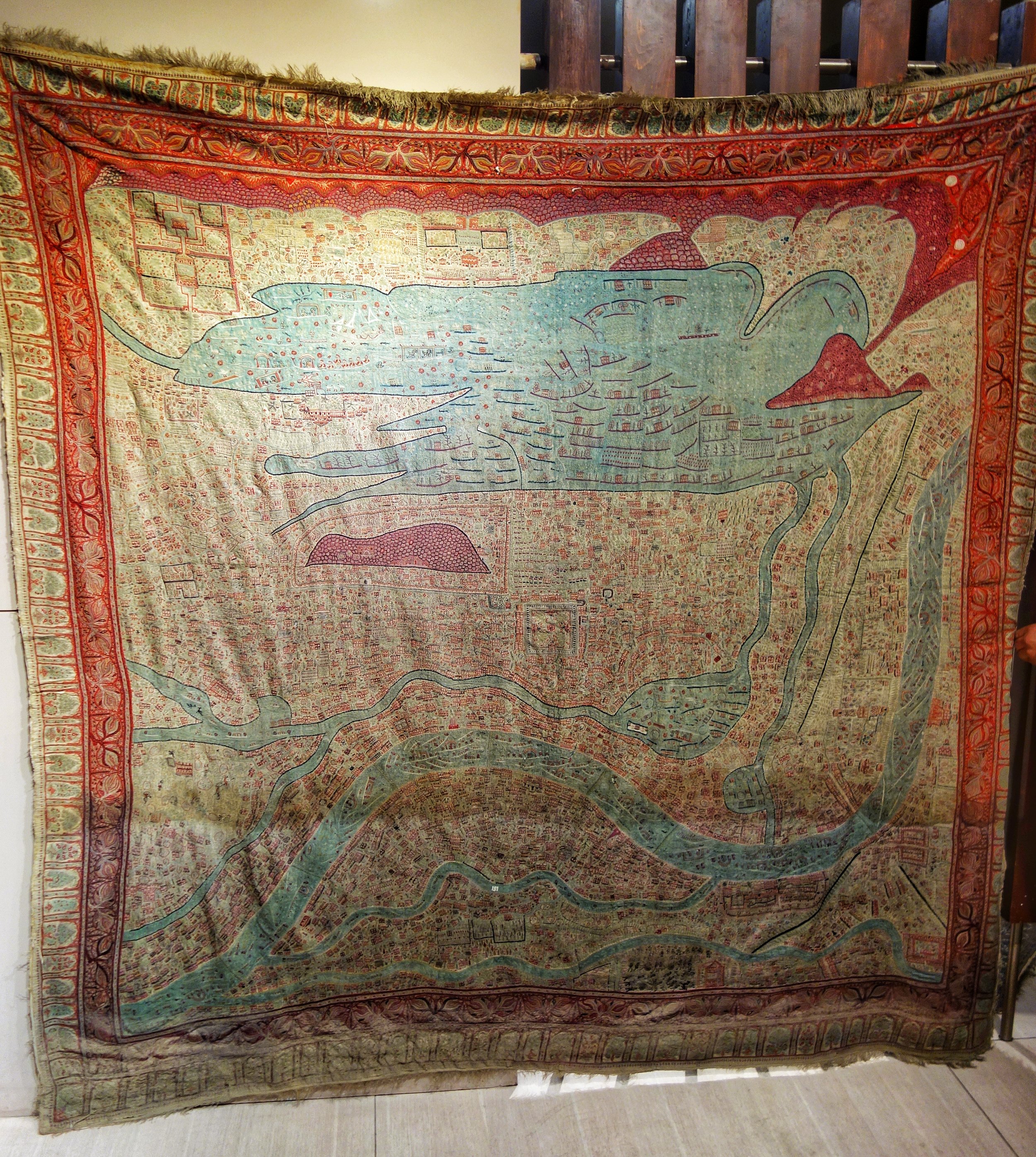
Link for Hi Res of the Map Shawl kept at the Victoria and Albert Musuem
https://g.co/arts/qwf3bmtz54qjtjrc7
The Treasures of the Shri Pratap Singh Museum
The SPS Museum Srinagar was established in 1898 AD in the Maharaja’s Summer guest house largely based on collections transferred from State Toshkhana. Approximately 79,595 artifacts and objects covering various subjects like Archaeology, Numismatics, Decorative Art, Arms and Armory, Paintings, Textiles etc are housed in the Museum. A must visit for anyone in Kashmir.

The Treasures of the Shri Pratap Singh Museum
The SPS Museum Srinagar was established in 1898 AD in the Maharaja’s Summer guest house largely based on collections transferred from State Toshkhana. Approximately 79,595 artifacts and objects covering various subjects like Archaeology, Numismatics, Decorative Art, Arms and Armory, Paintings, Textiles etc are housed in the Museum. The proposal for the Museum was made around 1889 when a memorandum was submitted to the then Maharaja of Jammu and Kashmir, Maharaja Pratap Singh by his younger brother General Amar Singh and a European scholar, Captain S H Godferry proposing to build a museum in Srinagar for exhibiting artifacts covering the regions of Jammu, Kashmir, Ladakh, Baltistan and Gilgit. However the Museum was finally opened to public in March 1898.
The Museum was set up in a smaller Palace of the Maharaja by the banks of the Jehlum where the Guests of the Maharaja used to put up. The Old Museum Building in itself is a work of art with great frescoes and art adorning the walls and the ceilings. This Building faced the brunt of the floods in 2014 and is now closed for Public viewing. The Museum exhibits however have been moved to a new Museum building which has come up.
Some of the treasures that are on display (or will be on display are as follows) :
1. Harwan Terracotta Tiles
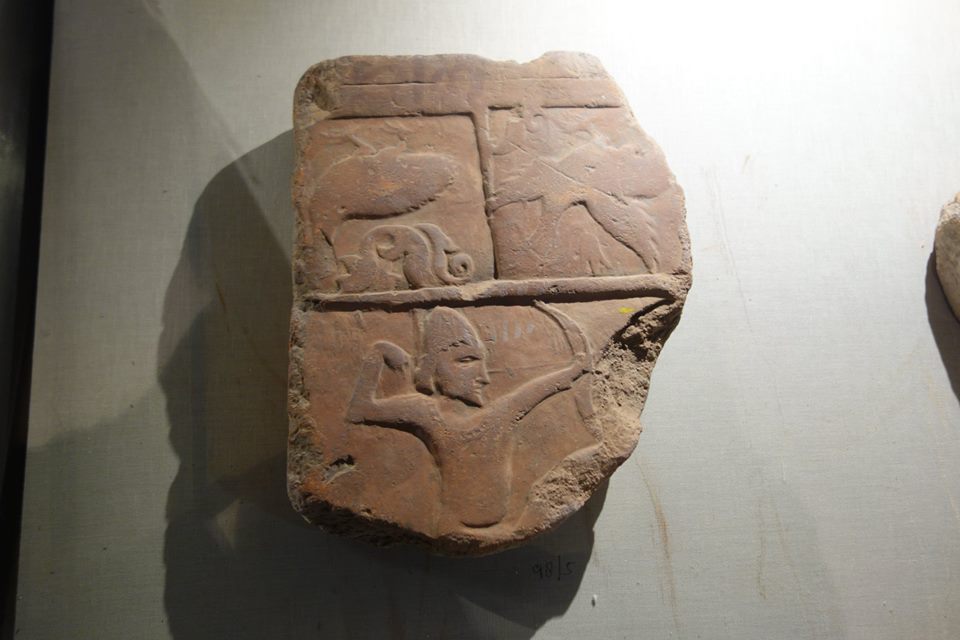
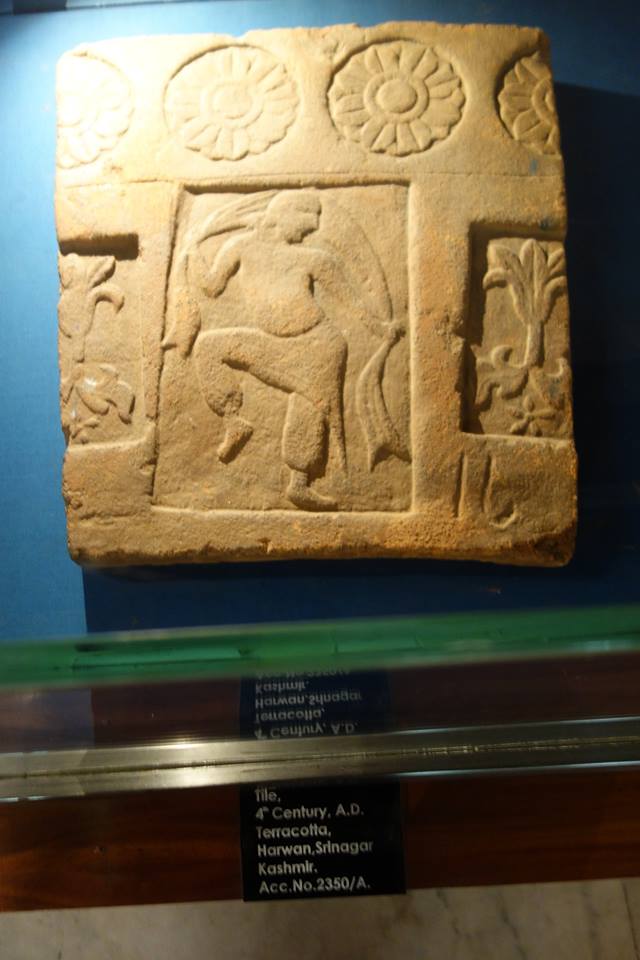
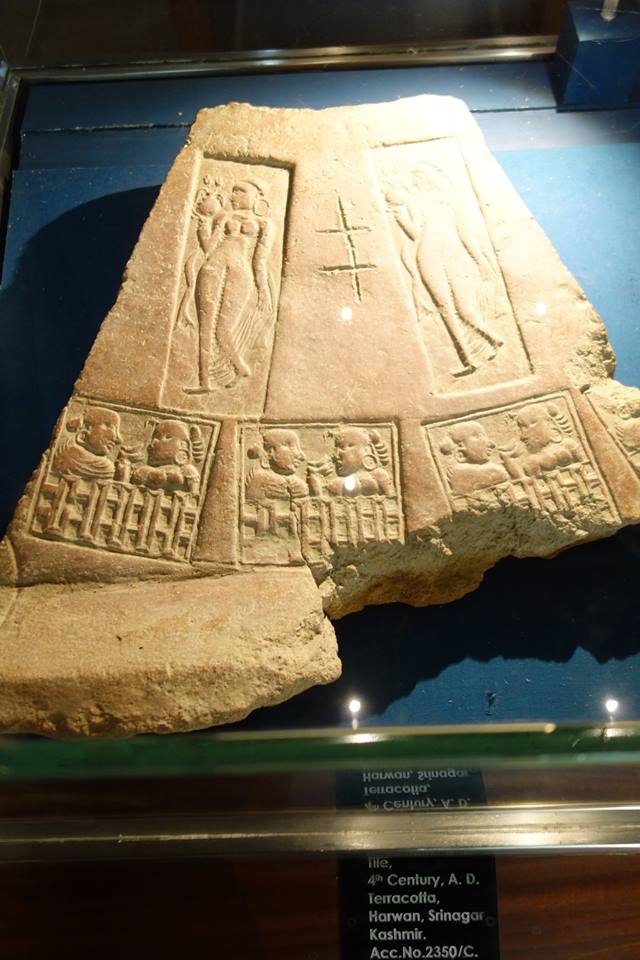
The Museum has on display a number of Terracotta Tiles which were discovered at the remains of an almost 2000 year old Buddhist Monastery in Harwan. This important Buddhist site is said to be the venue of the Fourth Buddhist Council convened by the Kushan Emperor Kanishka in the first century AD. It was from this Council that an estimated 500 monks left for Central Asia, Tibet and China to propagate the message of Lord Buddha.
The Tiles show a distinct Parthian/ late Sasanian influence underlying the close connections that Kashmir had with the Gandhara region at the time when Buddhism was the prevalent system of belief in both the regions. The Museum has a number of these Tiles showing daily activities of life in those times.
2. The Gilgit Manuscripts
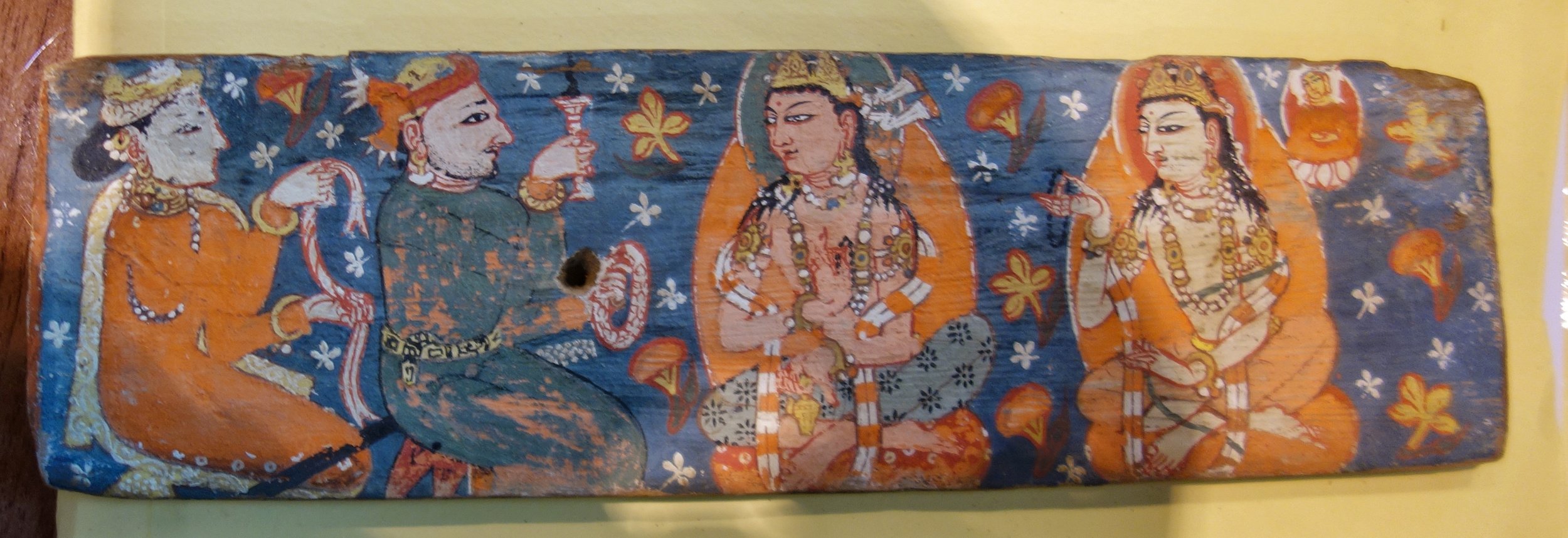
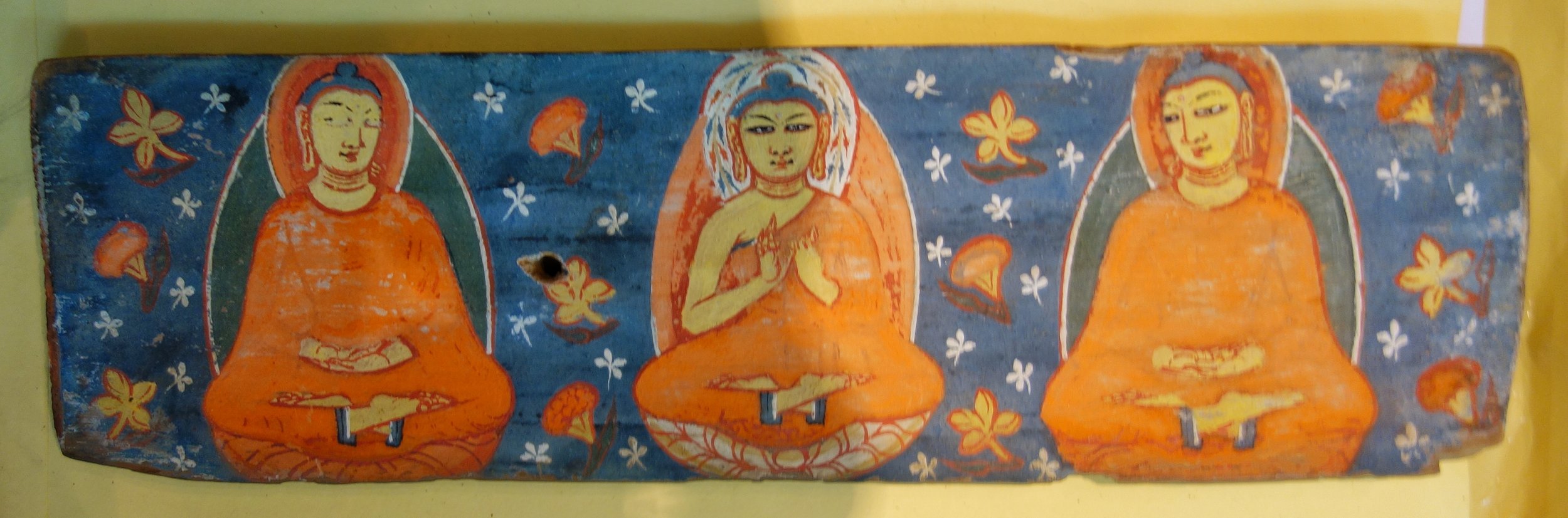
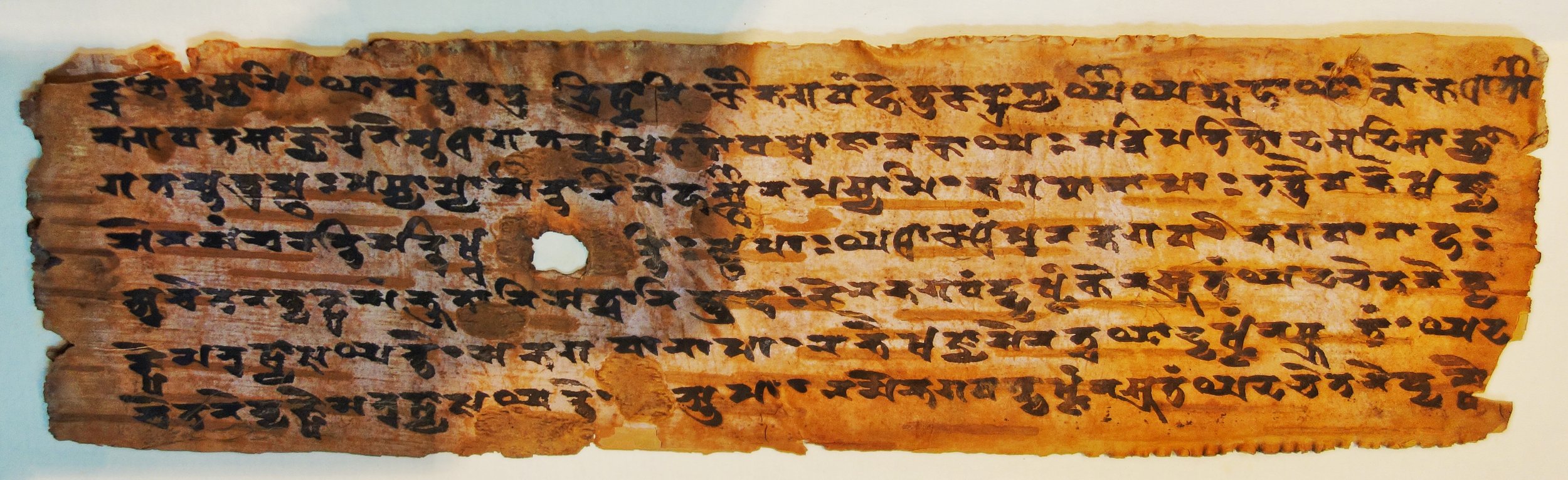
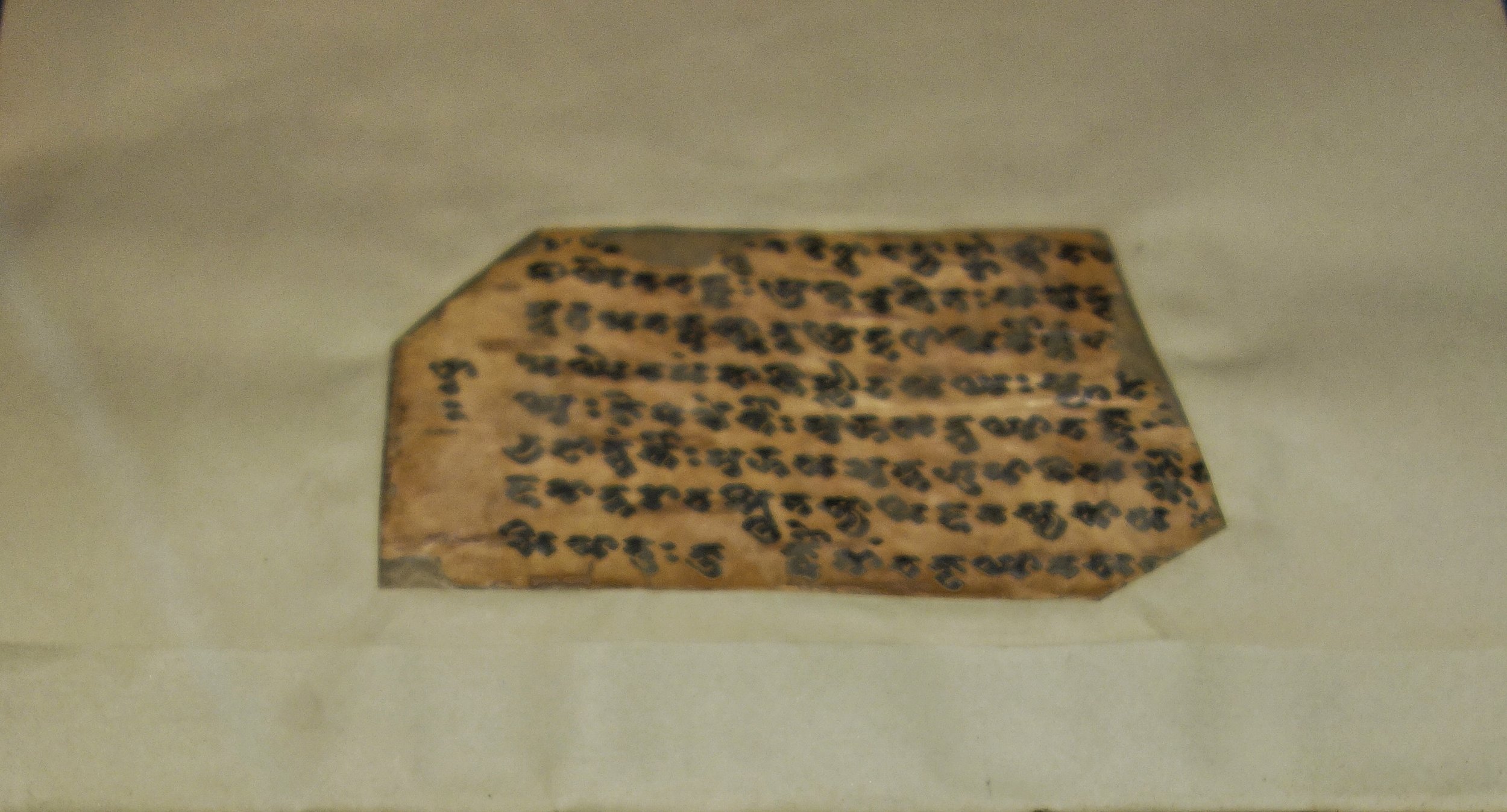
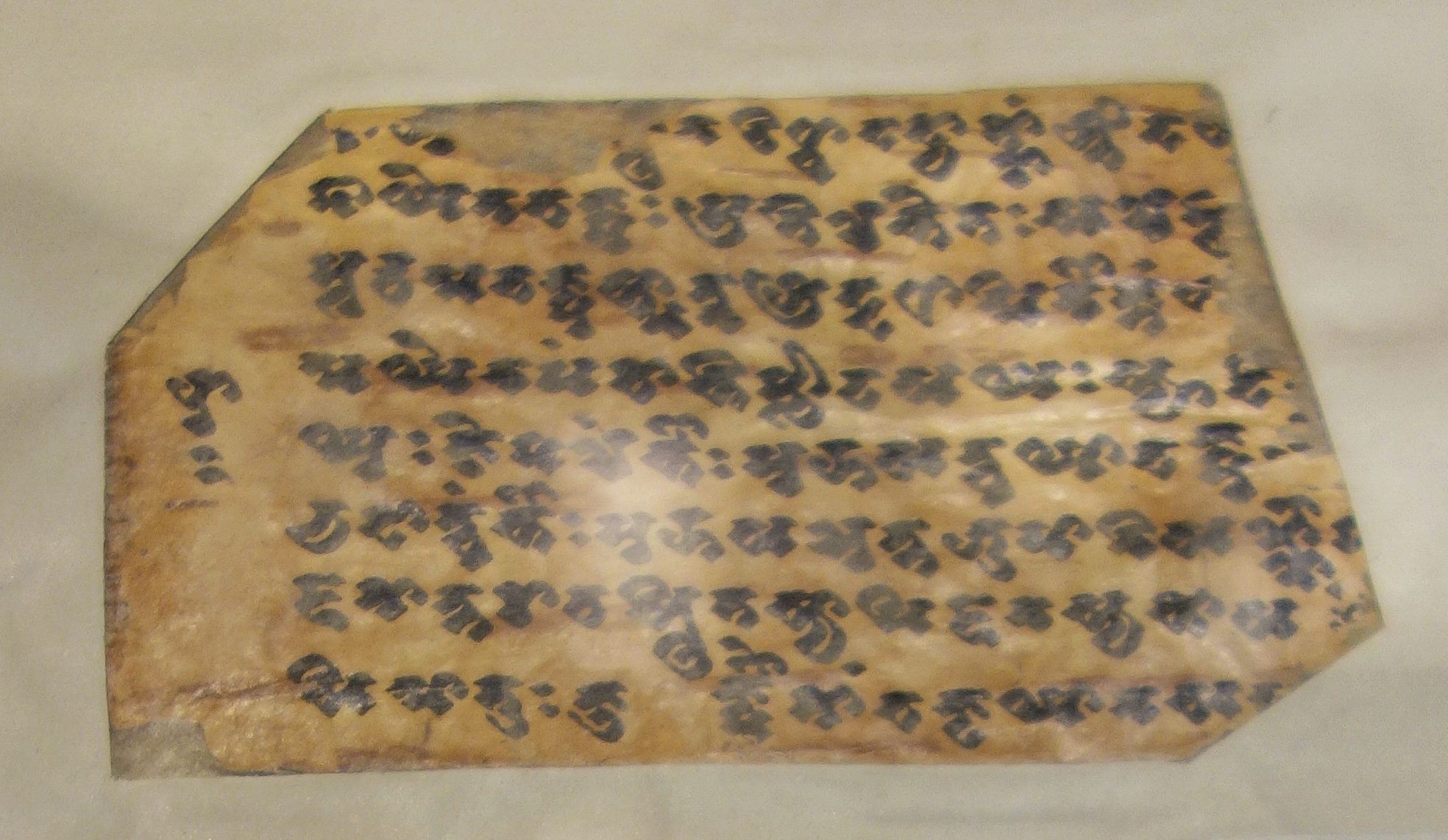
One of the oldest Manuscripts ever found in India, this Manuscript was found is a Village in Gilgit and was then passed onto the Maharaja of Jammu and Kashmir. As for the significance of the Gilgit manuscripts, especially of the Lotus Sutra which was found among the Manuscripts, I quote from a BBC article on the same “The Lotus Sutra was found in Gilgit region, now in Pakistan.The document, which dates back to 5th century, is perhaps the only Buddhist manuscript discovered in India.
Believed to be one of the most revered Buddhist scriptures, it represents the discourse delivered by Buddha towards the end of his life.
The Lotus Sutra is one of the most sacred scriptures of Mahayana Buddhism , which is strongest in Tibet, China, Taiwan, Japan, Korea, and Mongolia.”
A part of the collection is also housed in the National Archives in Delhi as well as some part exists in the Karachi Museum.
3. The 9th Century Vaishnava Avatar Bronze Frame
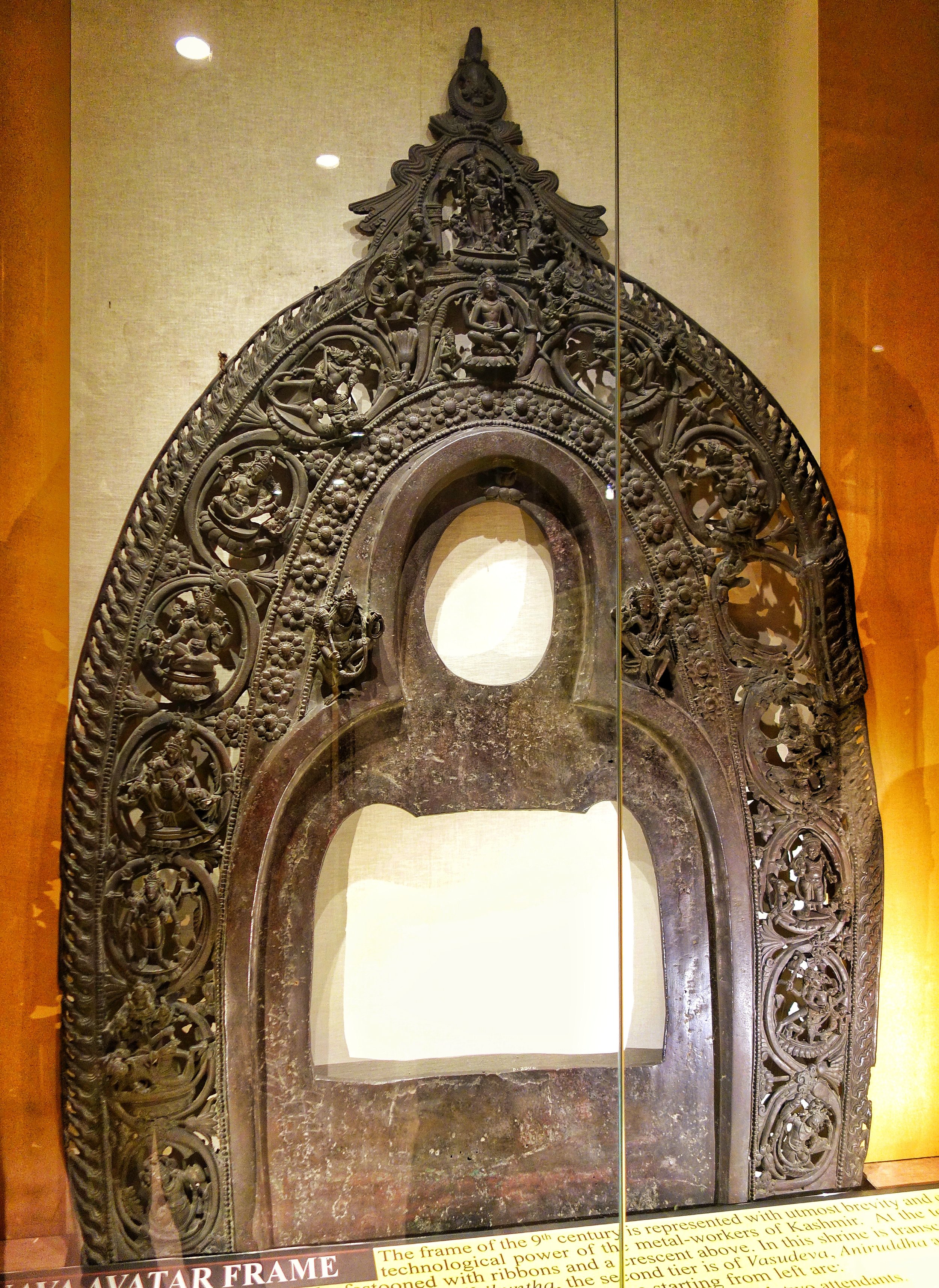
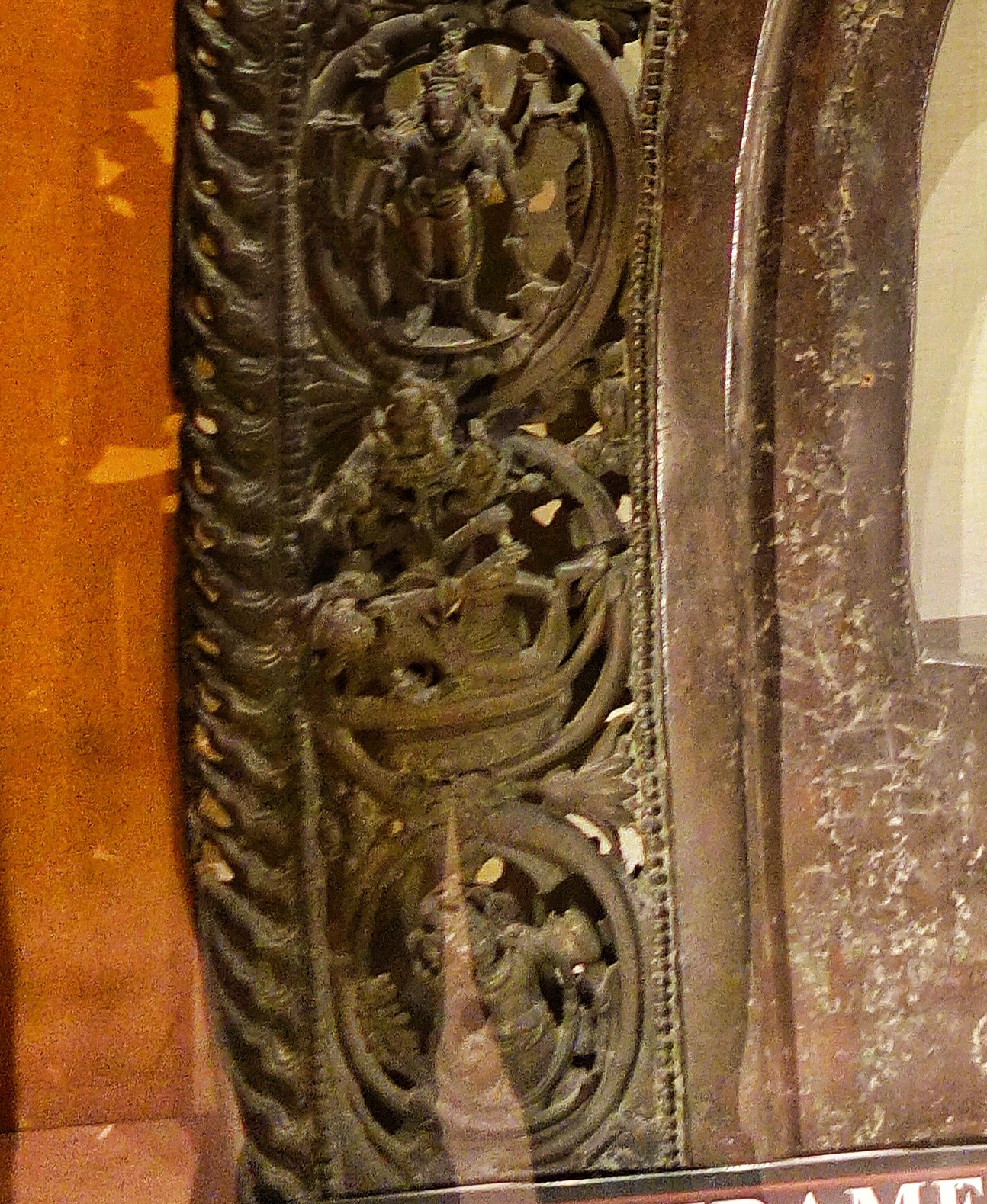
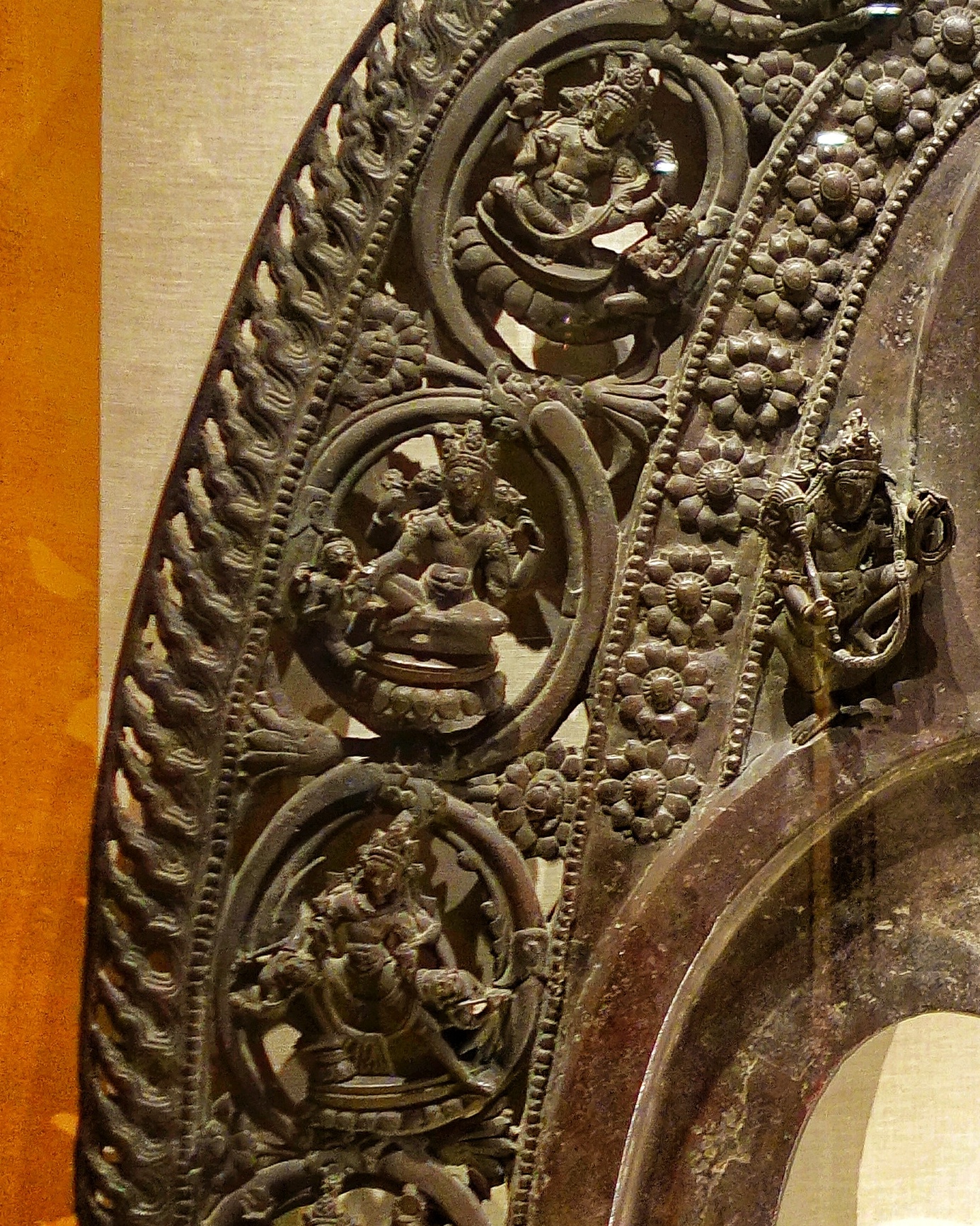
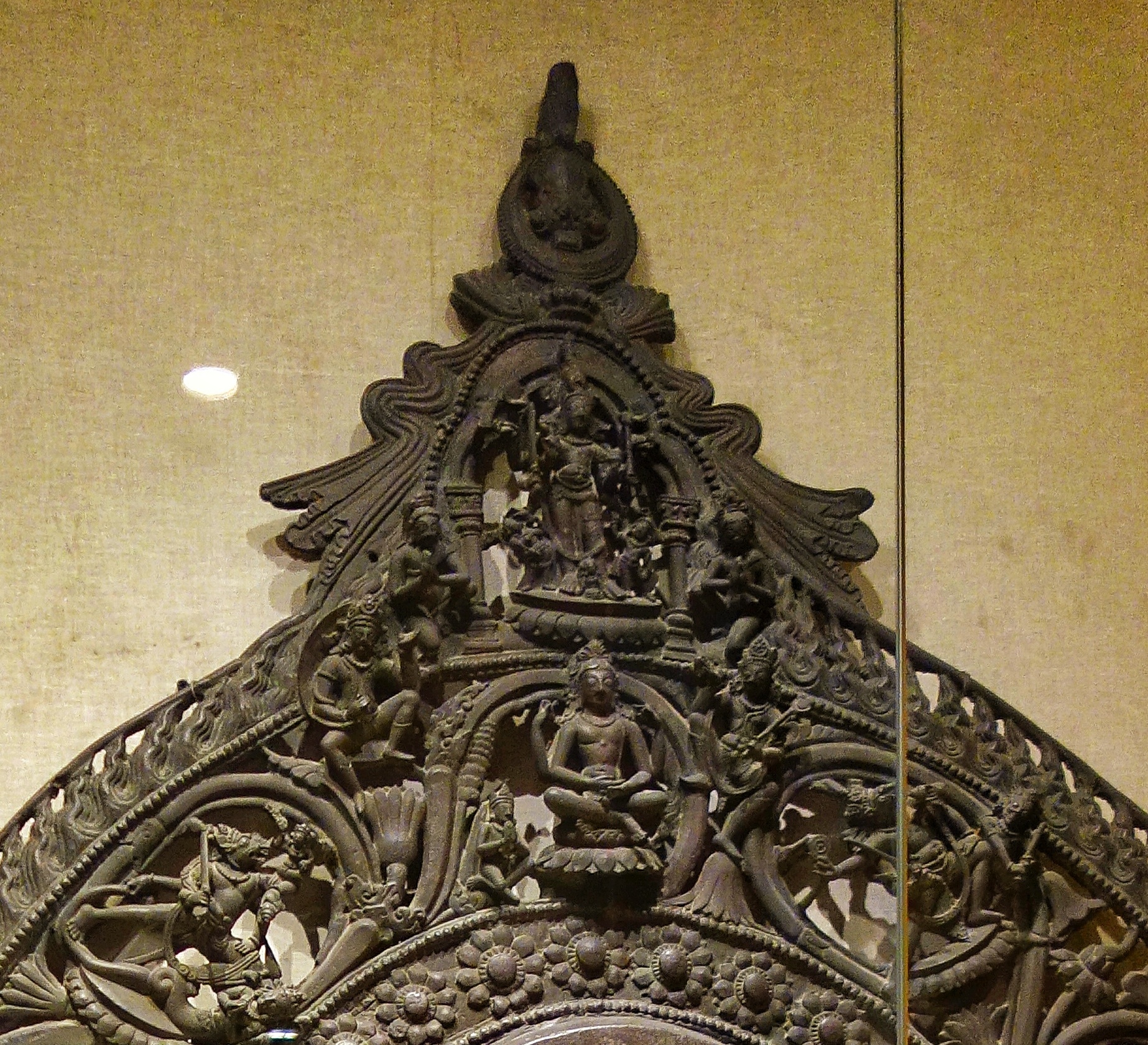
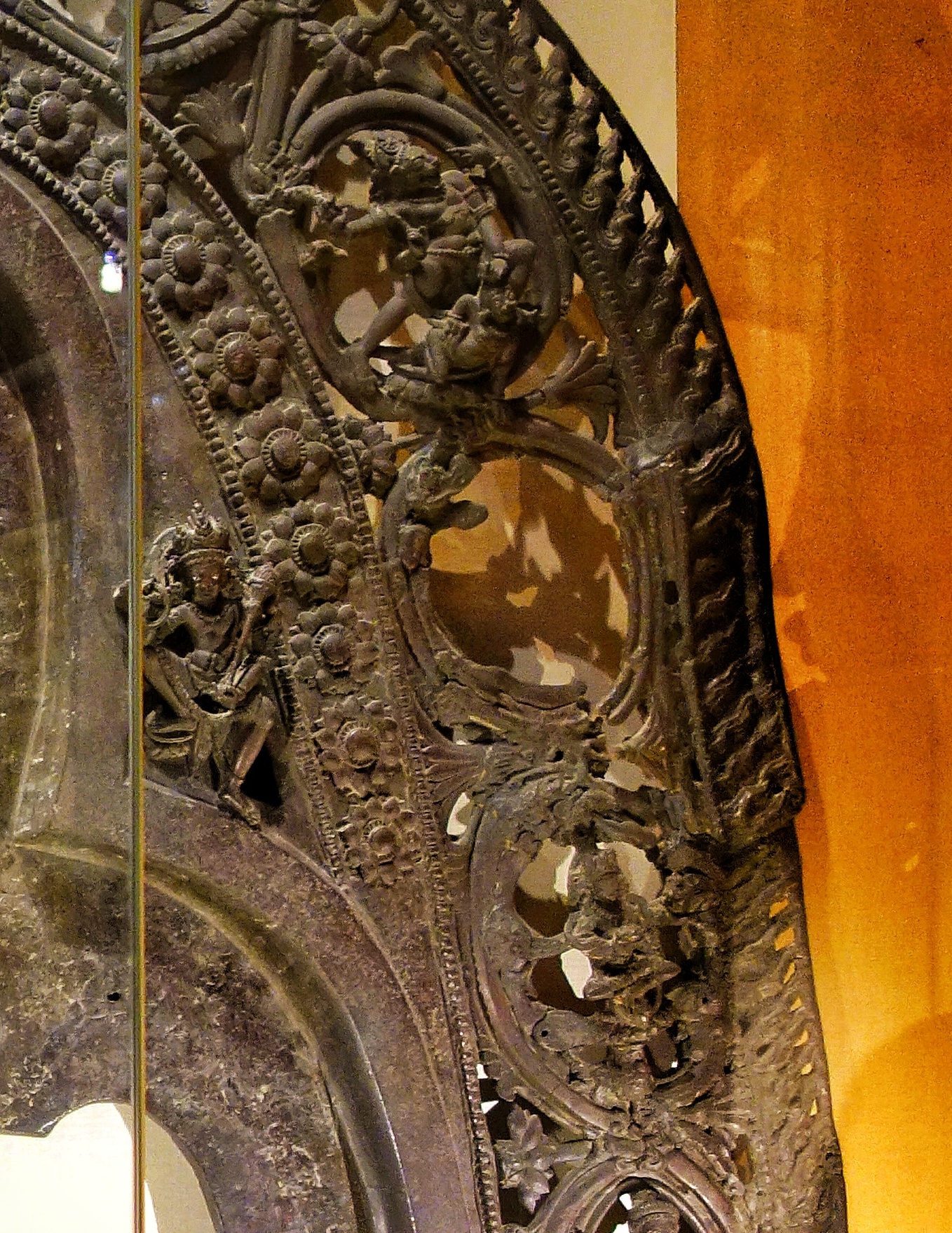
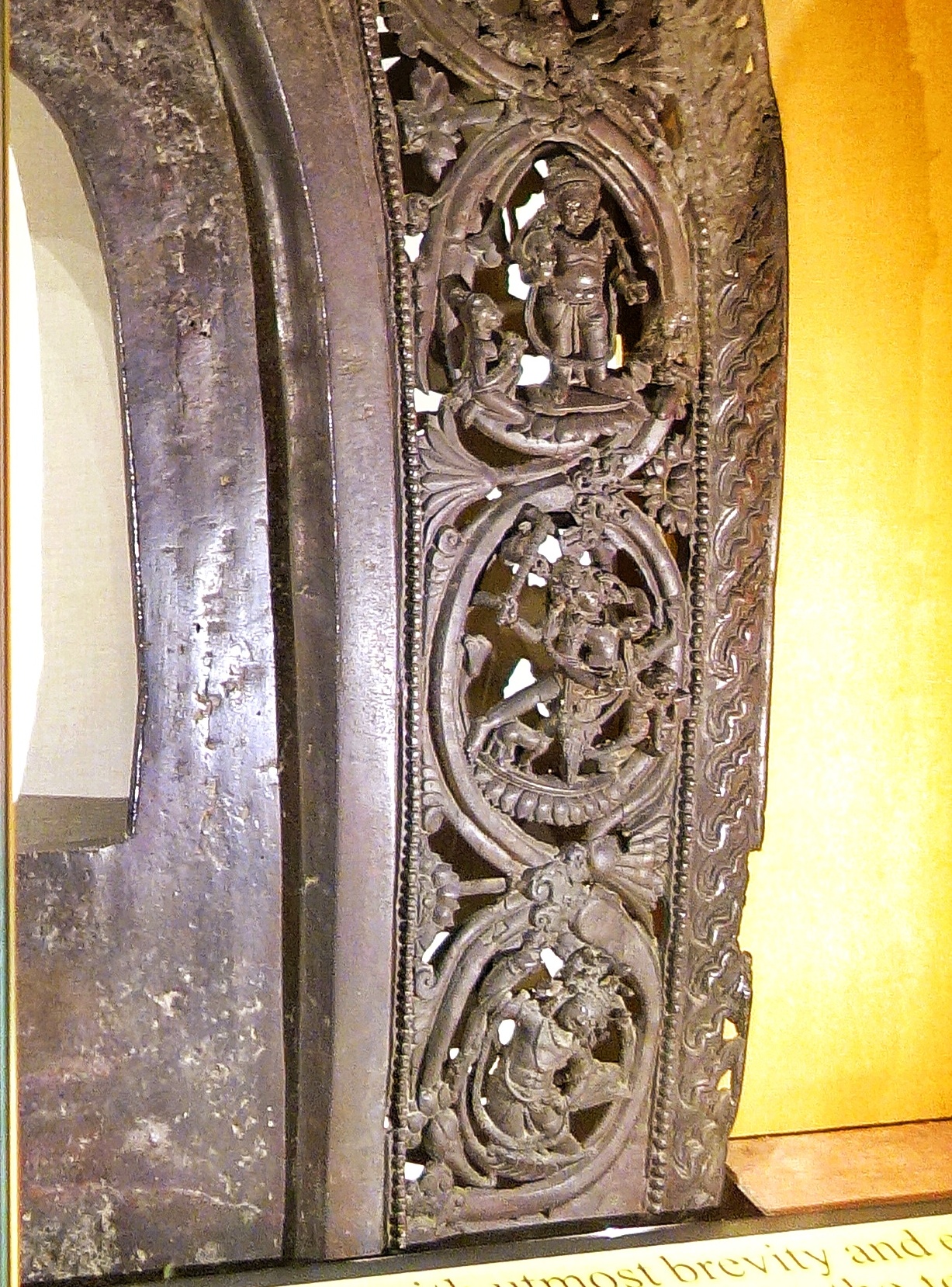
One of the most priceless treasures on display at the SPS Museum at Srinagar is a 9th Century metal “Vaishnava Avatar” frame which is a Prabhavali of bronze metal alloy measuring 6’4″ in height and 4′ wide and 1’2″ thick weighing almost 100 kgs excavated from Devsara. As the name suggests it shows various Avatars of Vishnu. Devsara, which is in Kulgam district had been in the past a great center for the casting of Bronze images and other metal works. Many of the bronze/ metal sculptures found here have unfortunately gone missing as they were simply taken away in the olden times as metal was always in high demand.
This masterpiece was discovered in 1931 and it is dated to the period of Shankar Varman. Each of the deity cast on it has great detailing and as such is a brilliant example of Kashmiri metal craftsmanship of that period. Fortunately this great piece of art along with another bronze sculpture of Lord Buddha along with a few coins made it to the Museum from the Devsara site. This sculpture is one of its kind in Kashmir and maybe India as well and is rated one of the most significant archaeological find in the Indian subcontinent.
4.Ghodas of the Ghoda Gali
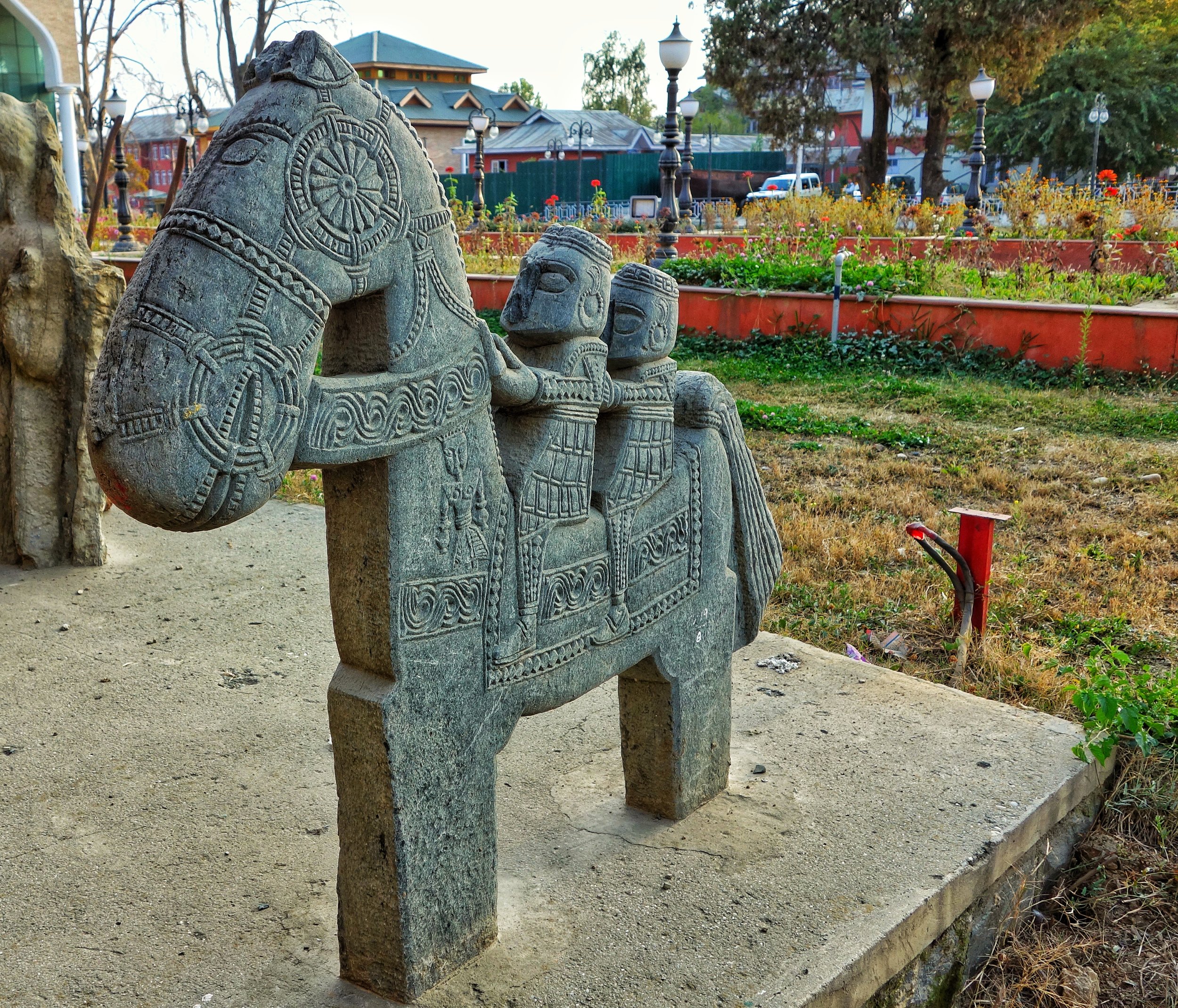
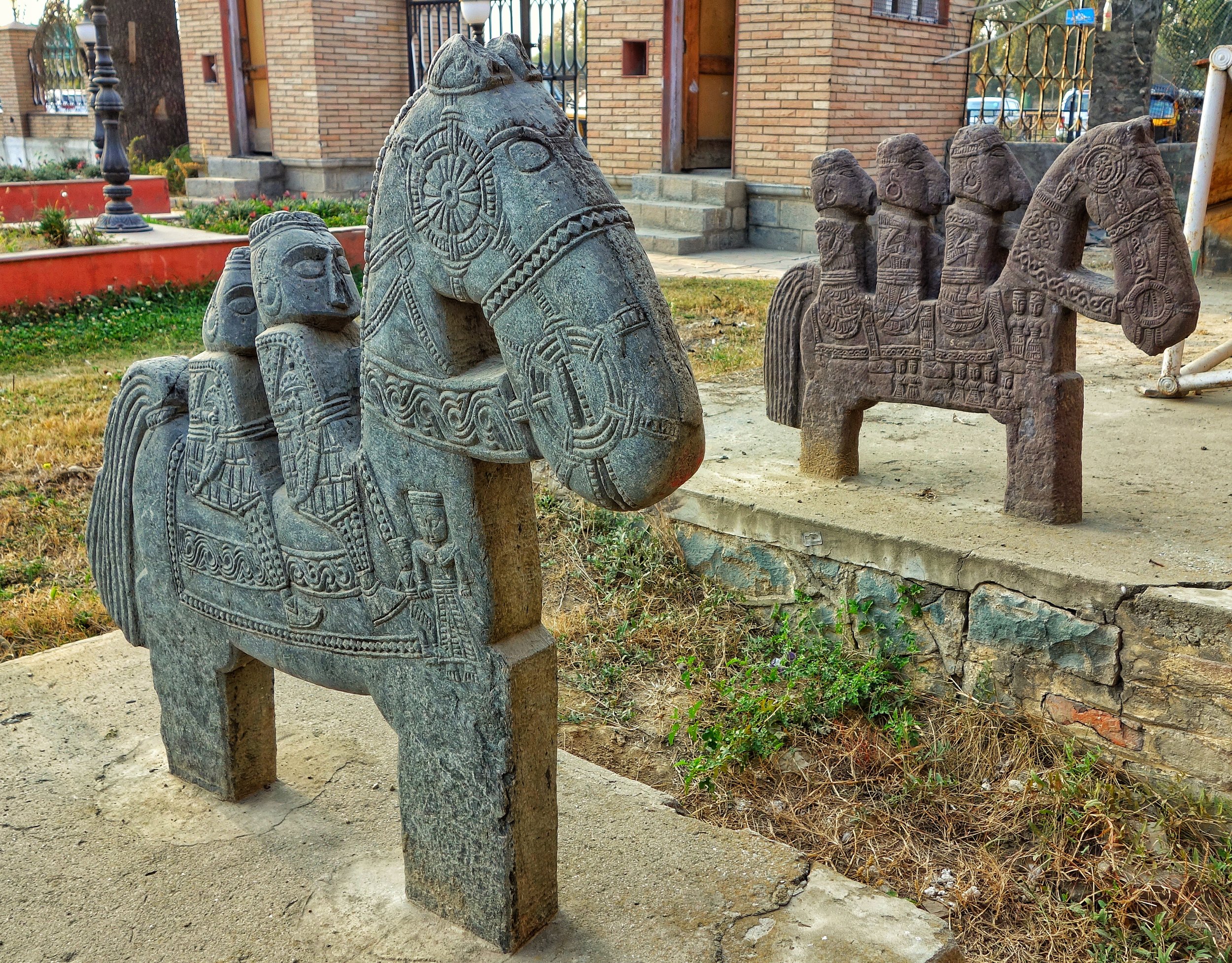
Another fascinating item on display are the Stone sculptures of the Ghoda Galli. Dotted along the Pir Panjals at certain Passes are these stone sculptures of Man Riding a Horse. These are usually found at the top of some Passes and they are found at numerous locations all over the Pir Panjals in the Jammu region. No one seems to be sure of how many of these are spread all over the Region, Even the origin is not very clear. As I spoke to one of the officials in the Museum the sculptures show a distinct Hellenic influence. A significant site for these is a place called the Ghoda Galli situated near Ramban where a great collection of these sculptures exist. A few of these pieces were sent over to the Sri Pratap Museum as well.
5.The Map Shawl
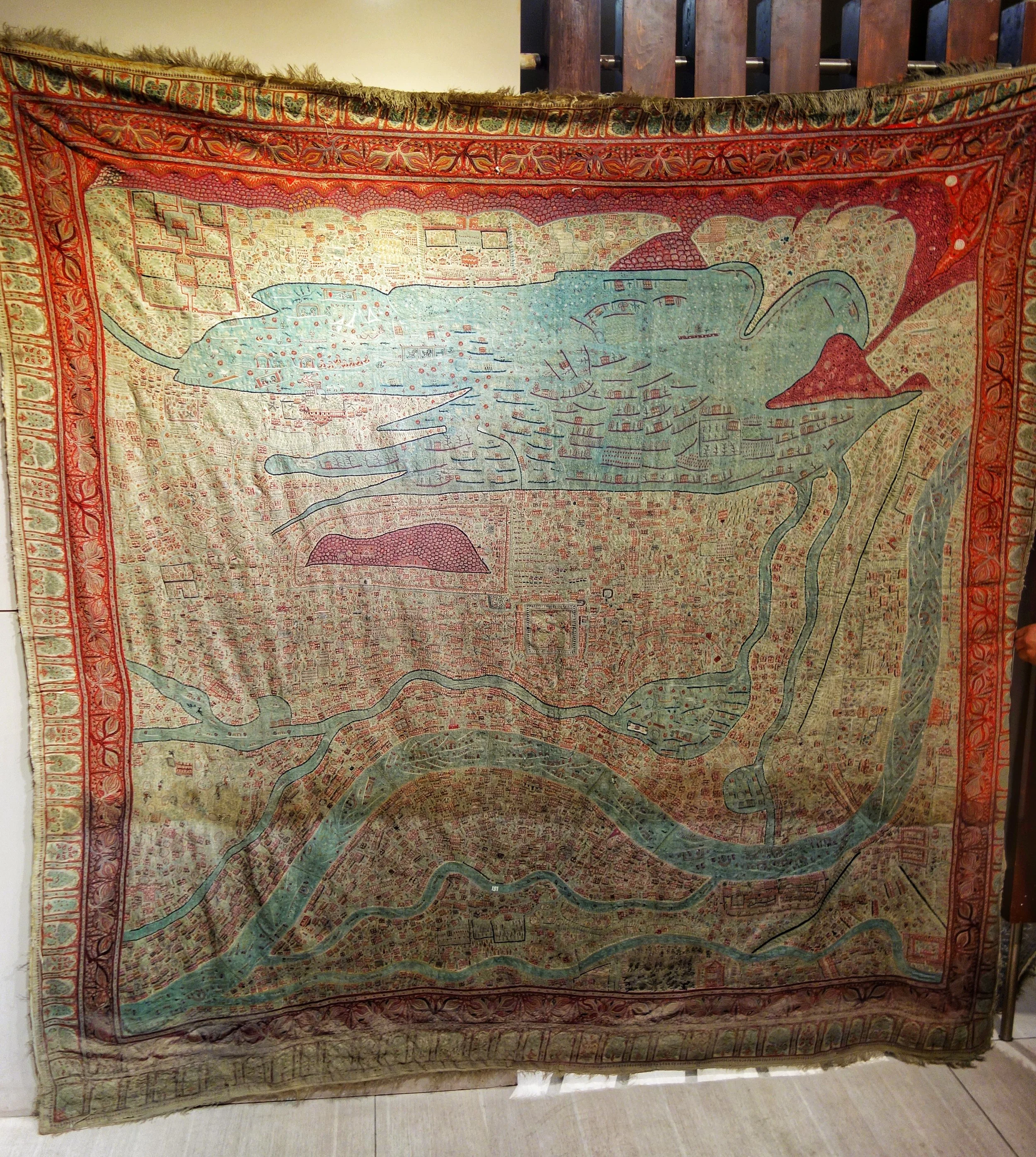
The amazing and exquisite Map Shawl of Srinagar. This Shawl took 30 years in the making. There are 3 or 4 such specimens in the world. And these were made in the late 1800’s.
One was presented to Queen Victoria by Maharaja Ranbir Singh and is presently at the Victoria and Albert Museum in London. One more is with a Museum in Australia. One is with a private collector and this piece is at the Shri Pratap Singh Museum in Srinagar though it’s not on display as it needs some refurbishing after the Floods.
It would be one of the most expensive pieces of textile ever made if it would be put on an auction.
6. Boat Gifted by Queen Victoria to Maharaja Ranbir Singh
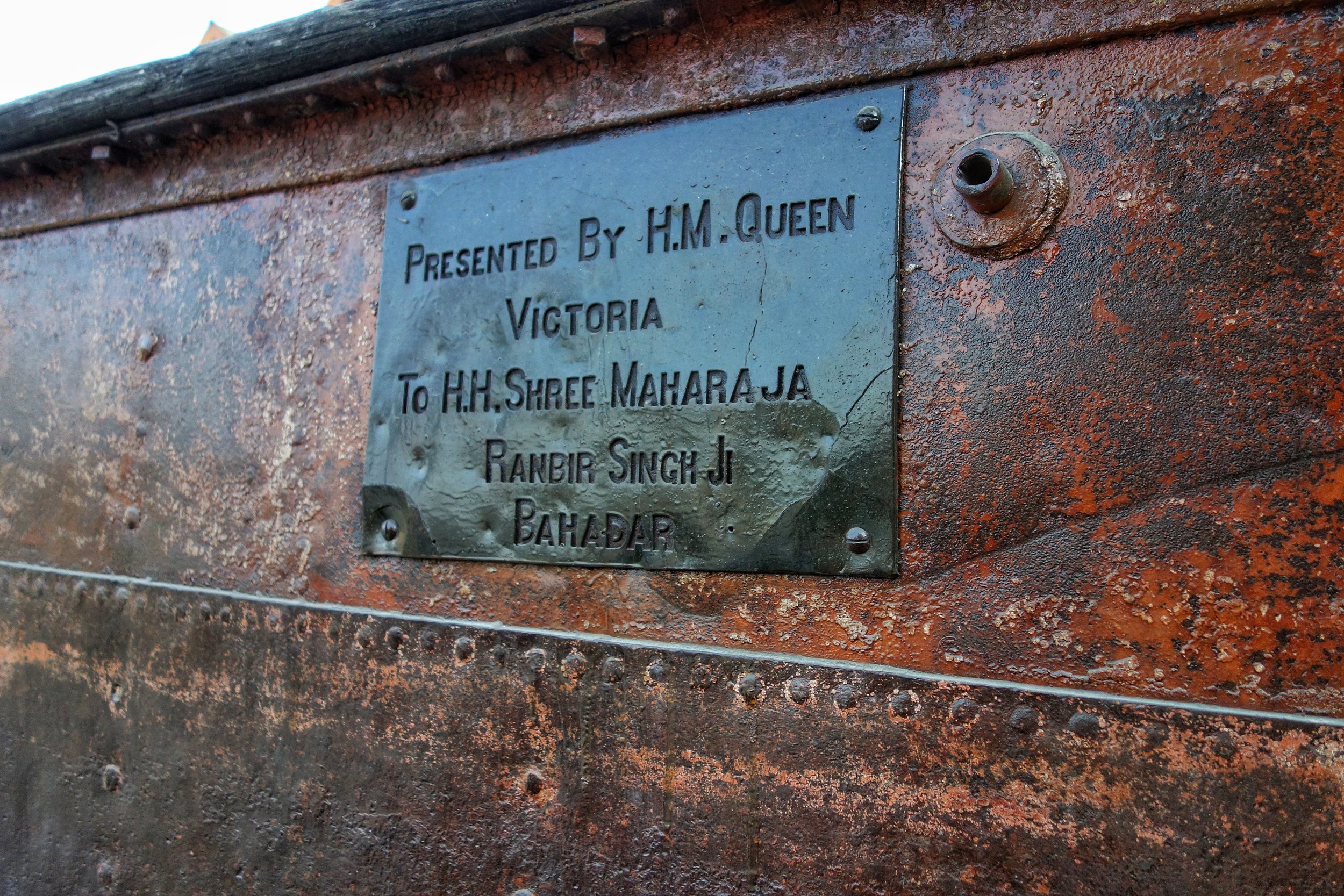
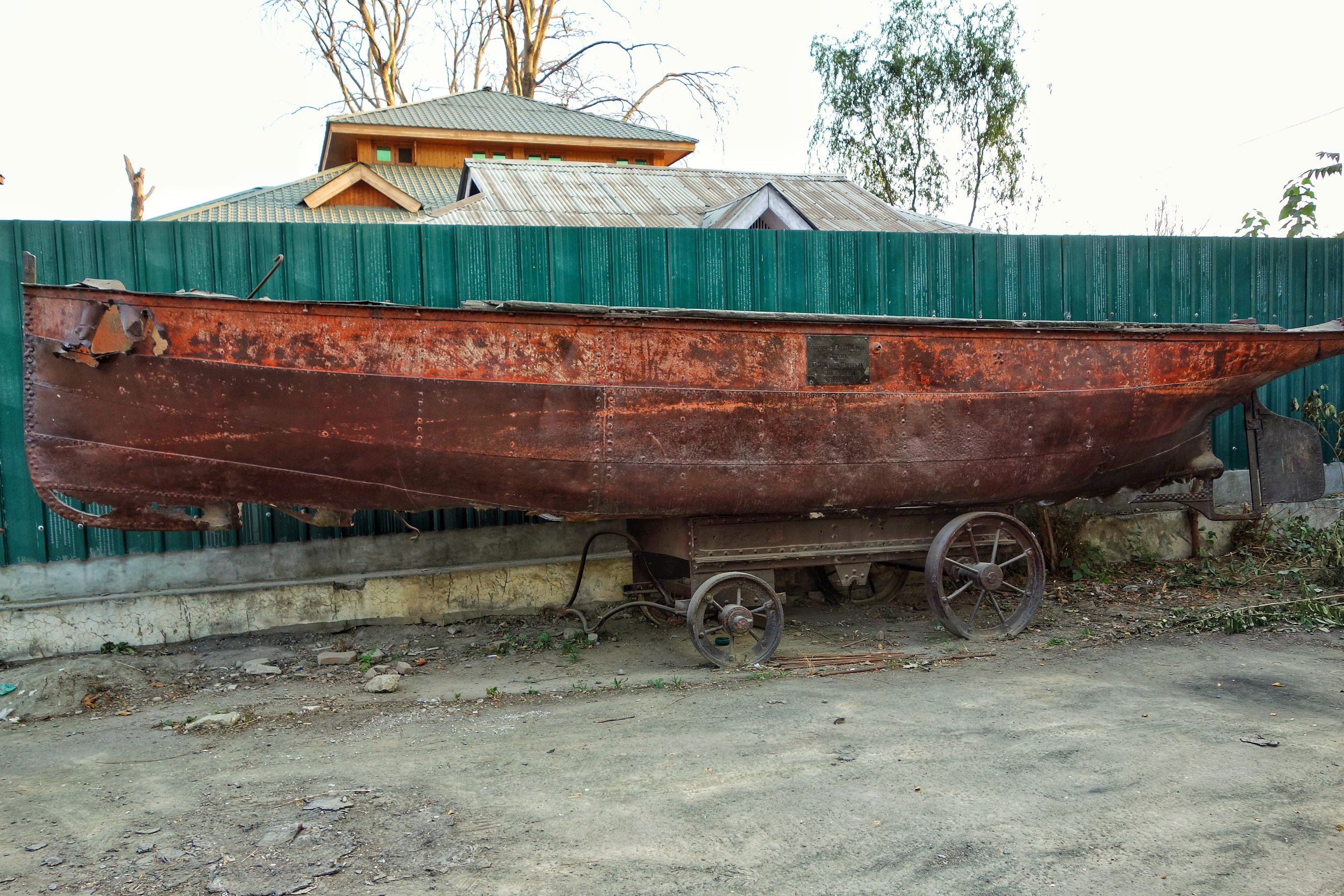
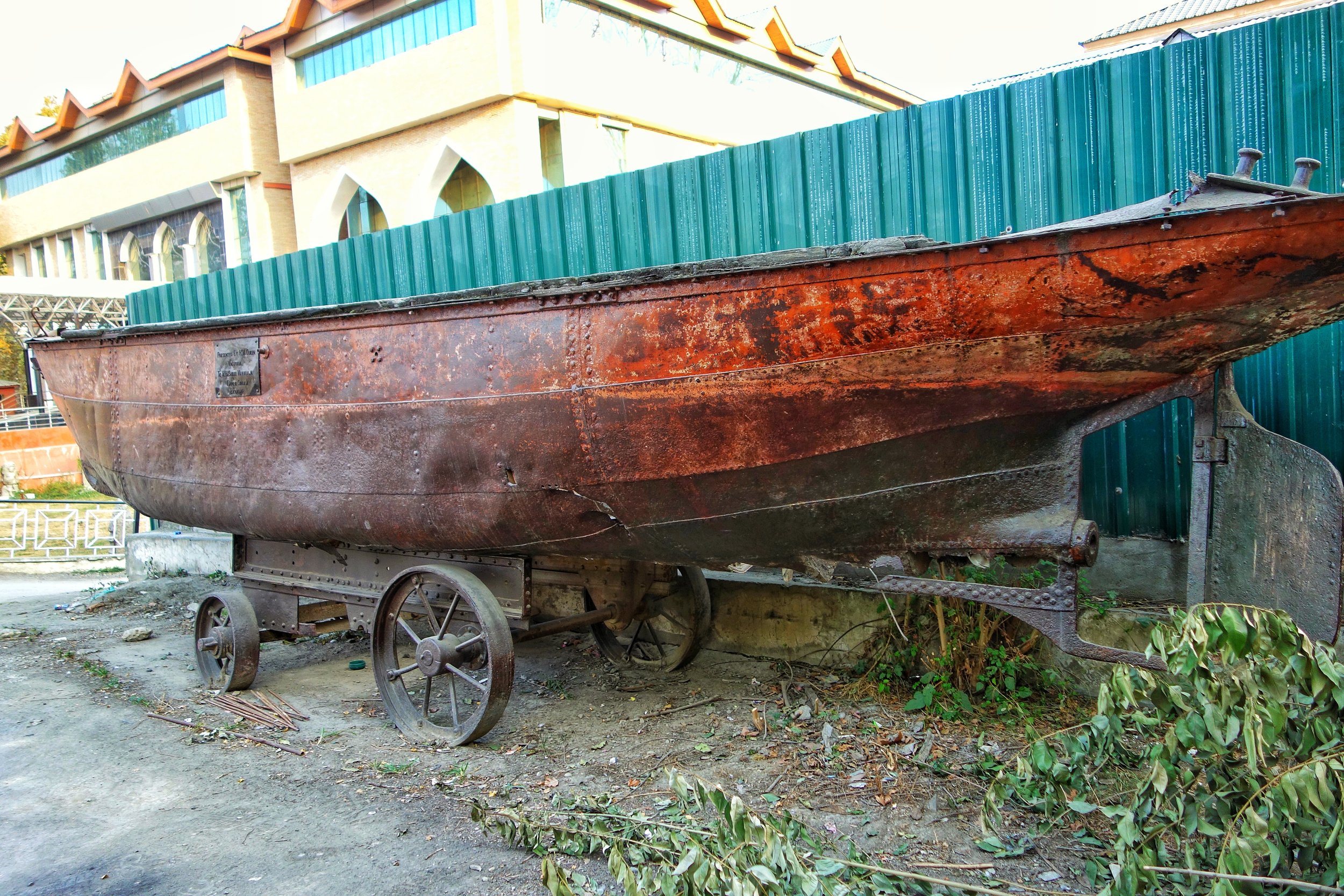
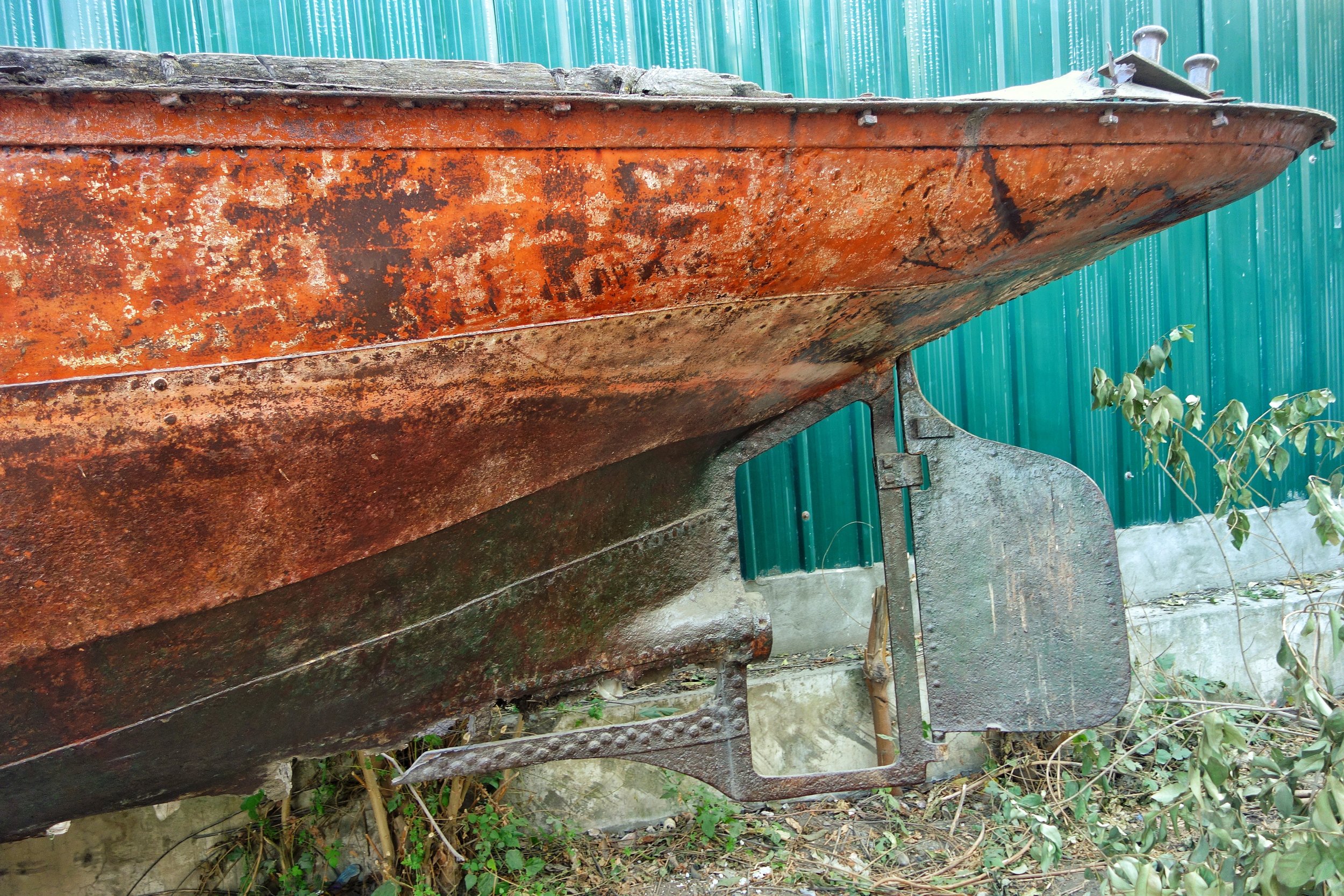
In the Museum Parking lies an interesting exhibit probably the largest one in whole Museum. A boat that was gifted by Queen Victoria to the then Maharaja of Kashmir, Maharaja Ranbir Singh. As of today it lies in a bad shape as it lies out in the open. Hopefully more would be done to preserve this important piece of History.
Kiki’s Blog
Stories from the Himalayas
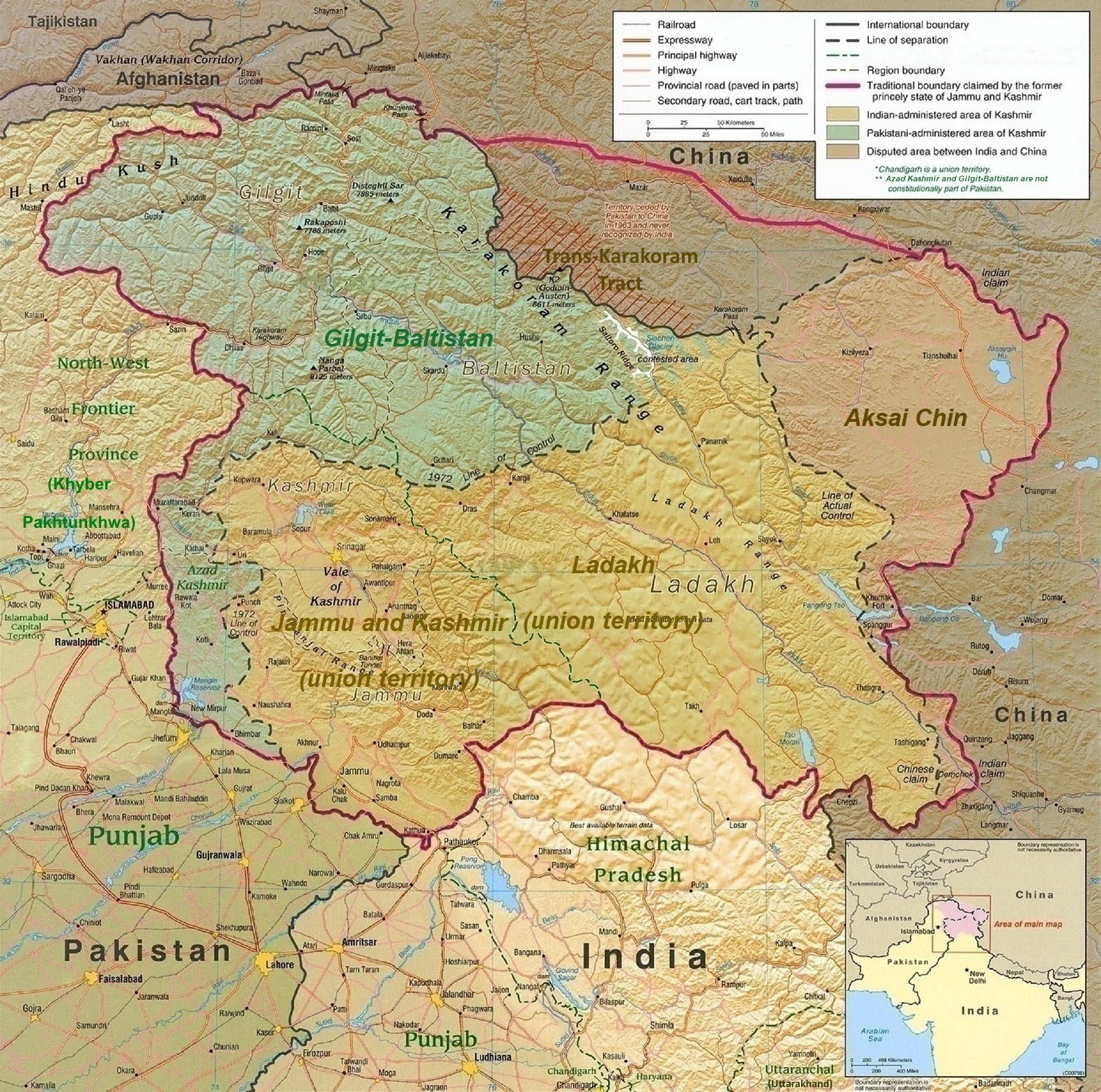
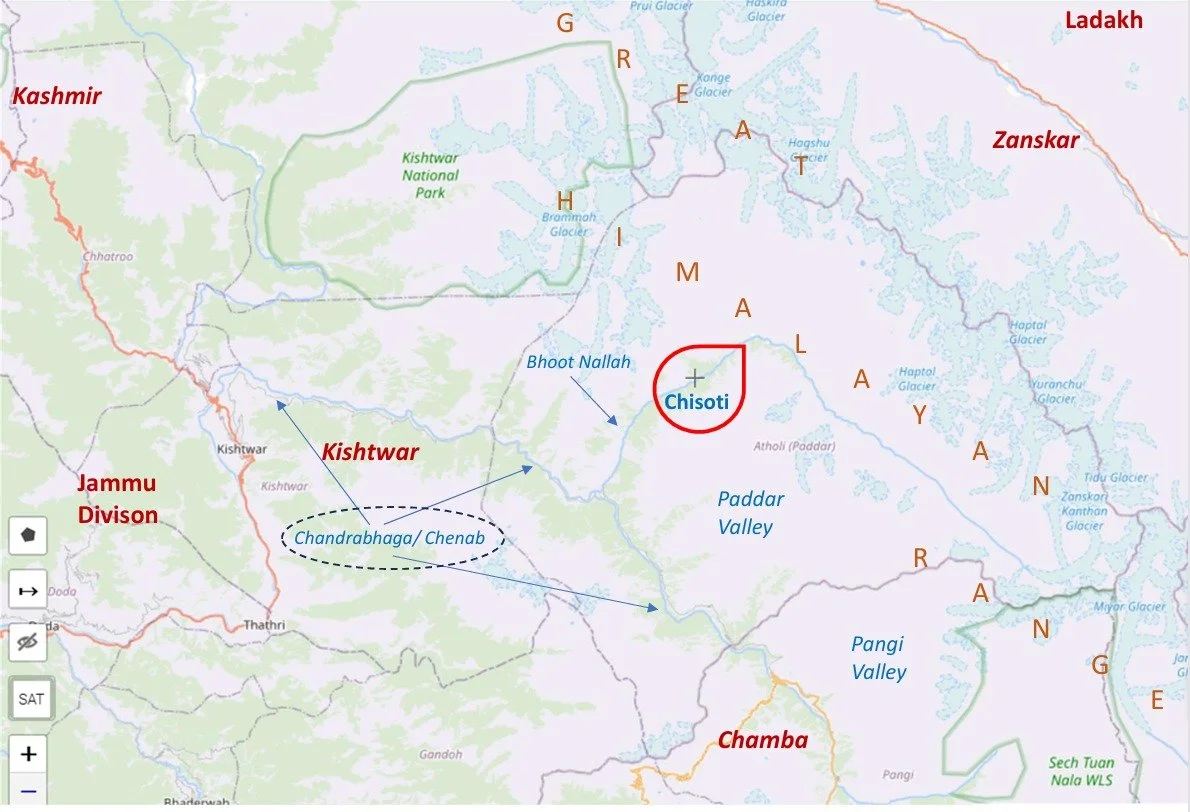



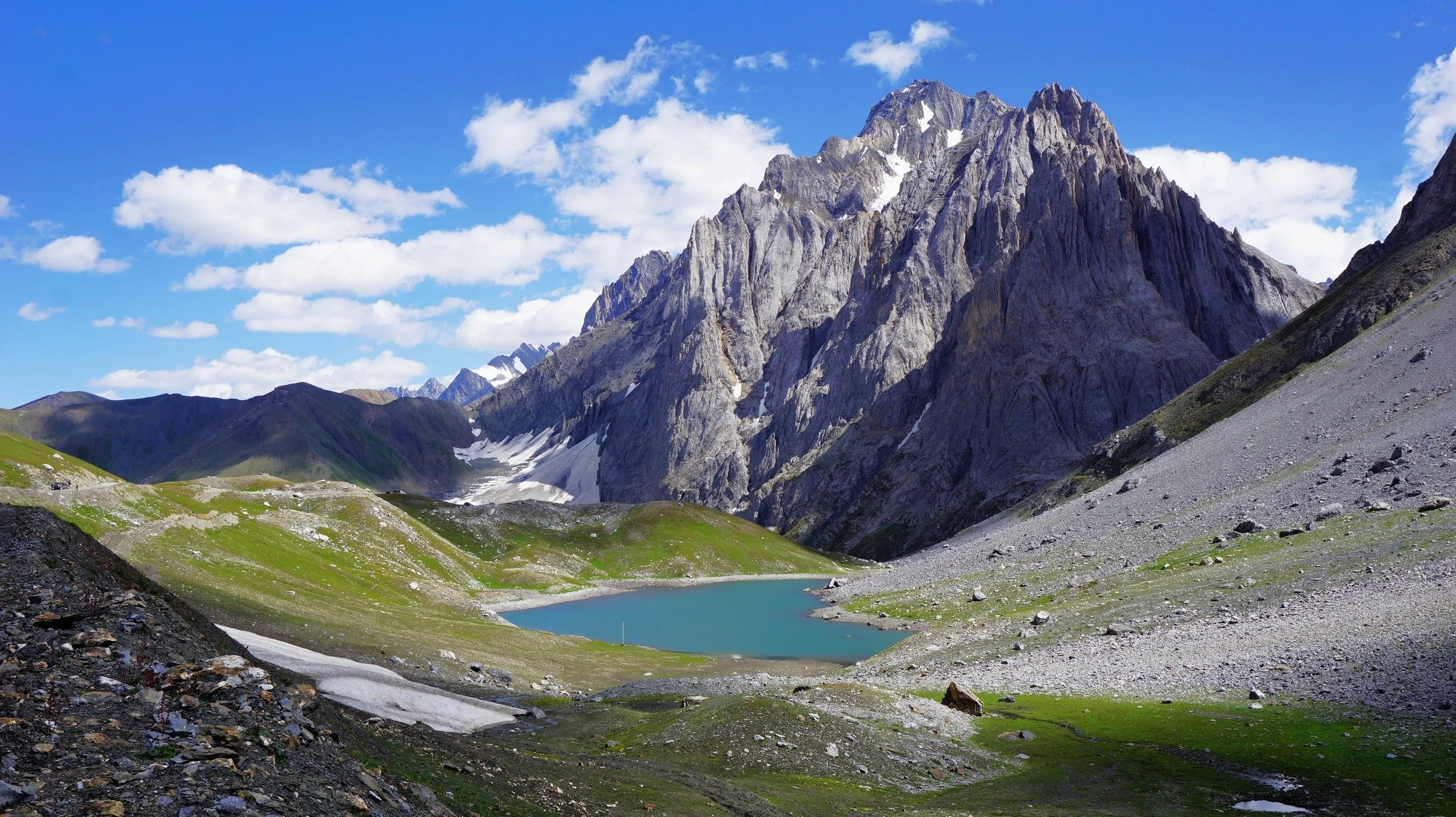
Five years ago the Galwan Valley was in the News for the wrong reasons after a deadly clash between the Indian and Chinese Armies in the Valley located in Ladakh lead to many deaths on the contentious Border between the two countries in wake of continued Chinese intrusions into Indian territory.
This area along the Shyok River, of which the Galwan Nallah or the Galwan River which forms the Galwan Valley has been off limits to Civilians since long but now the Indian Government has decided to open up the area for Civilians and we were amongst the First Civilians to venture into this beautifully desolate part of the Eastern Karakorams in Ladakh. Earlier Civilians could only venture upto the Village of Shyok from where the Shyok River takes a U turn and flows in a Northerly direction.