• Home Page
  • Ladakh Tours
    • The Karakoram Odyssey
    • Trans Himalayan Silk Route Trail
    • Ladakh Sojourn
  • Kashmir Tours
    • Kashmir With Gurez
    • Kashmir Gurez Keran Bangus
    • Kashmir Boutique Experience
    • Kashmir LOC Experience
  • Other Himalayan Tours
    • The Chenab Chandrabhaga Trail
    • Himachal Sojourn
  • Himalayan Motoring
    • LOC Unravel
    • Kashmir Snow Drive
    • The High Pass Challenge JK Edition
    • The High Pass Challenge Ladakh Edition
    • Along the Himalayan Rivers Drive
    • Zanskar Extreme
    • Customised Drives
  • Kishtwar- Bhaderwah
  • Lahaul Pangi
  • Zanskar
  • Kashmir Border
  • Karakorams
  • Gurez
  • Blog
  • About
  • Articles
    • Himalayan Geography Articles
    • Himalayan Vignettes
  • Menu

Travel The Himalayas -Kashmir 360

Curated Experiences in the Himalayas
  • Home Page
  • Ladakh Tours
    • The Karakoram Odyssey
    • Trans Himalayan Silk Route Trail
    • Ladakh Sojourn
  • Kashmir Tours
    • Kashmir With Gurez
    • Kashmir Gurez Keran Bangus
    • Kashmir Boutique Experience
    • Kashmir LOC Experience
  • Other Himalayan Tours
    • The Chenab Chandrabhaga Trail
    • Himachal Sojourn
  • Himalayan Motoring
    • LOC Unravel
    • Kashmir Snow Drive
    • The High Pass Challenge JK Edition
    • The High Pass Challenge Ladakh Edition
    • Along the Himalayan Rivers Drive
    • Zanskar Extreme
    • Customised Drives
  • Kishtwar- Bhaderwah
  • Lahaul Pangi
  • Zanskar
  • Kashmir Border
  • Karakorams
  • Gurez
  • Blog
  • About
  • Articles
    • Himalayan Geography Articles
    • Himalayan Vignettes
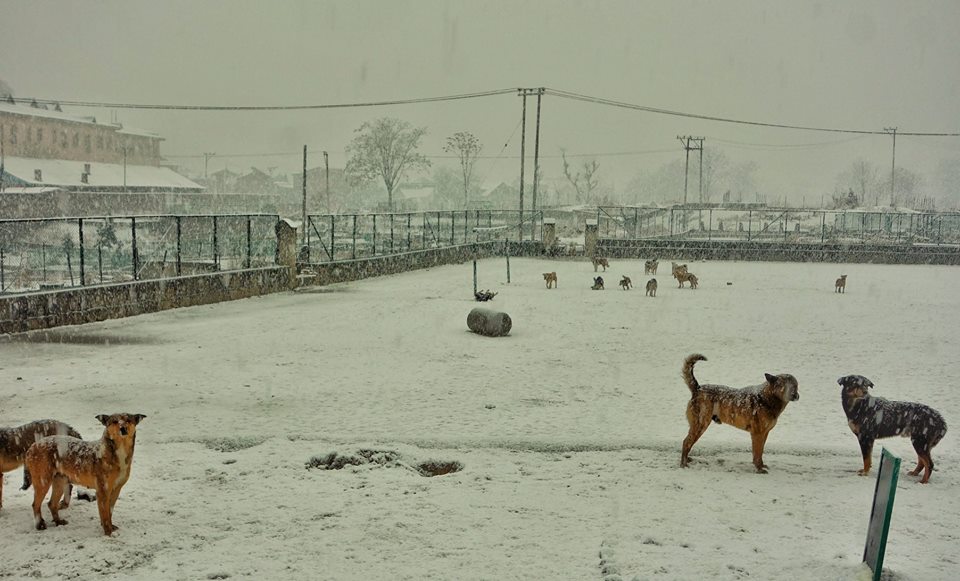
Dogs during a snowfall in Srinagar

Burzahom : Ancient Kashmir and its Dogs
April 01, 2018 in Himalayan History

Burzahom : Ancient Kashmir and its Dogs

Burzahom : Ancient Kashmir and its Dogs

The most Ancient remains of human settlement discovered in Kashmir are at a place called Burzahom near Srinagar. It is a settlement from the Neolithic Period and transits to the ancient period ranging from 8000 BC to around 1000 BC. It was discovered in 1935 and the excavations were done over a period of time and the excavations have been in three stages, NP III corresponding to the later period, NP II to the middle period and NP I to the earliest period. The Site is currently on Unesco World Heritage Watch List and it might get the status of a World Heritage Site in the future maybe.

The Burzahom Site

The Burzahom Site

As per the UNESCO "The Neolithic Site of Burzahom in the district of Srinagar, India brings to light transitions in human habitation patterns from Neolithic Period to Megalithic period to the early Historic. From transition in architecture to development in tool-making techniques to introduction and diffusion of lentil in North-Western India, the site of Burzahom is a unique comprehensive storyteller of life between 3000 BC to 1000 BC.

Archaeologist have excavated subterranean dwellings as well as burial pits at Burzahom. One of the most famous Work of art discovered at the site is a scene painted on a stone which shows the Burzahomese on a hunt. There are two hunters and a Deer and along with them is their best friend, yes you guessed it right, a Dog. And also interestingly the scene depicts two suns. As per the scientists the this is the first instance of a supernova being recorded in ancient times. Which of course makes this indeed a very interesting find.

The Hunting Scene drawing with 2 Suns

The Hunting Scene drawing with 2 Suns

Dogs it seems held a special status in the Burzahom culture. Dogs, Wolves and Ibex seemed to hold a special significance as burial pits containing their skeletons have been found. More interestingly a couple of burial pits have been discovered where the Dog is buried right next to the master within the compounds of the dwelling units. There is even an instance of Dogs buried in two layers one above another. Unlike in NP I where no burial remains have been found, in NP II culture many such burial pits have been found. This points out to the growth of a belief system and a transition to the ancient age from the Neolithic period.

Interestingly this Dog burial culture is similar to the Shilka culture, for whom the Dog was almost a cult animal, around the Shilka River which is a tributary to the Amur River in Siberia bordering Mongolia as well as other such cultures of the Gilyaks, Ulchis and Goldis where till recent history Dogs were sacrificed and buried with their owners. Probably to serve them in the their afterlife as well. It surely sounds cruel in today's time and age and actually it is but in that time and age it made sense to those people to send a dead man's best friend along with him to the next world. where animals were sacrificed as well and buried along with the person.

A Dog burial pit

A Dog burial pit

The pottery found at the site seemingly has a great similarity to similar remains found in the Swat Valley in Pakistan. And as mentioned earlier the burials practices and the type of tools found have been inferred as having close resemblance to those found in North Chinese Neolithic cultures which borders Siberia as well as Mongolia.

This practice is not seen anywhere in India. This again points out to the fact that Kashmir was the place where Central Asia met the Indian subcontinent. UNESCO also states that ' The results of excavations have provided dynamics of interchange of ideas between Central Asian and Southwest Asia through the Valley of Kashmir which acted as a bridge between higher Himalayas and beyond on one hand, and the Gangetic Plains and Peninsular India on the other hand during the third millenium BC. The interaction of local and foreign influences are demonstrated by the art, architecture, customs and rituals as also possibly by the language as demonstrated by some graffiti marks on pottery and others"

Historian M K Kaw in his book "Kashmir and its People : Studies in the Evolution of Kashmiri Society" writes " It is also clear that the Dog had a special place for the Burzahomese right from the day he settled in the Valley. This is further substantiated with the finding of a burial in period NP II where the Dog is buried with the owner in the house floor, preferably the compound. He has depicted him in the engraving on the stone slab already stated earlier. The Dog guarded his herd and helped him in pursuing the hunt on which his sustenance depended "

As of today the Dog is thriving. Thriving too much according to some people. And Srinagar is full of feral Dogs. Of all the cities I have been to I have never seen such a great number of Dogs in any other city. Another fact that I think is responsible is that people in Kashmir consume a great deal of meat. And of course a lot of this gets wasted and consumed by these Dogs and hence due to the availability of meat they thrive. Some people also put the blame on the political situation but I would rather not go there.

But of course that doesn't change facts about the importance of the Dog in the Burzahom Culture. And the fact that we have been friends for a very long time.

I am using 4 pics to highlight the Story as it is an important one which needs to be told and people made aware ( If you think you have a story which needs to be told with multiple pics please contact the Admins.)

Main pic from February 2018. Srinagar, Kashmir

Some of the pics are from the Internet and are being used only for Educational purposes. In case you hold a copyright to a pic and want it removed please let me know and I will take the pic down.

Tags: burzahom, neolithic, Kashmir, history
Prev / Next

Kiki’s Blog

Stories from the Himalayas


Featured Posts

Featured
Kashmir_Region_November_2019.jpg
July 8, 2026
The Three Kashmirs
July 8, 2026
Read more →
July 8, 2026
chisotikkk.jpg
August 16, 2025
Chisoti : The Anatomy of a Disaster 
August 16, 2025
Read more →
August 16, 2025
A Journey to Galwan Valley
June 18, 2025
A Journey to Galwan Valley
June 18, 2025

Five years ago the Galwan Valley was in the News for the wrong reasons after a deadly clash between the Indian and Chinese Armies in the Valley located in Ladakh lead to many deaths on the contentious Border between the two countries in wake of continued Chinese intrusions into Indian territory. 


This area along the Shyok River, of which the Galwan Nallah or the Galwan River which forms the Galwan Valley has been off limits to Civilians since long but now the Indian Government has decided to open up the area for Civilians and we were amongst the First Civilians to venture into this beautifully desolate part of the Eastern Karakorams in Ladakh. Earlier Civilians could only venture upto the Village of Shyok from where the Shyok River takes a U turn and flows in a Northerly direction.

Read more →
June 18, 2025
January 29, 2025
Galwan Valley opened for Tourists
January 29, 2025
Read more →
January 29, 2025
Slide2.JPG
December 29, 2024
Ten Offbeat Locations in Kashmir
December 29, 2024
Read more →
December 29, 2024
18814512_10210684155593724_8491219869639660581_o.jpg
July 26, 2024
The Nanga Parbat from the Kashmir Valley
July 26, 2024
Read more →
July 26, 2024
A Culinary Holiday in Kashmir by Marryam Reshii
May 25, 2024
A Culinary Holiday in Kashmir by Marryam Reshii
May 25, 2024

A holiday in Kashmir involves much travelling around by car from Srinagar (not only the capital but the base of most visitors), a shikara ride, walking around markets and the Old City – a heritage site in its own right. That’s all very well, but it is convenient to know where you can grab a bite, preferably in the area where you are seeing the sights.

Read more →
May 25, 2024
Keran : Where a River Runs Through
December 17, 2023
Keran : Where a River Runs Through
December 17, 2023

A Photo Gallery of Keran along the Line of Control in Jammu and Kashmir

Read more →
December 17, 2023
Ten Offbeat Things to Do in Ladakh
October 19, 2023
Ten Offbeat Things to Do in Ladakh
October 19, 2023

Most People while visiting Ladakh just visit the same old Places, popular Tourist places and ones popularized by Bollywood and Influencers on Social Media. As a result a few Places bear the brunt of the Tourist footfalls which has serious Environmental and Social Impact.

I have always subscribed to the Philosophy that instead of sending 100 people to 5 places send 20 people to 25 places. Ecologically viable Tourism starts by spreading the load of the Tourists. And here is a list of Ten Things that I would recommend to do in Ladakh. And please remember that Ladakh is a large Region and most of it is rather unknown for most people. Ive added a Note on the Mountain Geography of Ladakh for easier understanding. You can also read my Ladakh Travel Guide for General Information.

So I have compiled a list of Ten Things that I would do in Ladakh, keeping in view all my Visits and Readings on Ladakh. They are in no particular order and each One is a Unique experience in its own.

Read more →
October 19, 2023
The Elusive Kaobal Gali
September 4, 2023
The Elusive Kaobal Gali
September 4, 2023

The Kaobal Gali stands at an Elevation of 4167 metres (app 13600 ft) on the main Great Himalayan Range has traditionally connected the Tulail and Gurez Valleys with the Mushkoh Valley in the Drass Region. Interestingly people on both sides of the Pass are Shina and speak Shina language just like their fellow Dardic Shina people in Gilgit. This is a peculiarity as usually when you cross a Pass on the Great Himalayan Range the Culture Language and People change. 

Read more →
September 4, 2023