
Around the Hari Parbat Hill
The Fort of Hari Parbat or the Koh-E-Miraan dominates the skyline of old Srinagar. The Fort was built by the Afghan Durranis who ruled the region at one point of time and has stood witness to the vagaries of time in Kashmir. Many places of historical / religious lay dotted around the Hill.

The Hari Parbat Fort as seen from the Badamwari below
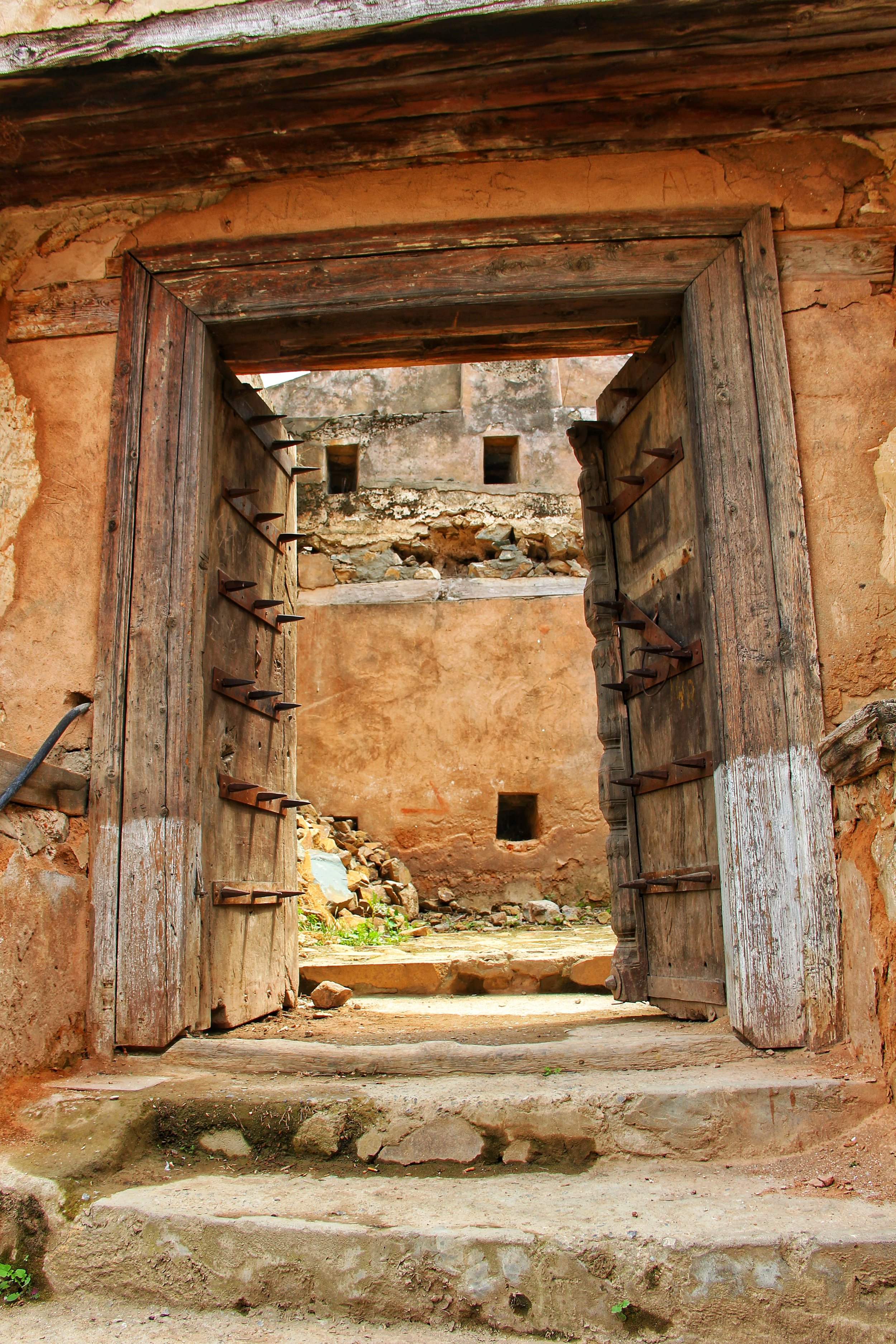
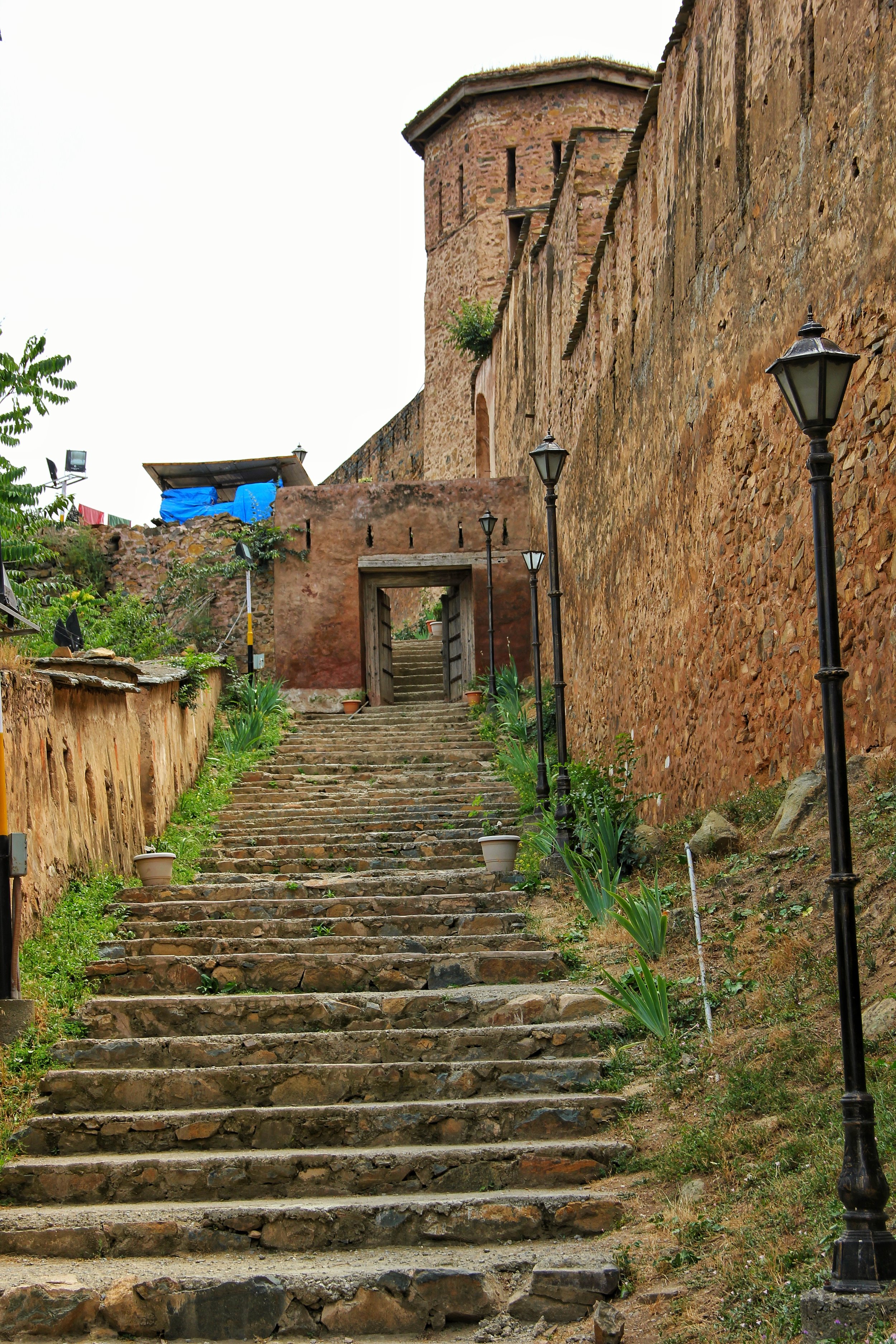
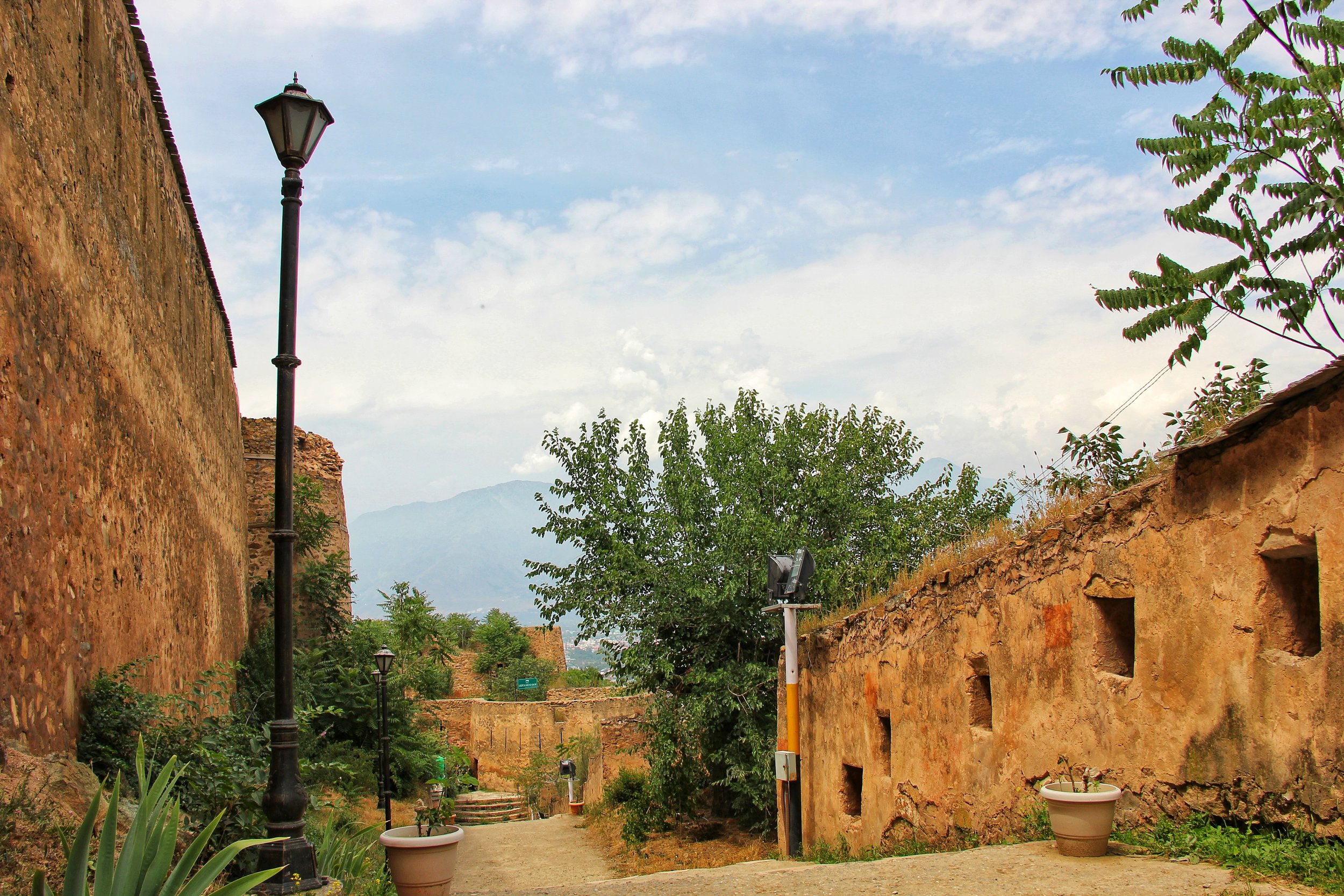
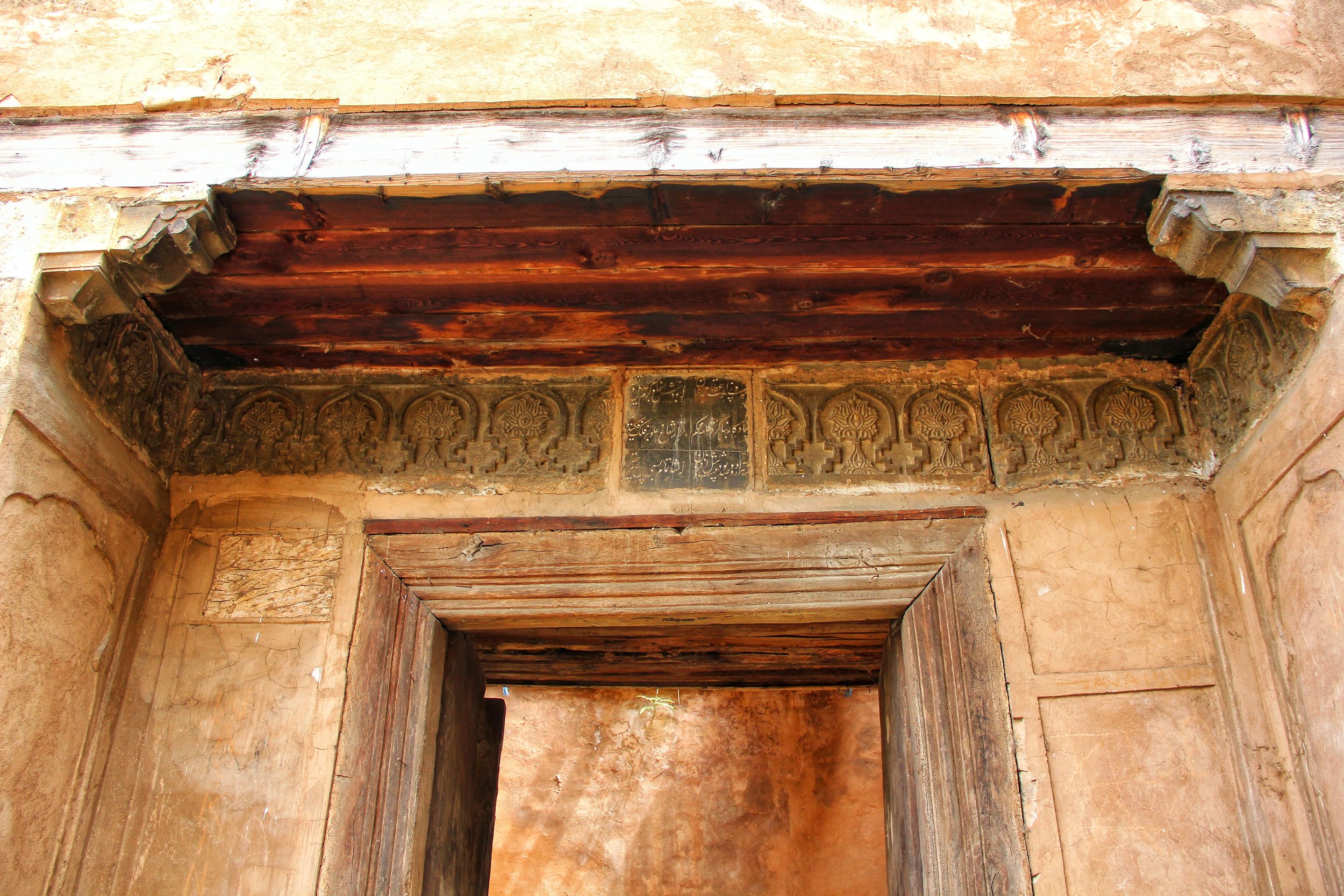
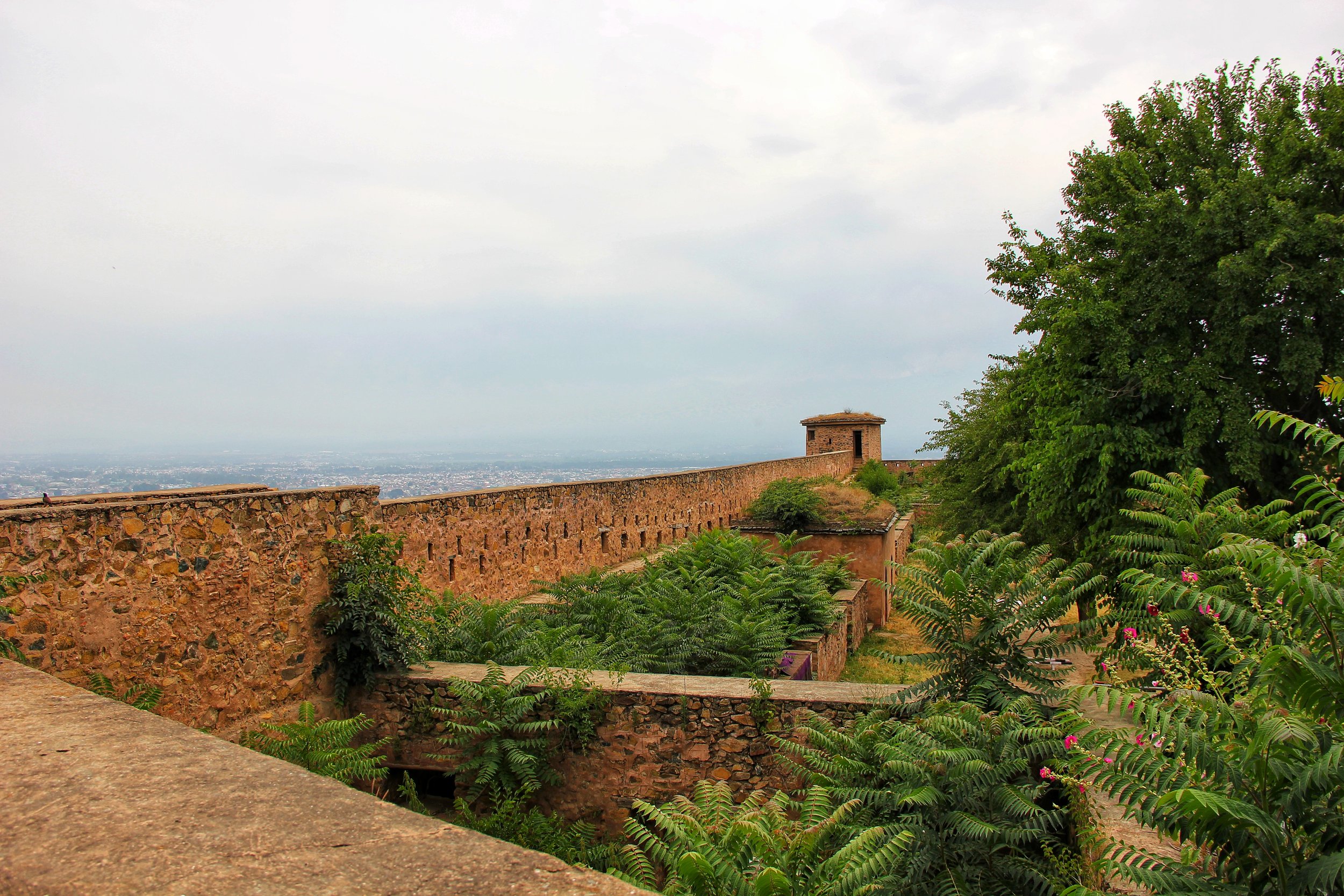
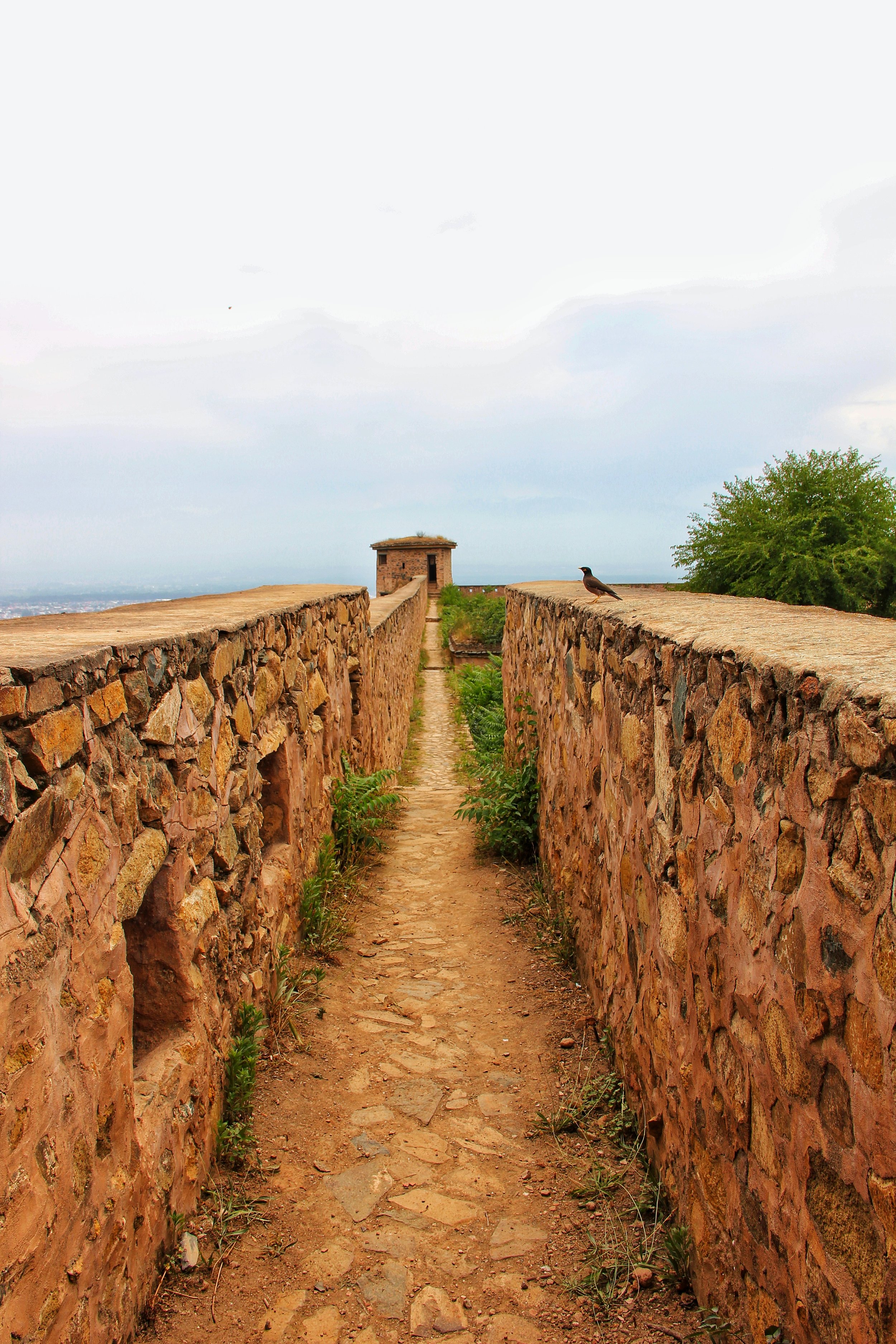
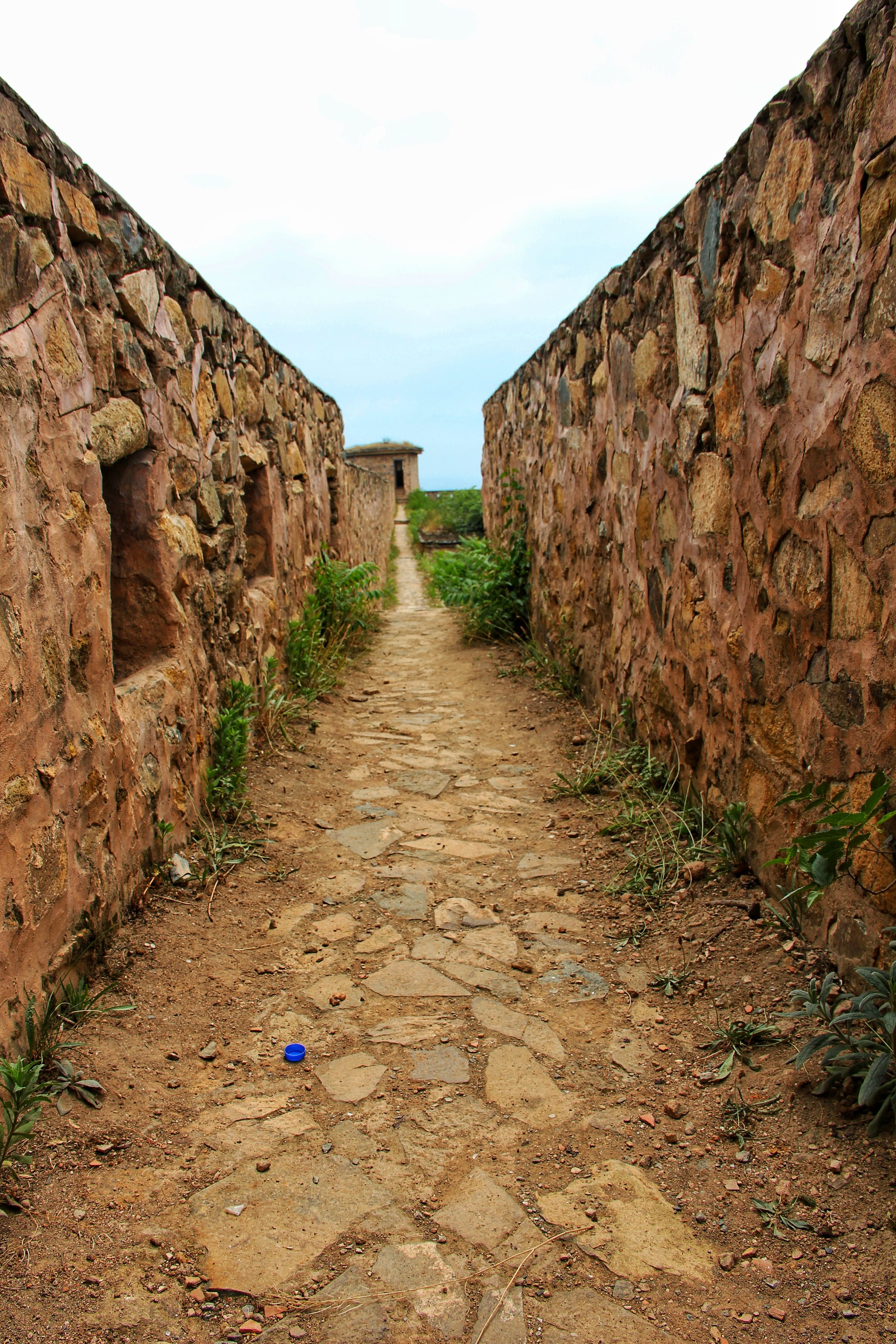
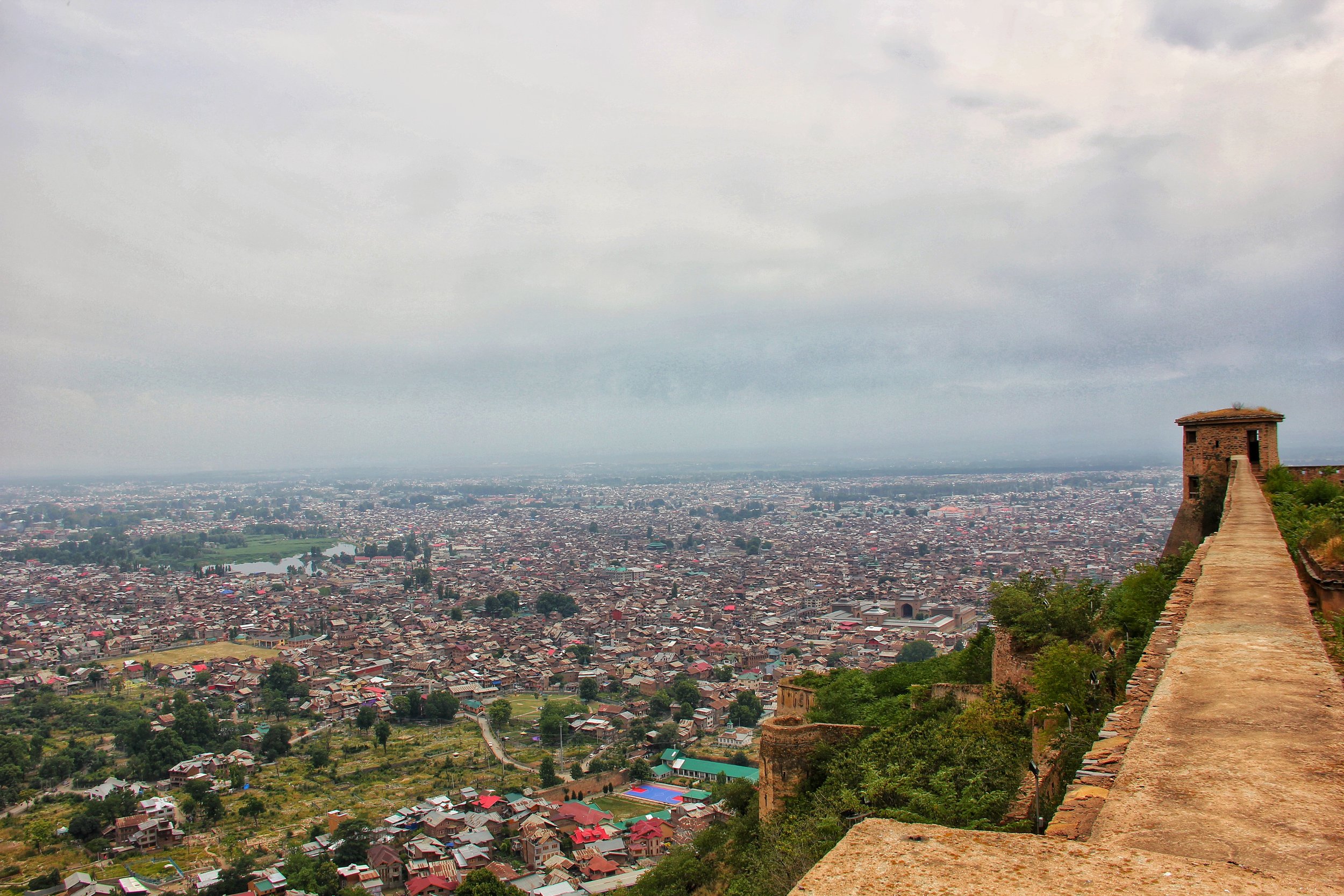
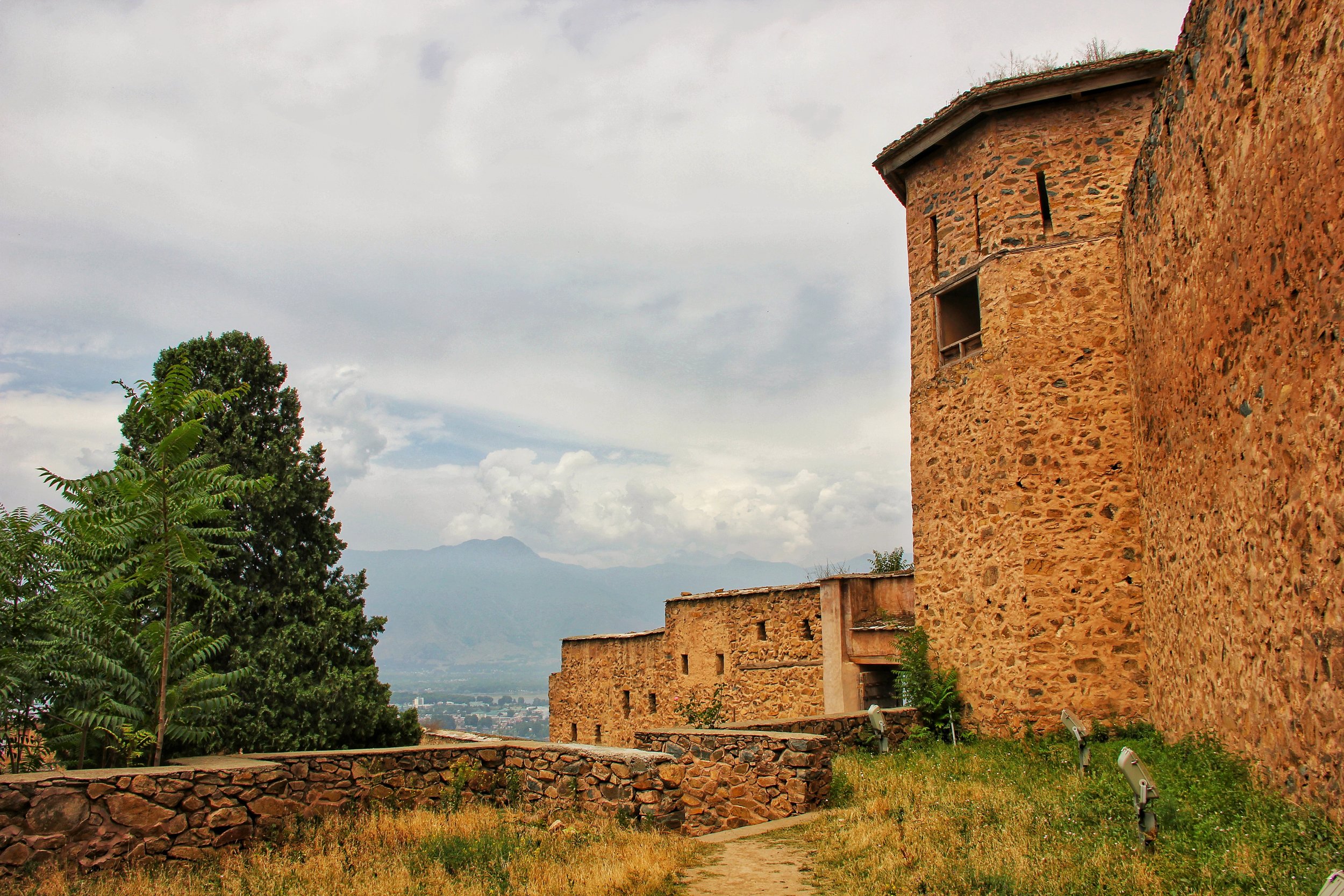
The imposing Hari Parbat Fort. The present Fort was built by the Durrani Afghans in 1808 though originally the fortifications around the hill were built during the reign of Akbar who wanted to make a new capital here. I did some explorations around the Fort two weeks back and found some interesting things around. The original Fortification wall built by the Mughals still exist in parts around the lower parts of the Hill.
The most fascinating fact was that there was a tunnel from the Fort which led one to the shores of the Pokhribal Lake, an extension of the Nigeen Lake, right from the top of the Fort. The Tunnel entrance is still there at the Pokhribal Lake. Also a ventilation hole around 10 ft is still preserved in the Badamwari Garden. The Tunnel is now blocked so the secret passage way cannot be explored further. The Hill also holds the Shrine of Makhdoom Sahib such encompasses various historical structures of the Mughal Era, as well as the Sharika Devi Temple and the Chatti Padshahi Gurudwara.
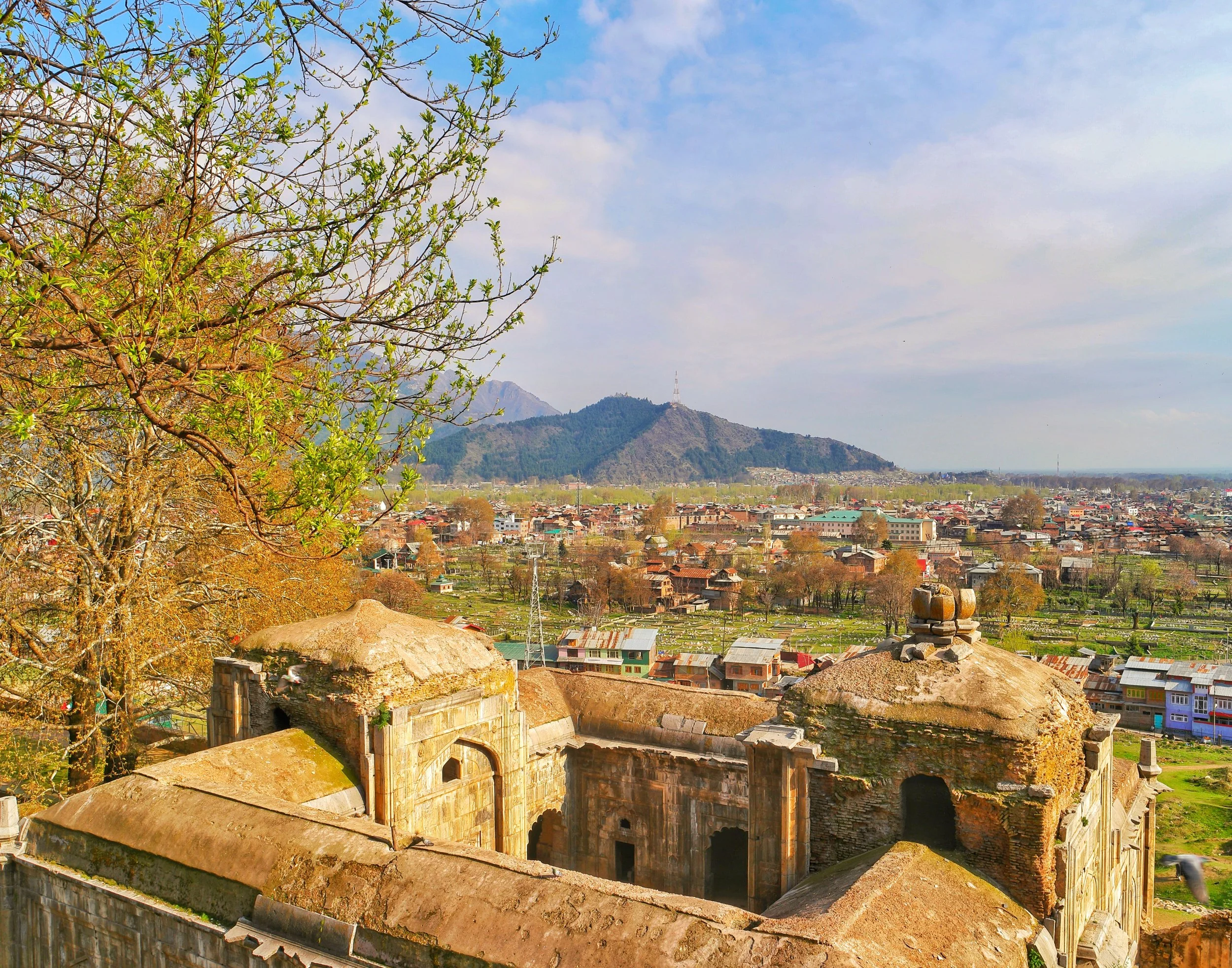
The Akhun Mullah Mosque on the Hari Parbat
An alternate view of Srinagar old Town. As seen from above the Mosque of Akhun Mullah Shah near Makhdoom Sahib a little way up from the Kathi Darawaza. This little Mosque was erected by Dara Shikoh in attractive grey limestone to honor his tutor Akhun Mullah Shah. The Mosque was built in 1649 AD and it has a stone lotus over it's pulpit, the only one of its kind in Kashmir. Another little architectural gem of Kashmir. In the background is visible the Shankaracharya Hill with the Shankaracharya Temple, another gem that was made in the 7th century AD.

Massive Chinars overlooking the Srinagar city in the compound of the Akhun Mulla Mosque

The Chatti Padshahi Gurudwara as seen from the Hari Parbat
The Chatti Padshahi Gurudwara, one of the most revered Gurudwaras in the state of Jammu and Kashmir, in Srinagar as seen from the Akhun Mullah Shah Mosque. This Gurudwara is situated in the Rainawari locality near the Kathi Darawaza on the foot of the Hari Parbat. It is associated with the Sixth Guru who is supposed to have roamed around in the Valley spreading the message of Guru Nanak Dev ji.

Pokhribal Lake a part of the Nigeen Lake and the Lepers Colony behind it

The Boat Club at Pokhribal Lake at Srinagar
This pic was taken from the top of the now in ruins outerwall of the Hari Parbat Fort. The water body that you see here is called Pokhribal and it's an extension of the Nigeen Lake. Underneath the massive Chinars is a Shamshan Ghat run by the Ahle Singham, a local Sikh Group. The shed is where they cremate the bodies.
The White building is the Boat Club though there surely wasn't much boating happening and the place looked derelict. Just a few guys using the pier for trying to catch a fish on their improvised fishing rods. The White structure across the Lake is a water treatment plant or something on those lines.
Behind the plant there are old buildings and a big old Hospital. This is Kashmir's Leper Colony. This isolated spot was where all the Lepers in the state were kept. Due to ignorance Lepers were shunned and were forced to live in isolation over here. In time they married amongst themselves and had families. Now three generations of the Lepers families live here. The Lepers are still provided daily / monthly rations. Generally people tend to stay away from this place.
Next time will surely visit the Leper Colony. It's a place time and people forgot. And of course the pic has the Zabarwan, the Lakes, the Chinars and all other things usually associated with Kashmir.

A Family home and its field by the banks of the Pokhribal Lake. On the right you can see the Tunnel which linked the Lake to the Fort on the top of the Hill

An massive old Chinar by the Pokhribal Lake with an ancient structure. Next to the Chinar is a crematorium used by the Sikh families living in this area.

A view of the Nigeen Lake in the foreground and the Dal Lake in the background with the Zabarwan Mountains in the background.

The Jamia Masjid in downtown Srinagar as seen from the Hari Parbat
The Jamia Masjid in the Nowhatta area of Srinagar surrounded by the old part of Srinagar. This beautiful Mosque is one of the largest Mosques in Kashmir and has a capacity of well over 30,000. It was built in 1394 AD by a Sultan of the Shah Miri Dynasty. It is a beautiful piece of Architecture indeed though few outsiders visit this place. This was clicked from the Mosque of Akhun Mullah Shah above the Kathi Darwaza both of which are ASI designated monuments and again are beautiful examples of Islamic Architecture.

The Pir Panjals in the background of Srinagar city as seen from the Akhun Mullah Mosque
The Hari Parbat Fort, Srinagar, Kashmir
The Hari Parbat is the only surviving Fort in the Kashmir region of the state of Jammu and Kashmir. It stands over a hill also known as the Koh-I-Maraan and originally was the site of a Fort built by Emperor Akbar. He had also built a large fortification Wall at the base of the Hill parts of which survive till today.
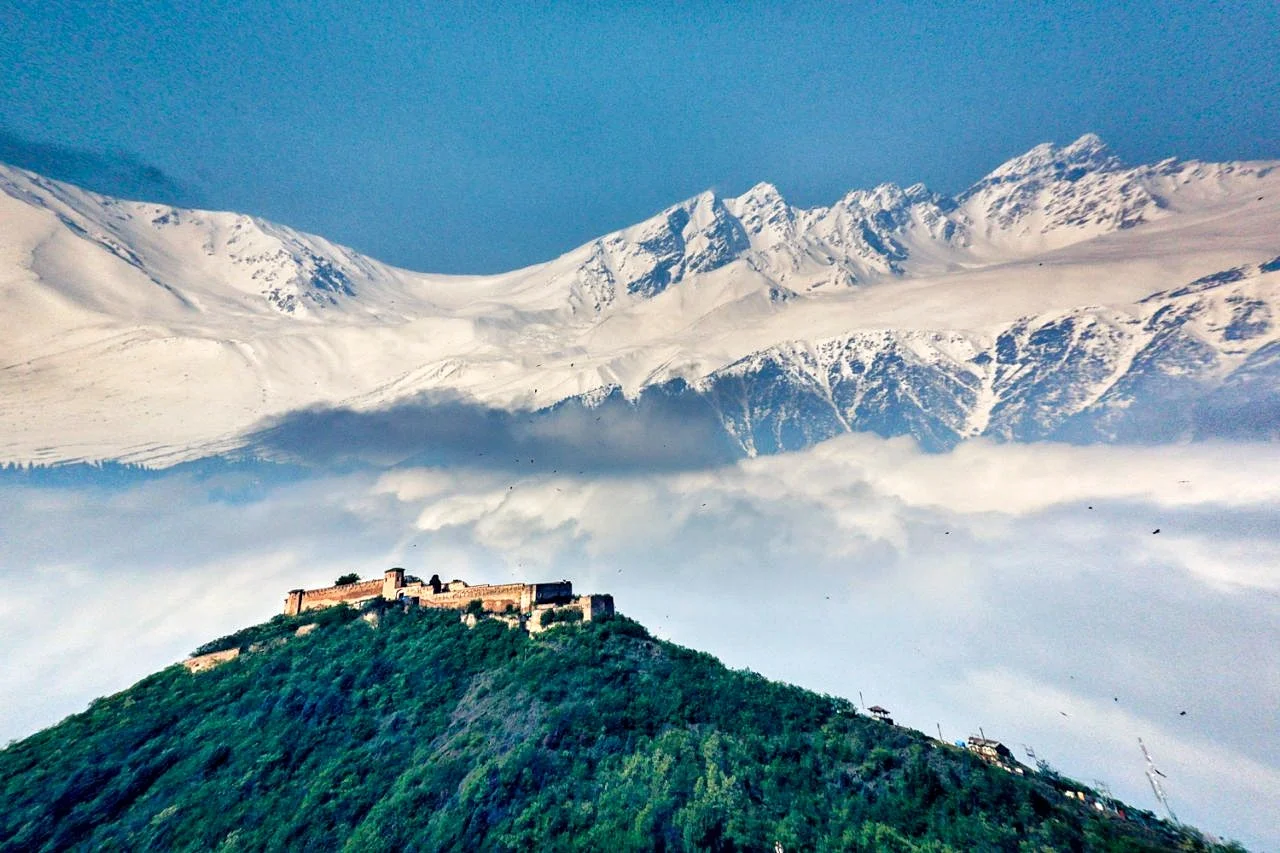
The Hari Parbat Fort
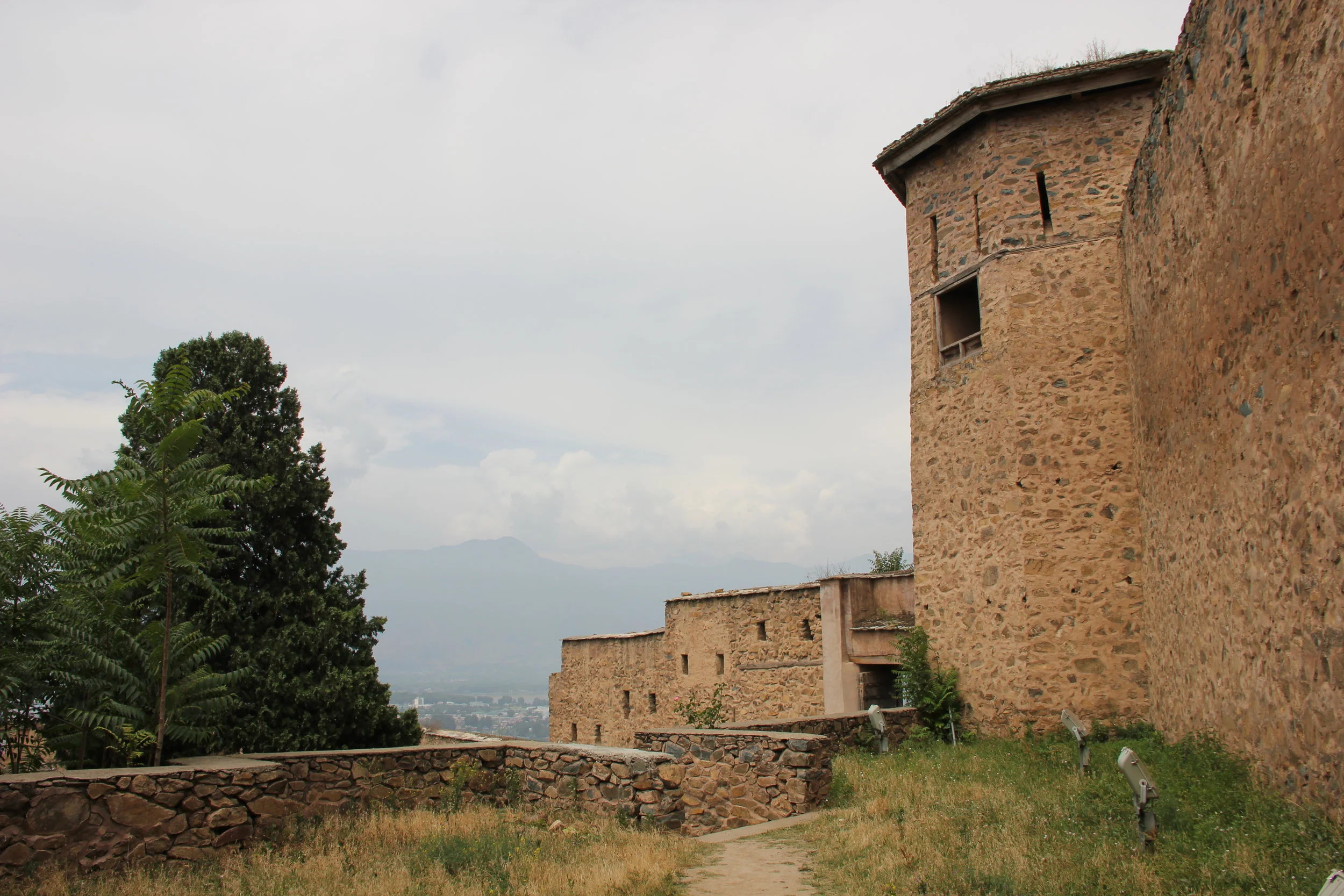
Standing next to the massive Fort walls
The Hari Parbat is the only surviving Fort in the Kashmir region of the state of Jammu and Kashmir. It stands over a hill also known as the Koh-I-Maraan and originally was the site of a Fort built by Emperor Akbar. He had also built a large fortification Wall at the base of the Hill parts of which survive till today.
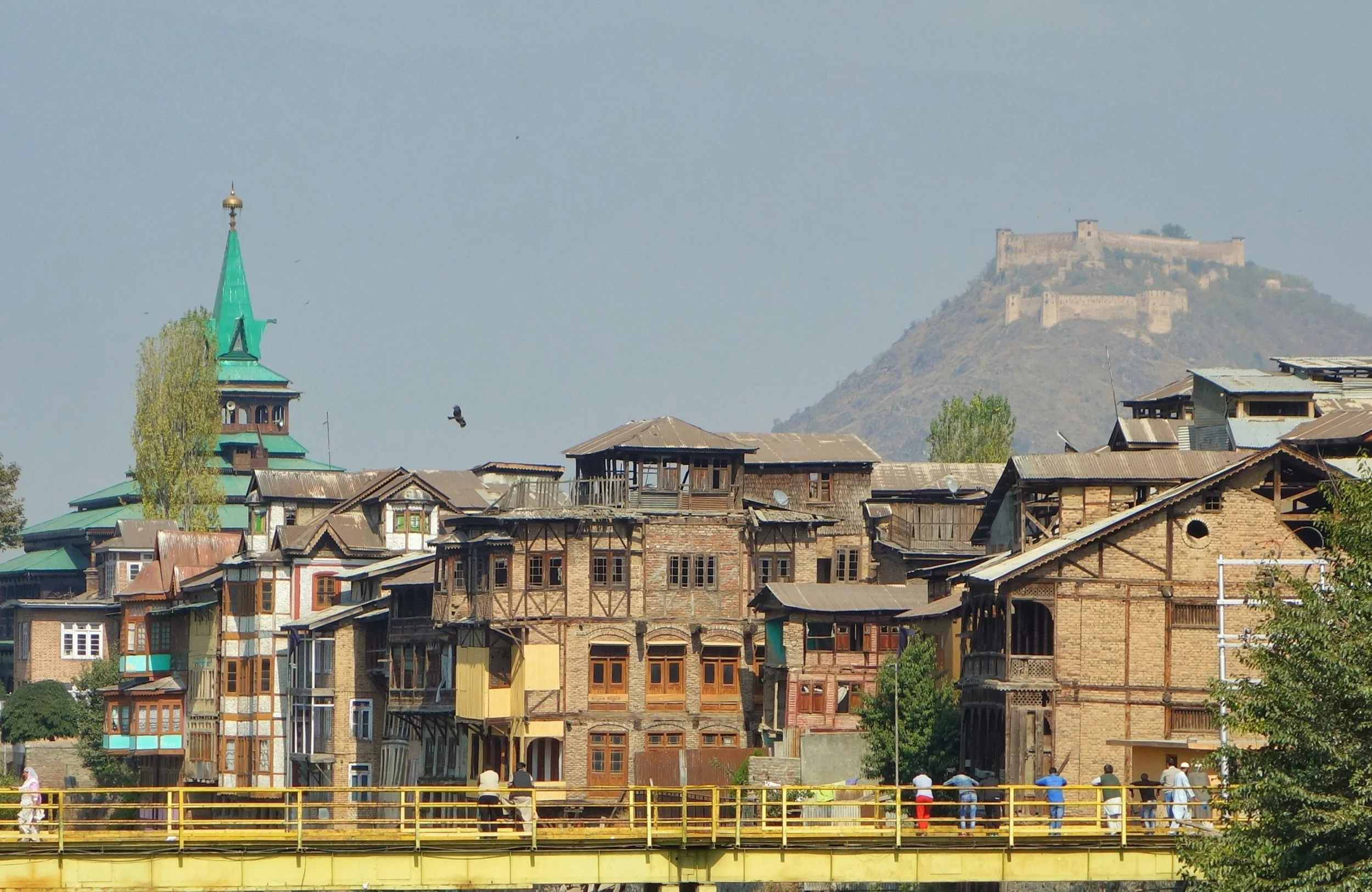
The Hari Parbat Fort as it looms above the Old City of Srinagar
The present structure was built by the Afghans when Kashmir was a part of the Afghan Durrani Empire under Shah Shuja Durrani. Ironically Shah Shuja Durrani was himself held prisoner in the Fort by the Governor of Kashmir, Atta Muhammed Khan. Atta Muhammed Khan had declared himself pretty much independent after his father was murdered in Kabul by supporters of a certain claimant to the Throne. As it so happened in 1808, the Afghan King Shah Shuja was ousted by the same individual, Muhammed Shah and his minister Fateh Khan. Atta Muhammed Khan invited Shah Shuja to come to Kashmir from where he could still go on ruling as the King of Afghanistan. Shah Shuja took the offer and landed up in Srinagar only to find himself Atta Muhammed Khan's prisoner at the Hari Parbat Fort.
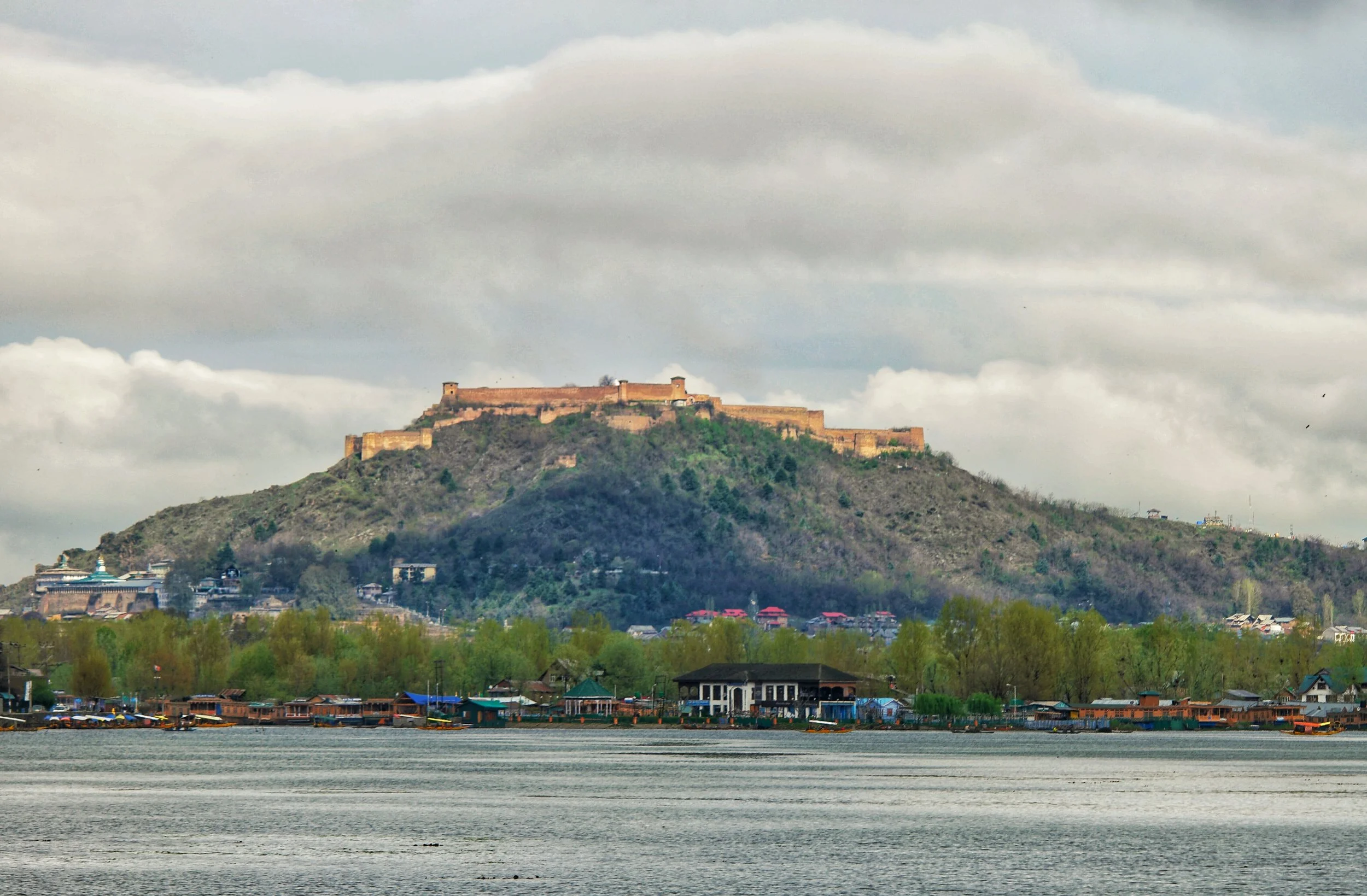
The Fort from the Dal Lake side.
However a force of Durrani Afghans in alliance with the Sikhs of Maharaja Ranjit Singh landed in Kashmir soon after and the Sikhs got Shah Shuja Durrani free from his prison inside the Hari Parbat Fort. As per Sikh history sources the ultimate prize promised to Maharaja Ranjit Singh for getting Shah Shuja Durrani freed from the Hari Parbat Fort was the Koh-I-Noor Diamond. Having done his part of the deal and having delivered Shah Shuja Durrani safely to his wife in Lahore the Maharaja of Punjab soon got the possession of the fabled diamond. Maharaja Ranjit Singh who being a Cavalry man had great love for Horses and had the Kohinoor mounted as a head piece on his favorite Horse which he used to ride.

Inside the Fort
The Sikh flag of Maharaja Ranjit Singh finally flew over the Hari Parbat Fort when the Sikhs under the able leadership of General Hari Singh Nalwa finally defeated the Afghans in 1820. After a brief period of Sikh rule Kashmir and the Fort changed hands and landed in the hands of the Dogras led by Raja Gulab Singh after the Sikh loss in the First Anglo Sikh War of 1846. The Dogra Rule lasted for just a fraction over 100 years and in 1947 it became a part of India and since then the Fort has been occupied by the Security Forces.

The Fort from Pari Mahal
The Fort still stands as proud as ever on ite vantage point overlooking the Srinagar city. The Fort Hillside holds some important places of worship for varied religious inclinations. There is the Shrine of Makhdoom Sahib, a saint held in great reverence by the Kashmiri Muslims. There is the Sharika Devi Mandir who is worshipped as an incarnation of Shakti. On the day celebrated as Sharika's birthday, devotees make a sacrificial offering of taher-charvan to the goddess (taher - rice boiled with turmeric powder and mixed with oil and salt; charvan – cooked goat liver). Then there is the Chatti Padshahi Gurudwara where the Sixth Guru, Guru Hargobind had supposedly preached and stayed for a few days during a visit to Kashmir. This Gurudwara is considered the holiest Sikh shrine in Kashmir.

The Hazratbal Shrine with the Hari Parbat Fort in the Background.
For me the Hari Parbat stands as a sentinel which silently watches over the myriads of events which have happened in this thence troubled land. And it keeps watching. With the mighty Pir Panjals in the background.
It looks beautiful when its lit up in the evening but this capture by Ramesh Tahlan Sir captures the essence of this mighty Fort, the only Fort in the Valley of Kashmir which still stands strong having withstood the vagaries of time.
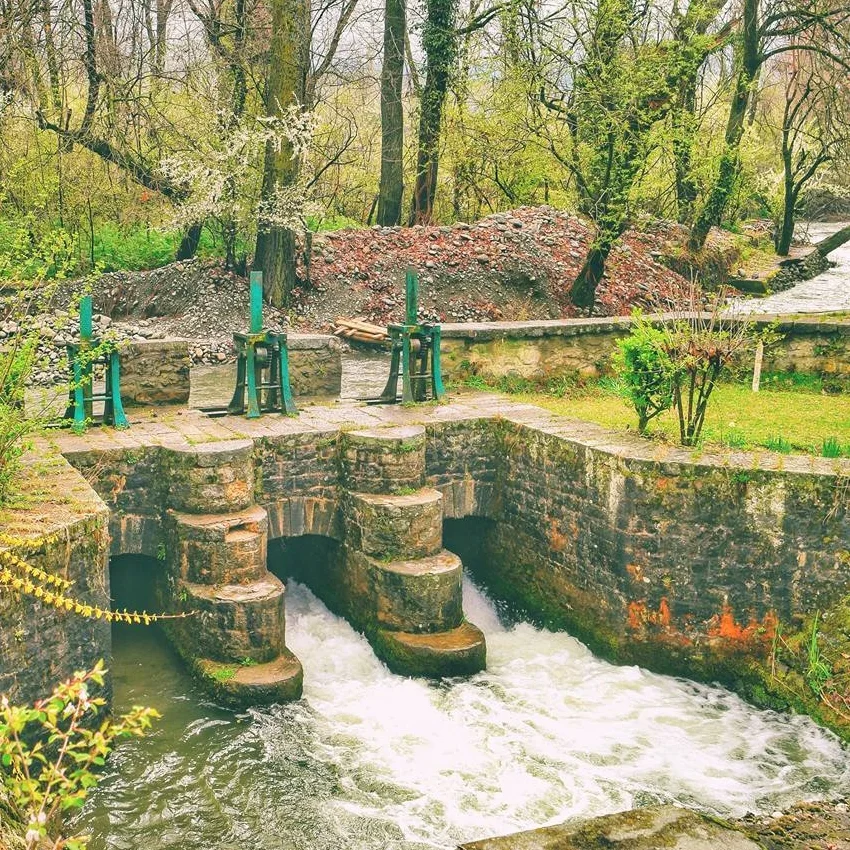
The Dagwan Nallah, Dachigam National Park
The Dagwan Nallah is a stream that flows through the Dachigam National Park. At the edge of the Park this little piece of engineering diverts some of the water from the Dagwan Nallah / River into the Sarband Lake, that traditionally was used to supply drinking water to Srinagar city. This system was set up way back in 1906. And for many years the water was just supplied raw so pristine was the water.

The Dagwan Nallah, Dachigam National Park
Every pic has a story and it's upto us how we tell it.
This little piece of engineering diverts some of the water from the Dagwan Nallah / River into the Sarband Lake, that traditionally was used to supply drinking water to Srinagar city. This system was set up way back in 1906. And for many years the water was just supplied raw so pristine was the water.

The Dagwan nallah as it winds through the Park
The Dagwan Nallah originates from the high altitude Marsar Lake which relies on the snow melt of the Peaks of the Kolahoi group at the base of which it lies. The Kolahoi itself the highest peak of the Valley.
The Marsar Lake itself lies in the Upper part of the Dachigam National Park and the Dagwan flows down through it, in an area devoid of all human inhabitation, through the magical forests of Dachigam until it reaches this point from where a part of its water gets diverted to the Sarband.

Another pic of the Dagwan Nallah
The Dagwan itself finally gets amalgamated into the Jehlum into the journey south.
Coming back to the pic and this piece of engineering thanks to which at one time the whole of Srinagar used to enjoy the purest natural water coming down right from the laps of the Himalayas from snow melts since of them above 5000 m and then further enriched by the primeval forest around it.

The Sarband Reservoir next to Harwan.
Thankfully even today most humans are kept away as you can only enter Dachigam after getting special permissions from the Regional Wildlife Warden.
Pic from April 2017. Dachigam National Park, Kashmir
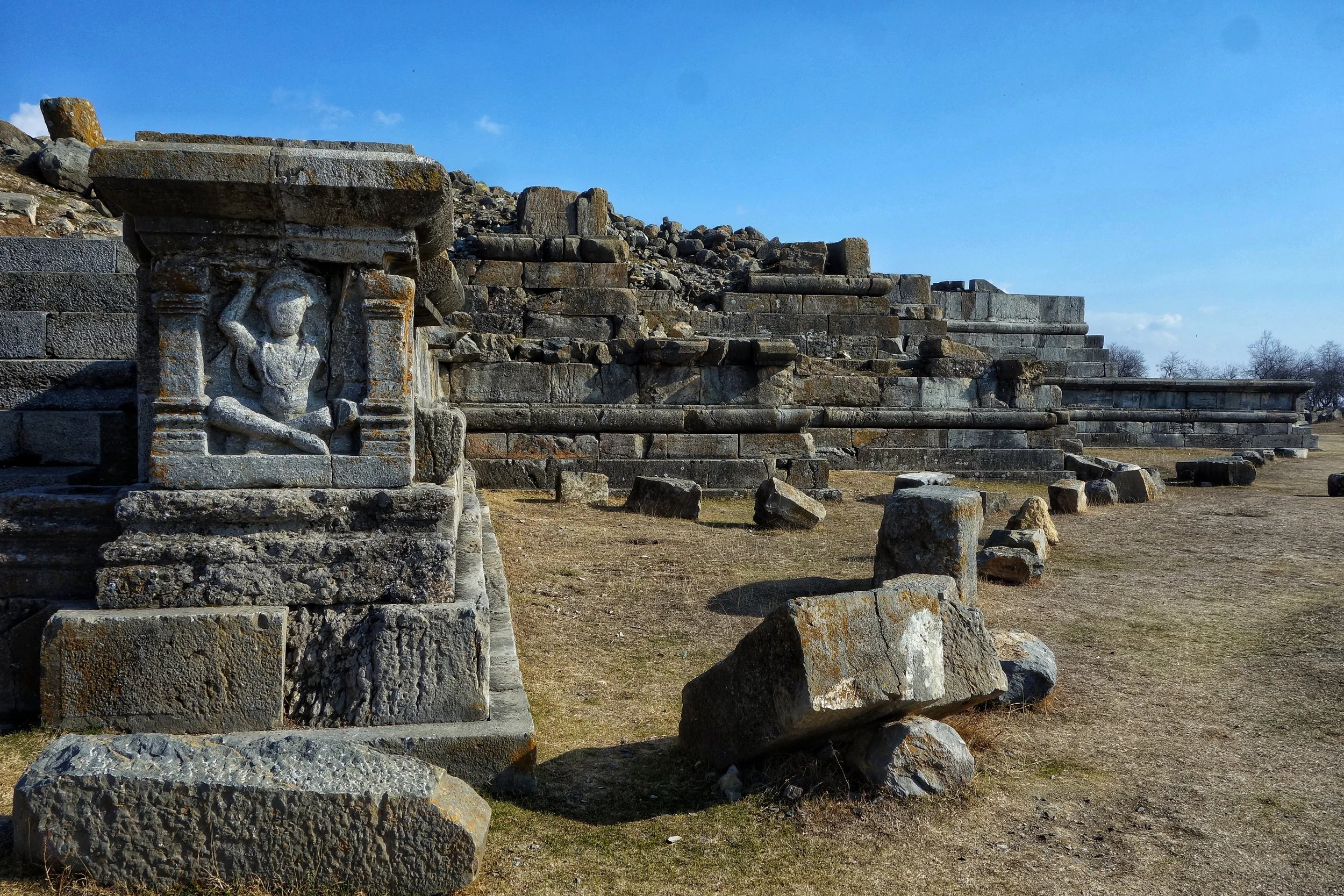
Parihaspora – The Ancient Capital of Kashmir
Just around 20kms from Srinagar lies the plateau of Parihaspora which was chosen as the site for a new Capital by one of the greatest Kings of Kashmir, Lalitaditya in the 8th century AD. The site situated on a Plateau is today in ruins but still a glorious memory of the time Kashmir was a powerful Kingdom.
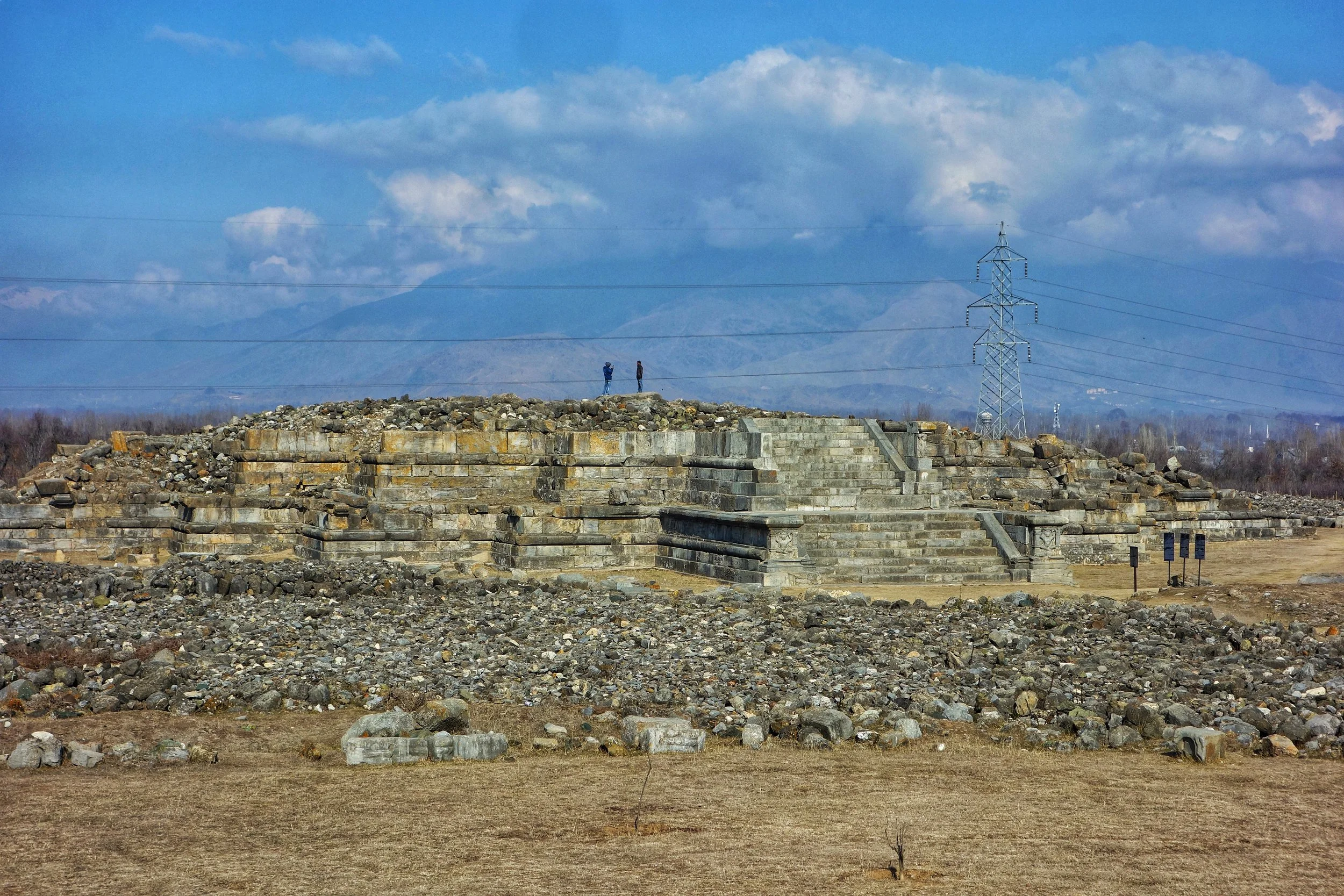
Parihaspora – The Ancient Capital of Kashmir
Just around 20kms from Srinagar lies the plateau of Parihaspora which was chosen as the site for a new Capital by one of the greatest Kings of Kashmir, Lalitaditya in the 8th century AD.
I decided to pay a visit the ruins which lay a few kms off the Srinagar Baramulla while I was going to Pattan and onwards later on to Uri.

Another Platform, Parihaspora
Lying next to a local Engineering College this mostly abandoned site is a sad reminder today of the glorious age of Lalitaditya. He moved the Capital here and built a Palace, Temples and a Buddhist Monastery over here. This was also the Golden Age of Buddhism in Kashmir but it existed in a syncretic alliance along with the Vedic beliefs. There was apparently a great statue of Vishnu made of Gold and an equally tall statue of the Buddha made in Copper. There are conflicting accounts as to what was the real purpose of these buildings but everyone agrees that Lalitaditya built them and they were simply magnificent.

Carvings on the stairs going up the Temple, Parihaspora
The ruins are spread over a large area and as of now only the bases of the great structures remain and these suggest that these must have been magnificent architectural specimens in their time. In fact the main structure here is quite bigger than the remains of the Great Sun Temple at Martand which is also attributed to Lalitaditya. The landscape is littered with stone blocks/ rocks of various sizes which at one time must have been a part of the great structures. Infact the locals nowadays refer to the place as “Kani Shahar” or the City of stones.
The place lost its glory when Lalitaditya’s son decided to move the Capital again and apparently the Jehlum changed its course due to some human intervention and with no direct access to water the decline began. And then Avantivarman, who built the Temples at Avantipora moved the Capital again and his son Shankarvarman decided to move it again to Shankarpura (Pattan) and decided to cannibalize the stones from the Temples and Palaces here.

The Stairs to the Temple, Parihaspora
On top of that another King Harsha decided to burn down the Temple and the Monastery after he suspected one of his rivals to be hiding there. Thus ended the glory of Parihaspora and what ever remained was destroyed by Sultan Sikandar in the 14 th century.

The Grand Platform, Parihaspora
But the plunder just didnt end there. Auriel Stein, the great British Indologist, who translated Kalhana’s Rajtarangani also visted the site twice in 1892. In between his two visits he noticed that a lot of sculptures and stones were missing. It turned out that the Maharaja of Jammu and Kashmir was building the Jehlum Cart road and stones from Parihaspora were being used for the construction. Auriel Stein then approached the British resident at the Court of the Maharaja and he was able to convince the Maharaja to put an end to the mindless destruction of whatever remained.

Another view, Prihaspora
And so to this day Parihaspora has a haunting presence. The ruins are said to be home to hundreds of snakes though I didnt see any. On a clear day one gets great views of the Haramukh and Mahadev Peaks from here. But it was a hazy day when I went. Hardly any tourists ever turn up here and except for a few College students loitering around the place is deserted.

A view of the "Kani Shehar"as the remains of Parihaspora are now called by the localls
Another lost glory from the rich architectural heritage of Kashmir.
Pics from December 2017. Parihaspora, Kashmir
Kiki’s Blog
Stories from the Himalayas
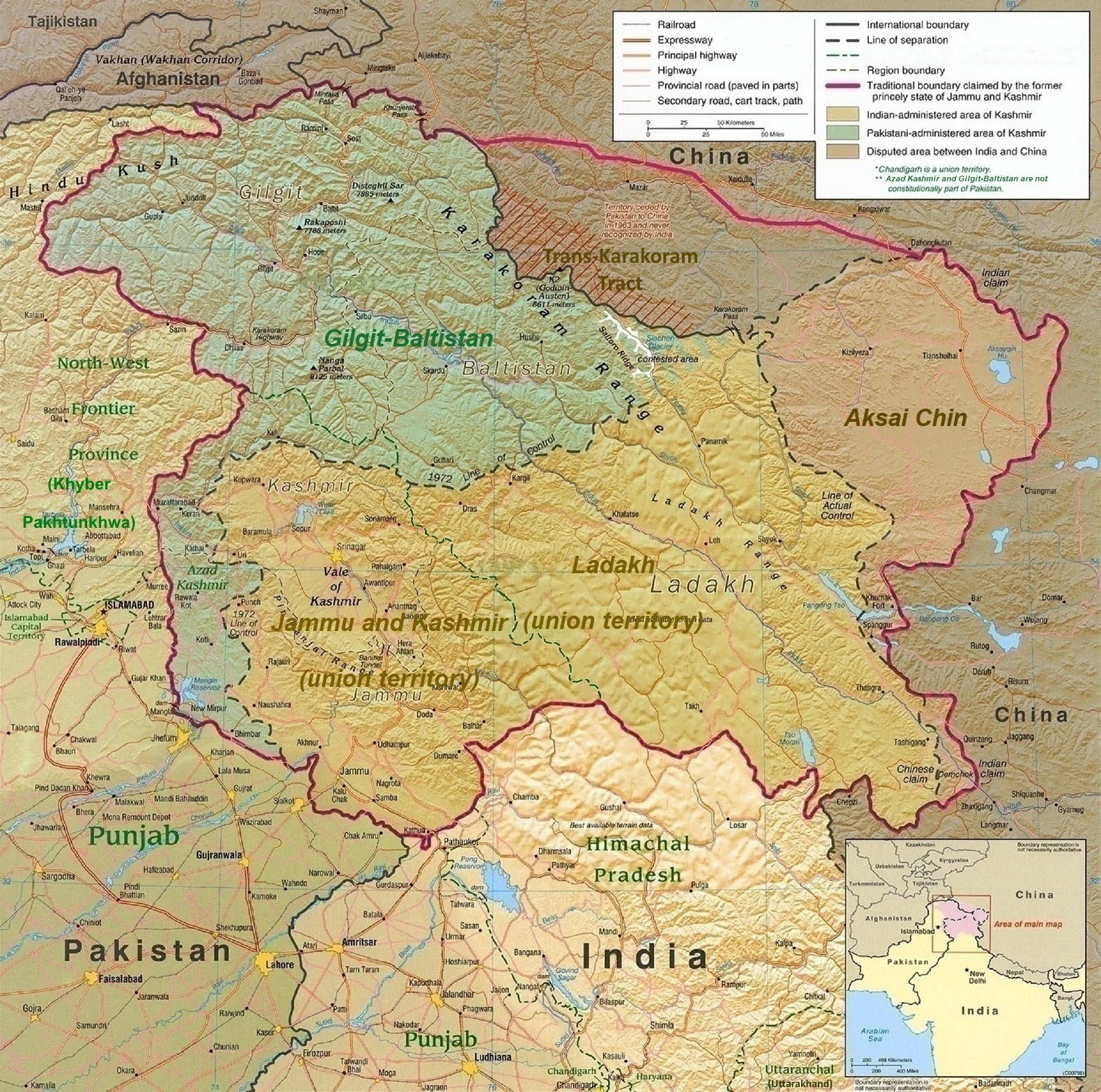
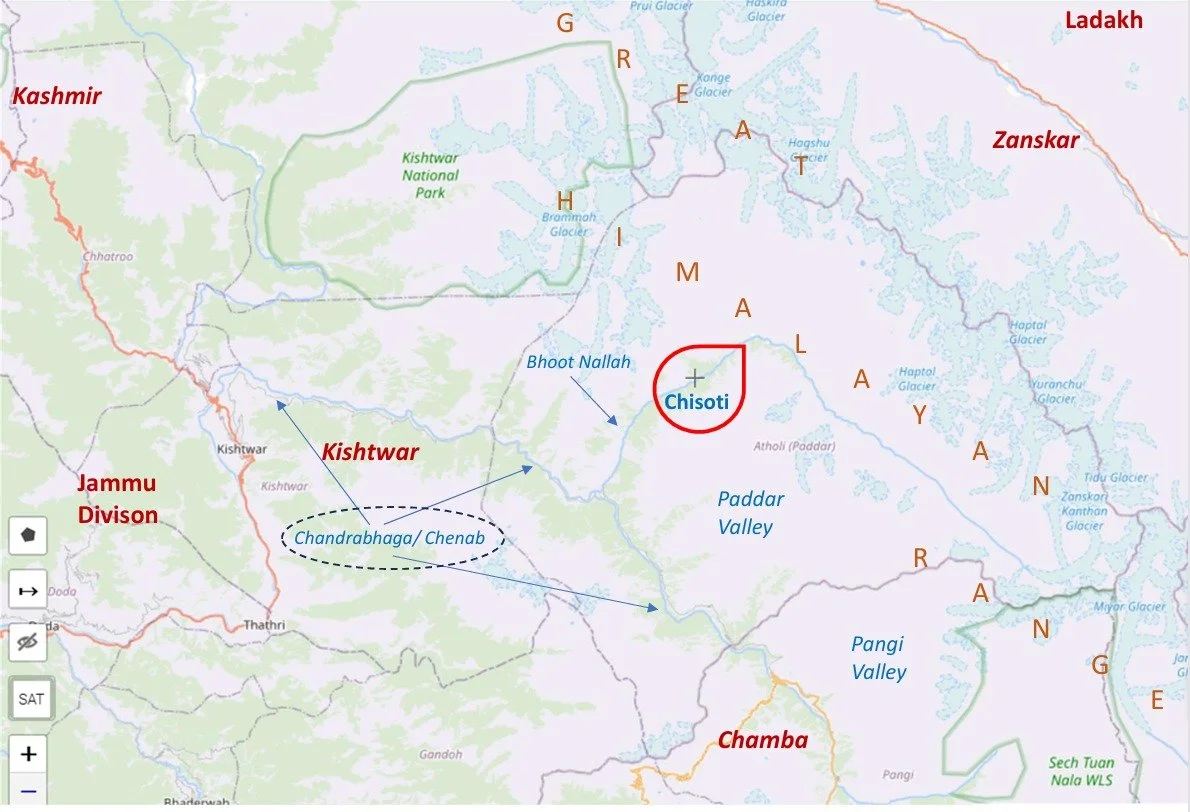
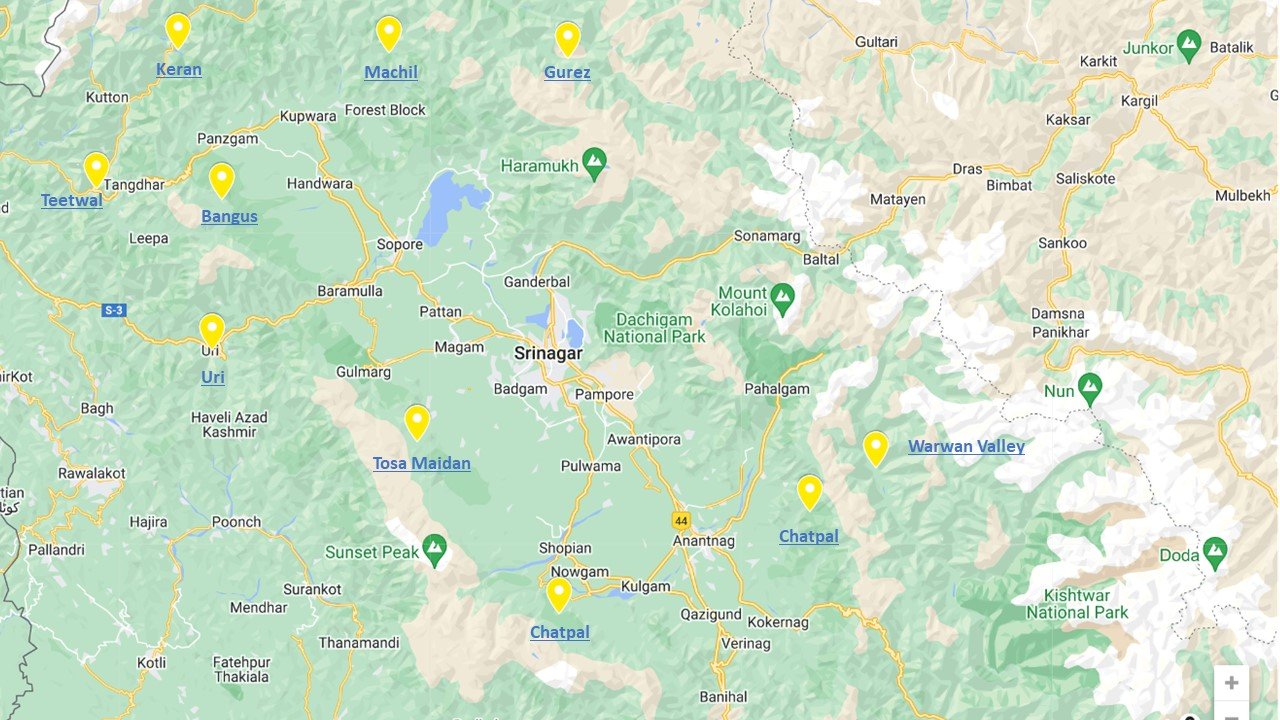



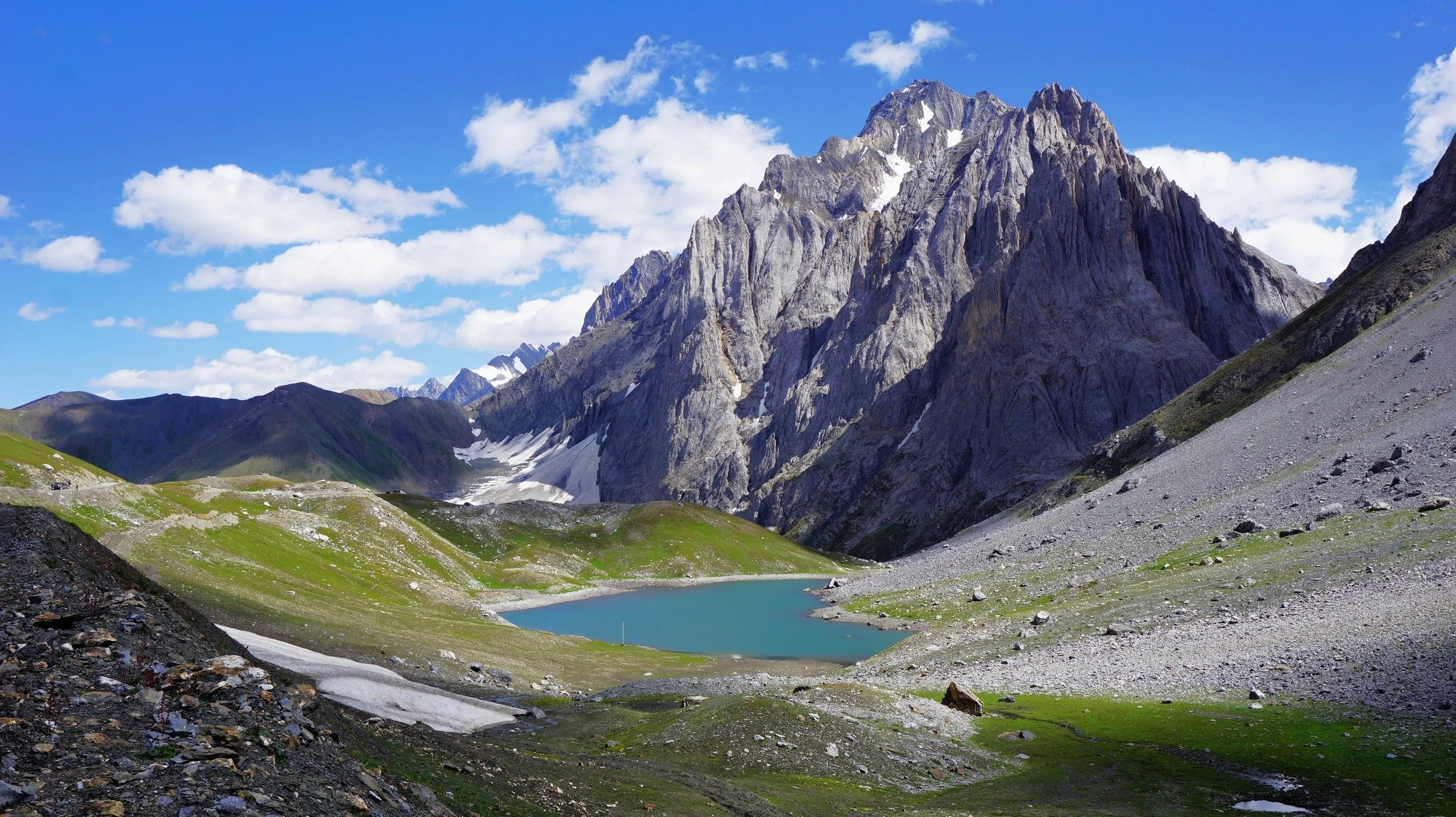
Five years ago the Galwan Valley was in the News for the wrong reasons after a deadly clash between the Indian and Chinese Armies in the Valley located in Ladakh lead to many deaths on the contentious Border between the two countries in wake of continued Chinese intrusions into Indian territory.
This area along the Shyok River, of which the Galwan Nallah or the Galwan River which forms the Galwan Valley has been off limits to Civilians since long but now the Indian Government has decided to open up the area for Civilians and we were amongst the First Civilians to venture into this beautifully desolate part of the Eastern Karakorams in Ladakh. Earlier Civilians could only venture upto the Village of Shyok from where the Shyok River takes a U turn and flows in a Northerly direction.