
The Great Temple Complex at Naranag
The Great Temple complex ruins at Naranag in Kashmir. Probably one of the finest set of Temples built in Kashmir. Mostly lost and forgotten.

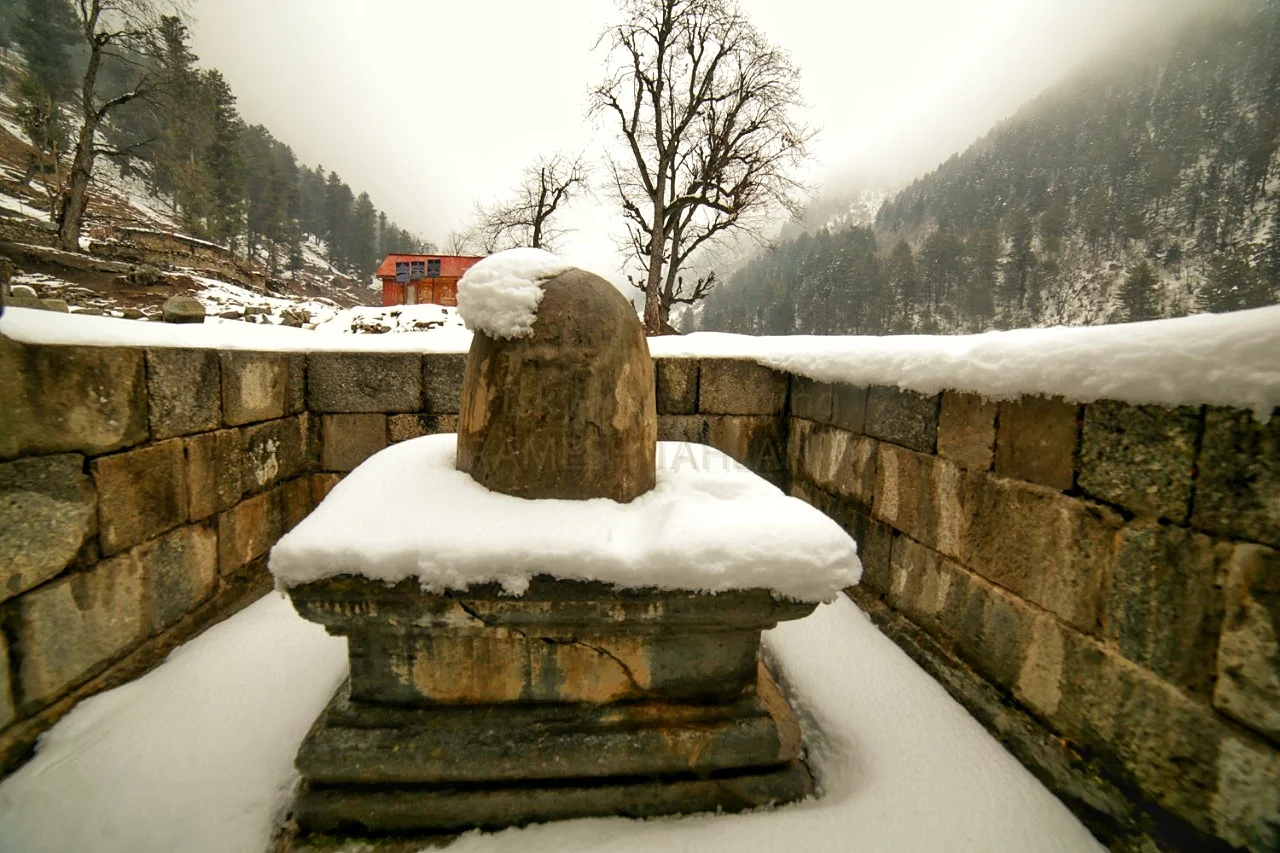
The Main temple Complex which still Houses the Idol.
The Great Temple Complex at Naranag
The Wangath Temple ruins located near Naranag near Kangan above the Sindh Valley. This Temple Complex was built Lalitaaditya Muktipada one of the most celebrated Kings of Kashmir of the Karkota Dynasty. The current structure was built around the 8th Century.
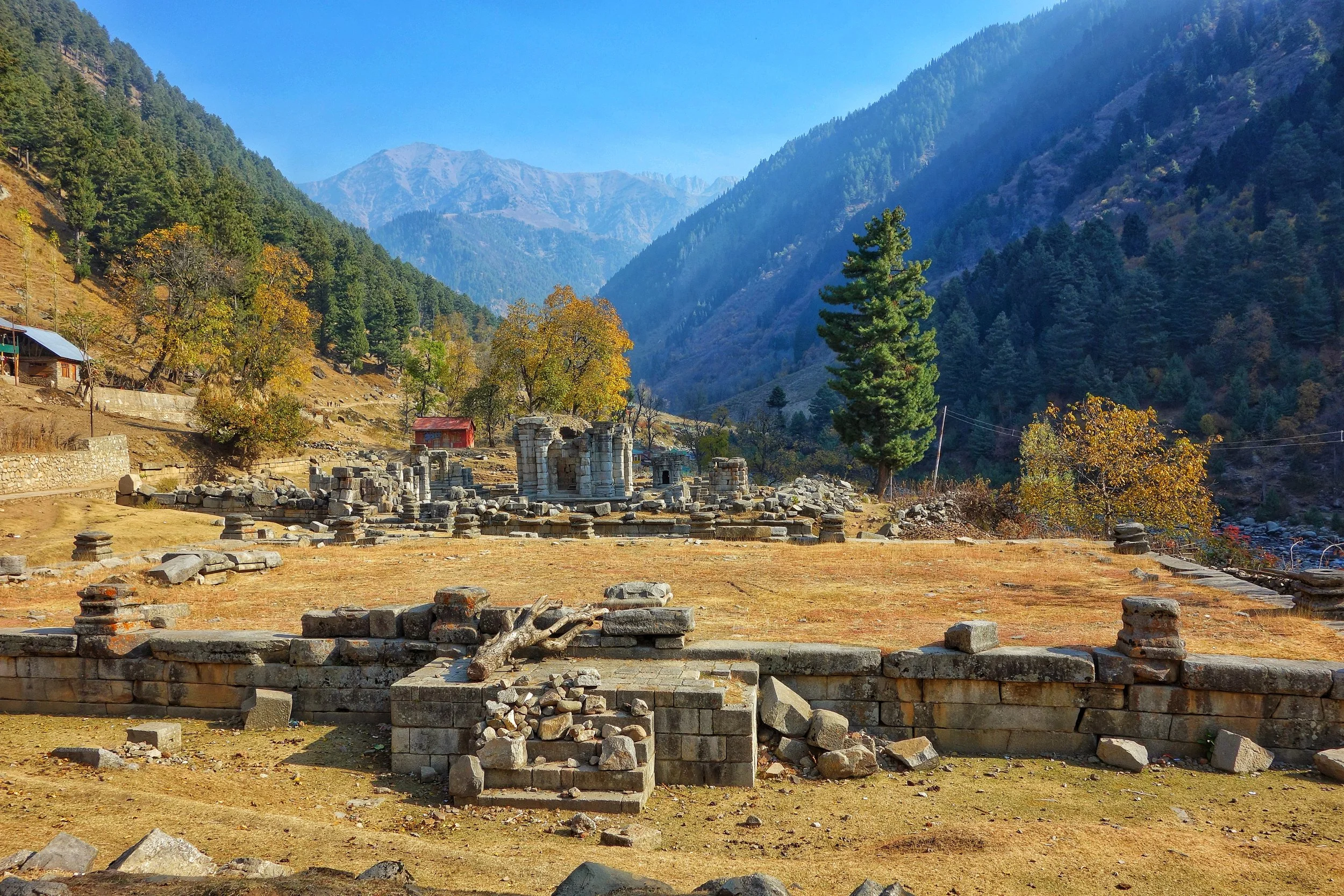
The Secondary Temple Remains
Kalhana notes in Rajatarangini that Ashoka built the city of Srinagari in the 3rd century BC. His son Jaluka, 220 BC, built the Shaivite temples Bhuteshvara, Jyestarudra, and Muthas in the Wangath valley around the holy spring of Naranag.
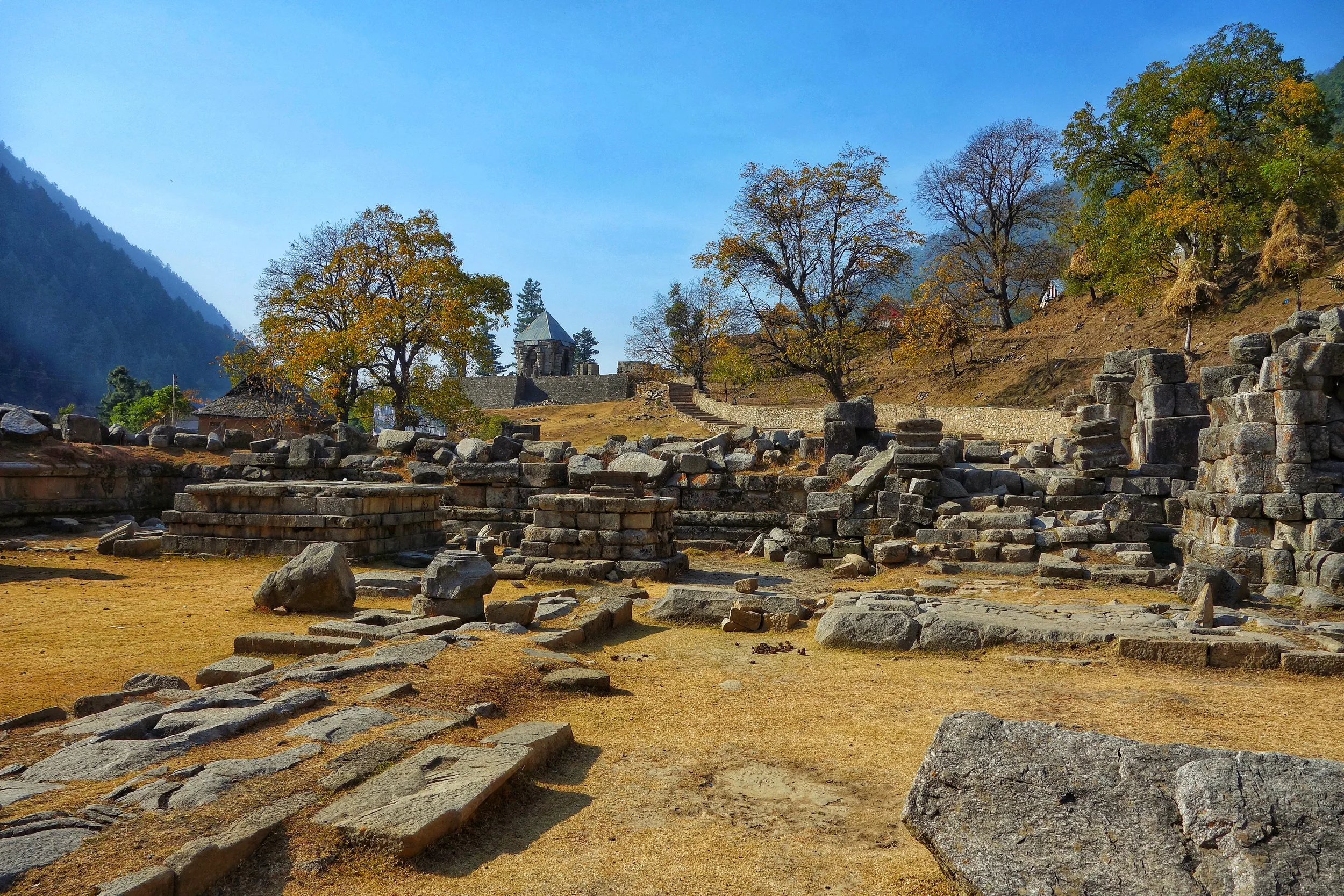
A view of the Main Temple from a distance
The Wangath temples were built in three groups, around the same time as the Shankaracharya Temple in Srinagar and the Bumazuv temple near Mattan. King Jaluka built a stone temple at the site of the spring Naranag around 137BC. King Jayendra (61 BC) used to worship Shiva Bhutesha at the shrine. Lalitaditya Muktapida (713-735 AD) donated a good sum of money to the shrine after his victorious expedition. King Avantivarman (855-883 AD) built a stone pedestal with a silver conduit at this shrine for the bathing of sacred images. Kalhana’s father Canpaka and uncle Kanka also frequented the site.
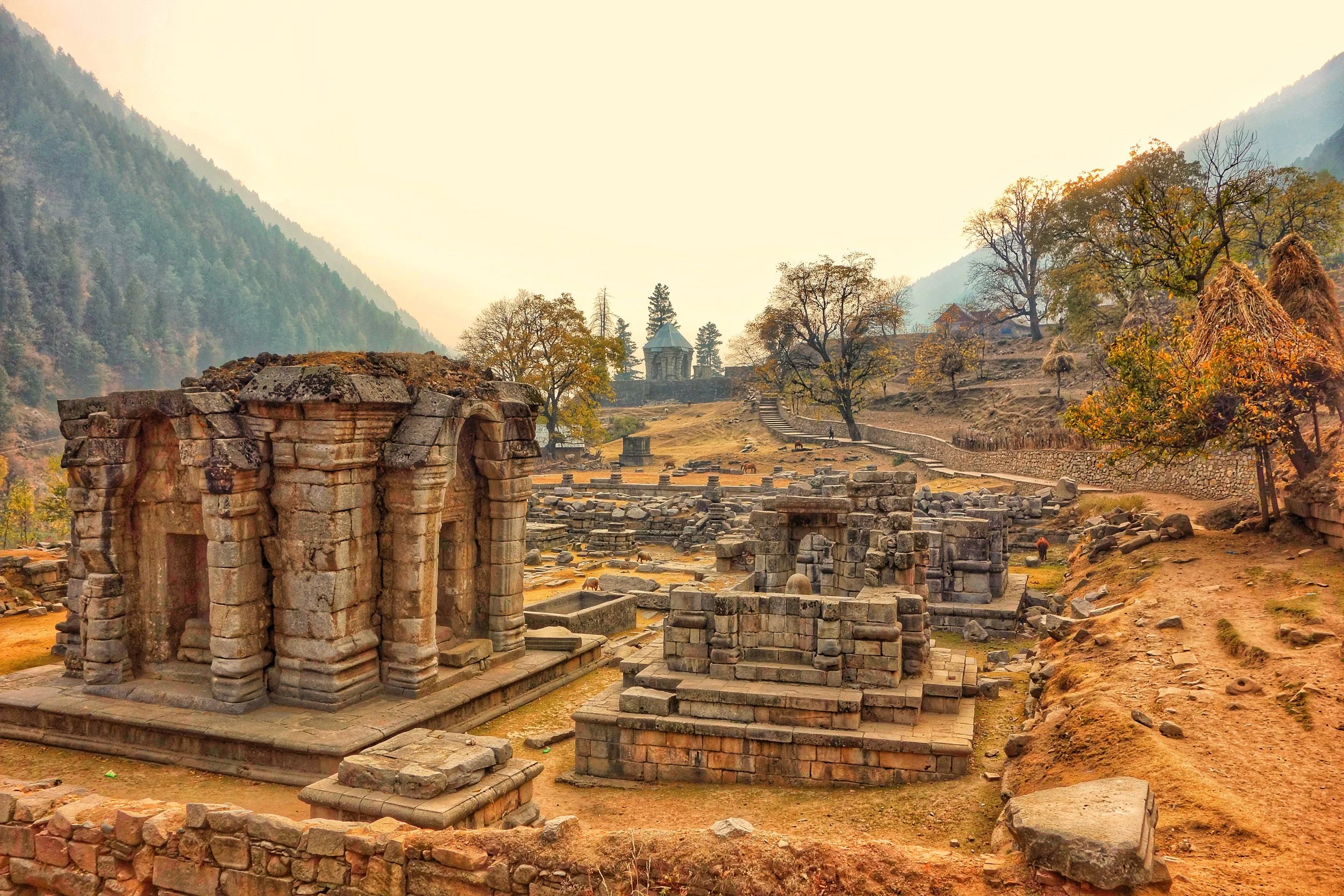
Another view of the Naranag Temple Ruins
As per Kalhana, the treasury of this shrine was plundered by King Sangramraja of Kashmir (1003-28 AD), during King Uccala’s time (1101 – 1111 AD) and later by the rebel baron Hayavadana. (Wiki)
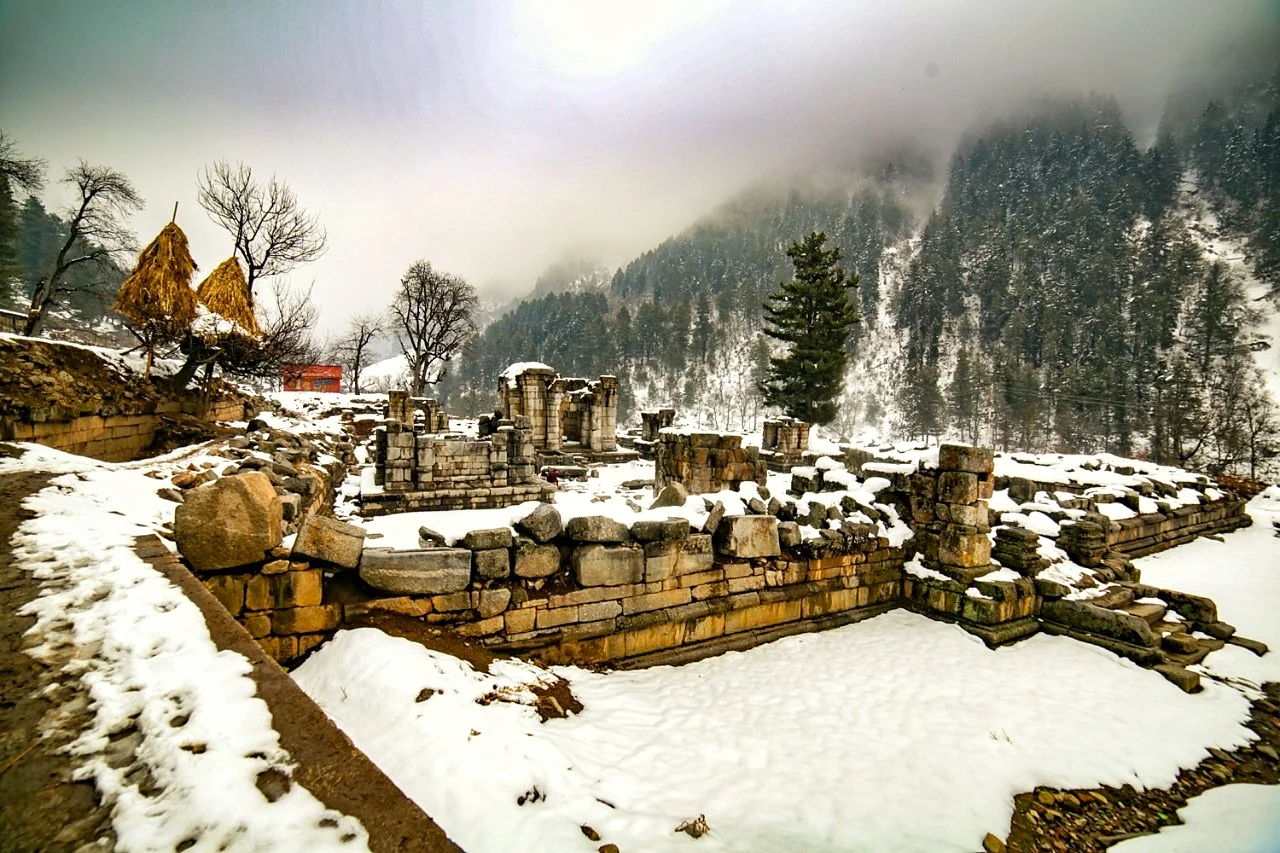
The Naranag Temple Ruins in the Winters
Auriel Stein did a lot of work on these Temples and identified a number of them along with other Western Archeologists.
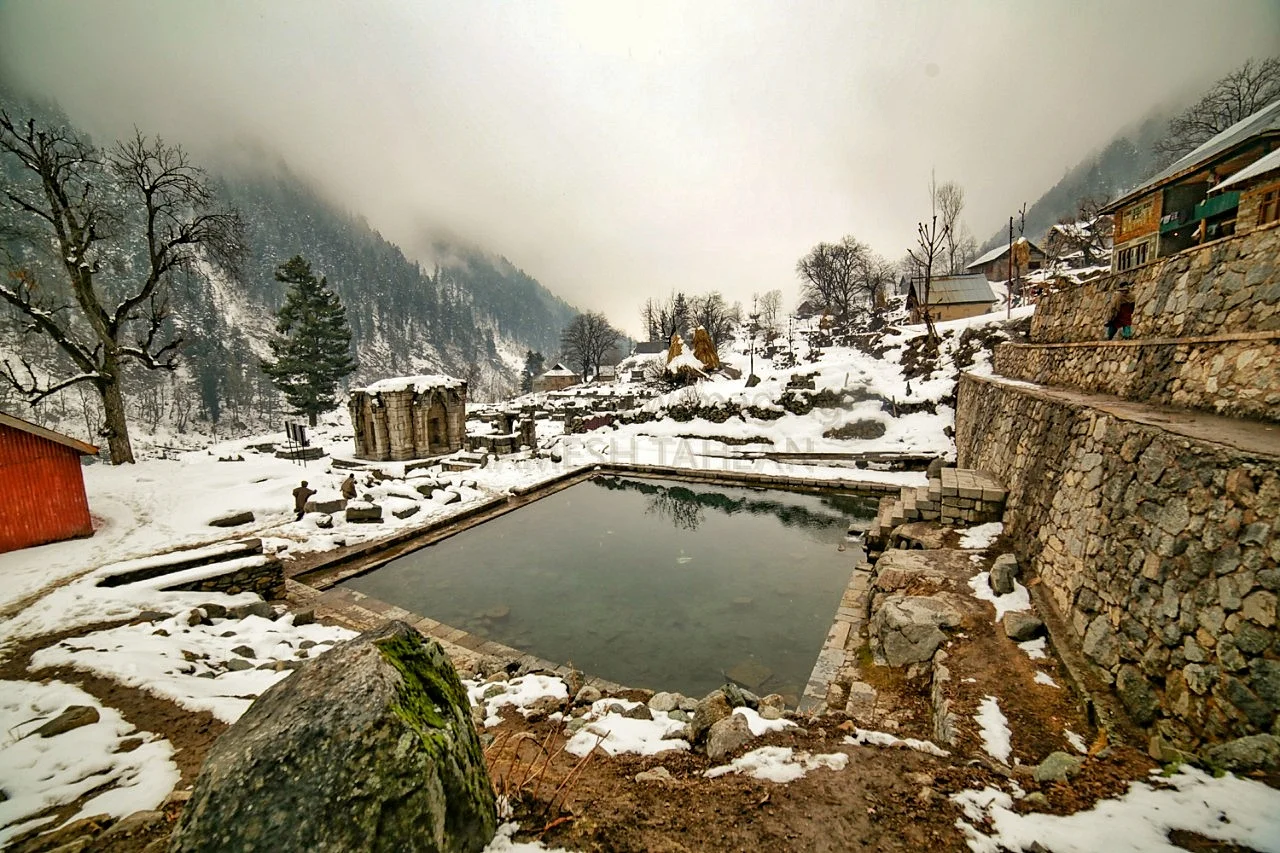
The Naranag Temple Sarovar in the Winters
It was in the Meadow of Mohanmarg that Auriel Stein stayed and translated the Rajtarangani from Sanskrit to English.
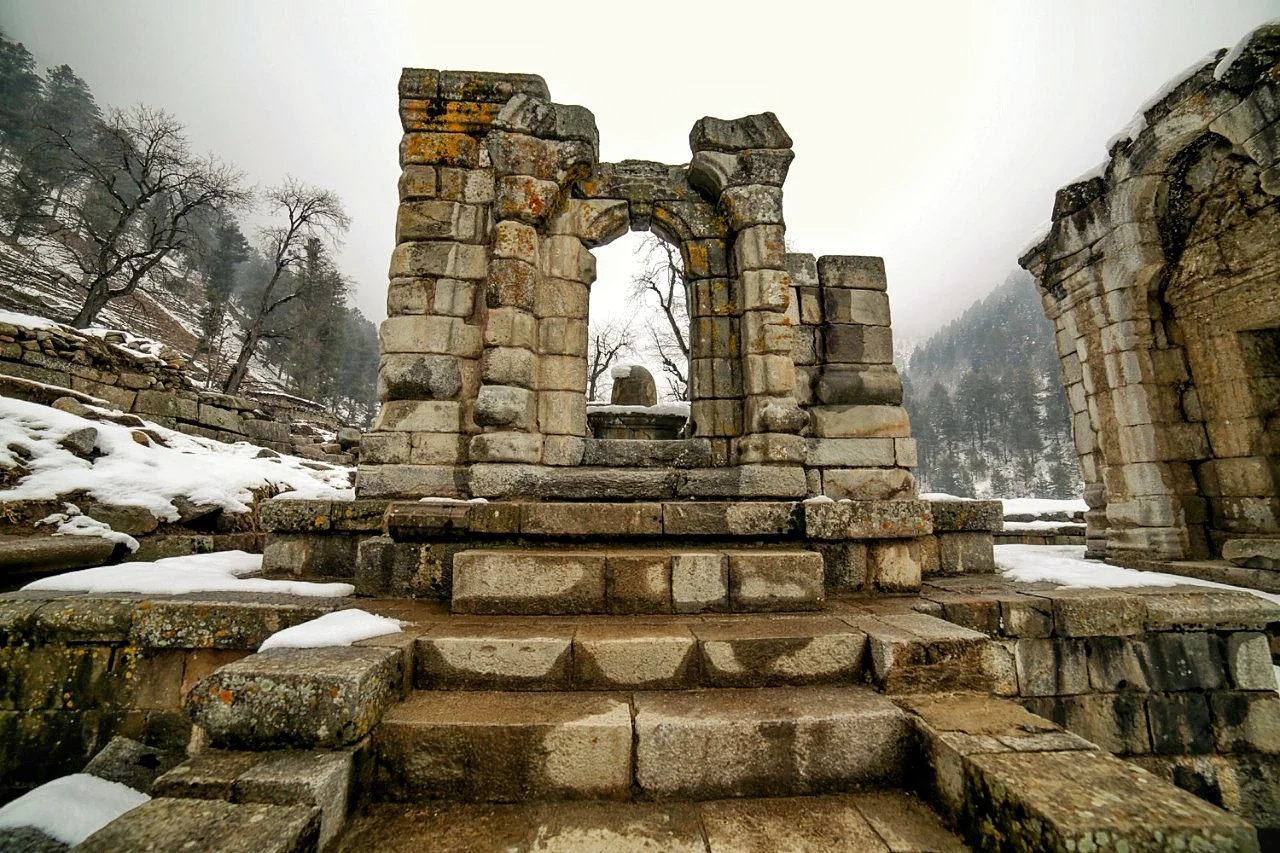
The Naranag Temple with a Shiva Ling
One thing surprising about this Temple is that all the main Temple Complexes in Kashmir were usually on the Valley floor itself or in case of the Shankaracharya Temple on top of a very prominent Hill. But this complex lies high above the Sind Valley by the Naranag Nallah. And it surely is a large Complex. Not to be missed and there are a lot of trekking / hiking opportunities around.
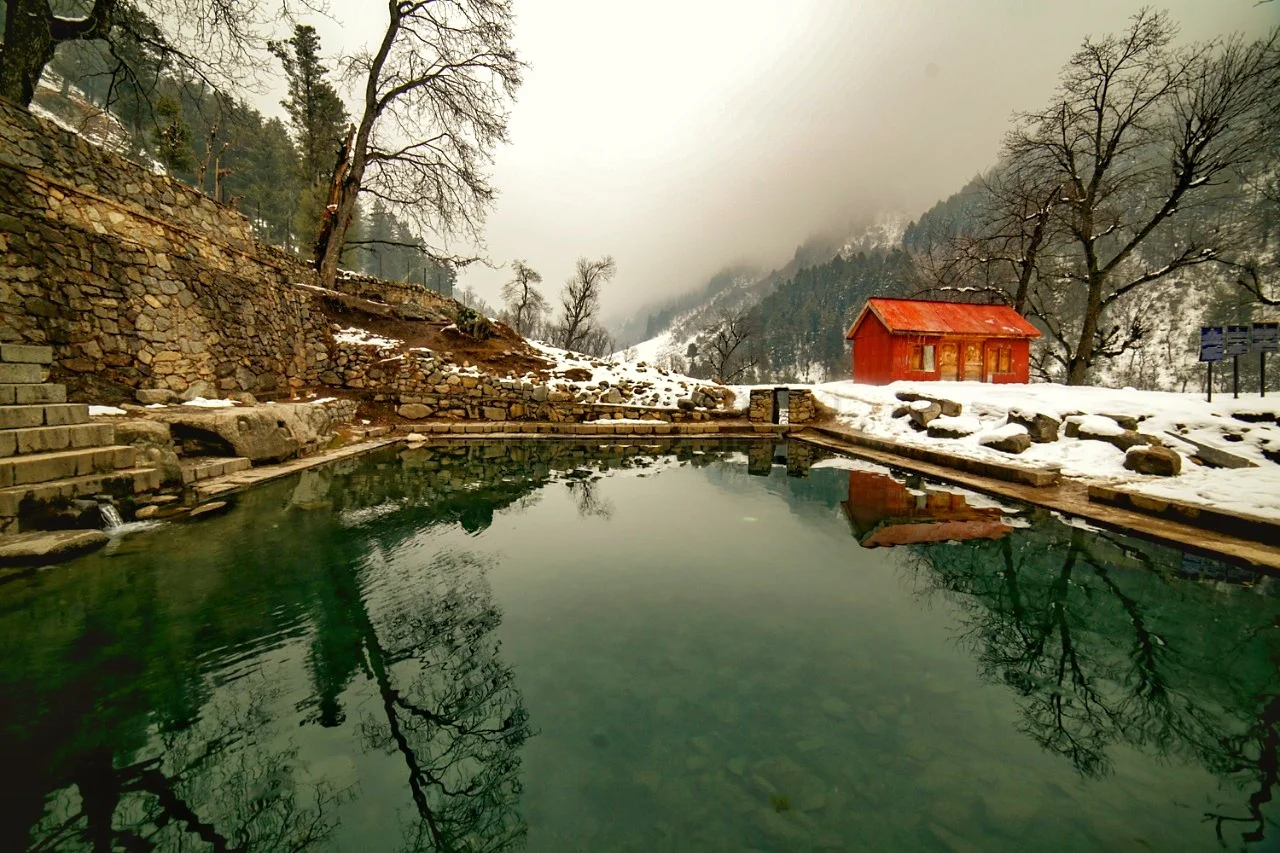
The Naranag Temple sarovar again
A very interesting place to say the least.
Parihaspora – The Ancient Capital of Kashmir
Just around 20kms from Srinagar lies the plateau of Parihaspora which was chosen as the site for a new Capital by one of the greatest Kings of Kashmir, Lalitaditya in the 8th century AD. The site situated on a Plateau is today in ruins but still a glorious memory of the time Kashmir was a powerful Kingdom.
Parihaspora – The Ancient Capital of Kashmir
Just around 20kms from Srinagar lies the plateau of Parihaspora which was chosen as the site for a new Capital by one of the greatest Kings of Kashmir, Lalitaditya in the 8th century AD.
I decided to pay a visit the ruins which lay a few kms off the Srinagar Baramulla while I was going to Pattan and onwards later on to Uri.

Another Platform, Parihaspora
Lying next to a local Engineering College this mostly abandoned site is a sad reminder today of the glorious age of Lalitaditya. He moved the Capital here and built a Palace, Temples and a Buddhist Monastery over here. This was also the Golden Age of Buddhism in Kashmir but it existed in a syncretic alliance along with the Vedic beliefs. There was apparently a great statue of Vishnu made of Gold and an equally tall statue of the Buddha made in Copper. There are conflicting accounts as to what was the real purpose of these buildings but everyone agrees that Lalitaditya built them and they were simply magnificent.

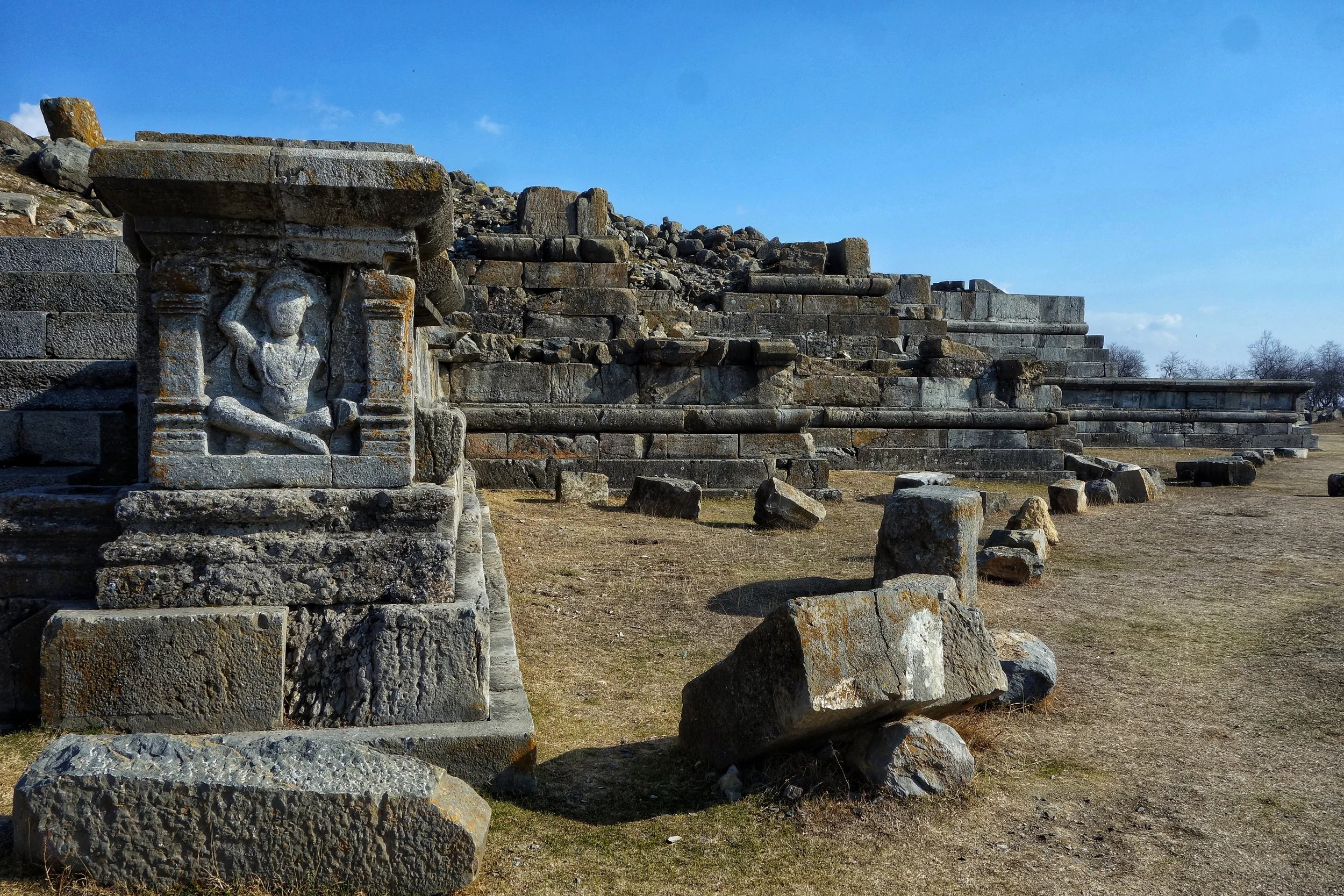
Carvings on the stairs going up the Temple, Parihaspora
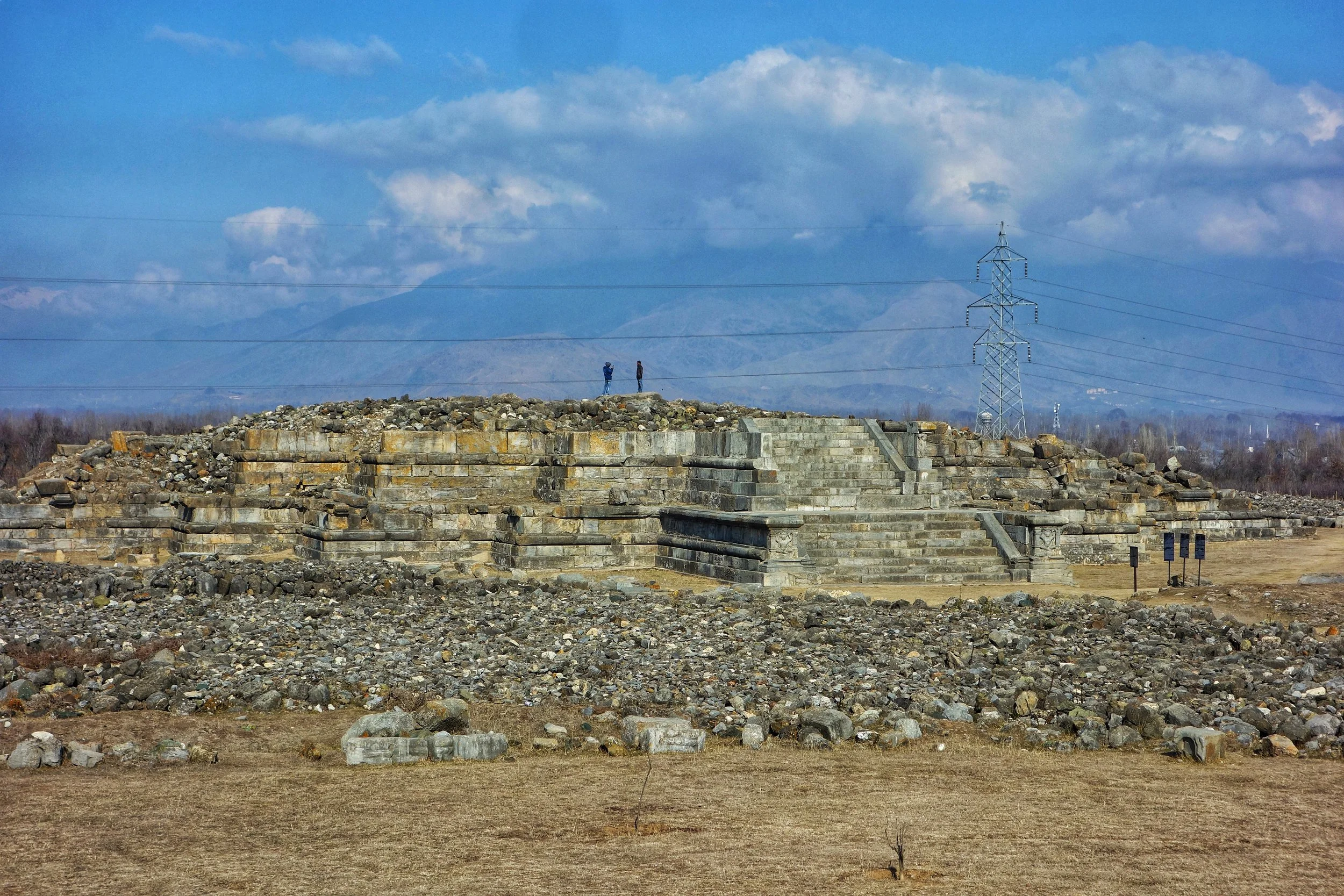
The ruins are spread over a large area and as of now only the bases of the great structures remain and these suggest that these must have been magnificent architectural specimens in their time. In fact the main structure here is quite bigger than the remains of the Great Sun Temple at Martand which is also attributed to Lalitaditya. The landscape is littered with stone blocks/ rocks of various sizes which at one time must have been a part of the great structures. Infact the locals nowadays refer to the place as “Kani Shahar” or the City of stones.
The place lost its glory when Lalitaditya’s son decided to move the Capital again and apparently the Jehlum changed its course due to some human intervention and with no direct access to water the decline began. And then Avantivarman, who built the Temples at Avantipora moved the Capital again and his son Shankarvarman decided to move it again to Shankarpura (Pattan) and decided to cannibalize the stones from the Temples and Palaces here.

The Stairs to the Temple, Parihaspora
On top of that another King Harsha decided to burn down the Temple and the Monastery after he suspected one of his rivals to be hiding there. Thus ended the glory of Parihaspora and what ever remained was destroyed by Sultan Sikandar in the 14 th century.

The Grand Platform, Parihaspora
But the plunder just didnt end there. Auriel Stein, the great British Indologist, who translated Kalhana’s Rajtarangani also visted the site twice in 1892. In between his two visits he noticed that a lot of sculptures and stones were missing. It turned out that the Maharaja of Jammu and Kashmir was building the Jehlum Cart road and stones from Parihaspora were being used for the construction. Auriel Stein then approached the British resident at the Court of the Maharaja and he was able to convince the Maharaja to put an end to the mindless destruction of whatever remained.

Another view, Prihaspora
And so to this day Parihaspora has a haunting presence. The ruins are said to be home to hundreds of snakes though I didnt see any. On a clear day one gets great views of the Haramukh and Mahadev Peaks from here. But it was a hazy day when I went. Hardly any tourists ever turn up here and except for a few College students loitering around the place is deserted.

A view of the "Kani Shehar"as the remains of Parihaspora are now called by the localls
Another lost glory from the rich architectural heritage of Kashmir.
Pics from December 2017. Parihaspora, Kashmir
Kiki’s Blog
Stories from the Himalayas
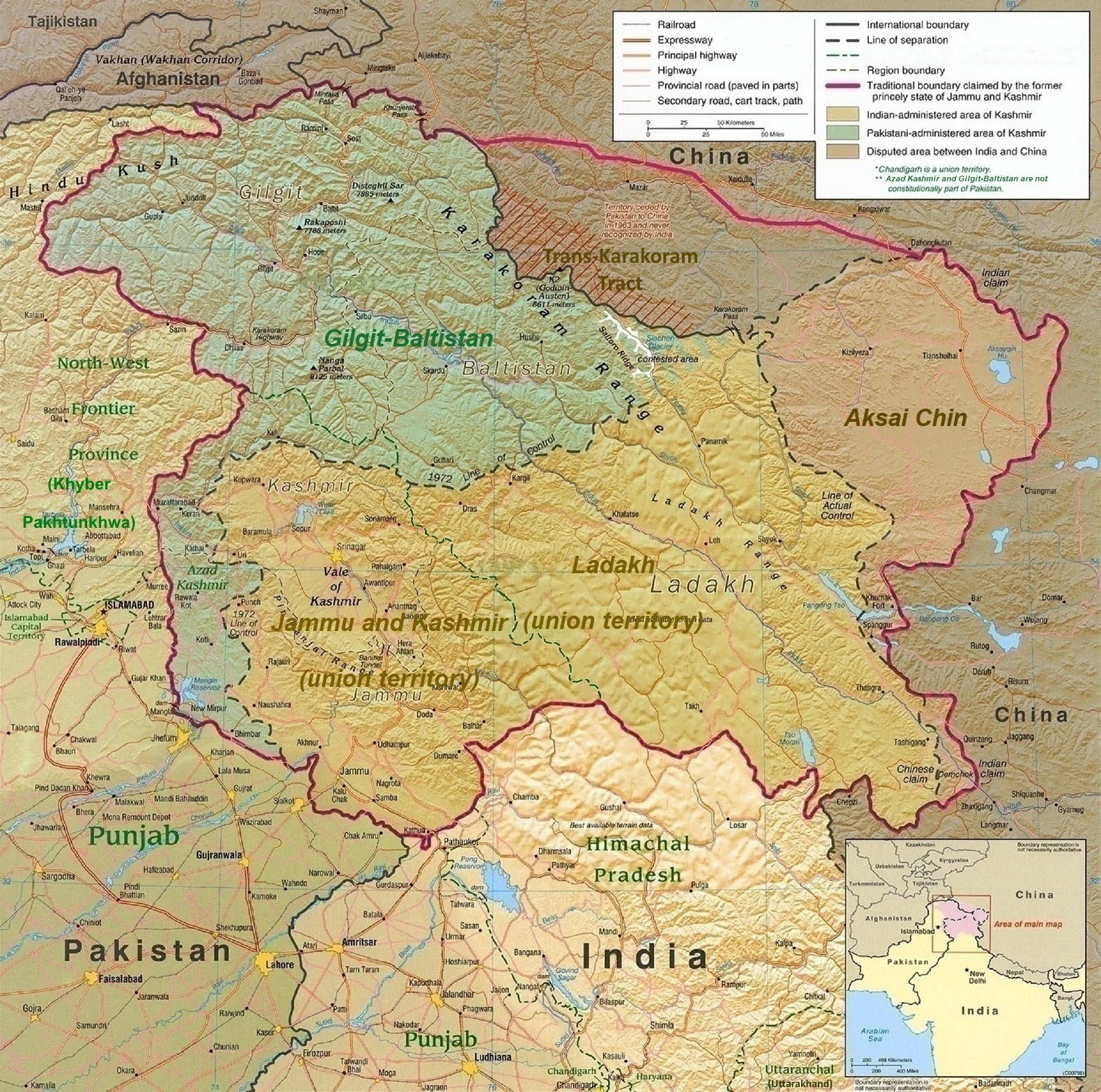



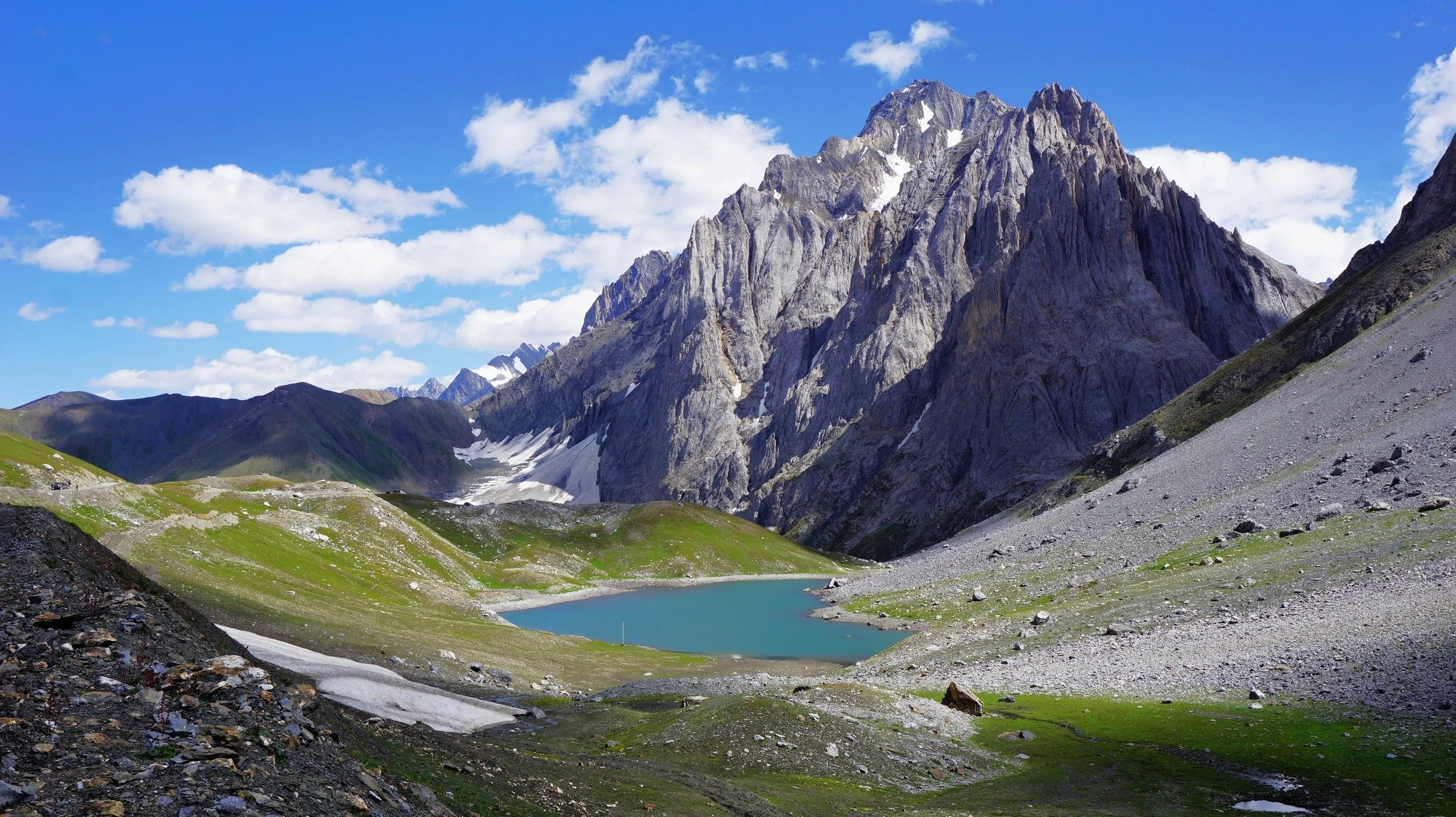
Five years ago the Galwan Valley was in the News for the wrong reasons after a deadly clash between the Indian and Chinese Armies in the Valley located in Ladakh lead to many deaths on the contentious Border between the two countries in wake of continued Chinese intrusions into Indian territory.
This area along the Shyok River, of which the Galwan Nallah or the Galwan River which forms the Galwan Valley has been off limits to Civilians since long but now the Indian Government has decided to open up the area for Civilians and we were amongst the First Civilians to venture into this beautifully desolate part of the Eastern Karakorams in Ladakh. Earlier Civilians could only venture upto the Village of Shyok from where the Shyok River takes a U turn and flows in a Northerly direction.