
The Hari Parbat Fort, Srinagar, Kashmir
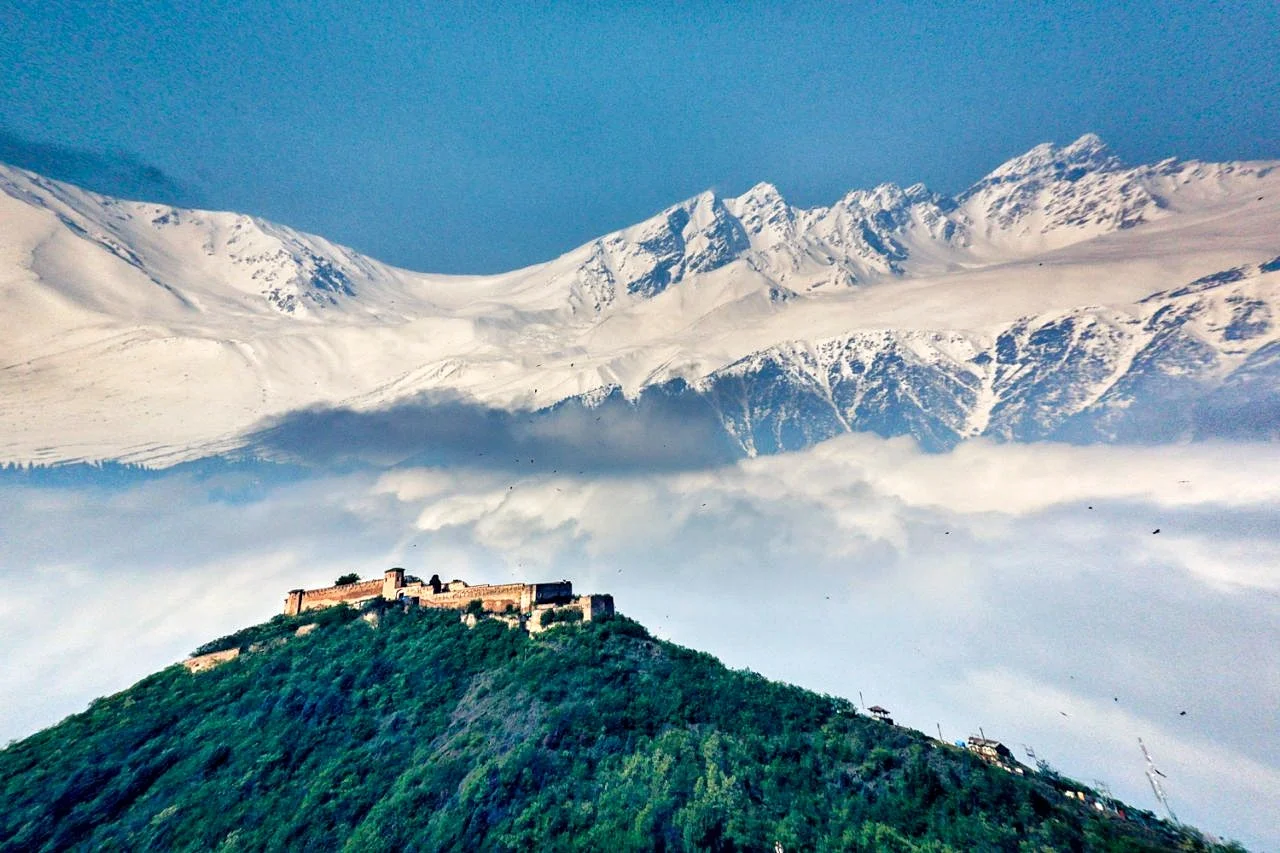
The Hari Parbat is the only surviving Fort in the Kashmir region of the state of Jammu and Kashmir. It stands over a hill also known as the Koh-I-Maraan and originally was the site of a Fort built by Emperor Akbar. He had also built a large fortification Wall at the base of the Hill parts of which survive till today.
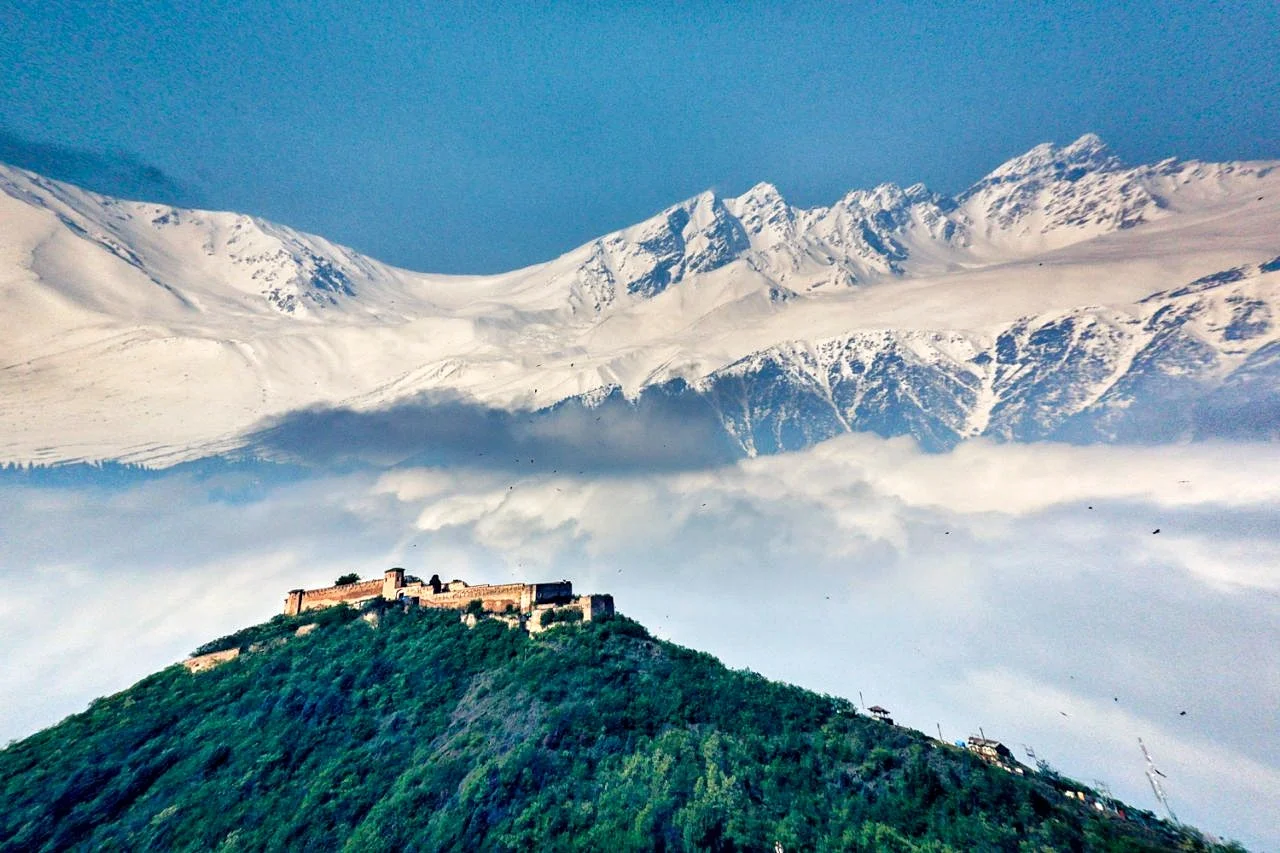
The Hari Parbat Fort
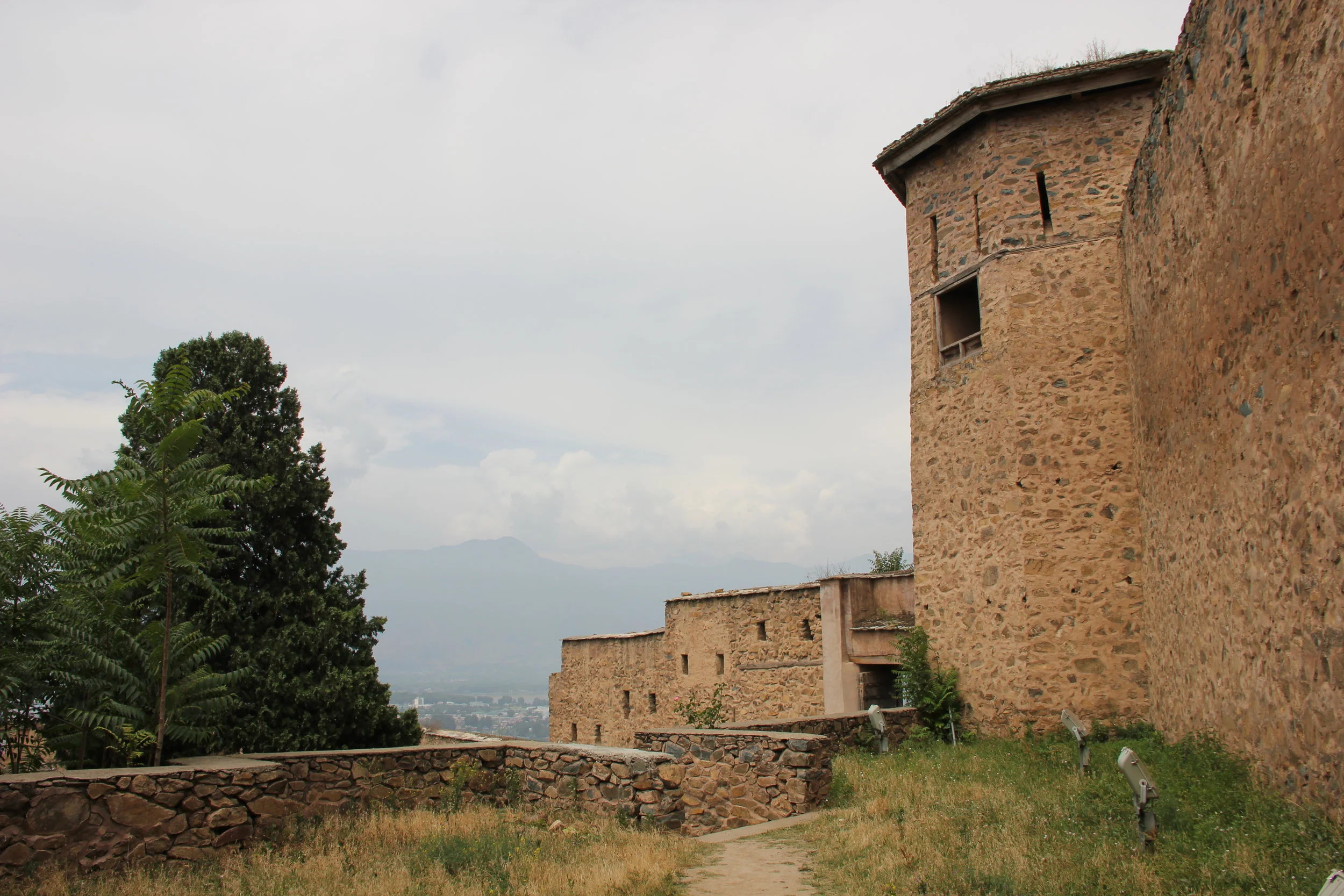
Standing next to the massive Fort walls
The Hari Parbat is the only surviving Fort in the Kashmir region of the state of Jammu and Kashmir. It stands over a hill also known as the Koh-I-Maraan and originally was the site of a Fort built by Emperor Akbar. He had also built a large fortification Wall at the base of the Hill parts of which survive till today.
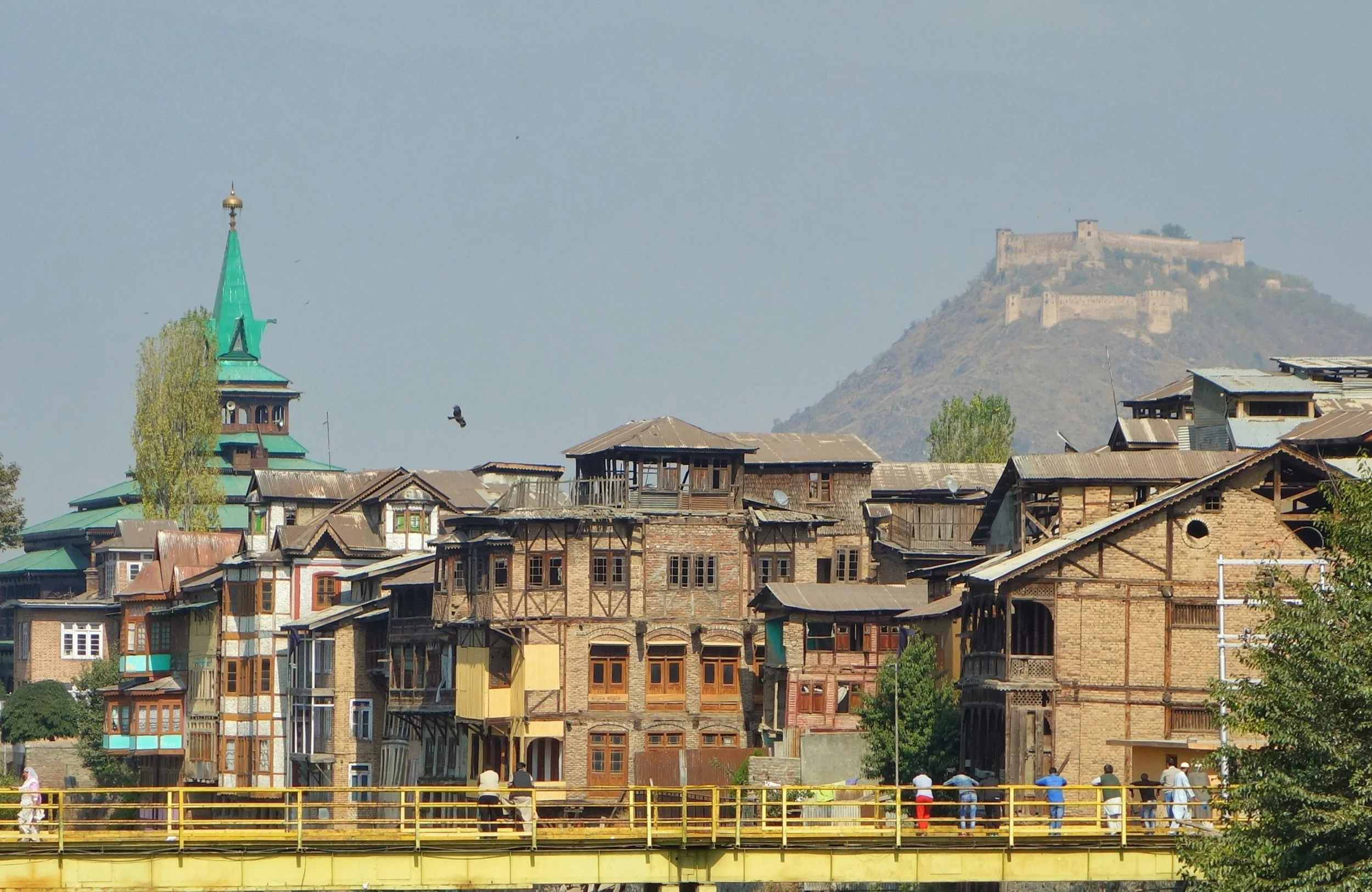
The Hari Parbat Fort as it looms above the Old City of Srinagar
The present structure was built by the Afghans when Kashmir was a part of the Afghan Durrani Empire under Shah Shuja Durrani. Ironically Shah Shuja Durrani was himself held prisoner in the Fort by the Governor of Kashmir, Atta Muhammed Khan. Atta Muhammed Khan had declared himself pretty much independent after his father was murdered in Kabul by supporters of a certain claimant to the Throne. As it so happened in 1808, the Afghan King Shah Shuja was ousted by the same individual, Muhammed Shah and his minister Fateh Khan. Atta Muhammed Khan invited Shah Shuja to come to Kashmir from where he could still go on ruling as the King of Afghanistan. Shah Shuja took the offer and landed up in Srinagar only to find himself Atta Muhammed Khan's prisoner at the Hari Parbat Fort.
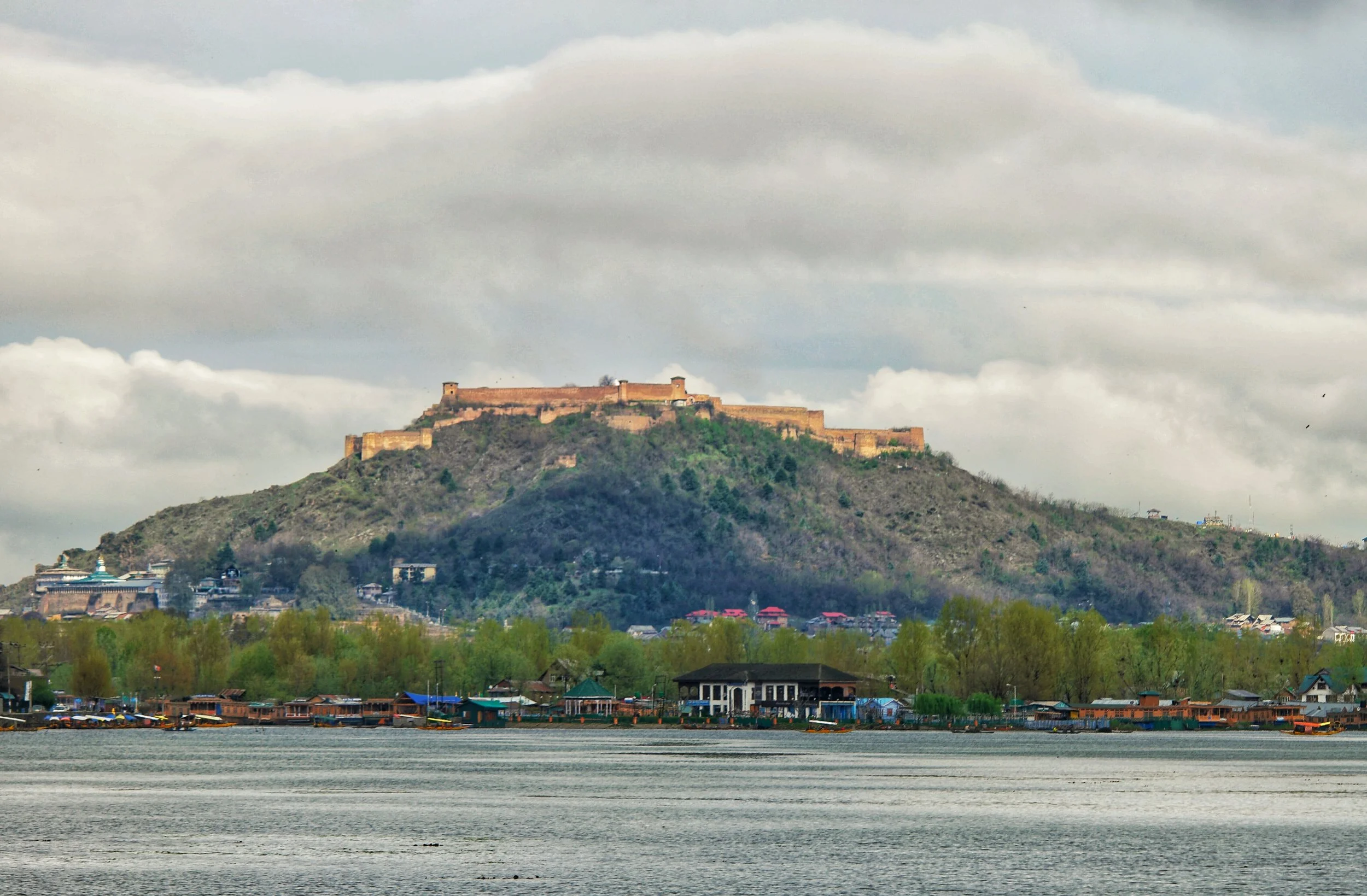
The Fort from the Dal Lake side.
However a force of Durrani Afghans in alliance with the Sikhs of Maharaja Ranjit Singh landed in Kashmir soon after and the Sikhs got Shah Shuja Durrani free from his prison inside the Hari Parbat Fort. As per Sikh history sources the ultimate prize promised to Maharaja Ranjit Singh for getting Shah Shuja Durrani freed from the Hari Parbat Fort was the Koh-I-Noor Diamond. Having done his part of the deal and having delivered Shah Shuja Durrani safely to his wife in Lahore the Maharaja of Punjab soon got the possession of the fabled diamond. Maharaja Ranjit Singh who being a Cavalry man had great love for Horses and had the Kohinoor mounted as a head piece on his favorite Horse which he used to ride.

Inside the Fort
The Sikh flag of Maharaja Ranjit Singh finally flew over the Hari Parbat Fort when the Sikhs under the able leadership of General Hari Singh Nalwa finally defeated the Afghans in 1820. After a brief period of Sikh rule Kashmir and the Fort changed hands and landed in the hands of the Dogras led by Raja Gulab Singh after the Sikh loss in the First Anglo Sikh War of 1846. The Dogra Rule lasted for just a fraction over 100 years and in 1947 it became a part of India and since then the Fort has been occupied by the Security Forces.

The Fort from Pari Mahal
The Fort still stands as proud as ever on ite vantage point overlooking the Srinagar city. The Fort Hillside holds some important places of worship for varied religious inclinations. There is the Shrine of Makhdoom Sahib, a saint held in great reverence by the Kashmiri Muslims. There is the Sharika Devi Mandir who is worshipped as an incarnation of Shakti. On the day celebrated as Sharika's birthday, devotees make a sacrificial offering of taher-charvan to the goddess (taher - rice boiled with turmeric powder and mixed with oil and salt; charvan – cooked goat liver). Then there is the Chatti Padshahi Gurudwara where the Sixth Guru, Guru Hargobind had supposedly preached and stayed for a few days during a visit to Kashmir. This Gurudwara is considered the holiest Sikh shrine in Kashmir.

The Hazratbal Shrine with the Hari Parbat Fort in the Background.
For me the Hari Parbat stands as a sentinel which silently watches over the myriads of events which have happened in this thence troubled land. And it keeps watching. With the mighty Pir Panjals in the background.
It looks beautiful when its lit up in the evening but this capture by Ramesh Tahlan Sir captures the essence of this mighty Fort, the only Fort in the Valley of Kashmir which still stands strong having withstood the vagaries of time.
Kashmir : Between The Mughals and the Dogras
The history of Kashmir from the time of the rule of the Mughals till the time of the rule of the Dogras. And the Afghans and the Sikhs in between. A straight narrative of the complex history of the Kashmir Valley.

Kashmir ; Between the Mughals and the Dogras
The exalted Vale of Kashmir. The powder keg Kashmir. The enigma Kashmir. The mere mention of this name triggers a huge range of human emotions and reactions that few other words do.
Most people are well aware of what happened after Independence in 1947 but few are aware of the twists and turns of history that the Valley went through to land at that particular juncture in 1947. I try and explain the passage of History right through the Mughals to the Afghans to the Sikhs and to the Dogras. This has been compiled through various sources both offline and online. This is just an attempt at re-creating history without any prejudice to any race or religion or ethnicity. I will try my best and remain neutral to any bias and put things as they happened. My only bias would be towards a character that I have come to admire more than probably anyone in History. You will know when you read the complete story.
As most are aware Kashmir was a great favorite with the Mughals and it was a Mughal province for many centuries till finally the power of the Mughals began to decline and the Governors of the Provinces became semi-independent and began to assert their own whims and fancies.
Kashmir was no different but it had not missed the notice of the Afghans who used carry out their invasions of North India time and again in this period taking advantage of a weak Center.

The Hari Parbat Fort as seen from the Dal Lake
Cutting a long story short the Afghan Ahmad Shah Abdali finally conquered the Valley of Kashmir after the Afghan forces under Abdullah Khan Ashaq Akasi defeated the forces of the local commander and the guy in control of Kashmir, Abdul Qasim. This was in 1753.
Abdullah Khan Ashaq Akasi became the first Afghan Governor of Kashmir but within 6 months he had to go back to Kabul for some pressing business and Abdullah Khan Kabuli was put in charge.But the Afghans had become pretty unpopular because of the aggressive tax collections and eventually he was murdered by Sukhjiwan and Abdul Banday. And Sukhjiwan Mal assumed the Governorship of Kashmir for the next almost 9 years. But he declared his allegiance to the Mughal Emperor, Alamgir and for the same he was given the title of Raja. Another Governor who succeeded him Azad Khan declared his allegiance to the Ottoman Emperor.
Point being the Governor’s of Kashmir though nominally under Afghan rule continued to do mostly as they pleased and the state of affairs in Kabul at that time were such that the Afghan Kings had neither the time or inclination to intervene as they were busy in familial infighting for the right to Rule.

Shah Shuja Durrani
Once such Governor was Atta Muhammed Khan (1803 to 1813) who declared himself pretty much independent after his father was murdered in Kabul by supporters of a certain claimant to the Throne. As it so happened in 1808, the Afghan King Shah Shuja was ousted by the same individual, Muhammed Shah and his minister Fateh Khan. Atta Muhammed Khan invited Shah Shuja to come to Kashmir from where he could still go on ruling as the King of Afghanistan. Shah Shuja took the offer and landed up in Srinagar only to find himself Atta Muhammed Khan’s prisoner at the Hari Parbat Fort.
The new King Mahmud Shah and Fateh Khan realized that the loss of Kashmir would be a great one and they had to settle the score with Atta Muhammed Khan for declaring independence and also they wanted Shah Shuja in their custody. So in 1812 an Army was prepared under the command of Fateh Khan and his brother Azim Khan for a punitive and decisive strike against Atta Muhammed Khan and re-take Kashmir.
There was a problem though. A lot of water had flowed down the Jehlum since 1753 and there was a new power to be reckoned with. And yes you guessed it right, it was my favorite historical character, the Sher-e-Punjab, Maharaja Ranjit Singh (I will refer to him as the Sher in short).

The Sher E Punjab : Maharaja Ranjit Singh
The newly conquered/ aligned territories of the Sher lay in between Kabul and a smooth passage to Kashmir and the Afghans had no option but to ask the Sher for his assistance in return for which they offered suitable rewards. Not that the Sher didn’t have designs of his own on Kashmir. The rewards included the Eleven lakh Rupees and “half” of Kashmir if this amount wouldn’t be paid.
The newly formed Punjab Kingdom of the Sher was sandwiched between the Britishers on the East and the Afghans on the West. Both were formidable adversaries and having done his conquests to the South and the only avenue left for expansion was up North and hence to Kashmir. Kashmir as a territory offered great revenue and was also the center of the Shawl trade. It was also an important trading point for trade into Turkestan, Baltistan, Ladakh and Tibet. But besides all these there was a certain aura attached to this place. The Sher wanted Kashmir.
Till now the Sher had never been in direct conflict with the King of Afghanistan though he had fought Afghans on numerous occasions and was well aware of their military prowess. Nor did he want any confrontation with them till he chose the place and time.
So all things said and done an alliance was agreed upon and a small Sikh force was dispatched under Diwan Mokham Chand to go along with the Afghan forces to teach a lesson to the rebel Afghan Governor of Kashmir (History is never as simple as we are taught or what we assume it to be) and “secure” Shah Shuja from his captivity.
Oh another small thing. The wife of Shah Shuja had offered the Koh-i-Noor diamond to the Sher if he could secure the safe release of Shah Shuja. The Sher was a connoisseur of all good things in life and the Kohinoor would be crowning jewel in his great collection.

The Shergarhi Palace
So soon a combined Afghan-Sikh force marched into Srinagar and took over the main Shergarhi and the Hari Parbat Fort. Both Atta Muhammed Khan (the Sher had taken an undertaking from the Afghan King that he wouldn’t be harmed) and Shah Shuja on being released made haste for the Sikh camp understandably. Point to be noted that both forces reached Srinagar through different Routes
Diwan Mokham Chand now demanded his due as promised but Fateh Khan refused as he said that it all belonged to the Afghans and the Sikhs didnt play any part in it. After due deliberations with the Sher, the Diwan with his forces withdrew but they took along with them Shah Shuja and Atta Muhammed Khan. The Kohinoor was worth much more than Eleven Lakh Rupees. Not that Fateh Khan knew.
After they withdrew from Kashmir, the Sikh forces consolidated and induced Jahandad Khan (who was a brother of Atta Muhammed Khan, the deposed Governor of Kashmir, now in Sikh protection) the commander of Fort of Attock to let them into the Fort and take control.

The Attock Fort
The Sher was ready. This brought him into direct confrontation with the King of Afghanistan. Fateh Khan left Kashmir and a combined Afghan force now attacked the Sikhs at Attock. Joining the Sikh force were the formidable General Hari Singh Nalwa, General Gurmukh Singh, Karam Chand Chahal, the commander of the Sikh Artillery Ghouse Khan besides Dewan Mokham Chand who led the Sikh forces. Without getting into the details let me just say that the Sikhs won this first big engagement between the Sikh and the Durrani Empire.
Coming back to Kashmir. The Sher after his victory despatched a force under General Ram Dayal to fulfil his ambitions on Kashmir in 1814. The Afghans were ready for battle and they met at Hirpura. Fighting in the Pir Panjals in inclement weather was something the Sikhs were not prepared for. They lost heavily in this engagement and then in further engagements. Kashmir still lay with the Afghans. The Sikhs realized they needed expertise in mountain warfare which the Afghans were good at and the Sikhs were defeated in their first expedition into the Himalayas.
Just as it happened a war far away provided a new set of weapons to the Sher. The British had clashed with the Gurkhas around the same time. The Gurkhas were finally defeated in 1816 and what it did was that the fighting quality of the Gurkha soldier was greatly appreciated and many Gurkhas went on to join the forces of the Sher.

Maharaja Gulab Singh
Meanwhile Azim Khan was the new Governor of Kashmir and he tried his best to bring around some stability. His main revenue collector was Birbal Dhar. It so happened that some revenue targets were not met and Azim Khan was unhappy. Anticipating his wrath Birbal Dhar fled to Raja Gulab Singh of Jammu who sent him to the Sher. Birbal Dhar offered inside information on Kashmir and egged on the Sher to launch another attempt on Kashmir.
Soon the oppurtune time came in 1819 and Azim Khan had to leave for an engagement in Kabul leaving Jabar Khan in charge. A new force was prepared comprising of the Sikh Army with its newest element the Gurkhas. A galaxy of the Sher’s Generals were put in charge. These included Misr Diwan Chand, General Hari Singh Nalwa, Raja Gulab, Sardar Jawala Singh and General Akali Phulla Singh and they were assisted by the local Muslim rulers of Poonch, Rajauri and Bhimber. They marched onto Kashmir over the Pir Panjals.
The decisive battle was fought at Shopian. The Afghans fought hard and they fought well. But the cream of the Punjabi’s Emperors formidable and trained on European lines forces finally prevailed in the Battle. On July 15, the victorious Sikh forces marched into Srinagar and finally the Sher had his biggest prize Kashmir. The first son born to the Sher after the conquest of Kashmir was named Kashmira Singh.
Finally the Sher had Kashmir but he would never get to visit it in the next 20 years. The first Sikh Governor of Kashmir was General Hari Singh Nalwa. And then started the period of Sikh rule in Kashmir. In the meantime the ruler of Jammu, Raja Gulab Singh, a vassal of the Sher, started on a campaign in the surrounding areas with a view to consolidate his power in the Jammu Hills and beyond. He pretty soon ran over all the small Hill Rajas around and at the same time he came to assume the powerful position of the Commander in Chief of the Sarkar Khalsa Army (as the Sikh Army was called).
Raja Gulab Singh, a Dogra, had ambitions of his own and his brothers held powerful positions in the Court of the Sher. Raja Dhian Singh was one of the main Wazirs and Suchet Singh was the treasurer. Soon the Court of Punjab was divided into two factions. The Punjabi Sikhs on one side and the Dogras
on the other. Of course none of these factions could gio against the wishes of the Sher. Nobody could so much as whimper in front of him.
In 1839, the Sher passed away. The passing away of such a dominant personality and the factionalism soon led to the weakening of the Empire. The British had been lying in wait and having defeated all the major powers in the sub-continent the only obstacle to their complete domination was the Sher. He was no more. The time had come.

Political Divisions of Punjab after the First Anglo Sikh War in 1846
Finally in 1846 the British met the Sikhs in battle. After several hard fought Battles the British finally emerged victorious. Raja Gulab Singh, conveniently had kept out of all these Battles. A huge war indemnity was levied on the Sikhs and on being unable to pay so they offered in return all the territory between the Beas and the Indus to the British.
Raja Gulab Singh offered to pay the war indemnity of 75 lakhs Rupees in return for all the country between Ravi and Indus to be given to him. Kashmir which was a part of this to be turned onto him. He already controlled Jammu, Ladakh, Baltistan and Gilgit thanks to the expeditions of General Zorawar Singh. The only missing piece was Kashmir. The crown jewel. The British agreed. And hence was formed the state of Jammu and Kashmir.
Hence the Dogras under the newly crowned Maharaja Gulab Singh became the new Rulers of Kashmir. But this was not without drama. The last Sikh Governor of Kashmir, Sheikh Imam-ud-Din offered some resistance but owing to the pressure exerted by the British he soon gave up and the Dogras took actual possession of Kashmir.

Maharaja Ranbir Singh
Maharaja Gulab Singh was succeeded by his son, Maharaja Ranbir Singh and so the Dogras ruled till 1947 and after that we are mostly aware of what happened.
Kiki’s Blog
Stories from the Himalayas
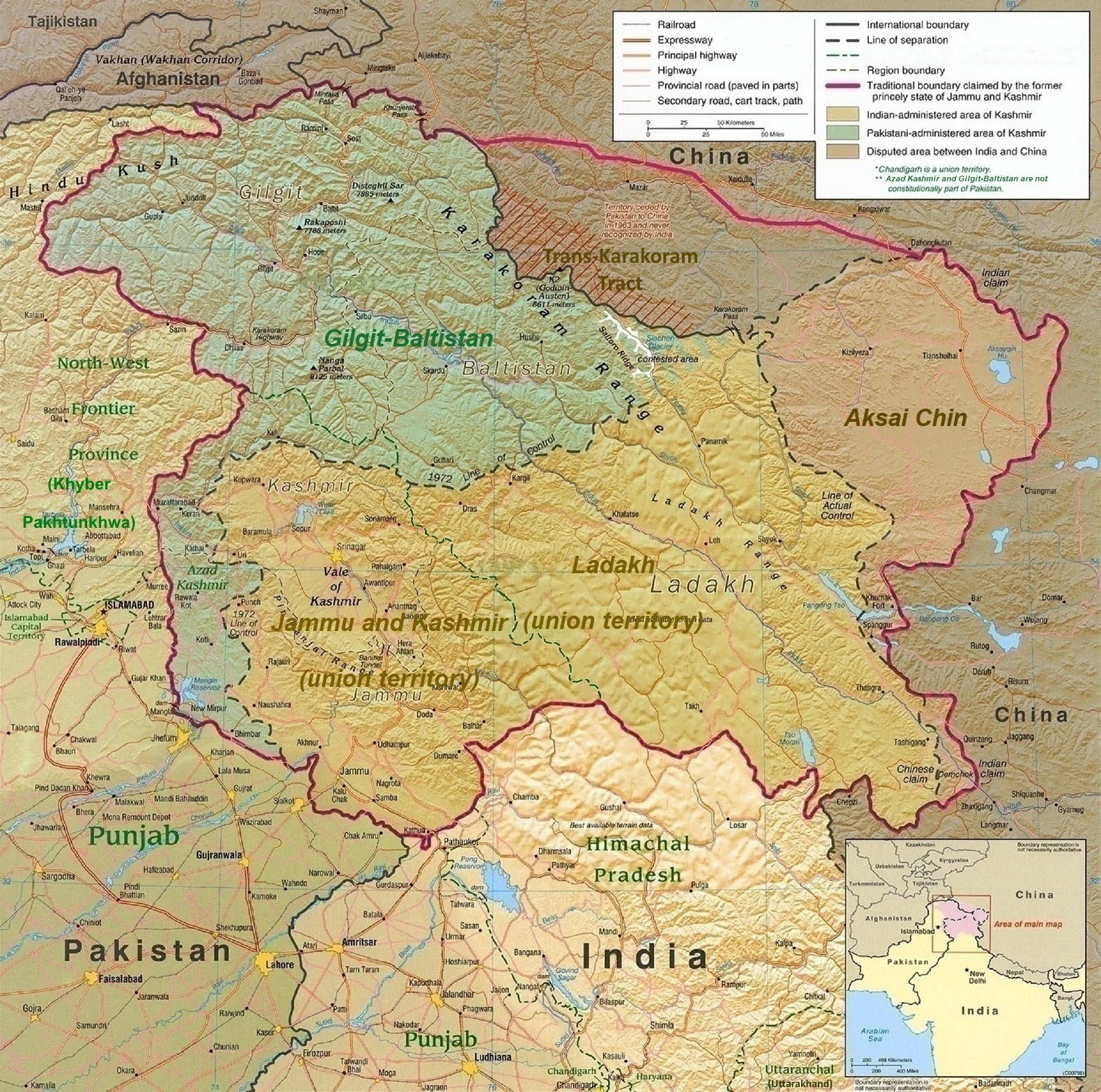



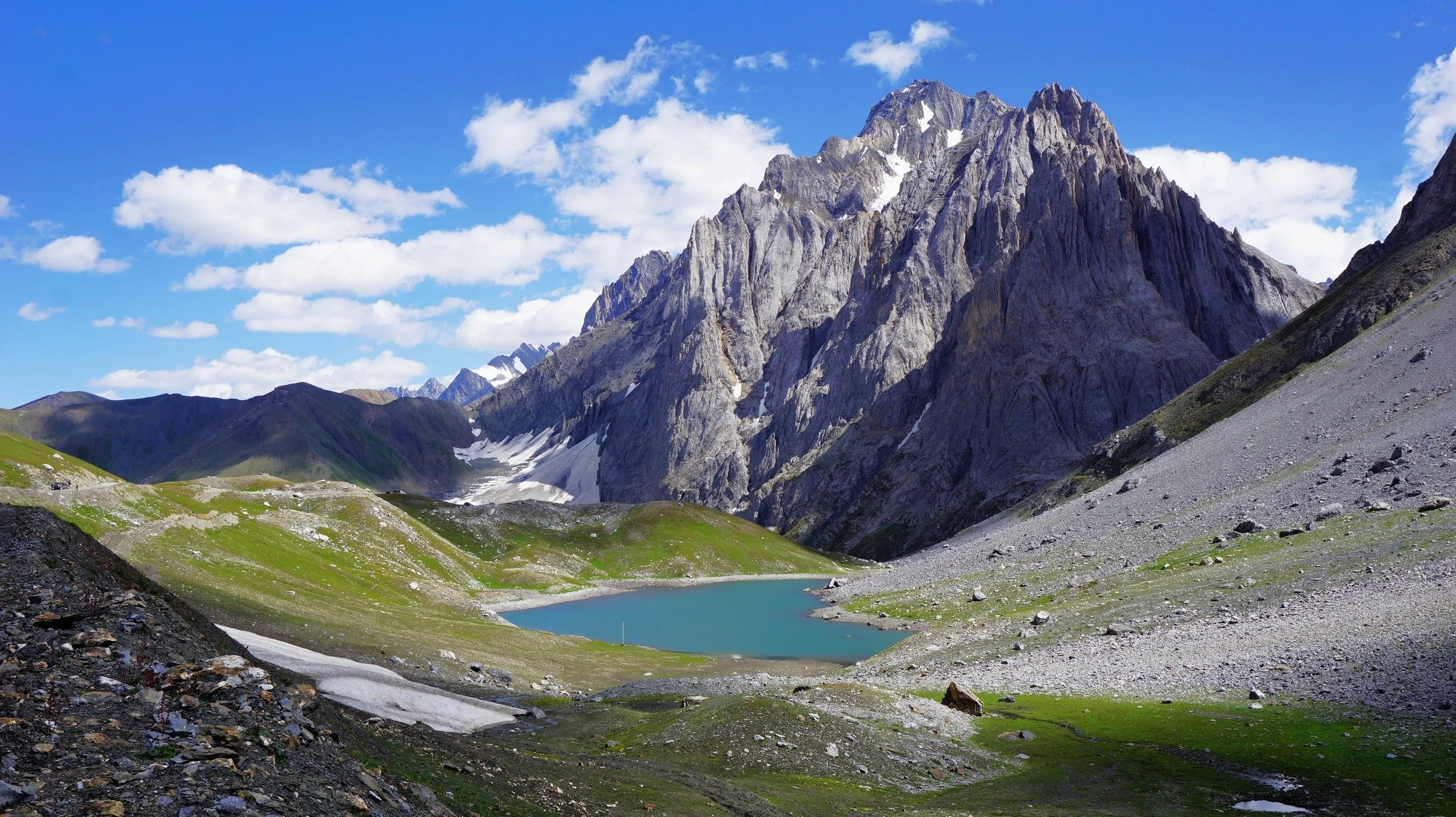
Five years ago the Galwan Valley was in the News for the wrong reasons after a deadly clash between the Indian and Chinese Armies in the Valley located in Ladakh lead to many deaths on the contentious Border between the two countries in wake of continued Chinese intrusions into Indian territory.
This area along the Shyok River, of which the Galwan Nallah or the Galwan River which forms the Galwan Valley has been off limits to Civilians since long but now the Indian Government has decided to open up the area for Civilians and we were amongst the First Civilians to venture into this beautifully desolate part of the Eastern Karakorams in Ladakh. Earlier Civilians could only venture upto the Village of Shyok from where the Shyok River takes a U turn and flows in a Northerly direction.