
The Chamba Story
The state of Chamba as it used to be was once a powerful Hill Kingdom which held sway from Kishtwar to Zanskar and Lahaul and Spiti. Notes on this small Kingdom with a big heart.
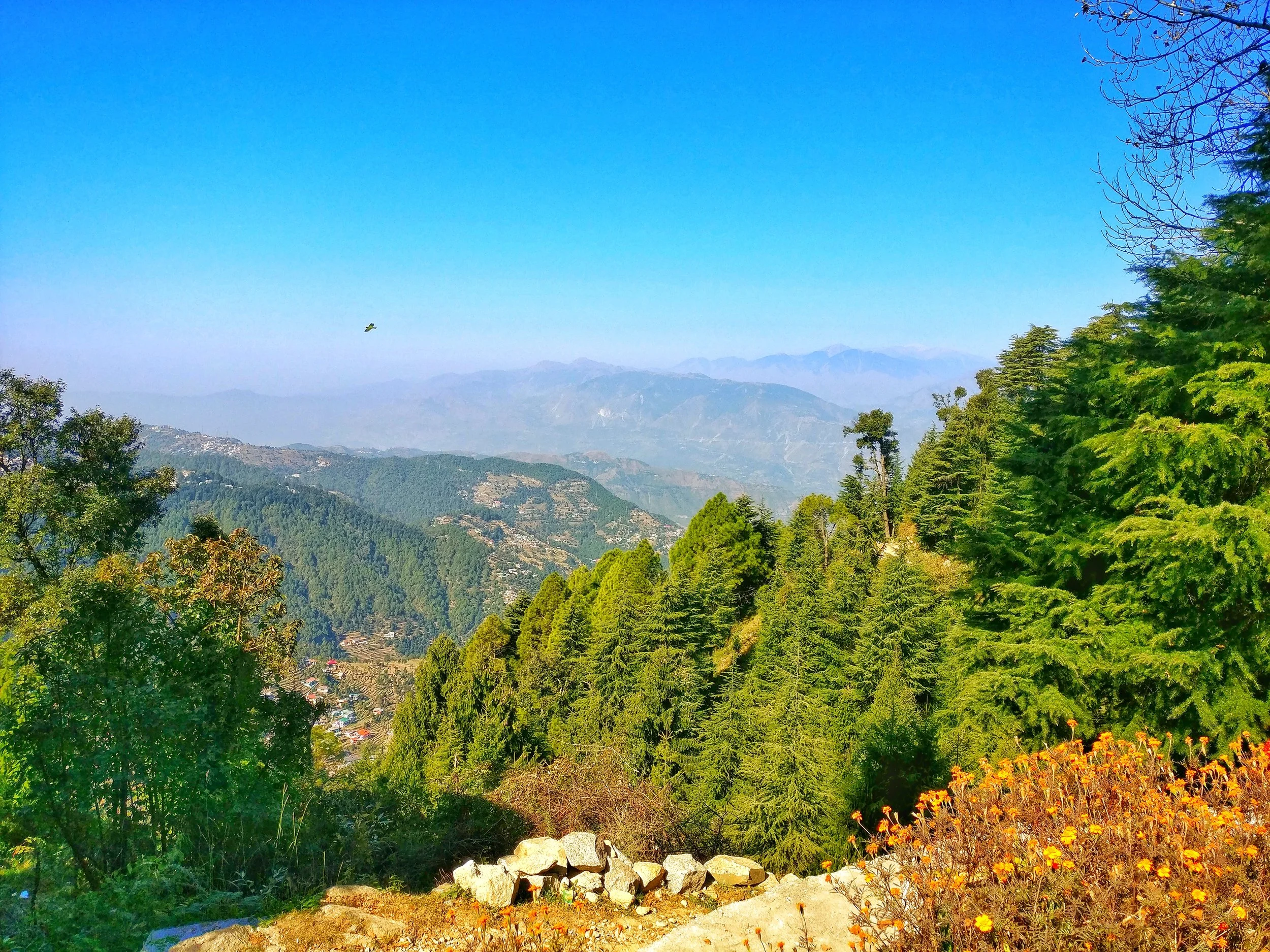
The Chamba Story
Chamba today is a quaint little district of Himachal Pradesh known more for its Hill Station of Dalhousie than anything else.
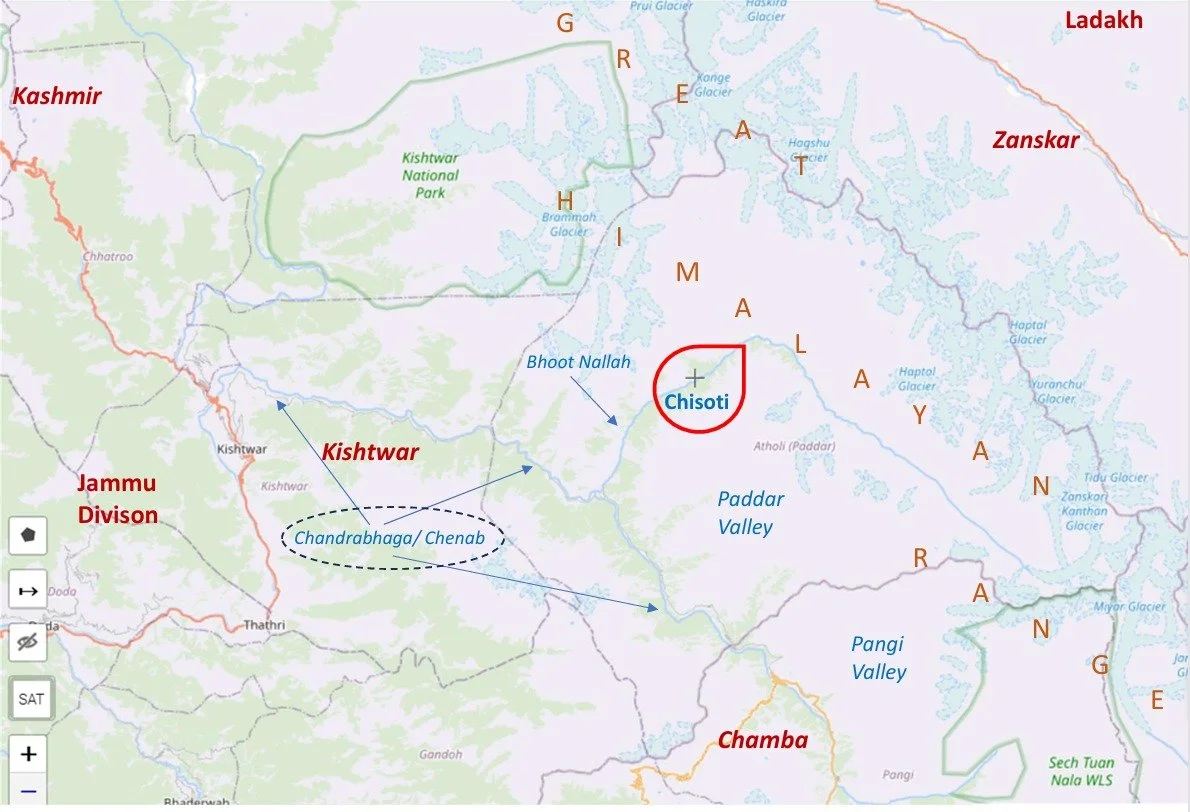
However the Kingdom of Chamba in its time was a powerful Kingdom which held sway in large part of one of the most unvisited and unexplored parts of the Western Himalayas including Lahaul, Bahderwah, Padder and Zanskar. All these regions are still largely unexplored and the Chambyalis were the Masters of all these regions at a point in history.
For Lahaul they were always in a power struggle with the Kulu State and they even met at Battle right on the Rohtang Pass as well. Rohtang kinda was the point where Kullu met Lahoul and kinda touched Chamba as well. Both Chamba and Kulu were in a constant state of rivalry over Lahaul. Though it was mostly the Kulu state which held onto Lahaul after the disintegration of the Ladakhi Kingdom.
The King Chattar Singh of Chamba attacked Padder in the middle of the 18th century and established Chamba Rule over the Padder region in Kishtwar. After being victorious Chattar Singh established a Fort there known as Chattar Garh. Padder continued to be under the control of Chamba till 1836.
In the early 1800’s Ratnu Thakur, the top official of the Chamba King, undertook an expedition to Zanskar and made it a tributary of Chamba as well. The King of Zanskar agreed to pay an annual tribute to Kingdom of Chamba.
It was around this time that my favorite historical character, the Sher e Punjab was on the rise and all the Hill Rajas including the Rajas of Chamba had no option but to accept the Sikh Emperor as their overlord. The Emperor deposed most of the Hill Rajas but he had a soft corner for Chamba as the main Wazir, Wazir Nathu, had played a positive role in the negotiations with Raja Sansar Chand of Kangra in 1809 and had as per some reports saved the life of the Emperor himself by providing him a horse in the 1817 Campaign in Kashmir.
Around the same time happened the invasion of Ladakh by the indomitable General Zorarwar Singh. While on his back from the first campaign in Ladakh on reaching Kishtwar, the General heard of an uprising in Ladakh. He rushed back to Ladakh, but this time taking the shortest route through Paddar via Umasi La Pass into Zanskar and onto Leh to put down the uprising.
A detachment of his Army under Wazir Lakhpat Rai and Col. Mehta Basti Ram was sent to subdue the Zanskaris which they did and stationed some Dogra soldiers there as well. And thence they returned to Jammu via Paddar but stationed a few Dogra troops in Paddar as well.
As General Zorarwar Singh was tending the affairs in Ladakh and Baltistan the Zanskaris rose up in revolt and put the Dogra garisson to the sword. The news of this reached Paddar and the overzelaous Ratnu Thakur decided to use this oppurtunity to attack the Dogra soldiers stationed in Paddar. Some were killed and others were taken as prisoners to Chamba.
The General got the news in Ladakh and was visibly incensed at this attack on his soldiers in what he considered friendly territory. Well those of you are aware of the kind of man General Zorawar Singh Kahluria was know what was coming next.
The General with a detachment of his Army invaded Paddar vis the Bhot Nullah from Zanskar. The whole Fort and town of Chattar Garh was destroyed and it was renamed Gulabgarh in the name of Raja Gulab Singh. Meanwhile on hearing the news of Zorawar’s approach Ratnu Thakur fled to Chamba. After claiming Padder Zorarwar Singh decided to make a push for Chamba
itself.
The Chamba Rajas knew that facing the battle hardened Dogras of the General would be quite a task made a representation to Raja Gulab Singh denying any involvement in the unfortunate incidents that took place in Padder and put the blame squarely on Ratnu Thakur. Consequently Ratnu Thakur was despatched to Jammu by the Chamba Rajas where he was imprisoned by Raja Gulab Singh. But this was not the last of Ratnu Thakur. After a few years news came to Raja Gulab Singh that Ratnu Thakur in the prison had shaved his head and his beard. Raja Gulab Singh sent for Ratnu Thakur and asked him why he did so ? My King has died and I as a loyal subject owe him this, Ratnu answered. The King of Chamba, Chattar Singh had passed away a few days back. Raja Gulab Singh was impressed with his sense of loyalty and decided to free him and even bestowed upon him a Jagir in Kishtwar.
However by 1841 the Sher-e-Punjab, indomitable General and the Wazir had passed away and the Sikh kingdom was in dissaray. The Chamba Rajas were now without a protector and the field was now open. However the Sikh Armies finally met the British Army in 1845 and in the consequence of their defeat Chamba was now ceded to the British. In the meantime Raja Gulab Singh had already taken Badarwah in the meanwhile and installed Raja Prakram Singh (who incidentaly was the son of Raja Zorwar Singh who was the nominal Raja of Badarwah being made so by his brother Raja Chattar Singh, the Ruler of Chamba). However Chamba still mantained its claim over Badarwah.
In the after math the British signed a treaty with the Raja of Gulab Singh under which all the territory to the North of the Ravi to the the Indus and beyond was given to Raja Gulab in lieu of Rupees Seventy Five Lakhs he paid as war indemnity on part of the defeated Sikh armies.
Thus even most of Chamba, which lay beyond the Ravi became a part of the new state of Jammu and Kashmir with Gulab Singh as its Maharaja. But then the Wazir Bhaga, another able Wazir from the family of Wazir Nathu, intervened and asked the British to take them under their wings instead of becoming a part of Jammu and Kashmir. Chamba Kingdom had to give up its claim on Badarwah and all other territories beyond it which became a part of Jammu and Kashmir. And the Chamba Kingdom promised to pay a tribute of Rs.12,000 per annum to the British plus Dalhousie was leased out to the British in perpetuaty as a Hill Station where the troops could get some R&R.
Subsequently in 1947 Chamba State became a part of Punjab Hill States and later an important part of Himachal Pradesh.
Coming back to where we started, Dalhousie, the most well known place in Chamba nowadays, the tales bravery, conquest and subterfuge all but forgotten.
A view of the Pir Panjals looking out of Dalhousie.
If only these Mountains could speak, the tales they would tell would truly be extra-ordinary.
Pic from October 2016, Dalhousie, Himachal Pradesh
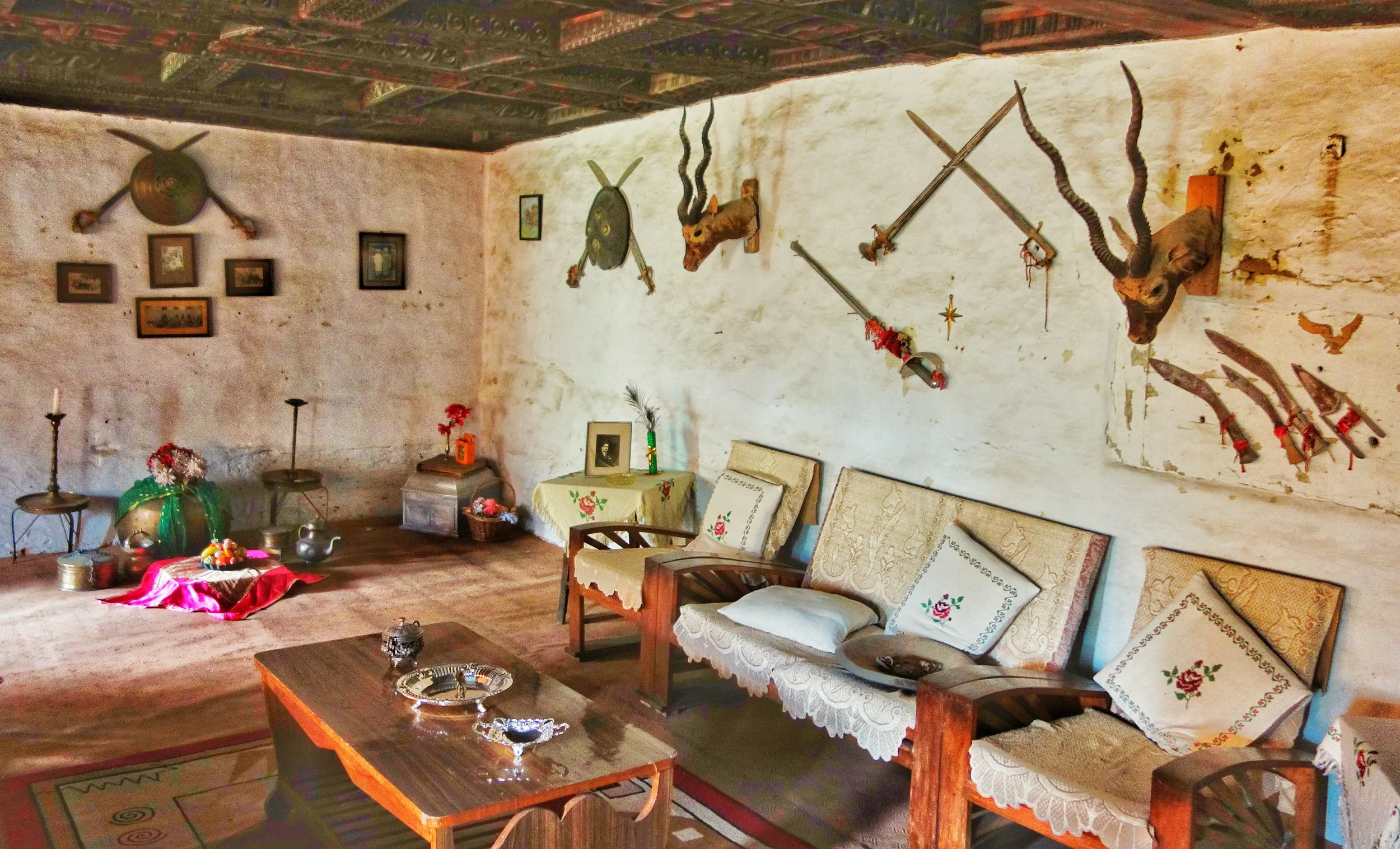
The Khukris of Kotkhai Palace
The Story of how the Gurkhas once met on the battlefield and how they came close to fighting the British together but alas its a tale of missed chances. And how the Gurkhas Kingdom once stretched all the way from the present day Nepal to Kangra valley.

The Khukris of the Kotkhai Fort
As they say every pic tells a story.
This pic was clicked in the Diwan E Khas of the Fort Palace of the Rana Sahib of Kotkhai. I had earlier posted another pic from the same place.
Like any Royal places of audience it had the customary display of weapons of war and trophies of hunts. There were Shields, Swords, Matchlocks, Bows, Kataars and most intruigingly Khukris. And this opened the Pandora Box of the time when the Gurkhas were in control of this area along with Garhwal and Kumaon and which eventually brought them into conflict with the British.

The Gurkha war machine after over running Garhwal and Kumaon and certain parts of Himachal laid a siege on one of the most important Forts of the Lower Himalayas, the Fort of Kangra in 1806. Led by General Amar Singh Thapa, also referred to as Kazi, the Gurkhas were simply unstoppable. The House of Gurkha, inspired by the Great Prithvi Narayan Shah were expanding their Empire like never before and led by Generals like the Kazi, who was the Military Commander of the Gurkha armies to the west of the Sutlej they were on a roll. Soon they over came the defenders of the Fort and the Kangra Fort was now in the hands of the Gurkhas. As per a report of a British Officer Captain C.P Kennedy in 1824 after Kangra the next target for the Gurkhas was Kashmir, which at that time was under the Afghans.
Except that another equally powerful entity had its eyes on the Kangra Fort, the Hill States and Kashmir and beyond. This was Maharaja Ranjit Singh and his equally warlike Army of the Khalsa ie the Confederacy of the Sikhs. After the fall of the Fort the ruler of Kangra, Raja Sansar Chand Katoch approached Maharaja Ranjit Singh asking for his help in evicting the Gurkhas. It has to be noted that the Sikh and the Katoch armies had also fought against each other as Maharaja Ranjit Singh had set his eyes on the Himalayas as mentioned earlier and they were not really the best of friends. But for now the best recourse available to the Hill Raja was to seek the help of Maharaja Ranjit Singh. The Kangra Raja offered the Sikhs the Fort for the long term if they could make the Gurkhas leave.
Maharaja Ranjit Singh was not only a great military genius and organiser of the Sikh armies, he also had great sagicity and foresight. He knew exactly what it would entail taking on the Gurkhas, they had a reputation for all the right reasons. And he knew that the biggest victors in an all out clash between the Sikhs and the Gurkhas would be the British as both these forces would be greatly weakened if they got into a war. And he did what he thought would be in everyone’s best interest. Of course his own interest and the interest of his statecraft was paramount.
Ludwig Stiller writes in his epic book “The Rise of the House of Gorkha” that Maharaja Ranjit Singh sent a letter to General Amar Singh Thapa in August 1809 asking him to peacefully give up the Kangra Fort and vacate the whole area to the Sikhs and in return he offered Gurkhas military help, whenever they came into conflict with the British, which was clearly inevitable. Just to push his point in, being the Great Military Genius he was, he had cut off the supply lines of the Gurkhas and had the Fort surrounded. The Kazi offered money to Maharaja Ranjit Singh in order to withdraw but it was Kangra the Maharaja wanted and not money. That was when the Letter was sent.
General Amar Singh Thapa was incensed when he read the letter and even imprisoned the messenger. The reason for this was that he was aware that the Maharaja and the British had signed the Treaty of Amritsar in 1809 in which it was agreed that the Maharaja would keep to the other side of Satluj and not interfere with the British dominions and protectrates below it. It was however set him free to do whatever to the North and the West of the Sutlej. The Kazi found it hypocritical that the Maharaja would sign a Treaty with the British on one hand and offer help to the Gurkhas against them on the other hand. This is how the greatest Empires were built but I assume the Kazi was more of a military man. The Kazi refused the offer.
Maharaja Ranjit Singh had no other option except the Military one now as a conflict with the Gurkhas could not be avoided. The Gurkhas had spurned his offer. There ensued a short War, called the Sikh Gurkha war, both sides fought tooth and nail but the Gurkhas had a disavantage as their supply trains were cut. The Gurkhas lost in the end and as a result of which the Gurkhas were evicted from the Kangra Fort and all the territories there of. Maharaja Ranjit Singh now sat firmly in command of the Kangra Fort and surrounding Hill States braced up for the Gurkha retaliation. And later of course Maharaja Ranjit Singh conquered Kashmir as well from the Afghans.
So the Gurkhas lost the Kangra Fort and eventually they had to fight the British in 1815 and they had to fight them alone. Maybe theyshould have taken Ranjit Singh’s offer and the course of history would have been different. Alas. But lets rewind again.
Coming back to 1809, after their eviction the Gurkhas tried to take Nalagarh as it was beyond Maharaj Ranjit Singh’s reach due to the terms of the Treaty Of Amritsar and at the same time they captured the Fort at Subathu (it still serves as a Gurkha Regimental Center)and the went onto conquer the other Shimla Hil States like Theog, Keonthal, Balsan, Jubbal Kotkhai and Rampur Bushahr. The KotkhaiFort was also now under the control of the Gurkhas and now a clearer picture of the mystery of the Khukris at the Diwan e Khas emerges.
On a broader front the Gurkhas were now, with all their conquests were now heading for a collision with the British. The powerful Nepalese Prime Minister, Bhim Sen Thapa knew war was coming. Bhim Sen Thapa was also a great tactican and it was apparent to himthat the greatest weakness of the British was that they could not stand up to a combined force of a confideracy of the local powers. He sent emissaries to various princely states, amongst them the Marathas of Gwalior. The Scindia had admiration for the Gorkhali courage that they had displayed in standing upto the British. But in order to form an alliance he set one condition. He would only join in an alliance if the most dominant local power in North West India ie good old Maharaja Ranjit Singh would also join the alliance. The clock had turned a full circle in 5 years.
It was now Amar Singh Thapa’s turn to send a missive to Maharaja Ranjit Singh, which offered the Sher-e-Punjab, “a division of the Gangetic plains from Delhi to Calcutta between the Sikhs, the Gurkhas and the Marathas” and also appealed to Maharaja Ranjit Singhto throw out the British in the name of Hinduism. Prime Minister Bhim Sen Thapa had made his move and had also thrown in an emotive religious angle into it. He knew this game. He knew it well.
I still wonder what the Sher-e-Punjab would have made of all this. And I am sure he must have considered it very seriously. He could think keeping all emotions, including religious ones aside. His armies consisted of Sikhs, Muslims, Hindus, Europeans and even Gurkha and Rohilla soldiers. After givng it much thought, I assume, he decided to lay low and not get himself imbroiled in this affair. He had made his offer long back and it was refused. Now it was payback time. At the same time he mobilised his Army of the Sutlej to “take advantage of any situation that may arise” out of the coming clash between the British and the Gurkhas.
The First Anglo Gurkha war finally broke out in October 1814. The British attacked on the Western and Eastern front, in an area from the Sutlej to the Kosi. In the eastern front the charge through the Terai towards the Kathmandu Valley was led by Maj Gen Marley and Maj Gen Wood and the western front was led by Maj Gen Gillespie and Col Ochterlony. Facing them were the Nepalese Army columns led by none other than our old friend, the Kazi, General Amar Singh Thapa.
On the Himachal Hill States front, when the British and the Gurkhas crossed swords the local Hill Rajas supported the British, as they were promised their Kingdoms/ Riyasats/ Thakurais back. That the British afterwards reneged on their promises is another story. All the Kings of the region however now use the title Rana, though I am not sure if its significance or if it had anything to do with the Gurkhas. However I am pretty sure they all have collections of Khukris.
I leave the details of the Anglo Gurkha War for you to read up on but at the end the Treaty of Sagauli was signed and the Gurkhas lost all their dominions in Garhwal, Kumaon, Himachal Pradesh as well as Sikkim and Darjeeling. The borders of Nepal as it stands today were defined by this Treaty.
I cant help but wonder what would have been different had the Kazi accepted the Sher-E-Punjabs offer or vice versa 5 years later.
The British eventually overcame the Sikhs as well almost 10 years after the Sher passed away. Having faced the Gurkhas and Sikhs in war the British had a great sense of admiration for their sheer courage and tenacity. No wonder both the Gurkhas and Sikhs were recruited as soldiers and boy did they prove themselves in all the Wars they fought for the British.
The Political History of the Himalayas is indeed as intriuging as the Himalayas themselves.
PS : Some of the Forts that the Gurkhas built still exist in Himachal Pradesh like the Dhar Mountain Fort, the Malaon Fort, Bansar Fort, Subathu Fortand Parwanoo Fort. Maybe this tale will inspire some of you guys to go take a look at these old dilapidated structures take some pics and post around here.
Himachal Day : A Brief History of the Modern Times
A brief history of the Himalayan state of Himachal Pradesh. A look into how different Hill states were combined to create one of the most beautiful and now amongst the most progressive states of the country.

Himachal Day : A Brief History of the Modern Times
The state of Himachal Pradesh officially came into existence on 25th January 1971 and till then it used to be a part of Punjab Hill States. Today we celebrate the completion of 47 years of its existence as a state.
The Punjab Hill States were themselves an amalgamation of the Punjab Hill States and the Shimla Hill States as they were also referred to. During the reign of the Mughals most of the Hill Kingdoms here were nominally aligned to them but were pretty free to act as they wished as long as the tribute was sent to the Mughals. However with the decline of the Mughal power the situation developed more fluidly and there were many actors who played a part in the formation of Himachal Pradesh. And whenever there is a power vacuum in history other forces are attracted to fill in the same.
In the beginning of the 19th century one of the most powerful Hill Raja was Raja Sansar Chand Katoch of Kangra who organised his Army and went on a conquering spree not only in the Hill Kingdoms but also invaded the plains of Punjab in order to gain territory. With an ambition to carve out a Katoch Kingdom he conquered various Hill Kingdoms in his neighbourhood including Chamba, Mandi, Kullu, Guler, Nurpur and Kutlehar. He even tried to capture territory around Hoshiarpur in Punjab but was repulsed by Maharaja Ranjit Singh in 1803 – 1804.
Having received a setback in Punjab he set his eyes on other Hill Kingdoms including Bilaspur (Kahlur) and Bara Thakurais (12 Thakurais) across the Satluj River. These Bara Thakurais till some years back had been a part of another powerful Hill Kingdom, Sirmour. And they had been the bone of contention between the Kingdoms of Kangra, Bilaspur and Sirmour. The Kingdom of Sirmour had also opposed the aggressive actions by Raja Sansar Chand in Mandi and Bilaspur.Raja Sansar Chand formed an alliance with the Raja of Nalagarh and together they captured large parts of Bilaspur territory and established control over the Bara Thakurais in the CIS Satluj area.
In the meanwhile the Gurkhas under General Amar Singh Thapa who had already captured Garhwal and Kumaon were now in occupation of the Sirmour Kingdom where they had been invited by one of the warring factions in the war of succession and once that was settled they decided not to leave and were in control of the Kingdom from their main base in Dehradun. After losing much of his territory to Raja Snasar Chand, the Raja of Bilaspur called on the Gurkha General again for help and to help thwart the plans of Raja Sansar Chand and his allies.
The Gurkhas due to ambitions of their own readily agreed to the same and stepped into the conflict on the part of the Bilaspur Raja. Raja Sansar Chand had already a lot on his hands and taking on the Gurkhas was just too much. The Gurkhas defeated Raja Sansar Chand and occupied the most strategic fort of the Himalayan foothills, the Kangra Fort. In addition to that they held all the Hill Kingdoms in the CIS Satluj areas and were also in control of another powerful Hill Kingdom, the Kingdom of Bushahr.
Raja Sansar Chand had no option but to approach his former bete-noire Maharaja Ranjit Singh and asked for his help and promised in return the Fort of Kangra and various other consolations. As a result after some machinations finally Ranjit Singh stepped in and the Gurkhas were evicted from the Fort of Kangra but they crossed over the Satluj and stood strong in their Forts around Solan and hence they carried on to occupy all the smaller Kingdoms and Thakurais.
On the other side of the Satluj after occupying the Kangra Fort, Maharaja Ranjit Singh spread his influence on all the Hill Kingdoms on which Raja Sansar Chand earlier held sway. All of Himachal on the Trans Satluj side was now held by Maharaja Ranjit and most of the territory on the other side of the Satluj was held by the Gurkhas. Due to the Treaty of Amritsar that Maharaja Ranjit Singh had with the British he was not entitled to make make any conquests in the CIS Satluj area and as the Gurkhas were in the CIS Satluj area, Ranjit Singh could not make any advance on them.
By this time the Gurkhas were on a collision course with the British. All the Hill Rajas and Thakurais asked the British for help in getting the Gurkhas out of their territories. They promised the British all the help in their war against the Gurkhas provided that their Kingdoms and Thakurais are returned to them after the Gurkhas leave.
In 1814 the Anglo Gurkha war took place at multiple fronts and the British defeated the Gurkhas and the Treaty of Sagauli was signed between the two. As a result of the Treaty the Gurkhas had to give up all their territory West of the Kali River to the British. This included Garhwal, Kumaon and parts of the present day Himachal Pradesh upto the Satluj River. The British now held sovereignty over these Hill States in Himachal and controlled the whole territory. It was at this time that at a certain location which was in their control they established the town of Shimla. And the Hill Rajas and Thakurs were given back their Kingdoms and Thakurais though they were under British suzerainty from then on. As they had to report to the British Resident at Shimla these were collectively known as the Shimla Hill States. These were as under
Bilaspur (Kahlur);
Bushahr with feudatories Delath and Khaneti; Nalagarh (Hindur);
Keonthal with five zaildaris Koti, Theog, Madhan, Ghund and Ratesh;
Baghal, Bhagat, Jubbal, Kumarsain, Bhajhi, Mahlog, Balsan, Dhami, Kuthar, Kunihar, Mangal, Beja, Darkoti, Tharoch, Sangri, Rawin and Dhadi.
The Kingdom of Sirmour was also returned to the Raja again under British suzerainty.
On the other side of the Satluj the areas were still under the control of Maharaja Ranjit Singh. In 1836 the Sikhs went further and occupied the Kullu Valley as well and bought Lahaul and Spiti also under their control. At this point of time the Sikhs controlled pretty much all the territory between the Satluj and the Indus. And so it remained for many years even after the death of Maharaja Ranjit Singh in 1839.
However in the aftermath of the Anglo Sikh Wars in 1846, which the Sikhs lost the British acquired control of this whole territory. The newly acquired Trans Satluj states that the British acquired and which were designated as the Punjab Hill States (as they previously belonged to the Punjab Kingdom) were as under
Punjab Hill States
Kangra, Guler, Jaswan, Datarpur, Nurpur, Chaitiba, Suket, Mandi and Kullu and Lahaul-Spiti
In addition the British also got suzerainty over the powerful Chamba Kingdom.
This was the makeup of the region till 1947 when India got independence the Simla Hill States and the Punjab Hill States as well as Chamba and Sirmour state were put together to form Himachal Pradesh. In 1956 after further re-organisation is was made a Union Territory. Finally it was made a formal state on the Indian Union in 1971 on January 25th. Shri Yashwant Singh Parmar is credited as being the Father of Himachal Pradesh and he was the Chief Minister of the state on a number of occasions. He hailed from a Rajput family in the erstwhile Kingdom of Sirmour. The longest serving Chief Minister of Himachal Pradesh who recently lost the elections, Shri Virbhadra Singh is the head of the Royal Family of Bushahr. The present Chief Minister Shri Jairam Thakur also belongs to a Rajput family from Mandi. A reminder that much of the present stems from the past.
Jai Himachal.
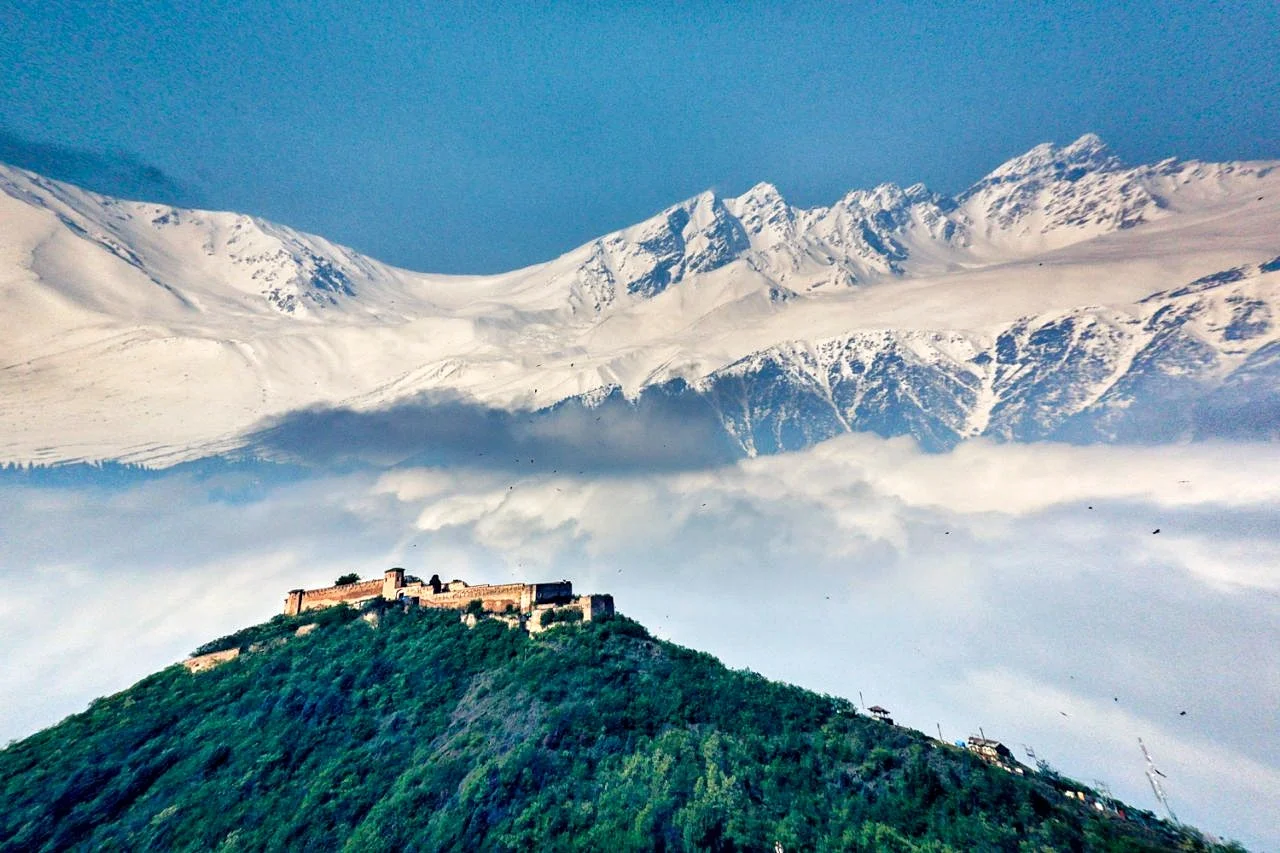
Kashmir : Between The Mughals and the Dogras
The history of Kashmir from the time of the rule of the Mughals till the time of the rule of the Dogras. And the Afghans and the Sikhs in between. A straight narrative of the complex history of the Kashmir Valley.

Kashmir ; Between the Mughals and the Dogras
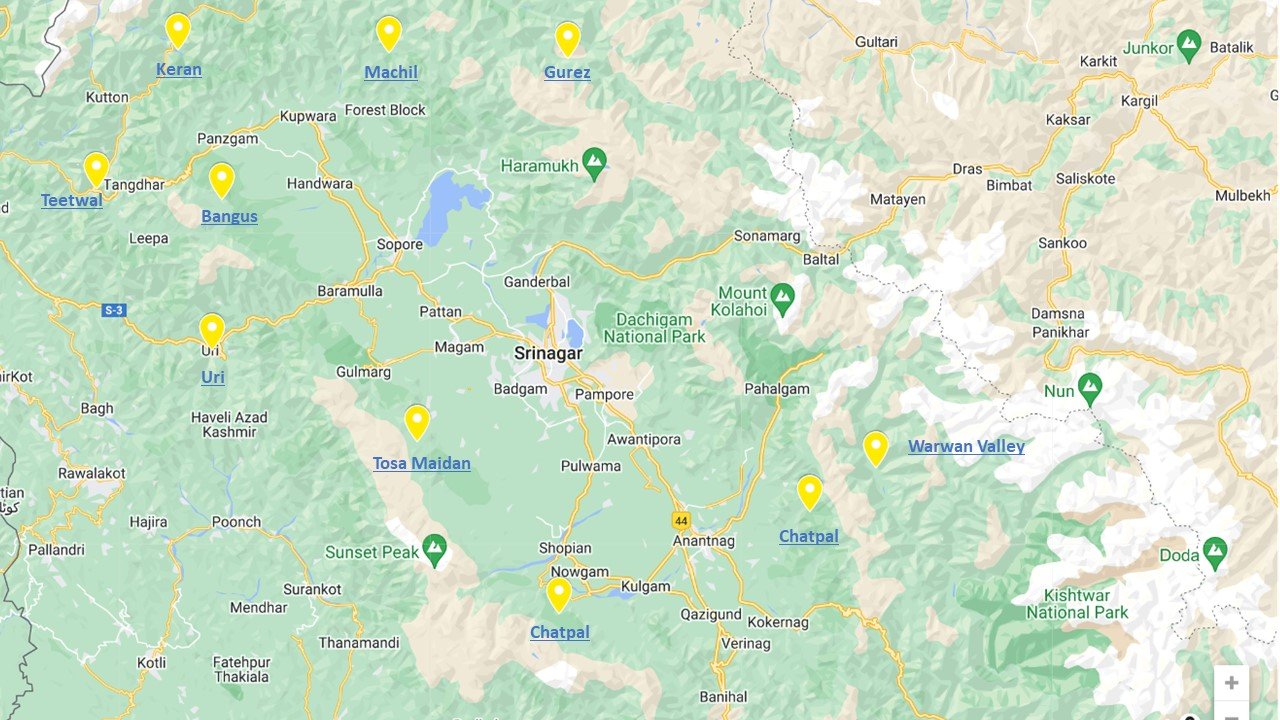
The exalted Vale of Kashmir. The powder keg Kashmir. The enigma Kashmir. The mere mention of this name triggers a huge range of human emotions and reactions that few other words do.
Most people are well aware of what happened after Independence in 1947 but few are aware of the twists and turns of history that the Valley went through to land at that particular juncture in 1947. I try and explain the passage of History right through the Mughals to the Afghans to the Sikhs and to the Dogras. This has been compiled through various sources both offline and online. This is just an attempt at re-creating history without any prejudice to any race or religion or ethnicity. I will try my best and remain neutral to any bias and put things as they happened. My only bias would be towards a character that I have come to admire more than probably anyone in History. You will know when you read the complete story.
As most are aware Kashmir was a great favorite with the Mughals and it was a Mughal province for many centuries till finally the power of the Mughals began to decline and the Governors of the Provinces became semi-independent and began to assert their own whims and fancies.
Kashmir was no different but it had not missed the notice of the Afghans who used carry out their invasions of North India time and again in this period taking advantage of a weak Center.

The Hari Parbat Fort as seen from the Dal Lake
Cutting a long story short the Afghan Ahmad Shah Abdali finally conquered the Valley of Kashmir after the Afghan forces under Abdullah Khan Ashaq Akasi defeated the forces of the local commander and the guy in control of Kashmir, Abdul Qasim. This was in 1753.
Abdullah Khan Ashaq Akasi became the first Afghan Governor of Kashmir but within 6 months he had to go back to Kabul for some pressing business and Abdullah Khan Kabuli was put in charge.But the Afghans had become pretty unpopular because of the aggressive tax collections and eventually he was murdered by Sukhjiwan and Abdul Banday. And Sukhjiwan Mal assumed the Governorship of Kashmir for the next almost 9 years. But he declared his allegiance to the Mughal Emperor, Alamgir and for the same he was given the title of Raja. Another Governor who succeeded him Azad Khan declared his allegiance to the Ottoman Emperor.
Point being the Governor’s of Kashmir though nominally under Afghan rule continued to do mostly as they pleased and the state of affairs in Kabul at that time were such that the Afghan Kings had neither the time or inclination to intervene as they were busy in familial infighting for the right to Rule.

Shah Shuja Durrani
Once such Governor was Atta Muhammed Khan (1803 to 1813) who declared himself pretty much independent after his father was murdered in Kabul by supporters of a certain claimant to the Throne. As it so happened in 1808, the Afghan King Shah Shuja was ousted by the same individual, Muhammed Shah and his minister Fateh Khan. Atta Muhammed Khan invited Shah Shuja to come to Kashmir from where he could still go on ruling as the King of Afghanistan. Shah Shuja took the offer and landed up in Srinagar only to find himself Atta Muhammed Khan’s prisoner at the Hari Parbat Fort.
The new King Mahmud Shah and Fateh Khan realized that the loss of Kashmir would be a great one and they had to settle the score with Atta Muhammed Khan for declaring independence and also they wanted Shah Shuja in their custody. So in 1812 an Army was prepared under the command of Fateh Khan and his brother Azim Khan for a punitive and decisive strike against Atta Muhammed Khan and re-take Kashmir.
There was a problem though. A lot of water had flowed down the Jehlum since 1753 and there was a new power to be reckoned with. And yes you guessed it right, it was my favorite historical character, the Sher-e-Punjab, Maharaja Ranjit Singh (I will refer to him as the Sher in short).

The Sher E Punjab : Maharaja Ranjit Singh
The newly conquered/ aligned territories of the Sher lay in between Kabul and a smooth passage to Kashmir and the Afghans had no option but to ask the Sher for his assistance in return for which they offered suitable rewards. Not that the Sher didn’t have designs of his own on Kashmir. The rewards included the Eleven lakh Rupees and “half” of Kashmir if this amount wouldn’t be paid.
The newly formed Punjab Kingdom of the Sher was sandwiched between the Britishers on the East and the Afghans on the West. Both were formidable adversaries and having done his conquests to the South and the only avenue left for expansion was up North and hence to Kashmir. Kashmir as a territory offered great revenue and was also the center of the Shawl trade. It was also an important trading point for trade into Turkestan, Baltistan, Ladakh and Tibet. But besides all these there was a certain aura attached to this place. The Sher wanted Kashmir.
Till now the Sher had never been in direct conflict with the King of Afghanistan though he had fought Afghans on numerous occasions and was well aware of their military prowess. Nor did he want any confrontation with them till he chose the place and time.
So all things said and done an alliance was agreed upon and a small Sikh force was dispatched under Diwan Mokham Chand to go along with the Afghan forces to teach a lesson to the rebel Afghan Governor of Kashmir (History is never as simple as we are taught or what we assume it to be) and “secure” Shah Shuja from his captivity.
Oh another small thing. The wife of Shah Shuja had offered the Koh-i-Noor diamond to the Sher if he could secure the safe release of Shah Shuja. The Sher was a connoisseur of all good things in life and the Kohinoor would be crowning jewel in his great collection.

The Shergarhi Palace
So soon a combined Afghan-Sikh force marched into Srinagar and took over the main Shergarhi and the Hari Parbat Fort. Both Atta Muhammed Khan (the Sher had taken an undertaking from the Afghan King that he wouldn’t be harmed) and Shah Shuja on being released made haste for the Sikh camp understandably. Point to be noted that both forces reached Srinagar through different Routes
Diwan Mokham Chand now demanded his due as promised but Fateh Khan refused as he said that it all belonged to the Afghans and the Sikhs didnt play any part in it. After due deliberations with the Sher, the Diwan with his forces withdrew but they took along with them Shah Shuja and Atta Muhammed Khan. The Kohinoor was worth much more than Eleven Lakh Rupees. Not that Fateh Khan knew.
After they withdrew from Kashmir, the Sikh forces consolidated and induced Jahandad Khan (who was a brother of Atta Muhammed Khan, the deposed Governor of Kashmir, now in Sikh protection) the commander of Fort of Attock to let them into the Fort and take control.

The Attock Fort
The Sher was ready. This brought him into direct confrontation with the King of Afghanistan. Fateh Khan left Kashmir and a combined Afghan force now attacked the Sikhs at Attock. Joining the Sikh force were the formidable General Hari Singh Nalwa, General Gurmukh Singh, Karam Chand Chahal, the commander of the Sikh Artillery Ghouse Khan besides Dewan Mokham Chand who led the Sikh forces. Without getting into the details let me just say that the Sikhs won this first big engagement between the Sikh and the Durrani Empire.
Coming back to Kashmir. The Sher after his victory despatched a force under General Ram Dayal to fulfil his ambitions on Kashmir in 1814. The Afghans were ready for battle and they met at Hirpura. Fighting in the Pir Panjals in inclement weather was something the Sikhs were not prepared for. They lost heavily in this engagement and then in further engagements. Kashmir still lay with the Afghans. The Sikhs realized they needed expertise in mountain warfare which the Afghans were good at and the Sikhs were defeated in their first expedition into the Himalayas.
Just as it happened a war far away provided a new set of weapons to the Sher. The British had clashed with the Gurkhas around the same time. The Gurkhas were finally defeated in 1816 and what it did was that the fighting quality of the Gurkha soldier was greatly appreciated and many Gurkhas went on to join the forces of the Sher.

Maharaja Gulab Singh
Meanwhile Azim Khan was the new Governor of Kashmir and he tried his best to bring around some stability. His main revenue collector was Birbal Dhar. It so happened that some revenue targets were not met and Azim Khan was unhappy. Anticipating his wrath Birbal Dhar fled to Raja Gulab Singh of Jammu who sent him to the Sher. Birbal Dhar offered inside information on Kashmir and egged on the Sher to launch another attempt on Kashmir.
Soon the oppurtune time came in 1819 and Azim Khan had to leave for an engagement in Kabul leaving Jabar Khan in charge. A new force was prepared comprising of the Sikh Army with its newest element the Gurkhas. A galaxy of the Sher’s Generals were put in charge. These included Misr Diwan Chand, General Hari Singh Nalwa, Raja Gulab, Sardar Jawala Singh and General Akali Phulla Singh and they were assisted by the local Muslim rulers of Poonch, Rajauri and Bhimber. They marched onto Kashmir over the Pir Panjals.
The decisive battle was fought at Shopian. The Afghans fought hard and they fought well. But the cream of the Punjabi’s Emperors formidable and trained on European lines forces finally prevailed in the Battle. On July 15, the victorious Sikh forces marched into Srinagar and finally the Sher had his biggest prize Kashmir. The first son born to the Sher after the conquest of Kashmir was named Kashmira Singh.
Finally the Sher had Kashmir but he would never get to visit it in the next 20 years. The first Sikh Governor of Kashmir was General Hari Singh Nalwa. And then started the period of Sikh rule in Kashmir. In the meantime the ruler of Jammu, Raja Gulab Singh, a vassal of the Sher, started on a campaign in the surrounding areas with a view to consolidate his power in the Jammu Hills and beyond. He pretty soon ran over all the small Hill Rajas around and at the same time he came to assume the powerful position of the Commander in Chief of the Sarkar Khalsa Army (as the Sikh Army was called).
Raja Gulab Singh, a Dogra, had ambitions of his own and his brothers held powerful positions in the Court of the Sher. Raja Dhian Singh was one of the main Wazirs and Suchet Singh was the treasurer. Soon the Court of Punjab was divided into two factions. The Punjabi Sikhs on one side and the Dogras
on the other. Of course none of these factions could gio against the wishes of the Sher. Nobody could so much as whimper in front of him.
In 1839, the Sher passed away. The passing away of such a dominant personality and the factionalism soon led to the weakening of the Empire. The British had been lying in wait and having defeated all the major powers in the sub-continent the only obstacle to their complete domination was the Sher. He was no more. The time had come.

Political Divisions of Punjab after the First Anglo Sikh War in 1846
Finally in 1846 the British met the Sikhs in battle. After several hard fought Battles the British finally emerged victorious. Raja Gulab Singh, conveniently had kept out of all these Battles. A huge war indemnity was levied on the Sikhs and on being unable to pay so they offered in return all the territory between the Beas and the Indus to the British.
Raja Gulab Singh offered to pay the war indemnity of 75 lakhs Rupees in return for all the country between Ravi and Indus to be given to him. Kashmir which was a part of this to be turned onto him. He already controlled Jammu, Ladakh, Baltistan and Gilgit thanks to the expeditions of General Zorawar Singh. The only missing piece was Kashmir. The crown jewel. The British agreed. And hence was formed the state of Jammu and Kashmir.
Hence the Dogras under the newly crowned Maharaja Gulab Singh became the new Rulers of Kashmir. But this was not without drama. The last Sikh Governor of Kashmir, Sheikh Imam-ud-Din offered some resistance but owing to the pressure exerted by the British he soon gave up and the Dogras took actual possession of Kashmir.

Maharaja Ranbir Singh
Maharaja Gulab Singh was succeeded by his son, Maharaja Ranbir Singh and so the Dogras ruled till 1947 and after that we are mostly aware of what happened.
Kiki’s Blog
Stories from the Himalayas
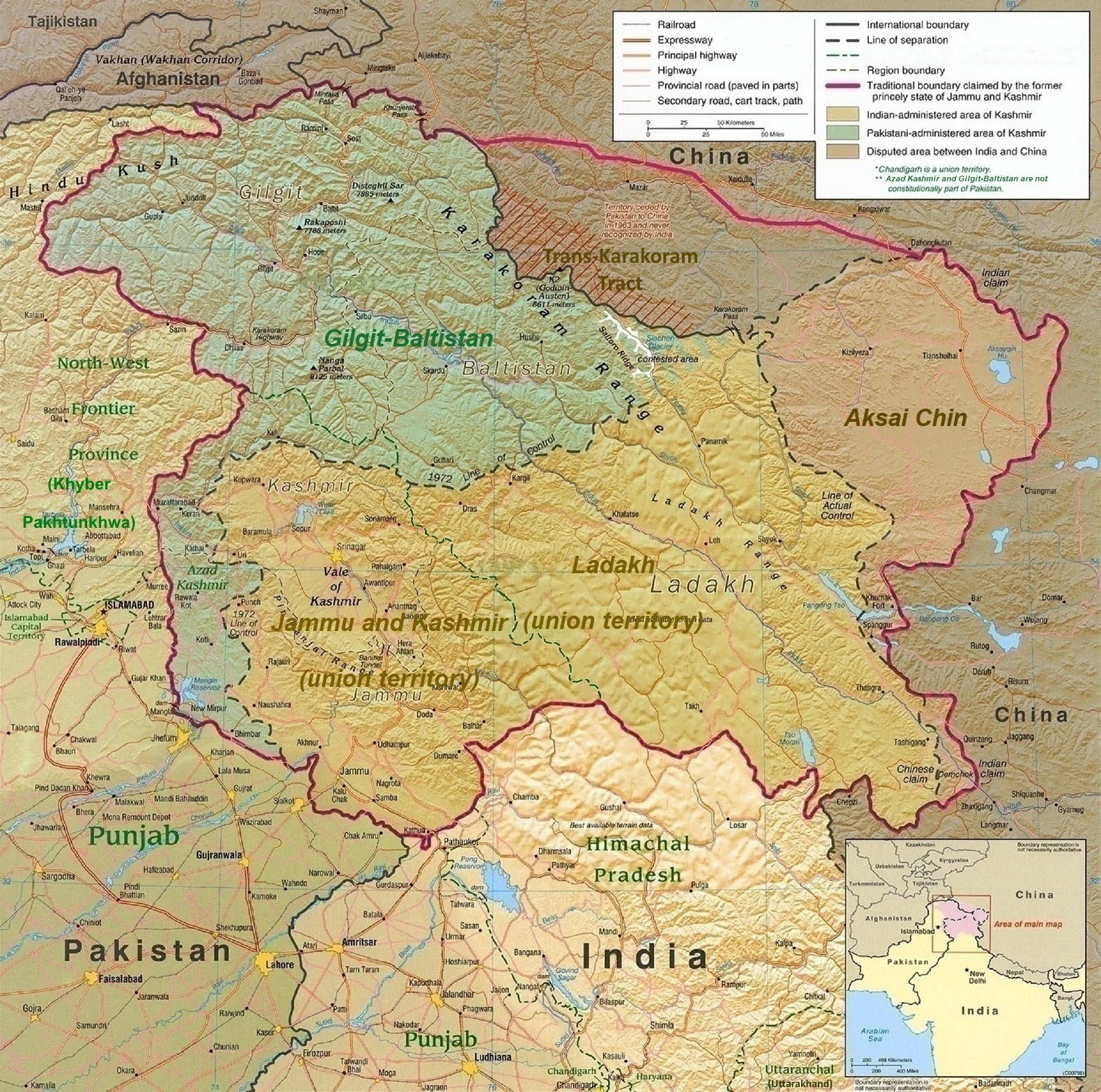



Five years ago the Galwan Valley was in the News for the wrong reasons after a deadly clash between the Indian and Chinese Armies in the Valley located in Ladakh lead to many deaths on the contentious Border between the two countries in wake of continued Chinese intrusions into Indian territory.
This area along the Shyok River, of which the Galwan Nallah or the Galwan River which forms the Galwan Valley has been off limits to Civilians since long but now the Indian Government has decided to open up the area for Civilians and we were amongst the First Civilians to venture into this beautifully desolate part of the Eastern Karakorams in Ladakh. Earlier Civilians could only venture upto the Village of Shyok from where the Shyok River takes a U turn and flows in a Northerly direction.