
Romancing the Mall
The British established Hill Stations, as they were called in the Himalayas as places where they could escape the heat of the Indian Plains. These Hill Stations acquired a European flavor and the Mall Roads in these Hill Stations became the playground of Scandals and Romances. My personal ode to my favorite Mall Road.

Romancing the Mall
For many of the younger lot the word “Mall”stands for the glitzy Structures which have all kinds of branded stores for all kinds of stuff and Multiplexes and Bowling Alleys and Go Karting and Beer Breweries and Pubs / Lounges / Night Clubs etc. but there was a time when it wasnt really so. The word Mall stood for something else.
When the British took over the sub-continent the thing that bothered them the most was very likely the Weather. The hot Weather of the Northern Plains of the sub-continent can indeed be very harsh for someone not accustomed to it (as I had learnt the hard way once upon a time ). But luckily for the British the tallest Mountain Range on the Planet happened to run right along the Northern Plains and it was in these Mountains that the British went looking for refuge from the searing heat of the Plains. Over a period of many years the British created a number of what they called “Hill Stations” stretching from Assam all the way to the Afghan territories.

These Hill Stations as they were in the beginning meant to be used by Soldiers for Rest and Recuperation slowly over a period of time came to resemble Villages in the English countryside with similar Cottages being built and given fancy English names. It was almost like a piece of the English countryside was transported over to the Himalayas. And then came up the Malls. They probably started with a few Shops which stocked the essentials in the beginning but over the passage of time as the British as well as the local population grew these local Shops started to take on a character of their own. Fancy eclectic Stores started to come up dealing in a wide variety of wares. As the Shops became stylish so did the people.
The Malls soon became places where the people especially the Europeans came dressed in their finery. Some of these Hill Stations and the Malls were off limits to the “Natives” and it was an all “White” affair. The Malls soon became places where you could socialise and meet other people especially of the opposite sex as Victorian sensibilities had to be kept in mind. Of course there were the Regal Balls, Pageants and the Parties but it was more often than not the Mall where things happened. It was also the place where Gossip spread and wild stories were told.

And of these Hill Stations the “Queen” of all the Hill Stations was of course, Shimla or Simla as it was called. And of course the British liked it so much that it became the Summer Capital of India. Of course it had a lot to do with the fact that Shimla was strategically located and within reach from Delhi, the Punjab, the Northern Provinces, Kashmir and even Tibet. And over time the City grew and became quite a fashionable and scandalous place for the English as well as the Indian Royalty. And of course it had the Mall. And the Malls had its stories. Stories of a place called the Scandal Point. Stories of the Gaiety Palace. Story about the Raja Patiala who was not allowed into Shimla and he then set up Chail. And ironically it was from his ancestors that the original land on which Shimla was built was taken. And endless other stories.
And of course then I had my own connection and feelings with the Malls. I grew up in the Vale of Kashmir and one of the most celebrated of “Hill” Stations called Srinagar. Though it isnt really a Hill Station if you know what I mean. We never had a Mall Road there like in other Hill Stations. We just had the Bund, which at one time was the fashionable part of Srinagar and the place where the foreigners used to throng to. You need to remember that even during the British Raj time there were restrictions on foreigners. For example they were not allowed to own land or build houses thats why no fancy British Cottages in Srinagar. There was infact a Handbook of Do’s and Dont’s issued to Europeans visiting Kashmir. But by the time we were growing up the Bund had lost its glory but we had the Boulevard and Polo View but they just didn't make the cut. The only place which I considered close to a Mall in Kashmir was the Pahalgam Market.

The Mall for me was and always would be associated with the Mall at Shimla. Though I have been to the Malls at Mussoorie or Nainital and other places but Shimla was always the one. I used to visit Shimla often while growing up as it fell on the way to our Apple Orchards further afield. We used to enjoy the Shopping and the Ice Creams and lots of other things to eat and enjoy. Well that was till we entered adolescence and there was a big shifting of our Goal Posts as to what our favourite activity would be on the Mall.
Yes you guessed it right. It was the Girls or the Ladies as I would now call them more appropriately and it seemed that out of all the places, it was the Shimla Mall on which you would see the prettiest Ladies that God seemed to have made. Going to the Mall always called for Hair Gel and some expensive foreign Eau D Cologne. And boy was the Mall an excitable places. Walking up and down the Mall seeing the pretty Lasses of Shimla. Assuming myself to be the Gentleman that I really wasnt I used to make sure that I didn't stare at any Lady as it was bad manners. It was more like sideways stolen glances and just an occasional eye contact. And mostly like proper Ladies they would look away. And so the game went on and on usually.

It was just another of these days. And it was the Shimla Mall again. And again we started playing the game. I still remember distinctly she was wearing a Red sweater as it was kinda nippy in April beginning. Same old stolen glances a couple of times and then the eye contact for a flash but this time she didn't look away. And I think I blushed and turned all Red. And thus it started. We spoke, numbers were exchanged and I even gave her a pic, which I ripped off my Admit Card for Class XII exams which had just gotten over. And she was from St.Bedes. Ah St.Bedes. Finally I had made it. I had a Girl in St.Bedes. It was probably one of the best feelings I have ever had. Ah Romancing the Mall was never gonna get better.
And thus the romance continues to this day though now I don't even remember the last time I was on the Shimla Mall. I have always crossed Shimla but never stopped and the only thing that calls me to Shimla is that feeling. The Mall. The Ladies. Maybe St.Bedes. It all seems a like a pleasant dream from a time long gone by. Those were the days as someone would say.
Those days of Romancing the Mall.
Oh yes. Ms.Red Sweater from St.Bedes. Didnt work out. Like it never does in such Romantic environs :)
Mahasu Temple Hanol
Mahasu Devta is the main Devta / Deity of the people living in the Jaunsar Bawar region of Uttarakhand as well as in the neighboring districts of Himachal Pradesh. The main Temple to Mahasu Devta is located in Hanol in Uttrakhand close to the border with Himachal Pradesh. Interestingly Mahsu Devta has a Kashmiri connection. We explore.

One little thing has always struck me since childhood. In the Western Himalayas there are a lot of places connected with Hindu mythology and the Mahabharata to be particular. And out of the Mahabharata about the Pandavas and the time spent in “Vanvas”. Any and every place had something or the other to do with the Pandavas. So it seemed everything which couldn't be explained or attributed to someone was made a part of the Pandavas vanvas. All this sounded nice and dandy till the time you don't put your mind to it. And then I thought how could they be at all these places at the same time ? And then I asked myself who were the Pandavas. Well they were a part of the Epic. But these places do exist for real and they must be someone’s handiwork. And looking deeper a pattern emerged. Of course at that time no one really questioned the authenticity of these claims. Most will not even now. But I have the right to know who built the “Pandava Temple”, who made the Horses at Ghoda Gali attributed to the “Pandavas” or the countless other things that are attributed to them. Because if I keep believing the Pandava theory then it means I keep denying myself the history of the people who actually built this. And on a larger scale everything was attributed to Hindu mythology / Gods which again was a something hard for me to swallow. I guess you would have got the gist of what I am saying. Ok moving on to a more particular example.
In parts of Western Uttarakhand and Eastern Himachal Pradesh the people share reverence to a particular Devta, known as the Mahasu devta. Infact the Mahasu Devta seems to reign supreme in the Hilly/Mountainous areas between the Satluj and the Yamuna River. His domain also spreads to neighbouring areas in the lower Hills. The main stronghold of Mahasu Devta domain is the Jaunsar Bawar area in Dehradun District but Mahasu Devta is also revered in the neighbouring parts of Himachal Pradesh in Shimla and Sirmaur Districts.
I have been hearing of Mahasu Devta since I was born as my Mother's family had Apple Orchards in the Kotkhai region and we used to visit on and off. The Village where we had the Orchards came under the purview of a bigger Village known as Mahasu. Infact during the older times the whole belt of Himachal from Chopal to Kotkhai to Jubbal to Rohru was known as the Mahasu District. Also in the neighbouring areas of Uttarakhand especially the Jaunsar Bawar region also Mahasu Devta was the one of the main deities. Infact one of the main Temples of Mahasu Devta lies in Hanol which is in Uttarakhand adjacent to the border with Himachal Pradesh. Infact its now the Jaunsar Bawar Region that is considered the stronghold of Mahasu Devta.
Mahasu Devta now holds precedence over all the other local Gods and Goddesses and is the the supreme Lord of the Region. As per the legend there are four main Deities and Mahasu Devta is the numero uno. It is said that Lord Shiva’s son Kartik is personified by the four Mahasu deities, who are brothers, as Botha Mahasu, Bashik Mahasu, Pavashi Mahasu and Chalda Mahasu. Out of all the four the most important one if Botha Mahasu or simple referred to as the Mahasu Devta. Of course in the present time all the Devi Devatas are connected with Hindu mythology and their actual origin has gone into obscurity.
Moving away from the mythological account, as per some accounts the name Mahasu is a derivation of the word Mahashiv and and it came along when Shaivism was introduced in the region. Infact the deity worshipped as Mahasu Devta at Hanol is still actually a Buddha in a seated position. This points out to the fact that Buddhism was prevalent in the Ref]gion before the Shiva cult came in and a majority of the people turned to worship him. This was a continuation of the same events that took place in Kashmir. Infact it is said that it was a Brahmin from Kashmir, Huna Bhat who introduced Mahasu Devta in this area. It is said that the Brahmin was earlier serving the ruler of Kashmir at that time, Mihirakula who was an avid Shivite. Now Mihirakula who was an Alchon Hun (or Svet Huna / White Huns) , was deemed to be very cruel and destructive towards Buddhism and he is supposed to have destroyed many Buddhist Temples and icons. The Alchon Huns had themselves come down from Central Asia and conquered the Gandhar and the Kashmir region and even carried on their conquests in the Northern Plains. Mihirkula sent emissaries to spread the cult of Shiva into other places in the Himalayas as well. And Mihirakula is detested in Buddhist text for the destruction he wrought upon the Buddhists in Kashmir and its him thought to be responsible for the eventual disappearance of Buddhism from Kashmir.
Huna Bhatt, was probably a name given to this Priest who was himself probably a Hun or of Hunnic descent. And Hanol was named after him. Think about it. A Central Asian Hun who came down from Kashmir to Garhwal and laid the foundation of one of the most revered Devatas, Mahasu Devta and introduced the cult of Shiva.
Of course there is another tale which does rounds of how Huna Bhatt was a local Brahmin who was sent for penance into the Mountains of Kashmir and how Lord Shiva himself appeared before him and granted him….he thence returned to Hanol and set up the Temple.
What this points out to the fact that the whole of the Himalayan Region from Kashmir to Himachal to Uttarakhand was predominantly Buddhist or Animist/ Local Devta worshipping by some accounts. And to counter Buddhism and the Buddha in particular the cult of Shiva was propagated. And it helped that Shiva was shown as the God of the Mountains with his home on the mighty Kailash but the fact remains that the first time Lord Shiva or Osheo as he was called appeared in any physical form was in the First Century in a coin issued by Great Kushan Emperor Kanishka. The physical postulation of the Buddha in the form of visuals and sculptures pre-dates those of Shiva, which is a clear evidence of who came first. It would also be pertinent to point out that the name “Shiva” does not appear in the Rig Veda and it is said by some that he was called Rudra in the Rig Veda.
Anyways before ruffling more feathers let me state that the Himalayas predate “Religion” by millions of years. Religion is matter of personal belief but the Himalayas are the eternal fact. And quite a big one at that.
Disclaimer : The Vedic Religion of the Vedas is the fountainhead of Hinduism, Buddhism and Jainism. All are Vedic Religions.
And I quote the Rig Veda Hymn 10:129
"But, after all, who knows, and who can say
Whence it all came, and how creation happened?
the devas (gods) themselves are later than creation,
so who knows truly whence it has arisen?"
This is what I believe in.
Himachal Day : A Brief History of the Modern Times
A brief history of the Himalayan state of Himachal Pradesh. A look into how different Hill states were combined to create one of the most beautiful and now amongst the most progressive states of the country.

Himachal Day : A Brief History of the Modern Times
The state of Himachal Pradesh officially came into existence on 25th January 1971 and till then it used to be a part of Punjab Hill States. Today we celebrate the completion of 47 years of its existence as a state.
The Punjab Hill States were themselves an amalgamation of the Punjab Hill States and the Shimla Hill States as they were also referred to. During the reign of the Mughals most of the Hill Kingdoms here were nominally aligned to them but were pretty free to act as they wished as long as the tribute was sent to the Mughals. However with the decline of the Mughal power the situation developed more fluidly and there were many actors who played a part in the formation of Himachal Pradesh. And whenever there is a power vacuum in history other forces are attracted to fill in the same.
In the beginning of the 19th century one of the most powerful Hill Raja was Raja Sansar Chand Katoch of Kangra who organised his Army and went on a conquering spree not only in the Hill Kingdoms but also invaded the plains of Punjab in order to gain territory. With an ambition to carve out a Katoch Kingdom he conquered various Hill Kingdoms in his neighbourhood including Chamba, Mandi, Kullu, Guler, Nurpur and Kutlehar. He even tried to capture territory around Hoshiarpur in Punjab but was repulsed by Maharaja Ranjit Singh in 1803 – 1804.
Having received a setback in Punjab he set his eyes on other Hill Kingdoms including Bilaspur (Kahlur) and Bara Thakurais (12 Thakurais) across the Satluj River. These Bara Thakurais till some years back had been a part of another powerful Hill Kingdom, Sirmour. And they had been the bone of contention between the Kingdoms of Kangra, Bilaspur and Sirmour. The Kingdom of Sirmour had also opposed the aggressive actions by Raja Sansar Chand in Mandi and Bilaspur.Raja Sansar Chand formed an alliance with the Raja of Nalagarh and together they captured large parts of Bilaspur territory and established control over the Bara Thakurais in the CIS Satluj area.
In the meanwhile the Gurkhas under General Amar Singh Thapa who had already captured Garhwal and Kumaon were now in occupation of the Sirmour Kingdom where they had been invited by one of the warring factions in the war of succession and once that was settled they decided not to leave and were in control of the Kingdom from their main base in Dehradun. After losing much of his territory to Raja Snasar Chand, the Raja of Bilaspur called on the Gurkha General again for help and to help thwart the plans of Raja Sansar Chand and his allies.
The Gurkhas due to ambitions of their own readily agreed to the same and stepped into the conflict on the part of the Bilaspur Raja. Raja Sansar Chand had already a lot on his hands and taking on the Gurkhas was just too much. The Gurkhas defeated Raja Sansar Chand and occupied the most strategic fort of the Himalayan foothills, the Kangra Fort. In addition to that they held all the Hill Kingdoms in the CIS Satluj areas and were also in control of another powerful Hill Kingdom, the Kingdom of Bushahr.
Raja Sansar Chand had no option but to approach his former bete-noire Maharaja Ranjit Singh and asked for his help and promised in return the Fort of Kangra and various other consolations. As a result after some machinations finally Ranjit Singh stepped in and the Gurkhas were evicted from the Fort of Kangra but they crossed over the Satluj and stood strong in their Forts around Solan and hence they carried on to occupy all the smaller Kingdoms and Thakurais.
On the other side of the Satluj after occupying the Kangra Fort, Maharaja Ranjit Singh spread his influence on all the Hill Kingdoms on which Raja Sansar Chand earlier held sway. All of Himachal on the Trans Satluj side was now held by Maharaja Ranjit and most of the territory on the other side of the Satluj was held by the Gurkhas. Due to the Treaty of Amritsar that Maharaja Ranjit Singh had with the British he was not entitled to make make any conquests in the CIS Satluj area and as the Gurkhas were in the CIS Satluj area, Ranjit Singh could not make any advance on them.
By this time the Gurkhas were on a collision course with the British. All the Hill Rajas and Thakurais asked the British for help in getting the Gurkhas out of their territories. They promised the British all the help in their war against the Gurkhas provided that their Kingdoms and Thakurais are returned to them after the Gurkhas leave.
In 1814 the Anglo Gurkha war took place at multiple fronts and the British defeated the Gurkhas and the Treaty of Sagauli was signed between the two. As a result of the Treaty the Gurkhas had to give up all their territory West of the Kali River to the British. This included Garhwal, Kumaon and parts of the present day Himachal Pradesh upto the Satluj River. The British now held sovereignty over these Hill States in Himachal and controlled the whole territory. It was at this time that at a certain location which was in their control they established the town of Shimla. And the Hill Rajas and Thakurs were given back their Kingdoms and Thakurais though they were under British suzerainty from then on. As they had to report to the British Resident at Shimla these were collectively known as the Shimla Hill States. These were as under
Bilaspur (Kahlur);
Bushahr with feudatories Delath and Khaneti; Nalagarh (Hindur);
Keonthal with five zaildaris Koti, Theog, Madhan, Ghund and Ratesh;
Baghal, Bhagat, Jubbal, Kumarsain, Bhajhi, Mahlog, Balsan, Dhami, Kuthar, Kunihar, Mangal, Beja, Darkoti, Tharoch, Sangri, Rawin and Dhadi.
The Kingdom of Sirmour was also returned to the Raja again under British suzerainty.
On the other side of the Satluj the areas were still under the control of Maharaja Ranjit Singh. In 1836 the Sikhs went further and occupied the Kullu Valley as well and bought Lahaul and Spiti also under their control. At this point of time the Sikhs controlled pretty much all the territory between the Satluj and the Indus. And so it remained for many years even after the death of Maharaja Ranjit Singh in 1839.
However in the aftermath of the Anglo Sikh Wars in 1846, which the Sikhs lost the British acquired control of this whole territory. The newly acquired Trans Satluj states that the British acquired and which were designated as the Punjab Hill States (as they previously belonged to the Punjab Kingdom) were as under
Punjab Hill States
Kangra, Guler, Jaswan, Datarpur, Nurpur, Chaitiba, Suket, Mandi and Kullu and Lahaul-Spiti
In addition the British also got suzerainty over the powerful Chamba Kingdom.
This was the makeup of the region till 1947 when India got independence the Simla Hill States and the Punjab Hill States as well as Chamba and Sirmour state were put together to form Himachal Pradesh. In 1956 after further re-organisation is was made a Union Territory. Finally it was made a formal state on the Indian Union in 1971 on January 25th. Shri Yashwant Singh Parmar is credited as being the Father of Himachal Pradesh and he was the Chief Minister of the state on a number of occasions. He hailed from a Rajput family in the erstwhile Kingdom of Sirmour. The longest serving Chief Minister of Himachal Pradesh who recently lost the elections, Shri Virbhadra Singh is the head of the Royal Family of Bushahr. The present Chief Minister Shri Jairam Thakur also belongs to a Rajput family from Mandi. A reminder that much of the present stems from the past.
Jai Himachal.
Kiki’s Blog
Stories from the Himalayas
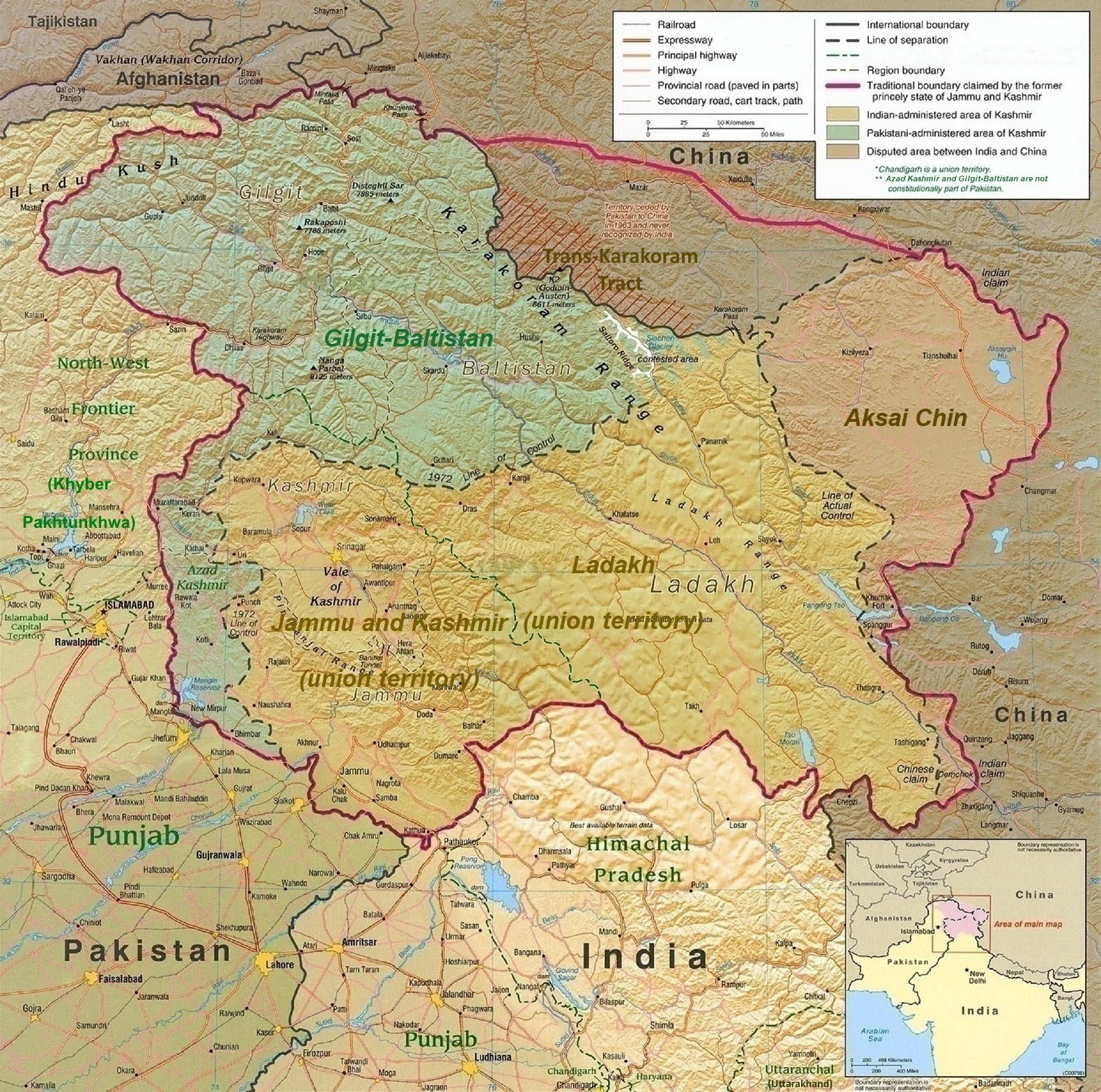



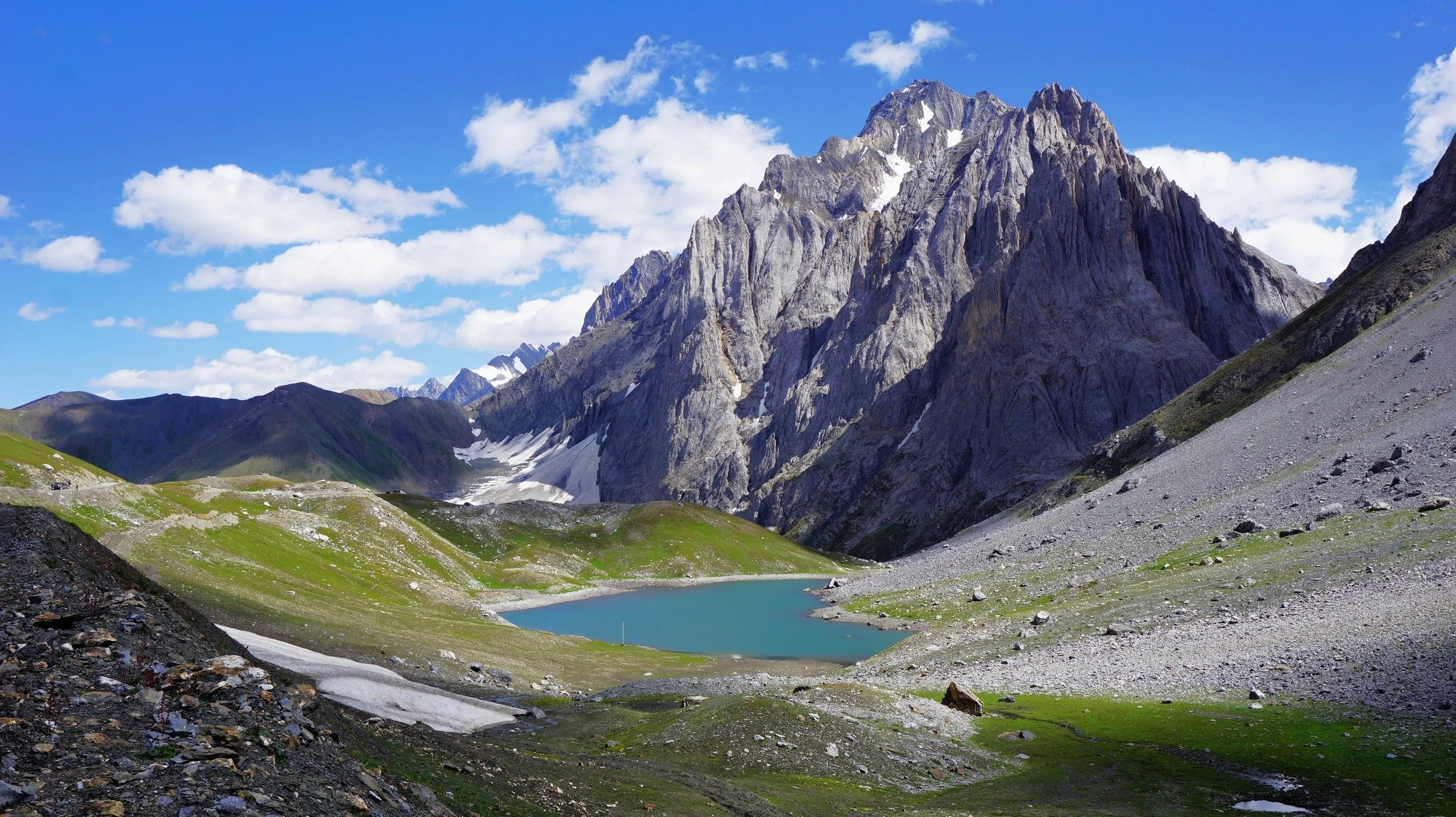
Five years ago the Galwan Valley was in the News for the wrong reasons after a deadly clash between the Indian and Chinese Armies in the Valley located in Ladakh lead to many deaths on the contentious Border between the two countries in wake of continued Chinese intrusions into Indian territory.
This area along the Shyok River, of which the Galwan Nallah or the Galwan River which forms the Galwan Valley has been off limits to Civilians since long but now the Indian Government has decided to open up the area for Civilians and we were amongst the First Civilians to venture into this beautifully desolate part of the Eastern Karakorams in Ladakh. Earlier Civilians could only venture upto the Village of Shyok from where the Shyok River takes a U turn and flows in a Northerly direction.