
The Tiger Leaping Rock
The Tiger Leaping Rock in the middle of the Tiger Leaping Gorge, which is one of the deepest River Gorges in the world in Yunnan, forces the Jinsha or the Upper Yangtze through a narrow channel just a few meters wide. The result of a River which is almost a km wide being forced through a Channel just a few meters wide is indeed spectacular.
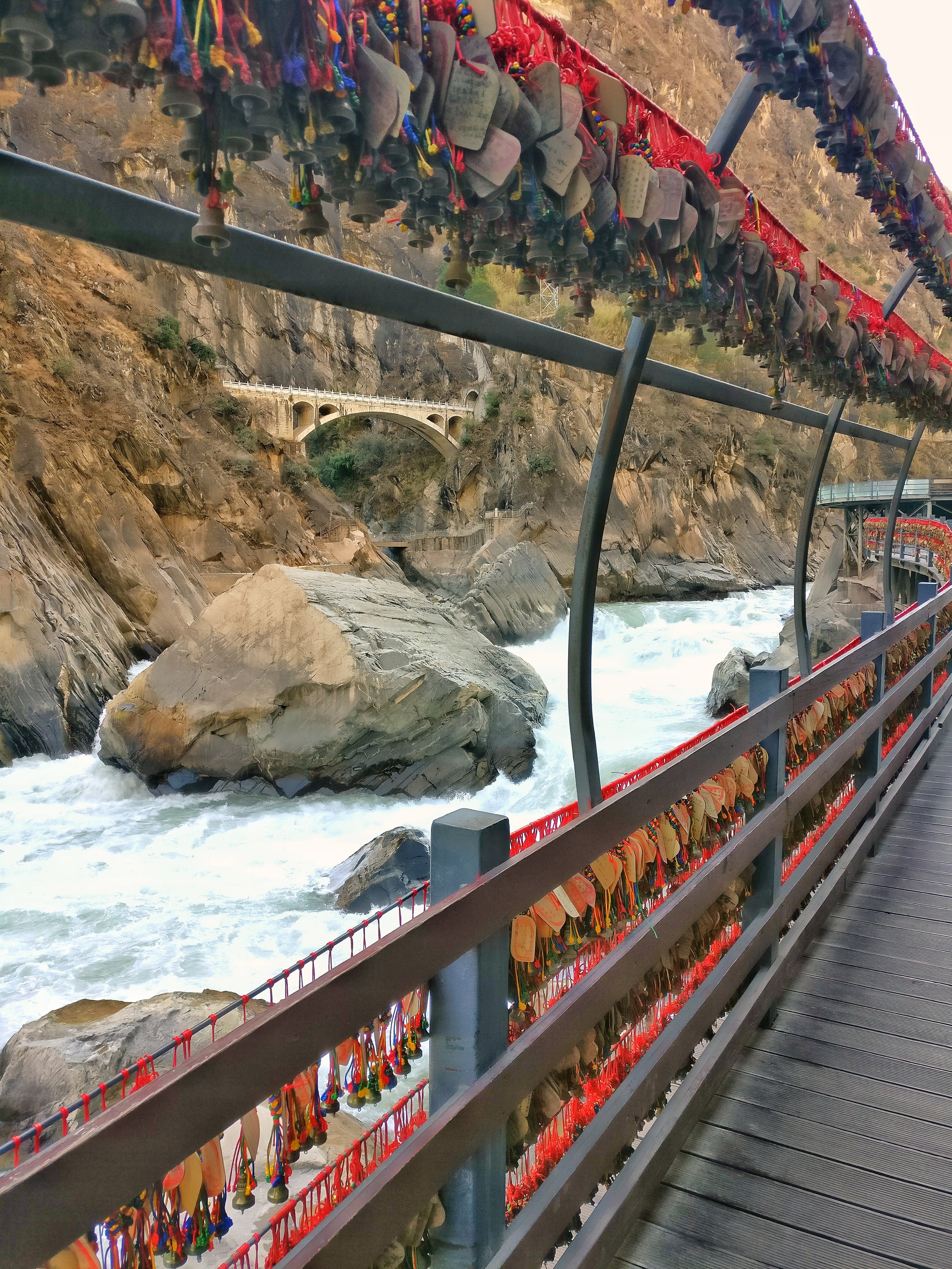
The Tiger Leaping Rock in the Middle of the Gorge, Tiger Leaping Gorge, Yunnan
The Tiger Leaping Rock
I first heard of the Tiger Leaping Gorge while watching Palin's Himalayas. The Tiger Leaping Gorge was the Easternmost place that Palin visited in the epic Journey.
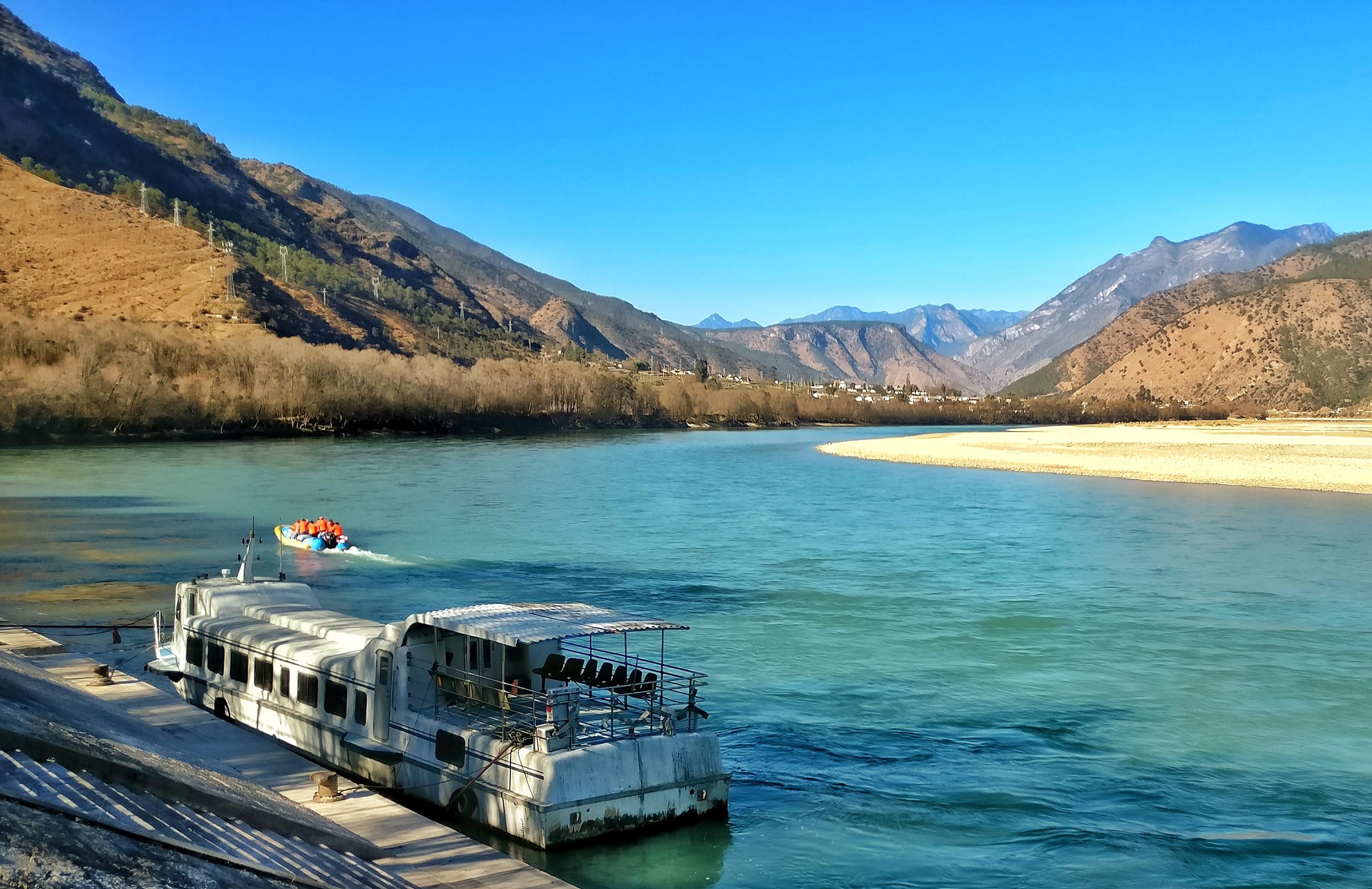
This is the legendary Tiger Leaping Rock right in the middle of the Tiger Leaping Gorge. This rock forces the Jinsha or the Upper Yangtze through a 10 meter wide corridor. It was dry season when I took this pic but in the rainy season it's a sight to behold and it seems the whole earth trembles due to the force of the water as it squeezes through this narrow corridor.
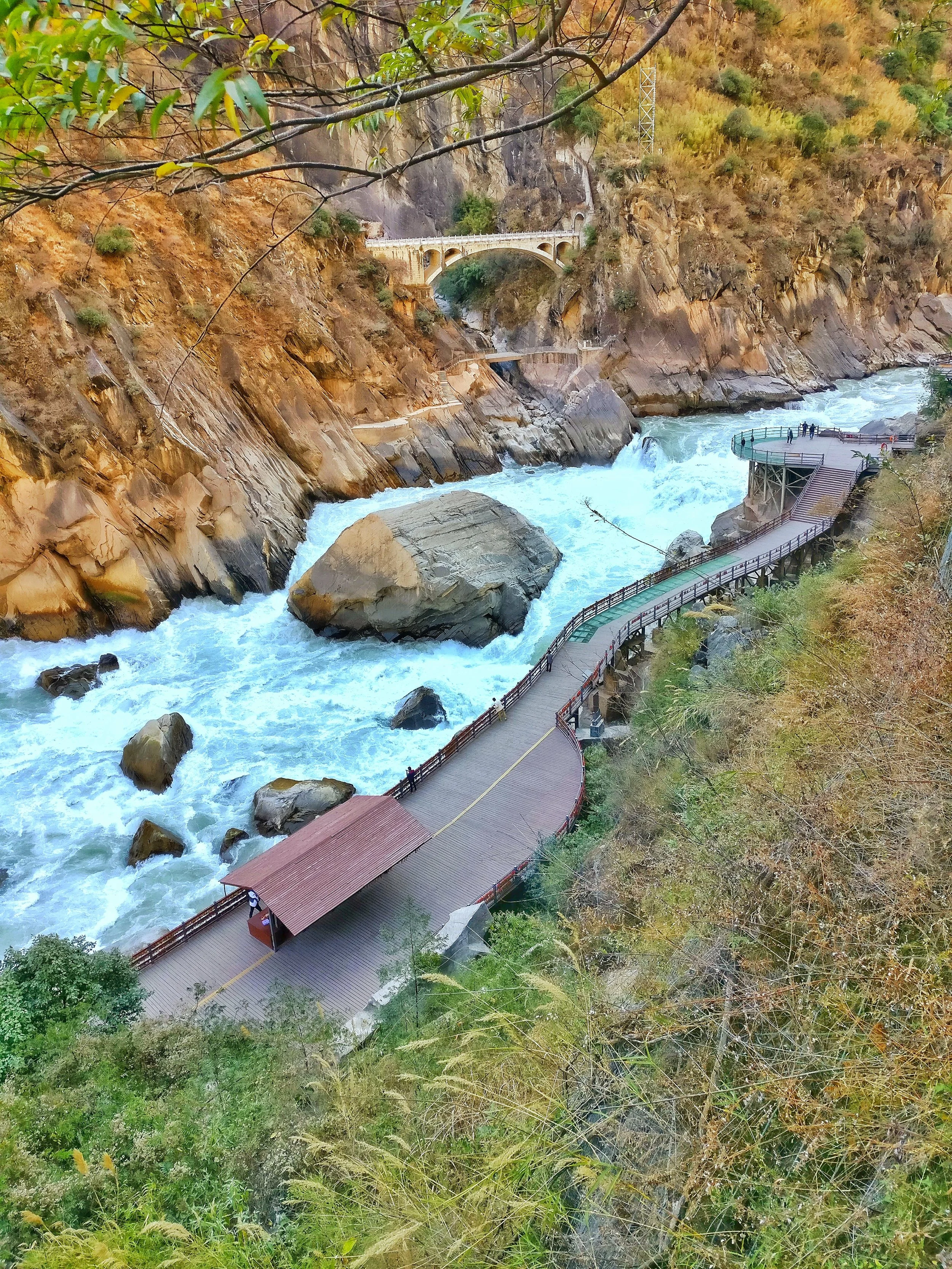
A view from above of the Tiger Leaping Rock with the viewing Platform, Tiger Leaping Gorge, Yunnan
In the rainy season the whole 13 meter rock rumbles under the pressure of all the water furiously trying to make it's way down. It's really a spectacle when a River more than half a mile wide if forced through a channel just a few meters wide thanks to the rock.
As per the story told by Palin the Gorge got it's name from the story of Tiger which jumped across the Yangtze while being chased by a hunter. The Tiger jumped into this rock and then across the the River to the other side. Hence the name Tiger Leaping Gorge.

The point at which the Jinsha or the Upper Yangtze enters the Tiger Leaping Gorge under the shadow of the Haba Snow Mountain, Tiger Leaping Gorge, Yunnan
And on the other side are Peaks which have a vertical elevation of almost 4000 m from the level at which the water flows. To put it into perspective this Canyon is more than twice the height of the Grand Canyon in the US. The level of the River flow is at an altitude of around 1800 m and its surrounded by Peaks touching almost 6000 m. These are the Hengduan Mountains which form the Eastern edge of the Tibetan Plateau.
Those little bells with the red tags are good luck charms that the local Naxi people use to tie to honor the spirits of their ancestors.
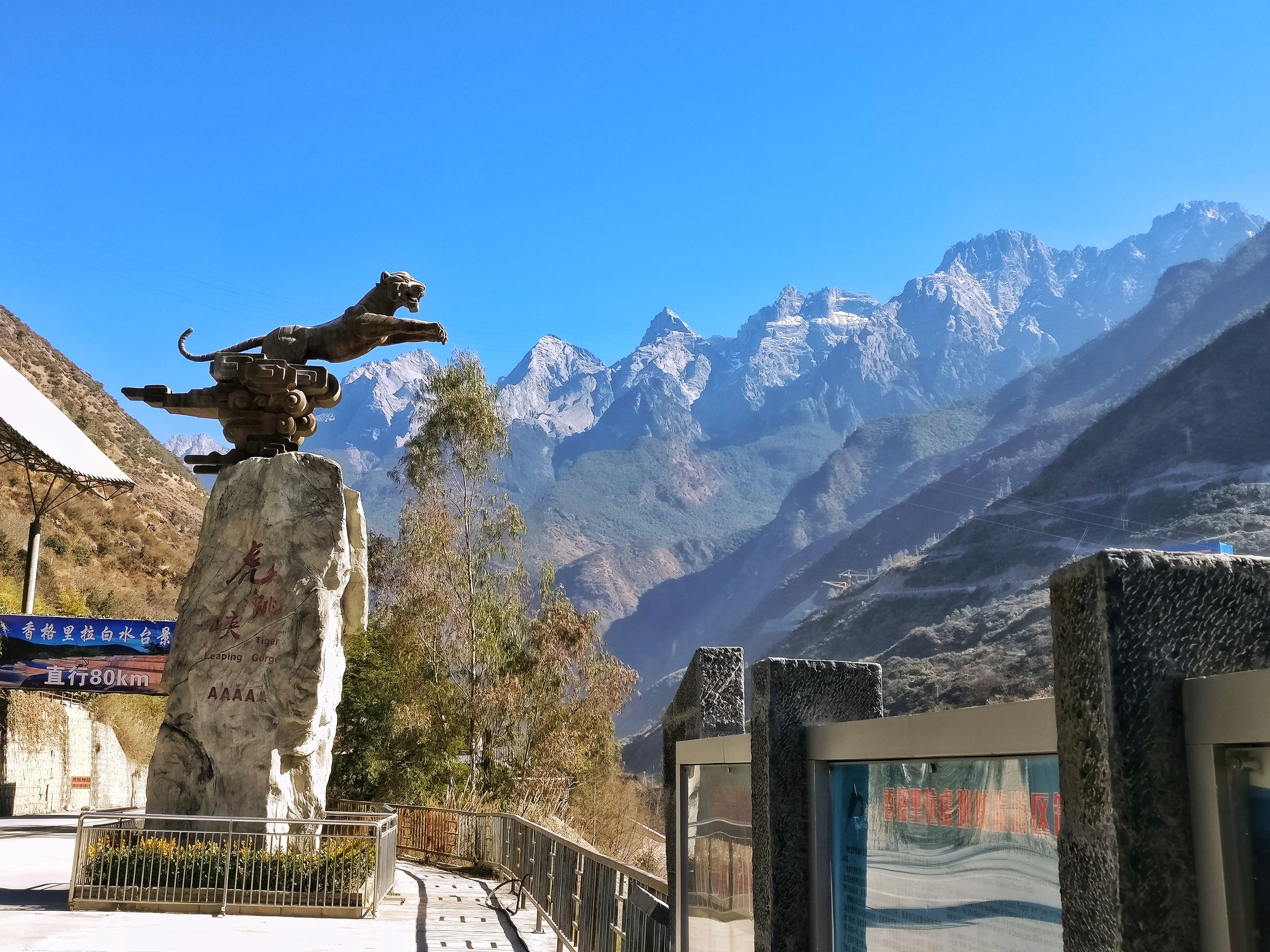
The statue of the Leaping Tiger, Tiger Leaping Gorge, Yunnan
This place, if you understand the significance and the geography that went into it makes the hair stand on the back of your neck. Its where Tibet meets South Asia and China. No wonder it's a UNESCO designated World Heritage Site under the Three Parallel Rivers of Yunnan Protected Area. The three of the mightiest rivers of Asia, the Yangtze, the Salween and the Mekong cutting across the jagged Peaks of the Hengduan Mountains around this area.
This place was opened to foreigners only in the 1990's and now attracts Mountain lovers from all over the World who want to witness the epic scenery that the place offers.

Spectacular.
Pic from January 2017. The Tiger Leaping Gorge, Deqen Tibetan Autonomous Prefecture, Western Yunnan, China
The Tibetan Mastiffs Business
The Story of one of the largest Dog Breeds in the World, the Tibetan Mastiffs who have protected people and live stock for centuries on the Tibetan Plateau.
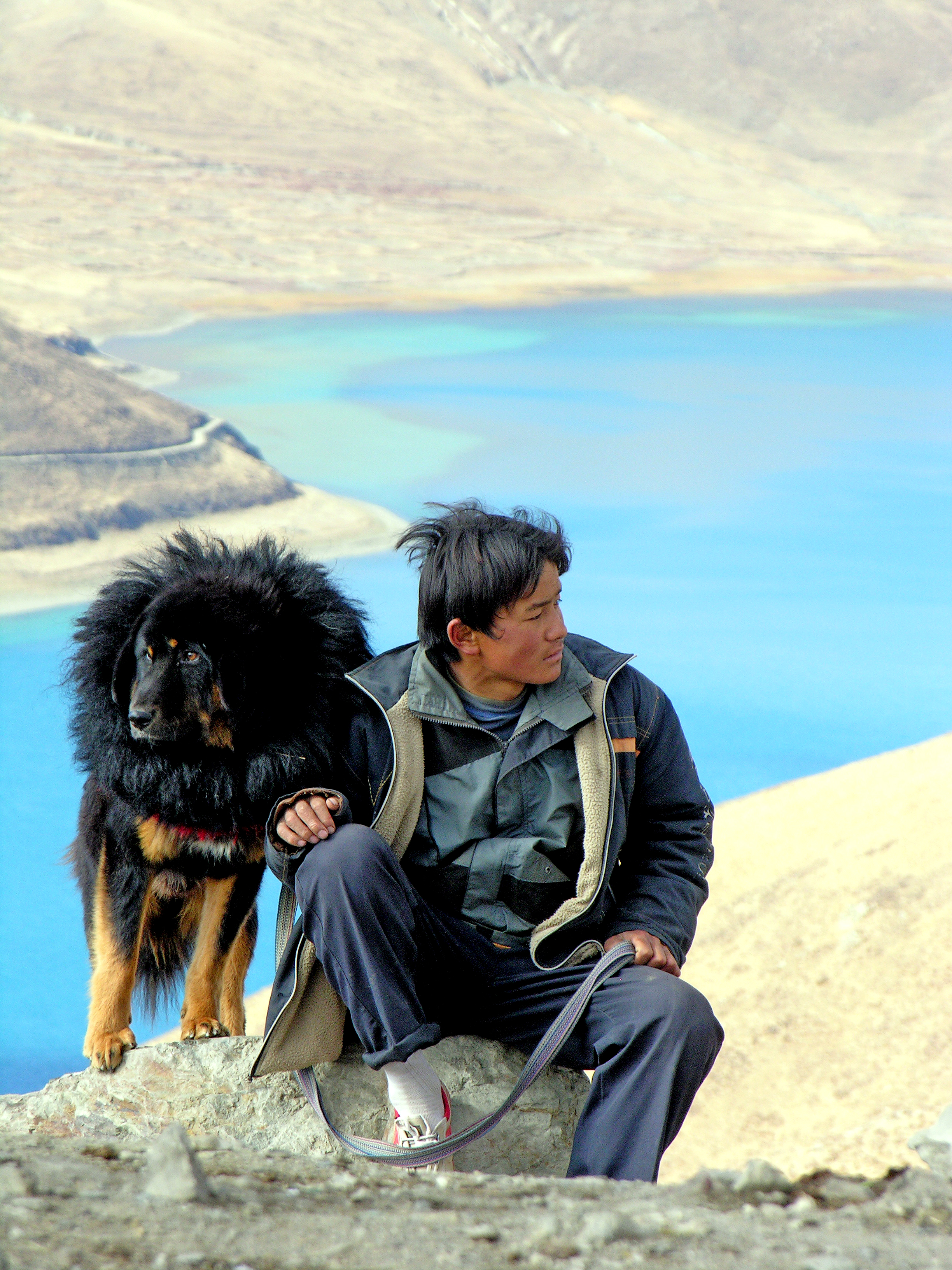
A Tibetan Mastiff in Tibet (Pic from Wikipedia)
The Tibetan Mastiff Business
Ever heard of the Tibetan Mastiffs ? I am sure most of you must have heard of these monsters of Dogs that lived on the Tibetan Plateau and grew into large proportions to the point that instead of resembling Dogs they looked like Bears. They are known for their ferocity and loyalty as well. And of course their shaggy coat which protects them from the extreme cold on the Tibetan Plateau makes them look much bigger than they actually are. And last but not the least their Gruff Bark which literally sends shivers down one's spine. I have kept a Himalayan Sheep Dog or what we called a Bakarwal at my home in Kashmir but its Gruff was nowhere close to what a Tibetan Mastiff Gruff sounds like. They are almost like Bass Speakers. Bigger the speaker, deeper is the Gruff and its more bone chilling.

A Pair of Tibetan Mastiffs goign into a frenzy as they see me trying to take their pics.
I have never really encountered a pure Tibetan Mastiff in India though have occasionally come across what I call the Himalayan Mastiff during wanderings in the Mountains. But I know people who have pure ones in India but I have never had a chance to visit them. And I am sure many people have purer varieties in the Regions bordering Tibet.
Anyways I had my first real encounter with these Monsters of the Canine World when last winters, in January 2017, I decided to visit a part of the Tibetan Plateau which lay on the eastern edge along the Hengduan Mountains. Of course I was told its no use going there at the height of Winters and that too solo but I had the time and opportunity so I decided to take a detour while on a Business trip.

Another pic of a Tibetan Mastiff with the hair standing on the back of its neck.
It was in Shangri La or Zhongdian that I first encountered these guys. Zhongdian or the fancy name, Shangri La, that the Chinese Government has given it is home to the beautiful Ganden Sumtseling Monastery and is the seat of the local Government in the Deqin Tibetan Autonomous Prefecture. The Tibetan name for the town is Gyalthang. The Town is situated at around 3200 m above sea level on the Eastern edge of the Tibetan Plateau.
I had booked a Tibetan Lodge near the Monastery and as the Weather was nice I decided to take a walk around the Lamucyang Tso, a small Lake facing the Monastery. The Lodge was a typical Guest House built like a Traditional Tibetan home in a typical traditional Tibetan Village. While on the walk I came across the first Monster and it was lying lazily in the Grass asleep. I went past it keep a safe distance and then I encountered another but this was on Guard duty outside his House and luckily he was chained up. The moment he realised my presence he went crazy off the hook. And it was big. I am lucky the Chain held on but it did give me a scare.

The guy I saw lazing by the Lake. Chilled out !
The next morning I woke up early around 5 AM as I wanted to take pics of the Sunrise and the Monastery as I felt the Monastery would look good when the first rays of the Sun fall on its gilded Roof. It was still dark when I got out of my Lodge and the temperature was 15 Degrees below zero. And there was this small Hill that I wanted to climb as it would give me a good view of the Monastery as well as the Sun as it rose over the Mountains. And i started walking but I did not take into account that I had to pass the House with the crazy Tibetan Mastiff again. I realized it just when I was in front of the House and I heard his growl. There have been few times that I have been so scared in my life. He went wild again and I just prayed to whichever God was up at that time to ensure that his Chain holds. It did and I thankfully got some shots.
The next day I decided to take a walk through the Village as I wanted to hike up a Mountain Peak which looked quite inviting. And then I came across all kinds of Tibetan Mastiffs as it seemed every house in the Village had at least one. And every time a stranger crossed they went into a frenzy. But I rather enjoyed the Tibetan Mastiff Symphony (Cacophony actually) that I created every time I walked the Village, which for some strange reason had very few people and mostly Yaks, Pigs, Chickens and Tibetan mastiffs. The most endearing sight for me was one of two huge Tibetan Mastiffs sleeping alongside with a couple of the Pot Bellied Black Pigs. It was surreal but I didn't have the courage to walk into someone’s House and take pics of the Mastiffs and Pigs enjoying their siesta.
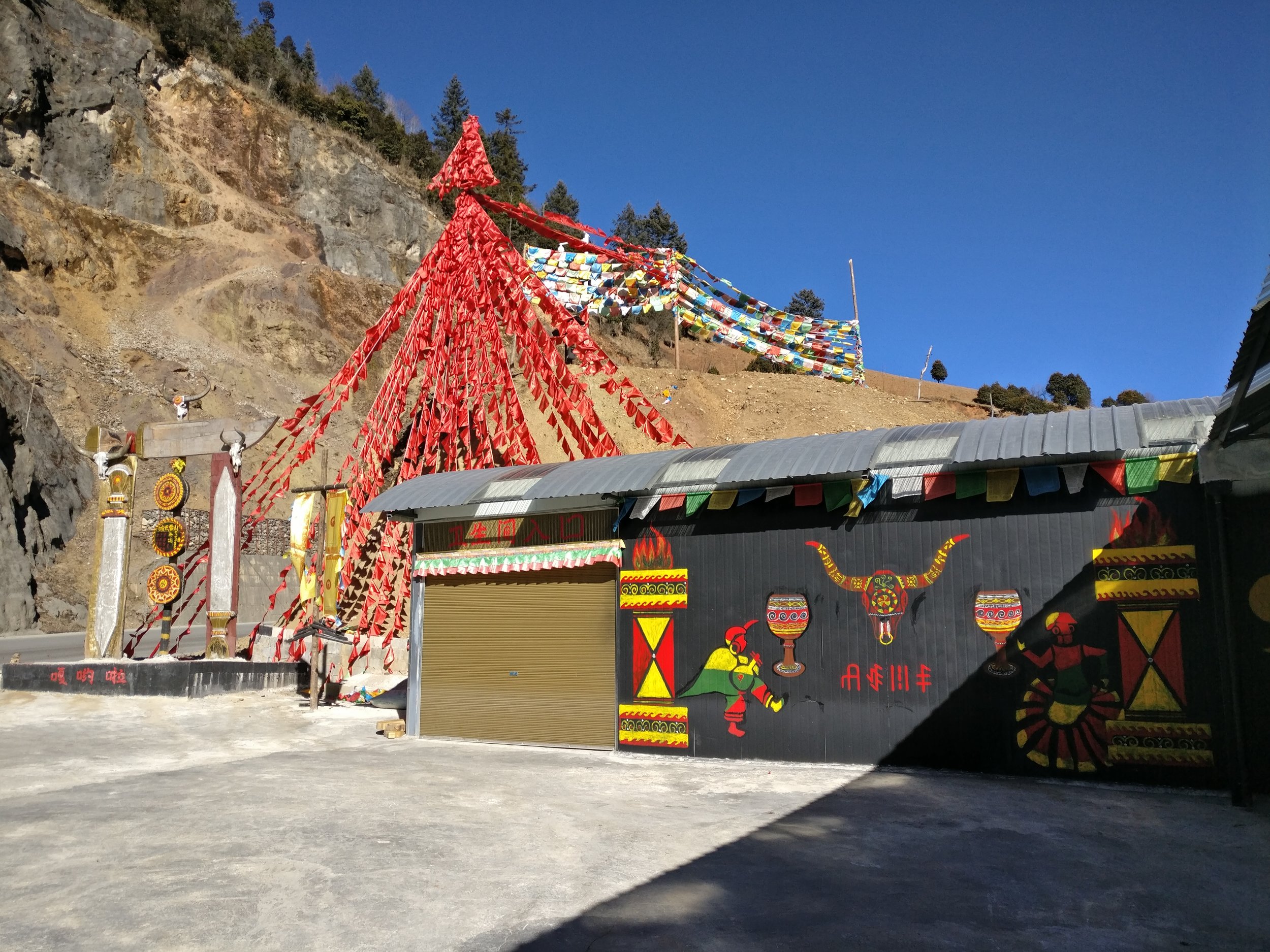
A Shop selling Tibetan Mastiffs.
Anyways coming down to more serious business, as the Chinese have grown wealthier, so has their craze for keeping Tibetan Mastiffs more as status symbols though I admit I have seen some crazy love for Dogs in China which I simply can't imagine anywhere else. So much in fashion are these Tibetan Mastiffs that there are reports of a puppy being sold for 2 Million USD, that's a whopping 14 Crores in Indian Rupees. Of course with this Breed being in so much demand what has happened is that the breeding and sale of these Mastiffs is happening on a big scale. And of course what this means many unscrupulous people getting into this business and trying to maximize profits they keep these animals in despicable conditions. And of course the business couldn't sustain forever and the business fell in 2013 with the supply overwhelming in demand putting many out of business.

One of the "Showrooms" selling Tibetan Mastiffs
And i saw it up close and personal. From Gyalthang I took a taxi down to Lijiang as i wanted to visit the Tiger leaping Gorge. Now most Chinese Tourists come by High Speed Train to Lijiang and then do the 4 hour trip to Shangri La or Xianggelila as they call it by Luxury buses. And this Road in its upper stretch had at least 10 Showrooms (yes Showrooms) selling just Tibetan Mastiffs. I stopped at a couple but they were mostly shut as it was off season but I could see that they still had a few Mastiffs held on the backside in cages. And the way these majestic creatures were kept was just pathetic. Filthy cages which didn't seem to have been cleaned since ages and very smelly. And the Dogs had all shaggy coats which seemed all matted. I clicked some pics but never had the heart to post them online as they are just simply disgusting. But I was amazed at the scale of this Business and wondered how long will the craze last and what would happen to the Mastiffs when they fell out of favor with their fashionable owners. Let's admit it. Keeping a Dog so large is no easy task as it has to be given enough food, space, grooming and care for it to thrive. And plus you need to make sure that the Dog is provide facilities to survive the environment in hotter areas

Wooden Cages inside which the Tibetan Mastiffs are kept.
So as result what has happened is that many Tibetan Mastiffs are now abandoned by either the Owners or the unscrupulous Breeders who due to massive competition can no longer make profit so they just abandon the Dogs to roam the streets. An that is a sad sight for such Dogs which once were almost Royalty. Even sadder is the fact that many are sold to Dog slaughter houses which process them for Dog meat which is still liked as food in parts of China. And also there are reports of abandoned Tibetan Mastiffs teaming up with Wild Wolves to attack livestock !
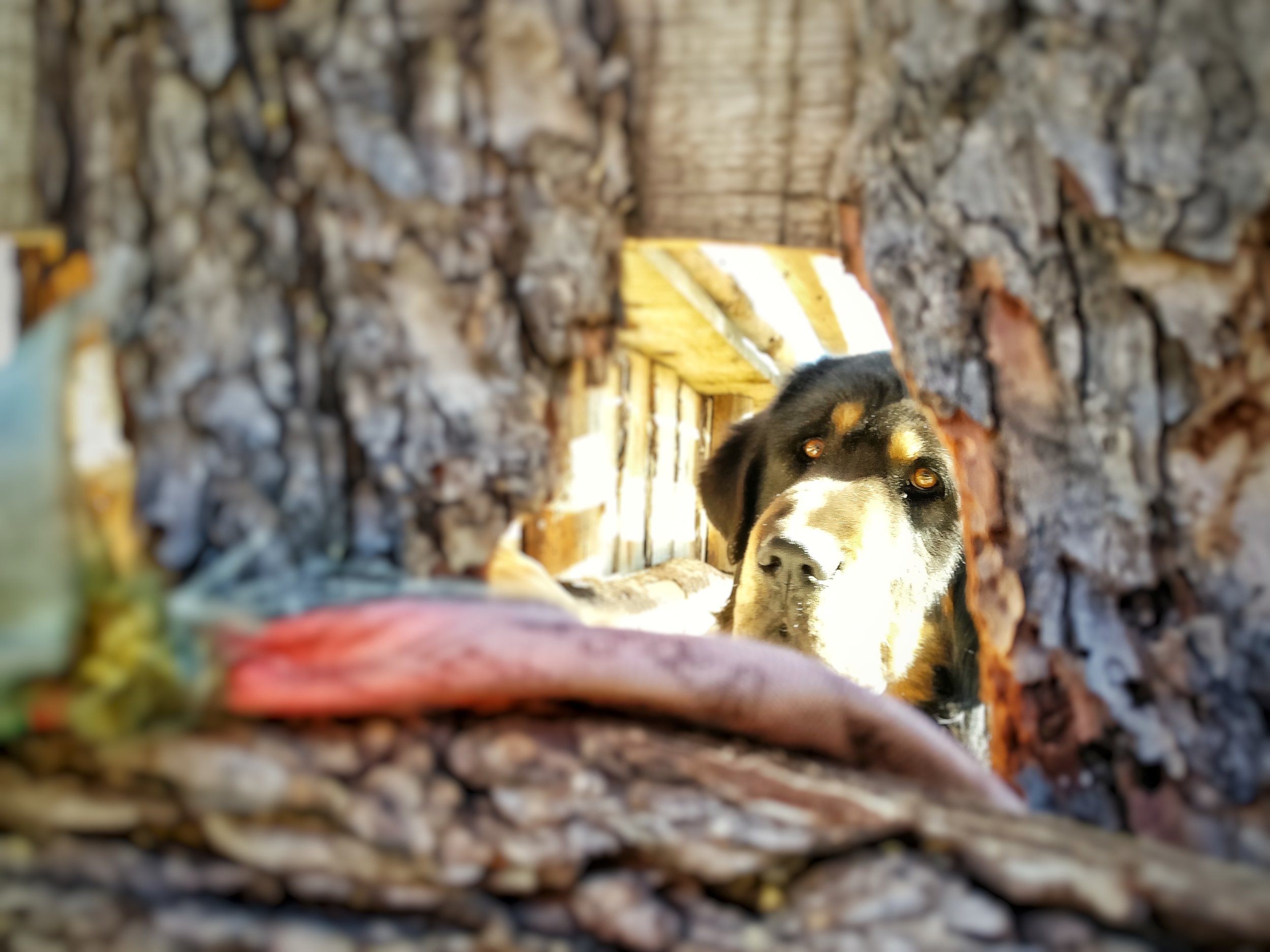
A Tibetan Mastiff inside the wooden cage looking at me.
Here is a heartbreaking Video of more than a 1000 Tibetan Mastiffs at a shelter set up by the Surmang Namgyal Monastery. But i guess these are the lucky ones who will no longer have to beg on streets for scraps of food or end up as Meat themselves on a Chinese Table.

Not much we can do but as a penance maybe we should start taking care of the street Dogs wherever we live and never buy Dogs from Breeders. Dont shop. Please adopt.
The Ganden Sumtseling Tibetan Monastery in Yunnan
The Ganden Sumtsenling Monastery, also known as Sungtseling and Guihuasi is a Tibetan Buddhist monastery situated 5 kilometres (3.1 mi) from the city of Zhongdian at elevation 3,380 metres (11,090 ft) in Yunnan province, China. Built in 1679, the monastery is the largest Tibetan Buddhist monastery in Yunnan province and is sometimes referred to as the Little Potala Palace.

The Ganden Sumtseling Tibetan Monastery
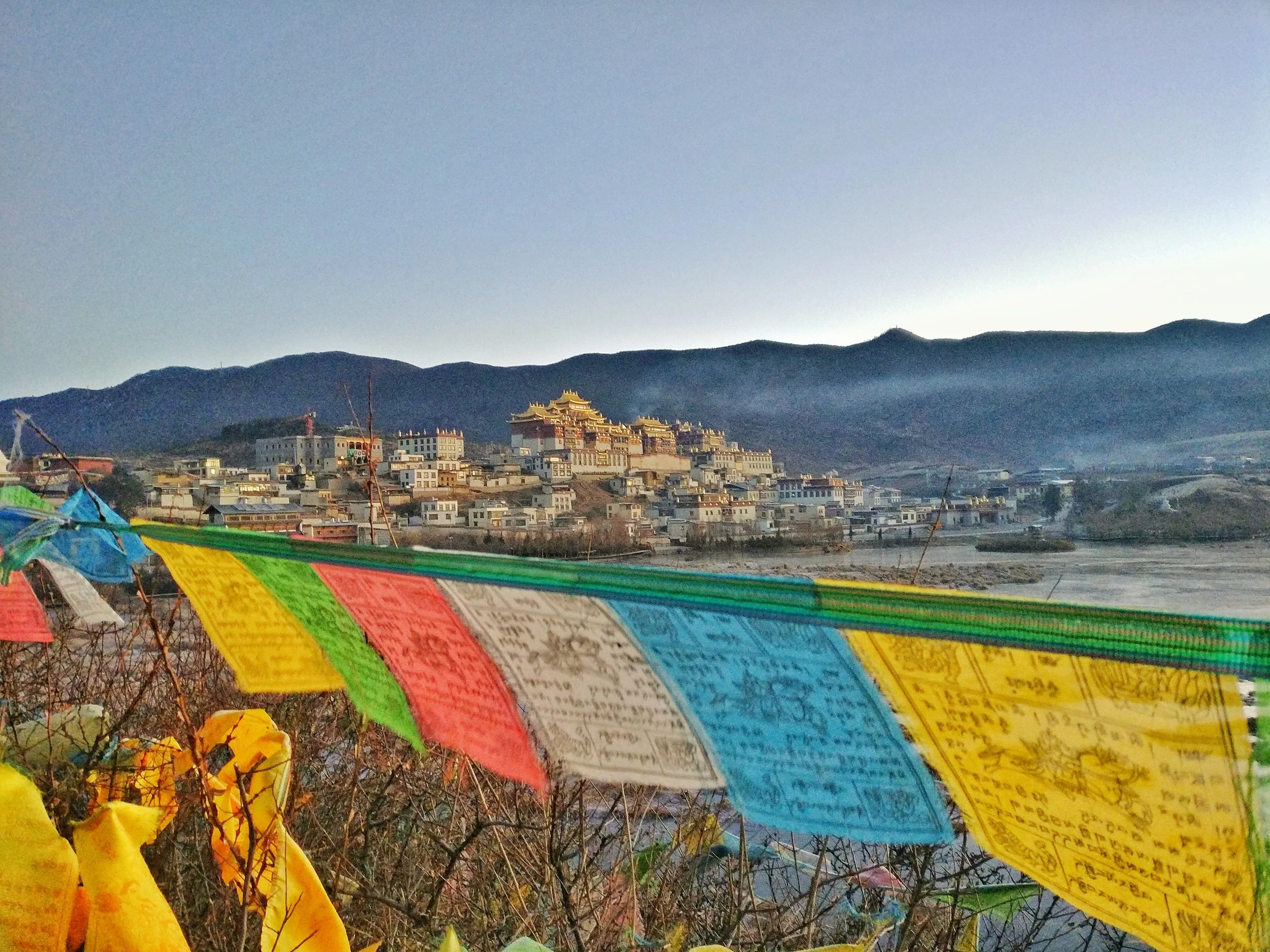
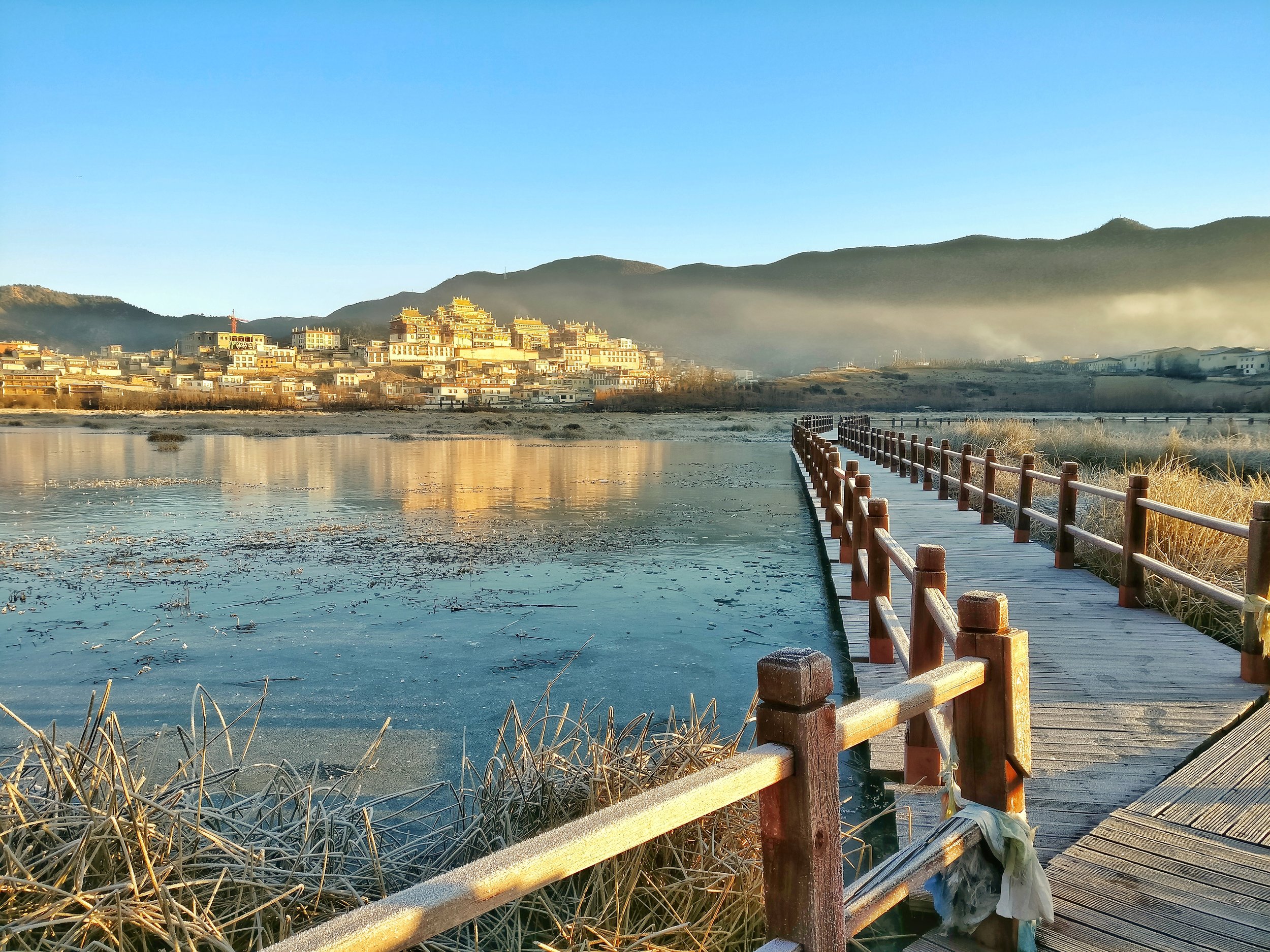
The Ganden Sumtseling Tibetan Monastery in all its glory reflecting the first rays of the sun in the morning. The Lake reflected is glory in its unfrozen part. This is truly Shangrila. One of the largest Tibetan Monasteries it is also called the Little Potala Palace.
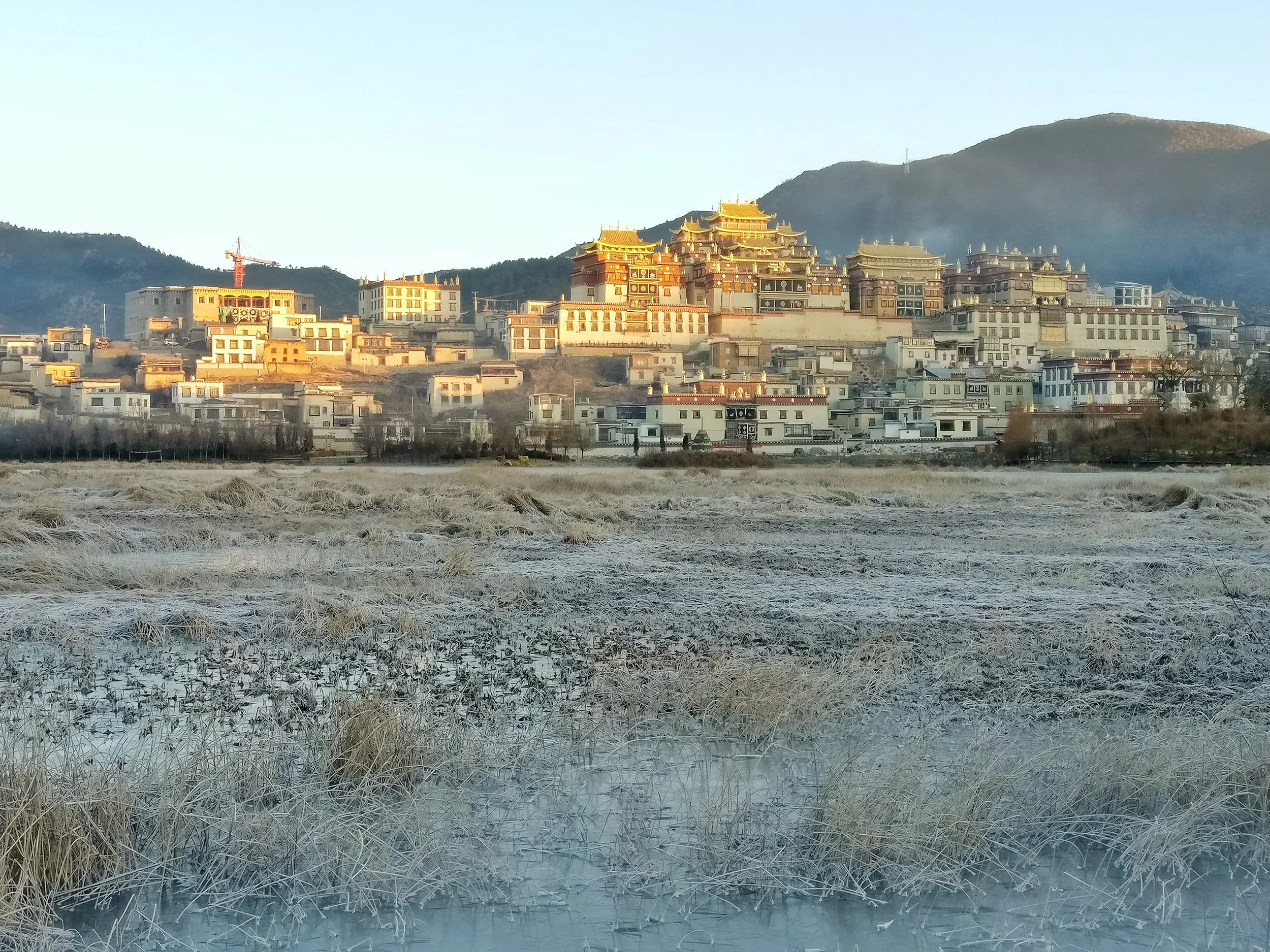
At an altitude of almost 3400 m it stands at the banks of the Lamuyang Tso in North Western Yunnan in a region which used to be historically a part of the Kham region of Tibet.
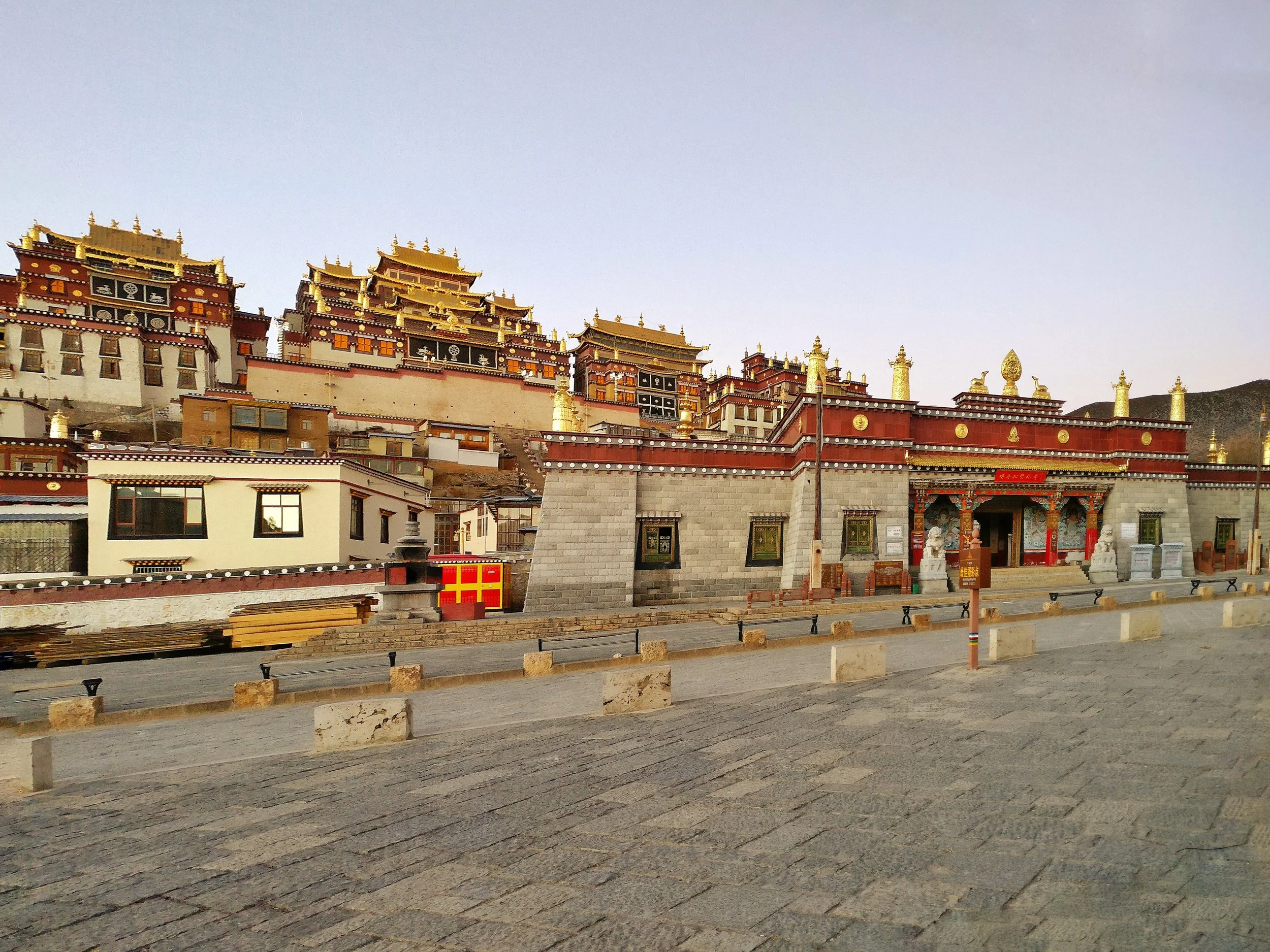
In January early morning the Lake was semi frozen and I guess the temperature was around minus 10 and the sun was just rising. The bird life of the Lake was just waking up and stir around.
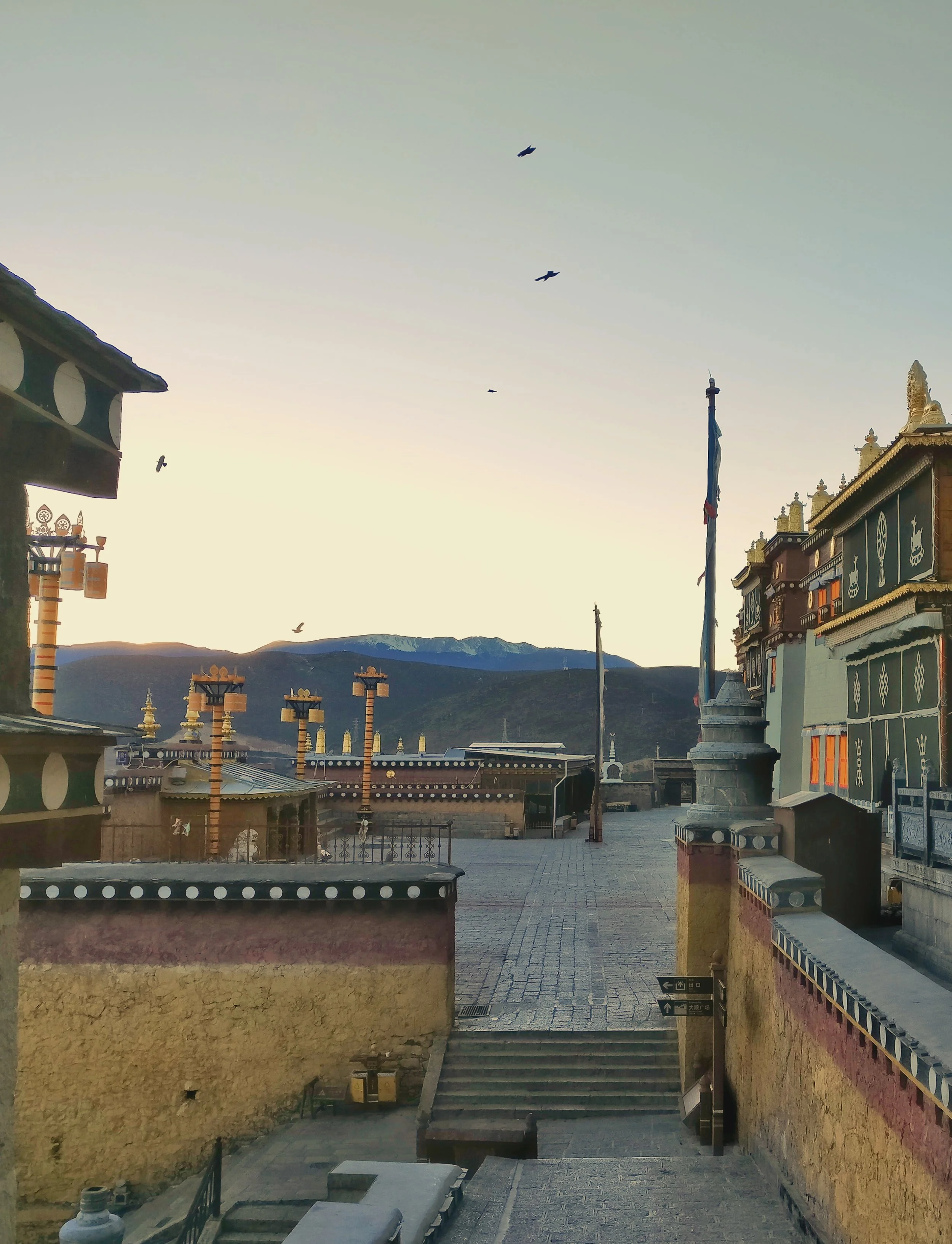
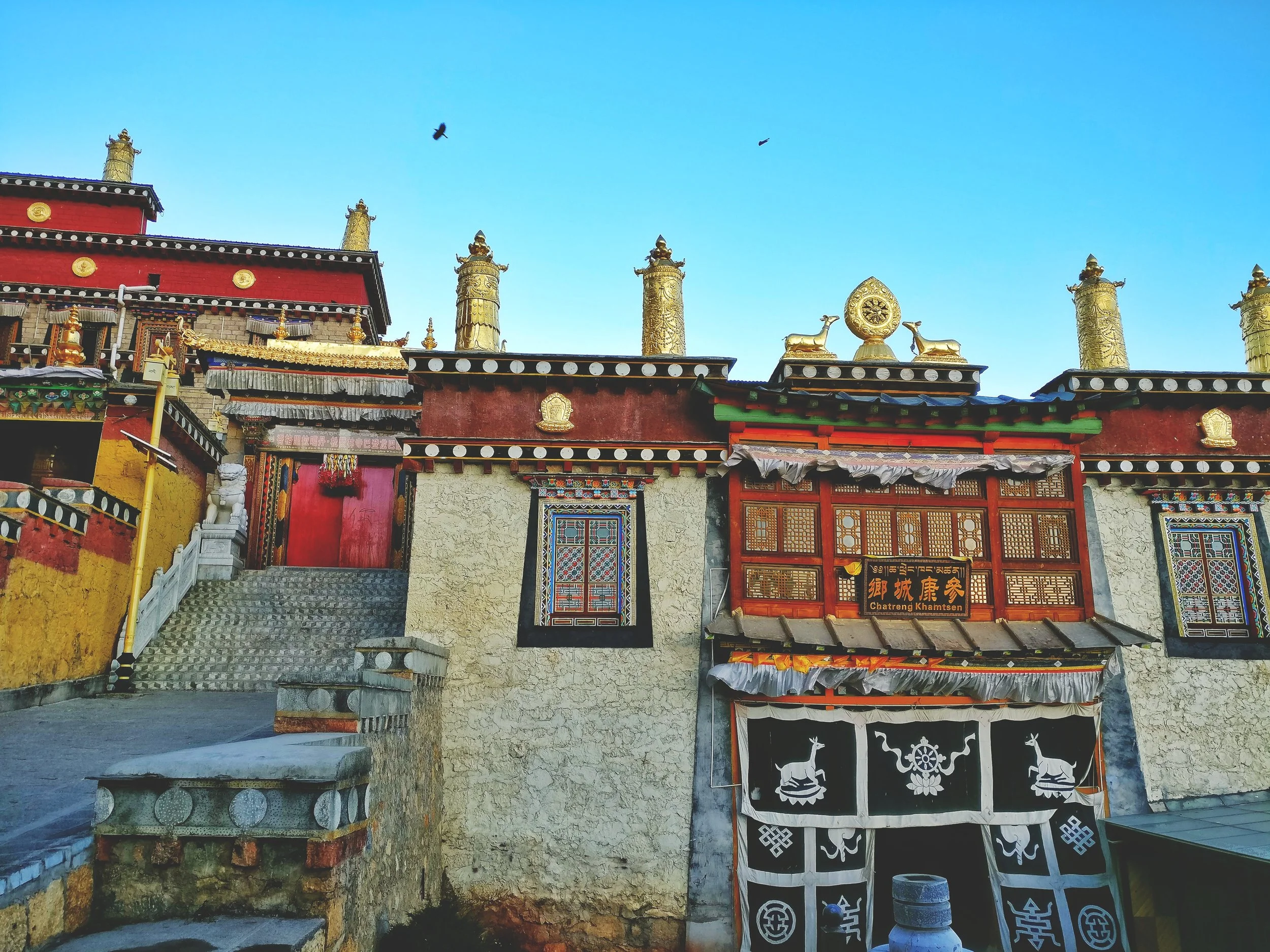
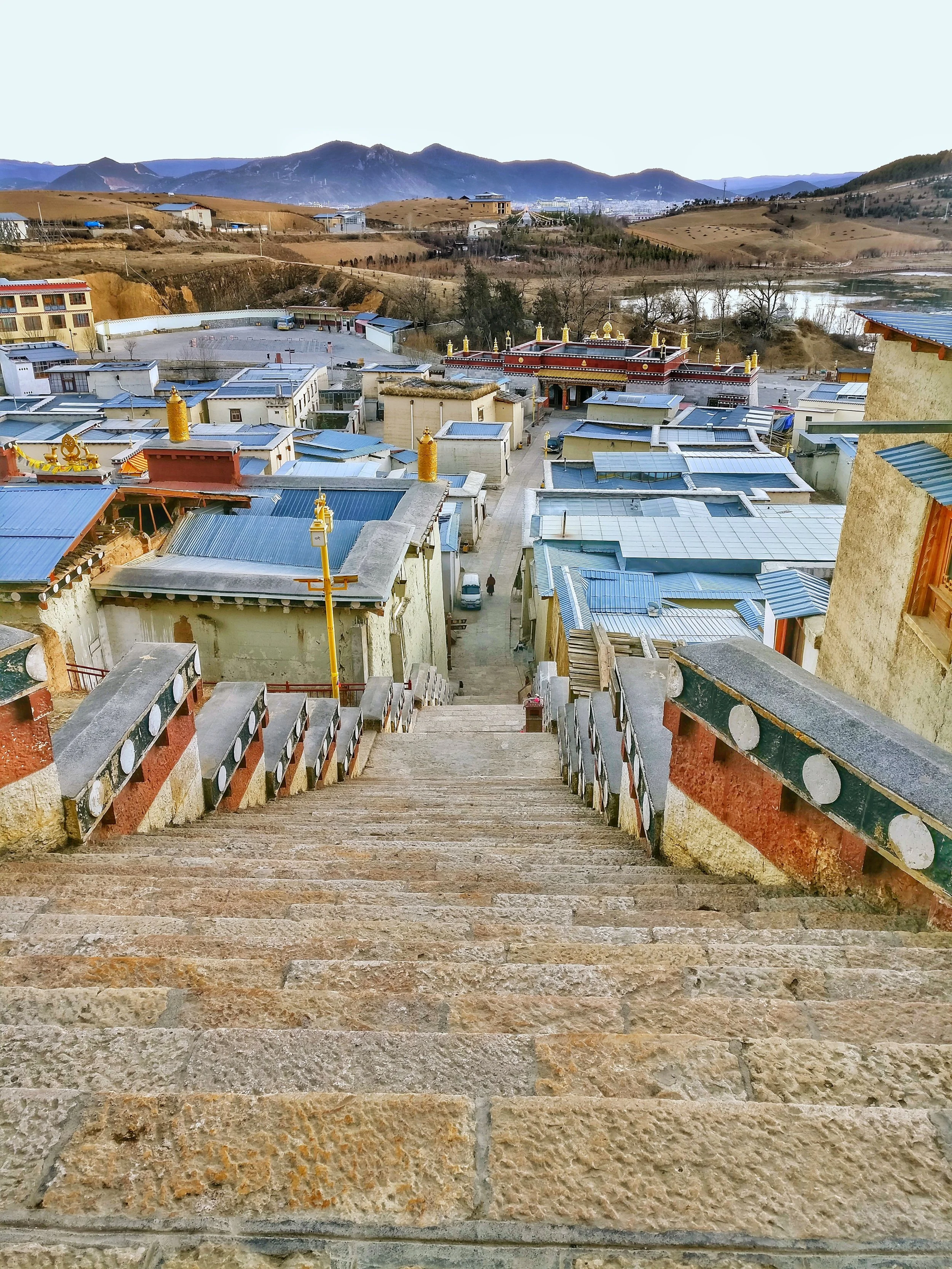
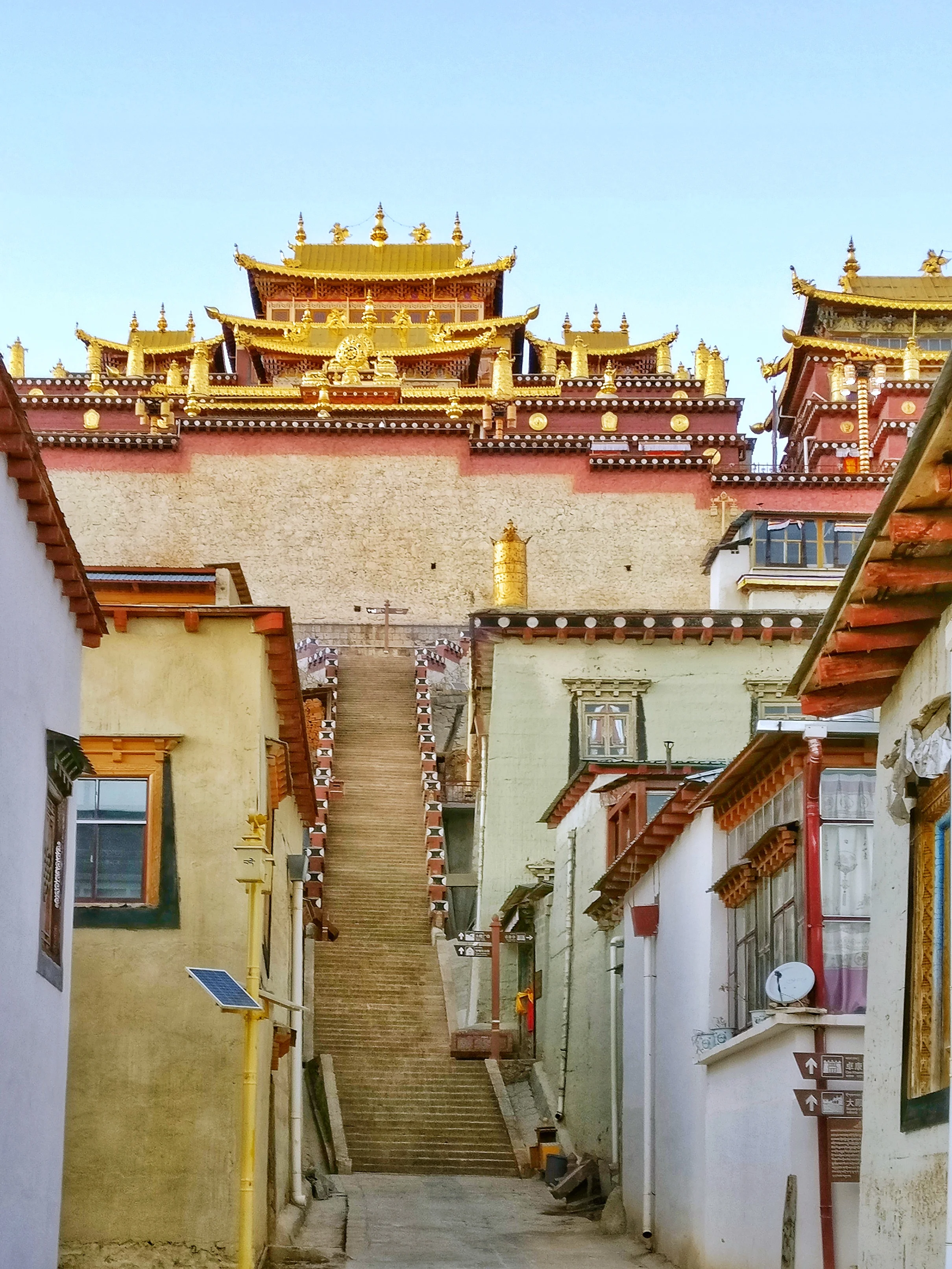
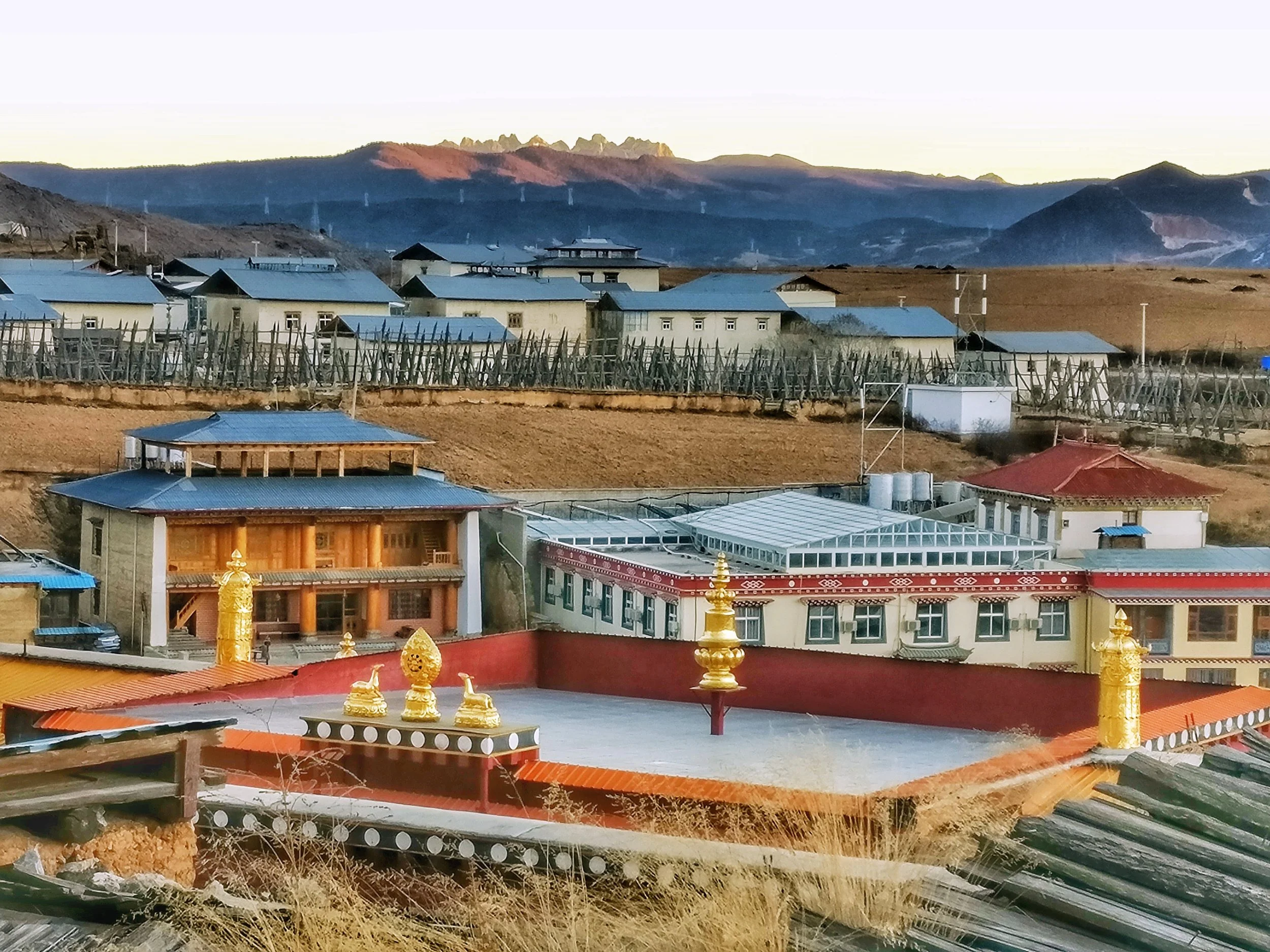
The first rays of the sun reflecting off the Gilded domes of the Monastery was indeed a sight to behold.
Originally built by the fifth Dalai Lama more than 500 years ago. Destroyed by the Communists in 1959. Rebuilt again in the 1980s.
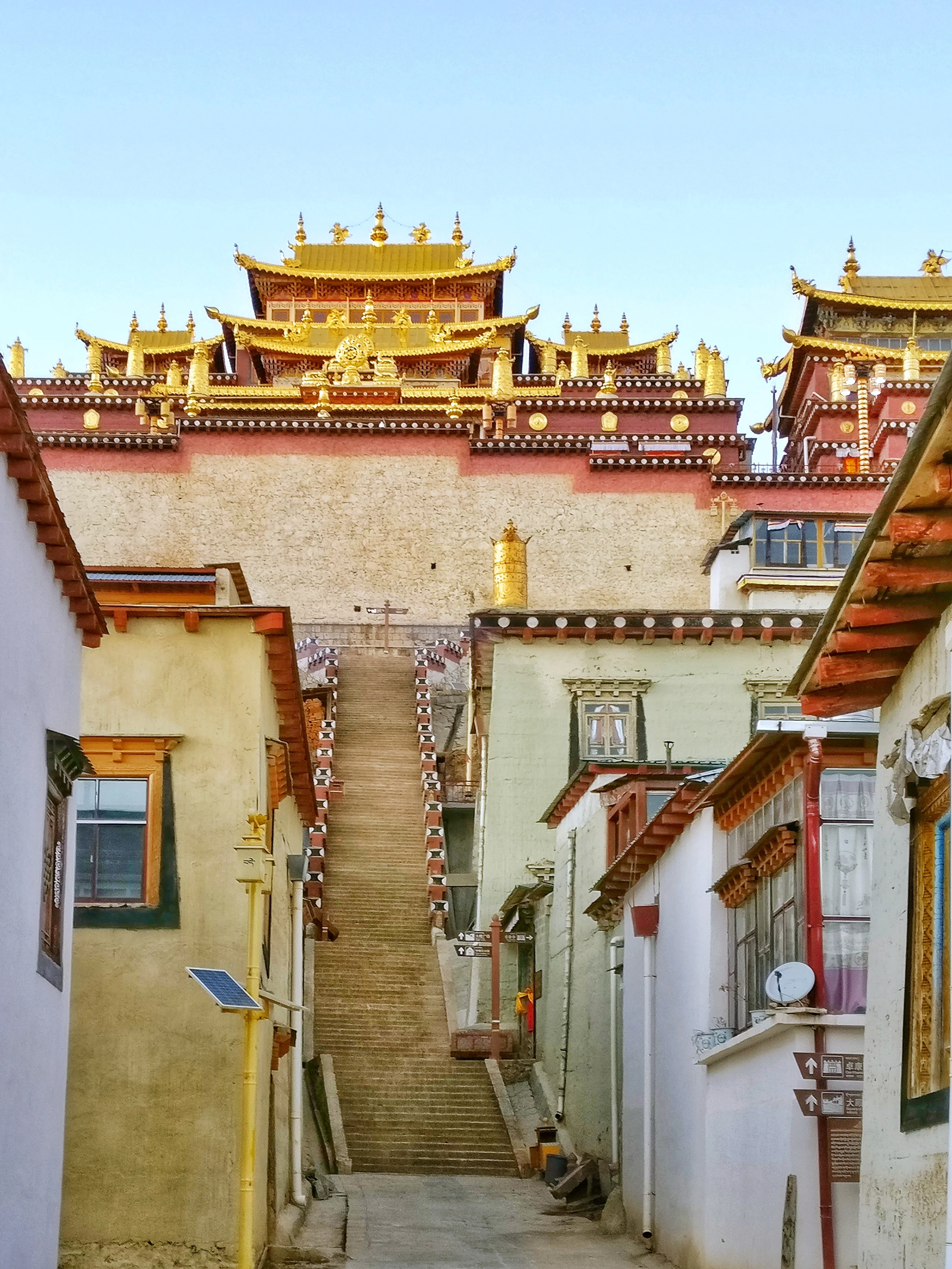
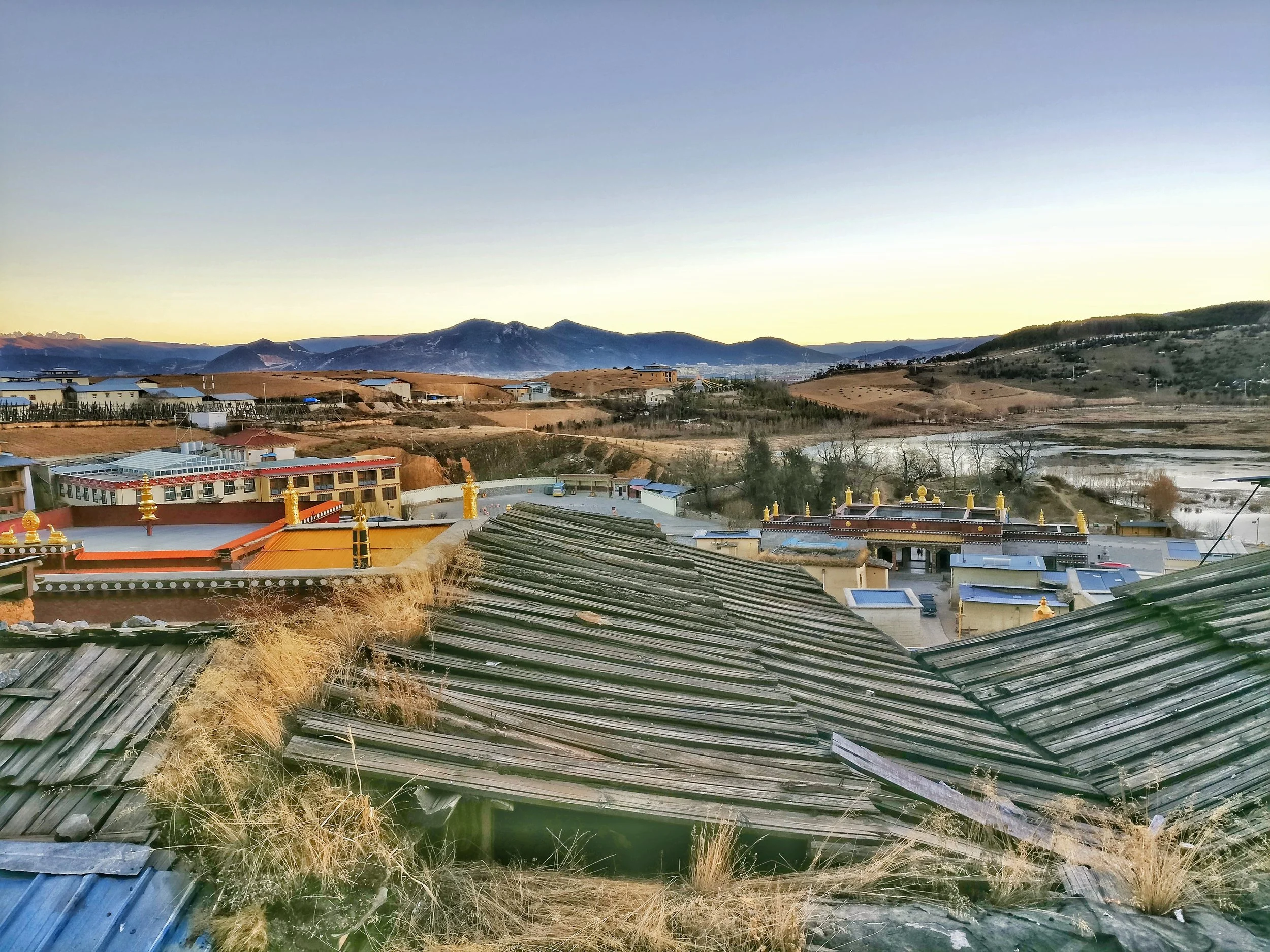
A true marvel of Tibetan Architecture with its enormous size and gilded domes.
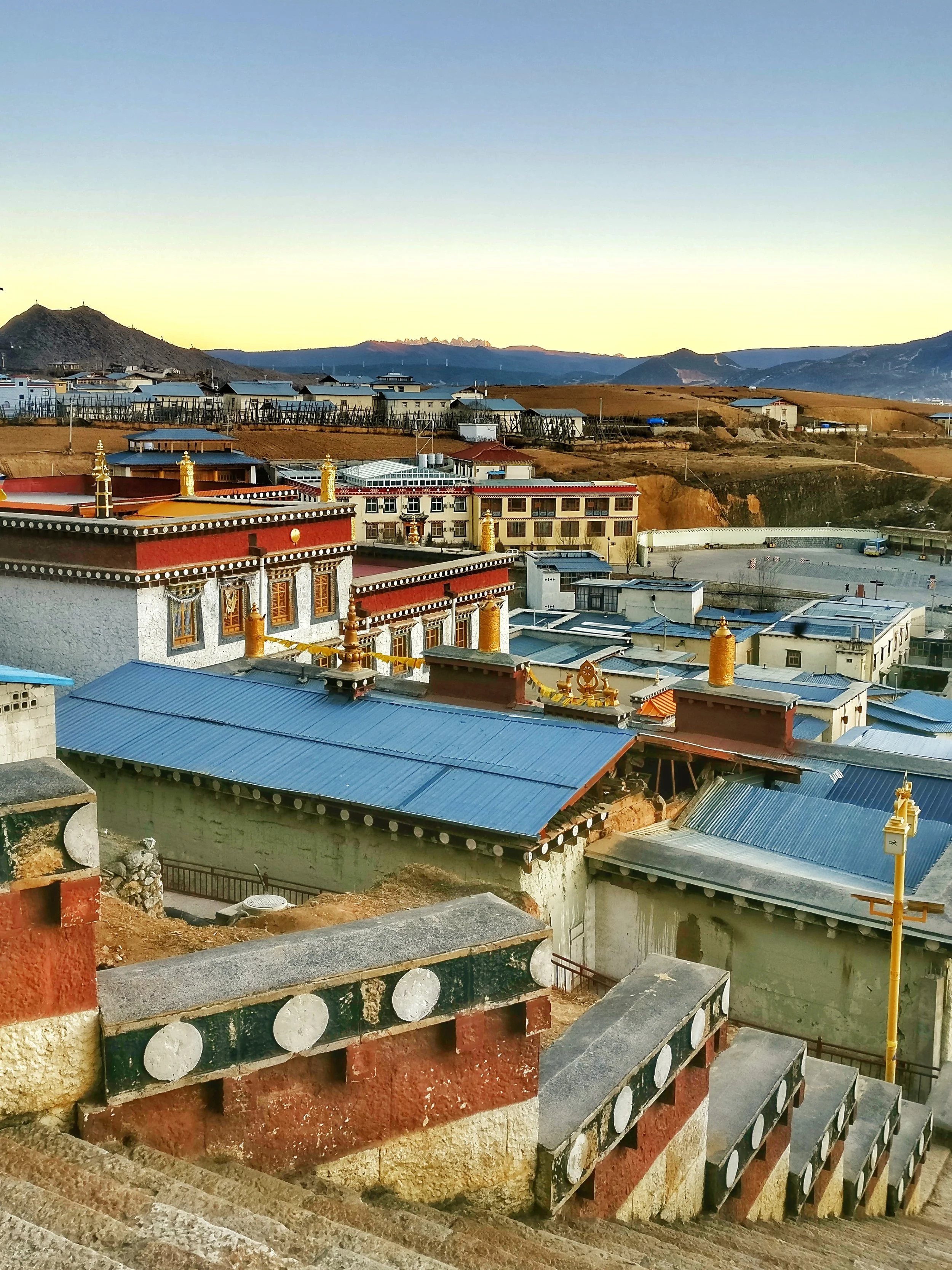
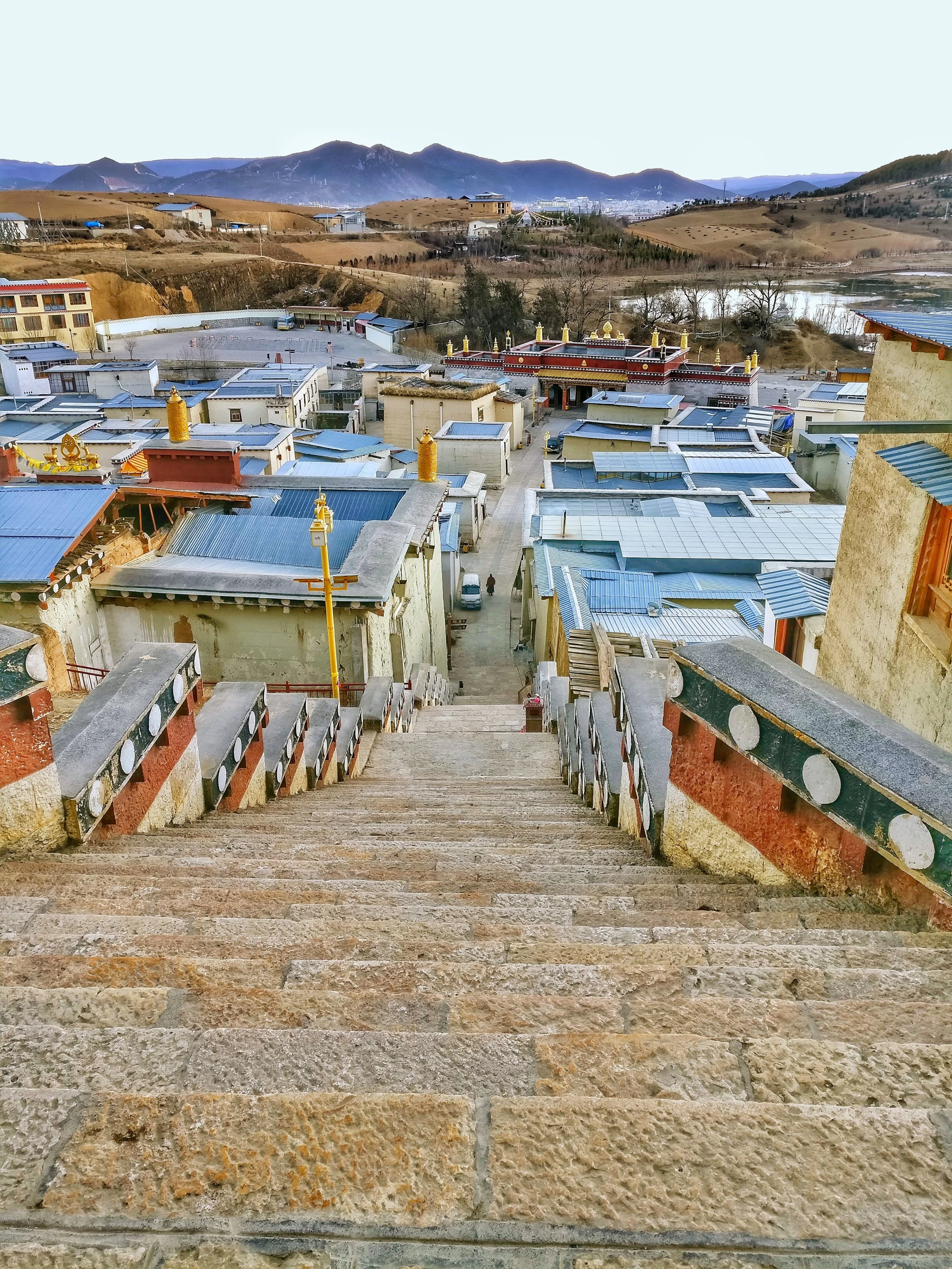
Lijiang Instant Noodles Hotel
when you land up at an Indian owned Hotel on the edge of the Tibetan Plateau.
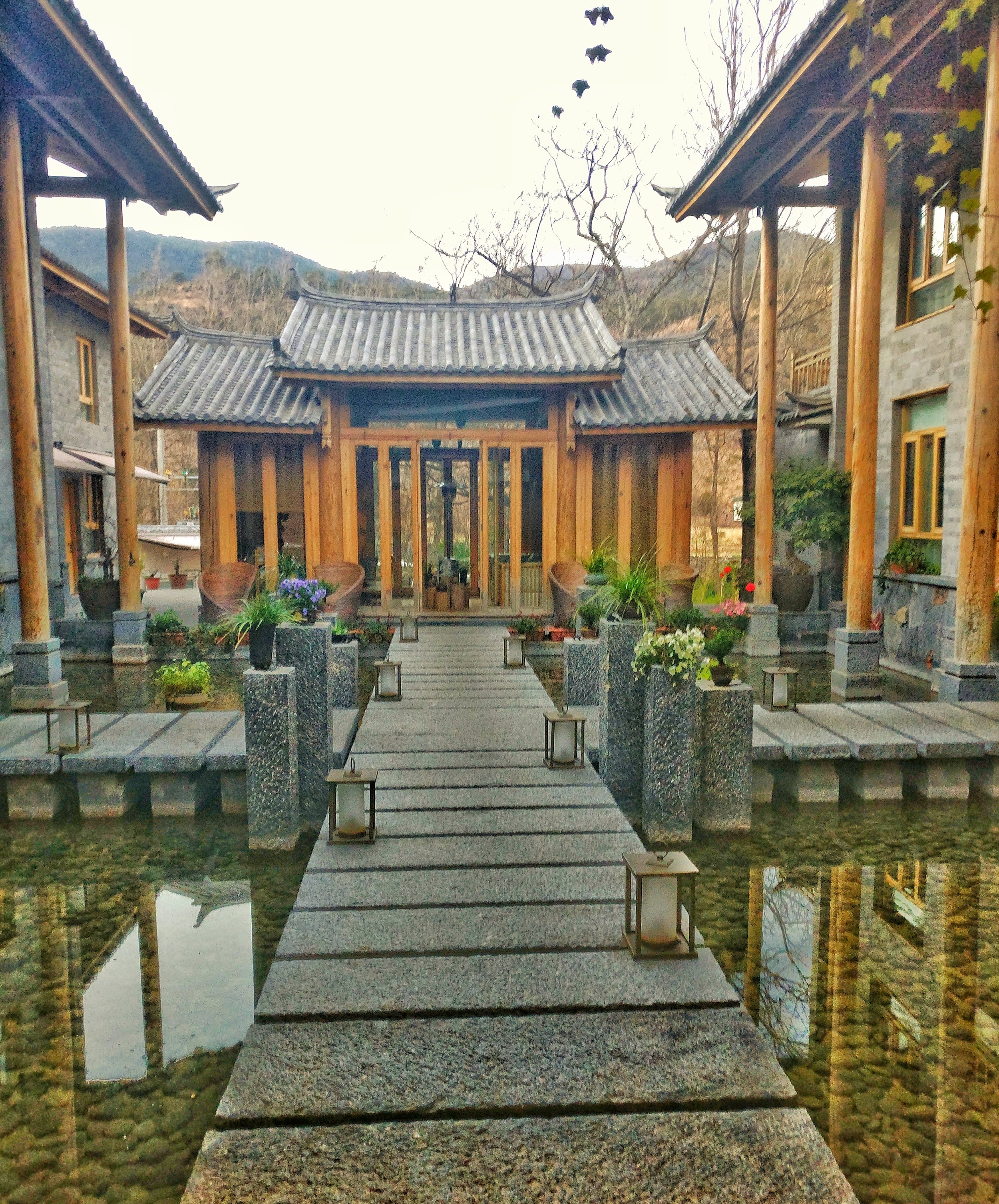
Lijiang Instant Noodles Hotel
Finally I was in Lijiang, an ancient town at an altitude of around 2400 m, the last Tibetan / Naxi city on the edge of the Tibetan Plateau as finally Tibet gives way to South Asia and China.
Lijiang is a beautiful town on the UNESCO World Heritage List. It was one of the main towns on the Tea Horse Trading Route through which Tea was sent into Tibet and in return hardy Tibetan Horses were traded in return. The town of Lijiang served as the gateway to Tibet and even to India.
And after a bit of a search I finally got to my Hotel, which was partly named after the famed Khampa Tibetan horsemen and warriors.It was the Khampas of this part of Tibet called Kham who were the most feared of all the Tibetan people and they resisted the Chinese occupation of Tibet well into the 1970’s.
The Hotel was built in a traditional mixed Naxi / Tibetan Architecture with a lot of use of wood and stone as often seen in the mountains. It was a nice Boutique type Hotel in an old part of town.
I had had a great day having visited the Tiger Leaping Gorge and the first bend of the Yangtze at Shudu, reached the Hotel and am greeted by a good English speaking Han Chinese girls. And she asks me for my Passport. And she smiles when she realizes that I am Indian.
She asks me to take a seat in the Lounge of this Boutique Hotel. I sit and the Coffee Table book on the Center Table is on, of all places, Rajasthan.
I asked her why do they have a book on Rajasthan there ? A book on Tibet or Yunnan I would understand but not this. We have it here because the owner of the hotel is an Indian.
I was like “Wait a minute”. An Indian owning a Hotel in Yunnan on the region bordering TAR ? Surely that isnt possible. Or is it ? Got me thinking.
Then suddenly a foreigner looking guy walks in. Says “Hi I am the Manager”. I said “Hi” and asked him where he was from as he sure didnt look from the part of the world that I was in. He said “Chile”
Wait. From Chile ? A Chilean manager of an Indian hotel in Yunnan in China. Was it for real or was it the effect of nice fancy liquids that I had been having last night ?
The Manager gets me a Beer. Says here Sir have a welcome drink. I was beginning to like this place already.
I told him why dont you grab a Beer as well as i need to ask you many questions which have popped into my head since I walked in.
He says Ok cool as there weren’t many Guests in the Hotel. So we sat down and the first thing I asked him “Is the owner of this Hotel an Indian ?”
Yes he says but he has a Tibetan partner. But how can an Indian own a hotel here ? Well he goes on, the guy is an Indian origin guy who lives in Nepal and is as such a Nepalese citizen.
Now it started to make sense. It seems the Indian gentlemen’s family made a fortune in the Instant Noodles business and this was one of their 80+ hotels.
Woah. Thats when the thought came to my mind.
I should get into the Instant Noodle business.
Travelling to Tibet
Your Guide to Travelling in Tibet as it used to be. Besides the present Tibetan Autonomous Region (TAR) it also included parts of Sichaun, Qinghai and Yunnan. Travelling to TAR involves a lot of Permits and a lot of restrictions. However in the Tibetan areas of Sichuan, Qinghai and Yunnan you can move around in the Tibetan areas with out any restrictions.

Travelling Guide to Tibet
We are all very familiar with this side of the Himalayas and some parts of the Trans Himalaya which falls inside our country like Ladakh and Lahaul-Spiti but there is a whole new world out there beyond these areas.
As you are well aware most of these Great Himalaya lie besides our Country in Pakistan and China (also in Nepal and Bhutan but those are easily accessible). As fate would have due to International Geo-Politics we cannot really travel overland as we would love to into the vast expanse of the Trans-Himalayas which lies mainly in the Tibetan Plateau. Travelling to Pakistan to see the mountains is pretty much out of the question. So that leaves us with China where Indians can and do travel but mostly on business trips.
For me on a personal basis the Trans-Himalaya and its its adjoining Ranges lie in three different parts of China for which the Ground rules and access differs. As per the political division of China these three are the Tibetan Autonomous Region, the Xinjiang Autonomous Region and Yunnan.
1. TIBETAN AUTONOMOUS REGION : This is what we also called as Tibet proper as defined by the Chinese Government. Of course there are parts of Tibet (historically/ geographically/ ethnically) which are not a part of TAR but are included in the neighboring Provinces but more on that later.
Out of all the regions in China, travel is most restricted in the TAR. As many as 3 Different permits besides the Chinese Visa are required if you need to visit all the parts of Tibet and even then you would be refused access to certain areas. These three Permits are
A. Tibet Travel Permit : The Tibet Travel Permit is issued by Tibet Tourism Bureau (TTB). It is also called Tibet visa, for the purpose of entering Tibet. Travelers need to have Tibet Travel Permit to enter into Lhasa or any other parts of the Tibetan Autonomous Region. It is obtained through tour operators for most tourists. When you take a flight or train to Lhasa, you will be asked to show this permit during check-in. Even if you have the Tibet Travel Permit, you are not allowed to travel anywhere outside of Lhasa city. If you want to get out of Lhasa, you have to apply for another permit, Aliens’ Travel Permit.
B. Alien’s Travel Permit : The Alien’s Travel Permit is issued by the Public Security Bureau. It is required when tourists are planning to travel to the ‘unopened’ areas of Tibet, like Mount Everest Base Camp in Shigatse, Samye Monastery in Tsedang. Aliens’ Travel Permit is required to visit ‘unopened’ areas. It is issued by the police (Public Security Bureau, “PSB”). Usually, you can apply for it once you arrive at Lhasa. For tour groups, our guide will ask you for the passport and Tibet Travel Permit, which they will submit to the Foreign Affairs Division of the PSB for the Aliens’ Permit. It normally takes several hours and the cost is 50 CNY per person. If you travel alone, you need to join local tours to ‘unopened’ areas, and the local travel agencies will arrange the PSB for you as well. Pay attention, no travel agency can provide ‘Alien’s Travel permit-only’ service. You need this for Mansrover as well.
C. Militray Area Entry Permit : The military area entry permit is required if tourists are planning to travel to some military sensitive areas in Tibet. Like Mount Kailash in Ali, Rowok Lake in Chamdo.Sensitive borders such as Mt. Kailash and eastern Tibet not only require a Military Area Entry Permit, but also a Foreign Affairs Permit. For Tholing and Tsaparang in western Tibet, you will also need a permit from the local Cultural Antiquities Department. All these will be arranged by our travel agency one month before you enter Tibet. The Military Area Entry Permit is issued by the military affairs office while the Foreign Affairs Permit is issued by the Foreign affairs office in Lhasa. It normally takes 10-15 working days to get them all.
So travelling in TAR requires a lot of preparation and permits and involves Tour agencies. Hence it is not a cheap affair.Of course there is a special agreement between India and China for the Pilgrimage to Lake Mansrover but that is just limited to the Lake.There are some agencies which do this through Nepal as well but again the scope is limited to the Lake Mansrover and the areas around it.
2. YUNNAN : Yunnan is the adjoining state to the TAR on the South Eastern side of TAR. Western Yunnan is a very interesting area in the sense that it is where the the Himalaya, the Tibetan Plateau and the Yunnan Plateau meet. It is one of the world’s most biodiverse regions. Also many parts of Western Yunnan bordering TAR are actually parts of the historical Tibetan Region called Kham. However many of these areas are actually a part of the Tibetan Plateau with the average elevation above 3000 m. Note that other regions of China such as Qinghai and Sichuan also have substantial areas which used to be a part of Tibet. These areas are also free to travel to.
There are no special permits required to visit Yunnan. Just get a Chinese Visa and you are good to go. Also there is now a direct flight between New Delhi and Kunming, which is the capital city of Yunnan. This is the same Kunming where the famous Stillwell or the Ledo Road ended connecting Assam to Yunnan in the good old days. Kunming itself at 1800 m plus is a beautiful place. Using Kunming as the base you can move further West using flights/ trains/ buses to go to places such as Lijiang, Dali and further to ShangriLa in Deqen or Zhongdian.

TBH honest Western Yunnan with its high elevation but Southernly latitude is unlike any other place. The sharp jagged Peaks and the deep canyons and the rolling Mountains and Hills just take your breath away. The Tiger Leaping Gorge and the bends of the Yangtze are special attractions as well as the various Snow Mountains as they are called.
I recently travelled in this Region and it was truly worth it. Here is a link to a small Video I made in Shangrila which was earlier called Zongdian or Gyal Thang. https://www.facebook.com/groups/TheHimalayanClub/10154875267365775/?notif_t=like¬if_id=1485522719531162
3. XINJIANG UYGHUR AUTONOMOUS REGION : This the region which borders Tibet on the West / North West. This Region used to be called East Turkestan and is a part of Central Asia with a majority of the population being Uyghurs, who are a Turkic people. Xinjiang is a land of extremes and includes parts of the Karakoram, the Pamirs and the Kun Lun mountains.
Being on the main Silk Route this has for long been the fabled land that explorers wanted to get to. The names of exotic places like Kashgar, Yarkand and Hotan still fill your mind with visions of exotic lands surrounded by Mountains and Deserts. For me with a special interest in early exploration of the Western Himalayas these names are almost out of a dream.
Now the good part. No special permit is required to travel to Xinjiang. You can take a direct flight to Urumqi which is the capital city. Please note that Xinijang is almost one third the size of India pretty much like the TAR. As an ideal base for someone like me I would choose the city of Kashgar 1500 km down to south.Kashgar is the end point of the Karakoram Highway coming from Pakistan. Again there are options of travelling to Kashgar by Air/ Train / Bus as per what suits you the best.
Kashgar serves as a base to go to the Sarakul Lake and the monster called Mustagh Ata. You can further go down the Karakoram Highway till the town of Tashkurgan for which you will require a special permit. Once you have this permit you can even try your luck going till the Khunjerab Pass but usually they dont let foreigners proceed beyond a point a 2 or kms before the Kunjerab Pass. Note that as Indians travelling on Indian Passports we would be least liked people hanging around especially the authorities. So when you try doing this keep in mind that, though not illlegal, it can get you into a situation which might require you to answer some questions raised by certain Authoirities. Do this only if you are confident enough about yourself and your backup getting you out of any situation that might arise. Being confident would be the key.
You could also travel from Kashgar to Yarkand and onto Hotan to see the Taklamakan Desert. Yarkand was where the trade route used to go to from Leh. So its a town that just cannot be missed IMO. There are also other interesting places around but for that you need to do some research.
So go out. Travel. See unseen worlds.
I will do a further post on “How to travel in China” and how to get “Bookings Done for Hotel / Travel” as I have travelled
extensively in China mostly for work purposes.
Feel free to ask any questions.
Most of this information is based on the best of my research and getting some information from Agents. Some of it is based on actual travels. Kindly verify the information from other sources as well.
#transhimalaya #yunnan #xinjiang #tibet #pamir #karakoram #kunlun#hengduan
Pic from January 2017. In the shadow of the Shika Snow Mountain, Tibetan Plateau, ShangriLa, Deqen Tibetan Autonomous Prefecture, Western Yunnan.
Kiki’s Blog
Stories from the Himalayas
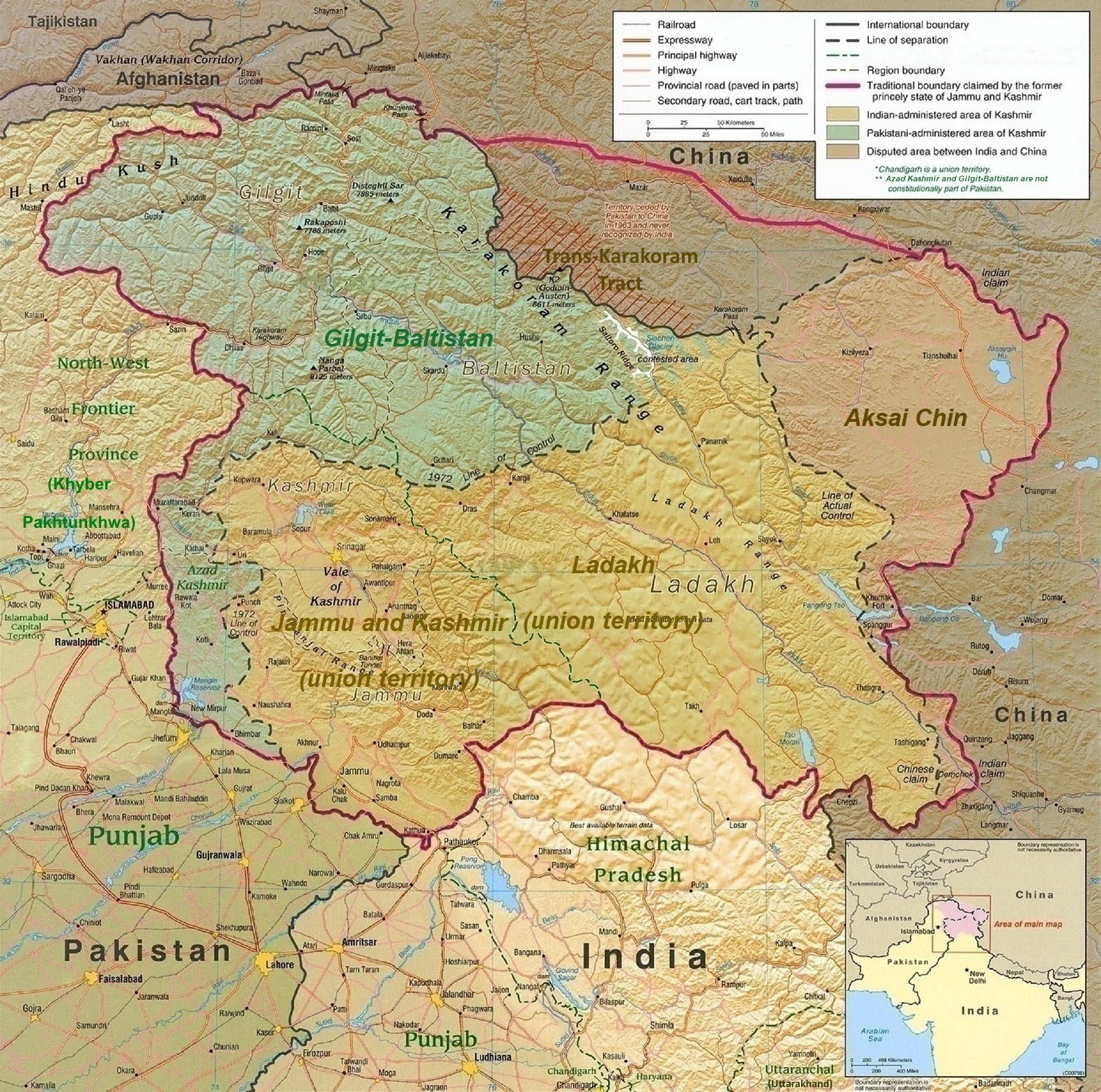



Five years ago the Galwan Valley was in the News for the wrong reasons after a deadly clash between the Indian and Chinese Armies in the Valley located in Ladakh lead to many deaths on the contentious Border between the two countries in wake of continued Chinese intrusions into Indian territory.
This area along the Shyok River, of which the Galwan Nallah or the Galwan River which forms the Galwan Valley has been off limits to Civilians since long but now the Indian Government has decided to open up the area for Civilians and we were amongst the First Civilians to venture into this beautifully desolate part of the Eastern Karakorams in Ladakh. Earlier Civilians could only venture upto the Village of Shyok from where the Shyok River takes a U turn and flows in a Northerly direction.