
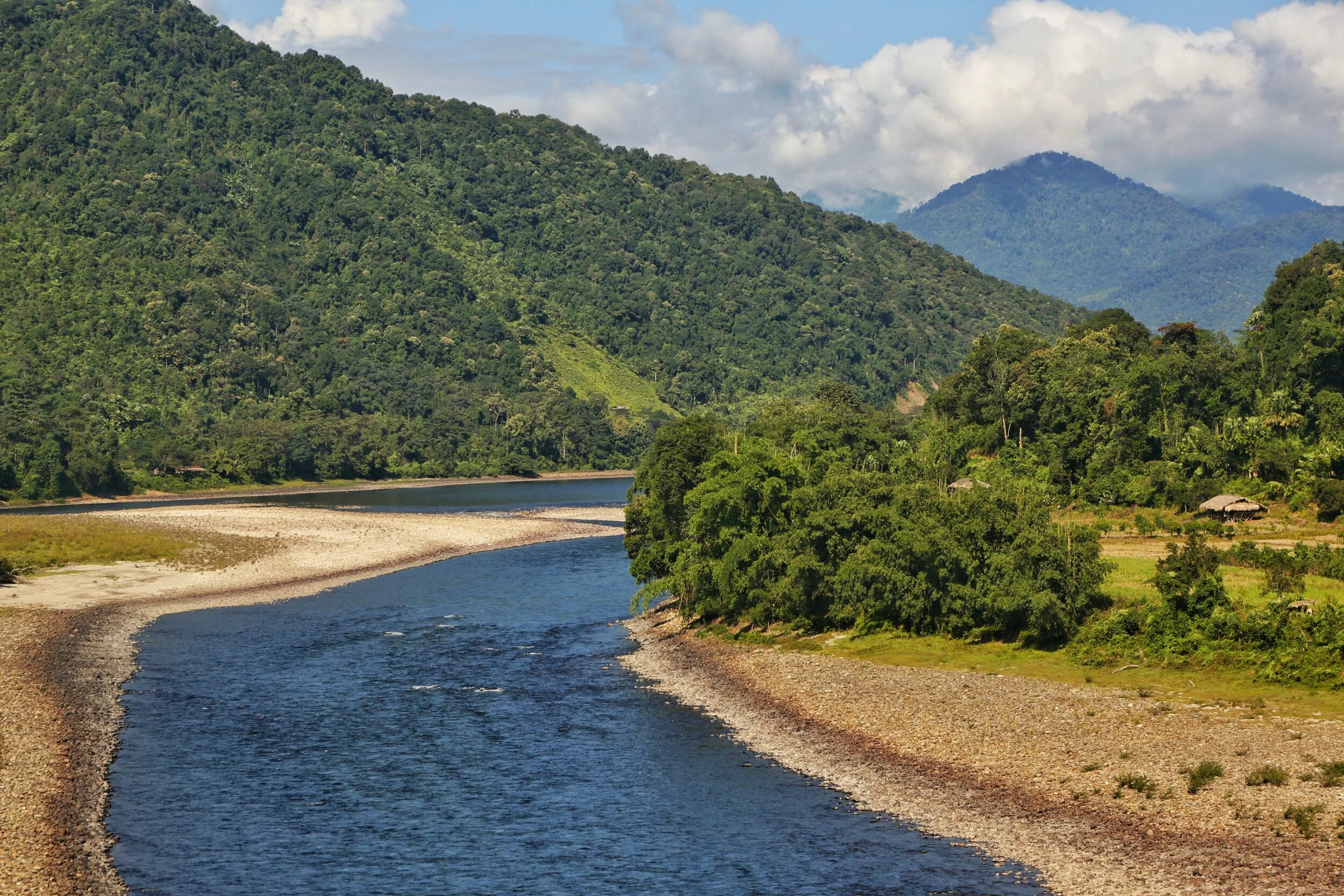
Of Mountains and Rivers
One of the most interesting thing about the Himalayas is how the Rivers interact with the Range and how the River Basins work. Since none of us is taught this in school in the Geography class the way one can study this fascinating aspect is to study Maps. Not the Maps of the new but the old Maps made by the Geological Surveys and the Royal Geographic Society Maps. The kind of detailing in these Maps is amazing when we keep in mind the fact that it was all done by boots on the Ground. No Aerial or Satellite Cartography.

Of the Himalayan Mountains and the Rivers
One of the most interesting thing about the Himalayas is how the Rivers interact with the Range and how the River Basins work. Since none of us is taught this in school in the Geography class the way one can study this fascinating aspect is to study Maps. Not the Maps of the new but the old Maps made by the Geological Surveys and the Royal Geographic Society Maps. The kind of detailing in these Maps is amazing when we keep in mind the fact that it was all done by boots on the Ground. No Aerial or Satellite Cartography.
And I finally found a Map which shows the River Basins / the Mountains / the Ridgelines / the Water Partings in a very simple and lucid fashion. Of course there are some explanations required for the un-initiated in the fine art of reading Maps. Not only does it show the Water Basins in the Himalayan context but it also shows the neighbouring River basins and how the Mountains affect the Course of the Rivers. You also need to understand that its this conflict between the Rivers and Mountains which has created the Valleys which has enabled Human communities to inhabit the Mountains.
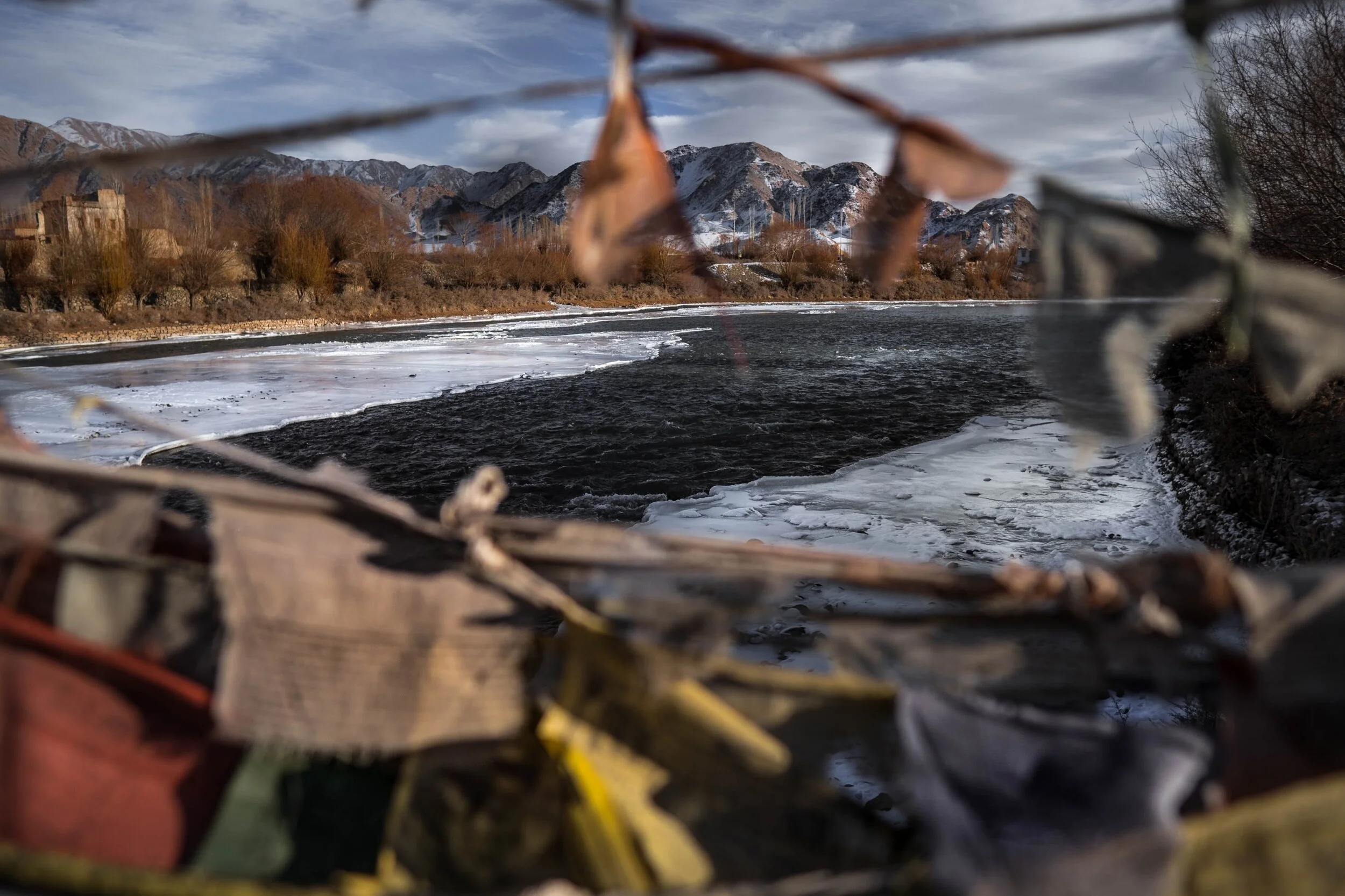
In the Himalayan context the Three main Rivers which drain the Himalayas are the Indus in the West, the Ganges in the Middle and the Brahmaputra in the East. It is common knowledge that the Indus and the Brahmaputra which rise from almost the same vicinity of each other near the Mansarovar Lake in the Tibetan Plateau hem in the Great Himalayan Range from the opposite sides. The Indus forms the boundary on the West as it passes by the Nanga Parbat and the Brahmaputra forms the boundary on the East and it rounds off the Namcha Barwa in the East. The Indus and the Brahmaputra both never breach the Main Himalayan Ridgeline and run alongside but behind the Main Himalayan Ridgeline on the Tibetan Plateau. Both flow along what Geologists call the Indus Tsangpo Suture or divide in simpler terms. I would also like to mention one major River which actually cuts through the main Himalayan Ridge line and forms the Eastern boundary of the Western Himalayas. This would be the Satluj which coincidentally also originates around the same area as the Indus and the Brahmaputra (which is called Tsangpo in Tibet) and follows an independent course cutting through the Himalayas though it finally ends up in the Indus once it reaches the Great Plains of the Punjab.
Beyond the Basins of the Himalayan Rivers we have in the neighbourhood the Tibetan Basin though a part of the Tibetan Plateau is drained by these Himalayan Rivers themselves. Further North the main Ridge line of the Karakorams forms the Water Parting between the Himalayan Rivers (the Indus system) and the Tarim Basin. The Tarim Basin is itself separated from the Tibetan Basin by the Kunlun Mountains. To the West of the Tarim Basin separated by the Pamirs in the South and the Tian Shan in the North is the Central Asian basin of the Oxus and Jaxartes of the old. The names Oxus and Jaxartes were enough in the old times to induce Explorers to go into a frenzy so inaccessible these areas were. However nowadays the Oxus and Jaxartes are better known by their present names, the Amur Darya and the Syr Darya. On the southern Edge the Oxus and Jaxartes Basin is separated from the Himalayan River Basin by the Hindu Kush. Further down the sub Ranges of the Hindu Kush like the Sulaiman Mountains divides the Himalayan River Basin from the Helmand River Basin. This rounds off the Water Partings of the Indus in the Western Himalayas.
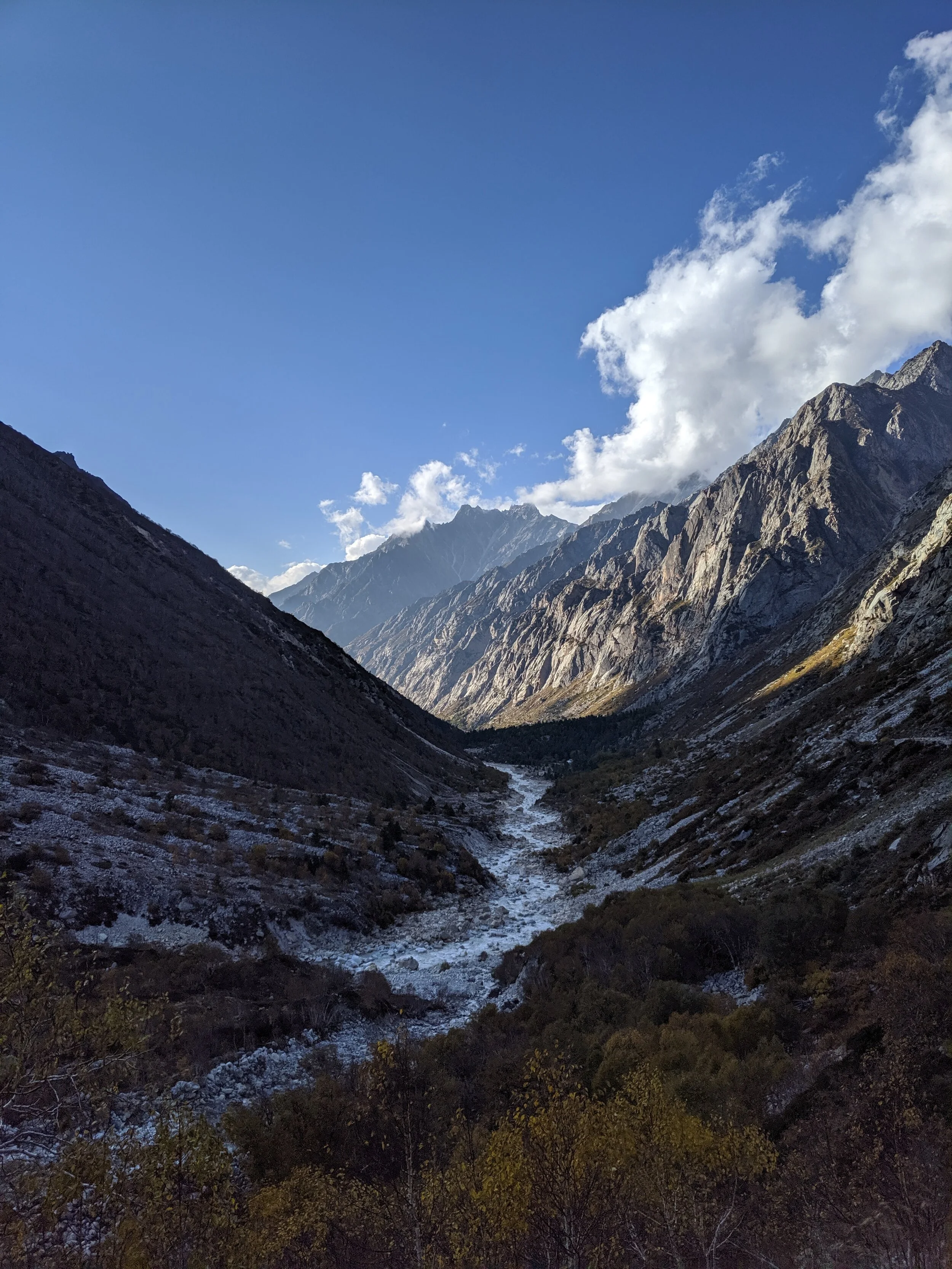
If you follow the Indus River in the Map you would see that after the point of origin the Main Waterparting of the Rivers runs behind the Main Himalayan Range rather than along the Main Ridge as classically should be the case. However at the point roughly at where it enters Ladakh from the Tibetan Plateau the River aligns itself with the Main Himalayan Range and continues the same course all the way to the Nanga Parbat where the Great Himalayan Range ends. The Water Parting however moves North towards the Karakorams and even across the Karakorams as seen in zone H. Close to the K2 however the Water Parting again moves along the main Himalayan Ridge line. But then after following the Main Ridge line of the Karakoram to West it again goes beyond the Karakorams as seen in zone C. It continues this trend until its behind the main Ridgeline of the Hindu Kush till at a point beyond the Tirich Mir it again aligns with the Main Ridge line to deviate again to form Zone B all the way to the Helmand Basin.
In pretty much the same way the Water Parting of the Tarim Basin also jumps beyond the Kun Lun, the Pamirs and the Tian Shans at places but it doesn't jump the main Ridge Line of the Karakorams as the reigning Peak of the K2 brings in a semblance of order and the Water Partings follow the K2 in the classical mode (I know this is complicated but once you co-relate with the Map and do some readings it will become more fascinating). Interestingly in the Hindu Kush its the highest Peak of the Hindu Kush the Tirich Mir which forces the Water Parting to run along the main Ridge line just like its supposed to be classically. However a point to be noted is that the Indus never concedes any of its “Mountains” the Western Himalayas or the Karakorams or the Hindu Kush to any River though itself it pushes its Basinal boundaries to well into the Kun Luns, the Pamirs and the Tian Shans though not quite making it to the main Ridge line.
And of course as we all the Mountains are rising and the Rivers are just cutting the Gorges and the Valleys and this state of flux will continue over a period of time till the end of time. And because of this constant change the Water Partings are not as fixed or permanent as we would like to believe. They are also constantly changing and evolving in a Geological time frame. This also shows how the Rivers and the Basind connect these highest Mountains in the World in a closer relationship than we actually believe. The River and the Basins provide the linkages which connect the Himalayas with the Karakorams, the Hindu Kush, the Kun Lun, the Pamirs and the Tian Shans. I collectively like to use the term “Himalayas” when talking about all these Ranges and the Great Himalayan Range when I am referring to the Main Himalaya Range. The highest Range on the Planet.
May we one day get to behold the magnificent sights that these Mountains hold and their mighty Peaks. And may we one day get to drink water from all these Rivers. The transition zones between these Himalayas is probably even today one of the least explored in the World and they continue to hold their Mysteries, occasionally revealing them to us mere Mortals.
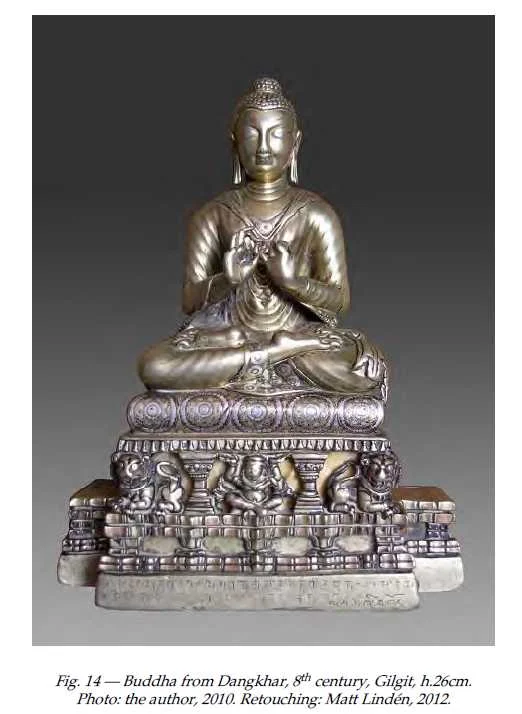
The Dhankar Buddha of Spiti
The Dhankar Gompa in Spiti as among st its posessions a metal Statue of the Buddha which was off limits to outsiders. A few people had ever seen and it was first photographed for open sources only in 2010. This is the story of the Buddha which came all the way from Gilgit

The Dhankar Buddha
Spiti or Piti as it was also called is probably as remote as any Trans Himalayan region and has for years lived in a time capsule but of course now things are changing. But like all the Lands Himalayan it holds its mysteries and secrets close to its chest. Just like neighbouring Lahaul and its ‘cultural / spiritual” big brother it was for most part of traceable history a part of the Guge Kingdom and subsequently the Central Tibetan Kingdom. Later on it became a part of Ladakh as the Kingdom grew powerful. It also became a bone of contention between Raja of Bushahr and the Ladakh Kingdom as the Bushahr Kingdom claimed Spiti as its own. Of course this led to the Raja of Bushahr to support the Central Tibetans and their Mongol allies when they decided to invade Ladakh over a religious dispute between the Dalai Lama and the King of Bhutan but that's a separate story.
Spiti because of its remoteness and isolation has preserved its culture and traditions, unlike many other such places. In the traditions of Tibetan Buddhism the Monastery is the center of life and the Monasteries are the keepers of ancient Manuscripts and Religious Iconry and these treasures have been very strictly guarded by generations of Monks who have lived in these Monasteries going back to thousands of years. The Monasteries of Spiti have survived plunder and ravage mostly through History except for a brief period when General Zorawar Singh took over Ladakh and Spiti was a part of Ladakh so he received Spiti as well.

The Dhankar Village and Gompa. Pic Courtesy : wikipedia Commons
Though Zorawar never came to Ladakh he appointed a certain zealous Officer in charge of Spiti. Now this Officer wasn't very fond of the local culture and tradition and went onto plunder many of the Monasteries and he was much despised for it. It should be pertinent to mention that the same Officer was a part of Zorawar’s Army which lost to the Tibetan / Chinese Army in the engagement in which the General was killed. But the said Officer was captured alive by the Tibetans and identified as the person responsible for the desecration of the Monasteries in Spiti and elsewhere. Suffice to say that he met a slow painful death as he was put in a cauldron of oil which was slowly heated.
Ok coming to the Topic of the Dhankar Monastery. It was one of the most important Monasteries in Spiti standing as it was above the confluence of the Spiti and the Pin Rivers. Dhankar had always been the traditional Capital of Spiti and the seat of the early “Local Rulers” of area called the Nonos. And of course the Dhankar Monastery had its own collection of Ancient Relics and Treasures though its is said that it was also plundered and ravaged during the Dogra Rule. And there was a certain Buddha statue highly revered and venerated but as closely guarded as well. It was called the Dhankar Buddha.
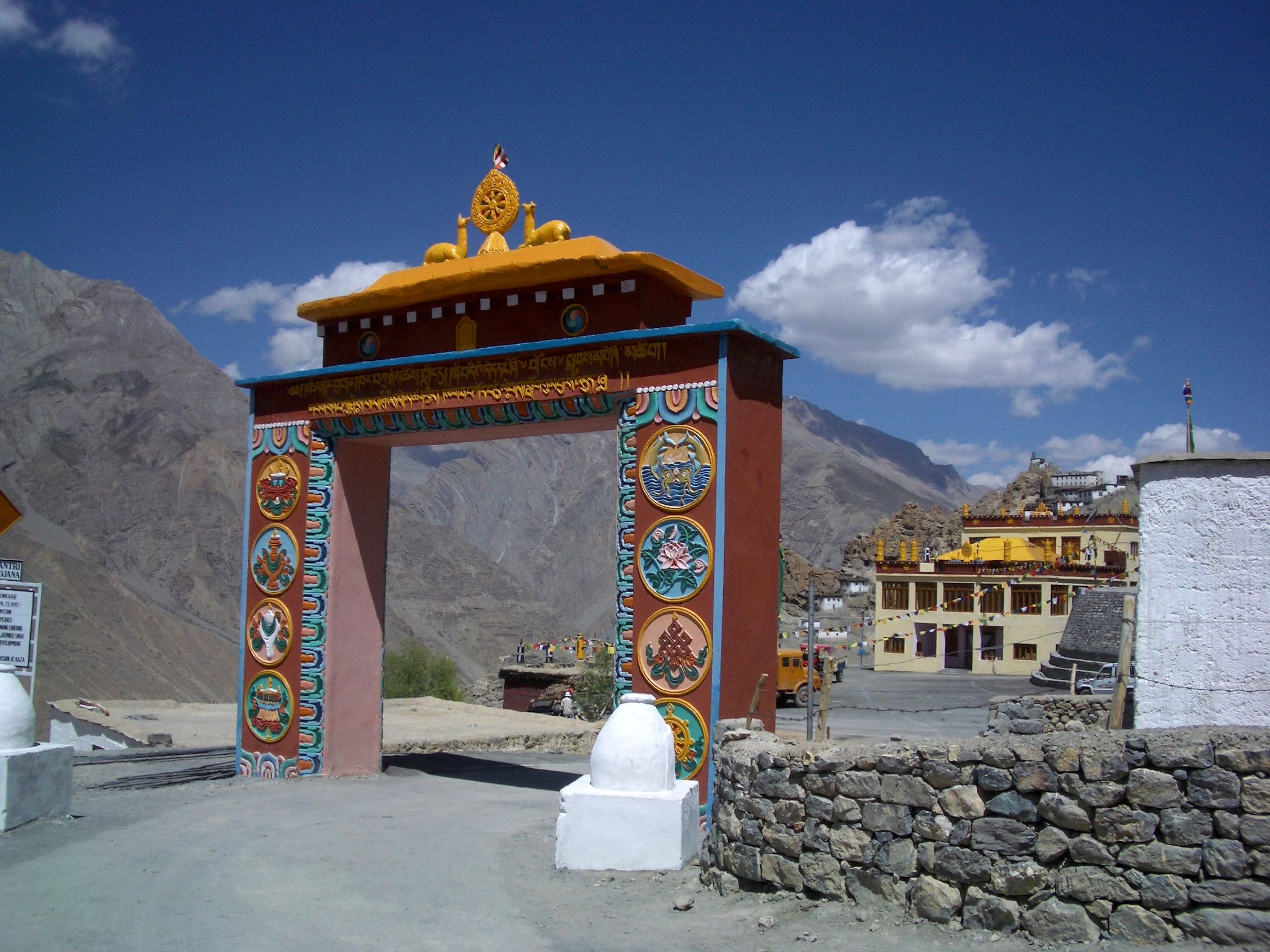
The Main Gate of the Dhankar Gompa. Pic Courtesy Wikipedia Commons.
Henry Lee Shutterworth was an Officer of the Raj who was posted in Kulu which was a British dominion. He also spent time in the most remote part of his jurisdiction in Lahaul and Spiti. With time he developed an interest in the local culture and tradition and began to record local Buddhist history and records. And this involved visiting various Monasteries in the area and trying to convince the Monks to show him some of the Treasures that the Monasteries so secretly guarded. And he had heard about the Dhankar Buddha and in time he was able to convince the Monks to show him the Dhankar Buddha. And he was totally taken aback when he saw the fine piece of Art and the quality of the Brass work. He wasnt allowed to take a Photo but was allowed to take a rub of the inscription at the bottom. Taking a Rub is akin to something we used to do as kids. Cover a coin with paper and then run a pencil over it so that the inscription on the coin is copied over the paper.
What he had stumbled upon was described by a Scholar of the subject as such “The Buddha from Dangkhar is in many ways one of the finest discoveries made in the field of Buddhist art and epigraphy for the cultural areas of Western Tibet and Greater Kashmir. We now know that the two inscriptions engraved on the lower part of the pedestal attest to the incredible journey of this image; produced in Gilgit in northern Pakistan in the eighth century, the statue was bestowed upon the royal monk from Guge, Lha lama Zhiwa Ö (lha bla ma zhi ba ’od) (1016–1111), about three hundred and fifty years later. Things were quite different then when Shuttleworth worked on the manuscript of his History of Spiti in the early 1930s. If the name of the Tibetan translator of royal descent had been easily identified, the main dedicatory inscription resisted easy decipherment.”

Another view of the Dhankar Gompa
That itself establishes the fact that Buddhism came to Tibet via what is now the Gilgit but via Central Asia. The fact that this sculpture made probably during the Rule of the Patola Shahis in Gilgit is an indicator enough. And from there it traveled all the way to the Kingdom of Guge in Western Tibet. And it was after 300 years of getting there that it was gifted to the Monastery in Spiti. And there it stayed, a mystery which was only solved by Shutterworth’s rubbing but Scholars yearned to have a look at it. The first time the Dhakar Buddha was photographed was in 1993 by a Government agency documenting India’s Arts under a Government legislation. It took a law for the Monks to reveal this Treasure and allow its Photography.
“In 2006, art historian Robert Linrothe took a glimpse at the metal sculpture but was not authorized to reproduce it. It is only in 2010 that the present author was entrusted by the monks from Dangkhar with the study of their sacred image, a request completed two years later.” These are the words of Yannick Laurent, a scholar at Oxford who was finally able to Photograph this much revered treasure. And for now the whole world can see it. It has a striking similarity to other Buddhas made during the Patola Shahi rule in Gilgit. That truly was a Golden Age of Buddhism in Gilgit and even the Gilgit Manuscripts, the most ancient and sacred of all Buddhist manuscripts are a testament to that.
So try your luck at the Dhankar Monastery next time. Maybe the Dhankar Buddha would give you an audience.
Kintup and the Everest of Rivers
The unsung Story of one of the Indian Explorers and Surveyors, popularly called as the Pandits, who went onto Chart the course of the Zarlung Tsangbo as it Journeys through the Tibetan highlands and enters Assam through one of the most unexplored Regions of the Himalayas.

Kintup and the Everest of the Rivers
A lot has been written on the exploration of the Western Himalayas by various Explorers as it was a politically very active region in the 18th and 19th Centuries with various powers come into conflict to push their interests in these parts. In stark contrast very less has been written about the Eastern edge of the Himalayas and even fewer people have ventured into this enigmatic part of the Himalayas. The jungles which surrounded the Eastern Himalayas made them almost impossible to get to and the Weather didn't help as the Eastern Himalayas get 3 times the precipitation that the Western Himalayas do.

And was in the Eastern Himalayas that a great mystery evolved which took hundreds of years to finally decipher and figure it out. It was a great Geographical puzzle and it involved the main River that runs through North East India, the Brahmaputra. Its a huge River as we are aware of and early Explorers wanted to find more and one of the favourite Explorations of these Explorers was the charting of the Route of the River from its source right till where it met the Sea. There are two ways to achieve its objective. You either start from the point it originates or you start from the point it hits the Seas or the Plains. The problem with the Brahmaputra was that tracing it back to the source was almost impossible due to a number of factors. First was the simple fact that the forests in the Foot Hills were impenetrable. And more than that the Tribes and the Indigenous People living in these Hills were very hostile to any outsiders and stories of head hunting were common. And another third point was that at the Brahmaputra was composed of 4 main tributaries which entered India from the East. So which was the main and which one was a Tributary was another question.
And in the highlands of Tibet, which was mostly inaccessible to Western explorers and outsiders, was a great River called the Tsangpo or the Yarlung Tsangpo who’s point of origin was known to be the Mansarover Lake at the foot of the Holy Kailash Mountain but no one was sure of where the River disappeared once it went off the Tibetan Plateau. Westerners who had heard accounts of this great River were also intrigued as to where about this great River go and where did it discharge into the sea. You need to remember that this impenetrable Region into which the Yarlung Tsangpo disappeared was also called Pemako and nothing much was known about it to the outside World. And beyond Pemako draining off the Tibetan Plateau were not one but 5 Great Rivers of Asia who create deep Gorges as they cut through some of the Highest Mountains. The Brahmaputra, the Irrawaddy, the Salween, the Mekong and the Jinsha or the Great Yangtze all flow almost parallel to each other in an area less than a 100 km wide. This Region is a true wilderness and you need to experience it to know how impossible it is to access.

I had travelled to this Region in 2018 and saw the breathtaking sight of the Jinsha or the Yangtze raving and frothing its way through the Tiger Leaping Gorge. Of course Chinese engineering has meant that the area is now accessible and the Chinese Government opened up this area in 1990’s to the outside World. This area is now a World Heritage Area, called the Three Parallel Rivers of Yunnan World Heritage. And as mentioned besides these Three the other two Great Rivers also skirt around the Himalayas in the same region.
Coming back to where we started. This question puzzled western Explorers as well till someone put two and two together and said “Hey, maybe the Tsangpo is the Brahmaputra”. Now at that time this suggestion looked incredible as it was hard to believe that a River would loose all that elevation within a stretch of 150 kms. From the high Tibetan Plateau to the low Assam Valleys. But then it was the only plausible explanation and the two Rivers were connected. There was another school of thought which said that the Tsangpo was actually the Irrawaddy and that also looked like a possibility. Many papers were return and letters were exchanged on both the possibilities. The only way to get a definite answer was to send someone to Tibet and actually follow the course of the River and come up with conclusive evidence which would rest the matter for the future. Hence for many Explorers just like climbing the Everest was the ultimate prize, the same way exploring the Yarlung Tsangpo all the way to the Sea was called a feat equivalent of scaling the Everest, hence the term the Everest of Rivers.

Only there was a problem. Tibet was off limits and there was no chance of Tibetans letting in anyone from outside to Survey their Rivers. So the British decided on the next best option. The Pandits. The Legendary Pandits were Indian natives, mostly from the Mountains, who penetrated deep into Tibet under the guide of Pilgrims or Merchants or a Monks and surveyed the land for the British who ran the Missions from across the Himalayas. Many of us have heard of Nain Singh, Kishan Singh, Kalyan Singh and even Abdul Hamid and Hari Ram. And of course a large number of these Pandits just went into oblivion or disappeared in the Himalayan vastness their stories mostly untold. And then there was Kintup. Kintup the Tailor.
Kintup was a Tailor based in Gangtok in Sikkim and he was also an Explorer and could pass off very well as a Tibetan. The first time one of the Pandits, Nem Singh was sent to explore the course of the Yarlung Zangbo and Kintup went along as an assistant in 1878. Their Mission was to chart the Route all the way from the Tibetan Plateau to Assam. They partly succeeded but due to the inherent impenetrable ness of the Terrain there was still a gap of 160 kms which they couldn't explore. It is said that though Kintup wanted to push on but Nem Singh wasn't so keen on the same and both returned to India where their British bosses were not too pleased with Nem Singh’s decision to come back without exploring the complete course of the River.
In a couple of years an Expedition was put together again and Kintup was again a part of it along with a Chinese Lama who said he knew these parts. And just to be sure they came up with a ingenious Plan which didnt require Exploring the whole course but one that would still prove that the Yarlung Tsangpo was infact the Brahmaputra of Assam. The Plan involved floating down 500 logs with special carvings the Yarlung Tsangpo and stationing teams of people in lower Assam to watch out for these Logs and even if one log was picked up by the team it would mean that the mystery was solved. Sounded like quite a plan and so the Expedition was soon underway.

But as fate would have it the Chinese Lama turned out to be treacherous. And once they were in the Kham he revealed his secret as well as that of Kintup to the Tibetan Authorities and he was rewarded for the act while Kintup was thrown into the prison. But after a few months Kintup managed to escape and made his way to Monastery. His captors soon caught up with him but the Head Lama of the Monastery bought them off by giving them some money and now Kintup was in the employment of the Head Lama. He worked very diligently for the Lama and I assume he took a liking for his spirit and the Lama decided to give him his freedom. What Kintup did next speaks for the character of a man. Kintup decided to go to Lhasa and sent a message to his British boss from there narrating the misfortune that had befallen him during the Expedition but at the same time he said that he would carry out with his Mission and he would soon start sending the Logs down the Yarlung Zangbo.
And that is what he did. He collected 500 logs and carved them and floated them down the River at the rate of one log per day. But unfortunately there was no Team to look for them as his message had not reached India and it had been more than a year since he had left and had no communication with his Bosses. They had just given up on him. Another Explorer lost in the vastness of the Trans Himalayas. After having done that Kintup decided to again explore down the course of the River anyways. He spent a couple of Years exploring the the Region and came quite close to reaching all the way down to Assam but again the terrain and the hostile Tribes made it impossible and Kintup decided to return to India. And he was almost lost in oblivion until someone took interest in his Journals and these were finally published in 1889, many years after he had returned from a Journey that few could even imagine possible.

His Journal conjured up a magical World of Deep Gorges, Waterfalls and Impenetrable Jungle with hostile Tribes. A Region that the Tibetans used to call Pemako. It inspired many people to go Explore the Region but many people were also sceptical as there was no way to confirm all the information that he had got. He in particular mentioned a 150 feet high Waterfall with a Lake at its bottom. This is what was called the Hidden Falls. Kintup still accompanied the occasional forays into Tibet but it was finally only after 1905 when the British led by Col.Francis Younghusband defeated the Tibetan and the area was opened that the British realised that Kintup was right in all his observations. Though he wasnt literate but he had an excellent memory and was intelligent as well to minutely observe his surroundings. It took more than 15 years for observations to be validated and added to the Survey of India archives. The final validation of his extraordinary Journeys and Explorations was validated by a team of Explorers sent to run the Course of the River. They were also astounded to find out how accurate Kintup was. And yes he was still around in 1914. They found the Hidden Waterfall as well though it wasn't as high as Kintup had mentioned.
Anyways the area was closed for further Explorations after the Chinese took Tibet and in wake of the Sino Indian conflict the whole area was off limits. And as I mentioned before the area was opened for foreigners only in the 1990s and two Expeditions one Japanese and one Western tried to Canoe/ Raft down the Yarlung Tsangpo but both lost a member each and couldnt complete the Mission. It was only in 2002-2003 that the first Expedition finally succeeded in navigating the Upper Brahmaputra. The highest Falls was visited and recorded again in 1998 when it was found out to be around 108 feet. And then it later dawned upon the Explorers that Kintup who always got his Maths right hadn't misjudged the height. He was talking about a seperate Waterfall which was made by a Tributary of the Yarlung Tsangpo as it fell over a Cliff.

The person responsible for this was Richard Fisher who first established this as one of the Deepest Gorges of the World. Fisher further goes onto mention about the “Everest of Rivers”comparison “"I did not want this incredible canyon to become an Everest-style killing fields." This canyon cannot be "knocked off" or conquered. Everest is a holy mountain as the Tsangpo is an equally important sacred canyon. Everest represents the male earth and the Tsangpo, the female hidden lands of this planet. It is a great blessing for all those who love the earth that, god willing, we have passed into a new era for the Tsangpo. This living canyon has withstood an almost military western style assault. "Today this chasm remains as elusive, beautiful and fresh as the first day I saw it in 1992," Fisher said.
As for Kintup he died in 1914 only months after he was officially recognised for his contributions and given a princely sum of Rs.3000 for his endeavors.
PS : The Yarlung Tsangpo Gorge it still remains a impenetrable area and even if you Google for pics you would find only a few and far between giving you an idea of how remote this Region still is.
A Place Called Chushul
On the desolate Changthang region of the Tibetan Plateau lies the Village of Chushul. It lies close to the Border with China. And it was here that a Treaty was signed and Ladakh became a part of the Sikh Empire.
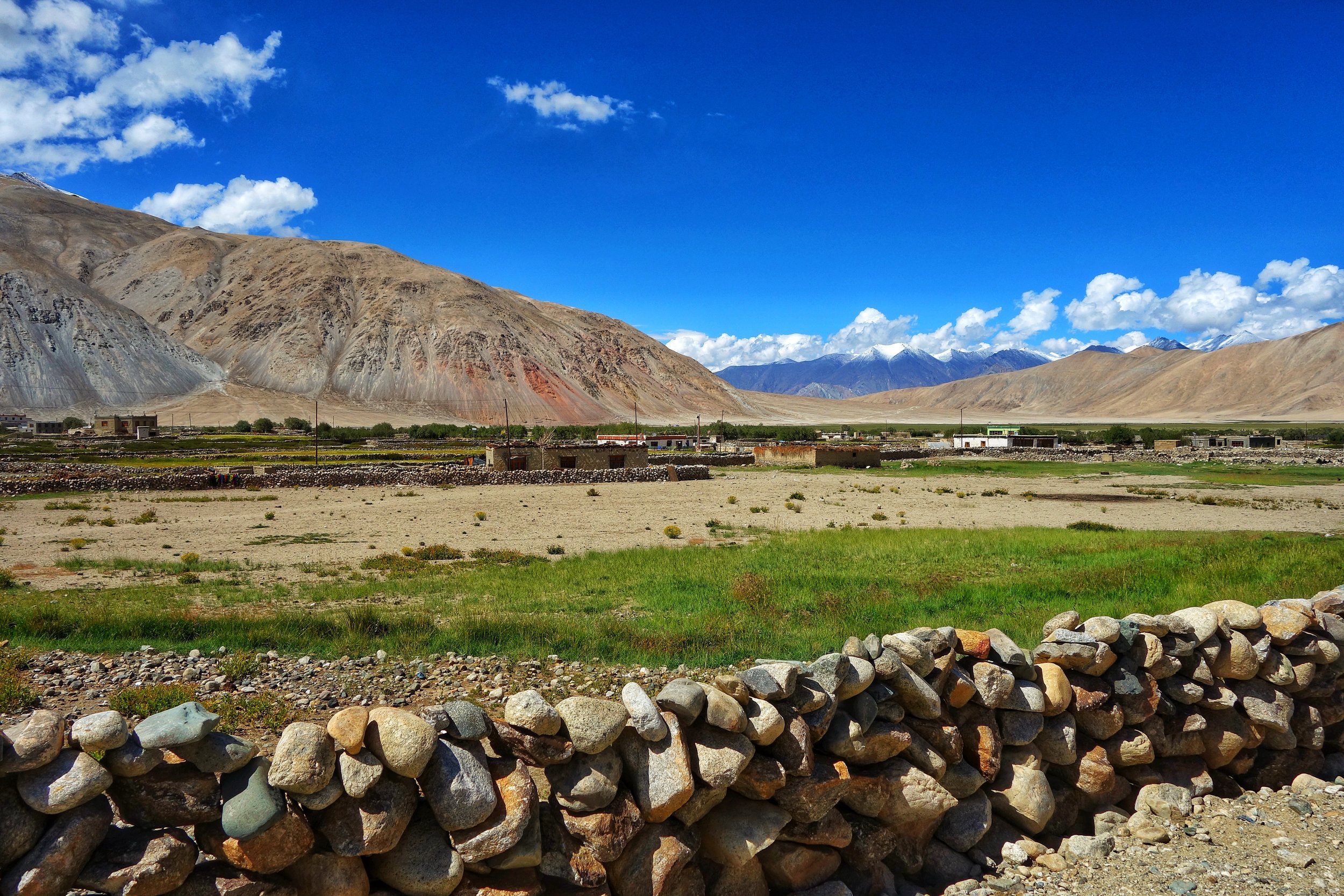
A Place Called Chushul
Chushul is a Village close to the Indian LAC with China in the Eastern Ladakh region close to Pangong Lake as well as Rezang La. At an altitude of around 4360 m it used to be the main Village of the Changthang block in the Ladakh region earlier. And it is one of the five designated locations along the LAC where the Border personnel from both countries meet to have formal meetings in order to maintain peace at the LAC.

On the way to Chushul and driving along the Pangong Tso.
We passed this place on our way from Pangong Lake to Tso Moriri which I must rate as one of the finest drive one can do in the Trans Himalayas cutting across the Changthang. Once we got to Chushul we realised that one of our Vehicles was short on fuel. And since Chushul was one of the main Villages on the way and uncertain of whether we will get fuel anywhere ahead we decided to look for Petrol in Chushul. We had already crossed Chushul when we decided to turn back and when we came back into the Village we passed by the Police Post . And there was an old Policeman sitting outside. We asked him where we could get Fuel. He told us and then suddenly he asked us for our Inner Line Permits.

The Village of Chushul and the Monastery in Yellow
All of us in 4 Vehicles were Residents of the state of Jammu and Kashmir and as such we dont require Inner Line Permits. J and K residents just need to show IDs to prove their credentials and they are good to go. And plus we had a letter from JK Tourism which pretty much gave us an open Pass as far as the ITBP/ Army guys were OK with it. The Policeman just saw the Letter and checked the IDs of the guys in the first Car and told us to go. Since I am no longer a permanent resident of JK being based in Gurugram I was carrying my old Passport photocopy which had been issued in Srinagar. But I had still got an ILP made for myself just in case. But it didnt come to that and the Policeman was satisfied that we were all JK residents and let us go.
And then we got the fuel had Lunch and we were on our way again. We again passed the Police Post and this time there was another younger Policeman there who signalled us to stop. We stopped and told him that we had already shown our papers. He looked at all of us. And then suddenly I realised that he was staring at me. The Policeman then said “ Iska permit Kidhar hai” pointing at me. He again said “Yeh foreigner ka Permit kahaan hai ?”. Out of all the Kashmiri guys he somehow assumed me to be a Foreigner. I was slightly amused and started smiling. I blurted “Sirji main Foreigner nahin hoon. Srinagar se aaya hoon” He started laughing and bade us n our way.

Before entering Chushul, traditional pile of Horns to ward off evil.
Now to more important stuff. Historically this was the place where the Treaty of Chushul was signed in 1842 which officially demarcated the border between Ladakh and Tibet as a consequence of which Ladakh became a part of the Sikh Kingdom of the Punjab. After the death of General Zorawar Singh in Tibet his Army had been routed. The Tibeto-Chinese Army then marched towards Leh and almost captured it. Except for a small Dogra detachment that was entrenched in the Fort. The Dogra Detachment held on till the time fresh troops arrived under Diwan Hari Chand and Wazir Ratnu. The Dogras drove out the Tibeto-Chinese and started chasing them and the Tibeto-Chinese forces dug in at Drangtse.
In a brilliant tactical move the Dogras flooded the Tibetan fortifications by diverting a local River and they were again forced to flee Eastwards. The Dogras were again on their heels as avenging the death of their beloved General Zorawar Singh was their most motivational factor. The opposing Forces finally met on the open fields at Chushul in August 1842 and in the engagement the Tibeto-Chinese force was defeated and their General was decapitated in a form of brutal medieval revenge. With their General avenged they could now go back as both sides had by now now lost the appetite for further engagements.

The fields of Chushul
Both sides then decided to have a treaty by the way of which their territories would be demarcated and recognised by each other. And the Tibetans and the Chinese gave up any claim whatsoever that they had over Ladakh. So on 16/ 17th September 1842 was signed the Treaty of Chushul at Chushul and it said
"As on this auspicious day, the 3nd of Assuj, samvat 1899 (16th/17th September 1842) we, the officers of the Lhasa (Governrnent), Kalon of Sokan and Bakshi Shajpuh, commander of the forces, and two officers on behalf of the most resplendent Sri Khalsa ji Sahib, the asylum of the world, King Sher Singh ji, and Sri Maharaja Sahib Raja-i-Rajagan Raja Sahib Bahadur Raja Gulab Singh, i.e.. the Muktar-ud-Daula Diwan Hari Chand and the asylum of vizirs, Vizir Ratnun. in a meeting called together for the promotion of peace and unity, and by professions and vows of friendship, unity and sincerity of heart and by taking oaths like those of Kunjak Sahib, have arranged and agreed that relations of peace, friendship and unity between Sri Khalsaji and Sri Maharaja Sahib Bahadur Raja Gulab Singh ji, and the Emperor of China and the Lama Guru of Lhasa will hence forward remain firmly established forever; and we declare in the presence of the Kunjak Sahib that on no account whatsoever will there be any deviation, difference of departure (from this agreement). We shall neither at present nor in the future have anything to do or interfere at all with the boundaries of Ladakh and its surroundings as fixed from ancient times and will allow the annual export of wool, shawls and tea by way of Ladakh according to the old established customs.
Should any of the Opponents of Sri Sarkar Khalsa ji and Sri Raja Sahib Bahadur at any time enter our territories, we shall not pay any heed to his words or allow him to remain in our country. We shall offer no hindrance to traders of Ladakh who visit our territories. We shall not even to the extent of a hair's breadth act in contravention of the terms that we have agreed to above regarding firm friendship, unity, the fixed boundaries of Ladakh and the keeping open of the route for wool, shawls and tea. We call Kunjak Sahib, Kairi, Lassi, Zhon Mahan, and Khushal Chon as witnesses to this treaty."
And to this day the territories as designated in this Treaty as held as the Official border as recognised by the Indian Government though the Chinese from time to time play some hanky panky as has become their norm in this Sector. But of course that doesnt take away from the significance of the Treaty or from the importance of Chushul itself.

Traditional Cow Dung for using as Fuel
A visit to Chushul would always be worth it if you love the Mountains and love some History as well.
Pic from August 2018. Chushul, Eastern Ladakh.
The Tibetan Mastiffs Business
The Story of one of the largest Dog Breeds in the World, the Tibetan Mastiffs who have protected people and live stock for centuries on the Tibetan Plateau.
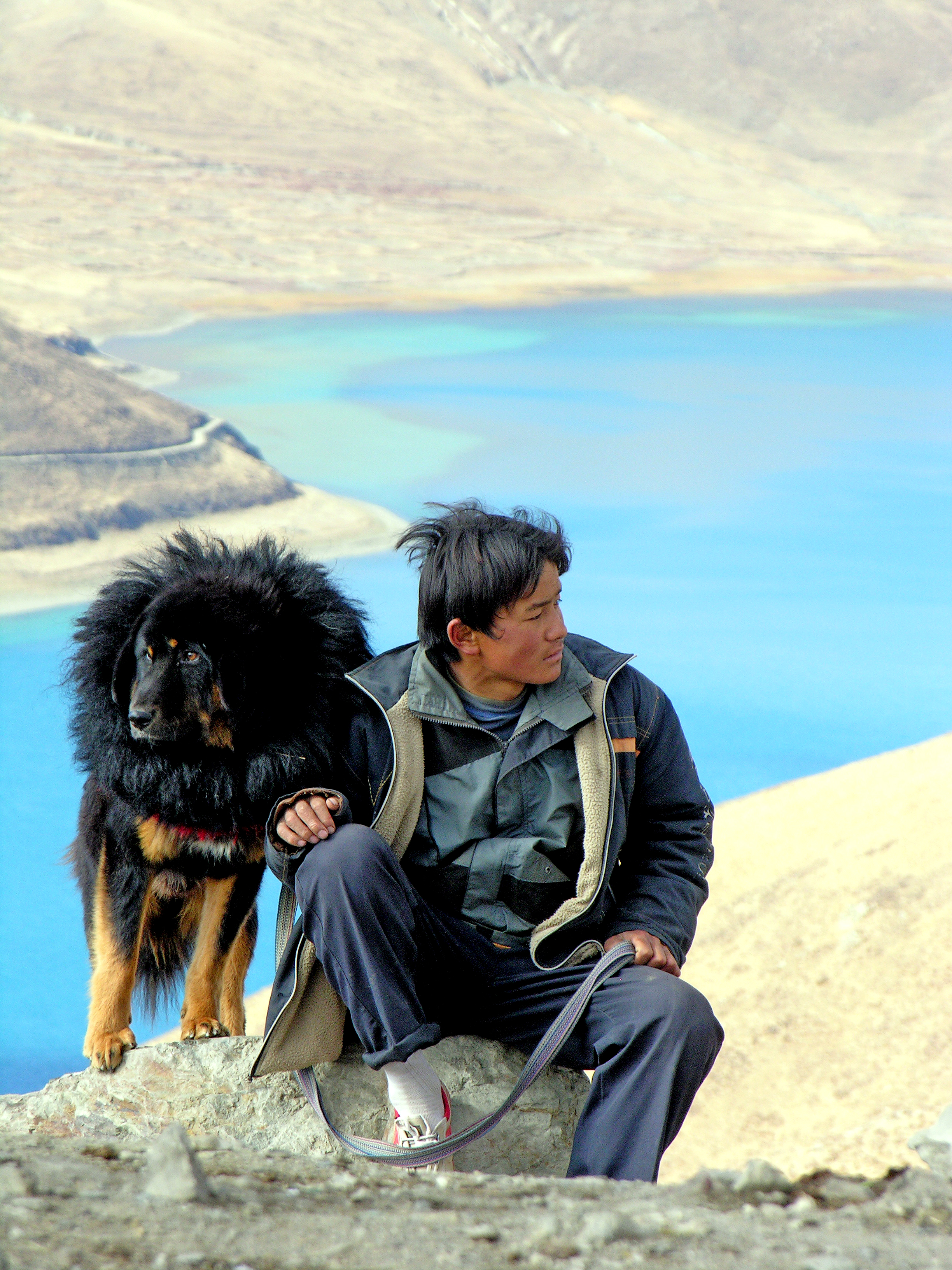
A Tibetan Mastiff in Tibet (Pic from Wikipedia)
The Tibetan Mastiff Business
Ever heard of the Tibetan Mastiffs ? I am sure most of you must have heard of these monsters of Dogs that lived on the Tibetan Plateau and grew into large proportions to the point that instead of resembling Dogs they looked like Bears. They are known for their ferocity and loyalty as well. And of course their shaggy coat which protects them from the extreme cold on the Tibetan Plateau makes them look much bigger than they actually are. And last but not the least their Gruff Bark which literally sends shivers down one's spine. I have kept a Himalayan Sheep Dog or what we called a Bakarwal at my home in Kashmir but its Gruff was nowhere close to what a Tibetan Mastiff Gruff sounds like. They are almost like Bass Speakers. Bigger the speaker, deeper is the Gruff and its more bone chilling.

A Pair of Tibetan Mastiffs goign into a frenzy as they see me trying to take their pics.
I have never really encountered a pure Tibetan Mastiff in India though have occasionally come across what I call the Himalayan Mastiff during wanderings in the Mountains. But I know people who have pure ones in India but I have never had a chance to visit them. And I am sure many people have purer varieties in the Regions bordering Tibet.
Anyways I had my first real encounter with these Monsters of the Canine World when last winters, in January 2017, I decided to visit a part of the Tibetan Plateau which lay on the eastern edge along the Hengduan Mountains. Of course I was told its no use going there at the height of Winters and that too solo but I had the time and opportunity so I decided to take a detour while on a Business trip.

Another pic of a Tibetan Mastiff with the hair standing on the back of its neck.
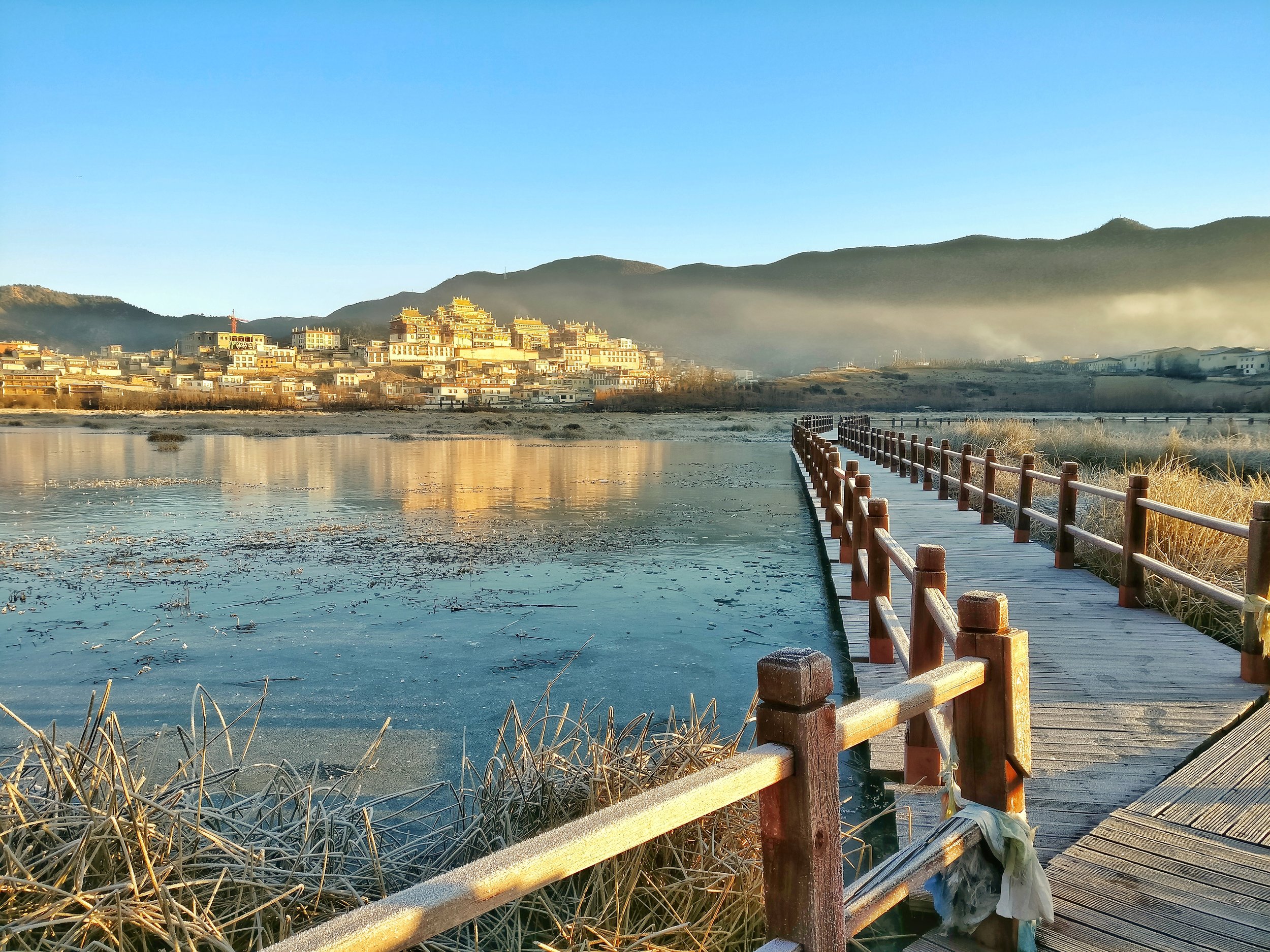
It was in Shangri La or Zhongdian that I first encountered these guys. Zhongdian or the fancy name, Shangri La, that the Chinese Government has given it is home to the beautiful Ganden Sumtseling Monastery and is the seat of the local Government in the Deqin Tibetan Autonomous Prefecture. The Tibetan name for the town is Gyalthang. The Town is situated at around 3200 m above sea level on the Eastern edge of the Tibetan Plateau.
I had booked a Tibetan Lodge near the Monastery and as the Weather was nice I decided to take a walk around the Lamucyang Tso, a small Lake facing the Monastery. The Lodge was a typical Guest House built like a Traditional Tibetan home in a typical traditional Tibetan Village. While on the walk I came across the first Monster and it was lying lazily in the Grass asleep. I went past it keep a safe distance and then I encountered another but this was on Guard duty outside his House and luckily he was chained up. The moment he realised my presence he went crazy off the hook. And it was big. I am lucky the Chain held on but it did give me a scare.

The guy I saw lazing by the Lake. Chilled out !
The next morning I woke up early around 5 AM as I wanted to take pics of the Sunrise and the Monastery as I felt the Monastery would look good when the first rays of the Sun fall on its gilded Roof. It was still dark when I got out of my Lodge and the temperature was 15 Degrees below zero. And there was this small Hill that I wanted to climb as it would give me a good view of the Monastery as well as the Sun as it rose over the Mountains. And i started walking but I did not take into account that I had to pass the House with the crazy Tibetan Mastiff again. I realized it just when I was in front of the House and I heard his growl. There have been few times that I have been so scared in my life. He went wild again and I just prayed to whichever God was up at that time to ensure that his Chain holds. It did and I thankfully got some shots.
The next day I decided to take a walk through the Village as I wanted to hike up a Mountain Peak which looked quite inviting. And then I came across all kinds of Tibetan Mastiffs as it seemed every house in the Village had at least one. And every time a stranger crossed they went into a frenzy. But I rather enjoyed the Tibetan Mastiff Symphony (Cacophony actually) that I created every time I walked the Village, which for some strange reason had very few people and mostly Yaks, Pigs, Chickens and Tibetan mastiffs. The most endearing sight for me was one of two huge Tibetan Mastiffs sleeping alongside with a couple of the Pot Bellied Black Pigs. It was surreal but I didn't have the courage to walk into someone’s House and take pics of the Mastiffs and Pigs enjoying their siesta.
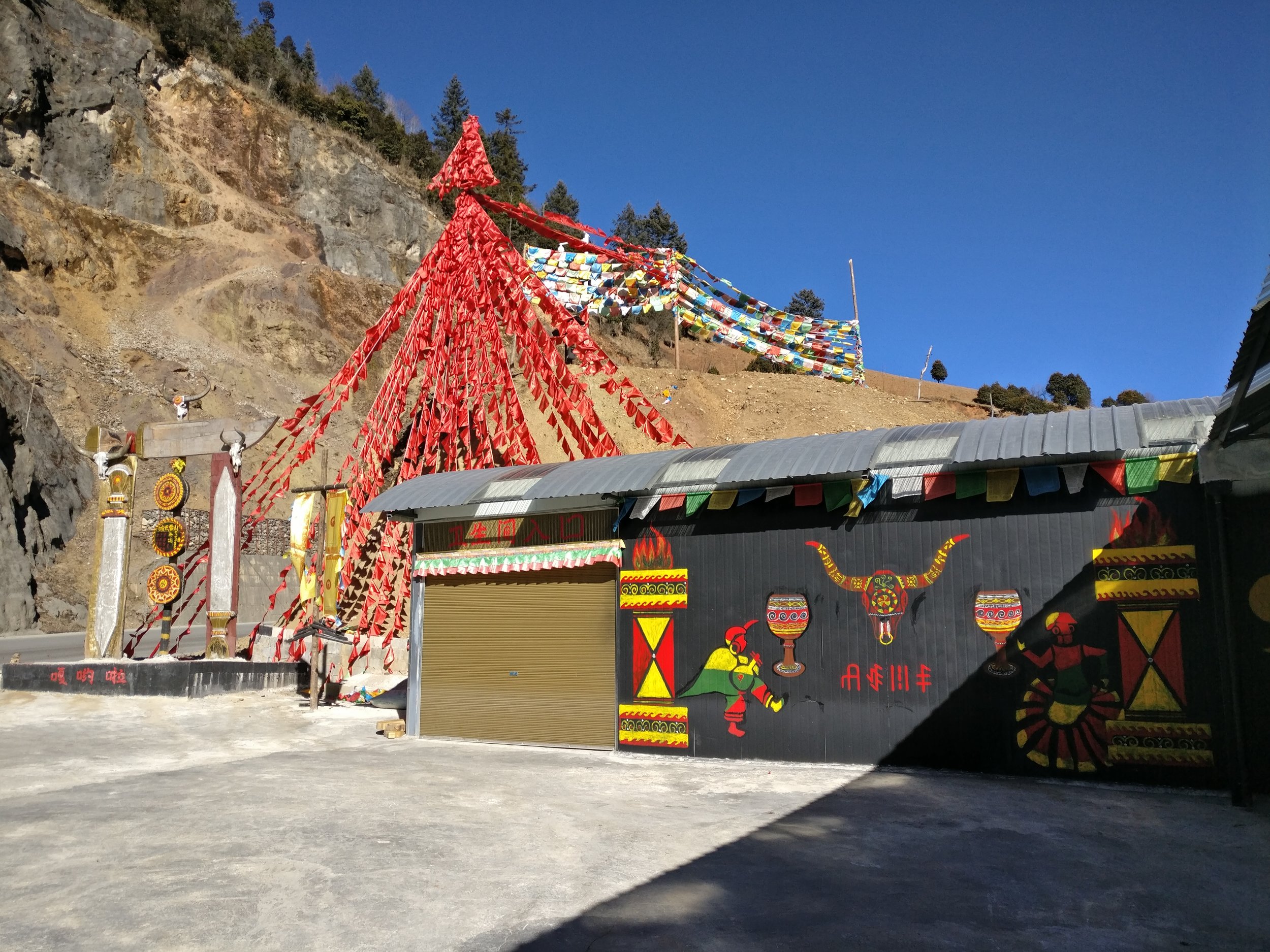
A Shop selling Tibetan Mastiffs.
Anyways coming down to more serious business, as the Chinese have grown wealthier, so has their craze for keeping Tibetan Mastiffs more as status symbols though I admit I have seen some crazy love for Dogs in China which I simply can't imagine anywhere else. So much in fashion are these Tibetan Mastiffs that there are reports of a puppy being sold for 2 Million USD, that's a whopping 14 Crores in Indian Rupees. Of course with this Breed being in so much demand what has happened is that the breeding and sale of these Mastiffs is happening on a big scale. And of course what this means many unscrupulous people getting into this business and trying to maximize profits they keep these animals in despicable conditions. And of course the business couldn't sustain forever and the business fell in 2013 with the supply overwhelming in demand putting many out of business.

One of the "Showrooms" selling Tibetan Mastiffs
And i saw it up close and personal. From Gyalthang I took a taxi down to Lijiang as i wanted to visit the Tiger leaping Gorge. Now most Chinese Tourists come by High Speed Train to Lijiang and then do the 4 hour trip to Shangri La or Xianggelila as they call it by Luxury buses. And this Road in its upper stretch had at least 10 Showrooms (yes Showrooms) selling just Tibetan Mastiffs. I stopped at a couple but they were mostly shut as it was off season but I could see that they still had a few Mastiffs held on the backside in cages. And the way these majestic creatures were kept was just pathetic. Filthy cages which didn't seem to have been cleaned since ages and very smelly. And the Dogs had all shaggy coats which seemed all matted. I clicked some pics but never had the heart to post them online as they are just simply disgusting. But I was amazed at the scale of this Business and wondered how long will the craze last and what would happen to the Mastiffs when they fell out of favor with their fashionable owners. Let's admit it. Keeping a Dog so large is no easy task as it has to be given enough food, space, grooming and care for it to thrive. And plus you need to make sure that the Dog is provide facilities to survive the environment in hotter areas

Wooden Cages inside which the Tibetan Mastiffs are kept.
So as result what has happened is that many Tibetan Mastiffs are now abandoned by either the Owners or the unscrupulous Breeders who due to massive competition can no longer make profit so they just abandon the Dogs to roam the streets. An that is a sad sight for such Dogs which once were almost Royalty. Even sadder is the fact that many are sold to Dog slaughter houses which process them for Dog meat which is still liked as food in parts of China. And also there are reports of abandoned Tibetan Mastiffs teaming up with Wild Wolves to attack livestock !
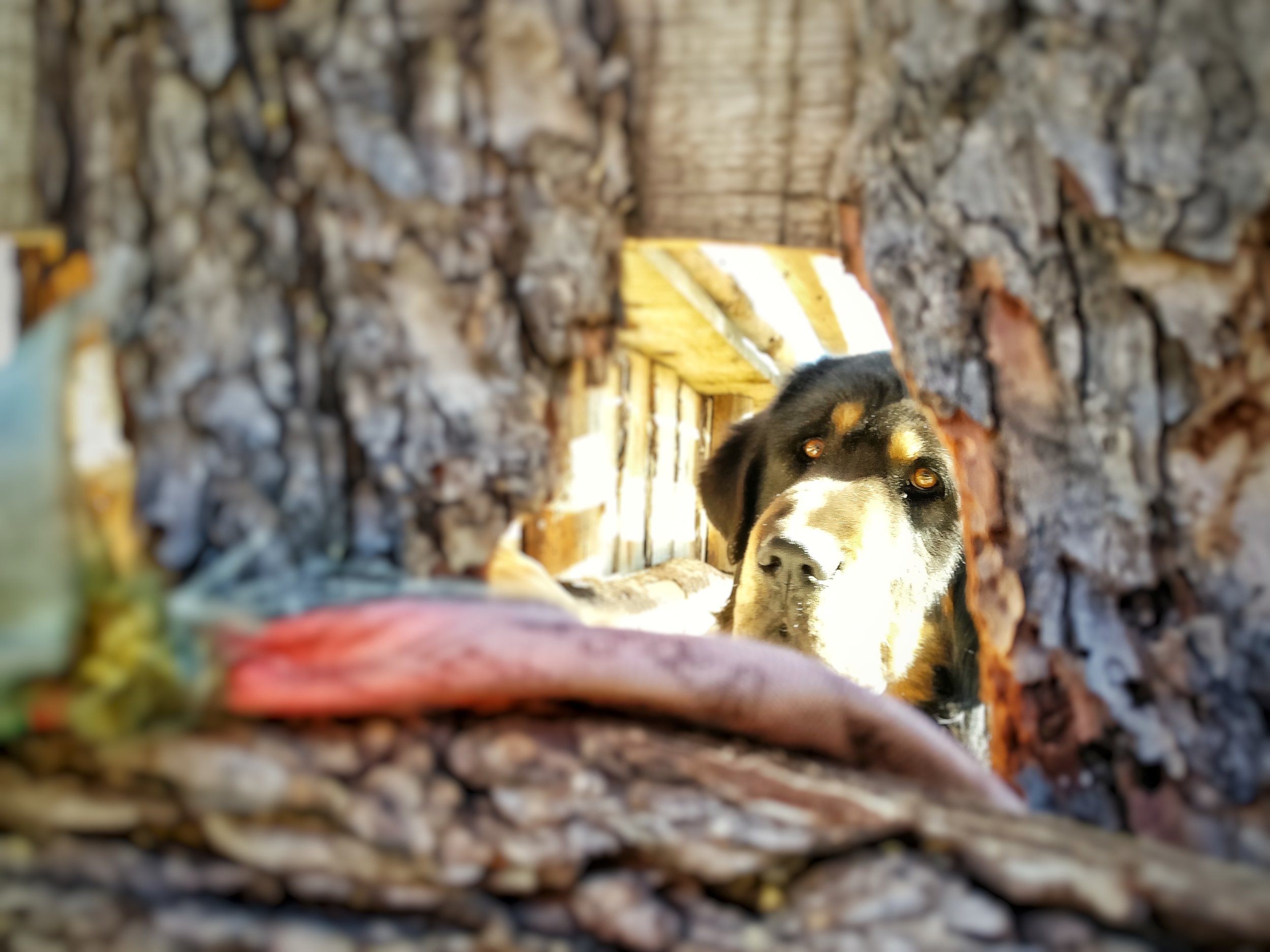
A Tibetan Mastiff inside the wooden cage looking at me.
Here is a heartbreaking Video of more than a 1000 Tibetan Mastiffs at a shelter set up by the Surmang Namgyal Monastery. But i guess these are the lucky ones who will no longer have to beg on streets for scraps of food or end up as Meat themselves on a Chinese Table.

Not much we can do but as a penance maybe we should start taking care of the street Dogs wherever we live and never buy Dogs from Breeders. Dont shop. Please adopt.
The Kashmiri Spy in Tibet
The Story of a Kashmiri Spy in Tibet during the time of the British Empire. This Gentlemen was the first person to spy for the British in what latter became a routine affair with “Pandits” like Nain Singh Rawat doing their bidding.

The painting from the Qing Era shows the Induction of the 9th Dalai Lama, Lungtok Gyatso, in 1808 as its watched by the Ambans and Qing officials on one side and by Tibetan Clergy and other Tibetans on the other side.
The Kashmiri Spy in Tibet
In the early 1700’s the region of Tibet as as well as Turkestan (as Xinjiang used to be called at that time) come under the control of the Chinese Imperial Qing Dynasty as they defeated the Dzungar Mongols who had come to occupy Tibet. As a result of this the Qing Dynasty was now in control of Tibet and in order to exercise this control the appointed an Officer called the Amban to overlook the running of the state and especially keep his eyes and ears open for ambitions that a foreign nation / power might have on Tibet.
For the same purpose the Ambans and their network of informers and spies were always taking stock of various Traders who visited Tibet and Lhasa and soon after the Qing assumed dominance they imposed restrictions on many Traders coming from Nations that were assumed to be a threat to the Qing control over Tibet. And this was most severely applied to Europeans who the Qing saw as the most obvious threat. And then there were the Russians who were also expanding their Empire towards the East. The Europeans were restricted to trade only through Canton (Hong Kong) while traders from Russia could only come through the trading Post at Kyakhta.
While impositions were imposed on almost all outsiders, there were three Groups of traders that were allowed relatively freer access to Lhasa. These were the Newaris of the Kathmandu Valley, the Andijanis of the Ferghana Valley and the Kashmiris. For some reason these three Groups of people were left alone to their own devices. One of the reasons was that these people had been trading with Tibet for hundreds of years and many of them had even settled there. And they connected the region with the important markets in the Indian subcontinent in case of the Newaris and the Kashmiris and to Central Asia vai the Andijanis. An important consideration for the Qing was that as per their own assessment all these traders came from Countries / Regions that were not a threat to their sovereignty over Tibet.
Towards the end of the 18th Century however the Qing perceptions begin to change. The Gurkhas attacked Tibet twice and though peace was restored after the intervention of the Qing, the Qing were now suspicious of the Newaris as they couldn't really distinguish between them and the Gurkhas as both were from Nepal, though the Gurkhas had taken the Kathmandu Valley from the Newari Rulers. And in the beginning of the 19th Century the Afaqi Khojas revolted in Turkestan and for some time they held the main cities of the Tarim Basin and they lost their confidence in the Andijanis of Ferghana as well.
Through it all one community which kept up its “neutrality” in the eyes of the Qing were the Kashmiris. The Kashmiris were known as Kachee by the Tibetan and Kashmir was called Kachee Yul. Infact the term Kachee came to be used for all Muslims in Tibet irrespective of where they came from. Kashmiri traders and craftsmen had been visiting Tibet since the 10th Century as many Kashmiri craftsmen were bought in to decorate the Monasteries as Buddhism grew in Kashmir and the Kashmiris were supposed to be the best at this trade. As a result Tibetan art shows even till day a great Kashmiri influence. Also as a result many Kashmiris settled in Tibet and took Tibetan wives and intermixed with the local populations.
Now as far the Qing and their Ambans were concerned they knew of the Kashmiris and their long standing Trade relations with the Kashmiris. But one thing they weren't sure was about the location of Kashmir. They knew it was a Region to the West of the Tibetan plateau but that was about it. They had no idea about the Political affiliations of Kashmir or of the Kashmiri people. And the Kashmiri people were seen as outsiders who usually minded their own business with little interest in the Politics of Tibet or of the Qing. And they were good Traders who did a large volume of business in Lhasa. And the point to be noted is that most Kashmiris used to visit Lhasa through Patna and Nepal instead of of the Route over the Himalayas.
The fact that Kashmiris had easy access to Tibet did not go unnoticed to the British. The British for long held ambitions on getting through to Tibet as it was uncharted territory to the North of the their greatest possession. Also there was a constant fear of Imperial Russia gaining influence in Tibet. Many British and Western explorers had wanted to break into this Forbidden Land but were not very successful. So the British had to fall upon its native subjects to do their bidding in Tibet.
In the wake of the Anglo Gurkha War of 1814 and the British Victory, the British came to be in possession of Garhwal and gained direct access to Tibet from there but the British were always turned back at the frontier by the Tibetans who themselves were wary of any unknown foreigners. It was around this time that an enterprising Kashmiri trader, Ahmed Ali offered his services to the British. Ahmed ali presented himself as a well connected Kashmiri who had a relatives who lived in Lhasa and had travelled to Lhasa many times on his own. The British were very interested in this guy and the key to Tibet that he might hold. But they could not give him any Official sanction as they wanted to exercise plausible deniability in case Ahmed Ali was caught. The point was that the Qing had not realised the the same guys they were having a tough time with in Canton were now sending spies into Tibet. As far as the Qing were concerned the “Pilangi” as they called them (Tibetan / Chinese version of Firangi as they were referred to in India) and the Britishers in Canton were two distinct people from different Countries. And the British of course didn't want this little secret revealed to the Qing.
All said and done Ahmed Ali proposed that he also be made the agent for trading Indian goods in Tibet on behalf of the British. And of course the British would not give him any legal standing. As it so happened Ahmed Ali himself was no old Tibetan hand. He spoke no Tibetan and in fact his business in Tibet was taken care of by an old Kashmiri employee Abdullah and he was also joined by Ahmed’s brother. However the business didn't go as well as proposed though all the time Ahmed was collecting information through his guys in Tibet. In 1827 Ahmed was called to Tibet by his brother and Abdullah to settle the losses they had incurred.
Ahmed Ali had no option but to go to Lhasa as his brother insisted on the same. He went to Lhasa and due to the losses he had a falling out with his brother and Abdullah and the matter was brought to the notice of the local authorities. Somehow the matter was settled but now Ahmed Ali had no one to handle his operations in Lhasa. Another old Tibetan Kashmiri suggested that he take the services of his brother Fazlullah Fakroo, another Tibetan Kashmiri. And again his enterprise started. However his affairs with his brother and Abdullah were not settled. His brother sued him for his share of family property back home and the case was taken to Court and representing Ahmed Ali in his absence was his new employee Fazlullah.
Through all his business troubles Ahmed Ali kept on compiling information on Tibet through Abdullah and his brother when things were good and later on through Fazlullah. He had considerable information on hand gleaned through various sources including Route maps and distances and also the Political situations in the different towns and Villages. Just that he was good Spy but no so good a Businessman. Anyways there was no end to his financial woes as the Court ruled in the favour of his brother and Abdullah and now the Spy was bankrupt as well. So he bade his time by hanging around the Mosque in Lhasa. And as ill luck would have it he had a falling out with Fazlullah who he accused of causing great losses in business and filed a case against him.
On the Court disposition Fazlullah first made a suggestion to the Court about the suspicious activity that Ahmed Ali was indulging in. About all the questions he always kept on asking and noting them down. The Court brought this to the notice of the Amban and now everyone was interested in the Spy. As a result the Spy was son picked up by the Qing authorities and all his papers and notes were confiscated and he hauled up for interrogation.
Now the thing was Ahmed Ali did not speak Tibetan or Chinese and all his notes were in Persian and English. So the authorities had to gather a group of people to decipher and translate his papers. Translators were found for Persian and it is said it took them two months to decipher and translate all the notes. The notes contained information about the Routes, Passes and general Topography of Tibet, the strength of Chinese and Tibetan soldiers, the working of the Financial departments, the general dispositions in Sichuan and Gansu and other such information deemed as sensitive. But for the English notes they could not find any any translator. The Spy was caught red handed it seems.
The Spy however would not give in so easily. He said he took notes only as per the “custom of his homeland” and he intended to write a book which could be used by other Traders from Kashmir and elsewhere to visit Tibet for trade. He was promoting Trade in Tibet through this. And he swore that not an iota of information had been sent over the Himalayas to any power inimical to the British. The Qing officials of course had a hard time believing his theory and were convinced that he was a Spy. Though who exactly he was spying for was never very clear to them. At the same time Ahmed Ali sent a message to the East India Company asking them for help as he was working for them. He played his Ace.
The British were now in a delicate situation as they didnt want Ahmed Ali to put them in the spot and jeopardise their relations with the Qing which would surely have repercussions in their Trading Post in Canton as they were aware that Ahmed Ali would reveal their little secret to the Qing. The British made a secret appeal for help to the powerful Nepali Prime Minister Bhim Sen Thapa to use his good relations with the Tibetan and the Qing to secure the release of the Spy. But they were surprised when they were told by Bhim Sen Thapa that Ahmed Ali had already been released by the authorities and was probably already on his way back.
So why did the Qing authorities release Ahmed Ali without any punishment ? Well for one he was expelled from the Country and handed over to the Nepalese authorities with requests to send him over the border to India. It seems that the matter was quite a sensitive one but the Qing didn't really want to undermine the confidence of the Kashmiri traders. As they were the people through which they could still have a lucrative trade with other Regions without compromising on their own strict no foreigner’s Rule. There were also suggestions that Ahmed Ali had agreed to supply some information from the British side to the Tibetan and Qing authorities. Maybe he was just a smart Guy who somehow managed to squeeze out of the situation. What was the exact reason of his release is still shrouded in somewhat of a Mystery and hence we can only now try and and make guesses on the actual circumstances that led to him being just deported instead of being severely punished. Maybe we will never know.
Of course even after this incident the British intrigues in the region didn't cease and we saw the Era of the “Pundits”, native men who went to Tibet to carry out surveys for the British including people like Pandit Nain Singh Rawat and others. However whatever happened to Ahmed Ali after his return is unknown. The Kashmiri Spy just vanished from the annals of of the history of Political Intrigue in the History of the Himalayas.
The panting from the Qing Era shows the Induction of the 9th Dalai Lama, Lungtok Gyatso, in 1808 as its watched by the Ambans and Qing officials on one side and by Tibetan Clergy and other Tibetans on the other side.
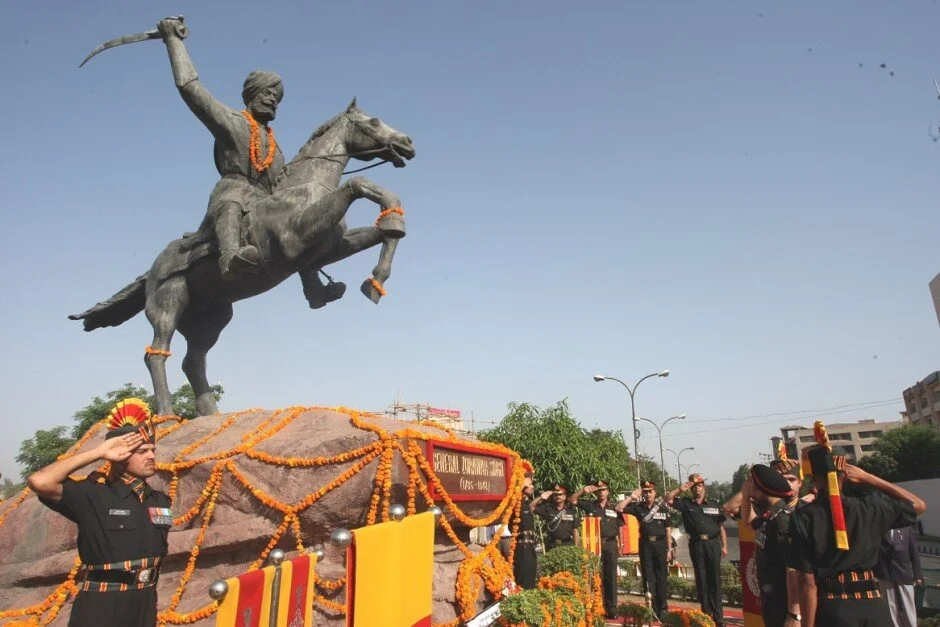
The Brave Shen - Pa
The last stand of General Zorawar Singh, the Dogra General who conquered Ladakh and Baltistan at the behest of Raja Gulab Singh and Maharaja Ranjit Singh. An outstanding General who wrote new annals in the history of Mountain Warfare who went down fighting in his last Battle on the frozen Plateau of Tibet.
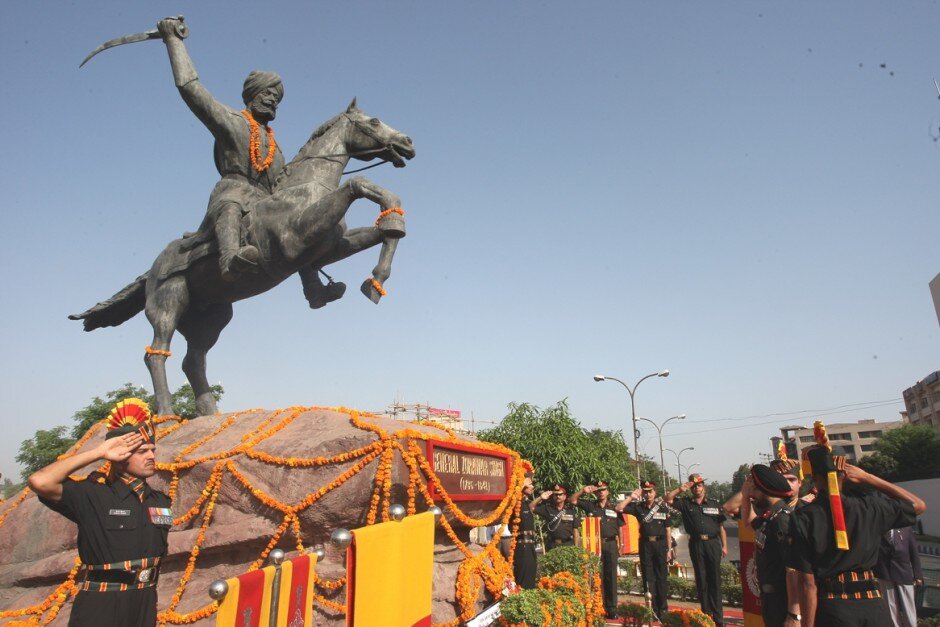
The Brave Shen Pa
In the beginning of December 1841 at an altitude of over 14000 ft on the Tibetan Plateau with the temperatures well below freezing he got the news that a large contingent of the Imperial Chinese Army consisting of more than 10,000 soldiers along with their Tibetan allies was coming for him and stop his whirlwind advance. He had already faced smaller contingents and had already snatched, the Imperial Chinese Banner, the Mantalai Standard from them in an encounter. That had given them a measure of this man.
In a fashion typical to him and only him he must have weighed the odds. His Troops, about 3000 in number, were out of supplies, hungry, suffering badly from the intense Cold to the point that they had sawed off the butts of their Guns to burn them for warmth. He had already added more than 150,000 sq km of territory to his King’s domain and fought and come up on top in extremely difficult situations like taking his Army up the Umasi La at the onset of Winter. He had captured the holiest of the holy, the Kailash Parbat and Mansrover for his King. No King would want more.

A Replica of the Chinese Imperial Mantalai Standar kept at the Zorawar Musuem at the Zorarwar Fort in Leh
But not him. He had promised Lhasa. And Lhasa he would deliver. The Western Tibetan Kingdom including Rudok, Guge, Purang and Spiti were already under his wing. He was in Tirathpuri by the Satluj when he got the news of the advance. He despatched a small band of advanced troops under Nono Sonam to lead the initial forays into the rival Army. His men were massacred but Nono Sonam managed to escape and get back. Next a bigger band of around 600 men under Ghulam Khan and Nono Sonam were despatched to check the advance of the adversary. They fought well and they fought hard but they were routed by overwhelming number of the opposing force. Both Ghulam Khan and Nono Sonam were taken prisoners.
When he had started on his Trans Himalayan Expeditions he was accompanied by the following 12 Officers who led his Army and now after 7 years of Campaigns in the highest Himalayas and now just a couple of them were alive :
Mian Rai Singh
Mehta Basti Ram
Mirza Rasool Beg
Rana Zalim Singh
Abdul Razak Singh Mankotia
Mian Tota
Sardar Uttam Singh
Wazir Khwaja Bhanjal
Sardar Samad Khan
Nardeep Singh
Imam Malik
Syed Madin Shah
Out of all these Officers only probably Col Mehta Basti Ram of Kishtwar would die of old age. All of them were completely dedicated to him.

Replica of a Pistol presented to Raja Gulab Singh by General Zorarwar Singh
He decided to act in the only way of defence he knew. Attack. On the 10th of December with the remnants of his Army he decided to fall upon the oncoming Army though he knew the odds were stacked up against him. Heavily. But the “Shen - Pa” as their adversaries called them fell upon them with all the ferocity they were well known for. The Shen - Pas first attack on the Chinese / Tibetan Army has been described as “lightning fury” by a noted historian. Hell was unleashed in the biting cold between the two Armies engaged in Battle at over 4800 m above sea level.
The a fierce Battle ensued for two days. On the 12th December he himself decided to lead a charge on the enemy positions with his last best men left. While leading the charge with his signature fury he got a bullet in his thigh and fell off his Horse. Seeing him fall immediately he was surrounded by enemy soldiers. He was down but not out and he drew his sword. He dealt terrific blows to anyone who came close. Eventually a Horseman thrust his Lance at him and it went through his Chest. He fell. Dead.
His men now panicked and fled in all directions and were cut down by the enemy. Around 600 to 700 were taken prisoners. Col Mehta Bast Ram who was holding the Fort at Taklakot also decided to withdraw and crossed over into Almora. They were defeated. And he was dead.

The Nallah in Susru Valley near Panikhar where General Zorawar Singh first emerged in Ladakh.
But now the victors had a new problem. His body. They held him in reverential awe as the bravest of the Shen-pas. They cut off his head and carried it off to Lhasa as a Trophy. It was apparently entombed in a stupa. Parts of his remains were taken to the Simbiling and the Sakya Monasteries. All other remains were scattered so that this feared Shen - Pa might not rise again to do what he did. A Stupa was built to him somewhere around Mansrover. It stands there to this day.
Many engagements and Battles were fought thereupon between the same adversaries and finally Peace was reached with the signing of the Treaty of Chushul. And Col Mehta Basti became the First Governor of Ladakh.
In The History of Western Tibet by Rev.A.H. Francke who was a Moravian Missionary in Ladakh mentions that the Ladakhi's sing a poignant song of His wife, whom they believe to have accompanied her husband to Ladakh, and who had to return alone across the Zoji Pass. In this song Urdu words are mixed in a quaint way with the Tibetan:
I do not wish to eat bread received from the sinful Northerners, I do not wish to drink water received from the sinful Northerners
Amidst the inhabitants of this land I have no friends and relations, In the Northern Plain I have no brothers and friends
In the place of friends and relations I had only You
In the place of brothers and friends I had only You
And it was only You who made me a despised widow
And it was only You who made his Queen a despised widow
When arriving on the Zoji Pass, my fatherland can be seen
When arriving on the Zoji Pass, Lahore and the Panjab can be seen
Although I can see my Fatherland, I shall not arrive there
Although I can see my Fatherland, Your Queen will not arrive there......
And he further wrote : Now that the greatest General the Dogras have ever had has found his death on the battle-field, let us pause for a moment and place a wreath of tribute on his grave. For, Oriental though he was, we cannot help admiring a greatness in this man by which he far surpassed his surroundings. In the beginning of his conquests he was extremely cautious ; but this was essentially necessary, considering the naturally protected position of Western Tibet, and his entire want of knowledge of the geographical conditions of this country. But, as he had a keen eye for the defects of his enemy, and was a great strategist, all these difficulties were overcome. After the conquest was complete, the continual insurrections presented a new problem for his ingenuity to solve. By the manner in which he treated them, and in which he quelled them one after another, without any extra amount of cruelty, he showed not a little measure of wisdom. He proved himself a true soldier in the endurance of extraordinary hardships and in setting an example of personal courage ; and if he had not met with an early end on the battle-field, he might have impressed his name on the pages of the great history of the world.
His name was General Zorawar Singh Kahluria.
Humans of Himalayas : The Khampa
The Khampa as the people of Kham are called were the most warlike of all the Tibetan people. The Khampa Horsemen were greatly feared and their horses were in great demand. Infact some Khampas kept on fighting the Chinese well into the 70s. They were called the Buddha's warriors. They were aremed by the CIA and gave resistance to the Chinese in Tibet through their bases based in the Mustang region in Nepal.

Humans of the Himalayas : The Khampa
Tibet was traditionally divided into three regions. The U Tsang region in the West, the Kham region in the South West and Amdo region in the North West.
The traditional Kham region consisted of parts of the present day TAR, Sichuan, Gansu and Yunnan. This whole region is a mountainous one and main mountain Range here is the Hengduan Mountains. It used to be one upon a time called the Chinese Himalayas and is considered the Eastern most Range of the Great Himalayan Mountain System.
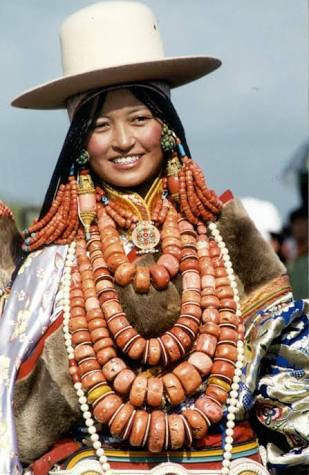
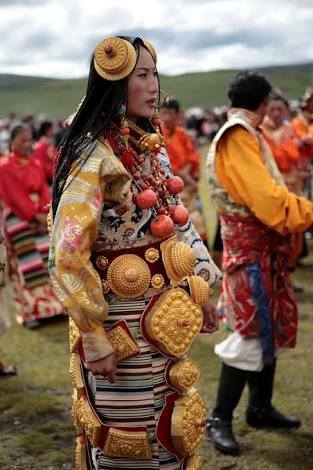
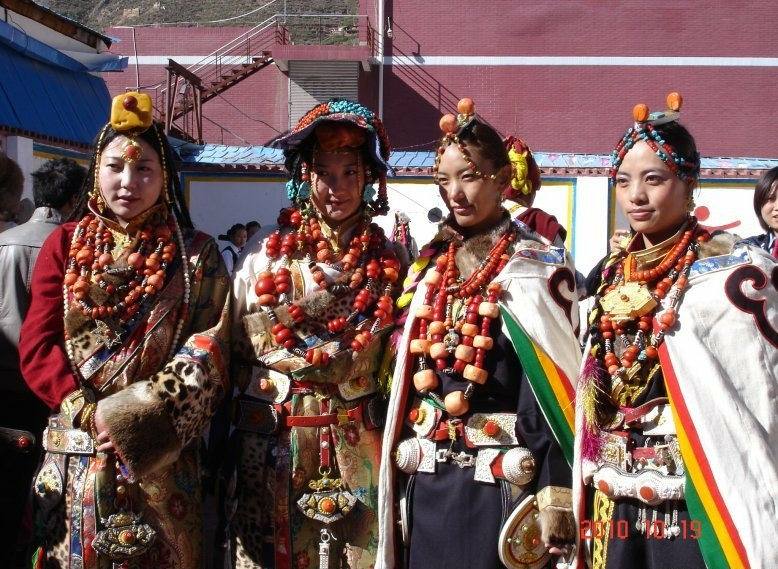
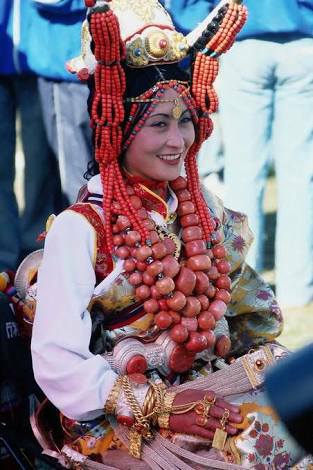
The region is quite rugged and has craggy mountains and many of the great Rivers of South East Asia come through this Region. The Yangtze, the Irrawady, the Salween and the mighty Mekong also cut through enormous Gorges in this Region.
The Khampa as the people of Kham are called were the most warlike of all the Tibetan people. The Khampa Horsemen were greatly feared and their horses were in great demand. Infact some Khampas kept on fighting the Chinese well into the 70s. They were called the Buddha's warriors. They were aremed by the CIA and gave resistance to the Chinese in Tibet through their bases based in the Mustang region in Nepal.
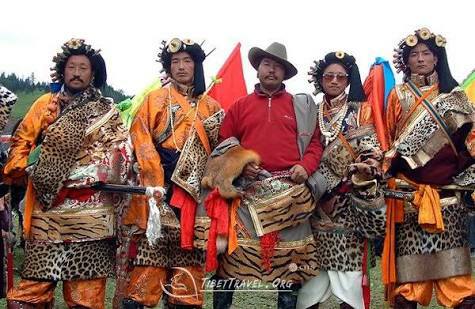
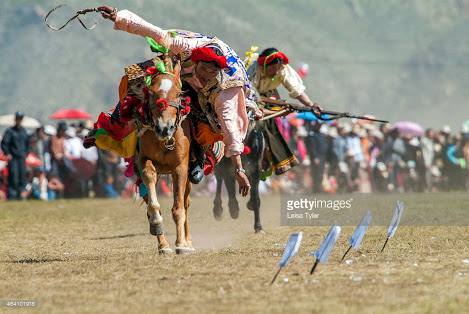
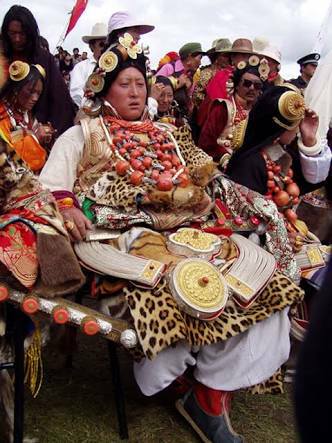
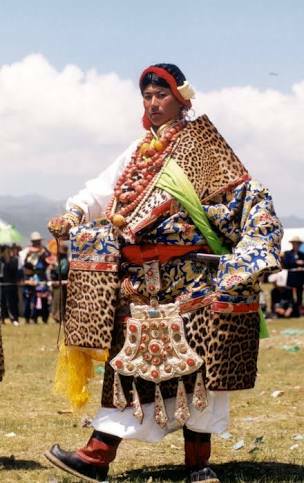
Every August they hold a festival on the Eastern edge of the Tibetan Plateau where the famed Khampa Horsemen converge at a place called Litang at 14000 ft above sea level in Sichuan. The Khampa both the men and ladies are all adorned in all their finery. Gold, silver, turquoise and coral jewelry in all its opulence.
As one Khampa gentleman said "To the Khampa men, riding horses is a glorious thing. We feel proud to be the descendants of the heroic King Gesar. To gallop on horseback across the boundless grasslands makes us feel extremely confident and happy".
King Gesar is a tradionally revered figure in Tibetan Buddhism and is held in great respect in area ranging from Baltistan, Ladakh, Tibet, Mongolia and even by the Oryuts of Siberia. That's another story to be told another day. Even Roerich made many references to King Gesar in quest for Shambhala.
I had visited the Region last January though I could only go to the most southernly part of Kham in North West Yunnan. It in a mind blowingly beautiful Region as it sits on the edge of the Tibetan Plateau. I have posted pics from there earlier and will post again.
And now coming back to these magnificently adorned ladies. They have a saying that the Khampa men are born brave and the Khampa ladies are born pretty. And also a legend that they never fall ill. :)
All said and done their jewellery is absolutely outstanding and it adds to the natural beauty of these people.
Another one of the people of our great Himalayas.
Pics are from the Internet. Only for educational purposes. If you hold a copy right to any of these pics and want it removed please let us know and I will remove it immediately. Thanks
Kashmir and Tibet : The Forgotten Past
Kashmir has over the ages has had a great influence on Tibet in the area of Religion and allied Religious Iconry. Infact Mahayana Buddhism traveled to Tibet from Kashmir via Central Asia after the Fourth Buddhist Council in Kashmir. A large number of artisans and craftsmen were taken from Kashmir to Tibet to decorate the Monasteries as well.

Kashmiri Cultural Influence on Tibet
Last year the Himalayan Club sent a request to His Holiness The Dalai Lama asking him for a private audience for the members of the Himalayan Club. And His Holiness decided to give a private audience last year in April. A Group of members of the Himalayan Club along with family members went for the same to McLeodganj. I alongwith my wife and little baby daughter also went along the delegation.
We had the audience, and though I am not a religious person, I really like listening to His Holiness as what he speaks makes sense to me. And hearing him in person at his residence was quite an experience. After His Holiness finished his talk we all went to get blessings from him and a photo op. I wanted him to bless my daughter and I had a brief exchange with him wherein I told him that I am from Kashmir. He smiled and told me that many Tibetan monks used to go to Kashmir to gain knowledge and there is an old relationship between Kashmir and Tibet.

A Crowned Buddha from Kashmir
Of course I have been trying to dig up some of the relics of Kashmir’s Buddhist past which included the Monastery at Harwan, where the 4th Buddhist Council was held in the first Century as well as the Gilgit Manuscripts, which is the oldest manuscript found in the Indian sub-continent and one of the most sacred Buddhist scripture ever discovered (I have covered both of these in previous Posts).
But as my search continued that it wasn’t just Buddhism that went to Tibet from Kashmir. It went much further than that. A whole bunch of scholars and craftsmen from Kashmir went to Tibet as a part of this cultural exchange. This included the best craftsmen and sculptors. There is a great similarity between all the Buddhist iconography in Stone and Bronze made in Tibet with all such iconography found in Kashmir from the Buddhist era in Kashmir which started around the time of the Great Kushan Emperor, Kanishka in the first century till the time of Lalitaditya in the 8th century wherein slowly Buddhism started disappearing from Kashmir till it disappeared in the 12th century. The sculptors and craftsmen in Kashmir shifted to Hindu iconography and making statutes of Vishnu and his Avatars. But their Buddhist tradition continued to thrive and evolve in distant Tibet. As an example I present to you two Bronze statues of the Tara. The one on the left is a 9th century Tara from Kashmir and the one on the right is a White Tara from the 17th century from Tibet. In Spite of the geographical distance and a difference of almost 800 years the similarities are still quite uncanny.

A Reliquary Showing scenes from Buddha's life from Kashmir
There are records of Kashmiri craftsmen going to the ancient Kingdom of Guge in Central Tibet to decorate the Buddhist monasteries being built there. Tibetan Chronicles also mention that the great Tibetan scholar Rinchan Sangpo visited Kashmir thrice in order to take Kashmiri craftsmen to Tibet to re-organise Buddhist arts in Tibet. It is said that Rinchen built a Hundred and Fifty Temples in Tibet with the help of 75 Kashmiri craftsmen. The 16th century monk, Lama Taranath also records the great contribution of Kashmiri craftsmen to Tibetan painting and metal casting.
Kashmir being historically at the crossroads of great civilizations constituted a great melting pot with cultural influences from all over. Before its emergence as a strong Kingdom in the 8th century Kashmir was a part of the belt ranging from Southern Iran to Gandhara to Bacteria to Kashmir were a part of the great belt of Buddhism and such similar sculptures have been found all over Central Asia, Afghanistan, Pakistan, Kashmir and onwards to Tibet.But of course over a period of time Buddhism disappeared from all these areas and all the cultural traditions and Buddhist arts and crafts shifted to Tibet and a part of it to Mongolia as well.

Tara from Kashmir
Of course Buddhism in Tibet has evolved into its present form of Tibetan Buddhism over the age. But scratch and look under the surface and its a reflection of the tradition and culture that was followed by populations all over the Himalayas, the Karakoram and the Hindu Kush and further into Afghanistan and Southern Iran. Buddhist art in Tibet is a legacy from the past of all these regions and especially Kashmir. Looking at Tibetan Buddhist art now I see it as a mirror into the past showing the arts and crafts of our ancestors long forgotten in the land of their origin but still thriving in Tibet. Much like Buddhism itself.
As of today “Himalayan Art” as its called is considered Religious iconry art representing Hindu, Buddhist and Bon and the three main categories it is divided in are Tibet, Kashmir and Nepal. This is the wide classification of Himalayan Art and it wouldn’t surprise me if a link is found as to how Nepalese Art was also influenced by Kashmiri art coming in from Tibet.

Vajrasattva from Kashmir
Pic of Tara, also known as Arya Tara and Jetsun Dolma in Tibetan Buddhism, is a female Bodhisattva in Mahayana Buddhism who appears as a female Buddha in Vajrayana Buddhism. She is known as the Mother of Liberation and represents the virtues of success in works and achievements. She is originally supposed to have originated as a form of Goddess Durga and entered the Buddhist deity fold over a period of time.
Kashmir Tara pic from Shri Pratap Singh Museum, Srinagar and the Tibet Tara from the Shanghai Museum, Shanghai. Both pics from October 2017.
Lijiang Instant Noodles Hotel
when you land up at an Indian owned Hotel on the edge of the Tibetan Plateau.
Lijiang Instant Noodles Hotel
Finally I was in Lijiang, an ancient town at an altitude of around 2400 m, the last Tibetan / Naxi city on the edge of the Tibetan Plateau as finally Tibet gives way to South Asia and China.
Lijiang is a beautiful town on the UNESCO World Heritage List. It was one of the main towns on the Tea Horse Trading Route through which Tea was sent into Tibet and in return hardy Tibetan Horses were traded in return. The town of Lijiang served as the gateway to Tibet and even to India.
And after a bit of a search I finally got to my Hotel, which was partly named after the famed Khampa Tibetan horsemen and warriors.It was the Khampas of this part of Tibet called Kham who were the most feared of all the Tibetan people and they resisted the Chinese occupation of Tibet well into the 1970’s.
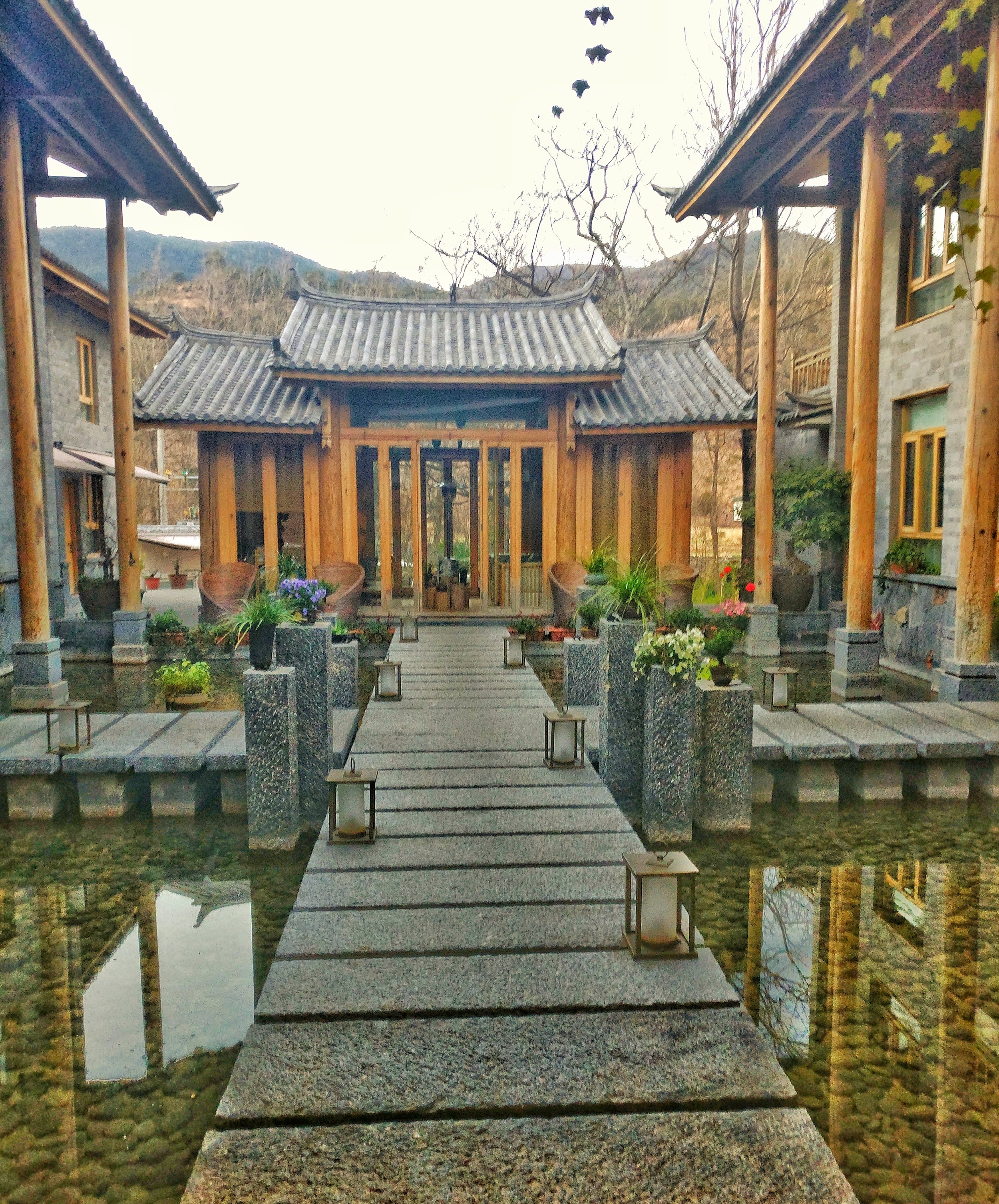
The Hotel was built in a traditional mixed Naxi / Tibetan Architecture with a lot of use of wood and stone as often seen in the mountains. It was a nice Boutique type Hotel in an old part of town.
I had had a great day having visited the Tiger Leaping Gorge and the first bend of the Yangtze at Shudu, reached the Hotel and am greeted by a good English speaking Han Chinese girls. And she asks me for my Passport. And she smiles when she realizes that I am Indian.
She asks me to take a seat in the Lounge of this Boutique Hotel. I sit and the Coffee Table book on the Center Table is on, of all places, Rajasthan.
I asked her why do they have a book on Rajasthan there ? A book on Tibet or Yunnan I would understand but not this. We have it here because the owner of the hotel is an Indian.
I was like “Wait a minute”. An Indian owning a Hotel in Yunnan on the region bordering TAR ? Surely that isnt possible. Or is it ? Got me thinking.
Then suddenly a foreigner looking guy walks in. Says “Hi I am the Manager”. I said “Hi” and asked him where he was from as he sure didnt look from the part of the world that I was in. He said “Chile”
Wait. From Chile ? A Chilean manager of an Indian hotel in Yunnan in China. Was it for real or was it the effect of nice fancy liquids that I had been having last night ?
The Manager gets me a Beer. Says here Sir have a welcome drink. I was beginning to like this place already.
I told him why dont you grab a Beer as well as i need to ask you many questions which have popped into my head since I walked in.
He says Ok cool as there weren’t many Guests in the Hotel. So we sat down and the first thing I asked him “Is the owner of this Hotel an Indian ?”
Yes he says but he has a Tibetan partner. But how can an Indian own a hotel here ? Well he goes on, the guy is an Indian origin guy who lives in Nepal and is as such a Nepalese citizen.
Now it started to make sense. It seems the Indian gentlemen’s family made a fortune in the Instant Noodles business and this was one of their 80+ hotels.
Woah. Thats when the thought came to my mind.
I should get into the Instant Noodle business.
Travelling to Tibet
Your Guide to Travelling in Tibet as it used to be. Besides the present Tibetan Autonomous Region (TAR) it also included parts of Sichaun, Qinghai and Yunnan. Travelling to TAR involves a lot of Permits and a lot of restrictions. However in the Tibetan areas of Sichuan, Qinghai and Yunnan you can move around in the Tibetan areas with out any restrictions.

Travelling Guide to Tibet
We are all very familiar with this side of the Himalayas and some parts of the Trans Himalaya which falls inside our country like Ladakh and Lahaul-Spiti but there is a whole new world out there beyond these areas.
As you are well aware most of these Great Himalaya lie besides our Country in Pakistan and China (also in Nepal and Bhutan but those are easily accessible). As fate would have due to International Geo-Politics we cannot really travel overland as we would love to into the vast expanse of the Trans-Himalayas which lies mainly in the Tibetan Plateau. Travelling to Pakistan to see the mountains is pretty much out of the question. So that leaves us with China where Indians can and do travel but mostly on business trips.
For me on a personal basis the Trans-Himalaya and its its adjoining Ranges lie in three different parts of China for which the Ground rules and access differs. As per the political division of China these three are the Tibetan Autonomous Region, the Xinjiang Autonomous Region and Yunnan.
1. TIBETAN AUTONOMOUS REGION : This is what we also called as Tibet proper as defined by the Chinese Government. Of course there are parts of Tibet (historically/ geographically/ ethnically) which are not a part of TAR but are included in the neighboring Provinces but more on that later.
Out of all the regions in China, travel is most restricted in the TAR. As many as 3 Different permits besides the Chinese Visa are required if you need to visit all the parts of Tibet and even then you would be refused access to certain areas. These three Permits are
A. Tibet Travel Permit : The Tibet Travel Permit is issued by Tibet Tourism Bureau (TTB). It is also called Tibet visa, for the purpose of entering Tibet. Travelers need to have Tibet Travel Permit to enter into Lhasa or any other parts of the Tibetan Autonomous Region. It is obtained through tour operators for most tourists. When you take a flight or train to Lhasa, you will be asked to show this permit during check-in. Even if you have the Tibet Travel Permit, you are not allowed to travel anywhere outside of Lhasa city. If you want to get out of Lhasa, you have to apply for another permit, Aliens’ Travel Permit.
B. Alien’s Travel Permit : The Alien’s Travel Permit is issued by the Public Security Bureau. It is required when tourists are planning to travel to the ‘unopened’ areas of Tibet, like Mount Everest Base Camp in Shigatse, Samye Monastery in Tsedang. Aliens’ Travel Permit is required to visit ‘unopened’ areas. It is issued by the police (Public Security Bureau, “PSB”). Usually, you can apply for it once you arrive at Lhasa. For tour groups, our guide will ask you for the passport and Tibet Travel Permit, which they will submit to the Foreign Affairs Division of the PSB for the Aliens’ Permit. It normally takes several hours and the cost is 50 CNY per person. If you travel alone, you need to join local tours to ‘unopened’ areas, and the local travel agencies will arrange the PSB for you as well. Pay attention, no travel agency can provide ‘Alien’s Travel permit-only’ service. You need this for Mansrover as well.
C. Militray Area Entry Permit : The military area entry permit is required if tourists are planning to travel to some military sensitive areas in Tibet. Like Mount Kailash in Ali, Rowok Lake in Chamdo.Sensitive borders such as Mt. Kailash and eastern Tibet not only require a Military Area Entry Permit, but also a Foreign Affairs Permit. For Tholing and Tsaparang in western Tibet, you will also need a permit from the local Cultural Antiquities Department. All these will be arranged by our travel agency one month before you enter Tibet. The Military Area Entry Permit is issued by the military affairs office while the Foreign Affairs Permit is issued by the Foreign affairs office in Lhasa. It normally takes 10-15 working days to get them all.
So travelling in TAR requires a lot of preparation and permits and involves Tour agencies. Hence it is not a cheap affair.Of course there is a special agreement between India and China for the Pilgrimage to Lake Mansrover but that is just limited to the Lake.There are some agencies which do this through Nepal as well but again the scope is limited to the Lake Mansrover and the areas around it.
2. YUNNAN : Yunnan is the adjoining state to the TAR on the South Eastern side of TAR. Western Yunnan is a very interesting area in the sense that it is where the the Himalaya, the Tibetan Plateau and the Yunnan Plateau meet. It is one of the world’s most biodiverse regions. Also many parts of Western Yunnan bordering TAR are actually parts of the historical Tibetan Region called Kham. However many of these areas are actually a part of the Tibetan Plateau with the average elevation above 3000 m. Note that other regions of China such as Qinghai and Sichuan also have substantial areas which used to be a part of Tibet. These areas are also free to travel to.
There are no special permits required to visit Yunnan. Just get a Chinese Visa and you are good to go. Also there is now a direct flight between New Delhi and Kunming, which is the capital city of Yunnan. This is the same Kunming where the famous Stillwell or the Ledo Road ended connecting Assam to Yunnan in the good old days. Kunming itself at 1800 m plus is a beautiful place. Using Kunming as the base you can move further West using flights/ trains/ buses to go to places such as Lijiang, Dali and further to ShangriLa in Deqen or Zhongdian.

TBH honest Western Yunnan with its high elevation but Southernly latitude is unlike any other place. The sharp jagged Peaks and the deep canyons and the rolling Mountains and Hills just take your breath away. The Tiger Leaping Gorge and the bends of the Yangtze are special attractions as well as the various Snow Mountains as they are called.
I recently travelled in this Region and it was truly worth it. Here is a link to a small Video I made in Shangrila which was earlier called Zongdian or Gyal Thang. https://www.facebook.com/groups/TheHimalayanClub/10154875267365775/?notif_t=like¬if_id=1485522719531162
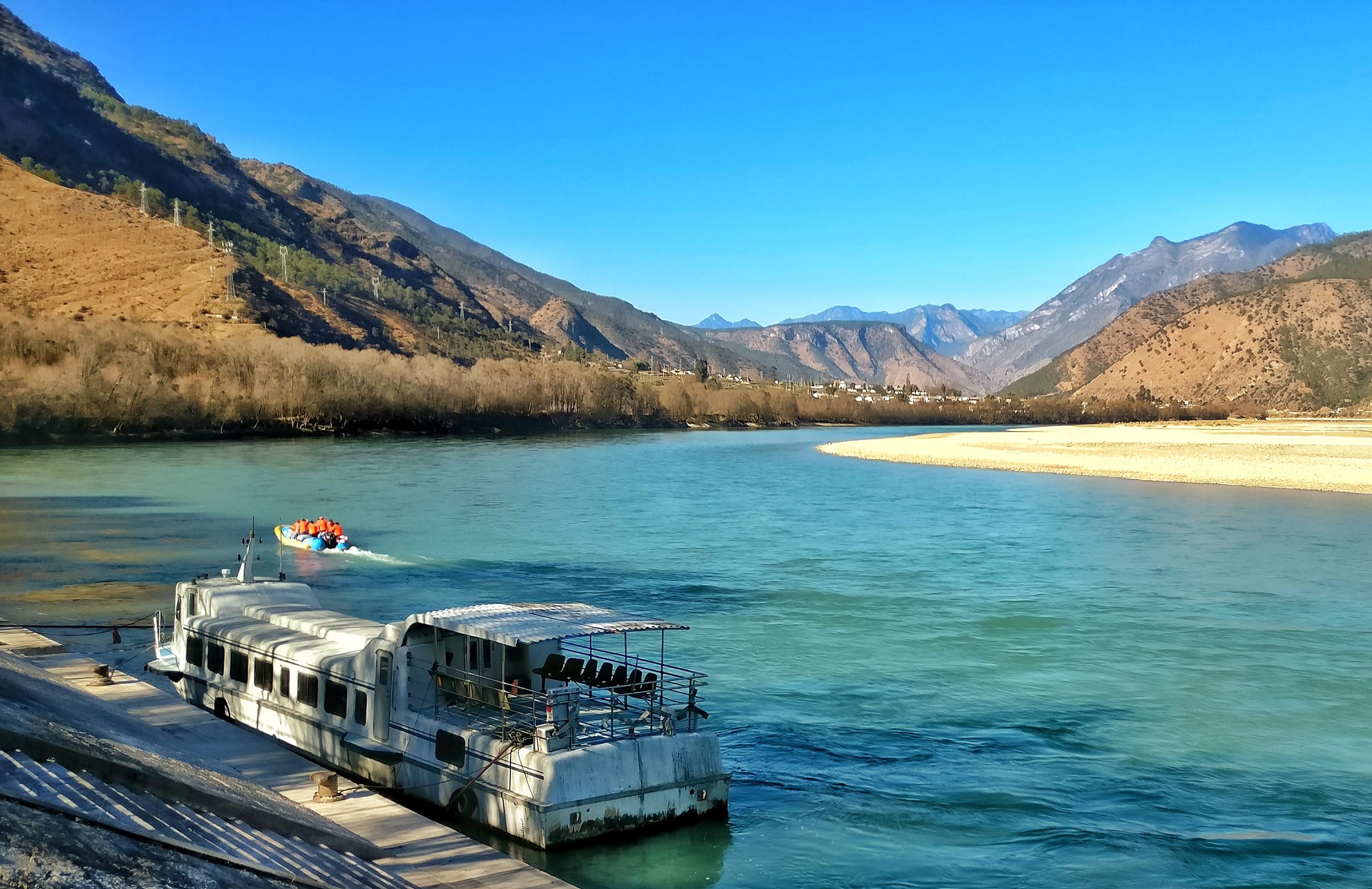
3. XINJIANG UYGHUR AUTONOMOUS REGION : This the region which borders Tibet on the West / North West. This Region used to be called East Turkestan and is a part of Central Asia with a majority of the population being Uyghurs, who are a Turkic people. Xinjiang is a land of extremes and includes parts of the Karakoram, the Pamirs and the Kun Lun mountains.
Being on the main Silk Route this has for long been the fabled land that explorers wanted to get to. The names of exotic places like Kashgar, Yarkand and Hotan still fill your mind with visions of exotic lands surrounded by Mountains and Deserts. For me with a special interest in early exploration of the Western Himalayas these names are almost out of a dream.
Now the good part. No special permit is required to travel to Xinjiang. You can take a direct flight to Urumqi which is the capital city. Please note that Xinijang is almost one third the size of India pretty much like the TAR. As an ideal base for someone like me I would choose the city of Kashgar 1500 km down to south.Kashgar is the end point of the Karakoram Highway coming from Pakistan. Again there are options of travelling to Kashgar by Air/ Train / Bus as per what suits you the best.
Kashgar serves as a base to go to the Sarakul Lake and the monster called Mustagh Ata. You can further go down the Karakoram Highway till the town of Tashkurgan for which you will require a special permit. Once you have this permit you can even try your luck going till the Khunjerab Pass but usually they dont let foreigners proceed beyond a point a 2 or kms before the Kunjerab Pass. Note that as Indians travelling on Indian Passports we would be least liked people hanging around especially the authorities. So when you try doing this keep in mind that, though not illlegal, it can get you into a situation which might require you to answer some questions raised by certain Authoirities. Do this only if you are confident enough about yourself and your backup getting you out of any situation that might arise. Being confident would be the key.
You could also travel from Kashgar to Yarkand and onto Hotan to see the Taklamakan Desert. Yarkand was where the trade route used to go to from Leh. So its a town that just cannot be missed IMO. There are also other interesting places around but for that you need to do some research.
So go out. Travel. See unseen worlds.
I will do a further post on “How to travel in China” and how to get “Bookings Done for Hotel / Travel” as I have travelled
extensively in China mostly for work purposes.
Feel free to ask any questions.
Most of this information is based on the best of my research and getting some information from Agents. Some of it is based on actual travels. Kindly verify the information from other sources as well.
#transhimalaya #yunnan #xinjiang #tibet #pamir #karakoram #kunlun#hengduan
Pic from January 2017. In the shadow of the Shika Snow Mountain, Tibetan Plateau, ShangriLa, Deqen Tibetan Autonomous Prefecture, Western Yunnan.
Kiki’s Blog
Stories from the Himalayas
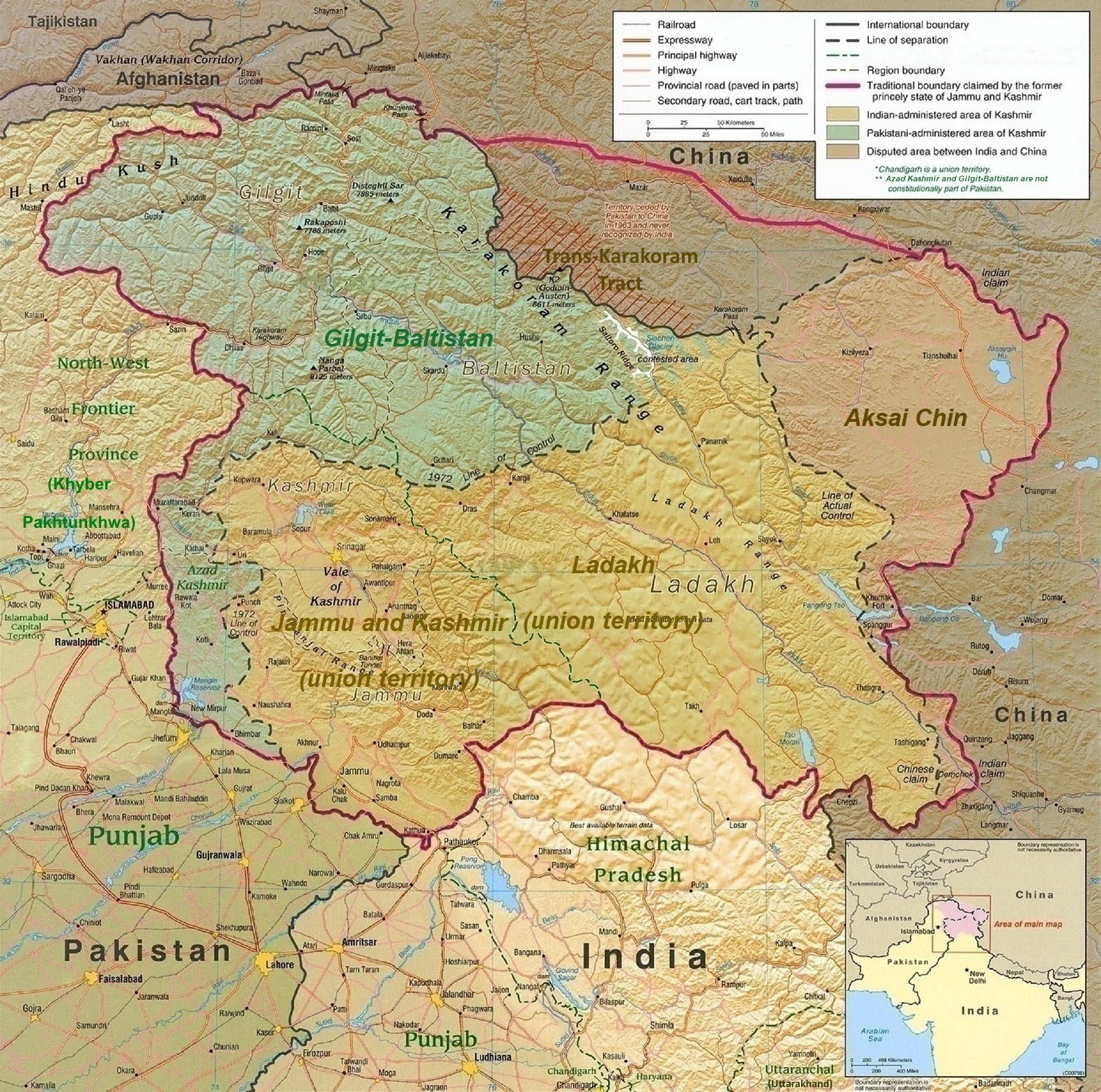
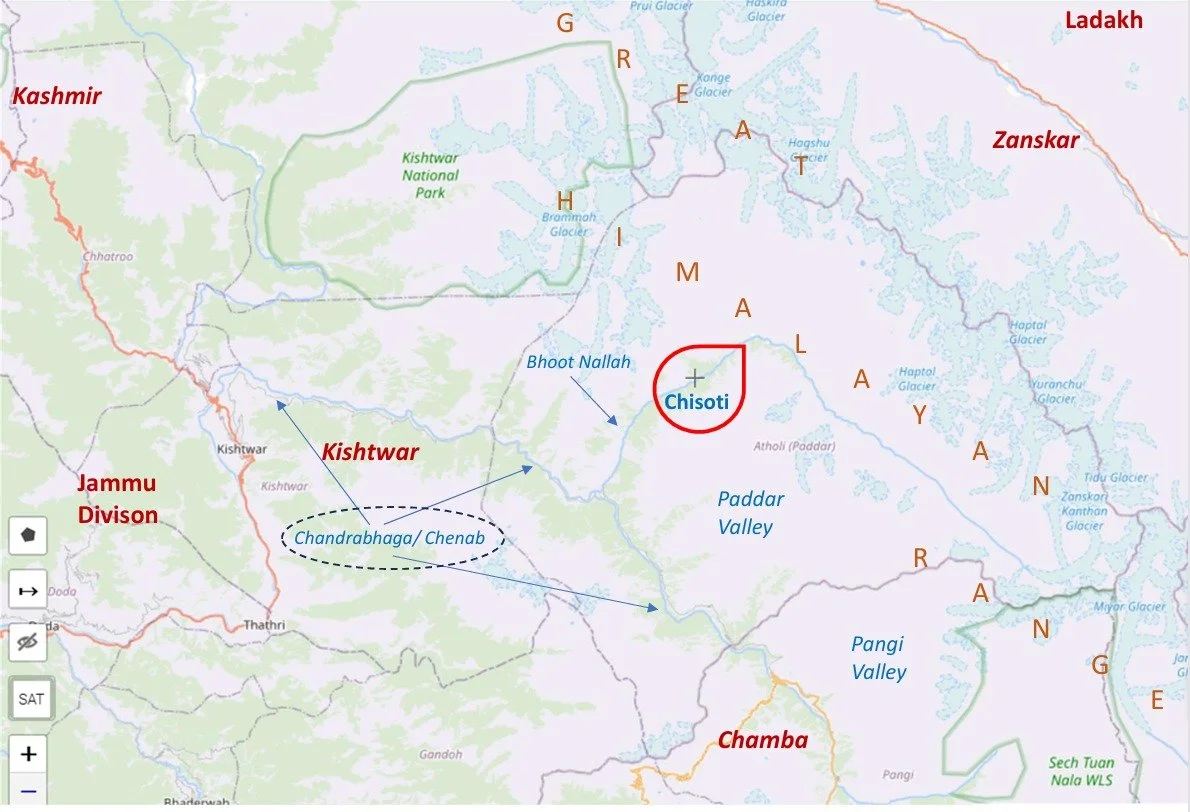
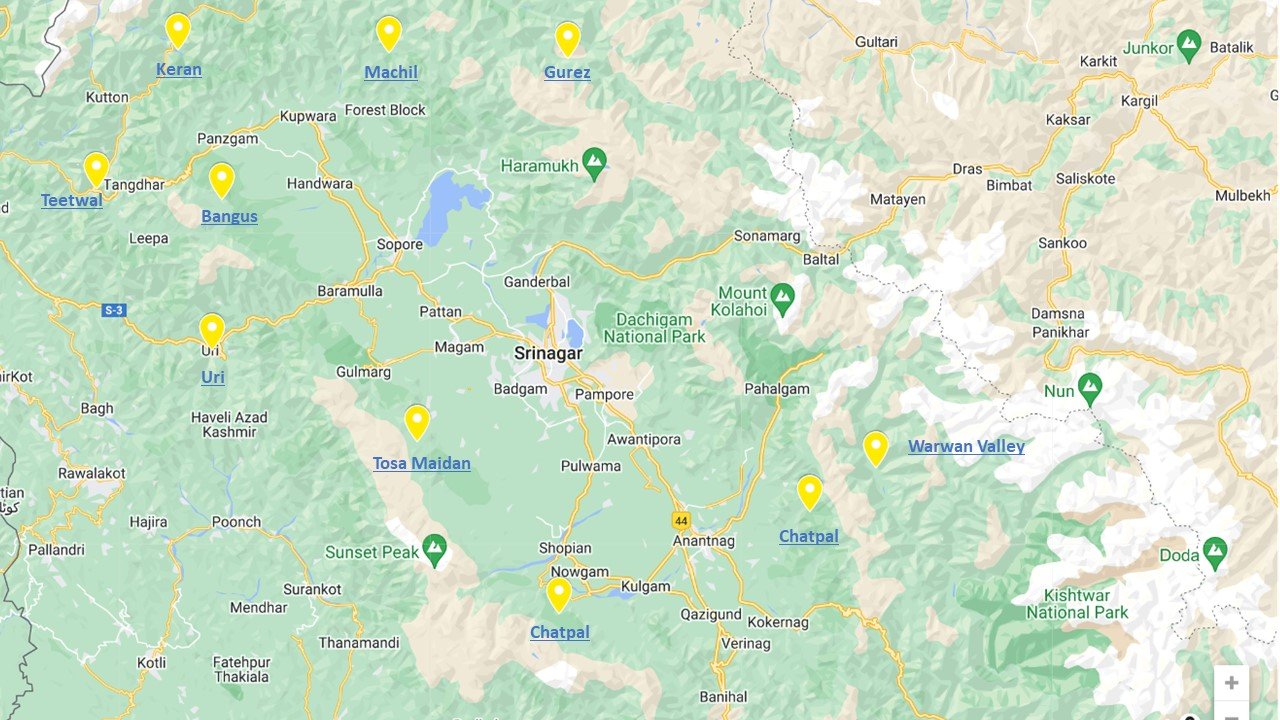


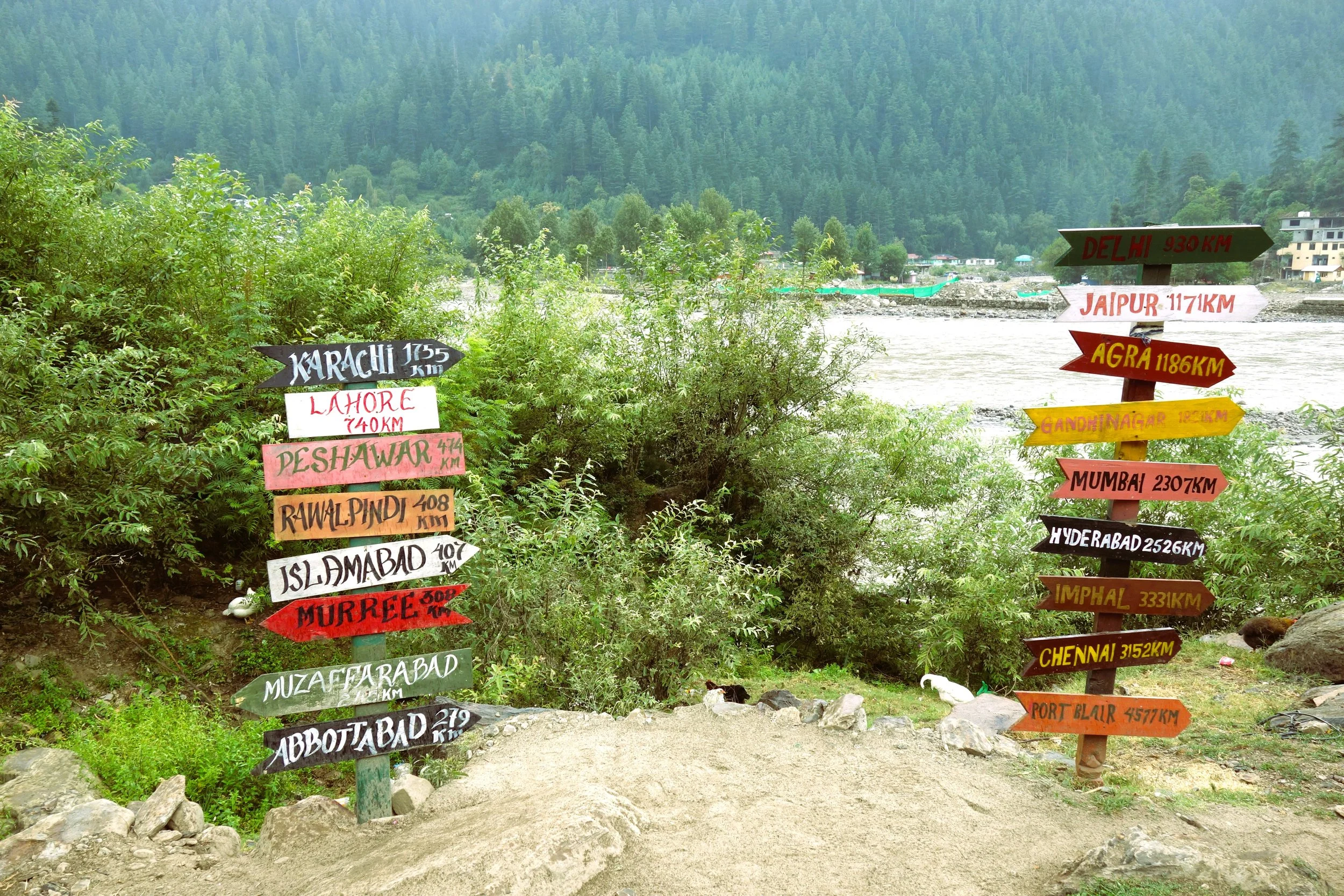

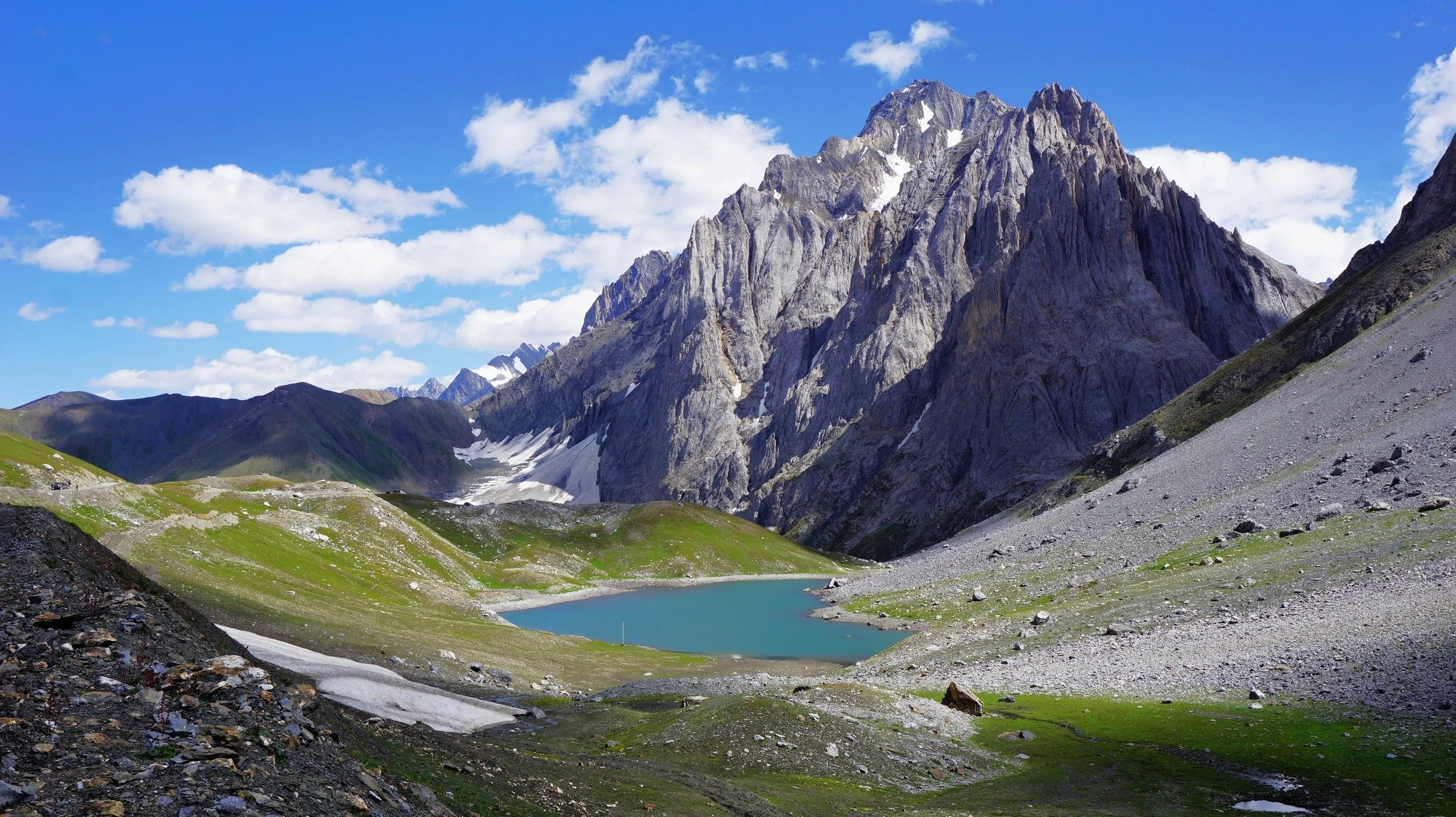
Five years ago the Galwan Valley was in the News for the wrong reasons after a deadly clash between the Indian and Chinese Armies in the Valley located in Ladakh lead to many deaths on the contentious Border between the two countries in wake of continued Chinese intrusions into Indian territory.
This area along the Shyok River, of which the Galwan Nallah or the Galwan River which forms the Galwan Valley has been off limits to Civilians since long but now the Indian Government has decided to open up the area for Civilians and we were amongst the First Civilians to venture into this beautifully desolate part of the Eastern Karakorams in Ladakh. Earlier Civilians could only venture upto the Village of Shyok from where the Shyok River takes a U turn and flows in a Northerly direction.