
The Indigenous People of Jammu and Kashmir
The erstwhile State of Jammu and Kashmir was one of the most diverse State in the country in Ethnic, Religious and Lingual dimensions. The main "People" of Jammu and Kashmir and its different regions are briefly described in this Article.
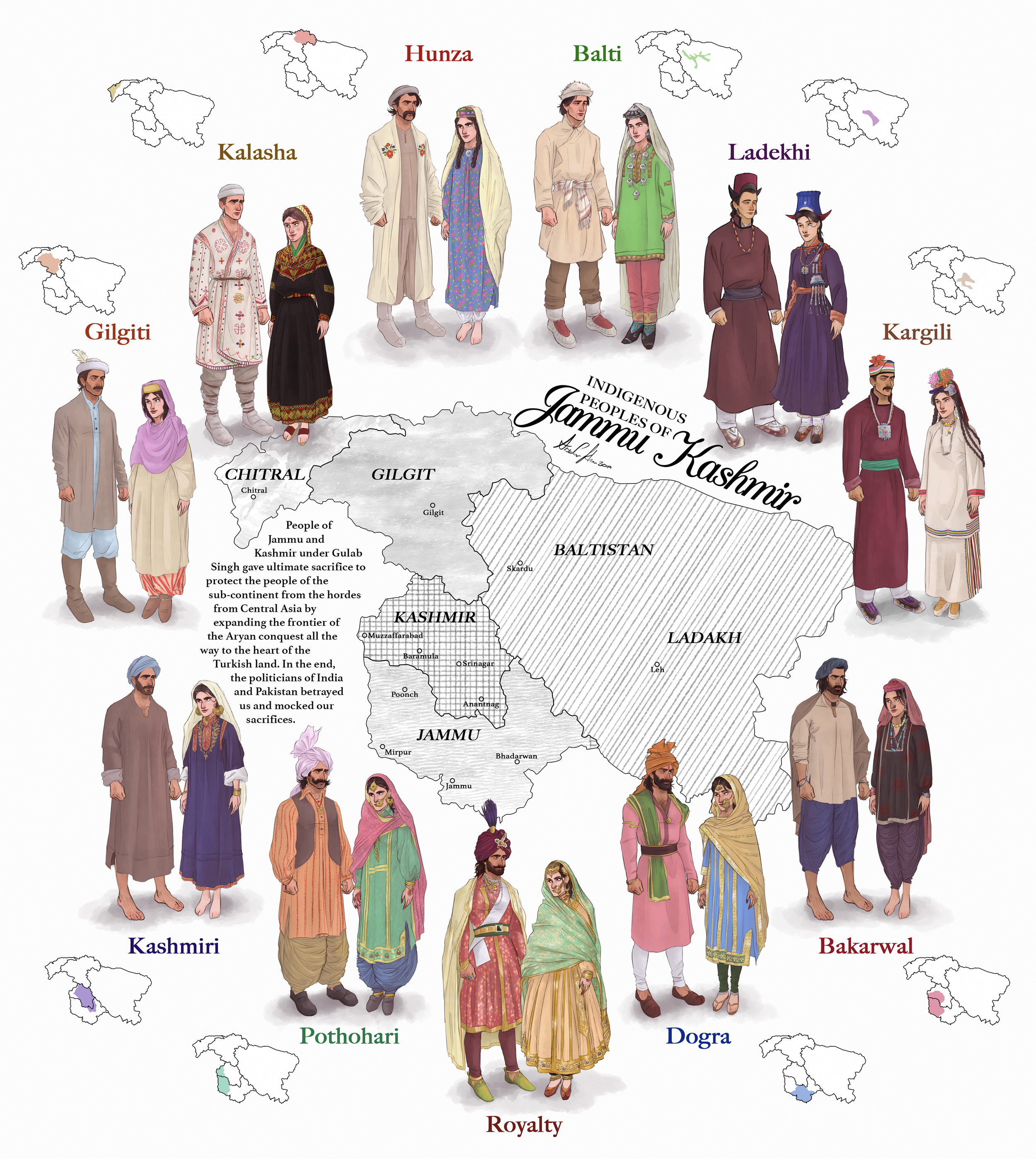
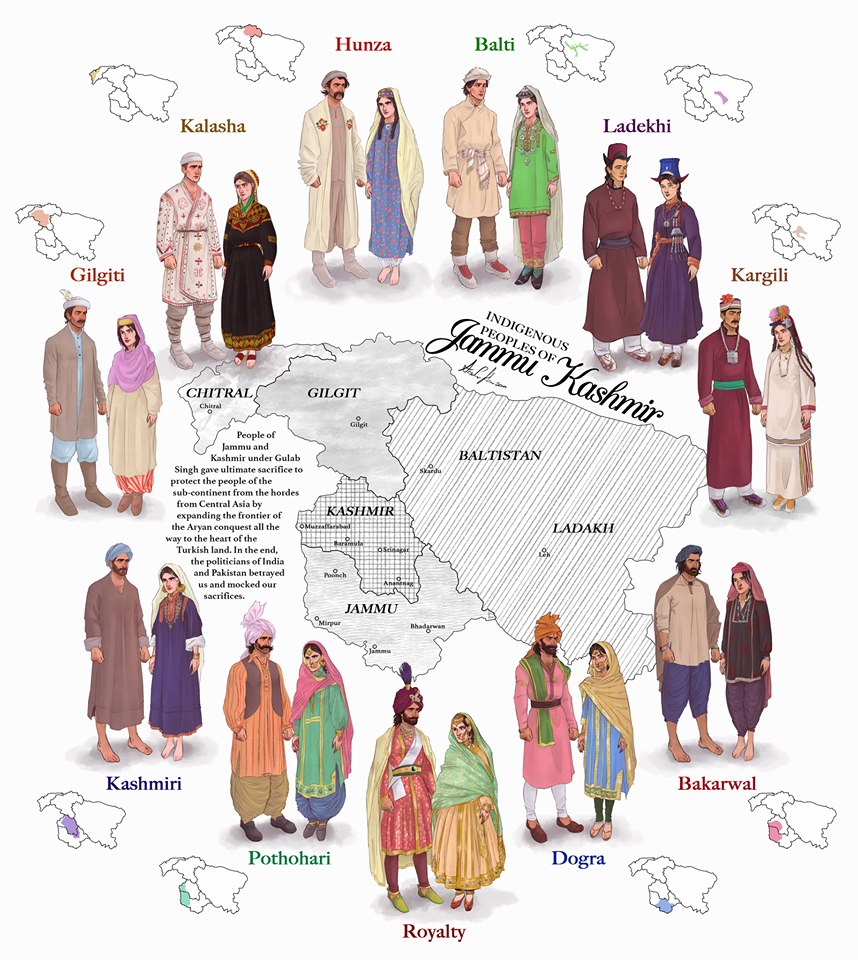
The Indigenous People of Erstwhile State of Jammu and Kashmir.
This is a graphical representation of the people of Jammu and Kashmir made by Arsalan Khan and Rajja Sourav Singh Sarmal. A brief description of each by me to help in better understanding (Clockwise from top) :

Hunza (Burusho) Ladies. Pic credit Wikipedia
The Hunza : The Hunza or the Burusho people inhabit the Hunza Valley and neighboring Valleys in the extreme North of the state. They speak the Burushaski language which as a language has not been identified with any language Group. The Hunzai now mostly follow different schools of Islam.
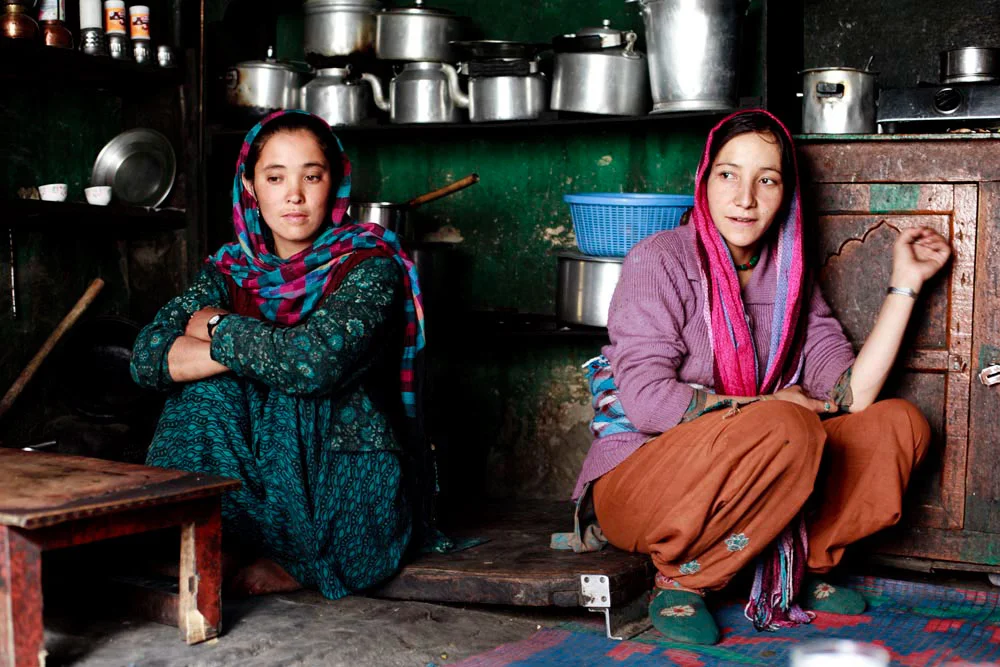
Balti Ladies. Pic Courtesy : https://www.behance.net/gallery/12289037/The-Balti-People-of-India
The Baltis : The Baltis are the inhabitants of the Baltistan and are of Tibetan origin with Dardic admix. Their language is Balti, which is a part of the Tibetan language Group. Infact it has the greatest similarity to old Tibetan. The Baltis follow Islam.

A :Ladakhi Lady in traditional Dress. Pic Courtesy Jimmy Nelson
The Ladakhis : The Ladakhis are the inhabitants of the Ladakh region and are of Tibetan descent. The Ladakhi language is from the Tibetan family. Ladakhis are Buddhists as well as Muslim.

Ladies in Kargil. Pic Courtesy Roots Ladakh
The Kargilis : The Kargilis or the Purigpas as they are called inhabit the Western part of Ladakh at the crossroads with Baltistan and Kashmir. Their language Purigi is a dialect of Balti and as such they are also a part of the Tibetan family. Purigis are mostly Muslim.

Bakarwal Men
The Bakarwals : The Bakarwals and their close cousins the Gujjars are traditionally nomadic pastoral people who inhabited the foothills of the Himalayas and moved to the Mountains in the Summers with their livestock. They (Gujjars/ Bakarwals) form the majority in the Poonch Rajouri region and spread among the Jammu Division and in Kashmir as well. They follow Islam.

Maharaja Ranbir Singh, the Dogra Ruler of Jammu and Kashmir state during who’s Rule the Dogra Kingdom reached it largest extent and also included Chitral
The Dogras : The traditional dwellers of the Jammu region or the “Duggar” as the region was known. They live in the foothills of Jammu and are spread into Himachal Pradesh as well. The Dogras speak the Dogri language which is from the Western Pahari Group of languages. The Dogras are mostly Hindu though a significant number converted to Islam and were referred to as Chibalis.
The Potohari : The Potohari/ Pahari are the most Punjabic people of Jammu and Kashmir and live across the Potohar Plateau which stretches well beyond Rawalpindi. They are in sizeable numbers in Poonch. Their language Pahari-Pothwari belongs to the Lhanda Family of Punjabi. They are majorly Muslim but there is a strong Hindu minority as well.
The Kashmiri : The people of the Kashmir area found mostly in the Kashmir Valley. They are the biggest Indegenous Group of people in the state. They speak Kashmiri language which belongs to the Dardic family of languages. Kashmiris are mostly Muslim though a small minority of Kashmiri Hindus also exists.

Dard - Shina People in Kargil
The Gilgiti : The Gilgiti or the Dards are the inhabitants of the vast Gilgit Valley in the North West of the state. They speak the Shina language. They (Dards) are also found in other areas of the state like Gurez and Drass where they have said to have migrated from Gilgit. They follow Islam though a few follow Buddhism as well in Ladakh.
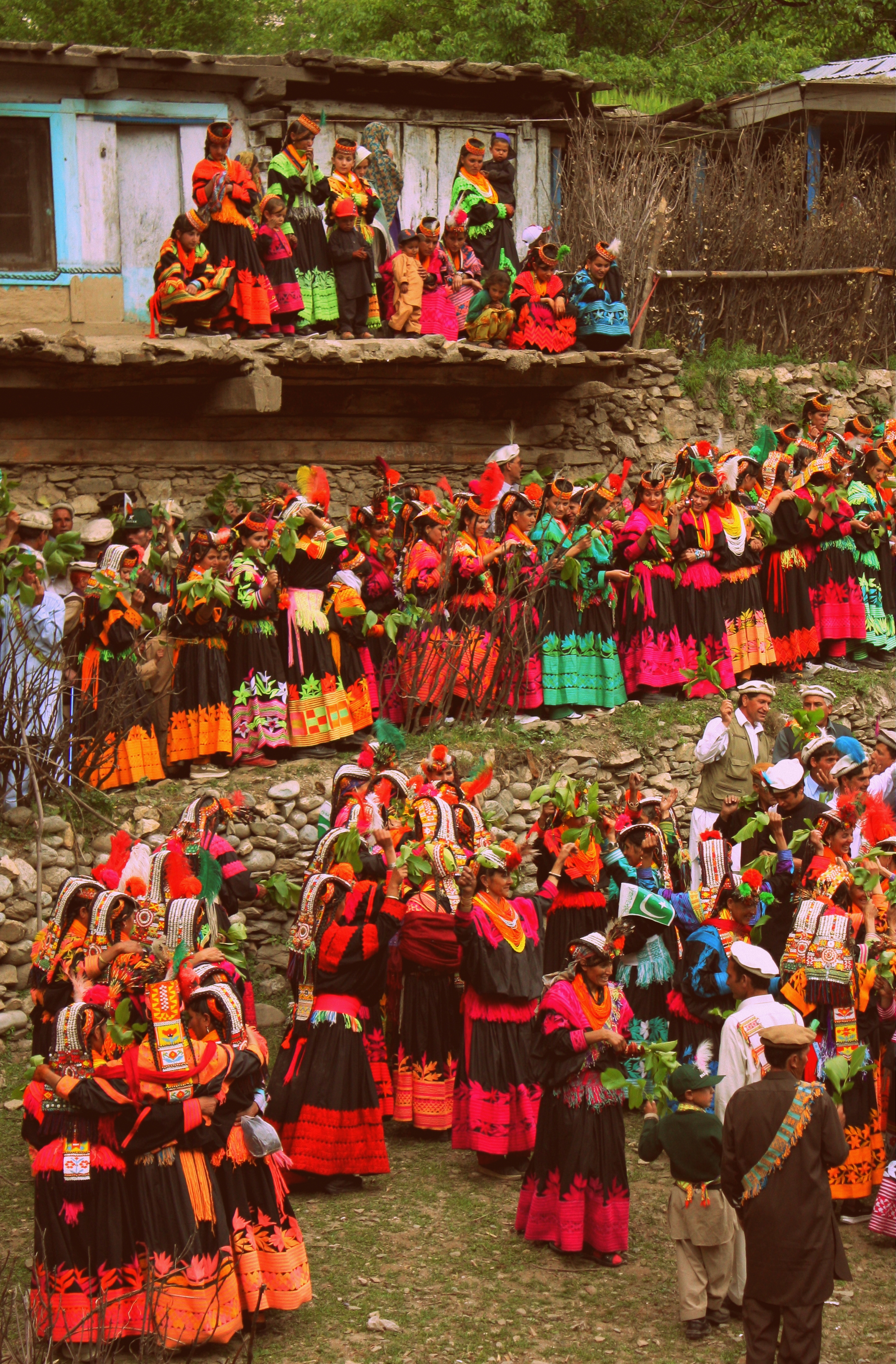
Kalash People during the Chillam Joshi Festiva. Pic Courtesy Wikipedia
The Kalash : The Kalash inhabit three Valleys in the Chitral Region now in KPK though at one time the Chitral Kingdom paid tribute to the Kingdom of Jammu and Kashmir. The Kalsha speak the Kalasha language which is a part of the Dardic family of languages. They have a distinct culture which has been under threat. Most Kalasha have converted to islam though a small number (3000 app) still follow traditional Animist beliefs.
Hi Res of Graphic can be downloaded from the link in the first comment.
The Forgotten Kashmiri
The Story of a forgotten adventurer, Mohan Lal Kashmiri, who started of as an Asissant to Alexander Burnes but went onto to become a Diplomat of sorts. He wrote the Biography of Dost Mohamed and was regaled by various Eastern potentates. But one day he just disappeared into obscurity off the scene of history

The Forgotten Kashmiri
I had previously written about the amazing Munshi Aziz Bhatt Museum in Kargil and the amazing story behind the same. I had mentioned the number of priceless items they have on display and each and every piece has a unique story waiting to be told.
One of the most enchanting piece for me personally was certain carpet made in Eastern Turkistan of the old, Central Asia and inscribed with a name and with figures of Eight Tigers around it. It was made in Bokhara in the early part of the 1800s. A very Indian name. Mohan Lal.
Another name lost in history. Of course at the first glance and the first look I was too lost in the stuff at the Museum but later on the name came into my mind. It couldn't possibly be Mohan Lal Zutshi of Alexander “Bokhara” Burnes Munshi. Or was it. And it turns out it was the same Kashmiri who at the tender age of 19 went with Alexander Burnes on a trip to Bukhara across the Hindu Kush as his official Persian translator. And the same Mohan Lal who due to his good office with the Afghans managed to survive the annihilation of the Army of the Indus as well the killing of Alexander Burnes in Kabul.
And from what Ive read about him he had the looks and the attitude which made him a darling of the Courts of Eastern Potentates as well as the British. And a ladies man as well it seems. And of course he had this habit of making Notes on the Woman of all the lands that he visited. He had a keen eye for the ladies. A true Romantic one would imagine.
Mohan Lal as an explorer/ traveler of Indian origin would and right should rank alongwith Pandit Nain Singh but sadly Mohan Lal’s achievements have all been glossed over. His great Journal that he maintained never got published and he died unhappy and a broken man disowned by his own people as well as by his masters, the British.
I am posting the Preface of the Book written on him “The Life and Work of Mohan Lal Kashmiri 1822 - 1877 “ by Hari Ramg Gupta written in 1943 which I am currently reading :
"Mohan Lal was a great traveller, brilliant diplomat, reputed author, the first Kashmiri to learn English and probably the first Indian to educate his daughter in England. He commenced his travels at the young age of eighteen, and journeyed through the Panjab, North-West Frontier Province, Afghanistan Turkistan, Khorasan, Iran, Baluchistan, Sind and Northern India; and later on visited Egypt, England, Scotland, Ireland, Belgium and Germany. Thus in Asia alone his travels extended from Calcutta to Qoclian and from Bokhara to Poona.
Through all his wanderings he won the approbation of all his companions for "displaying everywhere a rare union of zeal, tact and fidelity. “ Wherever he went, a warm welcome awaited him by high and low, and rich and poor. Dr. Gerard, one of his companions, wrote about him from Kabul ‘‘Shah Kamran of Herat was delighted with his accomplished Persian and unobtrusive address. At Kandahar he was much respected by Sirdar Raheem Dil Khan, who praised his acquisitions, and regretted that his sons could not partake of them. Here he is a favourite with the rulers. In truth, I know not of an exception in our long journey, to the uniform civility he has commanded.”
Mirza Abbas, the Prince Royal of Iran, created him at the age of twenty a Knight of the Persian Order of the Lion and Sun. Shah Shuja-ul-Mulk, the King of Afghanistan, granted him an Order of the Durrani Empire. Maharaja Ranjit Singh presented him with Rs. 500 and a robe of honour consisting of seven pieces. The Mughal Emperor, Muhammad Akbar Shah, conferred upon him a khilat “with some jewels on a turban which his majesty tied with his own hands.”
Such honours were paid to him not only by the Oriental potentates ; but he was “well received in England and other parts of Europe by the very first people, kings and queens not excepted.” Queen Victoria invited him to a royal ball. Prince Albert called him for an interview at the Buckingham Palace. In Germany, Frederick William IV, the King of Prussia, and the Queen, entertained him at a dinner. The King also presented him with a portrait of himself, bearing an inscription in his own hand.
In diplomacy he was unsurpassed. Kaye calls him a ‘‘charmer” 1 of men. Pandit Jawaharlal Nehru speaks of him as one, who in a free India “would have risen to the topmost rungs of the political ladder.” His achievements during the first Afghan War, when he was only twenty-six years old, were most remarkable. His charm, his tact, his patience, his lucid intelligence, his incredible grasp of detail, and his clear understanding of the Afghan character, combined to give him an equipment, which was not found to that degree even in those officers who were in charge of the diplomatic affairs in that country ; and who frequently depended upon him for advice in most delicate matters.
He was an author of no mean repute. On his return from Central Asia in 1834, he “published a Journal of his tour, which considered as the work of an Asiatic in a foreign tongue, may be reckoned a most creditable production.” Twelve years later this work was again printed with an additional account of his journey across Sind and Afghanistan and his visit to Europe. At the same time he published his Life of Dost Mohammed Khan, the Amir of Kabul, in two volumes. On reading his article on the Greek antiquities in Afghanistan, James Tod wrote that "this most intelligent Hindu ought to be made an honorary member of every Asiatic Society.”
About his style of English, the Editor of the Calcutta Englishman remarks "He expresses himself with perfect clearness and intelligibility in English, though not with very idiomatic correctness.” His eccentric phraseology, however, is distasteful. He spoke “English with good accent and much idiomatic propriety,” and "with much fluency and readiness.”
Mohan Lai was obliged to retire at the young age of thirty- two on a pension of £ 1,000 per annum. There is no doubt that if he, had been allowed to continue in the British service, he would have won much greater renown.”
Now coming back to the Museum I am trying to figure out that a Rug which was made as a Gift/ or in honour of Mohan Lal ended up in the Kargil Sarai. And the significance of the Eight Tigers.
Well thats another story for another day.
Pic from the Munshi Aziz Bhat Musuem, Kargil.
The Kashmiri Spy in Tibet
The Story of a Kashmiri Spy in Tibet during the time of the British Empire. This Gentlemen was the first person to spy for the British in what latter became a routine affair with “Pandits” like Nain Singh Rawat doing their bidding.

The painting from the Qing Era shows the Induction of the 9th Dalai Lama, Lungtok Gyatso, in 1808 as its watched by the Ambans and Qing officials on one side and by Tibetan Clergy and other Tibetans on the other side.
The Kashmiri Spy in Tibet
In the early 1700’s the region of Tibet as as well as Turkestan (as Xinjiang used to be called at that time) come under the control of the Chinese Imperial Qing Dynasty as they defeated the Dzungar Mongols who had come to occupy Tibet. As a result of this the Qing Dynasty was now in control of Tibet and in order to exercise this control the appointed an Officer called the Amban to overlook the running of the state and especially keep his eyes and ears open for ambitions that a foreign nation / power might have on Tibet.
For the same purpose the Ambans and their network of informers and spies were always taking stock of various Traders who visited Tibet and Lhasa and soon after the Qing assumed dominance they imposed restrictions on many Traders coming from Nations that were assumed to be a threat to the Qing control over Tibet. And this was most severely applied to Europeans who the Qing saw as the most obvious threat. And then there were the Russians who were also expanding their Empire towards the East. The Europeans were restricted to trade only through Canton (Hong Kong) while traders from Russia could only come through the trading Post at Kyakhta.
While impositions were imposed on almost all outsiders, there were three Groups of traders that were allowed relatively freer access to Lhasa. These were the Newaris of the Kathmandu Valley, the Andijanis of the Ferghana Valley and the Kashmiris. For some reason these three Groups of people were left alone to their own devices. One of the reasons was that these people had been trading with Tibet for hundreds of years and many of them had even settled there. And they connected the region with the important markets in the Indian subcontinent in case of the Newaris and the Kashmiris and to Central Asia vai the Andijanis. An important consideration for the Qing was that as per their own assessment all these traders came from Countries / Regions that were not a threat to their sovereignty over Tibet.
Towards the end of the 18th Century however the Qing perceptions begin to change. The Gurkhas attacked Tibet twice and though peace was restored after the intervention of the Qing, the Qing were now suspicious of the Newaris as they couldn't really distinguish between them and the Gurkhas as both were from Nepal, though the Gurkhas had taken the Kathmandu Valley from the Newari Rulers. And in the beginning of the 19th Century the Afaqi Khojas revolted in Turkestan and for some time they held the main cities of the Tarim Basin and they lost their confidence in the Andijanis of Ferghana as well.
Through it all one community which kept up its “neutrality” in the eyes of the Qing were the Kashmiris. The Kashmiris were known as Kachee by the Tibetan and Kashmir was called Kachee Yul. Infact the term Kachee came to be used for all Muslims in Tibet irrespective of where they came from. Kashmiri traders and craftsmen had been visiting Tibet since the 10th Century as many Kashmiri craftsmen were bought in to decorate the Monasteries as Buddhism grew in Kashmir and the Kashmiris were supposed to be the best at this trade. As a result Tibetan art shows even till day a great Kashmiri influence. Also as a result many Kashmiris settled in Tibet and took Tibetan wives and intermixed with the local populations.
Now as far the Qing and their Ambans were concerned they knew of the Kashmiris and their long standing Trade relations with the Kashmiris. But one thing they weren't sure was about the location of Kashmir. They knew it was a Region to the West of the Tibetan plateau but that was about it. They had no idea about the Political affiliations of Kashmir or of the Kashmiri people. And the Kashmiri people were seen as outsiders who usually minded their own business with little interest in the Politics of Tibet or of the Qing. And they were good Traders who did a large volume of business in Lhasa. And the point to be noted is that most Kashmiris used to visit Lhasa through Patna and Nepal instead of of the Route over the Himalayas.
The fact that Kashmiris had easy access to Tibet did not go unnoticed to the British. The British for long held ambitions on getting through to Tibet as it was uncharted territory to the North of the their greatest possession. Also there was a constant fear of Imperial Russia gaining influence in Tibet. Many British and Western explorers had wanted to break into this Forbidden Land but were not very successful. So the British had to fall upon its native subjects to do their bidding in Tibet.
In the wake of the Anglo Gurkha War of 1814 and the British Victory, the British came to be in possession of Garhwal and gained direct access to Tibet from there but the British were always turned back at the frontier by the Tibetans who themselves were wary of any unknown foreigners. It was around this time that an enterprising Kashmiri trader, Ahmed Ali offered his services to the British. Ahmed ali presented himself as a well connected Kashmiri who had a relatives who lived in Lhasa and had travelled to Lhasa many times on his own. The British were very interested in this guy and the key to Tibet that he might hold. But they could not give him any Official sanction as they wanted to exercise plausible deniability in case Ahmed Ali was caught. The point was that the Qing had not realised the the same guys they were having a tough time with in Canton were now sending spies into Tibet. As far as the Qing were concerned the “Pilangi” as they called them (Tibetan / Chinese version of Firangi as they were referred to in India) and the Britishers in Canton were two distinct people from different Countries. And the British of course didn't want this little secret revealed to the Qing.
All said and done Ahmed Ali proposed that he also be made the agent for trading Indian goods in Tibet on behalf of the British. And of course the British would not give him any legal standing. As it so happened Ahmed Ali himself was no old Tibetan hand. He spoke no Tibetan and in fact his business in Tibet was taken care of by an old Kashmiri employee Abdullah and he was also joined by Ahmed’s brother. However the business didn't go as well as proposed though all the time Ahmed was collecting information through his guys in Tibet. In 1827 Ahmed was called to Tibet by his brother and Abdullah to settle the losses they had incurred.
Ahmed Ali had no option but to go to Lhasa as his brother insisted on the same. He went to Lhasa and due to the losses he had a falling out with his brother and Abdullah and the matter was brought to the notice of the local authorities. Somehow the matter was settled but now Ahmed Ali had no one to handle his operations in Lhasa. Another old Tibetan Kashmiri suggested that he take the services of his brother Fazlullah Fakroo, another Tibetan Kashmiri. And again his enterprise started. However his affairs with his brother and Abdullah were not settled. His brother sued him for his share of family property back home and the case was taken to Court and representing Ahmed Ali in his absence was his new employee Fazlullah.
Through all his business troubles Ahmed Ali kept on compiling information on Tibet through Abdullah and his brother when things were good and later on through Fazlullah. He had considerable information on hand gleaned through various sources including Route maps and distances and also the Political situations in the different towns and Villages. Just that he was good Spy but no so good a Businessman. Anyways there was no end to his financial woes as the Court ruled in the favour of his brother and Abdullah and now the Spy was bankrupt as well. So he bade his time by hanging around the Mosque in Lhasa. And as ill luck would have it he had a falling out with Fazlullah who he accused of causing great losses in business and filed a case against him.
On the Court disposition Fazlullah first made a suggestion to the Court about the suspicious activity that Ahmed Ali was indulging in. About all the questions he always kept on asking and noting them down. The Court brought this to the notice of the Amban and now everyone was interested in the Spy. As a result the Spy was son picked up by the Qing authorities and all his papers and notes were confiscated and he hauled up for interrogation.
Now the thing was Ahmed Ali did not speak Tibetan or Chinese and all his notes were in Persian and English. So the authorities had to gather a group of people to decipher and translate his papers. Translators were found for Persian and it is said it took them two months to decipher and translate all the notes. The notes contained information about the Routes, Passes and general Topography of Tibet, the strength of Chinese and Tibetan soldiers, the working of the Financial departments, the general dispositions in Sichuan and Gansu and other such information deemed as sensitive. But for the English notes they could not find any any translator. The Spy was caught red handed it seems.
The Spy however would not give in so easily. He said he took notes only as per the “custom of his homeland” and he intended to write a book which could be used by other Traders from Kashmir and elsewhere to visit Tibet for trade. He was promoting Trade in Tibet through this. And he swore that not an iota of information had been sent over the Himalayas to any power inimical to the British. The Qing officials of course had a hard time believing his theory and were convinced that he was a Spy. Though who exactly he was spying for was never very clear to them. At the same time Ahmed Ali sent a message to the East India Company asking them for help as he was working for them. He played his Ace.
The British were now in a delicate situation as they didnt want Ahmed Ali to put them in the spot and jeopardise their relations with the Qing which would surely have repercussions in their Trading Post in Canton as they were aware that Ahmed Ali would reveal their little secret to the Qing. The British made a secret appeal for help to the powerful Nepali Prime Minister Bhim Sen Thapa to use his good relations with the Tibetan and the Qing to secure the release of the Spy. But they were surprised when they were told by Bhim Sen Thapa that Ahmed Ali had already been released by the authorities and was probably already on his way back.
So why did the Qing authorities release Ahmed Ali without any punishment ? Well for one he was expelled from the Country and handed over to the Nepalese authorities with requests to send him over the border to India. It seems that the matter was quite a sensitive one but the Qing didn't really want to undermine the confidence of the Kashmiri traders. As they were the people through which they could still have a lucrative trade with other Regions without compromising on their own strict no foreigner’s Rule. There were also suggestions that Ahmed Ali had agreed to supply some information from the British side to the Tibetan and Qing authorities. Maybe he was just a smart Guy who somehow managed to squeeze out of the situation. What was the exact reason of his release is still shrouded in somewhat of a Mystery and hence we can only now try and and make guesses on the actual circumstances that led to him being just deported instead of being severely punished. Maybe we will never know.
Of course even after this incident the British intrigues in the region didn't cease and we saw the Era of the “Pundits”, native men who went to Tibet to carry out surveys for the British including people like Pandit Nain Singh Rawat and others. However whatever happened to Ahmed Ali after his return is unknown. The Kashmiri Spy just vanished from the annals of of the history of Political Intrigue in the History of the Himalayas.
The panting from the Qing Era shows the Induction of the 9th Dalai Lama, Lungtok Gyatso, in 1808 as its watched by the Ambans and Qing officials on one side and by Tibetan Clergy and other Tibetans on the other side.
Pahadi Languages of the Punjab Himalayas
A summary on the Pahadi languages spoken in the Western Himalayas. Compiled from Bailey’s classic Languages of the Western Himalayas.

Pahadi Languages of the Punjab Himalayas
There are various languages spoken in the Western Himalayas that are loosely put together called “Pahari” which itself is a wide term which seems to include n number of different dialect unintelligible to the speaker of one language to the other.
Here we try and understand the inter-relationship between these Pahari dialects as well as the relationships that they hold with major languages which are spoken in and around them chiefly being Punjabi as the areas we are considering here were a part of Greater Punjab at one point of time. Also we try and see the relationship of these wrt to Dogri, which is a close relative of Punjabi as well as with Kashmiri.
Most of the languages in modern day Himachal Pradesh and Jammu Region are a part of the Dogri-Kangri group of the Western Pahari sub Group of the Indo Aryan language Group. However there are exceptions with languages which belong tothe Kashmiri sub-group of the Dradic languages and the Chamba Lahauli / Kanawari / Bhoti which belongs to the Tibeto-Burman family

The Language Map of Jammu and Kashmir
These dialects mostly cover all the Hill country in the North Western Himalayas besides the more etablished languages such as Kashmiri, Dogri and Punjabi.
The Western Pahari or the Dogri Kangra Group includes the following :
1. Dialects of the Shimla/ Sirmour Hills
Mahasu Pahari
Baghati
Kiunthuali
Kot Gurui (Kotgarhi ?)
Kotkhai
Bushahri ? (Kanawari / Bhotia which are from the
Tibetan Group)
Sirmauri
2. Dialects of Kullu
Ouer Siraji ?
Inner Siraji ?
Sainji
Kului / Kulvi
Kanashi (In Malana again related to Kanawari)
3. Dialects of Mandi
Mandeali
Northern Mandeali
Chota Bhangali
4. Dialects of Kangra
Kangri
Gaddi / Bharmouri
5. Dialects of Chamba and Jammu States
Cameali
Bhateali
Curahi
Lahuli
Pangwali
Bhadarwahi / Bhalesi
Padari
Sasi
Interelations between the Dongri Kangri Group
Bhadarwahi, Bhalesi and Curahi from an interesting Group and have much in common with each other. They are the intermediate forms of speech bridging the gap betwen the Punjabi or Dogri and the Kashmiri System.
Curahi gives place on the east to Pangwali which in turn is closely related to Padari.
On the South Crahi gives way to Cameali and Bhateali, the latter being a dialect of Dogri. Dogri itself the main language of the Jammu region was considered a dialect of Punjabi though now it is recognised as a sperate language closely related to Punjabi. Cameali is replaced by Bharmauri or Gadi on the East, while to the south of Chamba we have the Kangri and Madeali dialects, to the East of them the Kulu Group and to the south and south-west of them the dialects of Simla States.
Its in Cameali and the Kulu and Shimla dialects and also in Gujuri and Sasi dialect that an iteresting similarity is noticed to Rajasthani which points to some close connections in the Past.
6. Other Northern Himalayan Dialects
Gujuri
Tinauli
Dhundi/ Kairali
Punchi
Padari
Siraji / Doda Siraji
Languages now considered a part of the Kashmir subdivision of then Dardic languages sub-Group of Indo-Aryan Languages
Rambani
Poguli
Kishtawari
The most interesting of this Grouping is the “Other Northern Himalayan” Dialects which shows a gradual transition from Gujuri, which is very similar to Punjabi to Kishtwari at the end of the line which is very similar to Kashmiri. This starts right from the Murree Hills in the Punjab to the Kishtwar region which borders Kashmir. We will try and review some of the samples from these from Western Hazara to East Jammu states.
Infact there are a number of similarities and resemblence between Nepali and Rambani, Pguli, Kishtwari and even Siraji
Gujuri
Gurjuri is closely allied to the Marwari dialect of Rajasthani and also has a fair mix of Punjabi in it. In fact the Gujars living in Punjab speak Punjabi and the languages are intermixed. Here we take the example of Gujuri spoken around Murree Hills.
Tinauli
Tinauli is a language from inaul in Western Hazara and resembles closely to Dhundi or Kairali dialect.
Dhundi/ Kariali
Dhundi/ Kairali language greatly resembles Lahnda, the Punjabi dialect of Western Punjab. Its also referred to as Dhundi Pahari and is spoken around the Murree Hills.
Punchi/ Pahar Potohari
The Punch dialect is again connected with the Lahnda dialect of Punjabi and is spoken around the Poonch region. In fact many Punchis actually refer to their language as Punjabi in olden times. Punchi is where the influence of Kashmiri starts and it includes a few words of Kashmiri as well. Of course it has great influence of Dogri as well.
Padari
Padari is an extremely interesting dialect, spoken in Padar region of Kistwar on the banks of the Chinab. It has a striking similarity to Pangwali, spoken in the Pangi Valley in Chamba.
Siraji
Siraji is the language spoken in country north of Chinab between Ramban and Bhart on the way to Kishtwar. It is central to Doda and is also called Doda Siraji at times. Due to its location, to the North it gives was to Kashmiri, on West to Rambani, on the North East to Kishtwari, and on the South and South West to Bhadarwahi and Chamba dialect. Its generally frameworked like Punjabi but has many points in agreement with Kashmiri.
Rambani
Rambani as the name suggests is the language spoken around Ramban and like the Poguli which it closely resembles it is connected with Kashmiri though further away than it than Poguli. Rambani has a very largely Punjabi pronunciation whereas Poguli pronounciation is more like Kashmiri.
Poguli
Poguli is a language spoken in a small area to the East of Ramsu. It resembles Kashmiri though it is unintelligible to speakers of the Kashmiri language. However it seems that all speakers of Poguli have some basic understanding of Kashmiri. Nearly all pecularities of Kashmiri are found in Poguli which however contains a number of points in common with dialects which look to Punjabi as a fountainhead.
Kishtwari
Kishtwari is spoken aound the Kishtwar area of the Kishtwar region. It is considered a sub-dialect of Kashmir which it resembles very much. Kashmiri is well understood in Kishtwar.
As an example we will take the same sentence and see how it is said in these different Northern Himlayan dialects which will help us in getting a sense from the dialects as they move from Punjabiness to Kashmiriness.
The sentence is : How far is Kashmir from here ?
Gujuri : Is ja te Kashmir taru kitno dur ni ?
Dhundi/ Kariali : Ittho Kashmir tokni kina dur a ?
Punchi : Is jai hoi Kashmir kitne kot di ?
Siraji : Ellah atha Kashmira ta kitto dur chu ?
Rambani : Itt ata Kashmira ta kito dur chu ?
Poguli : Ita pata Kashir ta kituk chu dur ?
Kishtwar : Yeti hata Kashiri tai kyuta thu ?
This gives us a broad view and some understanding how people have interacted over the centuries from across the Valleys and the Mountains. The more similar the dialects the more would be the interactions amongst the people. This is a fascinating subject on how a language or a dialect gives way to the other and the interlude that takes place.
Main Source : Language of Northern Himalayas by Bailey 1908. All the meaty knowledge gained from there and some passages are verbatim from this source. For a more detailed study get a copy.
Added references from various Source on the Internet.
Addendum : TAKRI Script (From Wiki)
The Takri script (sometimes called Tankri) is an abugida writing system of the Brahmic family of scripts. It is closely related to, and derived from, the Sharada script employed by Kashmiri. It is also related to the Gurmukhī script used to write Punjabi.
Until the late 1940s, And adopted version script of Takri (called Dogri, Dogra or Dogra Akhtar)was the official script for writing the Dogri in the state of Jammu and Kashmir and Kangri, Cahmbeali, Mandeali in Himachal Pradesh. There are some record of using Takri script in the history of Nepali (Khas Kura).
Takri has historically been used by a number of Western Pahari, Garhwali and Dardic languages in the Western Himalayas, such as Gaddi or Gaddki (the language of the Gaddi ethnic group), Kashtwari (the dialect centered on the Kashtwar or Kishtwar region of Jammu and Kashmir) and Chamiyali (the language of the Chamba region of Himachal Pradesh). Takri used to be most prevalent script for business records and communication in various parts of Himachal Pradesh including Chintpurni, Una, Kangra, Bilaspur and Hamirpur regions. The aged businessmen can still be found using Takri in these areas, but newer generation has now shifted to Devanagari and even English (Roman). This shift can be traced to have happened during the period ranging from 1950s to 1980s.
Pic below: A Dogra Period Currency Note from the Jammu and Kashmir Kingdom with inscriptions in Takri (The Central One), Devanagari and Urdu.
Pic from October 2017. Sri Pratap Singh Museum, Srinagar, Kashmir
Kiki’s Blog
Stories from the Himalayas
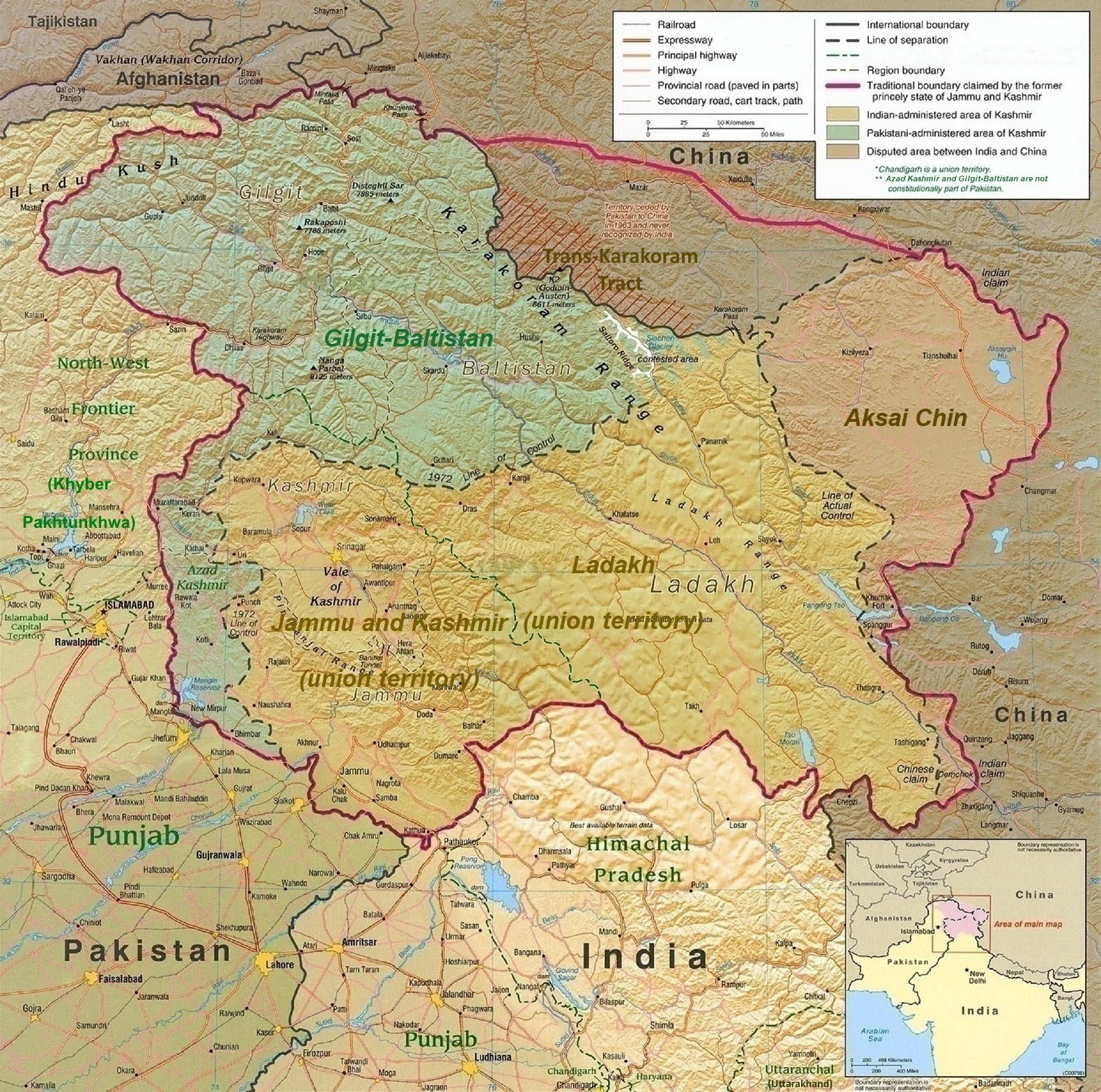



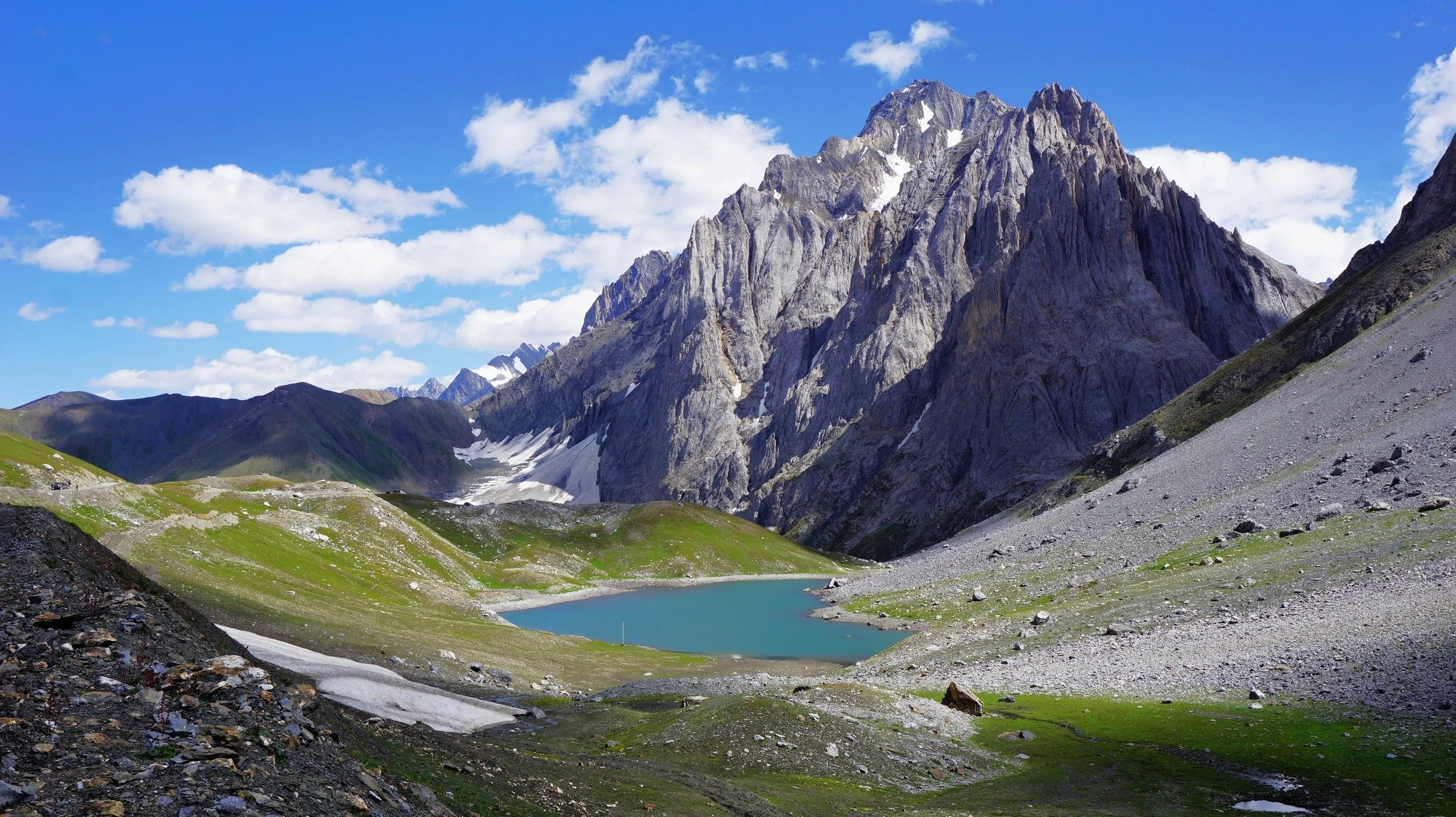
Five years ago the Galwan Valley was in the News for the wrong reasons after a deadly clash between the Indian and Chinese Armies in the Valley located in Ladakh lead to many deaths on the contentious Border between the two countries in wake of continued Chinese intrusions into Indian territory.
This area along the Shyok River, of which the Galwan Nallah or the Galwan River which forms the Galwan Valley has been off limits to Civilians since long but now the Indian Government has decided to open up the area for Civilians and we were amongst the First Civilians to venture into this beautifully desolate part of the Eastern Karakorams in Ladakh. Earlier Civilians could only venture upto the Village of Shyok from where the Shyok River takes a U turn and flows in a Northerly direction.