
The Keeper of Buddha's Bones
The story of the Kanishka’s Casket which was said to contain the Bone Relics of the Buddha himself. The Role Kanishka played in the spread of Buddhism. And how it was discovered in the early 1900s and how its “lost” again.

The Keeper of Buddha’s Bones
The Great Himalayan Complex as most must be aware includes the greatest Mountain Ranges which radiate from some point in Central Asia / Northern India. Looking at the historical context there have been few Rulers, infact not more than handful who have exercised control over this wildest of the wildernesses on the Planet.
One name which comes to mind is that of the Great Kushan Emperor Kanishka whose Empire ranged from Turfan in the Tarim Basin to beyond Bactria to Sodania. From Gandhara to Kashmir to Mathura to Patliputra and all the way to Gujarat. It was a massive enterprise with vast array of different people under their Rule. The Kushans actually originated from the Tarim Basin and were Central Asian nomads before they united and swept South and Westwards. They were said to have originated from the Yuezhi people who were nomadic pastoralists.
Emperor Kanishka is widely believed to be the most powerful of the Kushan kings who left impressive historical records which are being discovered even to this day. The famous Rabatak Inscription talks of the great lineage of the Kushana Rulers as well as talks of their conquests.
One of the most enduring legacy left behind by the Kushanas were their coinage and notably that of Kanishka. The Kushans created a syncretic culture and had elements from all the Cultures around them. Kanishka was based in Gandhara, the region around Peshawar and Peshawar was the Capital of the Kushan Empire. The Empire stood at the crossroads of where Greek culture and its influenced Bactrian and Gandhara culture met Indian culture. It was here in the foothills of the Hindu Kush and the Himalayas that great monuments were built in Gandhara as well as Kashmir which was at that time a part of Gandhara as well the Swat Valley.
Kanishka himself became an adherent of Buddhism but his coinage reflected the multi-cultural aspect of the people they ruled over. The coinage had Hellenic (Greek), Mesopotamian deities, Iranian/ Avestan (Zoroastrian) deities, Buddha and last but not the least Osheo which is said to represent Shiva. This Kushan coinage has been unearthed at various sites all over the realm of the Kushanas giving historians a true sense of the size of their Empire.
Kanishka has been credited with the spread of Buddhism to Central Asia and Gandhara itself became the center of the Buddhist world. It was under Kanishka’s rule that the Fourth Buddhist Council was held in Kashmir and 500 Monks went all over Central Asia to spread the message of what came to be the Mahayana school of Buddhist tradition. He also favoured the Gandhara School of Buddhist Art as well the Mathura School of Hindu Art just like he believed in Buddha but in certain Avestan deities as well.
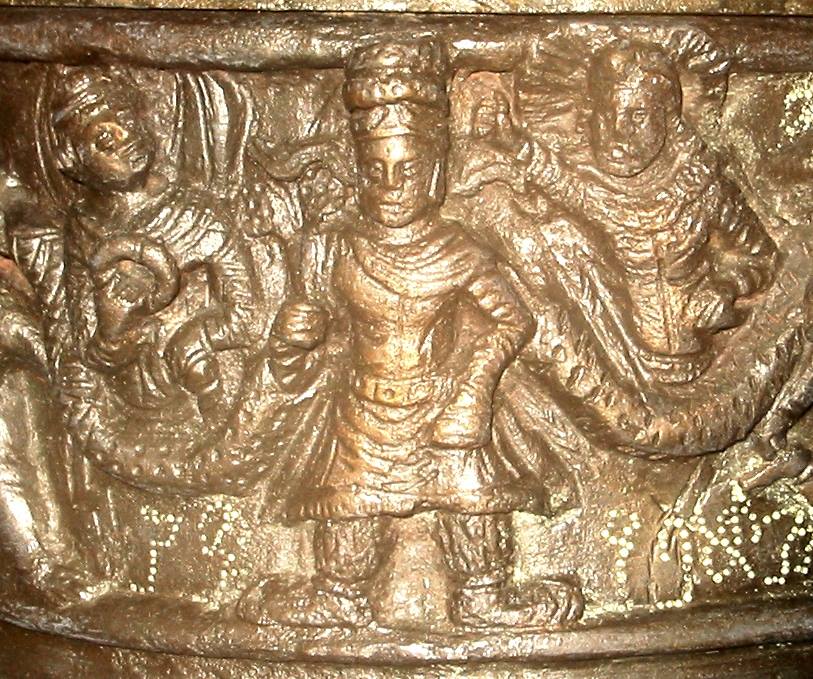
Well coming back to the Bones of Buddha part now. In 1908 - 1909 Archaeologists while working on excavations at the Kanishka Stupa, which at one point of time was the tallest Stupa in the entire subcontinent came upon a Chamber. This was at a place called Shah-Ji-Deri near Peshawar under the shadows of the Hindu Kush in the Peshawar Valley. The excavators chanced upon a Gilded Copper Casket, a reliquary of sorts and this priceless find was named as the Kanishka Casket and it was dated to the Second century AD. The Interesting part was the depictions on the Casket which point out that this was the place where different cultures met and infused and also the part that the Kushans in general and Kanishka in particular played in the same process.
The lid of the casket shows the Buddha on a Lotus Pedestal and Indra and Brahma on either side will folded hands in reverence. The edge of the lid is decorated by a frieze of flying geese, or hamsa, symbolizing the travel of departing souls and the removal from samsara. Some of the geese have a wreath of victory in their beak.
The body of the casket represents a Kushan monarch, which is unmistakingly Kanishka as we are familiar with his likelihood and especially his big boots, with the Iranian Sun god and Moon god at his side. On the sides are two images of a seated Buddha, worshiped a royal figures, possibly a Bodhisattva.
A garland, supported by cherubs goes around the scene in typical Hellenistic style.
There are also inscriptions in Kharosthi which underline these facts.
And now the most interesting part. Inside the Casket were found 3 Bone fragments which are said to be of the Buddha himself. They were concealed in a Crystal which was hollowed from one side and then sealed up after the fragments were placed there. And it had the Emperor’s seal on it. There had been another case of discovery of Buddha’s similar bone relics in the Terai foothills of Nepal much closer to where the Buddha was born. So what about these ? Well we all know that Kanishka was a great proponent of Buddhism. And as per certain Buddhist literature after the cremation of Buddha his remains were divided into 8 parts to be buried under Great Stupas to be built at various places. It is entirely possible that Kanishka got hold of some of the relics in his time and took them to his capital Purushapura as Peshawar was called at that time and had them enshrined under a great Stupa. The Chinese pilgrim Huen Tsang remarked in his journey that this place indeed held the relics of Buddha and he described the Kanishka Stupa as 170 m tall.
Ok the Bone Relics of the Buddha were sent were sent to Burma by the British where they are supposedly kept somewhere in Mandalay. As for the original casket it was sent to England. And in England a number of copies of the same were made of the original. The real one was then apparently sent back to Peshawar. One copy of the same is on display at the British Museum. Another copy is supposed to be in Oxford. The one on display in Peshawar is also supposedly a copy of the original. At the time of the partition there was a tussle between India and Pakistan over certain treasures but mostly the Indus ones as no one really cared much about Gandhara as the mainstream narrative in India never took on the Kushans as their own and were looked upon as outsiders.
As a result as of today no one is really aware where the actual Casket is. Some say it was taken to Karachi. Out of all the Scholars engaged in work on the Gandhara / Kushanas none has seen the original and no one has any clue to where it is.
One of our most priceless Treasures is now nowhere to be found.
Kashmir and Tibet : The Forgotten Past
Kashmir has over the ages has had a great influence on Tibet in the area of Religion and allied Religious Iconry. Infact Mahayana Buddhism traveled to Tibet from Kashmir via Central Asia after the Fourth Buddhist Council in Kashmir. A large number of artisans and craftsmen were taken from Kashmir to Tibet to decorate the Monasteries as well.

Kashmiri Cultural Influence on Tibet
Last year the Himalayan Club sent a request to His Holiness The Dalai Lama asking him for a private audience for the members of the Himalayan Club. And His Holiness decided to give a private audience last year in April. A Group of members of the Himalayan Club along with family members went for the same to McLeodganj. I alongwith my wife and little baby daughter also went along the delegation.
We had the audience, and though I am not a religious person, I really like listening to His Holiness as what he speaks makes sense to me. And hearing him in person at his residence was quite an experience. After His Holiness finished his talk we all went to get blessings from him and a photo op. I wanted him to bless my daughter and I had a brief exchange with him wherein I told him that I am from Kashmir. He smiled and told me that many Tibetan monks used to go to Kashmir to gain knowledge and there is an old relationship between Kashmir and Tibet.

A Crowned Buddha from Kashmir
Of course I have been trying to dig up some of the relics of Kashmir’s Buddhist past which included the Monastery at Harwan, where the 4th Buddhist Council was held in the first Century as well as the Gilgit Manuscripts, which is the oldest manuscript found in the Indian sub-continent and one of the most sacred Buddhist scripture ever discovered (I have covered both of these in previous Posts).
But as my search continued that it wasn’t just Buddhism that went to Tibet from Kashmir. It went much further than that. A whole bunch of scholars and craftsmen from Kashmir went to Tibet as a part of this cultural exchange. This included the best craftsmen and sculptors. There is a great similarity between all the Buddhist iconography in Stone and Bronze made in Tibet with all such iconography found in Kashmir from the Buddhist era in Kashmir which started around the time of the Great Kushan Emperor, Kanishka in the first century till the time of Lalitaditya in the 8th century wherein slowly Buddhism started disappearing from Kashmir till it disappeared in the 12th century. The sculptors and craftsmen in Kashmir shifted to Hindu iconography and making statutes of Vishnu and his Avatars. But their Buddhist tradition continued to thrive and evolve in distant Tibet. As an example I present to you two Bronze statues of the Tara. The one on the left is a 9th century Tara from Kashmir and the one on the right is a White Tara from the 17th century from Tibet. In Spite of the geographical distance and a difference of almost 800 years the similarities are still quite uncanny.

A Reliquary Showing scenes from Buddha's life from Kashmir
There are records of Kashmiri craftsmen going to the ancient Kingdom of Guge in Central Tibet to decorate the Buddhist monasteries being built there. Tibetan Chronicles also mention that the great Tibetan scholar Rinchan Sangpo visited Kashmir thrice in order to take Kashmiri craftsmen to Tibet to re-organise Buddhist arts in Tibet. It is said that Rinchen built a Hundred and Fifty Temples in Tibet with the help of 75 Kashmiri craftsmen. The 16th century monk, Lama Taranath also records the great contribution of Kashmiri craftsmen to Tibetan painting and metal casting.
Kashmir being historically at the crossroads of great civilizations constituted a great melting pot with cultural influences from all over. Before its emergence as a strong Kingdom in the 8th century Kashmir was a part of the belt ranging from Southern Iran to Gandhara to Bacteria to Kashmir were a part of the great belt of Buddhism and such similar sculptures have been found all over Central Asia, Afghanistan, Pakistan, Kashmir and onwards to Tibet.But of course over a period of time Buddhism disappeared from all these areas and all the cultural traditions and Buddhist arts and crafts shifted to Tibet and a part of it to Mongolia as well.

Tara from Kashmir
Of course Buddhism in Tibet has evolved into its present form of Tibetan Buddhism over the age. But scratch and look under the surface and its a reflection of the tradition and culture that was followed by populations all over the Himalayas, the Karakoram and the Hindu Kush and further into Afghanistan and Southern Iran. Buddhist art in Tibet is a legacy from the past of all these regions and especially Kashmir. Looking at Tibetan Buddhist art now I see it as a mirror into the past showing the arts and crafts of our ancestors long forgotten in the land of their origin but still thriving in Tibet. Much like Buddhism itself.
As of today “Himalayan Art” as its called is considered Religious iconry art representing Hindu, Buddhist and Bon and the three main categories it is divided in are Tibet, Kashmir and Nepal. This is the wide classification of Himalayan Art and it wouldn’t surprise me if a link is found as to how Nepalese Art was also influenced by Kashmiri art coming in from Tibet.

Vajrasattva from Kashmir
Pic of Tara, also known as Arya Tara and Jetsun Dolma in Tibetan Buddhism, is a female Bodhisattva in Mahayana Buddhism who appears as a female Buddha in Vajrayana Buddhism. She is known as the Mother of Liberation and represents the virtues of success in works and achievements. She is originally supposed to have originated as a form of Goddess Durga and entered the Buddhist deity fold over a period of time.
Kashmir Tara pic from Shri Pratap Singh Museum, Srinagar and the Tibet Tara from the Shanghai Museum, Shanghai. Both pics from October 2017.
Kiki’s Blog
Stories from the Himalayas
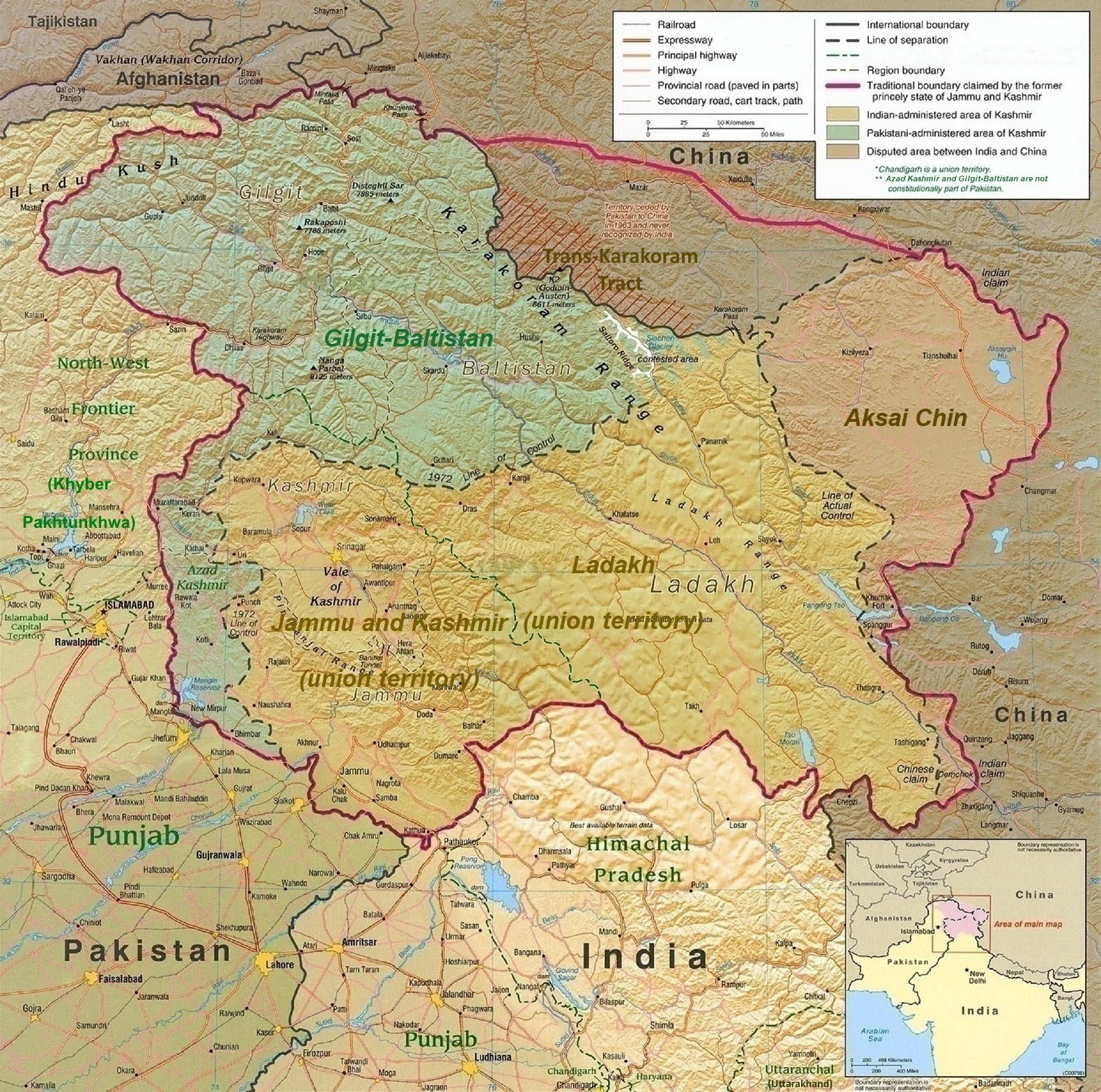



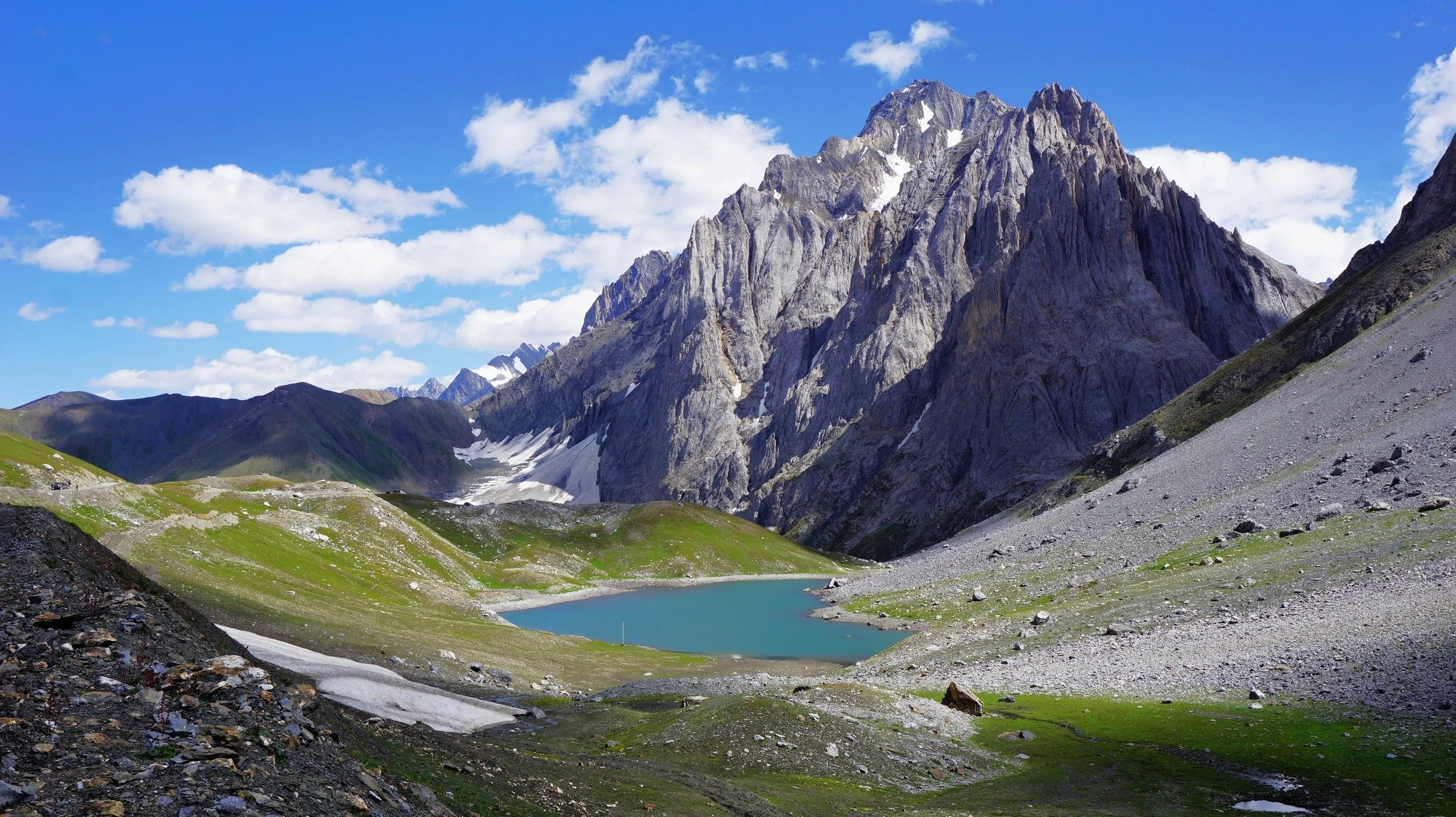
Five years ago the Galwan Valley was in the News for the wrong reasons after a deadly clash between the Indian and Chinese Armies in the Valley located in Ladakh lead to many deaths on the contentious Border between the two countries in wake of continued Chinese intrusions into Indian territory.
This area along the Shyok River, of which the Galwan Nallah or the Galwan River which forms the Galwan Valley has been off limits to Civilians since long but now the Indian Government has decided to open up the area for Civilians and we were amongst the First Civilians to venture into this beautifully desolate part of the Eastern Karakorams in Ladakh. Earlier Civilians could only venture upto the Village of Shyok from where the Shyok River takes a U turn and flows in a Northerly direction.