
Buddhist Art from Kashmir at the Metropolitan Museum, New York
Kashmir was at one time one of the great centers of Buddhist learning and it was from Kashmir that Buddhism spread Northwards into Ladakh and Central Asia and subsequently to Tibet and China. The Metropolitan Museum in New York has a fine collection of Kashmiri Buddhist artworks.

Reliquary(?) with Scenes from the Life of Buddha

Reliquary(?) with Scenes from the Life of Buddha
Date: ca. 10th century / Culture: India (Jammu & Kashmir, ancient kingdom of Kashmir) or Pakistan : Medium: Bone with traces of color and gold paint / Dimensions: H. 5 3/8 in. (13.6 cm); W. 4 3/8 in. (11.1 cm); D. 2 9/16 in. (6.5 cm) / Classification: Sculpture
This container likely served as a Buddhist reliquary. There are three scenes: the first shows the miraculous birth of Siddhartha, the historical Buddha. He emerges from the right side of his mother, Queen Maya, who is supported by her sister, Mahaprajapati. The second scene depicts the temptation of Siddhartha as he meditates at Bodhgaya immediately before attaining enlightenment. The third scene is a rare representation of the crowned and jeweled Buddha setting into motion the wheel of law, a reference to his first sermon at the Deer Park at Sarnath.

Vajrasattava
Date: 8th century / Culture:India (Jammu and Kashmir, ancient kingdom of Kashmir) / Medium: Brass with silver inlay / Dimensions:H. 6 5/8 in. (16.9 cm); W. 3 7/8 in. (9.8 cm); D. 2 3/4 in. (7 cm) / Classification: Sculpture
The Esoteric Buddhist deity Vajrasattva holds a stylized thunderbolt and a bell and sits in royal ease on a stylized mountain, with his pendant foot supported by a lotus bloom. Two snake deities, a naga and nagini, emerge from the mountain’s waters and raise their hands in veneration of Vajrasattva’s transcendent wisdom.

Panel of a Portable Buddhist Shrine with Dancer and Musician Celebrants
Date:8th century / Culture:India (Jammu and Kashmir, ancient kingdom of Kashmir) / Medium:Ivory with traces of color / Dimensions:H. 1 7/16 in. (3.6 cm); W. 1 7/8 in. (4.8 cm) / Classification:Ivories

Crowned Buddha
Date:9th century / Culture:India, Ancient kingdom of Kashmir / Medium:Brass / Dimensions: H. 20 3/8 in. x W. 9 in. (51.8cm x 22.9 cm); D. (from hands) 3 in. (7.6 cm) / Classification: Sculpture
The Buddha is usually depicted in a monk’s simple garments; however, when he wears rich jewelry and a crown, he evokes the special form of Buddha as a cakravartin, or universal monarch. In Kashmir this form also recalls the splendor of the Buddha in heaven, where he reveals himself to the bodhisattvas. Both the high tripartite diadem and tasseled cape reflect Central Asian influence on Kashmiri Buddhist art of this period.

Crowned and Jeweled Buddha
Date:ca. 9th century / Culture:India (Jammu and Kashmir, ancient kingdom of Kashmir) / Medium:Copper with silver inlay / Dimensions:H. 7 1/16 in. (17.9 cm); W. 3 7/8 in. (9.8 cm) /Classification:Metalwork
Buddha sits in a yogic posture, wearing a high tripartite crown and fully articulated robes. His lowered hand grants boons to the male donor kneeling before him presenting an offering, likely a garland. The crown with flying ribbons demonstrates the powerful influence of Sasanian royal imagery on later Kashmiri art.

Panel of a Buddhist Ritual Crown with Ratnasambhava, the Transcendent Buddha of the South
Date:10th–11th century / Culture:India (Jammu and Kashmir) or western Tibet / Medium: Wood with traces of polychrome / Dimensions:H. 6 7/8 in. (17.5 cm); W. 3 7/8 in. (9.8 cm) / Classification:Sculpture
Ratnasambhava is one of the five Transcendent Buddhas of Esoteric Buddhism. Horses are his traditional mounts.

Bodhisattva in Contemplative Pose
Date:5th–6th century / Culture:India (Jammu & Kashmir, ancient kingdom of Kashmir) or Pakistan / Medium:Stone / Dimensions:H. 3 5/8 in. (9.2 cm) / Classification: Sculpture

Buddha Bust
Date:8th century / Culture:India (Jammu & Kashmir, ancient kingdom of Kashmir) / Medium:Stone / Dimensions:Gr. H. 2 5/16 x Gr. W. 1 3/4 in. (5.9 x 4.5 cm) / Classification:Sculpture

Seated Shakyamuni
Date:9th century / Culture:India (Jammu & Kashmir, ancient kingdom of Kashmir) / Medium:Bronze / Dimensions:H. 6 5/8 × W. 3 in. (16.8 × 7.6 cm) / Classification:Sculpture

Seated Headless Buddha
Date:8th century or earlier / Culture:India (Jammu & Kashmir, ancient kingdom of Kashmir) / Medium:Terracotta / Dimensions:H. 2 1/4 in. (5.7 cm) /Classification:Sculpture

Buddha
Date:7th–8th century / Culture:India (Kashmir region) / Medium:Brass inlaid with copper and silver / Dimensions:H. 3 7/8 x W. 2 1/2 x D. 1 3/8 in. (9.8 x 6.4 x 3.5 cm) / Classification:Sculpture

Bodhisattva Maitreya, the Buddha of the Future
Date:7th century / Culture:India (Jammu and Kashmir) or Pakistan (Swat Valley) / Medium:Bronze inlaid with silver / Dimensions:H. 7 1/8 in. (18.1 cm) / Classification:Sculpture
The messianic savior Maitreya is identified by the flask he holds in his lower hand. He is seated in a yogic posture on a double-lotus cushion and extends spiritual protection to believers with his raised hand, here displayed with the palm facing inwards, not outwards as is conventional. This icon has a superbly preserved metal surface, complete with silver inlay on the eyes and forehead mark (urna). The raised ornamentation reflects an awareness of Gupta design. The figure and base were cast separately, and the lotus base is inscribed on the reverse with a donor dedication.

Preaching Buddha
Date: 8th century / Culture:India (Jammu & Kashmir, ancient kingdom of Kashmir) or Pakistan / Medium:Bronze with silver inlay / Dimensions:H. 8 3/8 in. (21.3 cm) / Classification:Sculpture
This Buddha, with his legs folded in a full yogic posture and his hands gesturing preaching, invokes the first sermon at Sarnath. The complex treatment of the monastic robes, most notably their pleated ends, is evidence of an unidentified monastic workshop, probably located in Kashmir or the Swat Valley. The treatment of the hair curls is unconventional, as is the extreme stylization of the eyes and eyebrow. Silver inlay marks the eyes and auspicious forehead mark (urna).
9th Century Vaishnava Avatar
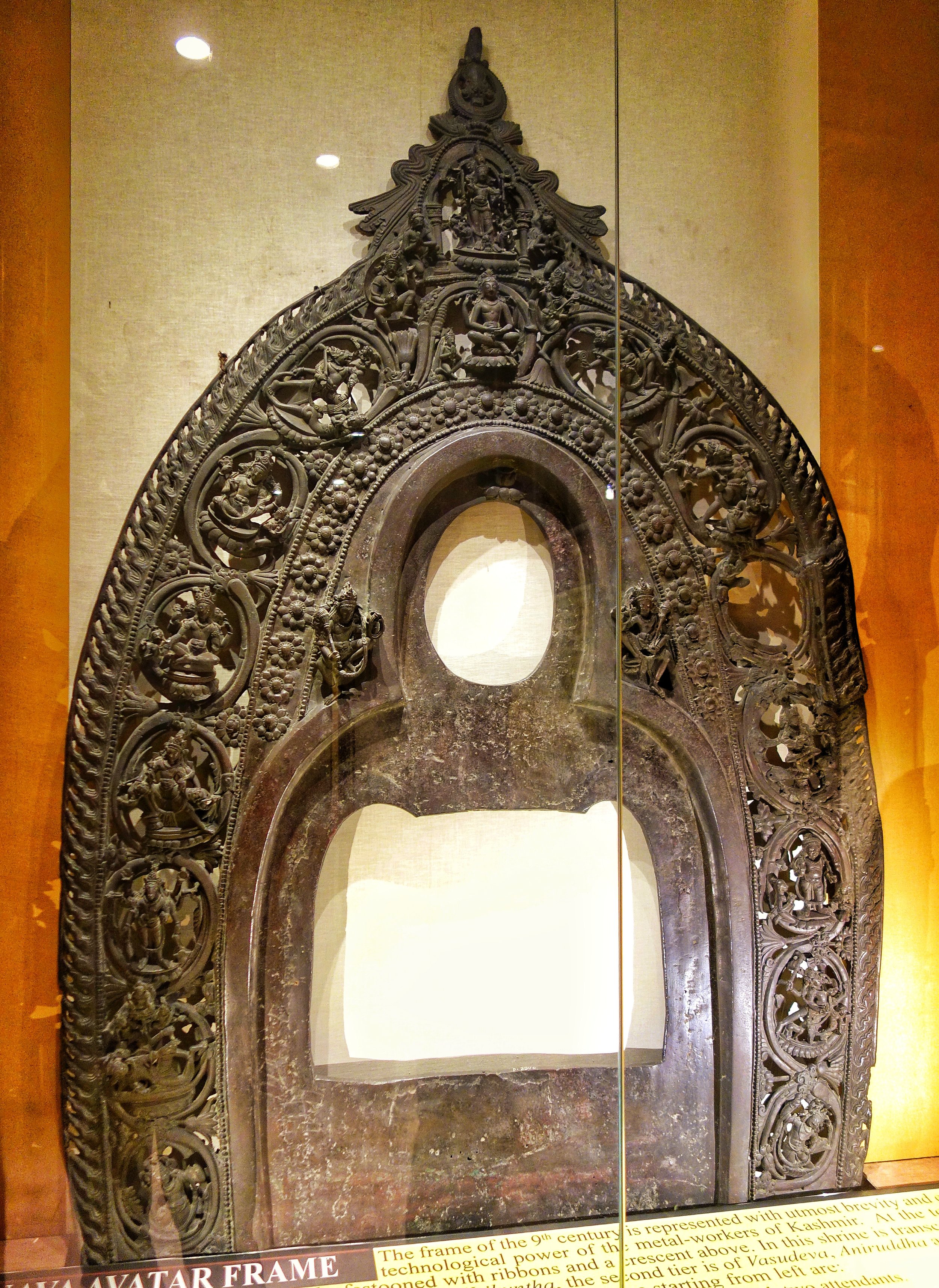
One of the most priceless treasures on display is a 9th Century metal “Vaishnava Avatar” frame which is a Prabhavali of bronze metal alloy measuring 6’4″ in height and 4′ wide and 1’2″ thick weighing almost 100 kgs excavated from Devsara. As the name suggests it shows various Avatars of Vishnu. Devsara, which is in Kulgam district had been in the past a great center for the casting of Bronze images and other metal works.
The 9th Century Vaishnava Avatar
One of the most priceless treasures on display is a 9th Century metal “Vaishnava Avatar” frame which is a Prabhavali of bronze metal alloy measuring 6’4″ in height and 4′ wide and 1’2″ thick weighing almost 100 kgs excavated from Devsara. As the name suggests it shows various Avatars of Vishnu. Devsara, which is in Kulgam district had been in the past a great center for the casting of Bronze images and other metal works. Many of the bronze/ metal sculptures found here have unfortunately gone missing as they were simply taken away in the olden times as metal was always in high demand.
This masterpiece was discovered in 1931 and it is dated to the period of Shankar Varman. Each of the deity cast on it has great detailing and as such is a brilliant example of Kashmiri metal craftsmanship of that period. Fortunately this great piece of art along
with another bronze sculpture of Lord Buddha along with a few coins made it to the Museum from the Devsara site. This sculpture is one of its kind in Kashmir and maybe India as well and is rated one of the most significant archaeological find in the Indian sub-continent.
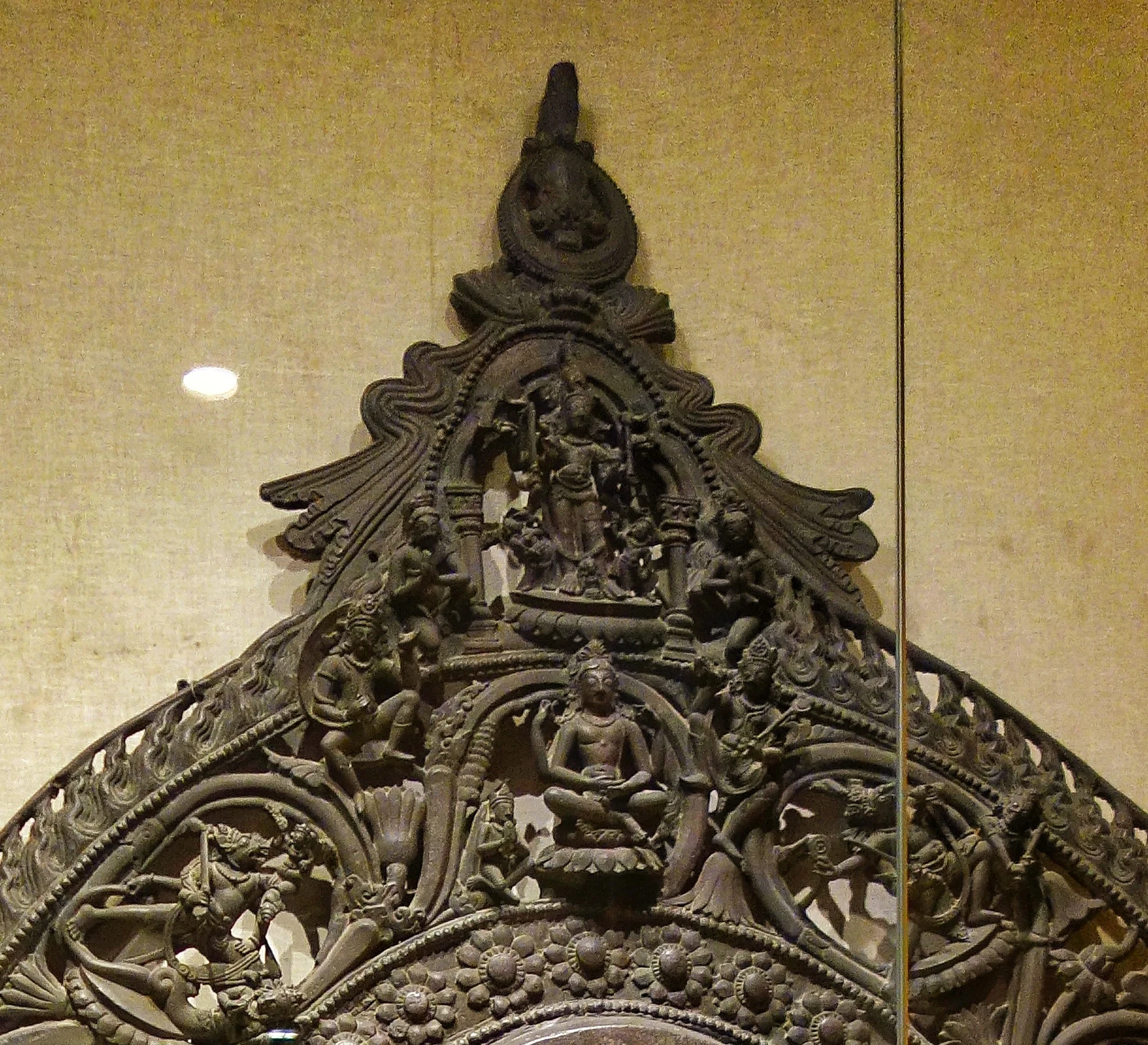
The board at the Museum describes it as such : The frame of the 9th century is represented with utmost brevity and exhibits the technological power of the metal workers of Kashmir. At the top of the frame has a pillared shrine surmounted with amalaka festooned with ribbons and a crescent above. I this shrine is transcendental form of seven headed and ten armed Vishnu – the lower tier is of Vaikuntha, the second tier is of Vasudeva, Aniruddha and Samkarsana. And at the apex is Hayagriva, the horse head.The other 15 figurines in the frame starting from the left are (with pics of that area) :
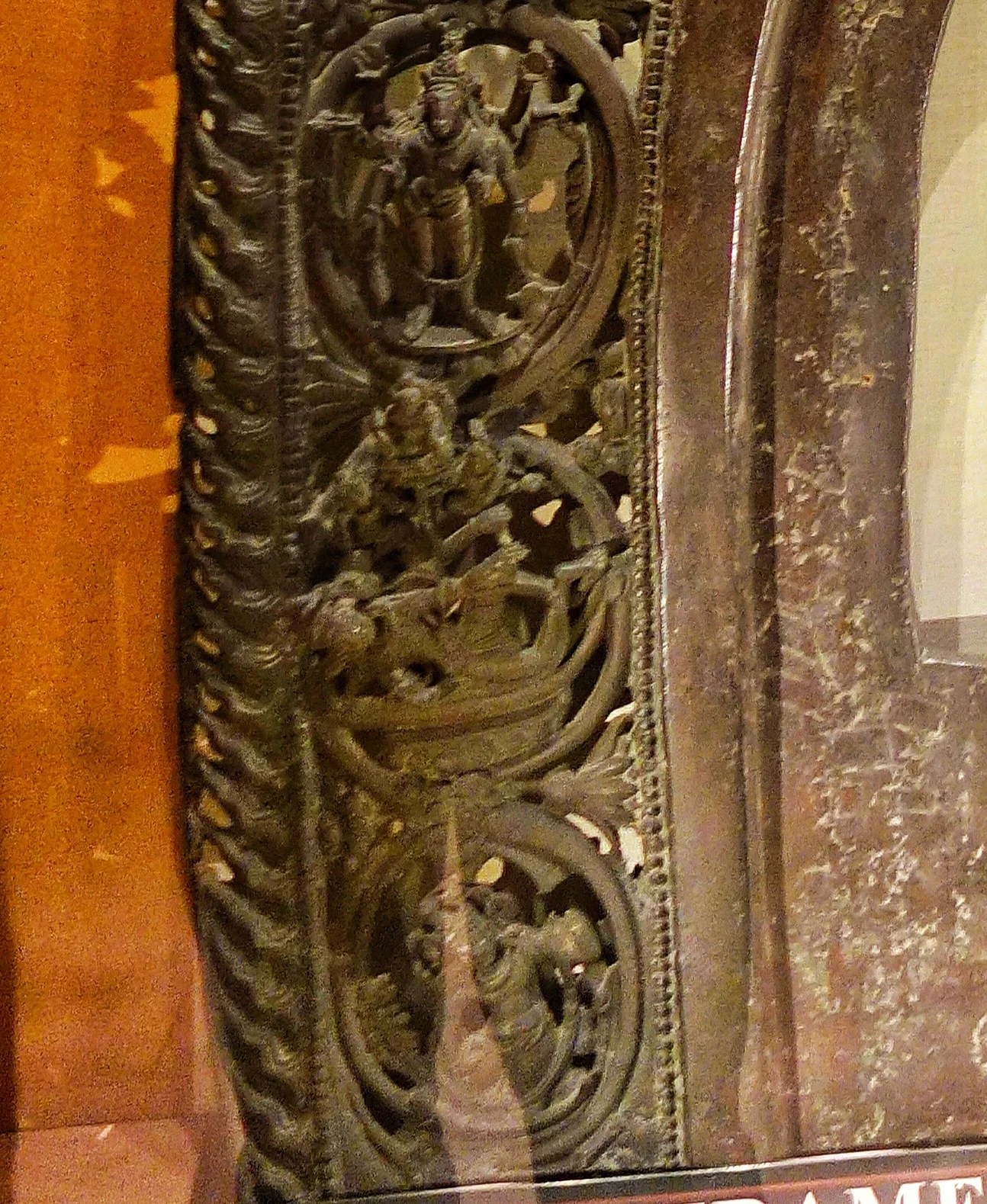
1. Nagaraja donor with seven headed serpent canopy.
2. Sesasayi Vishnu on serpent Sesa with Brahma seated on lotus the stem of which arises out of his navel, with accompanying pair figures of Madhu and Kaithaba.
3. Hayagriva, six armed of which upper two hold sun and moon symbols.
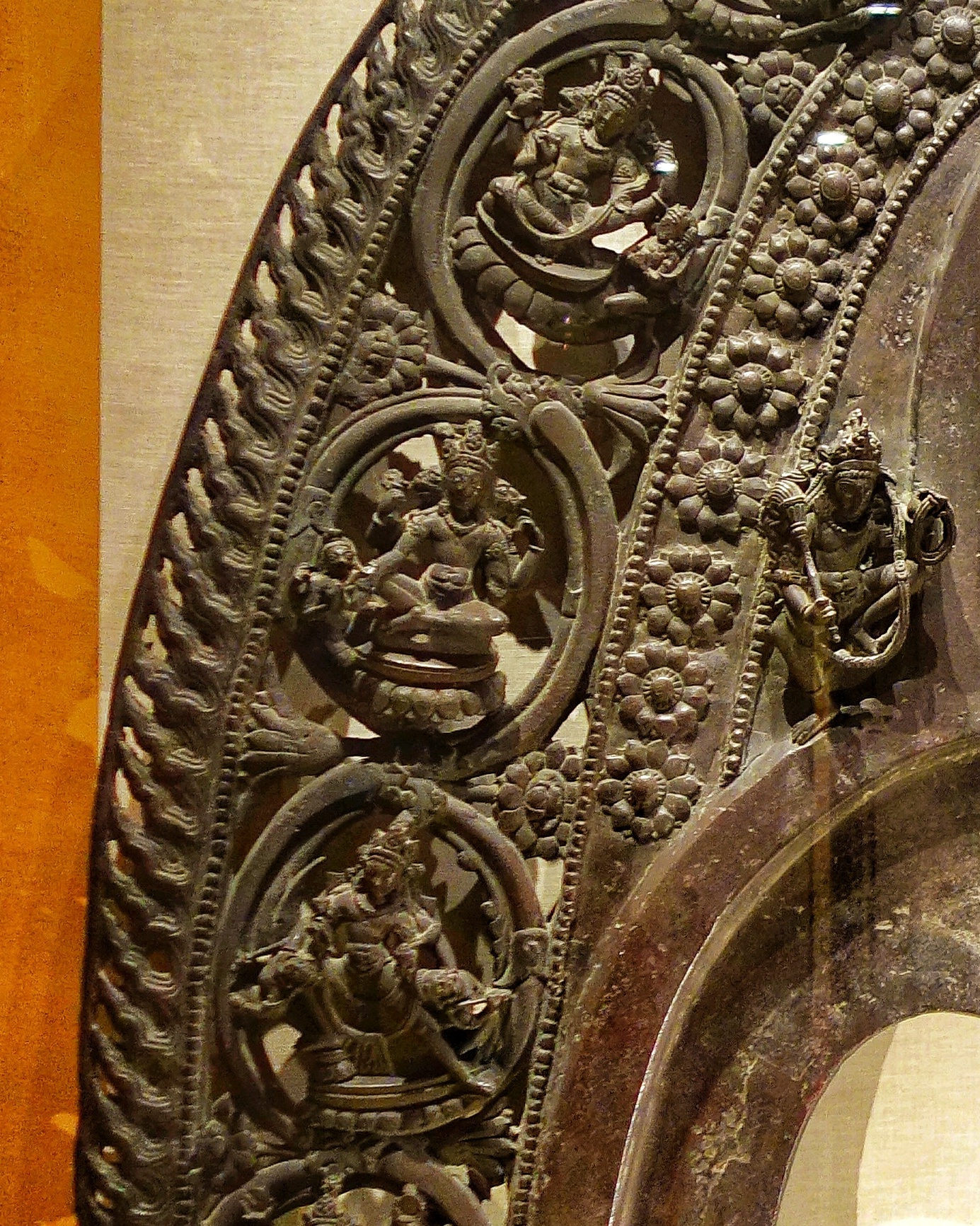
4. Vishnu killing Madhu and Kaithaba.
5. Three headed Vishnu with kneeling four armed Brahma on left.
6. Three headed seated Vishnu with kneeling Lakshmi on right.
7. Bhuvaraha standing on the coils of serpent Adisesa and raising Goddess balanced on his left arm.
8. Vishnu in yogasana with two attendants.
9. Varaha killing Hiranyaksa.
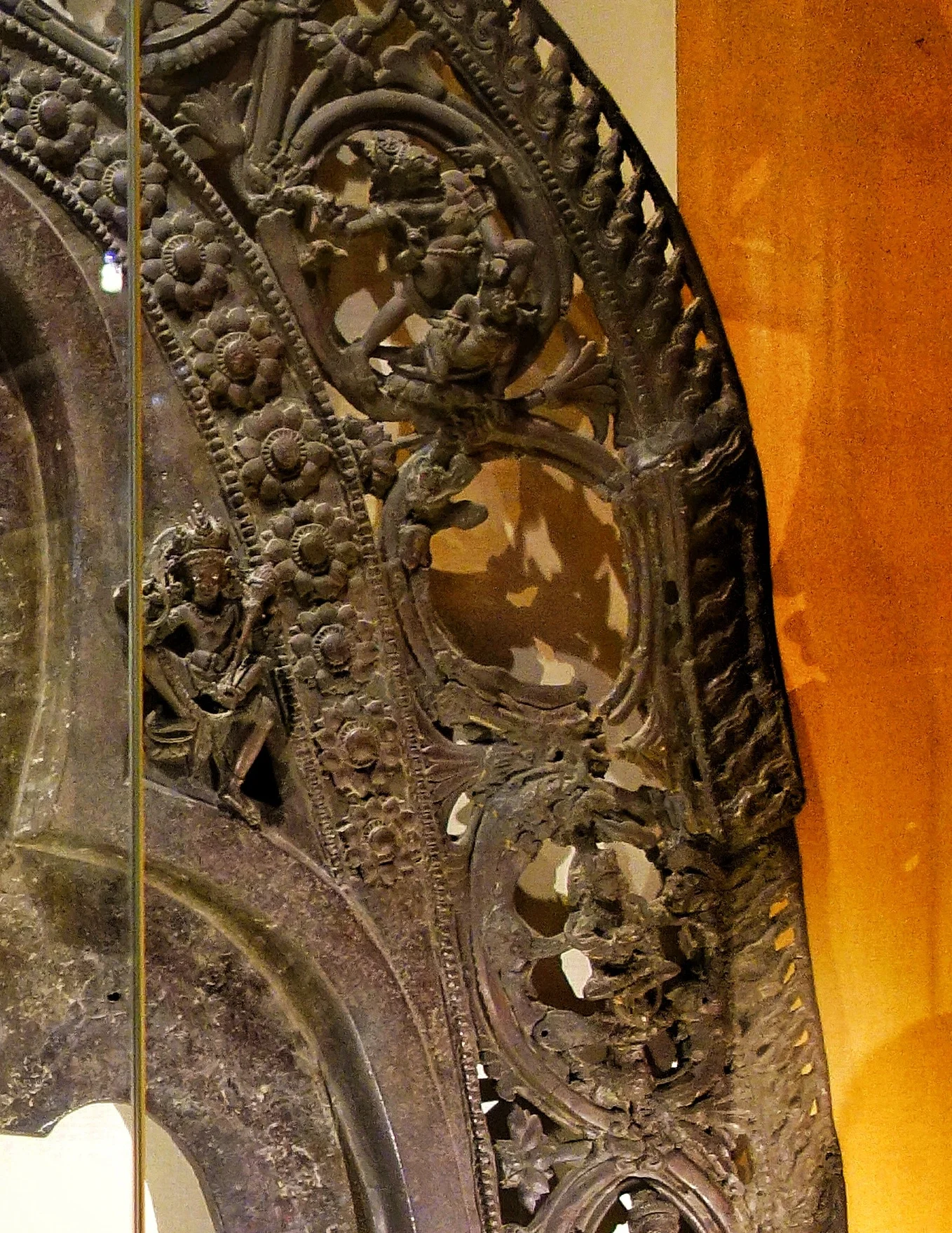
10. Narsimha killing Hiranyakasipu.
11. Missing figure.
12. Missing figure; later replacement of indeterminate form.
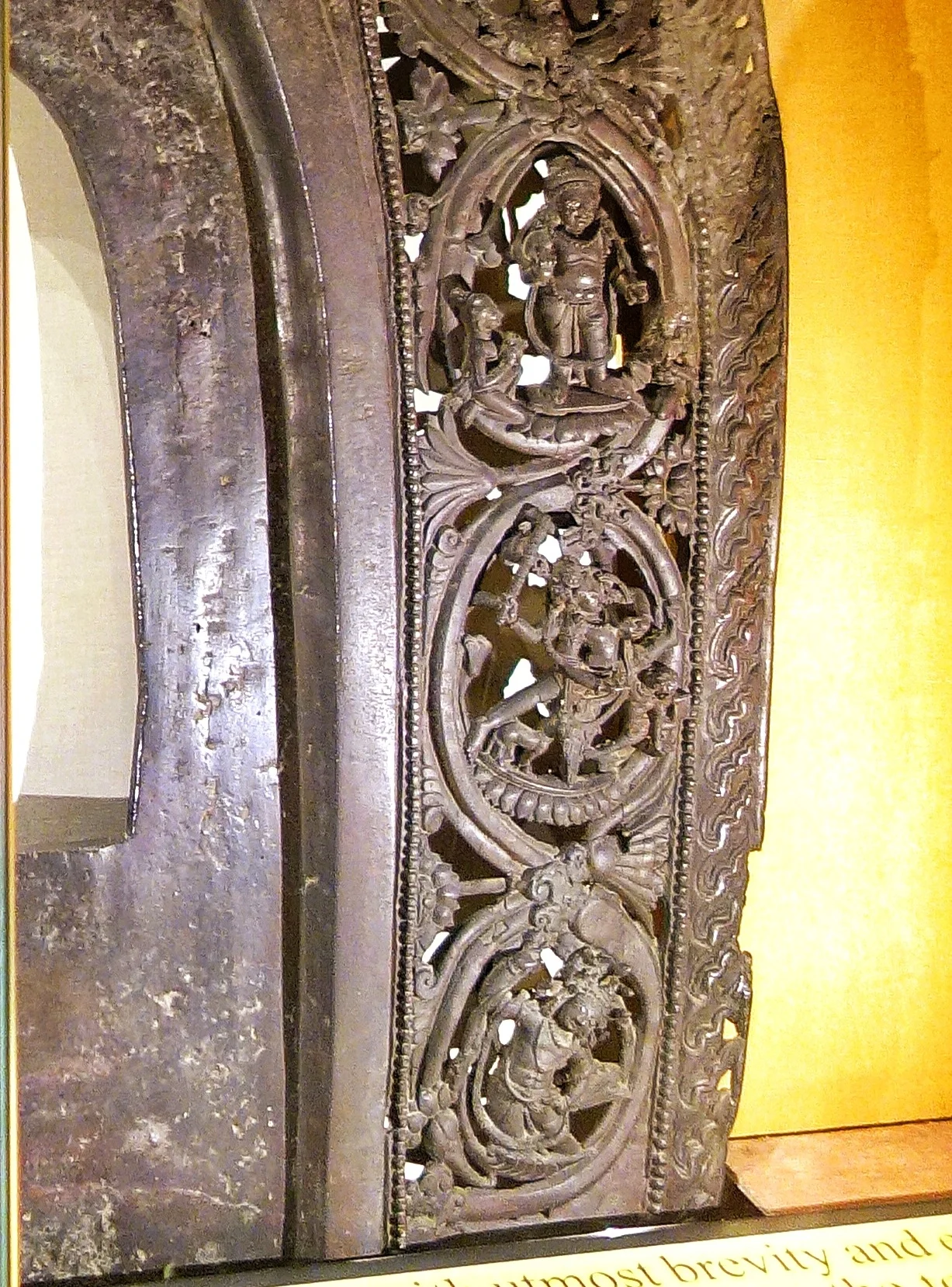
13. Vamna with kneeling figure of Bali holding libation pot and his Queen has veiled hair.
14. Trivikrama striding over Bali with diminutive Horse.
15. Nagaraja donor with seven headed serpent canopy.
Kiki’s Blog
Stories from the Himalayas
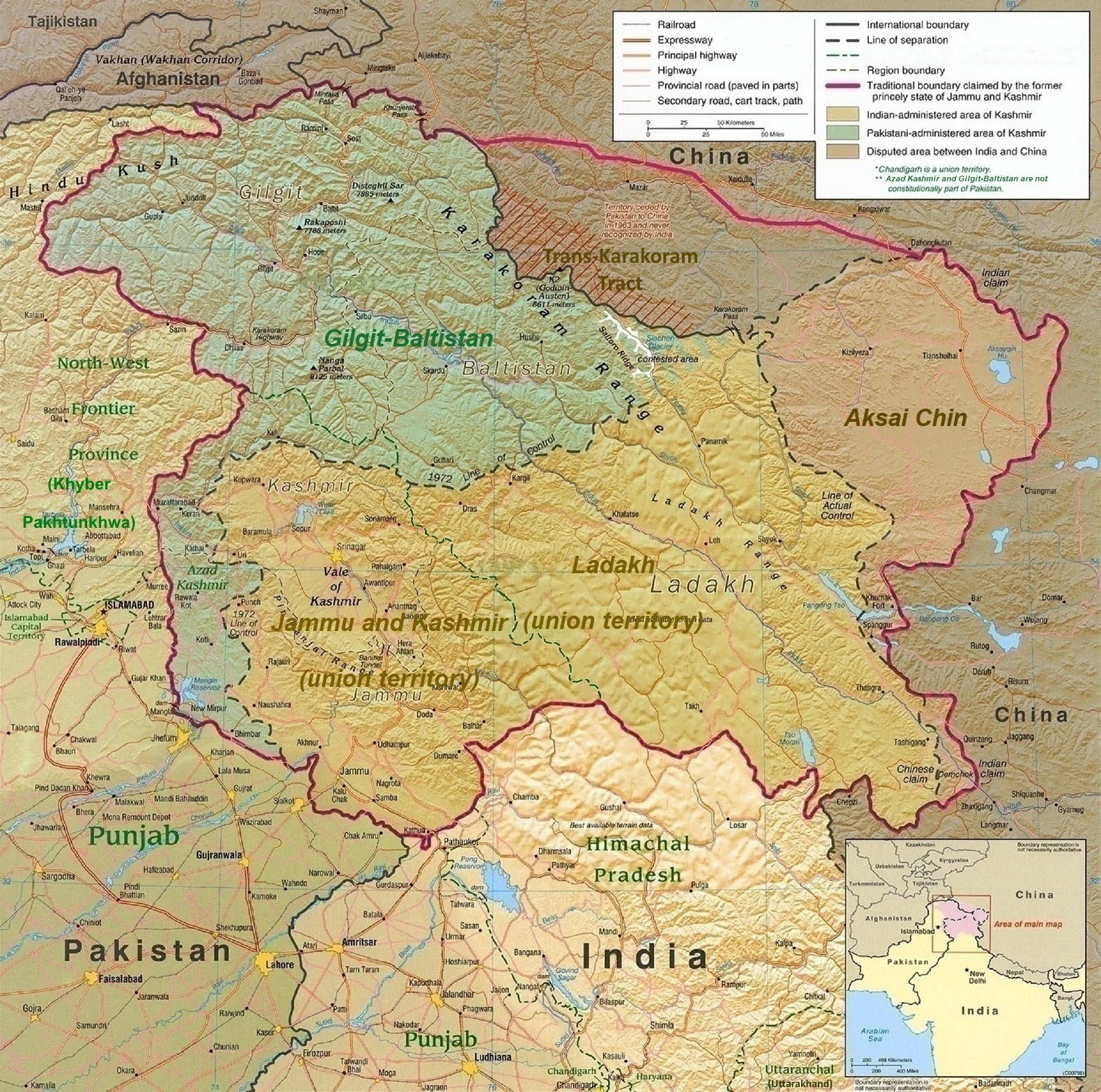
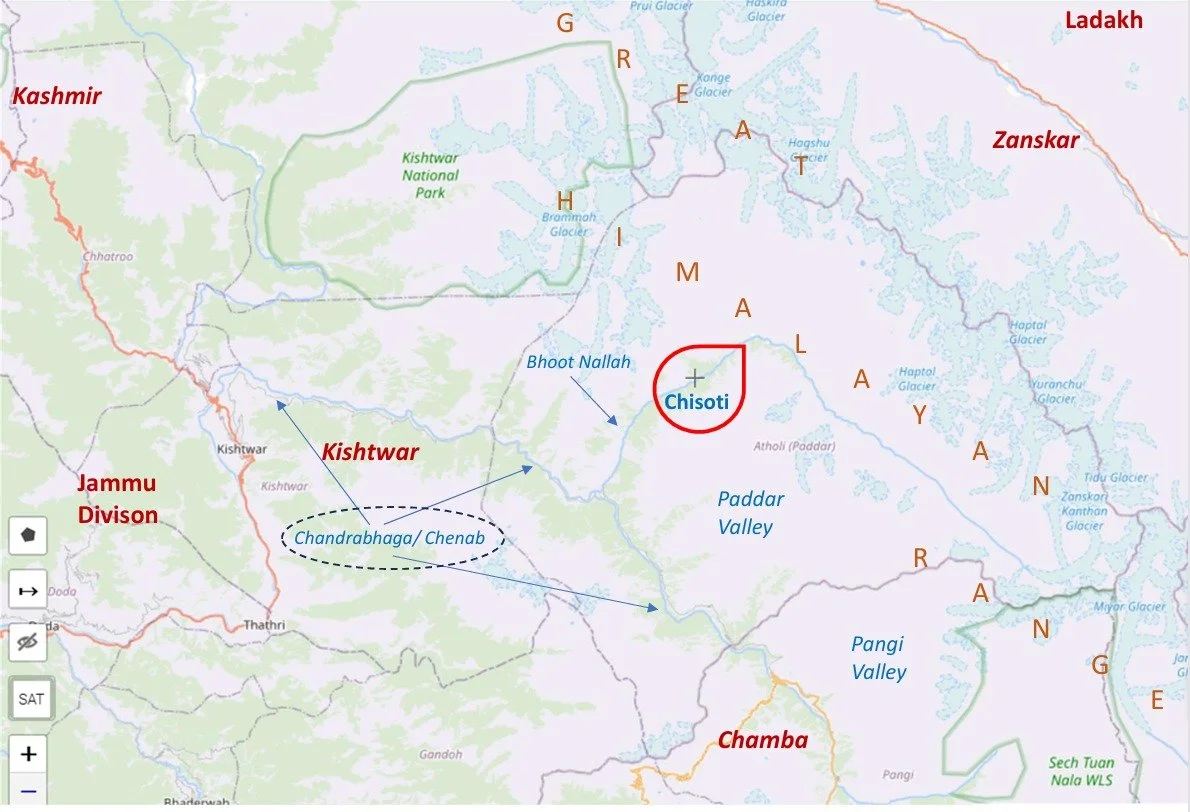



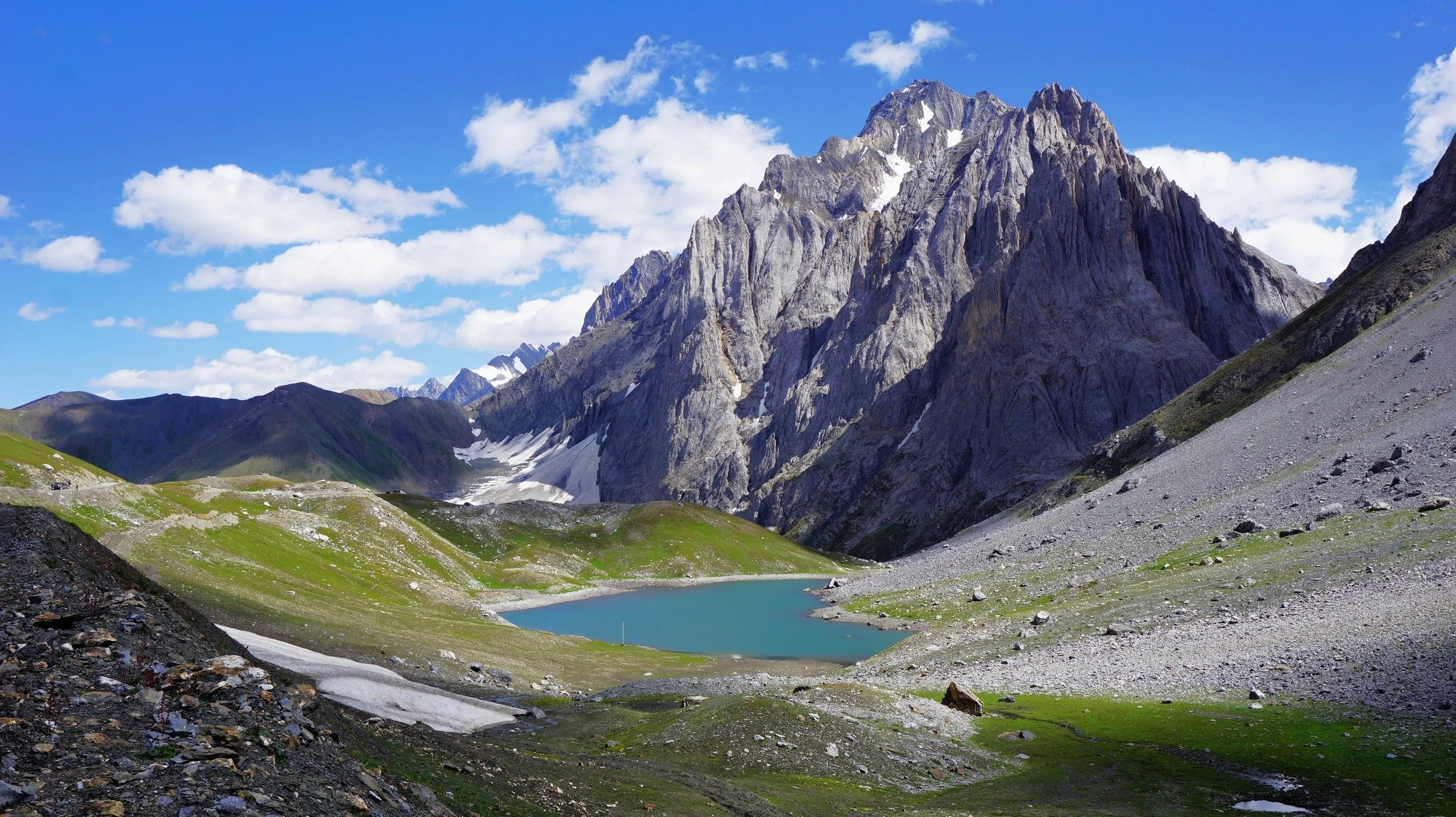
Five years ago the Galwan Valley was in the News for the wrong reasons after a deadly clash between the Indian and Chinese Armies in the Valley located in Ladakh lead to many deaths on the contentious Border between the two countries in wake of continued Chinese intrusions into Indian territory.
This area along the Shyok River, of which the Galwan Nallah or the Galwan River which forms the Galwan Valley has been off limits to Civilians since long but now the Indian Government has decided to open up the area for Civilians and we were amongst the First Civilians to venture into this beautifully desolate part of the Eastern Karakorams in Ladakh. Earlier Civilians could only venture upto the Village of Shyok from where the Shyok River takes a U turn and flows in a Northerly direction.