
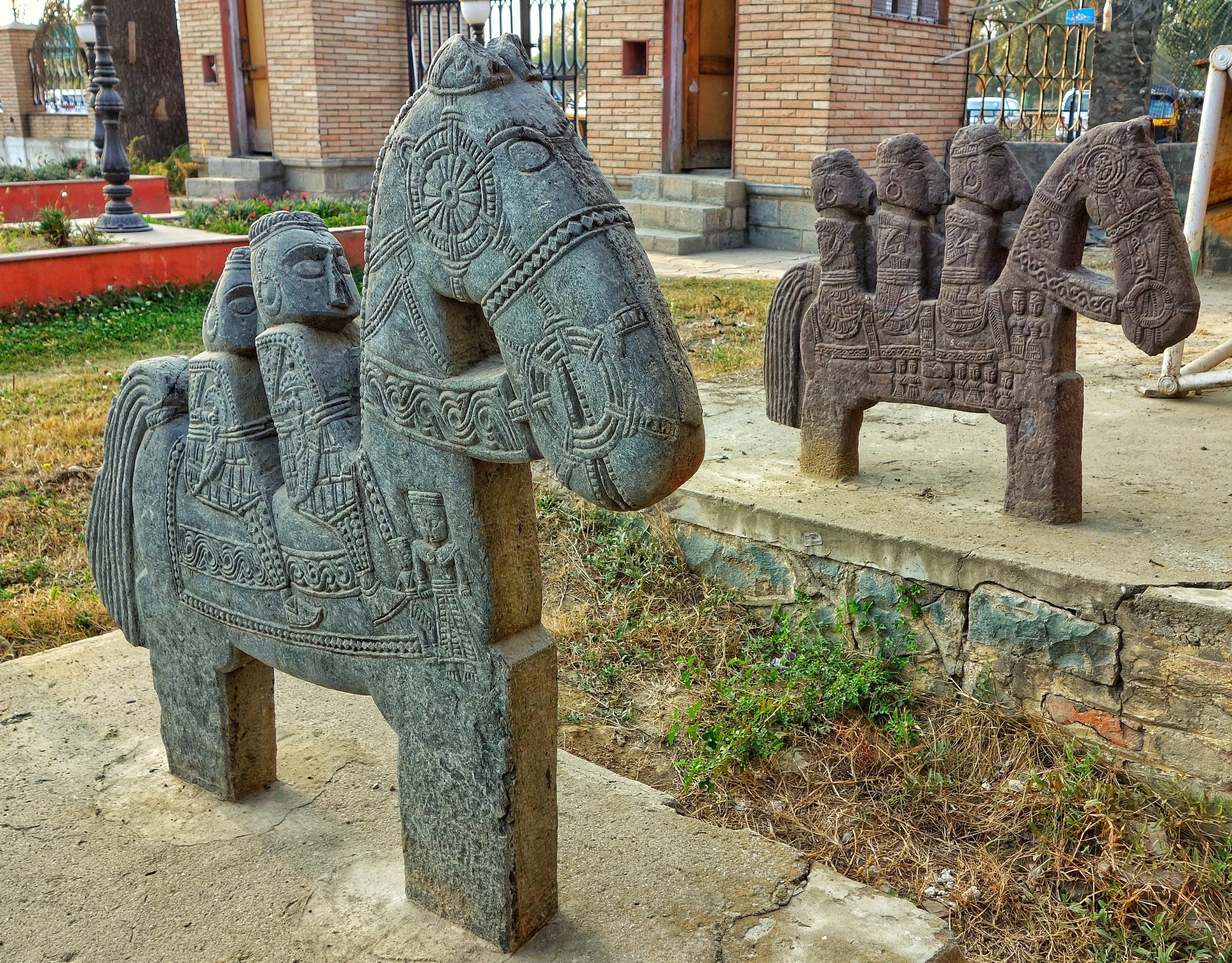
The Horsemen of the Pir Panjals
The mysterious Warrior Horsemen of the Pir Panjals. These group of Horsemen sculptures exist at a number of places in the Pir Panjals and till today no one has been able to explain why these were built or who built them or even when they were built. A true Himalayan heritage.

Horsemen of the Pir Panjals

The Horsemen and the man-made points around the natural springs
The Horsemen of the Pir Panjal are a group of rock sculptures and reliefs found at similar locations at the foot of the “Galis” or on the main Gali itself. The sculptures are mostly of Horsemen along with some other reliefs of what seem to be local Gods and Devtas. And they usually have a natural water spring nearby and an accompanying pond. Few of the people who have studied these amazing sculptures agree that these were strategic locations on ancient Routes that connected different villages in the Pir Panjals. These probably served as resting areas after a particular Gali was crossed and the men as well as the horses could then refresh themselves. And they probably served a navigational purpose on the Routes that they are found on.
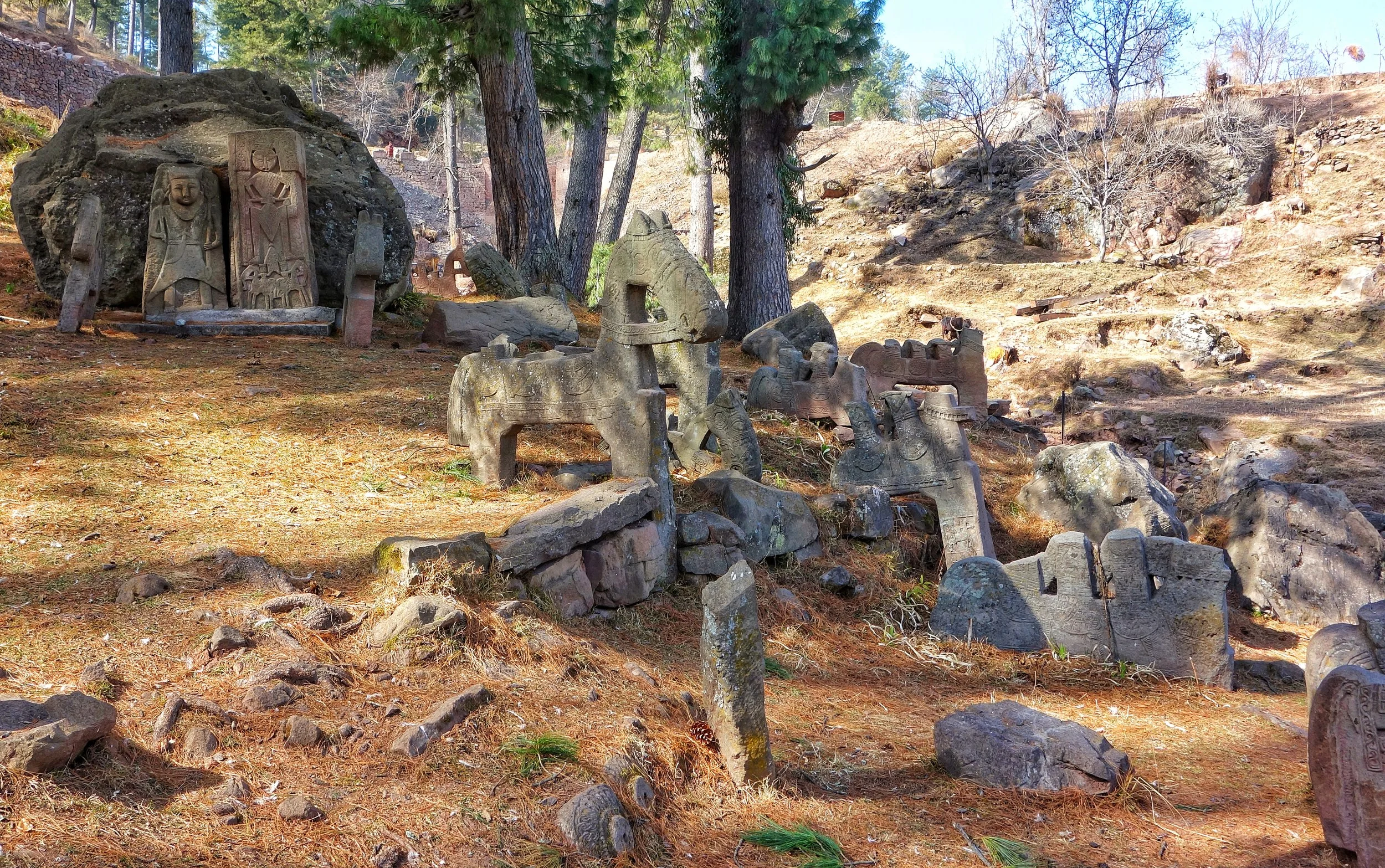
The Horsemen with reliefs of local gods in the background
In the Jammu region these are found in the Ramban area of Jammu on the Sangaldan Gool road near Gool Village and also at Gadi Nalla and Nar area of Tehsil Gool and Sildhar area of district Reasi near Mahore. This area is also referred to as the Gool Gulabgarh area. This area lies at the point where the Jammu Region gives way to the Kashmir region and as a consequence has a mixed population of Dogri, Gujri and Kashmiri speaking people. Out of these locations only the first one is accessible by a Road while the others require to hike up in the mountains to these long forgotten sculptures. The one near the Gool Village is called the “Ghora Gali” which is an obvious reference to these Horse sculptures. There are said to many other such locations which dot the mountain landscape but no one is really sure of how many locations.
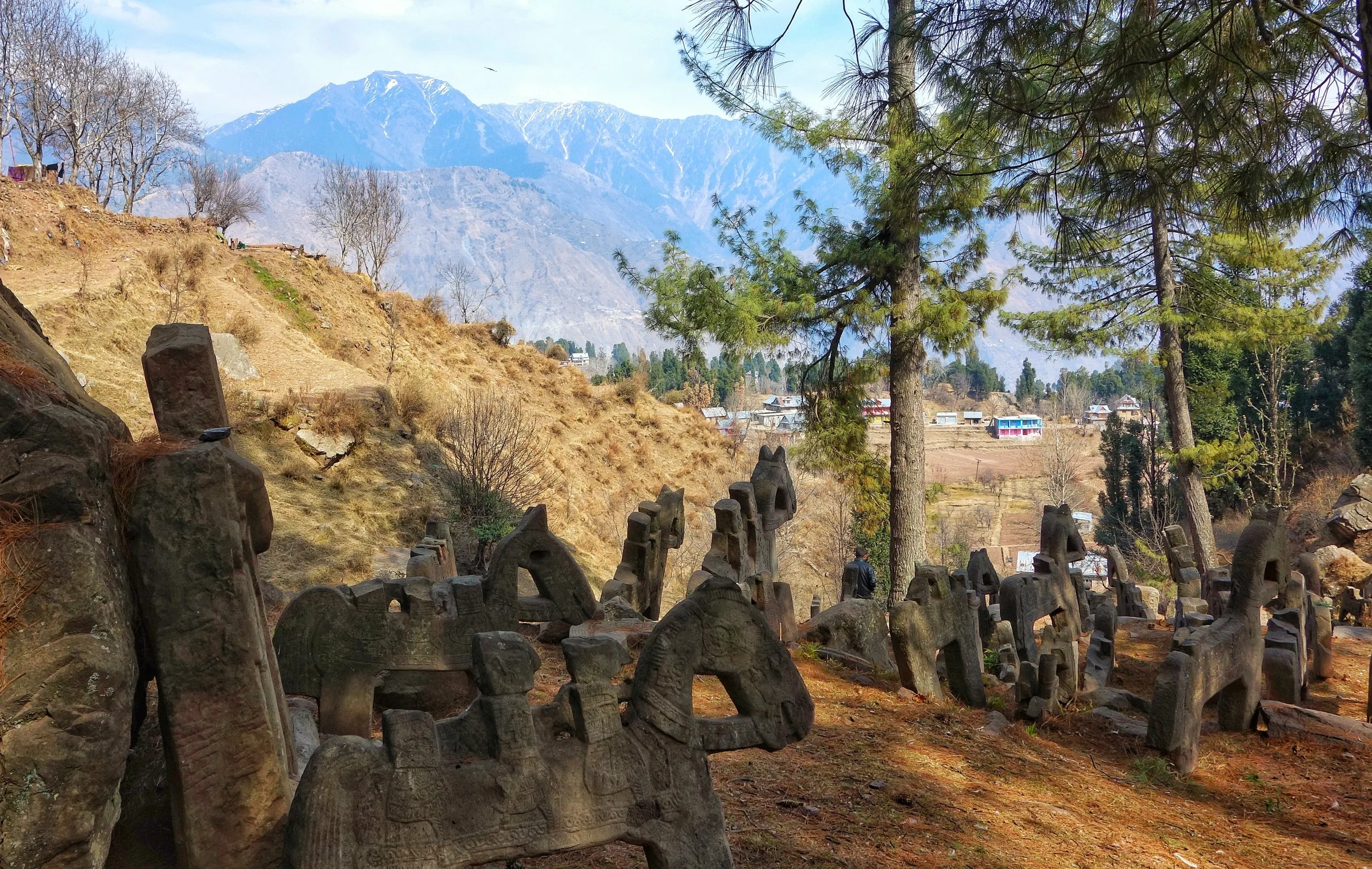
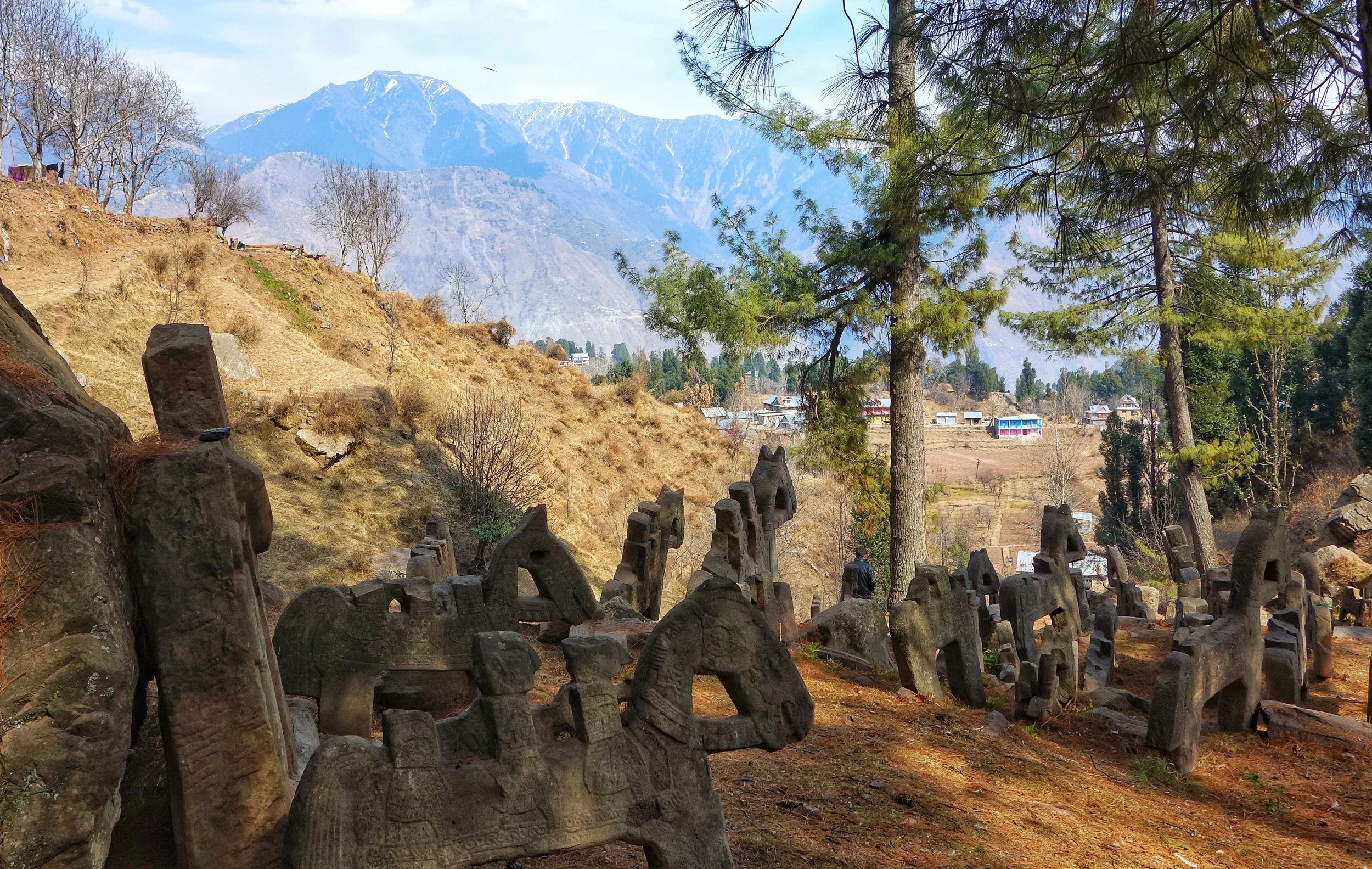
At the top of Ghora Gali, overlooking the scenic Gool area
The sculptures themselves show a great detail especially for the Horsemen.And these Horsemen came in different sizes even at the same site. There are sculptures in different sizes with one or two or even three people astride the horse. Interestingly all the Horsemen appear to be armed and carry different kinds of weapons as were prevalent in the day and age these were erected. They appear to be some kind of warriors of an Army on a campaign and these structures are representations of that. Also there are a a few reliefs showing local deities and geometrical figures but overall its the Horsemen who overwhelmingly dominate these sites.
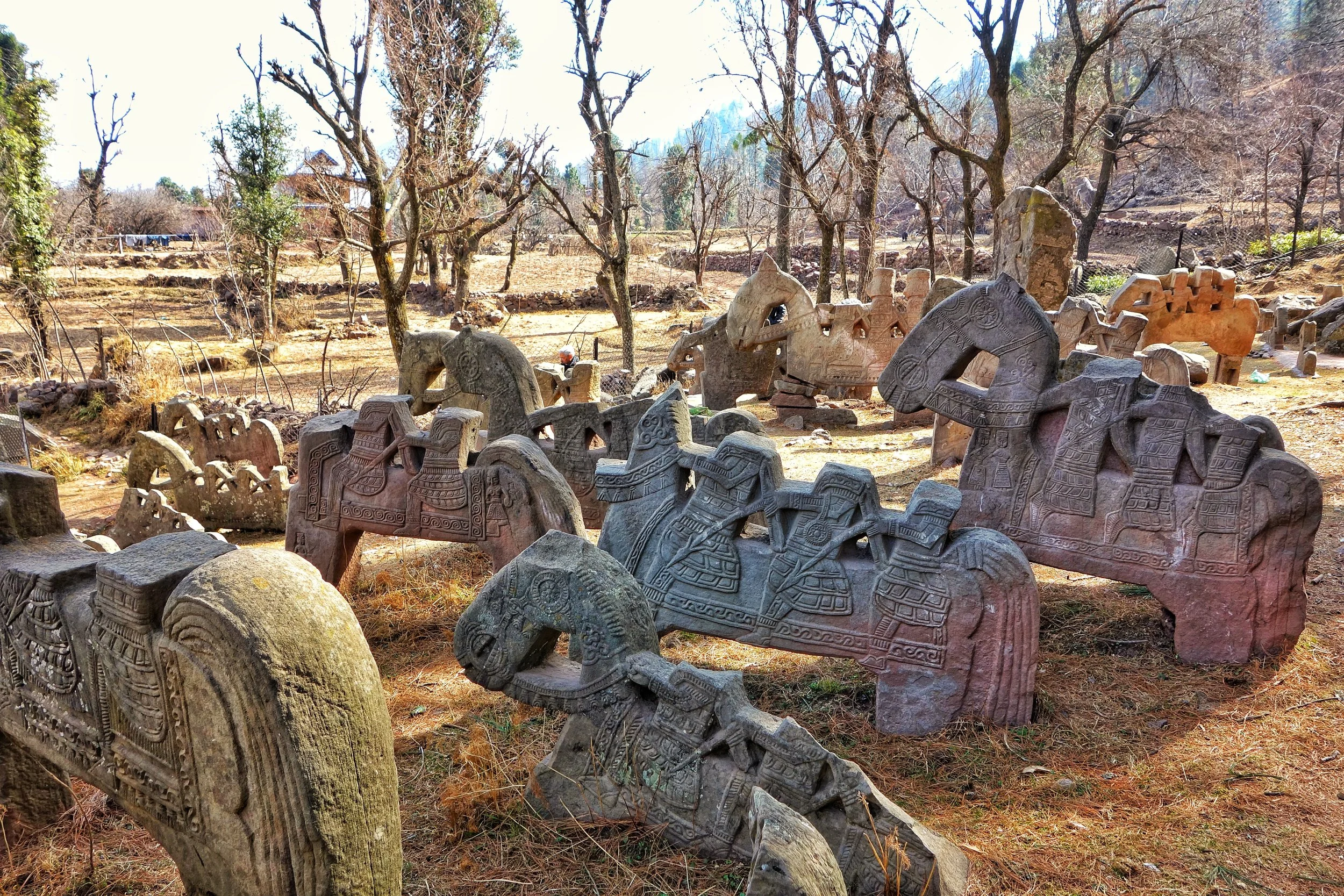
The Horsemen are in different sizes and configurations
As per the local folklore these Horsemen were sculpted by the Pandavas themselves during the time of their exile as they were purported to have spent some time in this area. That’s as far as the legend goes. These were sculpted by the local people themselves as per some sources. They seem to be more Bactrian inspired than Indic which is reflected in how the Horsemen are dressed and the styling of the arms they carry. Even the figures of the deities etched on the stone slabs have little resemblance to the contemporary deities. And the geometric figures just add another element of mystery. And then the whole mystery of when these great sculptures were created. The people who created these Sculptures reflect a very developed art of sculpting looking at the fine details that are shown in the Horsemen. Who exactly were these local people and under what influence were these created and why so many Horsemen ?
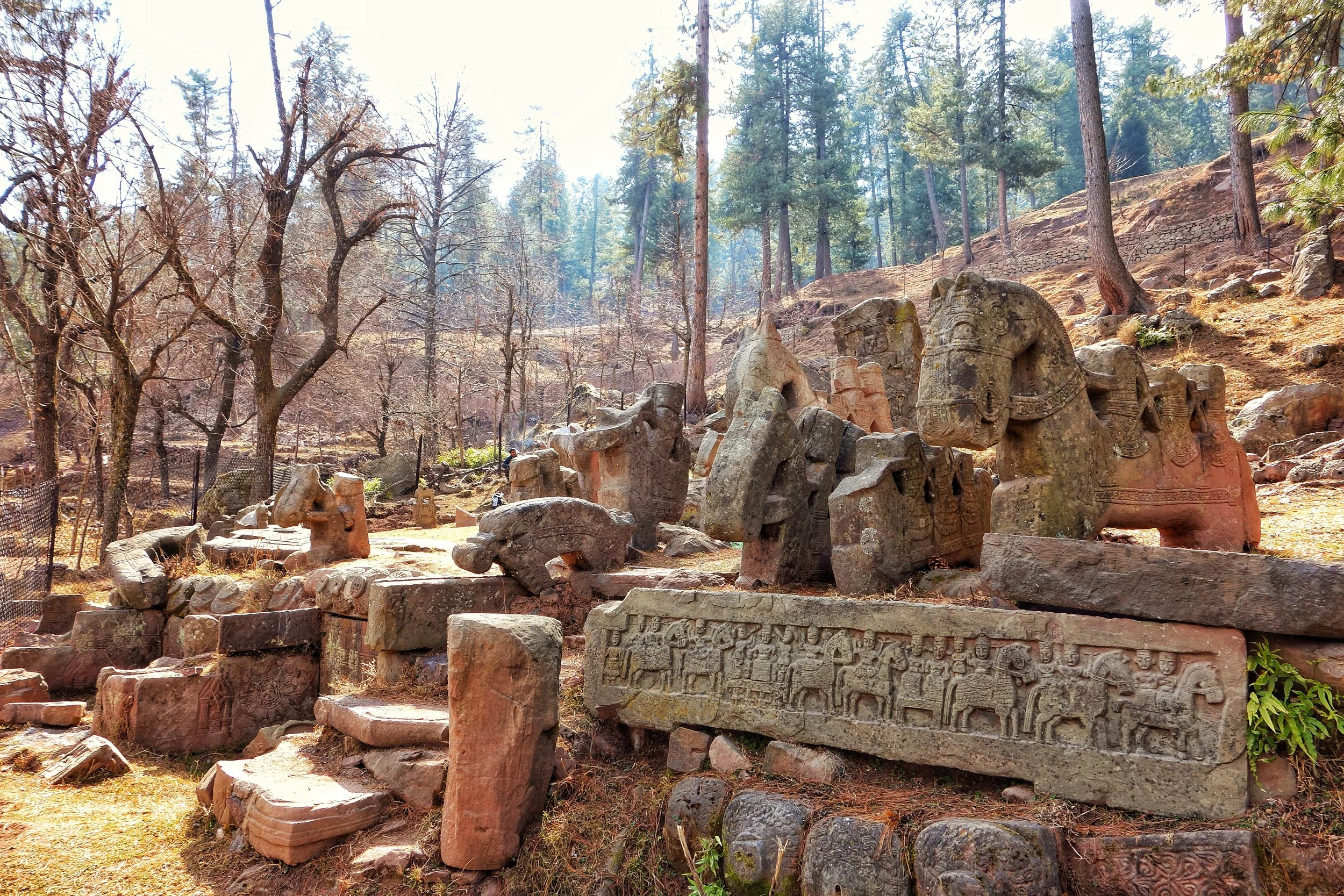
The reliefs of Horsemen can also be seen on the base
As per Indic traditions of that time it was usually a small Temple or sculpture of the contemporary Hindu Gods at that time that adorned such Mountain passes and along the tracks along the mountains. But the fact that these sites contain mostly these finely sculpted Horsemen should hold some significance. And no such Horsemen sculptures exist anywhere else in the Indian subcontinent except this region. Maybe it points to these being created by an Army of Horsemen from outside, from one of those cultures which held the Horsemen in great reverence, again a reference to a link to Central Asia. Maybe they came in settled here for a while on a campaign and then got assimilated in the local population or they just left and this is the only visible clue that they left behind.
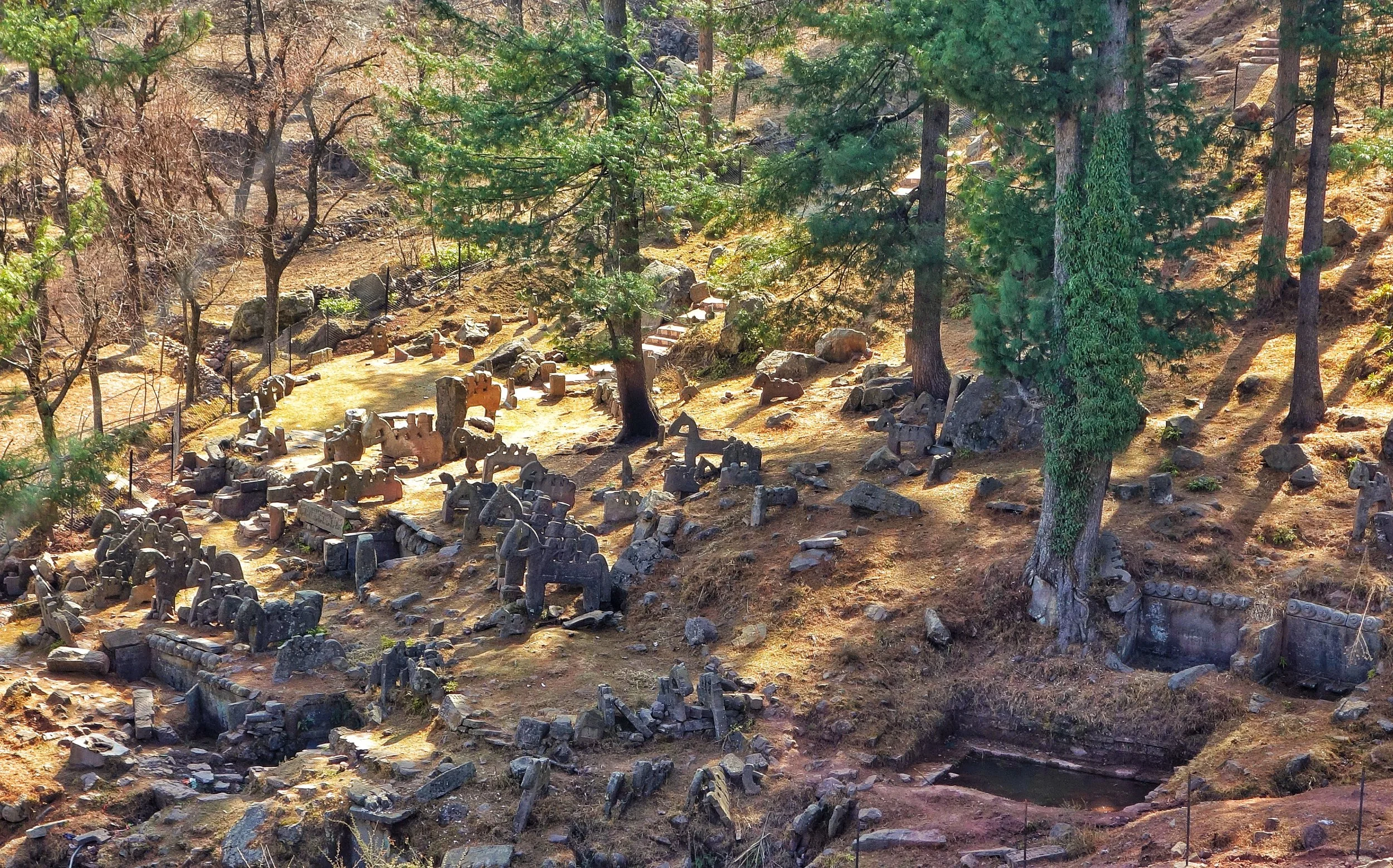
Overview of the site from the Gool Sangaldan Road
At the Ghora Gali site itself I counted well over a 200 Horsemen in various sizes and conditions. Some still standing, some broken, some lying flat on the ground and still others which appeared to be buried. Further excavation of the site will probably reveal more of these Horsemen that have been completely buried over a period of time.
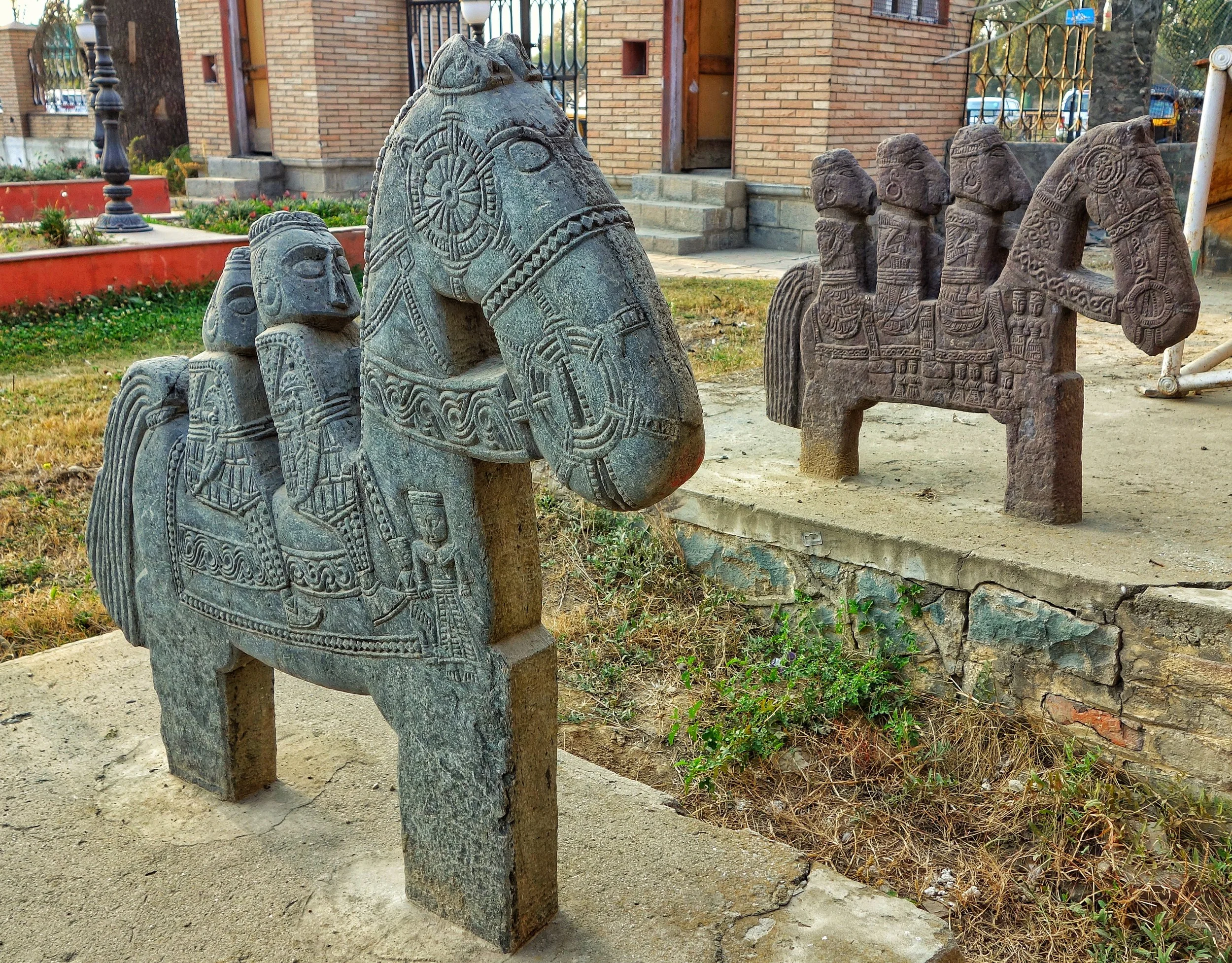
The specimen kept at the Shri Pratap Singh Museum, Srinagar
The lack of scientific research is the reason that all these questions mostly remain unanswered. On top of that these sites mostly lie neglected and many of the magnificent Horsemen sculptures have just fallen to the ground as the locations where they are at usually receive a lot of rain and snow. Astoundingly on the Ghora Gali site itself there was no board of the ASI and these sculptures are not even listed on the ASi site. The state Directorate of Archives, Archaeology and Museums had however listed this as a protected site in 1986. In fact three of these Horsemen were taken and put on display at the Shri Pratap Singh Museum in Srinagar. While speaking to an official at the Museum about these Horsemen even he replied that these showed remarkable Bactrian/ Greek influence but more research has to go into these as to establish the facts.
A semi frozen pond on the site fed by a natural spring
As of today even the Ghora Gali site, which lies right on the Roadhead the picture is of neglect. More and more of these Horsemen are falling over and getting destroyed. Though it seems that now there is some work being done on fencing off the site to keep the grazing livestock off the site. There is also talk of the Tourism Department promoting the site as a Tourist spot in the coming time along with other tourist destinations in the area like the Hot Springs at Tatapani. Hopefully with more people coming to visit these wonderful sculptures would get the attention that they deserve. With the attention will come further research into these Sculptures and the sites associated with them and finally we might get definitive answers on the Horsemen of the Pir Panjals.

The Boali or Ponds fed by natural spring water
Original article here : https://www.livehistoryindia.com/cover-story/2018/03/18/the-mysterious-horsemen-of-the-pir-panjal
Buzkashi
Buzkashi, which literally means"goat pulling" in Persian, probably originated in the wilds of Central Asia in the days of the Central Asian Horse empires. Its is still played in that nursery of the feared Mongols, the fore bearers of all the Turkic tribes, in the Altai Mountains of Mongolia. It is said that the Great Khan himself, Genghis Khan made this game up as an exercise to strengthen the legs of his soldiers for war.

The Game of the Steppes Horsemen : Buzkashi
I still remember the scene vividly, my favorite actor, Amitabh Bachan playing an Afghan in the film Khuda Gawah, engaging in a tribal game, Buzkashi as it was called. Of course then Bollywood came in and “Badshah Khan”, as his character is called falls in love with “Benazir” played by Sridevi when they are like almost at par in that Buzkashi contest. I dont really know how many of you remember that scene.
That image of of men on horses trying to take possession of what looked like a dead sheep and trying to throw it into a marked circle looked kinda primeval when played out on the big screen. The sport of Bushkazi, in simple terms entailed a number of horsemen trying to wrest the control of a sheep skin and trying to put it inside a marked circle in the center of the arena where it was held. It was usually a no holds barred contest where except using weapons everything else was pretty much allowed.
Buzkashi, which literally means"goat pulling" in Persian, probably originated in the wilds of Central Asia in the days of the Central Asian Horse empires. Its is still played in that nursery of the feared Mongols, the fore bearers of all the Turkic tribes, in the Altai Mountains of Mongolia. It is said that the Great Khan himself, Genghis Khan made this game up as an exercise to strengthen the legs of his soldiers for war.
As mentioned Buzkashi begun among the nomadic Turkic peoples who came from farther north and east spreading westward from China and Mongolia between the 10th and 15th centuries in a centuries-long series of migrations that ended only in the 1930s. From Scythian times until recent decades, Buzkashi has remained a legacy of that bygone era.
Buzkashi is the name that this sport gets in Afghanistan and is considered the national sport of Afghanistan. Similar games are known as Kokpar, Kupkari and Ulak Tzartysh,in Kyrgyzstan and Kazakhstan and as Kökbörü and Gökbörü in Turkey, where it is played mainly by communities originally from Central Asia.
We can still imagine images of the Mongols playing a round of Buzkashi in between rounds of raiding and plundering the areas far beyond their ancestral steps. It also spread to their Turkic cousins and each of the Turkic tribes developed their own format and version of the game. It is still regarded a very masculine sport as it was in its earlier form played by the Soldiers in between battles and wars.
Sharing some pics of this sport. Think of it as a wild form of Polo :)
Pic from the Internet for educational purposes. In case you own a copyright to this pic and want it removed please let ,e know and I will immediately remove it.
Pic is from Kabul, Afghanistan. In the winters.
Kiki’s Blog
Stories from the Himalayas
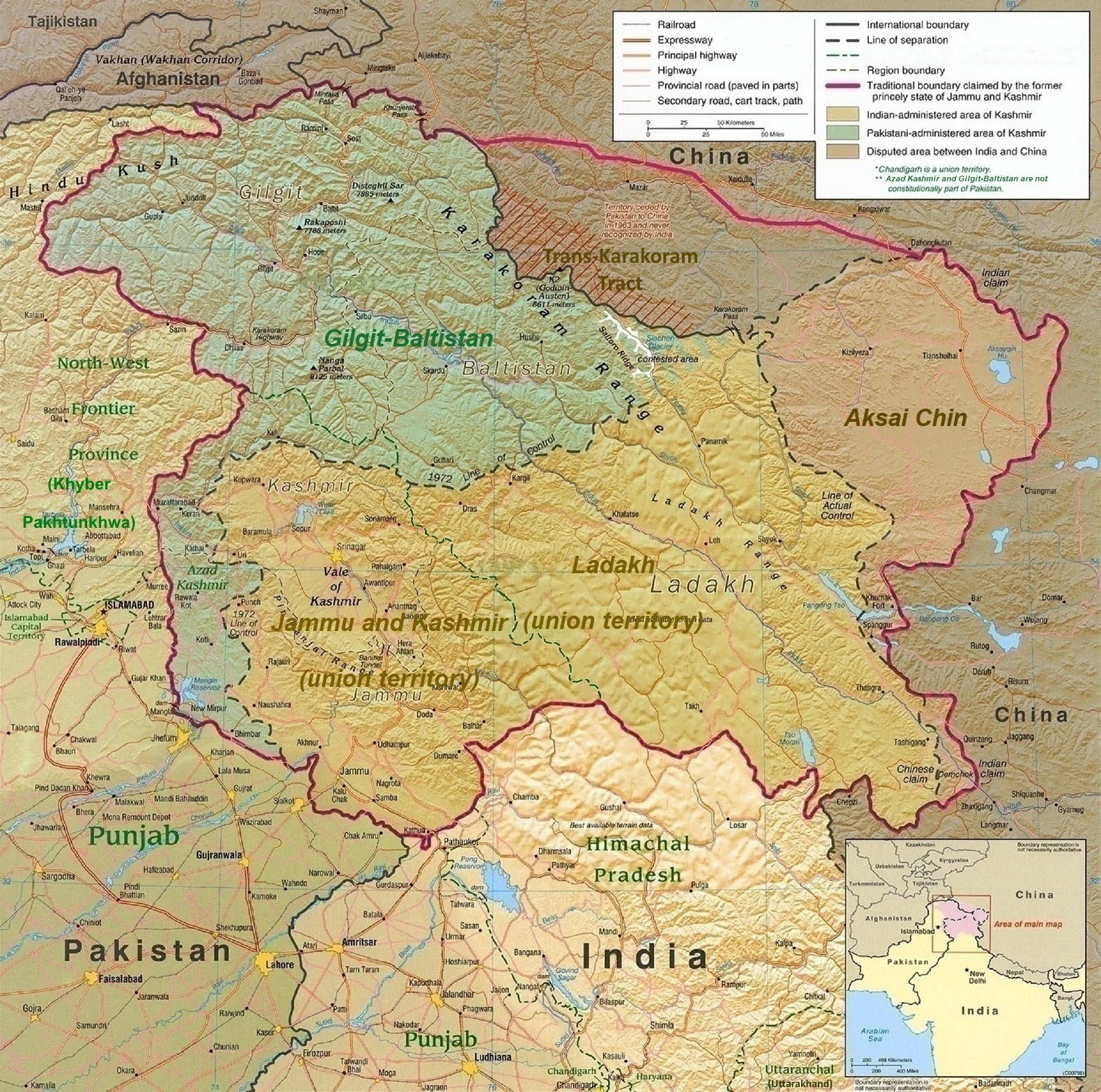



Five years ago the Galwan Valley was in the News for the wrong reasons after a deadly clash between the Indian and Chinese Armies in the Valley located in Ladakh lead to many deaths on the contentious Border between the two countries in wake of continued Chinese intrusions into Indian territory.
This area along the Shyok River, of which the Galwan Nallah or the Galwan River which forms the Galwan Valley has been off limits to Civilians since long but now the Indian Government has decided to open up the area for Civilians and we were amongst the First Civilians to venture into this beautifully desolate part of the Eastern Karakorams in Ladakh. Earlier Civilians could only venture upto the Village of Shyok from where the Shyok River takes a U turn and flows in a Northerly direction.