
Kashmir and Tibet : The Forgotten Past
Kashmir has over the ages has had a great influence on Tibet in the area of Religion and allied Religious Iconry. Infact Mahayana Buddhism traveled to Tibet from Kashmir via Central Asia after the Fourth Buddhist Council in Kashmir. A large number of artisans and craftsmen were taken from Kashmir to Tibet to decorate the Monasteries as well.

Kashmiri Cultural Influence on Tibet
Last year the Himalayan Club sent a request to His Holiness The Dalai Lama asking him for a private audience for the members of the Himalayan Club. And His Holiness decided to give a private audience last year in April. A Group of members of the Himalayan Club along with family members went for the same to McLeodganj. I alongwith my wife and little baby daughter also went along the delegation.
We had the audience, and though I am not a religious person, I really like listening to His Holiness as what he speaks makes sense to me. And hearing him in person at his residence was quite an experience. After His Holiness finished his talk we all went to get blessings from him and a photo op. I wanted him to bless my daughter and I had a brief exchange with him wherein I told him that I am from Kashmir. He smiled and told me that many Tibetan monks used to go to Kashmir to gain knowledge and there is an old relationship between Kashmir and Tibet.

A Crowned Buddha from Kashmir
Of course I have been trying to dig up some of the relics of Kashmir’s Buddhist past which included the Monastery at Harwan, where the 4th Buddhist Council was held in the first Century as well as the Gilgit Manuscripts, which is the oldest manuscript found in the Indian sub-continent and one of the most sacred Buddhist scripture ever discovered (I have covered both of these in previous Posts).
But as my search continued that it wasn’t just Buddhism that went to Tibet from Kashmir. It went much further than that. A whole bunch of scholars and craftsmen from Kashmir went to Tibet as a part of this cultural exchange. This included the best craftsmen and sculptors. There is a great similarity between all the Buddhist iconography in Stone and Bronze made in Tibet with all such iconography found in Kashmir from the Buddhist era in Kashmir which started around the time of the Great Kushan Emperor, Kanishka in the first century till the time of Lalitaditya in the 8th century wherein slowly Buddhism started disappearing from Kashmir till it disappeared in the 12th century. The sculptors and craftsmen in Kashmir shifted to Hindu iconography and making statutes of Vishnu and his Avatars. But their Buddhist tradition continued to thrive and evolve in distant Tibet. As an example I present to you two Bronze statues of the Tara. The one on the left is a 9th century Tara from Kashmir and the one on the right is a White Tara from the 17th century from Tibet. In Spite of the geographical distance and a difference of almost 800 years the similarities are still quite uncanny.

A Reliquary Showing scenes from Buddha's life from Kashmir
There are records of Kashmiri craftsmen going to the ancient Kingdom of Guge in Central Tibet to decorate the Buddhist monasteries being built there. Tibetan Chronicles also mention that the great Tibetan scholar Rinchan Sangpo visited Kashmir thrice in order to take Kashmiri craftsmen to Tibet to re-organise Buddhist arts in Tibet. It is said that Rinchen built a Hundred and Fifty Temples in Tibet with the help of 75 Kashmiri craftsmen. The 16th century monk, Lama Taranath also records the great contribution of Kashmiri craftsmen to Tibetan painting and metal casting.
Kashmir being historically at the crossroads of great civilizations constituted a great melting pot with cultural influences from all over. Before its emergence as a strong Kingdom in the 8th century Kashmir was a part of the belt ranging from Southern Iran to Gandhara to Bacteria to Kashmir were a part of the great belt of Buddhism and such similar sculptures have been found all over Central Asia, Afghanistan, Pakistan, Kashmir and onwards to Tibet.But of course over a period of time Buddhism disappeared from all these areas and all the cultural traditions and Buddhist arts and crafts shifted to Tibet and a part of it to Mongolia as well.

Tara from Kashmir
Of course Buddhism in Tibet has evolved into its present form of Tibetan Buddhism over the age. But scratch and look under the surface and its a reflection of the tradition and culture that was followed by populations all over the Himalayas, the Karakoram and the Hindu Kush and further into Afghanistan and Southern Iran. Buddhist art in Tibet is a legacy from the past of all these regions and especially Kashmir. Looking at Tibetan Buddhist art now I see it as a mirror into the past showing the arts and crafts of our ancestors long forgotten in the land of their origin but still thriving in Tibet. Much like Buddhism itself.
As of today “Himalayan Art” as its called is considered Religious iconry art representing Hindu, Buddhist and Bon and the three main categories it is divided in are Tibet, Kashmir and Nepal. This is the wide classification of Himalayan Art and it wouldn’t surprise me if a link is found as to how Nepalese Art was also influenced by Kashmiri art coming in from Tibet.

Vajrasattva from Kashmir
Pic of Tara, also known as Arya Tara and Jetsun Dolma in Tibetan Buddhism, is a female Bodhisattva in Mahayana Buddhism who appears as a female Buddha in Vajrayana Buddhism. She is known as the Mother of Liberation and represents the virtues of success in works and achievements. She is originally supposed to have originated as a form of Goddess Durga and entered the Buddhist deity fold over a period of time.
Kashmir Tara pic from Shri Pratap Singh Museum, Srinagar and the Tibet Tara from the Shanghai Museum, Shanghai. Both pics from October 2017.
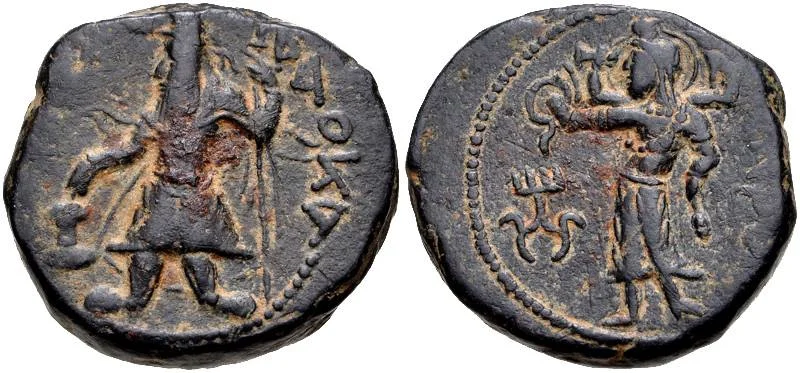
First Lord Shiva on an Indic Coin
The Kushanas issued several other different versions of the Coins featuring Lord Shiva as well including him holding a damru and a Trident. And with Nandi Bull in the background. The whole irony of the whole situation is the fact that the first coin featuring the most revered Hindu God was coined in Bagram in Afghanistan (more Central Asian than Indic) on the foothills of the Hindu Kush and by an Emperor whose origin was Central Asian and not Indic.

First Lord Shiva on an Indic Coin
Lord Shiva is probably the most revered and well known Gods of the Hindu trinity and in my view the maximum numbers of Temples in India are dedicated to Lord Shiva and his various Avatars and incarnations.
In the Himalayan context, its Shiva again considered the Lord of the Mountains. The Abode of Snow as the term Himalaya means in Sanskrit were also considered to be the Abode of Lord Shiva himself. The much revered Mount Kailash, the mythical abode of the Lord himself was located in the Trans Himalaya.
Besides Mount Kailash there are a number of different Mountains / Peaks in the whole Range that were connected with Lord Shiva. These include the Adi Kailash in the Kumaon Himalayas, the Kinnaur Kailash in the Kinnaur region of Himachal, the Shrikhand Mahadev in Himachal and the Chamba Kailash in Bharmour. Besides these there is the Mt.Haramukh in Kashmir considered the abode of Shiva as per the local beliefs.
But where is actually the oldest Hindu Temple and where is the oldest Shiva Temple ? I tried to find the answers but it was rather inconclusive with no firm answers. But one of the possible locations pointed out was a place called Surkh Kotal, a historical site related to the Kushans and the Great Emperor Kanishka himself, located near Pul E Khomri in the Baghlan Province in Northern Afghanistan in the foothills of the Hindu Kush Mountains. This region in the older times was called as Bactria, which was a great center of amalgamation of Greek, Iranian and Indian cultures and religious practices.
Of course for those of you in the know, the Kushanas were from Central Asia and had a large Empire and Kanishka was the Greatest King of the Kushanas who ruled a large Empire stretched from Central Asia to the Tarim Basin to Northern India and even Eastern India uptil Patliputra. Kanishka and the Kushana Empire was one of the most syncretic Empire ever seen and the most outstanding feature was their coinage which featured a large Pantheon of Gods from the Greeks, the Mesopotamian, the Avestan and Indic figures like Shiva and Buddha.
And the best part is that unlike most of the structures built by the Kushanas and Kanishka in particular are now in ruins but their spectacular achievements and history still survives in their Coinage. And a lot of them exist to even this date found all over the vast Region that the Kushanas had spread their Empire over. The thing about Coins is that they are virtually indestructible until someone decides to melt them.
And it was Kanishka himself who issued the first coins which featured Shiva or Osheo as he was also referred to. As per the auction site I got this image from this is probably the first time that Shiva was featured on Indic coins :
Kushan Empire. Kanishka I. Circa AD 127/8-152. Æ Tetradrachm (25mm, 16.72 g, 12h). Main mint in Kapisha (Begram?). Middle phase. Kanishka standing left, holding goad and standard, sacrificing over altar; flame at shoulder / Siva standing left, holding thunderbolt, diadem, trident, and flask; tamgha to left. MK 781; ANS Kushan 553-60; Donum Burns 164; W. Pieper, “The earliest Saivite images on ancient Indian coins,”.
The Kushanas issued several other different versions of the Coins featuring Lord Shiva as well including him holding a damru and a Trident. And with Nandi Bull in the background. The one I found most intriguing is the one in which Lord Shiva is shown with an erection, probably pointing out to the Phallic symbol that is worshipped in many Temples as the Shiv Linga. More on that later once I know enough.
The whole irony of the whole situation is the fact that the first coin featuring the most revered Hindu God was coined in Bagram in Afghanistan (more Central Asian than Indic) on the foothills of the Hindu Kush and by an Emperor whose origin was Central Asian and not Indic. And the biggest irony that this all happened under the shadows of the Great Mountains of the Hindu Kush instead of the Himalayas.
9th Century Vaishnava Avatar
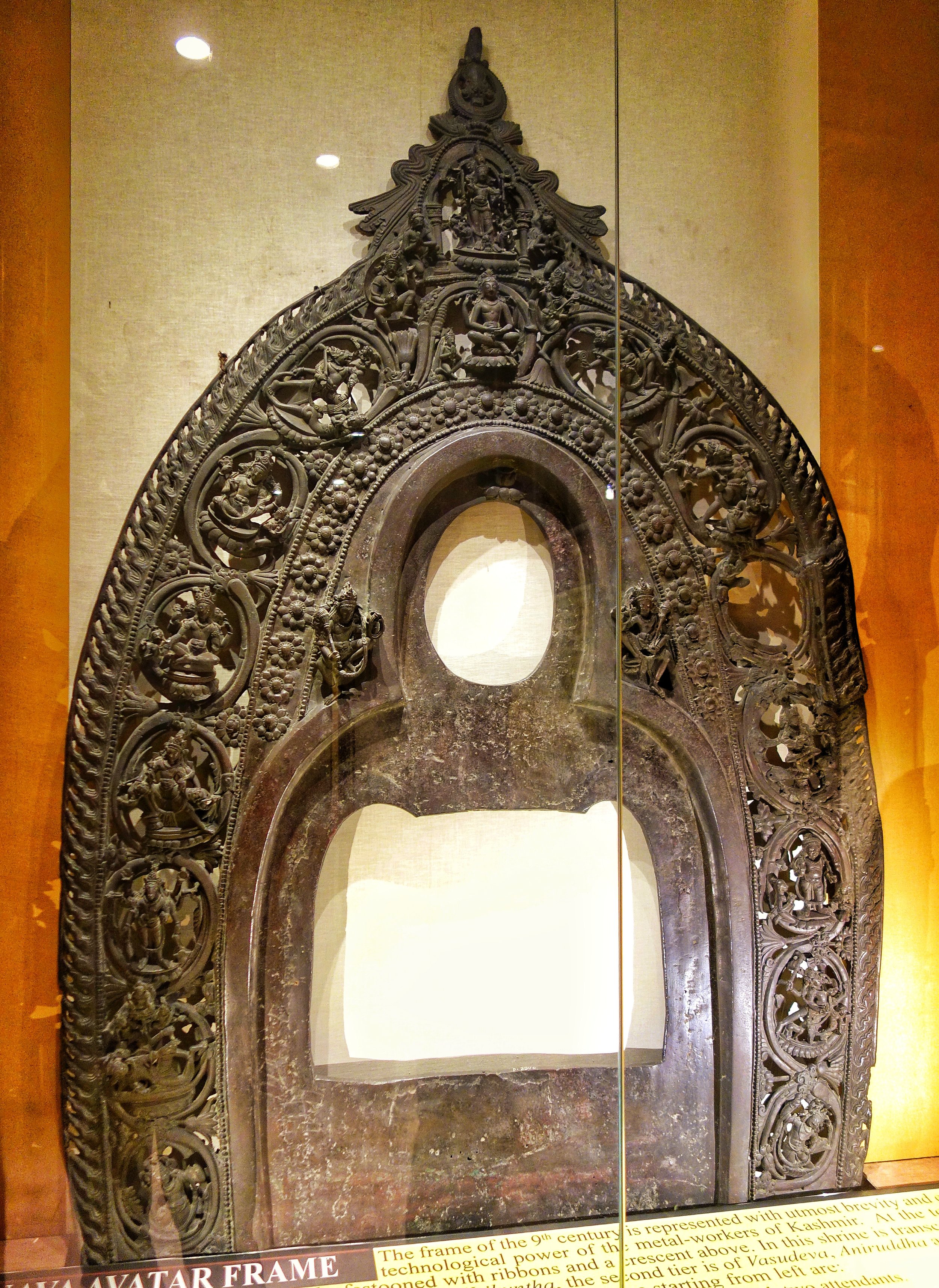
One of the most priceless treasures on display is a 9th Century metal “Vaishnava Avatar” frame which is a Prabhavali of bronze metal alloy measuring 6’4″ in height and 4′ wide and 1’2″ thick weighing almost 100 kgs excavated from Devsara. As the name suggests it shows various Avatars of Vishnu. Devsara, which is in Kulgam district had been in the past a great center for the casting of Bronze images and other metal works.
The 9th Century Vaishnava Avatar
One of the most priceless treasures on display is a 9th Century metal “Vaishnava Avatar” frame which is a Prabhavali of bronze metal alloy measuring 6’4″ in height and 4′ wide and 1’2″ thick weighing almost 100 kgs excavated from Devsara. As the name suggests it shows various Avatars of Vishnu. Devsara, which is in Kulgam district had been in the past a great center for the casting of Bronze images and other metal works. Many of the bronze/ metal sculptures found here have unfortunately gone missing as they were simply taken away in the olden times as metal was always in high demand.
This masterpiece was discovered in 1931 and it is dated to the period of Shankar Varman. Each of the deity cast on it has great detailing and as such is a brilliant example of Kashmiri metal craftsmanship of that period. Fortunately this great piece of art along
with another bronze sculpture of Lord Buddha along with a few coins made it to the Museum from the Devsara site. This sculpture is one of its kind in Kashmir and maybe India as well and is rated one of the most significant archaeological find in the Indian sub-continent.
The board at the Museum describes it as such : The frame of the 9th century is represented with utmost brevity and exhibits the technological power of the metal workers of Kashmir. At the top of the frame has a pillared shrine surmounted with amalaka festooned with ribbons and a crescent above. I this shrine is transcendental form of seven headed and ten armed Vishnu – the lower tier is of Vaikuntha, the second tier is of Vasudeva, Aniruddha and Samkarsana. And at the apex is Hayagriva, the horse head.The other 15 figurines in the frame starting from the left are (with pics of that area) :
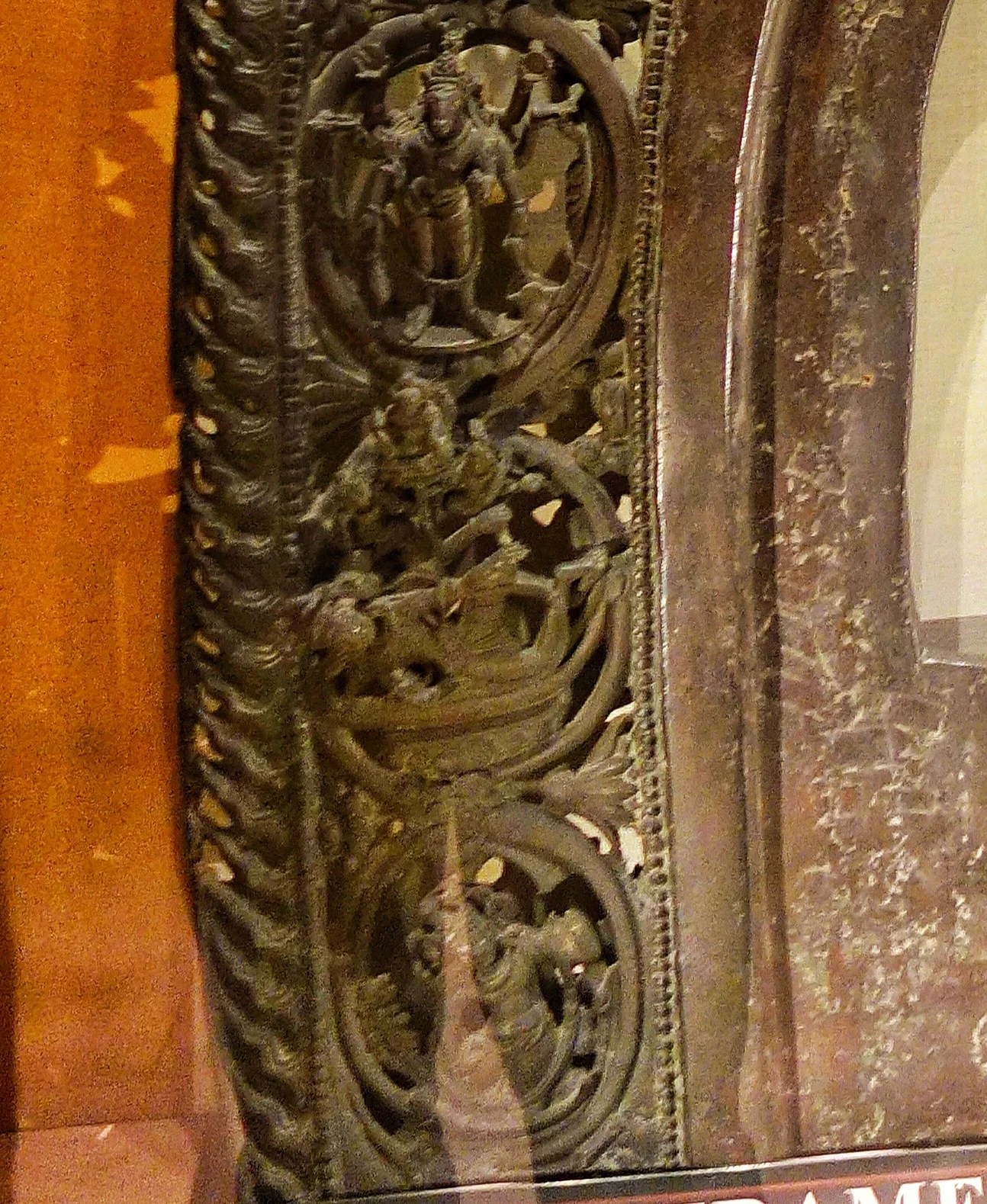
1. Nagaraja donor with seven headed serpent canopy.
2. Sesasayi Vishnu on serpent Sesa with Brahma seated on lotus the stem of which arises out of his navel, with accompanying pair figures of Madhu and Kaithaba.
3. Hayagriva, six armed of which upper two hold sun and moon symbols.
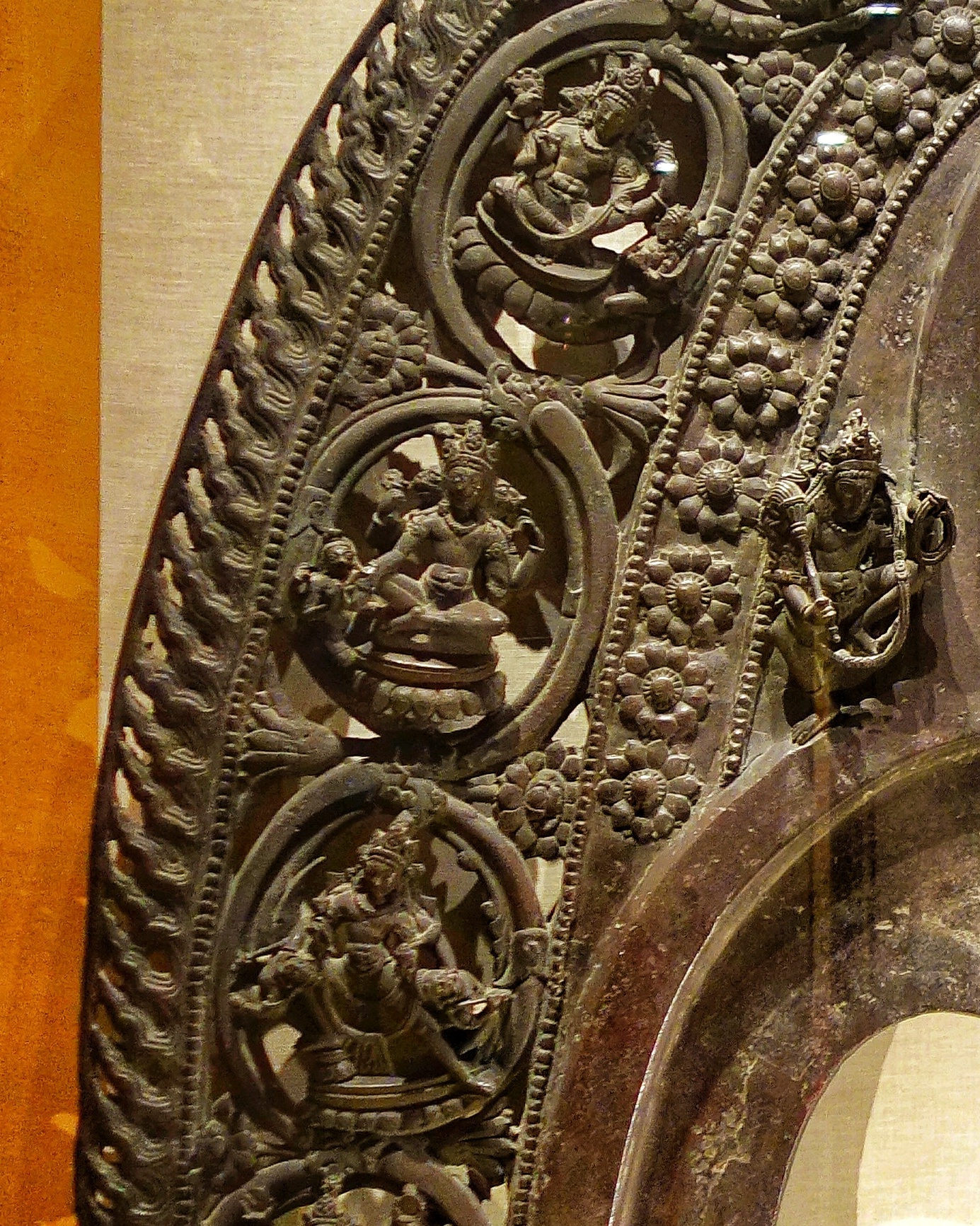
4. Vishnu killing Madhu and Kaithaba.
5. Three headed Vishnu with kneeling four armed Brahma on left.
6. Three headed seated Vishnu with kneeling Lakshmi on right.
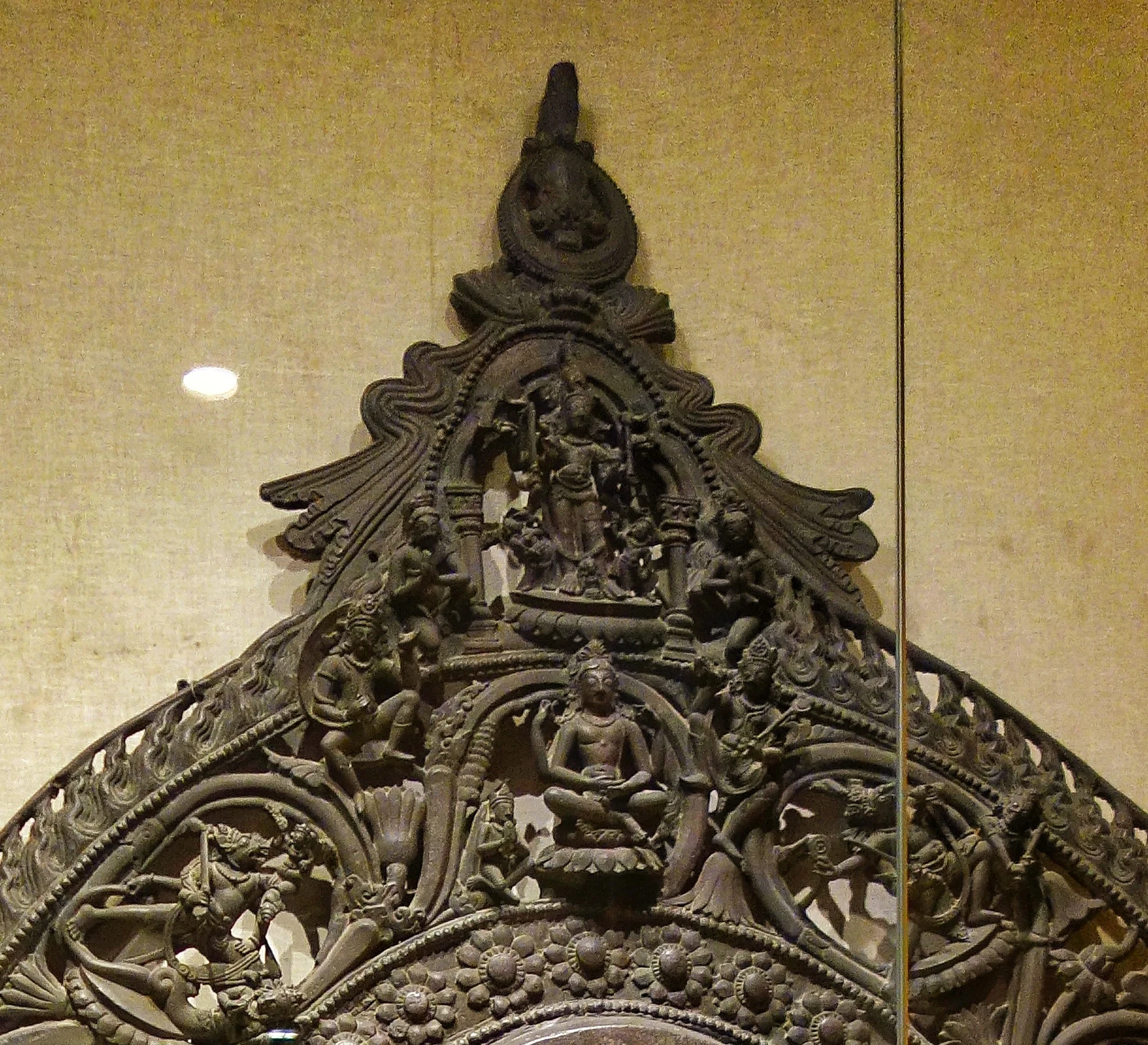
7. Bhuvaraha standing on the coils of serpent Adisesa and raising Goddess balanced on his left arm.
8. Vishnu in yogasana with two attendants.
9. Varaha killing Hiranyaksa.
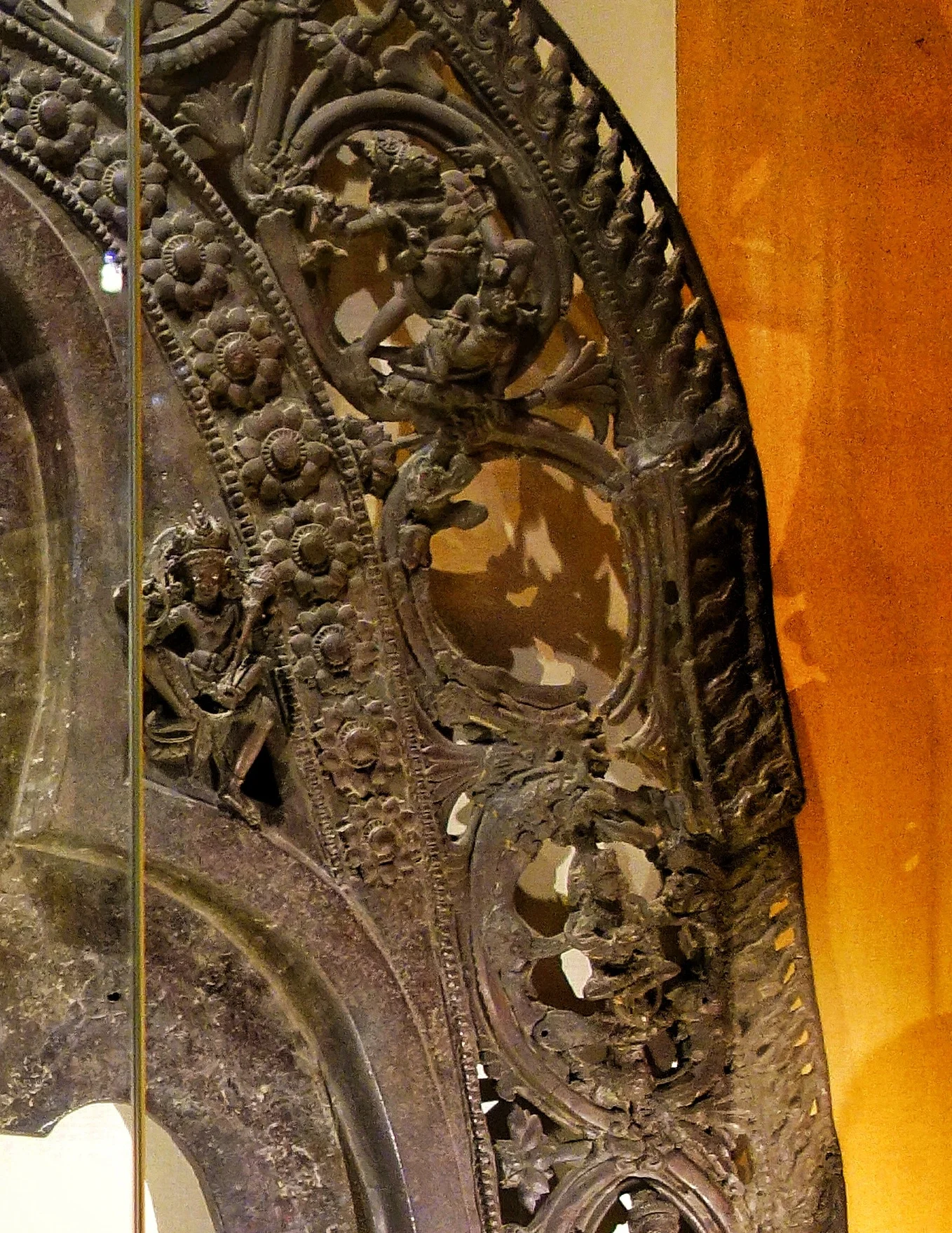
10. Narsimha killing Hiranyakasipu.
11. Missing figure.
12. Missing figure; later replacement of indeterminate form.
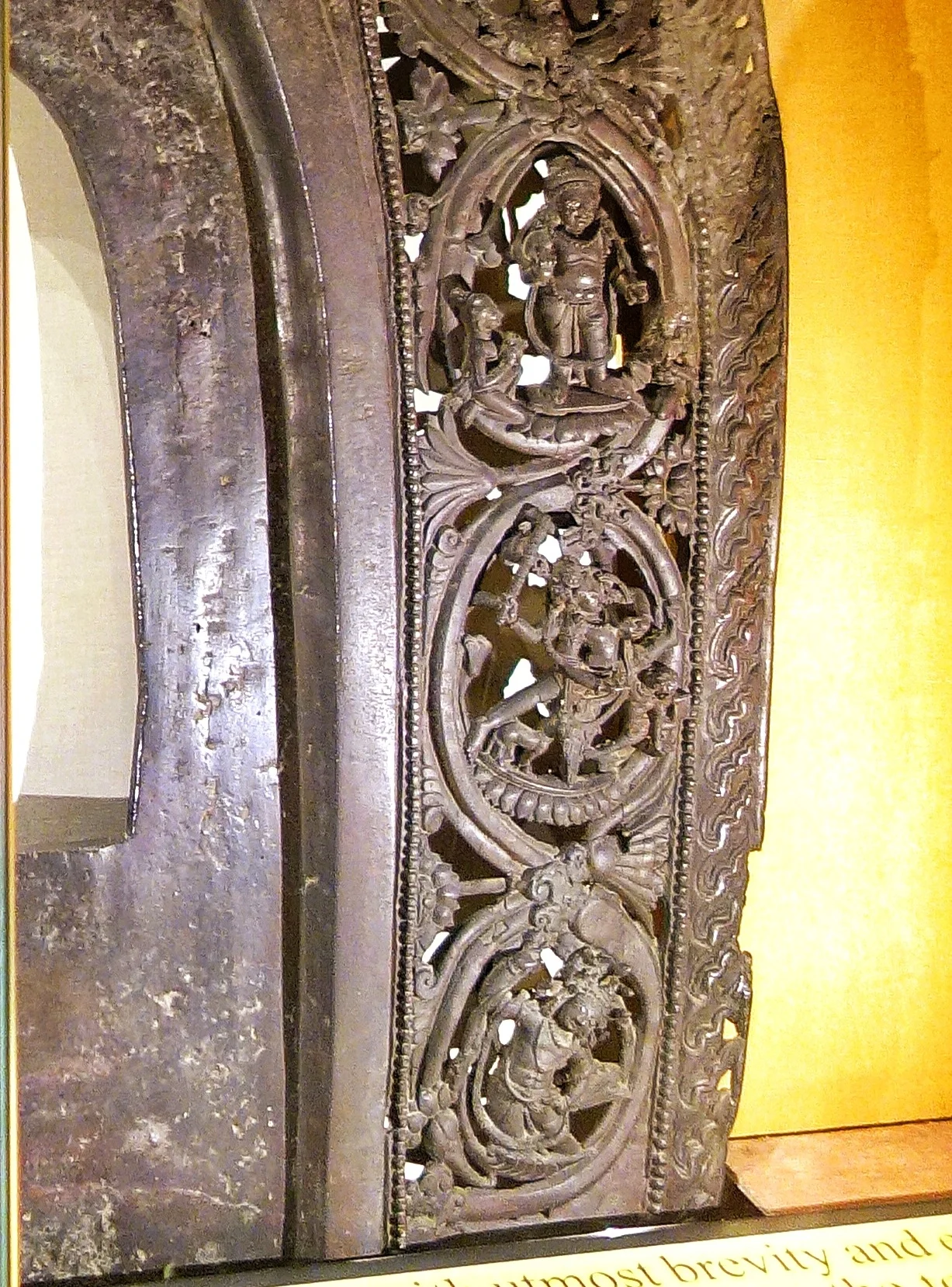
13. Vamna with kneeling figure of Bali holding libation pot and his Queen has veiled hair.
14. Trivikrama striding over Bali with diminutive Horse.
15. Nagaraja donor with seven headed serpent canopy.
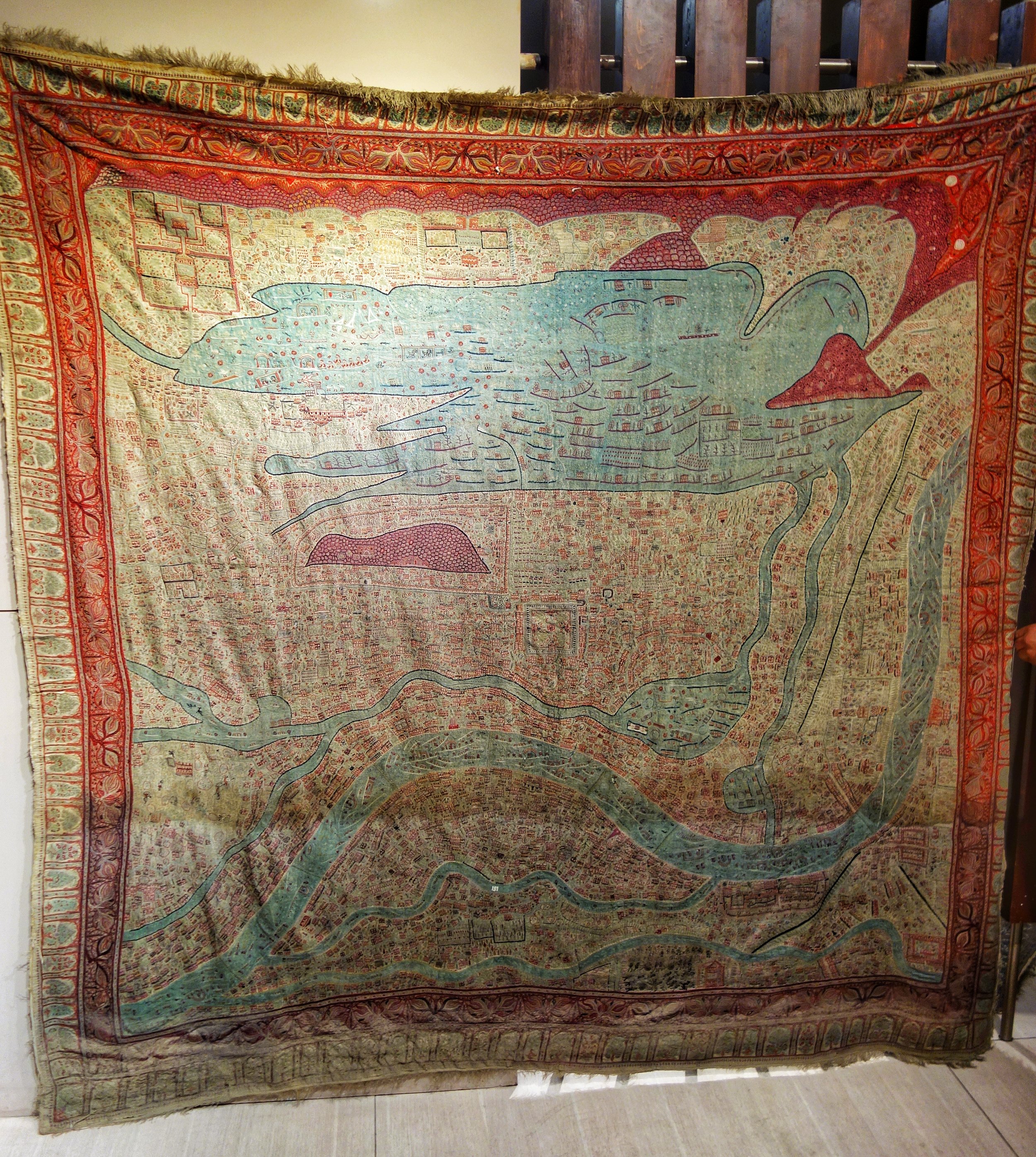
The Legendary Map Shawl of Kashmir
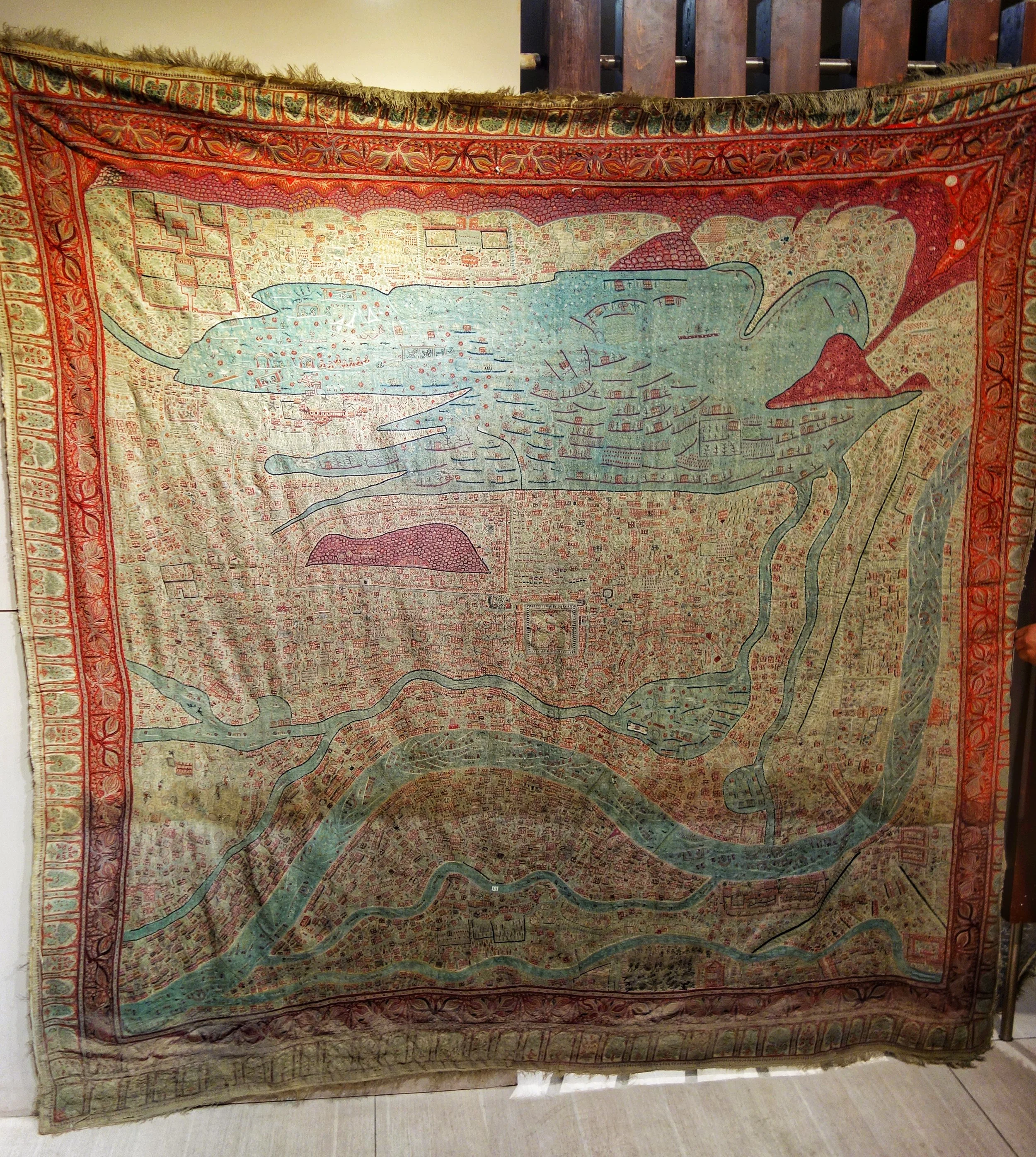
The legendary Map Shawl of Kashmir which has a map of Srinagar city weaved on fine Pashmina. The Shawl was commissioned by Maharaja Ranbir Singh and 3 of these were made. One is on display at the Victoria and Albert Museum in London, one is with a private collector in Australia and one is on display at the SPS Museum in Srinagar.

The Legendary Map Shawl of Kashmir
The amazing and exquisite Map Shawl of Srinagar. This Shawl took 30 years in the making. There are 3 or 4 such specimens in the world. And these were made in the late 1800’s.
One was presented to Queen Victoria by Maharaja Ranbir Singh and is presently at the Victoria and Albert Museum in London. One more is with a Museum in Australia. One is with a private collector and this piece is at the Shri Pratap Singh Museum in Srinagar though it’s not on display as it needs some refurbishing after the Floods.
It would be one of the most expensive pieces of textile ever made if it would be put on an auction. I got a special session to view this absolute Masterpiece as I pestered the right people long enough to let me see this after the Gilgit Manuscripts and along with the Mammoth complete skeleton which was found in Kashmir. A part of the Gilgit Manuscripts is however now on display.
Just that you know the old building of the Museum (out of bounds) was actually a Sumner er Palace of the Maharaja and is as mind blowing as anything you would ever see. The Maharajas sure had money and the craftsmen to deliver stuff which can’t even be imagined .
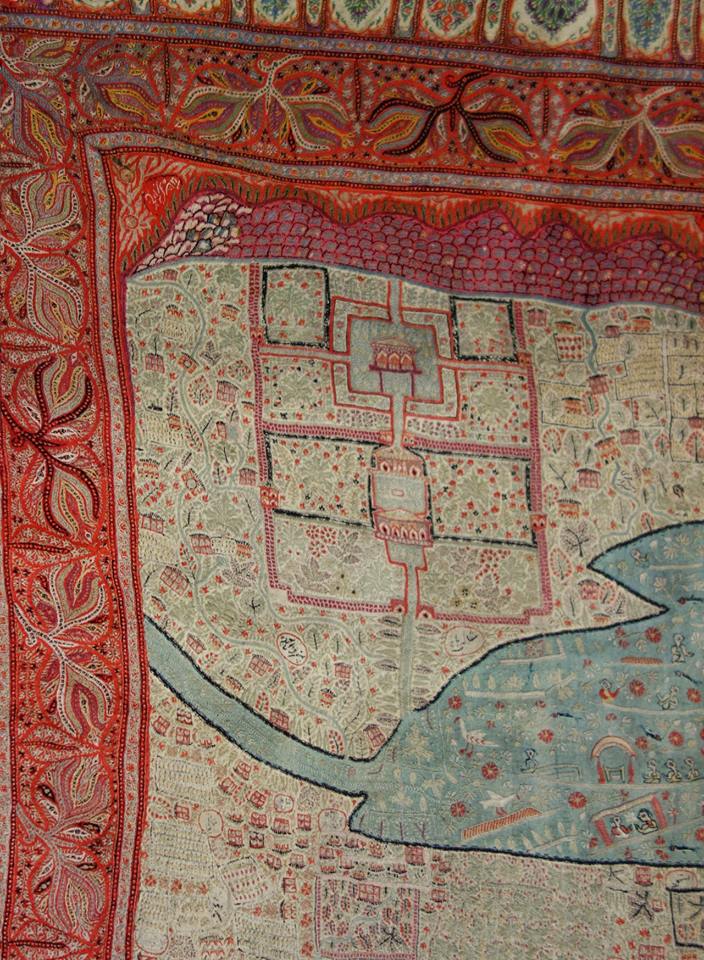
Coming back to the Shawl. You can see the Dal Lake and the Jehlum. On the right the hill is the Shankaracharya Hill. On the top left you can see the Shalimar and Nishat Gardens. You can also see the Hari Parbat Fort and all the old bridges of the City. The detailing is so minute that there are Shikaras shown in the Jehlum and you can even see the individual eye balls of the people in the Shikara. Words cannot describe this absolute masterpiece of Kashmiri craftsmanship.
Please do visit this Museum on your next visit and I’m sure you will be mighty impressed. I plan to cover stuff from this Museum in the next few days / weeks.
Link for Hi Res of the Map Shawl kept at the Victoria and Albert Musuem
https://g.co/arts/qwf3bmtz54qjtjrc7
The Great Temple Complex at Naranag
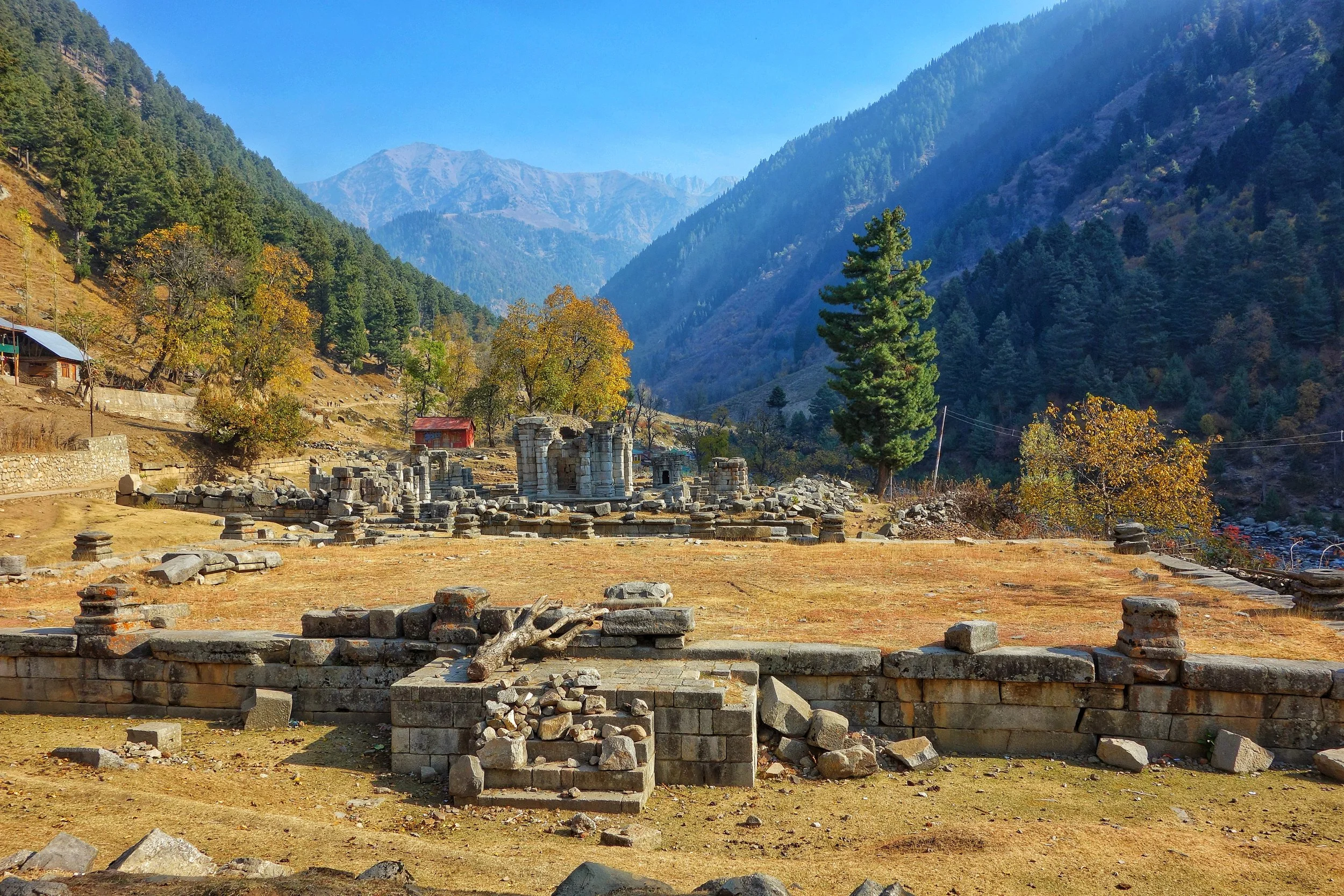
The Great Temple complex ruins at Naranag in Kashmir. Probably one of the finest set of Temples built in Kashmir. Mostly lost and forgotten.

The Main temple Complex which still Houses the Idol.
The Great Temple Complex at Naranag
The Wangath Temple ruins located near Naranag near Kangan above the Sindh Valley. This Temple Complex was built Lalitaaditya Muktipada one of the most celebrated Kings of Kashmir of the Karkota Dynasty. The current structure was built around the 8th Century.
The Secondary Temple Remains
Kalhana notes in Rajatarangini that Ashoka built the city of Srinagari in the 3rd century BC. His son Jaluka, 220 BC, built the Shaivite temples Bhuteshvara, Jyestarudra, and Muthas in the Wangath valley around the holy spring of Naranag.
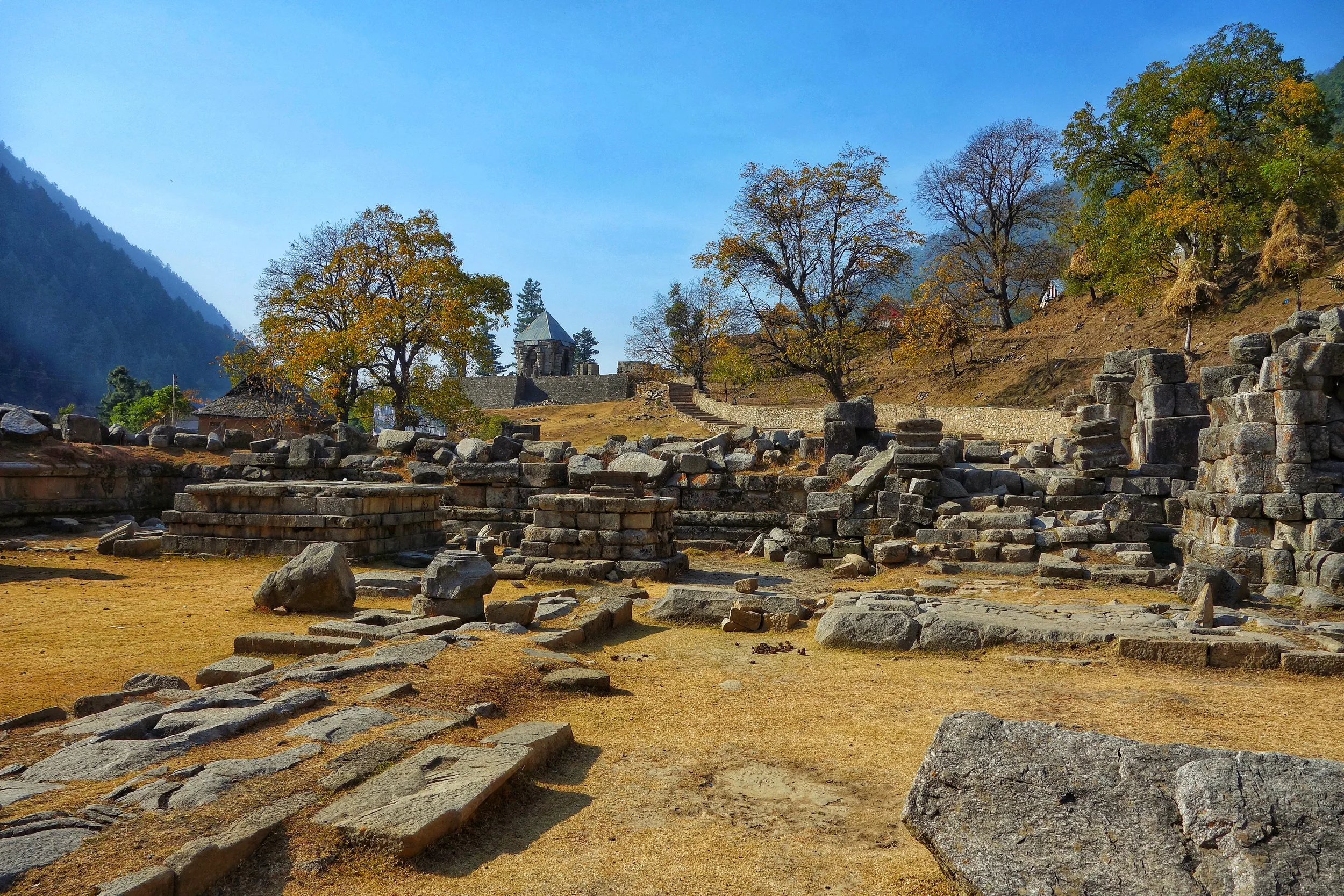
A view of the Main Temple from a distance
The Wangath temples were built in three groups, around the same time as the Shankaracharya Temple in Srinagar and the Bumazuv temple near Mattan. King Jaluka built a stone temple at the site of the spring Naranag around 137BC. King Jayendra (61 BC) used to worship Shiva Bhutesha at the shrine. Lalitaditya Muktapida (713-735 AD) donated a good sum of money to the shrine after his victorious expedition. King Avantivarman (855-883 AD) built a stone pedestal with a silver conduit at this shrine for the bathing of sacred images. Kalhana’s father Canpaka and uncle Kanka also frequented the site.
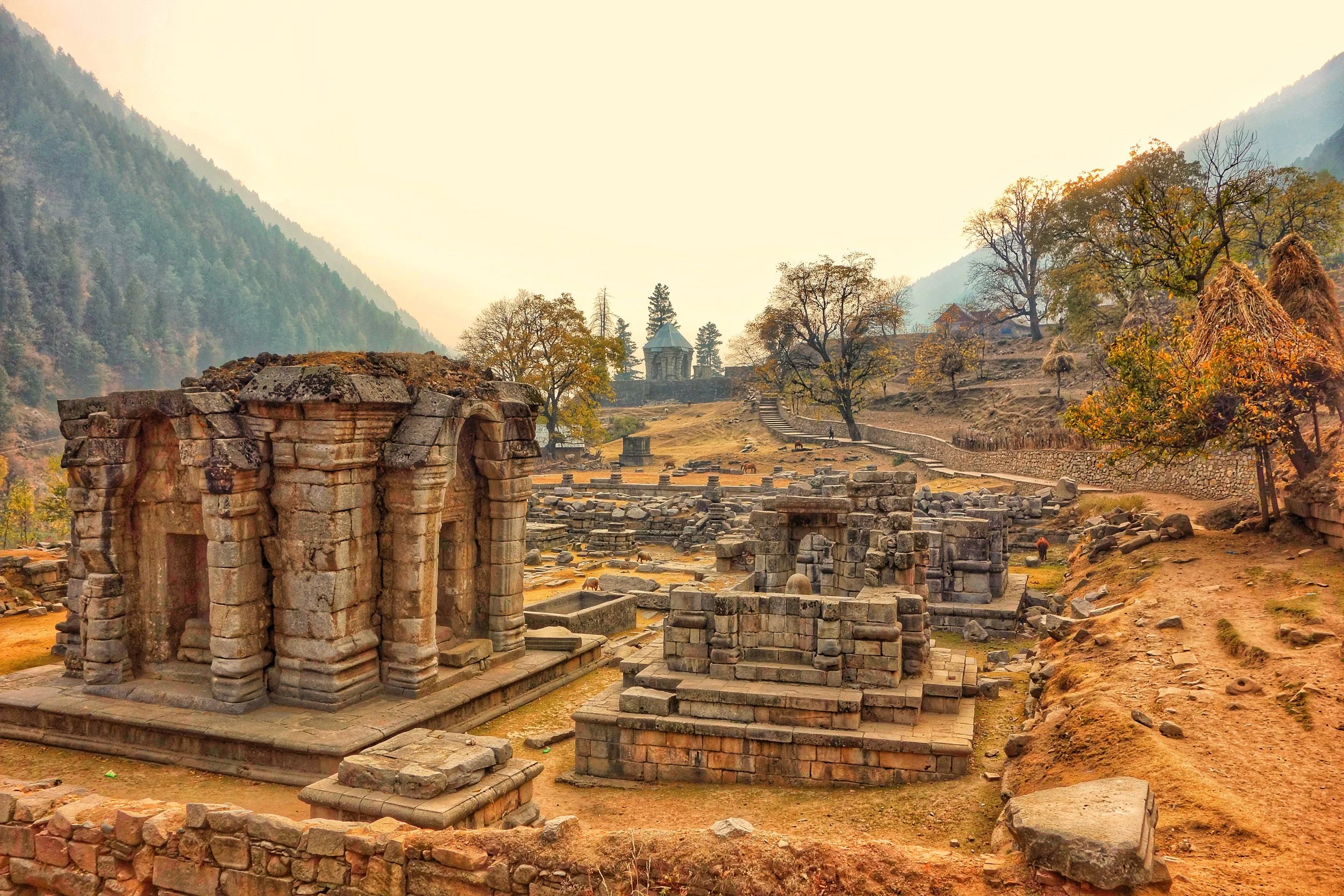
Another view of the Naranag Temple Ruins
As per Kalhana, the treasury of this shrine was plundered by King Sangramraja of Kashmir (1003-28 AD), during King Uccala’s time (1101 – 1111 AD) and later by the rebel baron Hayavadana. (Wiki)
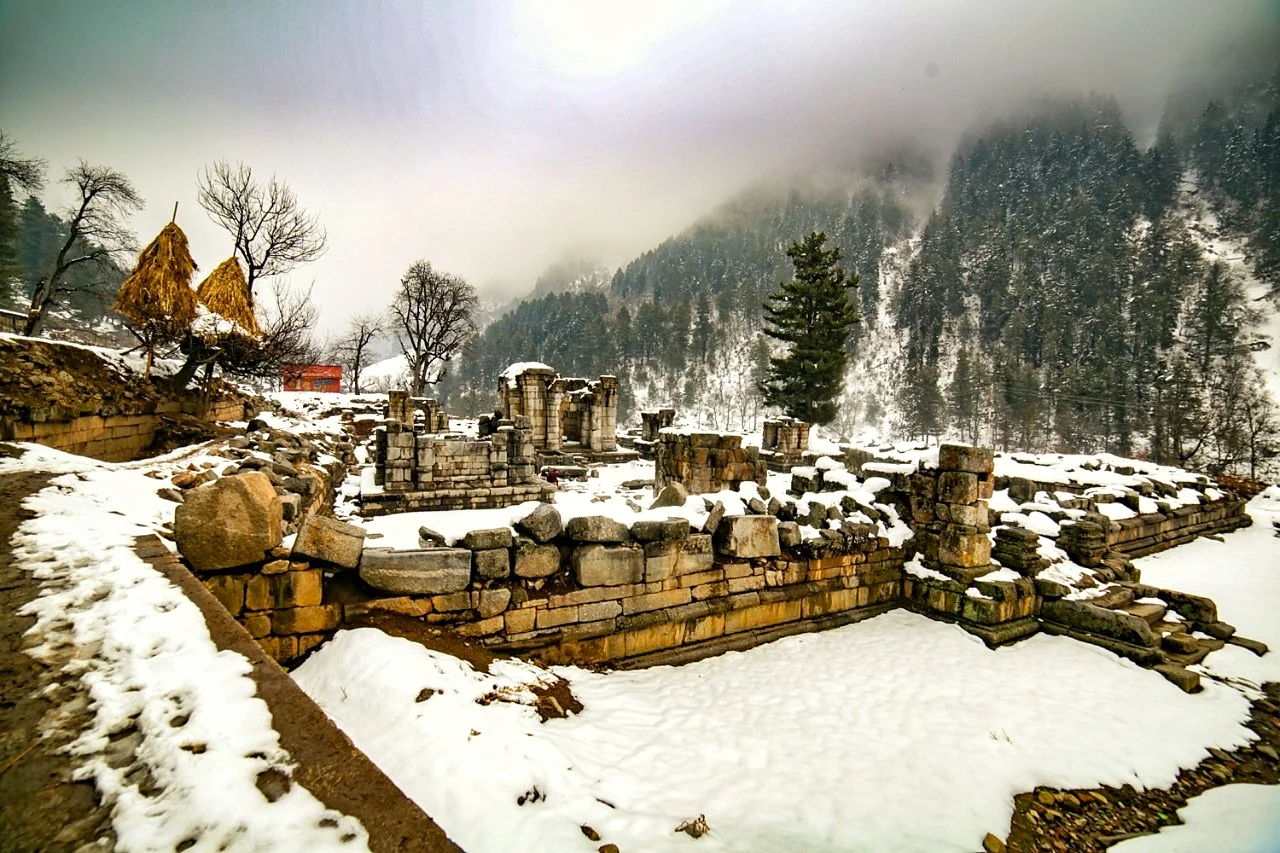
The Naranag Temple Ruins in the Winters
Auriel Stein did a lot of work on these Temples and identified a number of them along with other Western Archeologists.
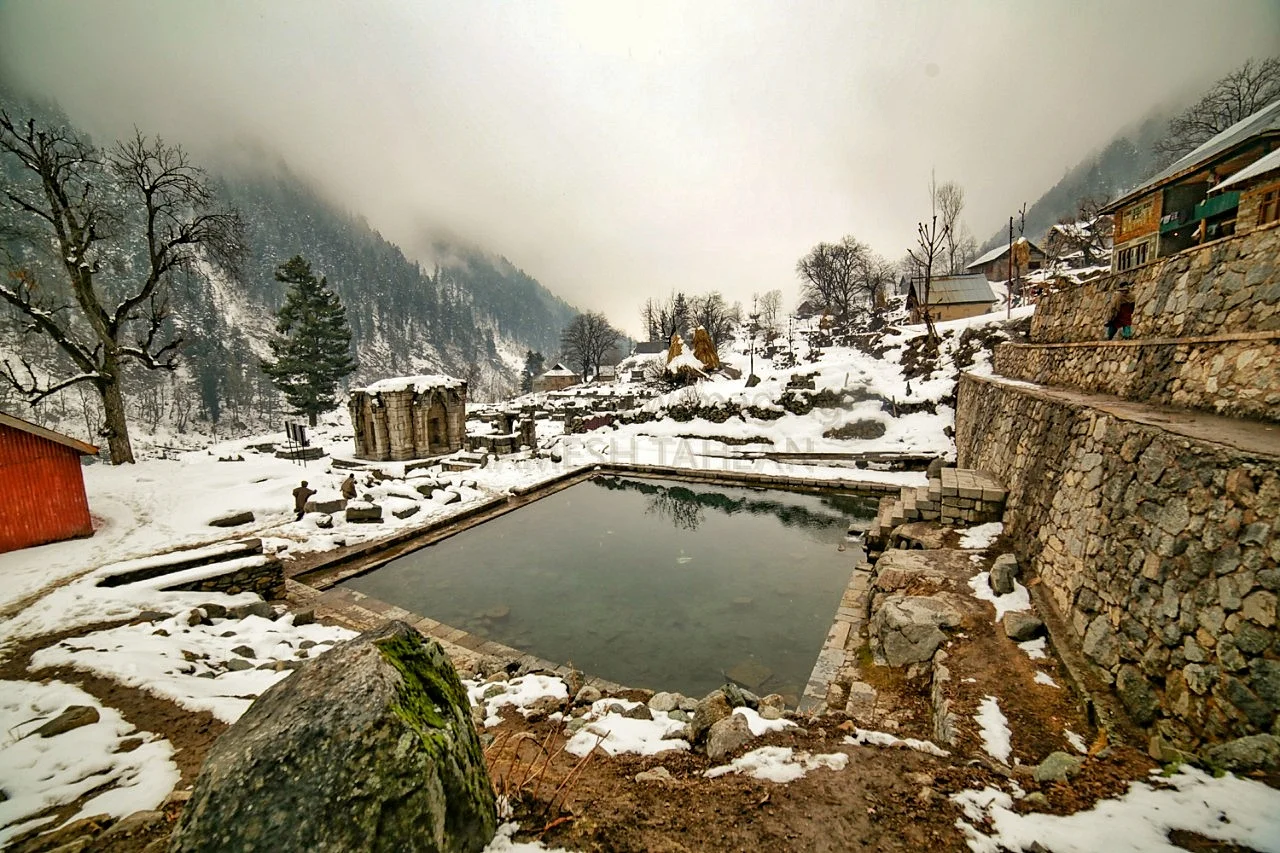
The Naranag Temple Sarovar in the Winters
It was in the Meadow of Mohanmarg that Auriel Stein stayed and translated the Rajtarangani from Sanskrit to English.
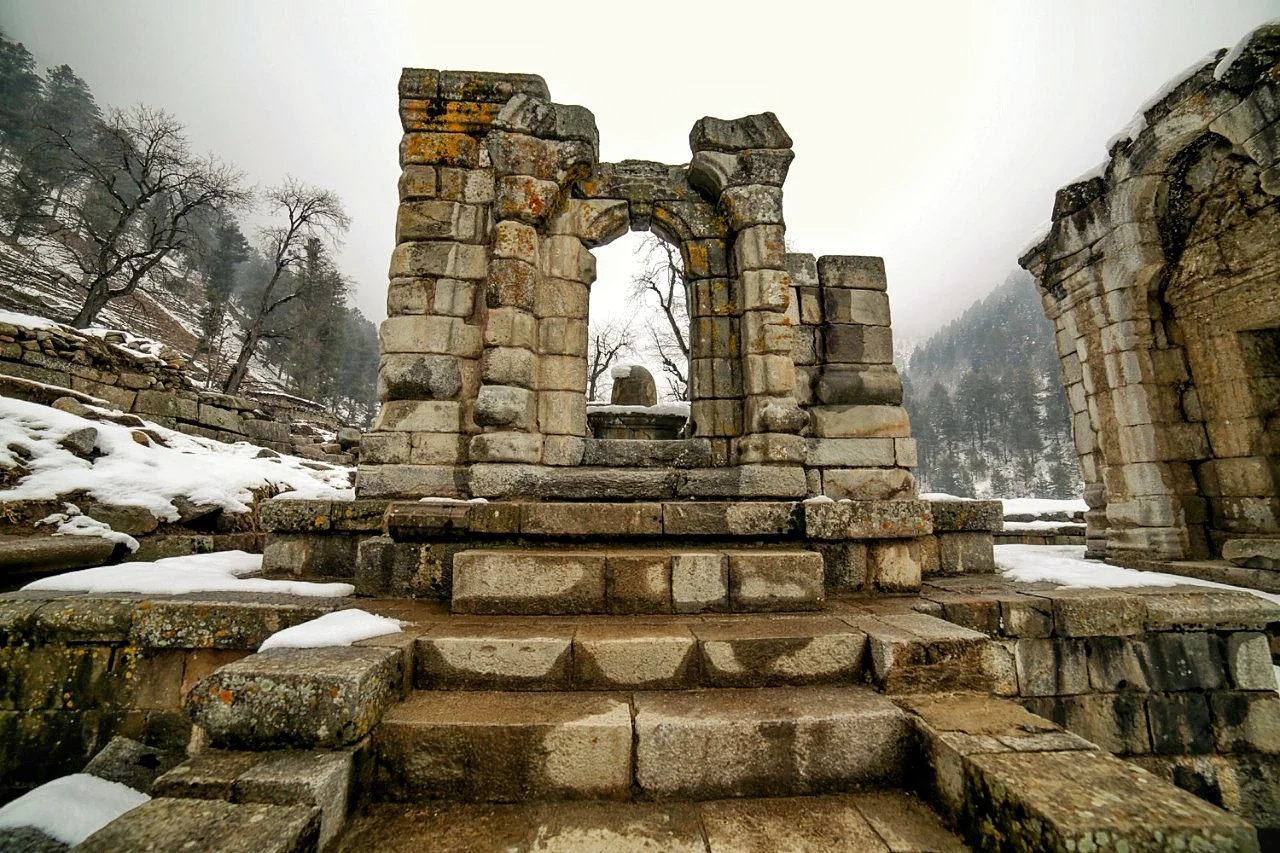
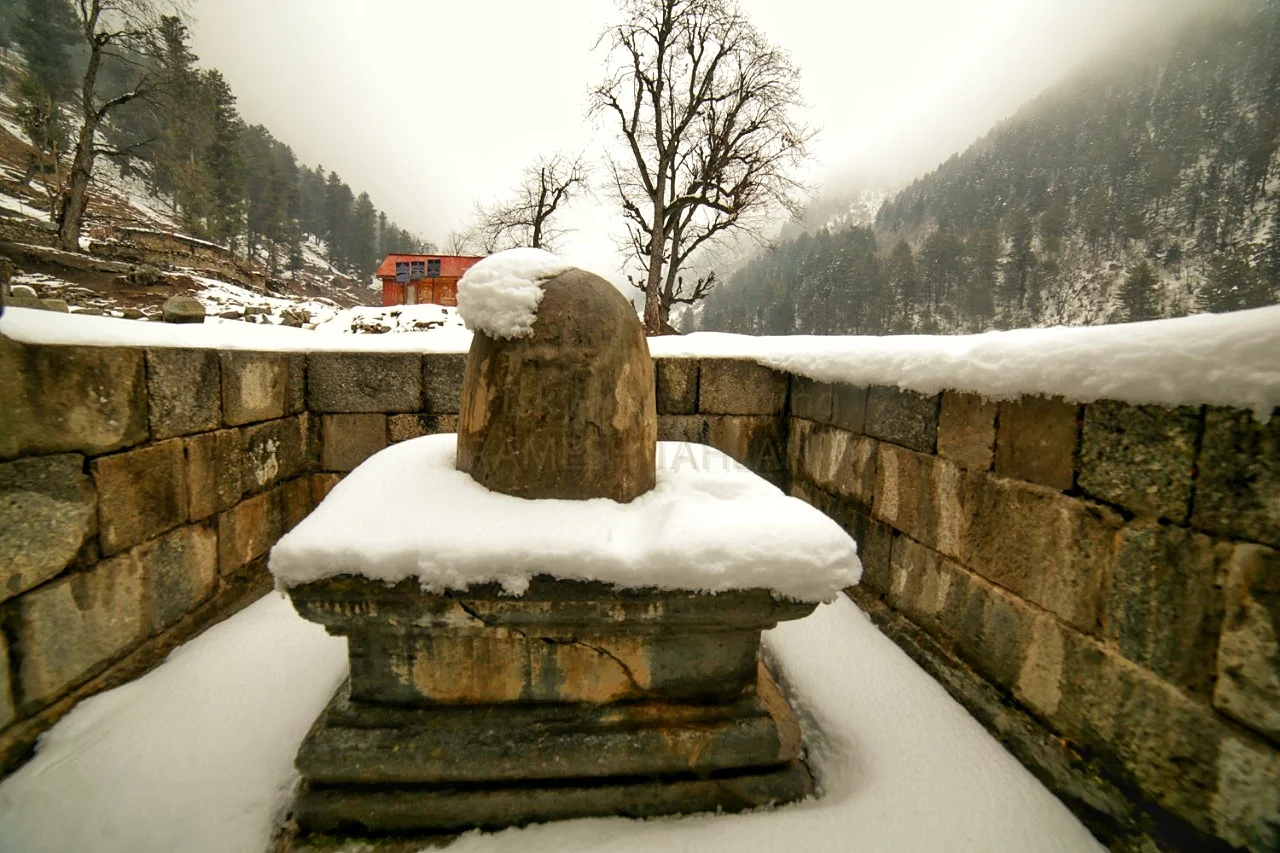
The Naranag Temple with a Shiva Ling
One thing surprising about this Temple is that all the main Temple Complexes in Kashmir were usually on the Valley floor itself or in case of the Shankaracharya Temple on top of a very prominent Hill. But this complex lies high above the Sind Valley by the Naranag Nallah. And it surely is a large Complex. Not to be missed and there are a lot of trekking / hiking opportunities around.
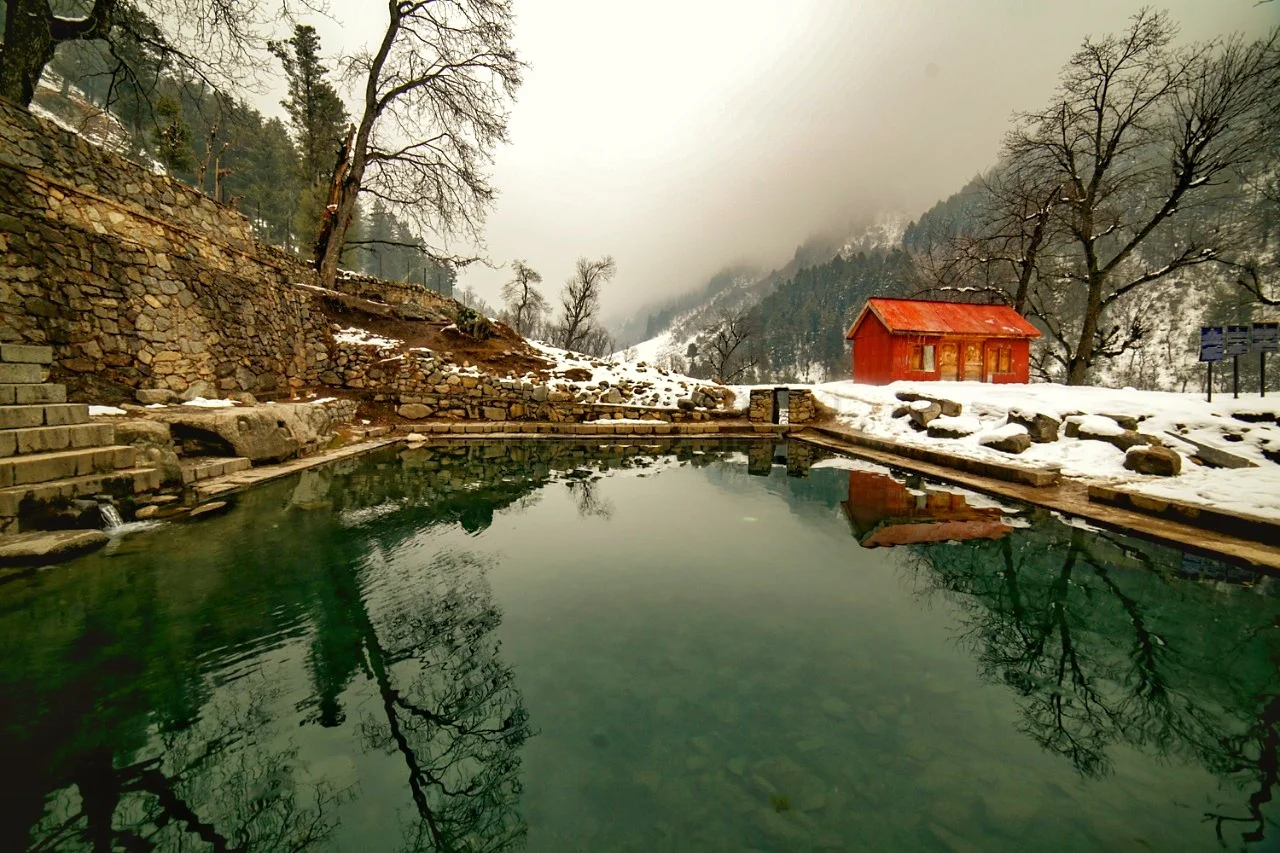
The Naranag Temple sarovar again
A very interesting place to say the least.
Himachal Day : A Brief History of the Modern Times
A brief history of the Himalayan state of Himachal Pradesh. A look into how different Hill states were combined to create one of the most beautiful and now amongst the most progressive states of the country.

Himachal Day : A Brief History of the Modern Times
The state of Himachal Pradesh officially came into existence on 25th January 1971 and till then it used to be a part of Punjab Hill States. Today we celebrate the completion of 47 years of its existence as a state.
The Punjab Hill States were themselves an amalgamation of the Punjab Hill States and the Shimla Hill States as they were also referred to. During the reign of the Mughals most of the Hill Kingdoms here were nominally aligned to them but were pretty free to act as they wished as long as the tribute was sent to the Mughals. However with the decline of the Mughal power the situation developed more fluidly and there were many actors who played a part in the formation of Himachal Pradesh. And whenever there is a power vacuum in history other forces are attracted to fill in the same.
In the beginning of the 19th century one of the most powerful Hill Raja was Raja Sansar Chand Katoch of Kangra who organised his Army and went on a conquering spree not only in the Hill Kingdoms but also invaded the plains of Punjab in order to gain territory. With an ambition to carve out a Katoch Kingdom he conquered various Hill Kingdoms in his neighbourhood including Chamba, Mandi, Kullu, Guler, Nurpur and Kutlehar. He even tried to capture territory around Hoshiarpur in Punjab but was repulsed by Maharaja Ranjit Singh in 1803 – 1804.
Having received a setback in Punjab he set his eyes on other Hill Kingdoms including Bilaspur (Kahlur) and Bara Thakurais (12 Thakurais) across the Satluj River. These Bara Thakurais till some years back had been a part of another powerful Hill Kingdom, Sirmour. And they had been the bone of contention between the Kingdoms of Kangra, Bilaspur and Sirmour. The Kingdom of Sirmour had also opposed the aggressive actions by Raja Sansar Chand in Mandi and Bilaspur.Raja Sansar Chand formed an alliance with the Raja of Nalagarh and together they captured large parts of Bilaspur territory and established control over the Bara Thakurais in the CIS Satluj area.
In the meanwhile the Gurkhas under General Amar Singh Thapa who had already captured Garhwal and Kumaon were now in occupation of the Sirmour Kingdom where they had been invited by one of the warring factions in the war of succession and once that was settled they decided not to leave and were in control of the Kingdom from their main base in Dehradun. After losing much of his territory to Raja Snasar Chand, the Raja of Bilaspur called on the Gurkha General again for help and to help thwart the plans of Raja Sansar Chand and his allies.
The Gurkhas due to ambitions of their own readily agreed to the same and stepped into the conflict on the part of the Bilaspur Raja. Raja Sansar Chand had already a lot on his hands and taking on the Gurkhas was just too much. The Gurkhas defeated Raja Sansar Chand and occupied the most strategic fort of the Himalayan foothills, the Kangra Fort. In addition to that they held all the Hill Kingdoms in the CIS Satluj areas and were also in control of another powerful Hill Kingdom, the Kingdom of Bushahr.
Raja Sansar Chand had no option but to approach his former bete-noire Maharaja Ranjit Singh and asked for his help and promised in return the Fort of Kangra and various other consolations. As a result after some machinations finally Ranjit Singh stepped in and the Gurkhas were evicted from the Fort of Kangra but they crossed over the Satluj and stood strong in their Forts around Solan and hence they carried on to occupy all the smaller Kingdoms and Thakurais.
On the other side of the Satluj after occupying the Kangra Fort, Maharaja Ranjit Singh spread his influence on all the Hill Kingdoms on which Raja Sansar Chand earlier held sway. All of Himachal on the Trans Satluj side was now held by Maharaja Ranjit and most of the territory on the other side of the Satluj was held by the Gurkhas. Due to the Treaty of Amritsar that Maharaja Ranjit Singh had with the British he was not entitled to make make any conquests in the CIS Satluj area and as the Gurkhas were in the CIS Satluj area, Ranjit Singh could not make any advance on them.
By this time the Gurkhas were on a collision course with the British. All the Hill Rajas and Thakurais asked the British for help in getting the Gurkhas out of their territories. They promised the British all the help in their war against the Gurkhas provided that their Kingdoms and Thakurais are returned to them after the Gurkhas leave.
In 1814 the Anglo Gurkha war took place at multiple fronts and the British defeated the Gurkhas and the Treaty of Sagauli was signed between the two. As a result of the Treaty the Gurkhas had to give up all their territory West of the Kali River to the British. This included Garhwal, Kumaon and parts of the present day Himachal Pradesh upto the Satluj River. The British now held sovereignty over these Hill States in Himachal and controlled the whole territory. It was at this time that at a certain location which was in their control they established the town of Shimla. And the Hill Rajas and Thakurs were given back their Kingdoms and Thakurais though they were under British suzerainty from then on. As they had to report to the British Resident at Shimla these were collectively known as the Shimla Hill States. These were as under
Bilaspur (Kahlur);
Bushahr with feudatories Delath and Khaneti; Nalagarh (Hindur);
Keonthal with five zaildaris Koti, Theog, Madhan, Ghund and Ratesh;
Baghal, Bhagat, Jubbal, Kumarsain, Bhajhi, Mahlog, Balsan, Dhami, Kuthar, Kunihar, Mangal, Beja, Darkoti, Tharoch, Sangri, Rawin and Dhadi.
The Kingdom of Sirmour was also returned to the Raja again under British suzerainty.
On the other side of the Satluj the areas were still under the control of Maharaja Ranjit Singh. In 1836 the Sikhs went further and occupied the Kullu Valley as well and bought Lahaul and Spiti also under their control. At this point of time the Sikhs controlled pretty much all the territory between the Satluj and the Indus. And so it remained for many years even after the death of Maharaja Ranjit Singh in 1839.
However in the aftermath of the Anglo Sikh Wars in 1846, which the Sikhs lost the British acquired control of this whole territory. The newly acquired Trans Satluj states that the British acquired and which were designated as the Punjab Hill States (as they previously belonged to the Punjab Kingdom) were as under
Punjab Hill States
Kangra, Guler, Jaswan, Datarpur, Nurpur, Chaitiba, Suket, Mandi and Kullu and Lahaul-Spiti
In addition the British also got suzerainty over the powerful Chamba Kingdom.
This was the makeup of the region till 1947 when India got independence the Simla Hill States and the Punjab Hill States as well as Chamba and Sirmour state were put together to form Himachal Pradesh. In 1956 after further re-organisation is was made a Union Territory. Finally it was made a formal state on the Indian Union in 1971 on January 25th. Shri Yashwant Singh Parmar is credited as being the Father of Himachal Pradesh and he was the Chief Minister of the state on a number of occasions. He hailed from a Rajput family in the erstwhile Kingdom of Sirmour. The longest serving Chief Minister of Himachal Pradesh who recently lost the elections, Shri Virbhadra Singh is the head of the Royal Family of Bushahr. The present Chief Minister Shri Jairam Thakur also belongs to a Rajput family from Mandi. A reminder that much of the present stems from the past.
Jai Himachal.
The Treasures of the Shri Pratap Singh Museum
The SPS Museum Srinagar was established in 1898 AD in the Maharaja’s Summer guest house largely based on collections transferred from State Toshkhana. Approximately 79,595 artifacts and objects covering various subjects like Archaeology, Numismatics, Decorative Art, Arms and Armory, Paintings, Textiles etc are housed in the Museum. A must visit for anyone in Kashmir.

The Treasures of the Shri Pratap Singh Museum
The SPS Museum Srinagar was established in 1898 AD in the Maharaja’s Summer guest house largely based on collections transferred from State Toshkhana. Approximately 79,595 artifacts and objects covering various subjects like Archaeology, Numismatics, Decorative Art, Arms and Armory, Paintings, Textiles etc are housed in the Museum. The proposal for the Museum was made around 1889 when a memorandum was submitted to the then Maharaja of Jammu and Kashmir, Maharaja Pratap Singh by his younger brother General Amar Singh and a European scholar, Captain S H Godferry proposing to build a museum in Srinagar for exhibiting artifacts covering the regions of Jammu, Kashmir, Ladakh, Baltistan and Gilgit. However the Museum was finally opened to public in March 1898.
The Museum was set up in a smaller Palace of the Maharaja by the banks of the Jehlum where the Guests of the Maharaja used to put up. The Old Museum Building in itself is a work of art with great frescoes and art adorning the walls and the ceilings. This Building faced the brunt of the floods in 2014 and is now closed for Public viewing. The Museum exhibits however have been moved to a new Museum building which has come up.
Some of the treasures that are on display (or will be on display are as follows) :
1. Harwan Terracotta Tiles
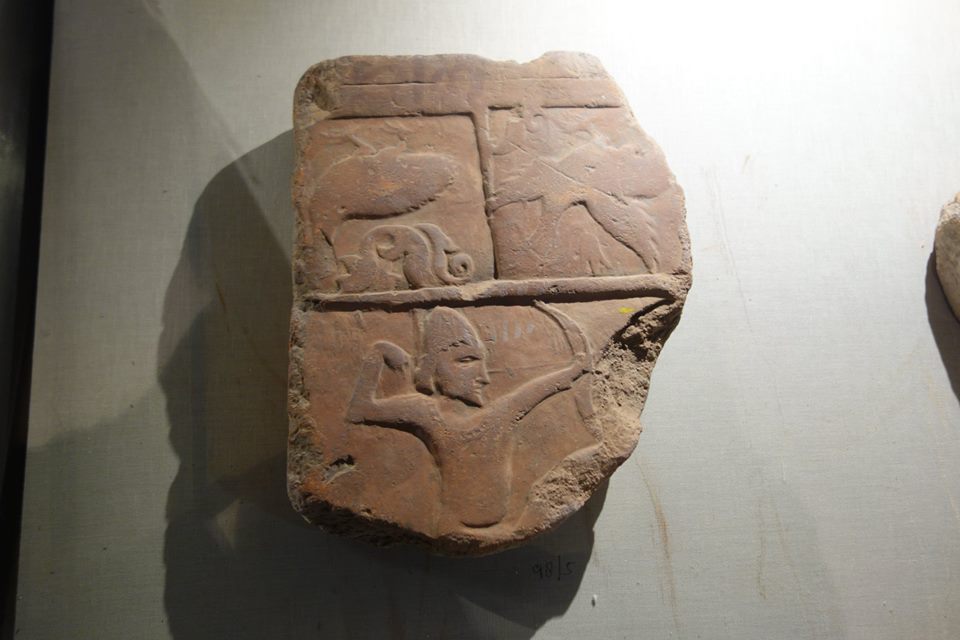
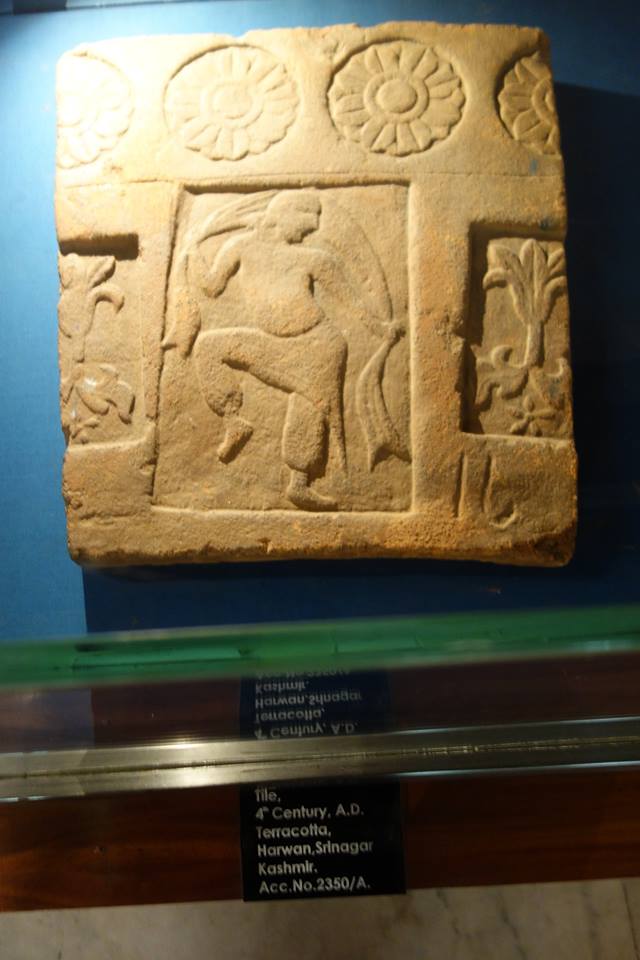
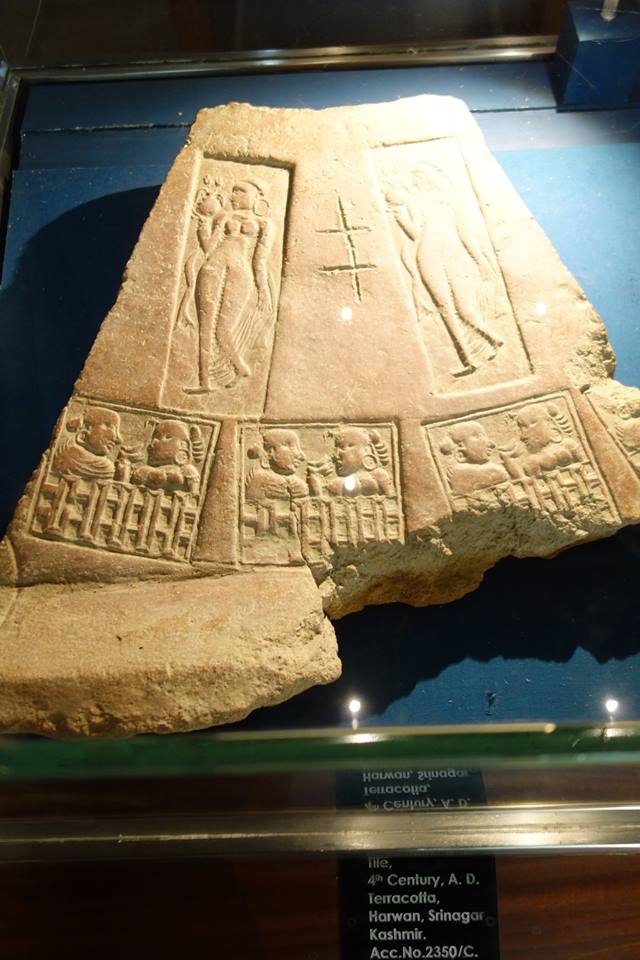
The Museum has on display a number of Terracotta Tiles which were discovered at the remains of an almost 2000 year old Buddhist Monastery in Harwan. This important Buddhist site is said to be the venue of the Fourth Buddhist Council convened by the Kushan Emperor Kanishka in the first century AD. It was from this Council that an estimated 500 monks left for Central Asia, Tibet and China to propagate the message of Lord Buddha.
The Tiles show a distinct Parthian/ late Sasanian influence underlying the close connections that Kashmir had with the Gandhara region at the time when Buddhism was the prevalent system of belief in both the regions. The Museum has a number of these Tiles showing daily activities of life in those times.
2. The Gilgit Manuscripts
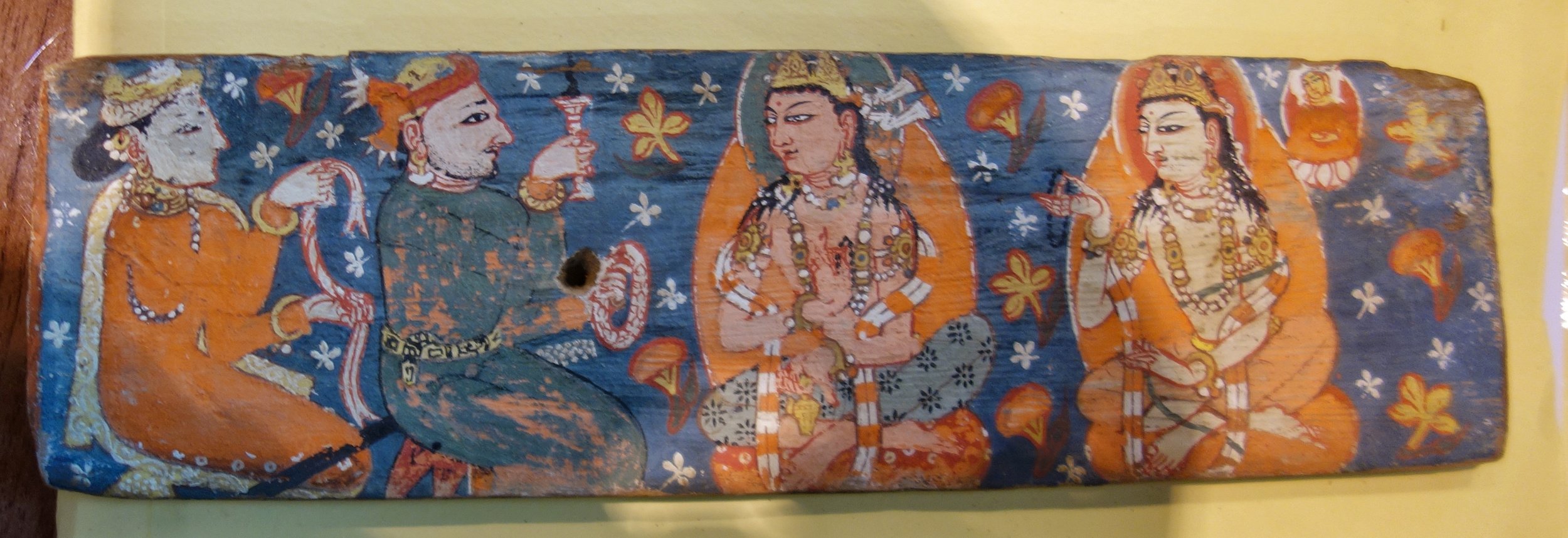
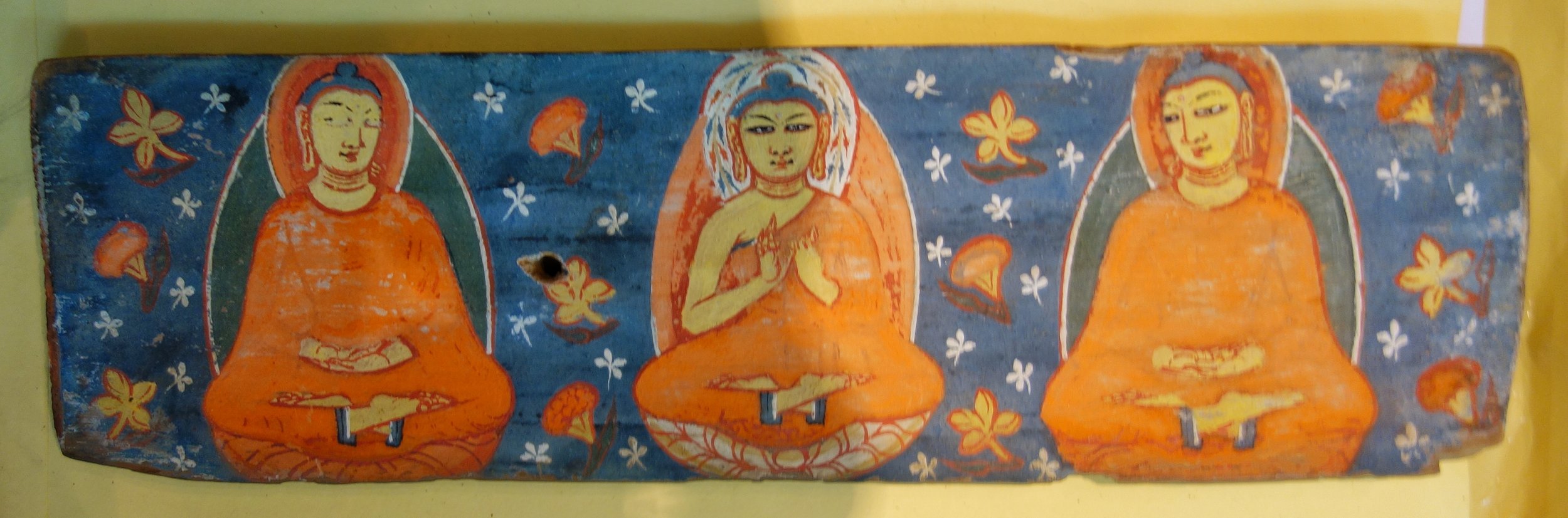
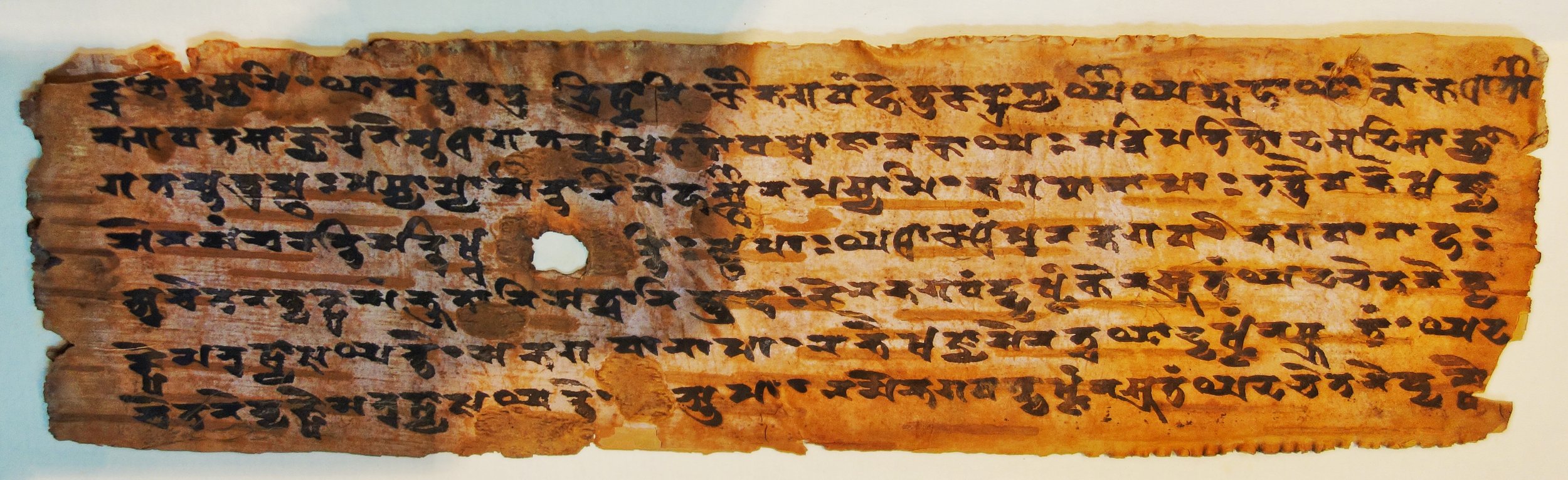
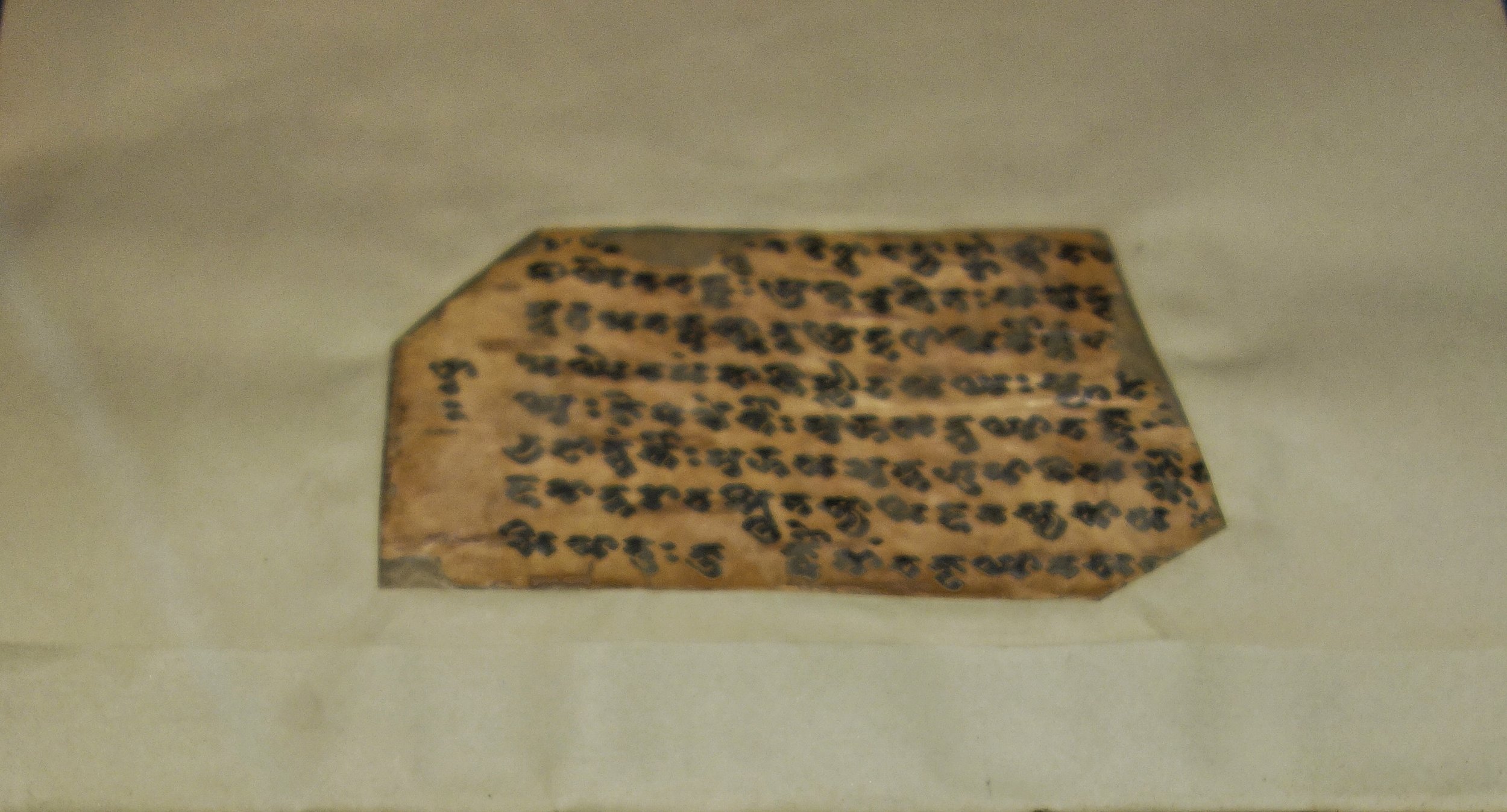
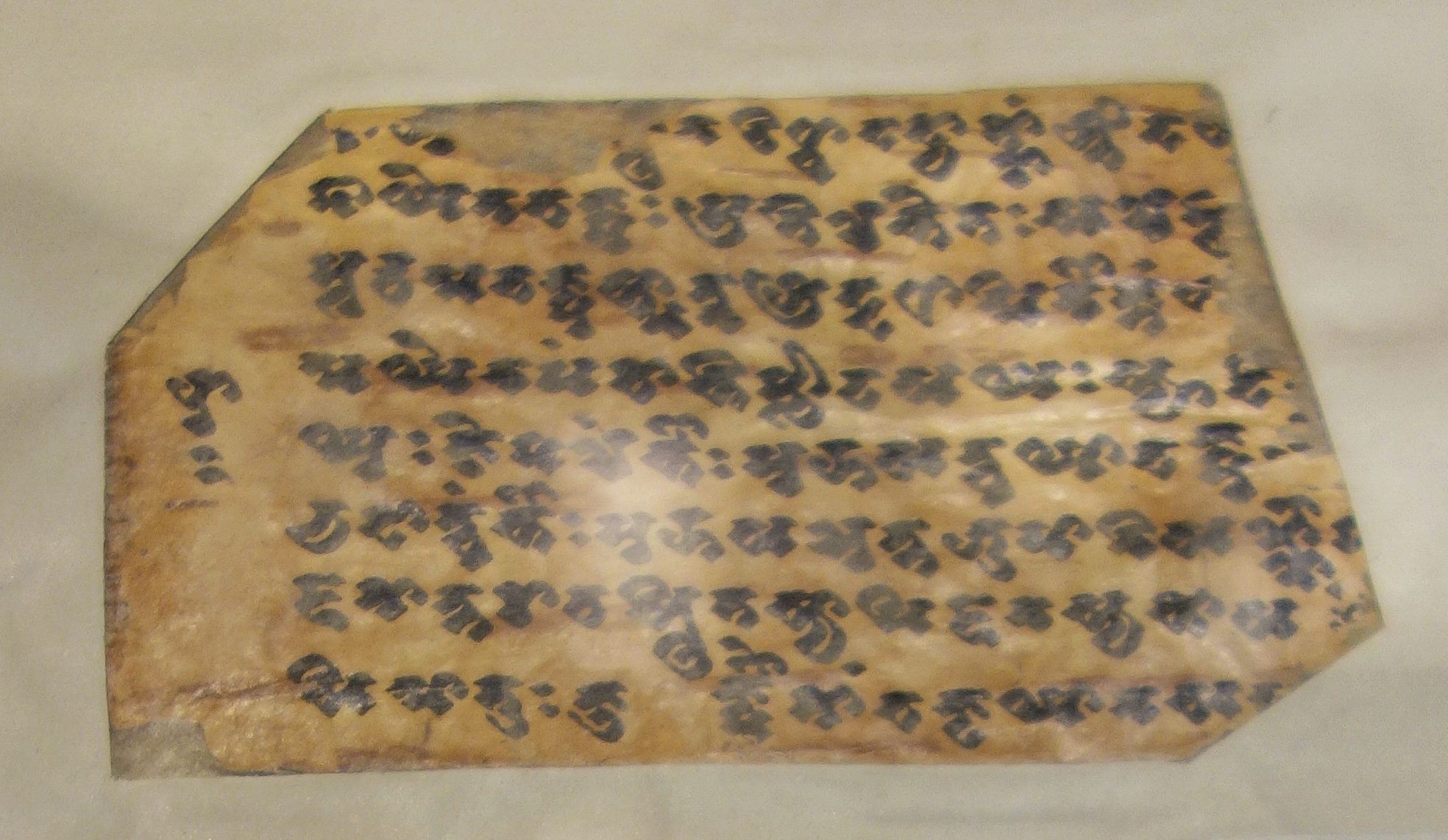
One of the oldest Manuscripts ever found in India, this Manuscript was found is a Village in Gilgit and was then passed onto the Maharaja of Jammu and Kashmir. As for the significance of the Gilgit manuscripts, especially of the Lotus Sutra which was found among the Manuscripts, I quote from a BBC article on the same “The Lotus Sutra was found in Gilgit region, now in Pakistan.The document, which dates back to 5th century, is perhaps the only Buddhist manuscript discovered in India.
Believed to be one of the most revered Buddhist scriptures, it represents the discourse delivered by Buddha towards the end of his life.
The Lotus Sutra is one of the most sacred scriptures of Mahayana Buddhism , which is strongest in Tibet, China, Taiwan, Japan, Korea, and Mongolia.”
A part of the collection is also housed in the National Archives in Delhi as well as some part exists in the Karachi Museum.
3. The 9th Century Vaishnava Avatar Bronze Frame
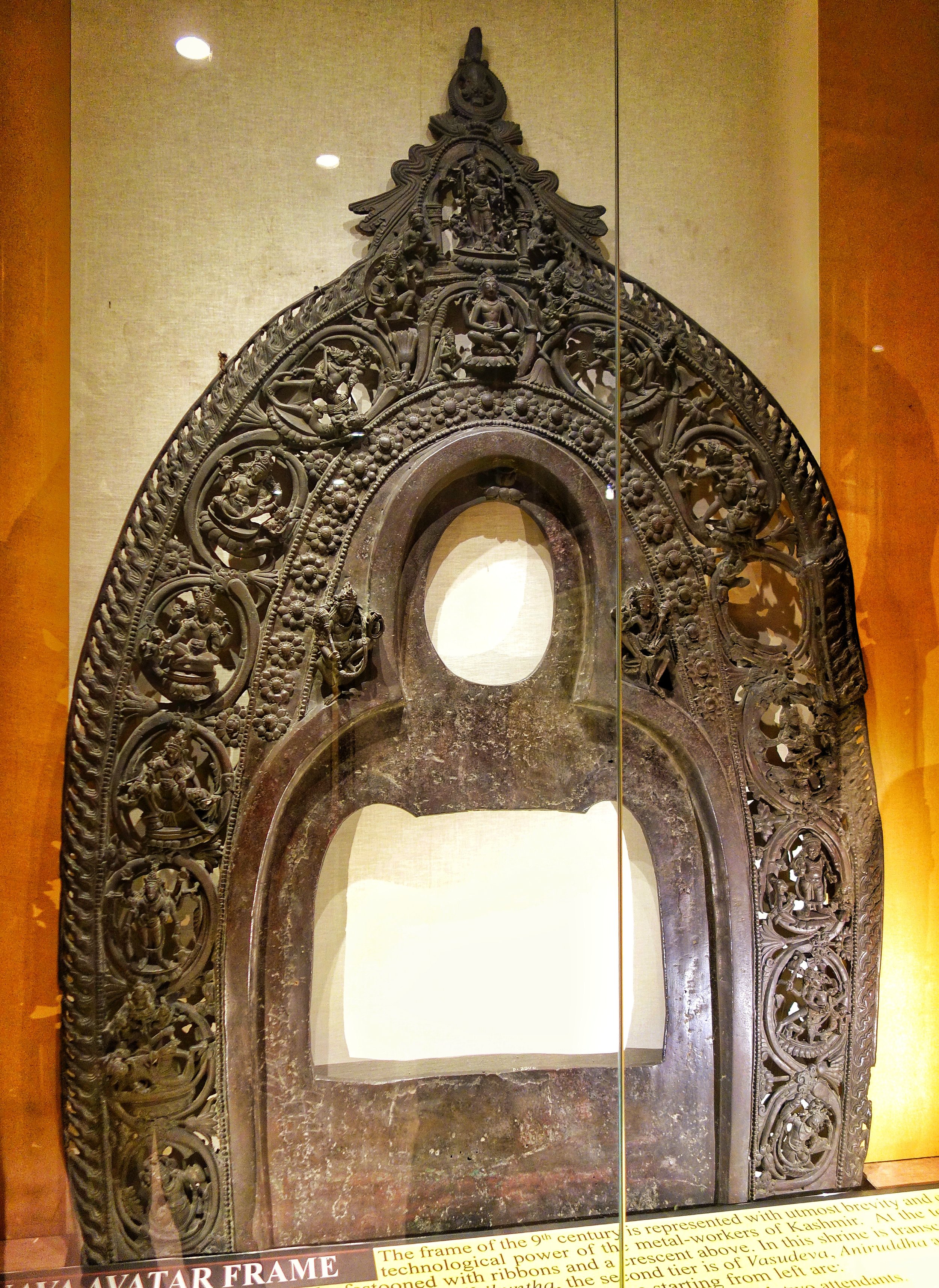
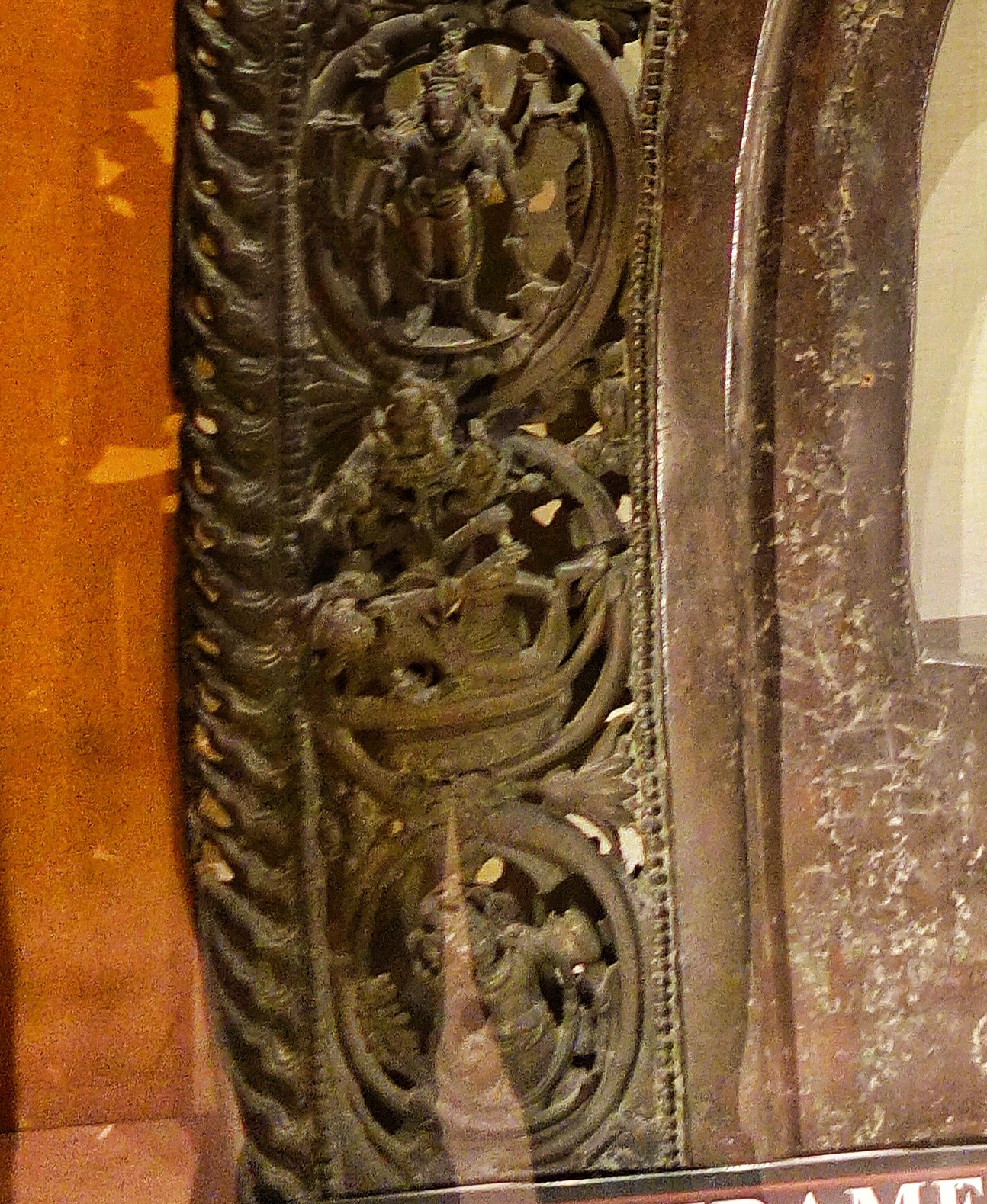
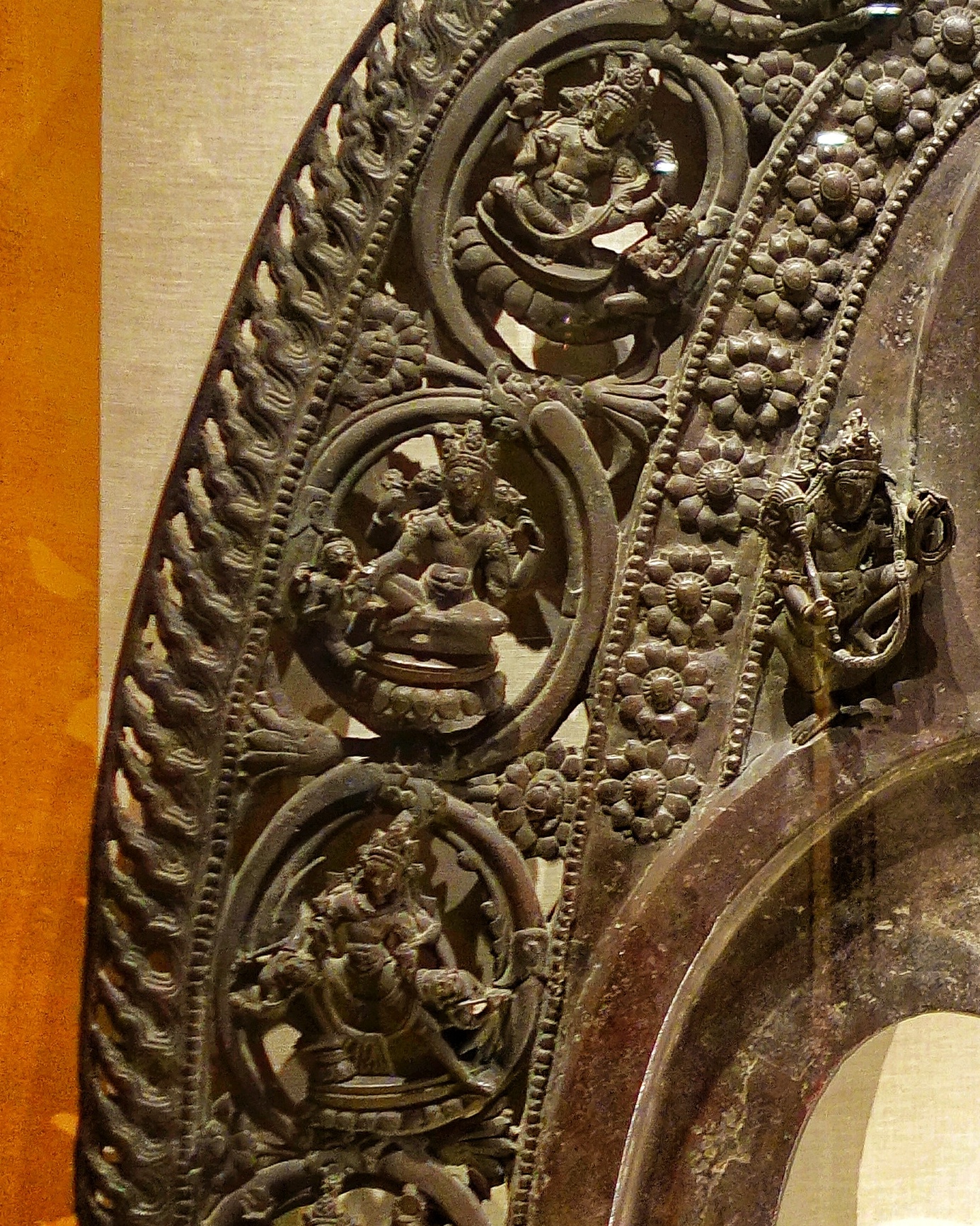
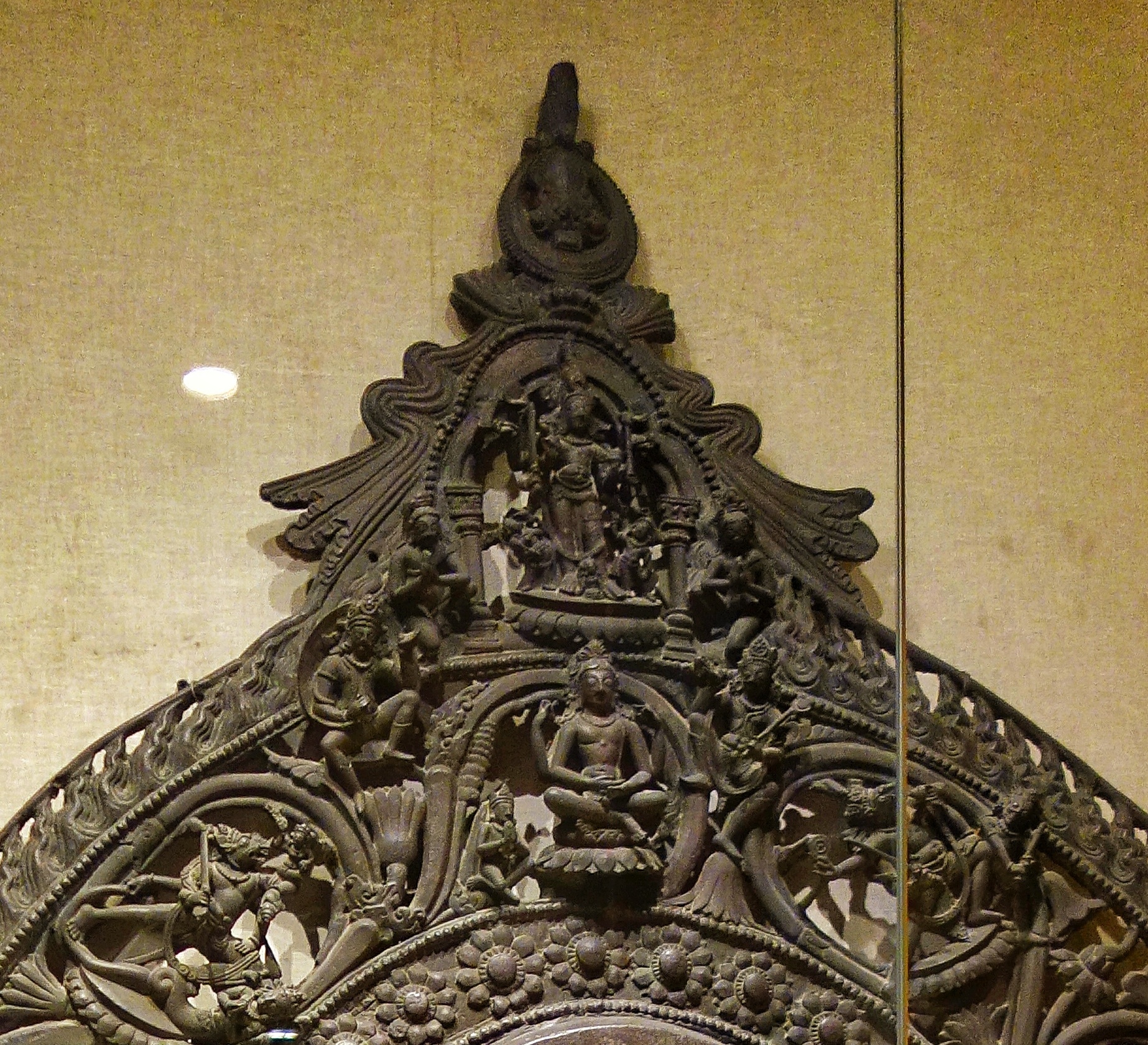
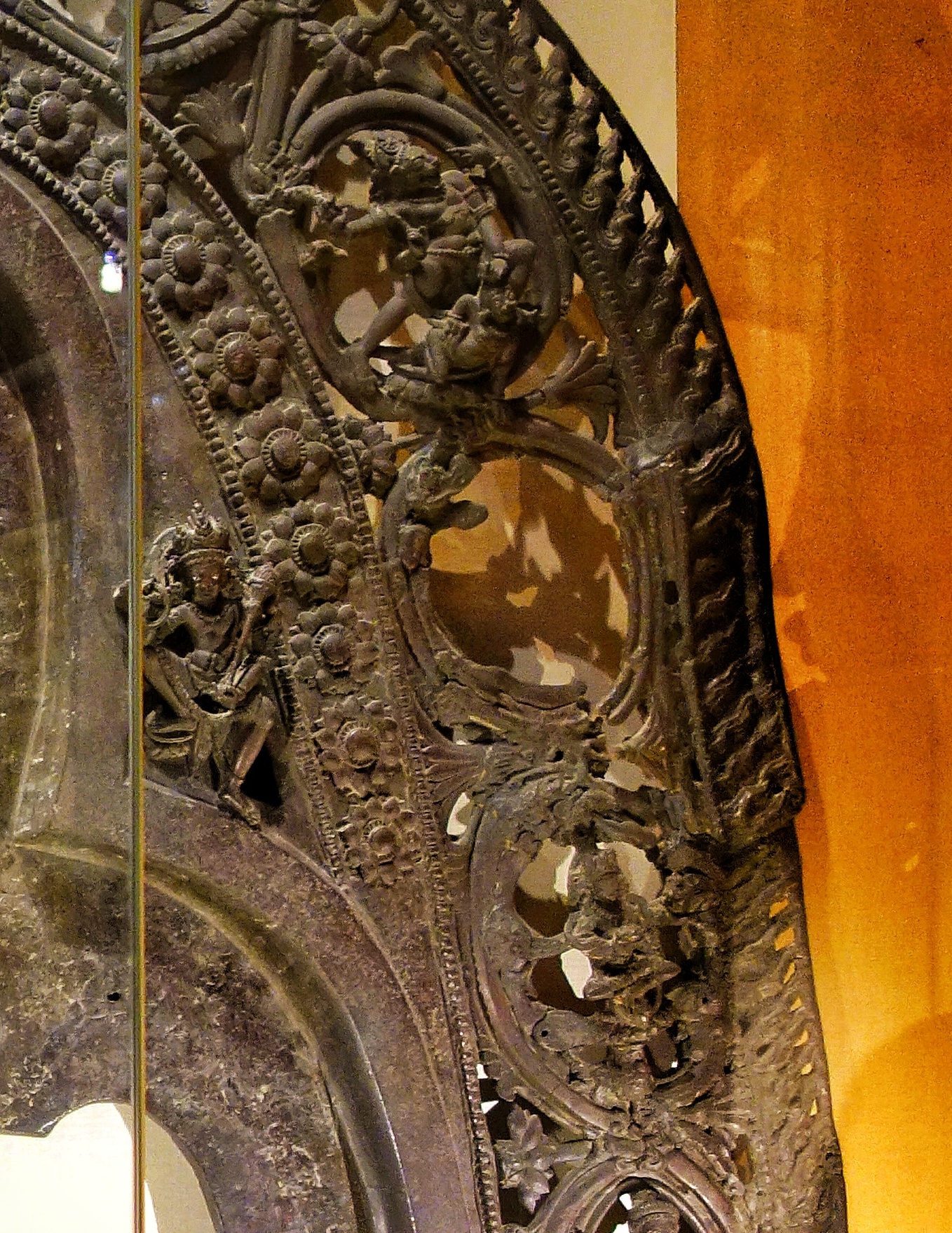
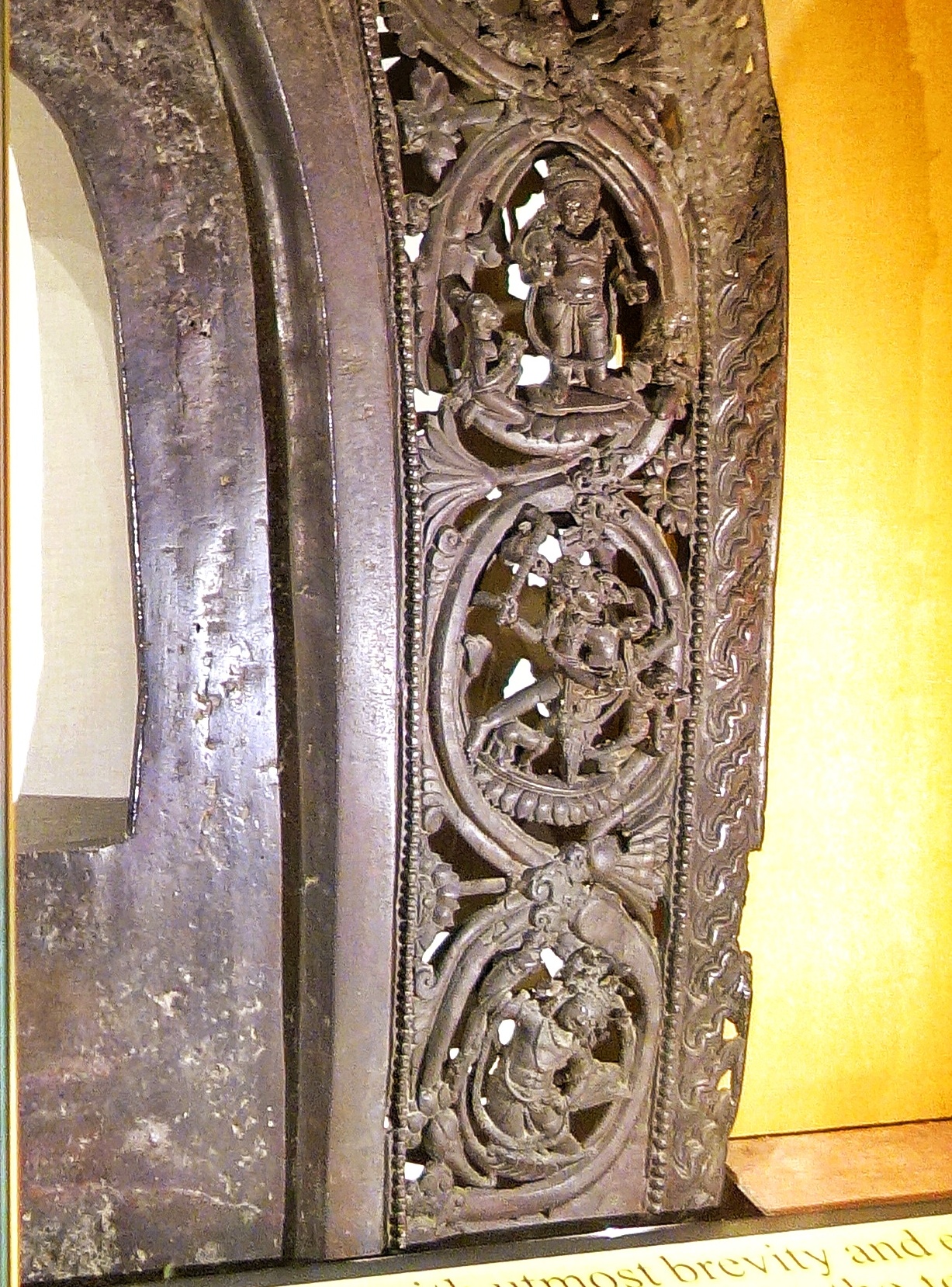
One of the most priceless treasures on display at the SPS Museum at Srinagar is a 9th Century metal “Vaishnava Avatar” frame which is a Prabhavali of bronze metal alloy measuring 6’4″ in height and 4′ wide and 1’2″ thick weighing almost 100 kgs excavated from Devsara. As the name suggests it shows various Avatars of Vishnu. Devsara, which is in Kulgam district had been in the past a great center for the casting of Bronze images and other metal works. Many of the bronze/ metal sculptures found here have unfortunately gone missing as they were simply taken away in the olden times as metal was always in high demand.
This masterpiece was discovered in 1931 and it is dated to the period of Shankar Varman. Each of the deity cast on it has great detailing and as such is a brilliant example of Kashmiri metal craftsmanship of that period. Fortunately this great piece of art along with another bronze sculpture of Lord Buddha along with a few coins made it to the Museum from the Devsara site. This sculpture is one of its kind in Kashmir and maybe India as well and is rated one of the most significant archaeological find in the Indian subcontinent.
4.Ghodas of the Ghoda Gali
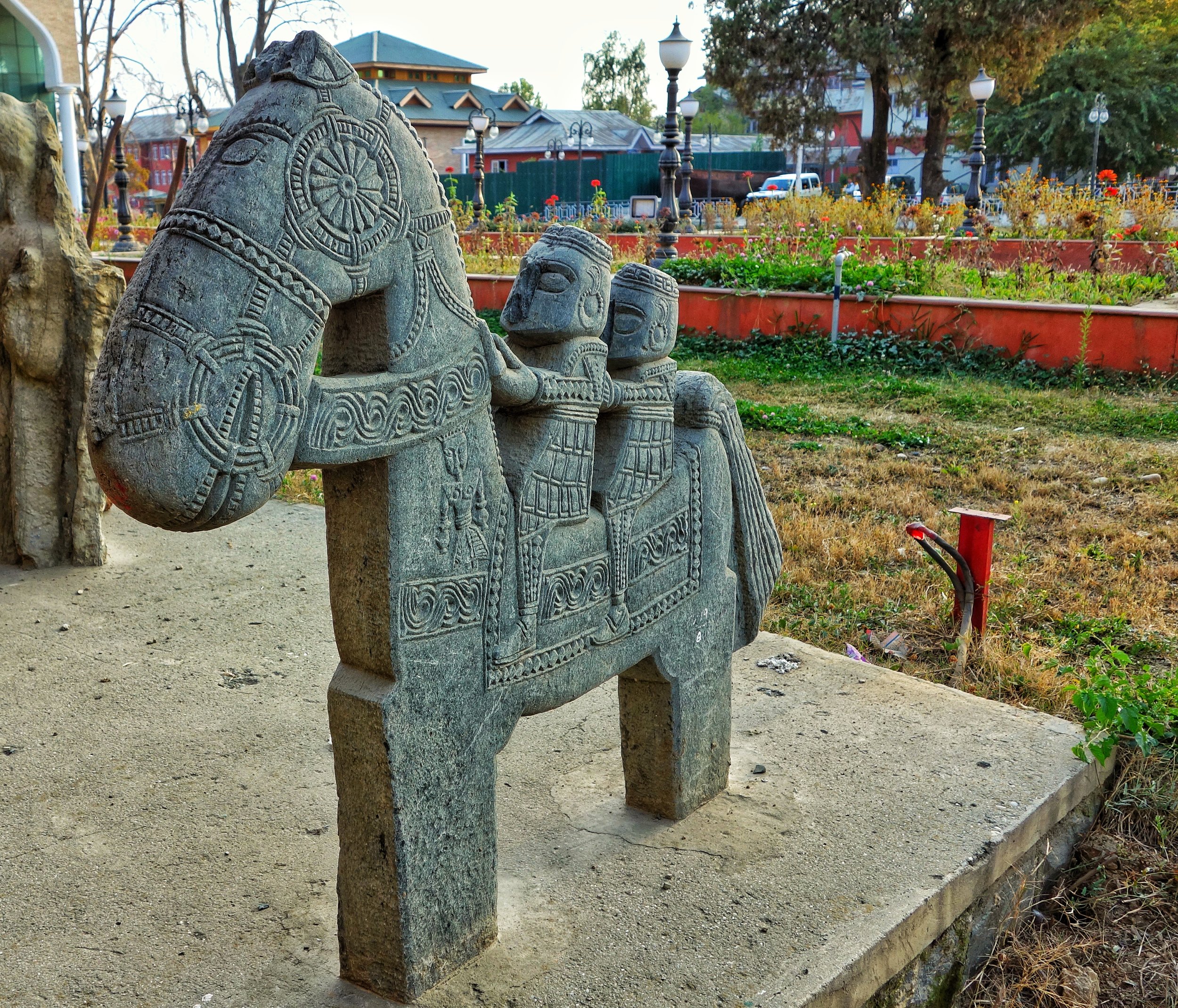
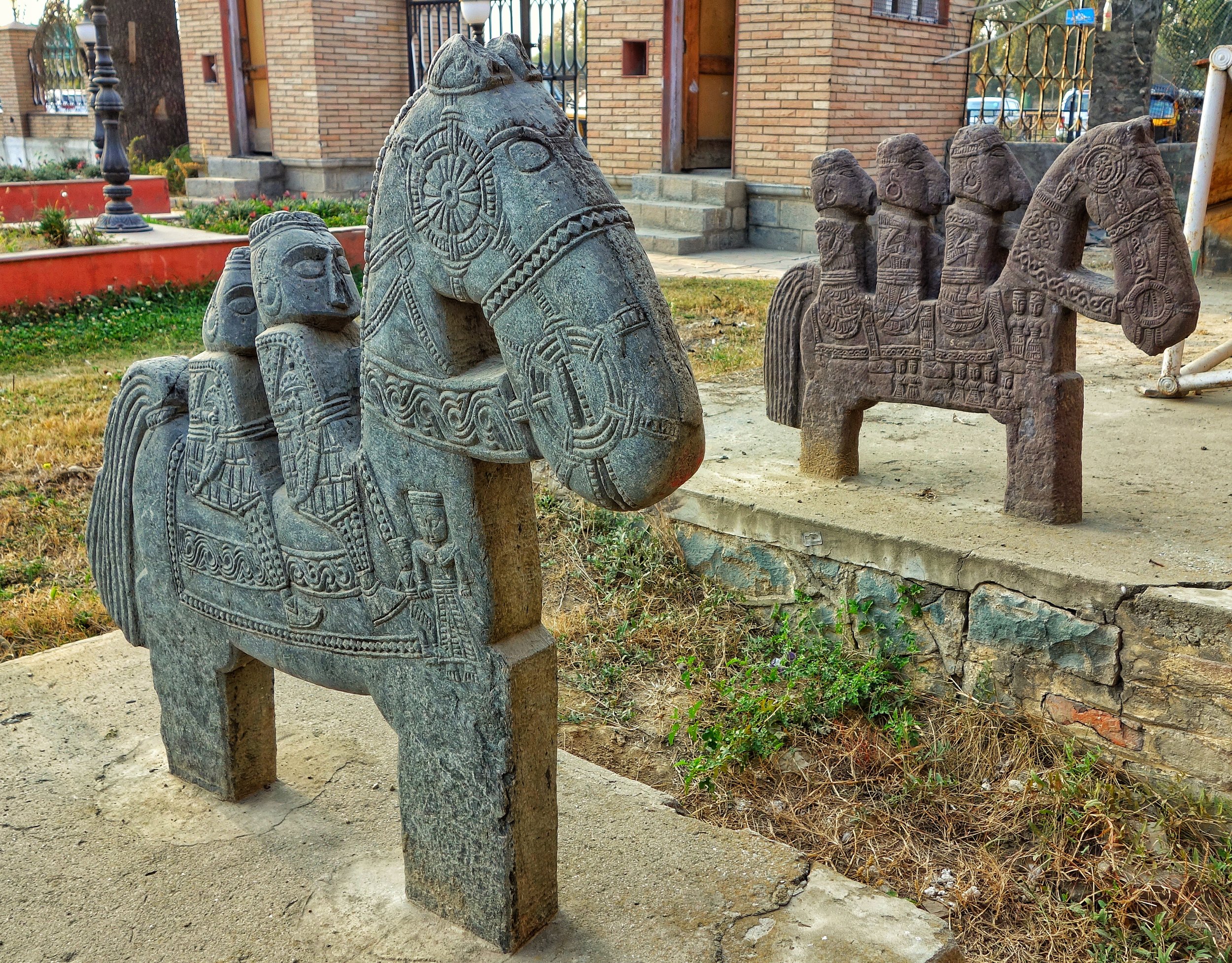
Another fascinating item on display are the Stone sculptures of the Ghoda Galli. Dotted along the Pir Panjals at certain Passes are these stone sculptures of Man Riding a Horse. These are usually found at the top of some Passes and they are found at numerous locations all over the Pir Panjals in the Jammu region. No one seems to be sure of how many of these are spread all over the Region, Even the origin is not very clear. As I spoke to one of the officials in the Museum the sculptures show a distinct Hellenic influence. A significant site for these is a place called the Ghoda Galli situated near Ramban where a great collection of these sculptures exist. A few of these pieces were sent over to the Sri Pratap Museum as well.
5.The Map Shawl
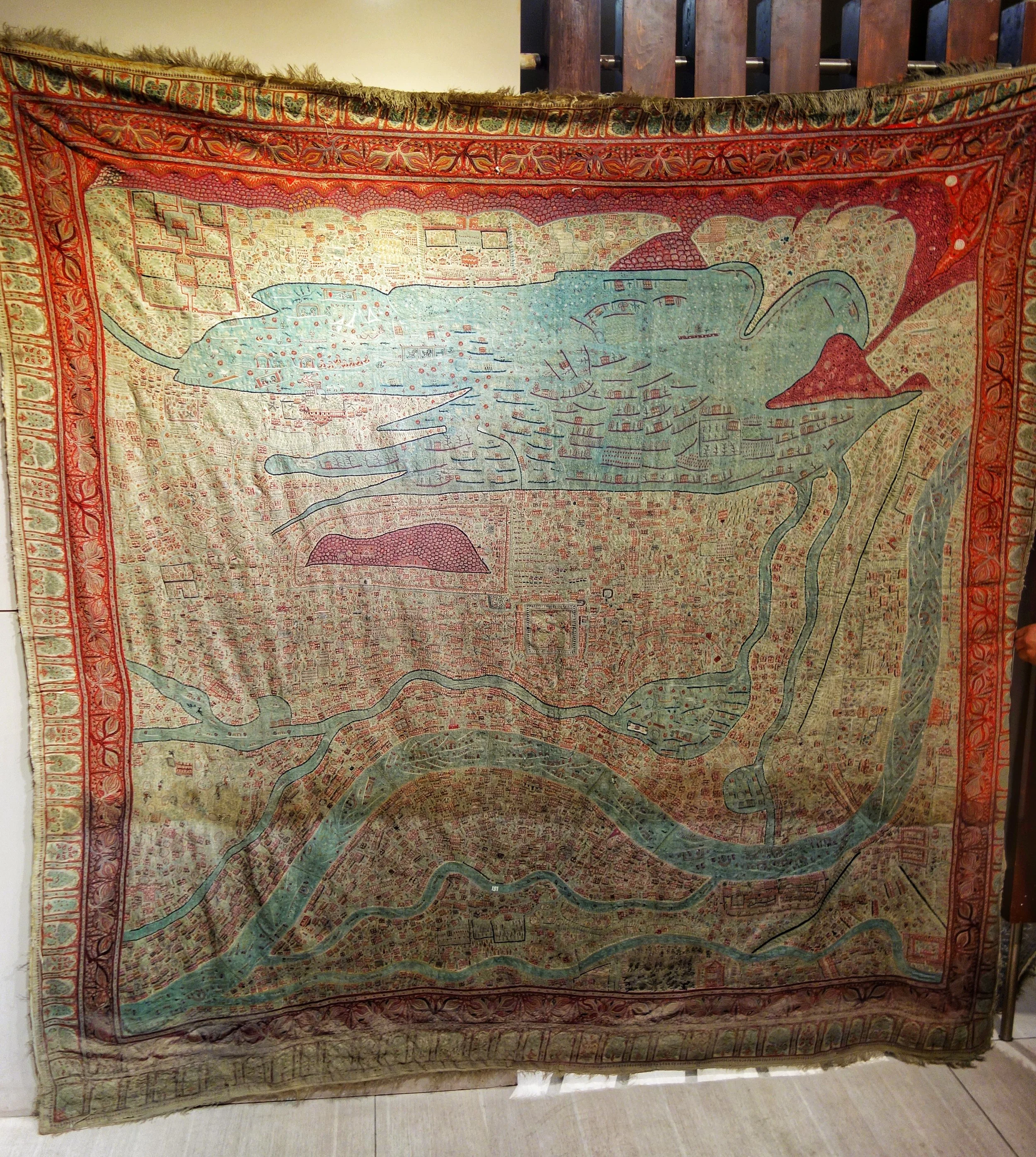
The amazing and exquisite Map Shawl of Srinagar. This Shawl took 30 years in the making. There are 3 or 4 such specimens in the world. And these were made in the late 1800’s.
One was presented to Queen Victoria by Maharaja Ranbir Singh and is presently at the Victoria and Albert Museum in London. One more is with a Museum in Australia. One is with a private collector and this piece is at the Shri Pratap Singh Museum in Srinagar though it’s not on display as it needs some refurbishing after the Floods.
It would be one of the most expensive pieces of textile ever made if it would be put on an auction.
6. Boat Gifted by Queen Victoria to Maharaja Ranbir Singh
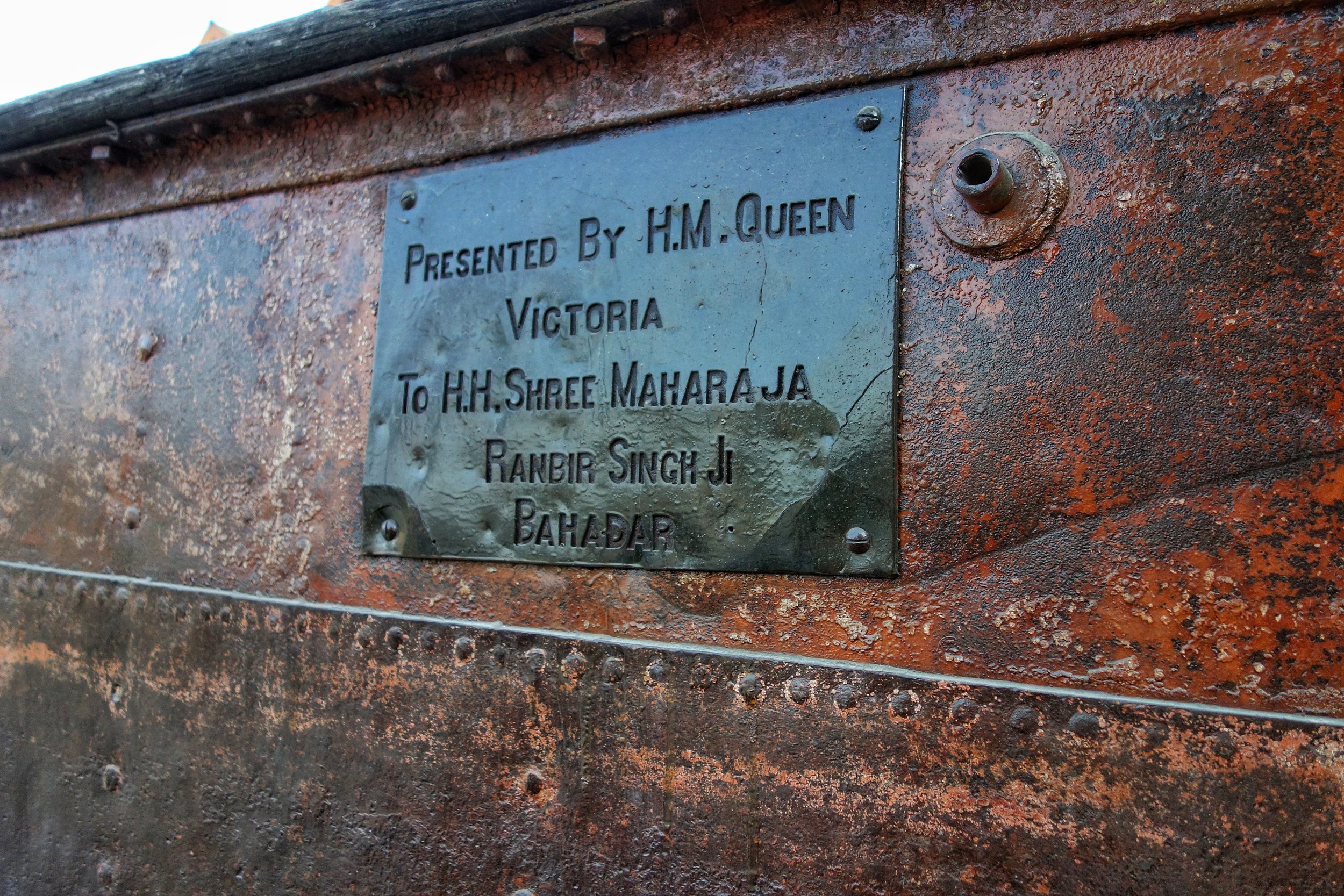
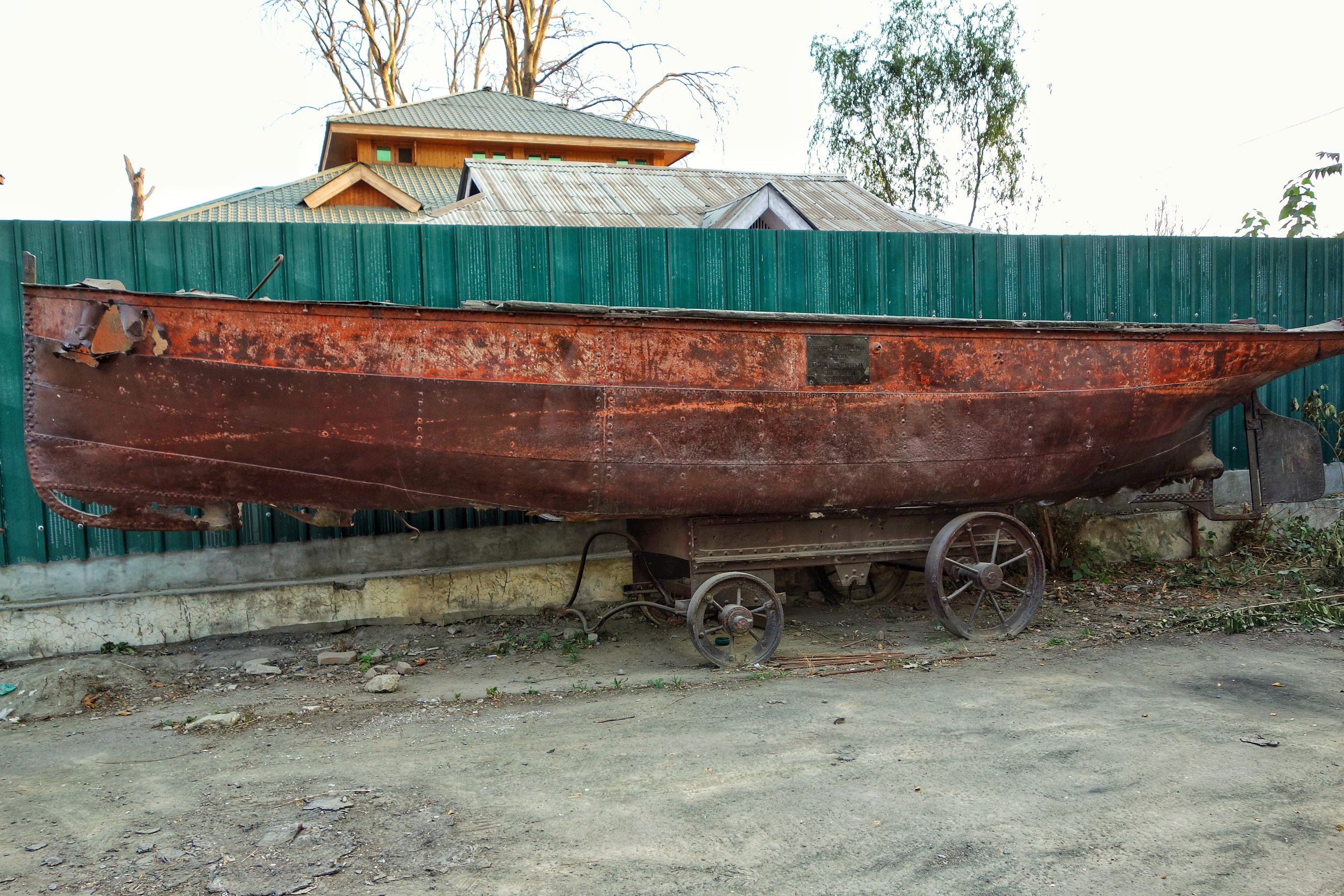
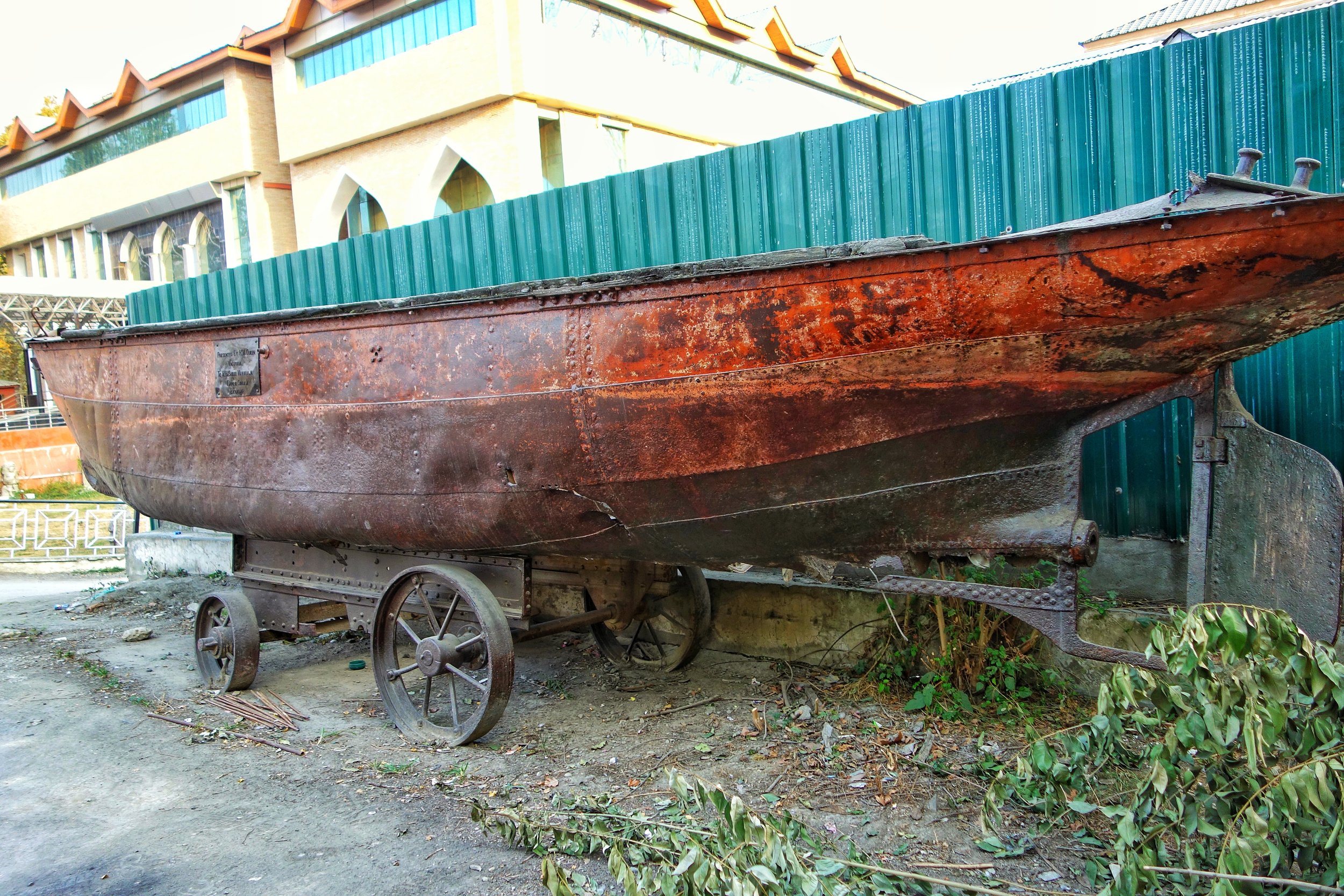
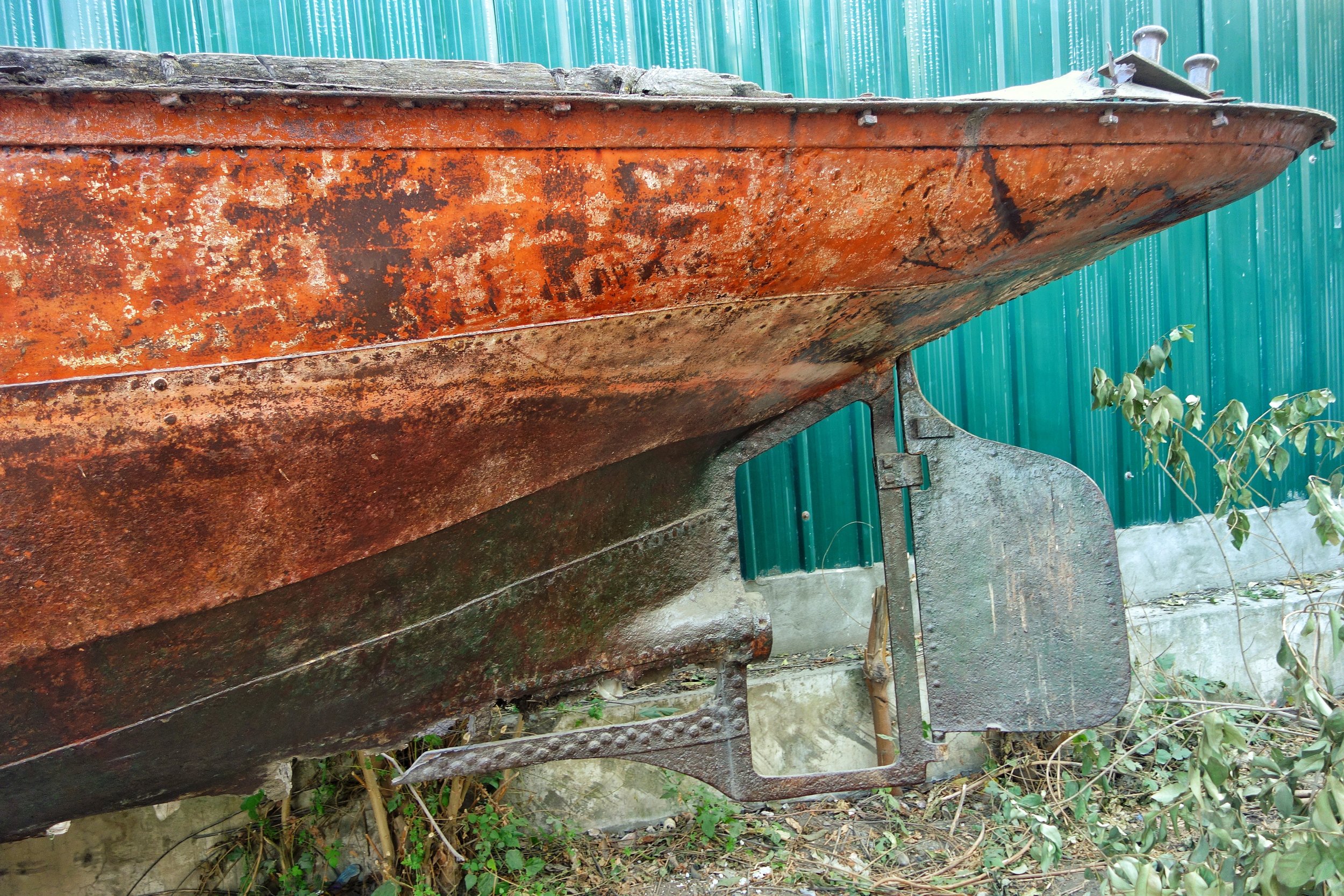
In the Museum Parking lies an interesting exhibit probably the largest one in whole Museum. A boat that was gifted by Queen Victoria to the then Maharaja of Kashmir, Maharaja Ranbir Singh. As of today it lies in a bad shape as it lies out in the open. Hopefully more would be done to preserve this important piece of History.
Kashmir : Between The Mughals and the Dogras
The history of Kashmir from the time of the rule of the Mughals till the time of the rule of the Dogras. And the Afghans and the Sikhs in between. A straight narrative of the complex history of the Kashmir Valley.

Kashmir ; Between the Mughals and the Dogras
The exalted Vale of Kashmir. The powder keg Kashmir. The enigma Kashmir. The mere mention of this name triggers a huge range of human emotions and reactions that few other words do.
Most people are well aware of what happened after Independence in 1947 but few are aware of the twists and turns of history that the Valley went through to land at that particular juncture in 1947. I try and explain the passage of History right through the Mughals to the Afghans to the Sikhs and to the Dogras. This has been compiled through various sources both offline and online. This is just an attempt at re-creating history without any prejudice to any race or religion or ethnicity. I will try my best and remain neutral to any bias and put things as they happened. My only bias would be towards a character that I have come to admire more than probably anyone in History. You will know when you read the complete story.
As most are aware Kashmir was a great favorite with the Mughals and it was a Mughal province for many centuries till finally the power of the Mughals began to decline and the Governors of the Provinces became semi-independent and began to assert their own whims and fancies.
Kashmir was no different but it had not missed the notice of the Afghans who used carry out their invasions of North India time and again in this period taking advantage of a weak Center.

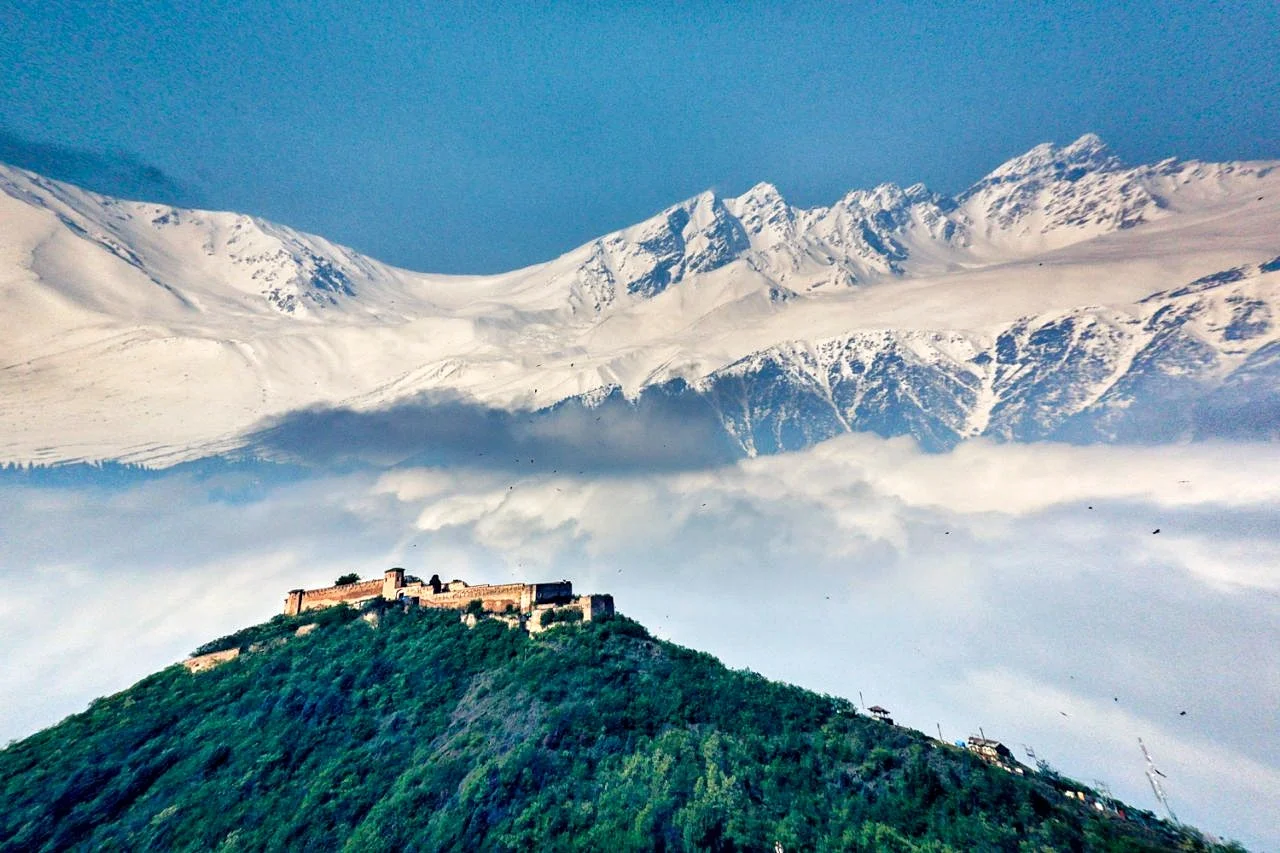
The Hari Parbat Fort as seen from the Dal Lake
Cutting a long story short the Afghan Ahmad Shah Abdali finally conquered the Valley of Kashmir after the Afghan forces under Abdullah Khan Ashaq Akasi defeated the forces of the local commander and the guy in control of Kashmir, Abdul Qasim. This was in 1753.
Abdullah Khan Ashaq Akasi became the first Afghan Governor of Kashmir but within 6 months he had to go back to Kabul for some pressing business and Abdullah Khan Kabuli was put in charge.But the Afghans had become pretty unpopular because of the aggressive tax collections and eventually he was murdered by Sukhjiwan and Abdul Banday. And Sukhjiwan Mal assumed the Governorship of Kashmir for the next almost 9 years. But he declared his allegiance to the Mughal Emperor, Alamgir and for the same he was given the title of Raja. Another Governor who succeeded him Azad Khan declared his allegiance to the Ottoman Emperor.
Point being the Governor’s of Kashmir though nominally under Afghan rule continued to do mostly as they pleased and the state of affairs in Kabul at that time were such that the Afghan Kings had neither the time or inclination to intervene as they were busy in familial infighting for the right to Rule.

Shah Shuja Durrani
Once such Governor was Atta Muhammed Khan (1803 to 1813) who declared himself pretty much independent after his father was murdered in Kabul by supporters of a certain claimant to the Throne. As it so happened in 1808, the Afghan King Shah Shuja was ousted by the same individual, Muhammed Shah and his minister Fateh Khan. Atta Muhammed Khan invited Shah Shuja to come to Kashmir from where he could still go on ruling as the King of Afghanistan. Shah Shuja took the offer and landed up in Srinagar only to find himself Atta Muhammed Khan’s prisoner at the Hari Parbat Fort.
The new King Mahmud Shah and Fateh Khan realized that the loss of Kashmir would be a great one and they had to settle the score with Atta Muhammed Khan for declaring independence and also they wanted Shah Shuja in their custody. So in 1812 an Army was prepared under the command of Fateh Khan and his brother Azim Khan for a punitive and decisive strike against Atta Muhammed Khan and re-take Kashmir.
There was a problem though. A lot of water had flowed down the Jehlum since 1753 and there was a new power to be reckoned with. And yes you guessed it right, it was my favorite historical character, the Sher-e-Punjab, Maharaja Ranjit Singh (I will refer to him as the Sher in short).

The Sher E Punjab : Maharaja Ranjit Singh
The newly conquered/ aligned territories of the Sher lay in between Kabul and a smooth passage to Kashmir and the Afghans had no option but to ask the Sher for his assistance in return for which they offered suitable rewards. Not that the Sher didn’t have designs of his own on Kashmir. The rewards included the Eleven lakh Rupees and “half” of Kashmir if this amount wouldn’t be paid.
The newly formed Punjab Kingdom of the Sher was sandwiched between the Britishers on the East and the Afghans on the West. Both were formidable adversaries and having done his conquests to the South and the only avenue left for expansion was up North and hence to Kashmir. Kashmir as a territory offered great revenue and was also the center of the Shawl trade. It was also an important trading point for trade into Turkestan, Baltistan, Ladakh and Tibet. But besides all these there was a certain aura attached to this place. The Sher wanted Kashmir.
Till now the Sher had never been in direct conflict with the King of Afghanistan though he had fought Afghans on numerous occasions and was well aware of their military prowess. Nor did he want any confrontation with them till he chose the place and time.
So all things said and done an alliance was agreed upon and a small Sikh force was dispatched under Diwan Mokham Chand to go along with the Afghan forces to teach a lesson to the rebel Afghan Governor of Kashmir (History is never as simple as we are taught or what we assume it to be) and “secure” Shah Shuja from his captivity.
Oh another small thing. The wife of Shah Shuja had offered the Koh-i-Noor diamond to the Sher if he could secure the safe release of Shah Shuja. The Sher was a connoisseur of all good things in life and the Kohinoor would be crowning jewel in his great collection.

The Shergarhi Palace
So soon a combined Afghan-Sikh force marched into Srinagar and took over the main Shergarhi and the Hari Parbat Fort. Both Atta Muhammed Khan (the Sher had taken an undertaking from the Afghan King that he wouldn’t be harmed) and Shah Shuja on being released made haste for the Sikh camp understandably. Point to be noted that both forces reached Srinagar through different Routes
Diwan Mokham Chand now demanded his due as promised but Fateh Khan refused as he said that it all belonged to the Afghans and the Sikhs didnt play any part in it. After due deliberations with the Sher, the Diwan with his forces withdrew but they took along with them Shah Shuja and Atta Muhammed Khan. The Kohinoor was worth much more than Eleven Lakh Rupees. Not that Fateh Khan knew.
After they withdrew from Kashmir, the Sikh forces consolidated and induced Jahandad Khan (who was a brother of Atta Muhammed Khan, the deposed Governor of Kashmir, now in Sikh protection) the commander of Fort of Attock to let them into the Fort and take control.

The Attock Fort
The Sher was ready. This brought him into direct confrontation with the King of Afghanistan. Fateh Khan left Kashmir and a combined Afghan force now attacked the Sikhs at Attock. Joining the Sikh force were the formidable General Hari Singh Nalwa, General Gurmukh Singh, Karam Chand Chahal, the commander of the Sikh Artillery Ghouse Khan besides Dewan Mokham Chand who led the Sikh forces. Without getting into the details let me just say that the Sikhs won this first big engagement between the Sikh and the Durrani Empire.
Coming back to Kashmir. The Sher after his victory despatched a force under General Ram Dayal to fulfil his ambitions on Kashmir in 1814. The Afghans were ready for battle and they met at Hirpura. Fighting in the Pir Panjals in inclement weather was something the Sikhs were not prepared for. They lost heavily in this engagement and then in further engagements. Kashmir still lay with the Afghans. The Sikhs realized they needed expertise in mountain warfare which the Afghans were good at and the Sikhs were defeated in their first expedition into the Himalayas.
Just as it happened a war far away provided a new set of weapons to the Sher. The British had clashed with the Gurkhas around the same time. The Gurkhas were finally defeated in 1816 and what it did was that the fighting quality of the Gurkha soldier was greatly appreciated and many Gurkhas went on to join the forces of the Sher.

Maharaja Gulab Singh
Meanwhile Azim Khan was the new Governor of Kashmir and he tried his best to bring around some stability. His main revenue collector was Birbal Dhar. It so happened that some revenue targets were not met and Azim Khan was unhappy. Anticipating his wrath Birbal Dhar fled to Raja Gulab Singh of Jammu who sent him to the Sher. Birbal Dhar offered inside information on Kashmir and egged on the Sher to launch another attempt on Kashmir.
Soon the oppurtune time came in 1819 and Azim Khan had to leave for an engagement in Kabul leaving Jabar Khan in charge. A new force was prepared comprising of the Sikh Army with its newest element the Gurkhas. A galaxy of the Sher’s Generals were put in charge. These included Misr Diwan Chand, General Hari Singh Nalwa, Raja Gulab, Sardar Jawala Singh and General Akali Phulla Singh and they were assisted by the local Muslim rulers of Poonch, Rajauri and Bhimber. They marched onto Kashmir over the Pir Panjals.
The decisive battle was fought at Shopian. The Afghans fought hard and they fought well. But the cream of the Punjabi’s Emperors formidable and trained on European lines forces finally prevailed in the Battle. On July 15, the victorious Sikh forces marched into Srinagar and finally the Sher had his biggest prize Kashmir. The first son born to the Sher after the conquest of Kashmir was named Kashmira Singh.
Finally the Sher had Kashmir but he would never get to visit it in the next 20 years. The first Sikh Governor of Kashmir was General Hari Singh Nalwa. And then started the period of Sikh rule in Kashmir. In the meantime the ruler of Jammu, Raja Gulab Singh, a vassal of the Sher, started on a campaign in the surrounding areas with a view to consolidate his power in the Jammu Hills and beyond. He pretty soon ran over all the small Hill Rajas around and at the same time he came to assume the powerful position of the Commander in Chief of the Sarkar Khalsa Army (as the Sikh Army was called).
Raja Gulab Singh, a Dogra, had ambitions of his own and his brothers held powerful positions in the Court of the Sher. Raja Dhian Singh was one of the main Wazirs and Suchet Singh was the treasurer. Soon the Court of Punjab was divided into two factions. The Punjabi Sikhs on one side and the Dogras
on the other. Of course none of these factions could gio against the wishes of the Sher. Nobody could so much as whimper in front of him.
In 1839, the Sher passed away. The passing away of such a dominant personality and the factionalism soon led to the weakening of the Empire. The British had been lying in wait and having defeated all the major powers in the sub-continent the only obstacle to their complete domination was the Sher. He was no more. The time had come.

Political Divisions of Punjab after the First Anglo Sikh War in 1846
Finally in 1846 the British met the Sikhs in battle. After several hard fought Battles the British finally emerged victorious. Raja Gulab Singh, conveniently had kept out of all these Battles. A huge war indemnity was levied on the Sikhs and on being unable to pay so they offered in return all the territory between the Beas and the Indus to the British.
Raja Gulab Singh offered to pay the war indemnity of 75 lakhs Rupees in return for all the country between Ravi and Indus to be given to him. Kashmir which was a part of this to be turned onto him. He already controlled Jammu, Ladakh, Baltistan and Gilgit thanks to the expeditions of General Zorawar Singh. The only missing piece was Kashmir. The crown jewel. The British agreed. And hence was formed the state of Jammu and Kashmir.
Hence the Dogras under the newly crowned Maharaja Gulab Singh became the new Rulers of Kashmir. But this was not without drama. The last Sikh Governor of Kashmir, Sheikh Imam-ud-Din offered some resistance but owing to the pressure exerted by the British he soon gave up and the Dogras took actual possession of Kashmir.

Maharaja Ranbir Singh
Maharaja Gulab Singh was succeeded by his son, Maharaja Ranbir Singh and so the Dogras ruled till 1947 and after that we are mostly aware of what happened.
Kiki’s Blog
Stories from the Himalayas
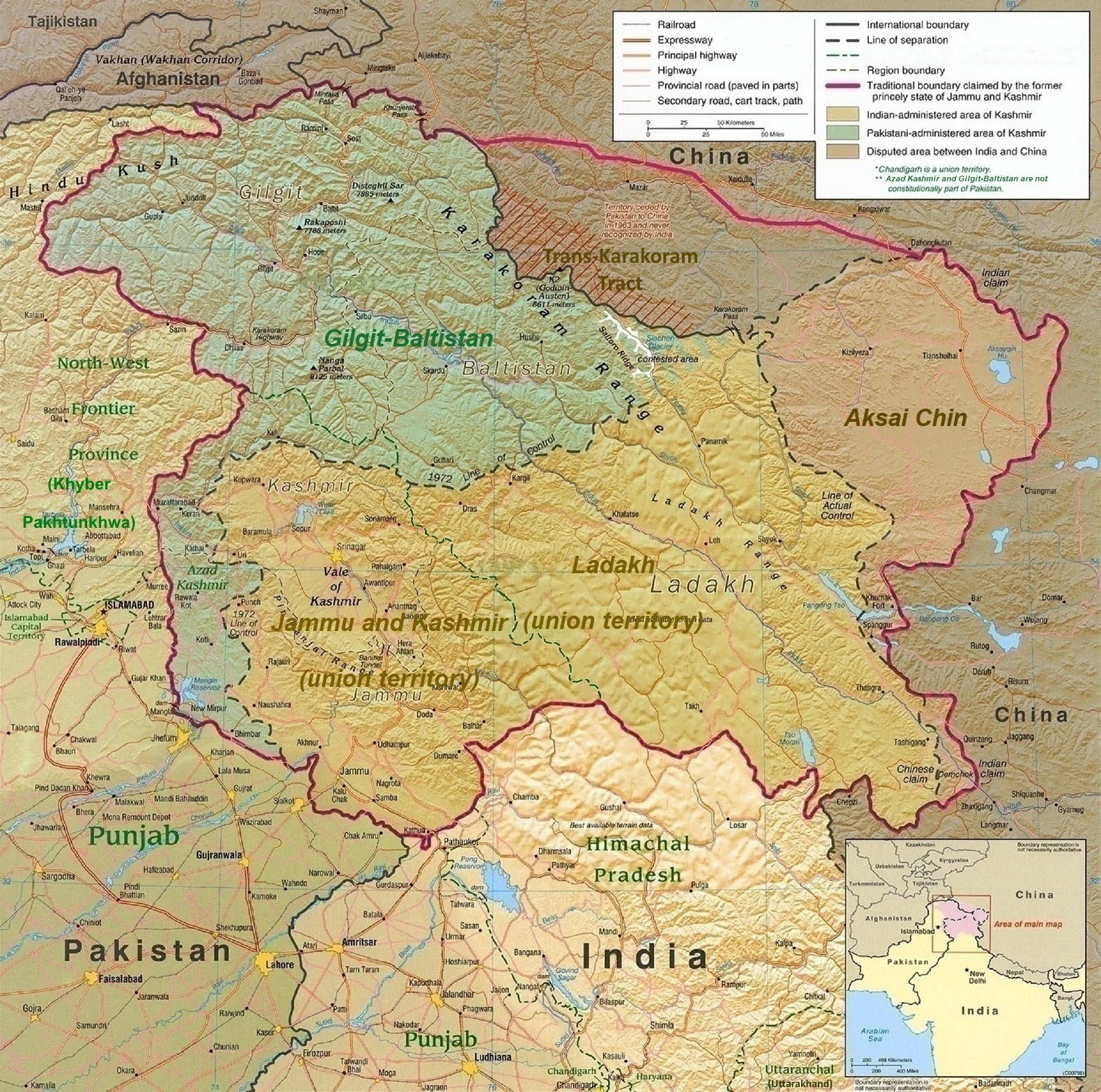



Five years ago the Galwan Valley was in the News for the wrong reasons after a deadly clash between the Indian and Chinese Armies in the Valley located in Ladakh lead to many deaths on the contentious Border between the two countries in wake of continued Chinese intrusions into Indian territory.
This area along the Shyok River, of which the Galwan Nallah or the Galwan River which forms the Galwan Valley has been off limits to Civilians since long but now the Indian Government has decided to open up the area for Civilians and we were amongst the First Civilians to venture into this beautifully desolate part of the Eastern Karakorams in Ladakh. Earlier Civilians could only venture upto the Village of Shyok from where the Shyok River takes a U turn and flows in a Northerly direction.