
Antiquities from Ladakh at the British Museum
The Collection of Antiquities and everyday use Items from Ladakh at the British Museum Collection.

Antiquities from Ladakh at the British Museum
Some antiquities and interesting everyday articles from Ladakh at the British Museum Collection. All pics and accompanying text is from the British Museum Website.
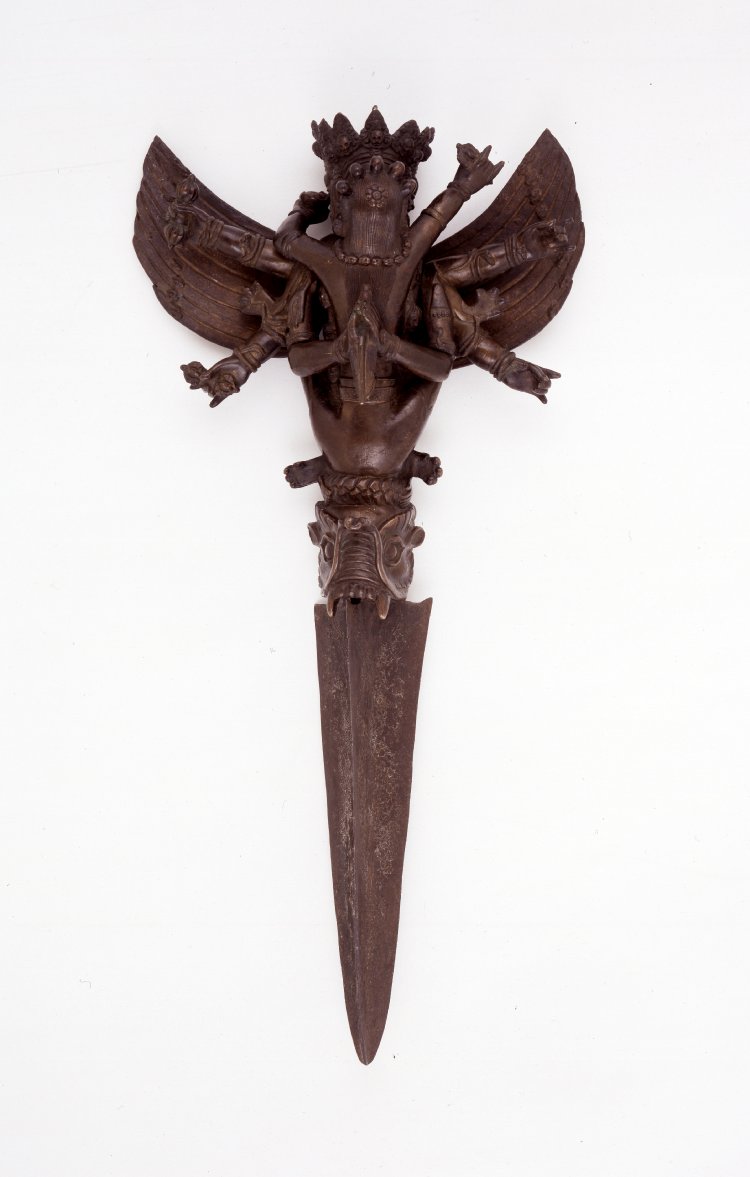
Phur-bu (part of), dagger (ceremonial). Snake design. Made of gilded bronze; also engraved iron

Phur Bu (part of), dagger (ceremonial). Snake design. Made of gilded bronze; also engraved iron. Finial (Phur Bu?). Figure of Hayagriva with 4 heads and 6 arms mounted on do-rje. Made of bronze.

A circular amulet-box (gau) with a pair of cylindrical loops for suspension attached to the sides, made of silver with copper alloy and silver filigree decoration; inside the box and behind a circular window is a painted clay plaque (tsa-tsa) depicting a seated Buddha flanked by bodhisattvas; below the opening, a pear-shaped fragment of turquoise is set into the filigree.
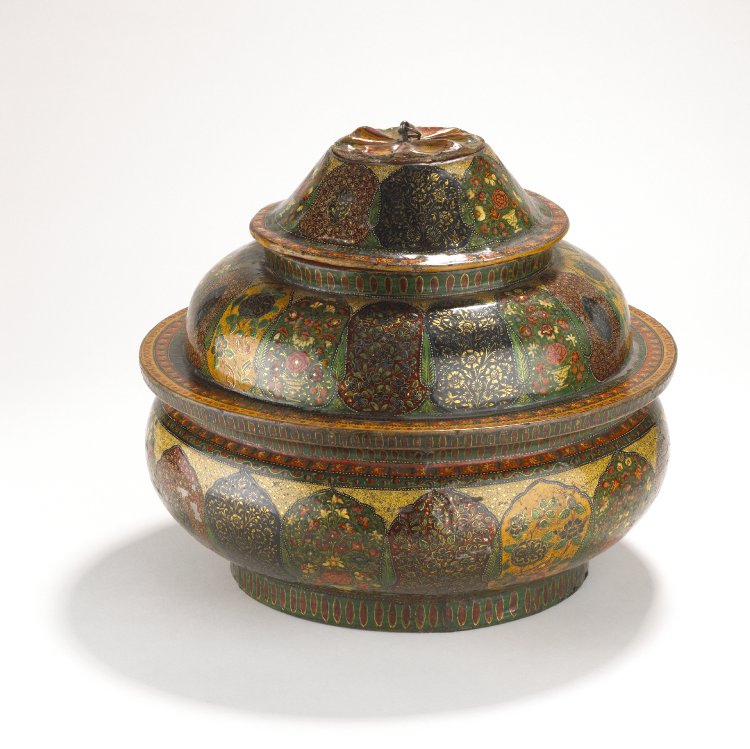
Food container in four parts. Made of lacquered wood and papier mâché. Decorated externally with Kashmiri floral designs and internally with fish. The base is also decorated with fish.

Lock and Key

Bell made of metal
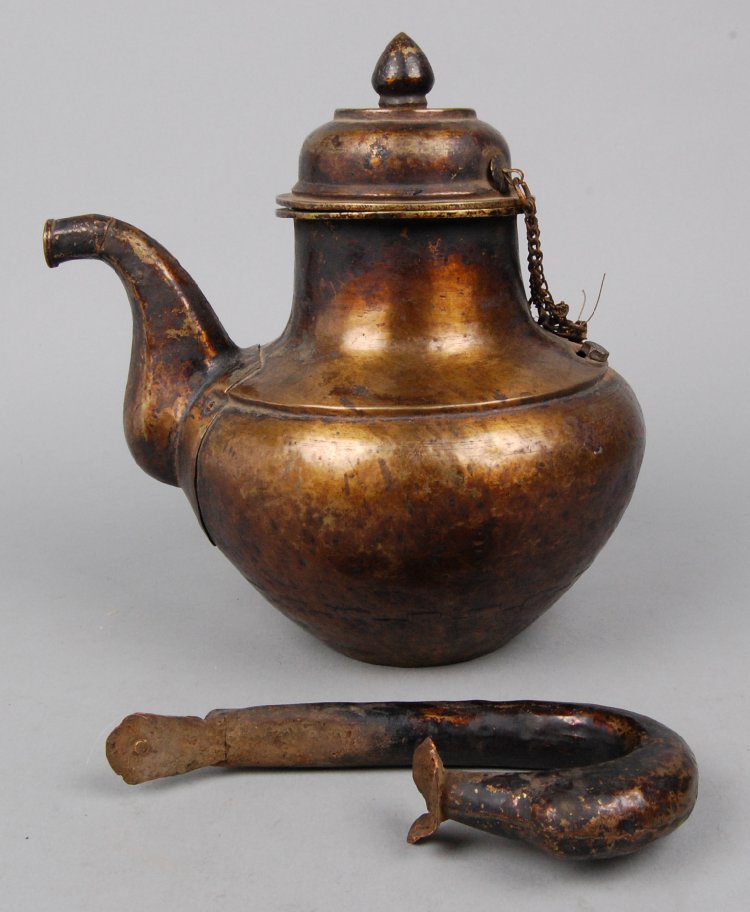
Lid made of metal with onion-shaped knob on top and chain at one side

Bell (for horse) made of metal, wood.

Bell (for horse) made of metal, wood.

Case (for charm) made of metal, stone, textile

Perak : Woman's head-dress made of cloth, cloth (canvas), coral, beads (lead), brass, pearls, turquoise

Pendant (one of a pair). Made of cloth, stones (semi-precious), turquoise, coral, bronze
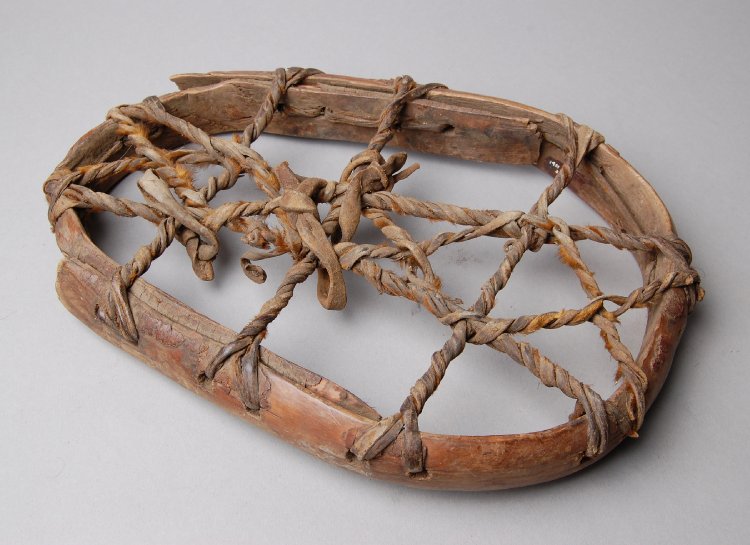
Snow-shoe (one of a pair) made of wood, hide.

A Crampon made of Wood and Hide.

Reverse side of the Crampon

Pack Saddle Wooden for Horse / Mule

Loom (part of) made of wood, textile
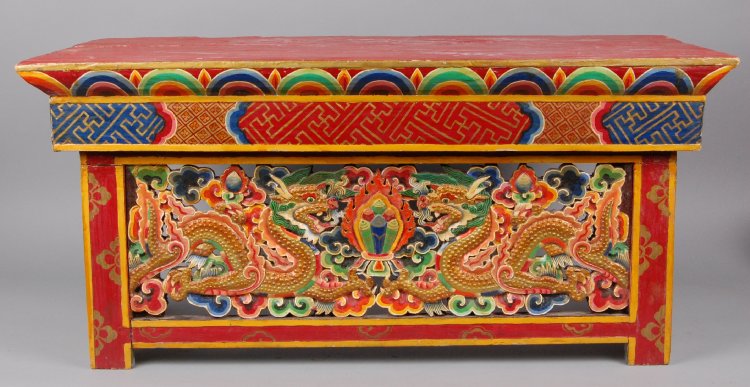
Wooden folding table intricately carved with traditional dragon, lion, cloud, geometric and floral motifs and laquered and painted red, yellow, orange, green, blue and gold. Red flat-top with multi-coloured semi-circles immediately below; underneath this, panel with Greek key style geometric design. Front panel with two dragons facing one another with group of six (scrolls?) surrounded by flames at centre; cloud designs all around. Front table legs painted red with yellow edges and gold floral motifs. Side folding legs similarly painted but central panels carved with lion design surrounded with clouds. Top and back sides of table roughly painted blue.

Another view of the Wooden Folding Table.
The Karakorams in India
The Karakorams are the most vertical of all the Mountain Ranges in the World. A large part of the Karakoram falls within India but most people are unaware of it. We explain.

The Karakorams as seen from a flight coming into land at Leh.
The Karakorams in India
The Karakoram, with its named derived from the Turkic word "Kara' meaning Black and "Koram" meaning Gravel. These impenetrable Mountains were seen as citadels and Towers of black gravel by the Central Asians and hence the name. They were also referred to as the Muztagh which meant Ice Mountain by the Western Explorers as well. The term Muztagh is now used to denote the sub Ranges of the Karakorams. As per some historians they were referred to as the “Krishnagiris” in the Puranas.
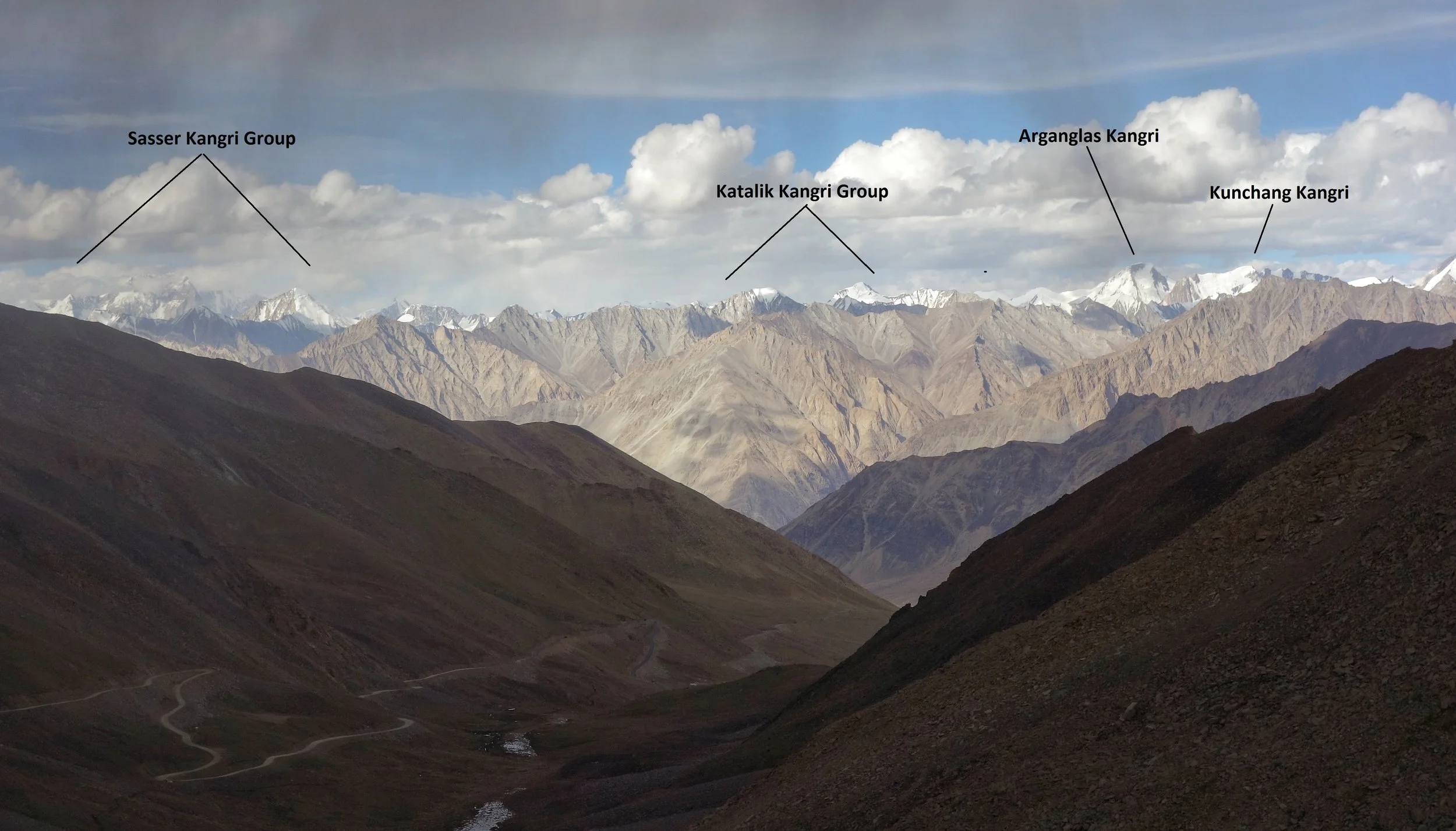
The Sasser Kangri Group and other Peaks of the Karakorams as seen from the Khardung La (Pass)
The Karakorams extend right from the Aksai Chin in the East to the Wakhan Corridor in the West and has other great Mountain Ranges like the Himalayas, the Hindu Kush, the Pamirs and the Kun Lun as its neighbors. It runs app. 550 kms from East to West starting at the Saser Muztagh in the East to the Batura Muztagh in the Hunza District.
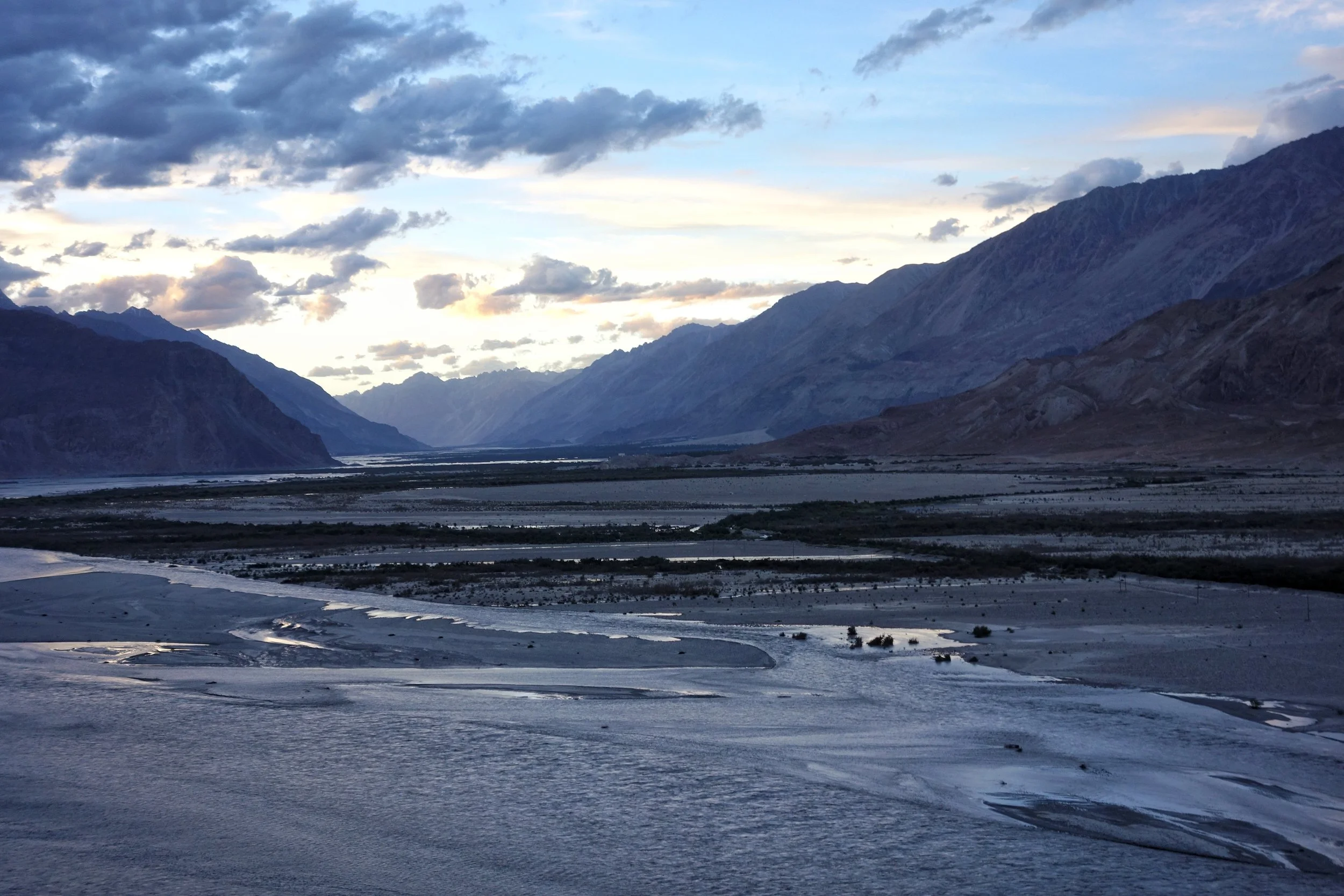
The Confluence of the Shyok and the Nubra. The Karakorams on the other side of the confluence.
Its Southern boundary is defined by the Gilgit, Indus and the Shyok Rivers which separate it from the Himalayan Range in the South. Infact in the Nubra Valley the Shyok River plays the boundary between the Himalayan Range and the Karakorams. In the North its the Karakash and the Yarkand Rivers which separate it from the Pamirs and the Kun Luns. The Karakorams actually lie right in the Center of the Great Himalayan Mountain Complex bounded by Ranges which are unparalleled in their sheer verticality. All these Ranges have Peaks exceeding 7000m which are not found in any other region on the Planet.
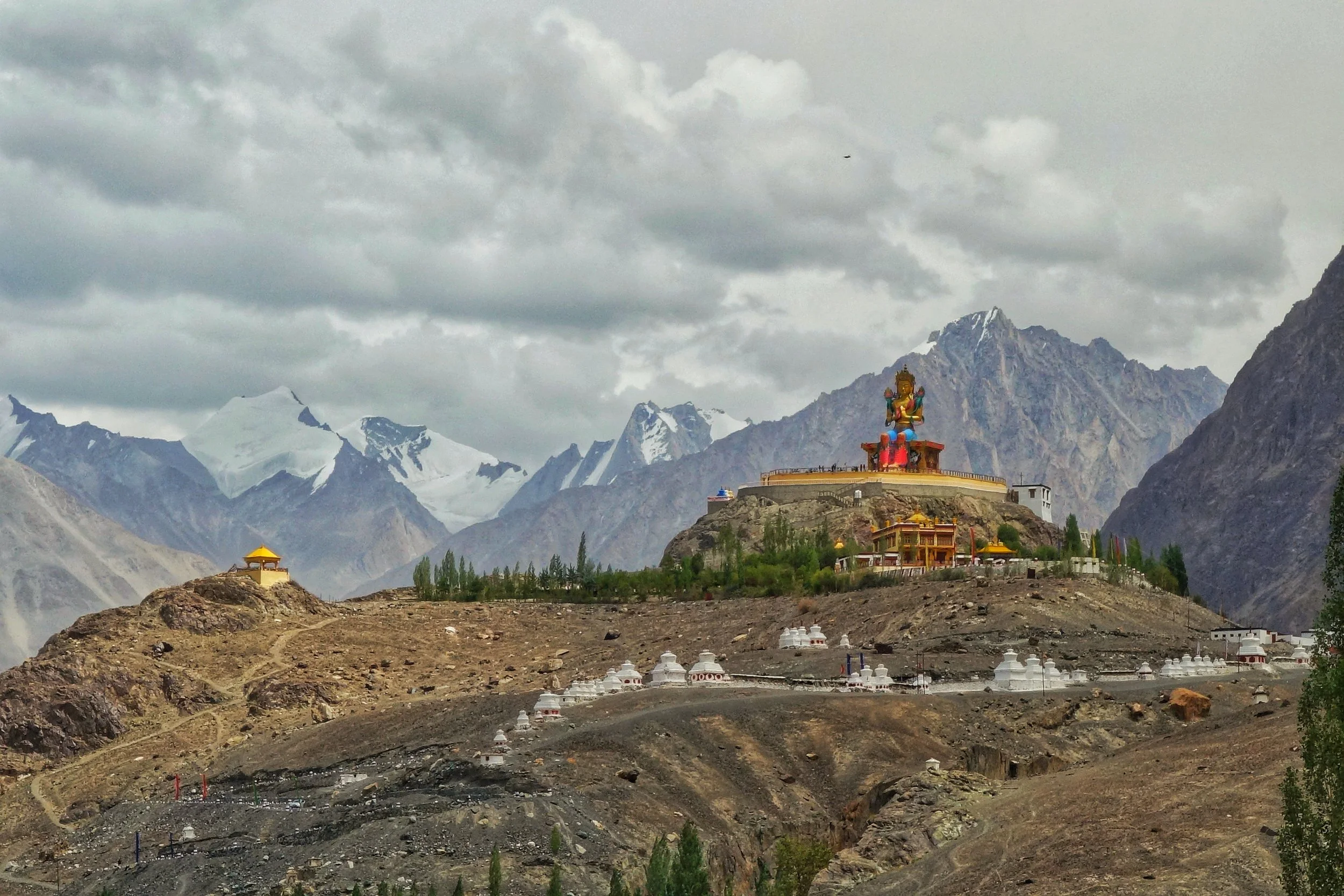
The Karakorams in the background of the Buddha Statue at Diskit in Nubra Valley
Broadly this most vertical of all the Mountain Ranges is subdivided into the following sub Ranges though experts differ on this aspect. The nine sub Ranges are as under
Sasser Muztagh
Rimo Muztagh
Siachen Muztagh
Baltoro Muztagh
Mashebrum Muztagh
Panmah Muztagh
Hispar Muztagh
Spantik Sosbun Muztagh
Rakaposhi Haramosh Muztagh
Batura Muztagh

Unnamed Karakoram Peaks along the Nubra Valley
Contrary to the popular perceptions a sizeable part of the Karakorams lies in territory well under Indian control though being in a sensitive border region most of it is off limits to Civilians and even climbing Expeditions to this area as the one carried out by the Himalayan Club and led by our Vice President, the acclaimed Mountaineer Divyesh Muni need various special permissions to visit these areas. Of the sub Ranges the Sasser Muztagh, the Rimo Muztagh and the Siachen Muztagh lie well within Indian held territory. Even a substantial part of the Baltoro Muztagh is within this territory. In Fact of the 10 highest Peaks in Indian territory (excluding the ones in Occupied territory) lie in the Karakorams. And three of these lie in the Sasser Massif and belong to the Sasser Kangri family. Infact these are clearly visible from the top of the Khardung if you look towards the North.
On Flight of Fancy to Leh
A commentary on the Flight from Delhi to Leh which takes one over the Himalayan Range. It is one of the most spectacular Aeroplane journey for the sights it offers. Starting over the Plains, then over the Lower Himalayas or the Shivaliks, then over the Middle Himalayas / Pir Panjals and finally over the Great Himalayan Range itself before finally landing in the Trans Himalayan landscape of Ladakh.


The Great Himalayan Wilderness
On a Flight of Fancy to Leh
A flight to Leh from the Plains gives you an actual chance to view the awesomeness of the mightiest Mountain Range on the Planet especially just as Winter gives way to Spring and the Peaks have the maximum amount of Snow which accentuates the appearance of the Mountains.

The Lower Hills with the Rivers coming through
The endless Plains first give way to the lower Hills and the Shivaliks. Its just ahead and coming out of these lower Hills are a number of Rivers as they enter the Plains. And the effect of man's work is also visible as you see the Reservoirs of various Dams appear once into the lower Hills.
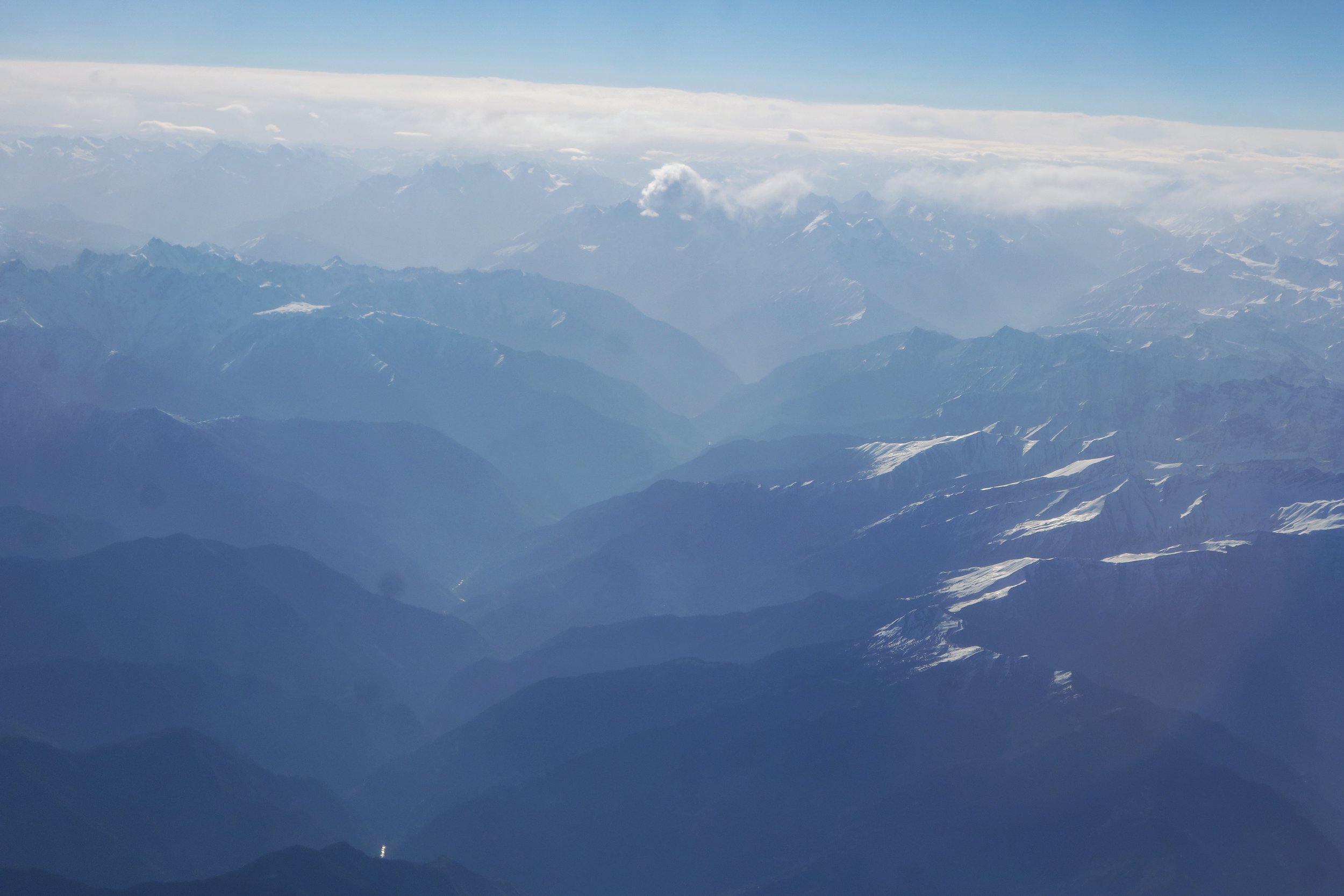
The Lower Hills giving way to the Lesser Himalayas at the Dhauladhars and the Pir Panjals.
The lower Hills give way to the Lesser Himalayan Ranges like the Dhauladhar and the Pir Panjals. These appear as big mountains with craggy tops and snow higher up with a some small Glaciers.

The Lesser Himalayas giving way to the Great Himalayas
Once across this suddenly you see an elevation in the lay of the land and suddenly till the eyes can see are visible craggy Peaks all white with massive Glaciers between the Massifs. This is the sign that you are now on the Great Himalayan Range itself. The main and the highest Spine of this Mountain Range. And it goes without saying this appears as the most dramatic part of the Range as its a virtual Ocean of thousands of Spires.

The Glaciers of the Great Himalayas

The endless Spires of the Great Himalayas
But like all good things must end so does this this.And then you start noticing that the landscape gets browner with lesser Snow and the Mounatins appear to be rounder rather than craggy. These are the Trans Himalayas. And also making their appearance are certain large water bodies that exist on this Trans Himalayan desert.

The Great Himalayas giving way to the Trans Himalayan Plateau
In the pic below you can see the dramatic change as you cross from the Great Himalayas over to the Trans Himalayas with a River acting like a border. The Mountains to the right of the River are craggier and whiter than the ones to the left. Also in the left corner you see a large water body which is the Tso Moriri Lake.
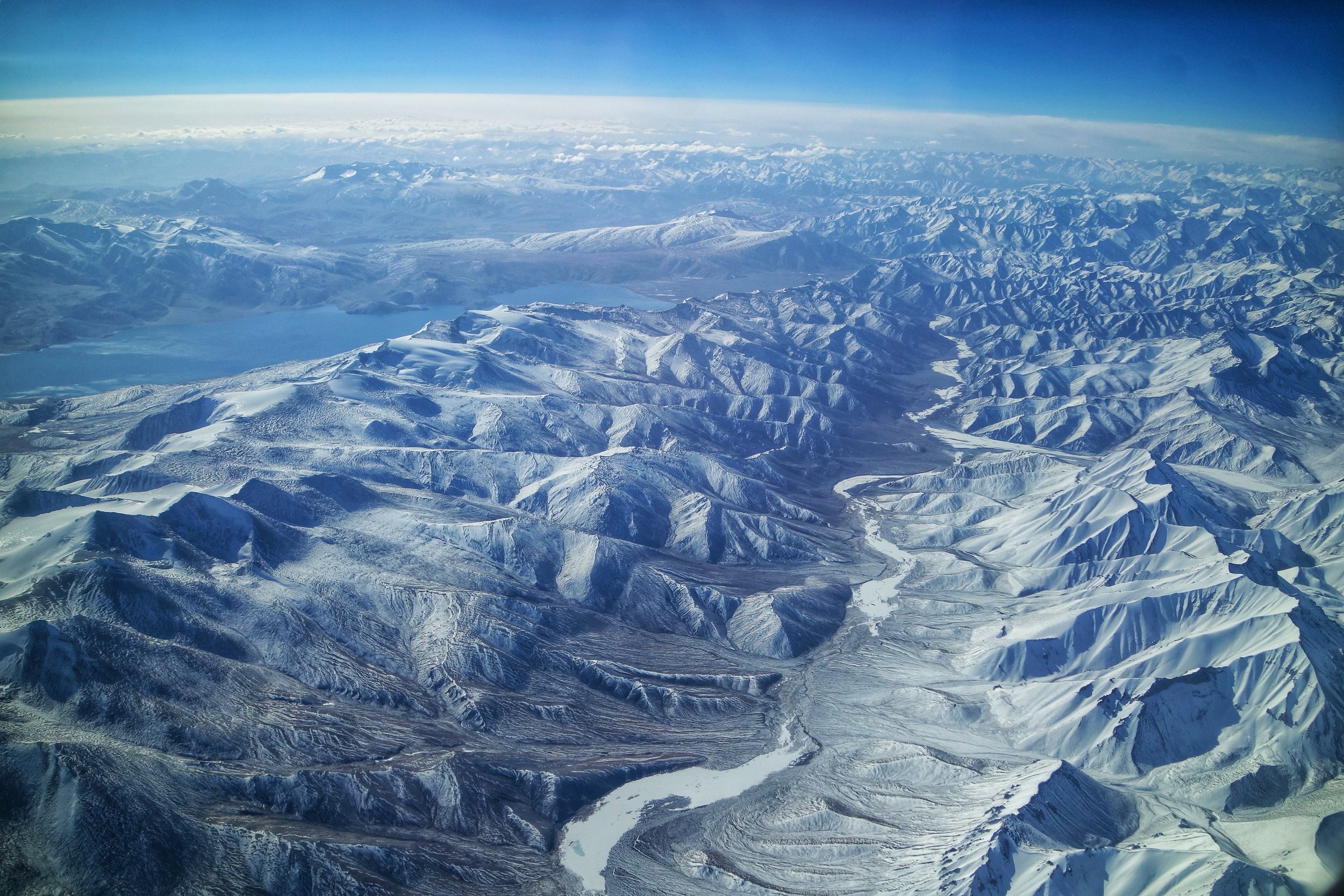
The Lakes of the Trans Himalayas : The Tso Moriri

Typical Trans Himalayan Landscape
However the Trans Himalayas dont last long as soon appearing on the horizon are Mountains ever craggier than the Great Himalayan Range. These are the what were called in Turkic language as the Black Rock Mountains and even today we use that term for them, the Karakoram, arguably the most impenetrable Range of the whole system. From the Leh flight as it starts its descent on the first view of the Karakaorams they appear even more formidable till they disappear behind the Ladakh Range and the plane lands along the Indus River.

The gently sloping Peaks of the Trans Himalayan Plateau
However if by some luck we were able to continue to fly northwards we would cross the first line of the Karakorams and come across the formidable Deosai and the Depsang with the Changthang of the Tibetan Plateau further afield on the right alongwith Changchenmo. Soon we would be flying over the mighty K2 and the Trans Karakoram Tract. But the fun doesnt end until you run into the spires of Kun Lun and the Pamirs at the point they meet and converge. Another great Mountain vista awaits you you cross another of these Great Mountain barriers which seperate the Indian sub-continent from Central Asia. And finally our imaginary flight would land at Yarkand at the edge of the Tarim Basin.

The Spires of the mighty Karakorams appearing beyond the Ladakh Range. In this case the Saser Massif.
You have just flown over the most formidable Mountain barrier on the Planet. Now think of the Men who crossed these barriers on foot. And let me know if a chill passes down your spine when I tell you their stories on a day I decide to tell that story :)

Looking in the opposite direction towards the plains we have the Zanskar Range with the Great Himalayas in the background.
Do walk the Mountains someday instead of flying or driving over them
Pic from April 2018. Delhi to Leh flight.
Kiki’s Blog
Stories from the Himalayas
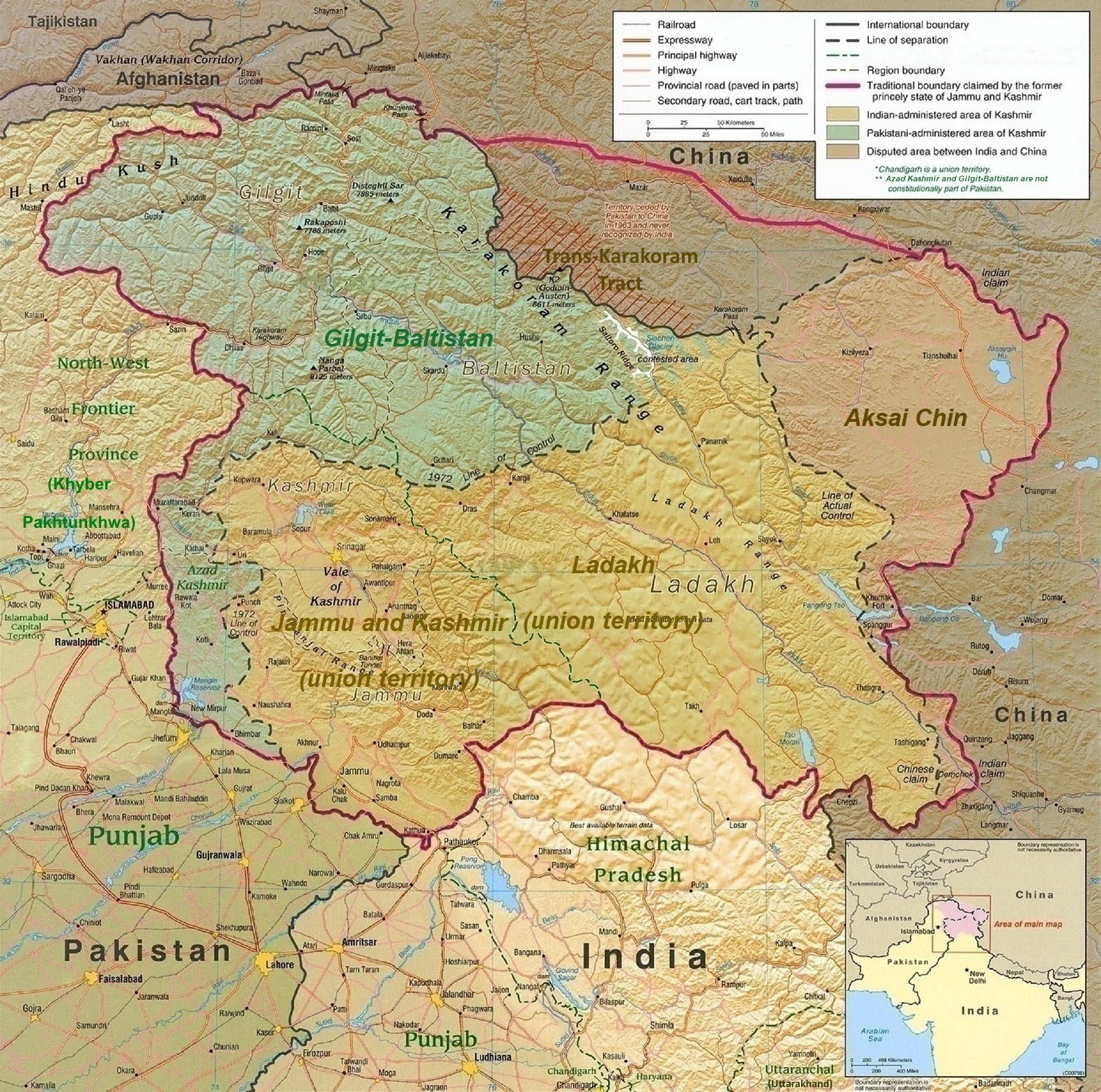



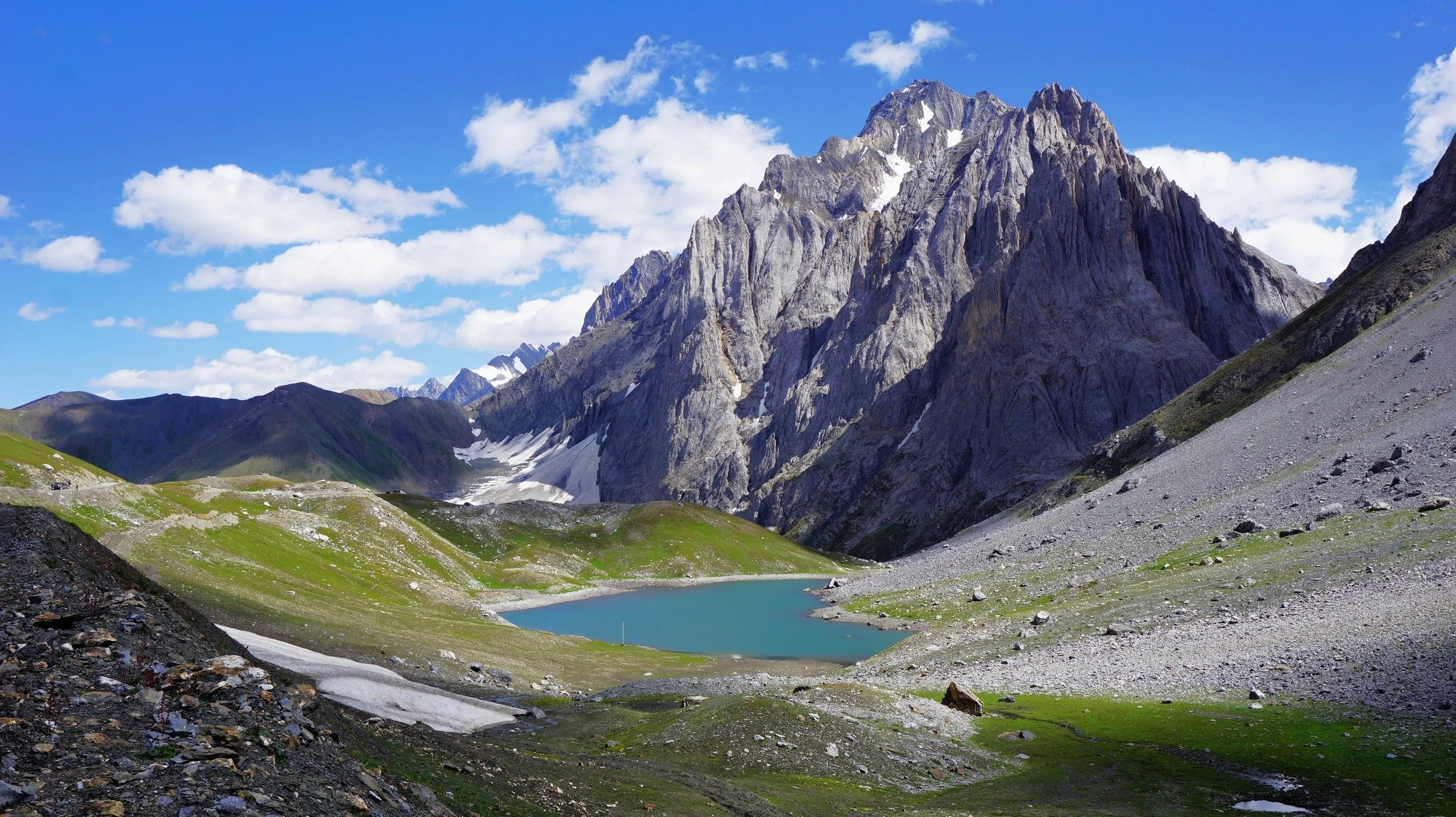
Five years ago the Galwan Valley was in the News for the wrong reasons after a deadly clash between the Indian and Chinese Armies in the Valley located in Ladakh lead to many deaths on the contentious Border between the two countries in wake of continued Chinese intrusions into Indian territory.
This area along the Shyok River, of which the Galwan Nallah or the Galwan River which forms the Galwan Valley has been off limits to Civilians since long but now the Indian Government has decided to open up the area for Civilians and we were amongst the First Civilians to venture into this beautifully desolate part of the Eastern Karakorams in Ladakh. Earlier Civilians could only venture upto the Village of Shyok from where the Shyok River takes a U turn and flows in a Northerly direction.