
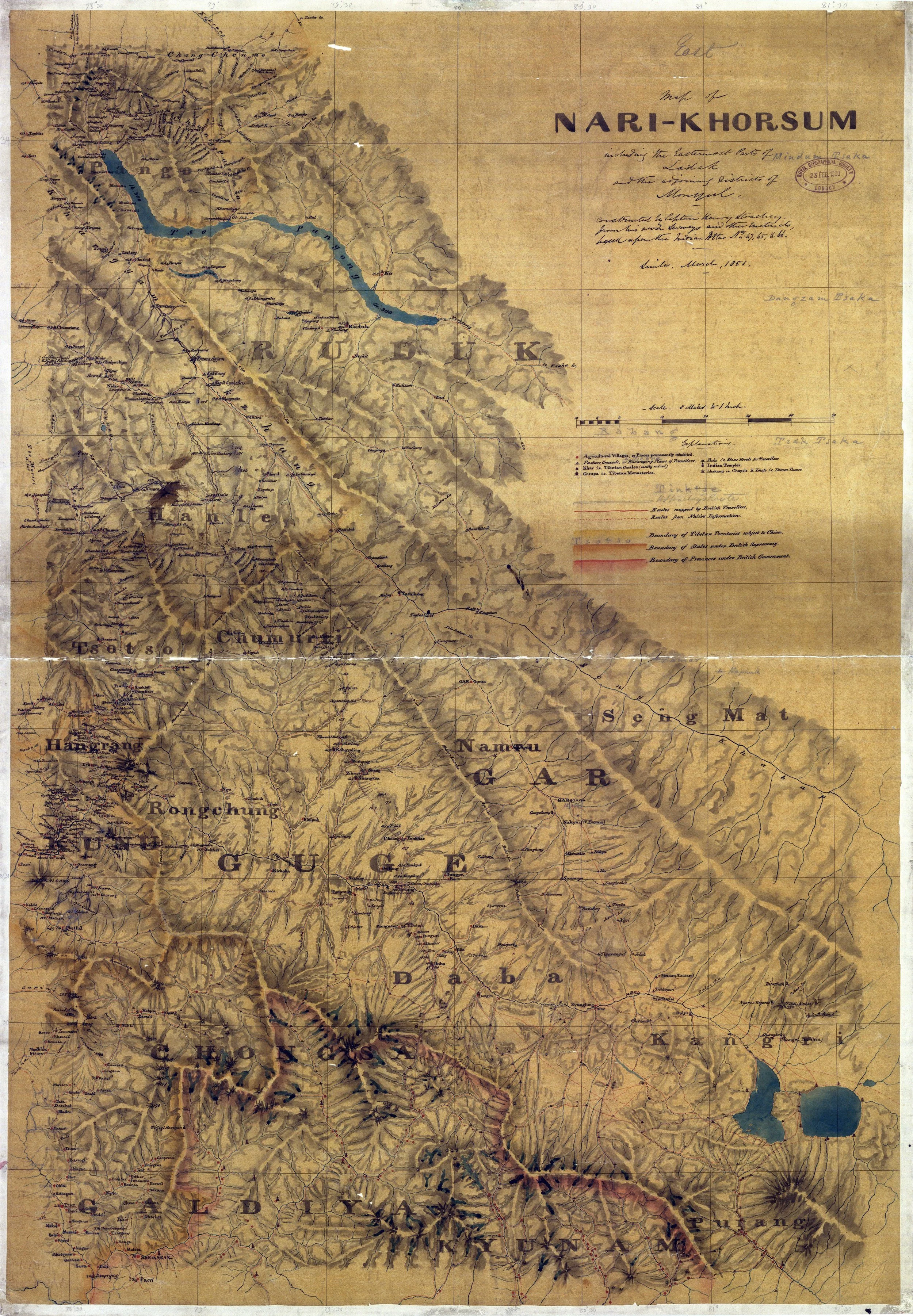
Starchey's Ladakh 1851
Col Starchey was an Officer in the British Army and was involved in the Surveying and Mapping the unmapped Regions to the North of the Great Himalayan Range as well as around Tibet. He made various Journey’s to the Region and came up with some Great Maps of the area and one of the most prominent being the Maps of Ladakh (Western Tibet as it was called) and the Regions around it.


Col Starchey was an Officer in the British Army and was involved in the Surveying and Mapping the unmapped Regions to the North of the Great Himalayan Range as well as around Tibet. He made various Journey’s to the Region and came up with some Great Maps of the area and one of the most prominent being the Maps of Ladakh (Western Tibet as it was called) and the Regions around it.
In this Note we will go through his legendary Ladakh map which came out in Two Parts, the first being Ladakh West with Parts of Balti and Monyul 1851 (labelled as the Ladak Map) and the second one being Ladakh East with Parts of Balti and Monyul 1851 (labelled as the Nari-Khorsum Map)
One of the interesting things is that the names of all the neighbouring Regions are as per what the Tibetans / Ladakhis referred to these Regions as for eg Kacheyul instead of Kashmir.
Also what the Map does is show the names of the Regions in Capital and it reflects on how prominent a certain name was for a Region and how prominent was that Region in itself. This was one of the first Maps of the Region and it came just three years after the first European stood on top of the Karakoram Pass which is the watershed between the Himalayas and Turkestan of old.
The Regions listed in bold in both the Maps are as such :
In the West Ladakh Map
Ladak (Ladakh) : Balti (Baltistan) : Zangskar (Zanskar) : Kacheyul (Kashmir) : Chamba : Kunu (Kinnaur)
In the East Ladakh Map (besides the ones already mentioned)
Ruduk : Gar : Guge : Chongsa : Galdiya : Kyunam
In his account called “ Physical Geography of Western Tibet” written for the Journal of the Royal Geographic Society writes as such ;
The Indian Provinces next adjoining to Tibet are Ashong i e Acham or Assam. Monyul the whole of the Indian Himalaya especially the Sub Himalaya inhabited by Mon i e Hill Indians. Lhopato, Lho dukor Lho mon, the Bhotant of Bengal or Bootan of the English. Its capital b Krashismchhosdzong or pronounceably Tashichuzong i e the August City of Religion improved by the English to Tassisudon and the like Demojongs i e the Goodly Region, the Shikim Shikimpati or Sikkim of Indians and English the British cantonment in its lower part is r Dorjegling or Dorjeling corrupted to Darjeeling and the like a name equivalent to Vajrapura or in plain Saxon Thunderbolton otherwise the Place of the Heavenly Sceptre or of the Precious Stone or Diamond Kangschan hJing i e the Icy Mass is the great snowy mountain on the N border of this province famous as the highest measured peak on the globe
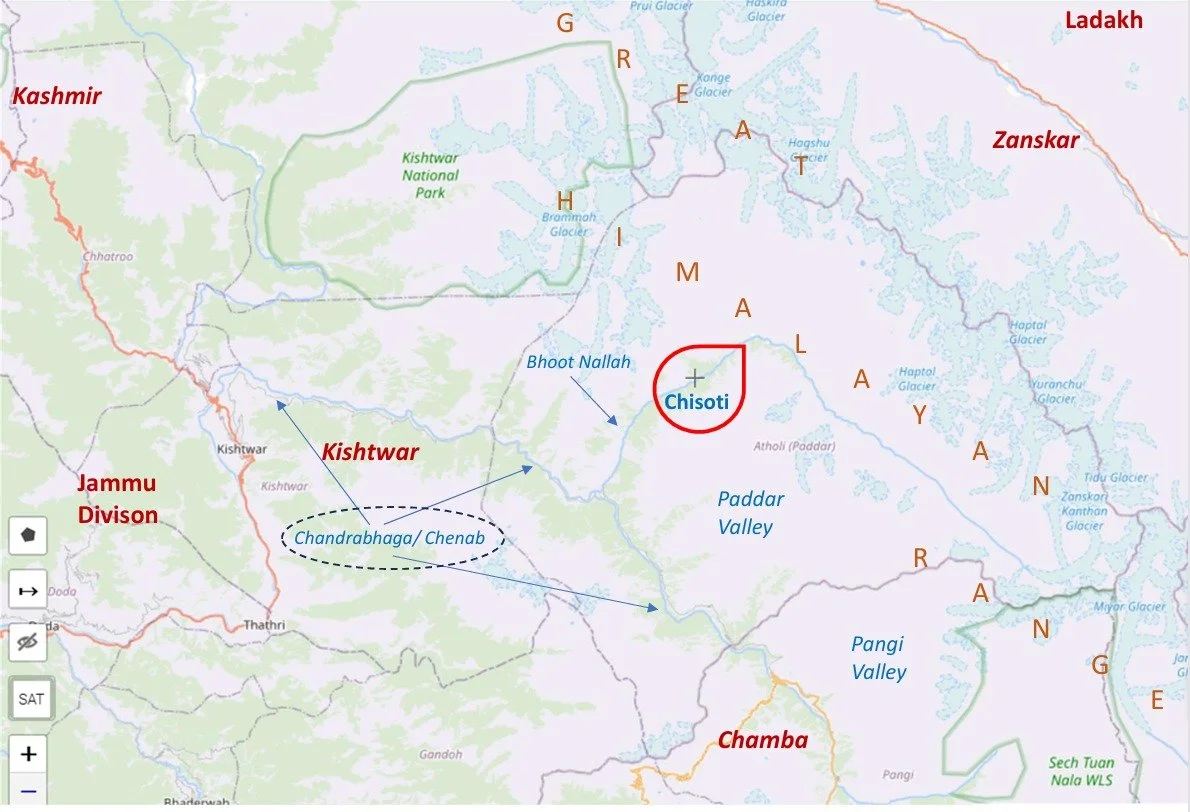
Palbo is Naipal (Nepal), Kyunam is Kumaon, Galdiya is Garhwul, Chongsa is Himalayan Garhwal. Kunu is the District of Knor Kanor Kanoring Kanaur Kunawar (Kinnaur), c Nyungti is Kullu, Garzha is Lahaul, Panga of Himalayan Chamba, Paldar and Maru Wardwan of Himalayan Kishtwar are called by their native names Kacheyul vulgo Kachul is Kashmir
The Illustrated Mountain Geography of Ladakh
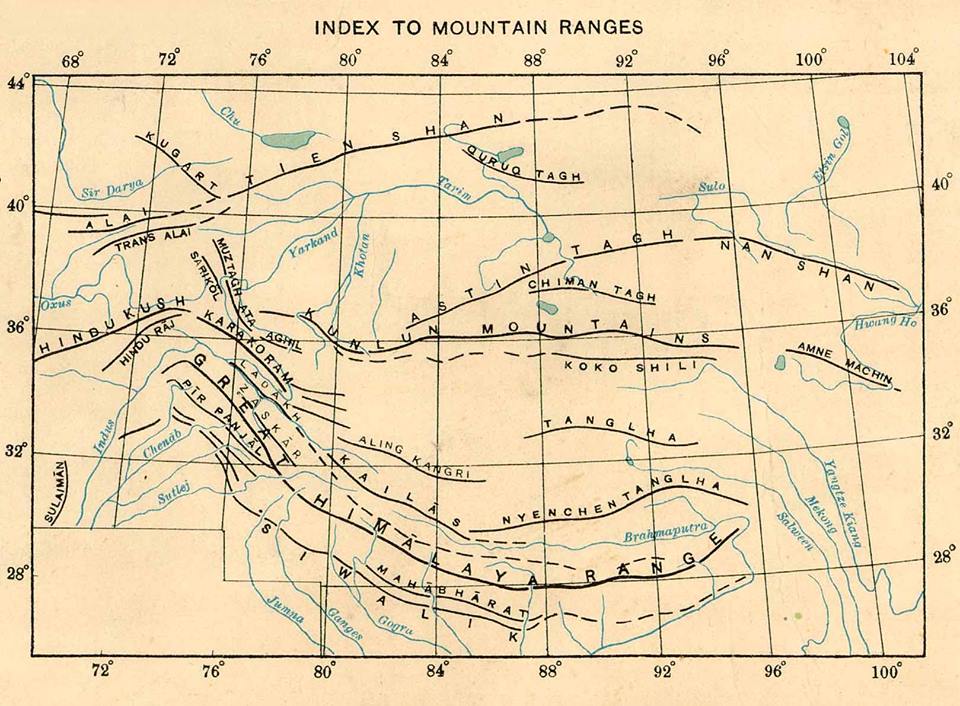
The Mountain Geography of Ladakh makes for interesting reading situated as it is between the Great Himalayan Range and the Karakoram Range. Also running within Ladakh are the Ladakh Range and the Zanskar Range but most people do not have a clear idea as to which Pass co-relates to which Pass.

The mighty Nun Peak of the Great Himalayan Range at 7135 m its the highest Himalayan Peak in Jammu ans Kashmir (not including the areas under occupation). On the side is the Saddle Peak.
The Illustrated Mountain Geography of Ladakh
Ladakh, the name comes from “ La Dvags” which means the Land of the High Passes. Most of us are well aware of the fact that it's a Trans Himalayan Desert. But there are other finer parts of the Geography which make it more interesting.
If you are driving to Leh whether from the Srinagar side or from the Manali side you have to cross the first major Range which falls in the way. These are the Pir Panjals. From the Srinagar side you cross it before coming into the Kashmir Valley through the Banihal Tunnel which was built under what used to be the Banihal Pass. You can also come from the Mughal Road and on that Road you cross the Pir Panjals at the Pir Ki Gali Pass. In case you are coming from the Manali side you cross the Pir Panjals at the famous Rohtang Pass. But the Rohtang Pass will soon meet the fate of the Banihal Pass as the Rohtang Tunnel is expected to be operational by the end of the Year. But it might survive as a Tourist attraction for people who want to see and experience Snow. Though the Passes on the Pir Panjals are not as high as some of the higher Passes further afield yet they are notorious as they get the maximum amount of precipitation in the Western Himalayas in the form of both Snow and Rain.

The transition between the Great Himalayan Range and the Zanskar Range as seen from a flight.
After crossing the Pir Panjal Range it's time to now cross the big Daddy. The Great Himalayan Range itself. From the Kashmir side you do it from the Zoji La and from the Lahaul side you do it via the Baralacha La. Both of these Passes are quite notorious and give a hard time to many though in recent years they have been tamed to some extent. There is talk of a Tunnel itself under the Zoji La but I guess that is many years away for now. After crossing the Great Himalayan Range from the Manali side after passing over a couple of passes you need to cross the Zanskar Range and this is does at the Tanglang La. While coming from the Kashmir side you cross the the Zanskar Range at Namika La and Fotu La.
And then if you want to go further North you have to go across the Ladakh Range which is crossed over at the famous Khardung La and now you come face to face with the most perpendicular of all the Mountain Ranges in the World. The Karakorams. Standing atop the Khardung La you can see the difference. The nicely rounded Peaks of the Zanskar and Ladakh Range in deep contrast to the craggy Towers of the Karakorams. Of course you can cross the Karakorams also (in a perfect world) over the Karakoram Pass but that's quite out of the question as of now.

A Truck astride the Great Himalayan Range as it approaches Zoji La.
Traditionally the Indus has been considered the dividing line between the Karakorams and the Himalayas. The Ladakh Range is considered by some to be a part of the Karakorams. Even the Encyclopaedia Britannica says its a part of the Karakorams but a majority of researchers consider it a part of the Himalayas as the Ladakh Range (and its sub Range the Changthang Range) along with the Kailash Range and the Nyeng-Chin-Thanla Range run almost parallel to the Great Himalayan Range all the to its Eastern extremity and hence its considered a part of the Himalayas rather than the Karakorams.
Most people who visit the fact are usually oblivious to the fact that Ladakh is located within the Karakoram Range and the Great Himalayan Range. One marks the Northern Boundary the other makes up the Southern Boundary. And most actually miss seeing the Great Himalayan Range up close from the other side. We all usually see the Great Himalayan Range from this side ie the side which faces the Indian subcontinent but seldom do we see it from the other side and Ladakh gives the perfect opportunity to do the same. Infact this is the only Place where you could have Breakfast under the shadows of the Great Himalayan Range and have dinner in the shadow of the Karakoram Range (or one of its Muztaghs as its sub-Ranges are also called). But in order to view the spectacular Great Himalayan Range you have to come down to Kargil and head into the Suru Valley. Its here in the Suru Valley sandwiched between the Zanskar Range and the Great Himalayan Range is where you get spectacular view of the Great Himalayan Range with its craggy Peaks quite different from the ones of the Zanskar or the Ladakh Range. Ah to look at the Nun Kun Peaks from Panikhar is one of the most spectacular views in the Himalayan Region but most just miss it.

The Karakorams as seen from Khardung La.
And of course you get great views of the Karakorams from the Khardung La but the views from Nubra Valley and beyond are not so spectacular but there are areas in Ladakh from where you can get great views of the Karakorams but these areas are off limits due to reasons which do not need to be elucidated here. But hopefully they will be opened someday and the beauty of the Karakorams in all their vertical glory is revealed to all of us.
The pics below show some of the things mentioned above. The magnificent Nun Kun Peaks as seen from the Suru Valley, a pic from a Flight showing the transition from the Great Himalayan Range to the Zanskar Range, a Truck astride the Great Himalayan Range near Zoji La, a pic of the mighty Karakorams as seen from Khardung La and lastly a Map for guidance on the Himalayan Range.
Kiki’s Blog
Stories from the Himalayas
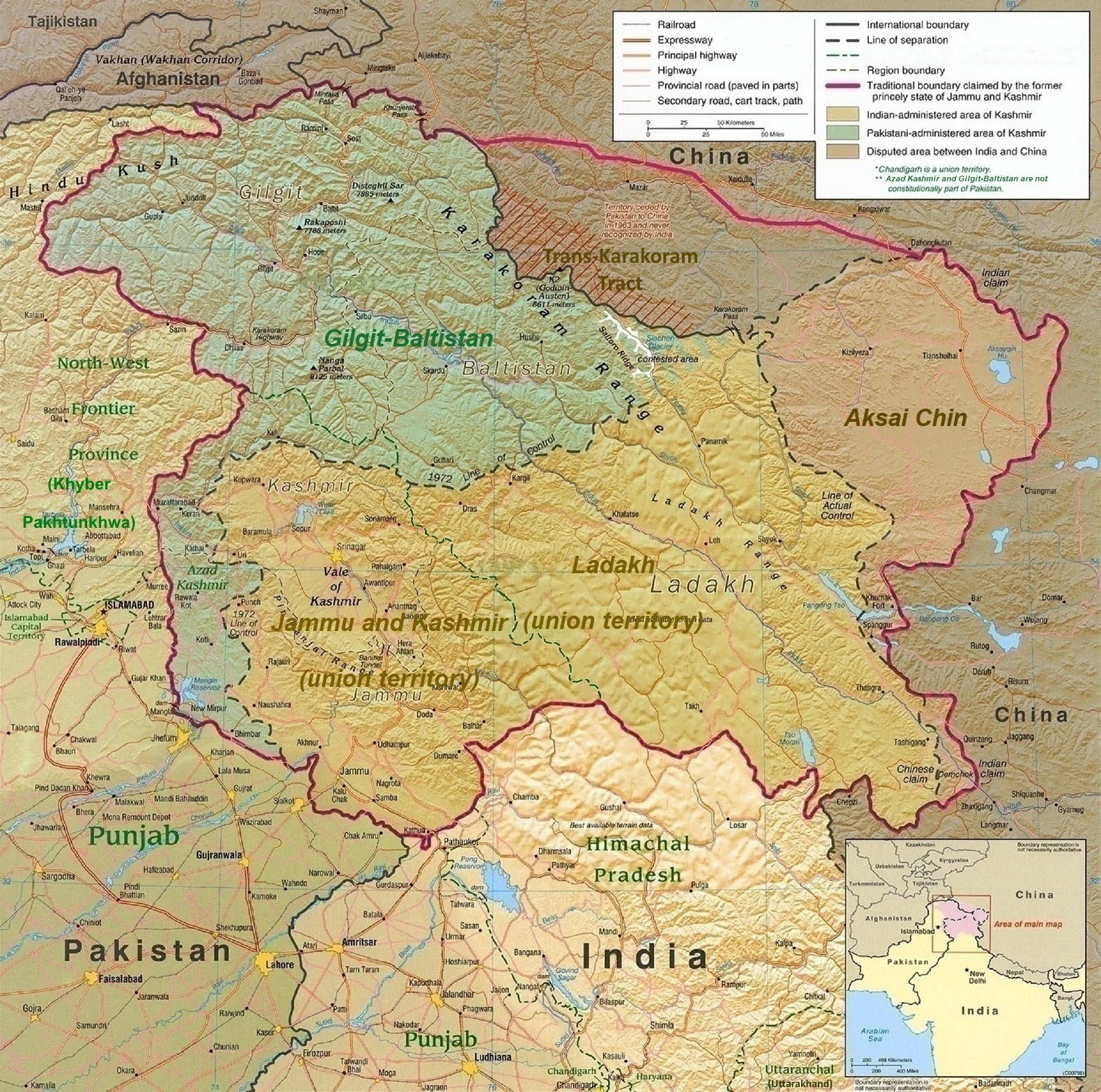



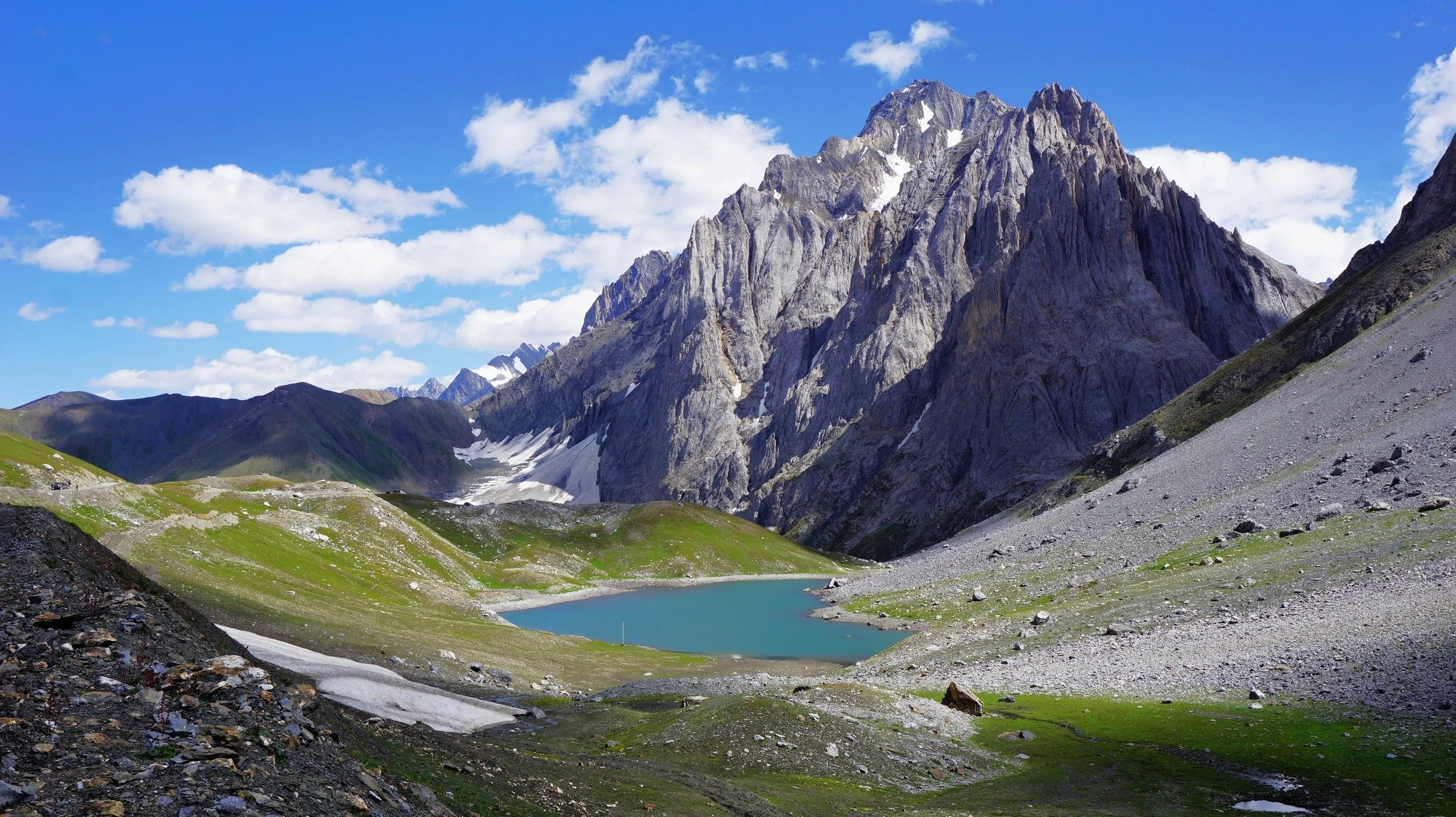
Five years ago the Galwan Valley was in the News for the wrong reasons after a deadly clash between the Indian and Chinese Armies in the Valley located in Ladakh lead to many deaths on the contentious Border between the two countries in wake of continued Chinese intrusions into Indian territory.
This area along the Shyok River, of which the Galwan Nallah or the Galwan River which forms the Galwan Valley has been off limits to Civilians since long but now the Indian Government has decided to open up the area for Civilians and we were amongst the First Civilians to venture into this beautifully desolate part of the Eastern Karakorams in Ladakh. Earlier Civilians could only venture upto the Village of Shyok from where the Shyok River takes a U turn and flows in a Northerly direction.