

Ten Offbeat Things to Do in Ladakh
Most People while visiting Ladakh just visit the same old Places, popular Tourist places and ones popularized by Bollywood and Influencers on Social Media. As a result a few Places bear the brunt of the Tourist footfalls which has serious Environmental and Social Impact.
I have always subscribed to the Philosophy that instead of sending 100 people to 5 places send 20 people to 25 places. Ecologically viable Tourism starts by spreading the load of the Tourists. And here is a list of Ten Things that I would recommend to do in Ladakh. And please remember that Ladakh is a large Region and most of it is rather unknown for most people. Ive added a Note on the Mountain Geography of Ladakh for easier understanding. You can also read my Ladakh Travel Guide for General Information.
So I have compiled a list of Ten Things that I would do in Ladakh, keeping in view all my Visits and Readings on Ladakh. They are in no particular order and each One is a Unique experience in its own.

Most People while visiting Ladakh just visit the same old Places, popular Tourist places and ones popularized by Bollywood and Influencers on Social Media. As a result a few Places bear the brunt of the Tourist footfalls which has serious Environmental and Social Impact.
I have always subscribed to the Philosophy that instead of sending 100 people to 5 places send 20 people to 25 places. Ecologically viable Tourism starts by spreading the load of the Tourists. And here is a list of Ten Things that I would recommend to do in Ladakh. And please remember that Ladakh is a large Region and most of it is rather unknown for most people. Ive added a Note on the Mountain Geography of Ladakh for easier understanding. You can also read my Ladakh Travel Guide for General Information.
So I have compiled a list of Ten Things that I would do in Ladakh, keeping in view all my Visits and Readings on Ladakh. They are in no particular order and each One is a Unique experience in its own.
1. Explore the Basgo Monastery and Fort :
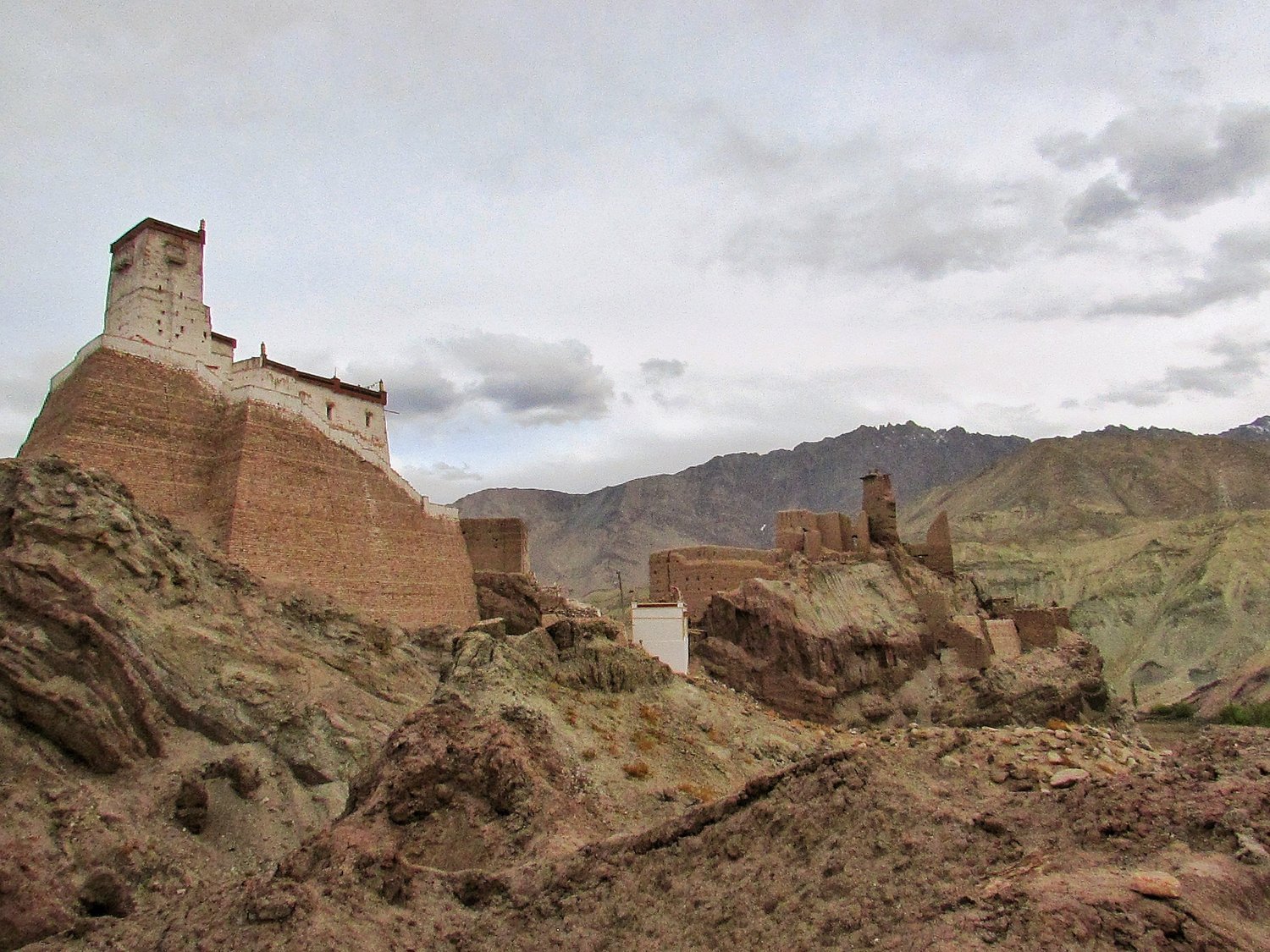
Basgo located some distance away from Leh was once the Capital of Ladakh and still the site of an impressive Monastery and a Fort. It was on the Plains outside that the Battle of Basgo was fought.
It was the Tibetans and their Mongol allies vs the Ladakhis and their Mughal allies. During the build up to the Battle the Mughal force crossed the Indus over two wooden bridges at Khalaste and marched towards Basgo. The two armies met at a plain called Jargyal between Basgo and Nimmu. This is referred to as the Battle of Basgo fought in 1679.
And the battle hardened Mughals along with their Ladakhi and Kullu allies proved too strong for the Tibeto-Mongols and their Bushahri allies. The Tibeto-Mongols were pushed back and routed all the way to Spituk where after a brief lull the fighting erupted again until they were driven beyond the Pangong Lake to a place called Tashigang.
They built themselves a Fort and shut themselves in and the Mughal Army now turned back, confident that the Tibeto-Mongols were gone for good. But of course Mongols being Mongols, they were wrong, but more of that later.
Read More about the Battle of Basgo
2. Gaze at the Stars at the Astrohub : A Great New Stargazing Experience in near Leh
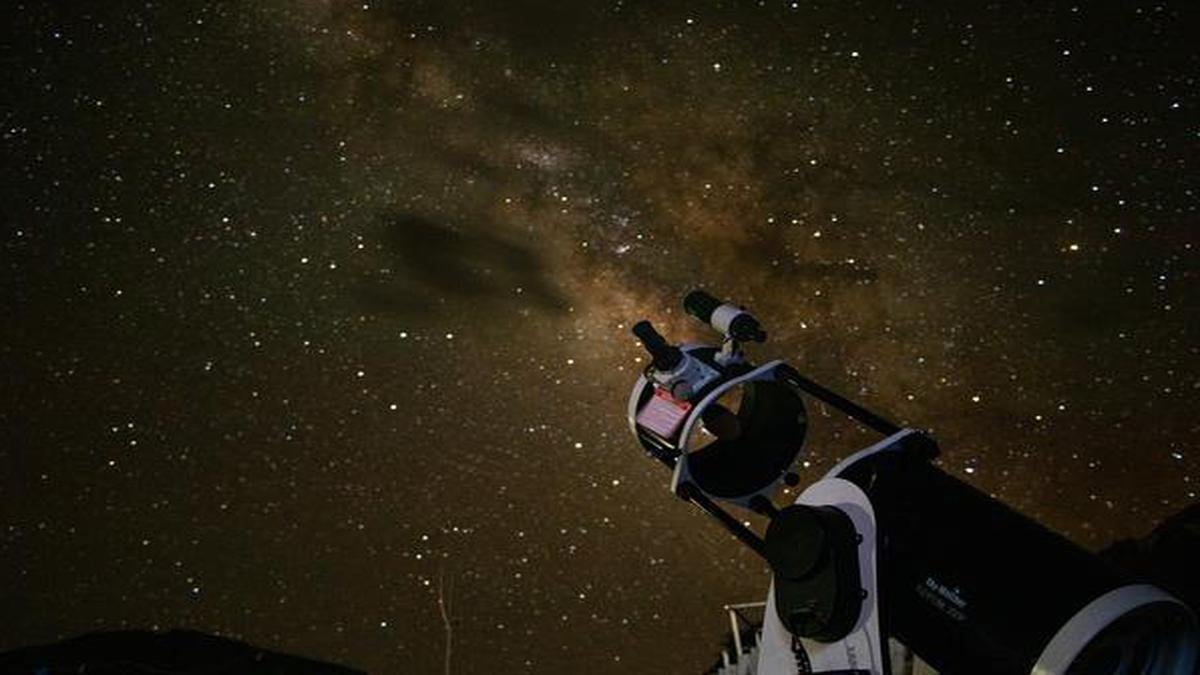
Introducing the Cosmohub in Phyang around 30 kms from Leh. An Initiative totally handled by the Local Village Ladies.
The Cosmohub has a Telescope which enables you to gaze even further into Space in the already very clear Ladakh skies.
Cosmohub- A New Stargazing experience near Leh. This women-led Astro-tourism initiative offers stargazing through a Telescope along with local folklore about skies narrated by trained local women.
You also get to Experience local Cuisine and Handicrafts prepared by a local self help group of women in addition to a guided tour of the nearby Monastery.
3. Visit the abandoned Village of Old Hundarman :
Ladakh offers many gems set in the Trans Himalayan landscape.
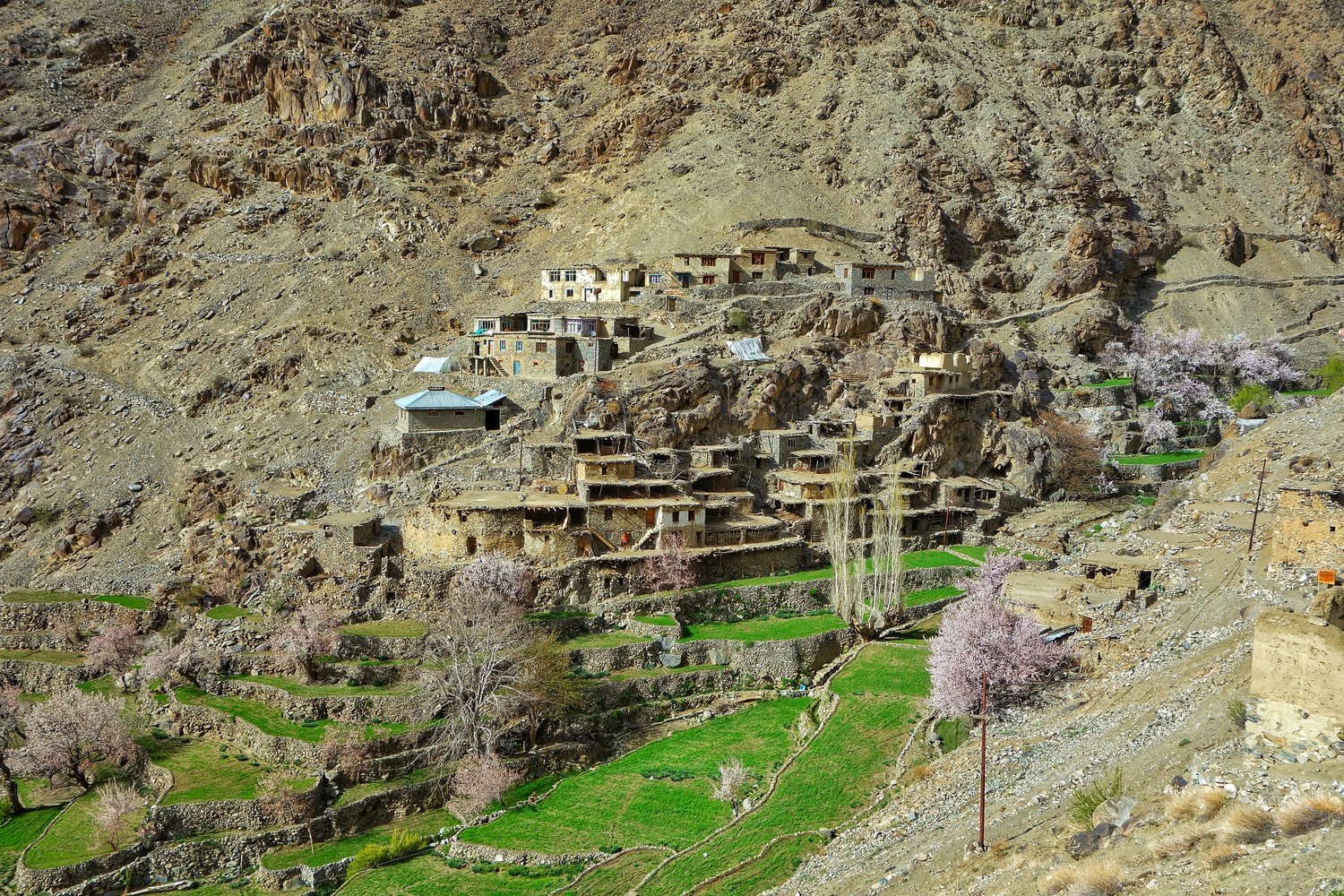
One such place while travelling to Ladakh is the Village called Hundarman near Kargil. Set in a sharp mountain gully 11km from Kargil, the tumbledown ghost village of Hundarman is a remarkable sight.
Rocky crags tower above, a steeply raked arc of stone-walled terraces sits below and virtually all of the low-ceilinged homes are stacked on top of one another, forming a fascinating core that has been (somewhat) preserved as a unique time capsule. And there is a neat little Museum in one of the abandoned Homes with antiquities found in these abandoned Houses.
This Village was till 1971 under Pakistani control but came under Indian Control after the 1971 War. And the fact that there are Warning Signs about Land Mines on both sides of the Road leading to Hundarman is a testament to the turmoil this Region has seen.
Yes you will hear the same Story about another place on this List.
4. Watch the Karakorams from the Khardung La :

Yes Khardung La is famous as one of the Highest Passes in the World but what most people dont know is that one gets a great view of the mighty Karakoram Range while looking North standing atop the Khardung La.
And now for some fun facts on the Karakorams in India. The Karakorams is a Mountain Range and like all Great Mountain Ranges it has a number of sub Ranges. And it has been classified into Nine Sub Ranges and out of these 3 lie fully on the Indian side and a 4th lies partly on the Indian side.
The Sasser Muztagh is the southernmost sub Range of the main Range and lies between the bend of the Shyok when it changes direction and heads in a Northern direction. The Shyok rises in the Rimo Muztagh which lies above the Sasser Muztagh.
The same trend is shown by the Nubra which also joins the Shyok and its at this point the Baltoro Sub Range starts which is partly on the Indian side. So the Sasser and the Baltoro Ranges are divided by the Nubra which rises in the Siachen Glacier. The Sasser La runs roughly between the Sasser Muztagh and the Rimo Muztagh. And in the extreme North along the Siachen Glacier runs the Siachen Muztagh.
Read More about the Karakorams in Ladakh
5. Visit the Donkey Sanctuary in Leh :

You must have seen a lot of Donkeys roaming around in the Streets of Leh. They are used as beasts of Burden in these rugged Mountains and many of them are unfortunately abandoned one they are older or are injured.
Sonam Dorje runs a Donkey Sanctuary on the outskirts of Leh where these unwanted Donkeys are taken care of. Its a Happy Place for these unwanted Donkeys where they can just do their Donkey things and get Food to eat and even basic Medical facilities.
The Donkey Sanctuary runs solely on Donations so its a good idea to visit the places, spend some time with the Donkey Bros and give whatever you can for the Welfare of these Donkeys.
Read More about the Donkey Sanctuary in Ladakh
6. Visit the Munshi Aziz Bhat Museum / Central Asian Museum :
Munshi Aziz Bhat was a trader also on the Central Asian trade Route and owned a number of shops in Kargil and his trading company was called Munshi Aziz Bhat and Sons. He set up a Serai, the Kargil Serai in 1920 to offer boarding lodging and storage places to the Traders. Soon the Serai became a stopover place for all kinds of traders from all kinds of places in Kargil. The Kargil Serai also served as a kind of an unofficial Post Office which received a lot of mail especially from the Hoshiarpuri Punjabi traders. The Serai had in its front a couple of shops as well which the Traders could use to display their wares. The Serai was a busy one in the late 1800s as well as the early 1900s and it saw many traders come and go.
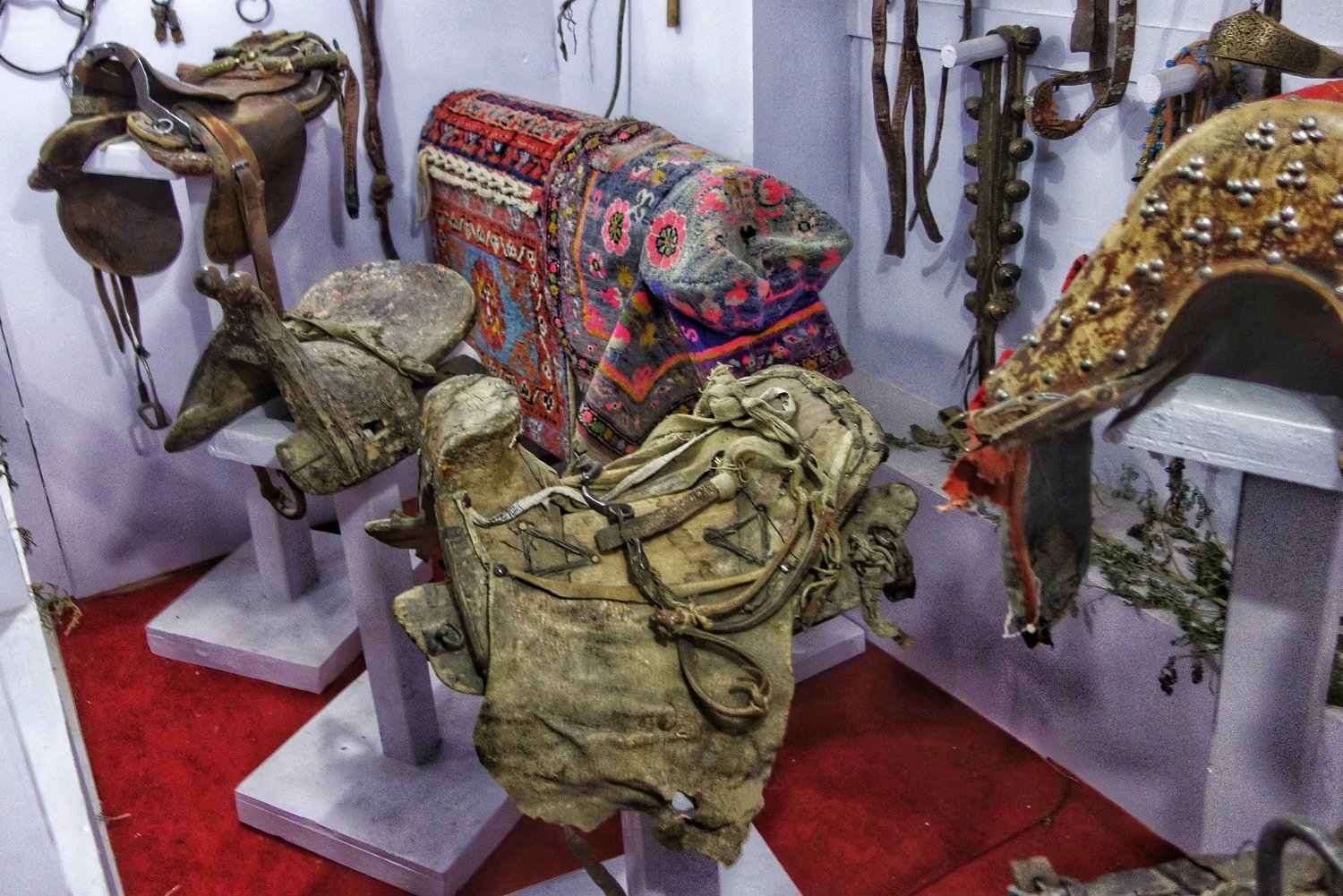
It was a chance discovery in the beginning of this century that some workers were sent to the place to clear some mess as parts of the structure had collapsed. The workers unearthed some very interesting items and reported these to the owners. The Owners then decided to come and check for themselves and they unearthed what can only be called a priceless treasure in the form of various items related to the Central Asian trade and items from all over Central Asia, the Indian subcontinent, Tibet and even Europe. As luck would have it a visiting historian persuaded the family to preserve this price-less collection instead of it ending up in some antique shops. And so was set up the Aziz Bhat Museum of Central Asian and Kargil Trade Artefacts to display the Collection.
The range of artefacts unearthed from the Munshi Aziz Bhat Sarai has given invaluable insights into not only the forgotten trade history but also into the cross-cultural, cosmopolitan past of Kargil. These artefacts aren’t mere antiques but they are a testimony to the fact that Kargil was a melting pot of cultures, languages, lifestyles and ideas. They are now on display in a part of the Munshi family’s house that has now been converted into the Museum.
Read More about the Munshi Aziz Bhat Museum
7. Panikhar and watch the Twin Peaks Nun and Kun :

Have you ever wondered what it feels to stand at the foot of the Greatest Mountain Range on the Planet, the Great Himalayan Range itself and stare at a 7000 Meter plus feet Mountain ?
The sheer grandeur of the Great Himalayan Range on one side and the Zanskar Range on the other side can be experienced in the Suru Valley. You can watch in awe the Twin Peaks of Nun and Kun which are a part of the Great Himalayan Range and tower above the Suru Valley and from places like Panikhar and Parkachik you get a superb view of these Giants.
Read More about the Suru Valley
8. Visit the Alchi Monastery :

Out of all the beautiful Monasteries in Ladakh the Alchi Monastery is probably the most fascinating one because of its Paintings and Murals said to have been done by Artists who came from Kashmir and they have a certain Kashmiri touch to them.
As per a leading researcher on Himalayan and Tibetan Art : “The world-famous Buddhist monastery of Alchi in Ladakh, India, is the best-preserved temple complex in the Himalayas. Proposed for inclusion in the UNESCO World Cultural Heritage list in 1998, the monastery's artworks reveal influences from India and Tibet across Central Asia and Iran, even as far back as Ancient Greece. Housing thousands of rare paintings and sculptures from the area dating back to the eleventh century, it provides fascinating insight into the spiritual and secular life of mediaeval Kashmir and Western Tibet.
9. Pay a Visit to Baltistan :

The neighbouring Region of Ladakh to the West is Baltistan Region. The people share almost the same Ethnicity as the people of Ladakh but over the centuries their Culture has changed and Religion is mostly Islam. The language of the Baltis is still quite similar to Ladakhi and is actually the closest language to the Old Tibetan language.
At the time of Partition almost the whole of Baltistan was occupied by Pakistan with its main City of Skardu. However over the Years in subsequent Conflicts the Indians managed to get back a little part of Baltistan and nowadays one of these Villages, Turtuk has become quite a Tourist destination.
Visit Turtuk to get a taste of Balti Culture and besides Turtuk there are a number of other Villages where you can see Balti People and Experience Balti Culture. You can now even visit the Northernmost Village of Thang which is located right on the Line of Control.
Read More about Ladakh and Baltistan
10. Drive from Pangong Tso to Tso Moriri over the Changthang :
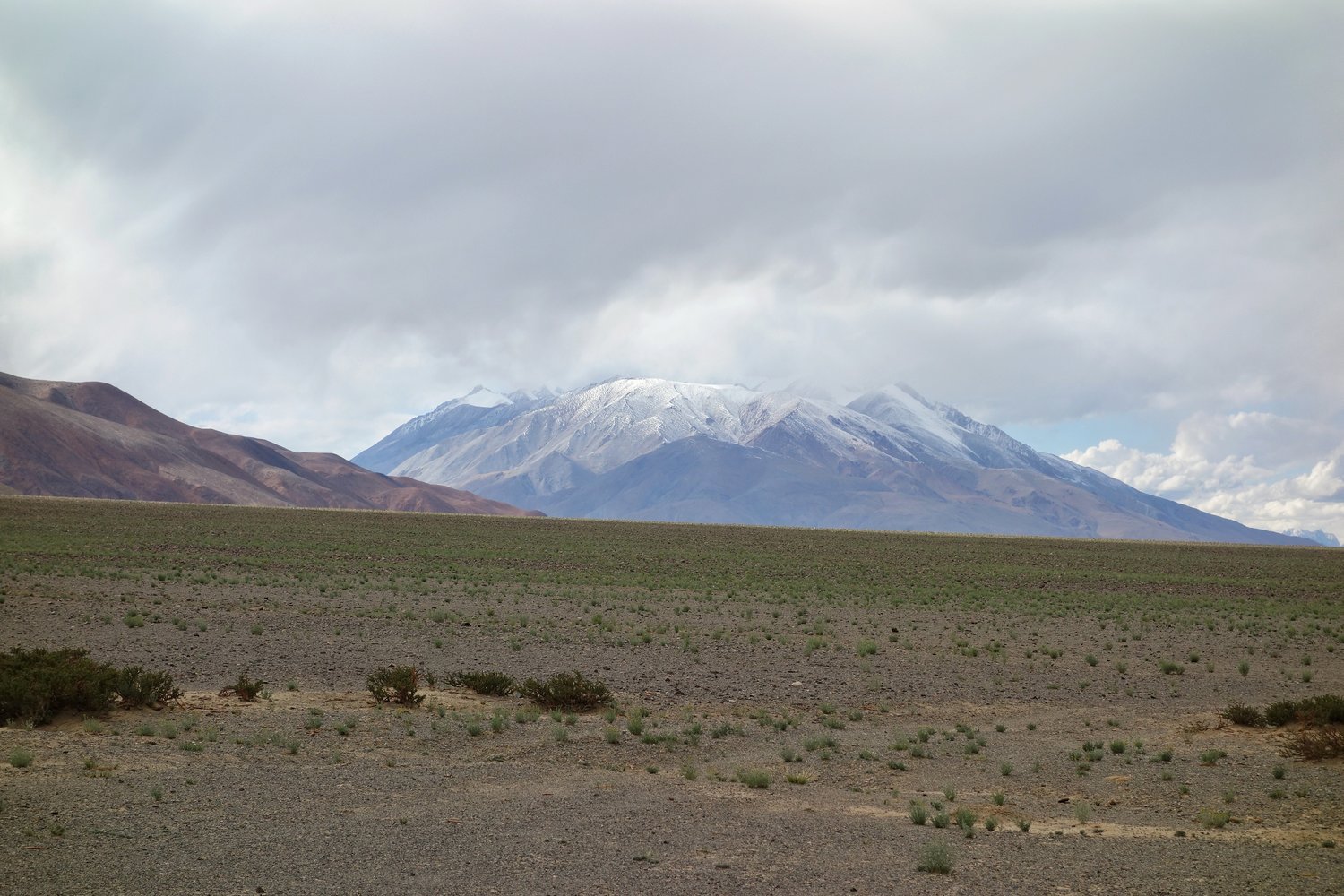
Of all the drives one can do in Ladakh the most fascinating for me is the one of going over the Changthang while driving from the Pangong Lake to the Tso Moriri Lake. The Changthang is a vast High Altitude Plateau that stretches over thousands of kms and includes parts of Tibet as well as Ladakh and goes all the way to Xinjiang.
It is an extremely inhospitable place but at the same time its beauty is quite unparalleled. Its dotted with certain Wetlands and on this stretch the Indus River enters Ladakh from the Tibetan side. The Changthang is largely uninhabited except for the hardy Changpa Nomads who raise their flocks of the famous Pashmina Goats on this Plateau.
Read More about the Changthang
Addendum : A Note on Understanding the Geography of Ladakh
The Mountain Geography of Ladakh
Kiki’s Ten Things to Do in Ladakh
Most People while visiting Ladakh just visit the same old Places, popular Tourist places and ones popularized by Bollywood and Influencers on Social Media. As a result a few Places bear the brunt of the Tourist footfalls which has serious Environmental and Social Impact.
I have always subscribed to the Philosophy that instead of sending 100 people to 5 places send 20 people to 25 places. Ecologically viable Tourism starts by spreading the load of the Tourists. And here is a list of Ten Things that I would recommend to do in Ladakh. And please remember that Ladakh is a large Region and most of it is rather unknown for most people. Ive added a Note on the Mountain Geography of Ladakh for easier understanding. You can also read my Ladakh Travel Guide for General Information.
So I have compiled a list of Ten Things that I would do in Ladakh, keeping in view all my Visits and Readings on Ladakh. They are in no particular order and each One is a Unique experience in its own.
Most People while visiting Ladakh just visit the same old Places, popular Tourist places and ones popularized by Bollywood and Influencers on Social Media. As a result a few Places bear the brunt of the Tourist footfalls which has serious Environmental and Social Impact.
I have always subscribed to the Philosophy that instead of sending 100 people to 5 places send 20 people to 25 places. Ecologically viable Tourism starts by spreading the load of the Tourists. And here is a list of Ten Things that I would recommend to do in Ladakh. And please remember that Ladakh is a large Region and most of it is rather unknown for most people. Ive added a Note on the Mountain Geography of Ladakh for easier understanding. You can also read my Ladakh Travel Guide for General Information.
So I have compiled a list of Ten Things that I would do in Ladakh, keeping in view all my Visits and Readings on Ladakh. They are in no particular order and each One is a Unique experience in its own.
1. Explore the Basgo Monastery and Fort :
Basgo located some distance away from Leh was once the Capital of Ladakh and still the site of an impressive Monastery and a Fort. It was on the Plains outside that the Battle of Basgo was fought.
It was the Tibetans and their Mongol allies vs the Ladakhis and their Mughal allies. During the build up to the Battle the Mughal force crossed the Indus over two wooden bridges at Khalaste and marched towards Basgo. The two armies met at a plain called Jargyal between Basgo and Nimmu. This is referred to as the Battle of Basgo fought in 1679.
And the battle hardened Mughals along with their Ladakhi and Kullu allies proved too strong for the Tibeto-Mongols and their Bushahri allies. The Tibeto-Mongols were pushed back and routed all the way to Spituk where after a brief lull the fighting erupted again until they were driven beyond the Pangong Lake to a place called Tashigang.
They built themselves a Fort and shut themselves in and the Mughal Army now turned back, confident that the Tibeto-Mongols were gone for good. But of course Mongols being Mongols, they were wrong, but more of that later.
Read More about the Battle of Basgo
2. Gaze at the Stars at the Astrohub : A Great New Stargazing Experience in near Leh
Introducing the Cosmohub in Phyang around 30 kms from Leh. An Initiative totally handled by the Local Village Ladies.
The Cosmohub has a Telescope which enables you to gaze even further into Space in the already very clear Ladakh skies.
Cosmohub- A New Stargazing experience near Leh. This women-led Astro-tourism initiative offers stargazing through a Telescope along with local folklore about skies narrated by trained local women.
You also get to Experience local Cuisine and Handicrafts prepared by a local self help group of women in addition to a guided tour of the nearby Monastery.
3. Visit the abandoned Village of Old Hundarman :
Ladakh offers many gems set in the Trans Himalayan landscape.
One such place while travelling to Ladakh is the Village called Hundarman near Kargil. Set in a sharp mountain gully 11km from Kargil, the tumbledown ghost village of Hundarman is a remarkable sight.
Rocky crags tower above, a steeply raked arc of stone-walled terraces sits below and virtually all of the low-ceilinged homes are stacked on top of one another, forming a fascinating core that has been (somewhat) preserved as a unique time capsule. And there is a neat little Museum in one of the abandoned Homes with antiquities found in these abandoned Houses.
This Village was till 1971 under Pakistani control but came under Indian Control after the 1971 War. And the fact that there are Warning Signs about Land Mines on both sides of the Road leading to Hundarman is a testament to the turmoil this Region has seen.
Yes you will hear the same Story about another place on this List.
4. Watch the Karakorams from the Khardung La :
Yes Khardung La is famous as one of the Highest Passes in the World but what most people dont know is that one gets a great view of the mighty Karakoram Range while looking North standing atop the Khardung La.
And now for some fun facts on the Karakorams in India. The Karakorams is a Mountain Range and like all Great Mountain Ranges it has a number of sub Ranges. And it has been classified into Nine Sub Ranges and out of these 3 lie fully on the Indian side and a 4th lies partly on the Indian side.
The Sasser Muztagh is the southernmost sub Range of the main Range and lies between the bend of the Shyok when it changes direction and heads in a Northern direction. The Shyok rises in the Rimo Muztagh which lies above the Sasser Muztagh.
The same trend is shown by the Nubra which also joins the Shyok and its at this point the Baltoro Sub Range starts which is partly on the Indian side. So the Sasser and the Baltoro Ranges are divided by the Nubra which rises in the Siachen Glacier. The Sasser La runs roughly between the Sasser Muztagh and the Rimo Muztagh. And in the extreme North along the Siachen Glacier runs the Siachen Muztagh.
Read More about the Karakorams in Ladakh
5. Visit the Donkey Sanctuary in Leh :
You must have seen a lot of Donkeys roaming around in the Streets of Leh. They are used as beasts of Burden in these rugged Mountains and many of them are unfortunately abandoned one they are older or are injured.
Sonam Dorje runs a Donkey Sanctuary on the outskirts of Leh where these unwanted Donkeys are taken care of. Its a Happy Place for these unwanted Donkeys where they can just do their Donkey things and get Food to eat and even basic Medical facilities.
The Donkey Sanctuary runs solely on Donations so its a good idea to visit the places, spend some time with the Donkey Bros and give whatever you can for the Welfare of these Donkeys.
Read More about the Donkey Sanctuary in Ladakh
6. Visit the Munshi Aziz Bhat Museum / Central Asian Museum :
Munshi Aziz Bhat was a trader also on the Central Asian trade Route and owned a number of shops in Kargil and his trading company was called Munshi Aziz Bhat and Sons. He set up a Serai, the Kargil Serai in 1920 to offer boarding lodging and storage places to the Traders. Soon the Serai became a stopover place for all kinds of traders from all kinds of places in Kargil. The Kargil Serai also served as a kind of an unofficial Post Office which received a lot of mail especially from the Hoshiarpuri Punjabi traders. The Serai had in its front a couple of shops as well which the Traders could use to display their wares. The Serai was a busy one in the late 1800s as well as the early 1900s and it saw many traders come and go.
It was a chance discovery in the beginning of this century that some workers were sent to the place to clear some mess as parts of the structure had collapsed. The workers unearthed some very interesting items and reported these to the owners. The Owners then decided to come and check for themselves and they unearthed what can only be called a priceless treasure in the form of various items related to the Central Asian trade and items from all over Central Asia, the Indian subcontinent, Tibet and even Europe. As luck would have it a visiting historian persuaded the family to preserve this price-less collection instead of it ending up in some antique shops. And so was set up the Aziz Bhat Museum of Central Asian and Kargil Trade Artefacts to display the Collection.
The range of artefacts unearthed from the Munshi Aziz Bhat Sarai has given invaluable insights into not only the forgotten trade history but also into the cross-cultural, cosmopolitan past of Kargil. These artefacts aren’t mere antiques but they are a testimony to the fact that Kargil was a melting pot of cultures, languages, lifestyles and ideas. They are now on display in a part of the Munshi family’s house that has now been converted into the Museum.
Read More about the Munshi Aziz Bhat Museum
7. Panikhar and watch the Twin Peaks Nun and Kun :
Have you ever wondered what it feels to stand at the foot of the Greatest Mountain Range on the Planet, the Great Himalayan Range itself and stare at a 7000 Meter plus feet Mountain ?
The sheer grandeur of the Great Himalayan Range on one side and the Zanskar Range on the other side can be experienced in the Suru Valley. You can watch in awe the Twin Peaks of Nun and Kun which are a part of the Great Himalayan Range and tower above the Suru Valley and from places like Panikhar and Parkachik you get a superb view of these Giants.
Read More about the Suru Valley
8. Visit the Alchi Monastery :
Out of all the beautiful Monasteries in Ladakh the Alchi Monastery is probably the most fascinating one because of its Paintings and Murals said to have been done by Artists who came from Kashmir and they have a certain Kashmiri touch to them.
As per a leading researcher on Himalayan and Tibetan Art : “The world-famous Buddhist monastery of Alchi in Ladakh, India, is the best-preserved temple complex in the Himalayas. Proposed for inclusion in the UNESCO World Cultural Heritage list in 1998, the monastery's artworks reveal influences from India and Tibet across Central Asia and Iran, even as far back as Ancient Greece. Housing thousands of rare paintings and sculptures from the area dating back to the eleventh century, it provides fascinating insight into the spiritual and secular life of mediaeval Kashmir and Western Tibet.
9. Pay a Visit to Baltistan :
The neighbouring Region of Ladakh to the West is Baltistan Region. The people share almost the same Ethnicity as the people of Ladakh but over the centuries their Culture has changed and Religion is mostly Islam. The language of the Baltis is still quite similar to Ladakhi and is actually the closest language to the Old Tibetan language.
At the time of Partition almost the whole of Baltistan was occupied by Pakistan with its main City of Skardu. However over the Years in subsequent Conflicts the Indians managed to get back a little part of Baltistan and nowadays one of these Villages, Turtuk has become quite a Tourist destination.
Visit Turtuk to get a taste of Balti Culture and besides Turtuk there are a number of other Villages where you can see Balti People and Experience Balti Culture. You can now even visit the Northernmost Village of Thang which is located right on the Line of Control.
Read More about Ladakh and Baltistan
10. Drive from Pangong Tso to Tso Moriri over the Changthang :
Of all the drives one can do in Ladakh the most fascinating for me is the one of going over the Changthang while driving from the Pangong Lake to the Tso Moriri Lake. The Changthang is a vast High Altitude Plateau that stretches over thousands of kms and includes parts of Tibet as well as Ladakh and goes all the way to Xinjiang.
It is an extremely inhospitable place but at the same time its beauty is quite unparalleled. Its dotted with certain Wetlands and on this stretch the Indus River enters Ladakh from the Tibetan side. The Changthang is largely uninhabited except for the hardy Changpa Nomads who raise their flocks of the famous Pashmina Goats on this Plateau.
Read More about the Changthang
Addendum : A Note on Understanding the Geography of Ladakh
The Mountain Geography of Ladakh

Warwan Marwah Dacchan : The Last Inner Himalayan Wilderness
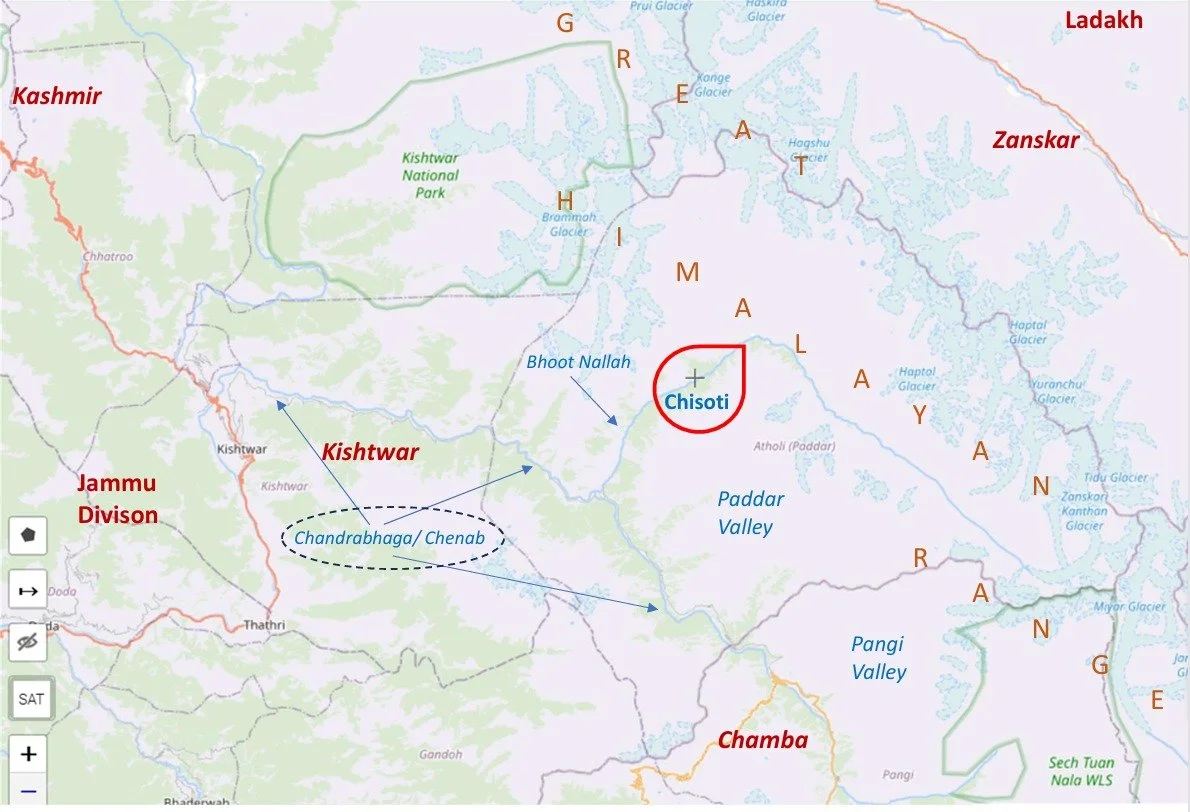
Kishtwar itself is remote and always under the shadow of Kashmir but this part of Kishtwar which lies next to Kashmir on one side and the Suru Valley of Ladakh on the other side is probably one of the last great wildernesses in the Inner Himalayas. This is the Warwan- Marwah - Dachchan belt lies along the Maru Wadwan River or as its also known Warwan / Marwah (Marev) / Marsu Dhar River along different parts of its course, which is a major tributary of the Chenab.

In the Inner Himalayas lies a beautiful Region so remote that most people haven't even heard of it forget about going there. Kishtwar itself is remote and always under the shadow of Kashmir but this part of Kishtwar which lies next to Kashmir on one side and the Suru Valley of Ladakh on the other side is probably one of the last great wildernesses in the Inner Himalayas. This is the Warwan- Marwah - Dachchan belt lies along the Maru Wadwan River or as its also known Warwan / Marwah (Marev) / Marsu Dhar River along different parts of its course, which is a major tributary of the Chenab. These three sub parts of this Region all lie along the same River and offer a rare insight into how people lived maybe many years ago. Sandwiched between the Pir Panjals and the Great Himalayan Range this is a Region few outsiders have set foot.
My romance with this area began in 1989 when I was a student in Class 9 in the Burn Hall School, Srinagar. We were supposed to Trek from Daksum in Kashmir to Kishtwar via the Sinthan Pass. But at the last moment the original Trek was changed. Now we were to go from Daksum to Pahalgam via the Warwan Valley. None of us had even heard of Warwan Valley before but of course we had little choice in such matters. So off we went and on the second day we climbed up the Margan Pass and started to descend into Warwan Valley towards Inshan.
It was like walking into a lost World. The Houses were still made all of wood and the people still held that innocence. Of course the whole Village was excited as we were around 30 people. Technically though Warwan is in Kishtwar the people here speak the purest and the oldest form of Kashmiri. We happened to Trek for a few days in the Valley headed North and after reaching the head of the Valley we turned right and went over the Gulol Pass and descended onto the Sheshnag Lake to join the Amarnath trail. And of course we didnt take any pics at that time. But the memories were still there. And even today pics of these areas are very hard to come by.

The Gazetteer of Kashmir puts it as such :
MARU WARDWAN (They considered the Wardwan and Marwah as one long Valley which is also kinda like the case)
The name of a long and narrow valley lying to the South-East of Kashmir, from which it is separated by a lofty range of mountains; its direction is nearly north and south, its length being about 40 miles, and its average breadth not more than a quarter of s mile; that part lying between Maru and Wardwan being merely a narrow defile, whose sides are very steep and covered with a jungle, chiefly of fir trees. It is bounded by high and rugged mountains , which almost entirely exclude the sun from its lower portions.

The river which intersects it is a considerable stream which swells to a mighty torrent during the melting of the Snow. It rises at the northern extremity of the valley, on the borders of Suru, and flows south until it joins the Chandrabhaga just above Kishtwar, receiving in its course several tributaries from the numerous minor valleys which open on each side of it.
The upper portion of the valley is called Wardwan, and the lower Maru, The Village of Inshin, in the middle of the valley, is distant about 84 miles north of Kishtwar; and thence to Suru, by the Bhot Kol Pass, is about 76 miles, or five marches. There are various paths communicating between the Maru Wardwan Valley and Kashmir ; the principal are those lying over the Margan and Hoksar passes ; by the former Islamabid is distant 67 miles from Inshin, and by the latter 51 miles from Maru or Petgam.
'The Maru Wardwan valley contains several thinly-populated villages; the houses, which are double-storied, are roughly built of timber, and have pent roofs. It forms a portion of the Udhampur district.

Very little difference is observable in the dress and appearance of the inhabitants of this valley and of those of Kashmir, but they seem to share some of the prejudices of the Tibetans, as Vigne relates that he was told that after a death among the inhabitants of the Maru Wardwan valley, none of the deceased's relatives will touch milk until the arrival of a particular day. All the natives of the valley are, mith scarcely an exception, Muhammadans.
The climate ie very rigorous, and rain or snow falls throughout the greater part of the year; the stony fields produce but one harvest in the twelve months, and that is limited to a scanty crop of Trumba and Grihmah, and for five months of the year the inhabitants are absolute prisoners to their houses, the snow lying 10 and 15 feet deep, entirely blocking up the lower stories of the habitations. Pollard trees, Which elsewhere furnish abundant supplies of fodder for the cattle during the winter months, are very scarce, and such trees, as do grow, are small and stunted. Despite these disadvantages a considerable number of ponies are bred in the Valley, and taken to Suru, where they find ready sale or barter.

A good pony, between three and five years old, fetches, it is said, about Rs.20 (British currency). The vendor prefer to be paid in cash, but has frequently to be contented with tea ; in this case be receives a damu (a weight equal to three seers) of tea, which is valued at Rs.17 ; on this he is required to pay an import duty of Rs.2 at the custom post at Sukhnis, at the north end of the valley. If fortunate, he disposes of his tea to an itinerant merchant in the Valley, otherwise he must continue his journey to Islamabad or Srinagar before he can sell it for the Rs20 it is supposed to be worth in Kashmir ; in either case, when the labour and risk are considered, it is apparent that the transaction brings little or no profit.
The geological formation of the Maru Wardwan valley is gneiss, mica alate, and a silicious grit. The Maru Wardwan Valley is mentioned by Abul Ful in the Ayin-Akhbari ss the Murwar Dhun.

DACCHAN
The name applied to the mountains on both sides of the defile to the South of the Maru Wardwan Valley, through which the river flows on its course towards Kishtwar. The path which lies up this valley is extremely difficult, and not practicable for ponies. (Pigne.)
Now there are a few interesting Tales and Stories of this Region outlined by a few visitors who came to this place including the most eminent Archaeologist of Kashmir, Ram Chandra Kak who went onto become the Prime Minister of the Riyasat under Maharaja Hari Singh. RC Kak had visited the Valleys in the 1920s and were published in the publication called the Antiquities of Marev Wadwan.

The Valleys of Wadwan and Marwah are completely Muslim barring a few in Marwah and in Dachan they are mostly Hindu. But historically it was the inhabitants of Marwah who were more warlike who dominated all the 3 Valleys. The hereditary Zamindars carried the surname Malik but were originally Rainas pointing out that they came from outside. As per their local tradition their ancestors came from Bengal but the actual history is obscured in the fog of time. The most amazing part was that R C Kak was shown actual firmaans issued in the name of the Maliks by the Governors of Kashmir from the time of Jahangir and all the way to the time of Shah Shuja. These Marwah Maliks even provided Marrivs (as the local residents are called) to General Zorawar Singh for his campaigns in Ladakh and apparently they gave a good account of themselves. It said even from his last Campaign a few Marivs were among the few who survived.
Moving towards the South we come to the Region called Dachchan which is mostly Hindu and quite a mysterious one at that. RC Kak noted that the condition of the Men in Dachchan was unusually wretched which was because apparently almost every Woman there was proficient in the Black Arts and Witchcraft. The Men it seemed were constantly under their spell. He also noted that Marriage was quite a casual affair where a Man who found himself in an affair with a Married woman could simply pay her husband off and get her as his Wife. RC Kak noted that the whole Society was deeply ensconced in Sorcery and deviousness of all kinds. And then there were another set of people who would actually help you combat the evil spells and curses cast upon you. Curiously the Sorcery did not work on the Maharaja’s officials as it was said that during the rule of Maharaja Gulab Singh the Witches promised that they wouldn't cast their magic on his Officials. And I guess the Witches stuck to their promise.

Of course times have changed now but still due to the absence of proper Roads the area remains pretty cut-off. And as a result Backward but as the photographs would testify as far and Natural beauty is concerned this Area is second to none and hopefully now that the State has become a Union Territory some Tourism would be promoted in this Region and in Kishtwar as a whole. Nowhere else in the Himalayas due you get such a mix of Culture, Language and Religion as you do in Kishtwar.
The Illustrated Mountain Geography of Ladakh
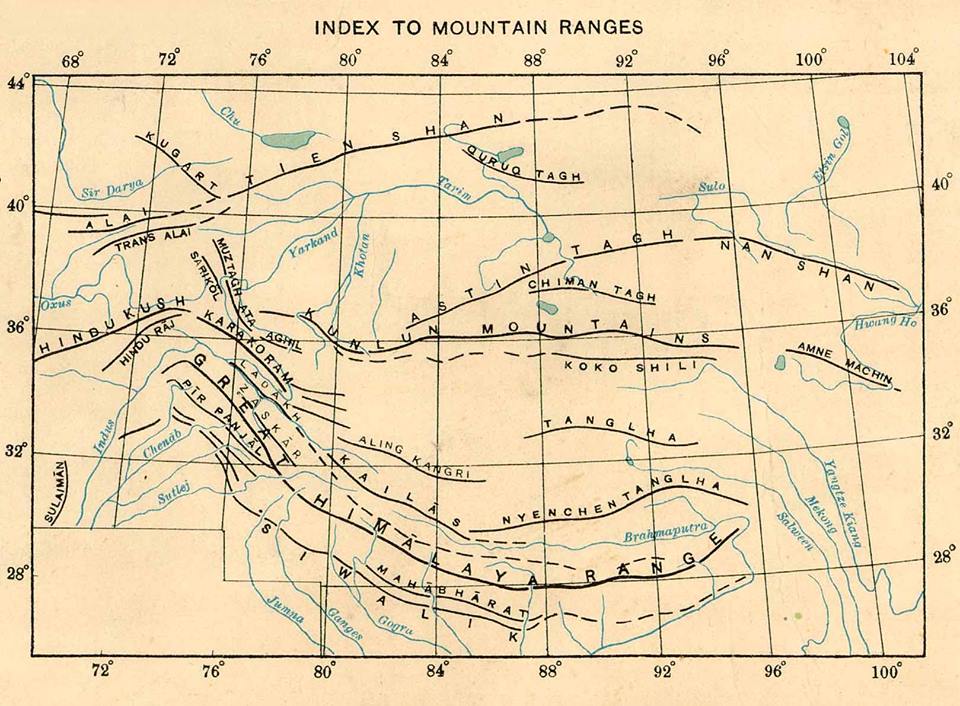
The Mountain Geography of Ladakh makes for interesting reading situated as it is between the Great Himalayan Range and the Karakoram Range. Also running within Ladakh are the Ladakh Range and the Zanskar Range but most people do not have a clear idea as to which Pass co-relates to which Pass.

The mighty Nun Peak of the Great Himalayan Range at 7135 m its the highest Himalayan Peak in Jammu ans Kashmir (not including the areas under occupation). On the side is the Saddle Peak.
The Illustrated Mountain Geography of Ladakh
Ladakh, the name comes from “ La Dvags” which means the Land of the High Passes. Most of us are well aware of the fact that it's a Trans Himalayan Desert. But there are other finer parts of the Geography which make it more interesting.
If you are driving to Leh whether from the Srinagar side or from the Manali side you have to cross the first major Range which falls in the way. These are the Pir Panjals. From the Srinagar side you cross it before coming into the Kashmir Valley through the Banihal Tunnel which was built under what used to be the Banihal Pass. You can also come from the Mughal Road and on that Road you cross the Pir Panjals at the Pir Ki Gali Pass. In case you are coming from the Manali side you cross the Pir Panjals at the famous Rohtang Pass. But the Rohtang Pass will soon meet the fate of the Banihal Pass as the Rohtang Tunnel is expected to be operational by the end of the Year. But it might survive as a Tourist attraction for people who want to see and experience Snow. Though the Passes on the Pir Panjals are not as high as some of the higher Passes further afield yet they are notorious as they get the maximum amount of precipitation in the Western Himalayas in the form of both Snow and Rain.

The transition between the Great Himalayan Range and the Zanskar Range as seen from a flight.
After crossing the Pir Panjal Range it's time to now cross the big Daddy. The Great Himalayan Range itself. From the Kashmir side you do it from the Zoji La and from the Lahaul side you do it via the Baralacha La. Both of these Passes are quite notorious and give a hard time to many though in recent years they have been tamed to some extent. There is talk of a Tunnel itself under the Zoji La but I guess that is many years away for now. After crossing the Great Himalayan Range from the Manali side after passing over a couple of passes you need to cross the Zanskar Range and this is does at the Tanglang La. While coming from the Kashmir side you cross the the Zanskar Range at Namika La and Fotu La.
And then if you want to go further North you have to go across the Ladakh Range which is crossed over at the famous Khardung La and now you come face to face with the most perpendicular of all the Mountain Ranges in the World. The Karakorams. Standing atop the Khardung La you can see the difference. The nicely rounded Peaks of the Zanskar and Ladakh Range in deep contrast to the craggy Towers of the Karakorams. Of course you can cross the Karakorams also (in a perfect world) over the Karakoram Pass but that's quite out of the question as of now.

A Truck astride the Great Himalayan Range as it approaches Zoji La.
Traditionally the Indus has been considered the dividing line between the Karakorams and the Himalayas. The Ladakh Range is considered by some to be a part of the Karakorams. Even the Encyclopaedia Britannica says its a part of the Karakorams but a majority of researchers consider it a part of the Himalayas as the Ladakh Range (and its sub Range the Changthang Range) along with the Kailash Range and the Nyeng-Chin-Thanla Range run almost parallel to the Great Himalayan Range all the to its Eastern extremity and hence its considered a part of the Himalayas rather than the Karakorams.
Most people who visit the fact are usually oblivious to the fact that Ladakh is located within the Karakoram Range and the Great Himalayan Range. One marks the Northern Boundary the other makes up the Southern Boundary. And most actually miss seeing the Great Himalayan Range up close from the other side. We all usually see the Great Himalayan Range from this side ie the side which faces the Indian subcontinent but seldom do we see it from the other side and Ladakh gives the perfect opportunity to do the same. Infact this is the only Place where you could have Breakfast under the shadows of the Great Himalayan Range and have dinner in the shadow of the Karakoram Range (or one of its Muztaghs as its sub-Ranges are also called). But in order to view the spectacular Great Himalayan Range you have to come down to Kargil and head into the Suru Valley. Its here in the Suru Valley sandwiched between the Zanskar Range and the Great Himalayan Range is where you get spectacular view of the Great Himalayan Range with its craggy Peaks quite different from the ones of the Zanskar or the Ladakh Range. Ah to look at the Nun Kun Peaks from Panikhar is one of the most spectacular views in the Himalayan Region but most just miss it.

The Karakorams as seen from Khardung La.
And of course you get great views of the Karakorams from the Khardung La but the views from Nubra Valley and beyond are not so spectacular but there are areas in Ladakh from where you can get great views of the Karakorams but these areas are off limits due to reasons which do not need to be elucidated here. But hopefully they will be opened someday and the beauty of the Karakorams in all their vertical glory is revealed to all of us.
The pics below show some of the things mentioned above. The magnificent Nun Kun Peaks as seen from the Suru Valley, a pic from a Flight showing the transition from the Great Himalayan Range to the Zanskar Range, a Truck astride the Great Himalayan Range near Zoji La, a pic of the mighty Karakorams as seen from Khardung La and lastly a Map for guidance on the Himalayan Range.
Kiki’s Blog
Stories from the Himalayas
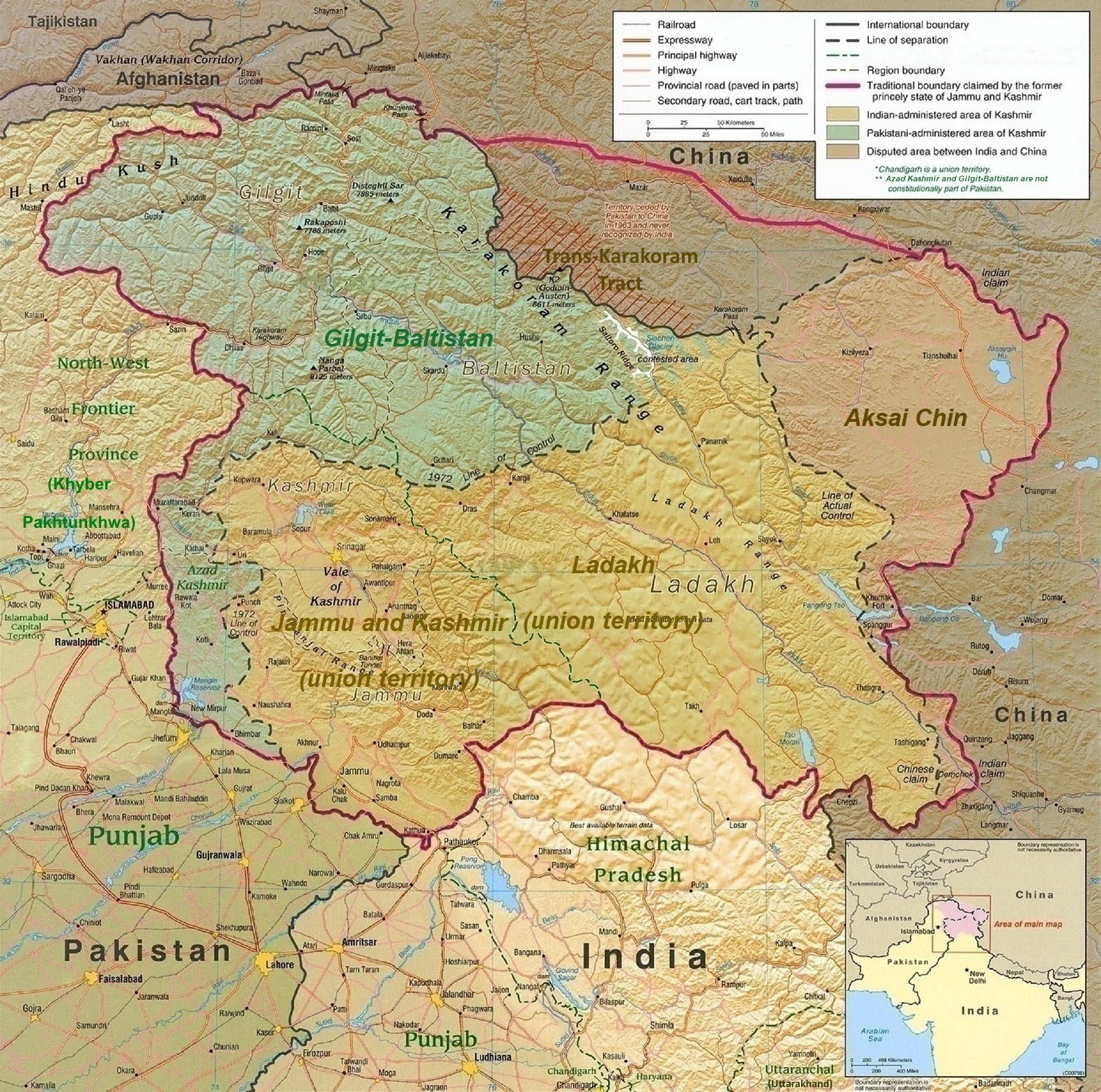


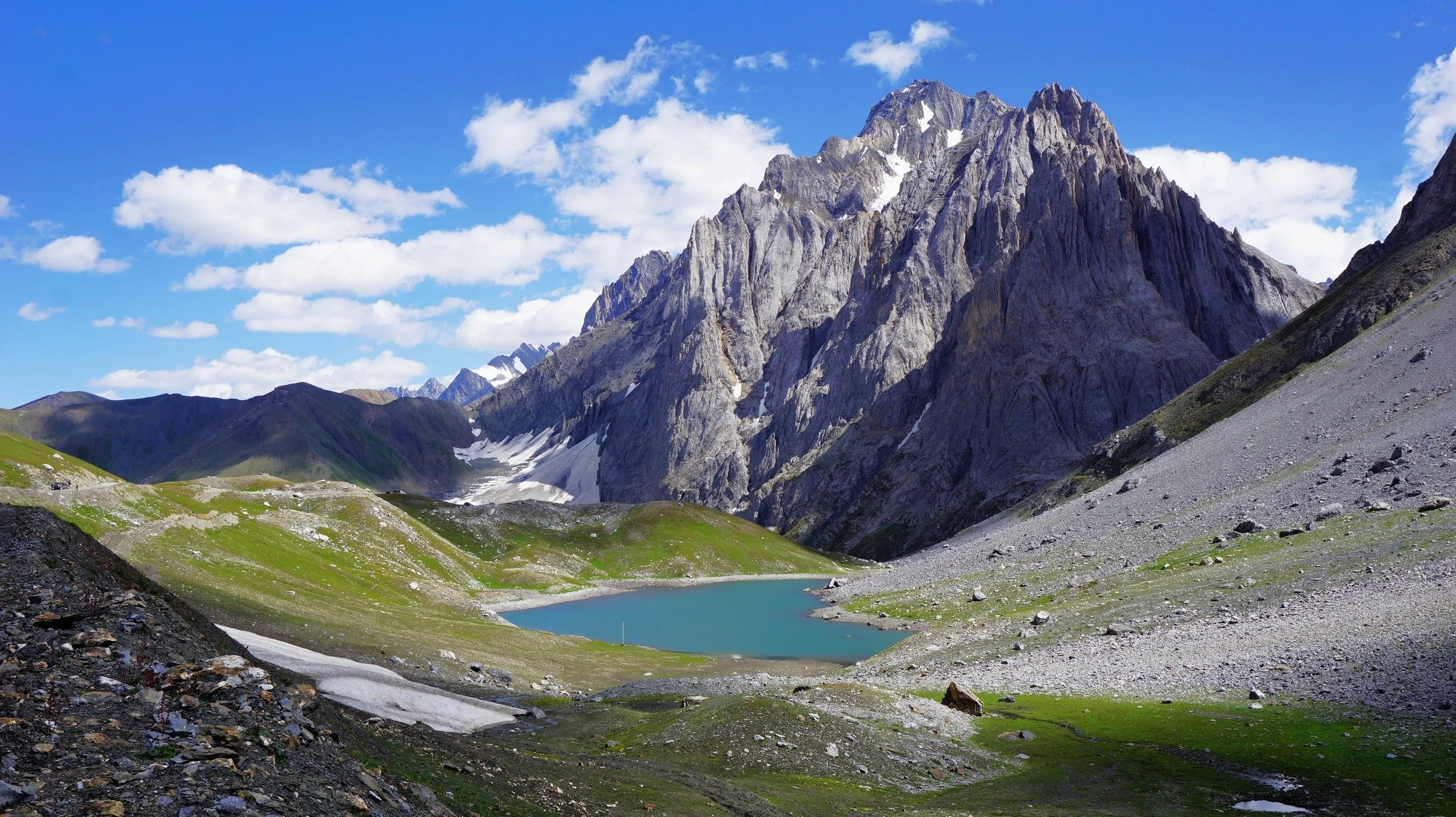
Five years ago the Galwan Valley was in the News for the wrong reasons after a deadly clash between the Indian and Chinese Armies in the Valley located in Ladakh lead to many deaths on the contentious Border between the two countries in wake of continued Chinese intrusions into Indian territory.
This area along the Shyok River, of which the Galwan Nallah or the Galwan River which forms the Galwan Valley has been off limits to Civilians since long but now the Indian Government has decided to open up the area for Civilians and we were amongst the First Civilians to venture into this beautifully desolate part of the Eastern Karakorams in Ladakh. Earlier Civilians could only venture upto the Village of Shyok from where the Shyok River takes a U turn and flows in a Northerly direction.