
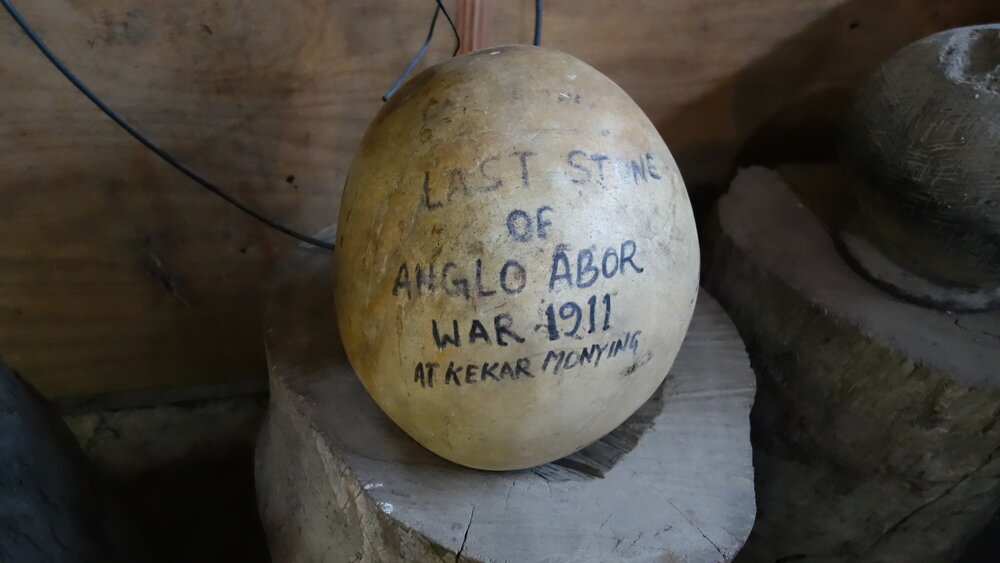
The Last Anglo Abor War 1911
The Anglo Abor War was a series of events which took place in 1911 between the British and the Abor Tribesmen in what is today Arunachal Pradesh. The British were keen to explore and Map out the almost impenetrable Jungles that the Siang River cut through in the Eastern Himalayas. And of course this put them on a collision course with the local Tribal communities who saw them as invaders and outsiders.

The Last Anglo Abor War 1911
By the beginning of the 19th Century the British were well in control of most of the parts of the subcontinent of India with the only exception being the areas in North and North West India which were firmly in the control of the Sikhs under the Sher-E-Punjab Maharaja Runjeet Singh. But after his death and the arrival of the mid part of the 19th Century the Sikh Empire was also shattered and gradually taken over by the British.
However in the Eastern part of India which was broadly described as Assam there were still areas and Tribes which held out. The British could penetrate into the the Brahmaputra Valley as far up as Pasighat but beyond that started the foothills of the Eastern Himalayas which unlike their counterpart in the West was virtually impenetrable due to the dense Jungle and the indegenous Tribes which inhabited these parts. Foreigners were extremely unwelcome and the Tribes of the Hills took no prisoners. As per their long laid down Tribal traditions they just couldn't let foreigners in their sacred Lands and Jungles where their deities presided and allowed them to make a living out of hunting gathering.
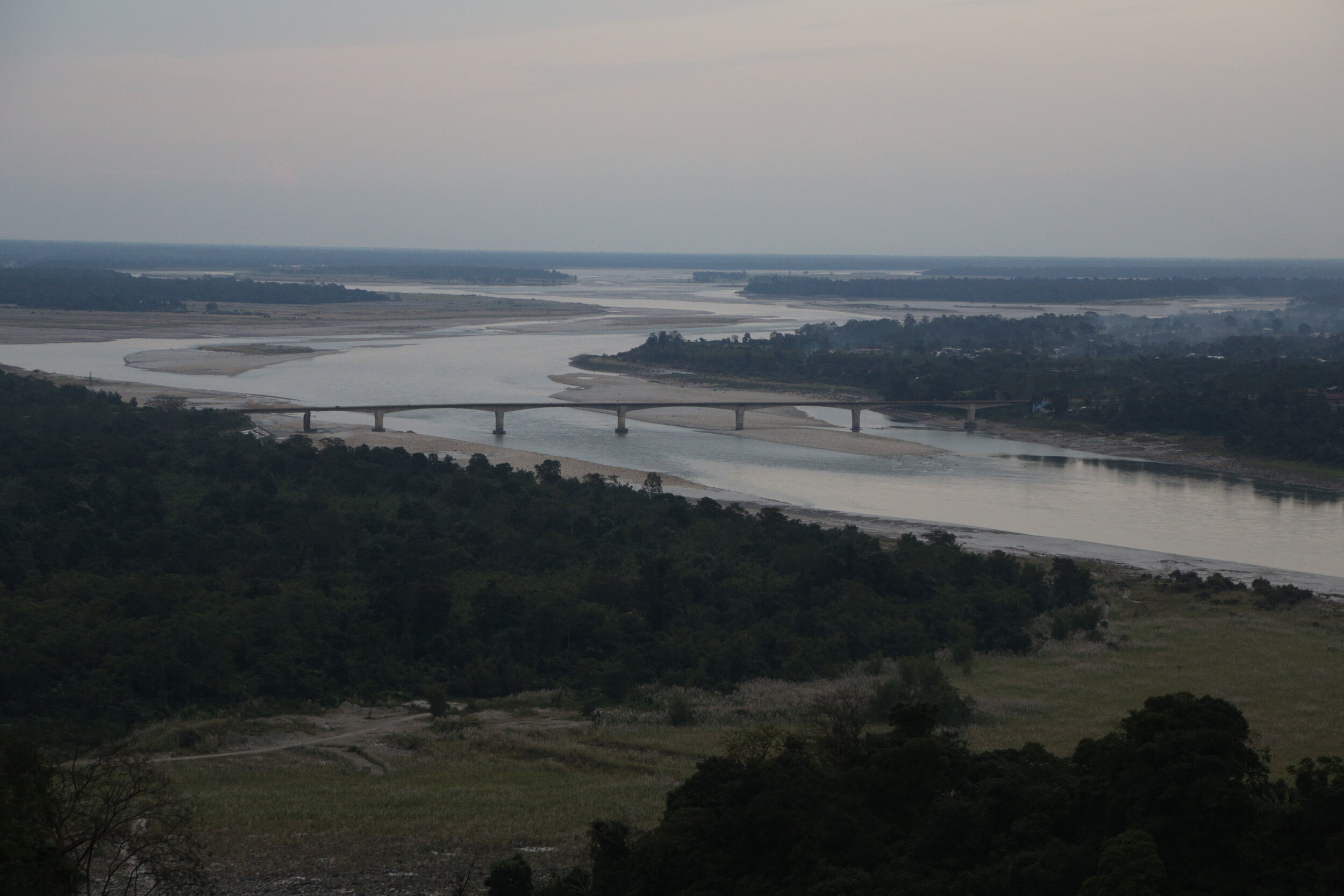
The Siang or the Brahmaputra before Pasighat
Let me first explain how I got to this point. We were driving around the North East in last November / December and while on the way from Pasighat to Aalo we stopped at one of the few local “Dhaba” if you could call it. These Dhabas serve quick Lunch / Dinner in the form of Dal Rice or Chicken Rice or Pork Rice or you could opt for Maggi instead. Or the regular Tea. Anyways since we were in a Group we ordered and some of the more curious ones started roaming around. And then I caught sight of what I though looked like an Ostrich’s egg and hence I decided to take a closer look. And then I realised that there was something written on it. It wasn't an Egg at all but a Stone which resembled an Egg. And the words written on it were “The Last Stone of the Anglo Abor War 1911 at Kekar Monying”
Well Kekar Monying is the name of certain cliffs in this area along the Siang River which goes onto to become the Brahmaputra as it hits the Assam Plains. And it was along these cliffs that an engagement in the cold December of 1911 was fought between the British and the Tribesmen who the British referred to as “Abor” at that time. The British carried all kind of modern weaponry whereas the Tribesmen were armed with their Bamboo Arrows and Stone Catapaults as their only “long range” weapons. Stone Catapaults which were used to launch big round stones like the one I saw there and you see in the pic at their adversary. And this particular Stone had the dubious distinction of being the last one used by the Tribesmen against the British. And how exactly it landed in that Roadside Dhaba is anybody’s guess. And of course I forgot to ask.
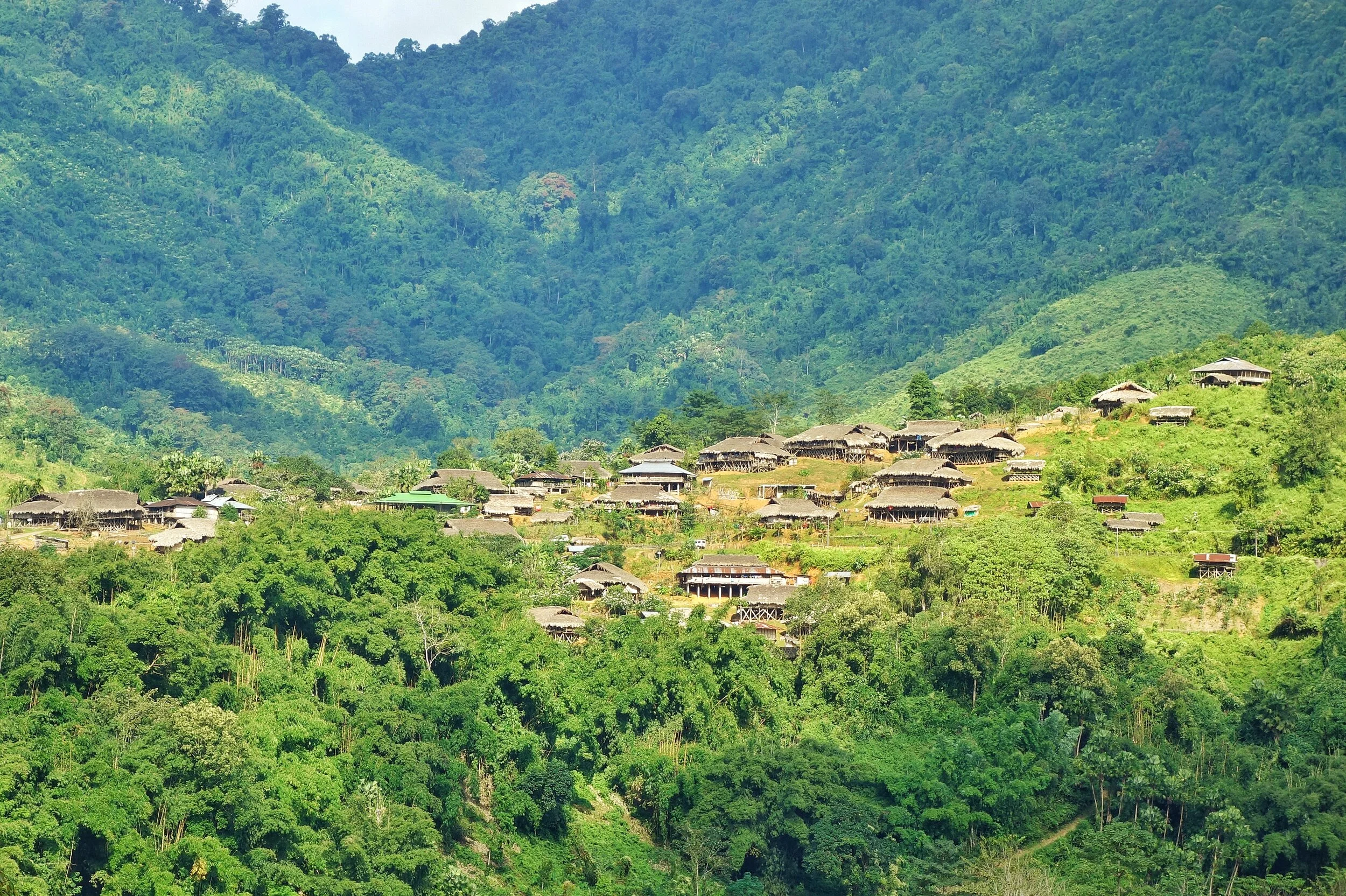
Typical Abor Country
This War which was fought in various segments started in the 1850s when the British began probing into these areas. There is a certain Village called Kebang spearheaded the campaign against the British. These were Adi Tribesmen (they were called Abor collectively by the British) and they fought no less than 4 Wars against the British and they had a name for each ie Bitbor Mimak (1858), Bongal Mimak (1859), Nijom Mimak (1894) and Poju Mimak(1911). The Adi were fierce warriors and towards the beginning of the 20th Century the British started to take them very seriously. They formed an Abor Expeditionary Force in order to penetrate the Region and establish firm control over it. The British were aware of the strategic importance of the area as they knew Tibet and China were not very far away but the territory between was largely unknown and they wanted to be in control of this unknown. But of course the Adis wouldnt have it that way. It was their Land. And they would fight tooth and nail to keep it.
Apparently the last War in 1911 was sparked off by a rather peculiar incident. A British Officer Williamson accompanied by another British Officer Dr.Greigerson, an interpreter, a couple of Coolies and a few Soldiers of the Assam Rifles were surveying the country and came to a Village. The Villagers offered them some gifts as offerings and there was a certain Villager who offered a Chicken as a gift but apparently this Villager had some skin disease and Williamson refused to accept his gift. This was of course a huge dishonour for the Villager who decided from thereon to follow Williamson till he accepted his gift.
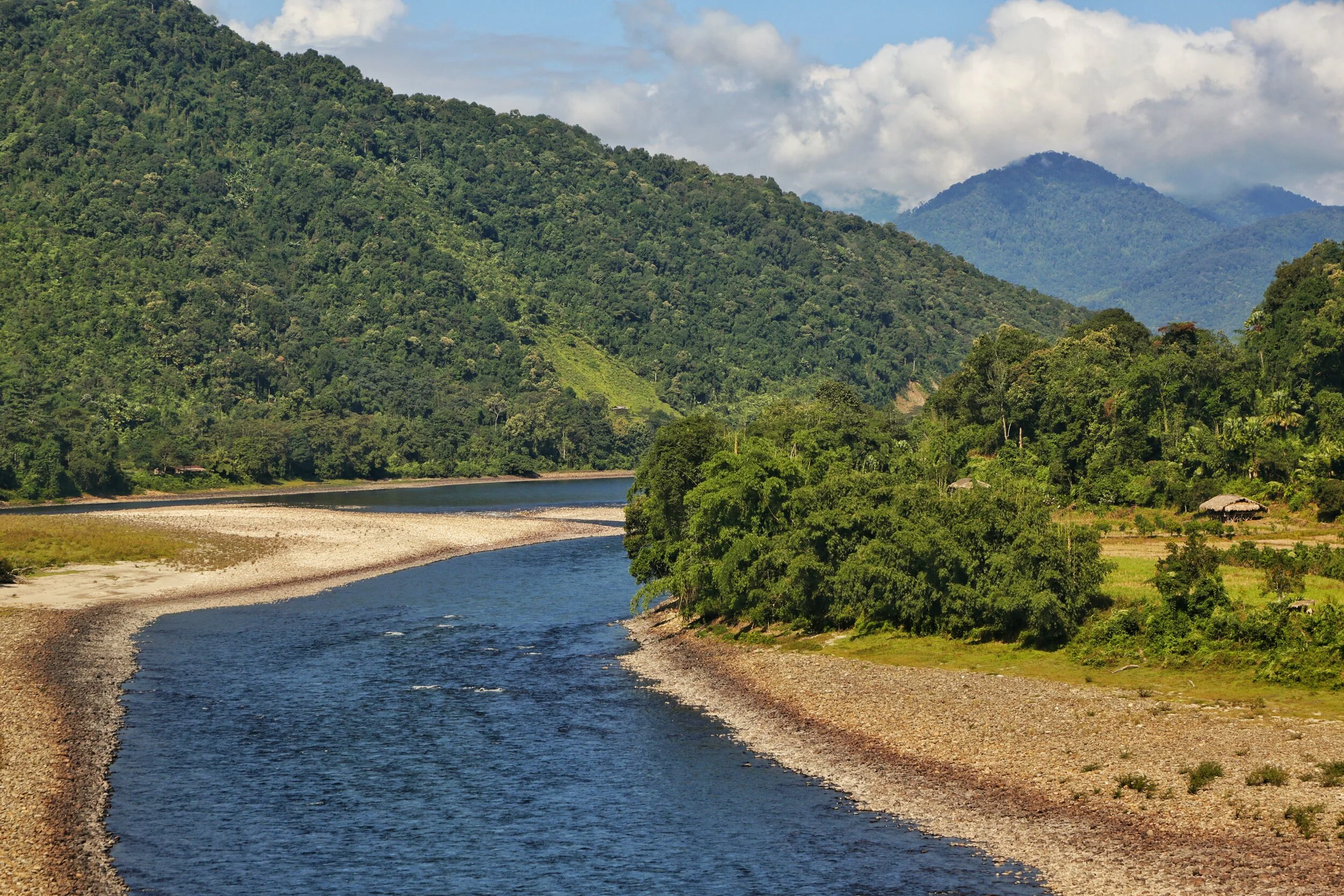
The Siang River
So when he moved to the next Village this Villager again came to him and offered the Chicken. Williamson was aware that this guy was following them and now he lost his temper and he used rough language and bad words in dealing with the Villager and to add insult to injury he struck him a couple of times with his stick. And this was now taken as a great dishonour by the whole Village. And they decided this would be avenged. But they would do this when they would be on their way down to the Plains.
But unknown to the Tribesmen Williamson and Dr.Grierson had a change of plan and decided to split into two different parties on their way back. On the night of March 31 while on his way to Dinner, Williamson was waylaid by the same Villager who had once offered him a Chicken. And killed. And they also killed his whole entourage. Dr.Grierson and his party were waylaid in Kadeng Village and put to death except one of the Coolies who was a Nepali and managed to somehow convince the Adi Tribesmen to spare his life. He of course went down and reported the whole incident to the authorities.
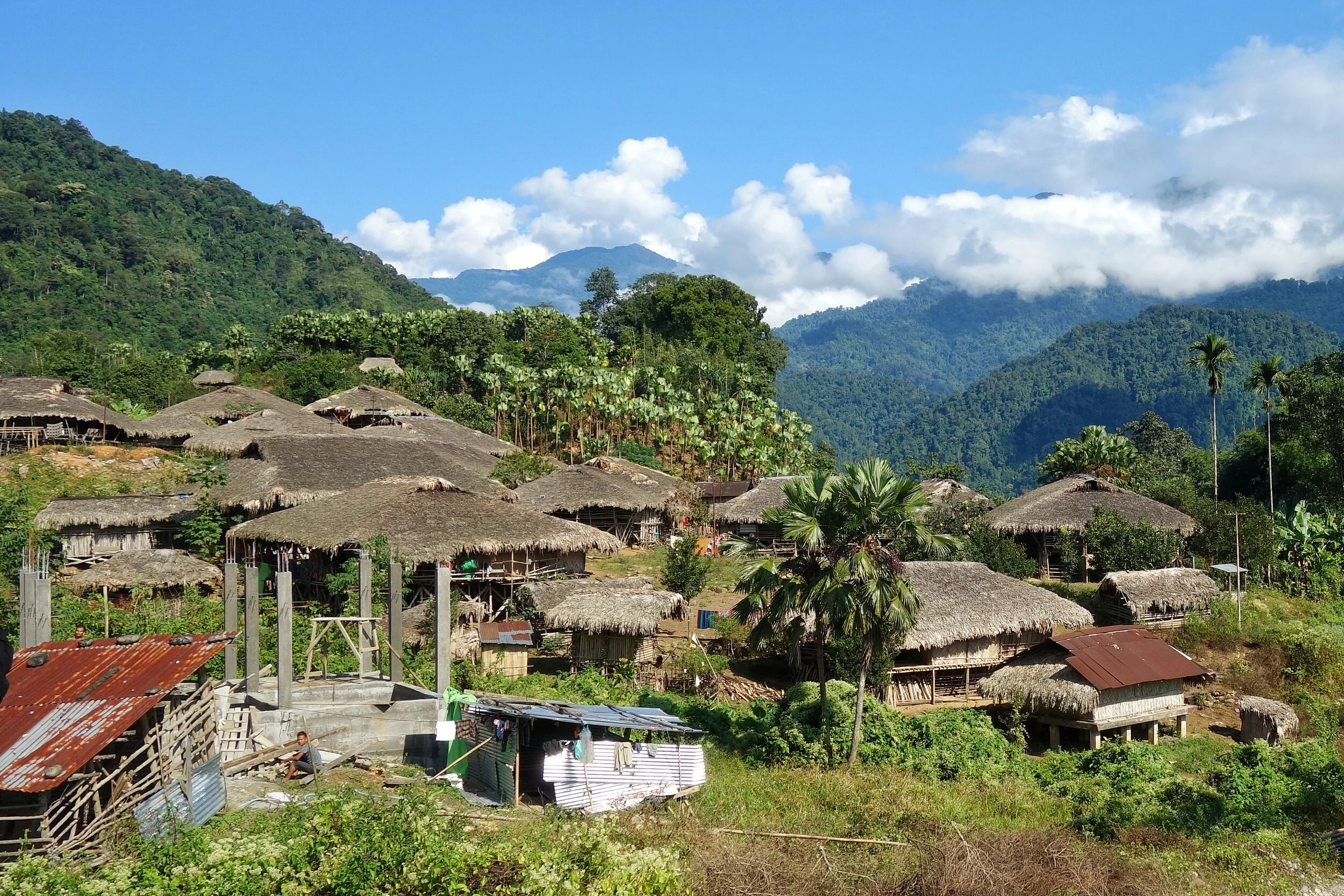
A typical Village in the area
And the Adi knew that now the British will come with full force and in December, the time most suitable to the British, the Abor Expeditionary Force showed up. The Adi fought bravely but of course were no match for the British with their modern Arms. The British marched up the Kadeng Village and the whole Village was then burned down. And there would not be another Abor War for the British to fight.
These Adi Tribesmen are the unrecognised Freedom Fighters of the country who have never got any recognition from the Government. Though I am aware of the name of some of the Adi Tribesmen who were a part of this, including the Villager who wanted to gift a Chicken, but that in my view would be an injustice to the thousands unnamed Adi and other Tribesmen who also fought for the country’s Independence like in other parts of the Country. Respect.
Pic from November 2019. On the Pasighat Aalo Road, Arunachal Pradesh
Inputs from various Online sources.
The Burmese Tamils of Moreh
There live in the Border town of Moreh, in Manipur on the India Myanmar Border a community of Tamils who came from Burma where they had settled Centuries ago after migrating from Tamil Nadu. The Community of Tamils still control the majority of the cross-border Trade between India and Myanmar that takes place here.

The Burmese Tamils of Moreh
In my days at the Delhi University I had a large number of friends from the North East. A common taste in Heavy Metal music was the main reason for the same. And ofcourse I used to love the stories told about the North East by these guys. We also had another commonality that we came from lands from where Insurgency was rife and only someone who has grown up in an Insurgency can really understand how it feels. And of course last but not the least was our common love for the Mountains / Hills.
And from my friends amongst the Nagas, I had Angami, Ao, Konyak and Tangkhul and from Manipur I had Meties and the Kukis. This interrelation of the tribes was another thing fascinated me as well. An often our conversation would drift to the our respective worlds where I would speak of Kashmir and they would speak of the fascinating North East. I still remember I almost broke up with a Naga girlfriend who told me that Dzukou Valley was more beautiful than Kashmir. Of course I couldn't take it lying down. I asked her if it Snowed there ? She said yes it does Snow there. I said it doesn't Snow in Nagaland. She said I didn't know anything. And of course then the argument went overboard to the point that we didn't speak for many days. Not that it mattered but since that day the name Dzukou Valley was stuck in my mind and will surely visit one day as now I have seen many pics of this beautiful place.
Anyways coming to the point. While discussing the Insurgency and the various Insurgents Groups the most dangerous place which was always mentioned was the border town of Moreh in Manipur right on the border with Burma as it used to be. I heard tales of strong Insurgent-Smuggler-Drug Runners mafia which ran things over there and apparently the area was such that even the Security forces would stick to the regular areas. And of course there were deadly rivalries between the different Insurgent Groups due to their different Tribal loyalties. But the strangest fact was that most of the border trade was controlled by not someone from North East but originally from South India. It was controlled by the Tamils who had settled here. And these were Burmese Tamils.
Of course I used to ask how come the Tamils ? And that too Burmese Tamils ? Did something called a Burmese Tamil even exist ? And how do they manage as “outsiders” in what was considered an environment very hostile to the outsiders. I could never get a satisfactory answer for the same and over a period of time I also lost interest in this particular subject. But lately as I get more into Research and History I tried to actually find out the History behind the Tamils of Moreh and how they came to settle in these lands far removed from their ancestral Tamil lands down South. And settle in lands which were considered too hostile for any outsider to even come for a visit.
So this is what I found out. In Burma Indians from various parts of India have come over the centuries for various trades and practices. Among them were Tamils many of whom were Chettiars who were into Money lending and trading. And over a period of time many Tamils came and settled here like they did in other places like British Malaya and Singapore. However in the 1930s started a wave of Nationalism initially targeted at the British but which soon turned into a agitation against all perceived outsiders and as a result many Indian started to leave Burma and go elsewhere. After the Burmese secured Independence the problem just got exaggerated as the Burmese Government refused to recognise the Indians living there since Generations as citizens. So another mass exodus started and this included a large number of Tamils who returned to Tamil Nadu.
Once back in Tamil Nadu many got used to life in their new Homeland but many were not at ease with the move and found life difficult. They decided that life in Burma was still better than life in Tamil Nadu and they decided to go back to Burma. Since going by Ship would entail many problems with documentation and such so they decided to try the overland Route via the North East. Many of you must be aware that the Indo Burmese border is quite a porous Border unlike our Borders with other countries and its relatively easy to cross it. So all the Tamils who wanted to go back to Burma landed up in Moreh which was the last Border town in Manipur before Burma. But once again the Burmese refused to admit them and recognise them as Burmese nationals.
The returning Tamils were however in no mood to go back to Tamil Nadu and decided to stay put in Moreh and keep trying their luck with the Burmese and maybe they liked the environs of Moreh. And I assume most of these Tamils could speak Burmese so they could live by the Border and take part in the trade from Burma. So they stayed put and became an important part of the trading community in the Border town and they relatively large numbers and nowhere to go status gave them some resilience against the Underground Outfits active in the Region. And hence they became a part of the border town of Moreh. Along with some Punjabi and Marwari businessmen who had also settled here in the past.
As of today the Tamil community is a vibrant one in Moreh with numbers in excess of 3000 and they have their own Temples and Schools in Moreh. They are still a very important part of the cross Border trade and continue to control most of it. And especially since the opening of official Border trade from Moreh, with Moreh recognised as an important Border trading town, in August 2018. The Town has itself has seen a power struggle between the Kuki and the Nagas over the “control” of the Town and as of now the Town is Kuki dominated. All throughout this struggle which at time included Members of various armed Underground Outfits the Tamils managed to somehow stay clear and still be dominant in the business in this Town but many of them still left the Town. The local Vayapar Mandal or Traders Association is made up almost exclusively of Tamils and the head of the Tamils is often referred to as the “King of Moreh”.
Kiki’s Blog
Stories from the Himalayas
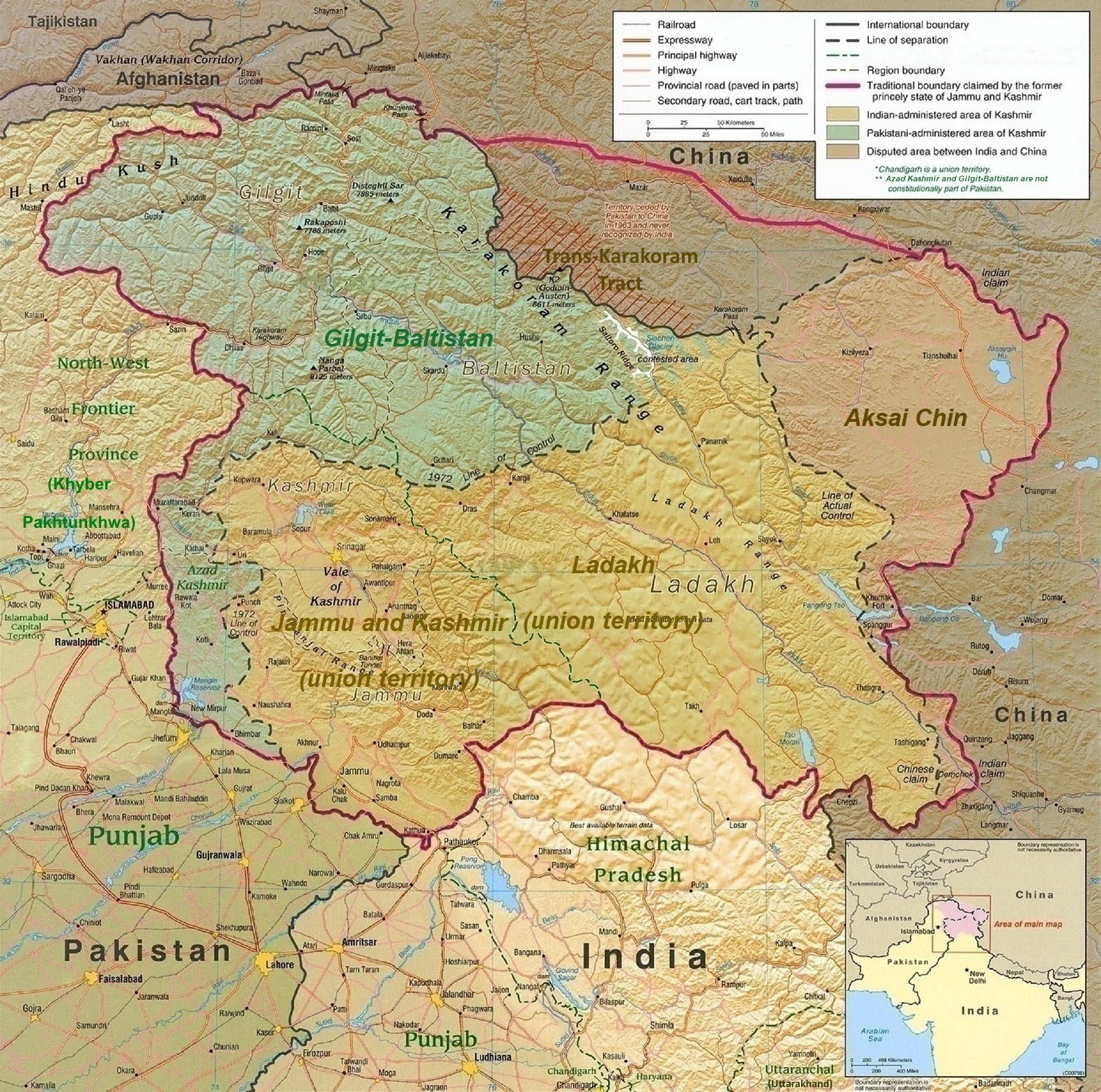



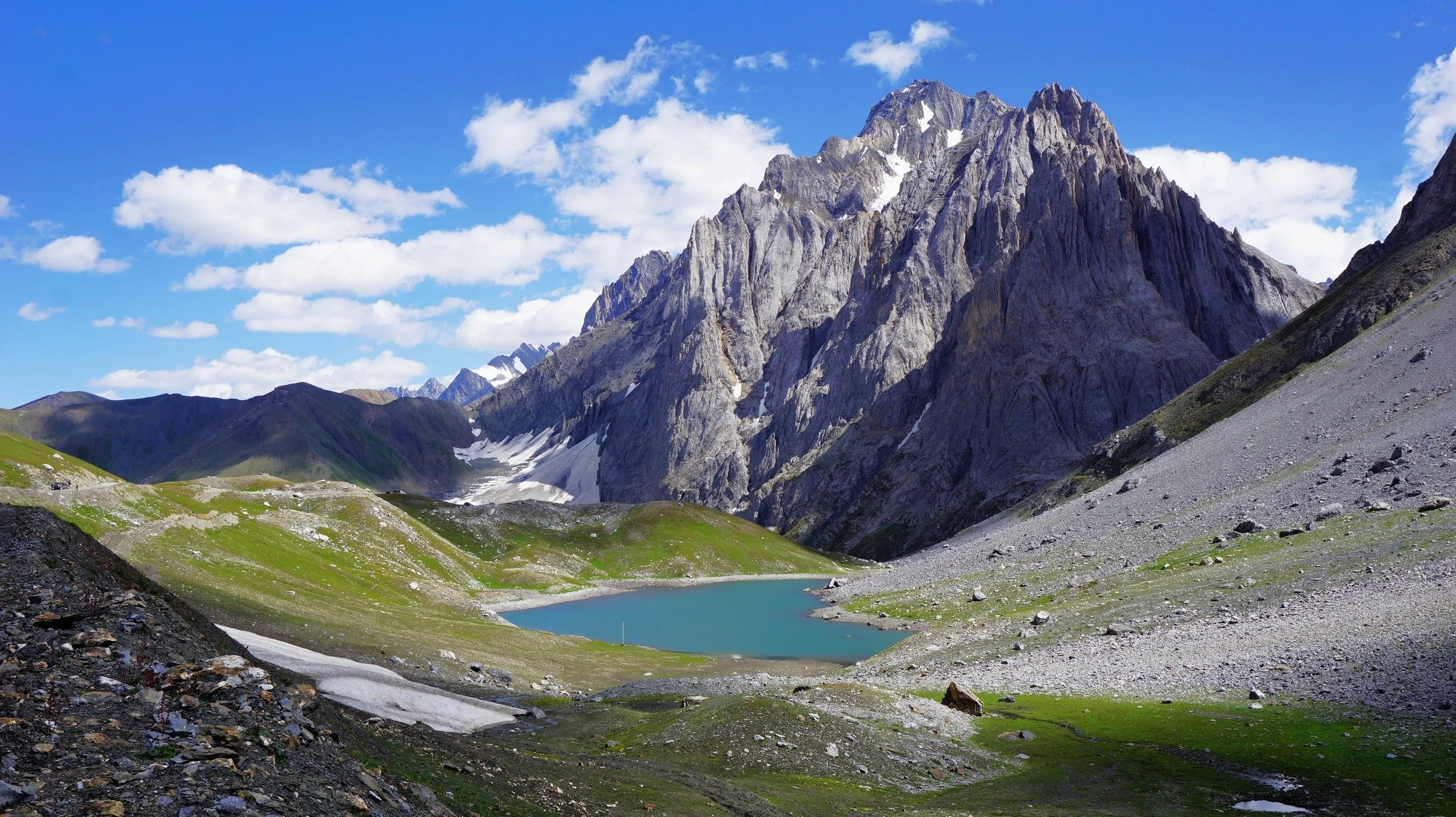
Five years ago the Galwan Valley was in the News for the wrong reasons after a deadly clash between the Indian and Chinese Armies in the Valley located in Ladakh lead to many deaths on the contentious Border between the two countries in wake of continued Chinese intrusions into Indian territory.
This area along the Shyok River, of which the Galwan Nallah or the Galwan River which forms the Galwan Valley has been off limits to Civilians since long but now the Indian Government has decided to open up the area for Civilians and we were amongst the First Civilians to venture into this beautifully desolate part of the Eastern Karakorams in Ladakh. Earlier Civilians could only venture upto the Village of Shyok from where the Shyok River takes a U turn and flows in a Northerly direction.