
The Hindu Raj Mountains
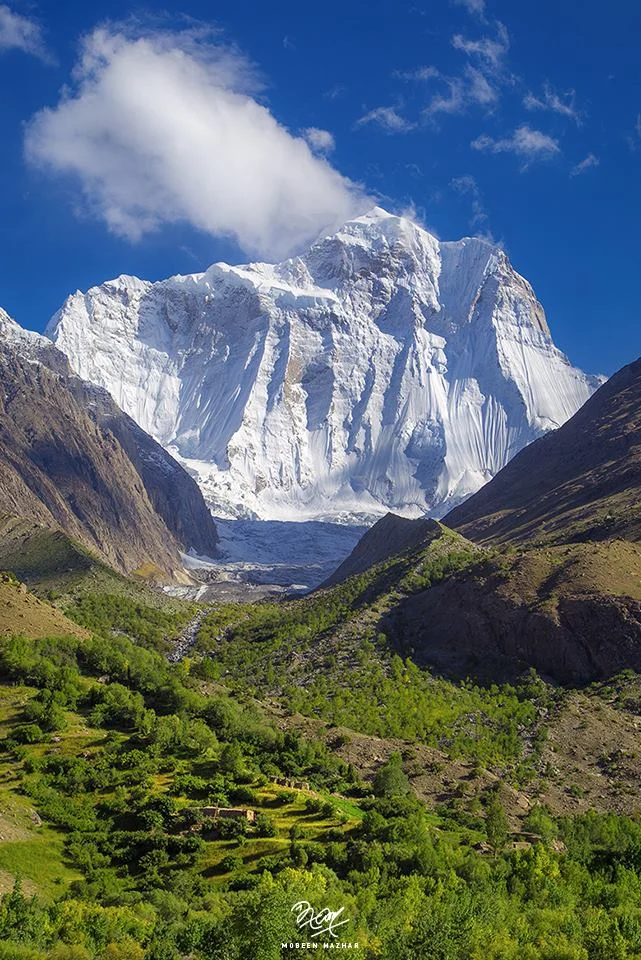
The Hindu Raj Mountains
There lies somewhere in the Northern wilderness of Gilgit Baltistan and Khyber Pakhtunkhwa nestled between the mighty Karakorams and the Hindu Kush a Mountain Range called the Hindu Raj Mountains. Most people consider it a part of the Hindu Kush Mountains but many Geographers and purists consider the Hindu Raj as a separate Range. And surprisingly very few people have ever heard of it in the sub-continent. Though everyone is quite aware of the Hindu Kush Range and the many versions how it came to be named as such. The same should have been the case with the Hindu Raj but I guess someone missed the Memo.
The Hindu Raj Mountains are a noble Range in their own right but just like the Pir Panjals to the South across the Great Himalayan Range it gets dwarfed by the giant Peaks of the Karakoram and the Hindu Kush. Not that it lacks heavy weights just that in a Region which abounds with numerous 7000 m plus Peaks and even 8000 m plus Peaks the tallest Peak of the Hindu Raj Mountains, the Koyo Zum tops in at 6872 m (22,546 ft) which is by no means less but it just gets dwarfed as mentioned earlier. To put that height into perspective the tallest Peak of the Andes, the Aconcagua stands at 6962 m.
As per Encyclopedia Britannica “A wider definition of the Hindu Kush would include a fourth region known as Hindu Raj in Pakistan. This region is formed by a long, winding chain of mountains—with some lofty peaks, such as Mounts Darkot (22,447 feet [6,842 metres]) and Buni Zom (21,499 feet [6,553 metres])—which strikes southward from the Lupsuk Peak (18,861 feet [5,749 metres]) in the eastern region, then continues to the Lawarai / Lowari Pass (12,100 feet [3,688 metres]) and beyond to the Kābul River. (The Lowari Pass is a Pass which connects Dir in Khyber Pakhtunkhwa with Chitral which also falls in the same province. The Lowari Pass is the lowest of the 4 traditional Passes which connected Chitral with the outside world. The Lowari Pass is famous for its avalanches and the number of people who died on it historically. Think of it like you think of the Rohtang or the Zoji). If this chain is considered part of the Hindu Kush, then the outlying mountains of the Swat Kohistan region of Pakistan to the south also form part of the complex.”
As per another definition by “Batholith Saltoro” the range that lies between the true left bank of the valley of the Yarkhun/ Mastuj River in the West and North and the Northern watershed of Swat Kohistan in the South, is the Hindu Raj. The main range of the Hindu Kush lies to the East and North of the Yarkhun/ Mastuj/ Chitral/ Kunar River system.
Now most of us are familiar with the Etymology of the Hindu Kush which as per one definition meant the “Killer of the Hindus” which was a reference to the fierce avalanches that the Hindu Kush would let loose. It was also supposedly a reference to the large number of people from the subcontinent who were taken as slaves to Central Asia across the Hindu Kush and many perished while crossing this formidable Mountain Range. But as per the Encyclopaedia Britannica the term Hindu Kush is derived from Arabic and it simply means the Mountains of India. But then this is a debatable issue and we leave it as such to ponder over it another day.
So I assume the Hindu Raj reference must have come from the Hindu Shahi Rulers who held power in this Region. But this is just an assumption. You need to keep in mind that at that time “Hindu” was a geographic term and it still has but now it has a different connotation. Or since the area is in the same vicinity where the Kalasha people live maybe its a reference to them and their ancestors when most people here were Kalsha. This remains a matter of my personal speculation as I am yet to come across a source which mentions why exactly these Mountains were called the “Hindu Raj” Mountains.
And culturally also the area has a very interesting history. As per “Batholight Saltoro” “Culturally, the linguistic mixture is interesting, containing as it does a mixture of Shina, Burushaski, Khowar, Gujar, and Wakhi speakers which reflects the complex history of the area. It has been ruled variously from Chitral, both by the Kushwaqt and the Ul Mulk dynasties, from Gilgit, from Srinagar, from Tibet, from Persia. The original inhabitants of its Eastern Valleys seem to have been Burushaski speakers, preserving, as they do, what is considered to be a purer version of that language as compared to that which is spoken in the Hunza region. The Yasin valley, the pass at the head of which served as a conduit for the Chinese to invade and conquer the Tibetan held Lesser Bolor, is also the valley where the explorer/journalist George Hayward was murdered, perhaps for being a tad too investigative.
Another interesting Range in the Great Himalayan System now somehow obscured by other more famous Ranges / Sub ranges of the system.