

The Pir Panjal Pass
And one of the most famous Pass over the Range was called the Pir Panjal Pass and as per some versions of History the entire Range got its name from the name of the said Pass. The word Panjal probably came from the word Panchal. This Pass connects the Kashmir Valley with the Poonch Region of Jammu and thereon to the Northern Plains of India. This was the Pass used by the Mughals on what is now called the Mughal Road on their forays into Kashmir. Nowadays mostly the Pass is called the Pir ki Gali which is a reference to a Pir or Holy Man buried somewhere near the Pass.

The Pir Panjal Range a sub Range of the Himalayan Range stretches from the Kishenganga in the West to the Beas River in the East. It is mostly an under rated Mountain Range as it barely touches 20,000 ft and is dwarfed by its adjacent Himalayan Ranges. The Pir Panjal cradles one side of the Kashmir Valley and separates it from the North Indian Plains and it forms one side of the Kulu Valley as well. Two of the largest and most fabled Valleys of the Western Himalayas are bound by the Pir Panjals.
But as John Keay mentions in the epic When Men and Mountains Meet : Explorers of the Western Himalayas the Pir Panjal is as Noble a Mountain Range as any in the World. Its spires are the first White wall of Mountains that explorers faced on their way into the Northern Mountain vastness. The Pir Panjal gets more Snow than any other Range of the Himalayas, thanks to the Western disturbances, and holds one of the finest Ski Resorts in the World, Gulmarg.
And one of the most famous Pass over the Range was called the Pir Panjal Pass and as per some versions of History the entire Range got its name from the name of the said Pass. The word Panjal probably came from the word Panchal. This Pass connects the Kashmir Valley with the Poonch Region of Jammu and thereon to the Northern Plains of India. This was the Pass used by the Mughals on what is now called the Mughal Road on their forays into Kashmir. Nowadays mostly the Pass is called the Pir ki Gali which is a reference to a Pir or Holy Man buried somewhere near the Pass.
The Pir Panjal Pass has seen its share of History and as the Guardian Wall of Kashmir its history is firmly entwined with that of the Valley. It was via this Pass that many invaders came to the exalted Vale though later travel along the Jehlum Gorge was more popular as it was a much safer option than the moody Pir Panjal Pass and its freak lightning Storms and crazy Weather. There were other Passes to the right and left of the Pass as well but when a Motorable Road was constructed it chose to go through the main Pass.
And then there is this great Drone Shot by my friend Tufail Shah. Moving beyond just the aesthetics of this shot the Mountain Geography it encompasses is like a Poem in Geography. It captures the grace of the Pir Panjal Pass and other neighbouring Passes of and accompanying Meadows of the Pir Panjals. And this is what you see while approaching from the Kashmir side.
The River you see in the pic is the Rambi Ara and it itself is formed by the meeting of the Rupri Nar and the Yanga Nar which arise from the Galciers and Glacial Lakes surrounding this Pass. The Rambi Ara is a major Tributary of the Veshaw which is the largest left Bank tributary of the Jehlum. True to its point of origin the Rambi Ara is known for its turbulent nature and flash floods. In the pic you can see different streams joining up the Rambi Ara adding to its flow.
And then you can see the signs of modernity. The Road snaking its way upto the Pass and its known as the Mughal Road. The Road remains open for a good 8 to 9 months of the Year and provides an alternative to the Main Srinagar Jammu Highway. Then there are the Power transmission lines going over the Pass connecting the Kashmir Valley with the Northern Grid.
And of course last but not the least are the footprints of History left on the Pass. Almost bang in the middle of the pic you can see the remains of the Alia Bad Sarai, a Sarai built by the Mughals which offered shelter from the angry weather Gods of the Panjals. The Alia Bad Sarai stood right on the approach to the Pass but the motorable Road has been built above it. The Sarai was probably constructed under instructions from Ali Mardan Khan, a Persian General who served under Emperor Jahangir and under who’s supervision the Road was built. Ironically Jahangir died while on this Road and his Intestines are buried at the Chingus Sarai on the other side of the Pir Panjals.
It is said that he fell ill while going down this Road on his way to Lahore from Kashmir. Maybe he fell ill on the Pass itself due to inclement Weather. Maybe he paid a price for trying to tame the Gods of the Panjals. Maybe a lesson to us Mortals that the Mountains can never be tamed. The Mountains will prevail. Everytime.
Anyways enjoy the Poetry of the Pic which encompasses all the elements of the enigmatic Pir Panjals.
Pic by Tufail Shah. From Late Summer 2020
The Chingus Sarai
The Chingus Sarai or Fort is an old Mughal era Sarai on the Mughal Road which connected Punjab with Kashmir over the Pir Panjals. The word “Chingus’ is derived from the Persian word for “Intestines”. It got this rather unflattering name after the intestines / entrails of one of the Great Mughals, Emperor Jahangir were buried here.

The Entrance to the Sarai
The Entrails of an Emperor : Chingus Sarai
(Advisory : Please use your discretion while reading this Post. Some parts of it might sound distasteful to sensitive people.)
On the Old Mughal Road or the Mughal Road as its called now lies a Sarai called the Chingus Sarai. This was among a series of Sarais built by the Mughals to serve as stop over points on their Journeys to Kashmir via the Pir Ki Gali. Some of these Sarais still exist though in a dilapidated condition on the Road. These include the most well known of these Sarais as well, the Aliabad Sarai which was right below the Pir Ki Gali. The Road and the Sarais on it were built by the Kurdish Governor of Kashmir and Lahore, Ali Mardan Khan

Inside the Chingus Sarai / Fort
Situated at an around 2000 ft the Sarai is around 130 kms from Jammu and around 35 kms from Rajouri. It is situated near the Village of Chingus along the banks of the Sukhtao River. It offers a spectacular view of the snowy Ranges of the Pir Panjals. This was the fifth Sarai on the way from Gujrat (now in Punjab, Pakistan) across the Pir Panjals into the Kashmir Valley and ending at Srinagar. The name of the Village earlier used to be called Khanpur and was established by the Jaral Hill Rajas. So why was the name changed ?
As most of you known that the Mughals were great patrons of Kashmir and none of the Mughals was as enamoured with Kashmir as Emperor Jahangir, also called Saleem, the somewhat rebellious son of Akbar the Great. Yes the same Saleem of Saleem Anarkali fame. As per historians Emperor Jahangir visited Kashmir a total of 13 times. In contrast Akbar visited Kashmir twice and Shahjahan and Aurangzeb once each. The Mughal Gardens in Kashmir are a legacy of the Mughal love affair with Kashmir. Emperor Jahangir himself is credited with the creation of the Shalimar Bagh while the others were laid down by his son, Emperor Shahjahan, who could never really enjoy Kashmir as much as he would have liked to. Jahangir’s grandson, the unfortunate Dara Shikoh was also a great Patron of Kashmir and the Chashmashahi Garden is said to have been a gift for Dara from his father Emperor shah Jahan.

The staying Quarters at the Chingus Sarai
Coming back to Chingus. The word Chingus is derived from the Persian word “Chingan” which means intestines or entrails. So why such a seemingly gory name for a halting Sarai on the way to what the Mughals called the Paradise on Earth. Well it so happened that in 1627 while on his way back from Kashmir, Emperor Jahangir fell ill at a place called Behram Gali (Behramgala) in the Poonch area. He was advised rest and the Royal Caravan decided to halt for a few days at Behram Gali before moving on. It would give the Emperor time to recover from ill health. And so they bade time and soon the Emperor health began to recover. And soon he got back to that Royal favourite past time of Shikar ie Hunting.
One day while on a Shikar it is said that it so happened that one of the Royal attendants was trying to drive a group of Deer into within the hunting Range of the Emperor. Apparently while doing so he slipped and fell down from a certain height on the top of the Hillock. This happened right in front of the Emperor and while he watched a big rock dislodged by his fall fell on top of the attendant and the poor fellow died a painful death in front of the Emperor Jahangir. And tragically the Royal attendants Mother was also present on the scene and after watching her son’s life end so painfully she started wailing and crying as any Mother would do in such a scenario. This chain of events had a great adverse effect on the Emperor.
The Emperor fell ill again and this time the Empress Nurjahan decided to rush him to Lahore. But alas his time had and this time there was no recovery. The Great Moghul Emperor Mirza Nur-ud-din Beig Mohammad Khan Salim aka Nur-ud-din Muhammad Jahangir Badshah Ghazi aka Jahangir died at the age of 58 at the next halting station in Rajouri.

A fairly recent addition, a Mosque inside the Sarai.
The Empress decided to keep his death a secret in order to avoid a war of succession (which was quite vicious amongst the Mughals) before the time that she got to Lahore and took control of the situation. If the news of the death leaked out while she was far away from the Imperial Courts she and the claimants she backed would be at a distinct advantage. And as it is there was a lot of conflict between her and Prince Khurram (who would later become the Emperor Shahjahan) and they were engaged in a bitter power struggle. And she knew once Prince Khurram came to knew of the death of his father all bets would be off. They decided to prop up the body of the Emperor on top of the Royal Elephant so as to give the impression that he was alive.
But there was a slight issue. Now that they were almost in the heat of the Plains the Body would start to smell and it was impossible to hide the smell that emanates from a dead body. A close confidant, a Royal Doctor I assume, suggested that they take out the Intestines and the Entrails of the Emperor so that they can delay the process of the Body decaying and giving off the smell. And hence the Intestines of the Mughal Emperor were removed and buried in what would henceforth be called the Chingus Sarai. The Sarai which holds under its soil the entrails of the Emperor. And while doing so they also made a Grave where they buried the intestines.

The Garve of the Mughal Emperor, Jahangir
To cut a long story short they made it back to Lahore and as envisaged a bitter conflict ensued but eventually it was Prince Khurram who emerged on top and was crowned the Emperor and Nur Jahan ended up in prison. However subsequent to that the late Emperor was buried at Shahdara near Lahore. This gave Emperor Jahangir the unique distinction of having two graves, one at Shahdara and one in the foothills of the Pir Panjals at the Chingus Sarai.
The Chingus Sarai has got some attention from the authorities but not really the kind of attention that one of the Great Emperors of Hindustan deserved. And that's the story of the Chingus Sarai.
For those who venture into Kashmir using the Mughal do go have a look. History and its knowledge can even make the most mundane looking old structure suddenly come alive and the same holds true for the Chingus Sarai. There is a Marble Tomb at the place where the entrails were buried.
Pics Credit :Parshati Dutta
Kiki’s Blog
Stories from the Himalayas
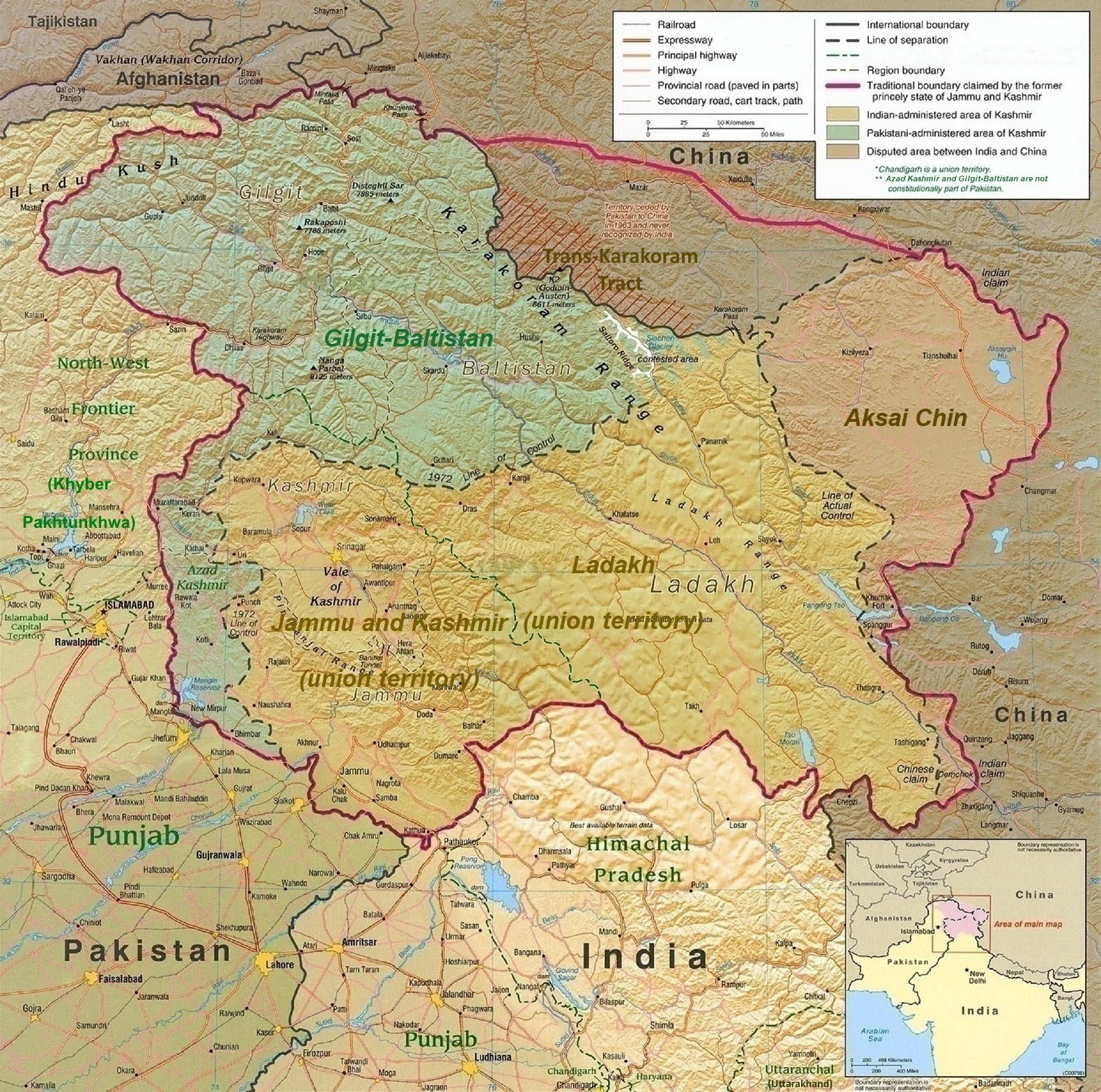



Five years ago the Galwan Valley was in the News for the wrong reasons after a deadly clash between the Indian and Chinese Armies in the Valley located in Ladakh lead to many deaths on the contentious Border between the two countries in wake of continued Chinese intrusions into Indian territory.
This area along the Shyok River, of which the Galwan Nallah or the Galwan River which forms the Galwan Valley has been off limits to Civilians since long but now the Indian Government has decided to open up the area for Civilians and we were amongst the First Civilians to venture into this beautifully desolate part of the Eastern Karakorams in Ladakh. Earlier Civilians could only venture upto the Village of Shyok from where the Shyok River takes a U turn and flows in a Northerly direction.