
The Remanent of an Army
The only surviving member of the Army of the Indus, was the assistant Surgeon William Brydon who was immortalized in this classical Painting by Elizabeth Butler called the “Remnant of an Army” as he trudged on his tired horse with the Fort of Jalalabad in sight. One of the worst defeats suffered by the British Empire.
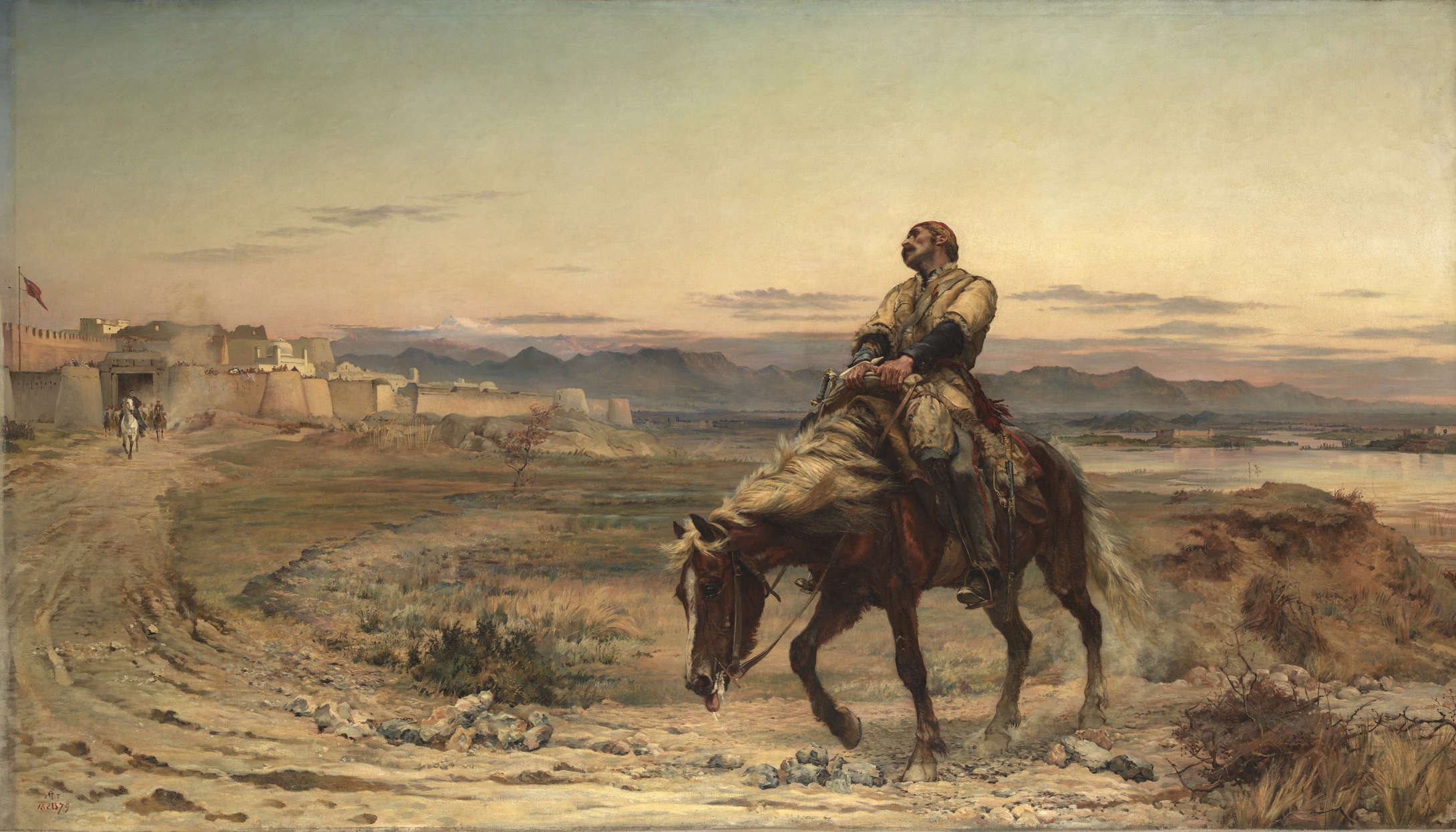
The Remanent of an Army
In John Keay’s epic "When Men and Mountains Meet: The Explorers of the Western Himalayas 1820-1875" there is mentioned a certain meeting between Raja Gulab Singh (The future Maharaja Gulab Singh of Jammu and Kashmir) and the British Governor of Punjab who’s name I cannot recall. It was sometime in 1842. And it was in Shimla. It was in the times of the Great Game.
After the traditional exchange of greetings between the two men, who didn't seem to be too fond of each other, they sat down. Raja Gulab Singh started the conversation. He said he had bad news coming from the side of Afghanistan. It seemed that the Sun had been eclipsed. The Great British Army of the Indus had been annihilated and only one person out of over 20,000 had made it back to safety into British territory. The Britisher looked up at the Raja of the Dogras, and without twitching an eyelid said that Raja Sahib I too have bad news for you. These come from the Trans Himalayan region of Tibet. Your General Zorawar Singh and his Army on its way to conquer Lhasa had been all killed in an engagement with a joint Chinese-Tibetan force and a few remnants of the Dogra Army had managed to make their way to the British Garrison in Almora. It seemed that the Moon too had been eclipsed, Raja Sahib.
Raja Gulab Singh had often retorted to the British that his (Sikh Kingdom) was a Moon in front of the Sun that the British Empire was. But for the time being both seemed eclipsed.
Whether both men were already aware of the happenings on either side of the Himalayas as they sat that day in Shimla is anyone’s guess. Both were tough Military men, being Generals in the most powerful Armies on the sub-continent were not me who would let go of their emotions. The Great Army of the Indus, of the powerful British had been all but massacred by the Afghans and on the other side the powerful Dogras led by General Zorawar Singh had met a similar fate at the hand of the Tibetans. It was a great set back to both parties and revenge was already on the cards.
It is often said that the achievements of General Zorawar Singh were overlooked by historians of that time as they were focused on the events in Afghanistan as the First Anglo Afghan battle was underway and even after winning the initial Battles and in control of Kabul they could not hold the Afghans under control for long. Kabul proved too much for the British to handle And in the beginning of January 1942 they decided to evacuate Kabul and crossover the Hindu Kush into friendly territory across the Khyber. The whole British enterprise into Afghanistan through Sikh territory was the fear of the Afghan Rulers getting an alliance with the Russians who were seen as actively trying to undermine British interest in Afghanistan like they had done in Persia.
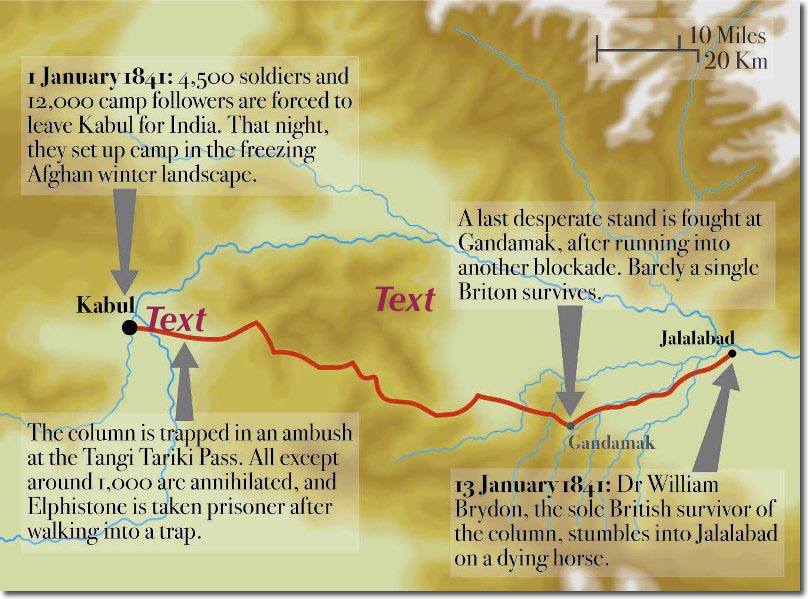
The only surviving member of the Army of the Indus, was the assistant Surgeon William Brydon who was immortalised in this classical Painting by Elizabeth Butler called the “Remnant of an Army” as he trudged on his tired horse with the Fort of Jalalabad in sight. It is said that the Horse died as soon as he was put into a stable. Dr.Brydon also survived by sheer good fortune although a part of skull was sheared off by an Afghan sword but he had stuffed a Magazine in his hat to keep his head warm in the freezing snowbound Passes of the Hindu Kush. The Magazine took the brunt of that Afghan sword swipe and hence the Doctor survived. The only survivor of the Army of the Indus.
The painting is dated January 13, 1942.
PS: There were other survivors but they emerged later as they were rescued by successive punitive Missions by the British.
The Temples of the Indus : Kafirkot
Along the lower foothills of the Salt Range along the Indus there lie a number of Temple Complexes built by what we now know as the Hindu Shahi Kings. Mysteriously nothing much of these seemingly magnificent Temple Complexes is mentioned in History and the fact that they survived itself is even more mysterious. The Temples of the Indus - Kafirkot.
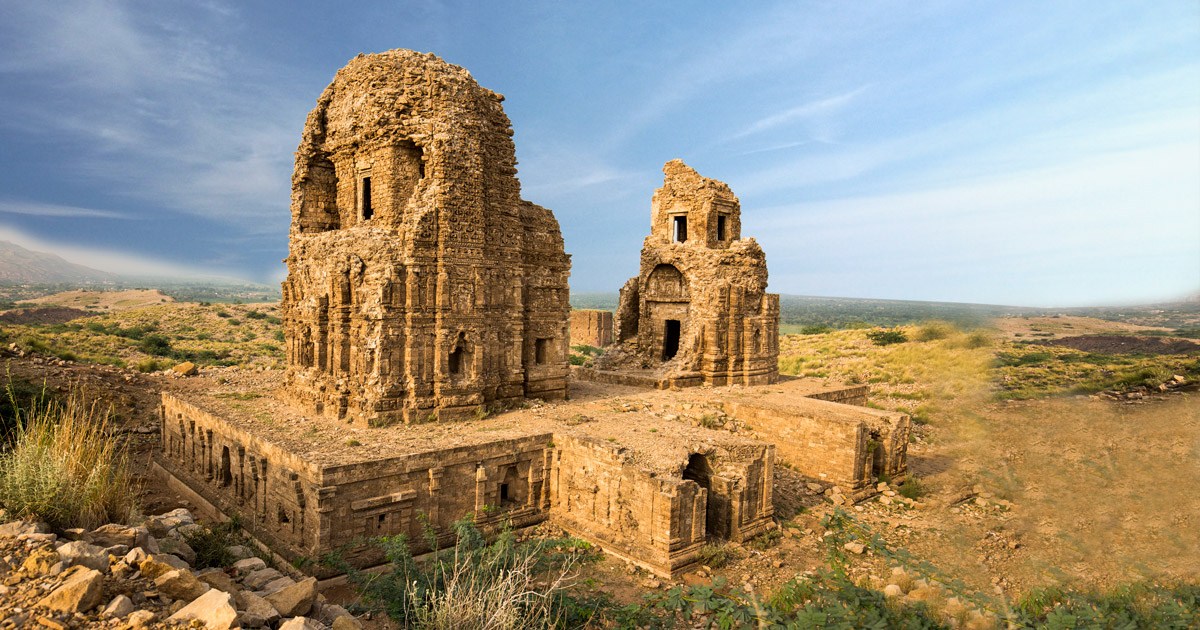
The Temples of the Indus : Kafirkot

Bilot is a non descript little Village in the Dera Ismail Khan district of the Khyber Pakhtunkhwa Province of Pakistan. It is situated along the Indus where the lowest spurs of the Hindu Kush meet the Salt Range. There is nothing really special about the place except for something that lies on a Hill overlooking the Village. The locals call the place Kafir Kot. There are actually two ruins called Kafirkot at a distance of around 50 kms from each other but similar locations. One is called the Bilot Kafirkot and the other Tilot Kafirkot. Both the Temple Complexes are surrounded by ruins of Fortifications of what once would have been an impressive Fort watching over the Indus.

The temples of Bilot (and Tilot as well), among a chain of temples that stretch from Nandna on the eastern extremity of the Salt Range right though the hills to the Indus, are collectively known as the Hindu Shahi temples. There are supposed to be 8 Temples Complexes built by the Hindu Shahi Rulers till the time the Dynasty fell in the 11th Century.

The Hindu Shahi were a group of Rulers who’s Kingdom was located in the Gandhara and Upper Punjab areas and bordered the powerful Kashmir Kingdom in the North East to Afghanistan in the West and went down to the Punjab with the Indus running through the heart of their Kingdom. They were related to the Kabul Shahis, who were Buddhist once upon a time but had become Hindus and split into the Hindu Shahis and the Turki Shahis or the Patola Shahis. The Turki Shahis or the Patola Shahis in power in Dardistan / Gilgit Baltistan and they were staunch Buddhists.
The exact origin of the Shahi clans is still a topic of discussion. The Title Shahi was derived from the Kushan Shao which was converted into Shah / Shahi later. Al Beruni writes that they descended from a Tibetan prince while other people stated and evidence speaks that they were descended from the later Kushans or the Hepthalites. Some also mention they were Turkic in origin and they came down from Central Asia. Yet others say that they actually descended from the Kamboja clans that were strong in this Region.

That being said the Temple complexes especially the ones are quite big and prominent and ringed by fortifications. It is a point noting that in the Ghaznavid invasions and later invasions from the West these Temples somehow managed to survive. Even more strangely there is hardly any mention of this Temple Complex at Kafir Kot, which at one time would have held quite a prominence in the Kingdom in any historical records of the period.

Also interestingly all these Temples of the Indus, as they are also called, show a distinct and strong Kashmiri confluence and a mix of Gandharan influence as well. It should be remembered that Kashmir itself was once a part of the Gandharan Kingdom under the Kushans. Hence there were relations between the Hindu Shahis and the Dynasties of Kashmir. Kalhana in his Rajtarangani also mentions the Hindu Shahi Rajas. They were also related to the Kashmir Kingdom by matrimonial alliances. Infact Queen Didda, the last Queen of Kashmir was said to be the daughter of of King of the Hindu Shahi Dynasty. The Kashmiri influence is strongest in the entrance and main squarish Pillars of the Temples. However the Gandharan influence is seen in the tops as they are rounder instead of the pyramidical tops that the Temples in Kashmir had. I imagine in simple terms in Kashmir a pyramidal roof enabled the heavy Snow to slide off easily and since these Temples of the Indus are in the lower foothills they needn't worry about snow like else-where in the plains of Northern India.

The Gazetteer of Mianwali 1915 describes the Kafirkot Temples complex as such : “The Kafirkot ruins consist of two forts, situated on the skirts of the district on small hills attached to the lower spurs of the Khasor Range, and overlooking the Indus River. One lies a few miles south of Kundal and the other near Bilot. These forts are of great antiquity and interest. Their main features are an outer defensive wall, consisting of rough blocks of stone, some of great size, and various groups of buildings resembling small Hindu temples and more or less carved. These are built of a curiously honey-combed drab-coloured stone not to be found in the adjacent hills, which is said to have been brought by river all the way from Khushalgarh. The area of the forts is considerable and they could have held a fairly large garrison. The only legends attached to them relate that they were occupied by the last of the Hindu Rajas, Til and Bil; but all traces of rulers and ruled are now lost.”

Another interesting fact point out by Sir Salman Rashid, a Travel historian and a Member of the Royal Geographic Society notes “Interestingly John Wood, the 19th century explorer, who journeyed up the Indus on his way to discover the source of the Oxus River, paused to explore another Kafir Kot. Called Kafir Kot Tilot it lies atop a low hill smack on the Indus about 30 kilometres north of Bilot. Like Bilot it has an encircling rampart but flaunts only three temples besides a ruined double-storeyed house, all apparently contemporaneous with Bilot. Tilot also finds mention is the works of Alexander Burnes and the mysterious Charles Masson, both Wood’s contemporaries. But strangely enough all three fail even to hear of this far grander Kafir Kot at Bilot. “

An aura of mystery still hangs around these Temples, their origin and people who built them and how they have survived the ravages of History and time as its clear that the condition that the Temples are in today is due to the passage of time and not due to wilful destruction by an iconoclastic invader.

And the name Kafirkot sums it up. Even the locals contend that these Temples were built by a people who are long gone. A People lost in History. Only the Temples of the Indus give us a hint of what these people were like and where they went. They still stand in the majestic opulence like they have for hundreds of years.
Pics credit : Sir Salman Rashid / Wikipedia / Other Internet Sources as mentioned. I would have loved to use my own pics.
This Article is the first in the Series of articles on the Temples of the Indus, there being 8 such reported sites which exist in different conditions.
Chitral Expedition
The Story of the the Chitral Expedition, a conflict in the shadows of the Hindu Kush and the Karakorams between the local Rulers and his tribesmen against the British and the soldiers of the Jammu and Kashmir state. A story of a seige and how it was finally broken.
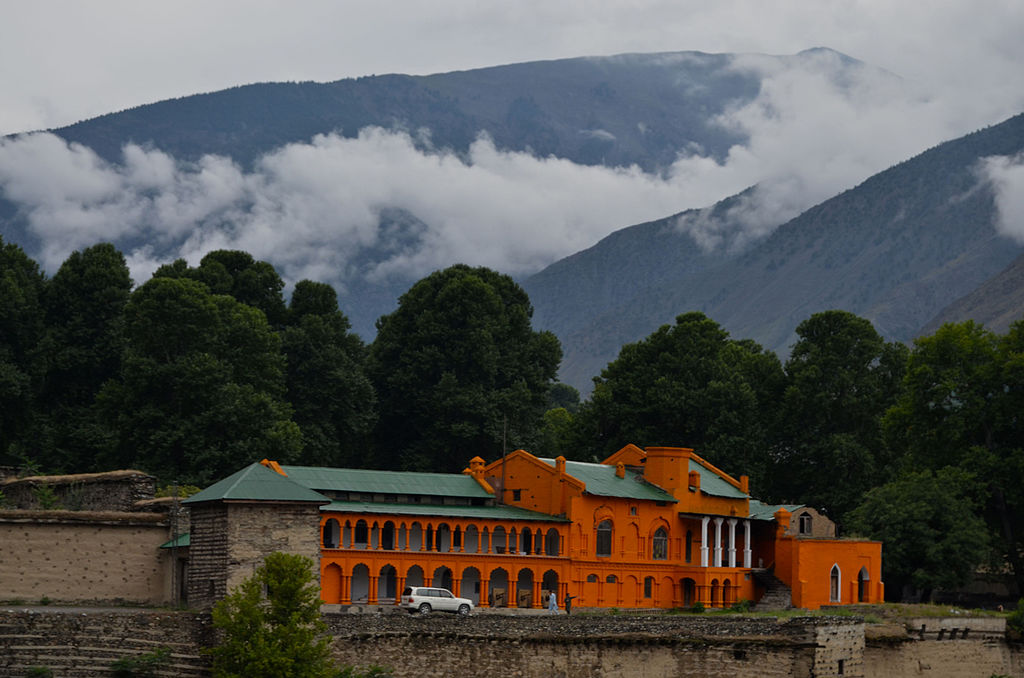
Chitral Expedition
Chitral is a town located at al elevation of around 1800 m in the Hindu Kush Mountains and its the district HQ of Chitral district in the Khyber Pakhtunkhwa of Pakistan near the border with Afghanistan.
Because of its strategic location it was witness to many events in the Great Game as it played out between the British Empire and the Tsarist Russia. With the formation of the state of Jammu and Kashmir in 1846 and the subsequent conquest of Gilgit / Hunza the Chitral region also came under the influence of the Maharaja of Jammu and Kashmir in 1876 with the blessings of the British. However once they leased out Gilgit from the Maharaja to keep on eye on the Russians and thus the Gilgit Agency was formed. Chitral was taken out of the Maharaja’s realm of influence and made a part of what came to be called the NWFP.

However there was an incident in Chitral which tested the resolve of the British to hold on to Chitral. Chitral had a semi-independent Ruler called the Mehtar who was subservient to the British. In 1892 the Ruler of Chitral, Aman ul Mulk expired and he had ruled since 1857. His death was followed by a brutal war of succession between his sons. And the British watched this and so did their Garrison of 400 men who were housed inside the Chitral Fort by the Chitral River. The old Ruler was succeeded by a son but his brother (the departed Mehtar’s) also appeared on the scene from exile in Kabul. And so did another son who was under British protection. And if that wasn't enough an Afghan tribal leader with his men also turned up. Without getting into details let me say it was a mess and the British Garrison which had 5 British Officers commanding the 14th Sikh and Kashmiri Infantrymen from the Maharaja’s Army were under siege.
Meanwhile the British decided to send some relief columns to the aid of the defenders of the Fort. The troops were gathered in Gilgit and they consisted of 400 Sikh Pioneers mostly Road Builders, some 50 Kashmiri Sappers and a troop of irregular Hunzais numbering around 800 men. All tough Mountain men. They needed to be tough as it was March and between Chitral and Gilgit lay the formidable Shandur Pass crossing which in Winter was never really thought of as a possibility. This is the same Shandur Pass where nowadays the Shandur Polo Match is held between the Chitralis and the Gilgitis. At 3700 m it lay where the Karakorams met the Hindu Kush. Col James Kelly didn't really have an option and this was the option he had.

And they set off on March 23rd. By March 30 they had crossed 10,000 ft and well into the snowline and the snow was deep. But they had the element of surprise and the Chitralis on the other side of the Pass had no inkling that a whole body of troop could cross the Pass in late Winter. It's said that after crossing the Snowline the porters saw what was in store for them as the snow around Shandur was waist deep. And they decided to drop their loads and go back. But the Soldiers didn't really agree with them and you can't really win an argument with Men who carry guns. They got back to their duty and Sledges were used to transport the heavy Guns over the Pass. Once they were over the Pass did the Chitralis realise that they had uninvited Guests coming over to the aid of the besieged Garrison in the Chitral Fort.
In the meanwhile a huge British Force of 15000 was assembled in Peshawar and set off. Joining them unofficially was our old friend, Lt Col Francis Edward Younghusband. This force set off a week after Kelly’s force under General Law. The serious British reaction to this incident was due to the fear of the Russians taking advantage and Ivan and Cossacks coming to the party. They also faced the formidable Malakand Pass and the eventually the Lowari Pass. The Malakand Pass defended by Umar Khan’s 12,000 Afghan fighters which they overcame as the Afghans dispersed. And they crossed the Lowari on the same day that Kelly’s force entered Chitral and the Fort. And it is said that Younghusband ran in front of the detachment and was the first from this force to enter Chitral. And apparently they had finished the last bottle of Brandy the night before. Hangover makes you do crazy things.

Anyways at the end of the day the British got the Fort and the control of Chitral. Many of the Troops got the Chitral Relief Medal. And i should mention that my fellow team Member Rijul Gill’s grandfather was also awarded a Chitral Relief Medal which he still has in his possession.
As for Chitral once they re-established control in 1895 the British installed Shuja-ul -Mulk, a 12 year old son of the late Mehtar as the Mehtar and he ruled for a period 41 years till 1936 and peace returned for good to Chitral.
And I should mention that Chitral is beautiful country. And its the home of the Kalash. It used to be called Peristan as it was said that fairies lived there. If I was a Fairy I would Chitral as home. Its just beautiful.
Pic of the Chitral Fort by the Chitral River. Phot credit Syed Imran Scach.
Heating Systems in the Himalayas : Caution Advised
As more and more people travel from the plains to the Himalayas in the Winters some words of advise on the use of Heating Systems in the Mountains and words of Caution about some deadly dangers associated with some of these Systems. Be safe in the Mountains.

Heating Systems in the Himalayas : Caution Advised
CAUTION : While Traveling to the Mountains in the Winters
Recently we got the tragic news of a newly married Couple who died due to Carbon Monoxide poisoning while on their Honeymoon in the scenic Hunza Valley located in the Karakorams. There are many people from the Plains who travel to the Mountains in the Winters as well to experience the Snow and the Cold and are dependent on the Heating Systems locally available. Here is some advise on the Heating Systems and caution that should be exercised with them.
While growing up in Kashmir we relied on elementary Wood based Heating Systems, mostly the Bukhari, as there was always a dearth of Electricity as there still is. Every Winter we used to come across sad news of someone dying due to Carbon Monoxide poisoning mainly due to using a Coal Bukhari which gave a lot of heat but of the lethal kinds. There were also Wood fired Bukharis, which are still widely used but however we used Saw Dust fired Bukharis which though lowest on heat was the safest and it kept going once it was lit.

A Typical Saw Dust Bukhari. These are getting Rarer.
Now as more and more people Travel to the Himalayas and are introduced to new kinds of Heating systems you should understand that these need to be used with Caution. There are many kind of Heating Systems now in use and these Range from Wood based to Electricity based to Kerosene based to Gas based.
Wood based systems are mostly like a Bukhari which is likely fired with Wood. Coal based Bukharis are not really in use. Wood Bukharis are an option widely used in colder places. If you are using a Wooden Bukhari make sure that there is a Vessel filled with Water kept on or near the Bukhari. This helps in keeping the Humidity up in the Room and it doesnt go dry. And stop adding Wood once you are planning to sleep.
Electric Heaters are another option but these arent very heat effective as they need a constant Voltage and most Mountain places have paucity of Electricity as well as Voltage. But they are still effective in less colder places but again advisable to switch off before sleeping.
Kerosene Bukharis/ Heaters are another option. The New ones are quite effective but there is the problem of some smell and some people dont take very kindly to these fumes. So you need to see if it suits you. Again switch it off before sleeping.

A Gas Heater
And now we come to Gas Heaters. These are now being widely used. You dont need to rely on Electricity or Wood or smelly Kerosene. Just plug in a Gas Cylinder and you are good to go. But again a Gas Heater generates a lot of Carbon Monoxide. So as in other heating appliance switch it off before sleeping and make sure the Room is well ventilated. Keep a window open if you need to.
And then there are things like Electric Blankets. These are very effective if they are used under the Bed Cover and these ensure that you have a warm bed to get into. Again it goes without saying switch it off before sleeping.
Bottom line no matter which Heating System is used Switch it off before going to sleep and make sure that your Room is well Ventilated.
The best option is to make optimum use of your Body heat, use Thermals and Socks and Warm Woolen caps for Sleeping instead of using the Heater. Take an extra Quilt or two Extra Quilts but ensure that all Heating is off before you go to sleep. It could save your life.
Be Safe.
PS : I have used / using all these Devices in our Home. We use a Saw Dust bukhari which is the safest. And the Gas Heater we only use in the Dining / Drawing Room of the House. Areas where no one sleeps. Electric blankets and Electric Heaters else where as the Electricity condition is somewhat improved in Srinagar. But all Heating off before Sleeping.
RIP to the Beautiful couple who lost their life in this tragic incident of Gas Heater poisoning.
Dalhousie's Colonel
The story of Col.Jagatram, a Doctor in the Indian Army, who had a dream. A Dream of growing Apples at his acquired Estate in Dalhousie.
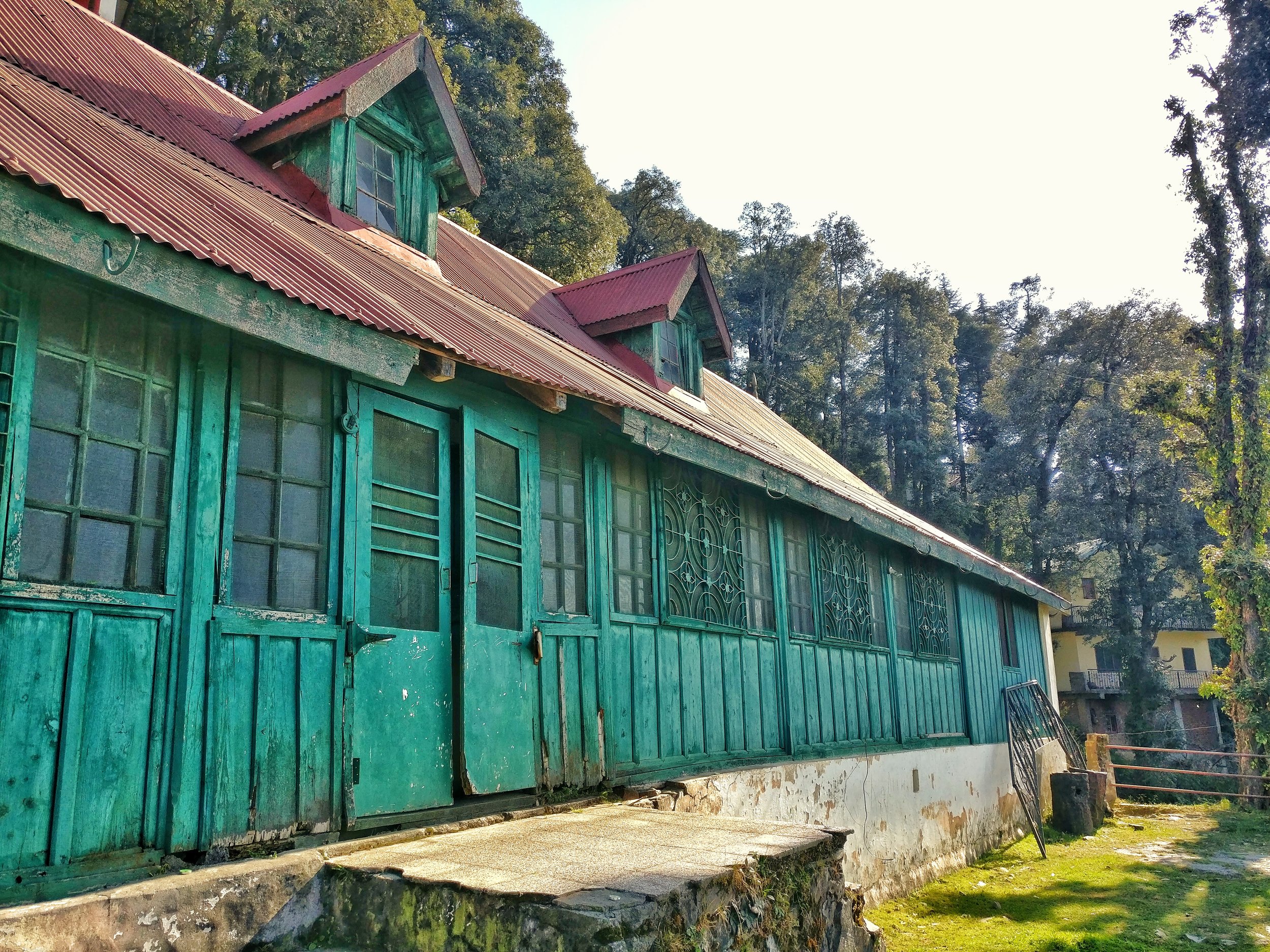
Col. Jagatram was a Doctor in the British Indian Army. Though originally a Dogra from Billawar near Jammu he was bought up in Mandalay in what was then Burma. He completed both his primary and secondary education in Mandalay and got his Medicine degree from Rangoon and went onto join the British Indian Army as a Doctor.

Colonel Saab served in the Second World War as well as the 1948 War and in the 1950's was stationed in Shillong. As it so happened a certain Lady Lawrence, who had a large Estate in Dalhousie, right below the Sacred Heart Convent, was looking at selling off her Estate as her husband had passe away and she wanted to go back to England. Colonel Saab was fond of the mountains and Dalhousie was close to his native place of Billawar. They struck a deal and Colonel Saab bought the whole Lawrence Estate.
Along with the Estate came two beautiful Cottages, one at the op of the Estaste and other one on the bottom of the Estate as it straddled a hill. The one on top was called Wisbeck and the lower one was called Beckules. From the upper Cottage one got a grandview of the plains of Punjab on one side and the Pir Panjals on the other side.

Having bought the Estate the Cottages were renamed as Parijat and Tapovan. Colonel Saab after retirement intended to grow Apples and Strawberries and Almonds on the Estate. But since he was still serving the Cottages were let out to the first wave of Tibetan refugees who came into India. Parijat, the cottage on top became the residence of one of the top Tibetan Lamas and his whole entourage took up residence in the Cottages.
After his retirement in the early 1970's Colonel Saab started working on his dream project of growing Apples in Dalhousie. But Dalhousie because of its location gets a lot of hail storms and hail destroys Apples. The Apple crop was always spotted as hail leaves its spots on Apples and they are no longer marketable. Even the Strawberries and the Almond didn't do very well. Anyways Colonel Saab did his best getting saplings all the way from Shimla in the winters and planting them before the snows came in.

A lot of time has passed since but the Cottages are both there but a lot of surrounding land has been sold off by the Colonel Saab's family and many Hotels have now come up in what used to be called the Col. Jagatram Estate.
And I happen to be married to a Grand Daughter of Colonel Sahib
British Museum Kashmir Collection Part II
The Britsih Musuem has a fine Collection of Kashmir Art on display. Some glimpses of the Kashmir Art held in the archives of the British Museum. This is Part II.

Kashmir Collection at the British Museum Part II
Second Part of of the Kashmir Art and Antiquities on display at the British Museum. All pics and descriptions are from the British Museum website.

A figure of the Buddha seated in padmāsana, his hands folded on his lap in dhyānamudrā; cast in bronze with copper and silver inlay. 8th C
Despite its modest size this bronze has a monumental aspect with a fullness of face and body due to the influence of Gupta modelling absorbed by the art of Kashmir. While it resembles seated Buddhas in central and even eastern India on account of this common influence, its distinctively regional features appear in the shape of the head, the hairline and the upward tilt of the eyes. The copper inlay of the lips and silver in the eyes, like the flap of the robe hanging from the left shoulder, are Indian medieval characteristics; inlay became progressively commoner. The damage on the image may be due to casting faults.
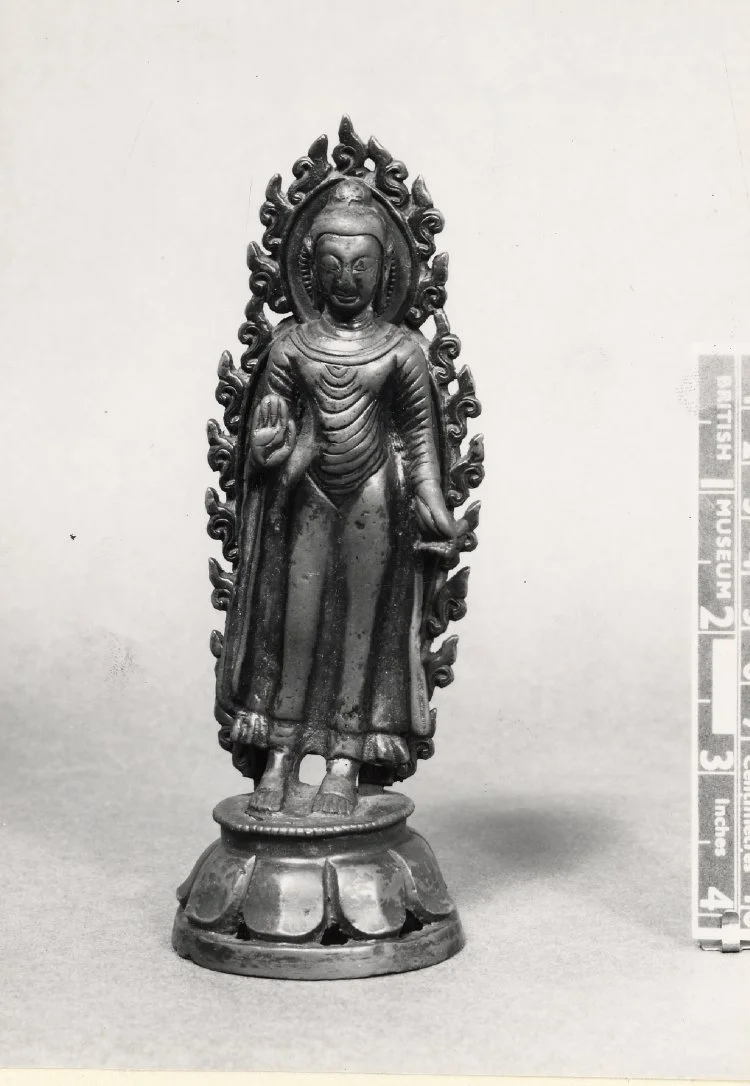
Figure (Buddha). Standing on lotus. Made of bronze. 10th C - 11th C
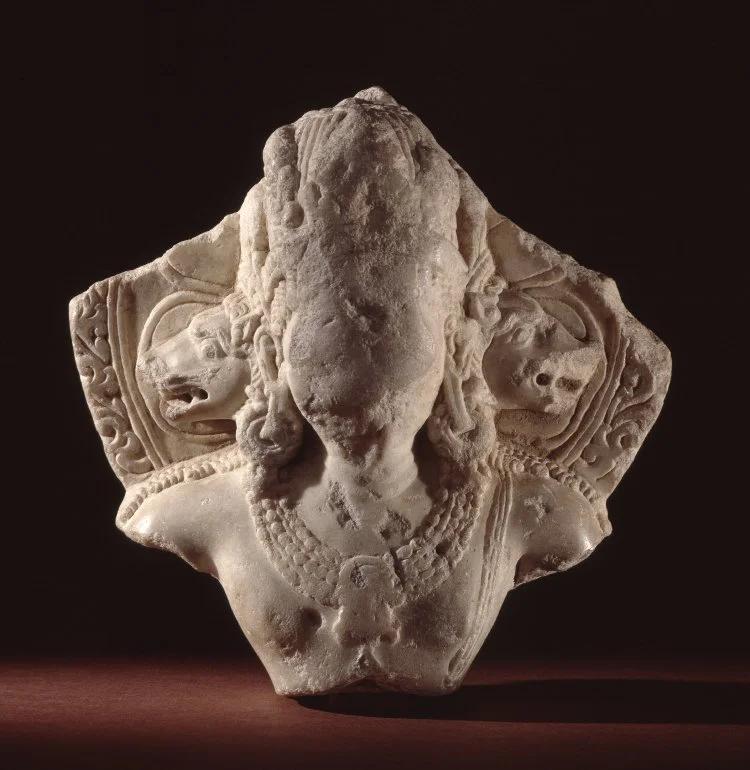
Figure (Viṣṇu.fragment). With boar heads on shoulders,earring and necklace,worn. Made of marble (white). 9thC-10thC
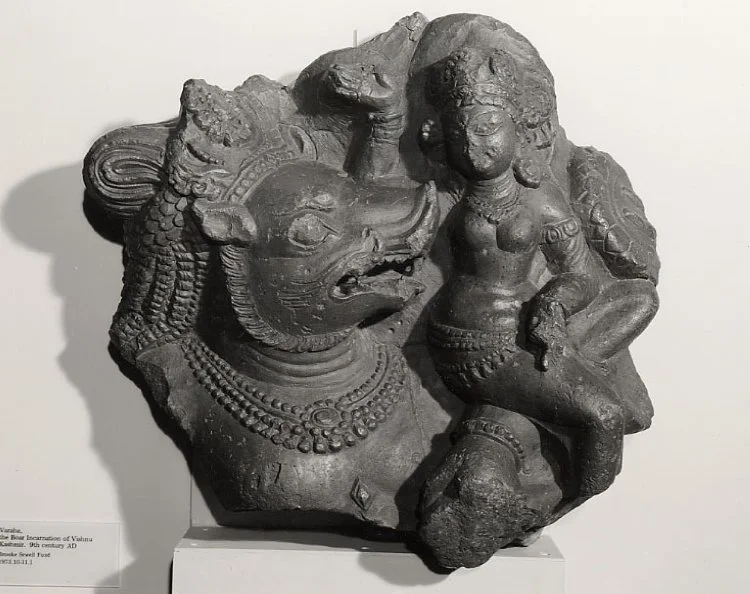
Figure (Viṣṇu as Varaha). Made of stone (schist). 9th C
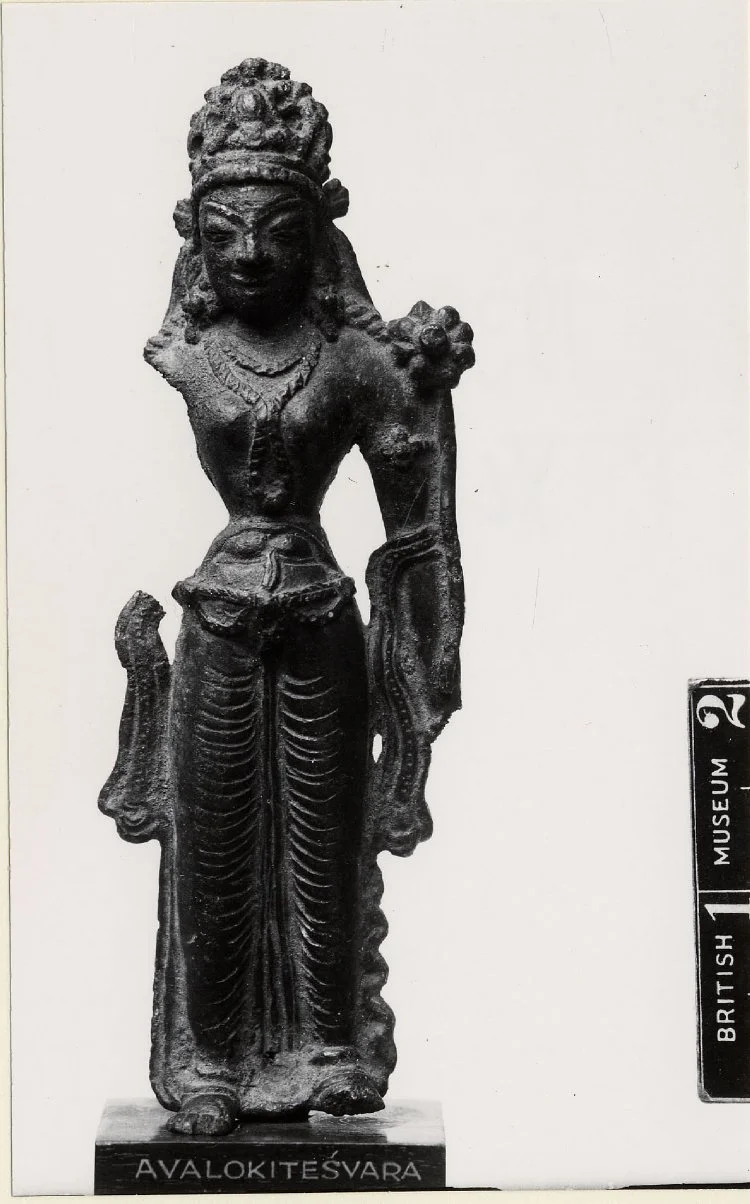
A bronze standing figure of Tara, missing proper right arm. 11th C - 13th C
A bronze standing figure of Tara, missing proper right arm. 11th C - 13th C
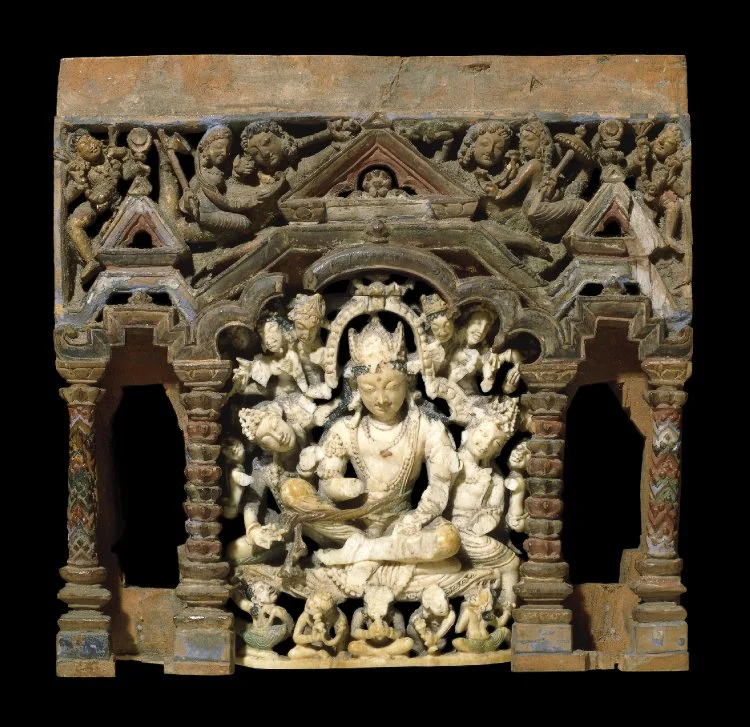
Part of a carved wooden Buddhist shrine (portable) with three niches: the central contains a figure of an ivory seated Bodhisattva flanked by many attendants. The left and right niches are are empty but probably contained standing figures of female attendants. 8th C
The empty niches on either side of the main figure held a pair of carved ivory female attendants now in the Cleveland Museum of Art.Zwalf 1985
This wooden panel, with one surviving seated Bodhisattva, probably belonged to a shrine imitating a Kashmiri temple which, even with a proportionately high superstructure, would have been readily portable. The Bodhisattva's crown, where a 'parent' Buddha might have been, is damaged and there is no other evidence to identify him. The flanking niches must also have contained acolytes. This form of Buddhist devotional object was a characteristic product of the Kashmir region.
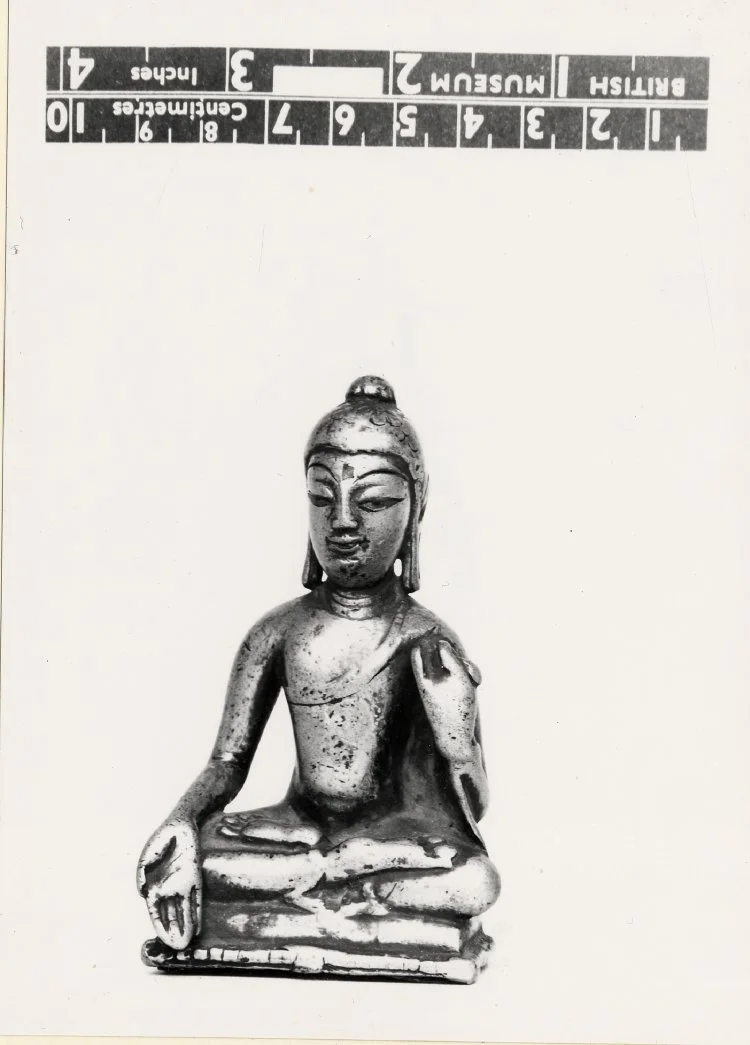
Seated figure of the Buddha, with right hand in varadamudrā and left raised by the shoulder holding his garment end; cast in a copper alloy with silver inlay. Thin copper base plate; inscribed on the rear. 9th C - 11 th C

Standing figure of Vajrasattva, cast in a copper alloy, with a pointed halo, broken and repaired with straps and rivets. 15th C. Found in Tibet
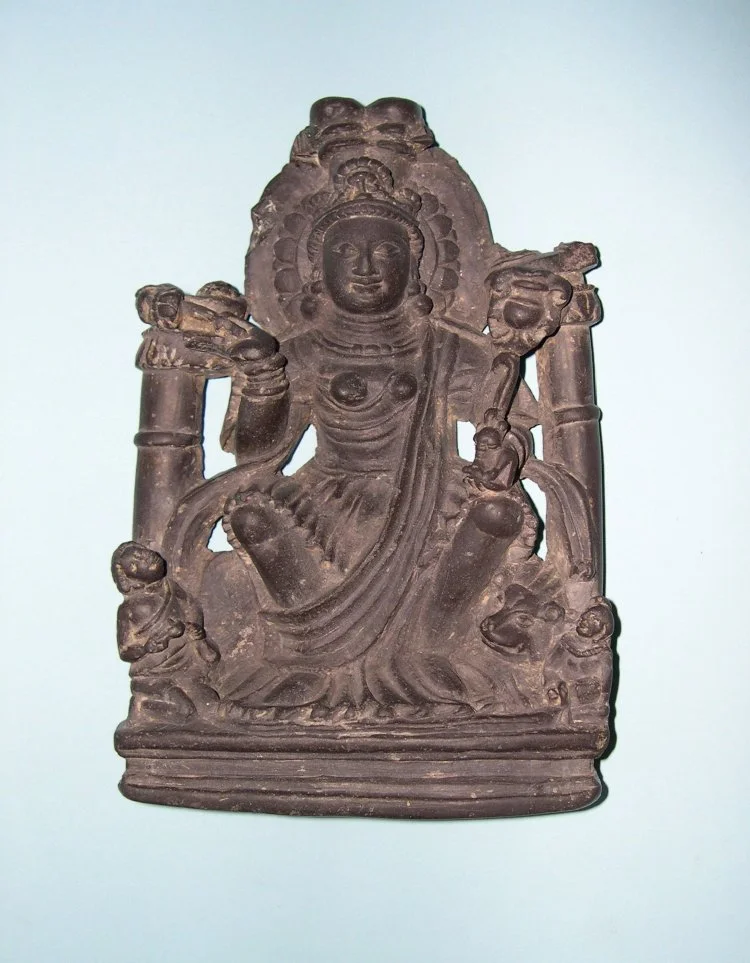
Figure. Steatite stone figure of Gaja-Lakṣmī, seated on a lion. 7th C

Figure (Kārttikeya). Figure on a peacock holding a parrot. Made of carved and gilded agalmatolite. 8th C. Found in Khotan/ Yoktan

Part of an oval lid showing a women with a cup being held to her lips; carved in a grey steatite; broken. Hepthatilite 6th C
Originally labelled as possibly 8th-9th century, Ghose suggests an early 6th century date for this as part of a group of similar items in different collections
The Forgotten Kashmiri
The Story of a forgotten adventurer, Mohan Lal Kashmiri, who started of as an Asissant to Alexander Burnes but went onto to become a Diplomat of sorts. He wrote the Biography of Dost Mohamed and was regaled by various Eastern potentates. But one day he just disappeared into obscurity off the scene of history

The Forgotten Kashmiri
I had previously written about the amazing Munshi Aziz Bhatt Museum in Kargil and the amazing story behind the same. I had mentioned the number of priceless items they have on display and each and every piece has a unique story waiting to be told.
One of the most enchanting piece for me personally was certain carpet made in Eastern Turkistan of the old, Central Asia and inscribed with a name and with figures of Eight Tigers around it. It was made in Bokhara in the early part of the 1800s. A very Indian name. Mohan Lal.
Another name lost in history. Of course at the first glance and the first look I was too lost in the stuff at the Museum but later on the name came into my mind. It couldn't possibly be Mohan Lal Zutshi of Alexander “Bokhara” Burnes Munshi. Or was it. And it turns out it was the same Kashmiri who at the tender age of 19 went with Alexander Burnes on a trip to Bukhara across the Hindu Kush as his official Persian translator. And the same Mohan Lal who due to his good office with the Afghans managed to survive the annihilation of the Army of the Indus as well the killing of Alexander Burnes in Kabul.
And from what Ive read about him he had the looks and the attitude which made him a darling of the Courts of Eastern Potentates as well as the British. And a ladies man as well it seems. And of course he had this habit of making Notes on the Woman of all the lands that he visited. He had a keen eye for the ladies. A true Romantic one would imagine.
Mohan Lal as an explorer/ traveler of Indian origin would and right should rank alongwith Pandit Nain Singh but sadly Mohan Lal’s achievements have all been glossed over. His great Journal that he maintained never got published and he died unhappy and a broken man disowned by his own people as well as by his masters, the British.
I am posting the Preface of the Book written on him “The Life and Work of Mohan Lal Kashmiri 1822 - 1877 “ by Hari Ramg Gupta written in 1943 which I am currently reading :
"Mohan Lal was a great traveller, brilliant diplomat, reputed author, the first Kashmiri to learn English and probably the first Indian to educate his daughter in England. He commenced his travels at the young age of eighteen, and journeyed through the Panjab, North-West Frontier Province, Afghanistan Turkistan, Khorasan, Iran, Baluchistan, Sind and Northern India; and later on visited Egypt, England, Scotland, Ireland, Belgium and Germany. Thus in Asia alone his travels extended from Calcutta to Qoclian and from Bokhara to Poona.
Through all his wanderings he won the approbation of all his companions for "displaying everywhere a rare union of zeal, tact and fidelity. “ Wherever he went, a warm welcome awaited him by high and low, and rich and poor. Dr. Gerard, one of his companions, wrote about him from Kabul ‘‘Shah Kamran of Herat was delighted with his accomplished Persian and unobtrusive address. At Kandahar he was much respected by Sirdar Raheem Dil Khan, who praised his acquisitions, and regretted that his sons could not partake of them. Here he is a favourite with the rulers. In truth, I know not of an exception in our long journey, to the uniform civility he has commanded.”
Mirza Abbas, the Prince Royal of Iran, created him at the age of twenty a Knight of the Persian Order of the Lion and Sun. Shah Shuja-ul-Mulk, the King of Afghanistan, granted him an Order of the Durrani Empire. Maharaja Ranjit Singh presented him with Rs. 500 and a robe of honour consisting of seven pieces. The Mughal Emperor, Muhammad Akbar Shah, conferred upon him a khilat “with some jewels on a turban which his majesty tied with his own hands.”
Such honours were paid to him not only by the Oriental potentates ; but he was “well received in England and other parts of Europe by the very first people, kings and queens not excepted.” Queen Victoria invited him to a royal ball. Prince Albert called him for an interview at the Buckingham Palace. In Germany, Frederick William IV, the King of Prussia, and the Queen, entertained him at a dinner. The King also presented him with a portrait of himself, bearing an inscription in his own hand.
In diplomacy he was unsurpassed. Kaye calls him a ‘‘charmer” 1 of men. Pandit Jawaharlal Nehru speaks of him as one, who in a free India “would have risen to the topmost rungs of the political ladder.” His achievements during the first Afghan War, when he was only twenty-six years old, were most remarkable. His charm, his tact, his patience, his lucid intelligence, his incredible grasp of detail, and his clear understanding of the Afghan character, combined to give him an equipment, which was not found to that degree even in those officers who were in charge of the diplomatic affairs in that country ; and who frequently depended upon him for advice in most delicate matters.
He was an author of no mean repute. On his return from Central Asia in 1834, he “published a Journal of his tour, which considered as the work of an Asiatic in a foreign tongue, may be reckoned a most creditable production.” Twelve years later this work was again printed with an additional account of his journey across Sind and Afghanistan and his visit to Europe. At the same time he published his Life of Dost Mohammed Khan, the Amir of Kabul, in two volumes. On reading his article on the Greek antiquities in Afghanistan, James Tod wrote that "this most intelligent Hindu ought to be made an honorary member of every Asiatic Society.”
About his style of English, the Editor of the Calcutta Englishman remarks "He expresses himself with perfect clearness and intelligibility in English, though not with very idiomatic correctness.” His eccentric phraseology, however, is distasteful. He spoke “English with good accent and much idiomatic propriety,” and "with much fluency and readiness.”
Mohan Lai was obliged to retire at the young age of thirty- two on a pension of £ 1,000 per annum. There is no doubt that if he, had been allowed to continue in the British service, he would have won much greater renown.”
Now coming back to the Museum I am trying to figure out that a Rug which was made as a Gift/ or in honour of Mohan Lal ended up in the Kargil Sarai. And the significance of the Eight Tigers.
Well thats another story for another day.
Pic from the Munshi Aziz Bhat Musuem, Kargil.
Antiquities from Ladakh at the British Museum
The Collection of Antiquities and everyday use Items from Ladakh at the British Museum Collection.

Antiquities from Ladakh at the British Museum
Some antiquities and interesting everyday articles from Ladakh at the British Museum Collection. All pics and accompanying text is from the British Museum Website.
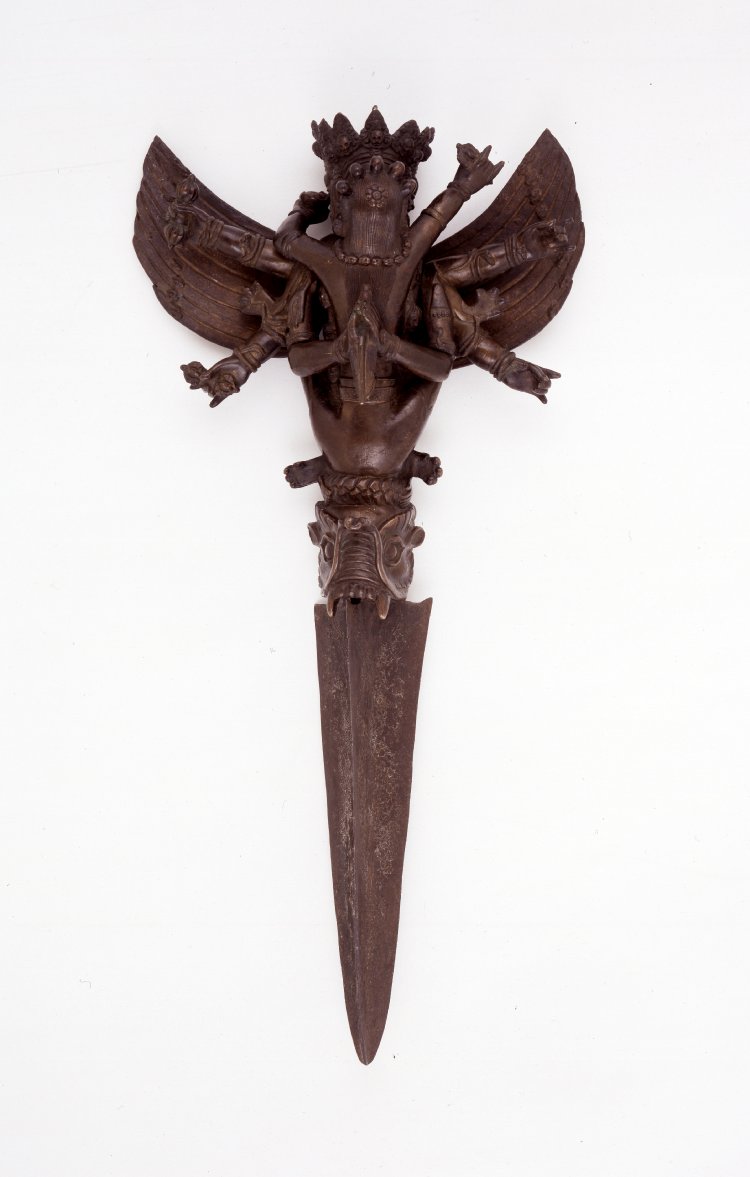
Phur-bu (part of), dagger (ceremonial). Snake design. Made of gilded bronze; also engraved iron

Phur Bu (part of), dagger (ceremonial). Snake design. Made of gilded bronze; also engraved iron. Finial (Phur Bu?). Figure of Hayagriva with 4 heads and 6 arms mounted on do-rje. Made of bronze.

A circular amulet-box (gau) with a pair of cylindrical loops for suspension attached to the sides, made of silver with copper alloy and silver filigree decoration; inside the box and behind a circular window is a painted clay plaque (tsa-tsa) depicting a seated Buddha flanked by bodhisattvas; below the opening, a pear-shaped fragment of turquoise is set into the filigree.
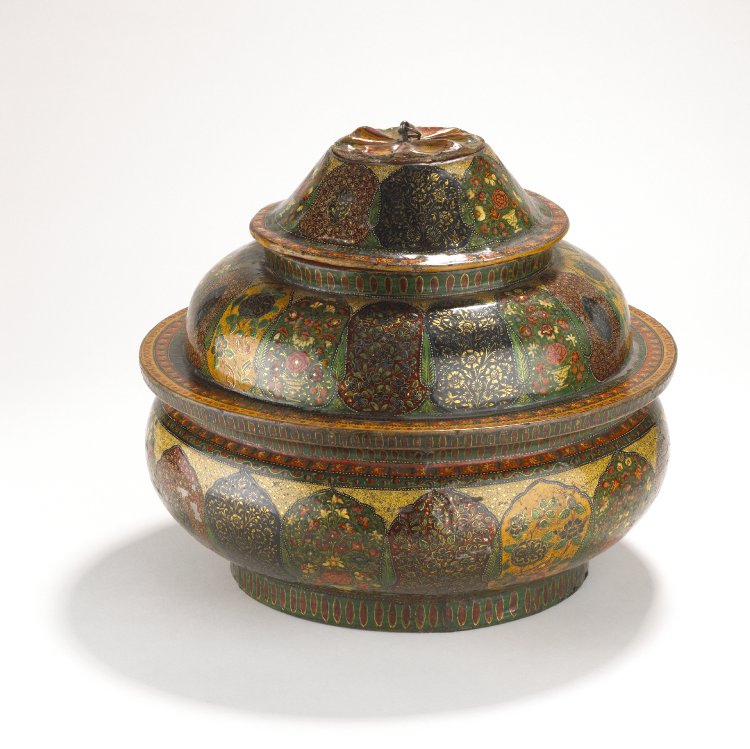
Food container in four parts. Made of lacquered wood and papier mâché. Decorated externally with Kashmiri floral designs and internally with fish. The base is also decorated with fish.

Lock and Key

Bell made of metal
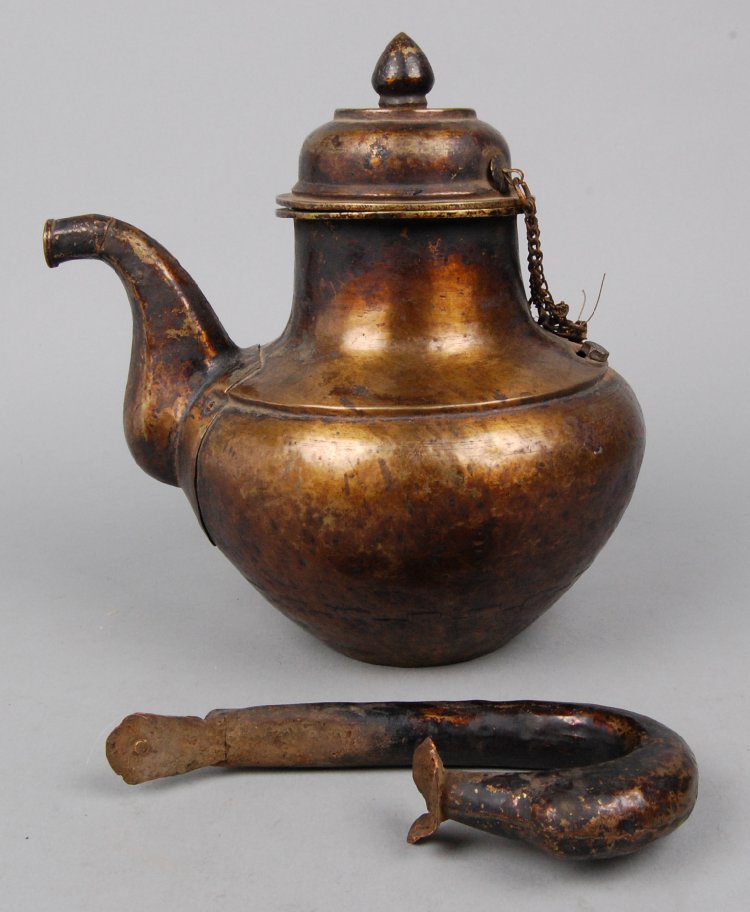
Lid made of metal with onion-shaped knob on top and chain at one side

Bell (for horse) made of metal, wood.

Bell (for horse) made of metal, wood.

Case (for charm) made of metal, stone, textile

Perak : Woman's head-dress made of cloth, cloth (canvas), coral, beads (lead), brass, pearls, turquoise

Pendant (one of a pair). Made of cloth, stones (semi-precious), turquoise, coral, bronze
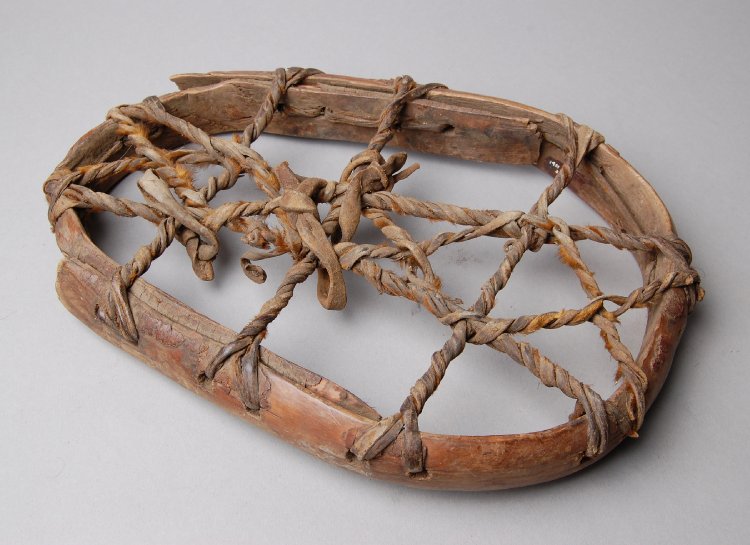
Snow-shoe (one of a pair) made of wood, hide.

A Crampon made of Wood and Hide.

Reverse side of the Crampon

Pack Saddle Wooden for Horse / Mule

Loom (part of) made of wood, textile
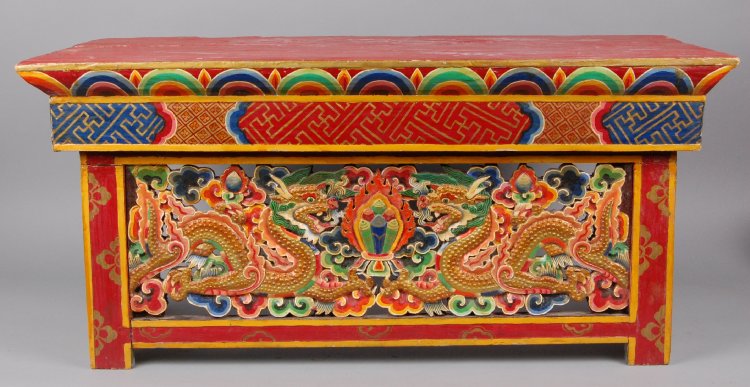
Wooden folding table intricately carved with traditional dragon, lion, cloud, geometric and floral motifs and laquered and painted red, yellow, orange, green, blue and gold. Red flat-top with multi-coloured semi-circles immediately below; underneath this, panel with Greek key style geometric design. Front panel with two dragons facing one another with group of six (scrolls?) surrounded by flames at centre; cloud designs all around. Front table legs painted red with yellow edges and gold floral motifs. Side folding legs similarly painted but central panels carved with lion design surrounded with clouds. Top and back sides of table roughly painted blue.

Another view of the Wooden Folding Table.
Kashmir Musings I
Random musings from Journeys in my Homeland of Kashmir. In this one we talk about the exquisite Wooden Ceiling Patterns created by the Kashmiri art of Khatamband. We also talk about the regal Residency Building in Kashmir which was once housed the British resident in the State of Jammu and Kashmir and which now serves as a Government Arts Emporium.

The first is the traditional Khatamband wooden ceiling which is made of small geometric pieces of Walnut or Deodar wood as seen in the pic below. This originated in Persia and made it down to Kashmir. These are traditionally made without any nails or glue and are just fitted together using joints in wood. These intricate pieces of art serve as a heat insulator as well. However it is a time taking task and expensive as such. Also with wood getting expensive this art form is slowly disappearing from Kashmiri homes. We are still lucky to have this ceiling in some parts of the house which was done more than 40 years ago and it even survived the floods.
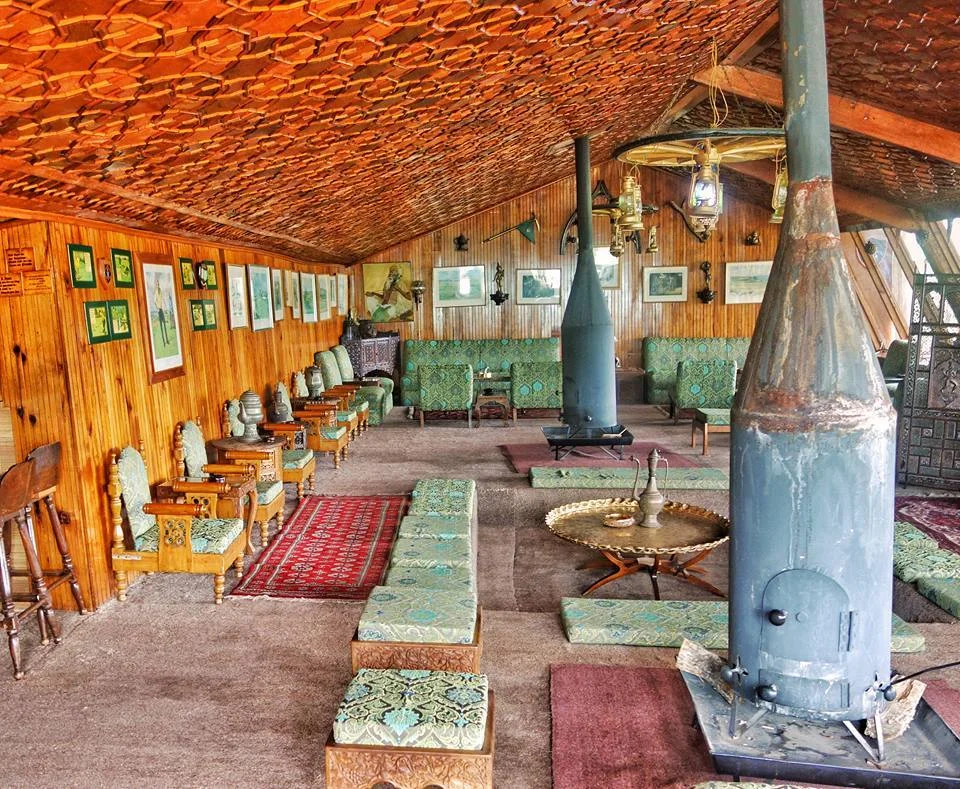
The second which most of you must be familiar with is the Bukhari, which as the name suggests came from Bukhara in Central Asia. Traditionally we had three kinds of Bukharis: Wood burning, such was the original type, then the Coal burning and finally the Saw Dust burning. The Coal one was the hottest but it came with the danger of asphyxiation. The Wood one was the second hottest but it need a constant supply of wood but never the less was the most popular one. In our house we had the Saw Dust one as it was most convenient though heat generation was less compared to the other two. However Saw Dust as a waste product was easily available in those times. Nowadays these are being replaced by Gas, Kerosene and Electrical heaters. And slowly the Bukhari would only be found at places like this. The Bukharis in the pic below are the extra large variety types and wood burning.

The Residency, which lends its name to Srinagar's stylish (once upon a time) Residency Road, after the light snowfall day before yesterday.
This served as the Residence of the Resident of the British Indian Government to the Court of the Maharaja of Jammu and Kashmir.
Set amidst vast lawns and surrounded by numerous Chinars hundreds of years old it sits right opposite to what used to be the Polo Ground. The building now serves as a Handicrafts Emporium showcasing arts and crafts from the Valley.
Unlike other Hill Stations which were a part of the British dominion, Kashmir wasn't and the Maharaja explicitly forbade any foreigner from owning any land in the Valley (it still holds true in another manifestation which is now a Political issue). So all the British used to stay in Houseboats as they were allowed to stay on these and even own them.
The Residency building is a beautiful heritage building with two magnificent gates on either side. One gate led towards the Lal Chowk area while the other opened towards the exclusive, white only, Srinagar Club.
The Keeper of Buddha's Bones
The story of the Kanishka’s Casket which was said to contain the Bone Relics of the Buddha himself. The Role Kanishka played in the spread of Buddhism. And how it was discovered in the early 1900s and how its “lost” again.

The Keeper of Buddha’s Bones
The Great Himalayan Complex as most must be aware includes the greatest Mountain Ranges which radiate from some point in Central Asia / Northern India. Looking at the historical context there have been few Rulers, infact not more than handful who have exercised control over this wildest of the wildernesses on the Planet.
One name which comes to mind is that of the Great Kushan Emperor Kanishka whose Empire ranged from Turfan in the Tarim Basin to beyond Bactria to Sodania. From Gandhara to Kashmir to Mathura to Patliputra and all the way to Gujarat. It was a massive enterprise with vast array of different people under their Rule. The Kushans actually originated from the Tarim Basin and were Central Asian nomads before they united and swept South and Westwards. They were said to have originated from the Yuezhi people who were nomadic pastoralists.
Emperor Kanishka is widely believed to be the most powerful of the Kushan kings who left impressive historical records which are being discovered even to this day. The famous Rabatak Inscription talks of the great lineage of the Kushana Rulers as well as talks of their conquests.
One of the most enduring legacy left behind by the Kushanas were their coinage and notably that of Kanishka. The Kushans created a syncretic culture and had elements from all the Cultures around them. Kanishka was based in Gandhara, the region around Peshawar and Peshawar was the Capital of the Kushan Empire. The Empire stood at the crossroads of where Greek culture and its influenced Bactrian and Gandhara culture met Indian culture. It was here in the foothills of the Hindu Kush and the Himalayas that great monuments were built in Gandhara as well as Kashmir which was at that time a part of Gandhara as well the Swat Valley.
Kanishka himself became an adherent of Buddhism but his coinage reflected the multi-cultural aspect of the people they ruled over. The coinage had Hellenic (Greek), Mesopotamian deities, Iranian/ Avestan (Zoroastrian) deities, Buddha and last but not the least Osheo which is said to represent Shiva. This Kushan coinage has been unearthed at various sites all over the realm of the Kushanas giving historians a true sense of the size of their Empire.
Kanishka has been credited with the spread of Buddhism to Central Asia and Gandhara itself became the center of the Buddhist world. It was under Kanishka’s rule that the Fourth Buddhist Council was held in Kashmir and 500 Monks went all over Central Asia to spread the message of what came to be the Mahayana school of Buddhist tradition. He also favoured the Gandhara School of Buddhist Art as well the Mathura School of Hindu Art just like he believed in Buddha but in certain Avestan deities as well.
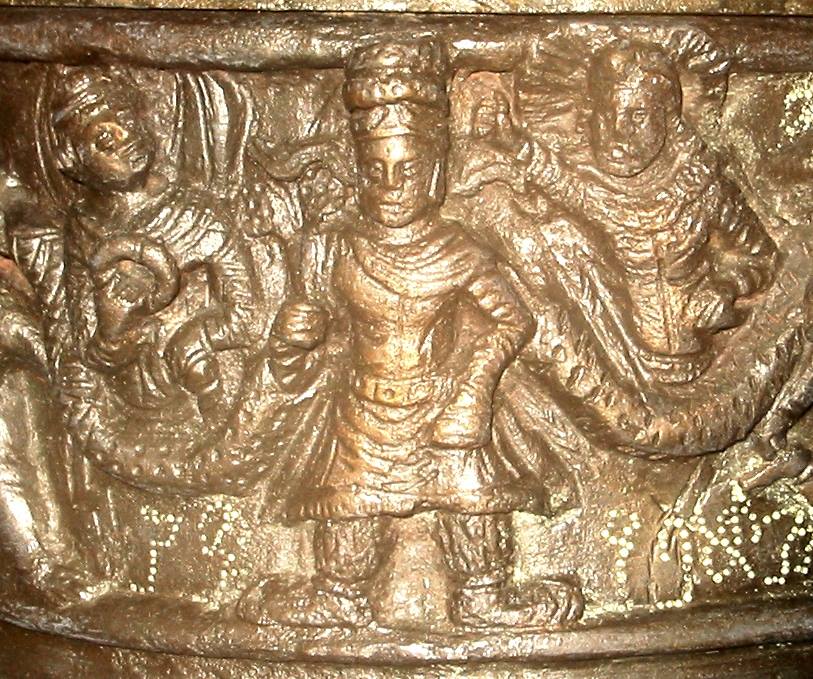
Well coming back to the Bones of Buddha part now. In 1908 - 1909 Archaeologists while working on excavations at the Kanishka Stupa, which at one point of time was the tallest Stupa in the entire subcontinent came upon a Chamber. This was at a place called Shah-Ji-Deri near Peshawar under the shadows of the Hindu Kush in the Peshawar Valley. The excavators chanced upon a Gilded Copper Casket, a reliquary of sorts and this priceless find was named as the Kanishka Casket and it was dated to the Second century AD. The Interesting part was the depictions on the Casket which point out that this was the place where different cultures met and infused and also the part that the Kushans in general and Kanishka in particular played in the same process.
The lid of the casket shows the Buddha on a Lotus Pedestal and Indra and Brahma on either side will folded hands in reverence. The edge of the lid is decorated by a frieze of flying geese, or hamsa, symbolizing the travel of departing souls and the removal from samsara. Some of the geese have a wreath of victory in their beak.
The body of the casket represents a Kushan monarch, which is unmistakingly Kanishka as we are familiar with his likelihood and especially his big boots, with the Iranian Sun god and Moon god at his side. On the sides are two images of a seated Buddha, worshiped a royal figures, possibly a Bodhisattva.
A garland, supported by cherubs goes around the scene in typical Hellenistic style.
There are also inscriptions in Kharosthi which underline these facts.
And now the most interesting part. Inside the Casket were found 3 Bone fragments which are said to be of the Buddha himself. They were concealed in a Crystal which was hollowed from one side and then sealed up after the fragments were placed there. And it had the Emperor’s seal on it. There had been another case of discovery of Buddha’s similar bone relics in the Terai foothills of Nepal much closer to where the Buddha was born. So what about these ? Well we all know that Kanishka was a great proponent of Buddhism. And as per certain Buddhist literature after the cremation of Buddha his remains were divided into 8 parts to be buried under Great Stupas to be built at various places. It is entirely possible that Kanishka got hold of some of the relics in his time and took them to his capital Purushapura as Peshawar was called at that time and had them enshrined under a great Stupa. The Chinese pilgrim Huen Tsang remarked in his journey that this place indeed held the relics of Buddha and he described the Kanishka Stupa as 170 m tall.
Ok the Bone Relics of the Buddha were sent were sent to Burma by the British where they are supposedly kept somewhere in Mandalay. As for the original casket it was sent to England. And in England a number of copies of the same were made of the original. The real one was then apparently sent back to Peshawar. One copy of the same is on display at the British Museum. Another copy is supposed to be in Oxford. The one on display in Peshawar is also supposedly a copy of the original. At the time of the partition there was a tussle between India and Pakistan over certain treasures but mostly the Indus ones as no one really cared much about Gandhara as the mainstream narrative in India never took on the Kushans as their own and were looked upon as outsiders.
As a result as of today no one is really aware where the actual Casket is. Some say it was taken to Karachi. Out of all the Scholars engaged in work on the Gandhara / Kushanas none has seen the original and no one has any clue to where it is.
One of our most priceless Treasures is now nowhere to be found.
The Consulate at Chini Bagh
The story of Chinni Bagh, which at once upon a time was the Consulate of the British Empire in Kashgar to facilitate the Trade between India and Central Asia and also keeping a watch on the Russians during the Great Game.
The Consulate at Chini Bagh
Many stories have been told about the Great Yarakand to Leh Trade Route which went across some of the highest Mountains in the World and over some of the most inhospitable terrains. The Trade went up considerably after the Maharaja of Jammu and Kashmir and the British started to encourage the Trade in a big way and the so called Treaty Road was established. Those were the days of the Great Game and Trade was a perfect way for the British to compete with Russia over influence in Central Asia.
For facilitating the same the British had set up a Consulate in Kashgar which was on the Yarkand Leh trail and the first big city (If you could call it that) once you got over the Mountain wilderness in Central Asia. The Consulate for some reasons was called the Chini Bagh.Of course the Russians also had a Consulate in the same City. And the Russian and the British Consulates and the officials were constantly engaged in a games of one upmanship in order to gain favour with the Turkestanis as well as the Chinese who were nominally in control of the Region.
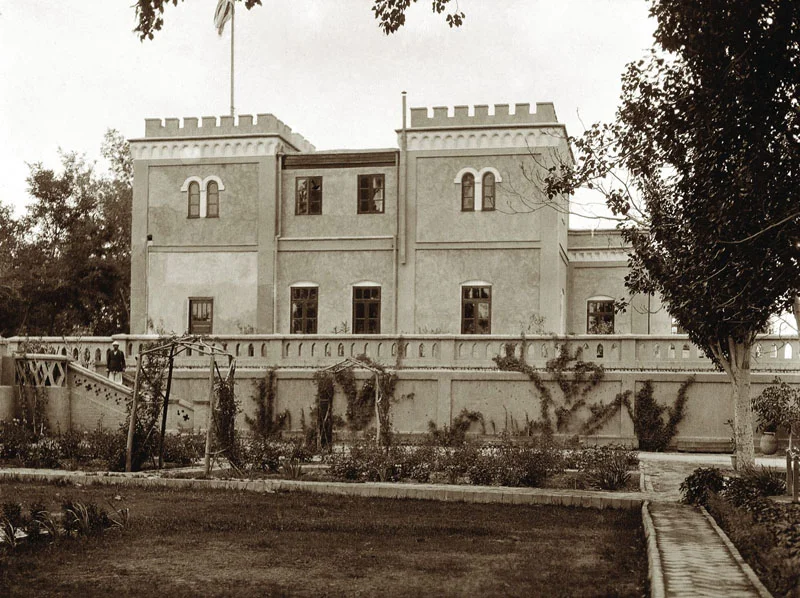
The Chinni Bagh Consulate
A some of you must be aware that most of the Trading from the Indian side was done by the industrious Punjabi traders from Hoshiarpur, many of whom were based in Leh and Kargil for doing this Trade. Initially they used to only stay there during the Summers when the Trade was maximum and used to go down to the plains of the Punjab in the Winters. But with time many of them settled there permanently.
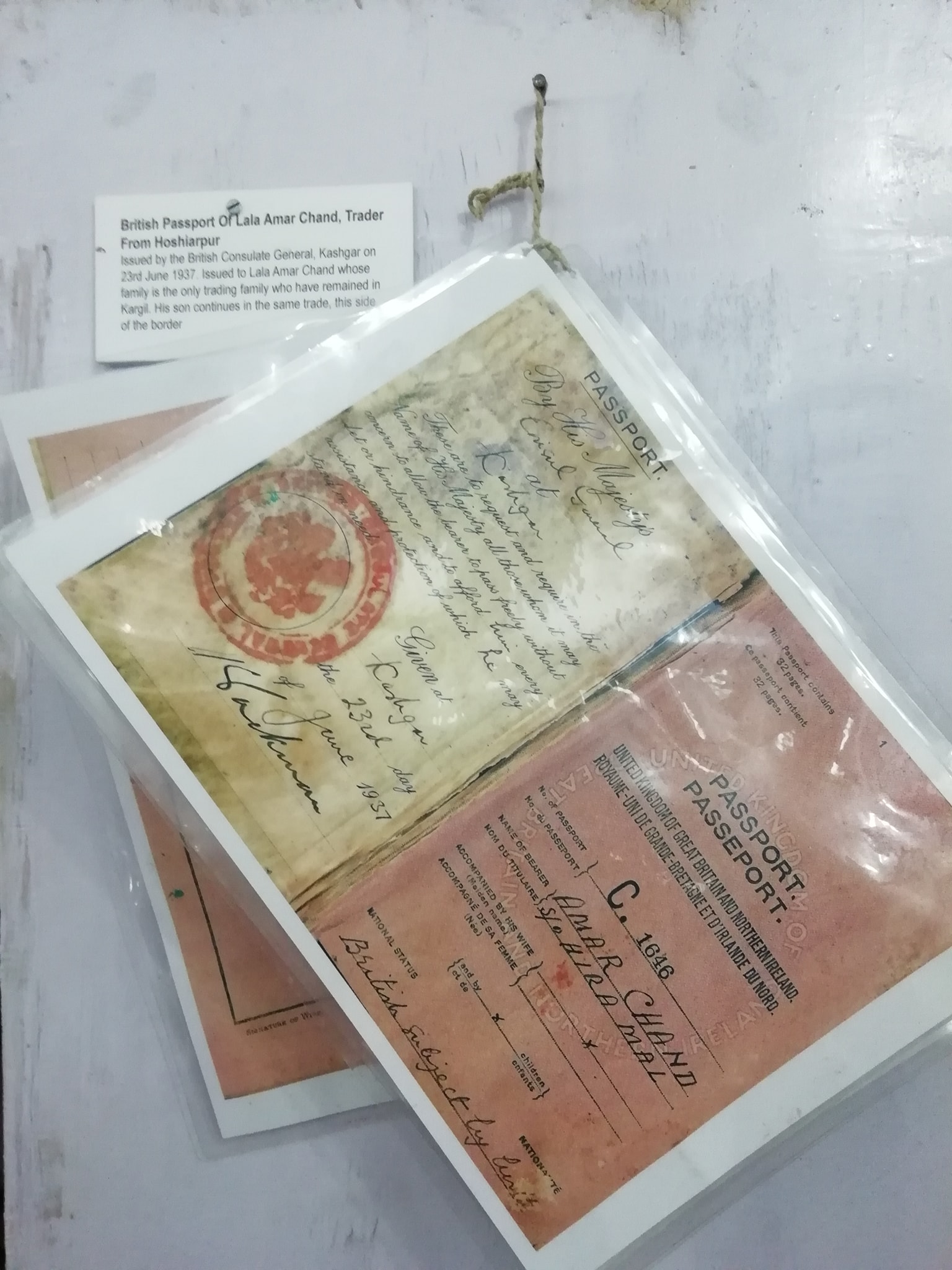
Presenting a British Passport issued to a Hoshiarpuri trader from Kargil, Shri Amar Chandji who was one of the big traders involved in this trade. And this Passport was issued at the British Consulate at Chini Bagh on June 1937 and he was referred to as a British Citizen by birth as I assume all Indians would be at the time the subcontinent was colonised by the Britishers. Amazingly enough it was Amar Chandji’s family which still lives and trades in Kargil. They are the only remaining Hoshiarpuri family living in Kargil as most of the Traders left when the Trade ended abruptly in the early 1950’s. There is still a sign in the main Market saying Amar Chand Diwan Chand Traders and they have a prominent shop in the Kargil Bazaar where Amar Chandji’s son still looks at business. I had the pleasure of having Tea with him at his shop and I was accompanied by a friend, whose family was also originally from Hoshiarpur, but settled since long in the Kulu Valley and presently cultivating Apples in the Raison area. And of course within a couple of minutes the Hoshirapuri’s from Kulu and Kargil established that they were related also through some complicated family history. The World is indeed a small place.
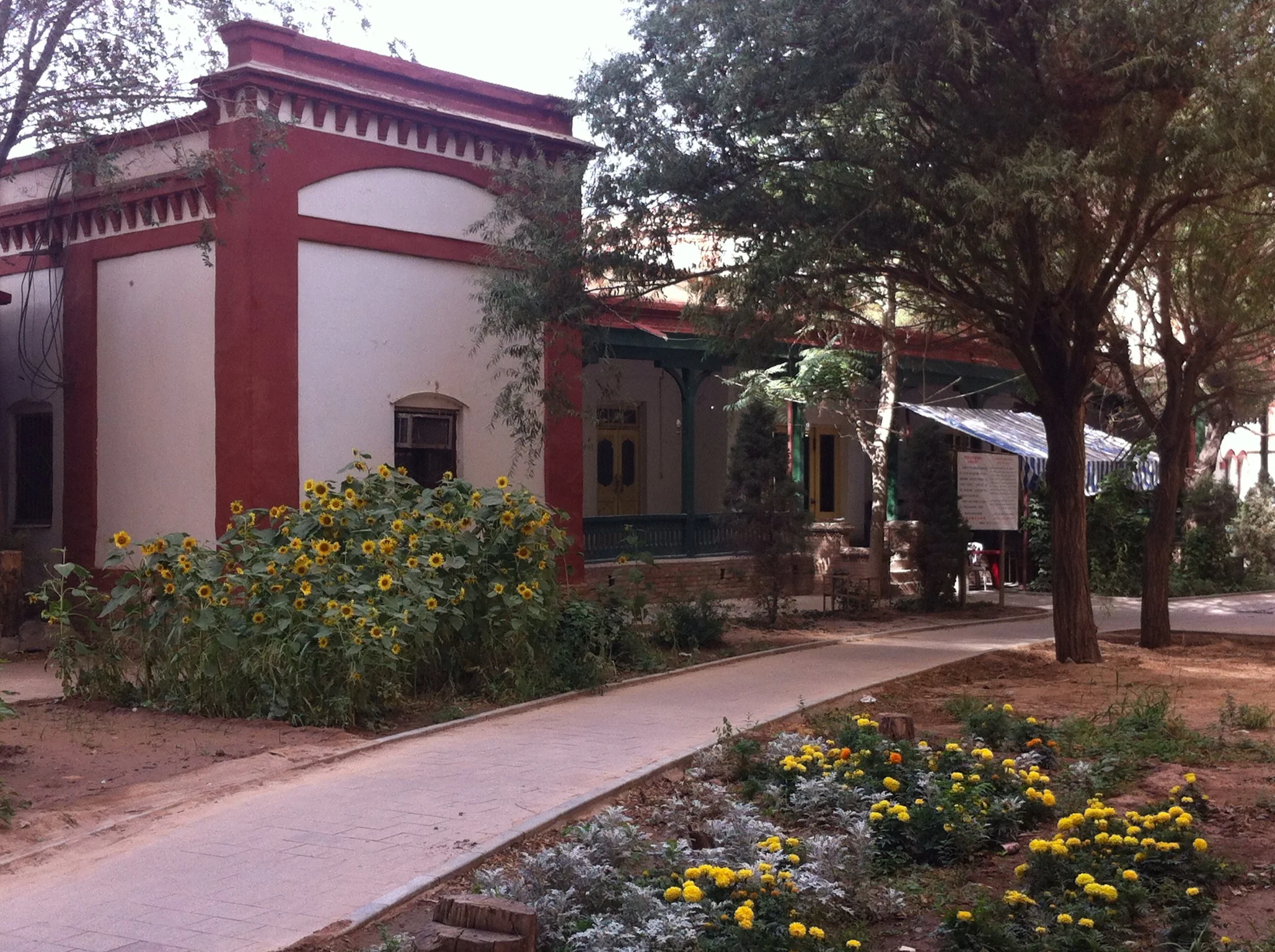
Chini Bagh as it exists today. Pic credit flashme.wordpress.com
Moving on back to the Consulate. It continued as the British Consulate till 1947 when the British decided to grant Independence to India. With the British gone the Consulate was renamed as the India Pakistan Consulate. Yes India Pakistan Consulate and it was like a joint Consulate. And things went on for a couple of years till as per now declassified CIA report things started happening and the Communist Revolution started making its presence felt. As a result the Consulate Generals of Pakistan and India were shut in 1949. It needs to be noted that Trade even at this time was on at full swing and not affected by this development. And it seems that the Indian Consulate officials continued to work well into 1950 when one fine day they decided to leave. The Consulate Incharge at that time was Capt.Sathe (he later became the Indian Ambassador to China) and all of the Indians had to leave via the most dangerous Route ie over the Karakoram Pass into Ladakh. Even the American Deputy Consulate Head took the same Route to Ladakh and the onto Srinagar and thence to Delhi from where they flew back to the US.
So why did the Consulates close or were ordered to close. Well its a complicated different story and maybe it will be told here some day. To put it simply the Communists were not very trusting of foreigners especially in a frontier Region inhabited by Uighurs who were themselves not very fond of the Chinese.
The Great Game had long ended and the Cold War had started and one of its sad legacy was the closing of my beloved “Worst Trade Route in the World”.
As for the Passport it lies in the Munshi Aziz Bhatt Museum in Kargil, a little distance from where the son of Sh. Amar Chand runs his business establishment.
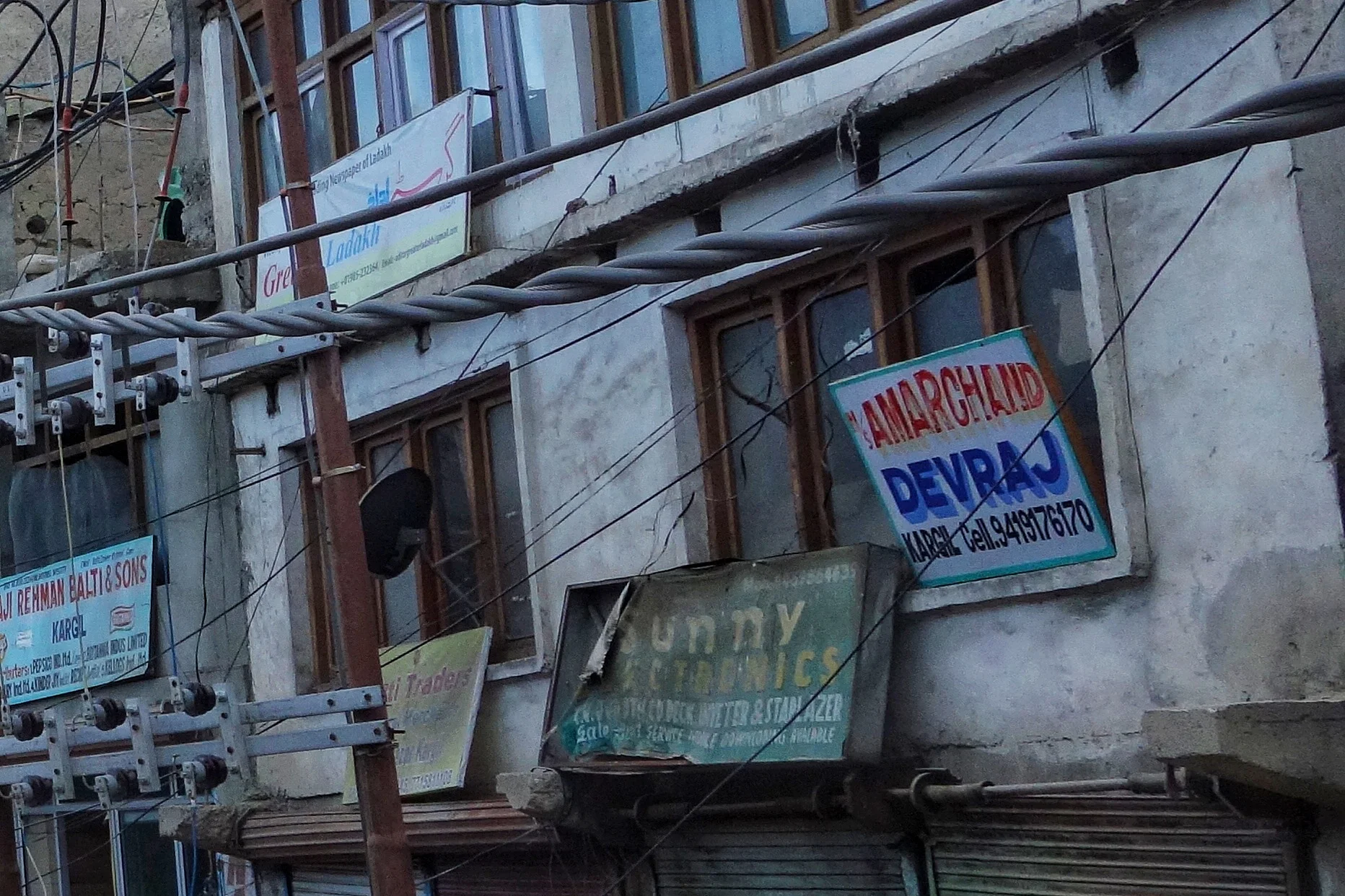
And business is still being carried out in the name of Sh.Amar Chand in the Kargil Bazaar.
Pic from May 2018. Kargil, Ladakh
The Uighur Hajis
These were also adventurers but there adventure was in the name of God. The Uighur Hajis who traveled the Leh Yarkand Route only to proceed further into mainland India and then across the Arabian Sea to do the Haj Pilgrimage.

The Uighur Hajis
Much has been written about the Trade Route which connected Ladakh with Central Asia across the high passes of the Himalayas, Karakorams and the Pamirs.I have also written on this and mentioned the Route as probably the Worst Trade Route in the World. Crossing the Highest Passes on the Planet over the Highest Mountains could never have been easy. The Men who undertook this Journey were majorly Traders and their hired Men. Well almost all except one Group of people.
This Group of people where Uighur Muslims (mostly older people) on their way down to Kashmir and the Indian Plains and ultimately to Arabia in older to undertake the Hajj pilgrimage. If you think of it that would be one of the most perilous Journey that anyone could ever undertake. For the Traders redemption lay once they reached Ladakh but for these Gentlemen the Journey had only started once they reached Leh.
From there they went onto Srinagar in Kashmir and then took the cart Road to Rawalpindi and then onto Lahore I assume and then they probably took a train Journey down to Mumbai. Once in Mumbai they got onto a Ship headed for Arabia which probably dropped them off at the Port of Aden I would assume. And then through the Arabian Desert all the way to the Holy Cities of Mecca and Medina to perform the Haj, one of the pillars of Islam.
And once having done that repeating the perilous Journey on their way back home. Keeping in mind that most of these pilgrims were Men of advanced ages I cannot help but wonder what was the mortality rate of these Pilgrims. And another thing I wonder about is how long did the whole Journey take once they left from Yarkand and returned back to Yarkand. And of course you have to keep in mind that some of them must have come to Yarkand from further afield.
These Men were also Adventurers. The motives were Religious but that doesn't take away from the remarkable Journey that these men undertook. Hats off to them.
The Pic is of a Group of Uighur Hajis in Leh in 1912.
Around the Hari Parbat Hill
The Fort of Hari Parbat or the Koh-E-Miraan dominates the skyline of old Srinagar. The Fort was built by the Afghan Durranis who ruled the region at one point of time and has stood witness to the vagaries of time in Kashmir. Many places of historical / religious lay dotted around the Hill.

The Hari Parbat Fort as seen from the Badamwari below
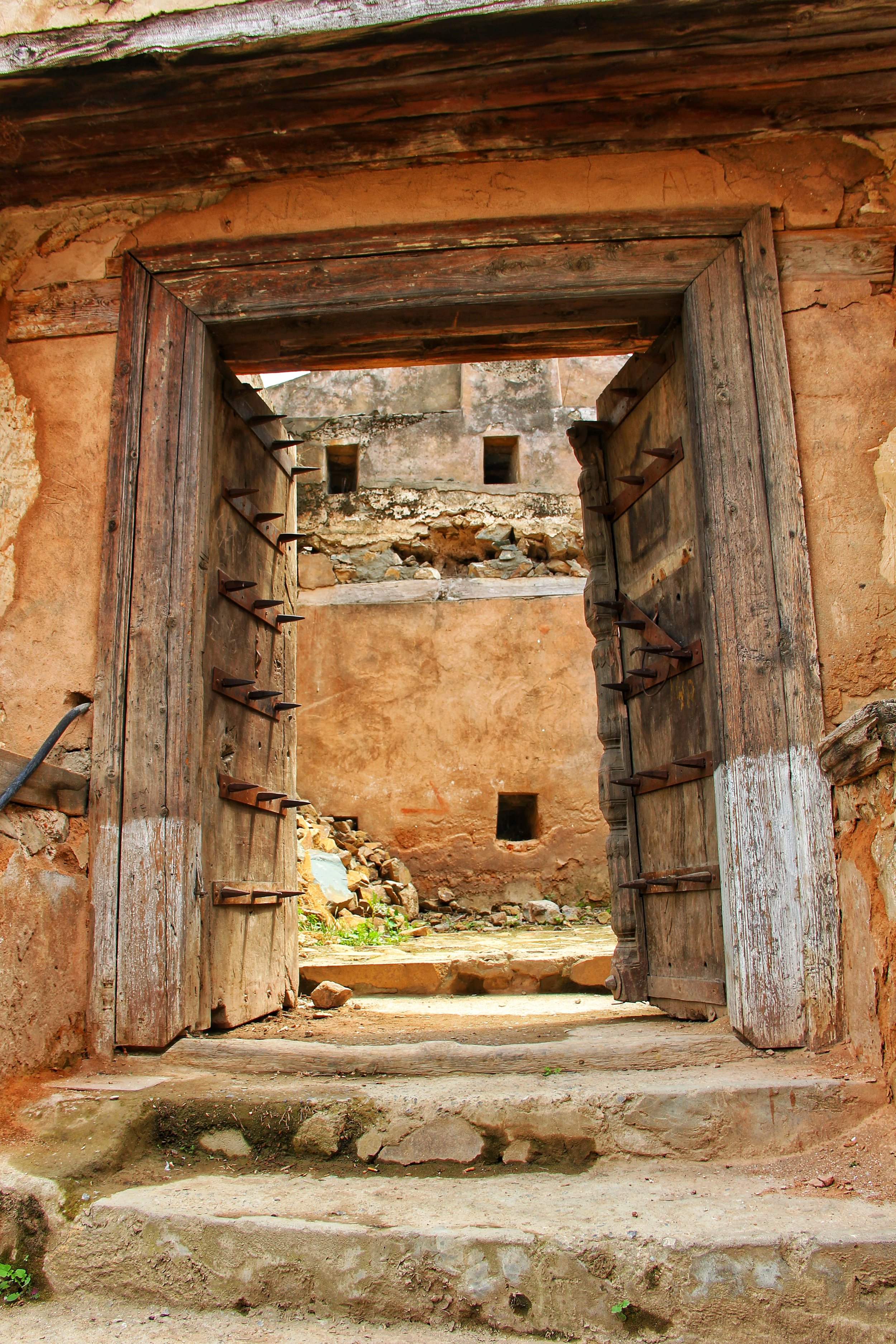
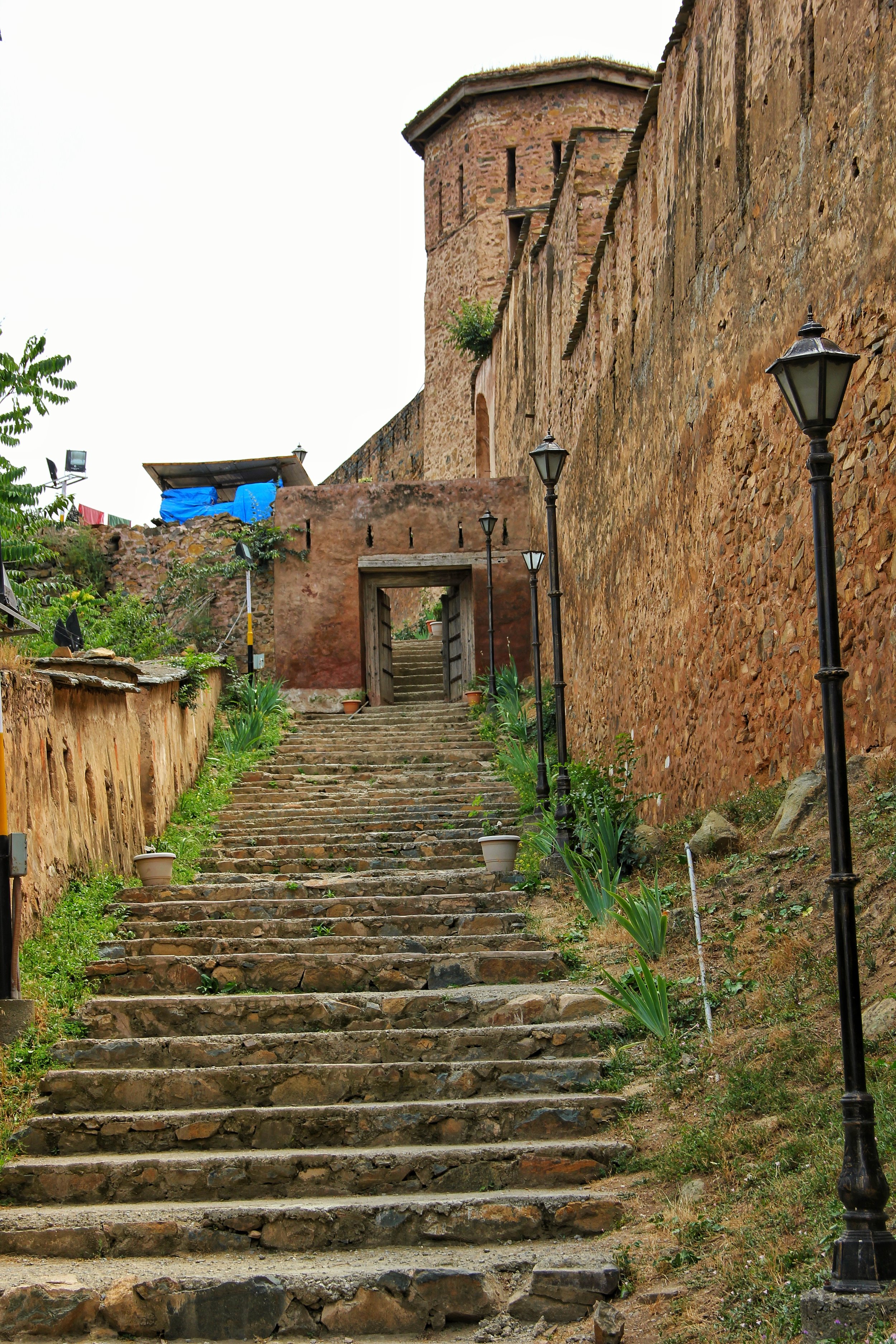
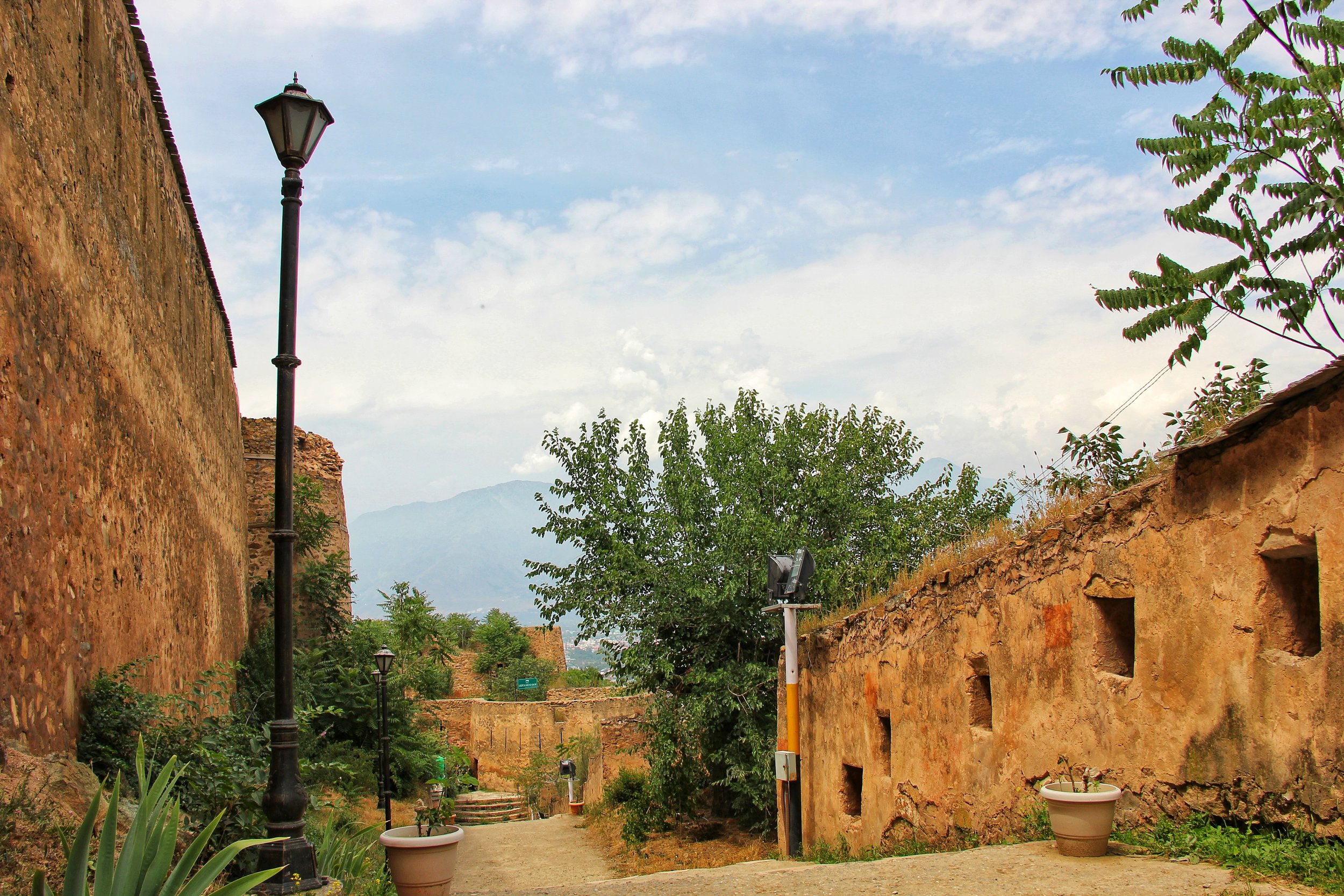
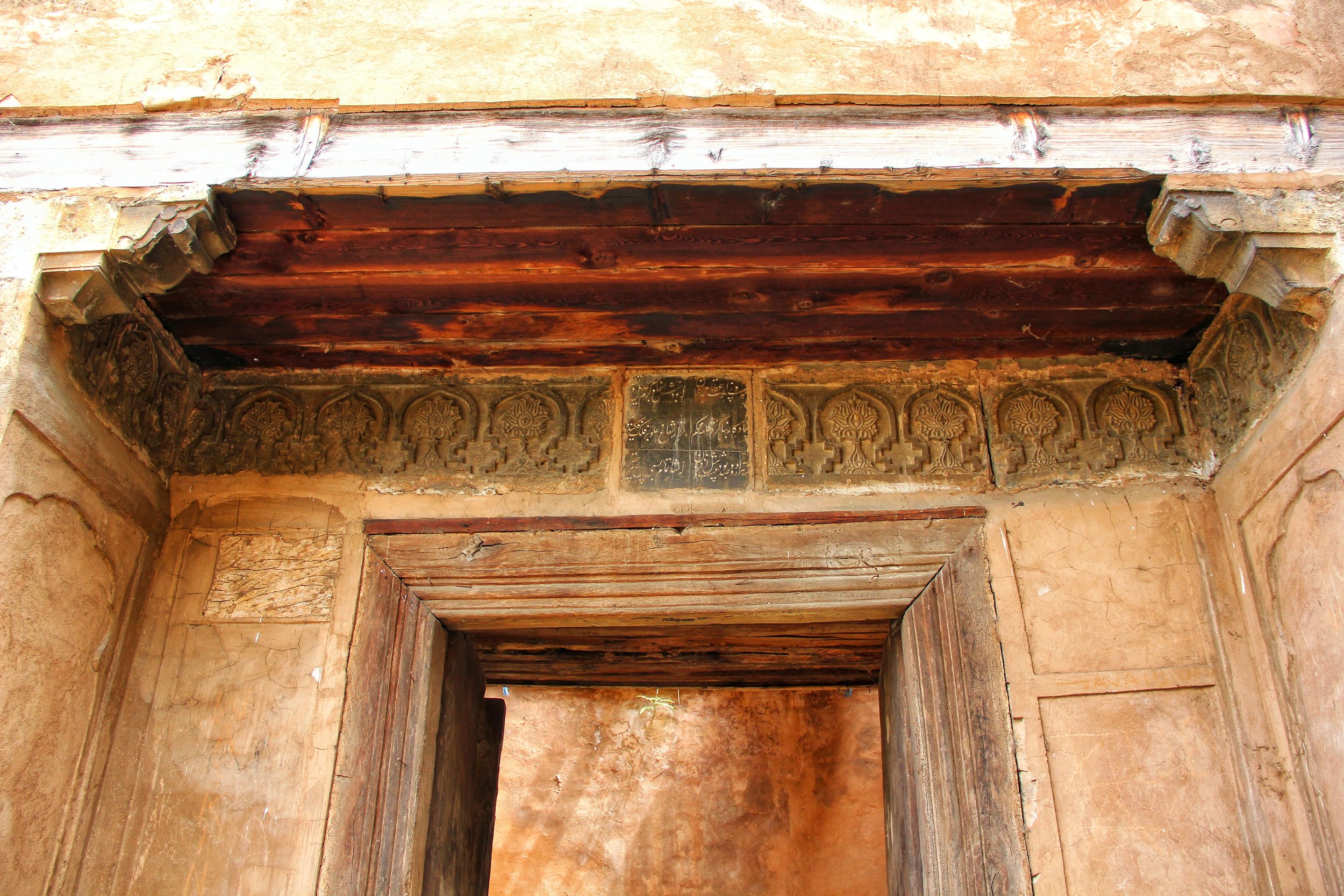
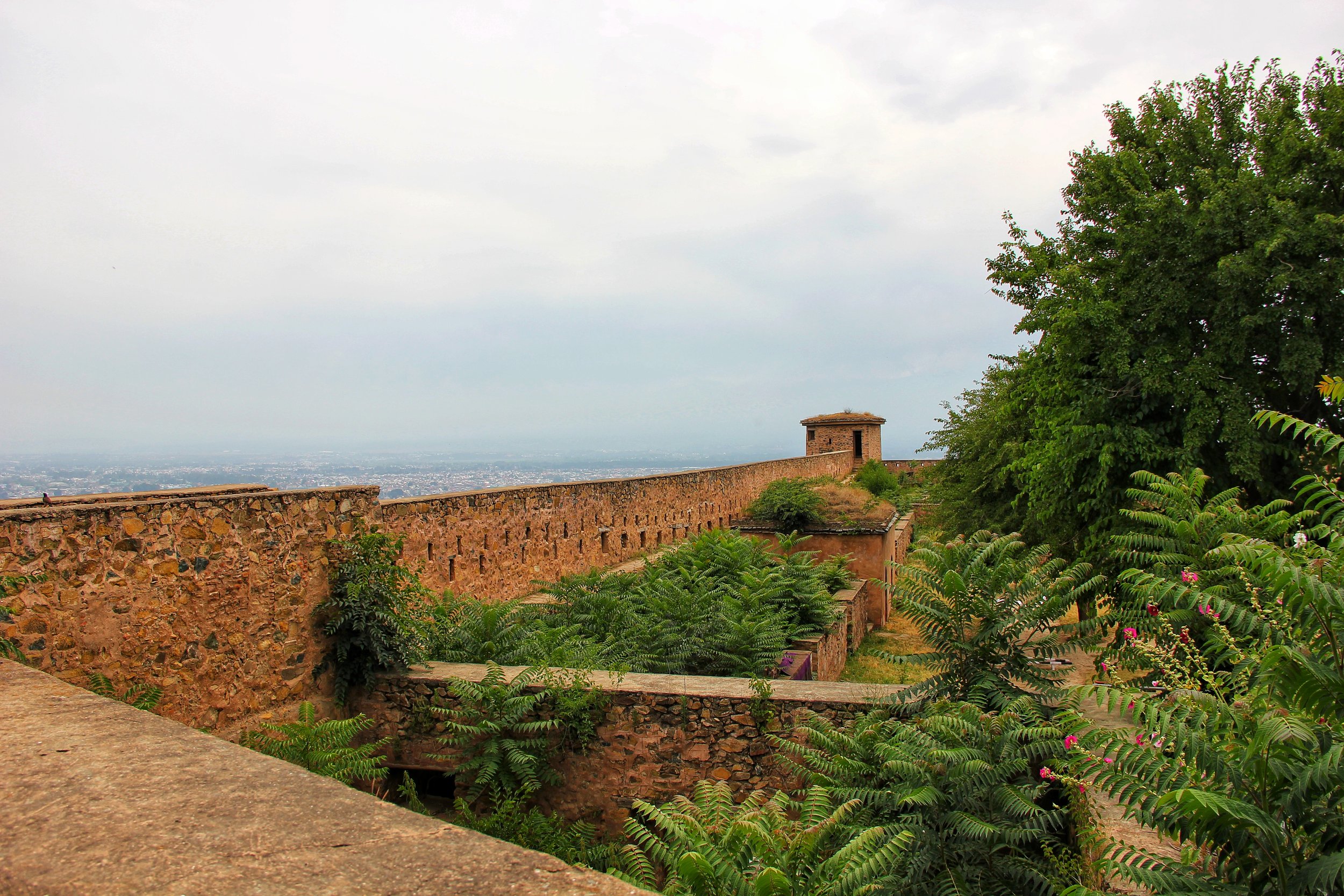
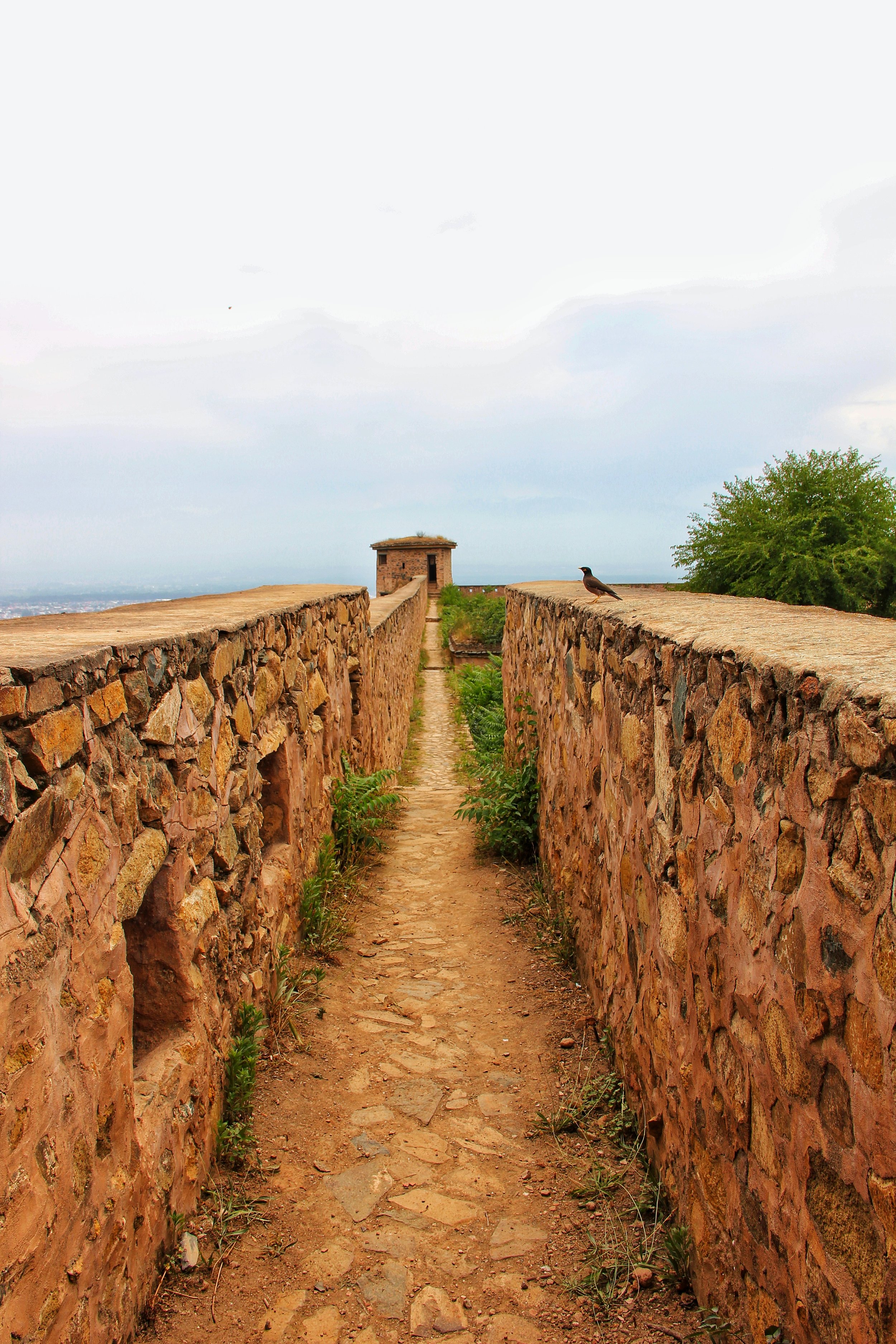
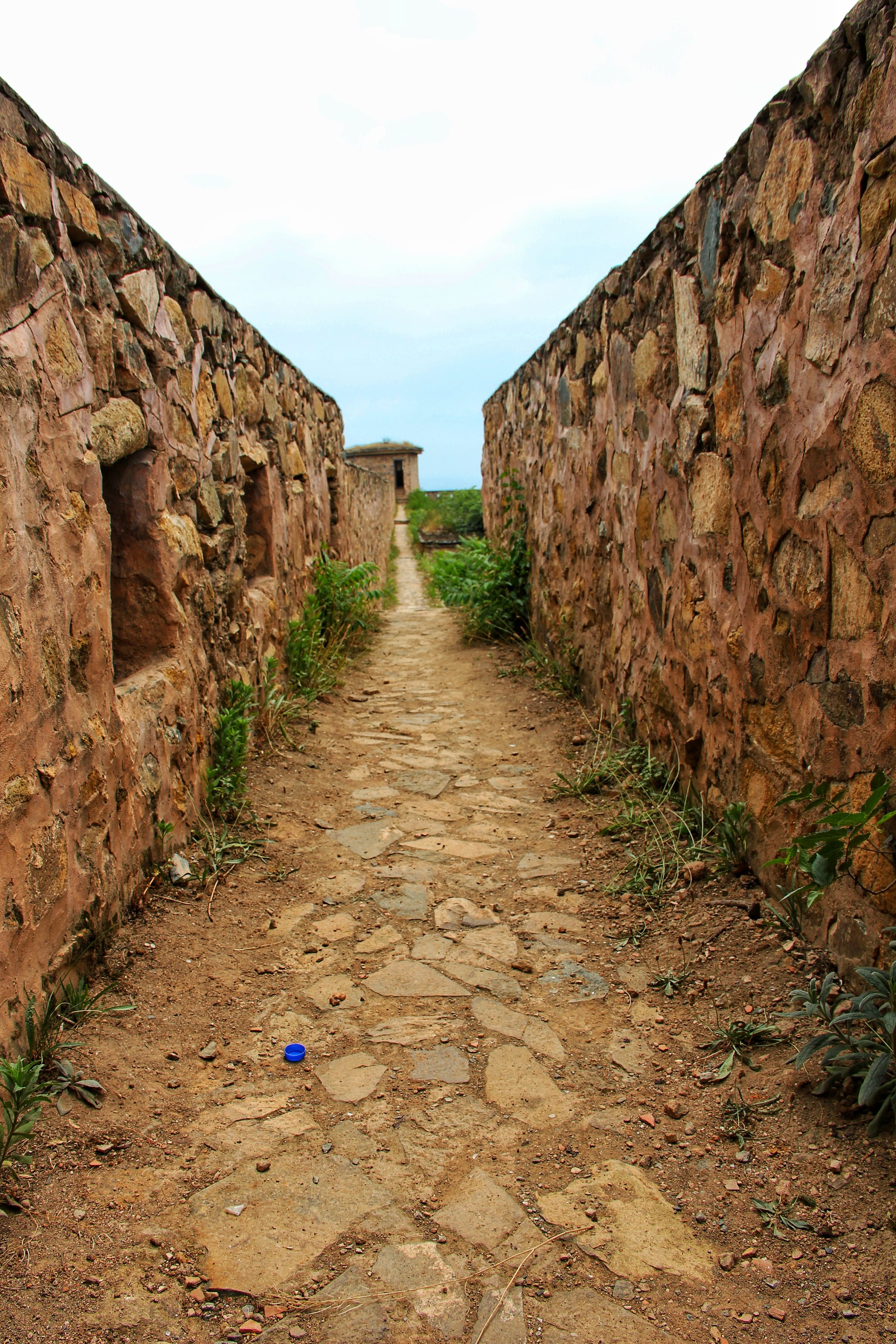
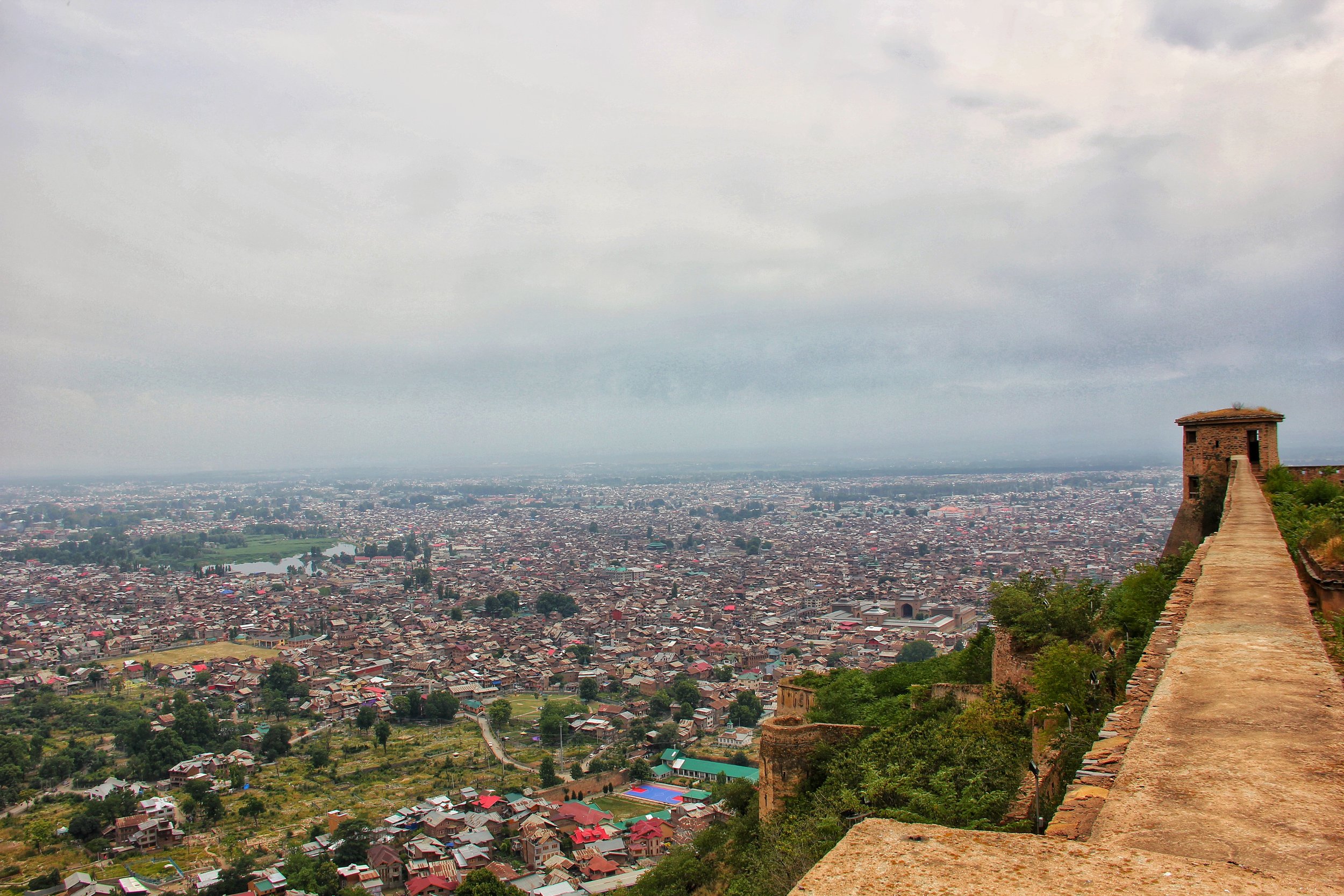
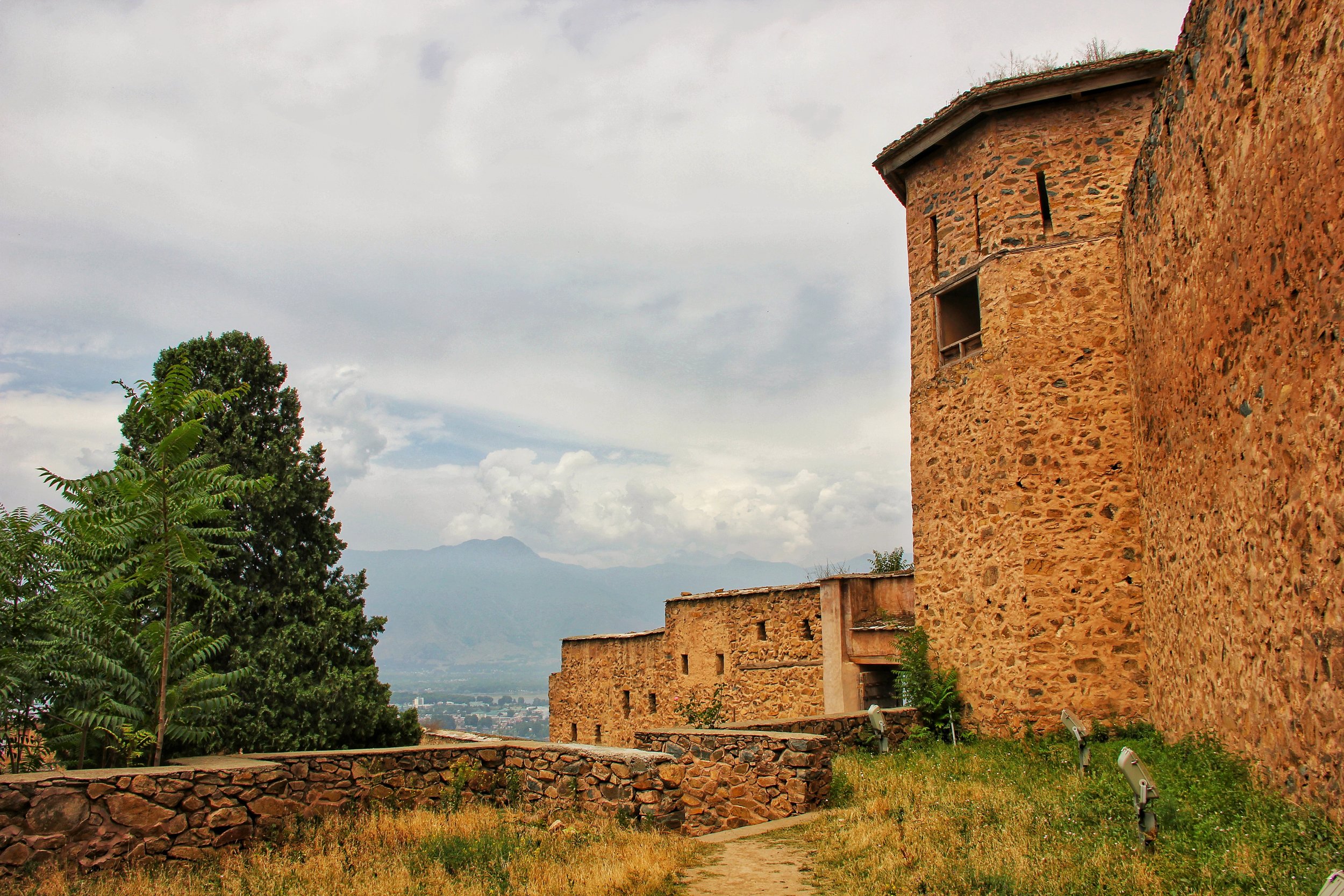
The imposing Hari Parbat Fort. The present Fort was built by the Durrani Afghans in 1808 though originally the fortifications around the hill were built during the reign of Akbar who wanted to make a new capital here. I did some explorations around the Fort two weeks back and found some interesting things around. The original Fortification wall built by the Mughals still exist in parts around the lower parts of the Hill.
The most fascinating fact was that there was a tunnel from the Fort which led one to the shores of the Pokhribal Lake, an extension of the Nigeen Lake, right from the top of the Fort. The Tunnel entrance is still there at the Pokhribal Lake. Also a ventilation hole around 10 ft is still preserved in the Badamwari Garden. The Tunnel is now blocked so the secret passage way cannot be explored further. The Hill also holds the Shrine of Makhdoom Sahib such encompasses various historical structures of the Mughal Era, as well as the Sharika Devi Temple and the Chatti Padshahi Gurudwara.
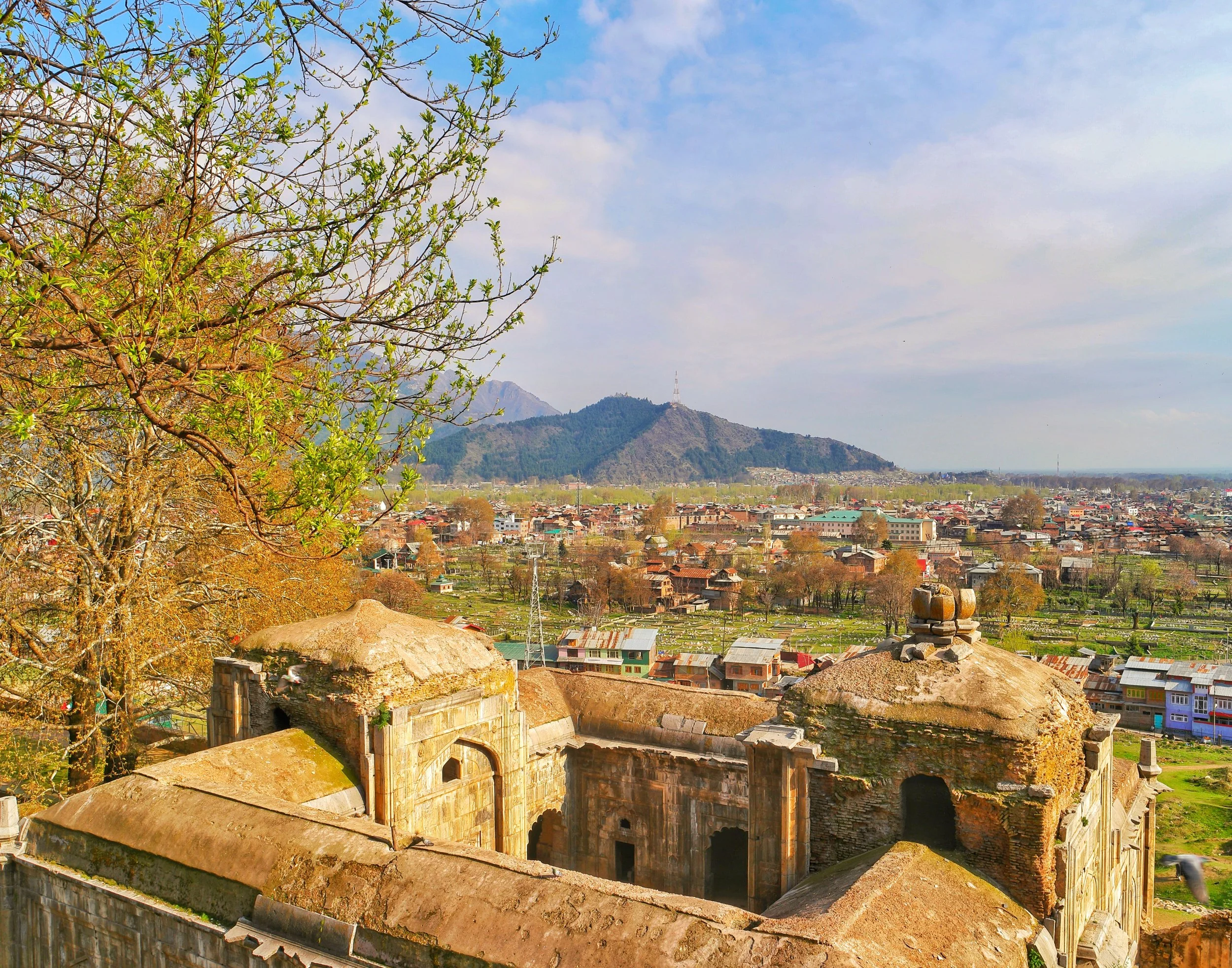
The Akhun Mullah Mosque on the Hari Parbat
An alternate view of Srinagar old Town. As seen from above the Mosque of Akhun Mullah Shah near Makhdoom Sahib a little way up from the Kathi Darawaza. This little Mosque was erected by Dara Shikoh in attractive grey limestone to honor his tutor Akhun Mullah Shah. The Mosque was built in 1649 AD and it has a stone lotus over it's pulpit, the only one of its kind in Kashmir. Another little architectural gem of Kashmir. In the background is visible the Shankaracharya Hill with the Shankaracharya Temple, another gem that was made in the 7th century AD.

Massive Chinars overlooking the Srinagar city in the compound of the Akhun Mulla Mosque

The Chatti Padshahi Gurudwara as seen from the Hari Parbat
The Chatti Padshahi Gurudwara, one of the most revered Gurudwaras in the state of Jammu and Kashmir, in Srinagar as seen from the Akhun Mullah Shah Mosque. This Gurudwara is situated in the Rainawari locality near the Kathi Darawaza on the foot of the Hari Parbat. It is associated with the Sixth Guru who is supposed to have roamed around in the Valley spreading the message of Guru Nanak Dev ji.

Pokhribal Lake a part of the Nigeen Lake and the Lepers Colony behind it

The Boat Club at Pokhribal Lake at Srinagar
This pic was taken from the top of the now in ruins outerwall of the Hari Parbat Fort. The water body that you see here is called Pokhribal and it's an extension of the Nigeen Lake. Underneath the massive Chinars is a Shamshan Ghat run by the Ahle Singham, a local Sikh Group. The shed is where they cremate the bodies.
The White building is the Boat Club though there surely wasn't much boating happening and the place looked derelict. Just a few guys using the pier for trying to catch a fish on their improvised fishing rods. The White structure across the Lake is a water treatment plant or something on those lines.
Behind the plant there are old buildings and a big old Hospital. This is Kashmir's Leper Colony. This isolated spot was where all the Lepers in the state were kept. Due to ignorance Lepers were shunned and were forced to live in isolation over here. In time they married amongst themselves and had families. Now three generations of the Lepers families live here. The Lepers are still provided daily / monthly rations. Generally people tend to stay away from this place.
Next time will surely visit the Leper Colony. It's a place time and people forgot. And of course the pic has the Zabarwan, the Lakes, the Chinars and all other things usually associated with Kashmir.

A Family home and its field by the banks of the Pokhribal Lake. On the right you can see the Tunnel which linked the Lake to the Fort on the top of the Hill

An massive old Chinar by the Pokhribal Lake with an ancient structure. Next to the Chinar is a crematorium used by the Sikh families living in this area.

A view of the Nigeen Lake in the foreground and the Dal Lake in the background with the Zabarwan Mountains in the background.

The Jamia Masjid in downtown Srinagar as seen from the Hari Parbat
The Jamia Masjid in the Nowhatta area of Srinagar surrounded by the old part of Srinagar. This beautiful Mosque is one of the largest Mosques in Kashmir and has a capacity of well over 30,000. It was built in 1394 AD by a Sultan of the Shah Miri Dynasty. It is a beautiful piece of Architecture indeed though few outsiders visit this place. This was clicked from the Mosque of Akhun Mullah Shah above the Kathi Darwaza both of which are ASI designated monuments and again are beautiful examples of Islamic Architecture.

The Pir Panjals in the background of Srinagar city as seen from the Akhun Mullah Mosque
Central Asian Arts at the Shanghai Museum
The Central Asian Collection at the Shanghai Museum. At the Minorities section of the Museum on display from the Tibetan, Uighur, Kirghiz, Kazakh and other Central Asian people are various Antiques and Arts reflecting the rich culture of these people.

Mongol Brass Chess Pieces
Central Asian Arts at the Shanghai Museum
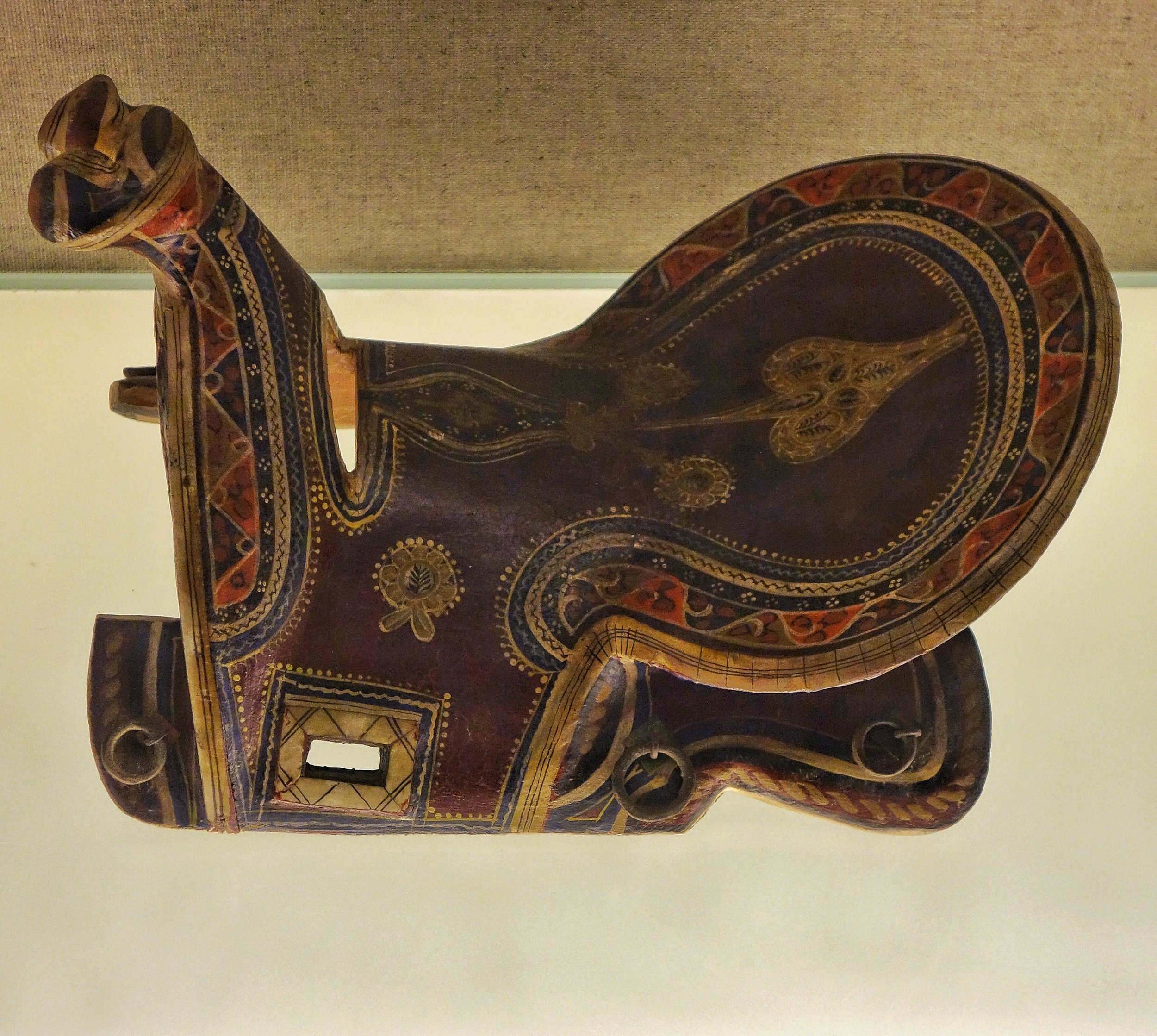
Ughyur Saddle with Painted Motif

Tajik Flute Made of Eagle Bone

Ughyur Foldable Book Rest with four folds

Ughyur Copper Bottle with Carved Motif and Arabic Lettering

Ughyur Copper Bottle w Carved Motif

Ughyur Brass Pencil Box
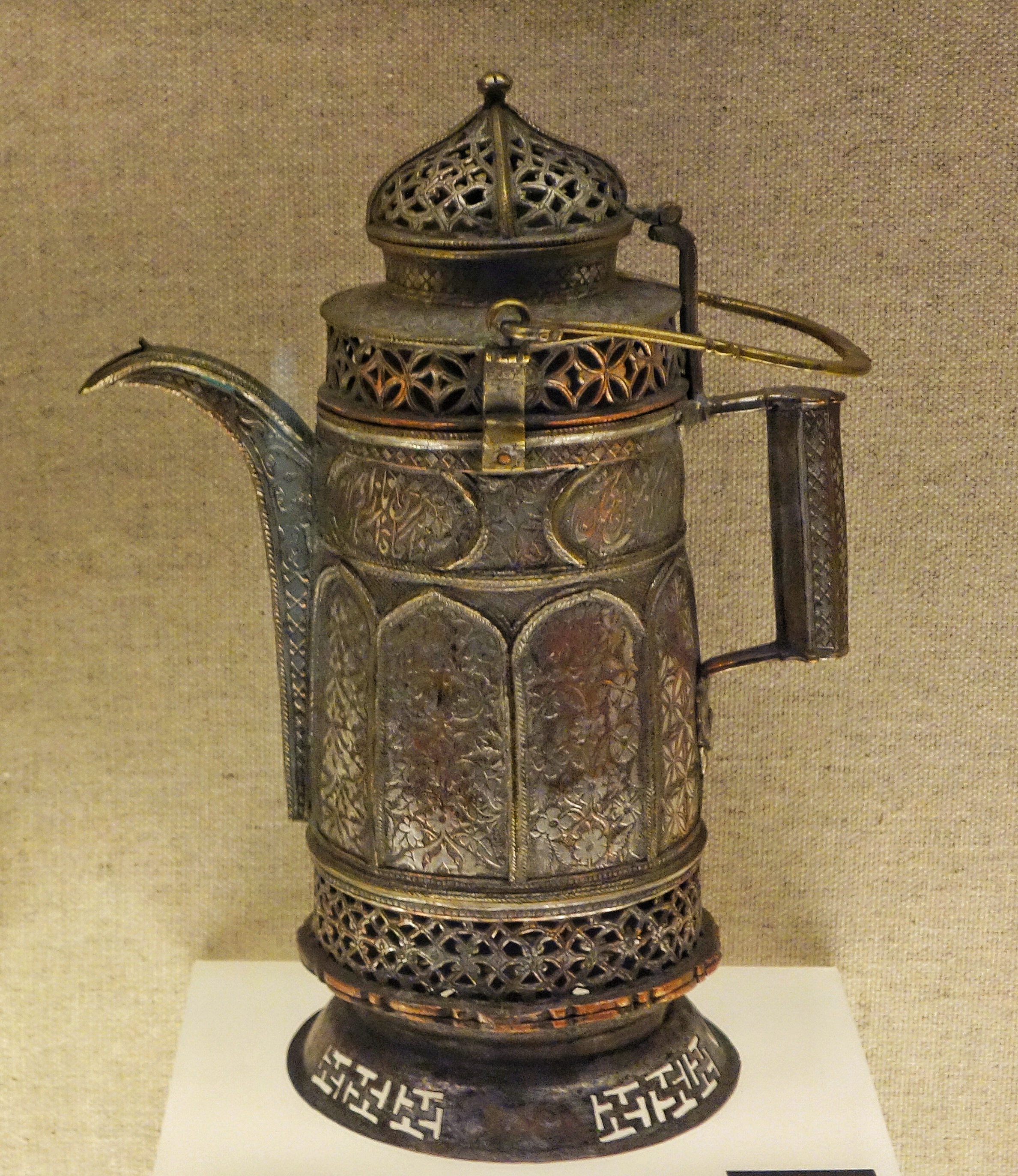
Ughyur Copper Pitcher with an openwork design and a Looped Handle
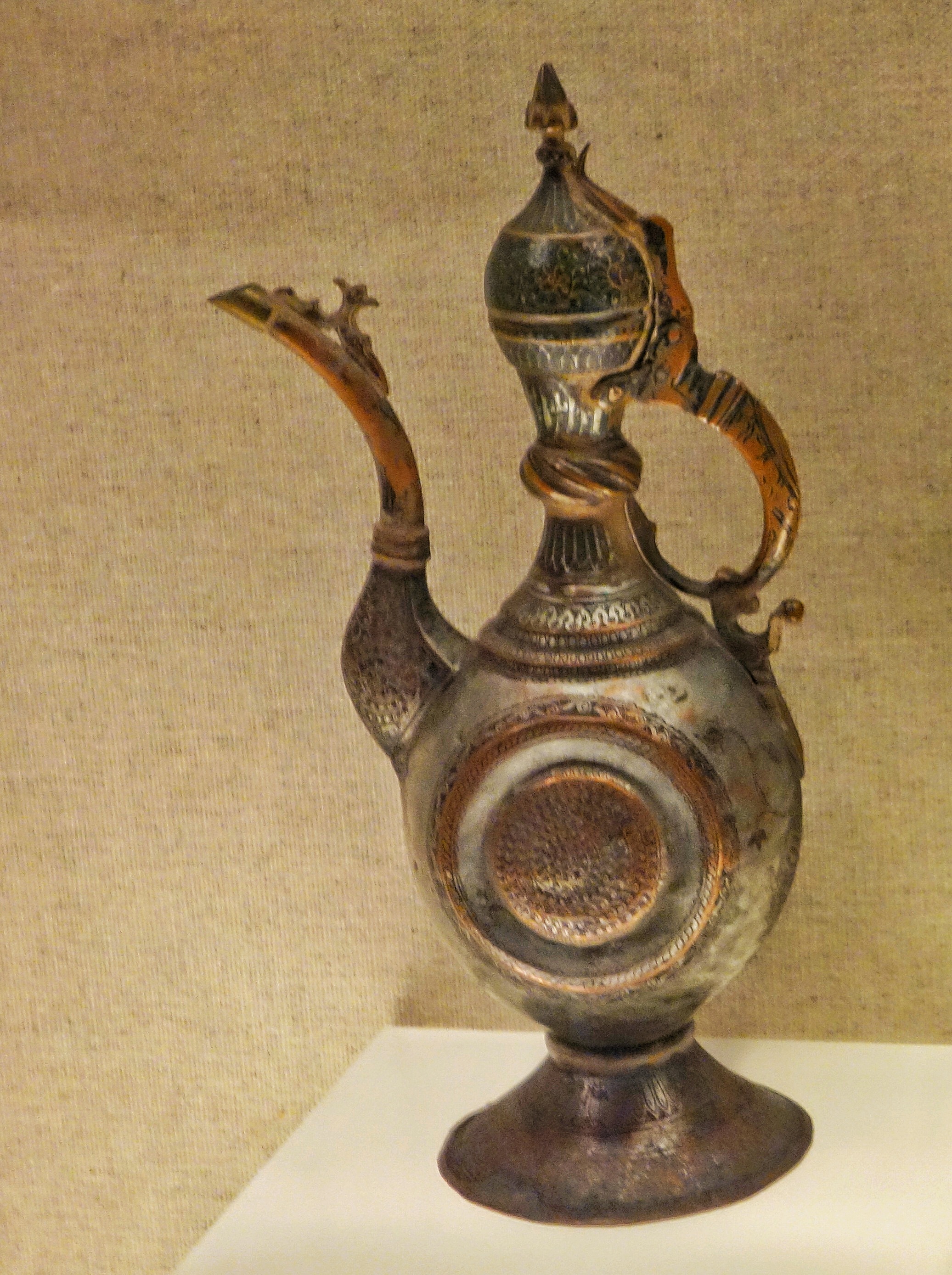


Mongol Headdress with coral beads

Kirkhiz Necklace

Ughyur Braided Ornament Adorned with Beads and Silver Khotan

Kazak Gilt Silver Ornament

Tajik Silver Eagle Shaped Head Covering Ornament with Inlaid Stones

Ughyur Necklace

Tajik Silver Filigree Earrings

Mongol Brass Copper Snuff Boxes with Inlay

Tajik Silver Pendants Strung with Beads
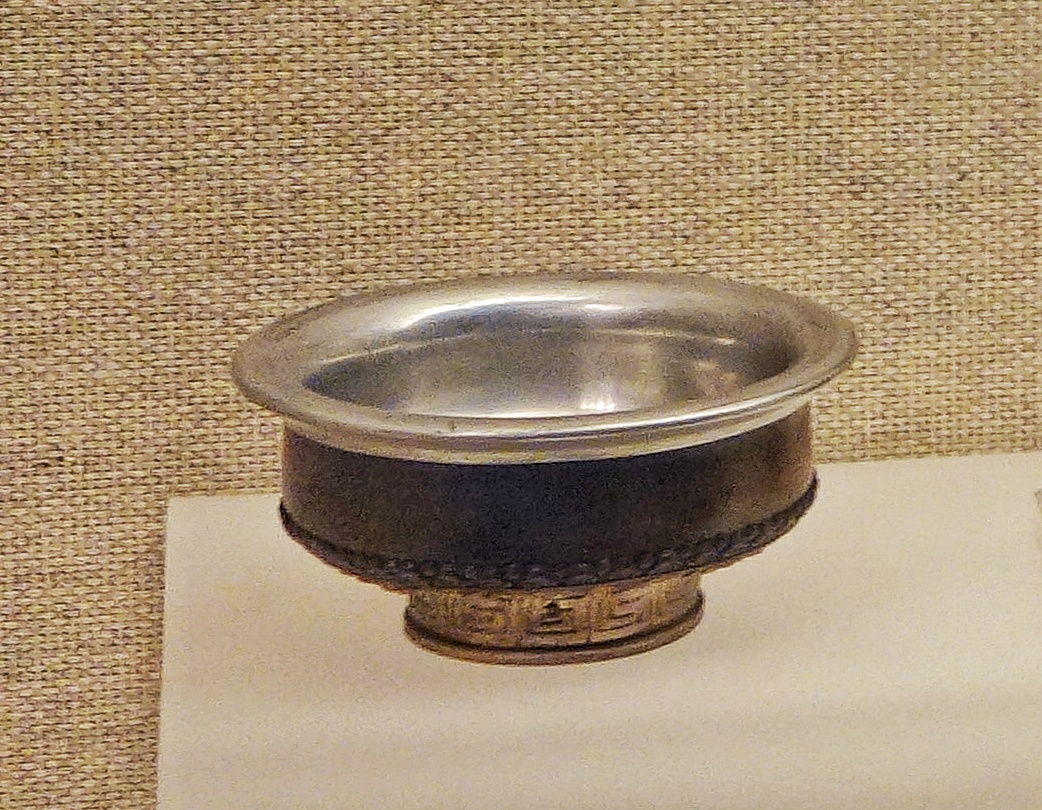
Mongol Wooden Bowl covered with Silver

Ughyur Velvet Dopa with Gold work Embroidery

Ughyur Dopa, four angled Caps wit Beads and Embroidery

Kirkhiz Waistcoat and Pants

Ughyur Dopa Embroidered Cap

Ughyur Velvet Waist Coat and Jacket with Embroidery and Beads

Ughyur Embroidered Satin Dress

Ughyur Men's Dress

Uzbek Woman’s Dress with Embroidery
Saddles of the Horse Empires
The Horse and its Saddle were the main means of transport and one of the most important weapons in Warfare especially on the Central Asian steppes. No wonder the Empires built by the Nomads of Asian Steppes including the one built by Mongols under Changez Khan were also known as Horse Empires.

Central Asian Wooden Saddle.
The Saddles of the Horse Empires
I have already told you the story of the Munshi Aziz Bhat Museum. Of course like all Museums it holds so many Items and so many stories attached to them. Like a small cannon that belonged to General Zorawar Singh himself, Horse Bells gifted by the Raja of Kharmang to Munshi Aziz Bhatt, old Korans from the 16th Century and even a Rug made for one Shyam Lal who was a secretary to Alexander Burnes.
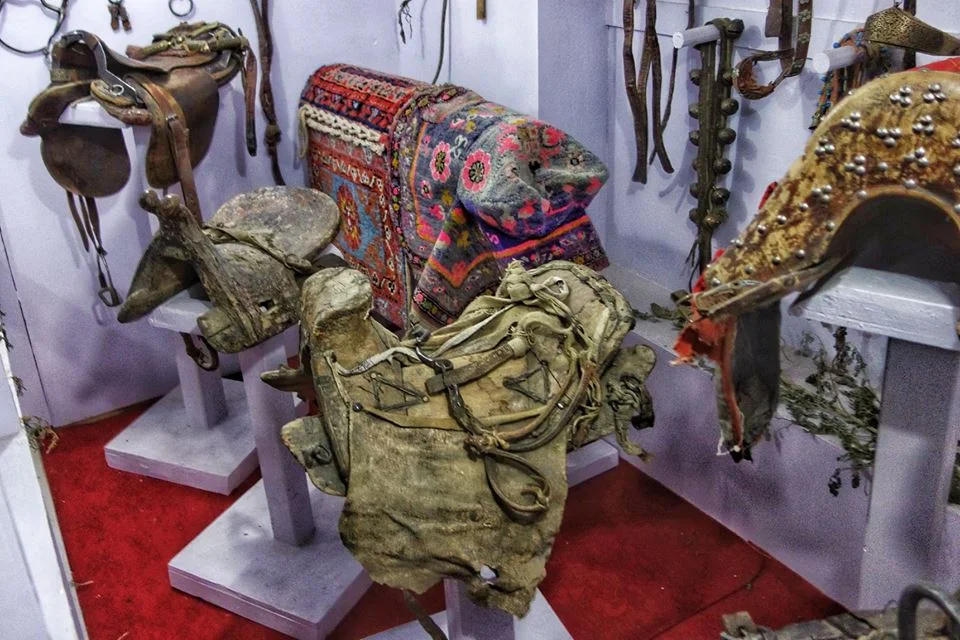
Saddles Central Asia at the Mushi Aziz Bhat Museum
One of the most significant and important set of items on display is a collection of Saddles and Horse riding items from Central Asia, Tibet and even a Saddle of the mighty Mongols themselves. Of course these items carry little significance but in those days before the Internal Combustion engine came around the Horse was the means of transport and one of the most important weapons in Warfare especially on the Central Asian steppes. No wonder the Empires built by the Nomads of Asian Steppes including the one built by Mongols under Changez Khan were also known as Horse Empires. The tenacity of the Central Asian Horse and its amazing stamina and resilience made it one of the main factor in the conquest of the “civilized” world by these so called “Barbarians” who came in from the North riding their Horses. In fact Historians have credited the Horse as being the strongest strength of the largest contiguous Empire the world has ever seen, the Mongol Empire.
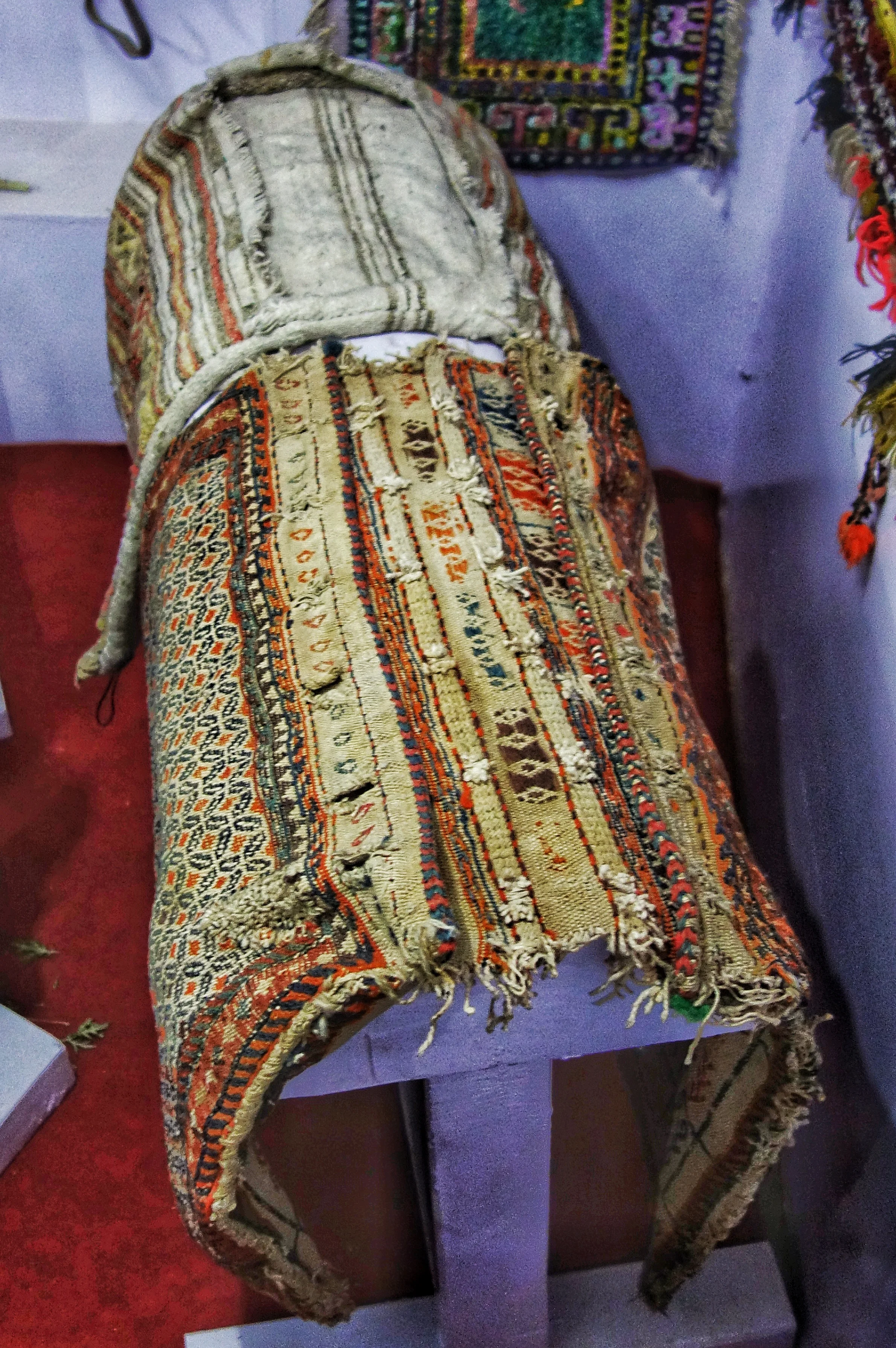
Tibetan Saddle
The Central Asian people from the Mongols to the Turkic people of the Central Asia like the Kyrgyz, Uzbek, Kazakh to the Persian Tajiks all revered the Horse and they were their most valued possessions. And of course one of most important Item required to ride a Horse was the Saddle of course and all other attached paraphernalia like the Stirrups and decorative ornaments and stuff for the Horses.
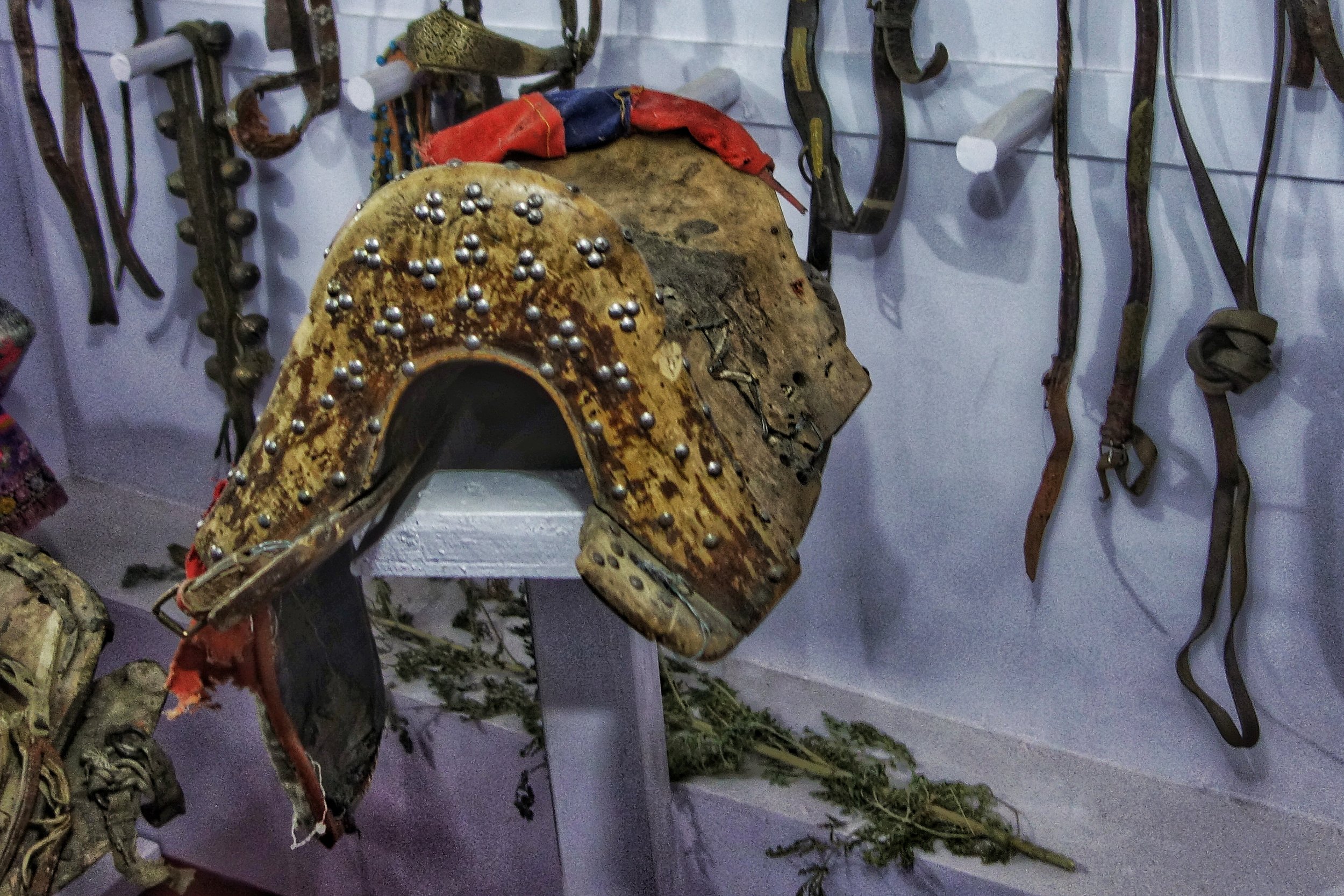
Kirgiz Saddle
The display at the Museum has a great collection of these items as mentioned earlier. There are Saddles from Kyrgyz, the Uzbek, the Tibetans, even an English saddle and the most decorative being a Mongol Saddle. These Saddles are the same design that have come down from Millennia and not much has changed as far as the Saddles and their designs are meant. The fact that there is a great possibility that the Great Khan himself rode a similar Saddle when he subjugated the World is of course quite an overwhelming though.
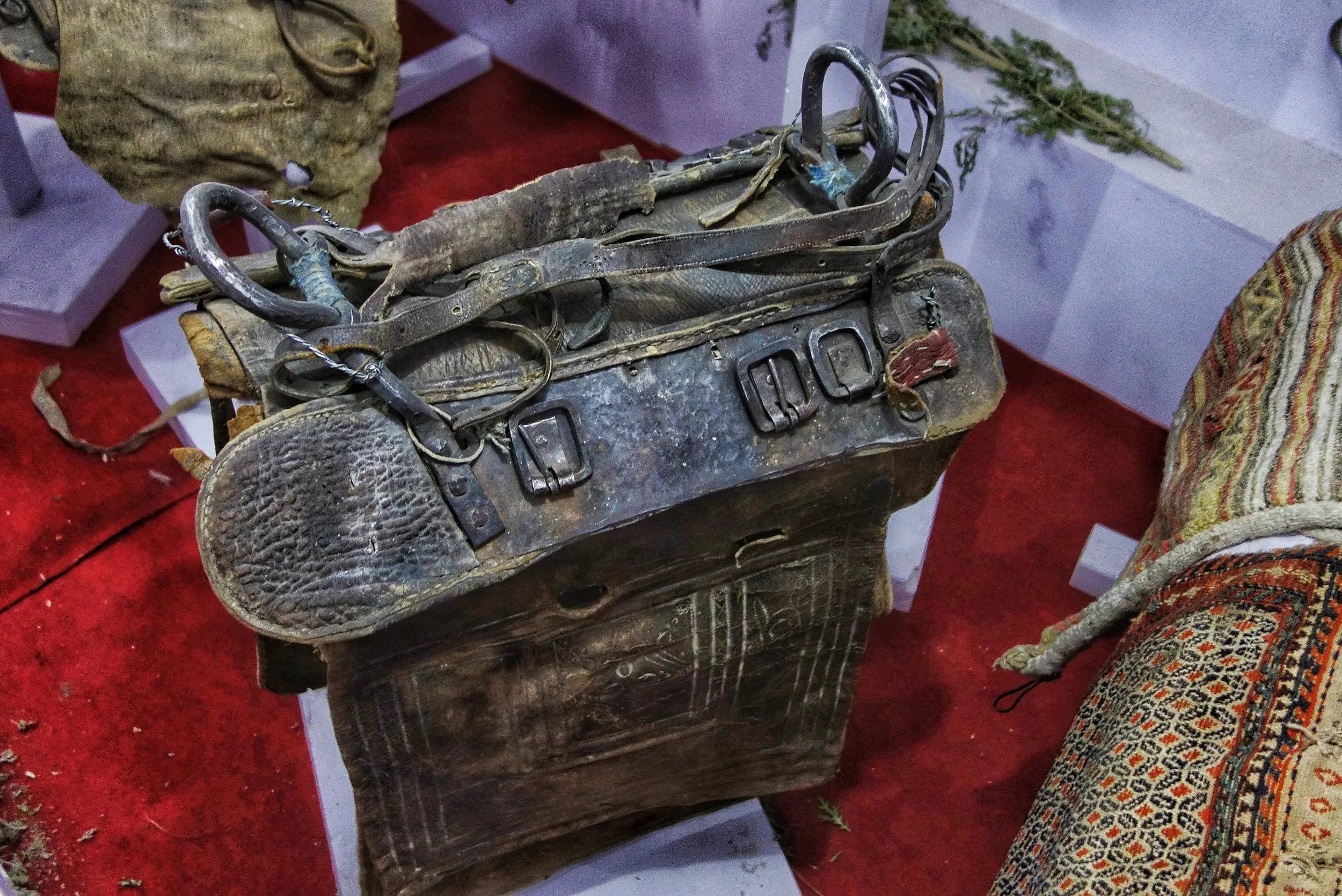
English Saddle
Of course the Horse Saddles were important items of Trade on the Kashmir to Yarkand Silk Route Trail. I would assume that Horse Saddles from Central Asia were in demand on this side of the Great Mountain Wall. And the Central Asians were more sophisticated at this though the Europeans in the later ear were turning out good Saddles as well. One of the main difference was that Central Asian Saddles were made of Wood and Leather and were highly decorated reflecting the status of the Person riding that Saddle. European Saddles made of Leather and Metal were more work like and devoid of any decorative element.
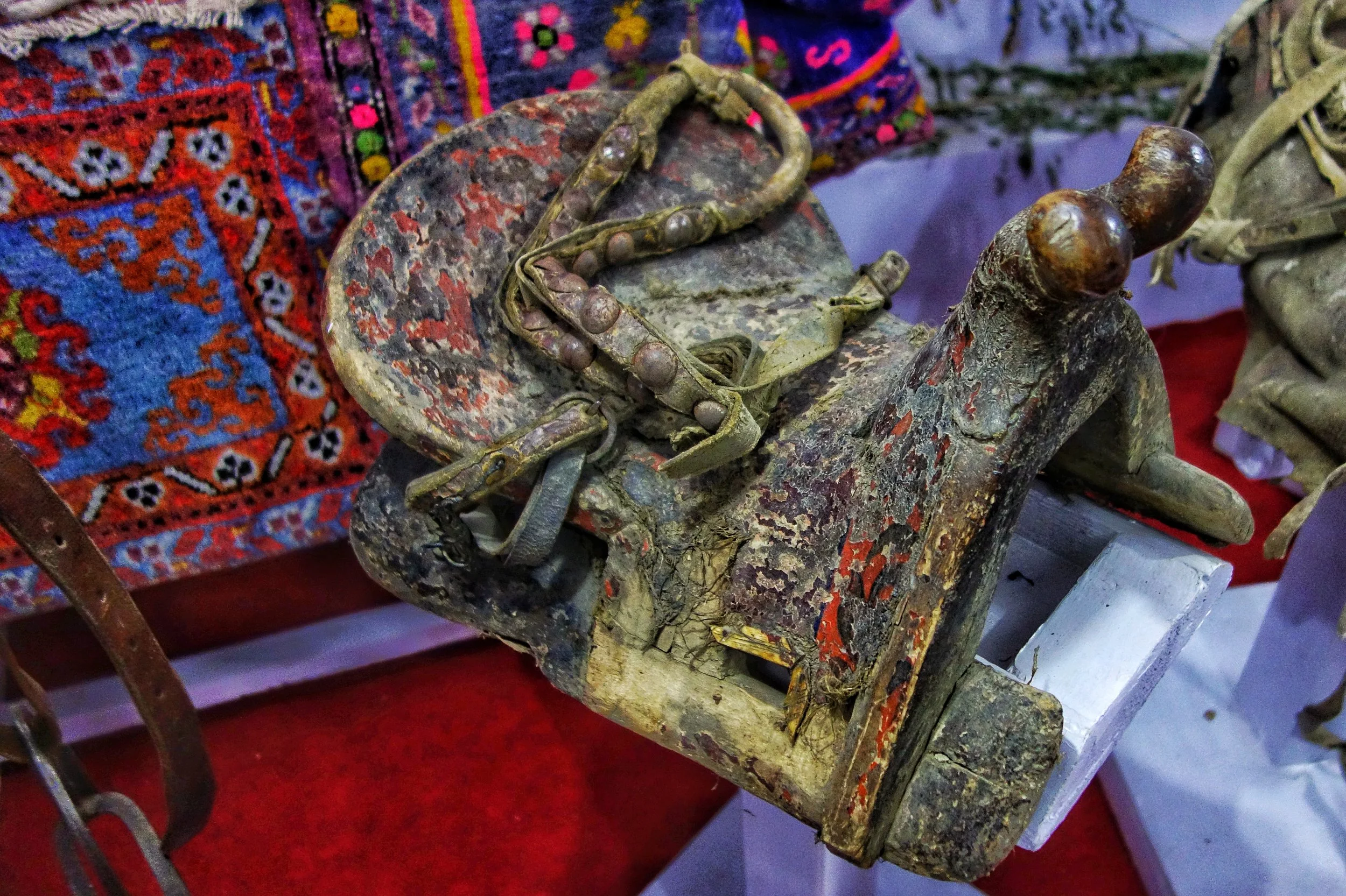
Mongol Saddle
In the pic below a few of the Saddles in the Museums collection are shown. The one on the right with Metal Studs is a Kyrgyz saddle from the 18th Century. The one in front is an Uyghur saddle from Eastern Turkestan. The one with a Carpet like covering is a Tibetan Saddle. The one next to it is the most prized one : A Mongol Saddle with a lot of decorations which sadly have deteriorated over time. And last but not the least an English Saddle in Leather and Metal.
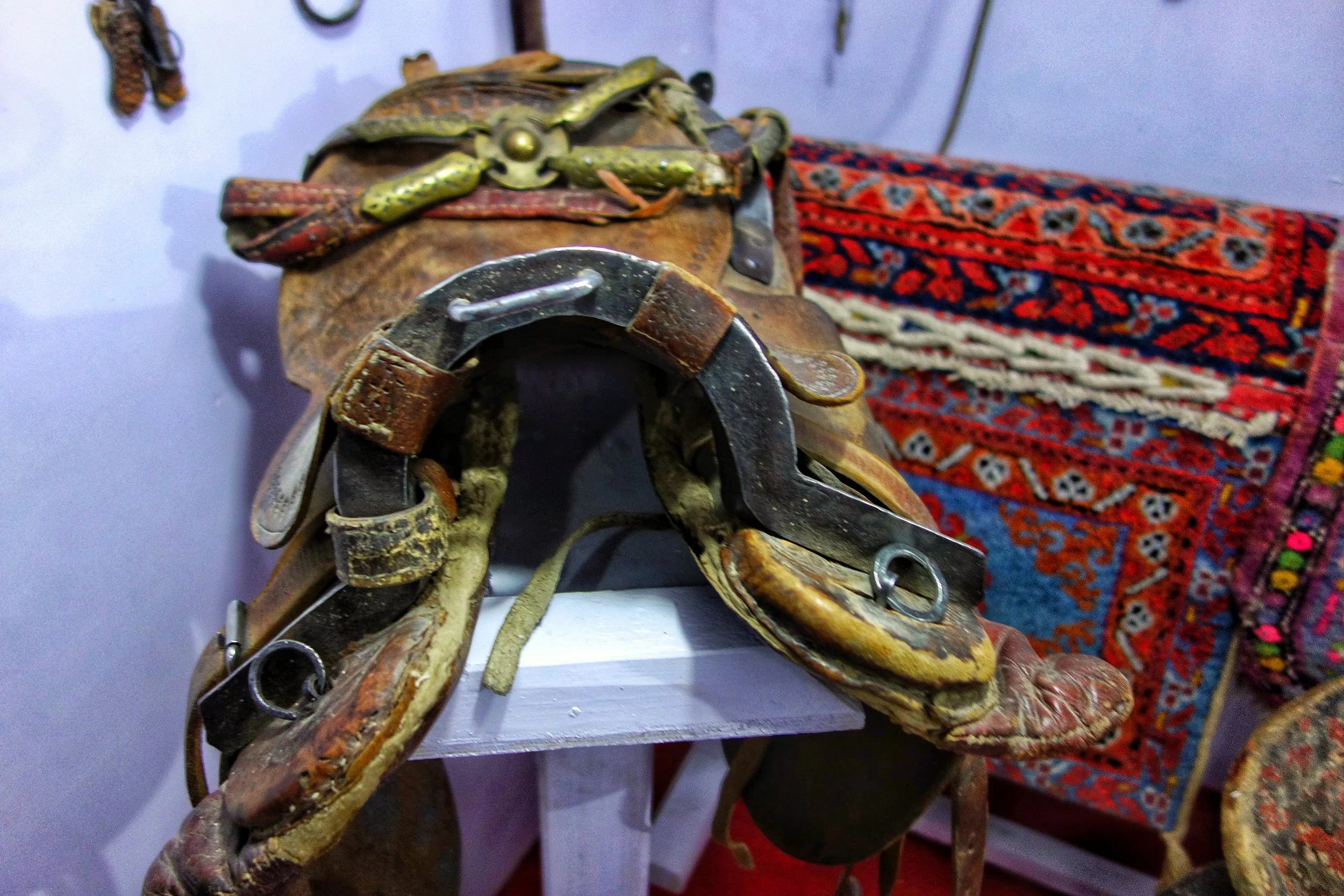
European Saddle
The fact that people sat on these Saddles while crossing the Great Wall as I call it consisting of the Kun Luns, the Pamirs, the Hindu Kush, the Karakorams and finally the Great Himalayas themselves again gives one a sense of awe of the great Tradesmen and Soldiers who crossed this most formidable barrier for Trade and War. And their most faithful companion in both case was none other than the Horse.
A Visual Journey Through Dachigam National Park
A visual journey through the Dachigam National Park on the outskirts of Srinagar in Kashmir. The Park is the last stronghold of the highly endangered Kashmiri Hangul.

The Dagwan which originates at the Marsar Lake is the life line and the main River which flows through the Dachigam National Park
A Visual Journey through Dachigam National Park
The Dagwan Nallah as it flows through the Dachigam National Park. The Dagwan Nallah is the main source of water for the Harwan Reservoir, which in turn supplied the water to Srinagar supply. The Dagwan flows down from the Marsar Lake through the pristine environs of Upper Dachigam.
The altitude in the Park varies from 5000 ft to almost 14000 ft and as such offers a variety of habitat. A true haven for wildlife and is preserved as such as the entry is strictly restricted. Hope it stays that way.
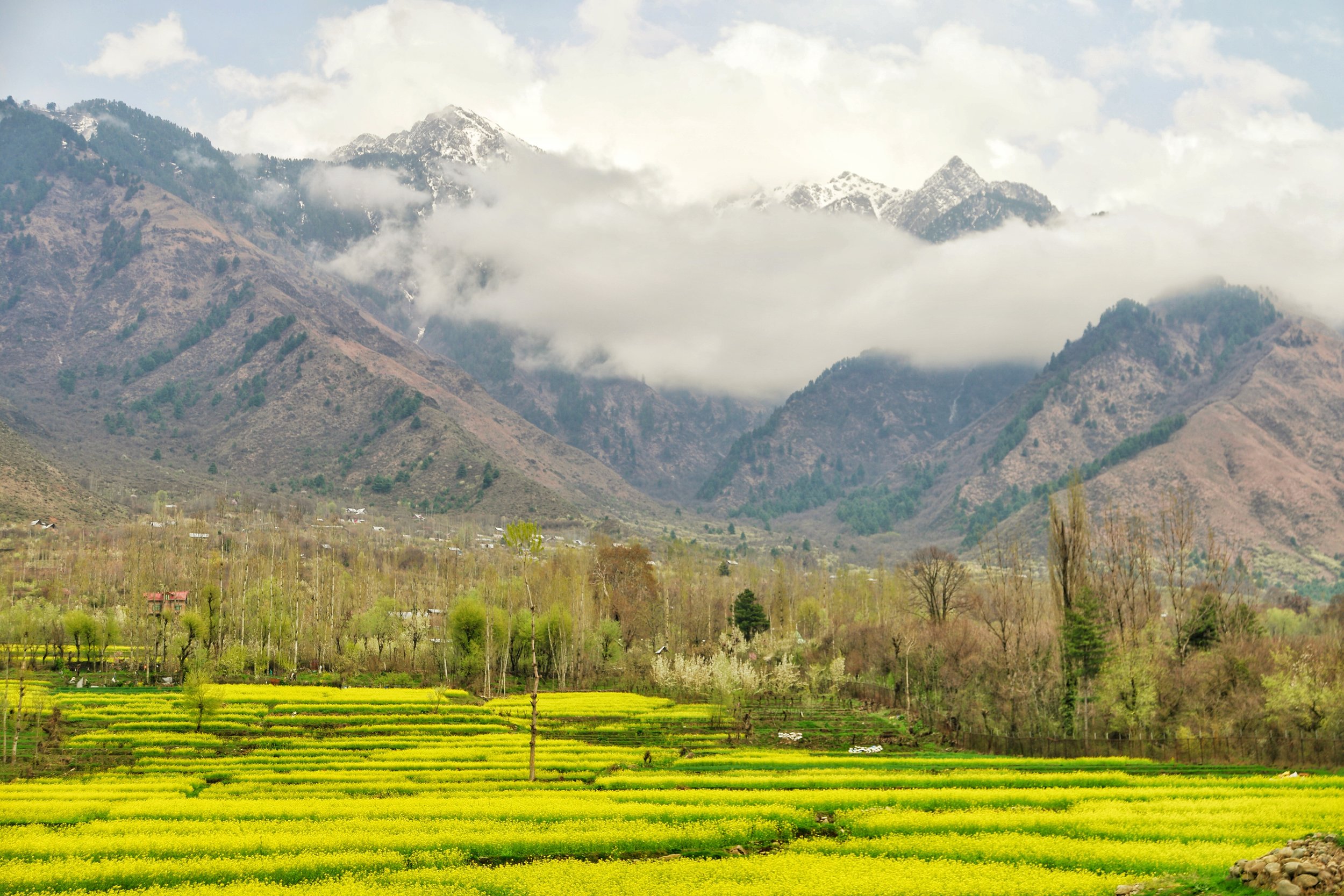
Mt Mahadev the highest Peak of the Zabarwan Mountains overlooks the Dachigam National Park
Mt. Mahadev as seen from outside the Dachigam National Park in Kashmir. Standing at almost 4000 m the Mahadev is the tallest peak of the Zabarwan Mountains. The Mountain provides a stunning backdrop to the lower areas of the Park.
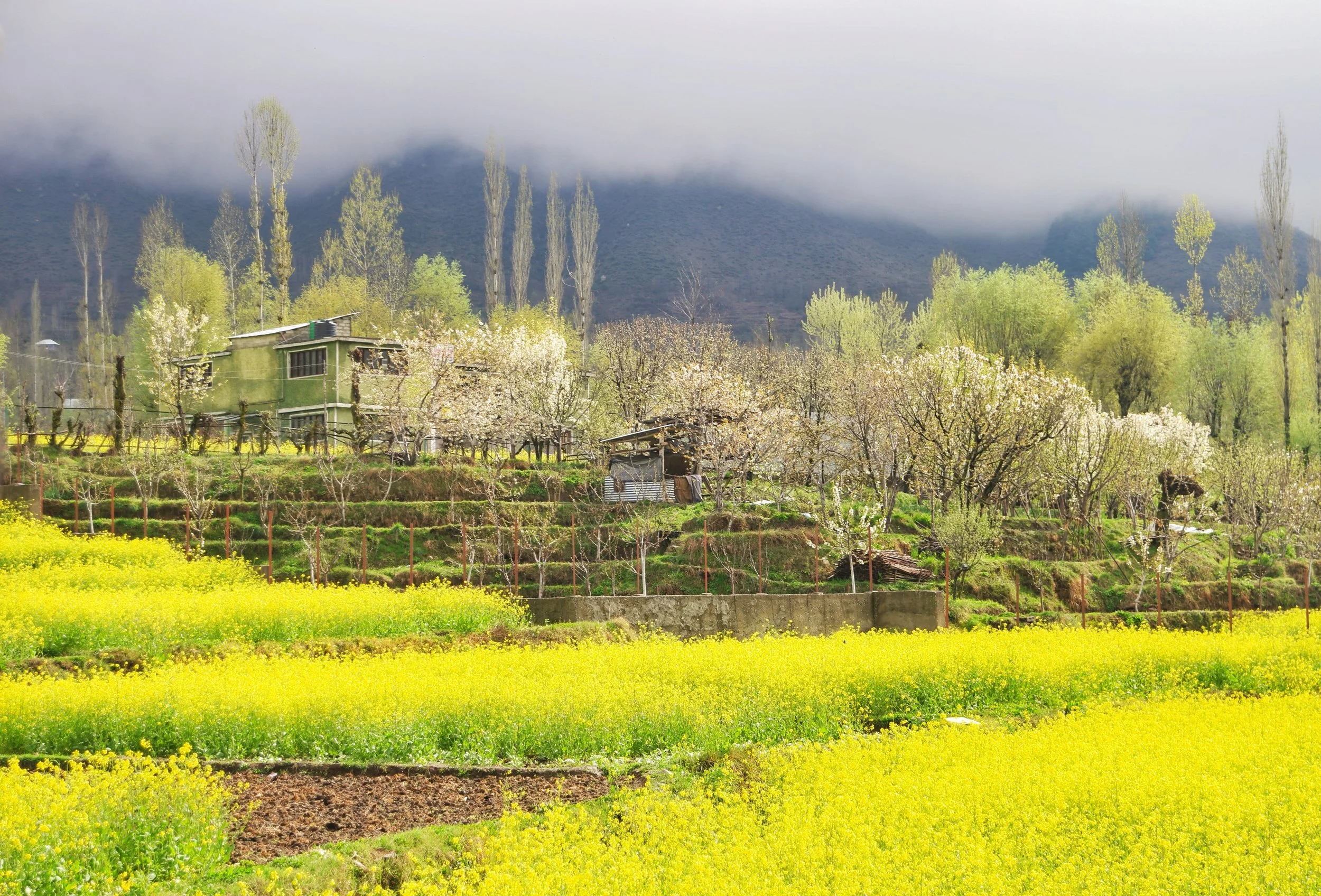
Mustard Fields outside the Dachigam National Park
The Mustard fields and the blossoming trees and of course the cloud play on the mountains in the background. On the outskirts of Srinagar on the way to the Dachigam National Park.

The water from the Dagwan River being diverted to the Srband Lake which supplies drinking water to Srinagar City.jpeg
This little piece of engineering diverts some of the water from the Dagwan Nallah / River into the Sarband Lake, that traditionally was used to supply drinking water to Srinagar city. This system was set up way back in 1906. And for many years the water was just supplied raw so pristine was the water.
The Dagwan Nallah originates from the high altitude Marsar Lake which relies on the snow melt of the Peaks of the Kolahoi group at the base of which it lies. The Kolahoi itself the highest peak of the Valley. The Marsar Lake itself lies in the Upper part of the Dachigam National Park and the Dagwan flows down through it, in an area devoid of all human inhabitation, through the magical forests of Dachigam until it reaches this point from where a part of its water gets diverted to the Sarband.
The Dagwan itself finally gets amalgamated into the Jehlum into the journey south. Coming back to the pic and this piece of engineering thanks to which at one time the whole of Srinagar used to enjoy the purest natural water coming down right from the laps of the Himalayas from snow melts since of them above 5000 m and then further enriched by the primeval forest around it.
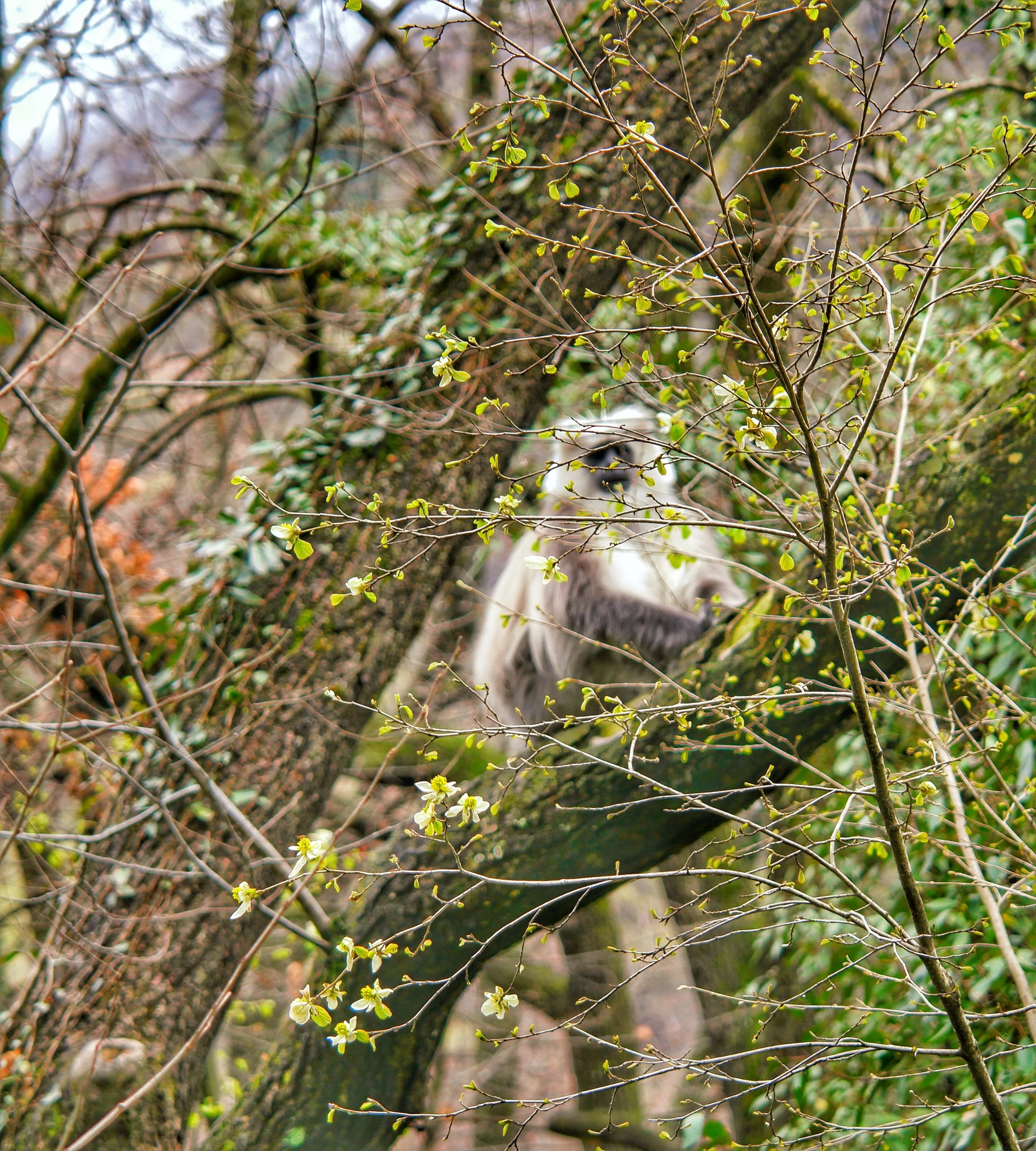
Himalayan Langur at the Dachigam National Park
A Semnopithecus Ajax (Kashmir Gray Langur/ Himalayan Langur) looking at the idiotic Homo Sapien who disturbed his Siesta.
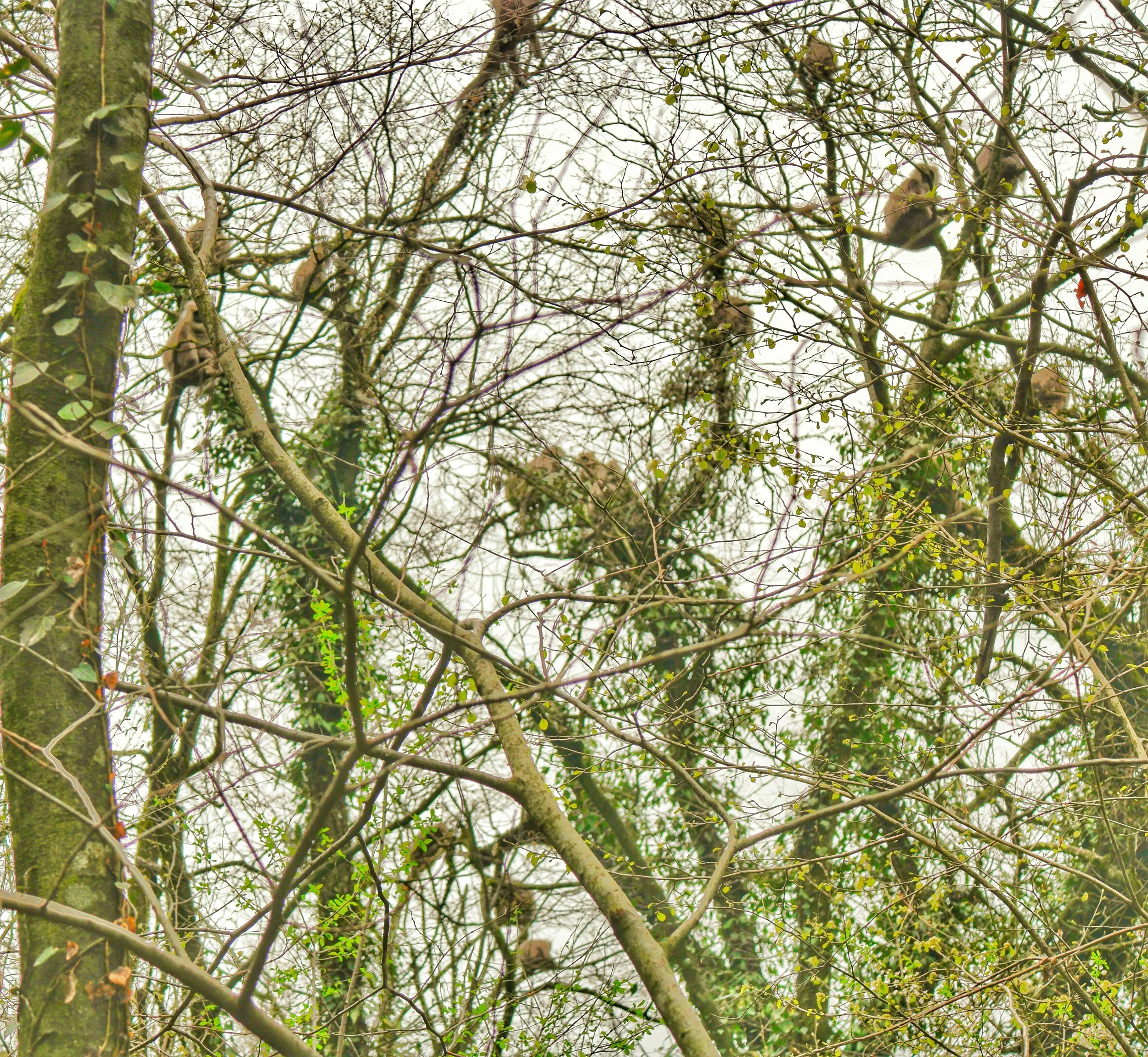
A Group of Himalayan Langurs at the Dachigam National Park
A Group of Kashmiri Gray Langur / Himalayan Langurs at the Dachigam National Park.
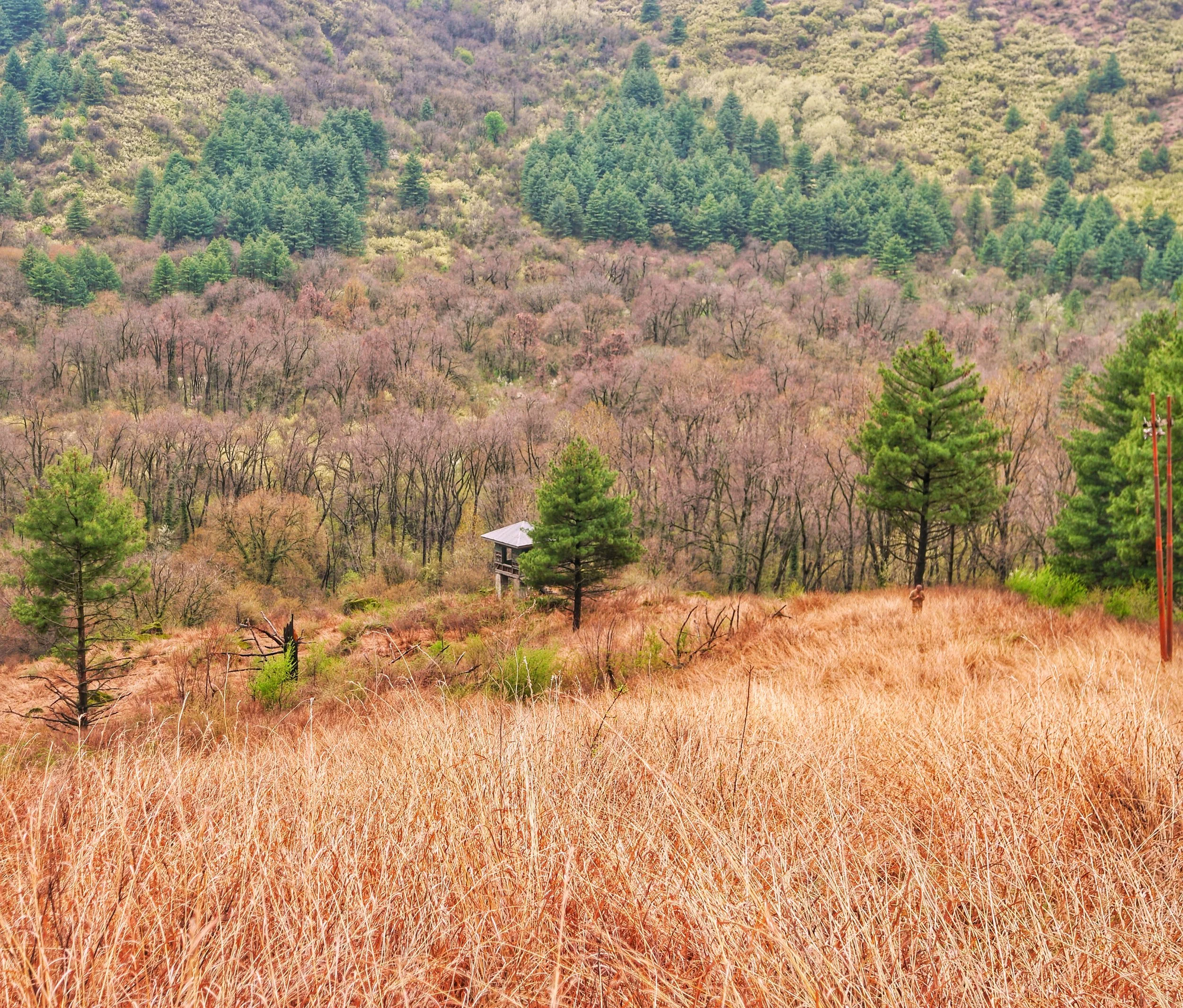
The Rangers lookout hut at the Dachigam National Park
A Ranger's observation hut deep inside the Dachigam National Park. You can see a mix of mountain grasslands, Pine Fir forests and a primeval Oak forest along the Dagwan River.
This point is favourite one for spotting the rare Kashmiri Hanguls and usually sightings are quite common, except when I go there :). The Oak forests below are a favourite hang out for the Himalayan Black Bears and in September October you can see hordes of them trying to get some kind of fruit off the Oak trees. But again I couldn't find any.
The primary reason for not spotting the animals I wanted to see were two fold. First was that I was supposed to reach the Park at 7 but I got there well after 9. Secondly it was a cloudy rainy day so most animals were sheltering themselves from the rain. Thirdly when it rains the Hangul don't need to come down to the Dagwan for having a drink. They find little pools of rain water right in the pastures which they can drink.
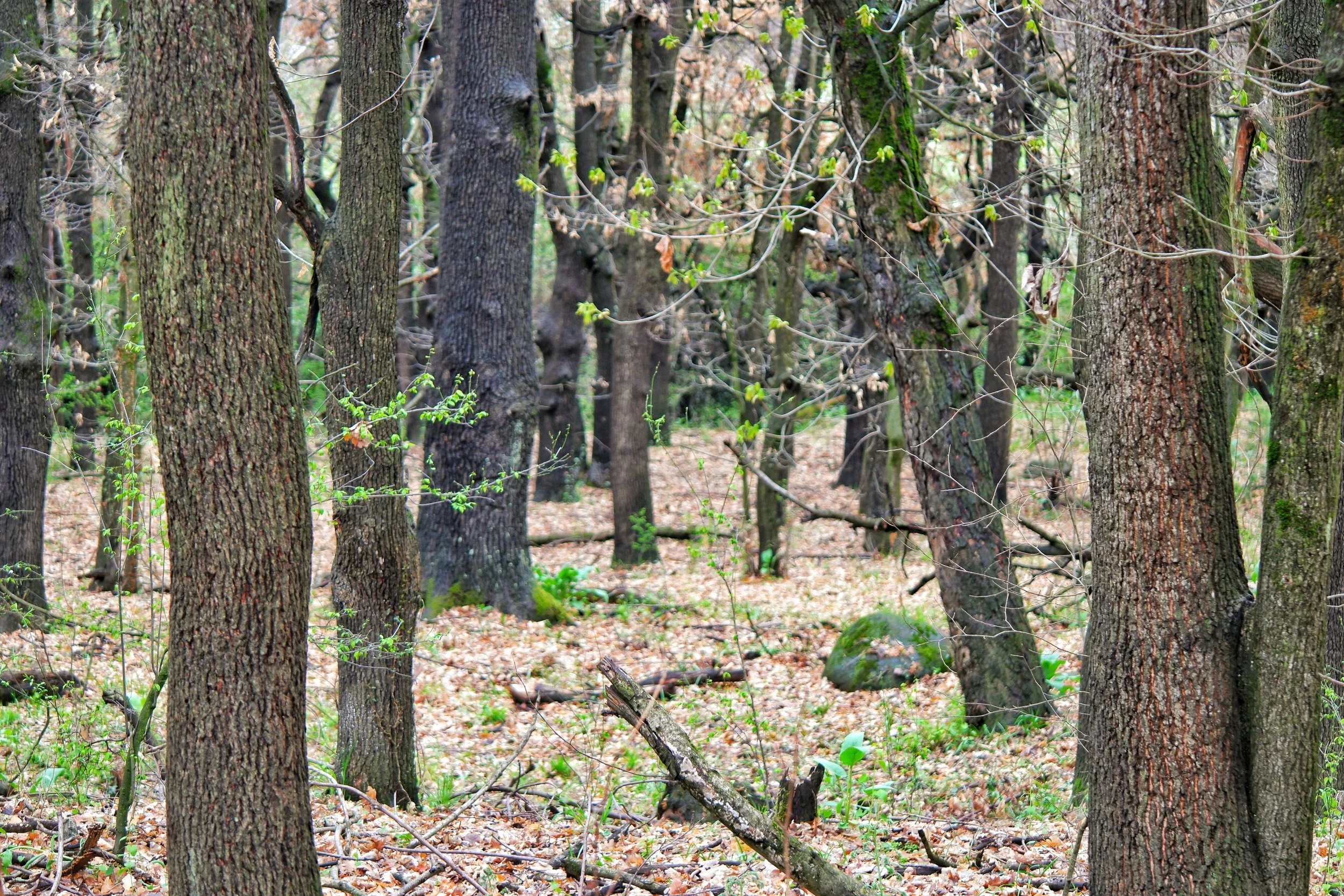
Oak Forests at the Dachigam National Park
The dense Oak Forests are a favorite haunt of the Himalayan Black Bear in the Autumn as they come around looking for all kinds Nuts and Berries to fatten up before Winter arrives and they retire into hibernation.
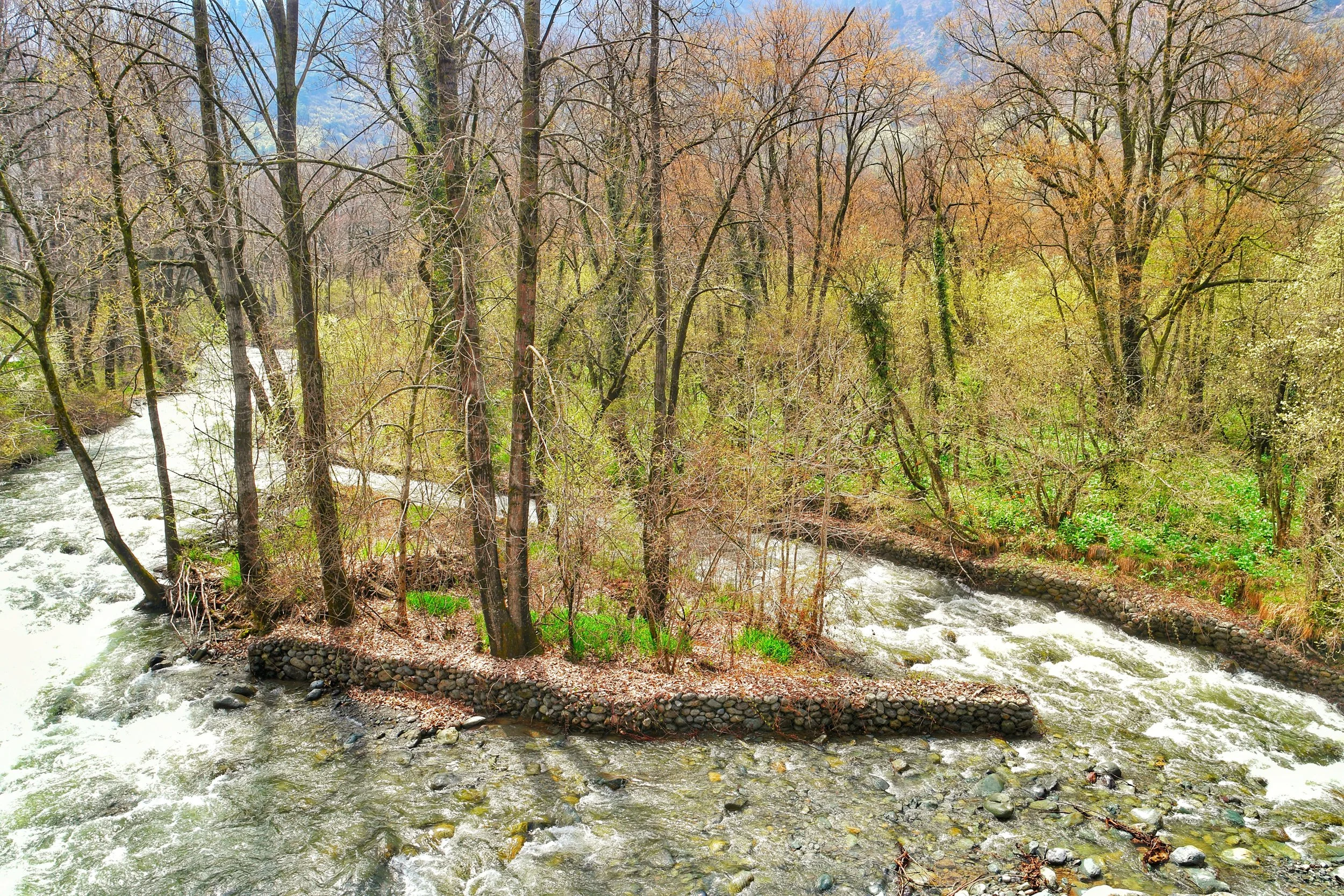
A small Island in the Dagwan River
A beautiful island in the middle of the Dagwan Nallah that runs through the pristine Dachigam National Park on the outskirts of Srinagar.
The altitude varies from 5500 ft to 14000 ft and the Park is spread over 140 sq kms. It is the last stronghold of the Kashmiri Hangul and in spite of hiking around the Park for almost 15 kms we were unable to spot any. The Park is also home to Leopards, Himalayan Black and Brown Bear and even possibly Snow Leopards in the higher reaches.
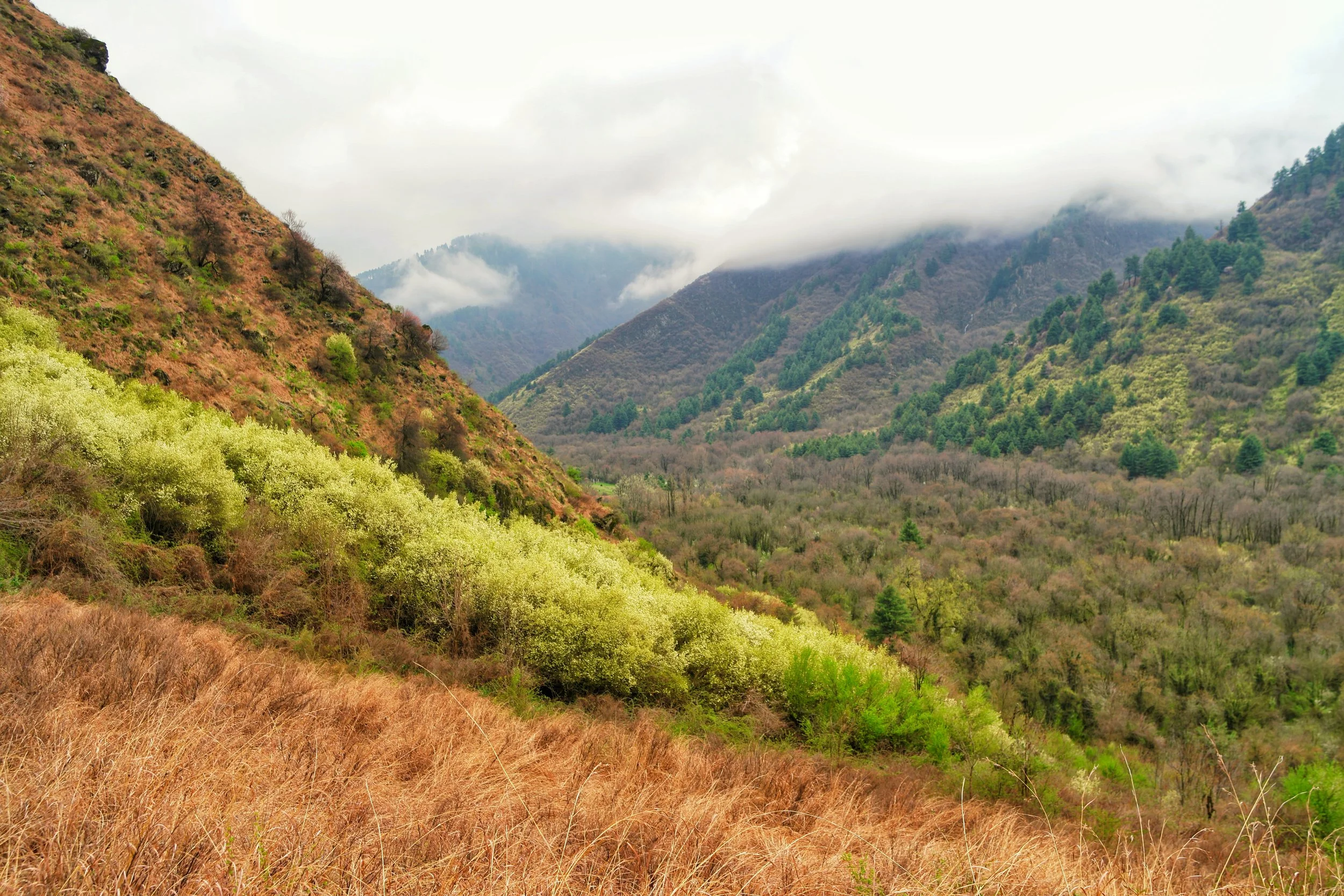
Mixed Forests of the Dachigam National Park
The pristine and mesmerizing forests of the Dachigam National Park. Thankfully they're are still places in the mountains which still maintain primeval forests like they used to exist.
The Park is named so as 10 villages were moved from inside the present boundaries of the Park to establish this as a Nature Reserve by the Maharaja. Hence the Dach or 10 and Gam or Village.

Another view of the mixed Forests of the Dachigam National Park
The Park also served as the rain catchment area for the City. The Dagwan river flowing through the Park originates from the Marsar Lake and supplies water to the Sarband Lake which used to supply all the drinking water to Srinagar.
Entry to the Park is restricted and permission is required from the Regional Wild Life Warden to get entry to the Park. We got into the Park on a rainy cold April Day. We were unlucky not to have any sighting of the Himalayan Black Bear or the Kashmiri Hangul but the 20 odd kms that we hiked in the Park were totally worth. It was like being back in time.
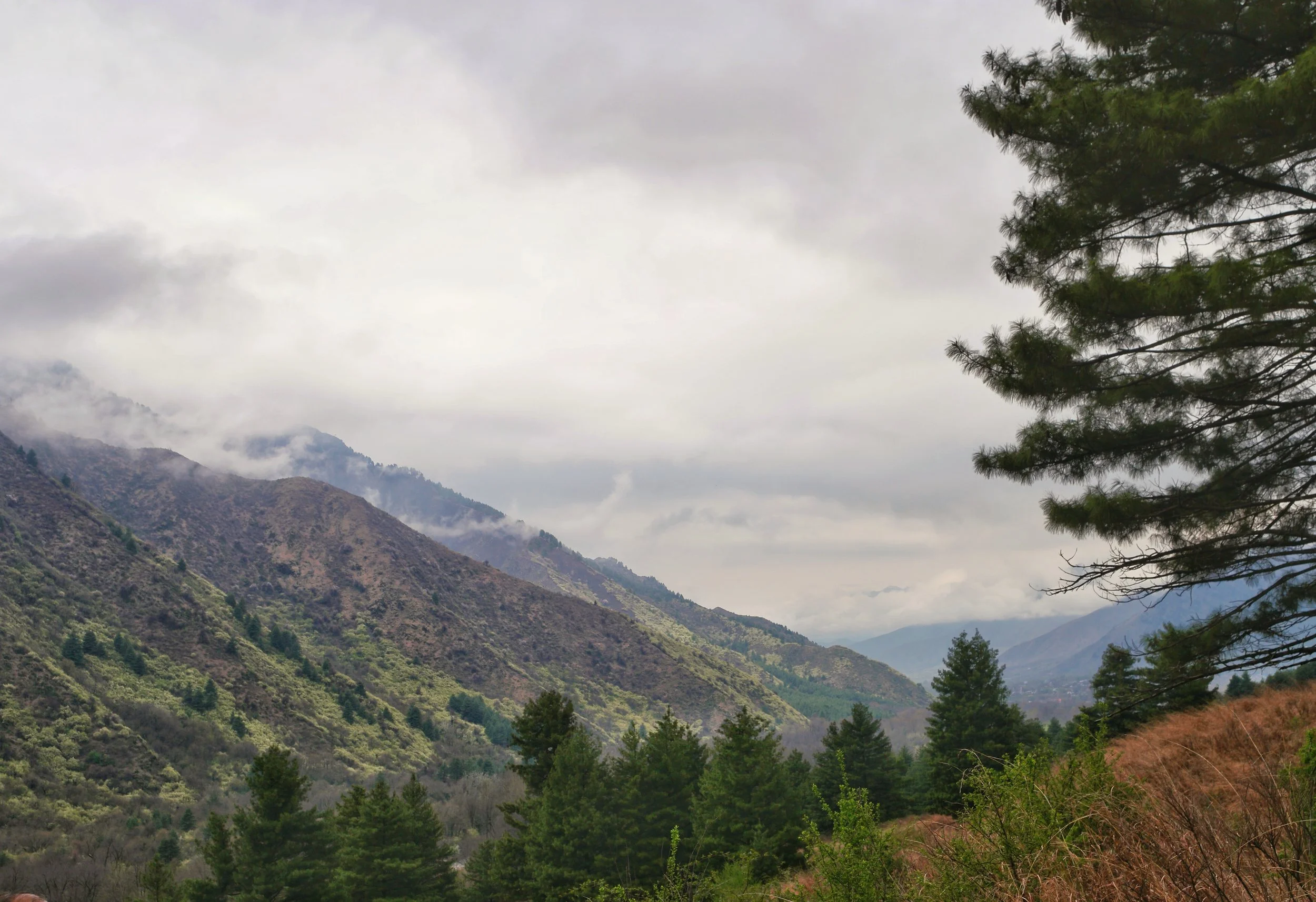
Clouds building up at the Dachigam National Park. It snowed the next day
Looking towards the City of Srinagar on whose edge Dachigam actually lies.

The Sarband Reservoir which lies next to the Dachigam National Park and the Harwan Gardens supplies drinking water to the city of Srinagar
This Reservoir was built in 1906 as the main water supply for the city of Srinagar by diverting the Dachigam Nallah. The Hill behind is a part of the Dachigam National Park. The Reservoir is currently going repairs and hence an ugly mound of mud and cement. In olden days it used to be like a beautiful Lake with the imposing Mahadev in the background. Locally the reservoir used to be called the Sarband Lake as well. Truly a gem when in its glory.
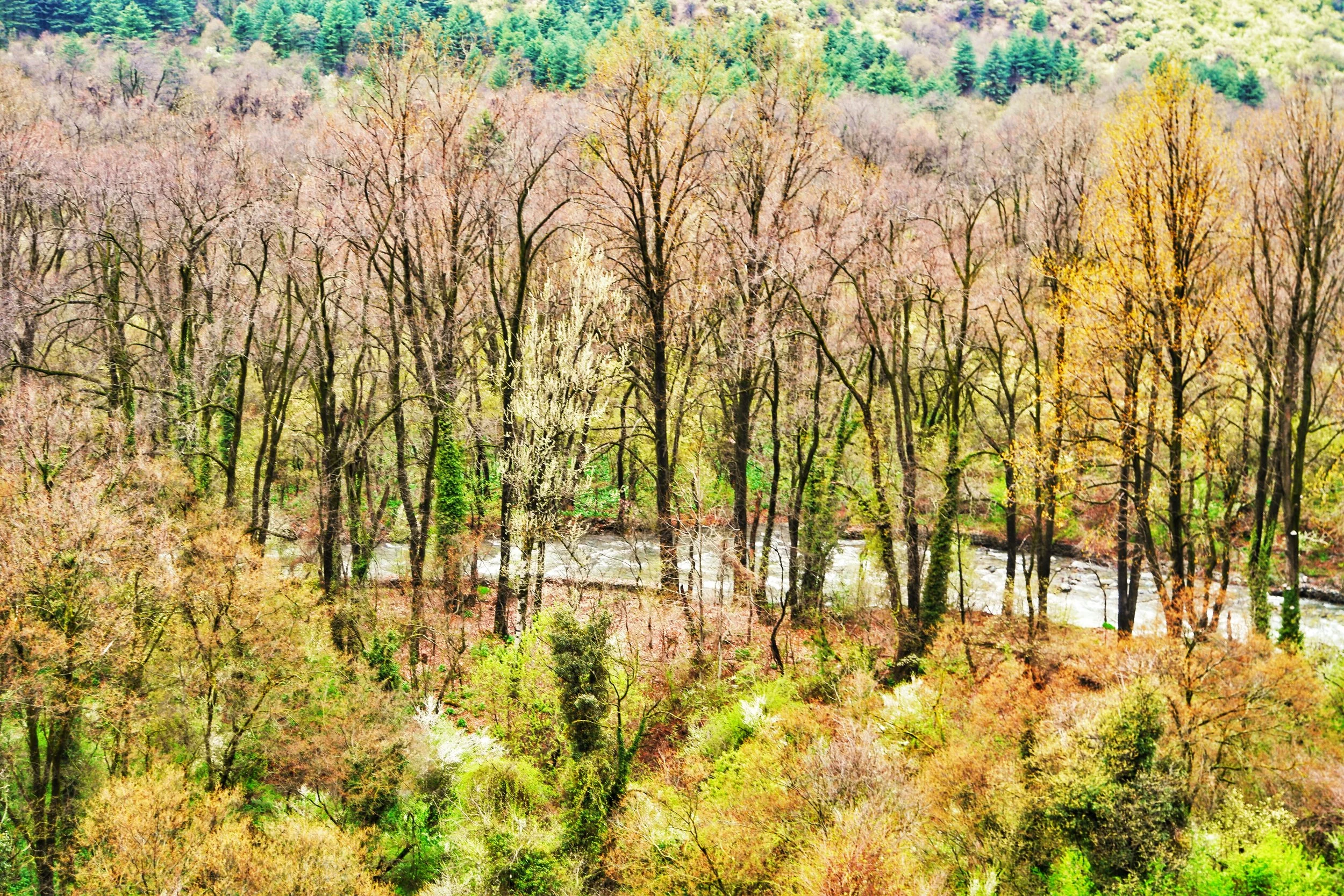
The Dagwan River flowing through the Dachigam National Park

Mt Mahadev the highest Peak of the Zabarwan Mountains as seen from the Dachigam National Park
Tibetan Arts and Antiquities at the Shanghai Museum
The Shanghai Museum holds a collection of Tibetan Antiquities and Arts from down the ages in its Minority Ethnic Groups section. Here is a glimpse at some of the Tibetan pieces on display at the Museum.

Tibetan Arts and Antiquities at the Shanghai Museum
The Shanghai Museum holds a collection of Tibetan Antiquities and Arts from down the ages in its Minority Ethnic Groups section. Here is a glimpse at some of the Tibetan pieces on display at the Museum.
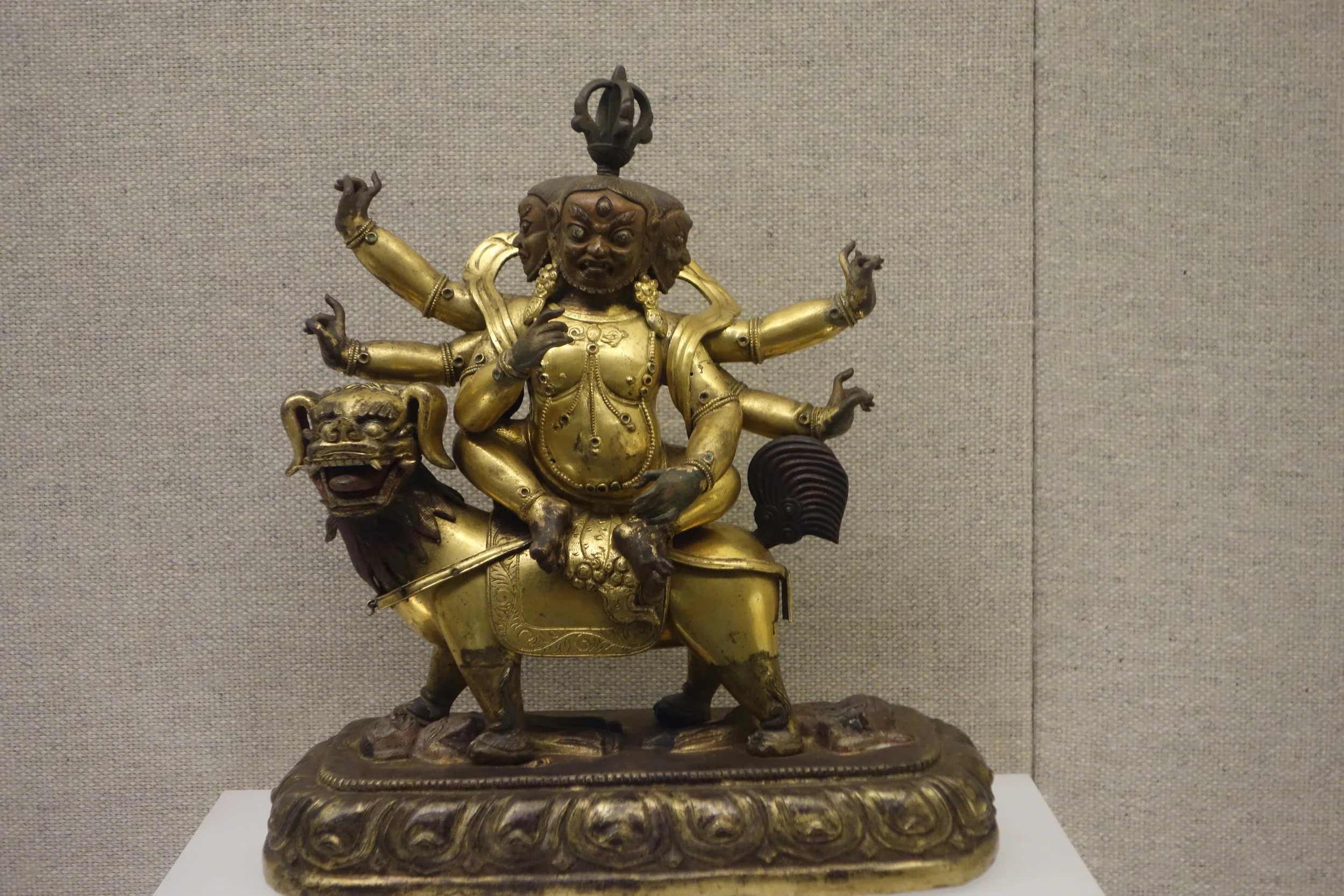
Gilt Copper Figurine of a Wrathful Manjusri

Gilt Brass figurine of White Tara
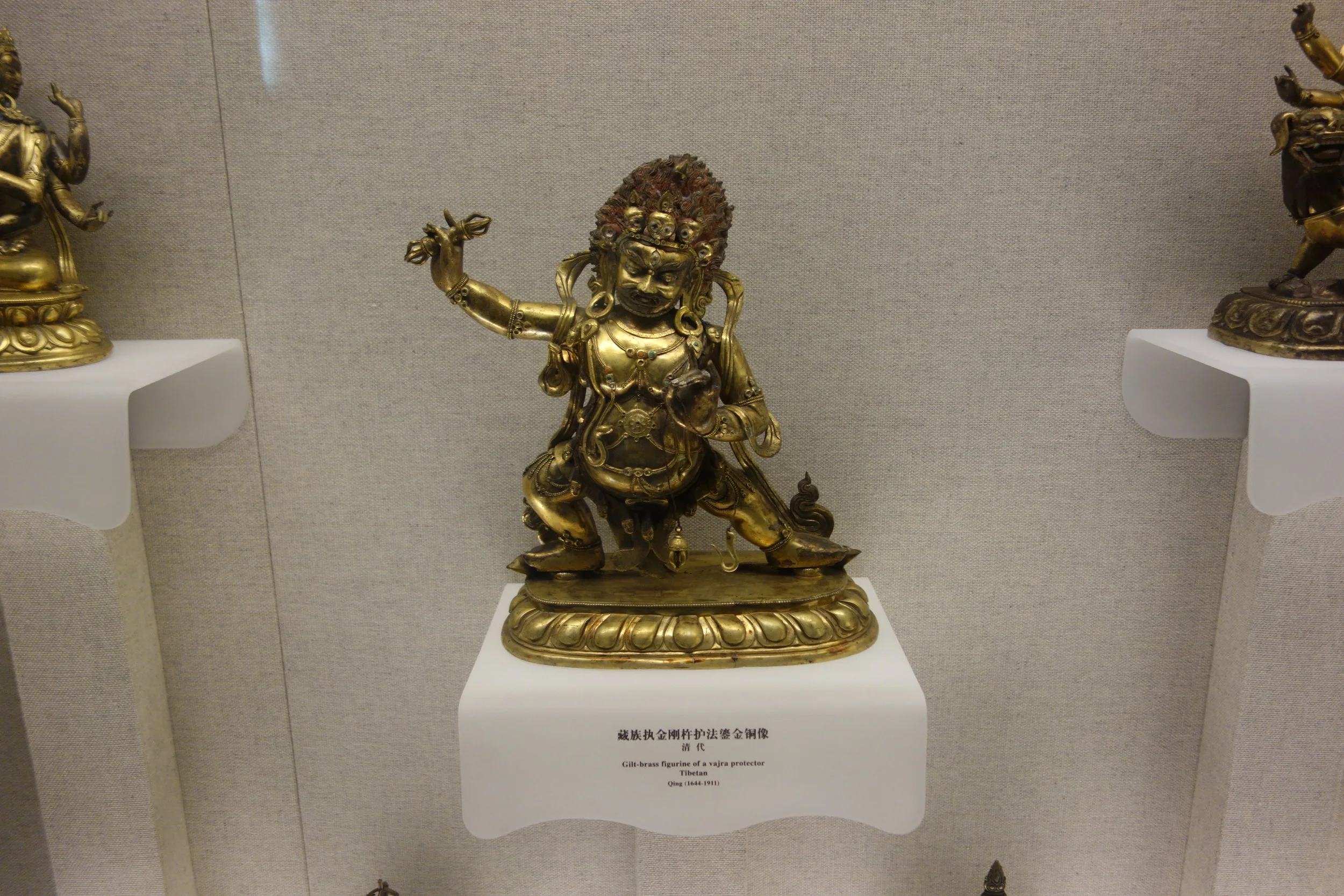
Gilt Bronze Figurine of a Vajra Protector
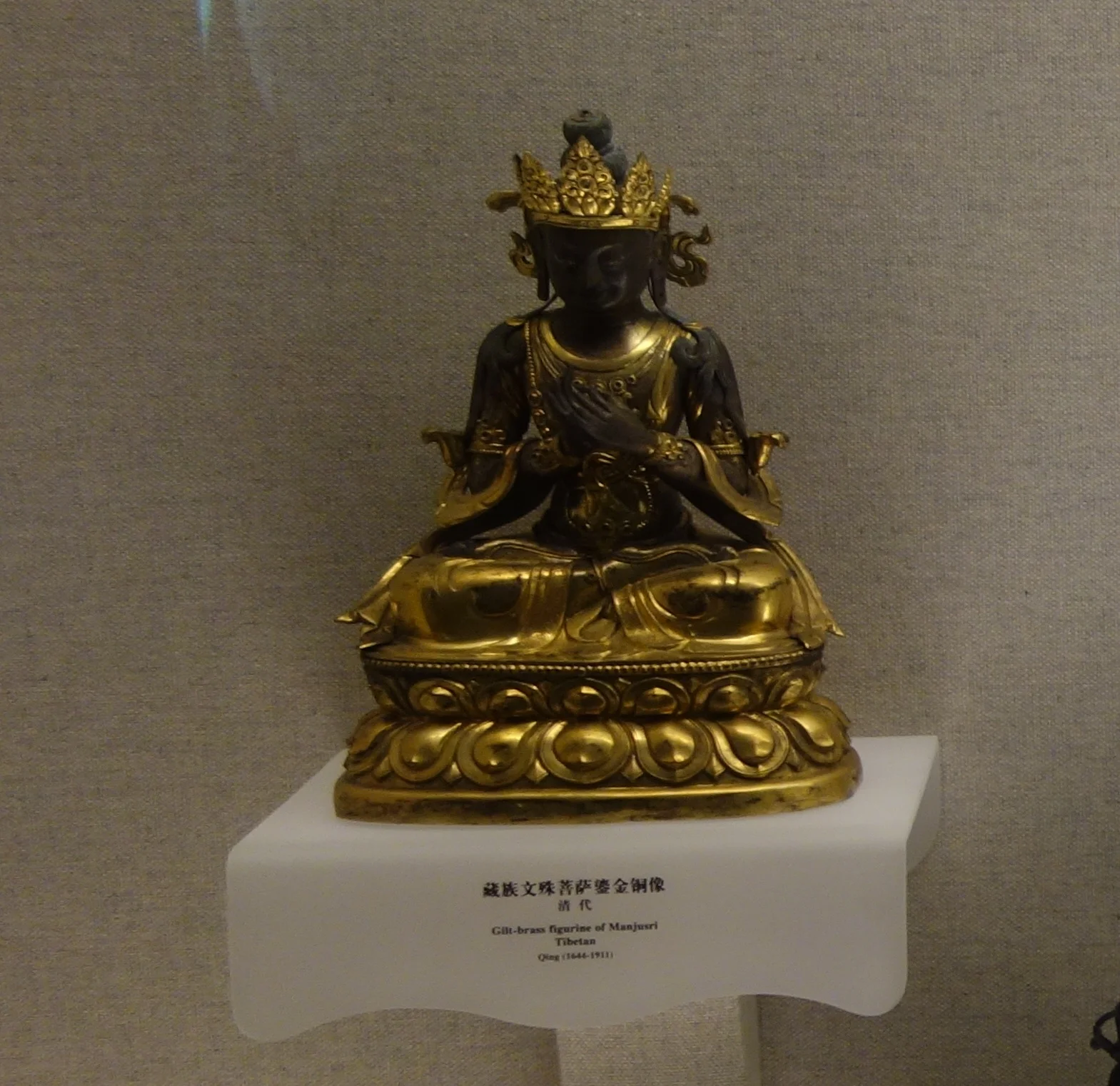
Gilt Brass Figurine of Manjusri
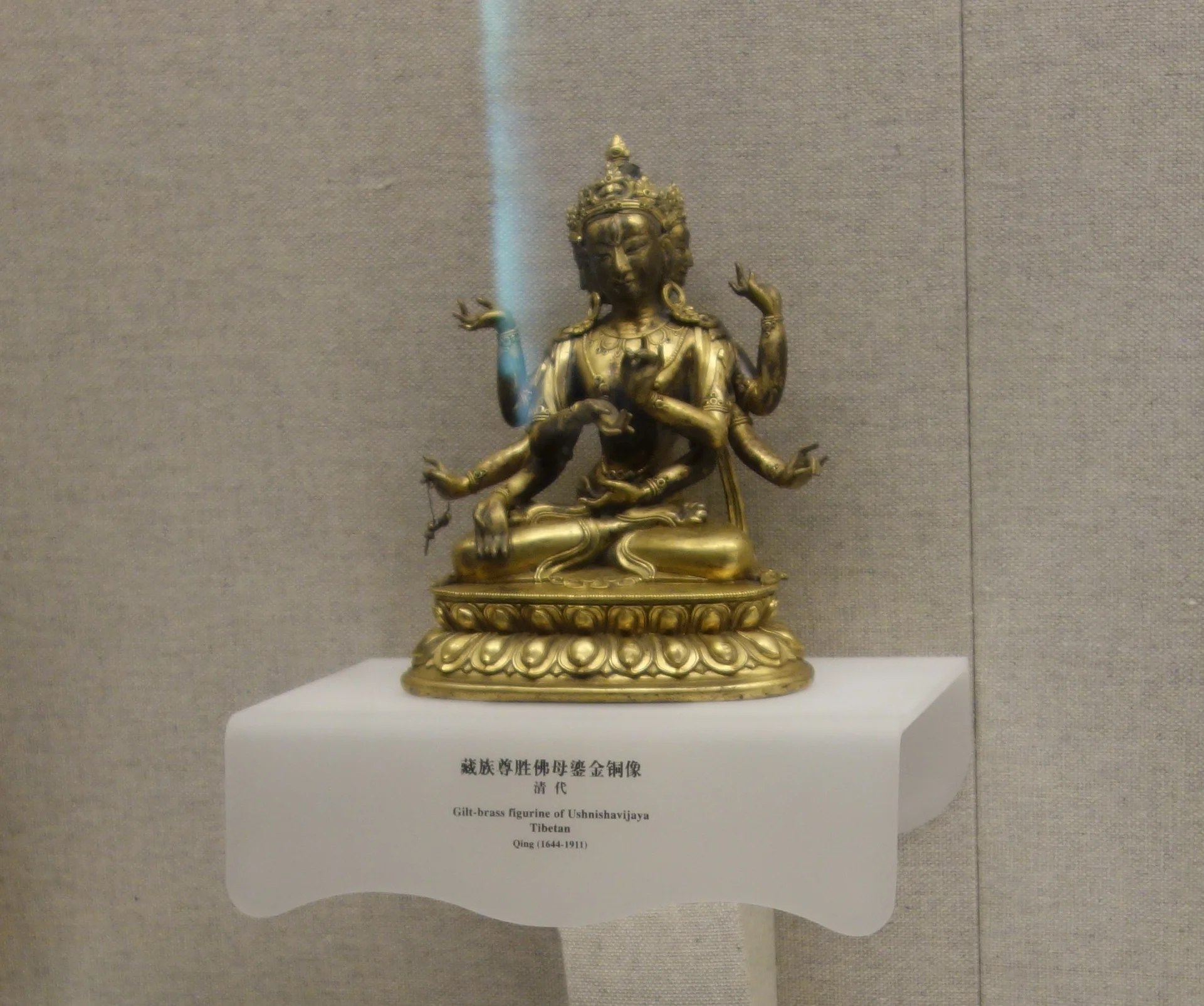
Gilt Brass figurine of Ushnishavijaya
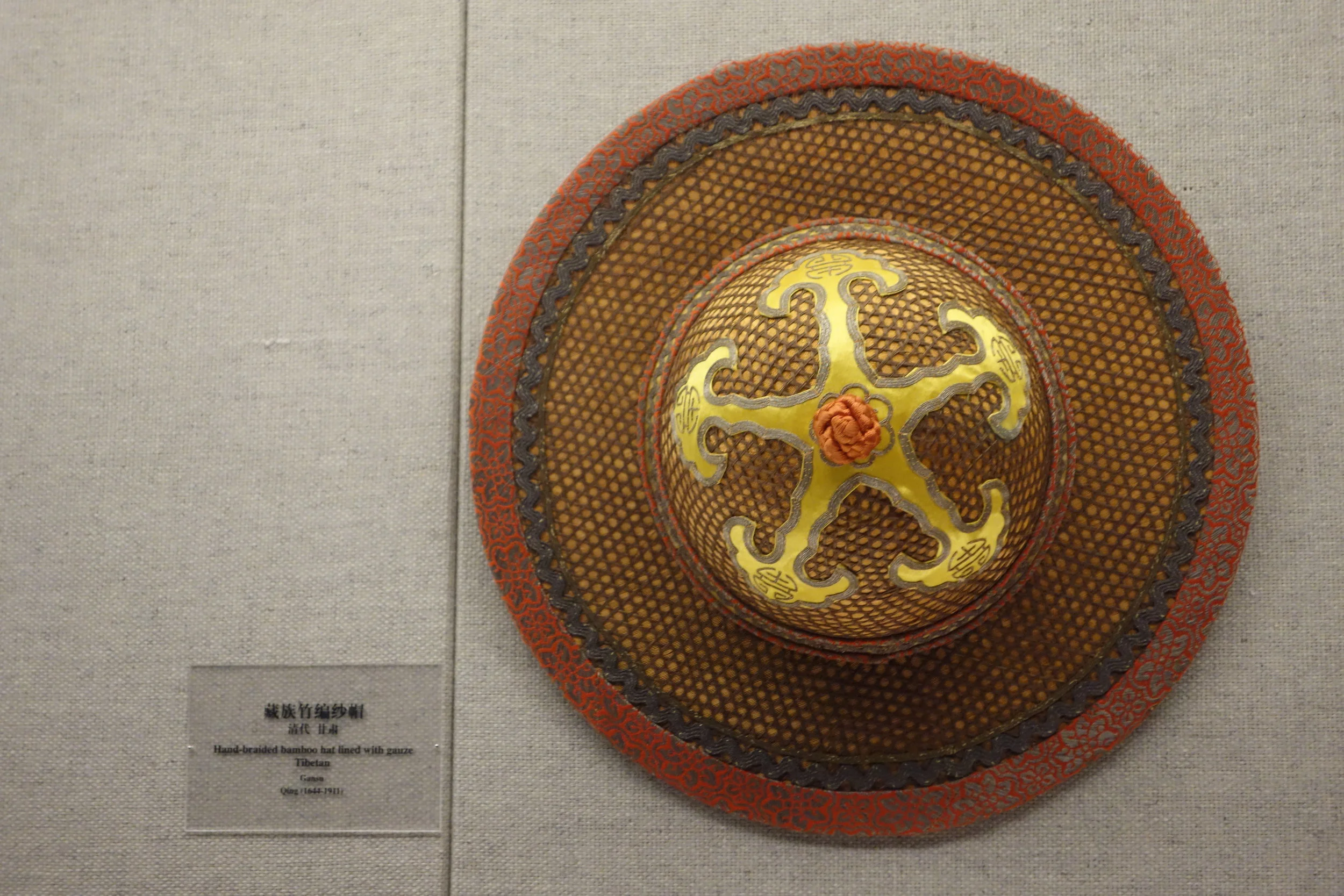
Hand Braided Bamboo Hat lined with guaze - Gansu
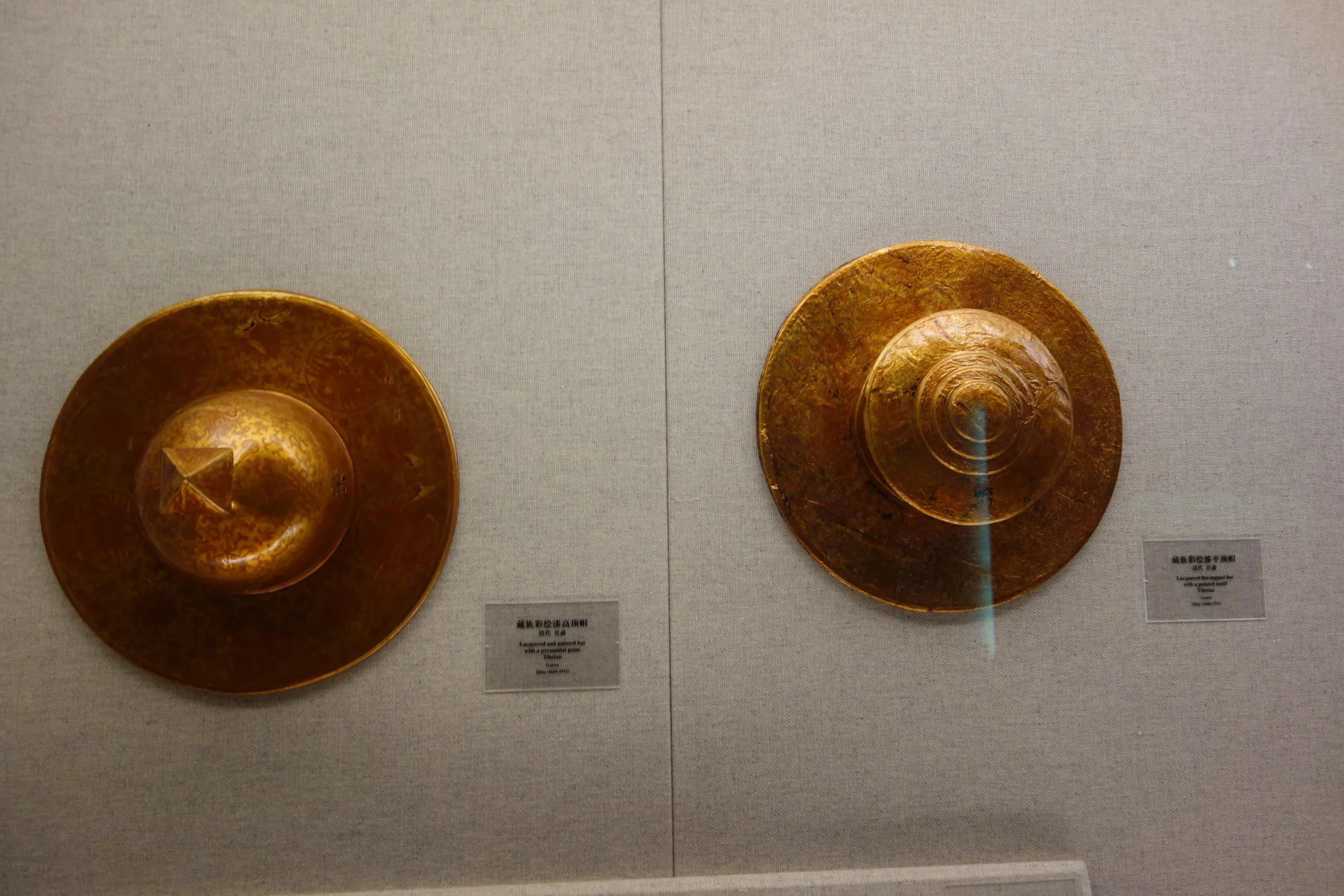
Left : Lacquered Hat with Pyramidal Point Right : Lacquered Hat with Flat Point
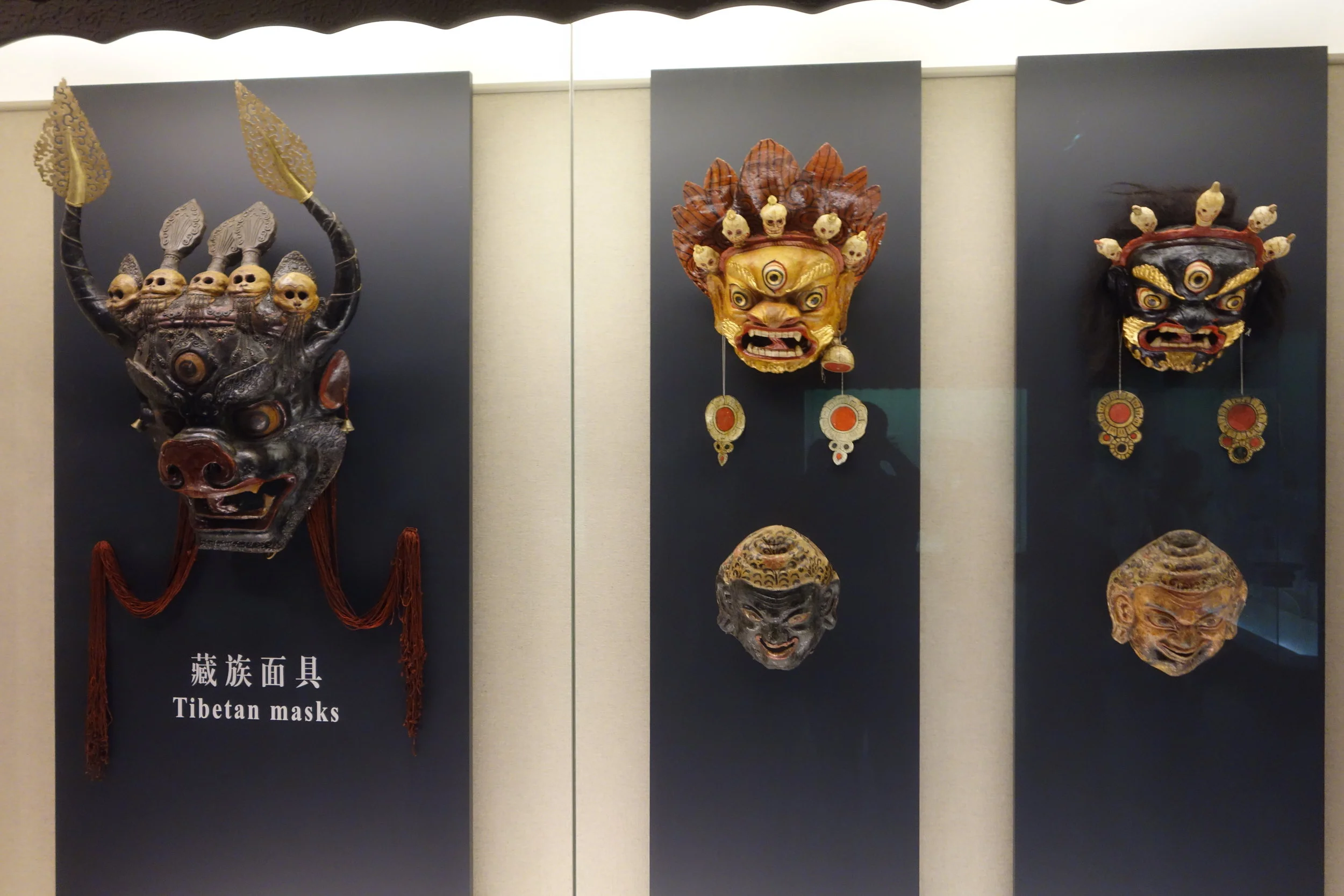
Tibetan Ceremonial Masks
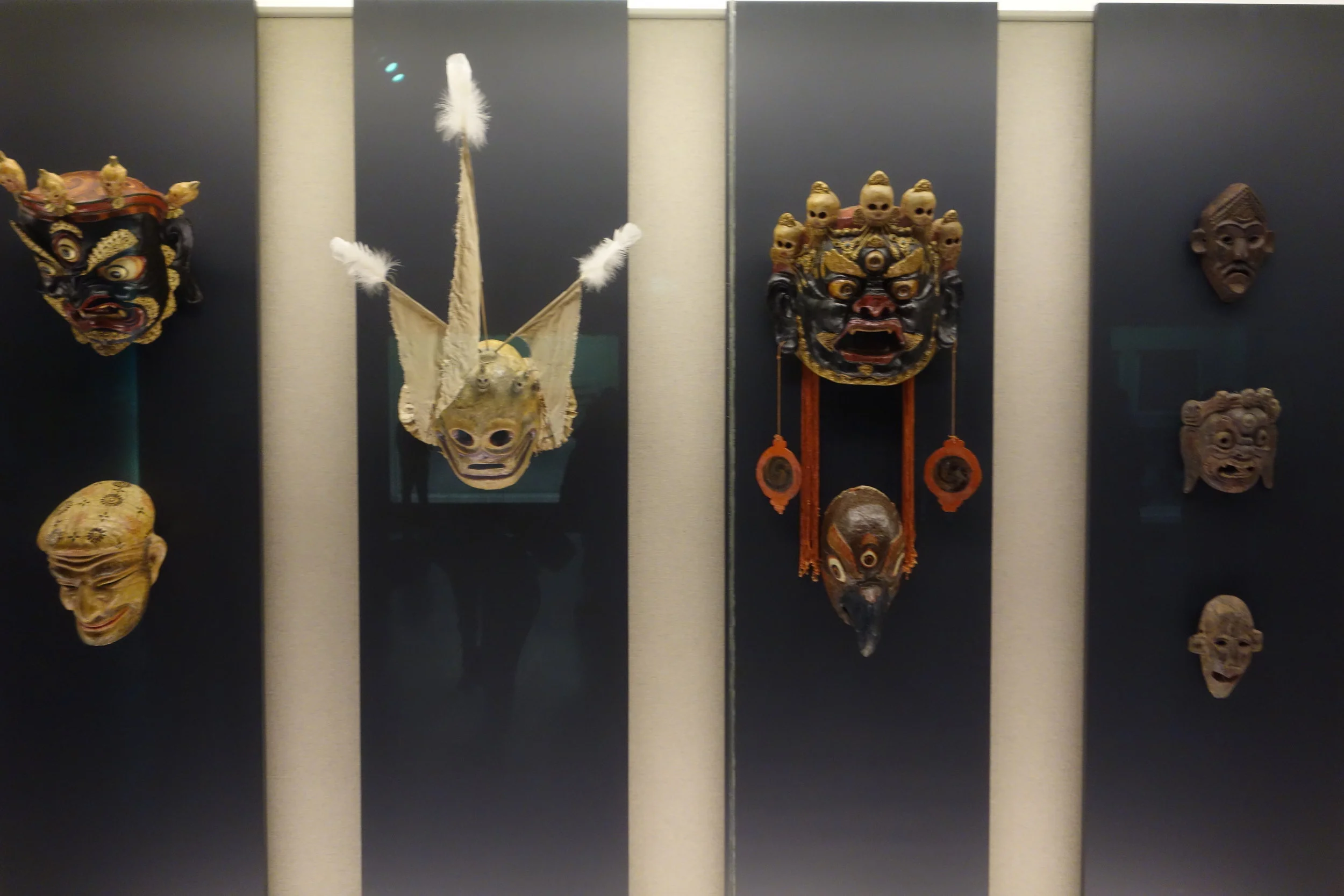
Tibetan Ceremonial Masks

Kapala Bowl with a Copper Cover
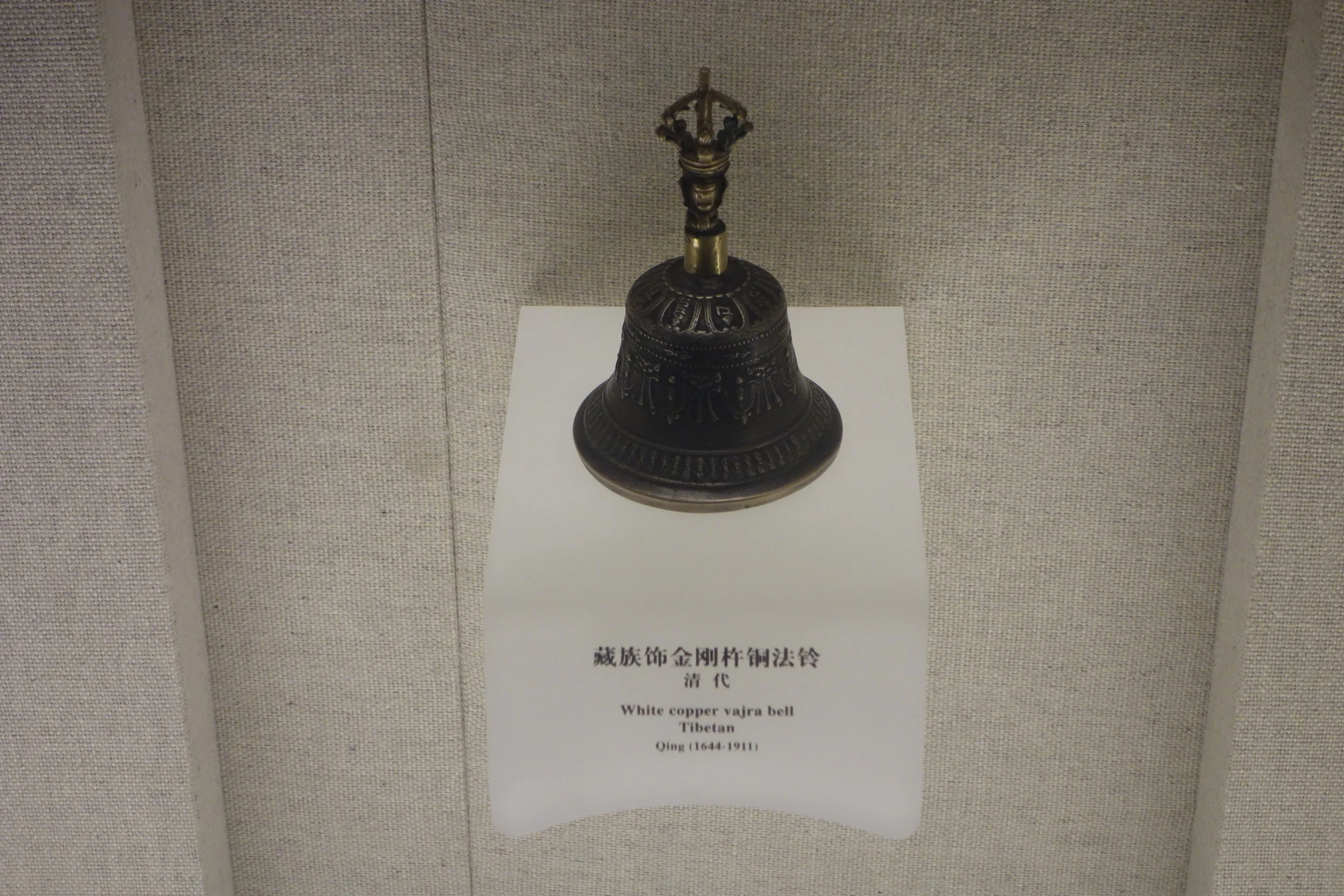
White Copper Vajra Bell
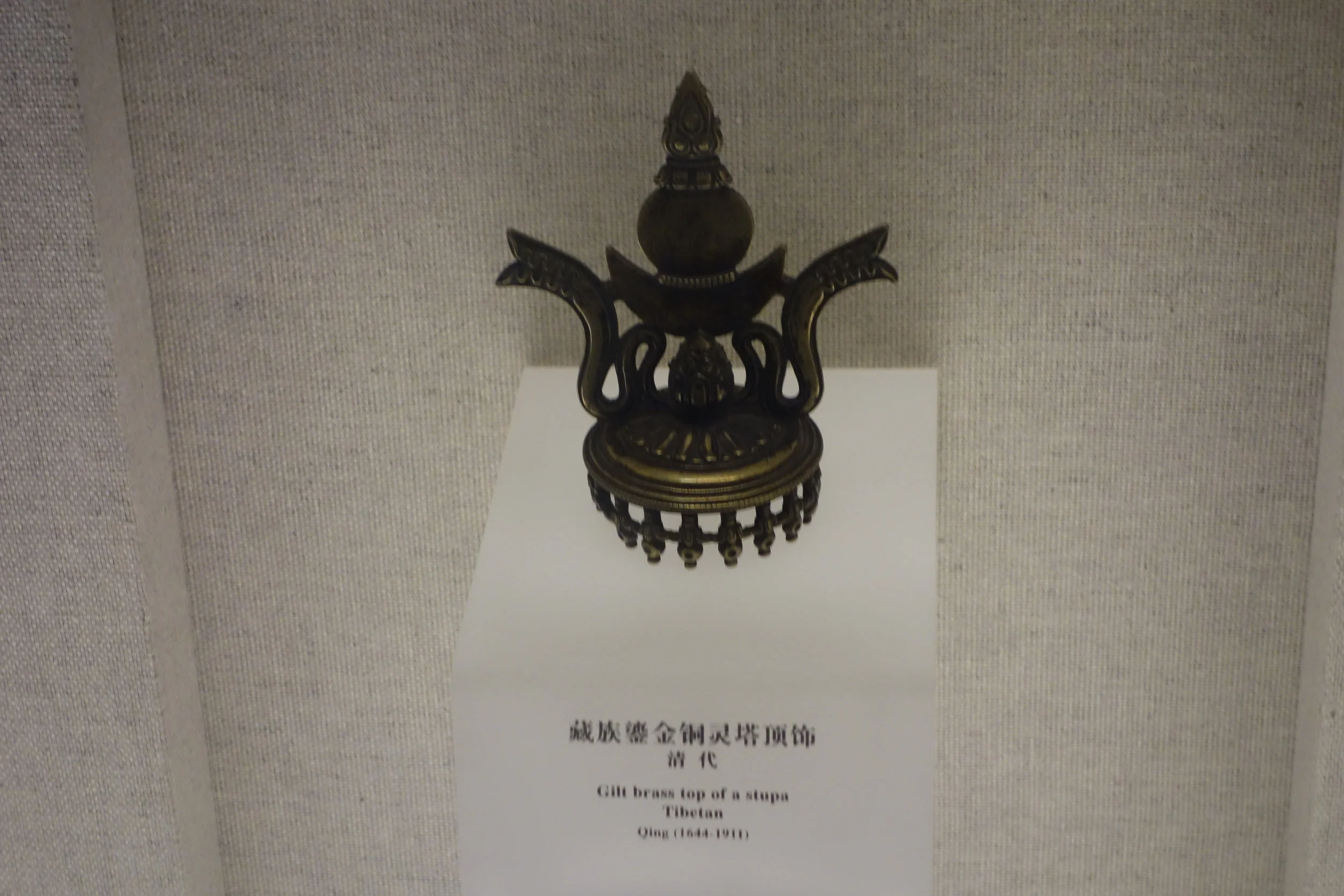
Gilt Brass Top of a Stupa
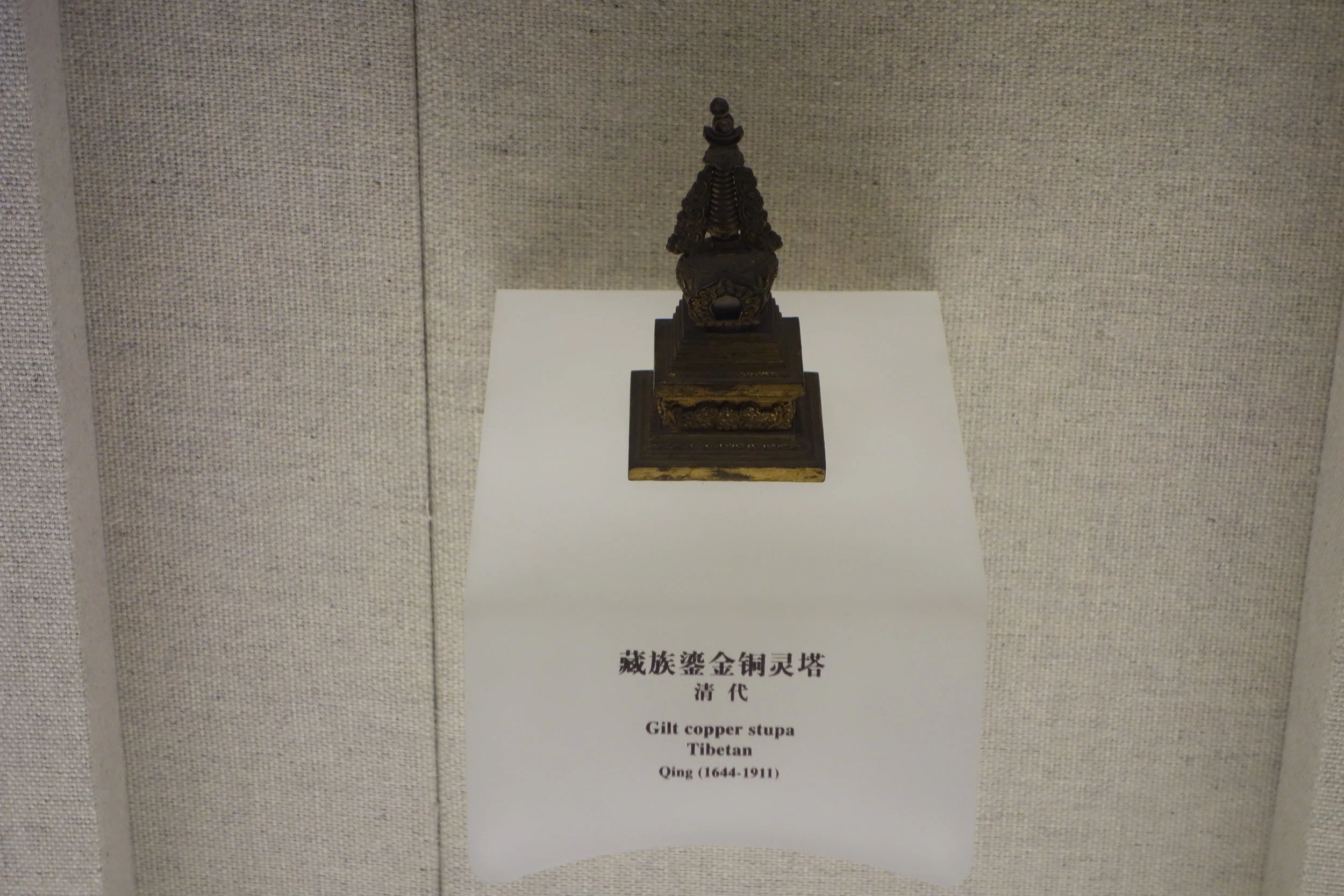
Gilt Copper Stupa

Left : Silver Prayer Wheel with a hammered Motif Right : Brass Vajra Axe
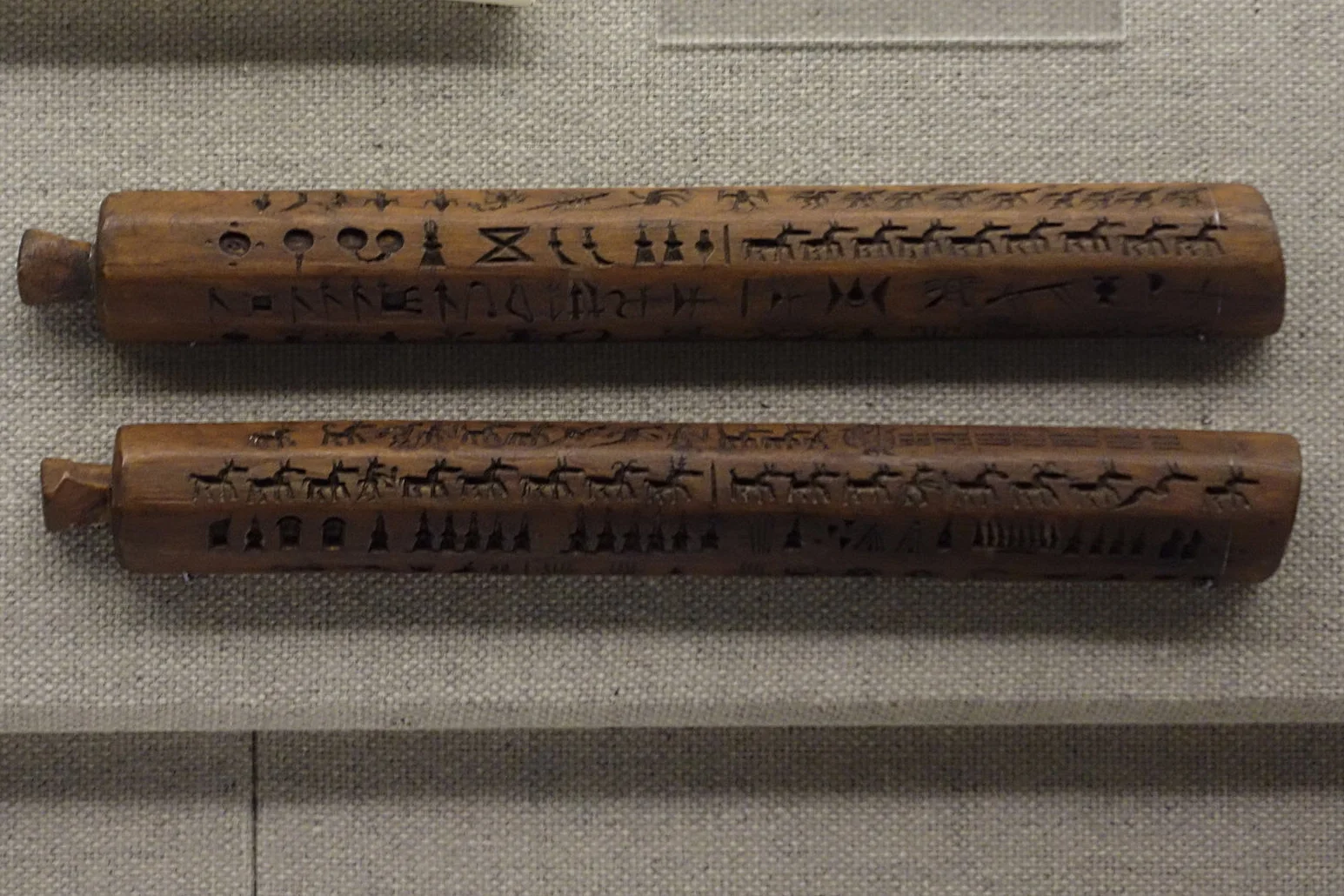
Carved Wooden Sticks used for Printing Tibetan Qinghai
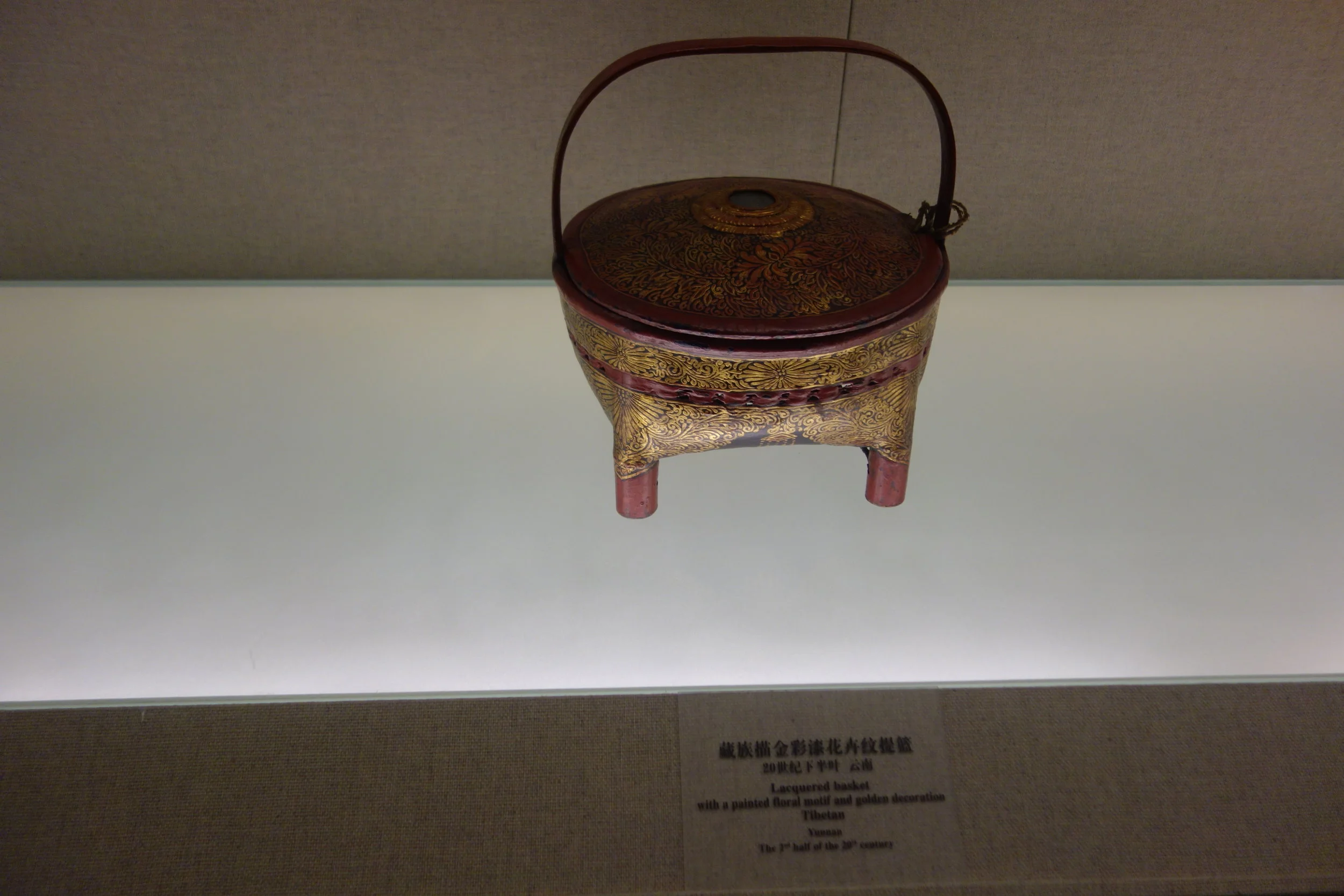
Lacquered Basket with a Painted Floral Motif and Golden Decoration.
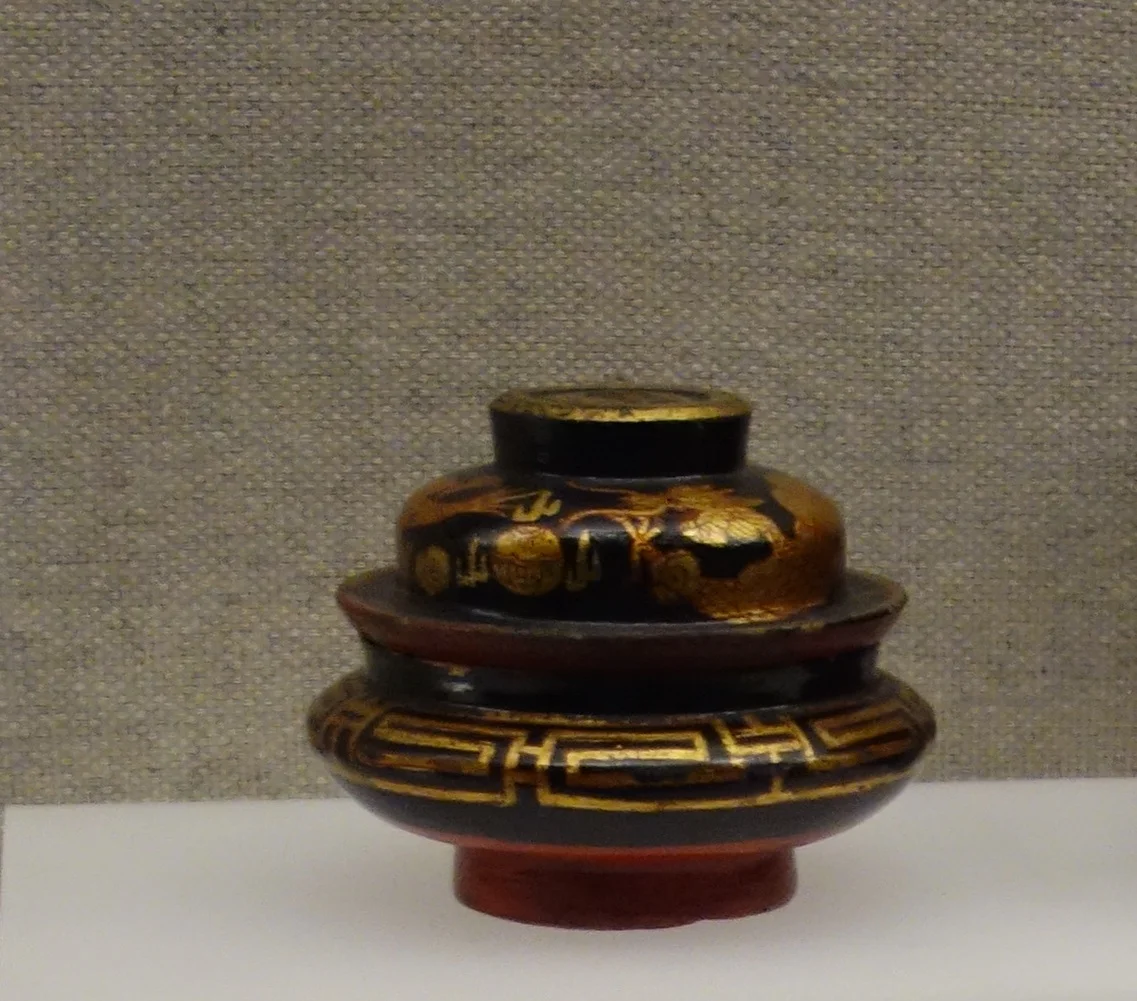
Lacquered Bowl and Lid with a Gold Motif of Paired Dragons
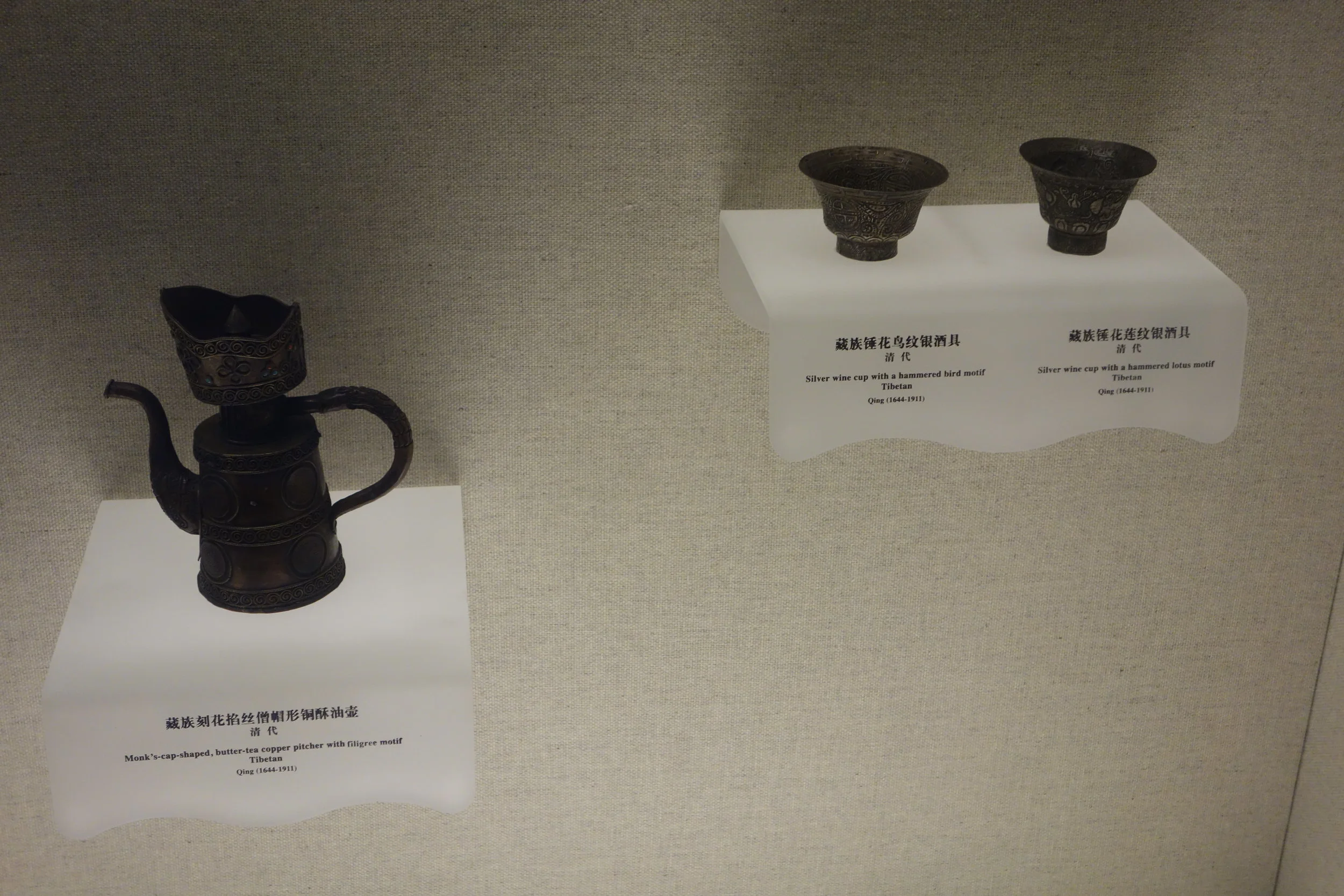
Left : Monk’s Cup Shaped Butter Tea Copper Pitcher with filigree Motif. Mid Right : Silver Wine Cup with a hammered Bird Motif. Right : Silver Wine Cup with a Hammered Lotus Motif
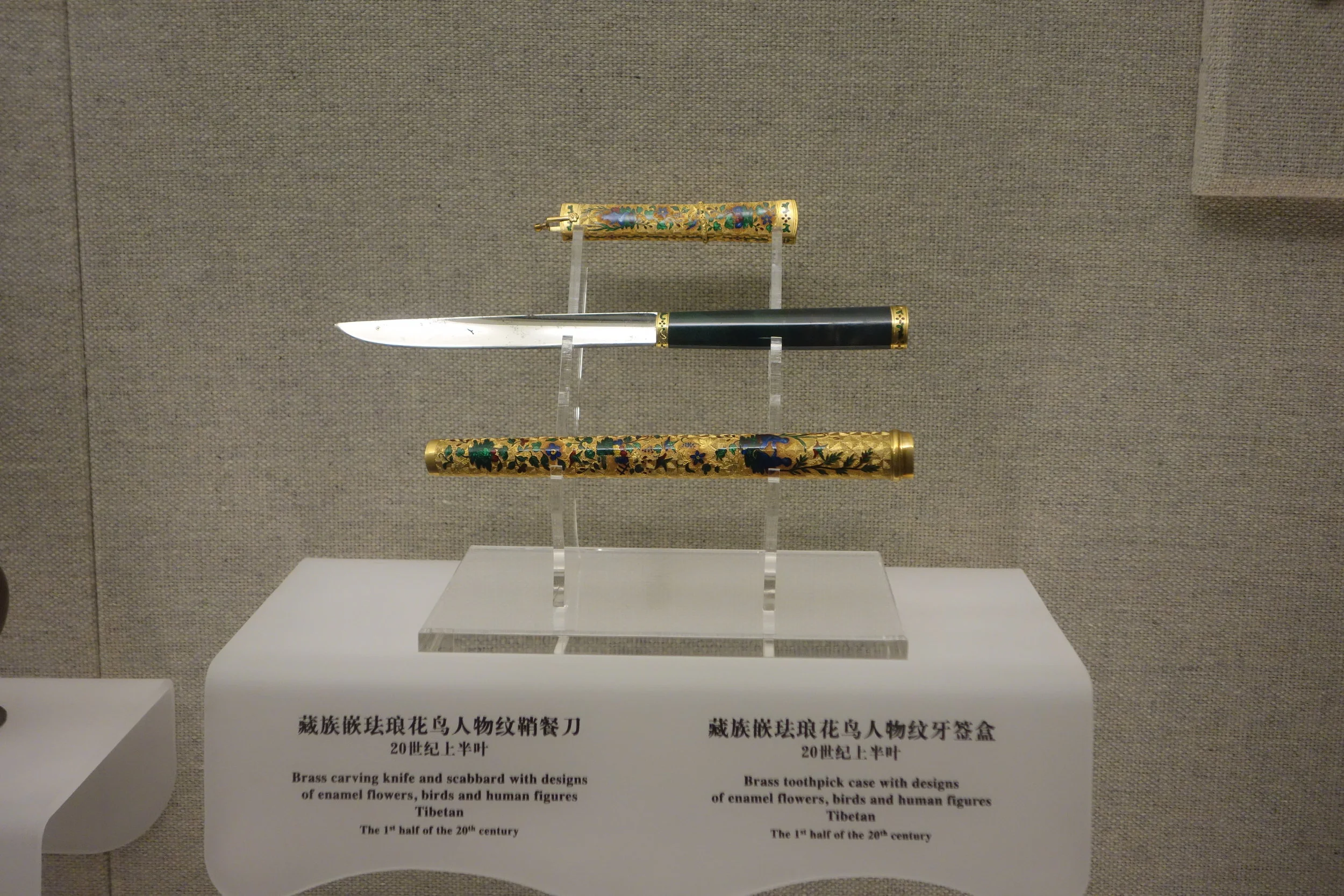
Top : Brass Toothpick Case w/ Designs of Enamel Flowers, Birds and Human Figures. Bottom : Brass Carving Knife and Scabbard w/ Designs of Enamel Flowers, Birds and Human Figures

Ox Horn Vessel with a Relief Motif of an Exorcism : Tibetan Qing
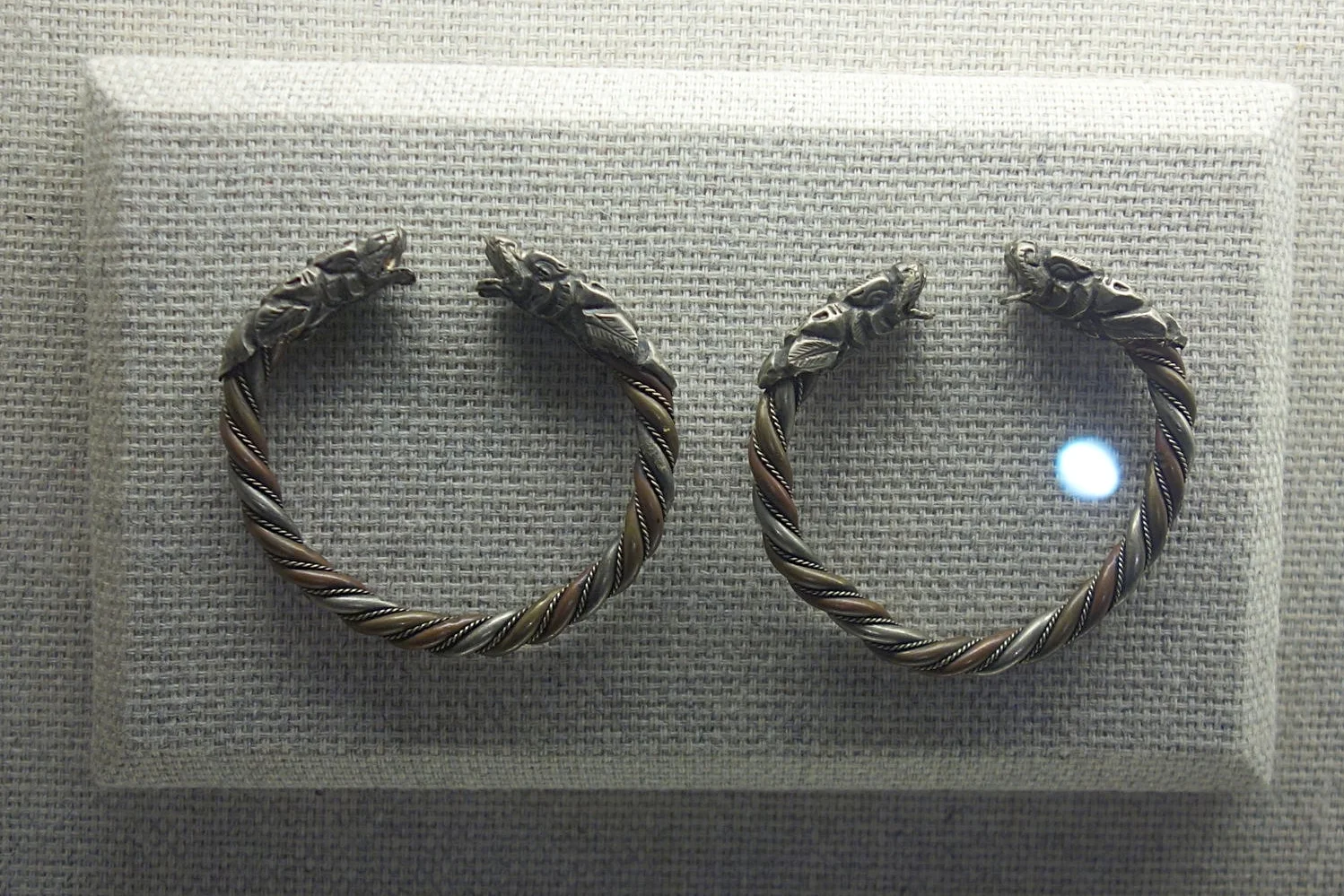
Twisted Wire Bangles : Tibetan

Tibetan Ceremonial Dress w/ Jade and Metal Finery
British Museum Kashmir Collection Part I
The British Museum has a great Collection of Sculptures from Kashmir from the first Millenium AD. We try and highlight some of the selected pieces from the Museums Collection. All Pics and Descriptions are from the British Museum Website (http://www.britishmuseum.org/)

The Kashmir Collection at the British Museum
The British Museum has a great Collection of Sculptures from Kashmir from the first Millenium AD. We try and highlight some of the selected pieces from the Museums Collection. All Pics and Descriptions are from the British Museum Website (http://www.britishmuseum.org/)

Sculpture of grey chlorite of the goddess Lakshmi, from Kashmir, northwest India. The deity is depicted seated in the pralambapadasana pose on a lion throne and crowned with a diadem made up of three crescent moons, in the Sassanian manner (now a little damaged). The nimbate deity is lustrated by two male attendants who bear large globular pots. In her right hand she holds a damaged lotus, while in her left hand she grasps the animal-headed terminal of an Indianised version of a classical cornucopia with, issuing from the very top, what is to become one of her foremost symbols, a full-bellied pot, purnaghata, bursting with abundance. At each side and below the lustrating male figures, are two camaradharani, while below them are two small male figures who pour pots of gold at her feet. Her throne is set on a plain moulded plinth typical of sculpture from Kashmir. / The sculpture is an unusually large and early example of imaging of the non-Buddhist sculpture of this region. It is also remarkable in that it clearly shows the way in which the Gandhara idiom of the 2nd-4th centuries was transmuted into a distinctively Indian form; here we are in the transition between the two, with a depiction of a Hindu goddess (Lakshmi is the goddess of prosperity and wealth) and yet with features such as the pleated costume so reminiscent of Roman dress as well as the cornucopia, both brought ultimately from the west, while her crown is based on a Sassanian (Persian, and thus also western) model.
6th C / Kashmir

A figure of Vishnu, the left hand holding a conch, other 3 arms & feet missing. Made of stone (schist).
800 AD / Kashmir School / Height: 28.56 centimetres

Relief panel in smooth green chlorite of the elephant-headed deity Ganesha. The god is depicted enthroned and in the pose known as lalitasana, appropriate for an important person at ease. The throne is supported by lions, while at the centre, the remains of a human figure, perhaps a prostrate devotee, can be seen.
The deity wears the typical Kashmiri crown which derives, ultimately from Sasanian prototypes – note, the crescent moon elements along the front of the diadem. Other jewellery items include a necklace of beads, a garland, vanamala, across his lower body and – only clearly visible on the reverse – a sacred thread, yajnopavita. He is shown four-armed in the usual form, though one arm, the lower right, is damaged and the attribute cannot now be identified (though one would expect it to have been a broken tusk). The other three arms hold the canonical attributes of: rosary, mala (upper right); axe, parasu (upper left), a variant on the elephant goad, ankusa (the axe instead of the goad is seen elsewhere amongst Kashmiri images of Ganesha); and bowl of sweets, laddu (lower left). The figure is nimbate though this is only substantially visible from the reverse where it is depicted in the usual Kashmiri fashion as a disc lightly set into the surface of the soft stone.
Above the deity's right ear, a small circular hole has been drilled through the stone at some point in its life. This is perhaps all that remains of an ear ornament for the image; a similar, though now broken hole is seen on the left side. / The overall surface of the sculpture is smooth, the result over many centuries of use in a shrine. In Hindu veneration, puja, the rubbing of images with sandal-paste or other offerings, or the mere touching as a means of honouring and of reassurance, means that images from antiquity – especially those from a domestic shrine context, like this one – frequently have details that have been slightly or sometimes wholly, erased. The wonderfully tactile quality of the chlorite, make holding this image an added pleasure.
The lion support to the throne is found elsewhere in the Northwest though elsewhere in the subcontinent, and especially later in the trajectory of this god of auspiciousness, the rat is the animal more usually associated with him.
9thC / Kashmir

Seated Buddha seated on lion throne supported on a lotus with two deer facing a dharmacakra.
9th Century / Kashmir School Swat

A figure of the Bodhisattva Avalokiteśvara seated on a cylindrical stool in a rocky setting, above two pairs of seated goats; wearing multicoloured lower garment with strips; his hands making the gestures of giving and protection (turned inwards), and holding a rosary, a triple staff, a waterpot, and the stalk of lotus; his 'parent' Buddha seated on his headdress, and an antelope skin draped over one shoulder. Made of brass with inlaid copper and silver inlaid and some gilding.
Identified by von Schroeder as Sugatisandarsana Lokesvara.Zwalf 1985
The Bodhisattva sits on a cylindrical stool in a rocky setting, with goats, perhaps of his mountain home Potalaka. His presumably multicoloured lower garment is shown by alternating strips of inlaid brass, silver and copper. The texts call this complex form of Bodhisattva 'Lokeśvara who points out good births' and his hands, read clockwise, make the gestures of giving and protection (unusually turned inwards), and hold a rosary, a triple staff, a waterpot, and the stalk of the silver-inlaid lotus. His 'parent' Buddha sits prominently on his headdress, and an antelope skin is draped over one shoulder.
10 Century /Kashmir

Standing figure of a four-armed Vishnu, flanked by personified weapons, Gadadevi – the club – and Cakrapurusa – the discus. Cast in a copper-alloy and inlaid with silver; abraded.
9thC-10thC / Kashmir School / Height: 237 millimetres Width: 135 millimetres Depth: 45 millimetres

Censer of copper alloy in the form of a four-armed flying male celestial figure who carries above his head, in his two upper hands, a hinged spherical vessel (one of the upper arms is now broken at the elbow). The vessel is pierced at the top to allow for the exit of aromatic smoke resulting from burning incense powder or resin inside the covered bowl. The figure bends on his left leg with the foot bent back beneath the body, while the right leg is thrust out behind; this would have formed the beginning of the handle but everything from the right knee downwards is now lost. The figure is clad in a dhoti which is clearly visible around the knees and lower legs, while over his left shoulder, the sacred thread (yajnopavita), is shown.
Censers feature in temple ritual as the conveyors of sweet-smelling smoke to the image of the deity (this is the offering of the sense of smell, just as lamps in the arati ritual, provide the offering of the sense of sight).
The figure is solid-cast using the lost-wax process; the censer-bowl is hollow-cast.
Floral imagery, so appropriate for this type of temple utensil, is apparent throughout, as follows:
1 – the figure kneels on his left knee on a lotus pedestal with downward-pointing petals (twelve full petals in total, but with one at the back missing; in between and below each full petal, a smaller one is visible)
2 – in his hands, joined in the posture of supplication and greeting, anjali mudra, further lotus blossoms are held
3 – hanging over his shoulders across his elbows and down to the bended knee is an intricately depicted garland (vanamala).
4 – upper-arm bands, one on each arm, are decorated with fully-open flowers
5 – flowers decorate the typical Kashmiri three-part crown, and floral garlands hang from it on to the shoulders of the figure
6 – where the crown meets the ears there are fully open blossoms, as is common in medieval stone and bronze sculpture from Kashmir
7 – the vessel, which the celestial figure carries above his head is, on the lower part, decorated with a lotus-petal design while the upper part bears a lush floral scroll
8 – the finial is set on the top of the vessel within a full-blown flower and the nozzle through which the incense passes is in the form of an opening flower.
In the very extensive bibliography for this sculpture, there has been some slight variation in the date suggested for it, but all scholars have placed it within the 9th-10th century bracket and thus mostly within the period of rule of the Utpala dynasty (856-939 AD). The accomplishment of the bronze casting and the iconography, all unequivocally place the production of the sculpture in, or close to, the Kashmir valley.
The last owner of the censer, wrote one of the most important articles about it (Digby 1991). In that article, Simon Digby identified the celestial figure as the leader of the gandharvas, the band of musicians and servers who attend on the gods. The name Puspadanta or Flower-teeth (ie. flowers carried between the teeth) for this figure was suggested by Digby. His identification is based 1) on the medieval text, the Mahimnastava where Puspadanta is described, and 2) the placing of the composition of the text in Kashmir. The linkage between this flower-bedecked image and the flower-thief who, in the text, is described as an aerial figure carrying floral offerings to his Lord, Shiva, makes convincing reading. In the same article, Digby relates the censer to the figures found on the massive back-plate from Devsar, now in the Sri Pratap Singh Museum, in Srinagar, and dated to the 10th century. He also notes that, like the back-plate, the censer has probably been buried at some time in the ancient past, thus accounting for the loss of both the lower right leg and the handle of the censer. This doubtless also explains the greenish patina and the lack of any evidence of significant smoothing of the image; such smoothing is frequently seen on images and utensils which have been in temple use over many centuries. He speculates that, when complete, the censer would have had what he called ‘a recurved handle’, ie. a handle arched away from the figure and thus able to balance the significant weight of the censer itself.
9thC / Kashmir

A leaf in black schist from a diptych depicting on one side a headless seated figure, probably an ascetic and on the other the Assault of Mara in the upper register and in the lower the First Sermon.

Zwalf 1985
Similar leaves of carved stone survive, parts of diptychs, portable folding objects showing scenes from the Buddha's life. The headless figure, hand on chin and seated on a stool above his Brahmin's waterpot, may be the ascetic who predicted the newborn's Buddha destiny; on the reverse panels show, above, the assault of Māra and, below, the First Sermon with the wheel just recognisable below the Buddha. The leaf was found at Khotan, in Central Asia, and is not the only example of this kind of object to have been found outside the Kashmir- Gandhara area of its manufacture.
7th C
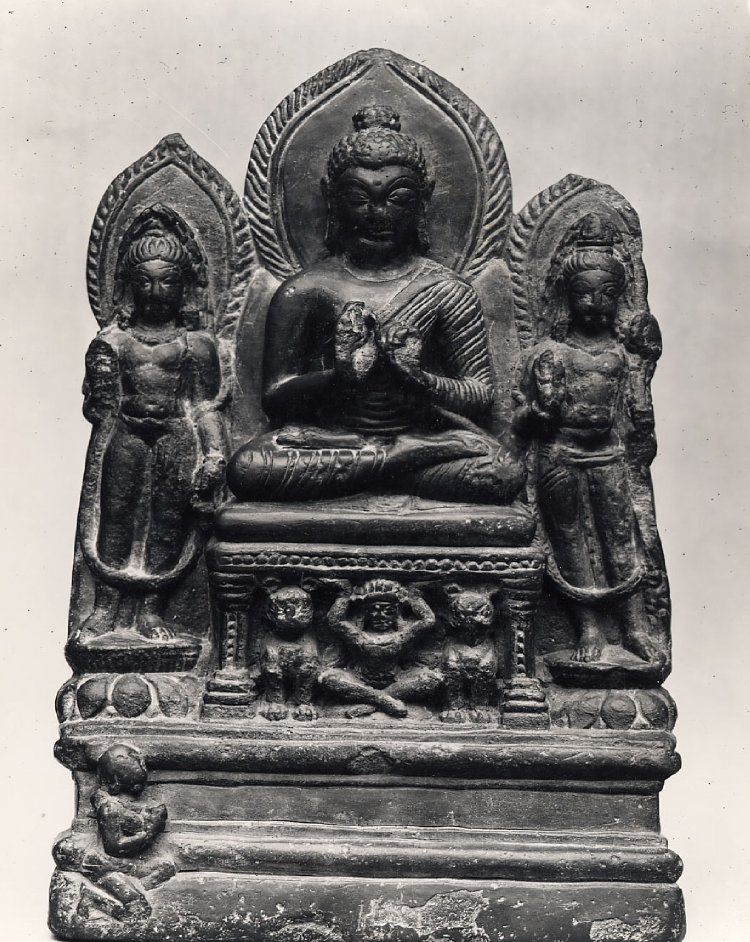
Figures (group of). Typical Kashmir stupa on reverse. Made of stone (schist).

9th Century C

A bronze figure of Prajñāparamitā, holding a lotus and a book seated on a lion throne.

9th - 10th C

Figure (Buddha). Made of bronze.
9th C -10th C

Standing image of Śiva Mahesamurti, feet missing. Made of green stone.
9th C

Figure. Steatite stone figure of Gaja-Lakṣmī, seated on a lion.
700 C

Liṅga, with face of Śiva. Made of stone (schist).
7th C - 9th C

Figure (Viṣṇu.part of). Made of stone (steatite).
8th C

A gilded bronze figure of the Buddha seated on a throne supported by lions.
8th C
The "Outsider" Kashmiris
The Story of outsiders who came and finally settled in Kashmir. And today are a part of Kashmir like any other Kashmiri.
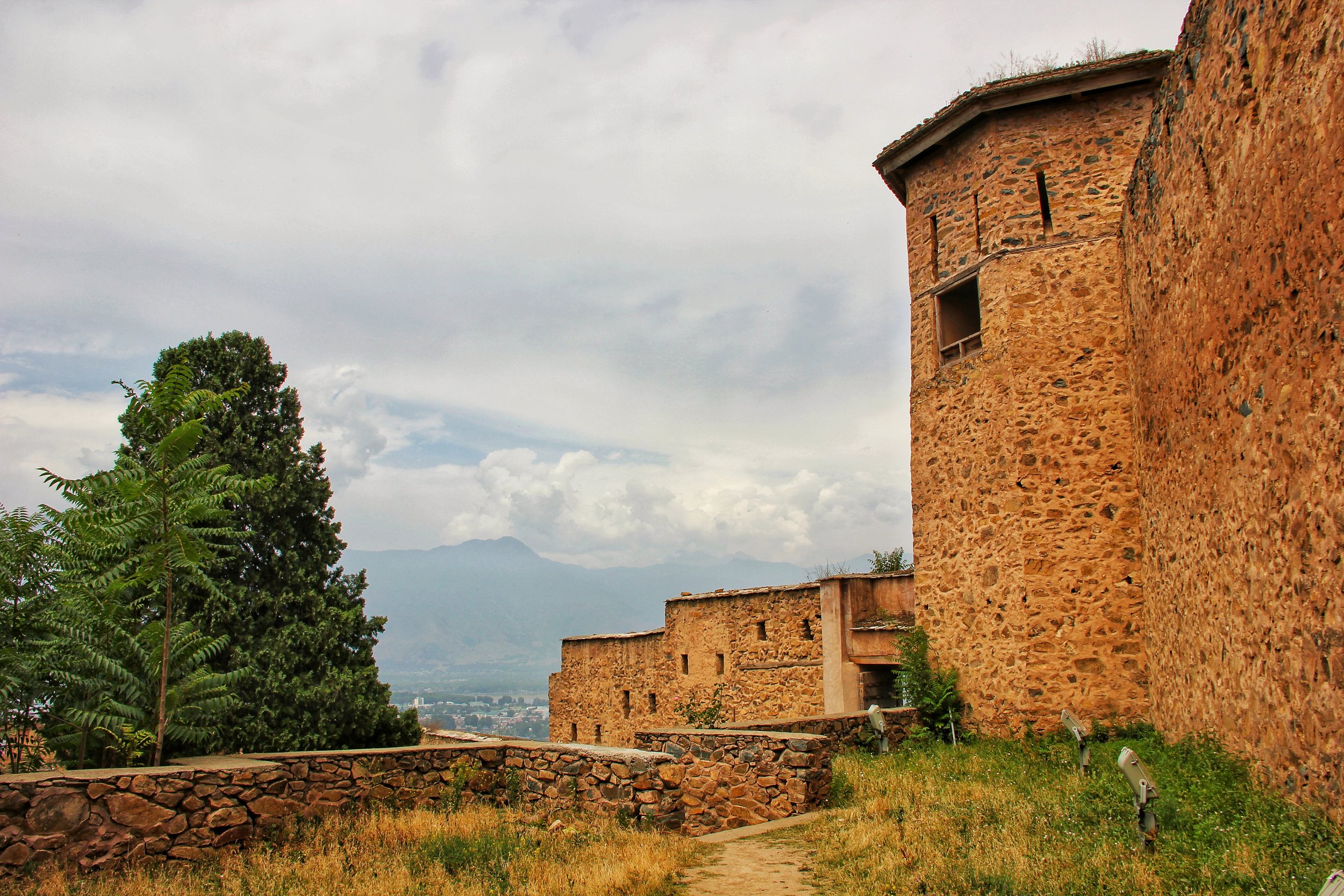
The Outsider Kashmiris
Kashmir has for centuries has fascinated people from all around attracted by the sublime climate, the scenic settings and the genial people. Its not for nothing that its the most fabled (and the largest I might add) of the Valleys that nestle in the Himalayas. And for the same reason it had an attraction and many Conquerors, Adventurers and Refugees sought respite in this Valley. Of course most of you would be familiar with more than famous couplet by Amir Khusrau “Gar firdaus bar-rue zamin ast, hami asto, hamin asto, hamin ast.”
Of course my bias towards Kashmir is apparent to anyone who follows my Posts. Thats natural as I come from Kashmir and still spend substantial time in the Valley in spite of what I call the “Troubles” like they did in Northern Ireland. Its a complicated place with a complicated History and complicated problems. And that's all I say about that. The “Troubles” I mean.
Today I would like to talk about an aspect that not many know about. Its about people who came from outside and made the Valley their home. They didn't always arrive voluntarily and they didn't always arrive in the best of conditions. But in the end they added another flavor to the Bouquet called Kashmir. For the sake of privacy I will not mention the the names or the family names but just give you an idea on their background and how they ended up in Kashmir. And now all these people are very much a part of Kashmir. I will for the sake of convenience mention three instances of people from outside Kashmir who are now a part of the Kashmiri fabric.
The first one is about the Architect from Dubrovnik in present day Croatia but in those days a part of the Austro-Hungarian Empire. The Architect was commissioned by a Maharajah in present day Gujurat to design and build his Palace. The Architect came down on the Maharajah's commission and built the Palace and at the same time fell in love with the country. Except for the hot weather. To compensate for that he moved North and established a Hotel in Lahore and Murree and eventually ended up in Kashmir. He established Hotels in Srinagar and Gulmarg as well. And boy were these places famous. The great Explorer and Soldier Sir Francis Younghusband (for those not in the know he captured Lhasa in a fight with the Tibetans) had this to say about the Hotel and Srinagar 'Srinagar is indeed a gay place for the summer months', he wrote, 'with games going on every day, dances nearly every week, dinners, garden parties and picnics.' And that's Sir Francis Younghusband speaking.
Most of you connected to Kashmir would have well made out which Hotel and which family I am talking about. And of course now they are a fully Kashmiri family in all respects. But still it makes for a fascinating story. I wish someday someone from their family would write a Book on the story of their family. The Hotel in Srinagar if you can believe it had a Chandelier presented to it by none other than Nikita Khrushchev himself. Yes Nikita Khrushchev of the “We will bury you’ infamy.
Moving on there is another family which has its roots in Afghanistan. The Afghans ruled Kashmir for a long period of time and as such there are many families that trace their origin to Afghanistan. But this particular family had an interesting story. They belonged to the ruling Barakzai clan but in a war of succession they fell on the wrong side of a family feud. Most of their relatives on their side met a brutal fate and were tied to the mouth of cannons and you know the rest of the story. However a few of them managed to escape and made their way into Kashmir. Owing to their Royal status and being Barakzais the Dogra Maharajah recognized their importance and inducted them into their service. One of the Afghan Gentlemen was appointed the Inspector General of Police of Kashmir and the family was then settled in Kashmir. The family did well and today the Great Grandson of the original migrants from Afghanistan is a friend of mine. Incidentally they also have a great Hotel in Srinagar amongst other businesses.
The two instances I gave you are of people who came voluntarily one out of choice and one out of distress and made Kashmir their home. Then there is the story of two Princes and their entourage who were taken as “Guests” (read Hostages) to Kashmir from their homelands in Gilgit and Hunza to ensure good conduct of the Rulers of Nagar and Hunza as they had rebelled against the Central authorities in Kashmir. Once they were subjugated again some guests were taken from the Royal families to Kashmir to ensure conduct compliance by the Rulers in line with what the Kashmir authorities wanted. Of course the Two Princes and their retinue could never return and settled in Mohalla in Rainawari in Kashmir which is today called the Botraj Mohalla and the descendants of the Princes still continue to live in the Mohalla. They tend to marry amongst each other and keep alive their Religious and Lingual traditions. And they still continue to be respected as descendants of a Royal family from Hunza by their Kashmiri neighbors and held in high esteem.
These are just three examples of foreigners who came in and kind of assimilated with the local population. Well almost. But most of their stories are now forgotten. Only remembered by a few who care to remember. Maybe one day all such stories would be compiled. Maybe.
Now to look for a pic to go with the story.
Nothing better than the Hari Parbat Fort. The only existing Fort in the Valley.
Pic from July 2018. Hari Parbat Fort, Srinagar, Kashmir. Pic Courtesy Ankit Gupta
Thang : India's most Northernly Village
Thang is the last Village before the LOC in the Turtuk Sector. Entry to Thang is restricted and presenting some rare pics from inside the Village.
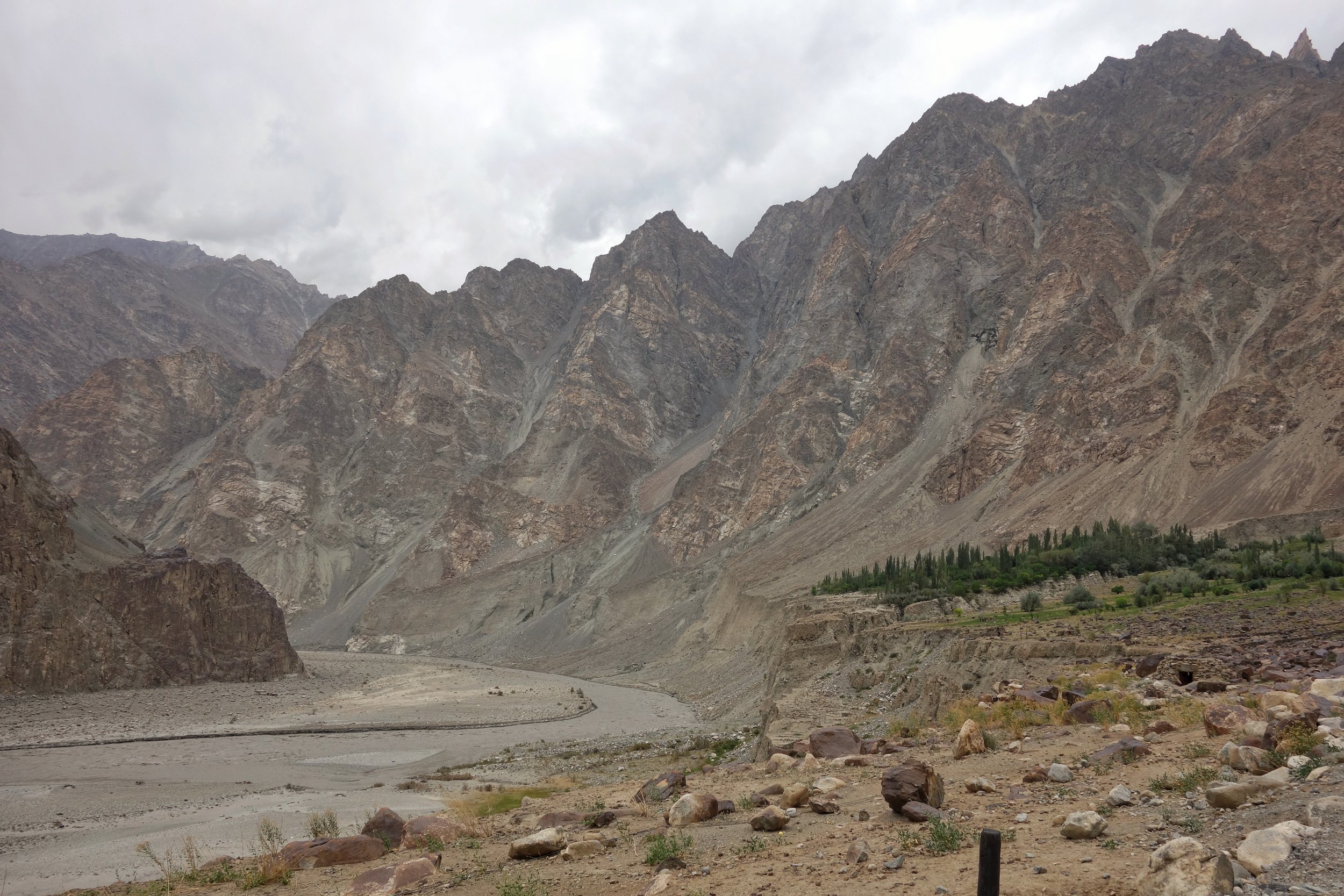
Right at the Line of Control. At the River bend lies the fence.
Thang : India's Most Northerly Village
The "Northernmost Village of India" as an Indian Army proclamation states there. On the banks of the Shyok.
The patch of green on the right is the Village of Thang. The Village lies a few kms beyond Turtuk and you cross Tyakashi Village to get to this point. To go beyond Turtuk you need permission from the Army and after that this is the Northernmost that the Army lets you get to. The Mountain heights on the right of the Shyok are all territory in Pakistani control. You can see a fence which denotes the LOC and 100 meters on each side are No Mans Land.

The best part is that a certain Gentleman over there even gives you a guided Tour and shows you stuff like the fence, Indian Army bunkers, Pakistan Army bunkers, Pakistani Flags on the Peaks as they dominate the heights. Quite revealing. And the best part is that you are allowed to take Pics and Videos. All authorized by the Indian Army.

Apricots at Thang Village
Going to Thang Village is not allowed except for the locals. And pesky little fellows who come with all sorts of excuses to be let into the Village, a beautiful one with Apricot, Walnut and Apple laden Trees. And from where you see the Village of Phorbu across the LOC. And nothing separates this Village from the other side besides certain Landmines. ;)
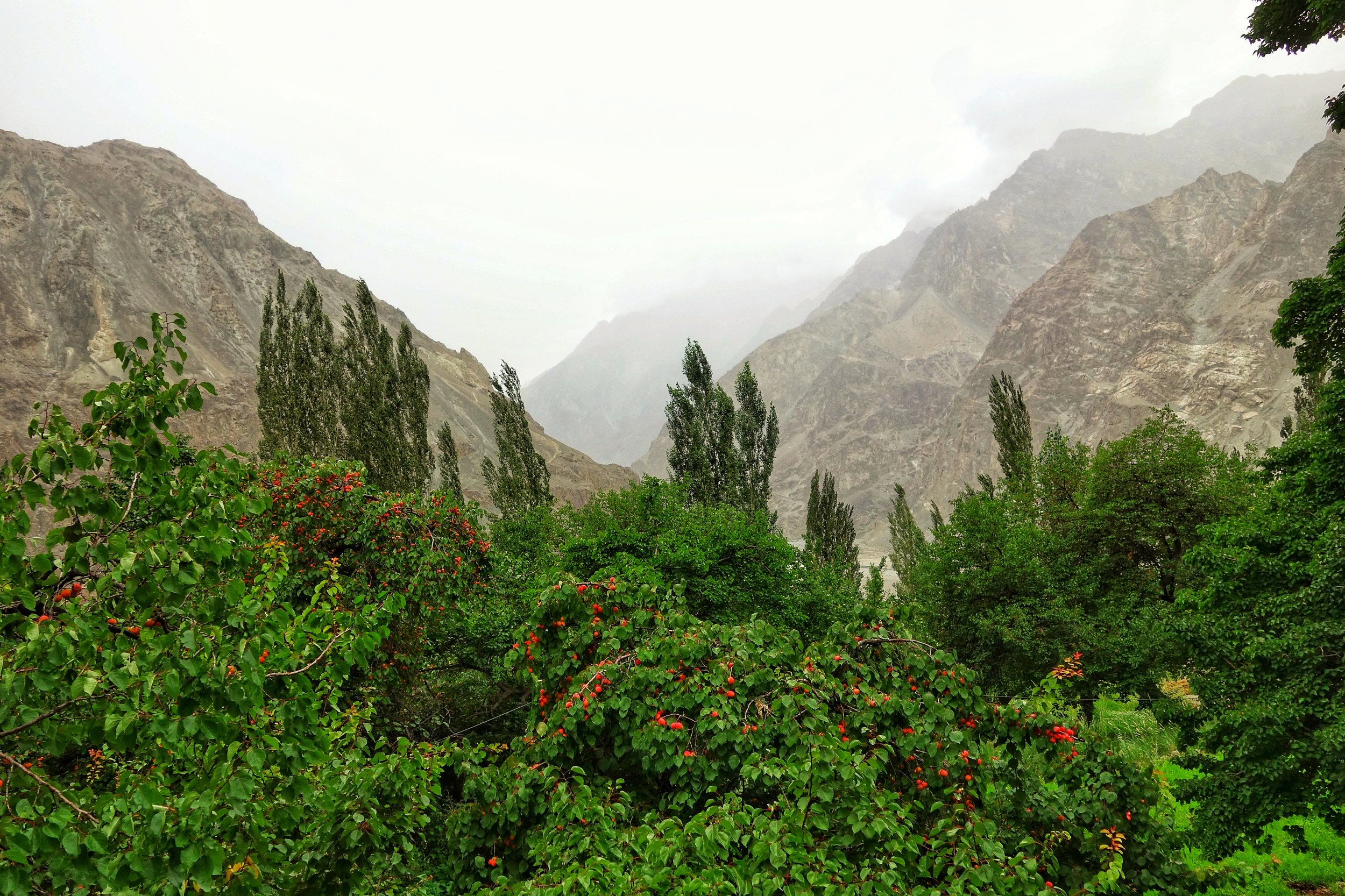
Looking across the LOC from Thang
On a personal level I actually find it good that the Army is slowly opening up areas which were otherwise no go for civilians. It reflects a higher degree of confidence and maybe we can look forward to more areas being opened up. Areas about which I have read since I was a kid. Maybe the Changchenmo or DBO or Siachen or Aksai Chin or Depsang.

The Green patch in the distance at the bottom of the Mountains is the first Village, Phranu on the other side.
Pic from last week. Thang, Ladakh
Kiki’s Blog
Stories from the Himalayas
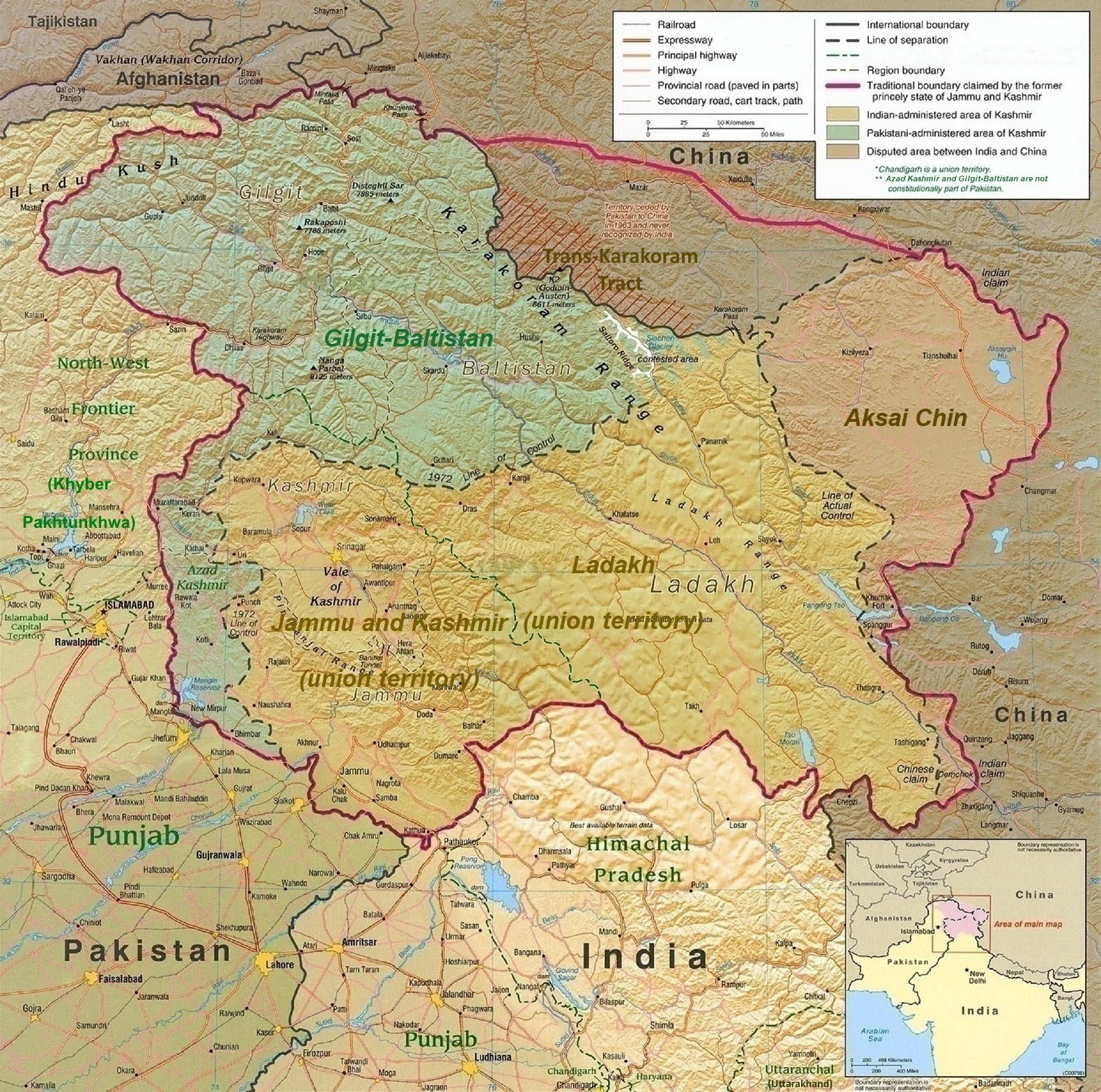
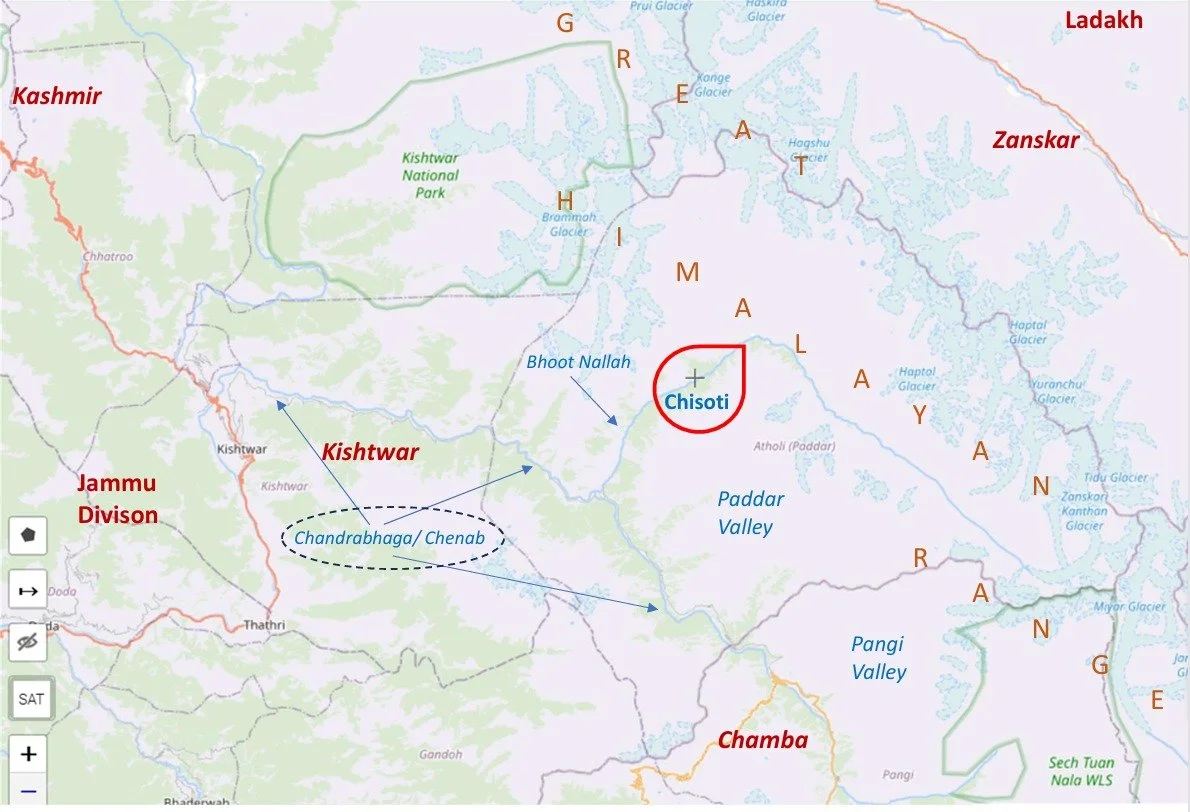
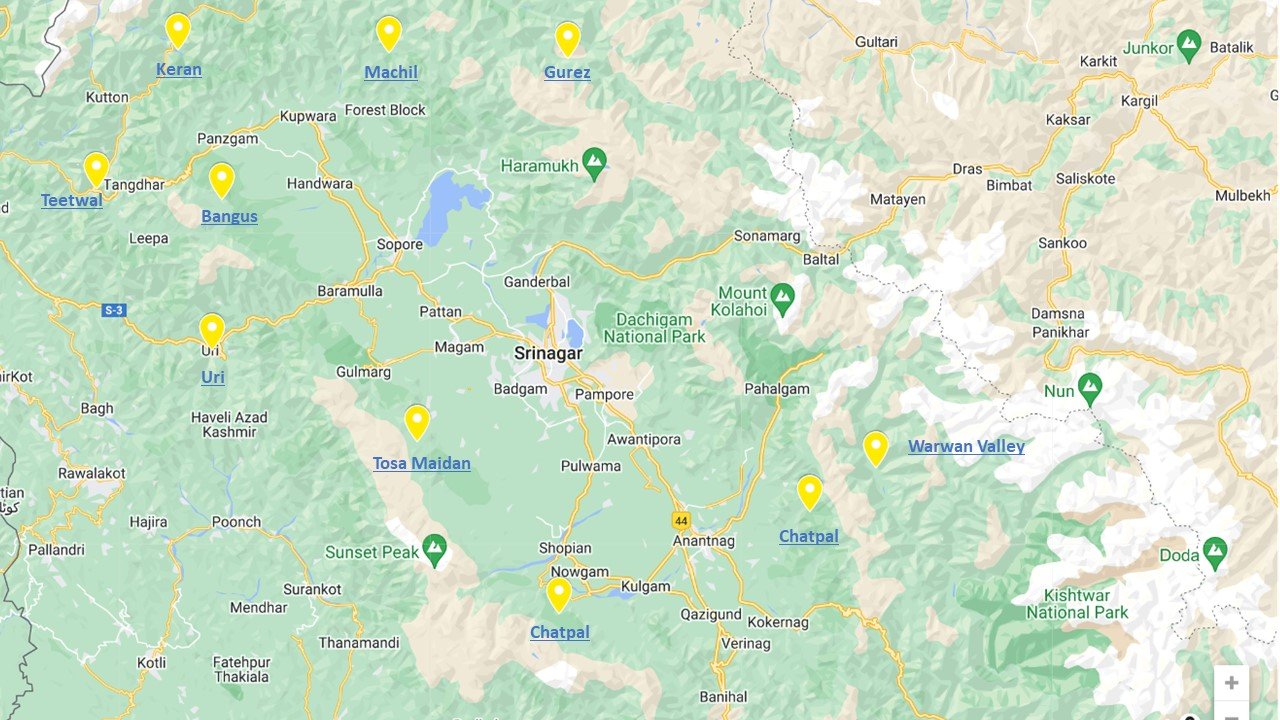


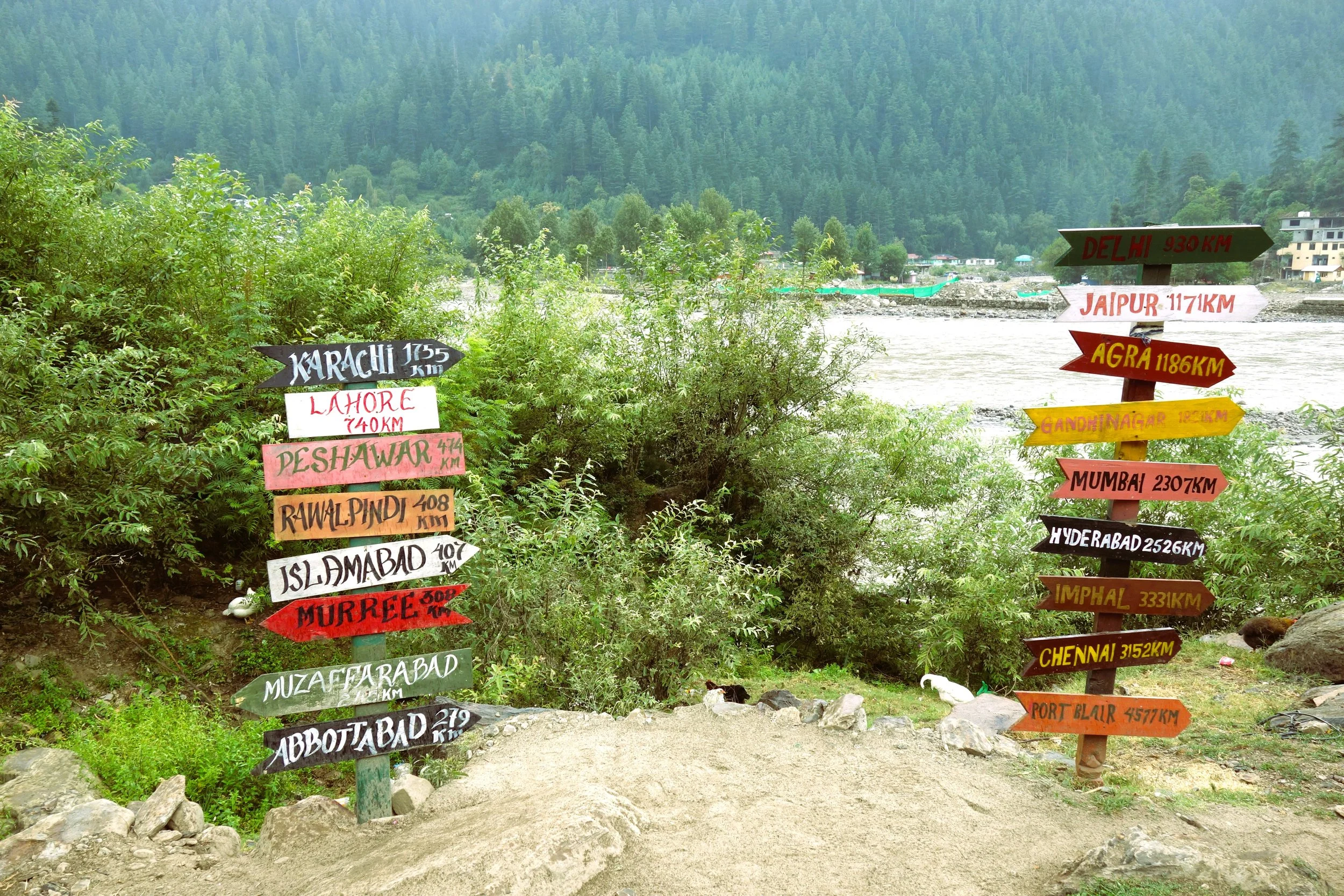

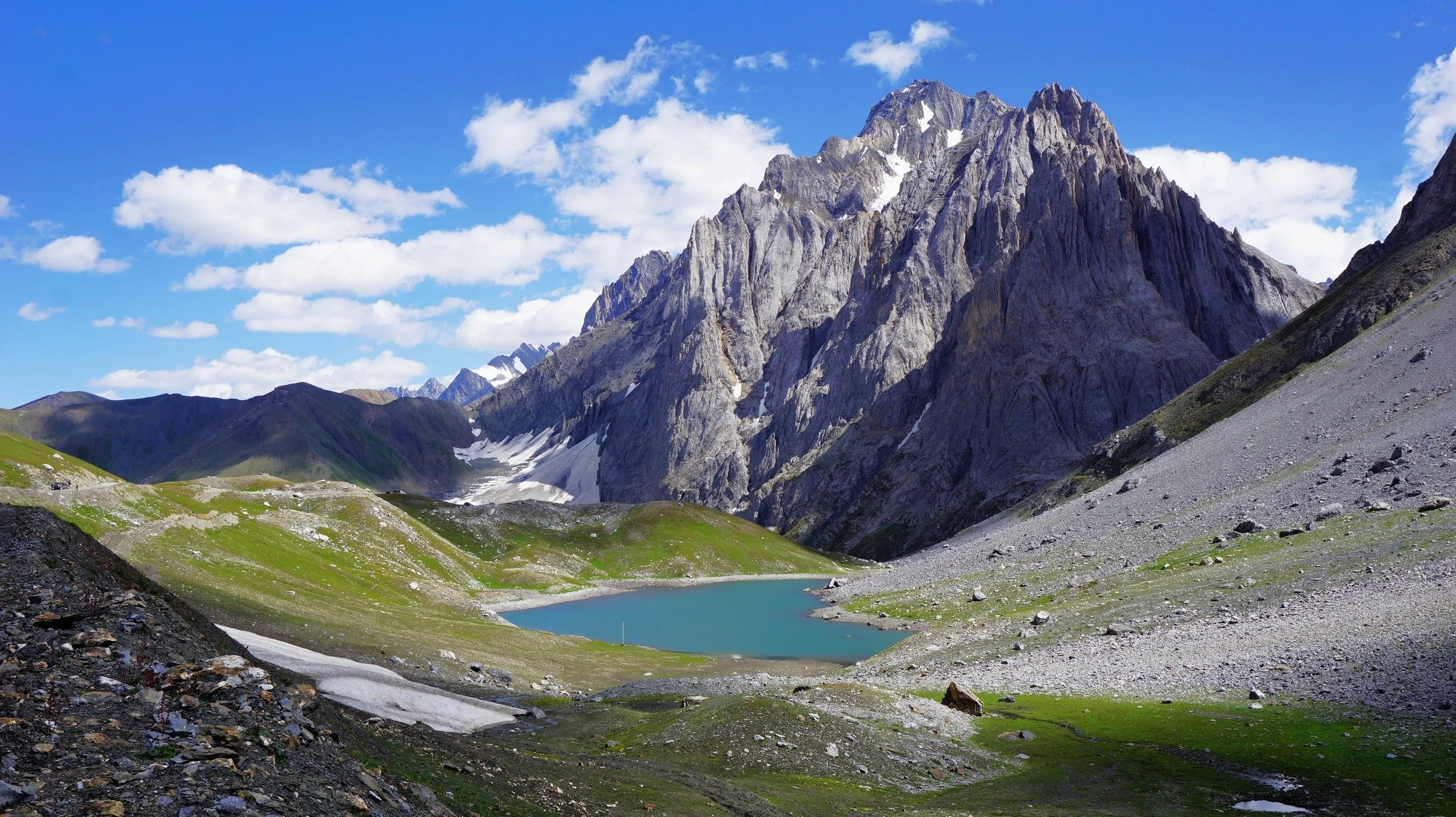
Five years ago the Galwan Valley was in the News for the wrong reasons after a deadly clash between the Indian and Chinese Armies in the Valley located in Ladakh lead to many deaths on the contentious Border between the two countries in wake of continued Chinese intrusions into Indian territory.
This area along the Shyok River, of which the Galwan Nallah or the Galwan River which forms the Galwan Valley has been off limits to Civilians since long but now the Indian Government has decided to open up the area for Civilians and we were amongst the First Civilians to venture into this beautifully desolate part of the Eastern Karakorams in Ladakh. Earlier Civilians could only venture upto the Village of Shyok from where the Shyok River takes a U turn and flows in a Northerly direction.