
Central Asian Arts at the Shanghai Museum
The Central Asian Collection at the Shanghai Museum. At the Minorities section of the Museum on display from the Tibetan, Uighur, Kirghiz, Kazakh and other Central Asian people are various Antiques and Arts reflecting the rich culture of these people.

Mongol Brass Chess Pieces
Central Asian Arts at the Shanghai Museum
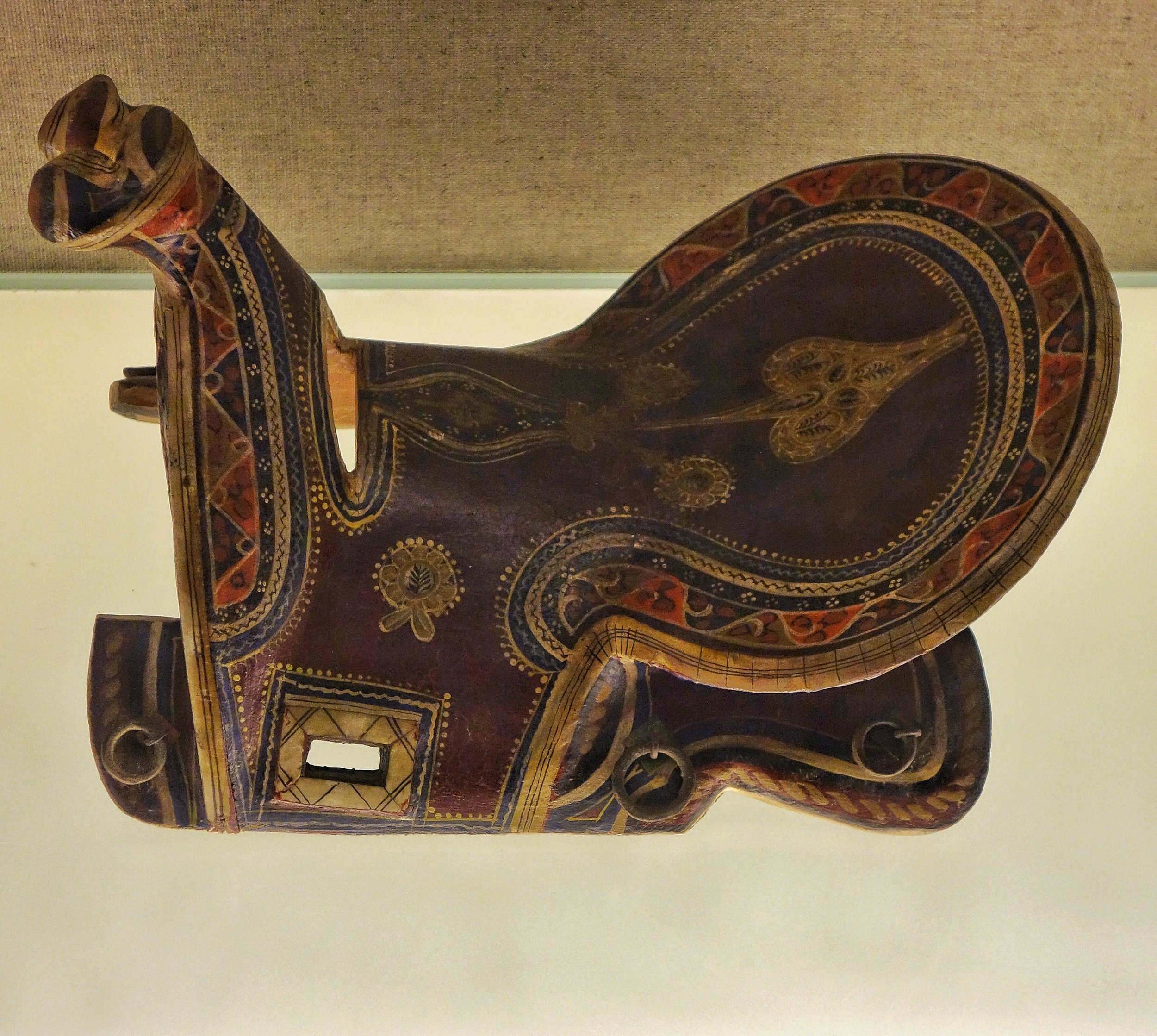
Ughyur Saddle with Painted Motif

Tajik Flute Made of Eagle Bone

Ughyur Foldable Book Rest with four folds

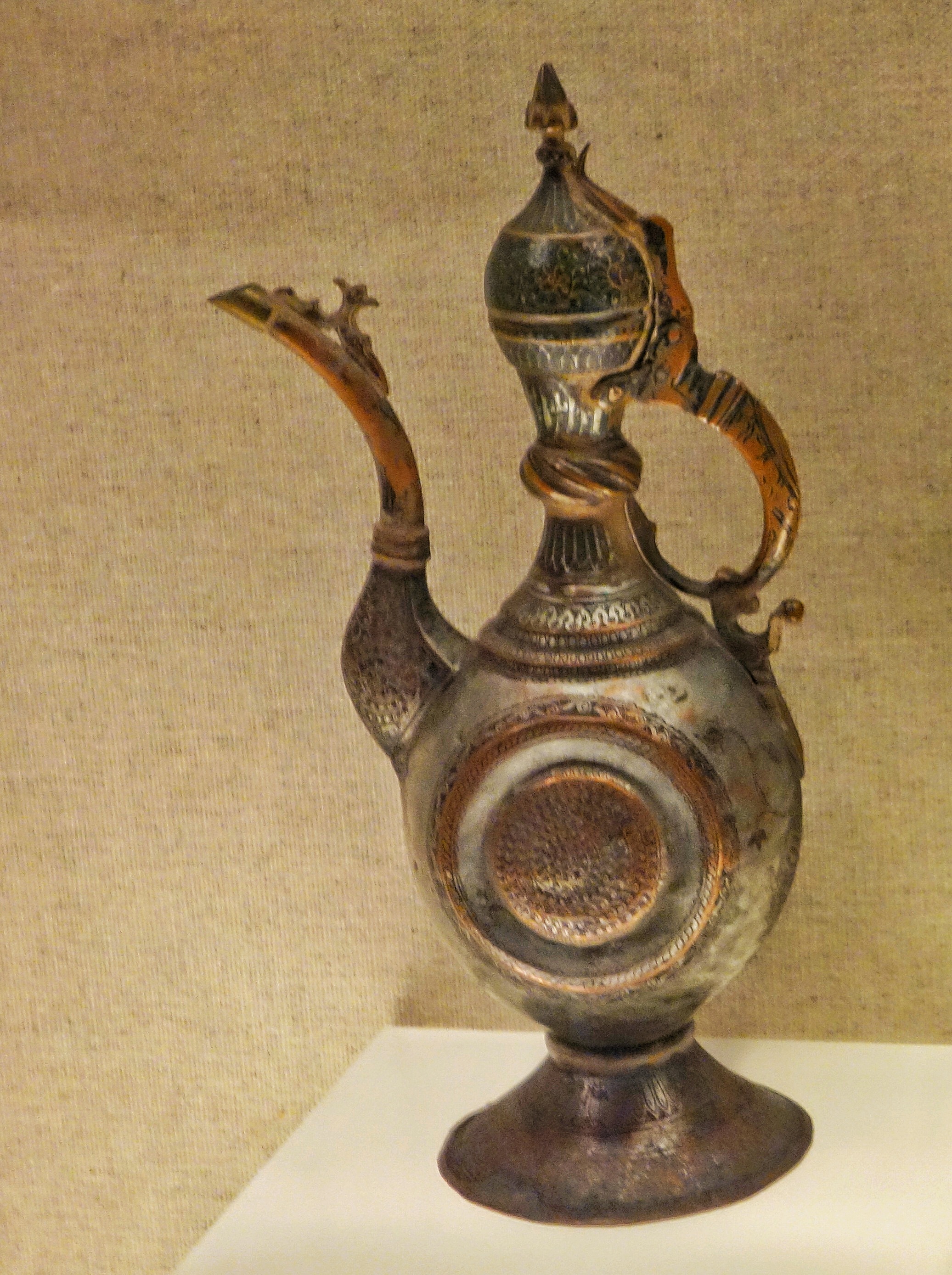
Ughyur Copper Bottle with Carved Motif and Arabic Lettering

Ughyur Copper Bottle w Carved Motif

Ughyur Brass Pencil Box
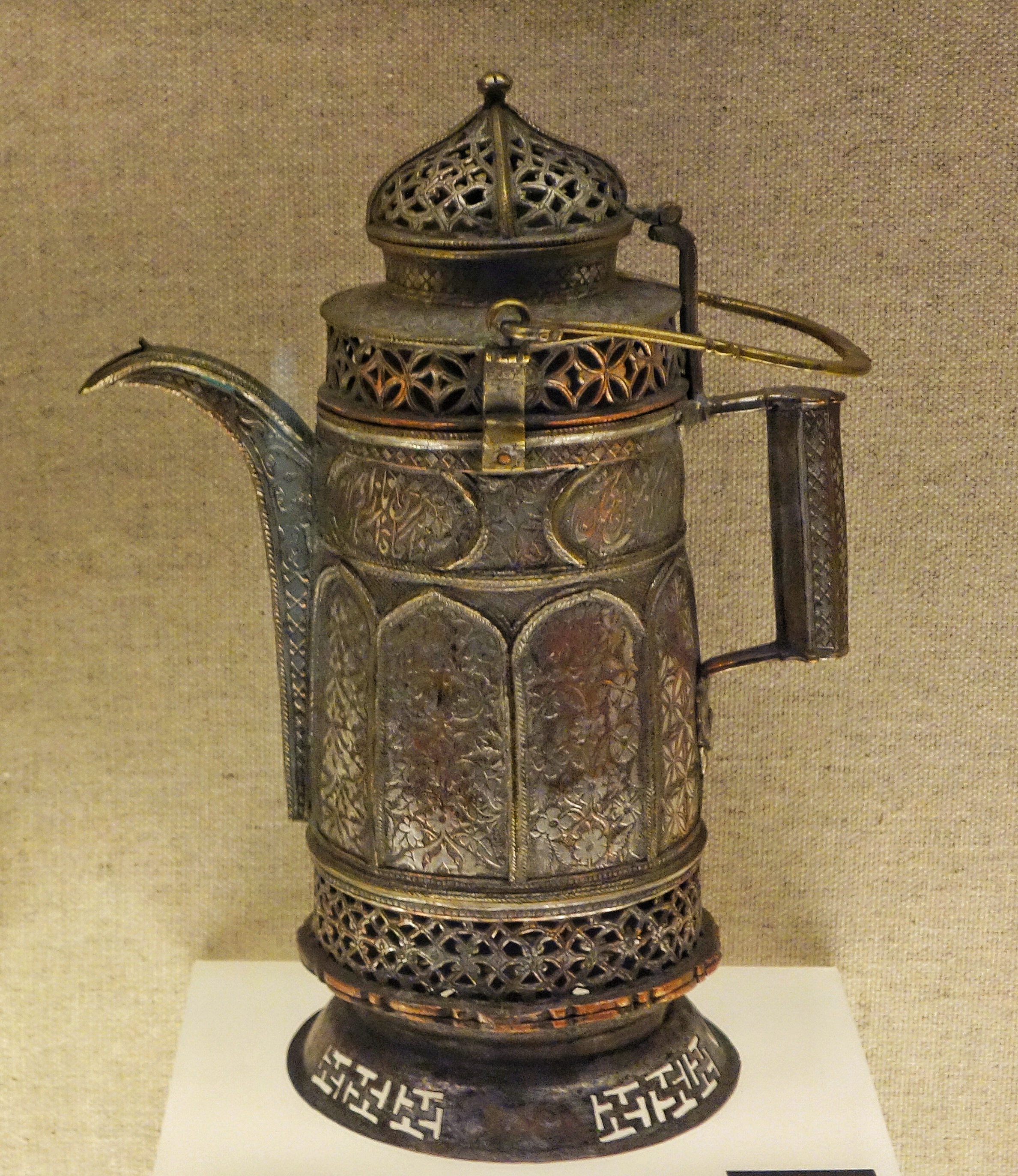
Ughyur Copper Pitcher with an openwork design and a Looped Handle


Mongol Headdress with coral beads

Kirkhiz Necklace

Ughyur Braided Ornament Adorned with Beads and Silver Khotan

Kazak Gilt Silver Ornament

Tajik Silver Eagle Shaped Head Covering Ornament with Inlaid Stones

Ughyur Necklace

Tajik Silver Filigree Earrings

Mongol Brass Copper Snuff Boxes with Inlay

Tajik Silver Pendants Strung with Beads
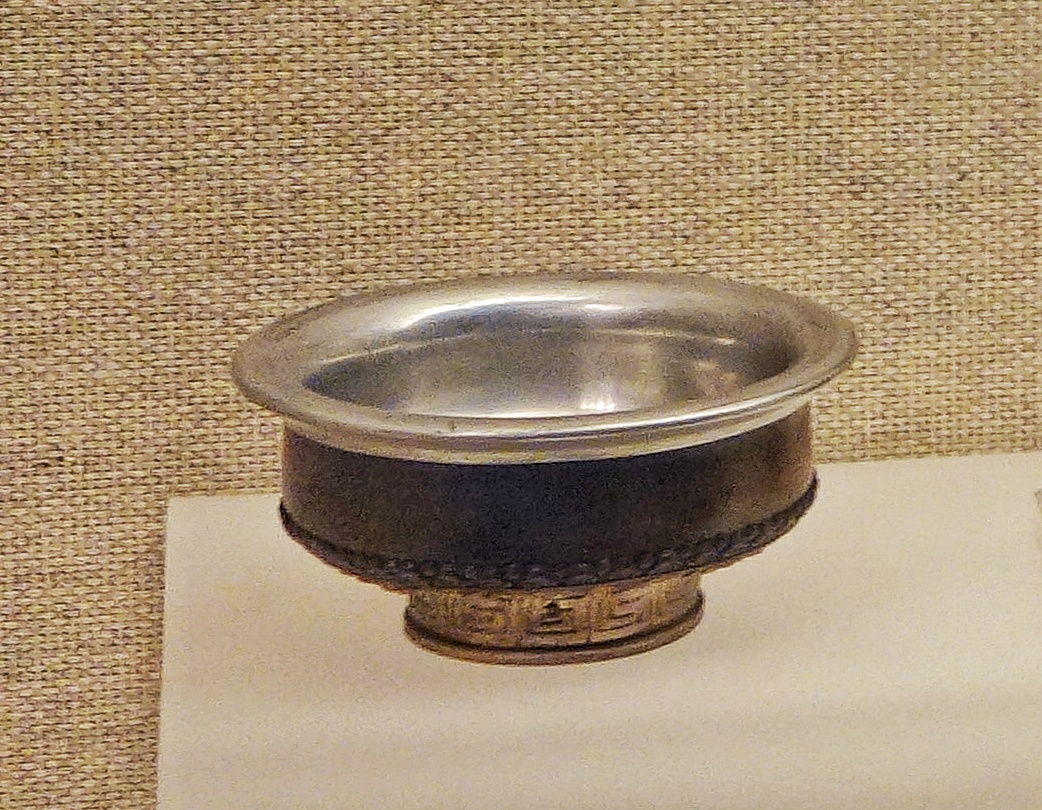
Mongol Wooden Bowl covered with Silver

Ughyur Velvet Dopa with Gold work Embroidery

Ughyur Dopa, four angled Caps wit Beads and Embroidery

Kirkhiz Waistcoat and Pants

Ughyur Dopa Embroidered Cap

Ughyur Velvet Waist Coat and Jacket with Embroidery and Beads

Ughyur Embroidered Satin Dress

Ughyur Men's Dress

Uzbek Woman’s Dress with Embroidery
Saddles of the Horse Empires
The Horse and its Saddle were the main means of transport and one of the most important weapons in Warfare especially on the Central Asian steppes. No wonder the Empires built by the Nomads of Asian Steppes including the one built by Mongols under Changez Khan were also known as Horse Empires.

Central Asian Wooden Saddle.
The Saddles of the Horse Empires
I have already told you the story of the Munshi Aziz Bhat Museum. Of course like all Museums it holds so many Items and so many stories attached to them. Like a small cannon that belonged to General Zorawar Singh himself, Horse Bells gifted by the Raja of Kharmang to Munshi Aziz Bhatt, old Korans from the 16th Century and even a Rug made for one Shyam Lal who was a secretary to Alexander Burnes.
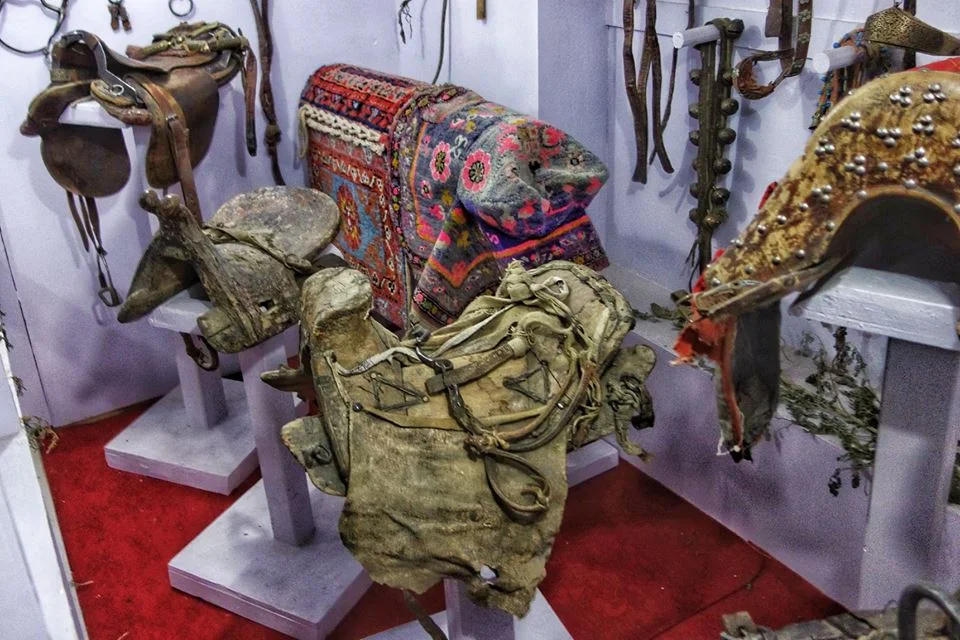
Saddles Central Asia at the Mushi Aziz Bhat Museum
One of the most significant and important set of items on display is a collection of Saddles and Horse riding items from Central Asia, Tibet and even a Saddle of the mighty Mongols themselves. Of course these items carry little significance but in those days before the Internal Combustion engine came around the Horse was the means of transport and one of the most important weapons in Warfare especially on the Central Asian steppes. No wonder the Empires built by the Nomads of Asian Steppes including the one built by Mongols under Changez Khan were also known as Horse Empires. The tenacity of the Central Asian Horse and its amazing stamina and resilience made it one of the main factor in the conquest of the “civilized” world by these so called “Barbarians” who came in from the North riding their Horses. In fact Historians have credited the Horse as being the strongest strength of the largest contiguous Empire the world has ever seen, the Mongol Empire.
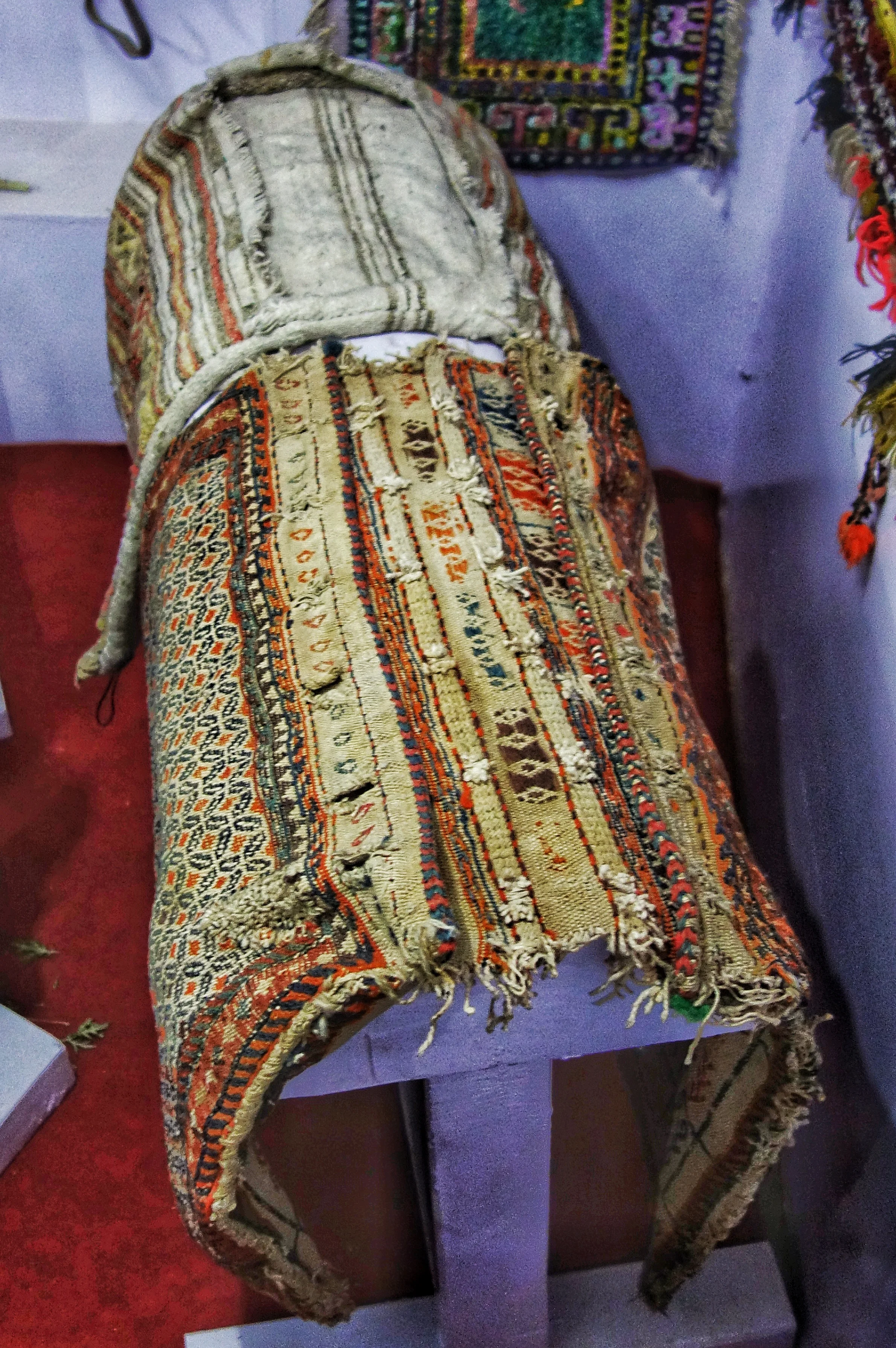
Tibetan Saddle
The Central Asian people from the Mongols to the Turkic people of the Central Asia like the Kyrgyz, Uzbek, Kazakh to the Persian Tajiks all revered the Horse and they were their most valued possessions. And of course one of most important Item required to ride a Horse was the Saddle of course and all other attached paraphernalia like the Stirrups and decorative ornaments and stuff for the Horses.
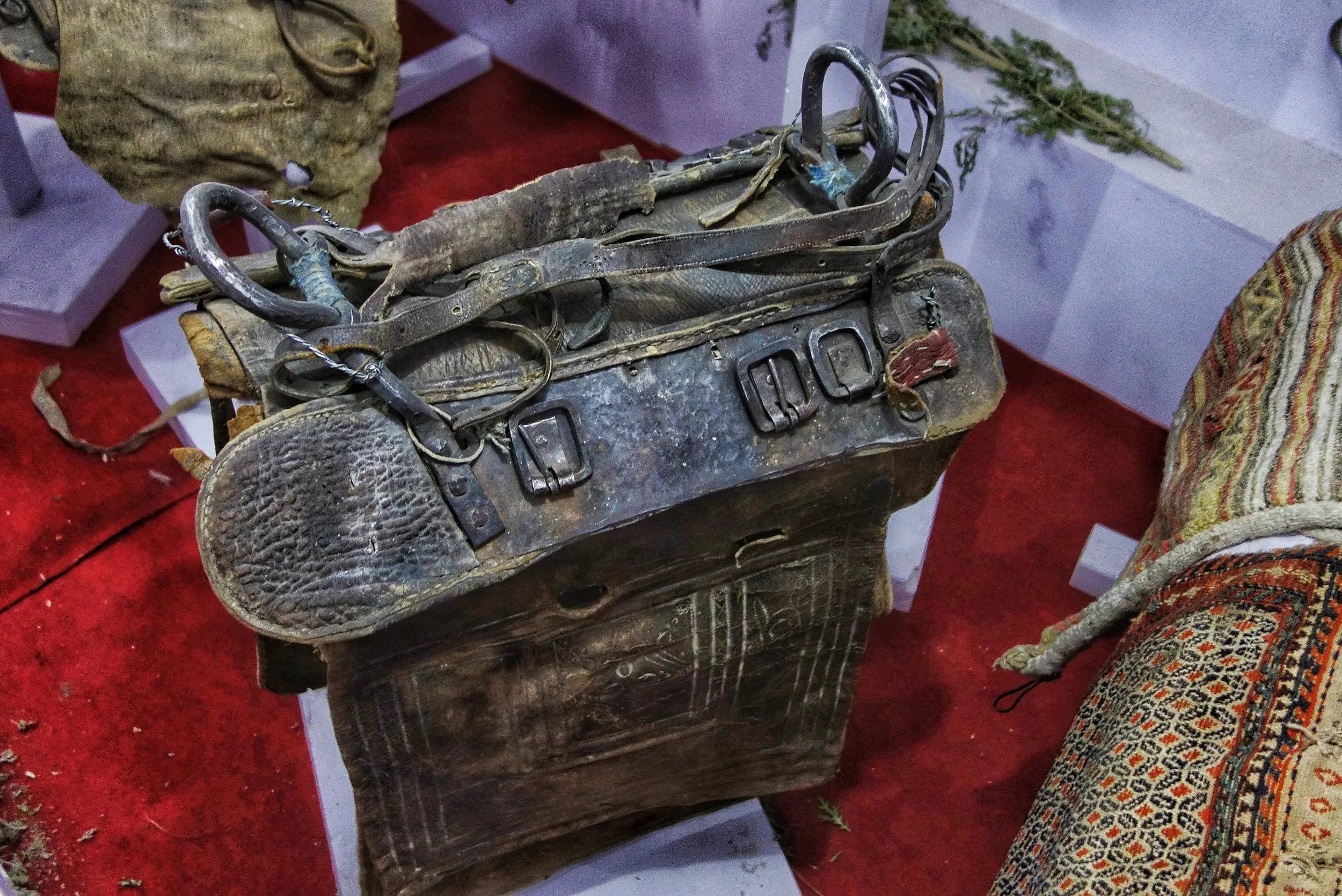
Kirgiz Saddle
The display at the Museum has a great collection of these items as mentioned earlier. There are Saddles from Kyrgyz, the Uzbek, the Tibetans, even an English saddle and the most decorative being a Mongol Saddle. These Saddles are the same design that have come down from Millennia and not much has changed as far as the Saddles and their designs are meant. The fact that there is a great possibility that the Great Khan himself rode a similar Saddle when he subjugated the World is of course quite an overwhelming though.
English Saddle
Of course the Horse Saddles were important items of Trade on the Kashmir to Yarkand Silk Route Trail. I would assume that Horse Saddles from Central Asia were in demand on this side of the Great Mountain Wall. And the Central Asians were more sophisticated at this though the Europeans in the later ear were turning out good Saddles as well. One of the main difference was that Central Asian Saddles were made of Wood and Leather and were highly decorated reflecting the status of the Person riding that Saddle. European Saddles made of Leather and Metal were more work like and devoid of any decorative element.
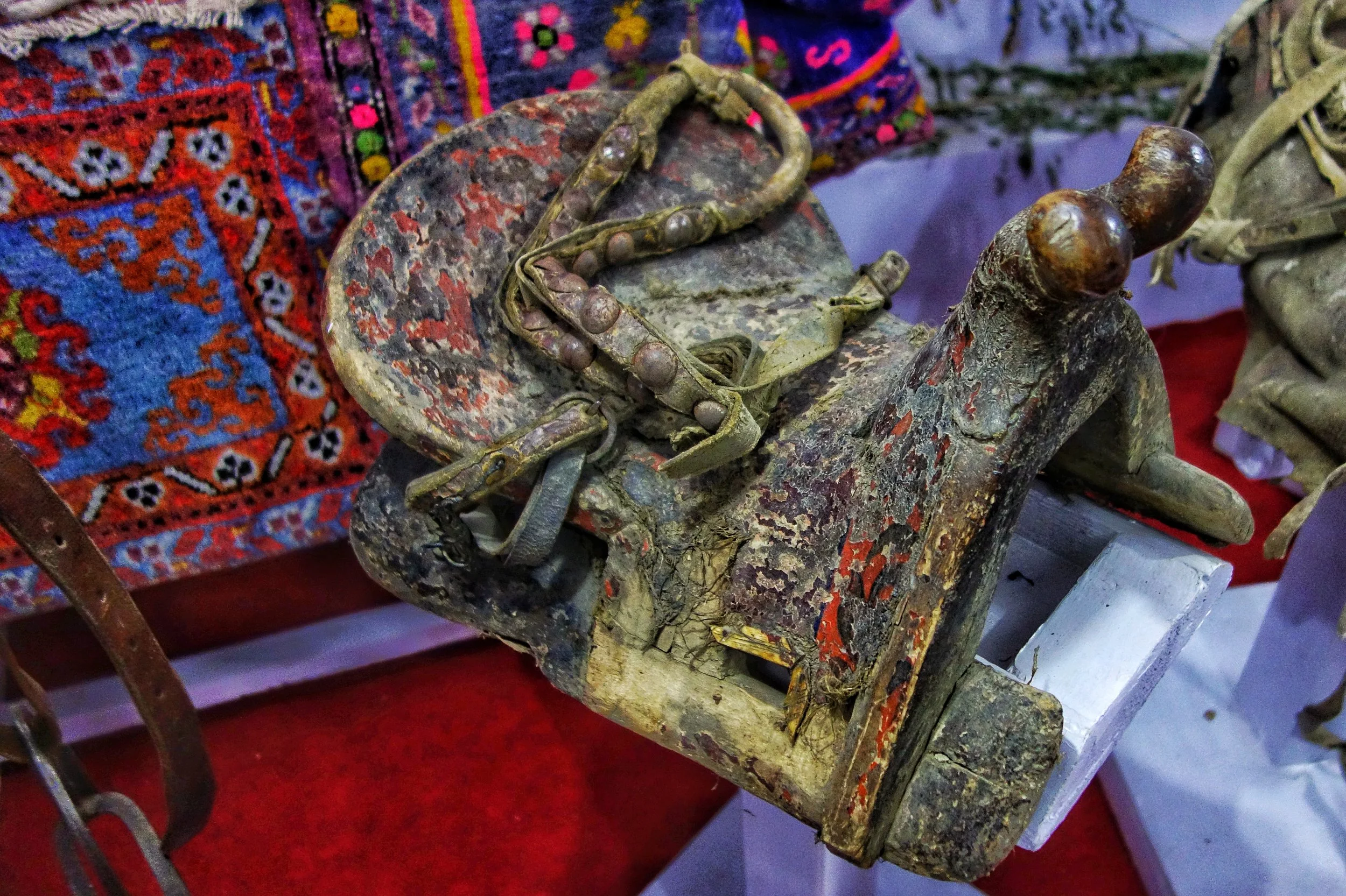
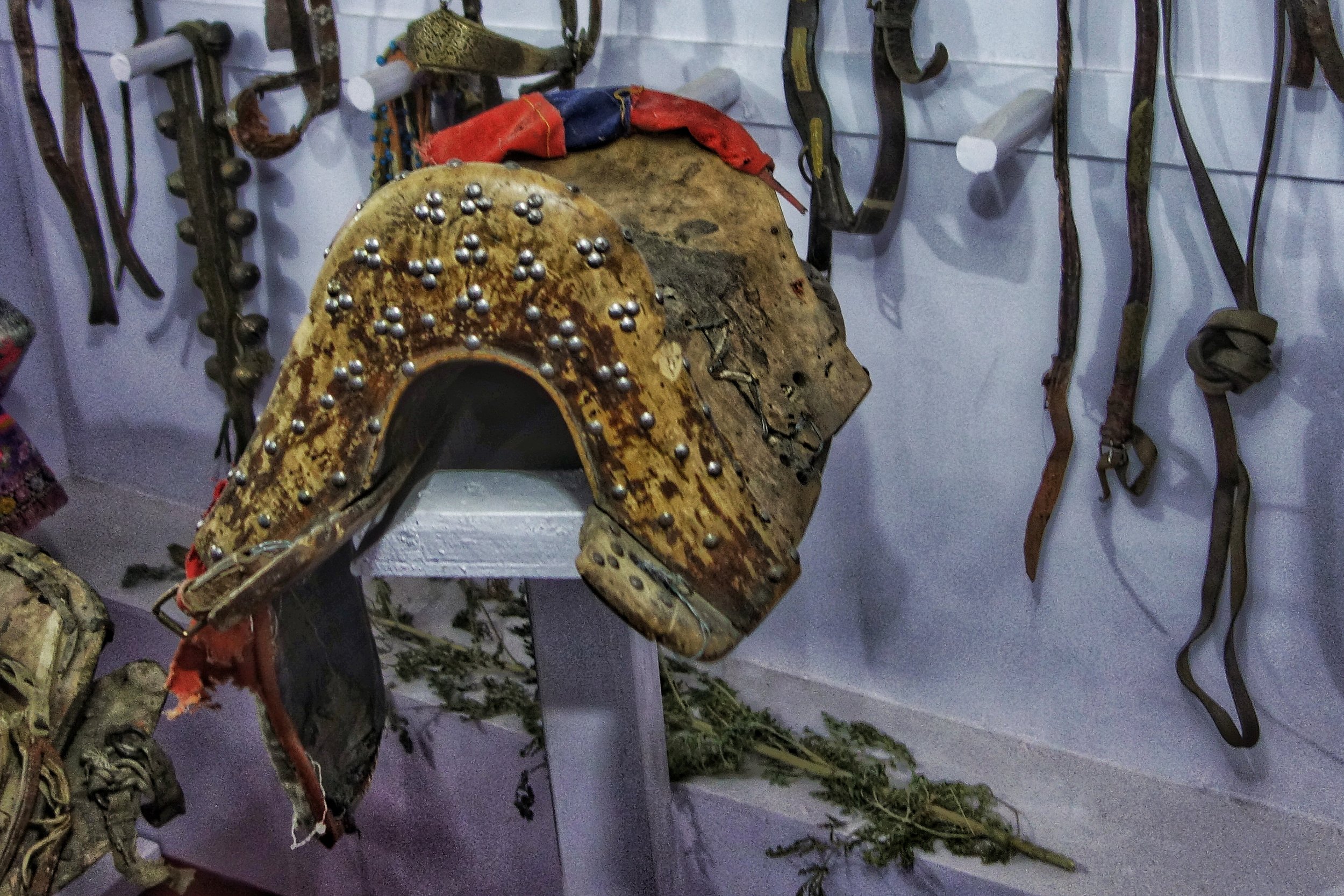
Mongol Saddle
In the pic below a few of the Saddles in the Museums collection are shown. The one on the right with Metal Studs is a Kyrgyz saddle from the 18th Century. The one in front is an Uyghur saddle from Eastern Turkestan. The one with a Carpet like covering is a Tibetan Saddle. The one next to it is the most prized one : A Mongol Saddle with a lot of decorations which sadly have deteriorated over time. And last but not the least an English Saddle in Leather and Metal.
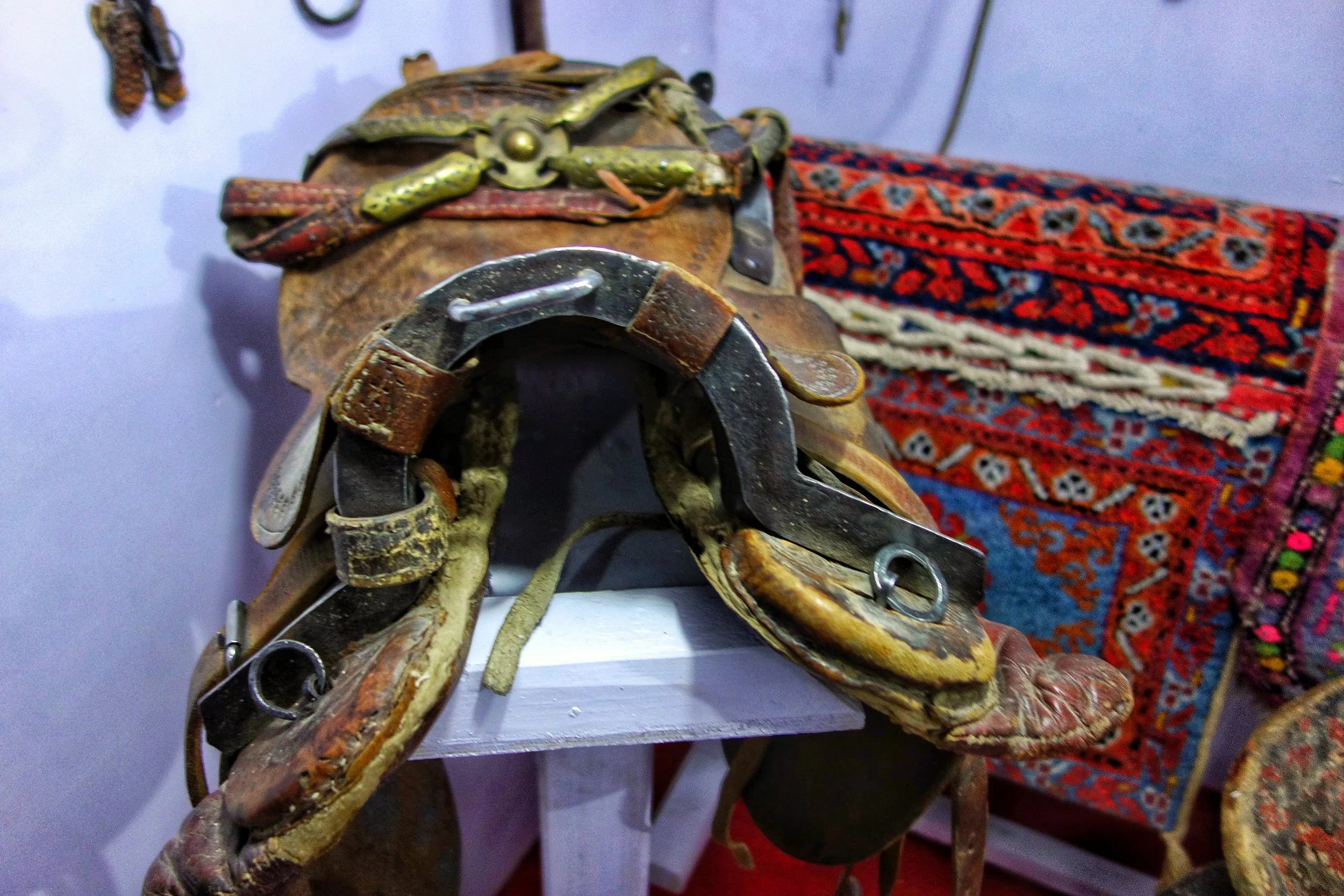
European Saddle
The fact that people sat on these Saddles while crossing the Great Wall as I call it consisting of the Kun Luns, the Pamirs, the Hindu Kush, the Karakorams and finally the Great Himalayas themselves again gives one a sense of awe of the great Tradesmen and Soldiers who crossed this most formidable barrier for Trade and War. And their most faithful companion in both case was none other than the Horse.
Munshi Aziz Bhat Museum of Central Asian Antiquities
The Munshi Aziz Bhatt Museum of Central Antiquities which holds a priceless treasure of Items and Objects which were once traded on the legendary Kashmir to Yarkand Silk Route via Ladakh.

A decorated Mongol Horse Saddle
Munshi Aziz Bhat Museum of Central Asian Antiquities
The name Kargil is famous now. Mainly because it is associated with a War that was given its name as it was fought in this area almost 20 years back and it was the country’s first televised War. But few would imagine that once upon a time it was a major trading Route on the Silk Route which connected Northern and Peninsular India with Central Asia and China.
Kargil is at a strategic location and is as such almost equidistant from Skardu, Leh , Padam in Zanskar and Srinagar. Infact its name itself is derived from its location. Kargil literally means a place to stop from all directions. Its etymology has evolved from the word Garkill. Where “Gar” means from all places and “Khil” to stop. And true to its name, all historical accounts of British and European travellers reveal Kargil to be just that. Situated along the river Suru (a tributary of the Indus, which flows into Gilgit Baltistan) it boasted of a fort built by the Ladakhi King in the 19th century. The old caravan bazaar ran along the river and a few mud houses by the slopes nestled in a green oasis of the Suru valley.

The old crumbling Kargil Sarai
Traders from all over the region and beyond converged upon Kargil. There were Punjabis, Kashmiris, Baltis, Yarkandis, Ladakhi, Tibetans, Afghans, Arghuns, Pathans, Kirghiz and all other ethnicities from the neighbouring Regions. The Dogra Rulers as well as the British promoted this Trade after the Dogras came into power and consolidated their Rule in the Region. They also improved and facilitated the creation of the Treaty Road which was a Trade Route all the way from Srinagar to Yarkand.
At the time that the trade was flourishing there was a certain Gentleman by the name of Munshi Aziz Bhat of Kargil who was the official petition writer for the Maharaja of Jammu and Kashmir for the Baltistan Wazarat. A Petition writer in those days was a powerful man, as if you had an issue that you wanted to bring to the higher authorities and the highest being the Maharaja, who had to approach the Petition writer to do it on your behalf. So the strength of your case basically lay on how the Petition writer presented it. As such Munshi Aziz Bhat was a very well respected man in Kargil.

The Kargil Sarai facing the Suru River.
Munshi Aziz Bhat was a trader also being on the Central Asian trade Route and owned a number of shops in Kargil and his trading company was called Munshi Aziz Bhat and Sons. He set up a Serai, the Kargil Serai in 1920 to offer boarding lodging and storage places to the Traders. Soon the Serai became a stopover place for all kinds of traders from all kinds of places in Kargil. The Kargil Serai also served as a kind of an unofficial Post Office which received a lot of mail especially from the Hoshiarpuri Punjabi traders. The Serai had in its front a couple of shops as well which the Traders could use to display their wares. The Serai was a busy one in the late 1800s as well as the early 1900s and it saw many traders come and go.
Janet Rizvi in her epic Trans-Himalayan Caravans, Merchant Princes and Peasant Traders in Ladakh (p 260) mentions “ …it would seem that for the transporters belonging to the villages downriver from Drass, Kargil (rather than Srinagar) was the centre to which they went in the first instance in search of work. The hub of this activity was Munshi Aziz Bhat’s sarai, which was a depot for goods going in all four directions...there was in particular plenty of coming and going between Kargil and Skardu…”

An old style Building in the Kargil Bazar
And then came the turmoil of 1947 when initially Kargil was occupied by invaders from the other side. And ofcourse with the Chinese occupation of Xinjiang and its move on Tibet the Trade Route was finally shut down by the Chinese in 1949. A once buzzing trade route and all its dependencies were suddenly shut. The Kargi Serai lost its guests as even the Hoshiarpuri merchants went away. The Serai fell into disrepair and meanwhile Munshi saab also passed away.
The Seari was however bequeathed as family property to Aziz Saab’ descendents and so the three storied Serai remained for decades. A lonely relic in the Kargil bazaar of a time long gone. It remained under lock and key for a good 50 years but its condition kept on deteriorating. No one it seems was aware of what lay inside the Serai since decades.
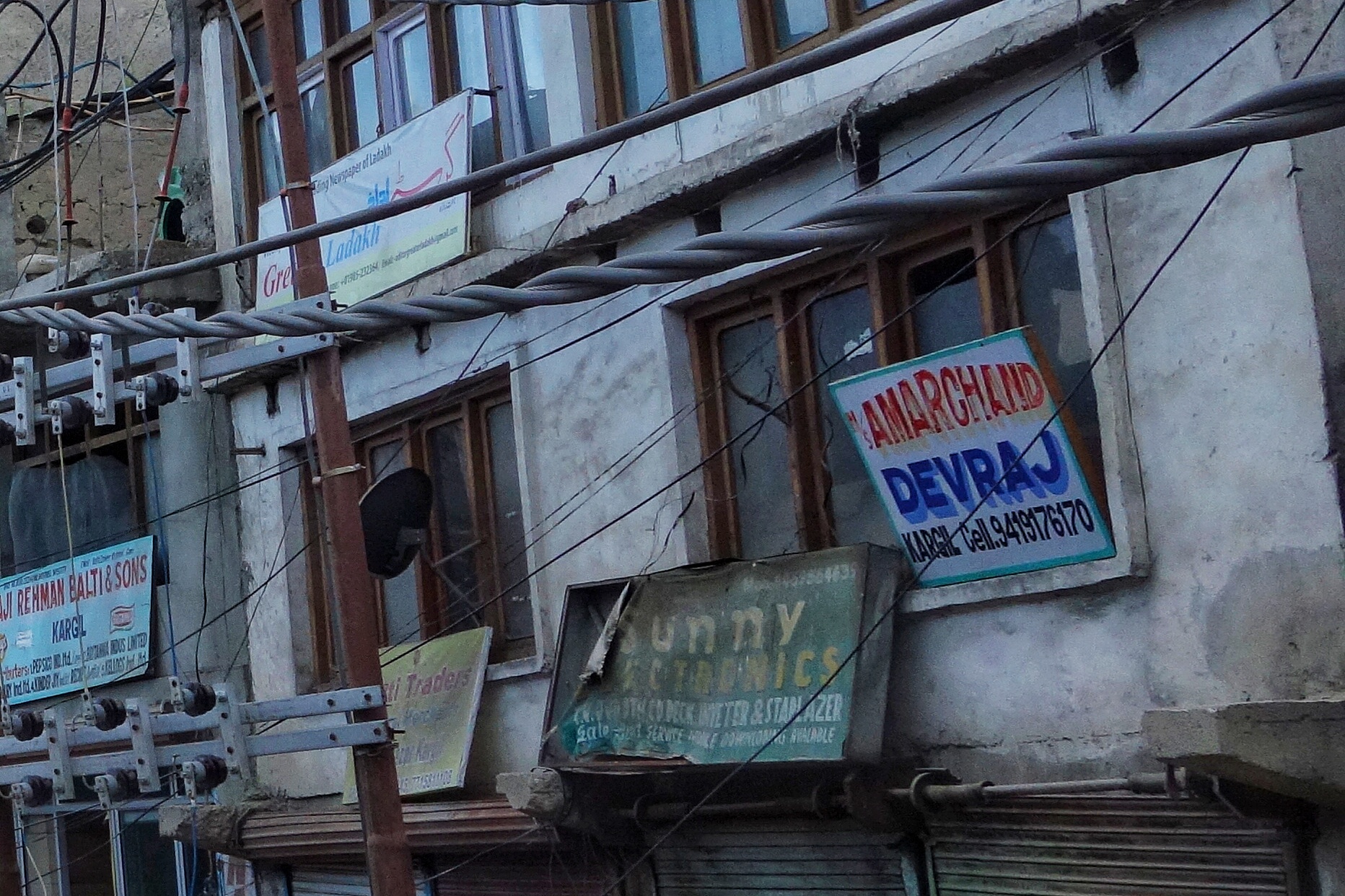
An establishment still run by descendants of the Punjabi traders from Hoshiarpur who were at the frontline of the Central Asian trade.
In was a chance discovery in the beginning of this century that some workers were sent to the place to clear some mess as parts of the structure had collapsed. The workers unearthed some very interesting items and reported these to the owners. The Owners then decided to come and check for themselves and they unearthed in what can only be called a priceless treasure in form of various items related to the Central Asian trade and items from all over Central Asia, the Indian sub-continent, Tibet and even Europe. As luck would have it a visiting historian persuaded the family to preserve this price less collection instead of it ending up in some antique shops. And so was set up the Aziz Bhat Museum of Central Asian and Kargil Trade Artifacts to display the Collection of items unearthed.
The range of artifacts unearthed from the Munshi Aziz Bhat Sarai has given invaluable insights into not only the forgotten trade history but also into the corss-cultural, cosmopolitan past of Kargil. These artifacts aren’t mere antiques but they are a testimony to the fact that Kargil was a melting pot of cultures, languages, lifestyles and ideas. They are now on display in a part of the Munshi family’s house that has now been converted into the Musuem.

Saddles from Central Asia.
The diverse collection of artifacts include not only the goods that were traded along the route but also the items used by the traders and people involved in the trade. Some of the choicest artifacts include hookah pipes from Yarkand, rugs from Kashgar, fabrics — dyed and raw silk from Khotan in China, natural dyes, costumes, jewellery, coins, shoes, utensils and ammunition. Apart from these, the museum incorporates mercantile items from the late 19th and early 18th centuries like leather skins, coarse cotton cloth, carpets from Central Asia, British horse seats and saddles, buttons from Italy and items from the factory of the Nizam of Hyderabad. Over the years, the museum has also acquired various local artifacts that are relevant to Kargil, some of the key artifacts have been the first hand written Quran by the Buddhist Ruler King Namgyal of Kartse sometime in the 14th/15h century and a number of legal manuscripts that are written both in Tibetan and Urdu for the benefit of the King as well as his people. This was at the time when Islam was spreading across Ladakh and most of the rulers were Buddhists.
This Museum is a must go recommended place to go to in Kargil in case you are interested in the history of the Central Asian Trade along with the Central Asian Museum.

In the pic above
1. Toiletries / Soap, Lux soap, Tooth Brush, / Shaving Brush, Pear soap, and Shaving Soap. / Place: - England, Germany, Italy, USA./ Period : 1903, 1905,1926, 1939. All these finished & believed to be luxury, were imported From England, Germany & USA. After reaching the Mumbai Coast, these luxury items travels all the way from Mumbai To Central Asia, Via Yarkand, Khotan, & Kashgar. The merchants with caravans of these goods either batter or sold these items to nobles.
2. Local Name :- Jola / Place : Cuba / Period : 18th Cent 100 LBS, Sugar sack from Cuba imported to Central Asia.
3. Modern medicines / Place : Britain ,USA / Period:- 18th Century / Introduced by the different Moravian Missionaries these medicines were unknown to Central Asia & Tibet.
4. Raw silk thread, Plain Silk & Imperial silk / Local Name : Shahi. / Place : Khotan/ Preiod : 17th Century Known as Shahi, or the Imperial cloth, introduced to the world from Khotan.
5. Thanka (Paintings) / Local Name : Thanka / Place : Rangdum. / Period : 16th Century
A rare Thanka Painting, gifted to Munshi Aziz Bhat, by the villager of Rangdum. Showing the wheel of life.
6. A Rug from Bukhara / Local Name : Namdah (Fingma). / Place : Bhokara. / Period : 1822.
A Central Asian Rug from Bhokara, Name of Mohan Lal (from Kashmir) who happens to be the Assistance of Sir. Alexender Burnes, a British officer of the company is written in the Center.
The Gilgit Manuscripts
The Gilgit Manuscripts discovered in the early 1900s in Gilgit are one of the oldest Buddhist Manuscripts discovered in India. Believed to be one of the most revered Buddhist scriptures, it represents the discourse delivered by Buddha towards the end of his life.

A leaf from the Gilgit Manuscript
The Gilgit Manuscripts : A Treasure Forgotten
A couple of cattle grazers in 1931, in a village Naurpur near Gilgit once came upon a wooden box in a circular chamber in side a Buddhist stupa which contained a large number old Manuscripts pertaining to Buddhism. Little did they know that they had stumbled upon one of the most important finds of the century. The Gilgit Manuscripts are the oldest surviving religious Manuscripts from the sub-continent and of the oldest ones in Buddhism.
The cattle grazers took the collection to the Wazir of Gilgit who in turn turned it over to the Maharaja of Jammu and Kashmir and the news of the discovery of this Great Treasure spread world wide. Opinions vary about the date of this manuscript. One branch of scholars says it was written in the second century AD., while another puts the date at somewhere between the sixth and seventh centuries.
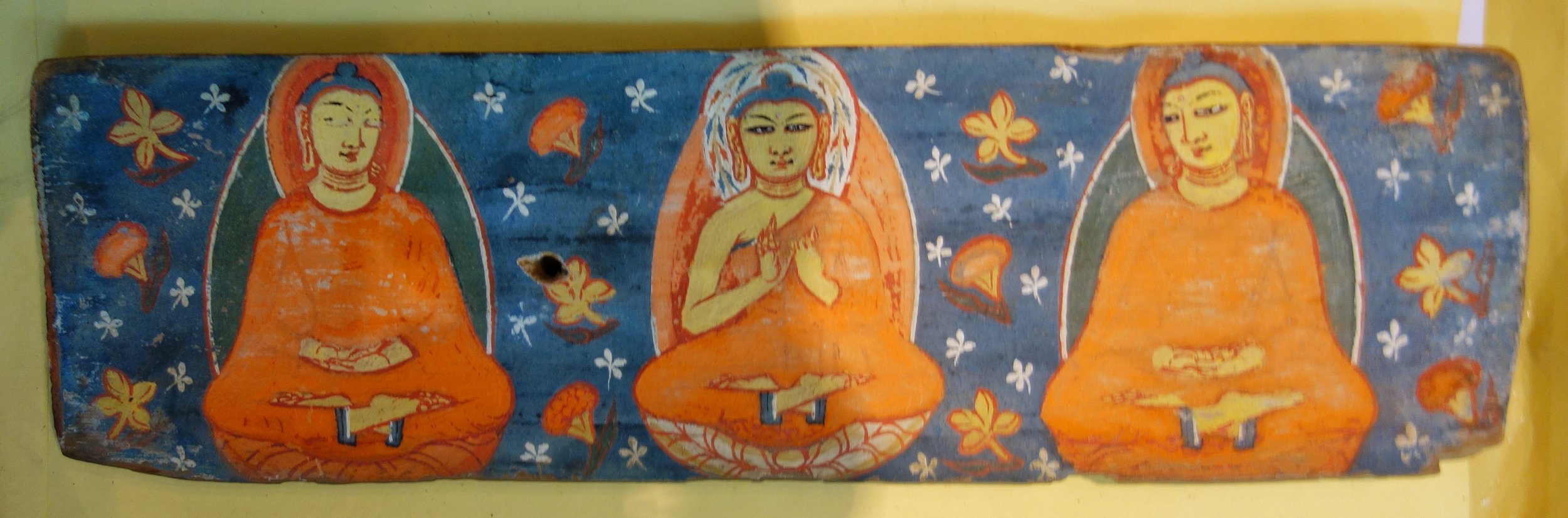
The Hand Painted Covers in which the Manuscripts were kept
Gilgit was at that time at the cross roads where South Asia, Central Asia and Eastern Asia met and it was an important stop on the Silk Road. Many monks from India carried the message of the Buddha from here to Tibet, China, Korea and even as far as Japan. It was along the Silk Road that Buddhism spread eastwards towards the rest of Asia. Gilgit hence played an important part in the spread of Buddhism and hence this find.
The almost seventeen centuries old Gilgit Manuscript has been giving historians a hard time, as no one has yet been able to fully decipher it. The lamination of the manuscript by the National Archives of India sometime ago has once again put the limelight back on this all-important literature concerning India, Tibet, China, Japan and other neighbouring countries.

Another leaf from the Gilgit Manuscipt
In fact in 1897 - 34 years before it was discovered - the Buddhist Text Society of Calcutta had published references to the Gilgit Manuscript saying that if it were ever to be found it would unravel the ancient history of several communities as it is considered to be the oldest Buddhist manuscript.
A corpus of many Buddhist texts such as the Four Sutras from the Buddhist canon, including the famous Lotus Sutra, the Manuscripts survived because they were written on the bark of the Bhoj (Birch) Tree which does not decay and obviously helped by the sub zero temperatures in Gilgit. They were written in the Buddhist form of Sanskrit in the Sarada or the Sharda Script. The Gilgit Manuscripts deciphered thus far cover a wide range of subjects such as religion, religious rituals, philosophy, iconometry, monastic discipline, folk tales, medicine and culinary art.
The most famous of the Gilgit manuscripts, the Gilgit Lotus Sutra is preserved in the National Archives of India in Delhi. Known as the Saddharma Pundarika Sutra – or the teachings of the white lotus and sun – the sutra is the basis of the Tiantai and Nichiren schools of Buddhism. In 2012 a facsimile edition of it was published by by the National Archives jointly with the Institute of Oriental Philosophy and Soka Gakkai, a Japan-based non-governmental organization.

Another cover for the Gilgit Manuscript
"In August 1938, seven years after the discovery of the texts, the archaeologist Madhusudan Kaul Shastri led a systematic excavation of the Naupur site and discovered another larger chamber at the base of the structure. The chamber contained another set of the Gilgit Manuscripts along with votive objects and probably Buddhist cult bronzes.
"According to renowned scholar Karl Jettmar, inscriptions on these bronzes “reveal that they were produced and dedicated due to the generosity and the religious zeal of a Patola Shahi”. The Patola Shahis, also known as Palola Shahis, were the rulers of Gilgit and Baltistan from the late sixth to the early eighth centuries AD.
"Shortly after, Kaul Shastri and his team outlined the specifications of the second group of manuscripts and other finds from the site including the hand painted covers of two manuscripts.
"In the third phase, the well-known Italian scholar Giuseppe Tucci secured another small group of the manuscripts in 1956. Obtaining them from a street vendor in Rawalpindi, he presented them to the Karachi museum.
"Roughly 60 manuscripts and 17 Avadnas emerging from Naupur are of unmatched significance in Buddhist studies. These are the oldest surviving collection of religious texts in the subcontinent. Based on the paleographical evidence, scholars agree that local Buddhist devotees compiled these texts between the fifth and sixth century AD. With the exception of only a few scripts, all the manuscripts were written on birch bark in Buddhist hybrid Sanskrit language in the Gupta Brahmi and post-Gupta Brahmi script.

More leaves from the Gilgit Manuscript
"The manuscripts contain sutras from the Buddhist canon, the Samghata Sutra, Samadhiraja Sutra, Saddharma Pundarika Sutra, and Bhaisajyaguru Sutra.The Samadhiraja Sutra is one of the important Mahayana canonical texts, which are collectively called Navadharma. The Saddharma Pundarika Sutra, popularly known as Lotus Sutra, figures prominently in the Gilgit Manuscripts and scholars agree it was the most venerated sutra of the Buddhists from the Gilgit area"
Though the grammatical and literature aspects of the text are gradually becoming more of historical interest in the contemporary world, what is of interest is the social relevance of some of the sutras mentioned in the manuscript. Experts feel that when the full text is deciphered a common thread will be found in the language and people of countries like India China, Japan, Thailand, Tibet and Korea which would have the potential of altering the very geo-political map of the region.
At present the main collection is with the National Archives in New Delhi and some parts with the British Museum in London and at the Karachi Museum. Apparently Nehru had the many body of the Manuscripts bought by a special Plane from Srinagar in 1948 after the Tribal Invasion. However a small part of the manu scripts still lie at the Shri Partap Museum in Srinagar though not on display.
The importance of the Gilgit Manuscripts can be guaged from this Report in the BBC :
http://www.bbc.com/news/world-asia-india-17935041
As luck would have it I managed to have a look and some parts of this Great Treasure at the Sri Partap Singh Museum yesterday and was even allowed to take pics. :)

Some more leaves
To come face to face with such a great treasure is truly a humbling experience and I could not help but tremble with excitement as the significance of what I was going to see. This is the Holy Grail of Buddhist Learning.
NOTE : Compiled from nformation on the Gilgit Manuscripts from various references on the Net.
PS : The Museum plans to put this on Display as it is shifting to a new Building and some Galleries are already open for Public viewing. The Museum has a great collection and is a must see when you visit Srinagar. I will try and share more treasures from the Museum here.
Altai Himalayas
Altai Himalaya is a great Book by Nikolai Roerich about his Journey through high Asia.

Roerich's Altai Himalayas
Another addition to my antique Himalayan Books collection. This time another one from Roerich called the Altai Himalaya.
This is a Travel Diary of Nicholas Roerich and includes 21 reproductions from his paintings.
In Roerich's own words which came in the form of a Telegram which came on May 24, 1928 :
"Roerich American Expedition after many hardships has reached the Himalayas.Thus ended the big Central Asiatic Expedition. Many artistic and scientific results. Already sent several series of paintings to New York. Hope last sending from Mongolia safely reached you. Many observations regarding Buddhism.
Expedition started in 1924 from Sikhim through Punjab, Kashmir, Ladak, Karakorum, Khotan,Kashgar, Karashahr, Urumchi, Irtysh, Altai Mountains, Oyrot regions, Mongolia, Central Gobi, Kansu, Tsaidam and Tibet"
In today's time and age this is probably every explorer's dream but it is impossible for anyone to do as the traditional Ladakh to Yarkand/ Kashgar route has been shut for a long time. I had done a post on that Route some time ago.
Coming back to the Book I managed to land up. Its an original 1929 print, presented by someone to a gentleman called ALH for Christmas that year. More interestingly it is signed by a Group of people who I have been trying to figure out. If someone can recognise any of these autographs it will indeed be great.
Unlike my previous Roerich antique book this one I managed to buy on E bay, The link for this Book was sent by a friend who had seen my previous Post on the Roerich book and
thought that I deserved to have this one as well.
I got it at a very neat price :) And currently Im enjoying reading it in Kashmir.
Pic from yesterday. Srinagar, Kashmir
Kiki’s Blog
Stories from the Himalayas
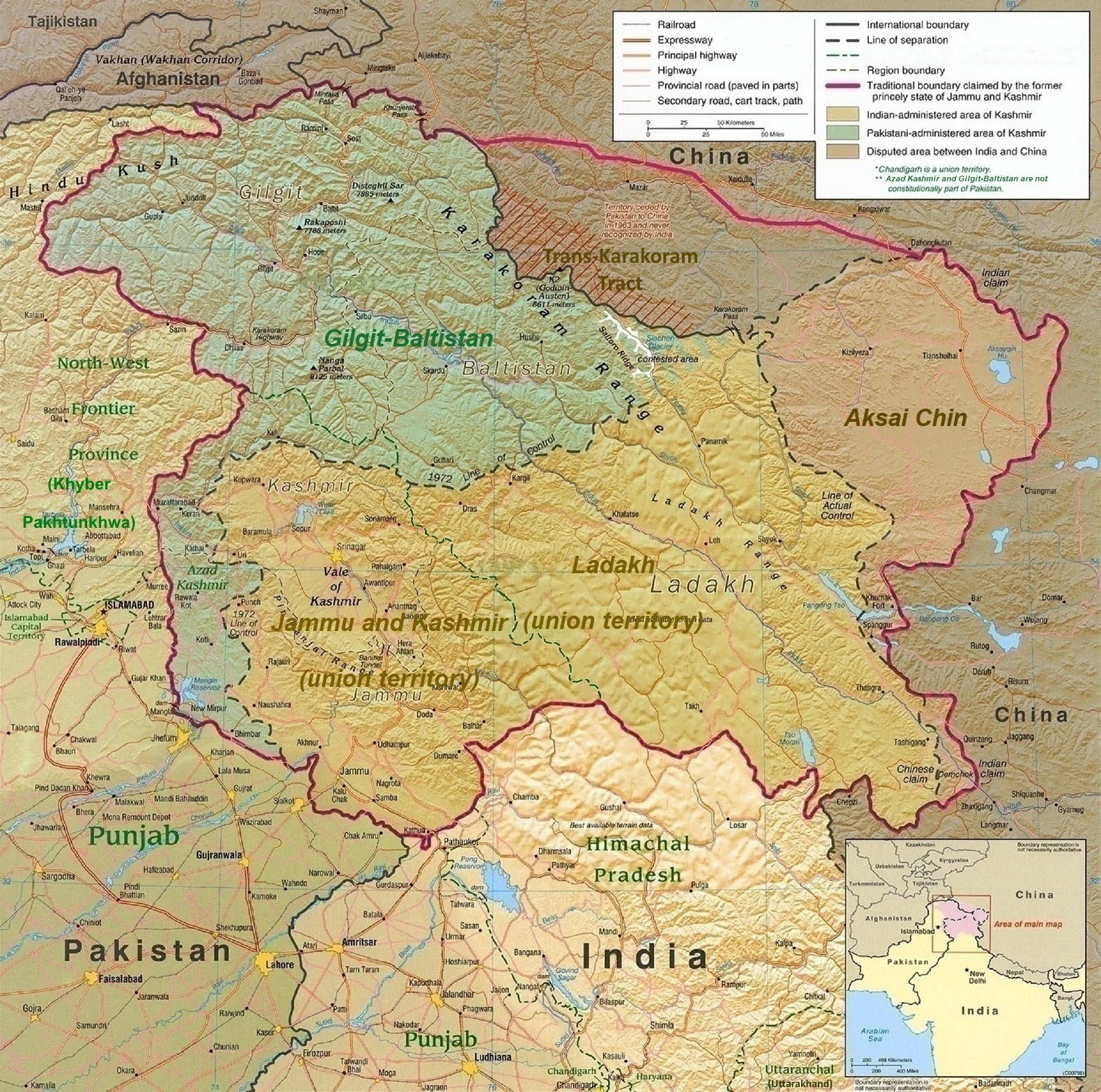



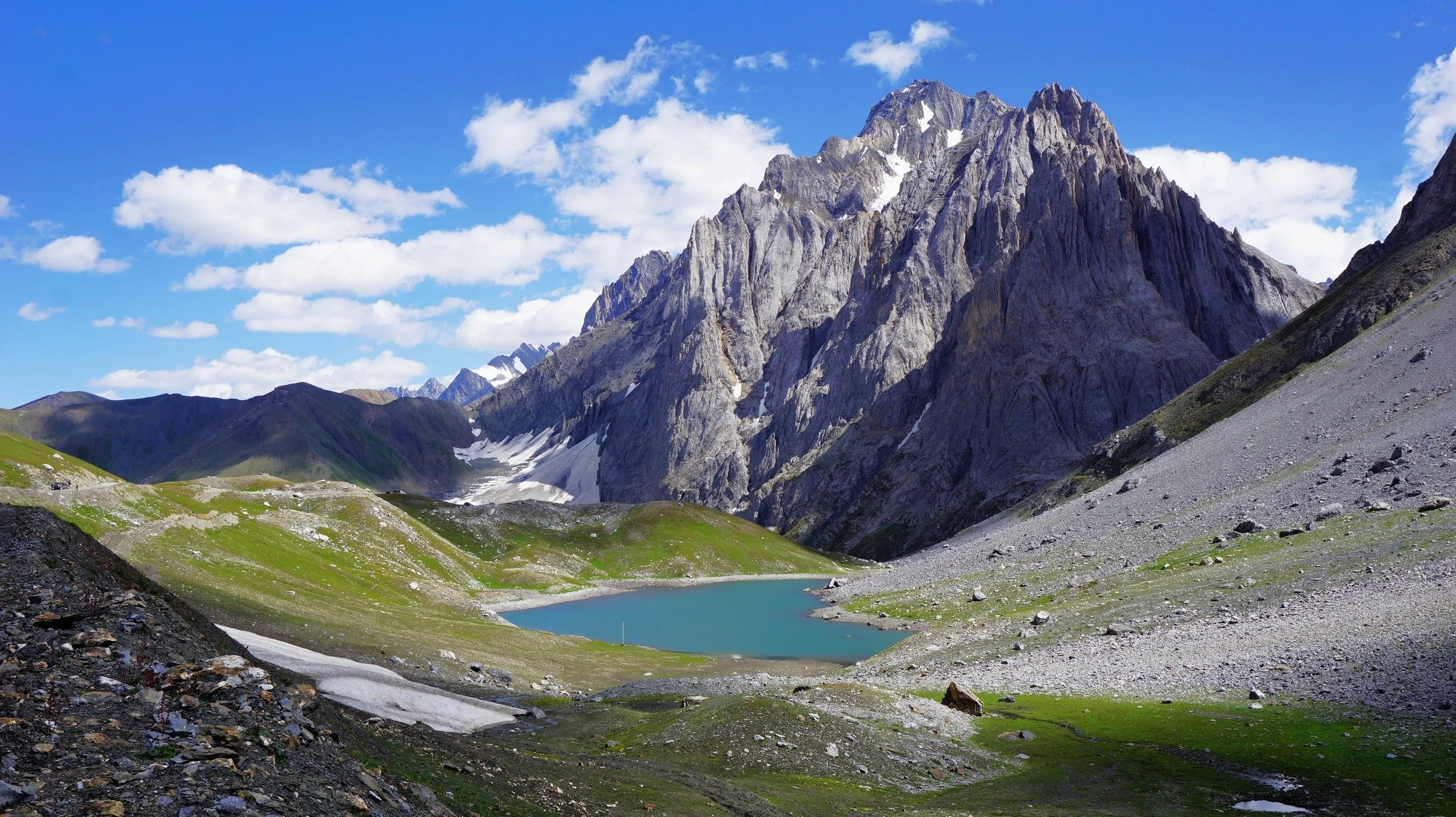
Five years ago the Galwan Valley was in the News for the wrong reasons after a deadly clash between the Indian and Chinese Armies in the Valley located in Ladakh lead to many deaths on the contentious Border between the two countries in wake of continued Chinese intrusions into Indian territory.
This area along the Shyok River, of which the Galwan Nallah or the Galwan River which forms the Galwan Valley has been off limits to Civilians since long but now the Indian Government has decided to open up the area for Civilians and we were amongst the First Civilians to venture into this beautifully desolate part of the Eastern Karakorams in Ladakh. Earlier Civilians could only venture upto the Village of Shyok from where the Shyok River takes a U turn and flows in a Northerly direction.